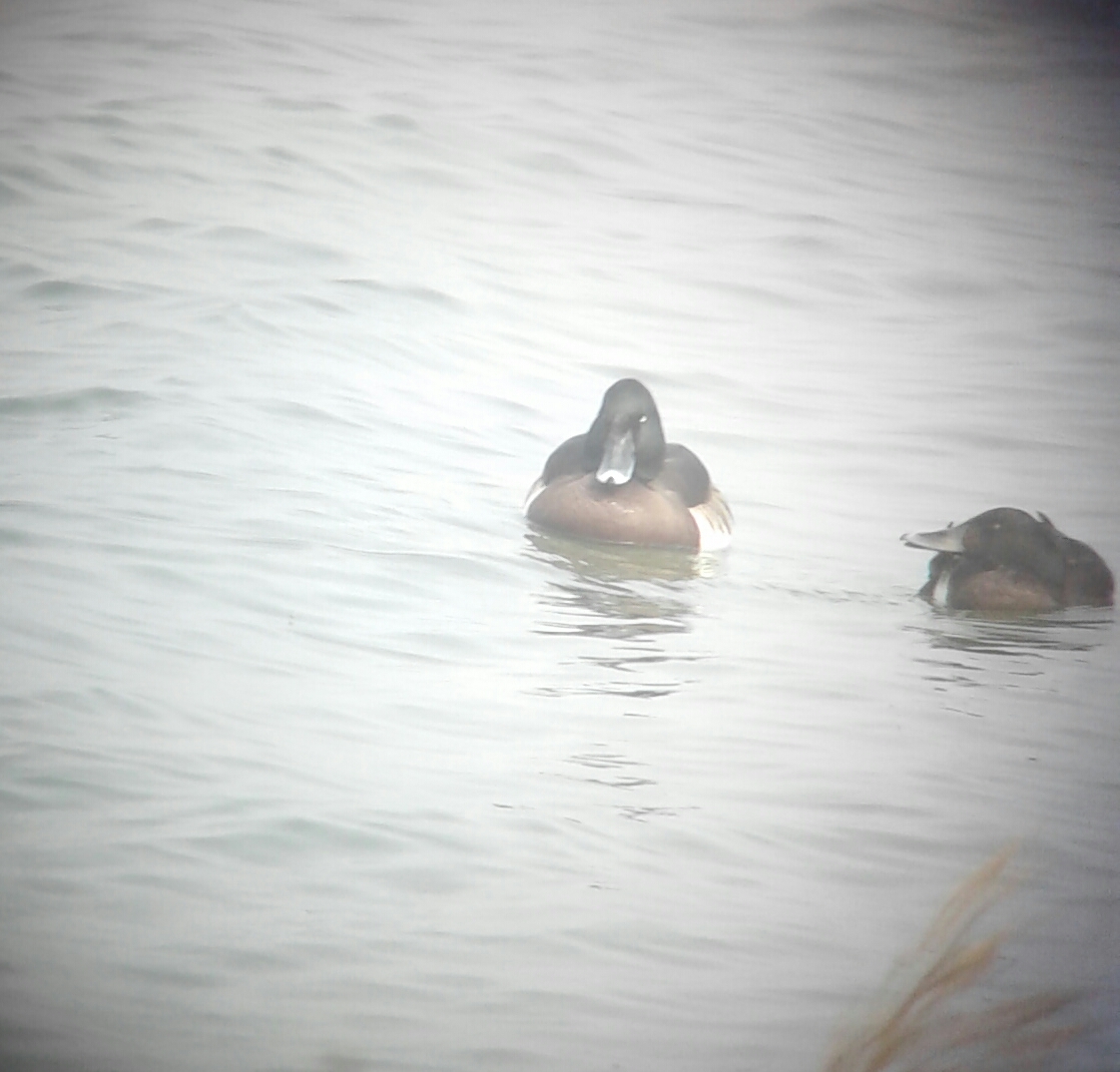
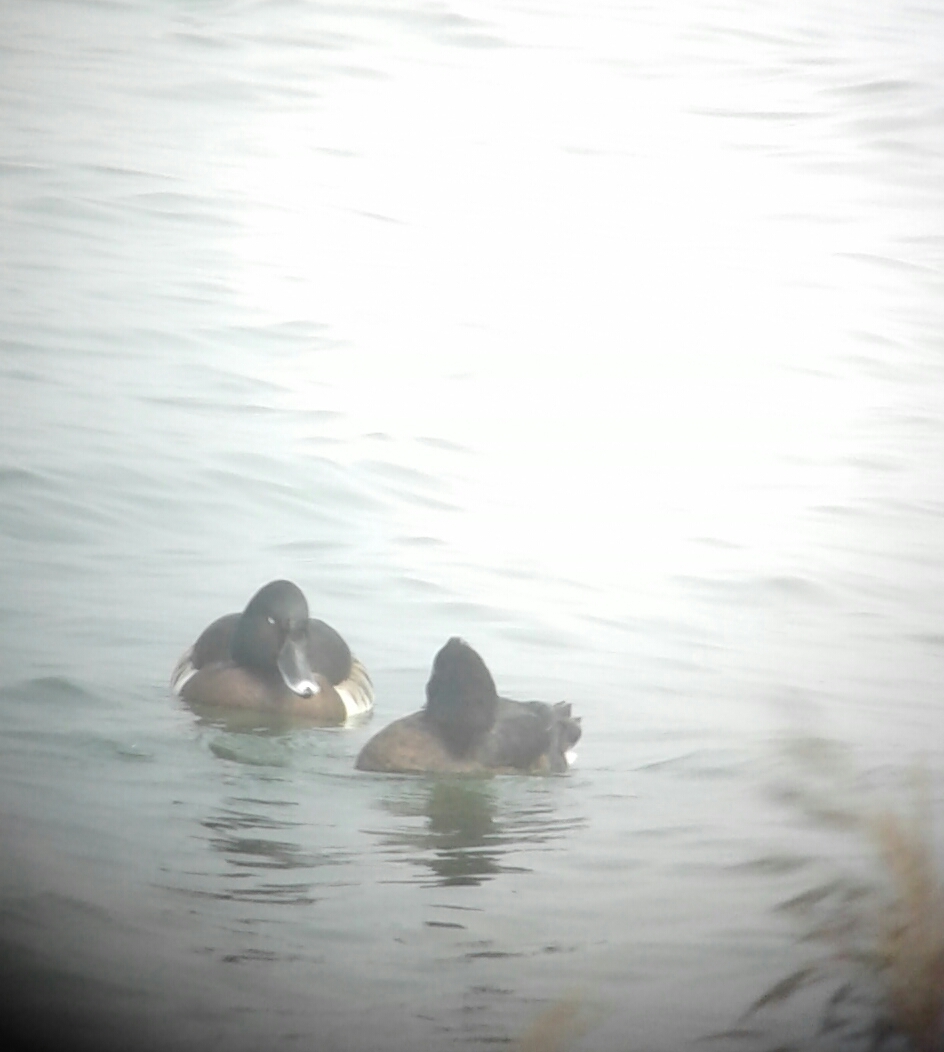
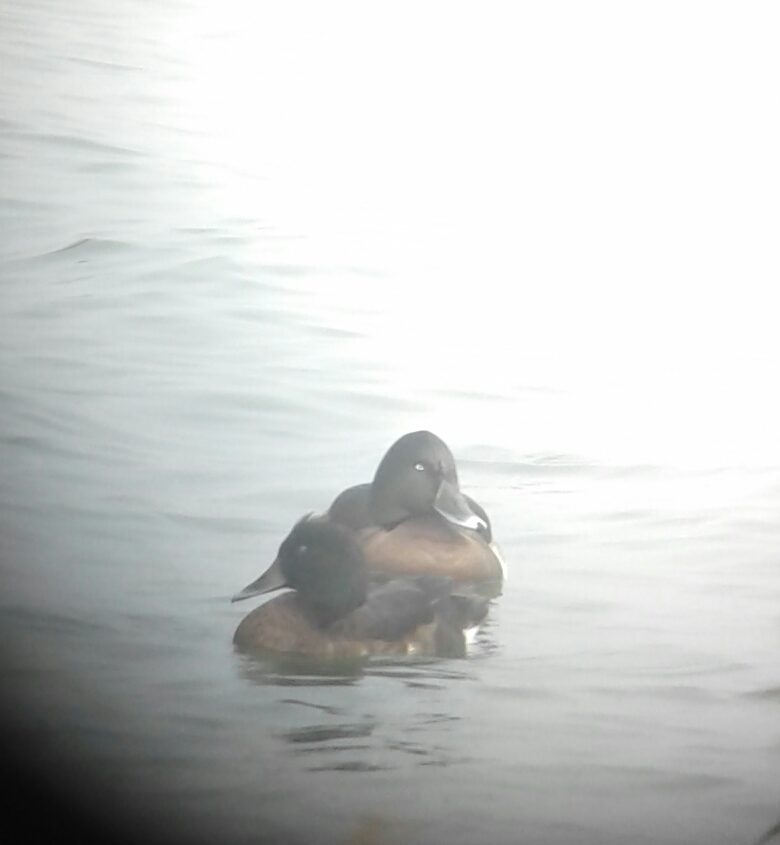
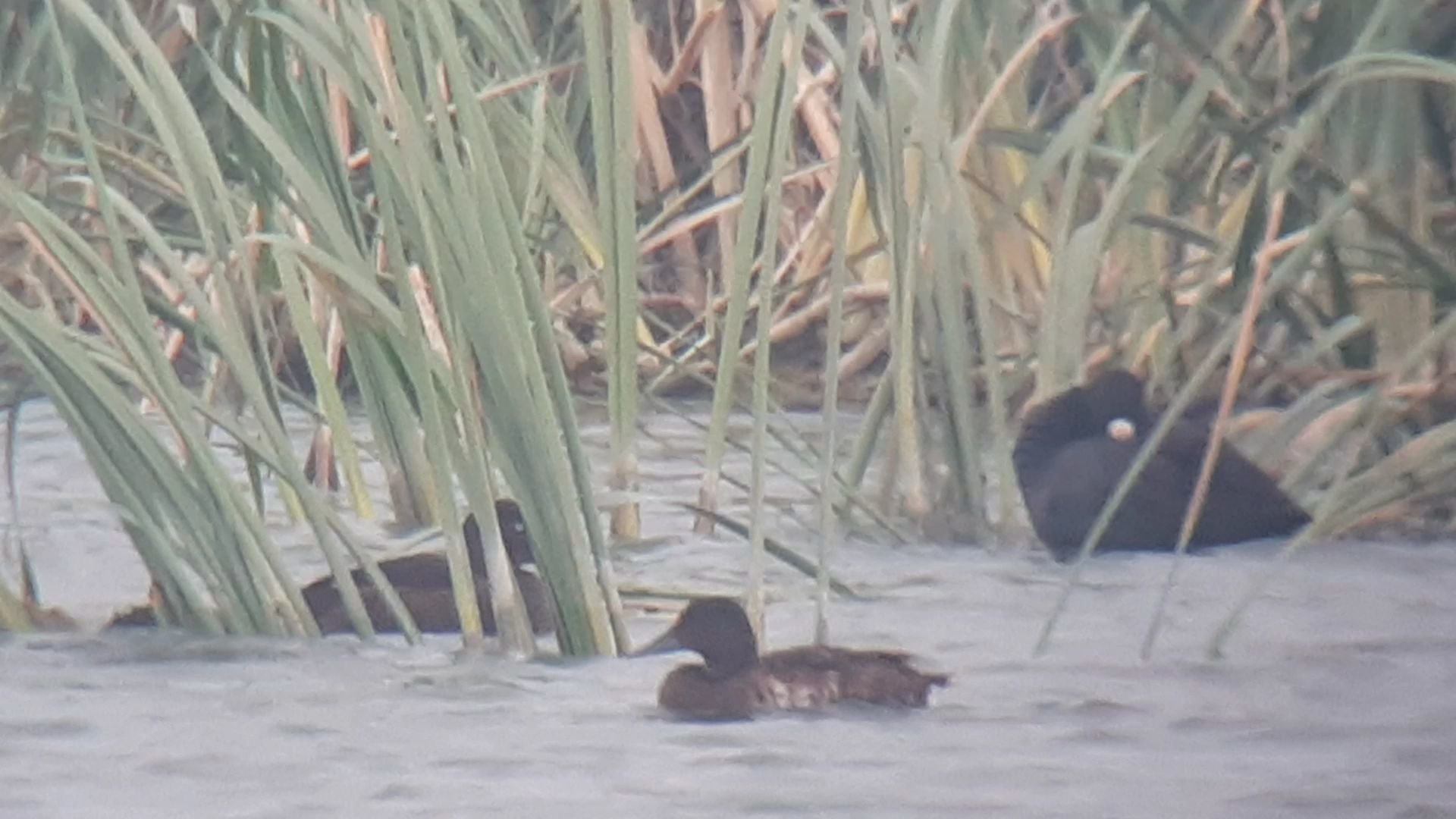
Anseriformes / Anatidae / Aythya
Baer's Pochard
Aythya baeri · 青头潜鸭
Introduction
A monotypic diving duck species found in eastern Asia. It is a resident bird in North and Central China, with former breeding grounds in southeast Russia and Northeast China. Wintering occurs in southern China, Vietnam, Japan, and India. The species inhabits open, slow-flowing lakes, swamps, and ponds with rich aquatic vegetation. It is classified as Critically Endangered by the IUCN.
Description
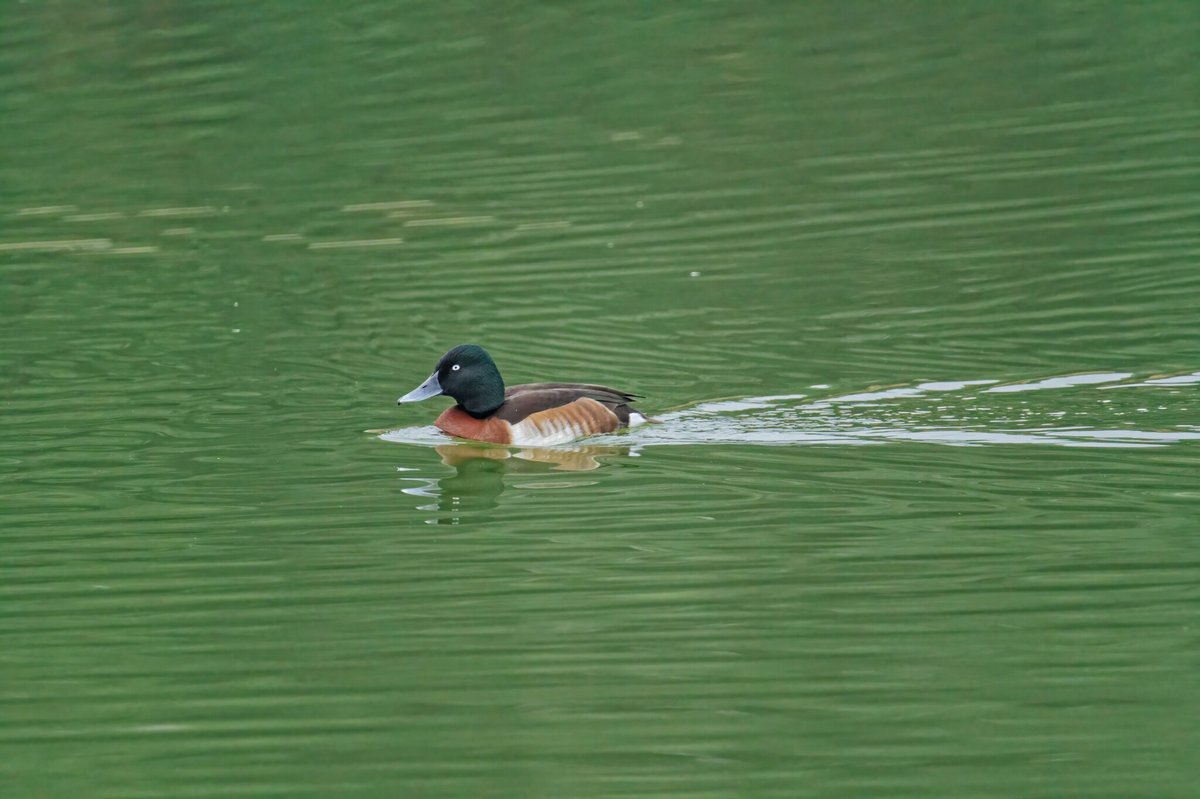
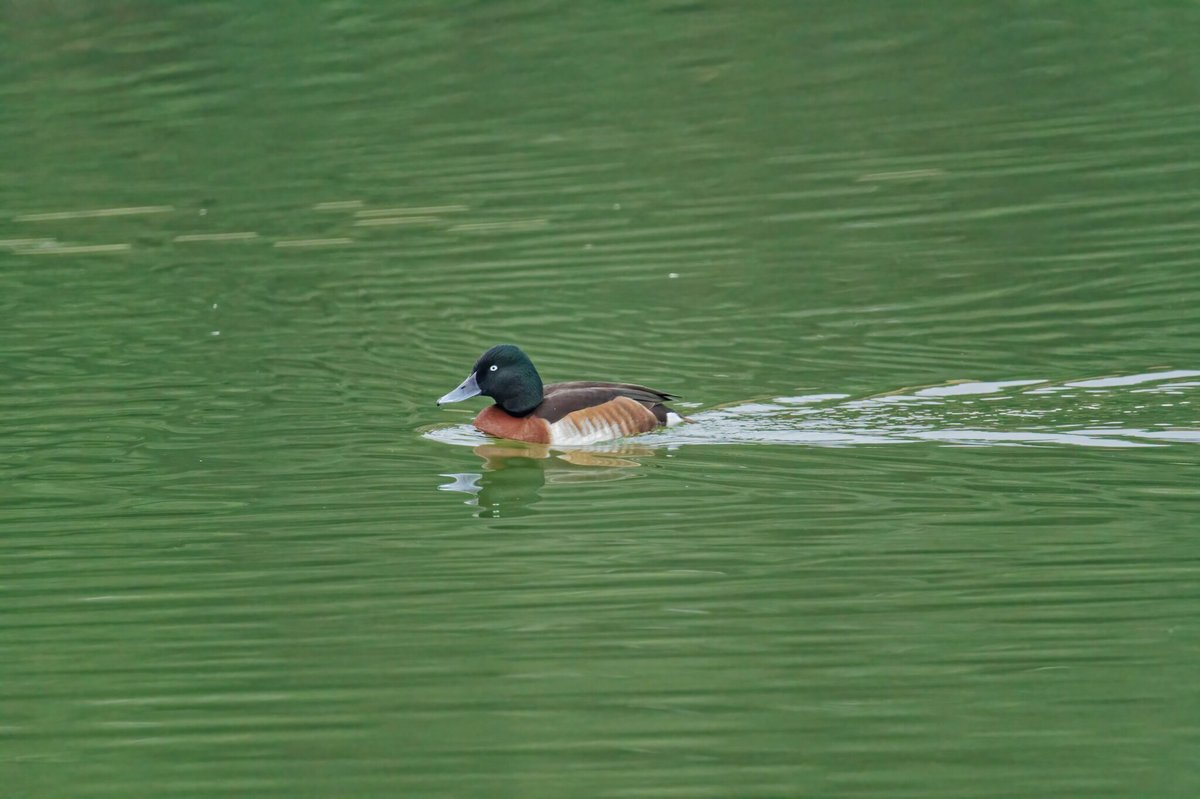
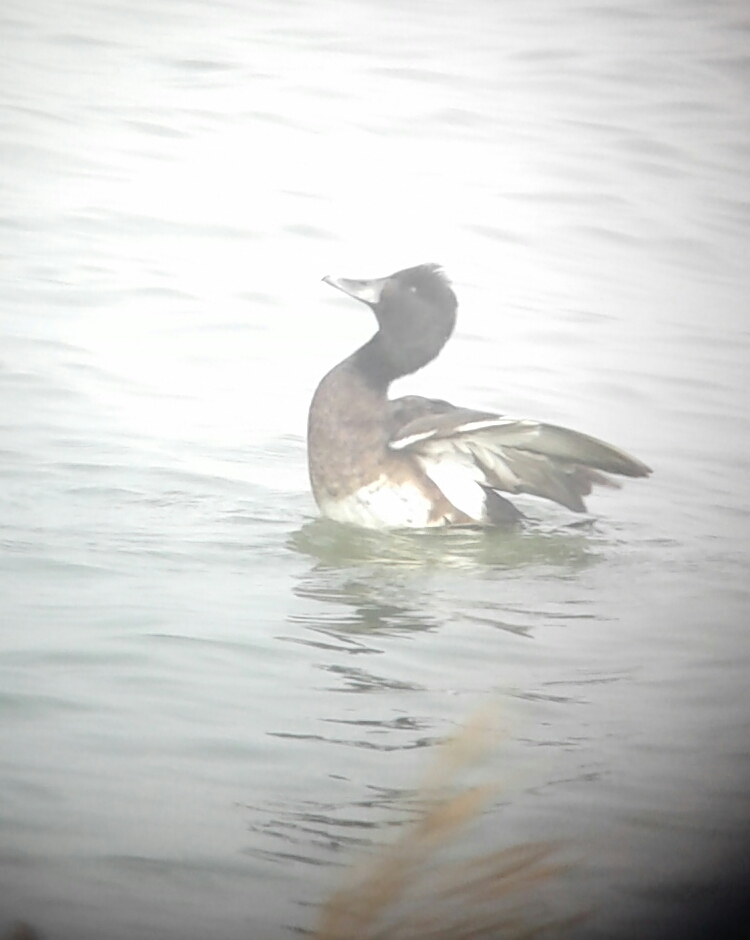
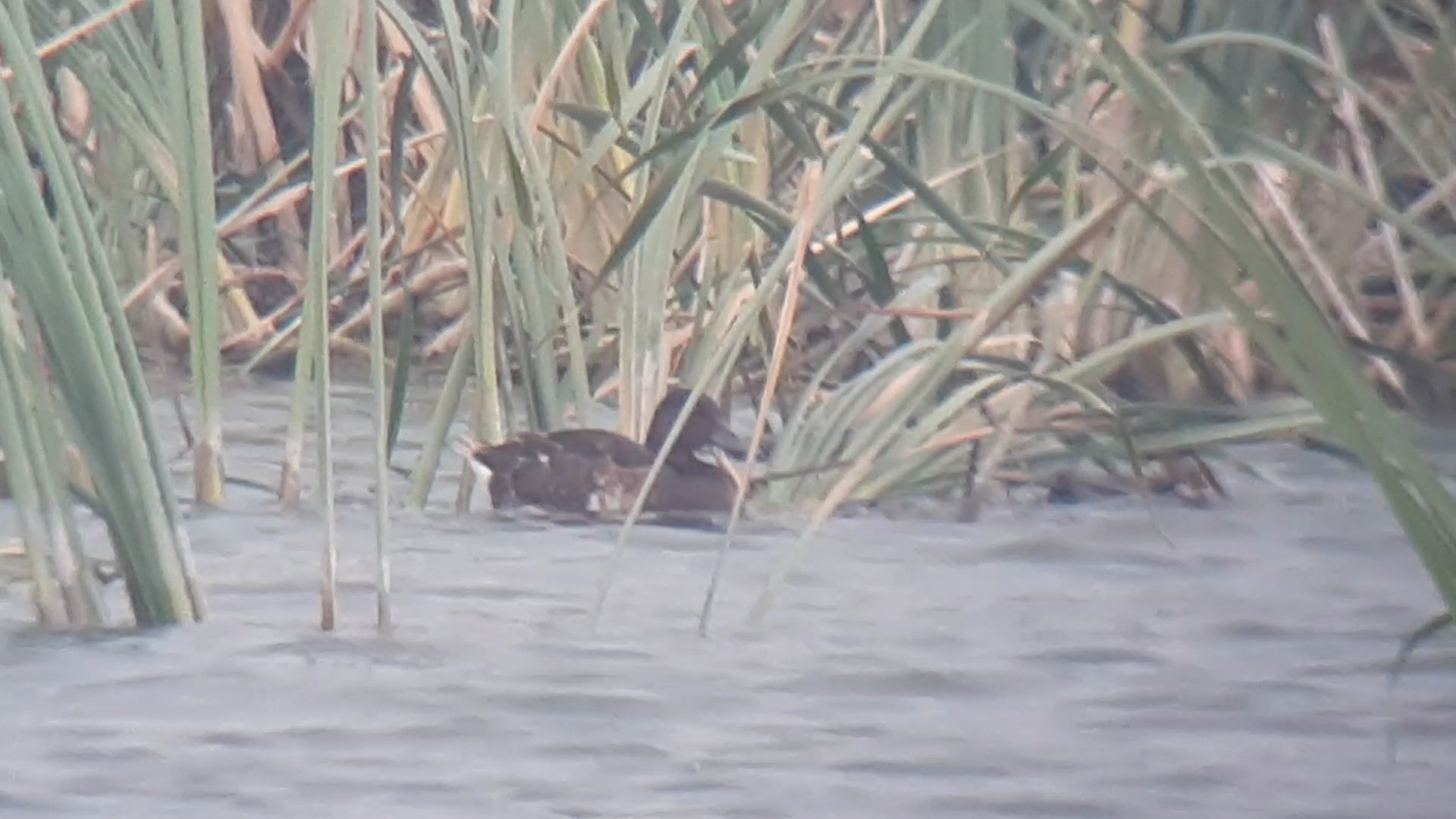
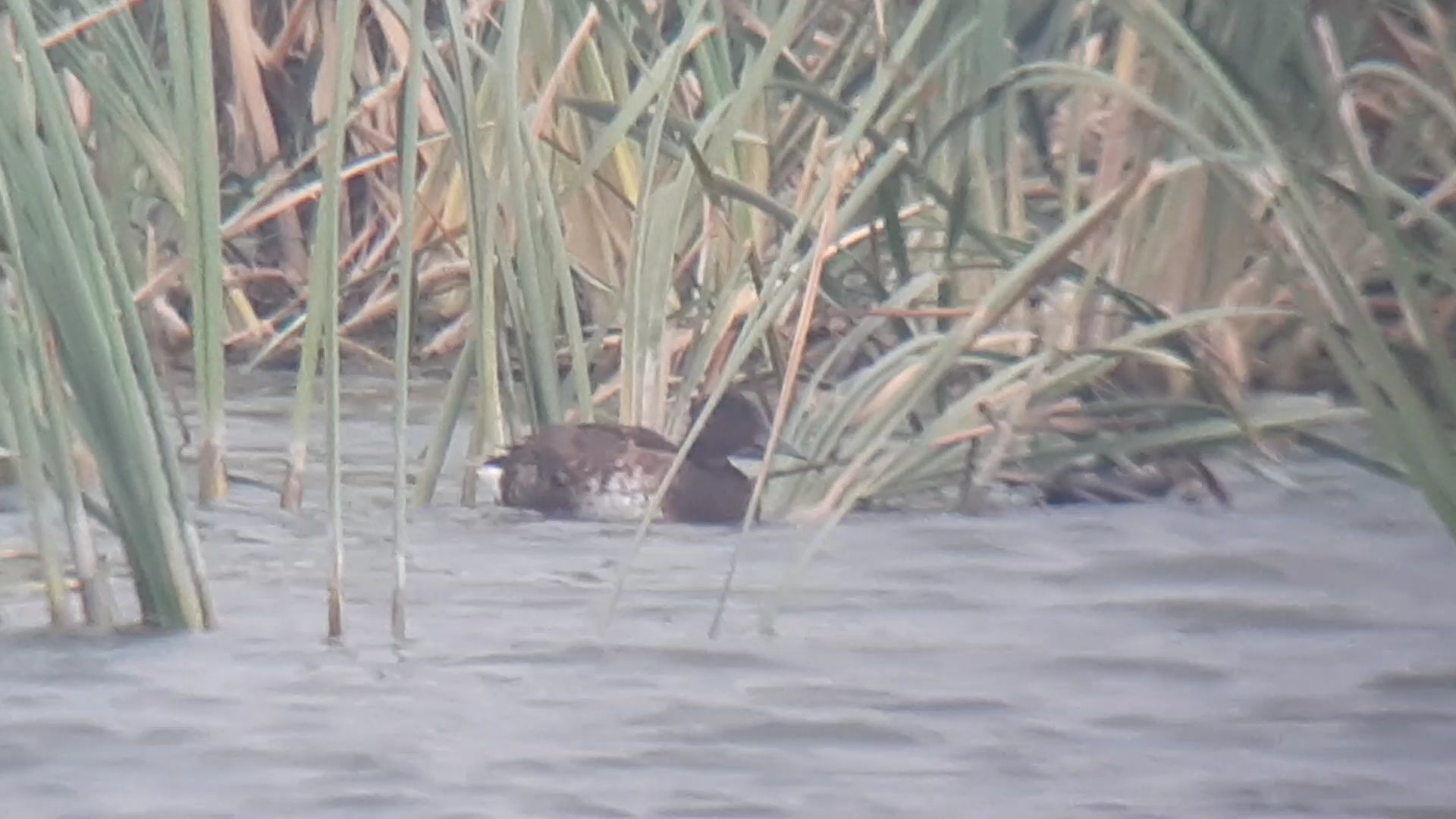
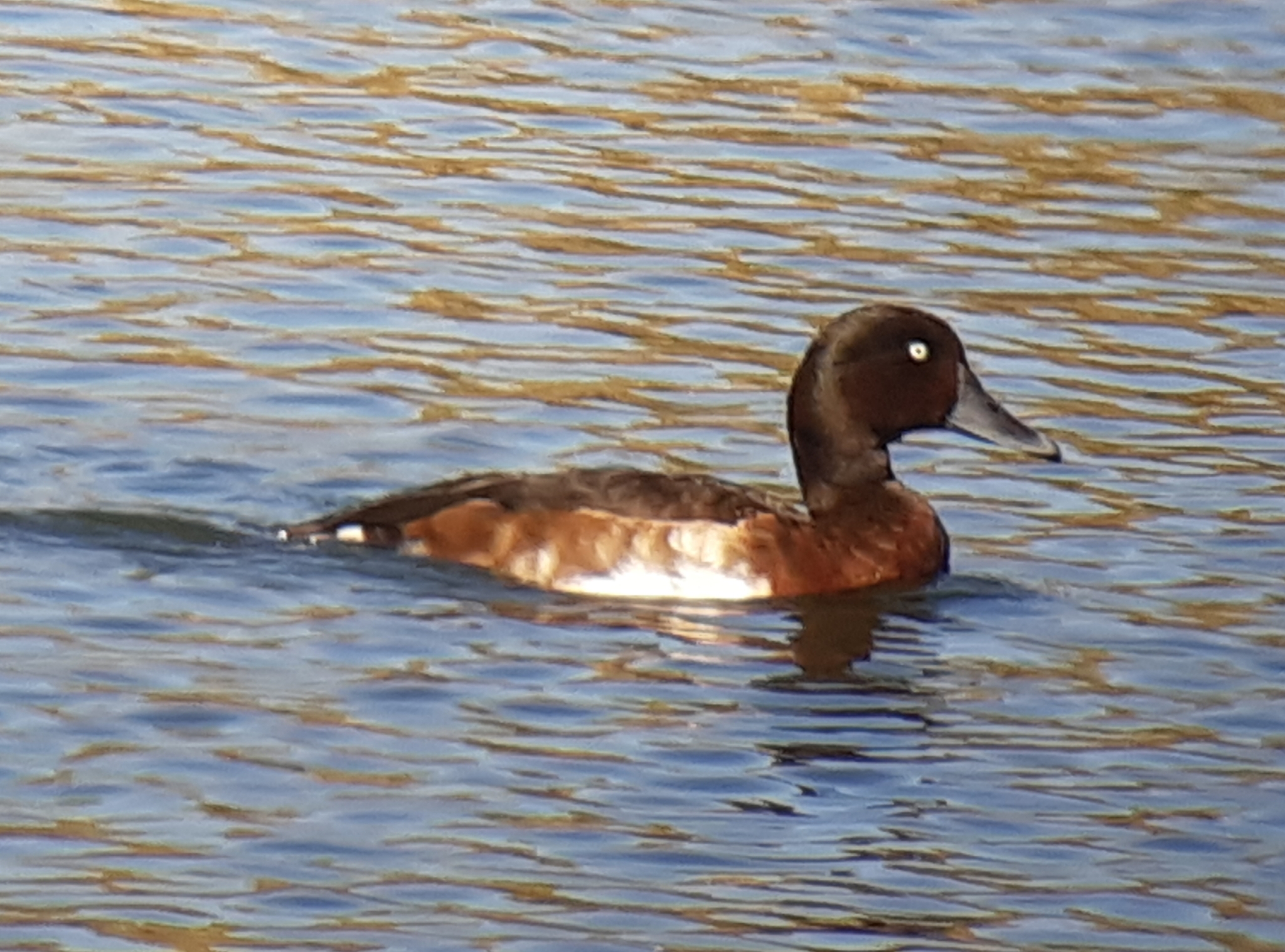
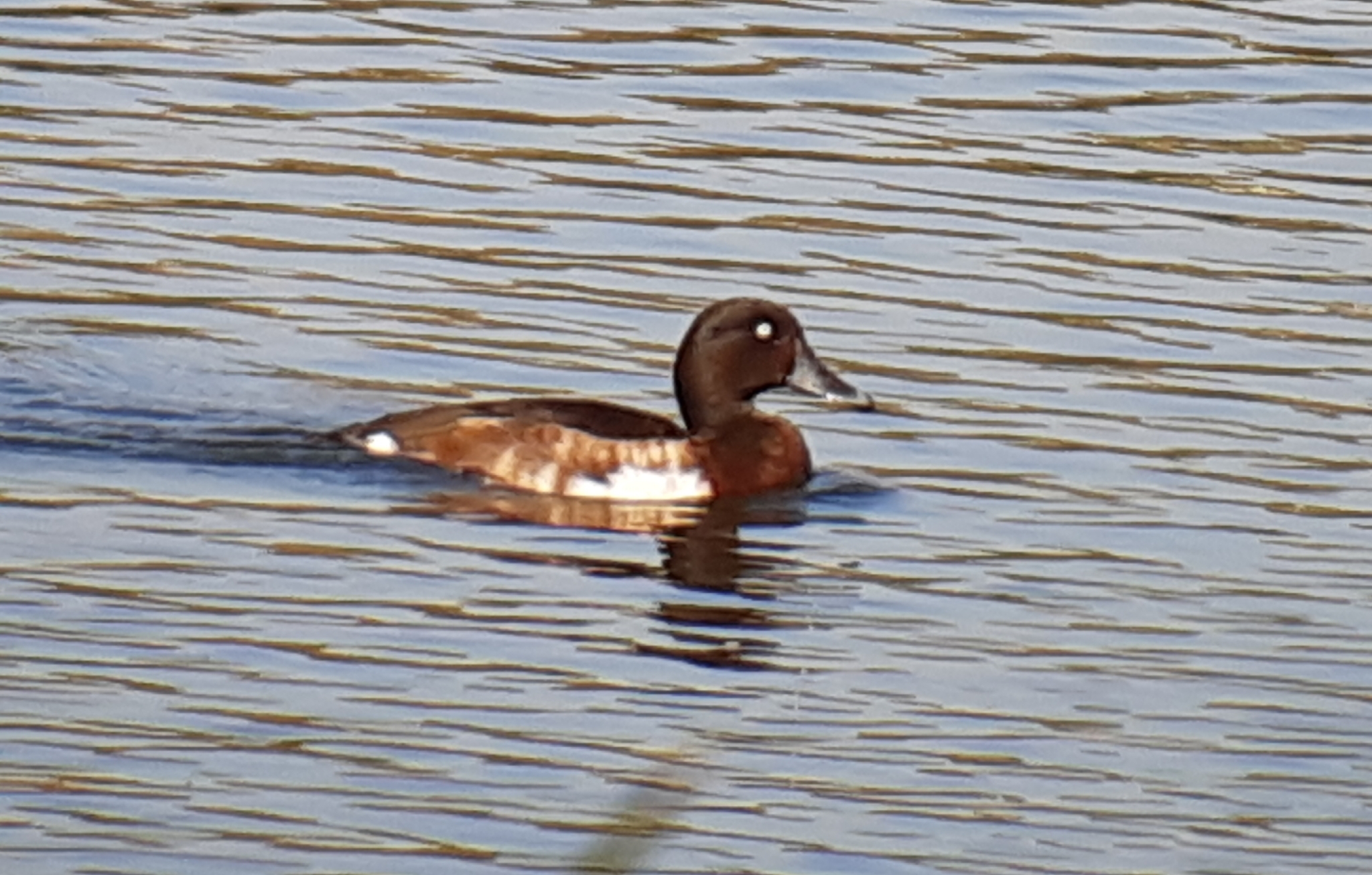
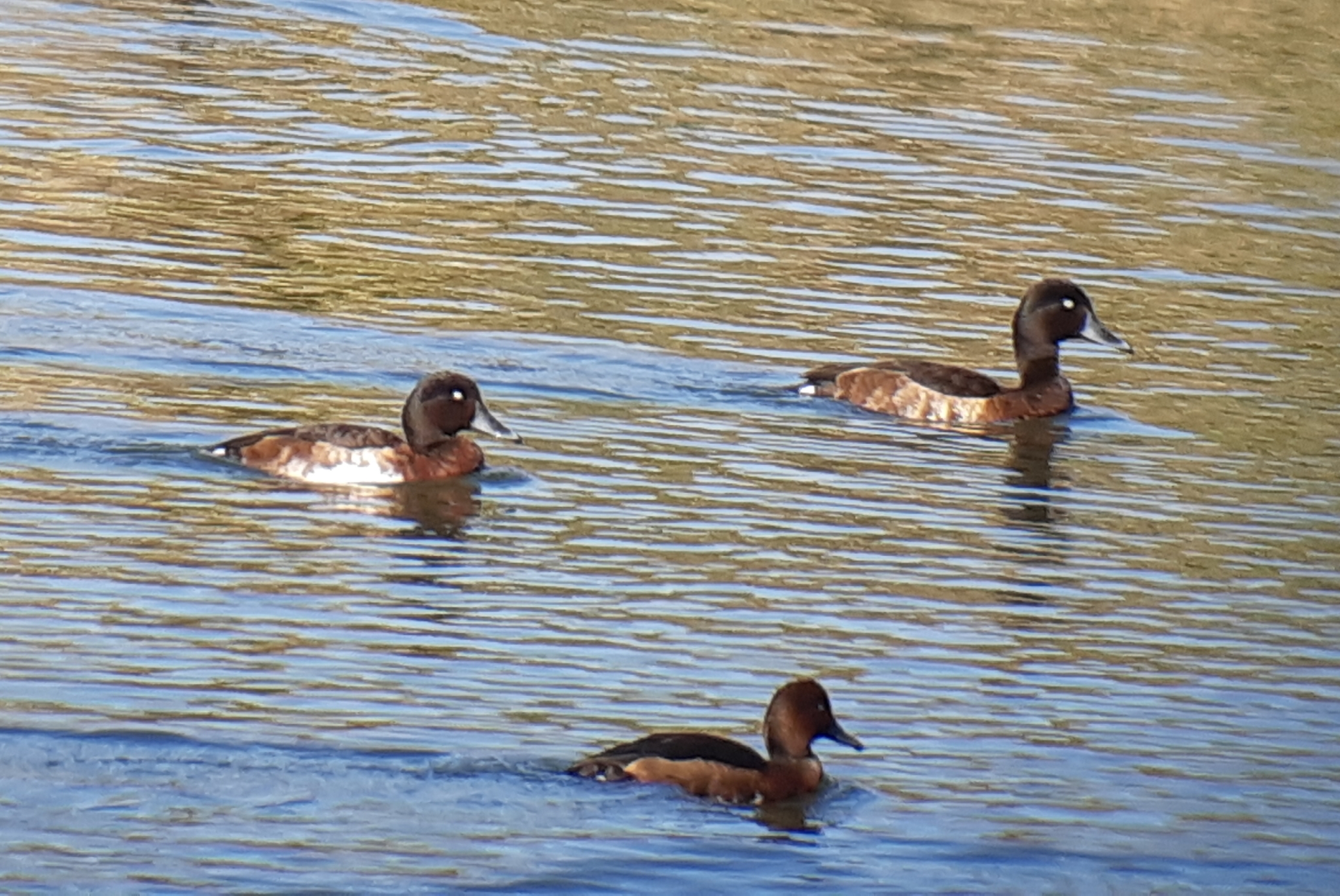
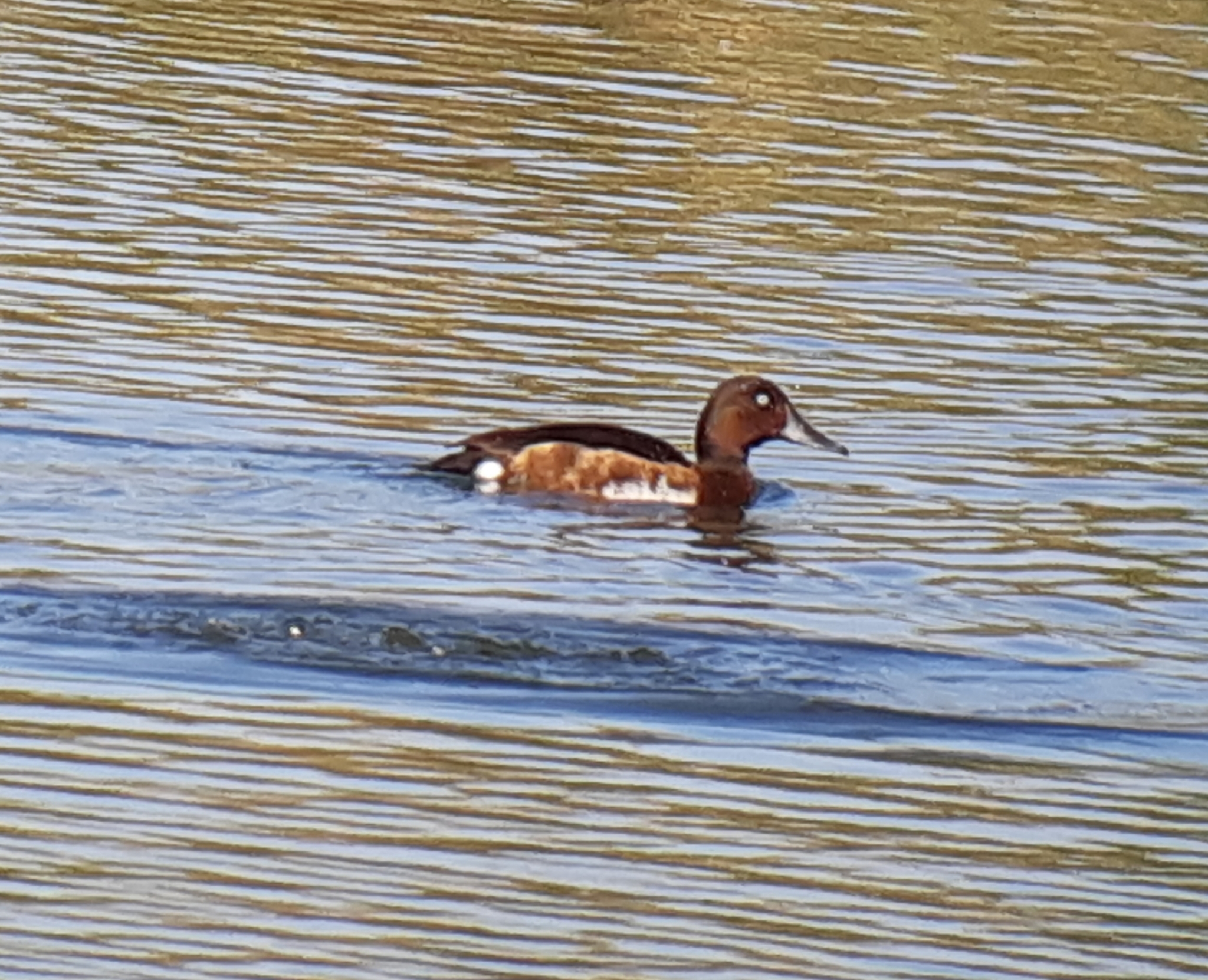
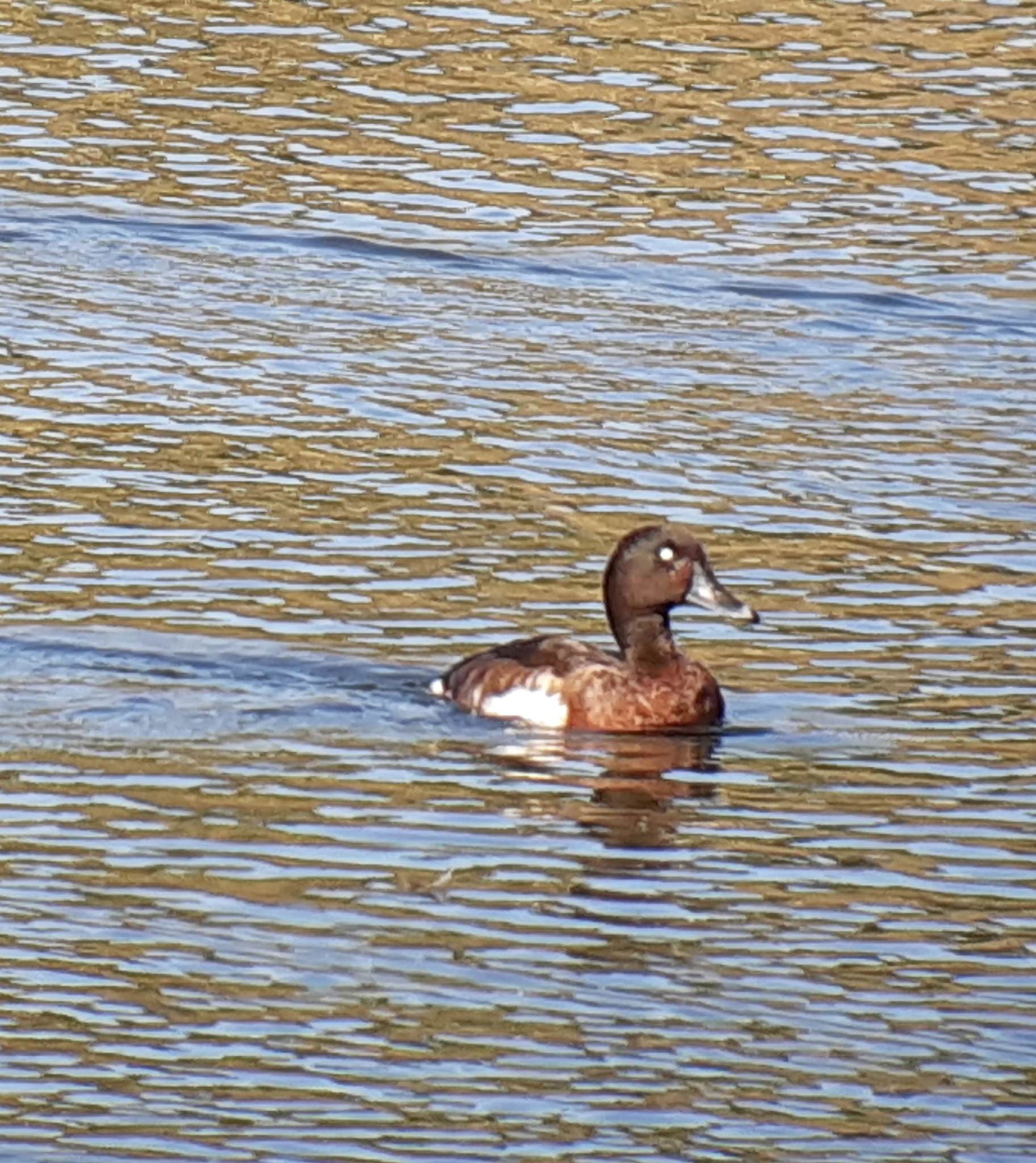
Length 41–47 cm (16–19 in) with a wingspan of 70–79 cm (28–31 in). Males weigh 500–730 g; females weigh 590–655 g. Breeding males have a black head and neck with a green gloss, white or paler yellow eyes, blackish-brown back, dark chestnut breast, and white or light chestnut flanks. Females have brown eyes, a dark brown head and neck blending into a chestnut-brown breast and flanks, and a bright chestnut spot at the lore. Both sexes possess wide white speculum feathers, a white vent-side, dark-grey bill with a black nail, and dark-grey tarsometatarsus. In poor light, the male may appear completely black.
Identification
Differentiated from the similar ferruginous duck by larger size, longer and more rounded head with a flatter forehead, and white flanks visible when floating. The female has a distinct bright chestnut lore spot absent in the ferruginous duck. Vocalizations include a harsh 'graaaak' during courtship, with females giving 'kura kura kura' and males 'kuro kuro'.
Distribution & Habitat
Traditionally bred in the Amur and Ussuri basins (Northeast China and southeastern Russian Far East). Recently colonized breeding sites in Hebei, Hubei, and Jiangxi provinces in China. No confirmed breeding north of Beijing since 2010. Winters primarily in mainland China south of the Yellow River; historical wintering in Taiwan, Japan, Bangladesh, India, North Korea, Laos, Myanmar, Nepal, Thailand, and Vietnam has largely ceased, with occasional vagrants in Bhutan, South Korea, Philippines, or Pakistan. Migrates between mid-March and mid-October/early November. Non-migratory in central and eastern China.
Behavior & Ecology
Inhabits open lakes, swamps, and ponds. Forms large flocks in winter and small wedge-shaped groups during migration. Feeds on aquatic plants, grass seeds, and molluscs, foraging at dusk. Monogamous within a breeding season. Nests are circular cylindrical structures made of sedges and reeds, placed in emergent vegetation or shallow water. Clutch size ranges from 5 to 14 eggs (average 9.7). Incubation lasts 23–26 days, performed by females who cover eggs when foraging. Males perform sentry duty. Nest survival rate is 14–45%. Exhibits incomplete inter- and intra-specific brood parasitism.
Conservation
Classified as Critically Endangered by the IUCN. The population of mature individuals is fewer than 1,000 and declining. Major threats include hunting (historically thousands annually in specific regions) and habitat loss due to water pollution, fishing management, and wetland changes. Most breeding sites and suitable habitats are not located in protected areas. Listed as a first-class protected animal in China. A captive population was established in Beijing Zoo in 2022 for potential reintroduction.
Source: Wikipedia · CC BY-SA 3.0
Taxonomy
- Order
- Anseriformes
- Family
- Anatidae
- Genus
- Aythya
Distribution
breeds northeastern Asia; winters to southern China and southeastern Asia (now rare everywhere)
Data Sources
Species description from Wikipedia, licensed under CC BY-SA 3.0.
Bird images and sounds sourced from GBIF, contributed by citizen scientists worldwide under Creative Commons licenses.
Taxonomy data from AviList 2025.