Strigiformes / Strigidae / Athene
Little Owl
Athene noctua · 纵纹腹小鸮
Introduction
A small member of the typical owl family Strigidae, inhabiting temperate and warmer parts of Europe, the Palearctic east to Korea, and North Africa. It occupies diverse habitats including farmland, woodland fringes, steppes, and semi-deserts. The species is mainly nocturnal but also partly diurnal, feeding on insects, earthworms, and small vertebrates. It is assessed as Least Concern by the IUCN due to a large population and wide range.
Description
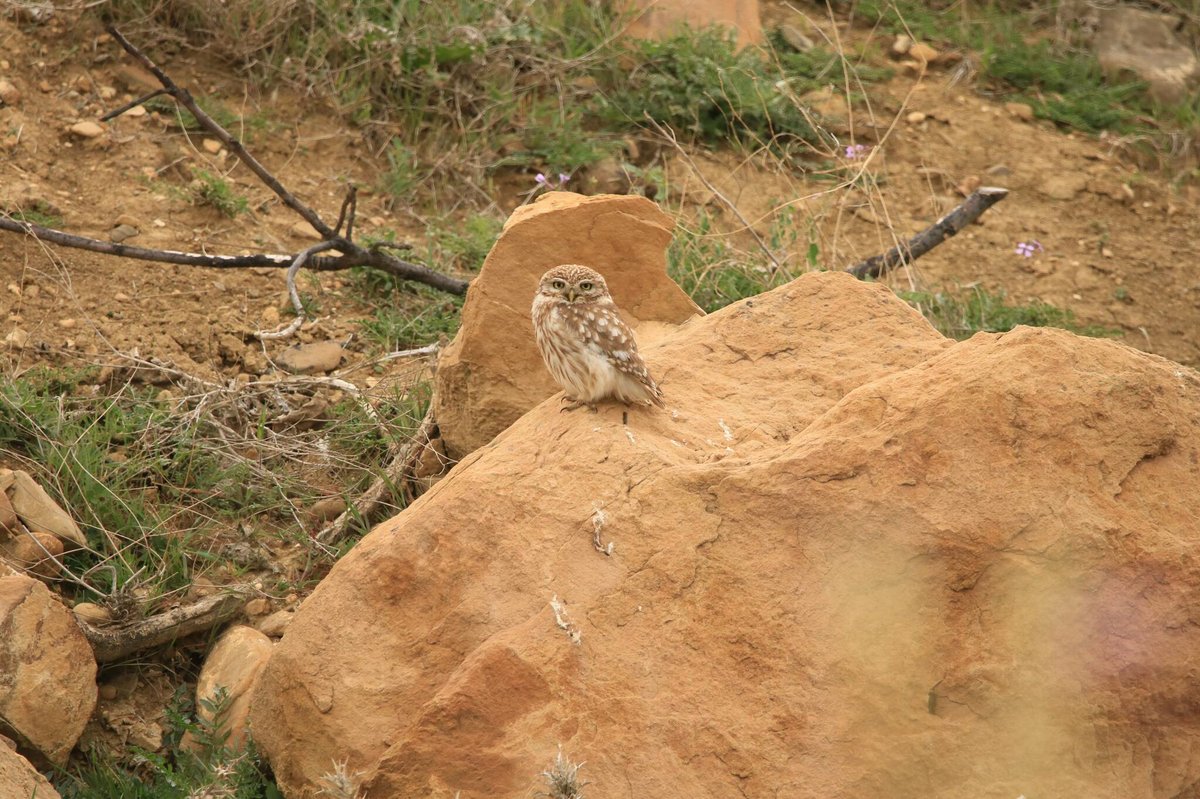
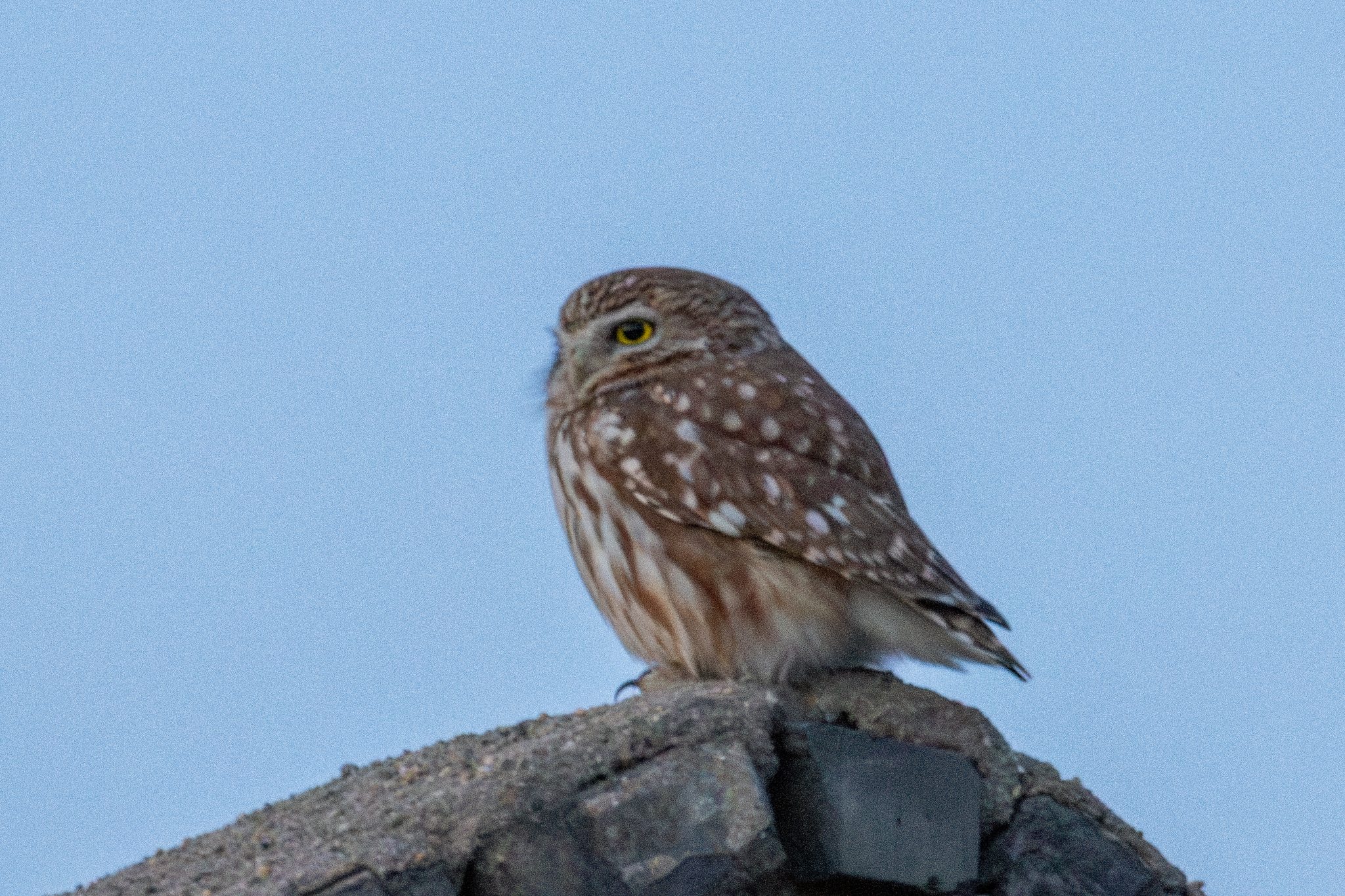
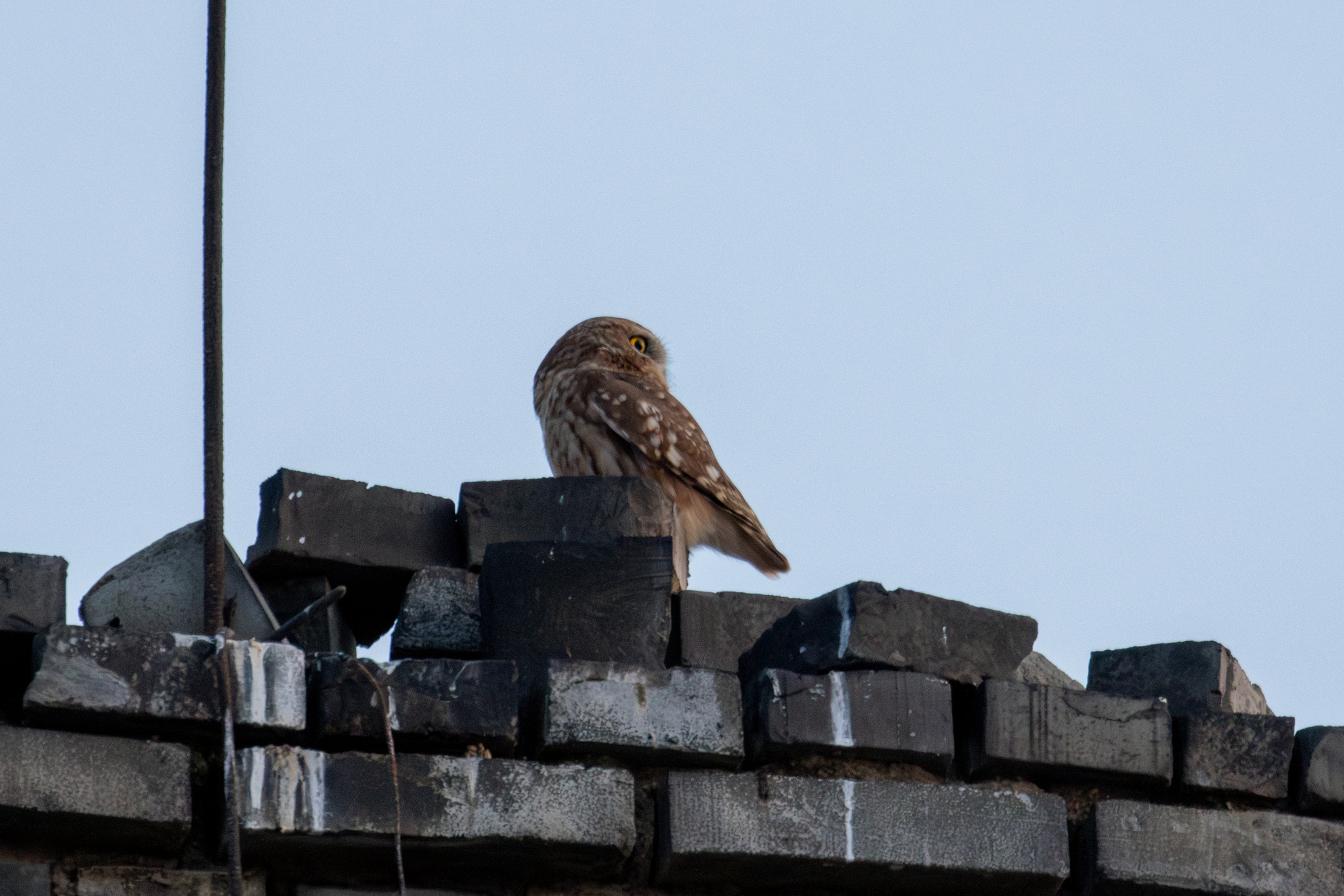
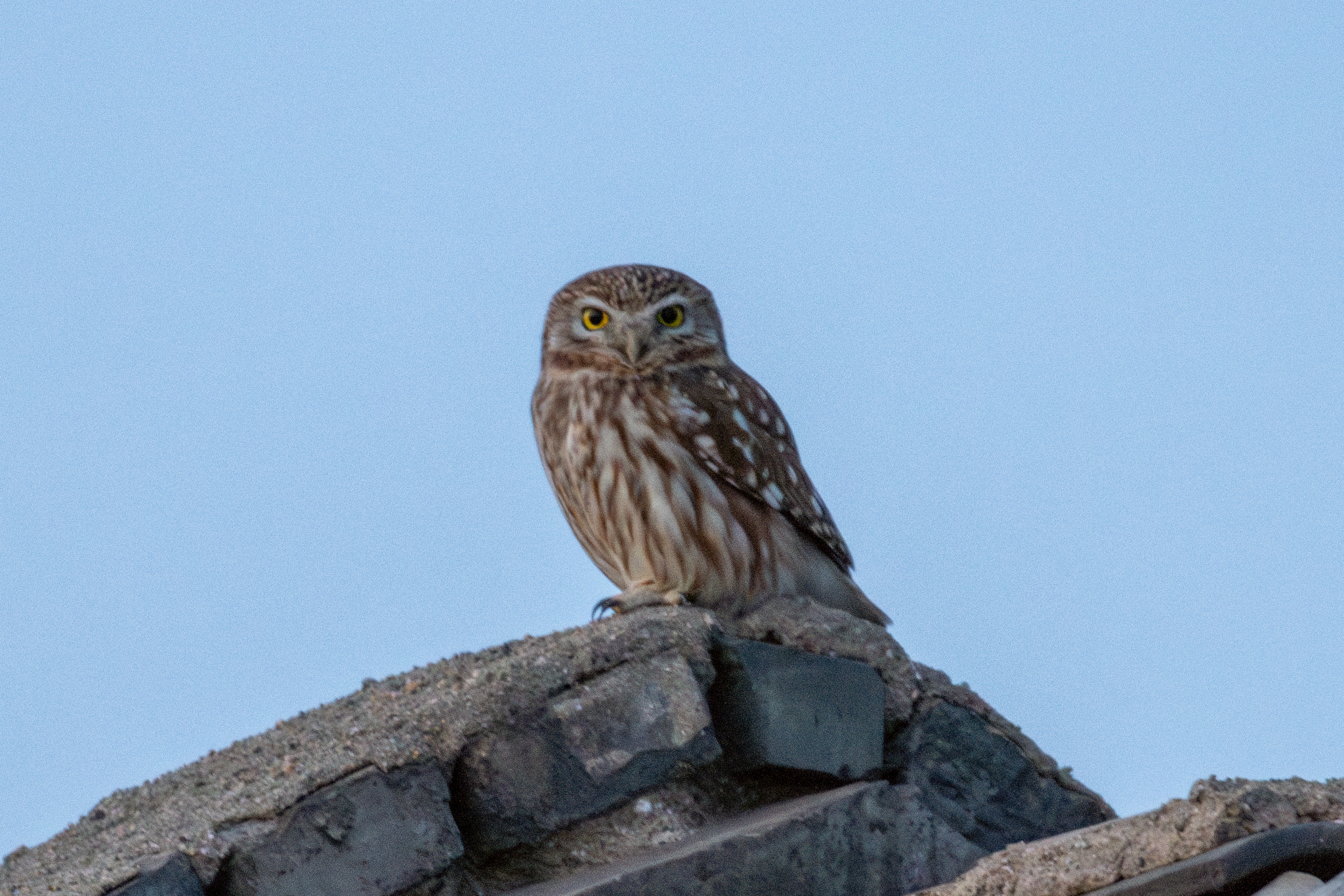
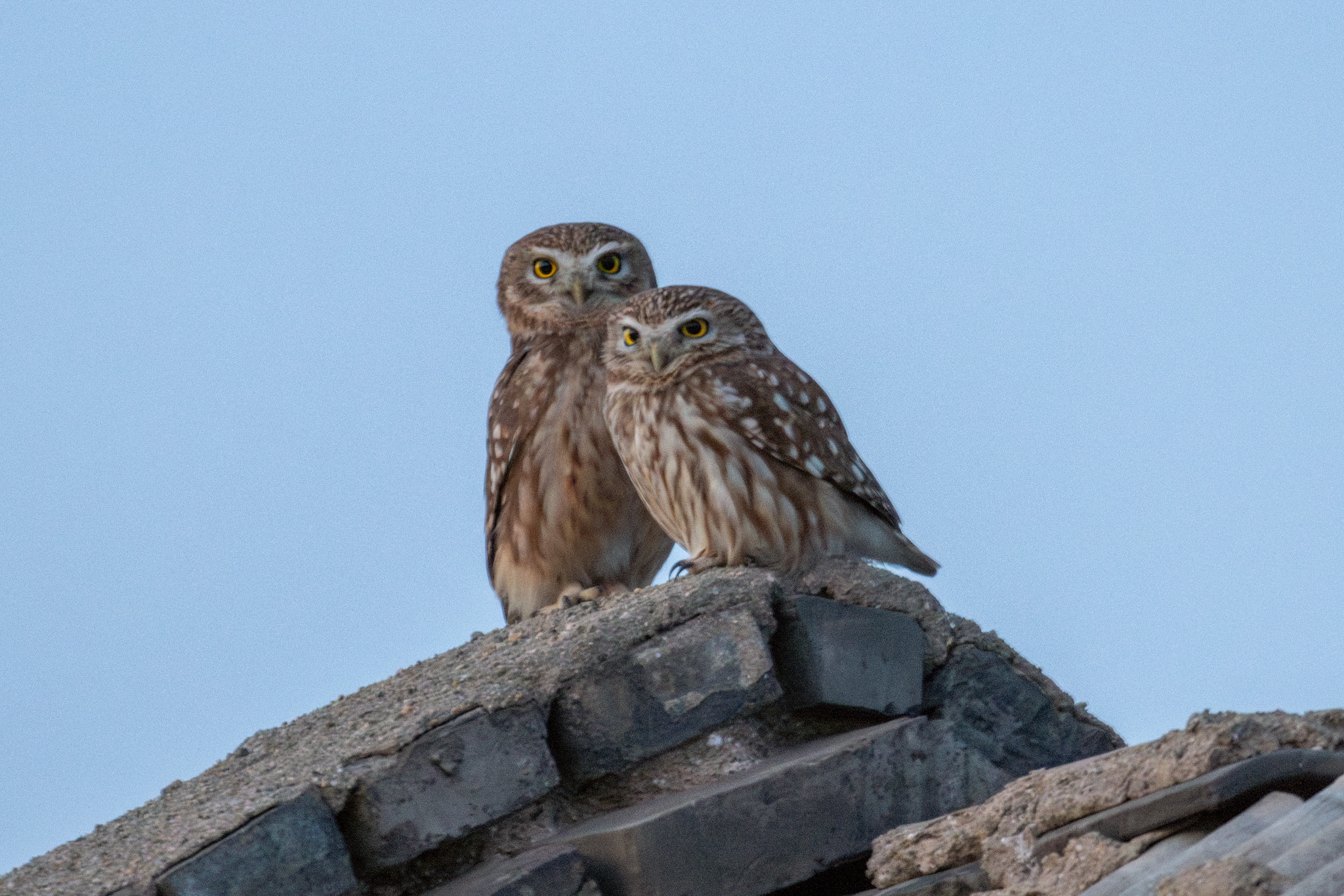
Small owl approximately 22 cm (8.7 in) in length with a wingspan of 56 cm (22 in) and weight of about 180 g (6.3 oz). It has a flat-topped head, plump compact body, short tail, and long legs. The facial disc is flattened above the eyes, creating a frowning expression with white 'eyebrows' and yellow eyes. Plumage is greyish-brown, spotted, streaked, and barred with white; underparts are pale and streaked with darker color. Juveniles are duller and lack the adult's white crown spots. Moult occurs from July to November, with males starting before females.
Identification
Key marks include a large head, long legs, yellow eyes, and white eyebrow-like markings giving a stern expression. Flight style is bounding, similar to a woodpecker. Vocalizations include a querulous 'kiew, kiew' call, less frequent whistling or trilling, and modulated duets during breeding. Near nests, it produces yelping, chattering, or barking sounds.
Distribution & Habitat
Widespread across Europe, Asia, and North Africa, ranging from the Iberian Peninsula and Denmark east to China and south to the Himalayas. In Africa, it occurs from Mauritania to Egypt, the Red Sea, and Arabia. Introduced to Britain in the late 19th century and New Zealand's South Island in the early 20th century. Habitats include agricultural land, orchards, parks, gardens, steppes, semi-deserts, dunes, ruins, and rocky outcrops. Sedentary in nature, found below 500 m in the UK but up to 3,600 m in Tibet. Thirteen subspecies are recognized.
Behavior & Ecology
Partly diurnal, often perching boldly during the day. Feeds on insects, earthworms, amphibians, reptiles, birds, and mammals, caching surplus food. Diet analysis shows 20–50% mammals and 24–49% insects. Territorial; males defend territories for life, recognizing neighbors by voice. Aggressive defense includes aerial attacks and claw contact. Breeding occurs in spring with clutches of 3–5 eggs laid in cavities such as tree holes, cliffs, or burrows. Female incubates for 28–29 days while male provides food. Chicks fledge at about 7 weeks. Pairs often remain together year-round. Life expectancy is about 16 years, though average lifespan is around 3 years due to mortality factors.
Conservation
Assessed as Least Concern by the International Union for Conservation of Nature. Estimated population includes 560,000 to 1.3 million breeding pairs in Europe, with a global estimate of 5 to 15 million birds. The population is believed to be stable.
Culture
Closely associated with the Greek goddess Athena and Roman goddess Minerva, symbolizing wisdom. Depicted on ancient Greek tetradrachm coins and modern Greek one-euro coins. Historically used in 'cottage hunting' in Italy and Germany to attract other birds via mobbing behavior. Introduced to England in the 19th century, initially facing persecution from game breeders before dietary studies clarified its role. Featured on a 1992 Dutch 100 guilder banknote.
Source: Wikipedia · CC BY-SA 3.0
Taxonomy
- Order
- Strigiformes
- Family
- Strigidae
- Genus
- Athene
Subspecies (13)
-
Athene noctua bactriana
Azerbaijan to Iraq, Iran, Afghanistan, and Lake Balkhash
Data Sources
Species description from Wikipedia, licensed under CC BY-SA 3.0.
Bird images and sounds sourced from GBIF, contributed by citizen scientists worldwide under Creative Commons licenses.
Taxonomy data from AviList 2025.