Strigiformes / Strigidae / Asio
Long-eared Owl
Asio otus · 长耳鸮
Introduction
A medium-sized owl in the family Strigidae with an extensive breeding range across Europe, the Palearctic, and North America. It prefers semi-open habitats, roosting in dense wood but hunting over open ground. The species is a specialized predator of small rodents, particularly voles, though it adapts to other prey in arid or urban settings. It is partially migratory and often forms communal roosts. Classified as Least Concern by the IUCN due to its broad range and large population, though strong declines have been detected in several parts of its range.
Description
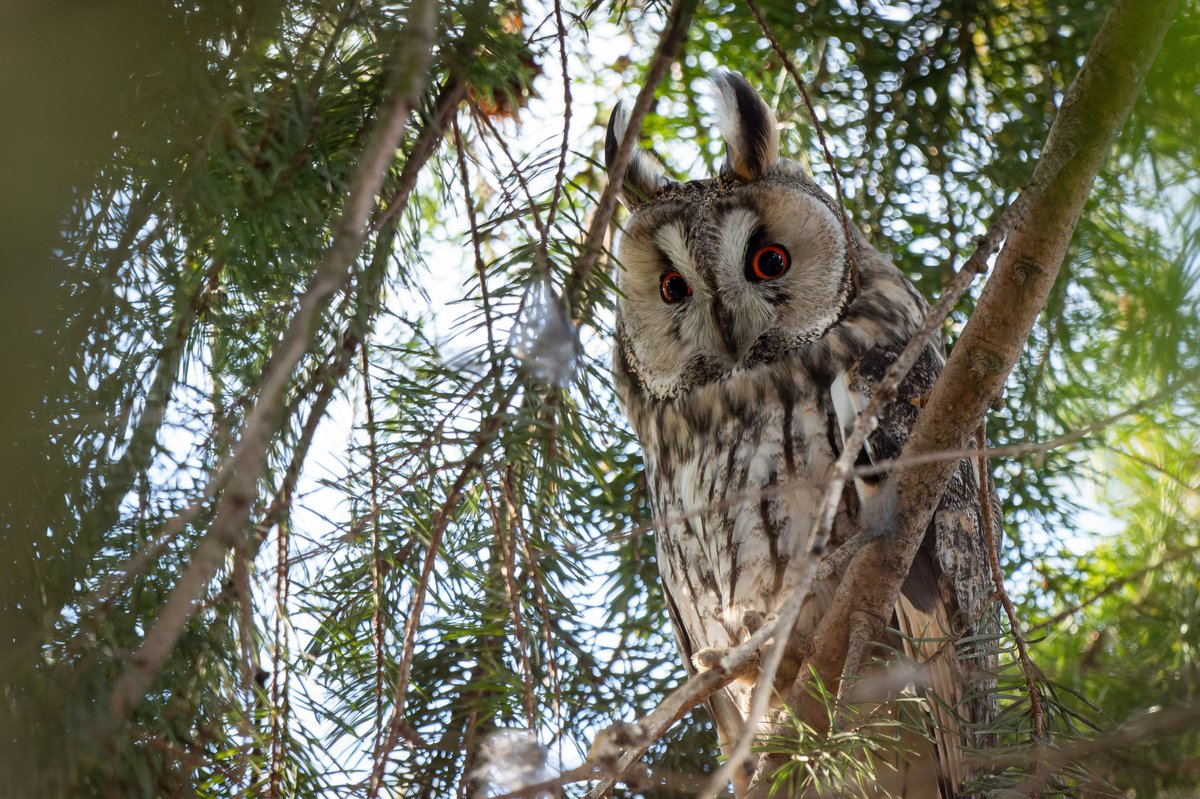
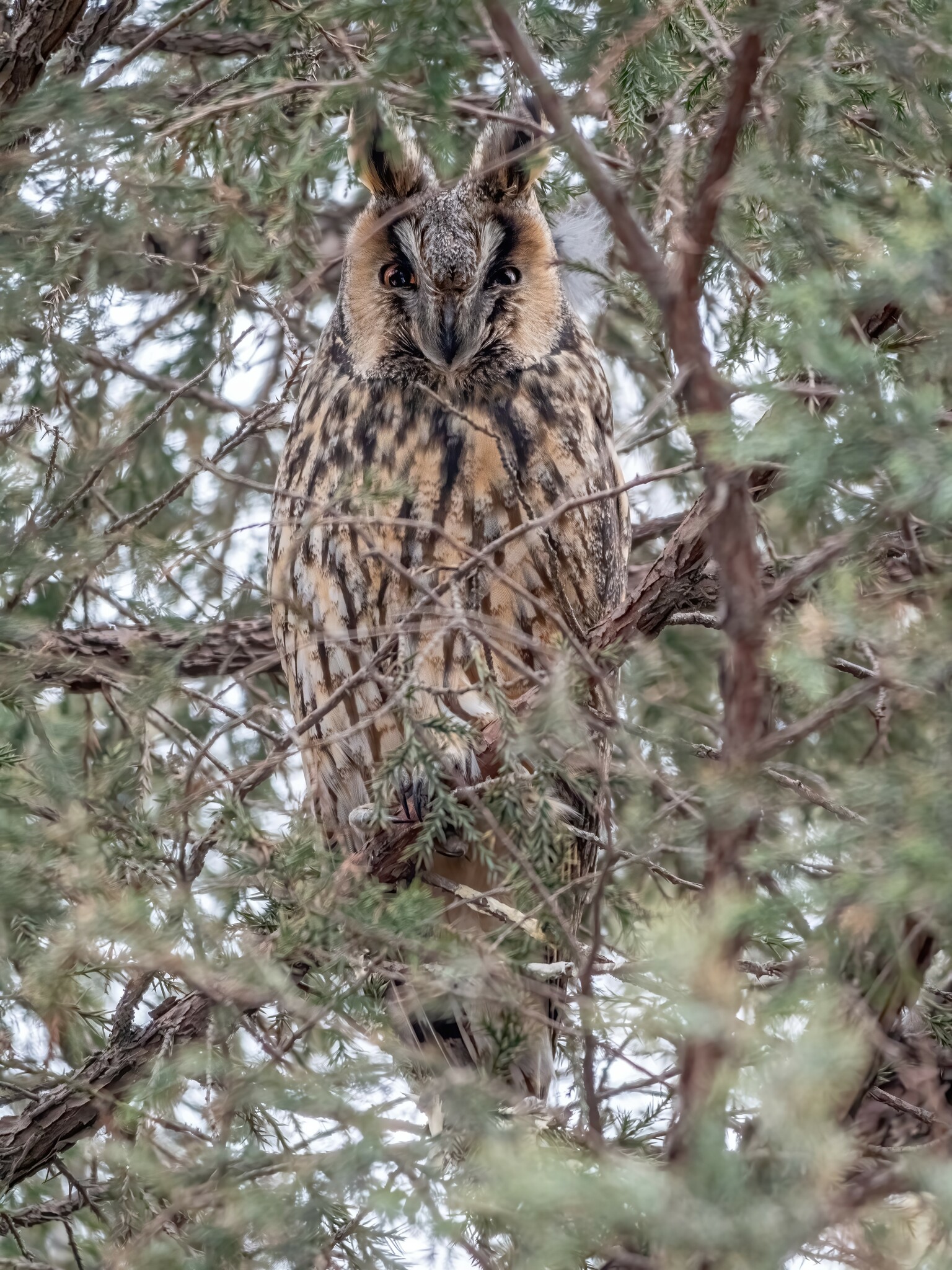
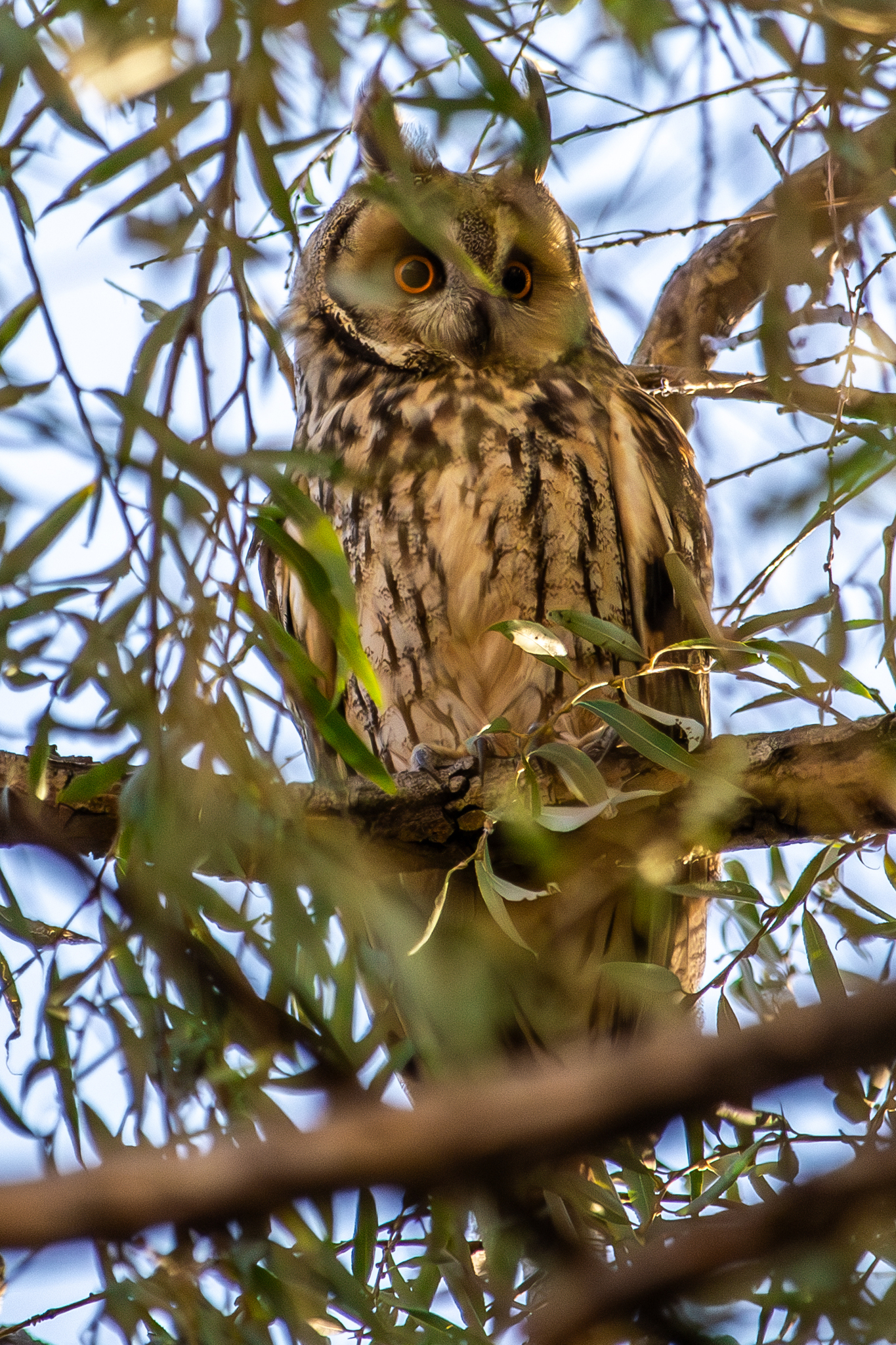
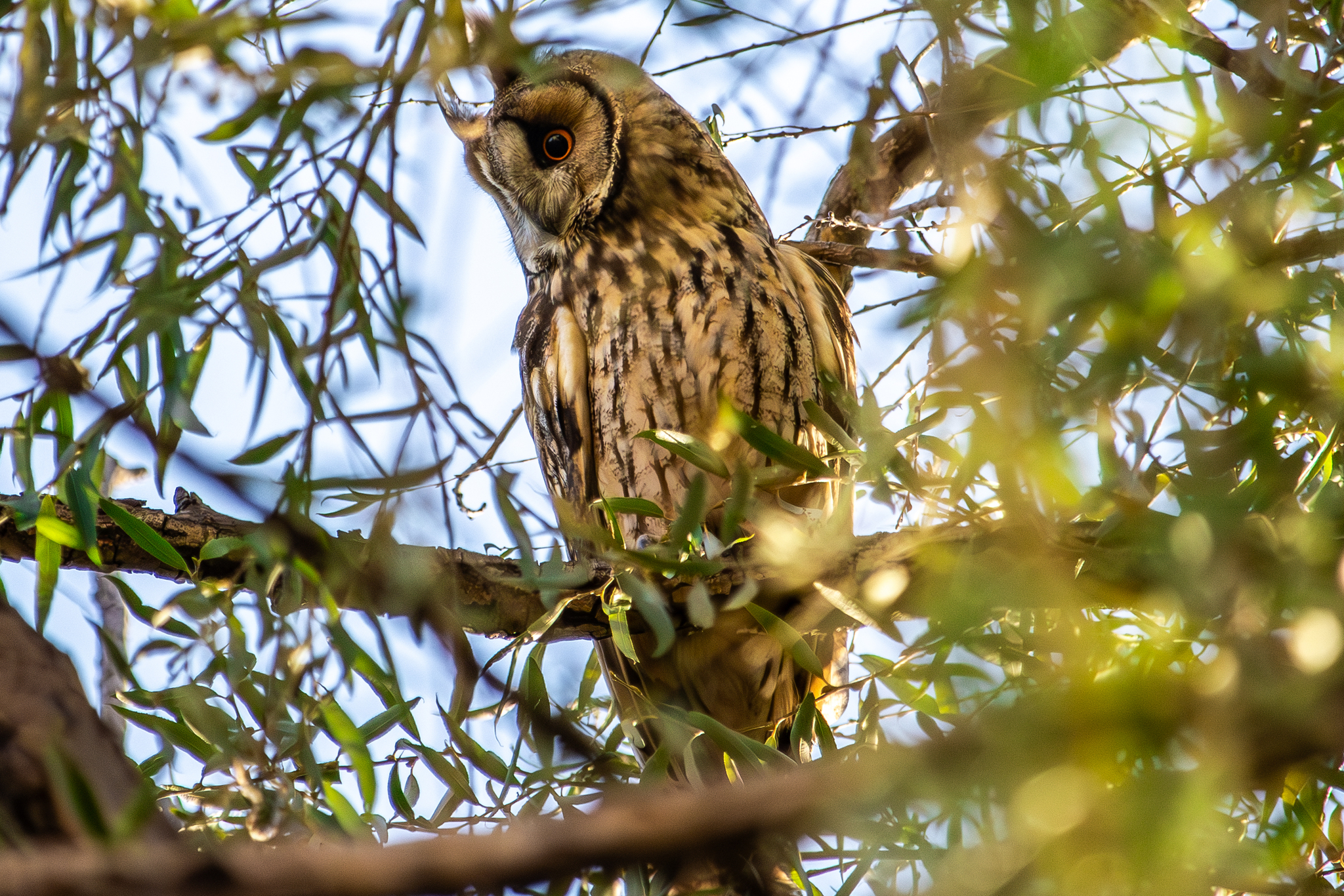
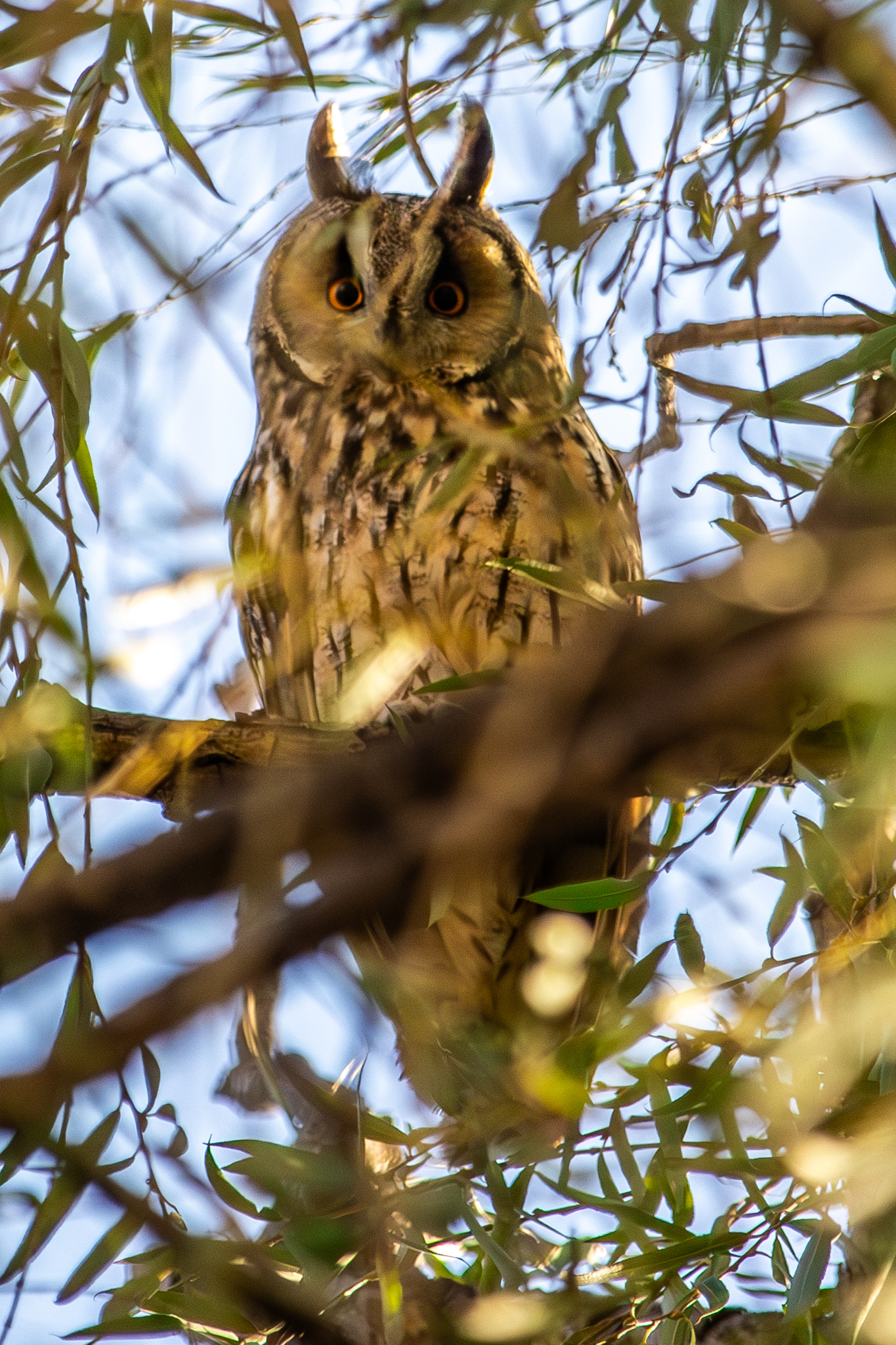
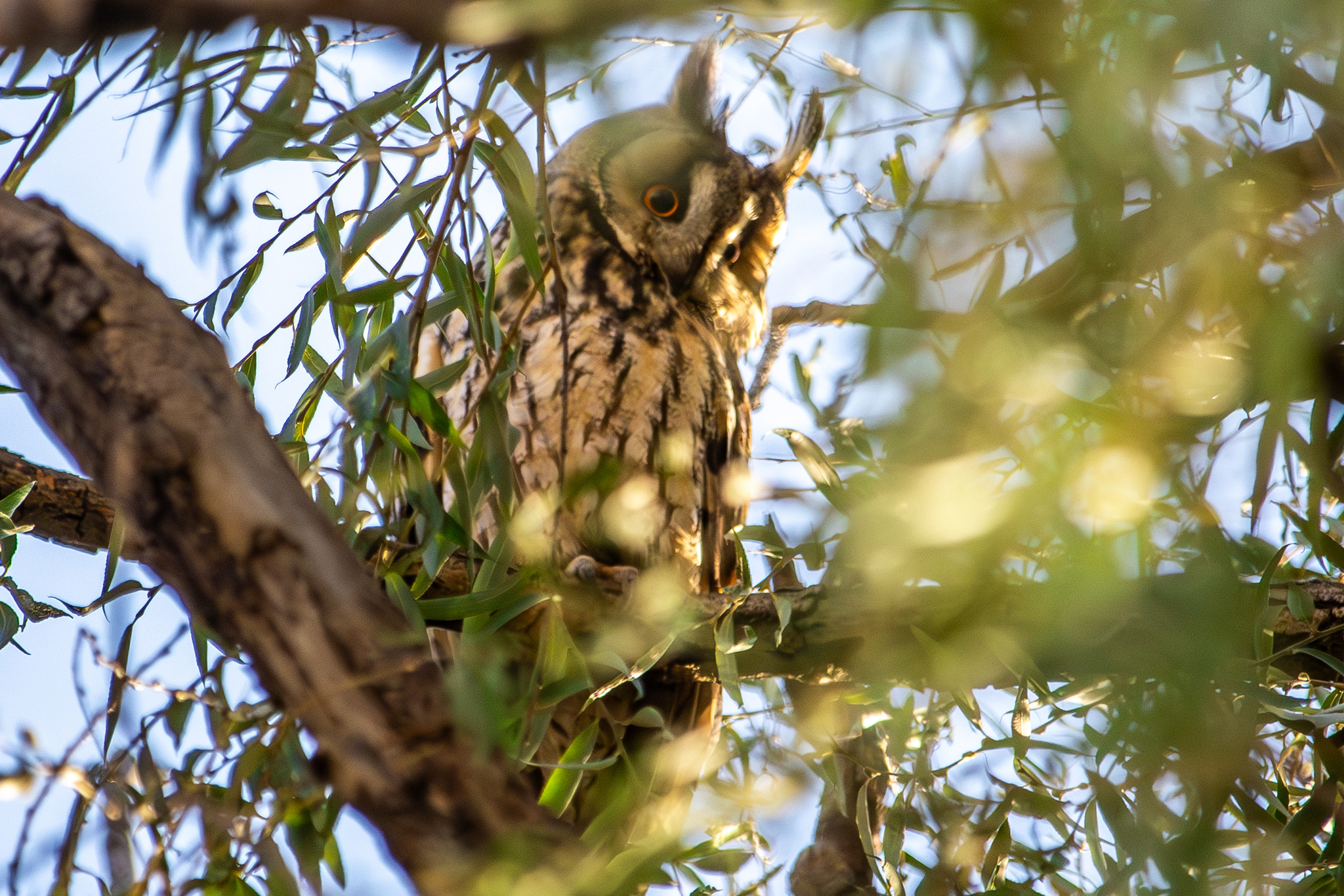
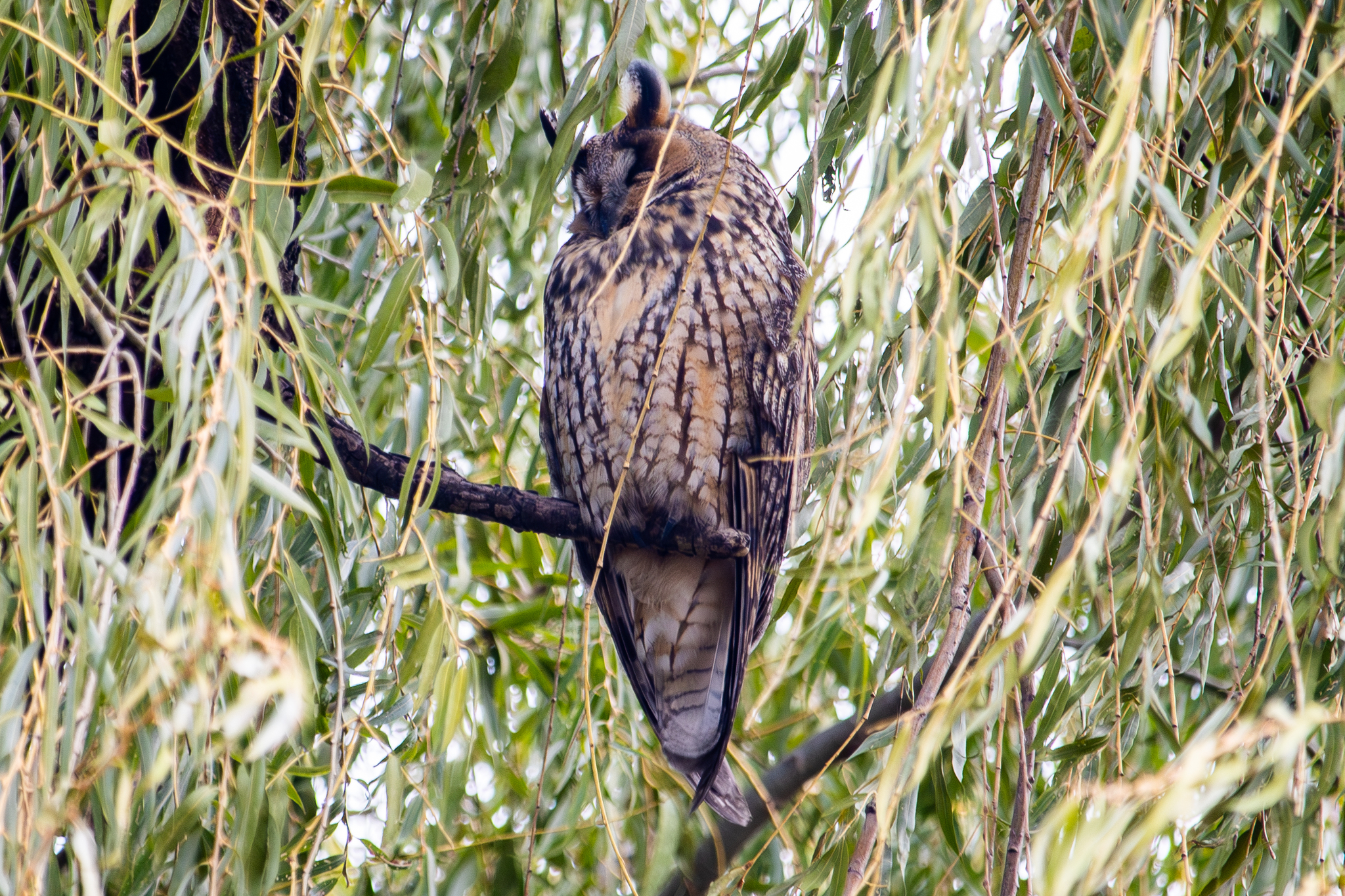
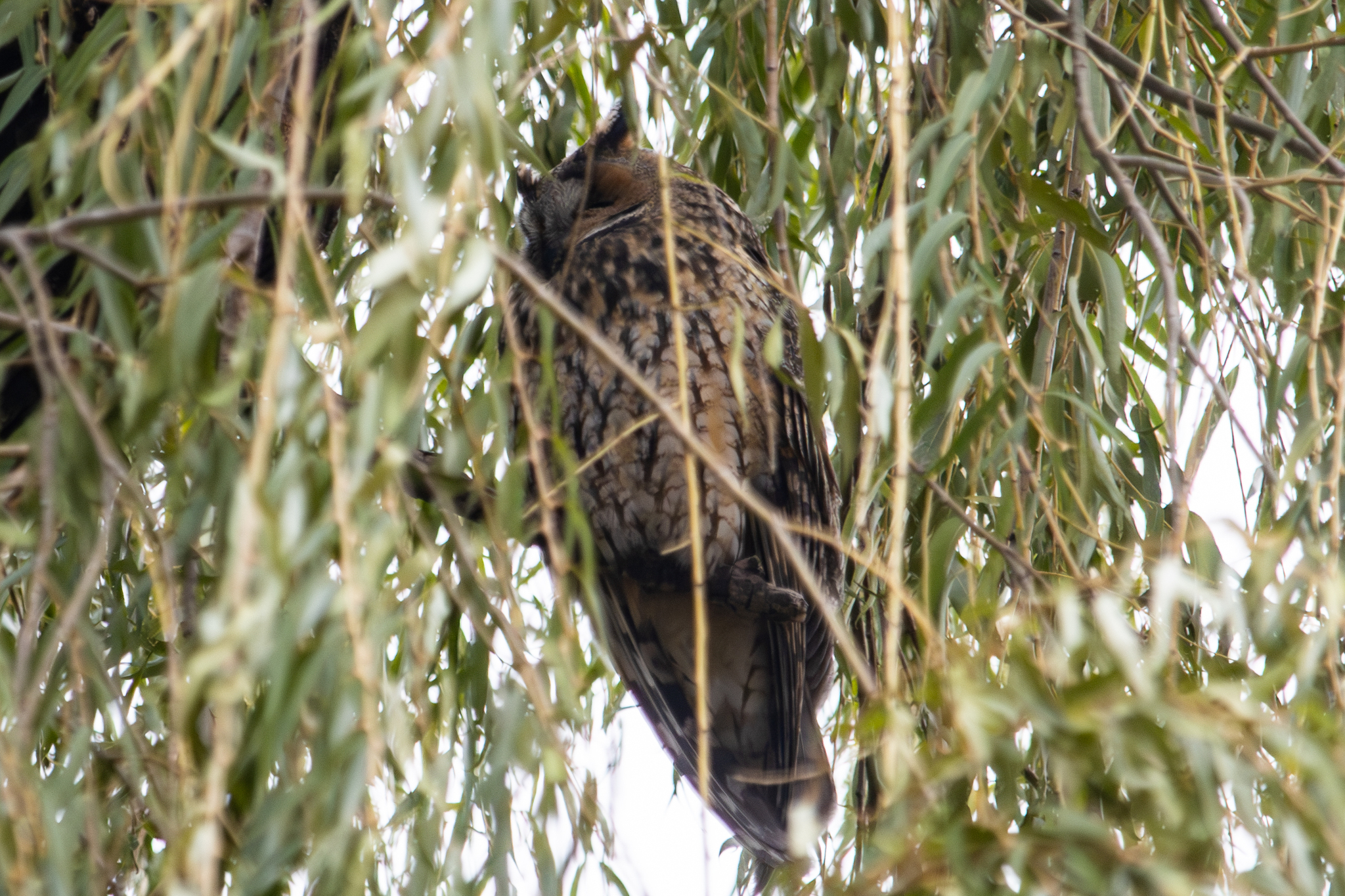
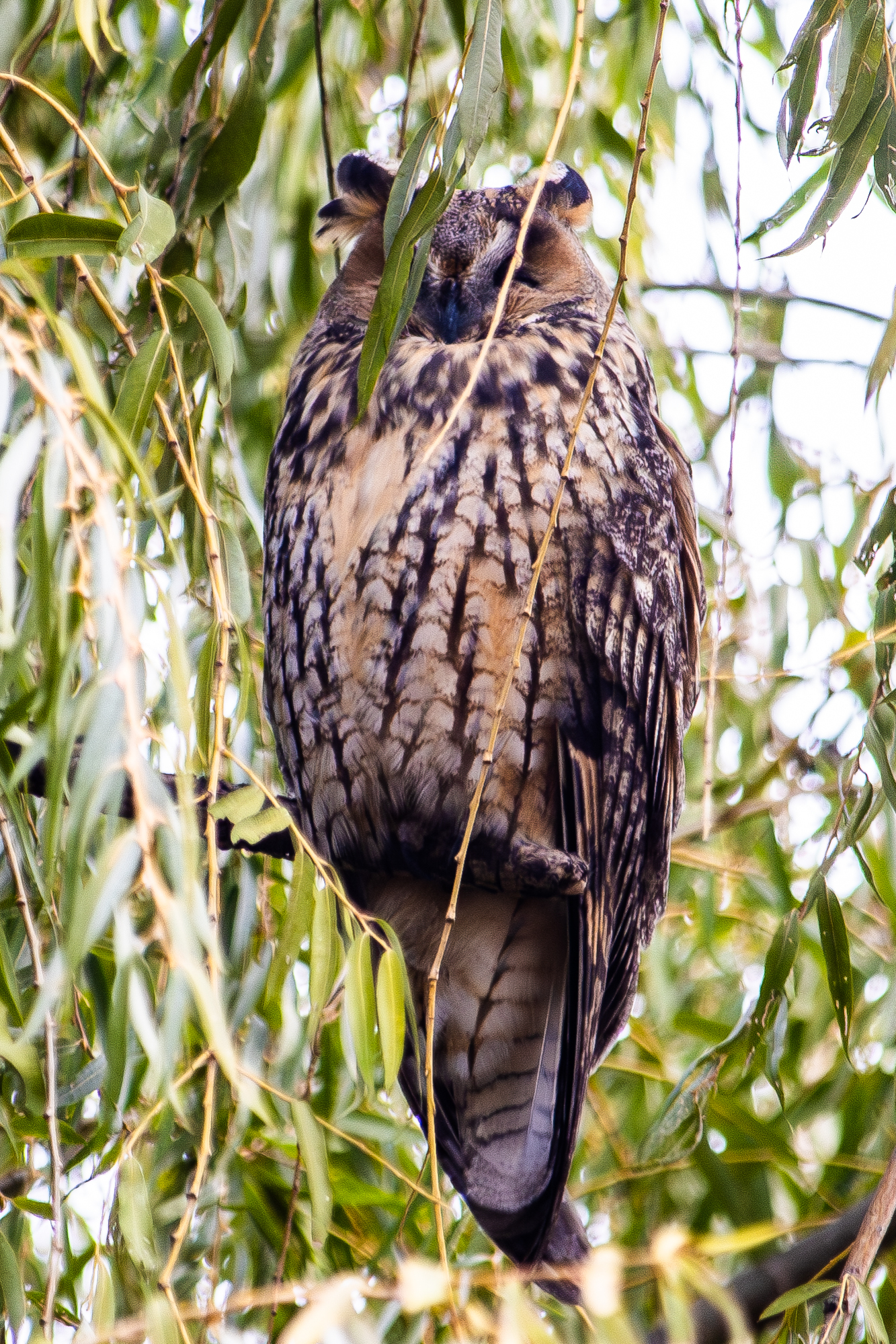
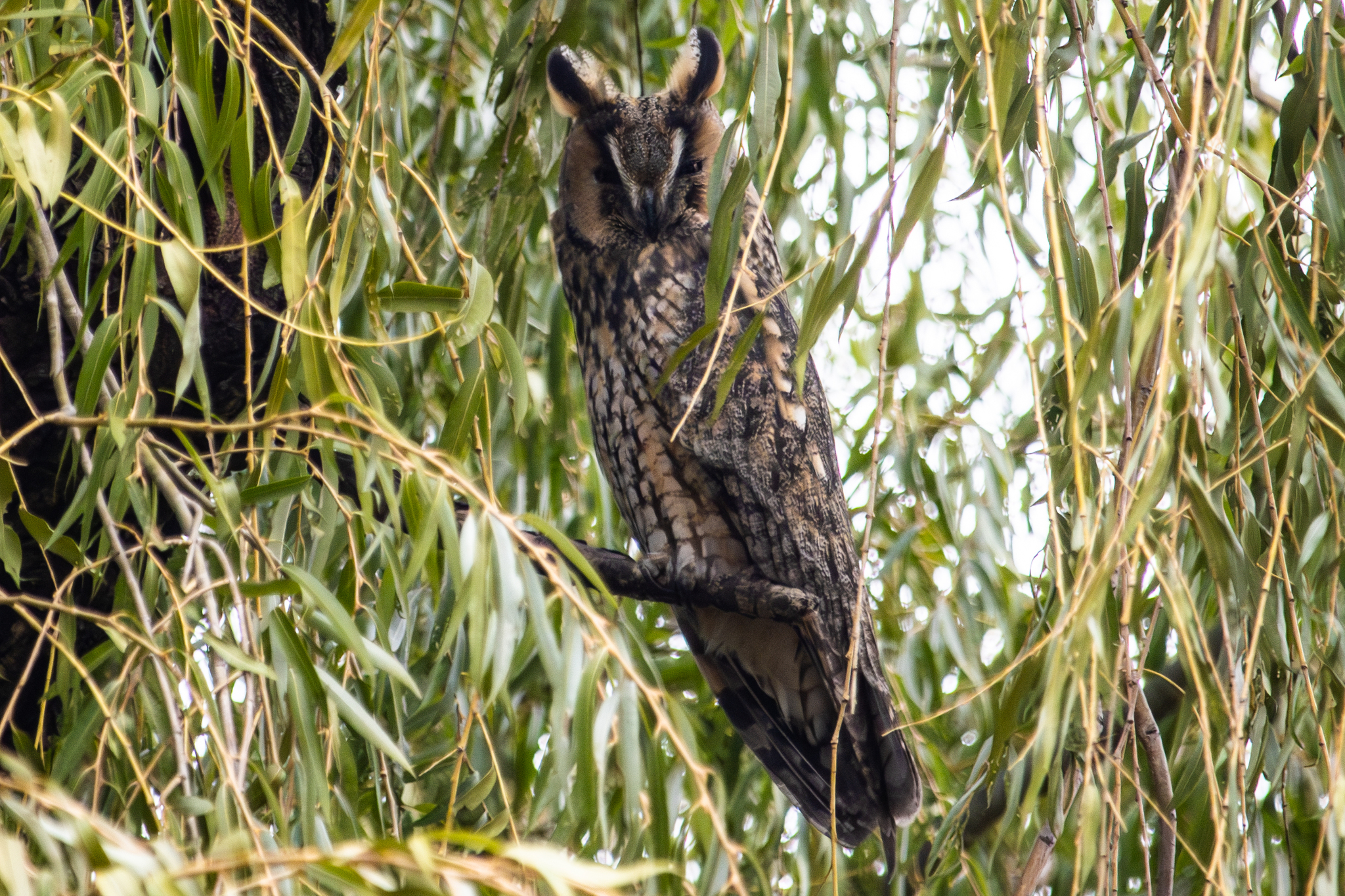
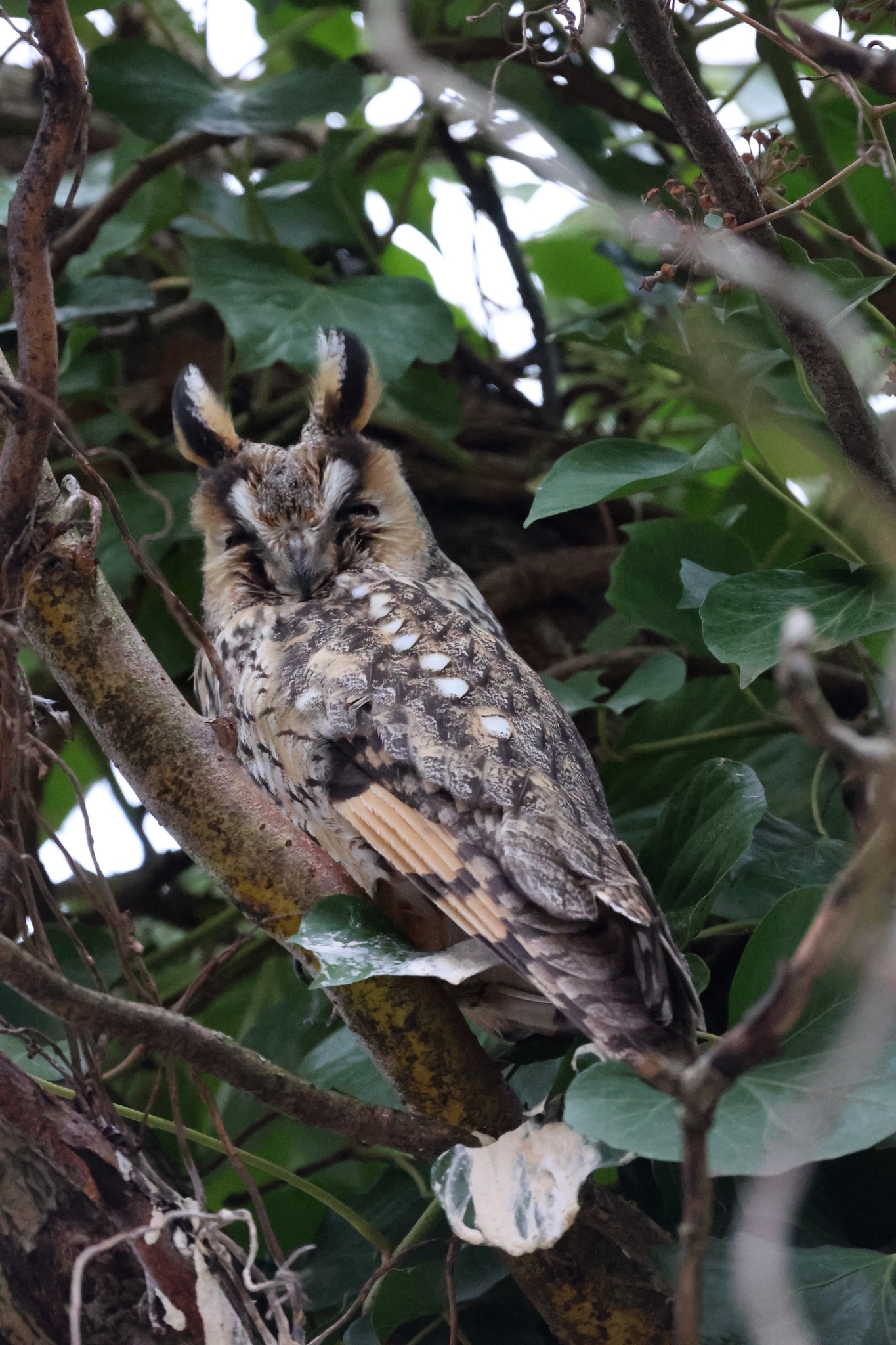
Measures 31–40 cm in length with a wingspan of 86–102 cm. It has a slim body, long wings, and prominent erectile ear tufts positioned near the center of the head. Plumage is ochraceous-tawny with a grayish or brownish wash, overlaid with blackish vertical streaks and spots. Scapulars are marked whitish. The facial disc is well-developed, rimmed dusky, often with white lines. Eyes vary from yellowish-orange to orange-red. Males weigh 160–330 g; females weigh 180–435 g. Females are generally larger and may be darker than males. Subspecies vary in size and plumage darkness, with North American birds often more vividly marked.
Identification
Distinguished by prominent ear tufts, slender build, and orange eyes. In flight, wings appear squared-off with a distinctive, erratic, buoyant flapping style. Underwing shows dark comma-like markings at the wrist, lacking in similar short-eared owls. Short-eared owls have yellow eyes, horizontal black eye markings, and a broad white band on the rear wing edge. Tawny owls are bulkier, lack ear tufts, and have rounded heads. Great horned owls are larger with widely separated ear tufts and barred underparts.
Distribution & Habitat
Breeds across Europe, the Palearctic (including Russia, China, Japan), and North America (Canada, USA, northern Mexico). Northern populations are migratory, wintering further south; some are nomadic or irruptive based on prey cycles. In North America, breeds mainly in the west and upper Midwest, wintering broadly across the US and into Mexico. Habitats include woodland edges, conifer stands, hedgerows, parks, and semi-desert oases, requiring open ground for hunting and dense cover for roosting.
Behavior & Ecology
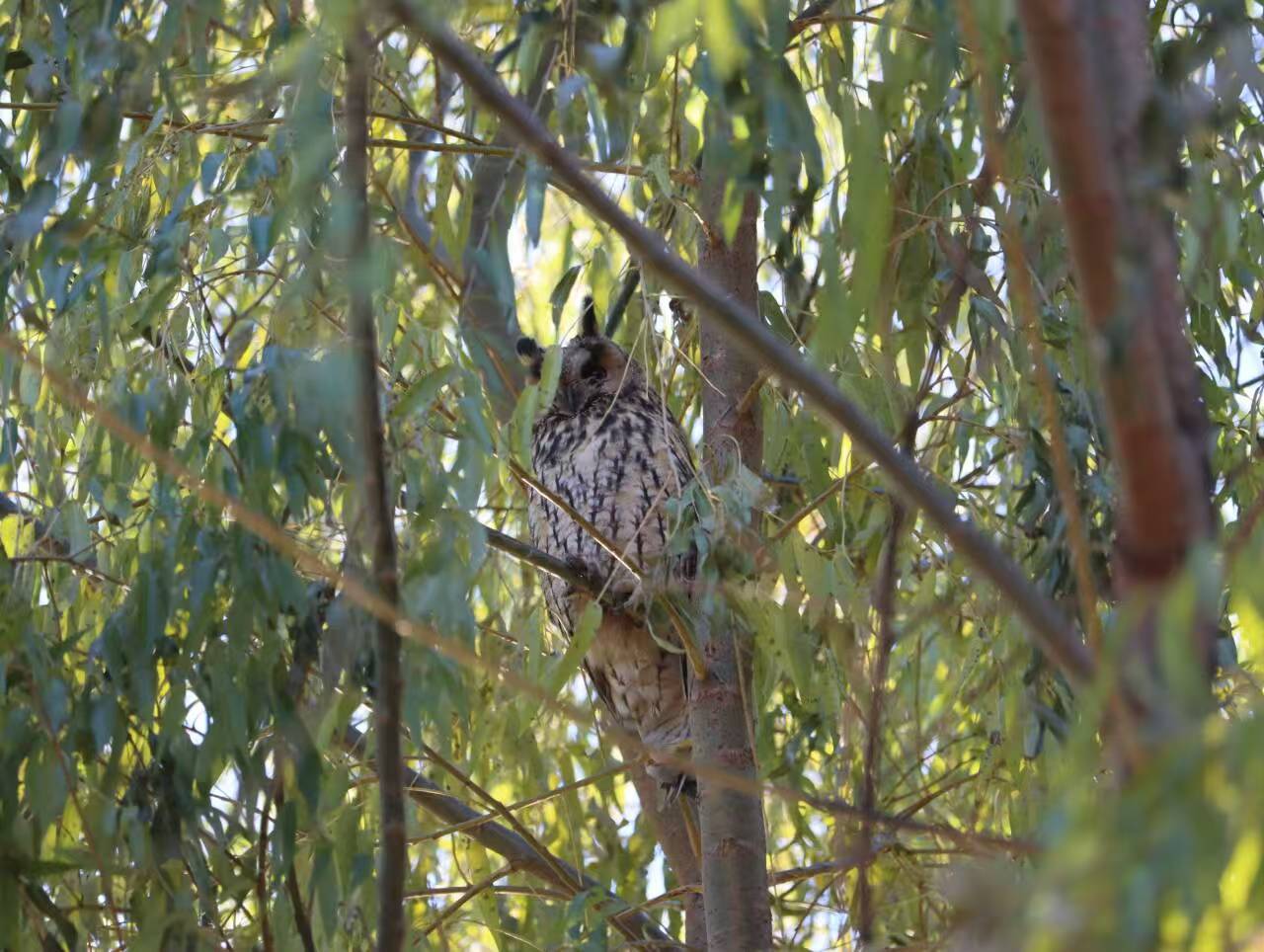
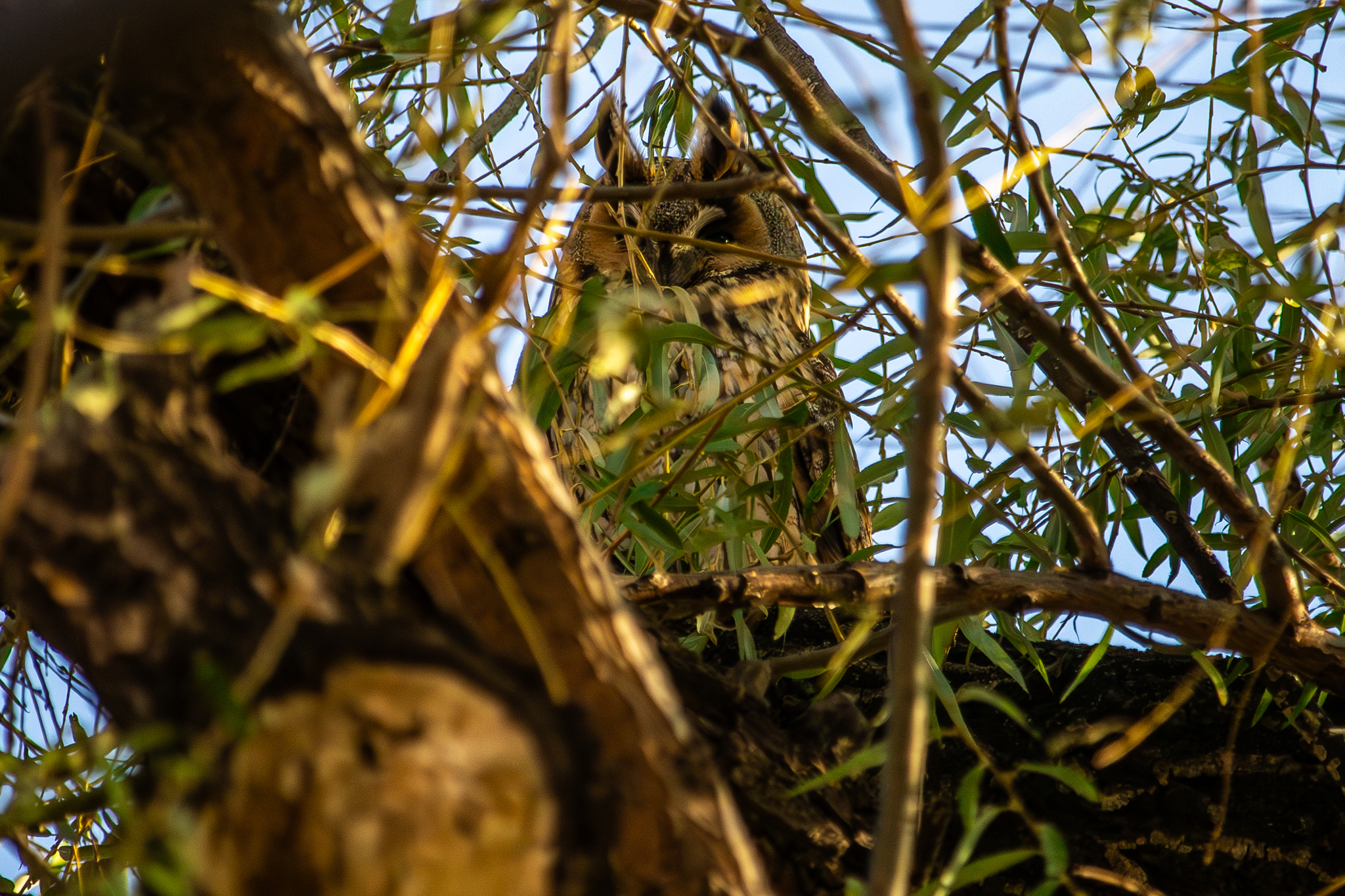
Nocturnal hunter focusing on small rodents, especially voles, which comprise up to 99% of the diet in some regions. Hunts low over open ground, using acute asymmetric hearing to locate prey. Adapts to birds, insects, and bats in vole-poor areas. Uniquely social, forming communal day roosts of 6–50+ individuals, often in conifers. Not strongly territorial outside breeding. Breeding involves using abandoned corvid nests. Clutch size averages 3–5 eggs. Young fledge at 20–27 days and remain dependent for up to two months.
Conservation
IUCN status is Least Concern, with an estimated global population of 2–5.5 million. However, significant declines are recorded in North America (1.6% annual reduction in Christmas Bird Counts) and parts of Europe. Threats include habitat loss, pesticide contamination (rodenticides, insecticides), road traffic collisions, and persecution. In southern California, over 55% of the range has been lost. Conservation measures include artificial nesting platforms and habitat protection.
Source: Wikipedia · CC BY-SA 3.0
Taxonomy
- Order
- Strigiformes
- Family
- Strigidae
- Genus
- Asio
Subspecies (4)
-
Asio otus canariensis
Canary Islands
Data Sources
Species description from Wikipedia, licensed under CC BY-SA 3.0.
Bird images and sounds sourced from GBIF, contributed by citizen scientists worldwide under Creative Commons licenses.
Taxonomy data from AviList 2025.