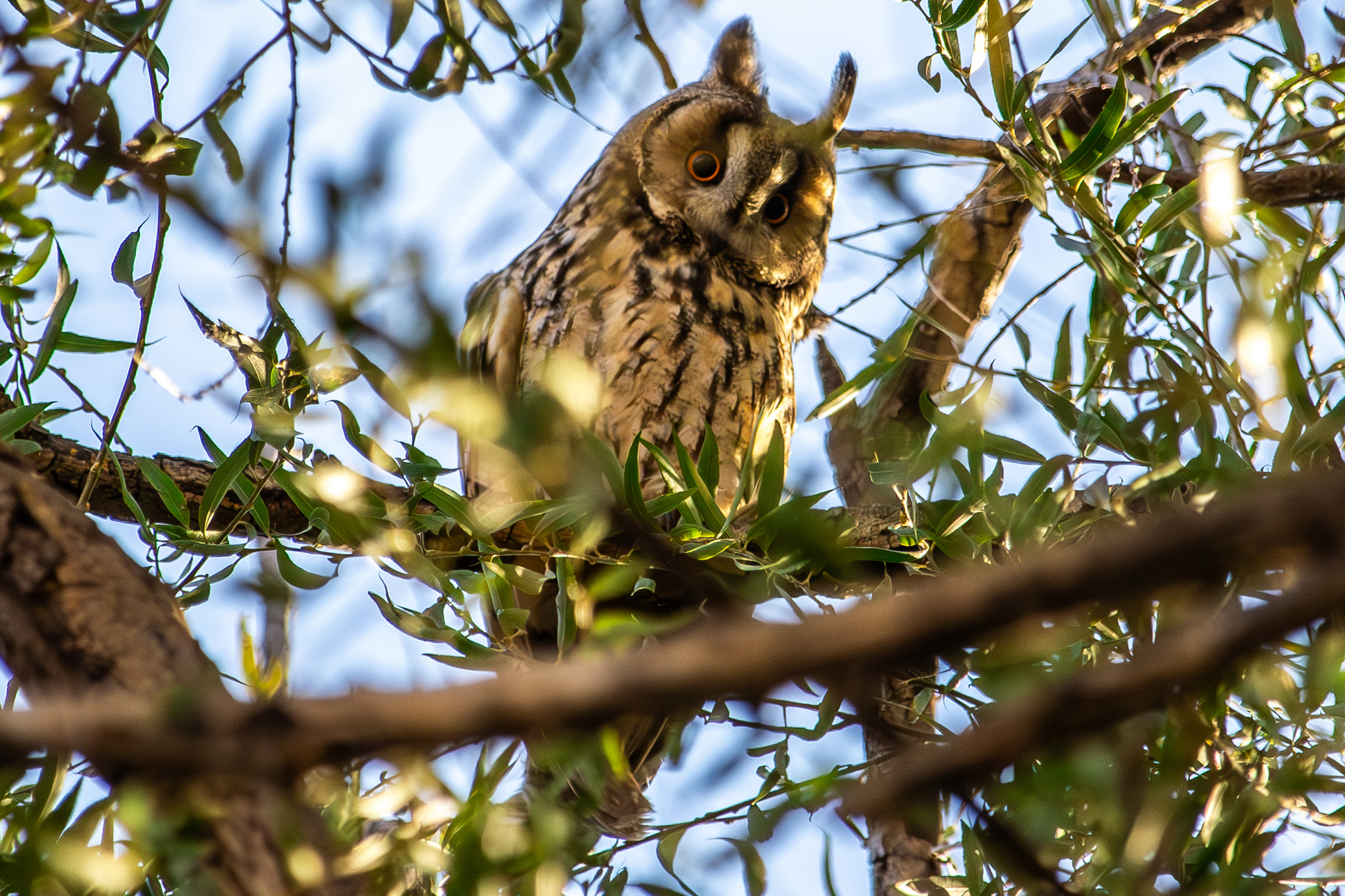
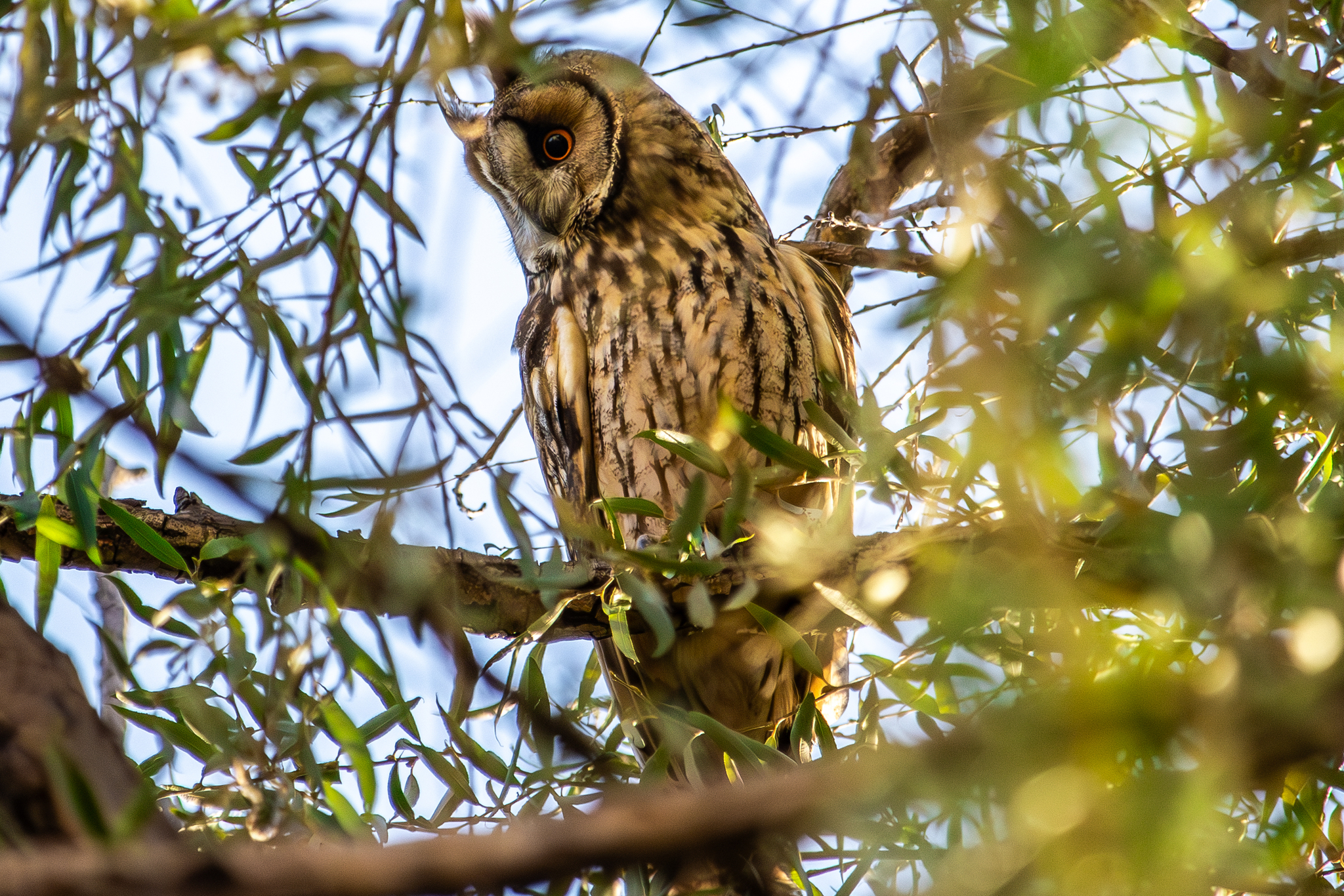
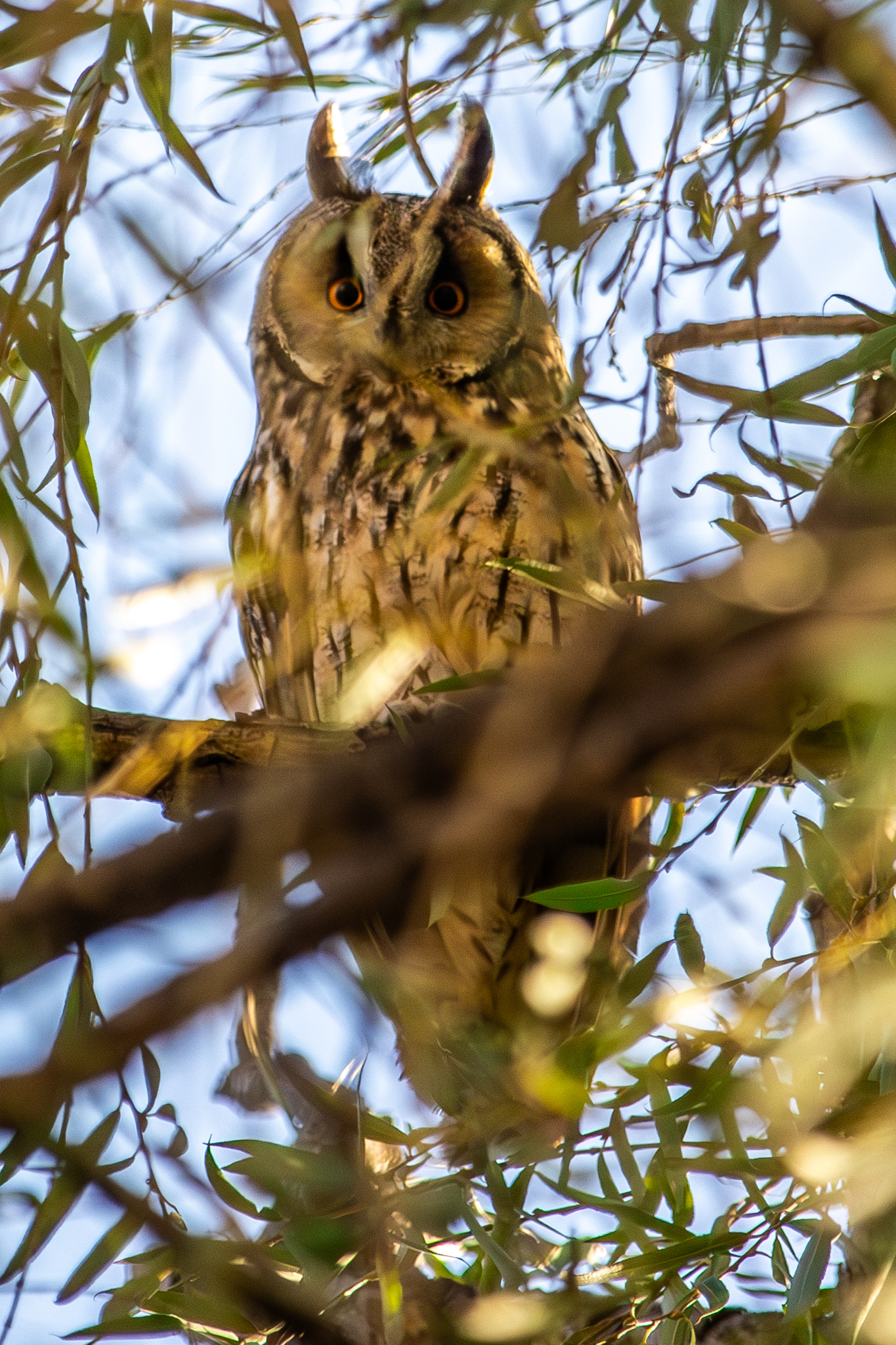

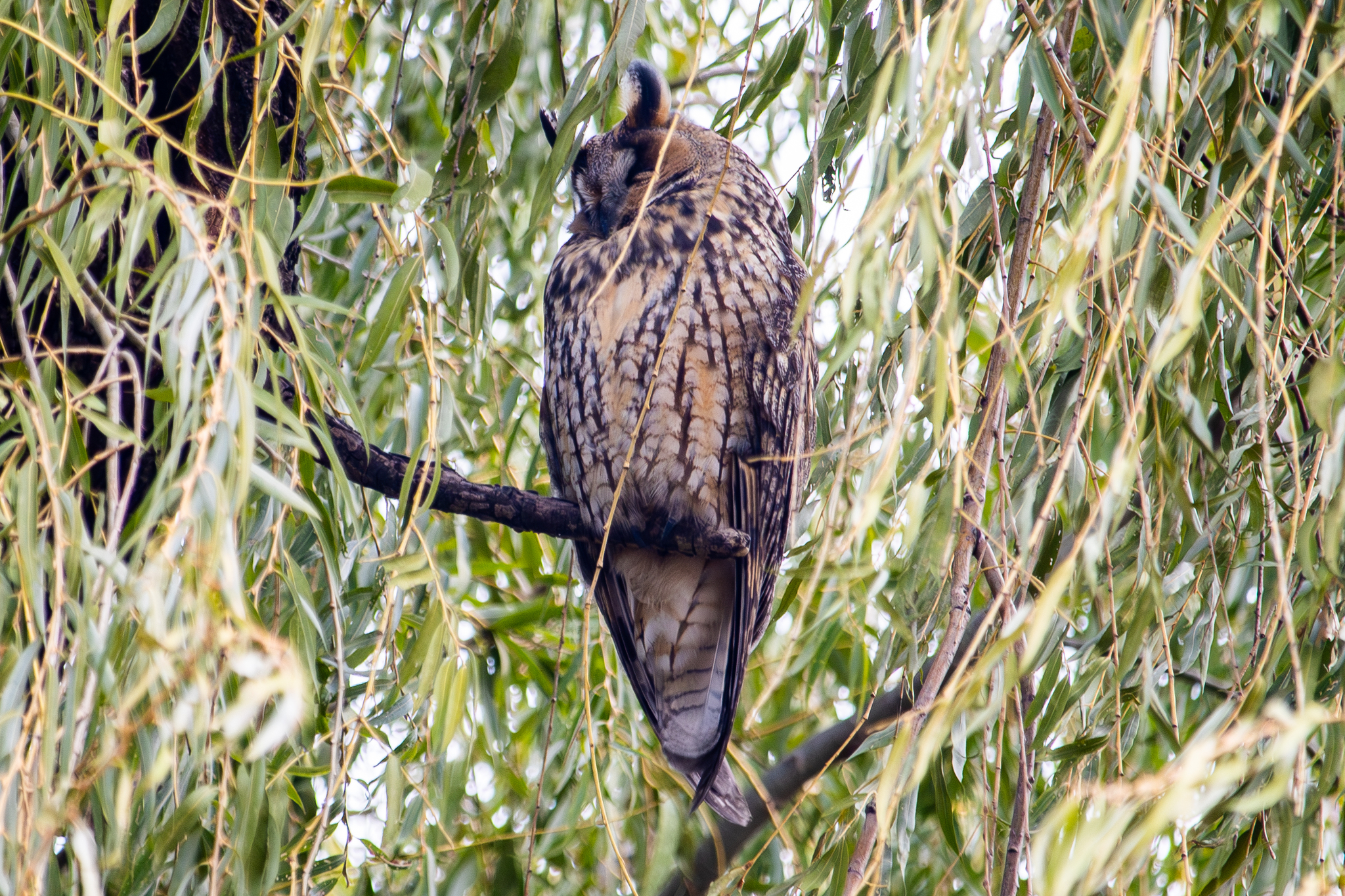
Long-eared Owl
Asio otus
长耳鸮
Introduction
The long-eared owl is a medium-sized, slender owl found across much of Europe, the Palearctic, and North America. This species inhabits edge habitats where open hunting grounds meet dense woodland cover for roosting and nesting. Unlike many owls, they are not strongly territorial and exhibit a partially migratory or nomadic lifestyle, with northern populations moving southward in winter. Communal roosting is a key behavior, with groups of 6 to 50 owls (sometimes more) gathering in dense stands of trees during the day. These owls specialize in hunting voles but adapt their diet when prey populations fluctuate. They do not build their own nests but readily use abandoned nests built by crows, magpies, and other birds. Population declines have been documented in several regions.
Description
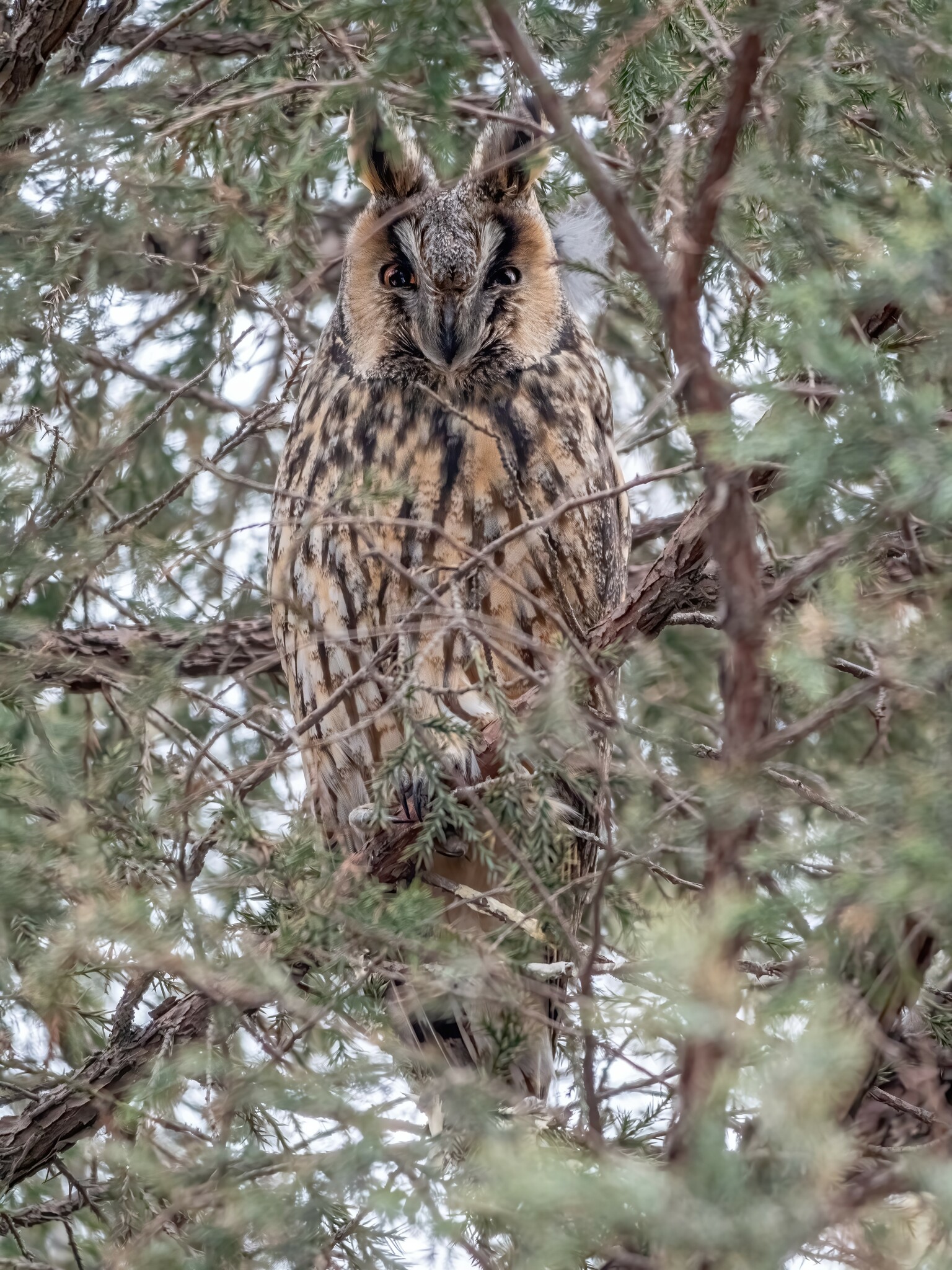
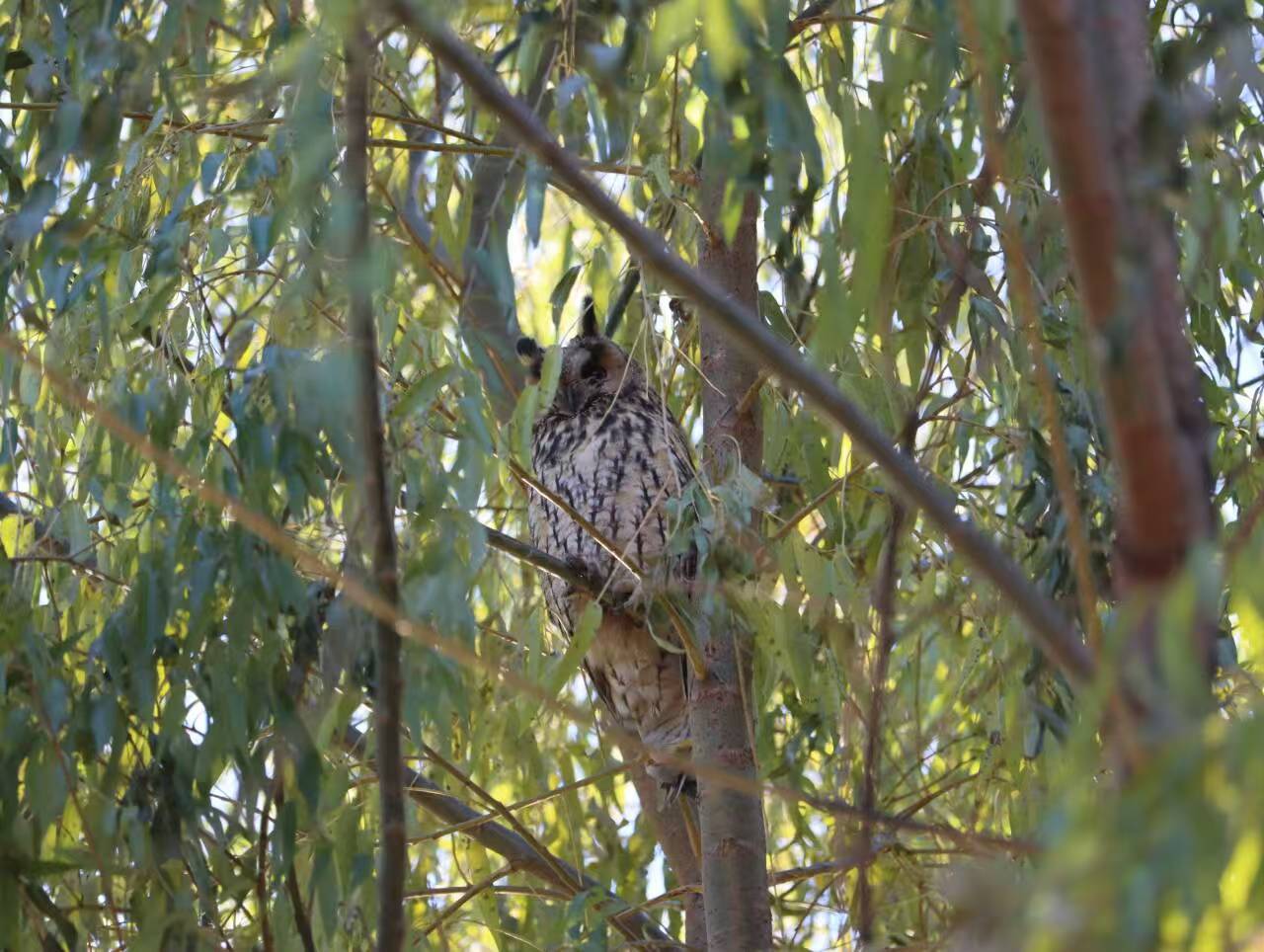
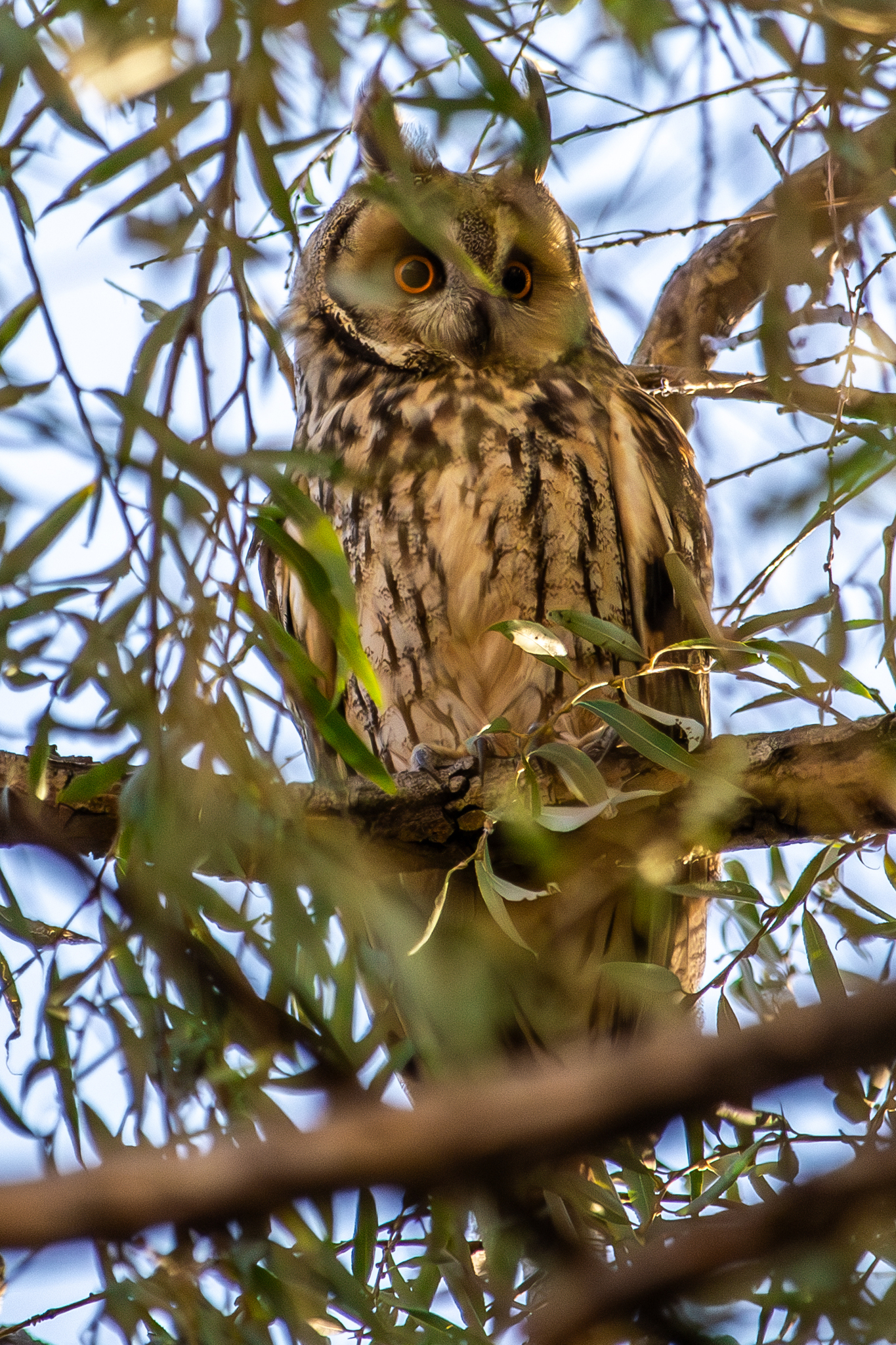
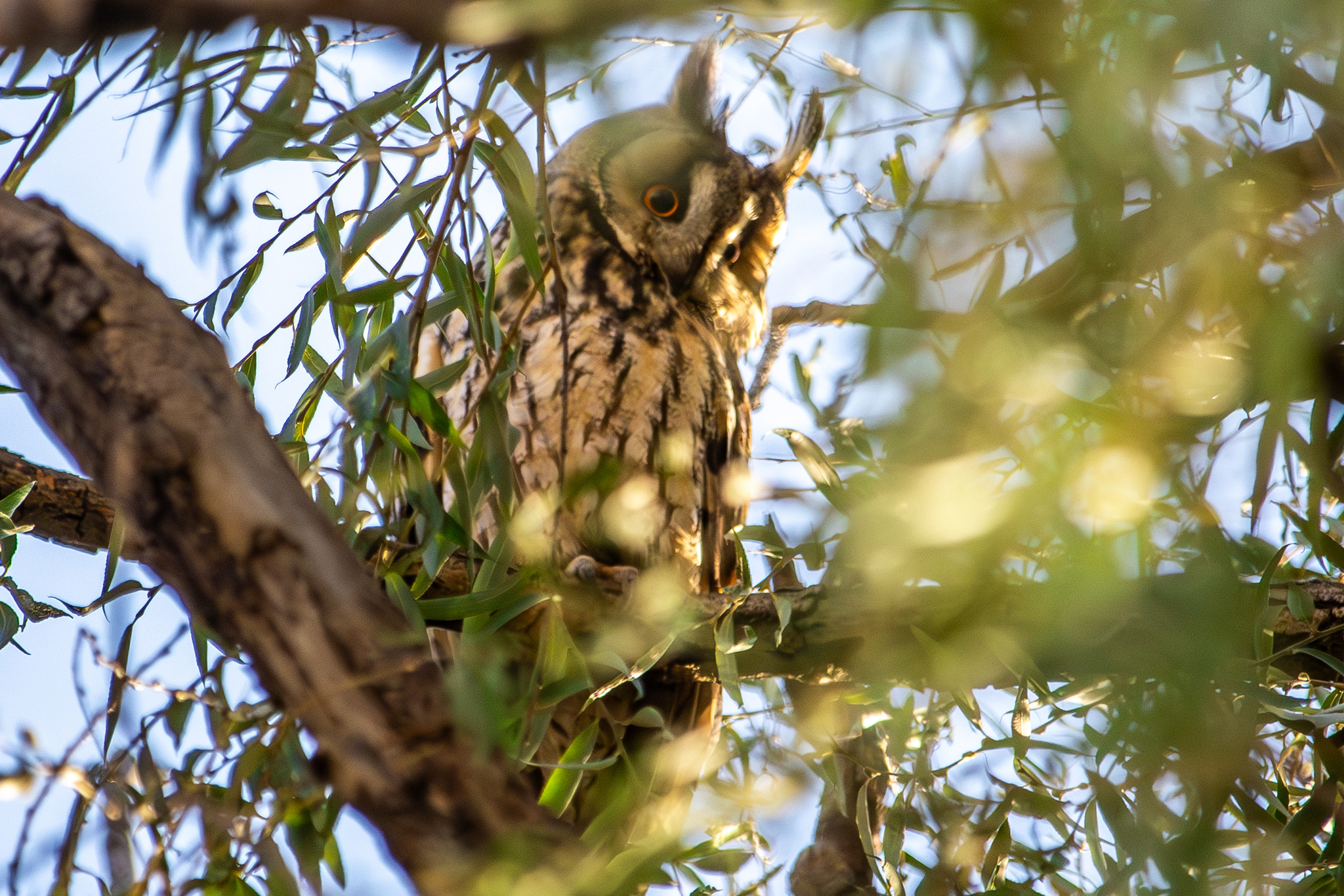
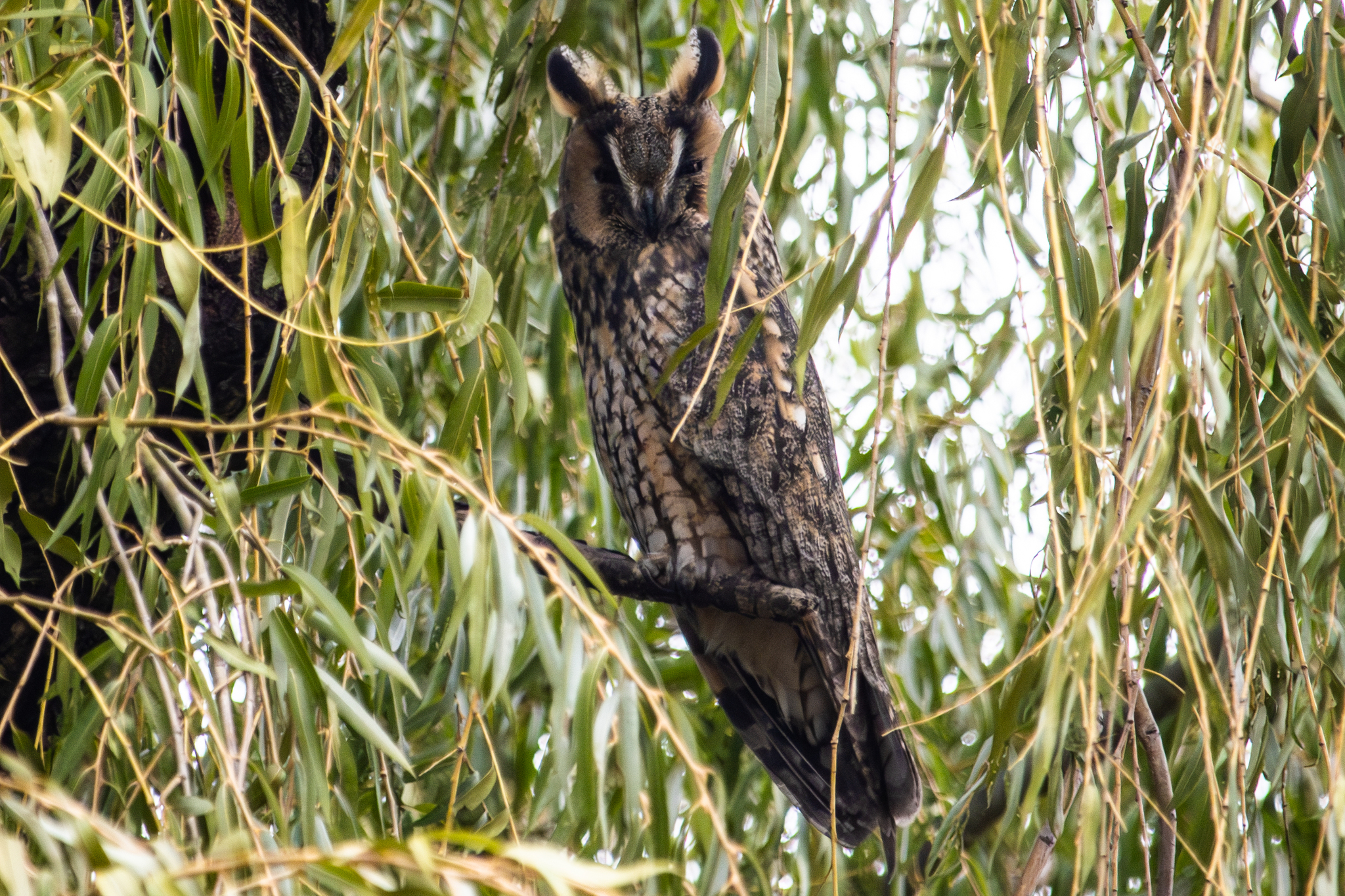
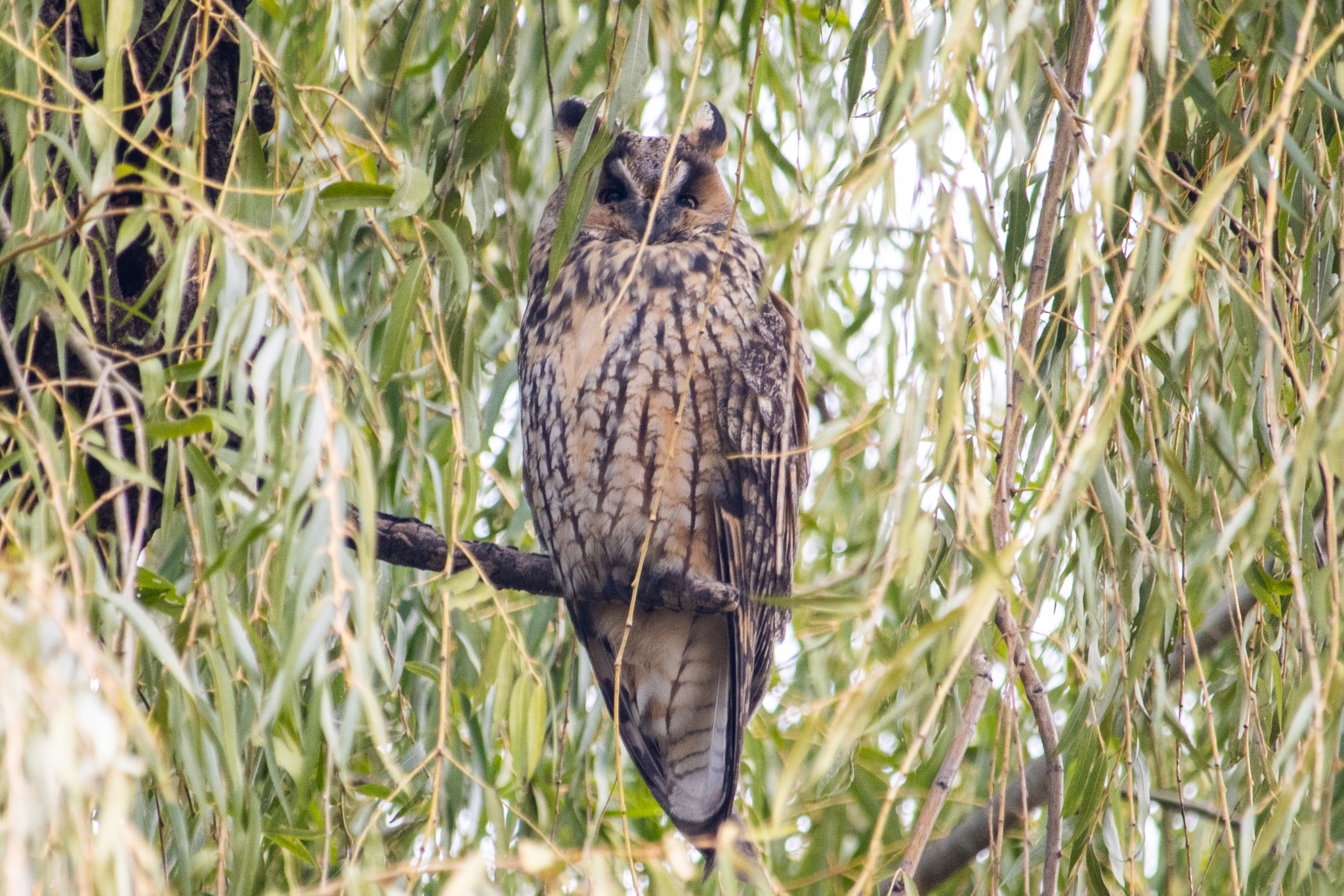
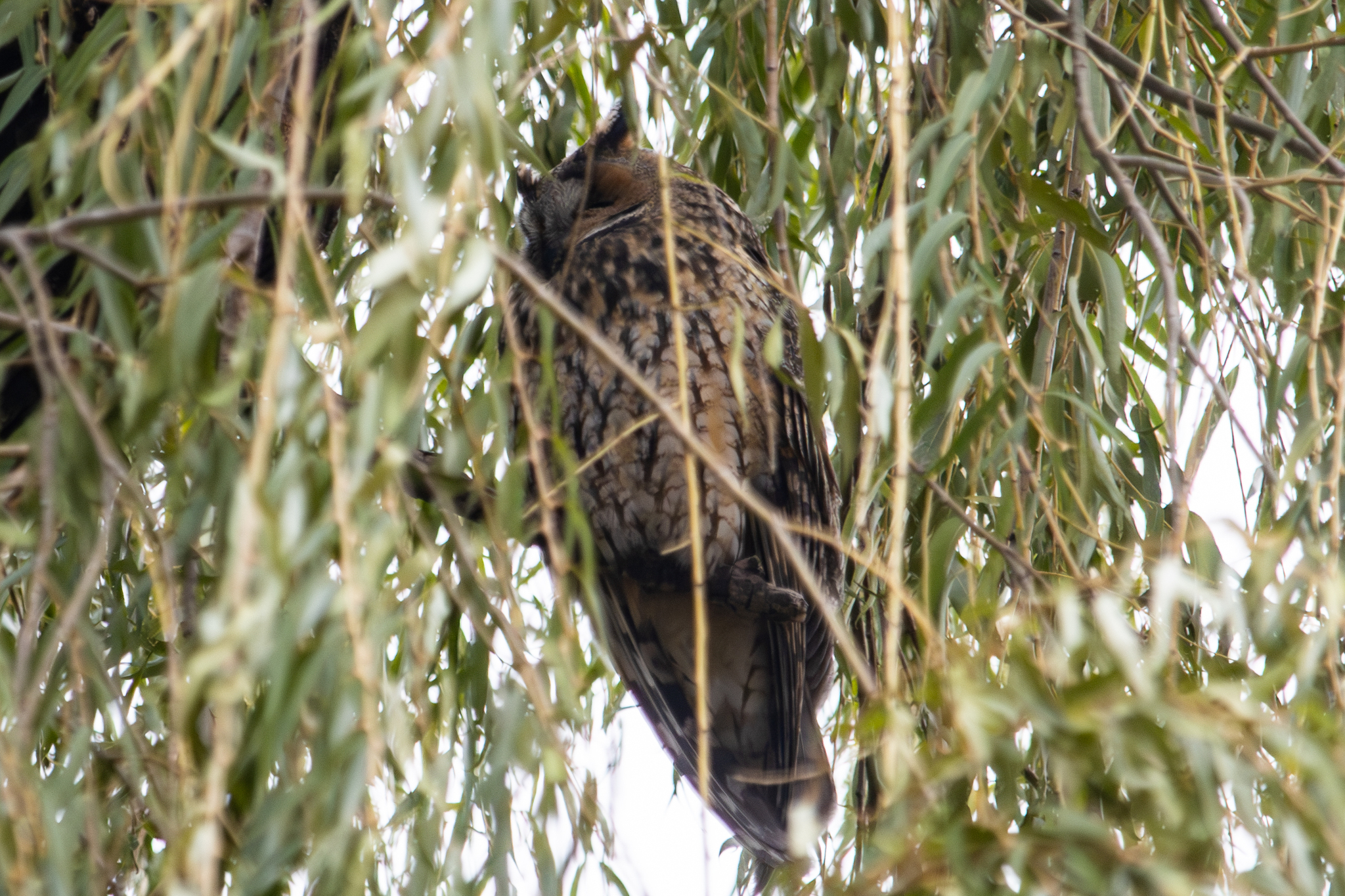
This is a slim, long-winged owl with prominent erectile ear tufts positioned closer to the center of the head than in many other owl species. The overall coloration is ochraceous-tawny with a variable grayish or brownish wash, overlaid with blackish vertical streaks most apparent on the wings and back. The scapulars show whitish markings that provide contrast against the darker base color. Dark carpal patches are visible on the wings. The well-developed facial disc is rimmed with dusky coloring, often with white lines forming a moustache pattern. The bill is blackish, while the eyes range from yellowish-orange to orange-red. The tarsi and toes are fully feathered. Males weigh 160-330g while females are larger at 180-435g. Length ranges from 31-40cm with a wingspan of 86-102cm. Plumage varies regionally, with forest-dwelling birds being darker and desert birds showing washed-out, paler coloration.
Identification
The long-eared owl is distinguished from similar species by several key features. The prominent ear-tufts, positioned centrally on the head, separate it from tawny owls (which lack ear-tufts entirely) and great horned owls (which have widely spaced tufts). Unlike the short-eared owl, the long-eared shows vertical (not horizontal) dark markings around the eyes and typically has orange (not yellow) irises. In flight, the long-eared shows streaked underparts throughout (not just on the breast), lacks the broad white wing band of the short-eared, and has squarer wings reminiscent of a buzzard rather than the long, slender wings of the short-eared owl. The Stygian owl (where it barely overlaps in northern Mexico) is larger, darker, and has partially bare toes. The Eurasian eagle-owl is much larger with more powerful feet and a less defined facial disc.
Distribution & Habitat
This species has an enormous range spanning across Eurasia from the Iberian Peninsula and British Isles east through most of Russia to Japan, as well as much of North America from southern Canada through the western and central United States to central Mexico. Northern populations are migratory, moving southward in winter, while southern populations are more sedentary. Breeding habitat consists of open landscapes with groups of trees, woodland edges, forest clearings, and semi-open taiga. They also use orchards, parks, cemeteries, and even desert oases. They avoid extensive deep forest, treeless tundra, and very arid regions. Winter distribution expands southward and includes more varied habitats, with owls gathering at communal roosts in dense stands of conifers or deciduous trees near open hunting grounds.
Behavior & Ecology
Long-eared owls are primarily nocturnal, beginning activity at dusk. They are specialized predators focusing on small rodents, particularly voles, which comprise 80-99% of their diet in most regions. Mean prey size is remarkably consistent at 20-50g across their range. They hunt by flying low over open ground, using exceptional hearing to locate prey. Breeding is monogamous, with pairs using abandoned nests built by corvids, herons, or other large birds. Clutch size is typically 3-5 eggs but can reach 8-11 during vole population peaks. Breeding success is strongly correlated with prey availability. Vocalizations are highly diverse, with the male's deep whooping song carrying up to 2km on calm nights. They also produce cat-like calls, high yip-yip notes, and defensive hissing. Unlike most owls, they readily form communal roosts of 6-50+ individuals in winter.
Conservation
The IUCN Red List classifies the long-eared owl as Least Concern globally, with an estimated population of 2-5.5 million individuals across an 80 million square kilometer range. However, strong population declines have been documented across much of North America and parts of Europe. Christmas Bird Count data shows a 1.6% annual decline in North America, making it one of the most rapidly declining owl species on the continent. Major threats include habitat loss and degradation, pesticide contamination (especially rodenticides), road mortality, and persecution. In Europe, predation by Eurasian eagle-owls and northern goshawks is a significant source of mortality. Conservation measures include providing artificial nest platforms, habitat protection, and in some areas, supplemental feeding programs. The species has adapted to some human-modified landscapes, but populations in southern California and other regions have experienced significant range contractions.
Culture
The long-eared owl has appeared in various cultural contexts throughout its range. The species was described scientifically by Linnaeus in 1758 in the tenth edition of Systema Naturae under the binomial name Strix otus. Perhaps the most famous artistic representation is John James Audubon's illustration of the long-eared owl as Plate 383 in his monumental work Birds of America, published in London between 1827 and 1838. The original watercolour was engraved by Robert Havell in 1837 and was later purchased from Audubon's destitute widow by The New York Historical Society, where it remains preserved as an important piece of ornithological art history. The owl has been known by various informal names including lesser horned owl and cat owl, the latter referring to its cat-like facial disc and calls. Despite its widespread presence, the long-eared owl lacks the rich folklore traditions associated with some other owl species.
Source: Wikipedia · CC BY-SA 3.0
Taxonomy
- Order
- Strigiformes
- Family
- Strigidae
- Genus
- Asio
- eBird Code
- loeowl
Subspecies (4)
-
Asio otus canariensis
Canary Islands
-
Asio otus otus
Europe, Asia, and North Africa
-
Asio otus tuftsi
western Canada to northwestern Baja California, southern Texas, and northern Mexico (Nuevo León)
-
Asio otus wilsonianus
south-central and southeastern Canada to south-central USA
Data Sources
Species description from Wikipedia, licensed under CC BY-SA 3.0.
Bird images and sounds sourced from GBIF, contributed by citizen scientists worldwide under Creative Commons licenses.
Taxonomy data from AviList 2025.