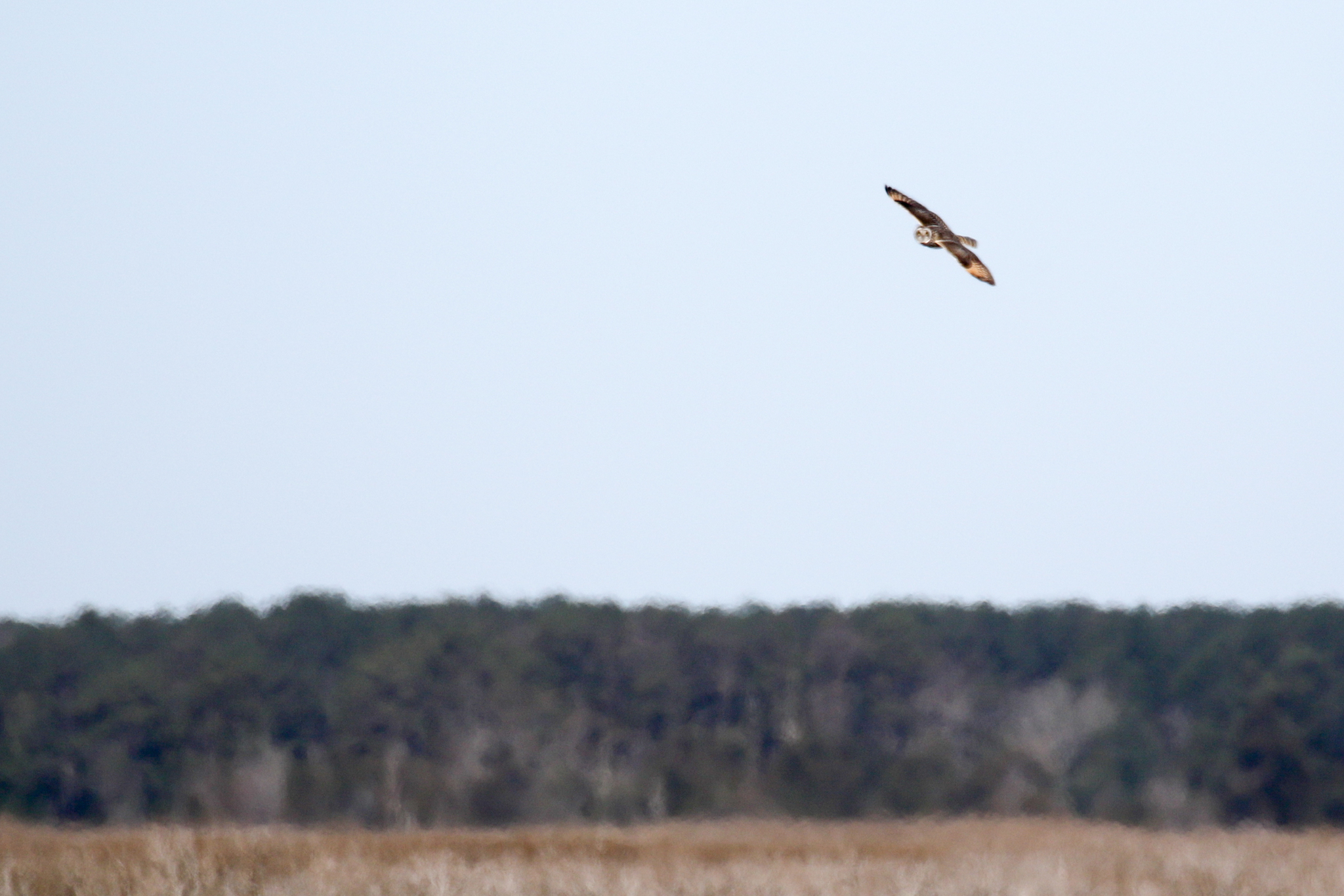
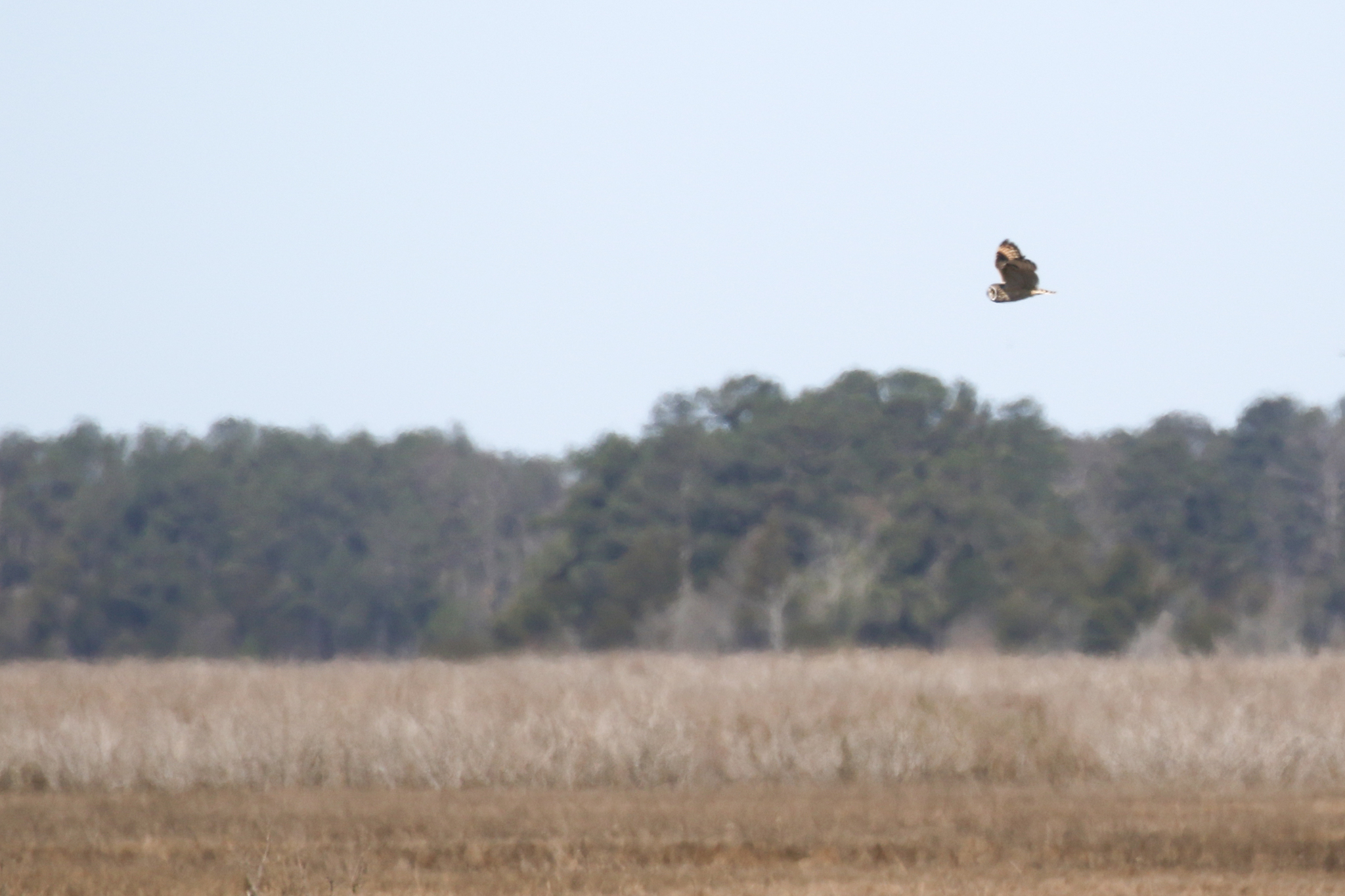
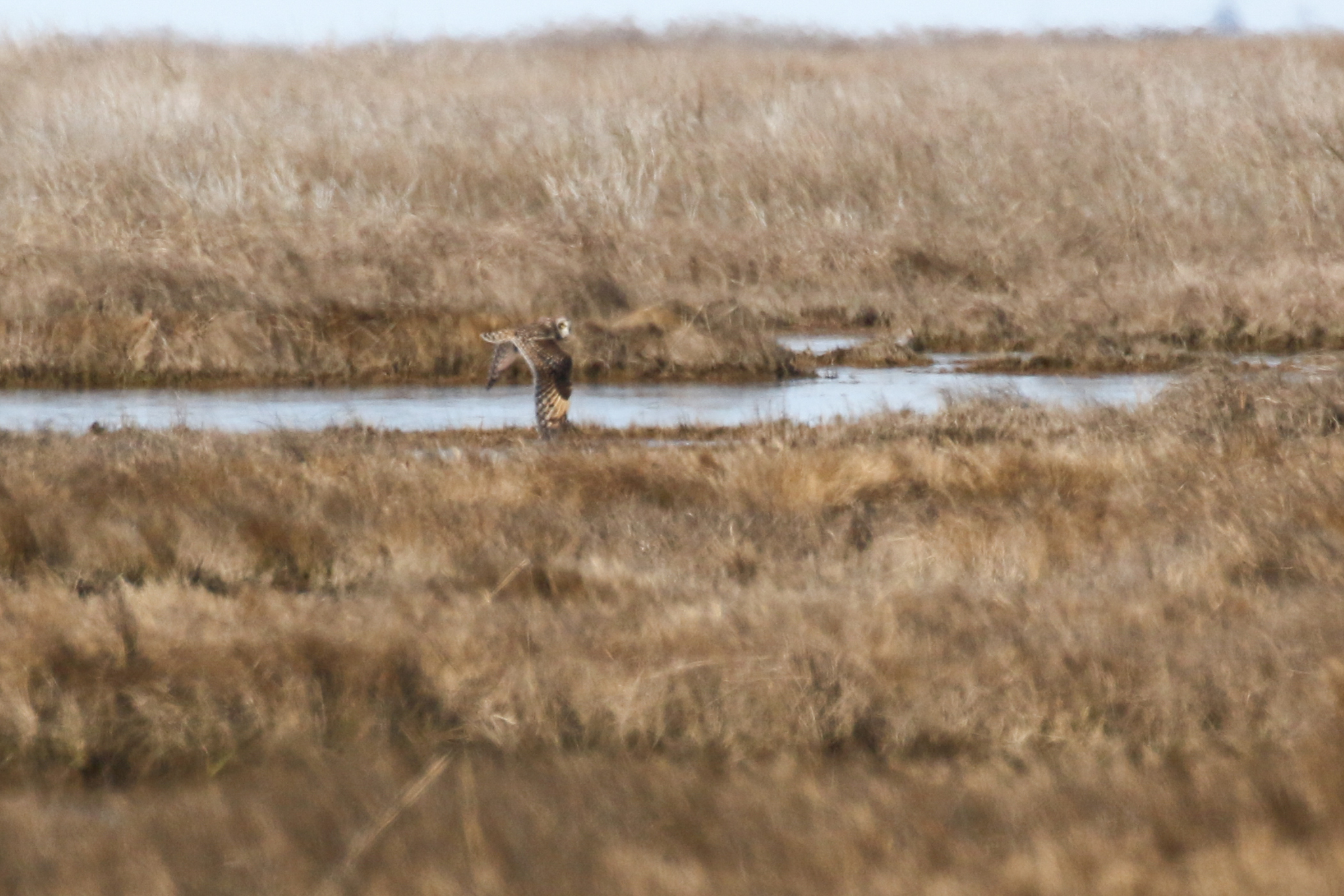
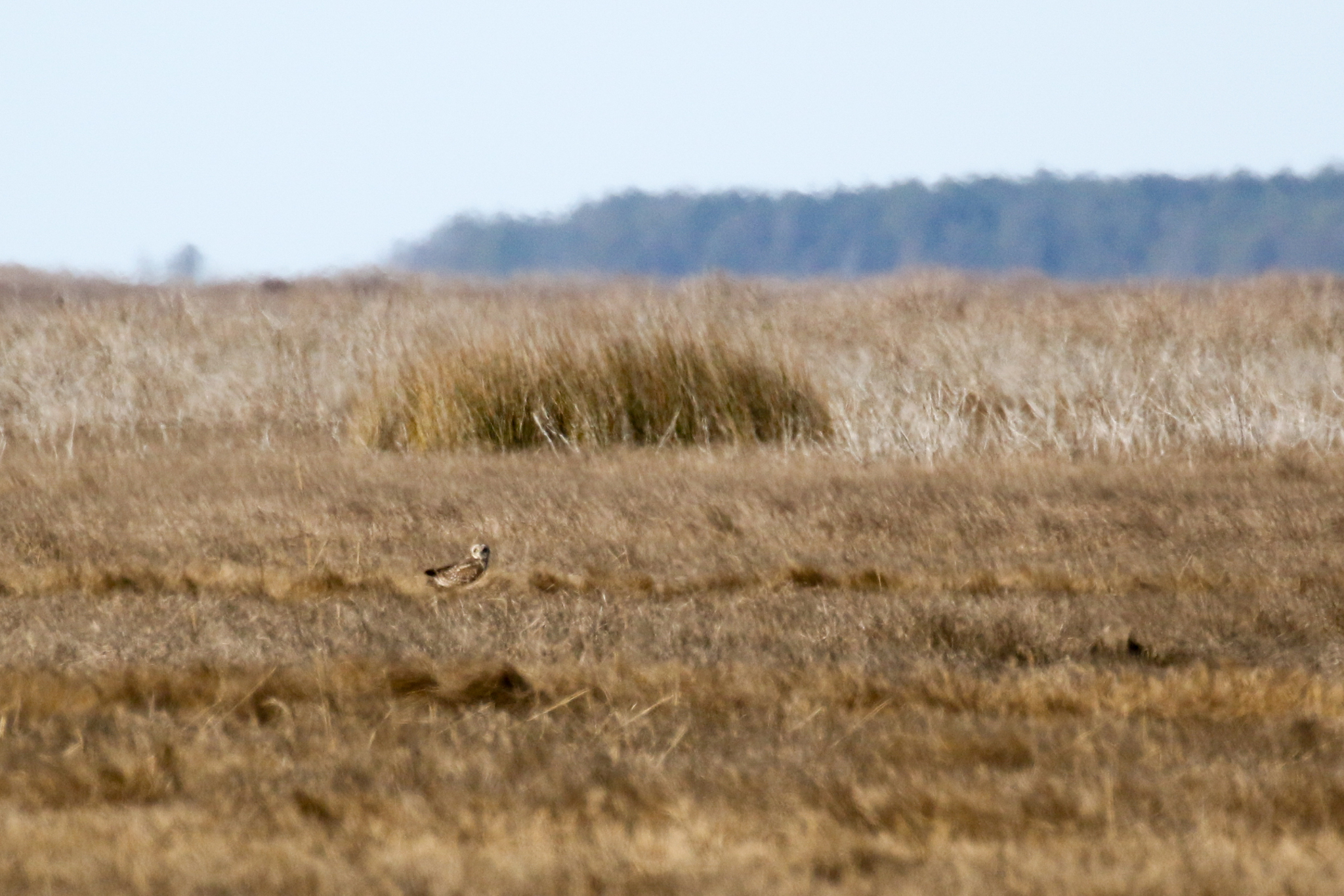
Strigiformes / Strigidae / Asio
Short-eared Owl
Asio flammeus · 短耳鸮
Introduction
A widespread grassland species in the family Strigidae, found on all continents except Antarctica and Australia. It inhabits open country and grasslands, nesting on the ground. Distinctive traits include diurnal and crepuscular hunting behavior, a floppy moth-like flight style, and nomadic movements linked to vole populations. The IUCN evaluates it as Least Concern.
Description
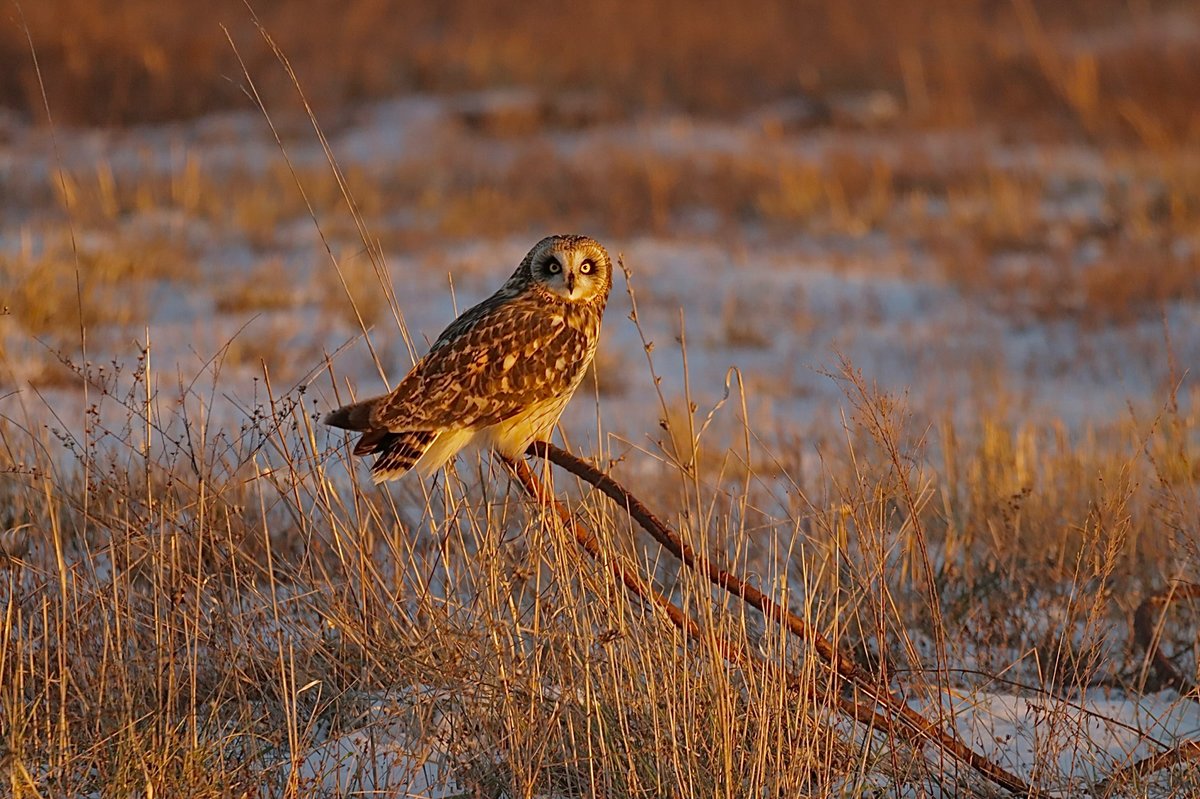
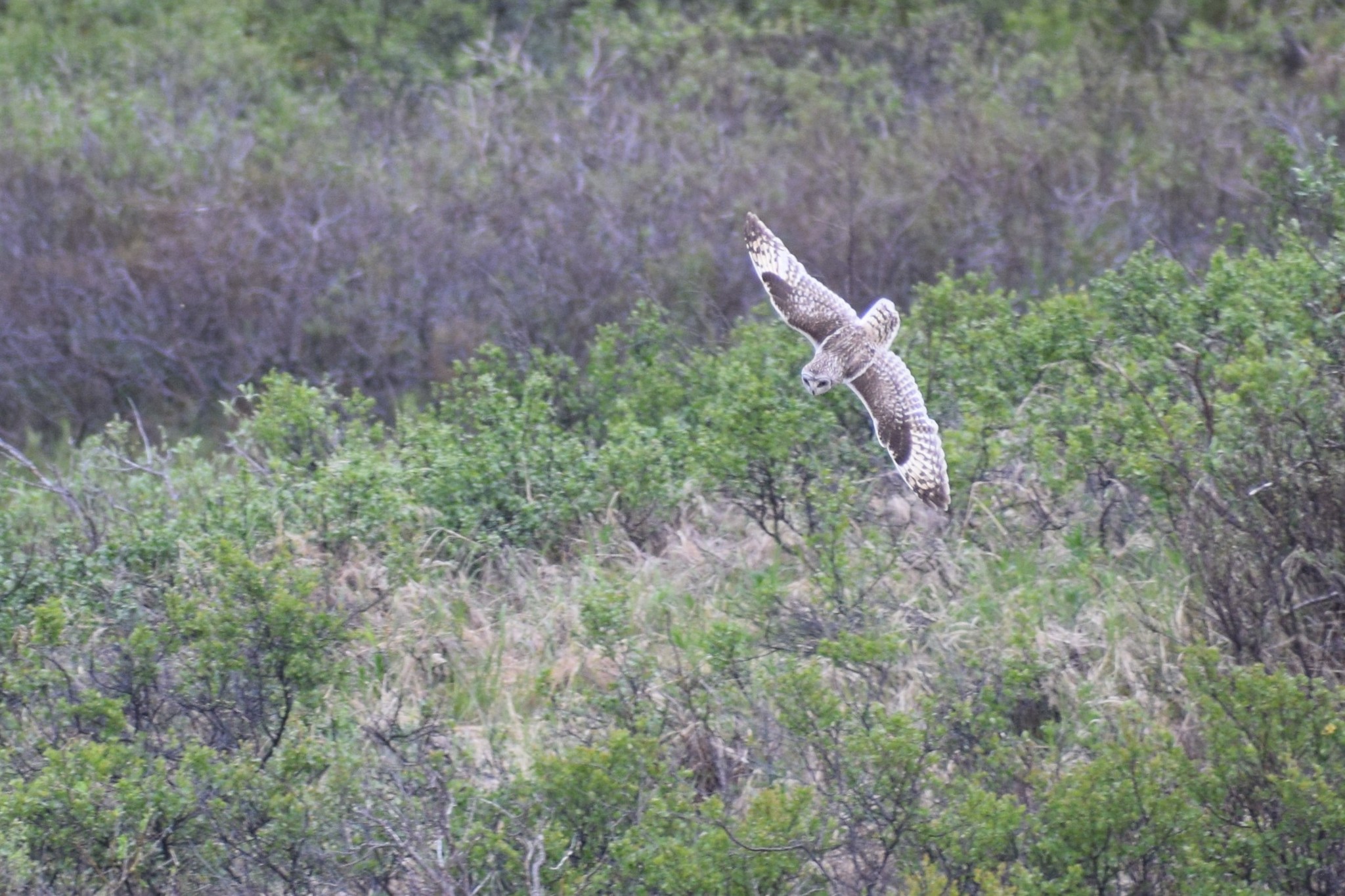
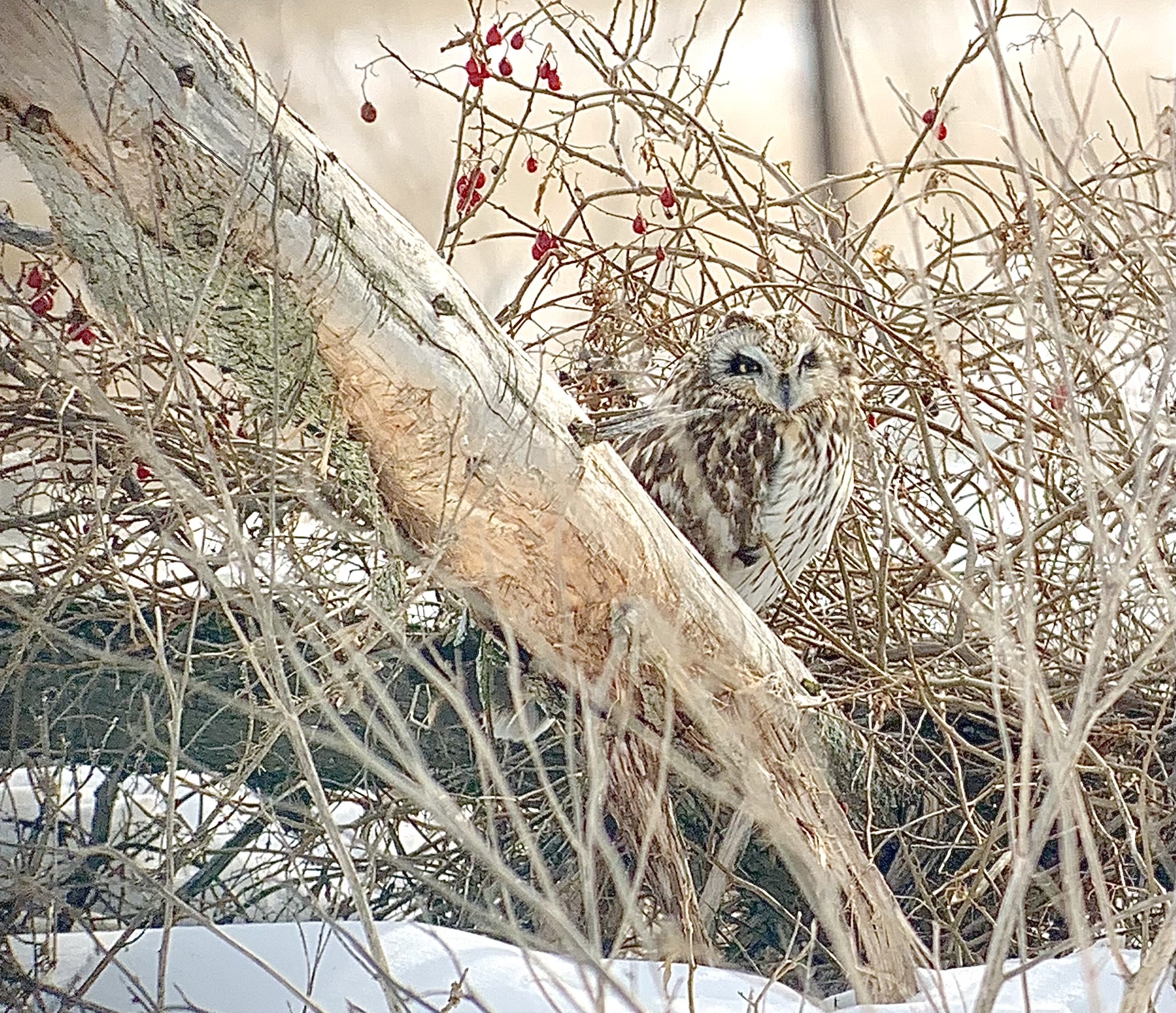
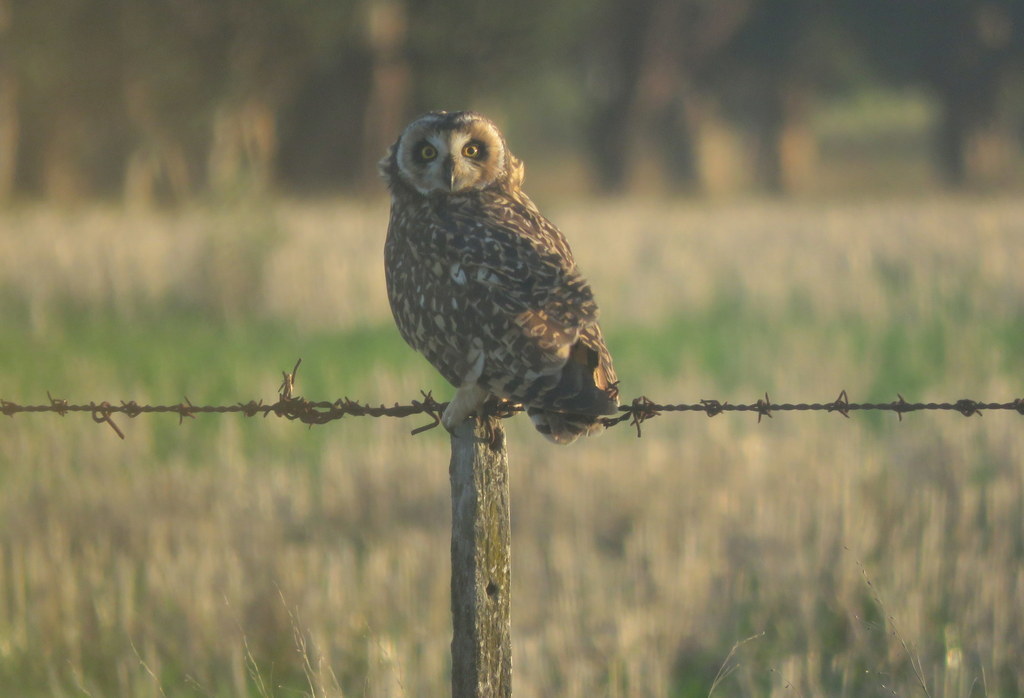
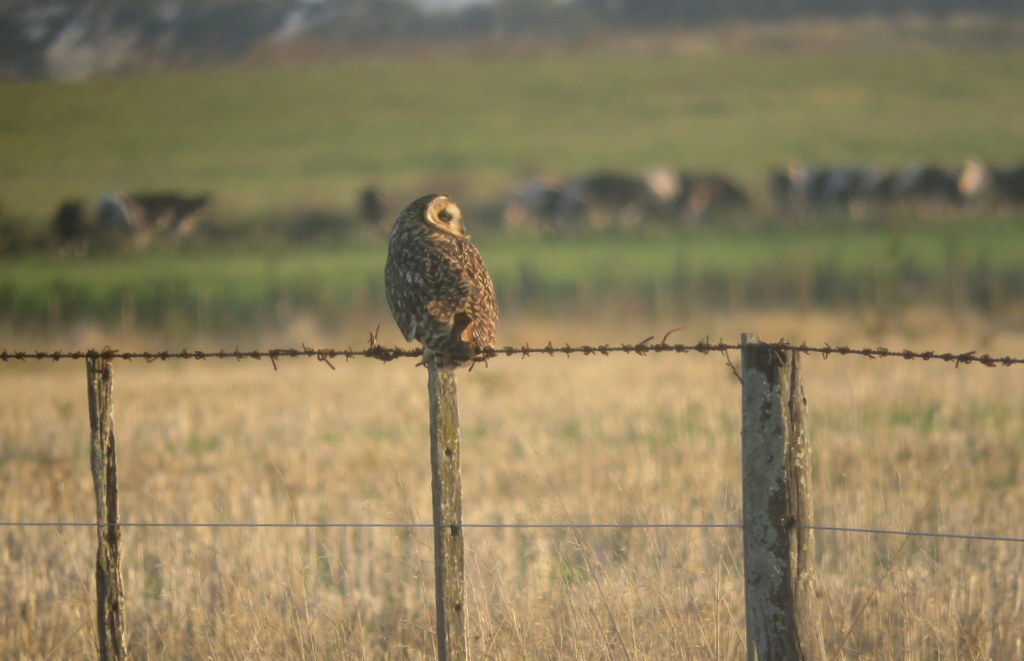
Medium-sized owl measuring 34–43 cm (13–17 in) in length with a wingspan of 85–110 cm (33–43 in). Weight ranges from 206–475 g (7.3–16.8 oz). Females are slightly larger than males. Plumage is mottled tawny to brown with a barred tail and wings; the upper breast is significantly streaked. Features include large eyes, a big head, a short neck, broad wings, and a short, strong, hooked black bill. Yellow-orange eyes are encircled by black rings and surrounded by large whitish facial disks. Short ear tufts are usually not visible but may be displayed in defensive poses.
Identification
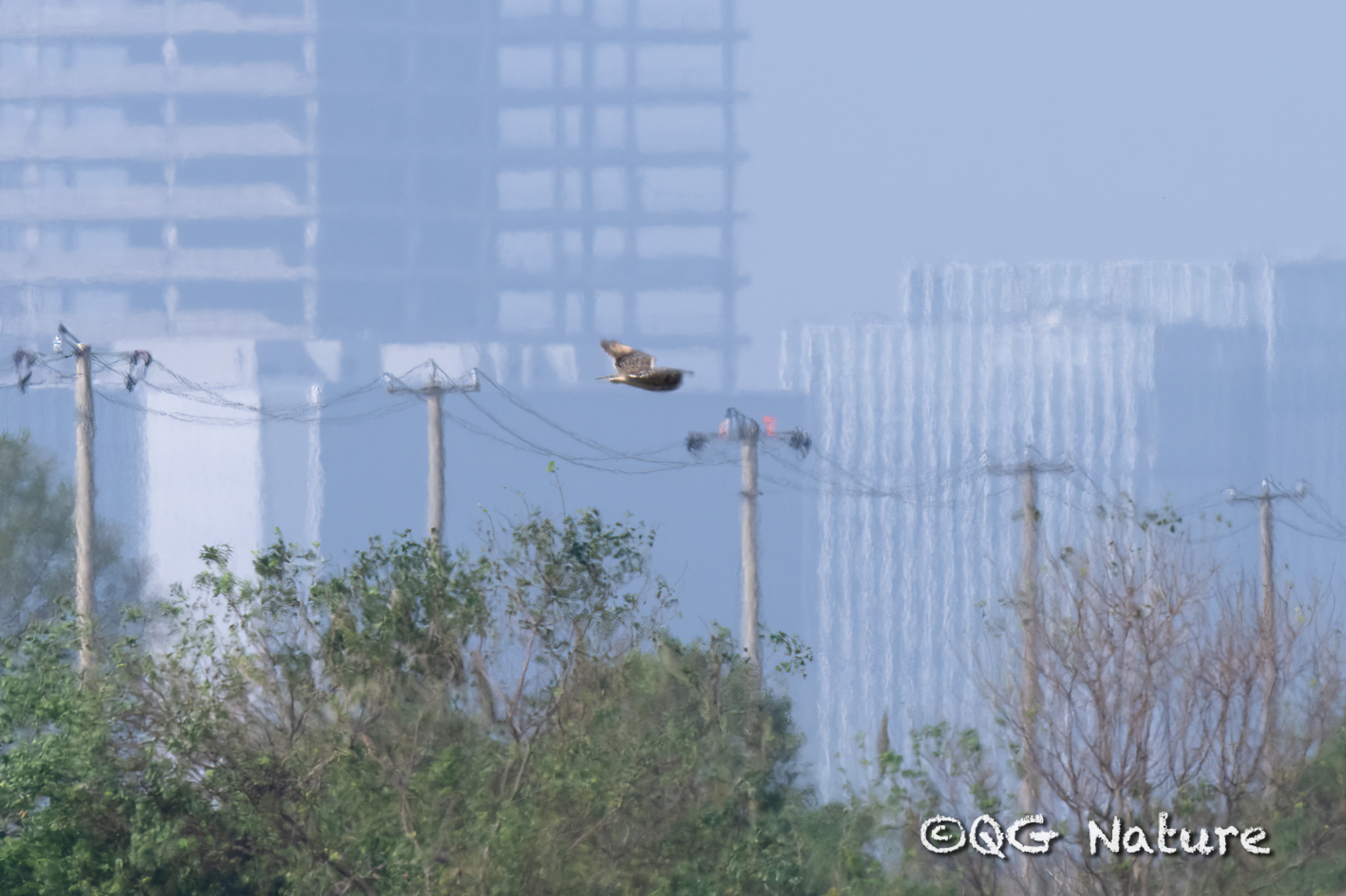
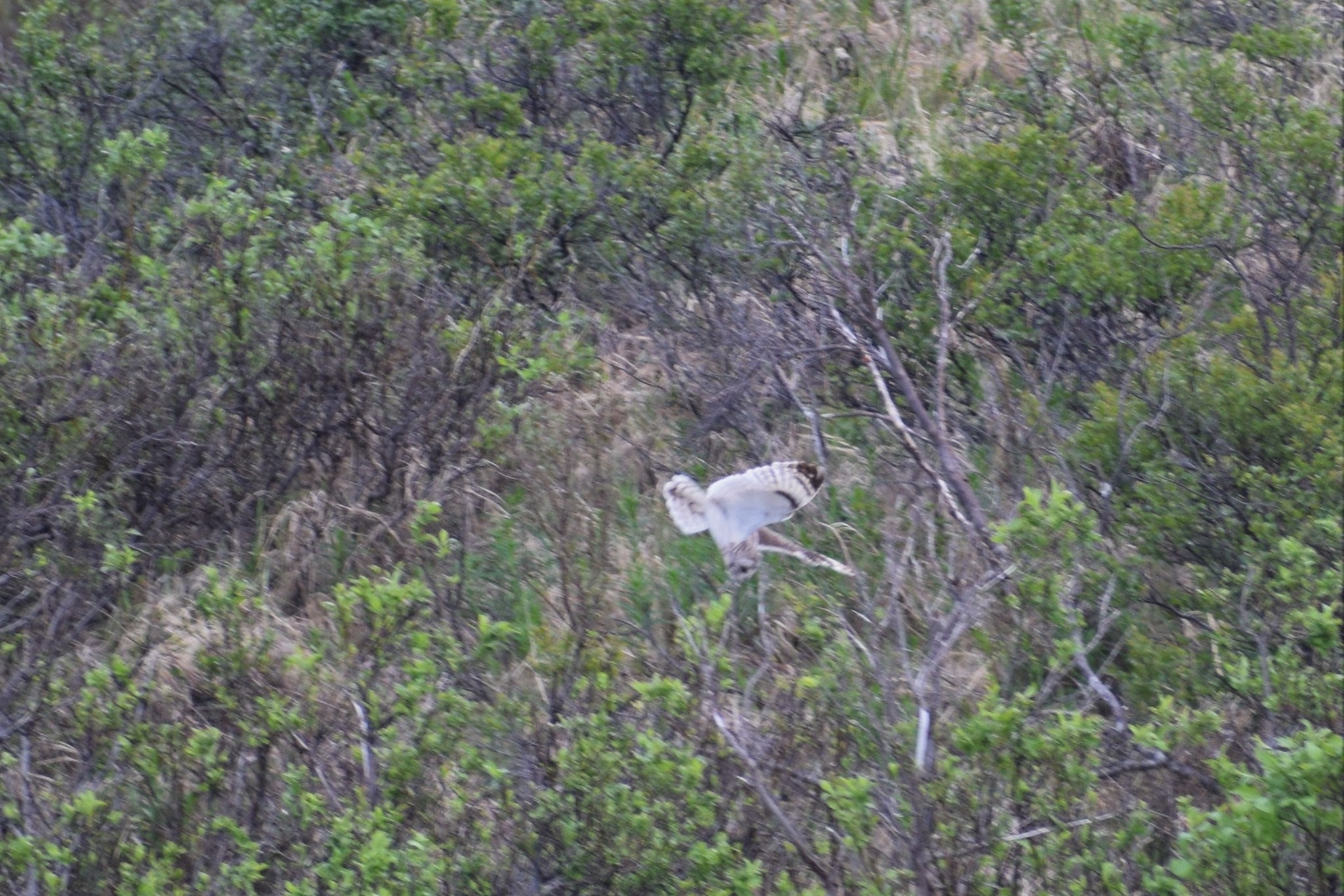
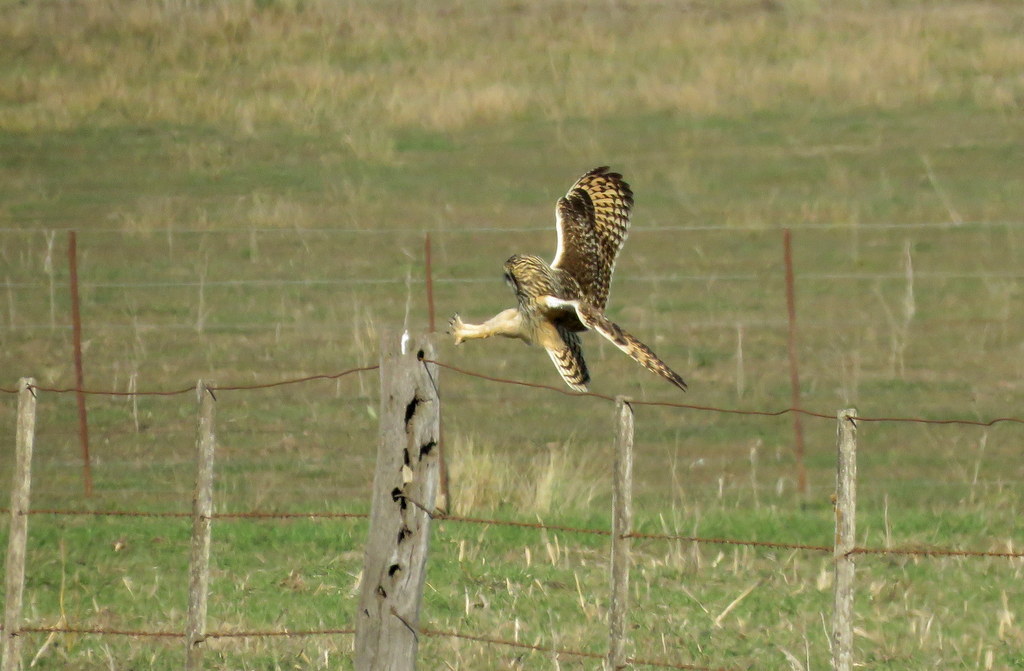
Flight is characteristically floppy with irregular wingbeats, described as moth or bat-like. Distinguished from the similar long-eared owl by yellow irises (versus orange), horizontal black eye markings (versus vertical), and paler, sandier overall color. In flight, shows a broad white band along the rear edge of the wing, paler primary-patches on the upperwing, bolder tail bands, and dark-marked innermost secondaries contrasting with the rest of the underwing. Streaking ends at the breast, unlike the long-eared owl which is streaked throughout the underparts.
Distribution & Habitat
Occurs on all continents except Antarctica and Australia. Breeds in Europe, Asia, North and South America, the Caribbean, Hawaii, and the Galápagos Islands. Eleven subspecies are recognized, including populations in Cuba, Hispaniola, Puerto Rico, Colombia, Ecuador, Peru, Venezuela, Guyana, Suriname, Tierra del Fuego, Falkland Islands, Hawaiian Islands, and Pohnpei. Partially migratory, moving south in winter from northern ranges. Nomadic in search of food during low vole years.
Behavior & Ecology
Hunts mostly at night but also diurnally and crepuscularly, coinciding with vole activity. Flies low over open fields, swooping feet-first onto prey. Diet consists mainly of rodents, especially voles, but includes rabbits, mice, shrews, bats, and occasionally birds like shorebirds, terns, and passerines, as well as insects. Monogamous; sexual maturity at one year. Breeding season in the northern hemisphere lasts March to June, peaking in April. Males perform aerial courtship displays. Nests on the ground in prairie, tundra, savanna, or meadow habitats, concealed by low vegetation. Clutch size is typically 4–7 white eggs, reaching up to a dozen in abundant vole years. Female incubates for 21–37 days; offspring fledge at just over four weeks. Adults lure predators away by feigning injury.
Conservation
Evaluated by the IUCN as Least Concern with an estimated global population of 1,200,000 to 2,100,000. Listed as declining in the southern portion of its United States range and endangered in New Mexico.
Source: Wikipedia · CC BY-SA 3.0
Taxonomy
- Order
- Strigiformes
- Family
- Strigidae
- Genus
- Asio
Vocalizations
Subspecies (11)
-
Asio flammeus bogotensis
Andes of Colombia, Ecuador, and northwestern Peru
Data Sources
Species description from Wikipedia, licensed under CC BY-SA 3.0.
Bird images and sounds sourced from GBIF, contributed by citizen scientists worldwide under Creative Commons licenses.
Taxonomy data from AviList 2025.