Charadriiformes / Scolopacidae / Arenaria
Ruddy Turnstone
Arenaria interpres · 翻石鹬
Introduction
A small cosmopolitan wading bird in the sandpiper family Scolopacidae, one of two species in the genus Arenaria. It breeds in northern Eurasia and North America and migrates to coastlines worldwide. Distinctive for flipping over stones and seaweed to uncover prey. The IUCN assesses the population as stable.
Description
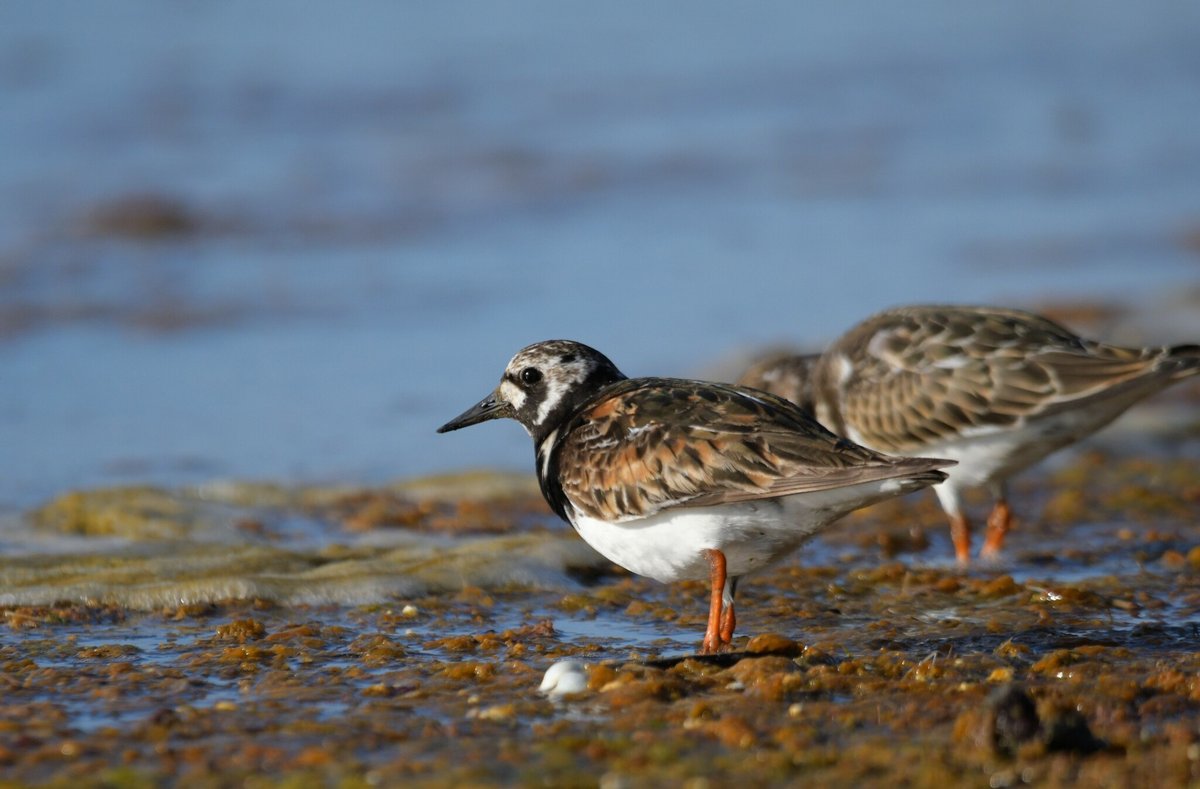
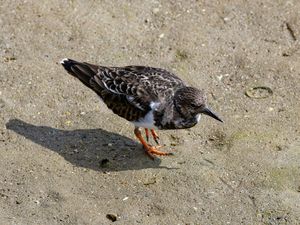
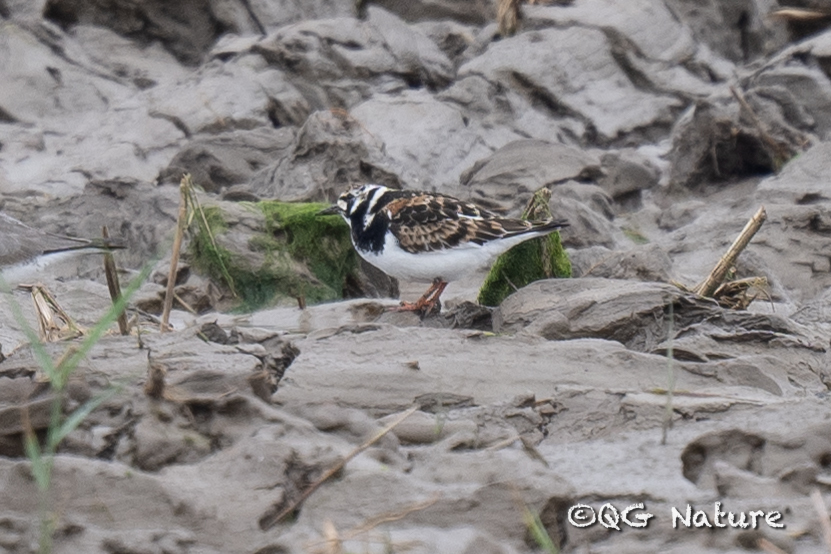
Length 22–24 cm, wingspan 50–57 cm, weight 85–150 g. Bill is dark, wedge-shaped, 2–2.5 cm long, and slightly upturned. Legs are bright orange and 3.5 cm long. Breeding plumage features reddish-brown upperparts with black markings, a white head with black crown streaks and face pattern, and a black breast with white side patches. Non-breeding adults are duller with dark grey-brown mottled upperparts. Juveniles have pale brown heads and scaly-looking upperpart feathers. Subspecies A. i. morinella is marginally smaller with darker upperparts.
Identification
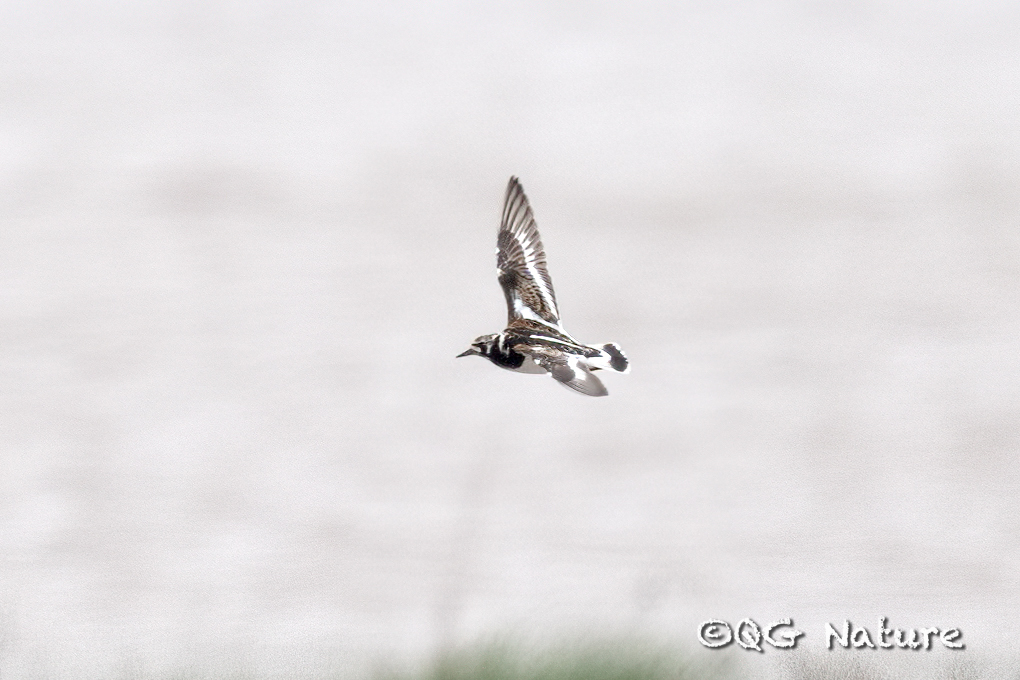
Harlequin-like pattern of brown, black, and white in all seasons. In flight, shows a white wingbar, white patch near the wing base, and white lower back, rump, and tail with dark bands. Distinguished by behavior of flipping stones. Vocalizations include a staccato, rattling call and a chattering alarm call.
Distribution & Habitat
Breeds in Arctic regions: subspecies A. i. morinella in northern Alaska and Arctic Canada; A. i. interpres in western Alaska, Greenland, northern Europe, and northern Russia. Winters on coastlines from Washington and Massachusetts south to South America, western Europe, Africa, southern Asia, Australasia, and Pacific islands. Habitat includes rocky or stony shores, breakwaters, and jetties; breeds on open tundra.
Behavior & Ecology
Feeds mainly on invertebrates by routing seaweed, turning stones, digging, probing, hammer-probing, and surface pecking. Diet includes crustaceans, insects, molluscs, worms, carrion, fish, and occasionally bird eggs. Forages in flocks. Monogamous; nests in shallow scrapes on tundra. Clutch size is 2–5 eggs (usually 4). Incubation lasts 22–24 days, primarily by the female. Chicks are precocial and fledge after 19–21 days. Uses unique plumage patterns for individual recognition and territory defense. Average lifespan is 9 years, with a maximum recorded age of 20 years.
Conservation
IUCN assesses the population as very stable. Canadian surveys indicate a potential decrease of up to 50% since the 1970s. Estimated Canadian population is 100,000–500,000 adults. Worldwide population estimated at 449,000, with 235,000 breeding in North America. Annual adult mortality rates are under 15%.
Source: Wikipedia · CC BY-SA 3.0
Taxonomy
- Order
- Charadriiformes
- Family
- Scolopacidae
- Genus
- Arenaria
Subspecies (2)
-
Arenaria interpres interpres
breeds coastal tundra of northern Greenland, northern Scandinavia, Baltic states, White Sea, southern Novaya Zemlya and New Siberian Islands eastward to northeastern Siberia and western Alaska, also Ellesmere Island (northeastern Canada); winters coastal western and southern Europe and Africa eastward through southern Asia to eastern Polynesia, also western USA and western Mexico
Data Sources
CBR Notes: IUCN红色名录等级由LC升为NT
Species description from Wikipedia, licensed under CC BY-SA 3.0.
Bird images and sounds sourced from GBIF, contributed by citizen scientists worldwide under Creative Commons licenses.
Taxonomy data from AviList 2025.