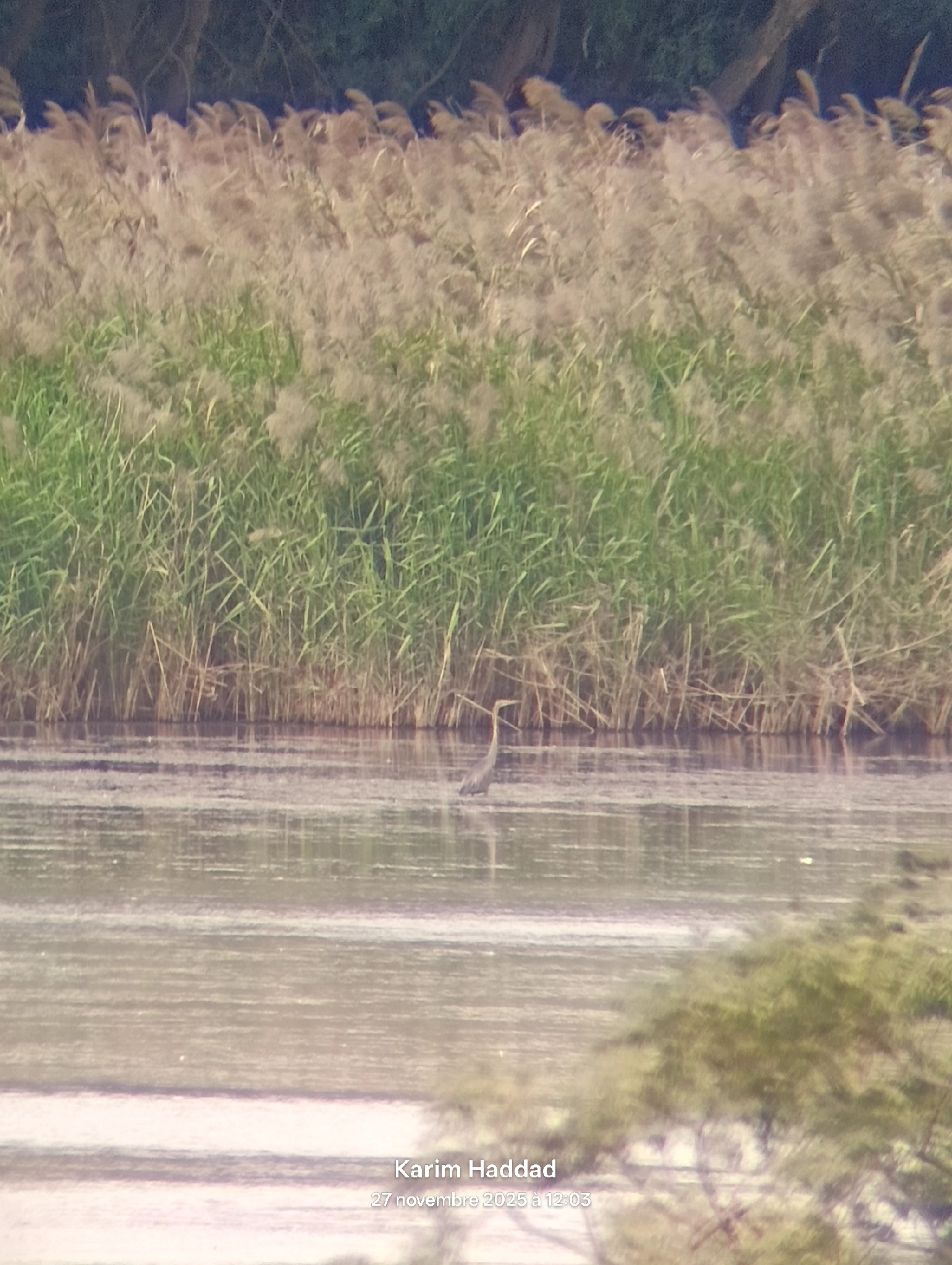
Purple Heron
Ardea purpurea
草鹭
Introduction
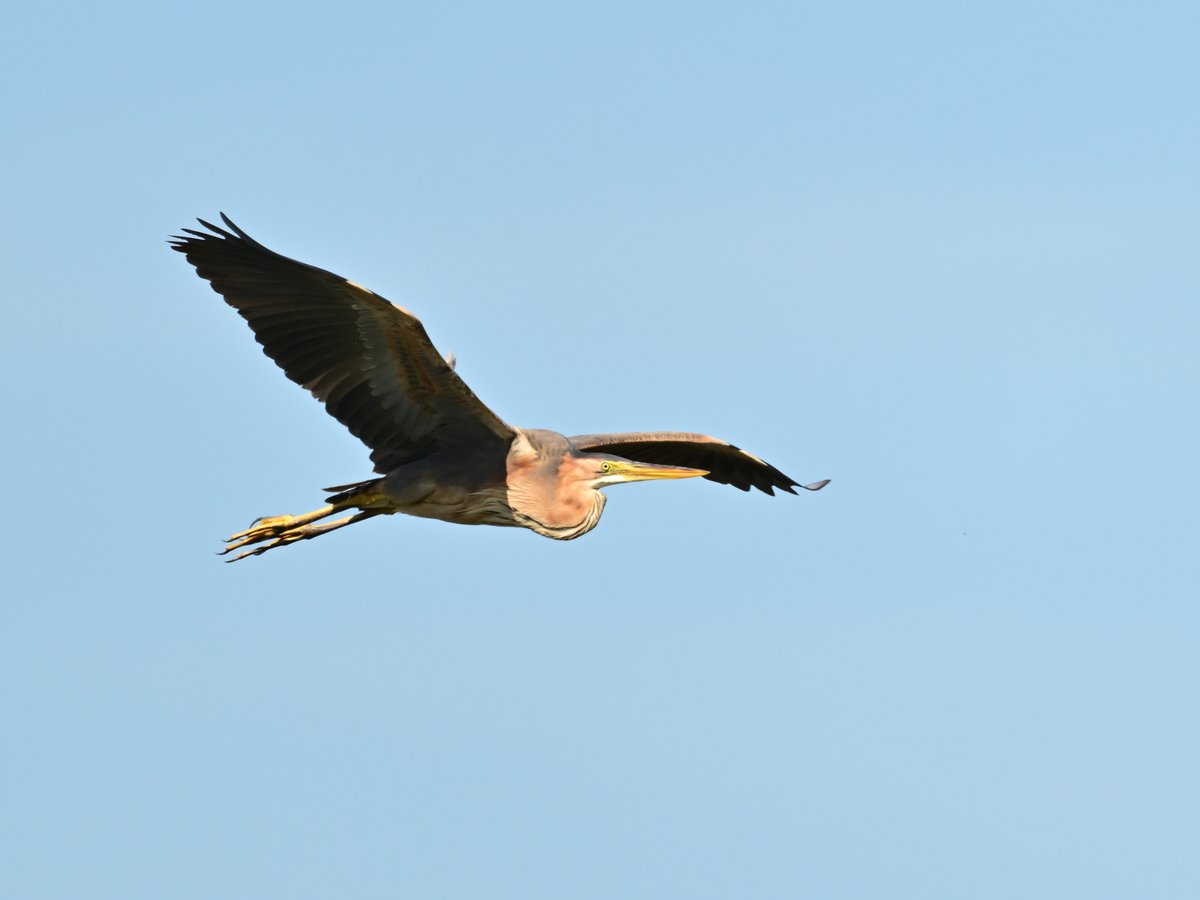
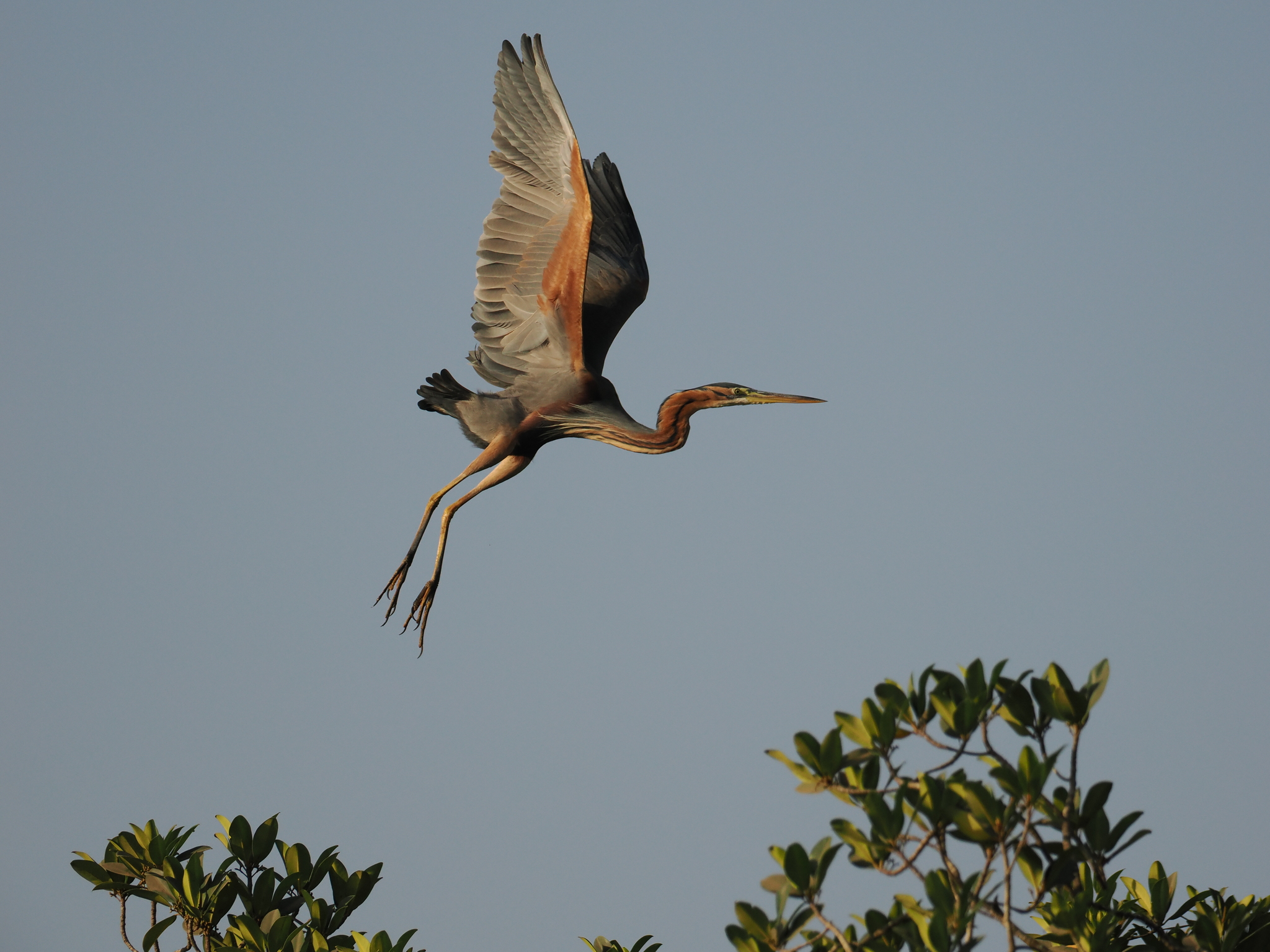
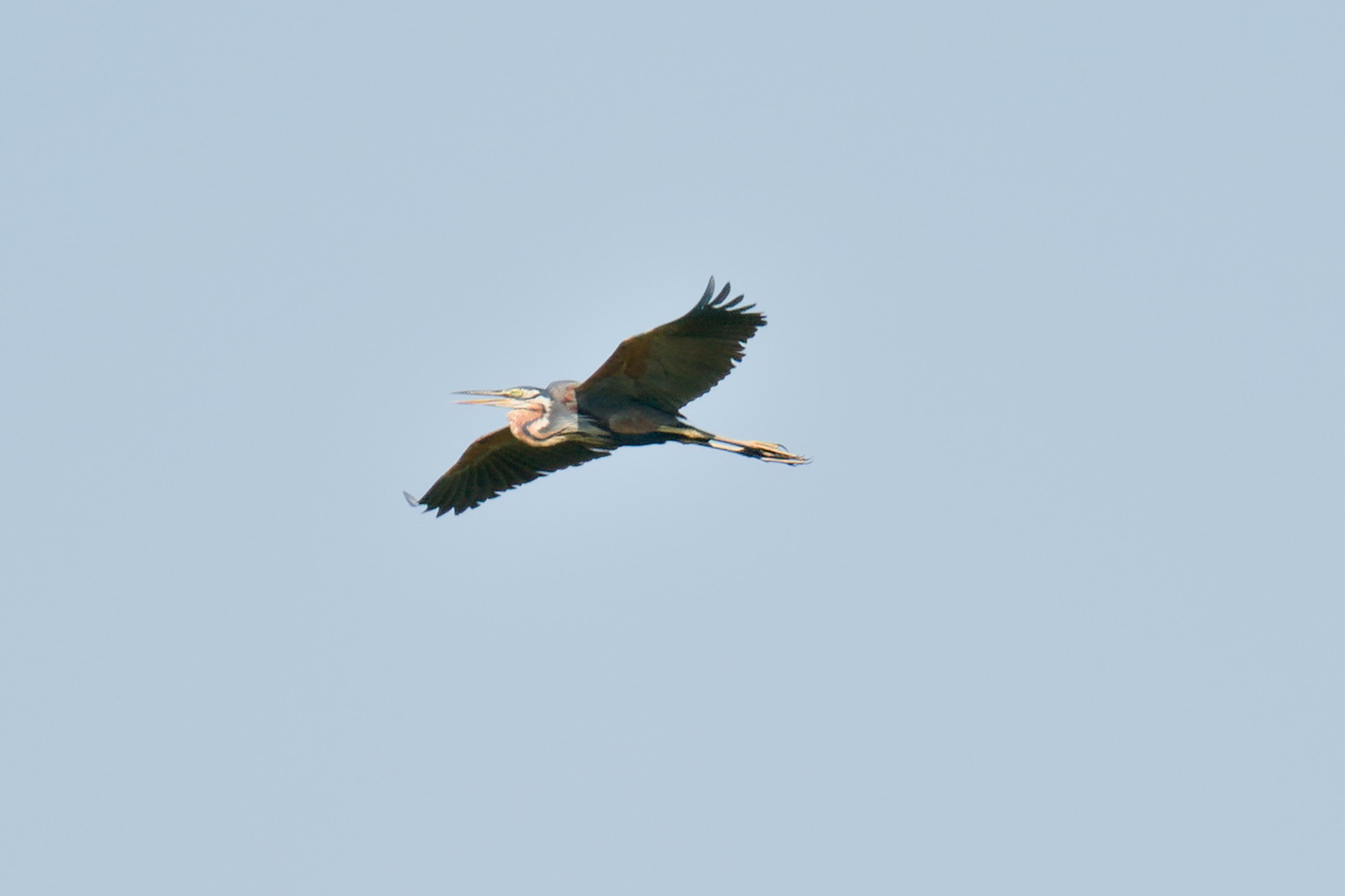
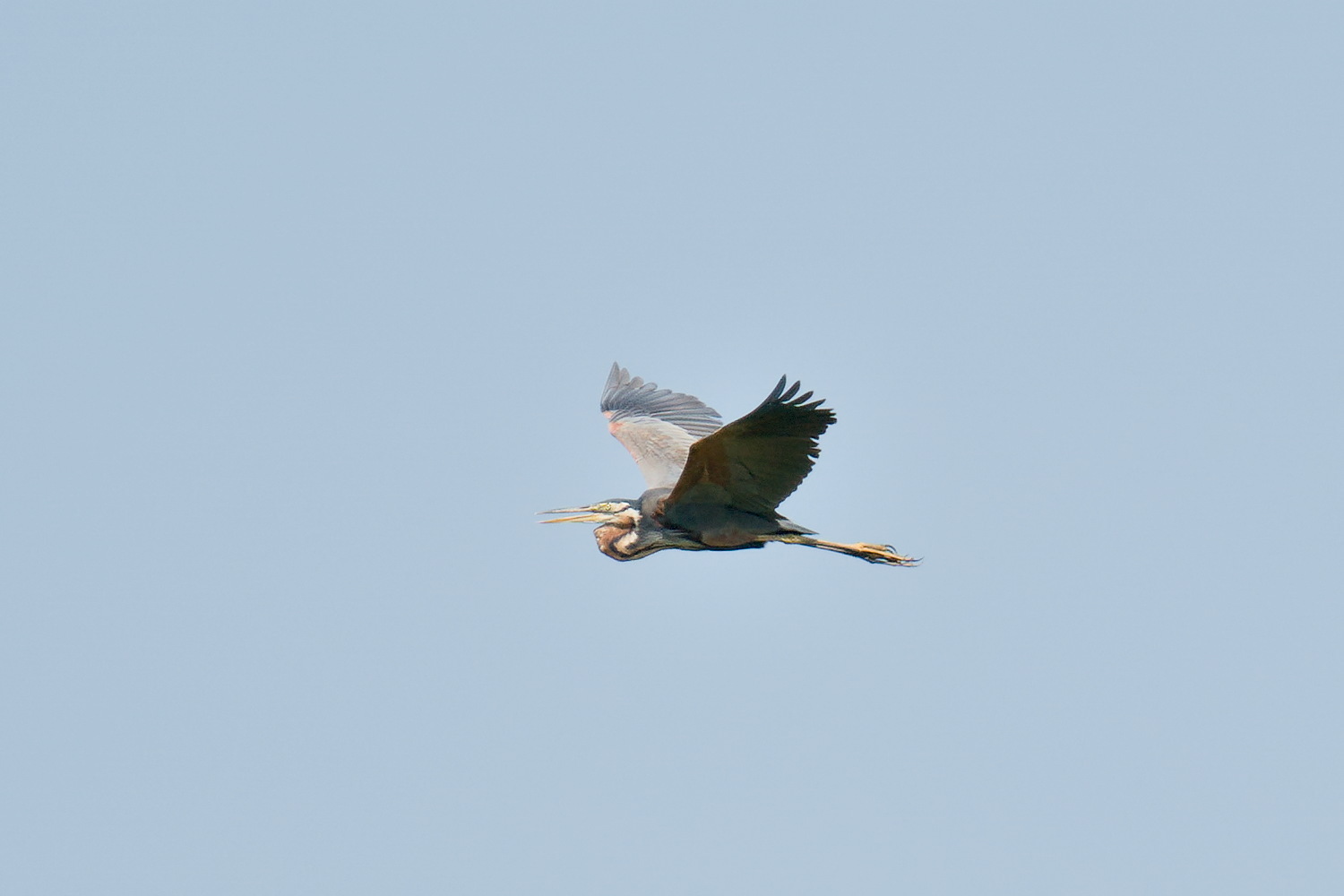
The purple heron (Ardea purpurea) is a wading bird occurring across three continents. It inhabits reed beds and marshes. Unlike the grey heron, it feeds within dense vegetation rather than in open water. When flying, its long legs trail behind and its wingbeats follow a steady rhythm.
Description
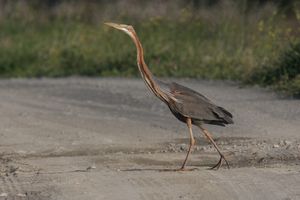
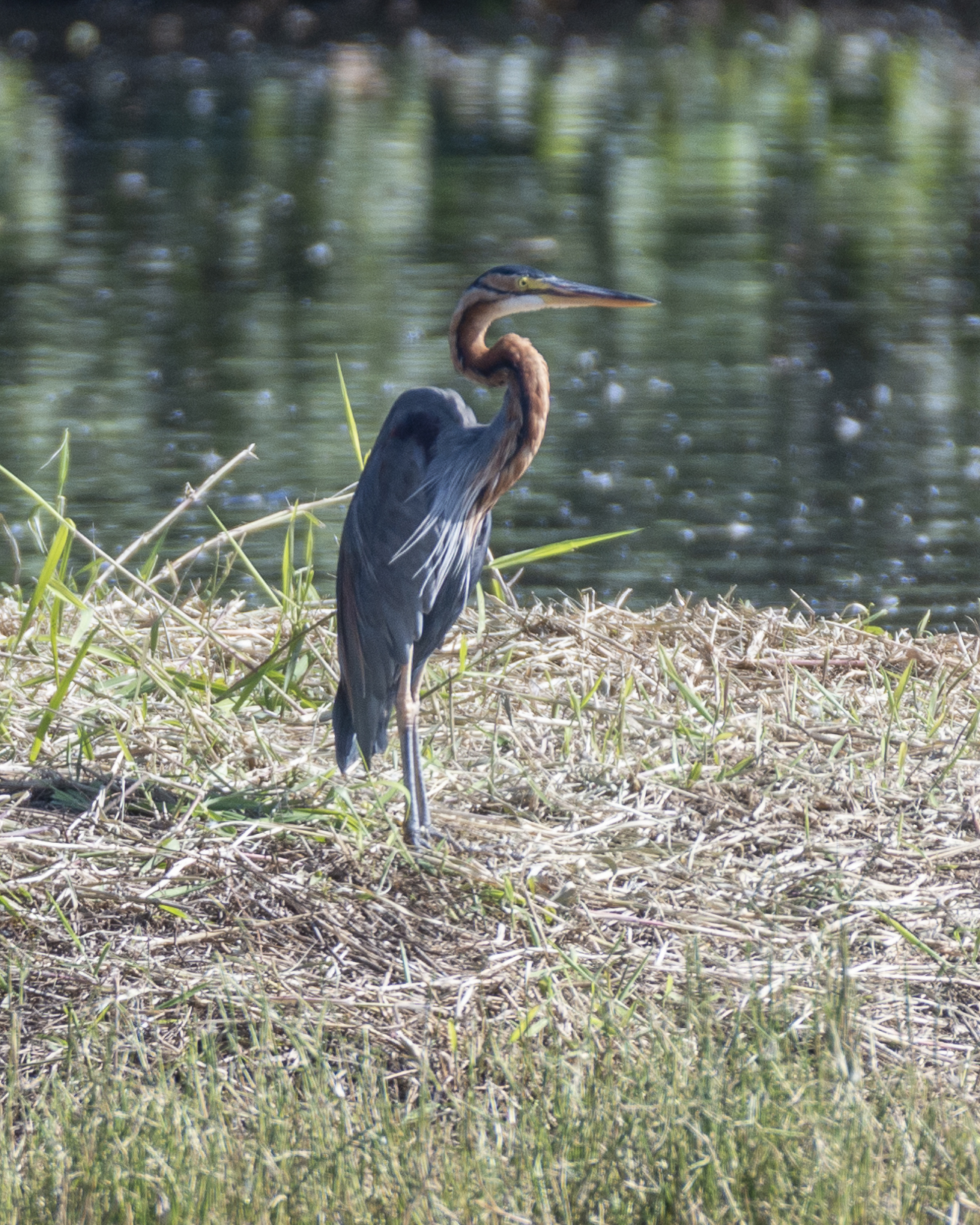
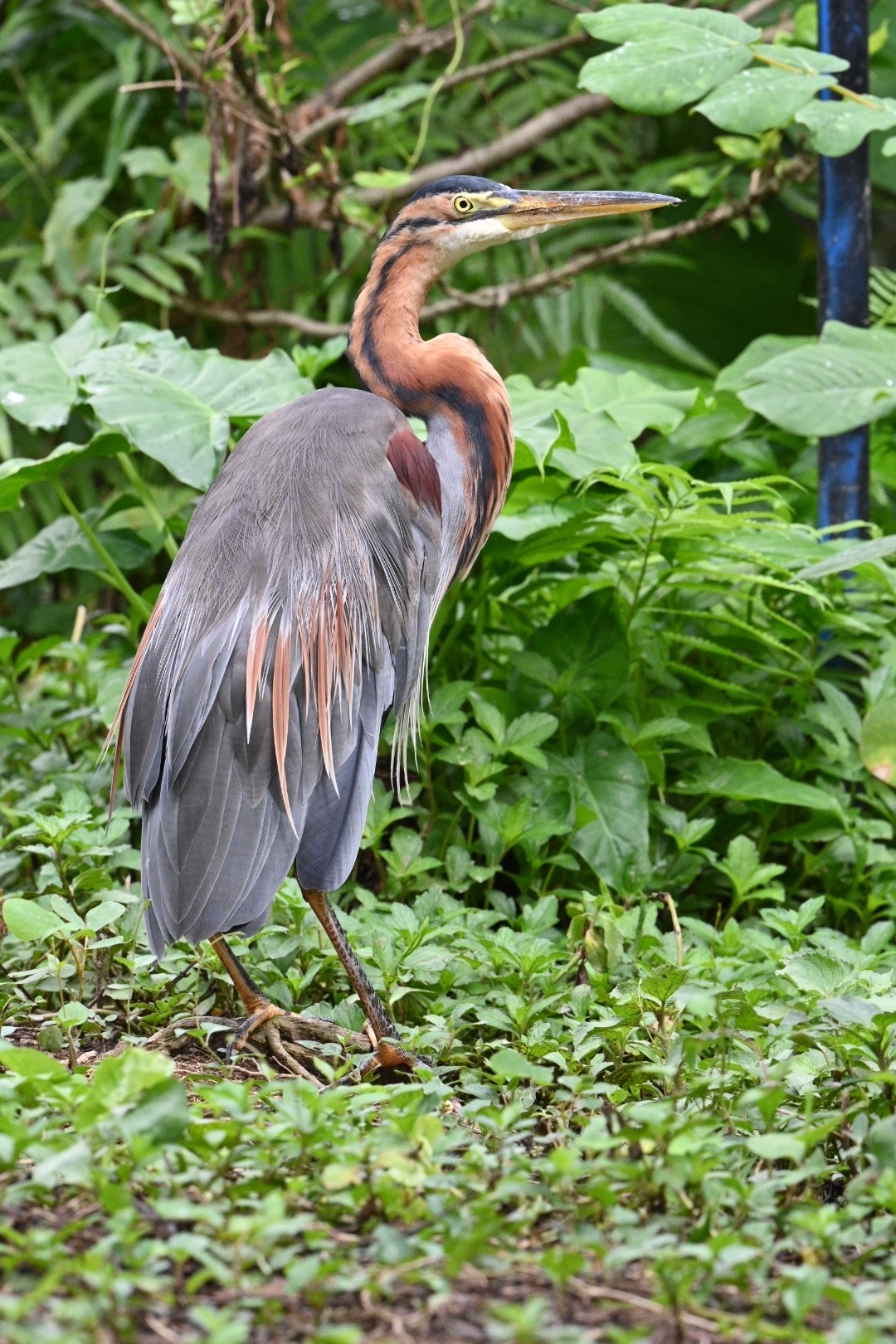
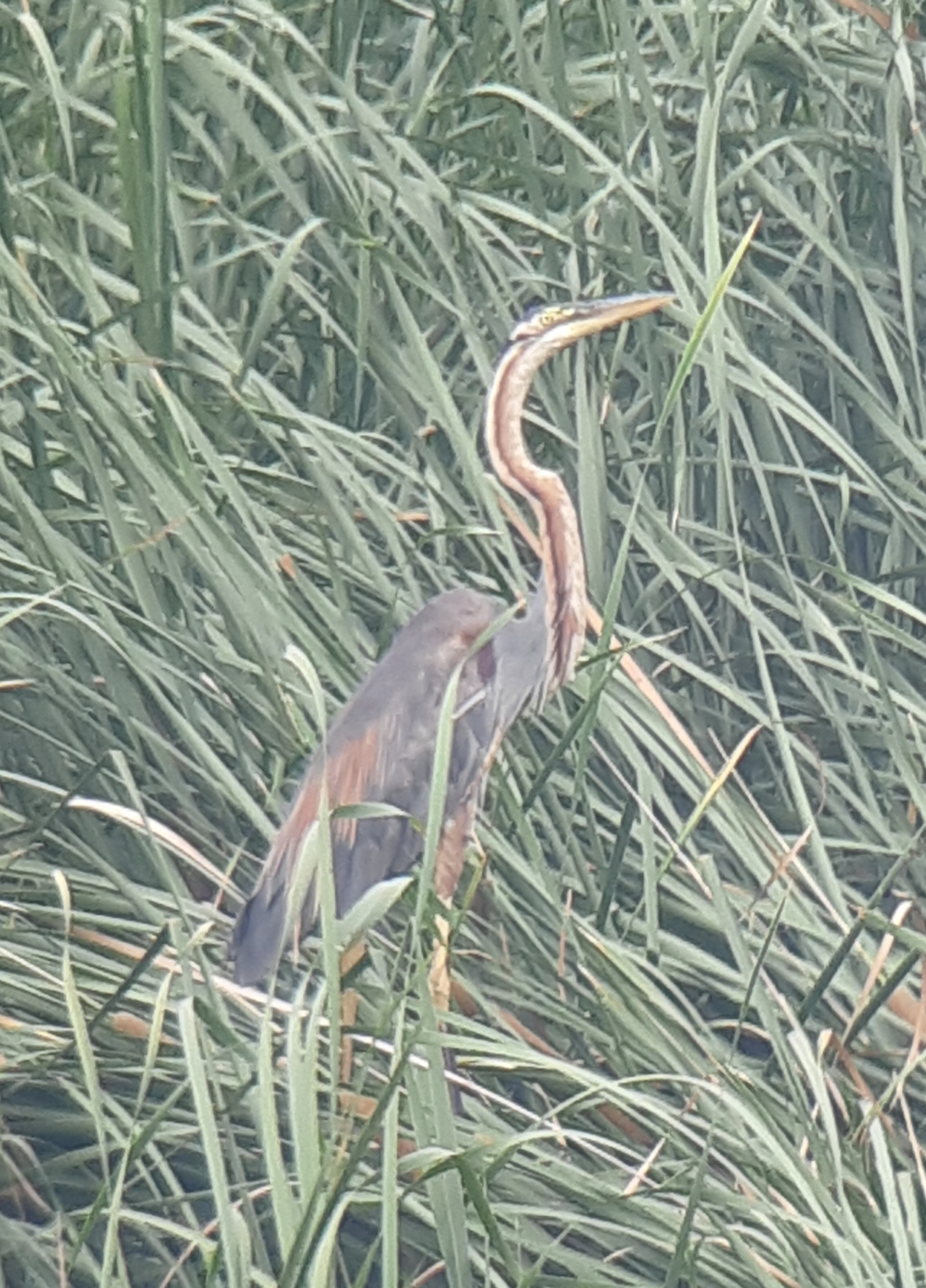
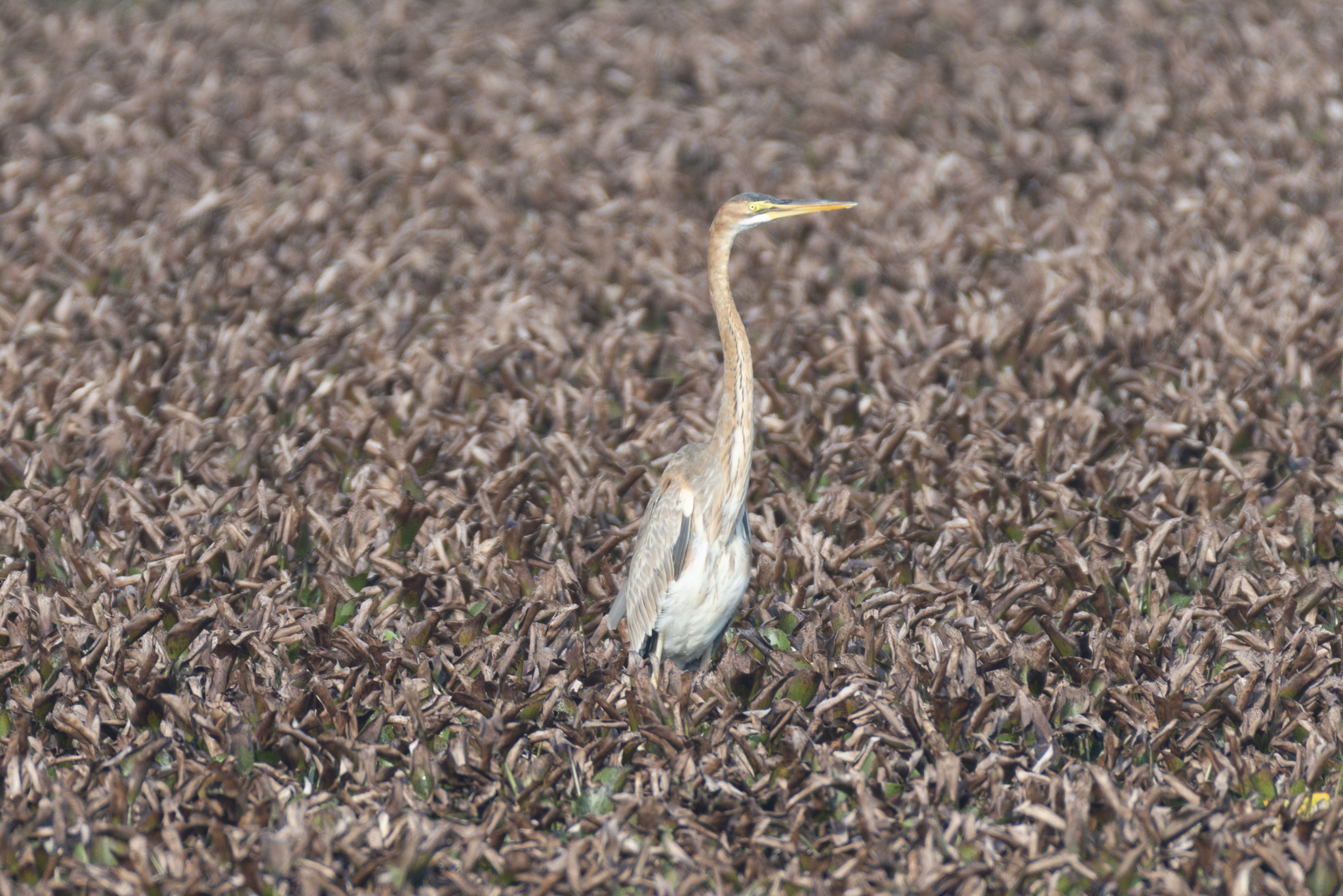
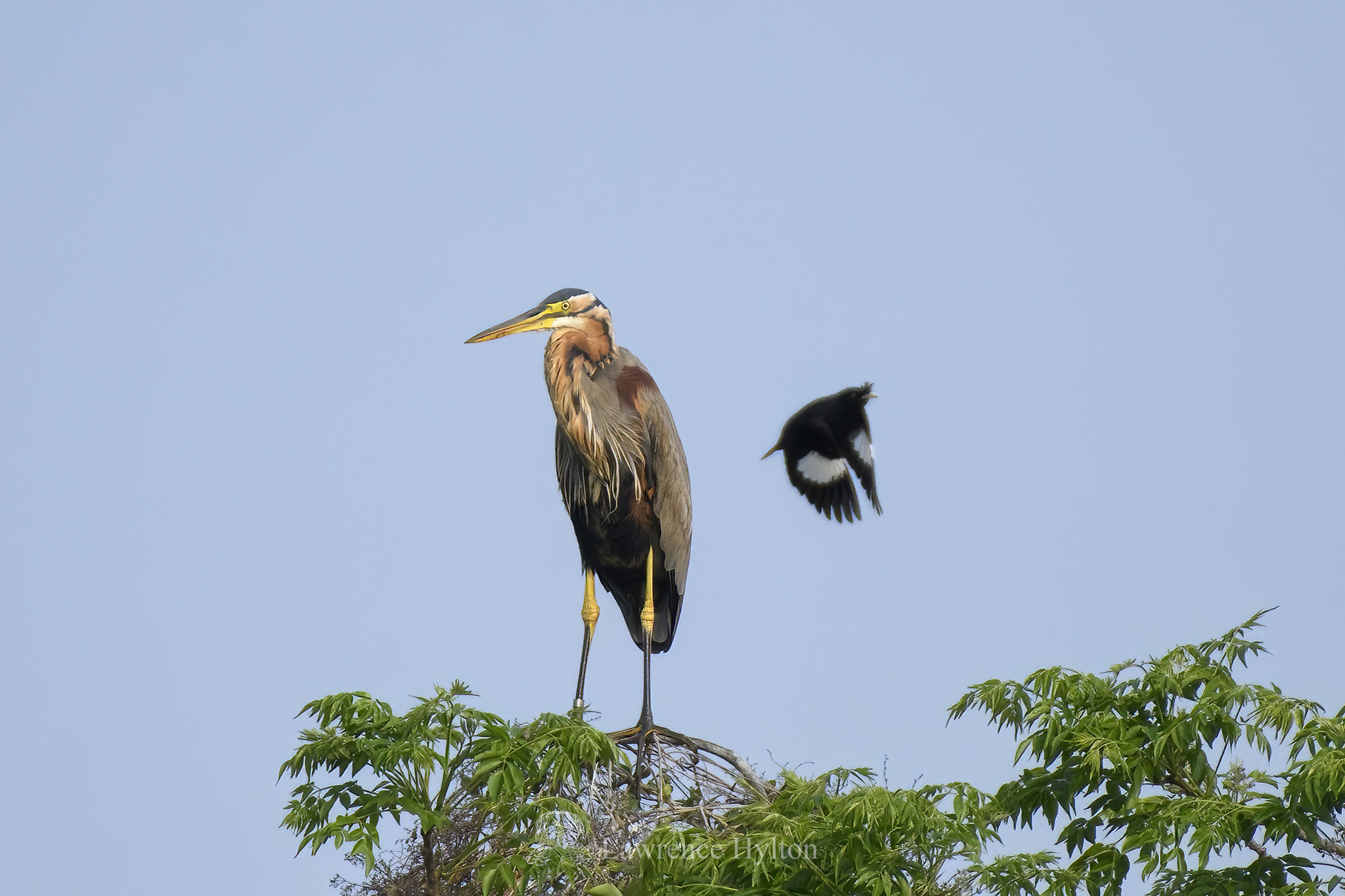
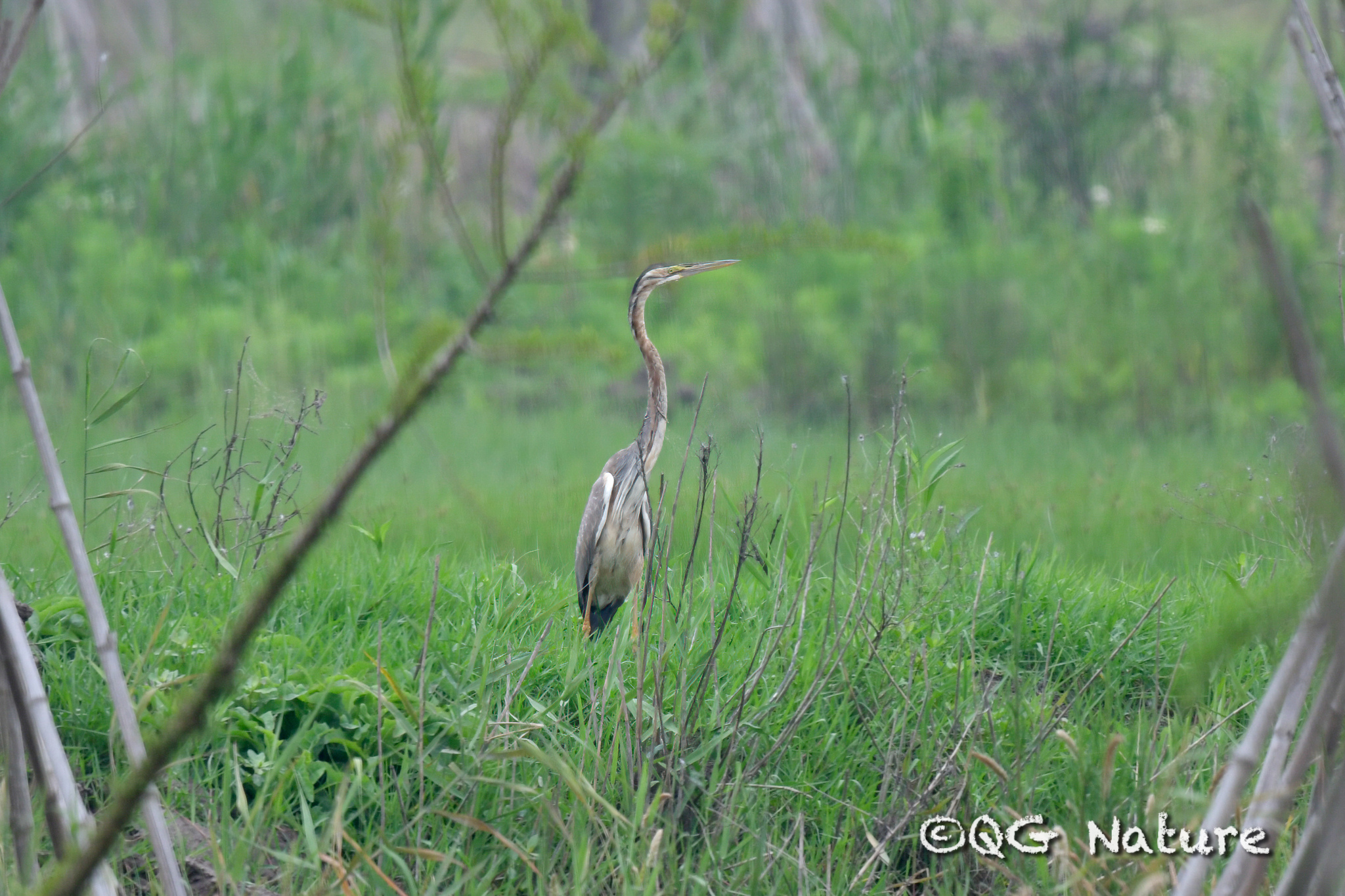
This large heron measures 78–97 cm in length with a standing height of 70–94 cm and impressive wingspan of 120–152 cm. Despite its size, it remains remarkably slender, weighing only 0.5–1.35 kg. The plumage is darker and more reddish-brown than the grey heron, with adults displaying a black forehead and crown. A dark stripe runs down the back of the neck, ending in a short dangling crest not exceeding 140 mm. The sides of the head and neck are buffish chestnut with dark streaking, while the mantle shows an oily brown tone. The breast is chestnut brown, contrasting with black belly and under-tail coverts. The powerful beak is long, straight and brownish-yellow, brightening during breeding season. Yellow eyes and legs that are brown in front and yellowish behind complete the distinctive appearance.
Identification
Separating this species from the similar grey heron requires attention to several key differences. It is noticeably smaller, more slender and darker overall, with reddish-brown tones replacing the grey heron's more uniform grey plumage. The head and neck appear more slender and snake-like, and the bird frequently adopts a characteristic posture with the neck extending obliquely rather than held straight. The crest is shorter than that of the grey heron. The toes are notably longer, allowing the bird to walk across floating vegetation. In flight, both species retract their necks similarly, but the purple heron's more slender profile helps distinguish it. The call is a harsh 'frarnk' that is quieter, higher-pitched and less frequent than the grey heron's loud, resonant calls.
Distribution & Habitat
This species has a broad Palaearctic distribution, breeding across Europe, Asia and Africa. Western populations range from Portugal across central and southern Europe into Kazakhstan, while African populations occur from Senegal down the eastern coast and in Madagascar. Eastern populations extend from the Indian subcontinent through China and the Philippines to Russia's Amur and Ussuri Rivers. The species inhabits marshes, lagoons and lakes surrounded by dense vegetation, showing particular preference for Phragmites reed beds. Western populations migrate to tropical Africa between August and October, returning in March. African and tropical Asian populations are largely resident. Birds occasionally appear as vagrants far outside their normal range, including northern Europe and the Americas.
Behavior & Ecology
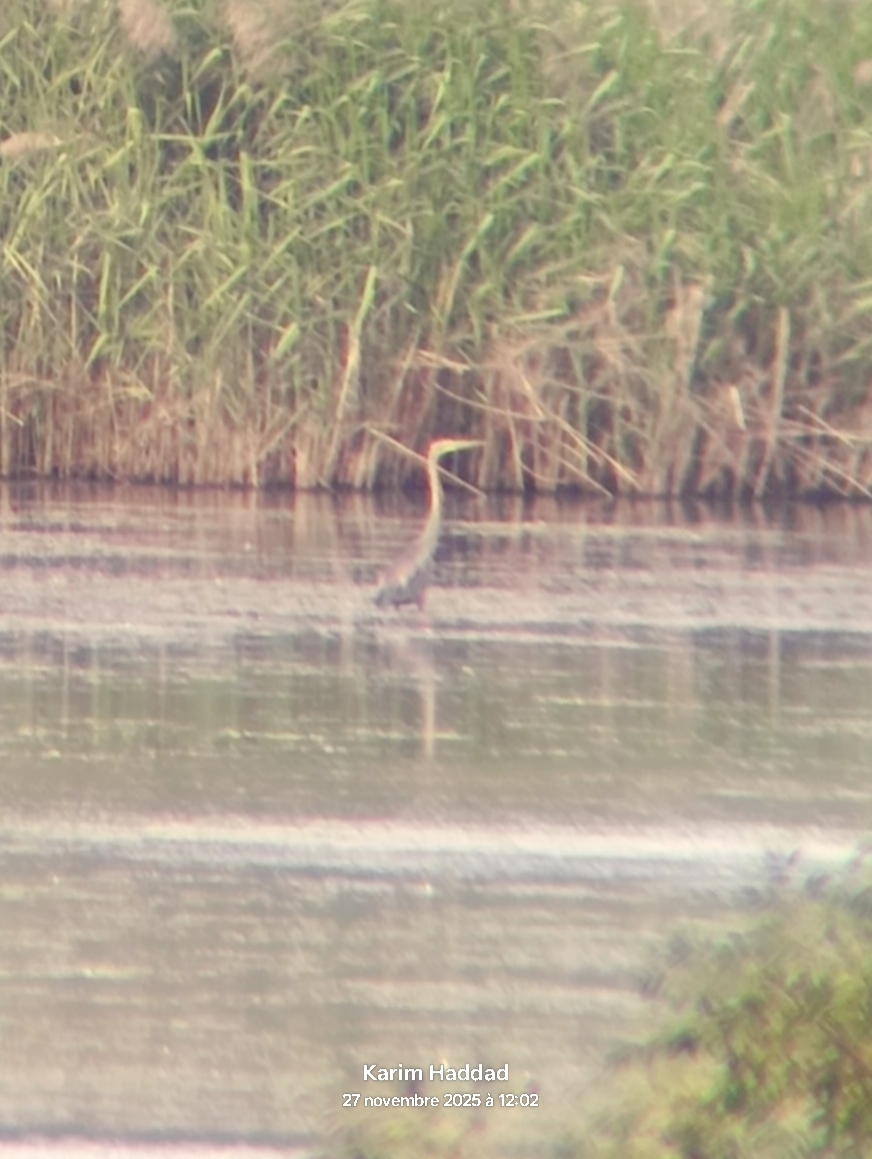
This species is most active at dawn and dusk, typically roosting with others during the middle of the day and at night. It feeds in shallow water by either standing motionless in ambush or slowly stalking prey, which includes fish, small mammals, amphibians, snakes, lizards, crustaceans, insects and spiders. Terrestrial beetles form the most common insect prey. The species breeds colonially, sometimes in single-species groups and occasionally alongside other heron species. Nests are bulky structures of dead reeds and sticks built in reed beds or low bushes near water. The clutch of four to five bluish-green eggs is incubated by both parents for 24–28 days, and both share duties of raising the young. Fledging occurs at about six weeks, with independence reached at two months before dispersal.
Conservation
The global population was estimated at 180,000–380,000 individuals as of 2019 and is believed to be decreasing. The species has been assessed as of Least Concern by the IUCN. The primary threat is the drainage and disturbance of wetland habitats, particularly the destruction of reed beds essential for breeding and shelter. Agricultural expansion, water pollution and human disturbance at nesting sites also contribute to population declines. The species benefits from protection under the Agreement on the Conservation of African-Eurasian Migratory Waterbirds (AEWA), which promotes international cooperation in protecting migratory waterbird habitats across the bird's extensive range.
Culture
While this species lacks extensive mythological associations, it has historical taxonomic significance in ornithology. The French zoologist Mathurin Jacques Brisson provided an early description in 1760, using the French name 'Le héron pourpré hupé' and creating a Latin designation. When Carl Linnaeus updated his Systema Naturae in 1766, he included the purple heron among 240 species he adopted from Brisson's work, establishing the current binomial name Ardea purpurea. This connection between early naturalists and the species represents an interesting piece of scientific history, marking the purple heron's formal entry into Western ornithological literature during the period of intensive species classification that characterized eighteenth-century natural science.
Source: Wikipedia · CC BY-SA 3.0
Taxonomy
- Order
- Pelecaniformes
- Family
- Ardeidae
- Genus
- Ardea
- eBird Code
- purher1
Vocalizations
Subspecies (4)
-
Ardea purpurea bournei
Cape Verde Islands (Santiago)
-
Ardea purpurea madagascariensis
Madagascar
-
Ardea purpurea manilensis
southern and eastern Asia, Indonesia, and Philippines
-
Ardea purpurea purpurea
southwestern Palearctic eastward to Iran, and sub-Saharan Africa
Data Sources
Species description from Wikipedia, licensed under CC BY-SA 3.0.
Bird images and sounds sourced from GBIF, contributed by citizen scientists worldwide under Creative Commons licenses.
Taxonomy data from AviList 2025.