

Galliformes / Phasianidae / Arborophila
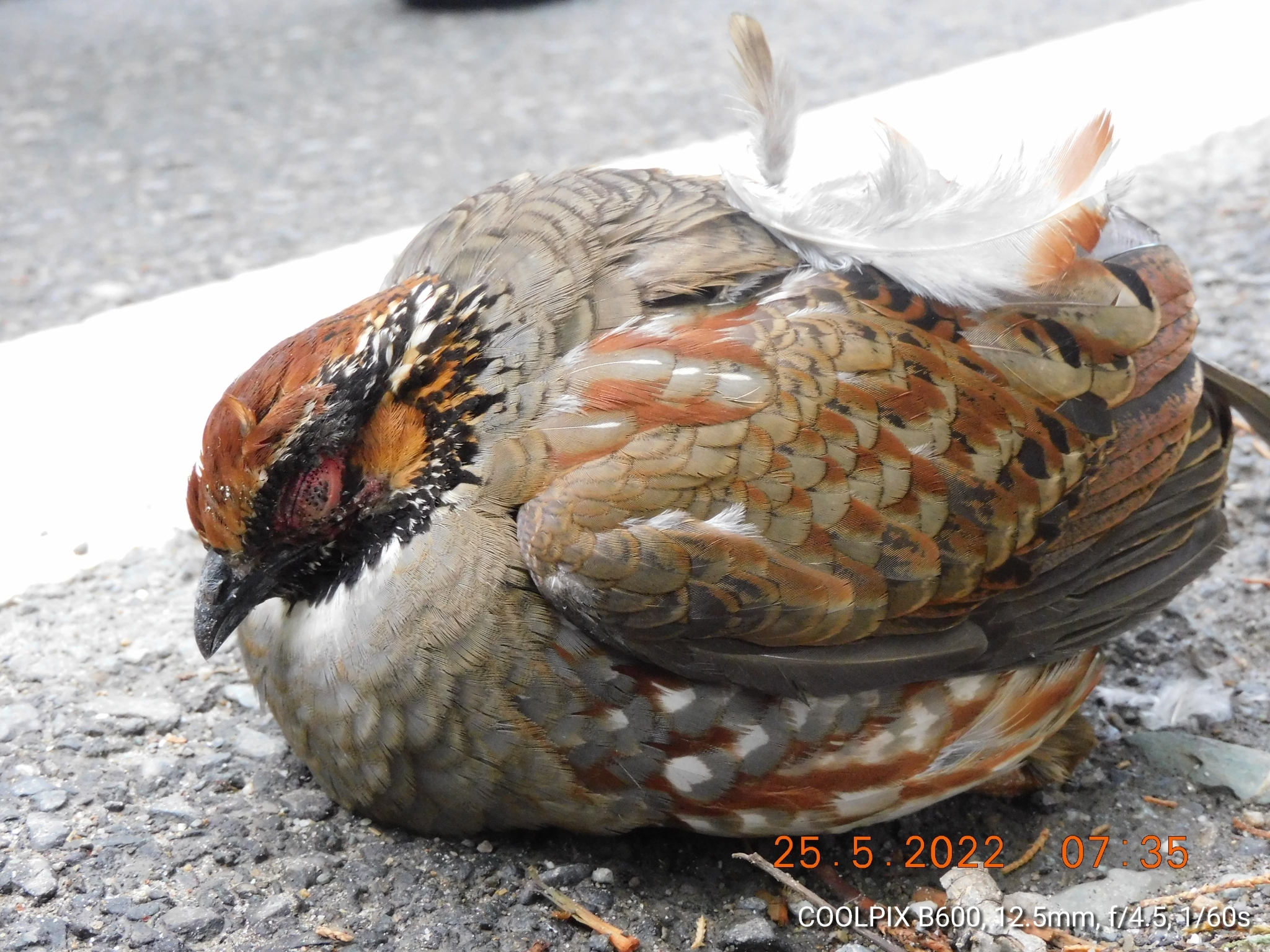
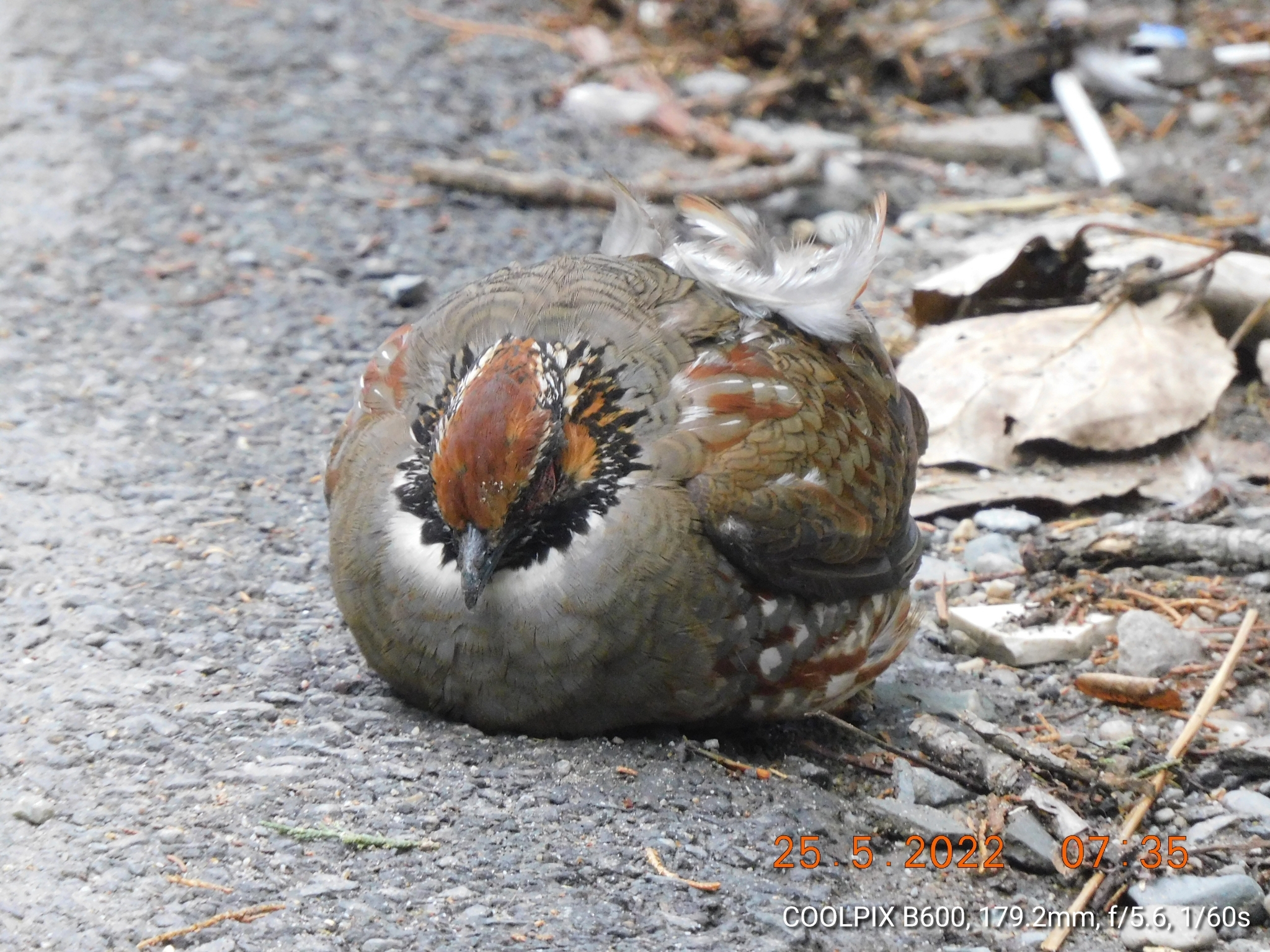
Hill Partridge
Arborophila torqueola · 环颈山鹧鸪
Introduction
A species in the pheasant family found in Asia, inhabiting subtropical or tropical moist lowland and montane forests. It is not globally threatened and is common in most parts of its range.
Description
Length is roughly 27–30 cm (11–12 in). Weight varies between 230 g (8 oz) for a small female to 390 g (14 oz) for a large male. Males have an orange crown and face set against a black head, with a streaked throat and grey chest and upper belly. Females lack distinctive head markings and the grey chest; their white flank colouration, streaked with ginger-brown feathers, extends further up and across the belly. Four subspecies were initially identified based on male head markings, though five are now recognized.
Distribution & Habitat
Range spans a narrow band from the western Himalayas to north Vietnam, including India, Nepal, Bhutan, Tibet, Myanmar, Thailand, and Vietnam. Natural habitats are subtropical or tropical moist lowland forest and subtropical or tropical moist montane forest. Five recognized subspecies are A. t. millardi, A. t. torqueola, A. t. interstincta, A. t. batemani, and A. t. griseata.
Behavior & Ecology
Mostly seen in pairs or small coveys of up to 10 individuals, often family groups. Diet comprises seeds and various invertebrates collected by scratching in leaf litter. A hen-like contact call is constantly uttered when feeding. Indian populations breed between April and June, with earlier breeding at lower altitudes. Average clutch size is 3-5 eggs, though up to nine have been observed. Eggs are white. Incubation is reported to be 24 days in captivity. The nest is a ball of manageable materials with a lined shallow scrape, typically located within low-growing vegetation or roots.
Source: Wikipedia · CC BY-SA 3.0
Taxonomy
- Order
- Galliformes
- Family
- Phasianidae
- Genus
- Arborophila
Vocalizations
Subspecies (5)
-
Arborophila torqueola batemani
northern Myanmar to southwestern China (western Yunnan and southwestern Sichuan)
Data Sources
Species description from Wikipedia, licensed under CC BY-SA 3.0.
Bird images and sounds sourced from GBIF, contributed by citizen scientists worldwide under Creative Commons licenses.
Taxonomy data from AviList 2025.