Hill Partridge
Arborophila torqueola
环颈山鹧鸪
Introduction
This forest-dwelling gamebird inhabits the dense understory of subtropical and tropical moist forests from the western Himalayas through Nepal, Bhutan, northeastern India, Myanmar, Thailand, and northern Vietnam. It forages on the forest floor by scratching through leaf litter in search of food. The species is typically encountered in pairs or small family groups known as coveys.
Description
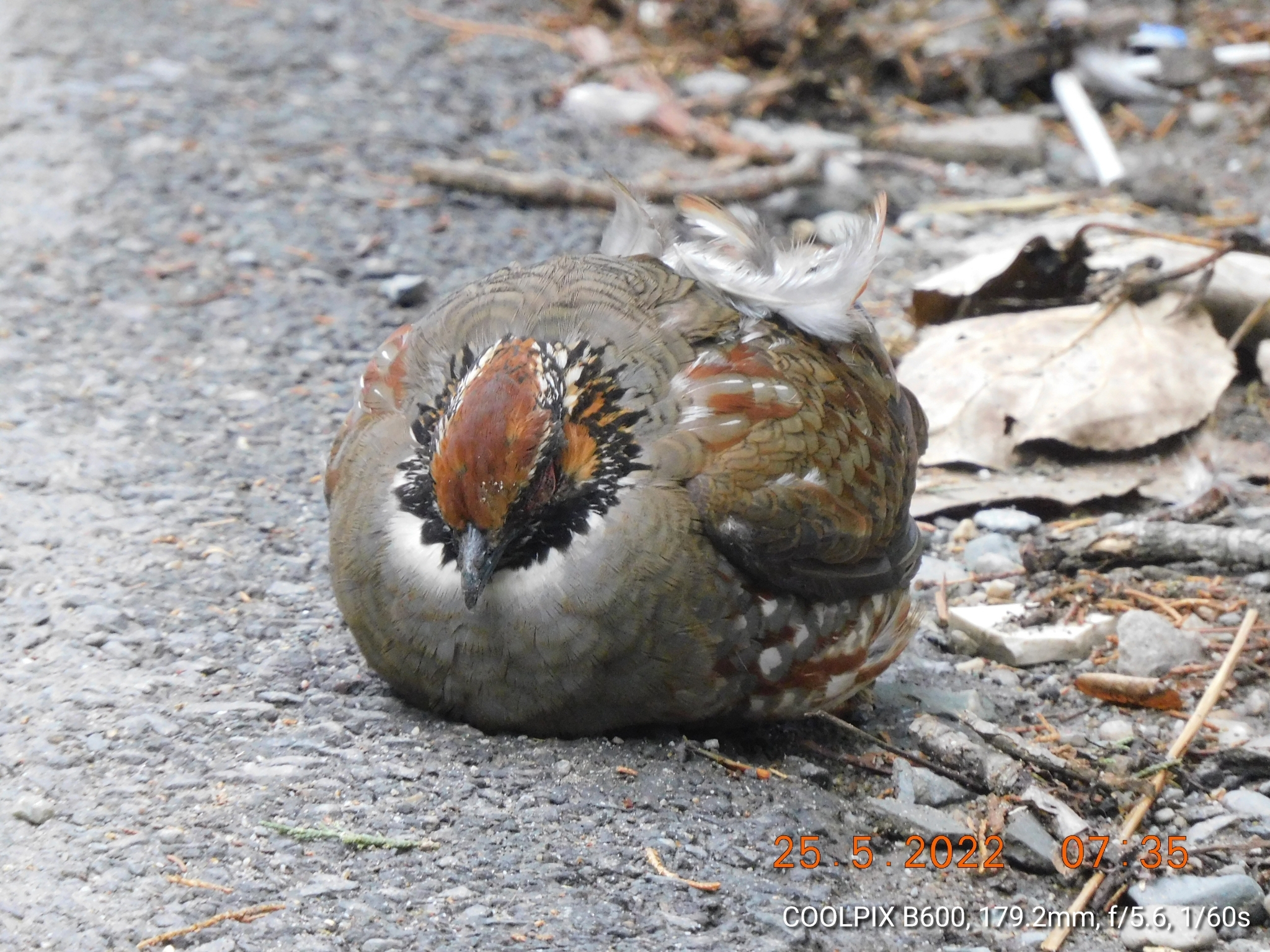
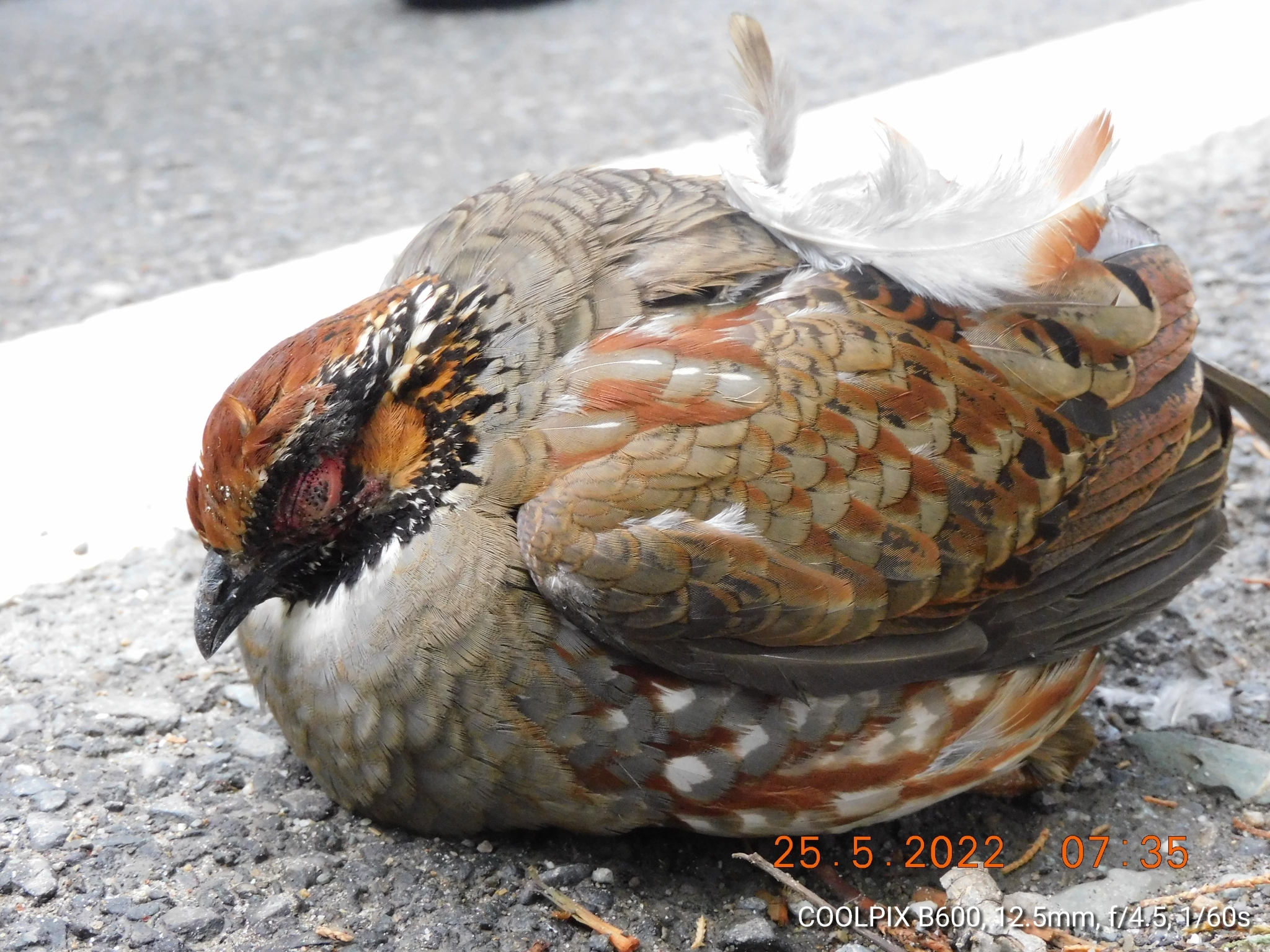
This compact gamebird measures 27-30 cm in length, with males weighing up to 390 g and females as light as 230 g. Males display striking head markings featuring an orange crown and face contrasting with a black head and streaked throat. The chest and upper belly are grey, while flank feathers are white streaked with ginger-brown. Females lack the male's ornate head pattern and grey underparts, instead showing more uniform ginger-brown plumage that extends across the belly. Four subspecies are recognized, differentiated by variations in male head markings.
Identification
The species is distinguished from similar forest partridges by its combination of orange and black head pattern in males and its specific call. Females can be identified by their overall ginger-brown coloration lacking the grey underparts of the male. The relatively small size and preference for forest floor distinguish it from larger pheasants that may share its habitat.
Distribution & Habitat
The species ranges across a narrow band from the western Himalayas through India, Nepal, Bhutan, Tibet, Myanmar, Thailand, and northern Vietnam. It inhabits subtropical and tropical moist lowland forests and moist montane forests. While not globally threatened, it remains common throughout most of its range. Five subspecies are recognized across this distribution, showing variation in male head markings.
Behavior & Ecology
These birds are typically encountered in pairs or small coveys of up to 10 individuals, often family groups. Indian populations breed from April to June, with earlier breeding at lower altitudes. The clutch contains 3-5 eggs, though up to 9 have been recorded in captivity. The nest is a shallow scrape lined with vegetation, though captive nests require support from low-growing plants or roots. Eggs are white and require approximately 24 days of incubation. The diet consists of seeds and invertebrates collected by scratching through leaf litter. A hen-like contact call is regularly uttered while feeding.
Conservation
The species is classified as Least Concern and is not considered globally threatened. It remains common throughout most of its extensive range and appears to maintain stable populations across its distribution.
Culture
No significant cultural or folklore references for this species were documented in available sources.
Source: Wikipedia · CC BY-SA 3.0
Taxonomy
- Order
- Galliformes
- Family
- Phasianidae
- Genus
- Arborophila
- eBird Code
- hilpar1
Vocalizations
Subspecies (5)
-
Arborophila torqueola batemani
northern Myanmar to southwestern China (western Yunnan and southwestern Sichuan)
-
Arborophila torqueola griseata
northwestern Vietnam
-
Arborophila torqueola interstincta
northeastern India (Assam)
-
Arborophila torqueola millardi
western Himalayas (Himachal Pradesh to western Nepal)
-
Arborophila torqueola torqueola
eastern Himalayas (Nepal to Tibet and northern Myanmar)
Data Sources
Species description from Wikipedia, licensed under CC BY-SA 3.0.
Bird images and sounds sourced from GBIF, contributed by citizen scientists worldwide under Creative Commons licenses.
Taxonomy data from AviList 2025.