Little Spiderhunter
Arachnothera longirostra
长嘴捕蛛鸟
Introduction
A sunbird species inhabiting moist forests of South and Southeast Asia. Occurs in subtropical and tropical lowland and montane forests, typically below the canopy. Found singly or in pairs. Feeds on nectar from flowering plants. Emits a buzzy "zick-zick" call when disturbed; song consists of rapid chipping notes. Sexes appear similar with subtle bill coloration differences.
Description
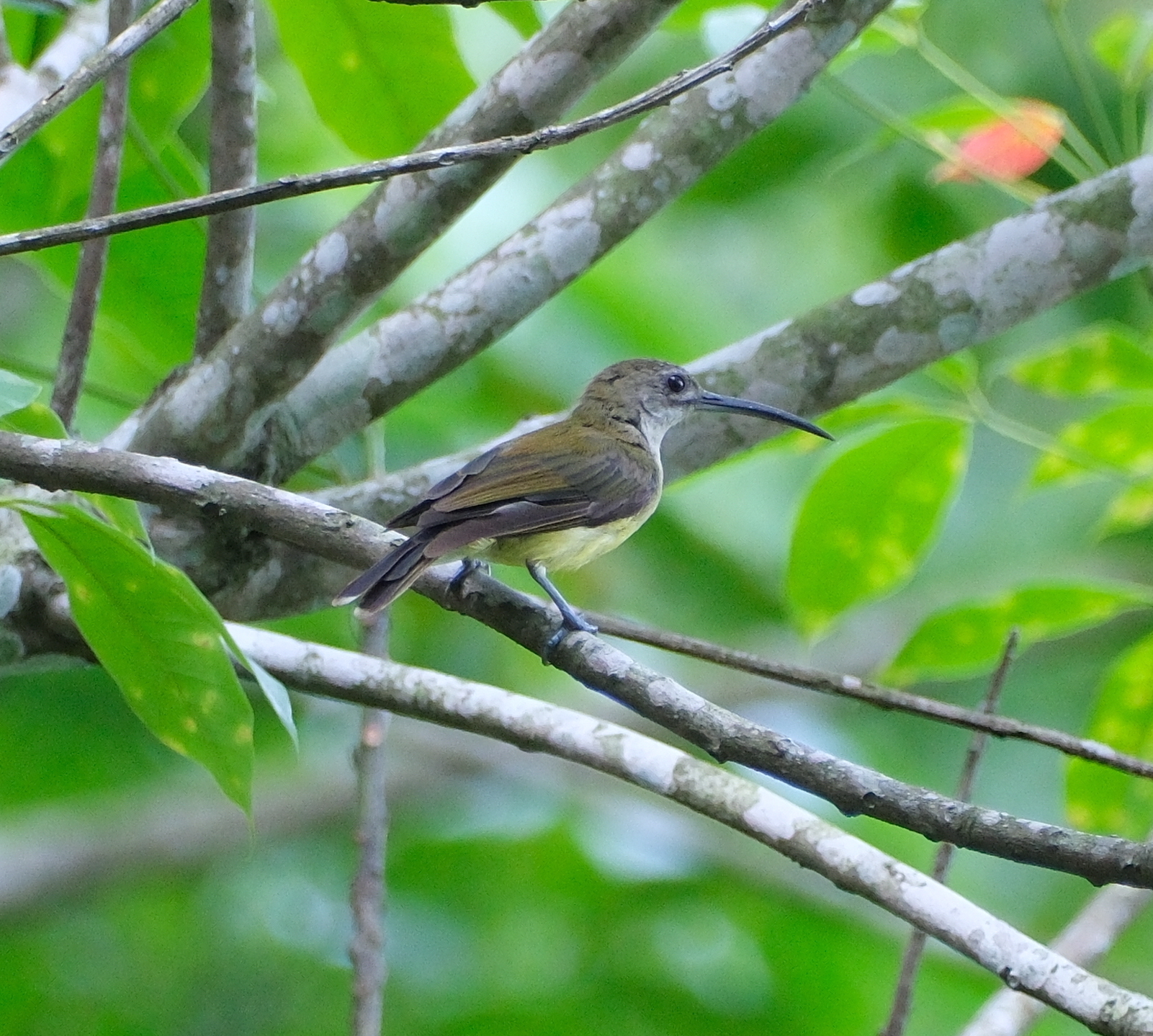
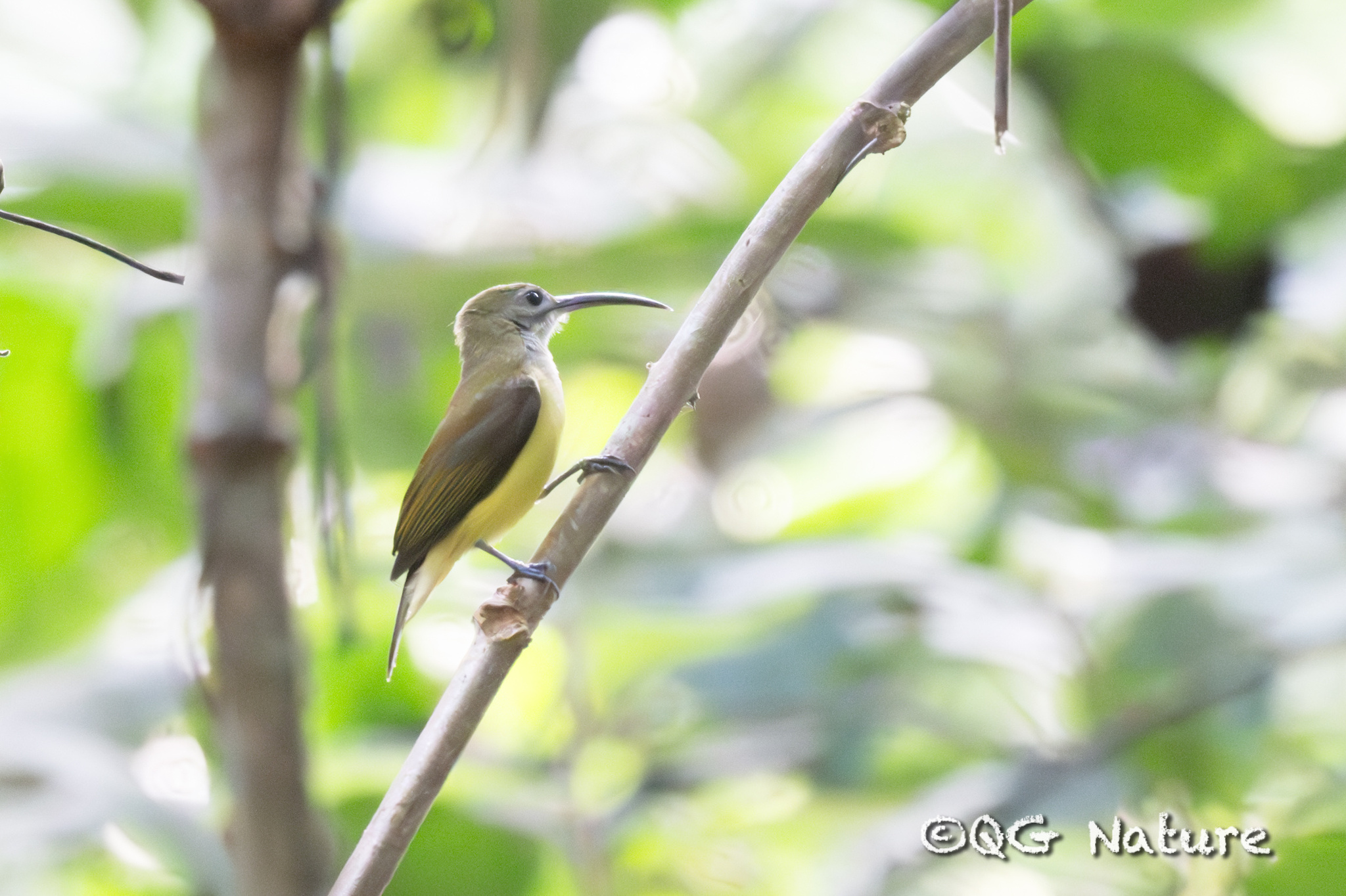
This species is immediately recognizable by its exceptionally long, slender beak, which sets it apart from all other sunbirds in the region. The plumage is relatively plain overall, with olive-green upperparts and yellowish underparts. Sexes appear similar in the field, though careful observation reveals that males possess an entirely black beak, while females show a paler base to the lower mandible. The overall size is small to medium, adapted perfectly for accessing nectar from deep tubular flowers. The combination of the distinctive bill structure and nondescript plumage makes this species relatively easy to identify once observed well.
Identification
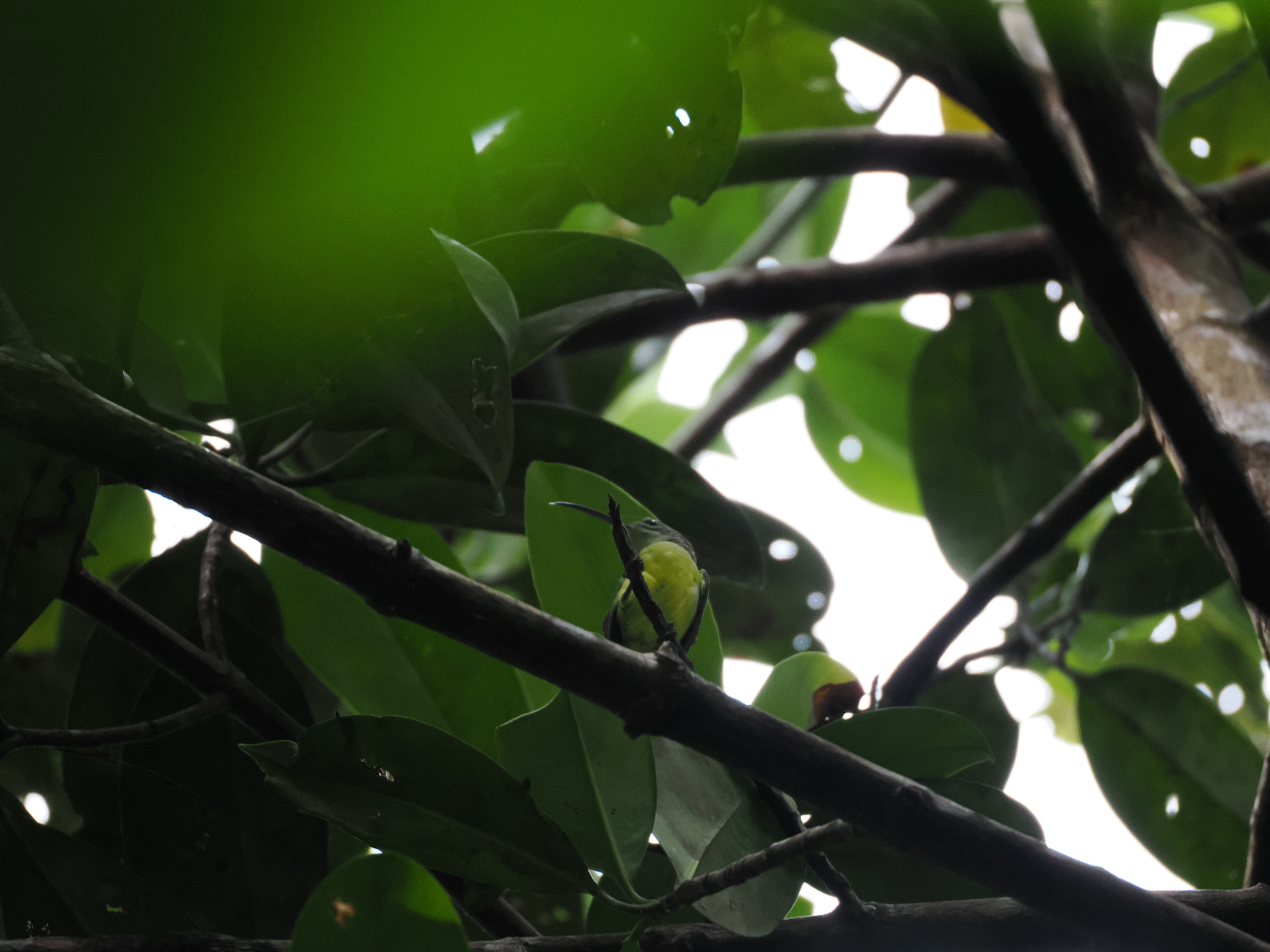
The extraordinarily long, curved beak is the defining field mark that immediately separates this species from all other sunbirds and similarly sized forest birds. In good lighting, note the entirely black bill of males versus the pale-based lower mandible of females. The buzzy zick-zick call, often given when the bird is disturbed, serves as an additional identification clue. Unlike many sunbirds, this species is typically seen alone or in pairs rather than in flocks, and it favors the forest interior and edge habitats rather than open areas.
Distribution & Habitat
This species occurs across an extensive range from Bangladesh through mainland Southeast Asia to the islands of Indonesia and the Philippines. In South Asia, disjunct populations exist in the Eastern Ghats and Western Ghats of India, with the main distribution centered in northeastern India extending through Myanmar, Thailand, and into southern China. Island populations occur throughout Sumatra, Borneo, Java, Bali, and the Philippines. It occupies subtropical and tropical moist lowland forests, mangrove forests, and moist montane forests, typically staying below the canopy. Garden habitats with flowering plants also attract this species.
Behavior & Ecology
As an obligate nectar feeder, this bird plays a crucial ecological role as a pollinator for wild banana species and numerous ginger family plants. It regularly visits flowering trees including mistletoes, bombax, and erythrina for nectar. The breeding season varies by region, running from March to September in northeastern India with peak activity in May through August, while southern populations breed from December to August. The nest is a compact cup structure suspended from the underside of large leaves, particularly banana, using spider silk and vegetable fibers as attachment points. Clutches typically consist of two eggs. Brood parasitism by Hodgson's hawk-cuckoo and violet cuckoo has been documented.
Conservation
This species demonstrates some tolerance to human-modified landscapes and is frequently found in secondary forests and forest edge habitats. However, populations have disappeared from several forest fragments, and the species has become locally extinct in Singapore's botanical garden despite suitable habitat remaining. The primary threat appears to be ongoing habitat fragmentation and loss of old-growth forest patches. While currently not considered globally threatened, local population declines in heavily developed areas warrant monitoring.
Culture
Among the Kayan, Kenyah, and Punan peoples of Sarawak, this bird holds cultural significance as an omen of good fortune. During traditional camphor collecting expeditions, men specifically listen for its sit call, interpreting the sound as a favorable sign. This traditional knowledge demonstrates the deep connection between indigenous communities and forest bird species, where behavioral observations inform cultural practices and decision-making in natural resource harvesting.
Source: Wikipedia · CC BY-SA 3.0
Taxonomy
- Order
- Passeriformes
- Family
- Nectariniidae
- Genus
- Arachnothera
- eBird Code
- litspi1
Vocalizations
Subspecies (10)
-
Arachnothera longirostra atita
South Natuna Islands (South China Sea)
-
Arachnothera longirostra buettikoferi
Borneo
-
Arachnothera longirostra cinireicollis
Malayan Peninsula and Sumatra including satellites
-
Arachnothera longirostra longirostra
southwestern India; Nepal to Assam, western Yunnan, Myanmar, and western Thailand
-
Arachnothera longirostra niasensis
Nias (off western Sumatra)
-
Arachnothera longirostra pallida
southeastern Thailand and central Indochina
-
Arachnothera longirostra prillwitzi
Java
-
Arachnothera longirostra rothschildi
North Natuna Islands (South China Sea)
-
Arachnothera longirostra sordida
southwestern China (southeastern Yunnan) to northeastern Thailand and northern Indochina
-
Arachnothera longirostra zarhina
Banyak Islands (off western Sumatra)
Data Sources
Species description from Wikipedia, licensed under CC BY-SA 3.0.
Bird images and sounds sourced from GBIF, contributed by citizen scientists worldwide under Creative Commons licenses.
Taxonomy data from AviList 2025.