Accipitriformes / Accipitridae / Aquila
Steppe Eagle
Aquila nipalensis · 草原雕
Introduction
A large bird of prey in the family Accipitridae and subfamily Aquilinae, characterized by well-feathered legs. It breeds in the steppes of Eurasia, primarily in Russia, Kazakhstan, Mongolia, and China, and migrates to wintering grounds in Africa, the Middle East, and South Asia. The species is a specialized predator of ground squirrels during breeding but adopts a scavenging and insectivorous diet in winter. It is the only eagle to nest primarily on the ground. The IUCN classifies the species as Endangered due to a population decline exceeding 50%.
Description
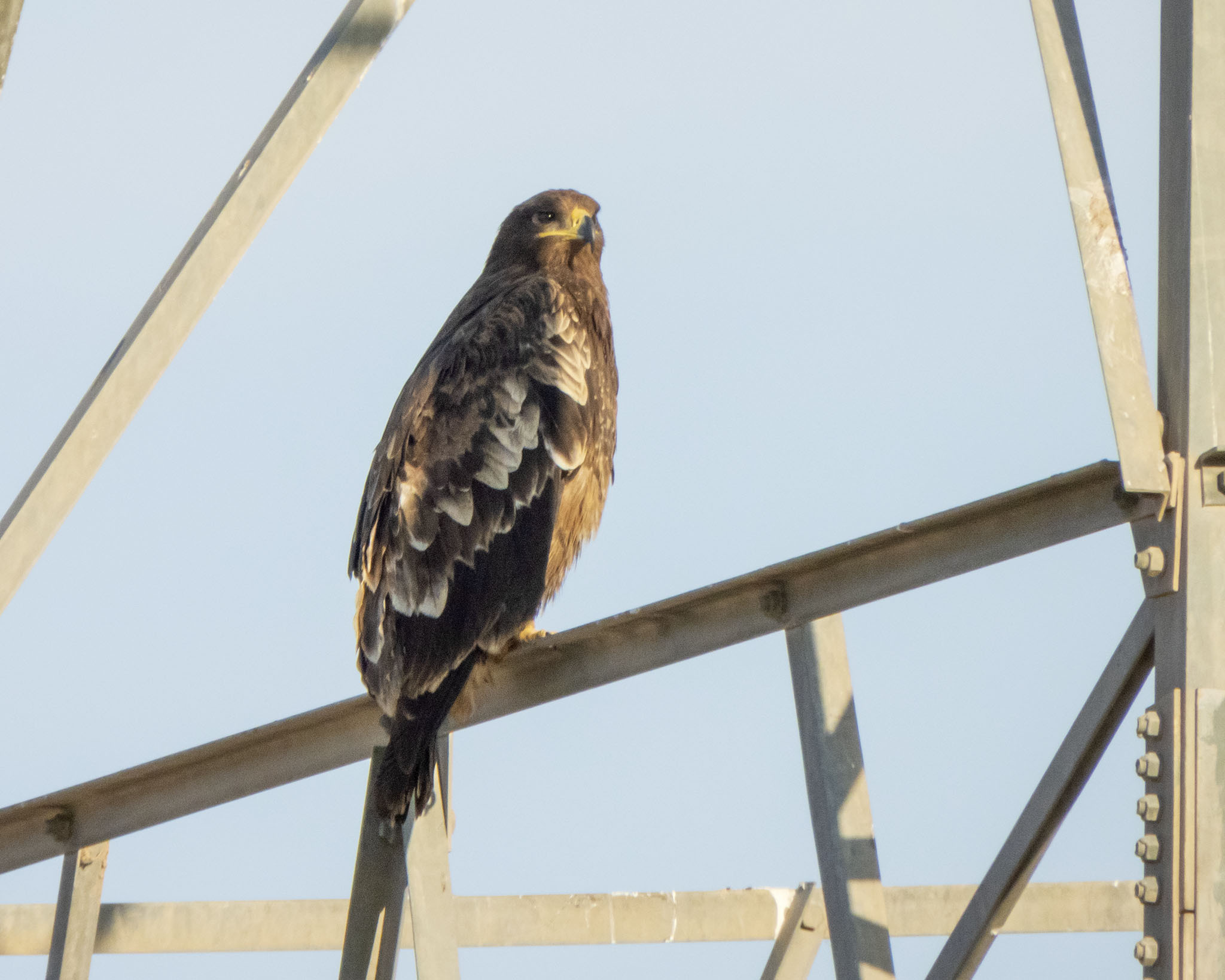
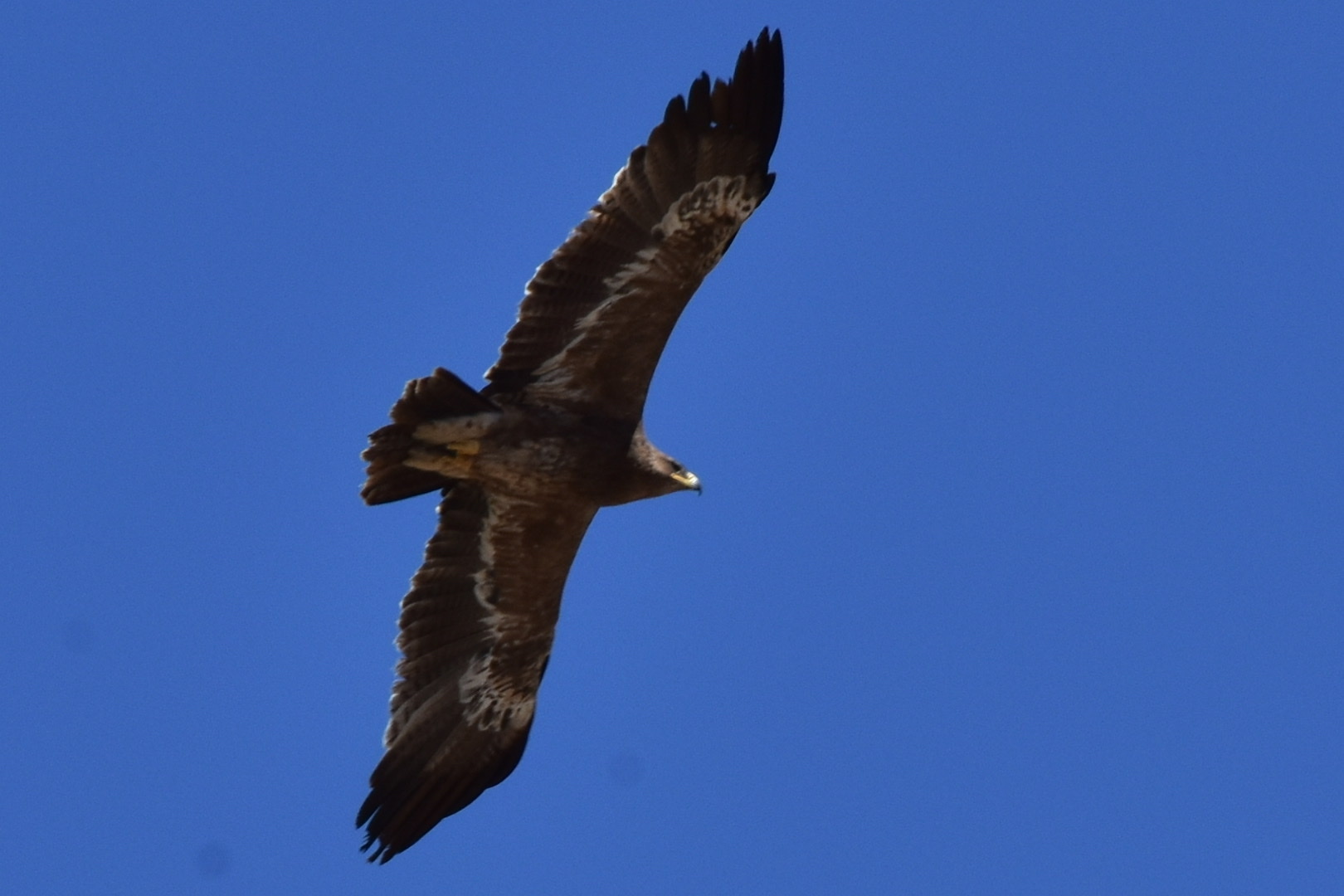
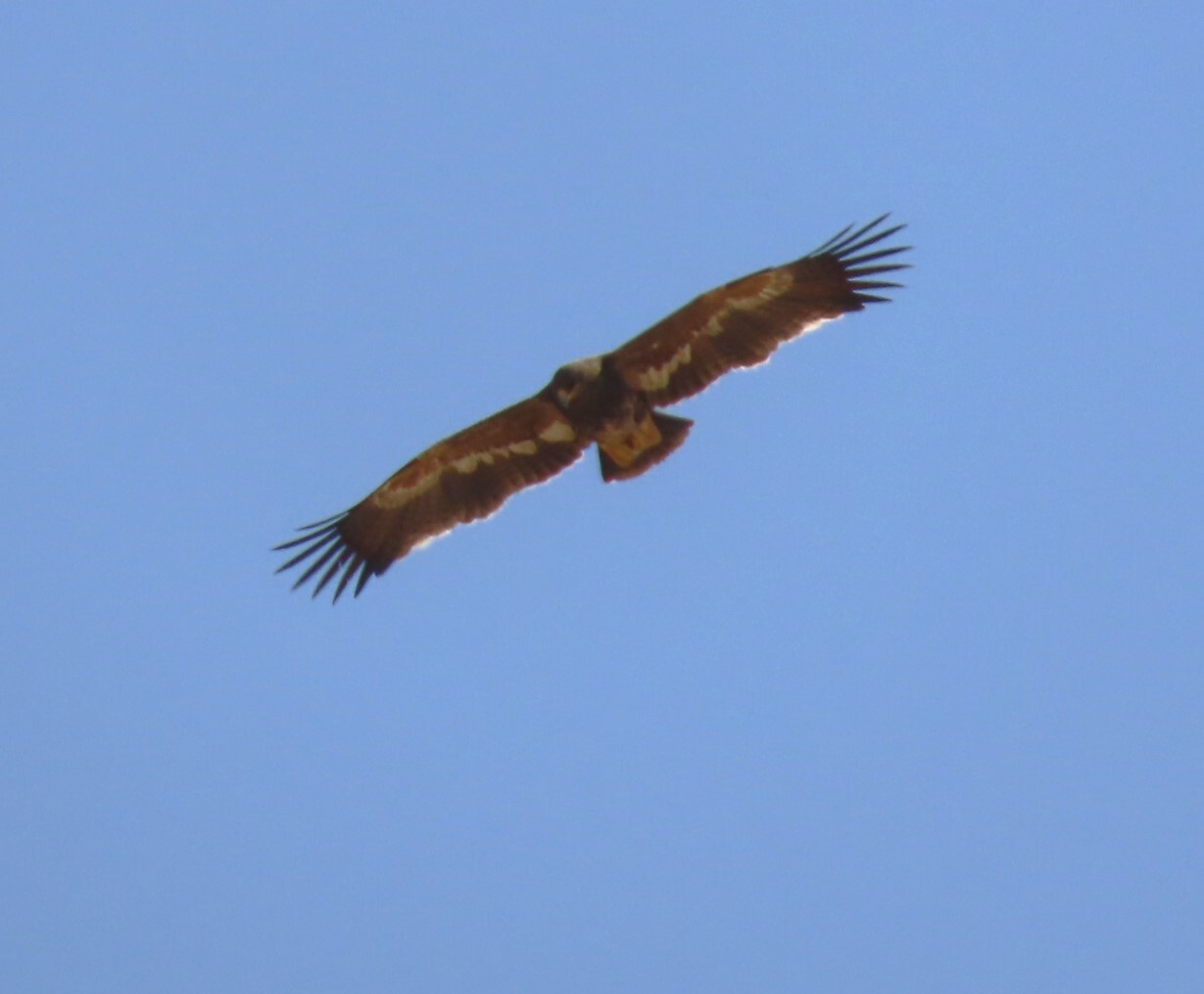
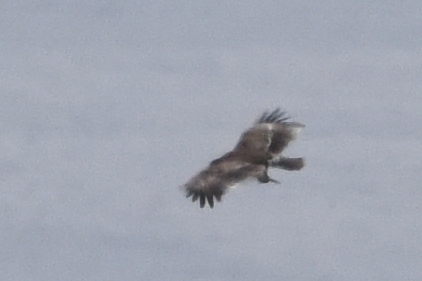
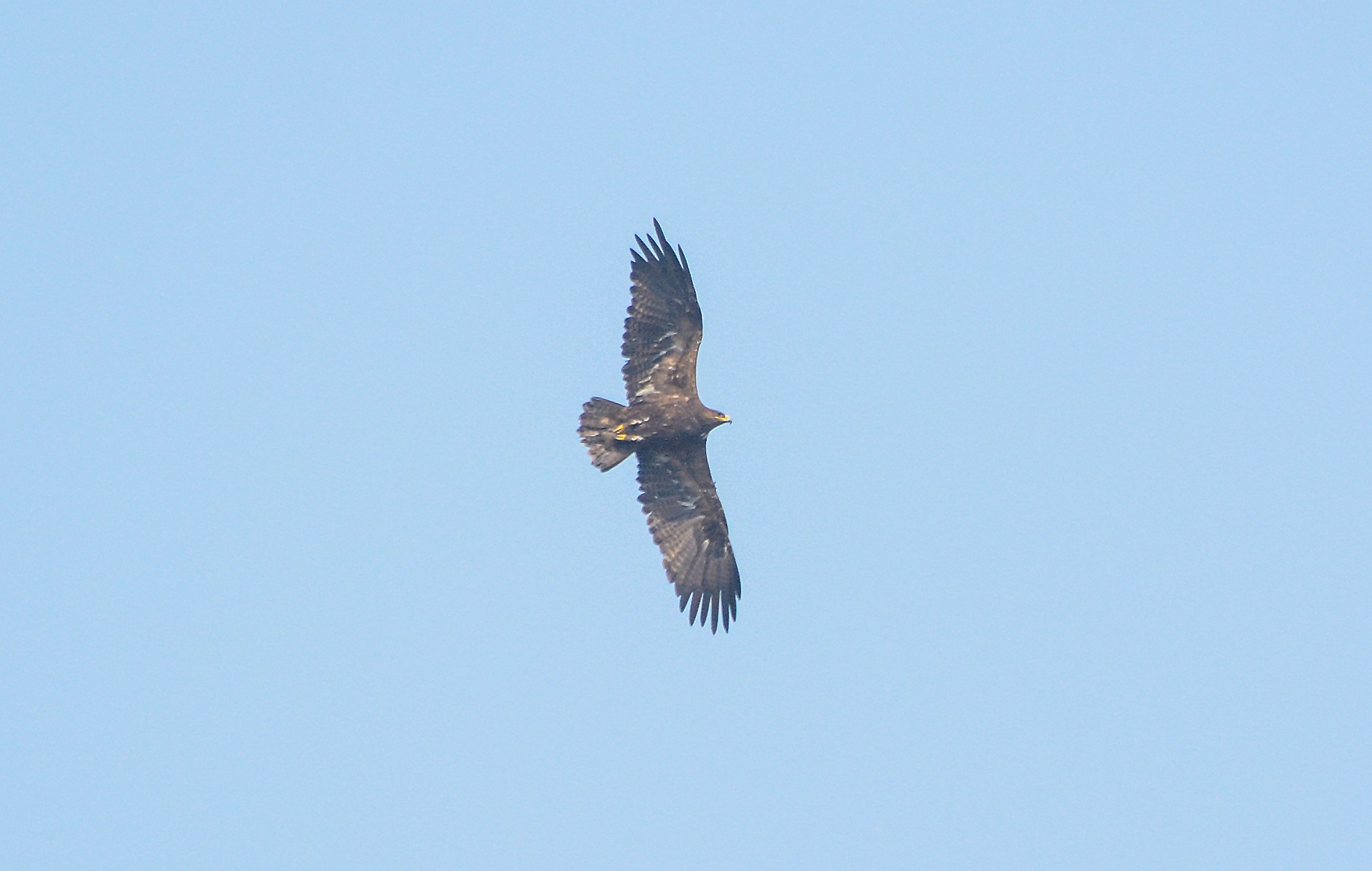
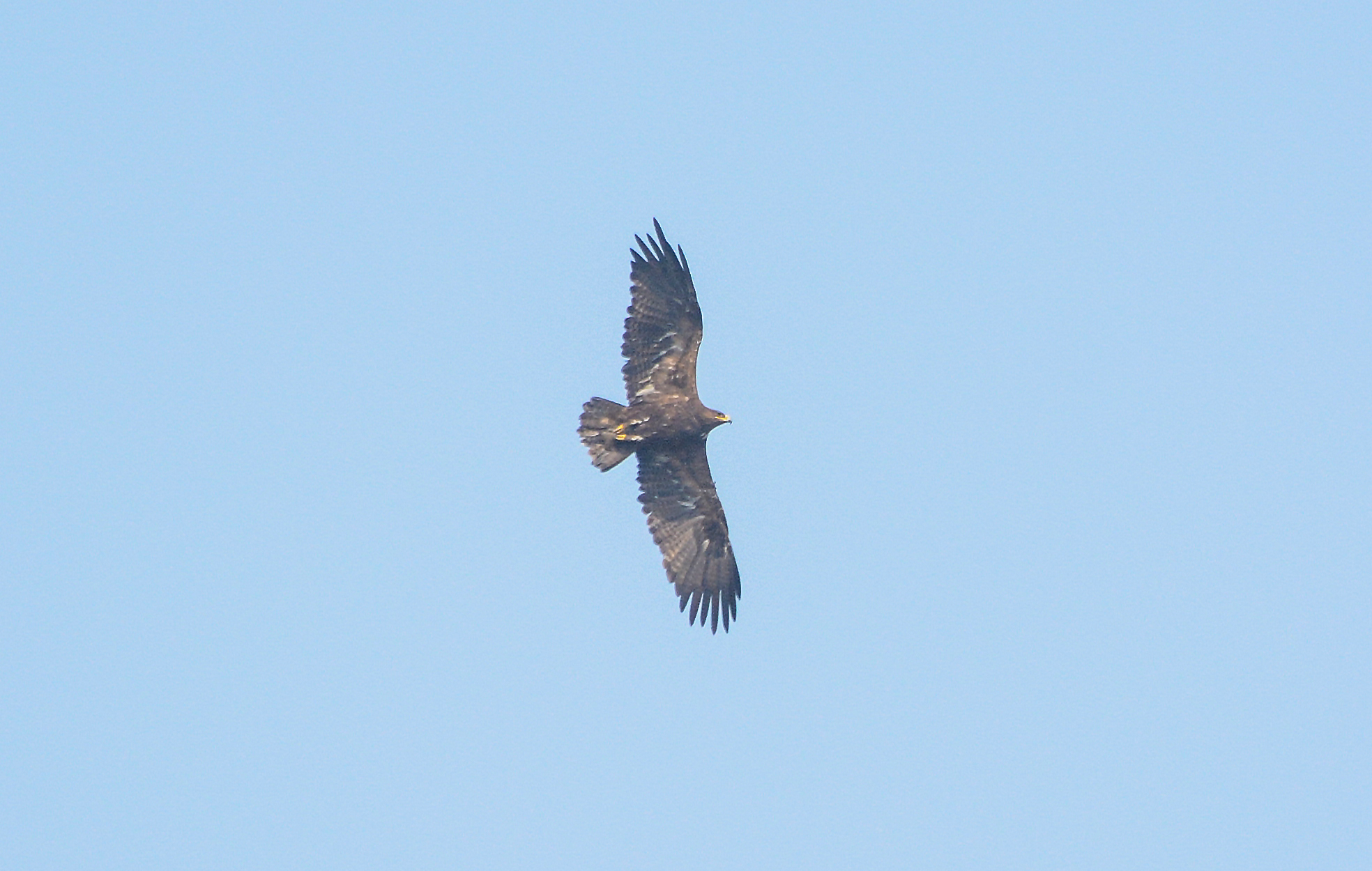
Total length ranges from 60 to 89 cm, with a wingspan of 165–262 cm. Body mass varies from 2.0 to 5.5 kg, with females up to 15% larger than males. Adults are dark brown with darker centers to the greater coverts and often display pale rufous to yellow-brown patches on the nape and hindcrown. They possess a massive gape-line extending to the rear of the eye and deep-set eyes. Juveniles are paler, ranging from umber-brown to tawny-buff, with broad white tips on the blackish greater coverts, flight feathers, and tail, creating distinct whitish bars. Immatures attain adult-like plumage by year five. The cere and feet are yellow at all ages.
Identification
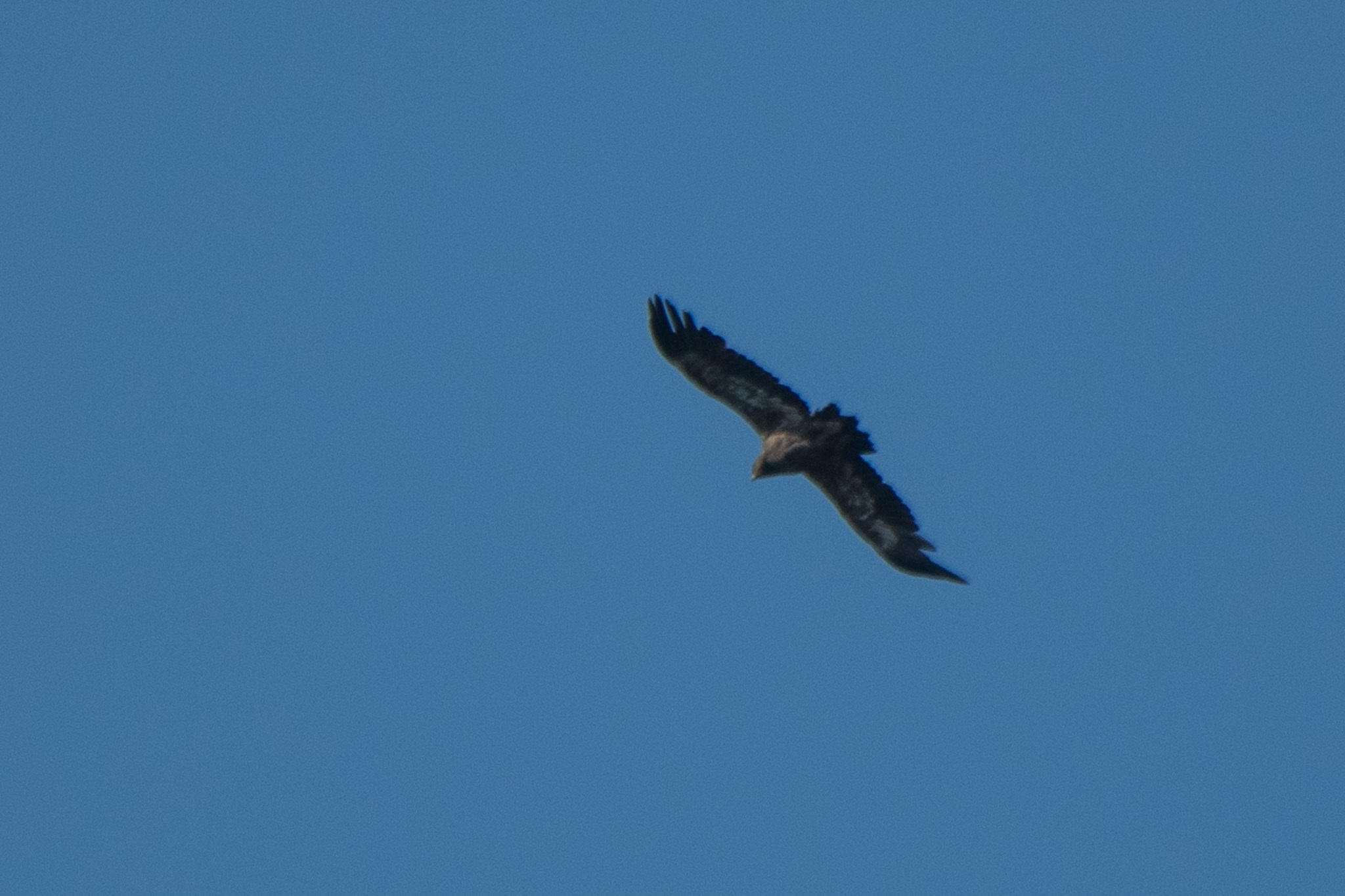
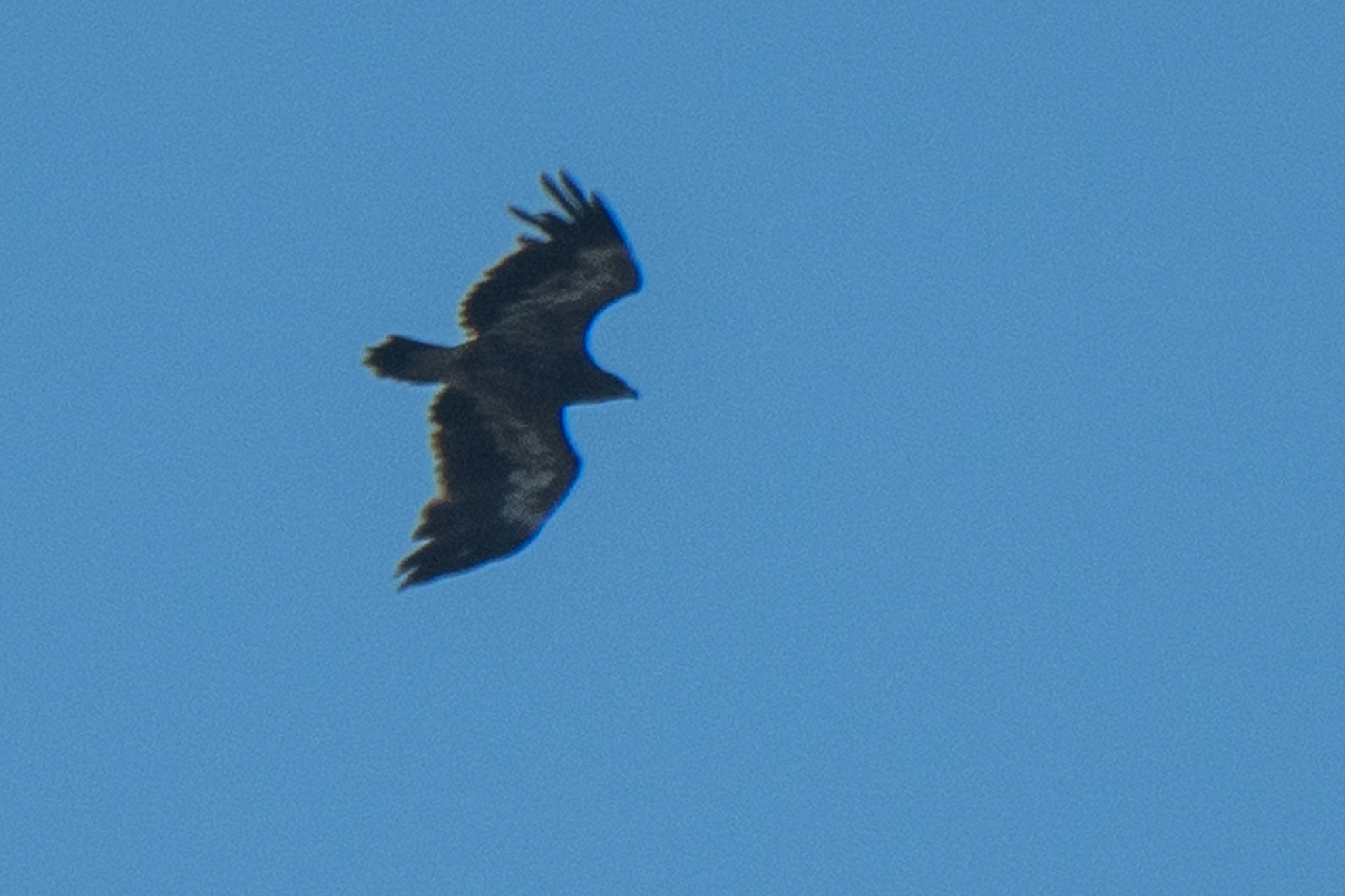
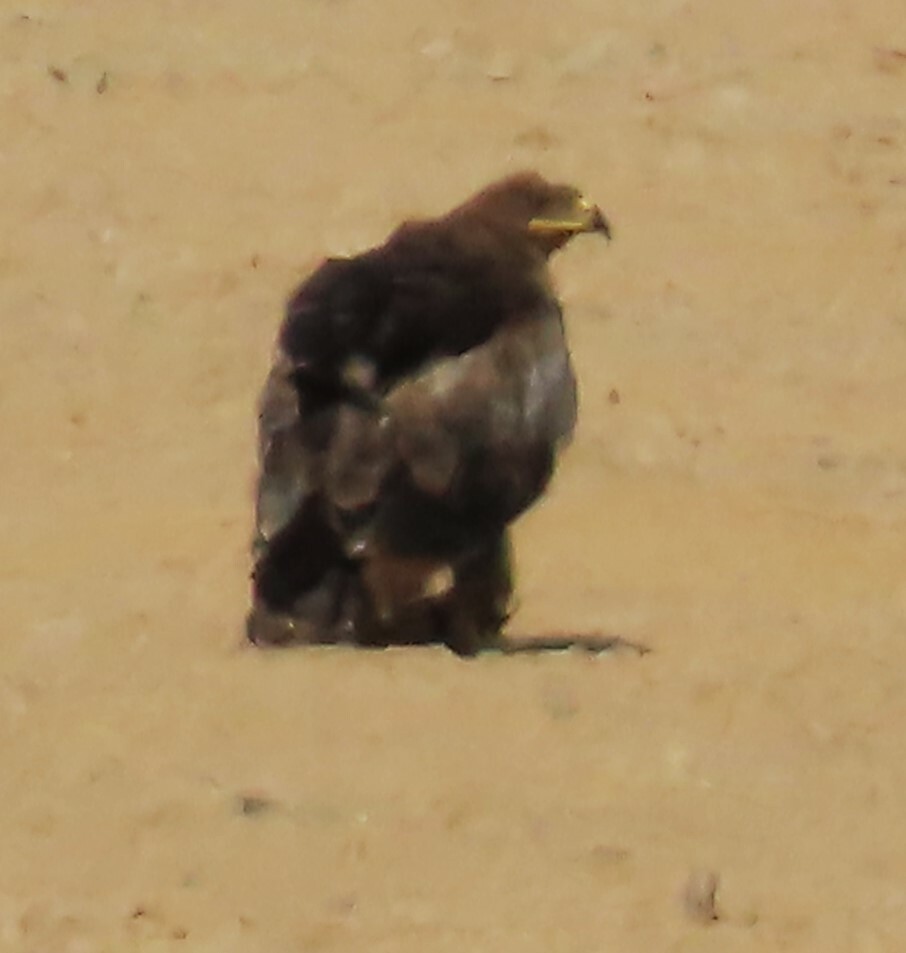
Distinguished from spotted eagles by a broader build, larger head, longer rectangular wing tips with seven elongated emarginations, and a more powerful, labored flight style. In flight, adults show a pale greyish primary patch on the upperwing and dark-barred grey flight feathers below. Juveniles are identified by a broad whitish U above the tail, prominent whitish bars on wings and trailing edges, and a large whitish patch on the inner primaries. Compared to the tawny eagle, it is bulkier with a smaller head relative to body size, shorter tail, and longer gape-line. Perched individuals often assume a horizontal posture with wingtips exceeding the tail-tip.
Distribution & Habitat
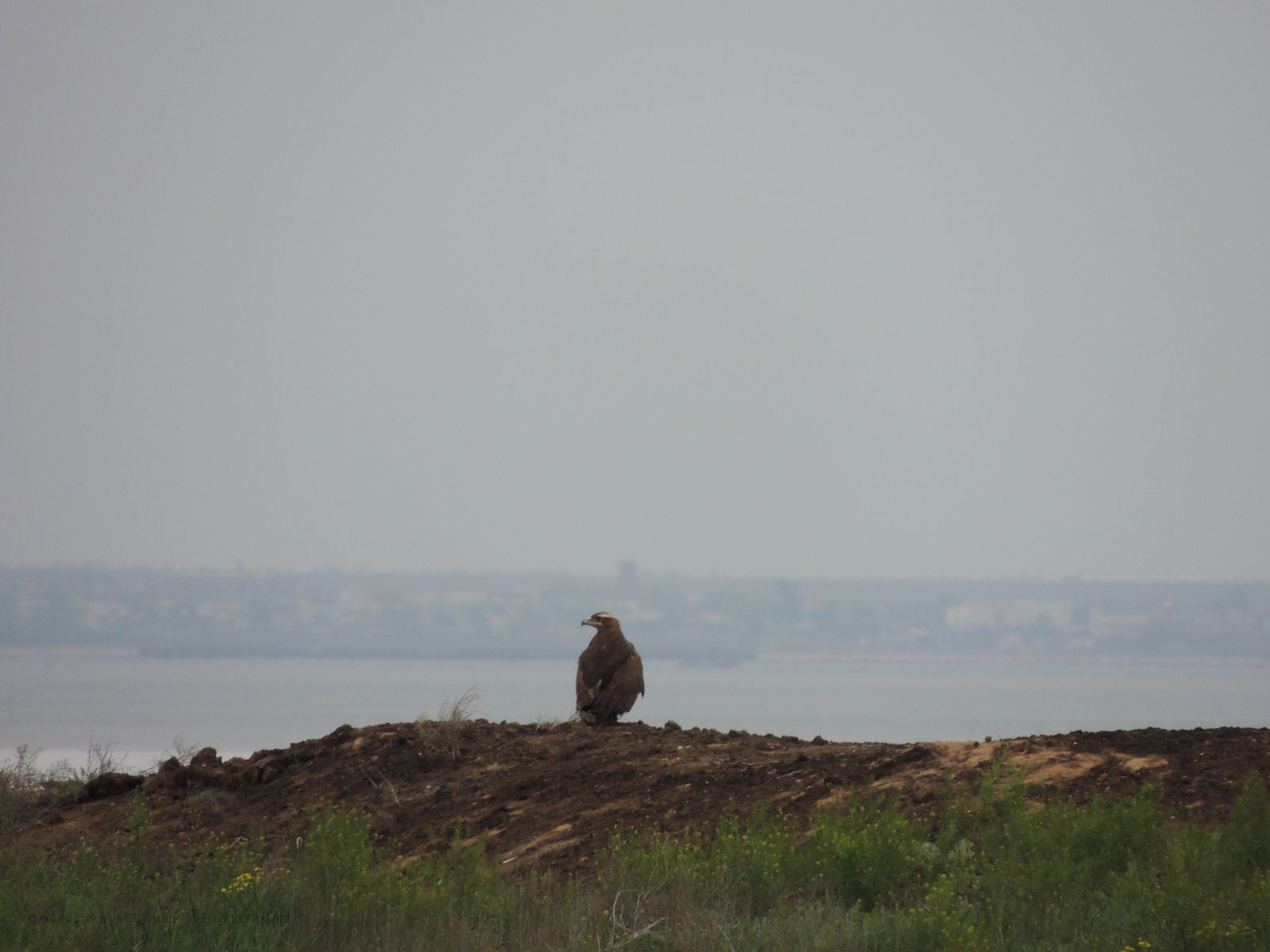
Breeds in open dry steppe, semi-desert, and rocky hillsides in Russia, Kazakhstan, Mongolia, and China, with marginal breeding in Kyrgyzstan and Uzbekistan. Formerly bred in Ukraine and other parts of eastern Europe. Entirely migratory, wintering in east and southern Africa, the Arabian Peninsula, the Middle East, and the Indian subcontinent. Major migration flyways include the Middle East, Red Sea, and Himalayas. Vagrants have been recorded in western Europe, Japan, and Southeast Asia. Wintering habitats include savannas, grasslands, wetlands, and human-modified areas like landfills.
Behavior & Ecology
During breeding, it specializes in hunting small burrowing mammals, particularly ground squirrels, using low soaring or gliding flights and occasionally dropping stones to distract prey. In winter and migration, it becomes gregarious, feeding on insect swarms (especially termites), carrion, landfills, and nestlings of other birds. It engages in kleptoparasitism, often in groups. Flight involves slow, deep wing beats and a characteristic drooping-wing glide. Vocalizations include a raspy bark and a loud whistle during aerial displays. Nests are built on the ground, rocky outcrops, or utility poles, usually containing 1–3 eggs.
Conservation
Classified as Endangered by the IUCN, with a global population decline estimated at over 50%. Major threats include electrocution on power lines, habitat loss due to agriculture and overgrazing, steppe fires, persecution, and poisoning from rodent control programs and veterinary drugs like diclofenac. Nest failure is exacerbated by predation, livestock trampling, and climate-induced increases in pests and fires. Conservation measures include installing T-shaped perches on transmission towers and protecting breeding habitats.
Source: Wikipedia · CC BY-SA 3.0
Taxonomy
- Order
- Accipitriformes
- Family
- Accipitridae
- Genus
- Aquila
Vocalizations
Subspecies (2)
-
Aquila nipalensis nipalensis
breeds Altai Mountains to Tibet and Manchuria; winters India to southeastern China
Data Sources
Species description from Wikipedia, licensed under CC BY-SA 3.0.
Bird images and sounds sourced from GBIF, contributed by citizen scientists worldwide under Creative Commons licenses.
Taxonomy data from AviList 2025.