Steppe Eagle
Aquila nipalensis
草原雕
Introduction
The Steppe Eagle (Aquila nipalensis) is a large raptor breeding across open steppe landscapes of central Eurasia. It nests on the ground, constructing stick nests on slight rises or rocky outcrops in treeless terrain. Its diet consists primarily of ground squirrels and other small mammals. The species undertakes long-distance migrations, with tens of thousands of individuals passing through major flyways each autumn. Migration bottlenecks occur at Eilat in Israel and Suez. During winter, the species becomes gregarious and gathers at landfills, carcass dumps, and termite emergence sites, feeding opportunistically rather than actively hunting. The species is classified as endangered and has experienced severe population declines across its range.
Description
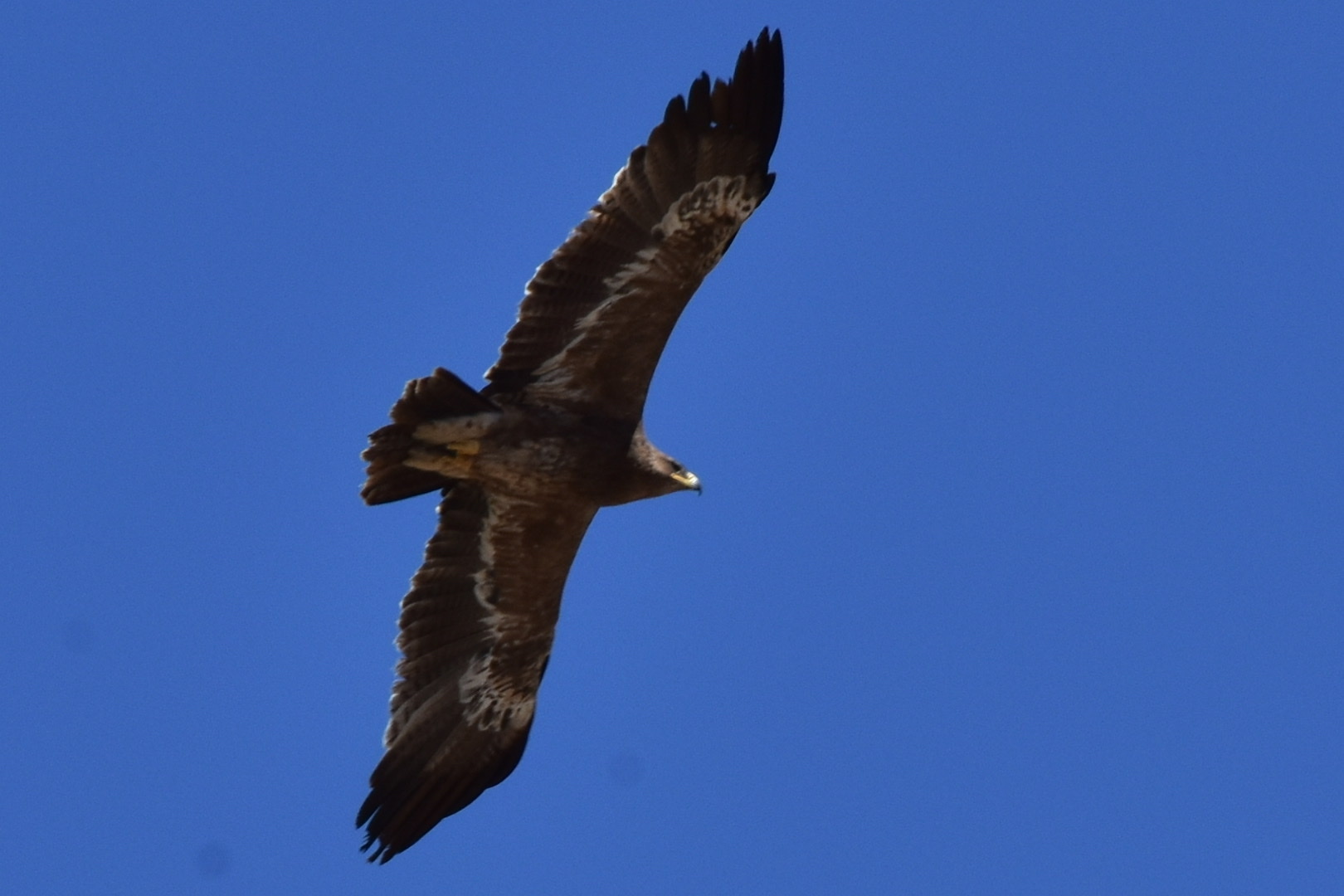
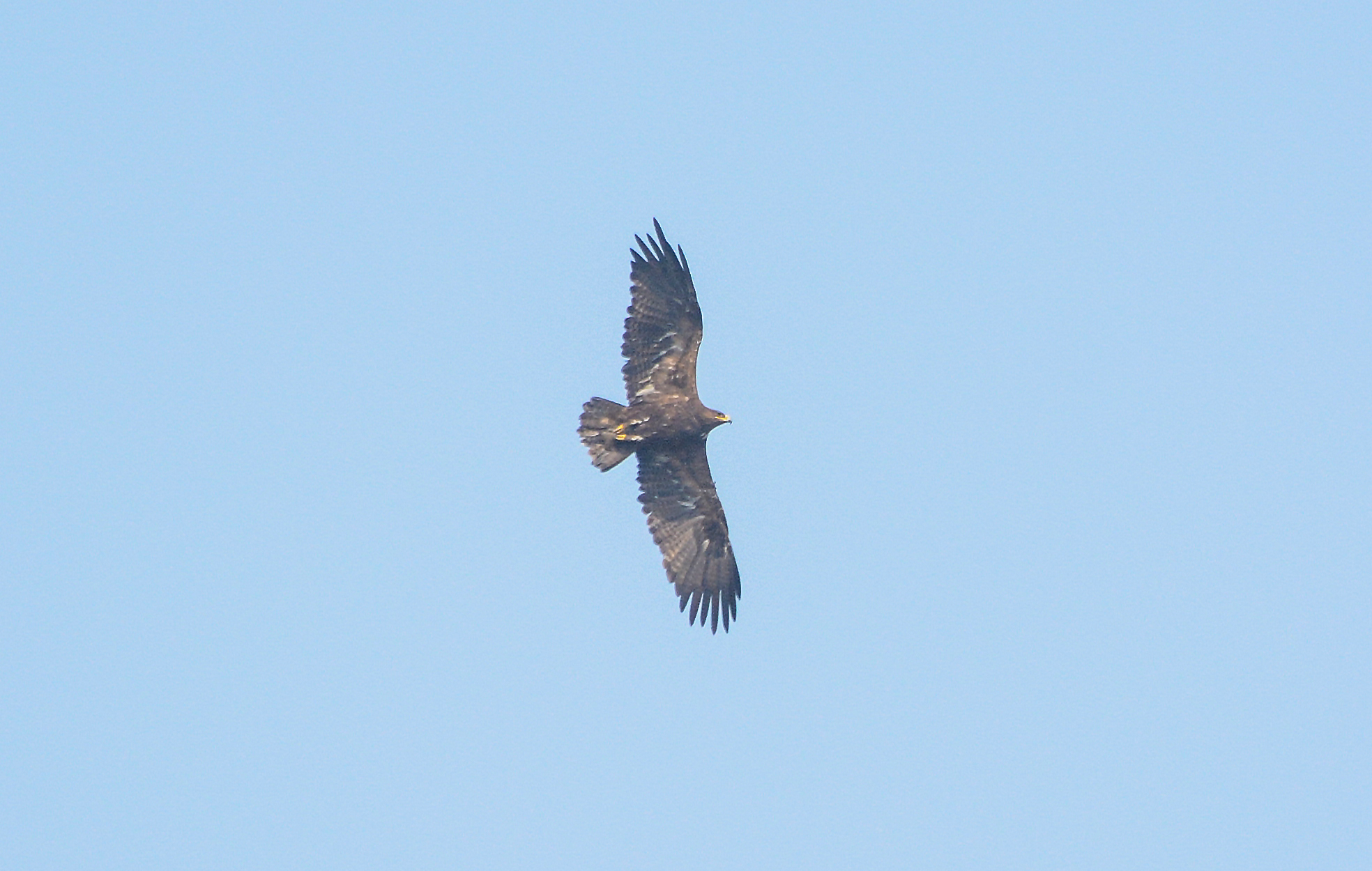
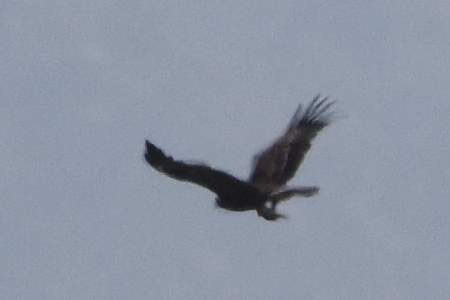
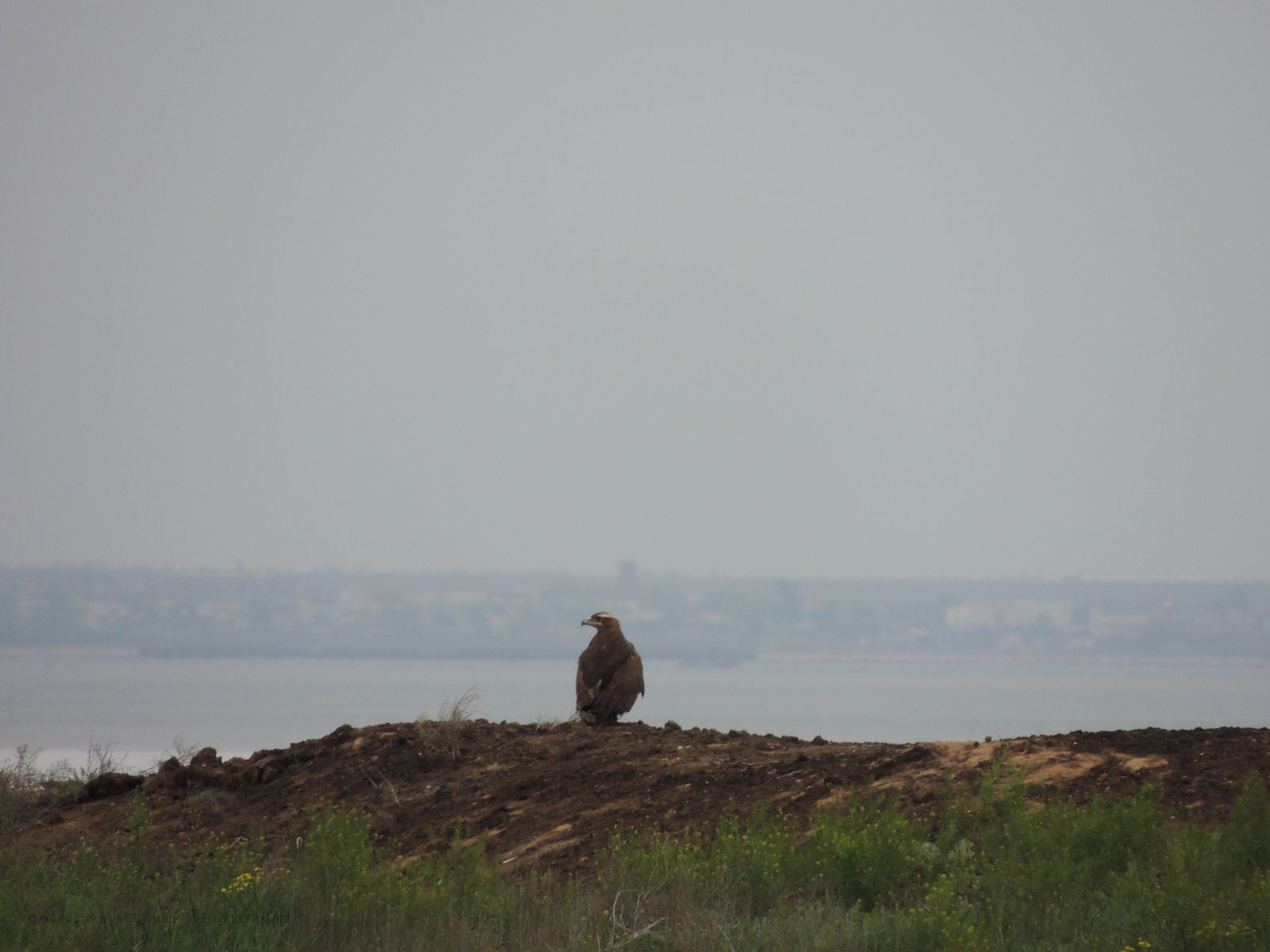
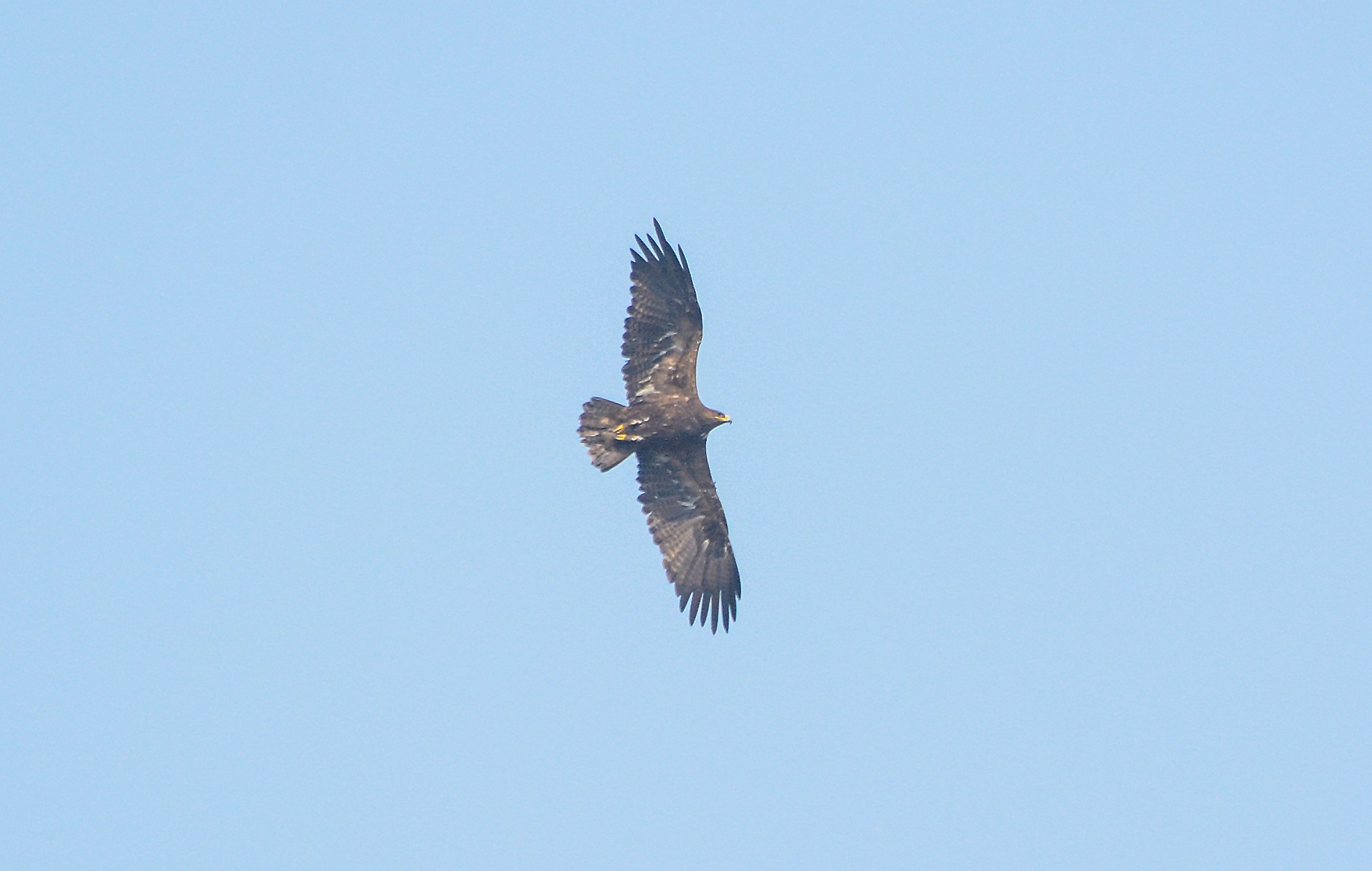
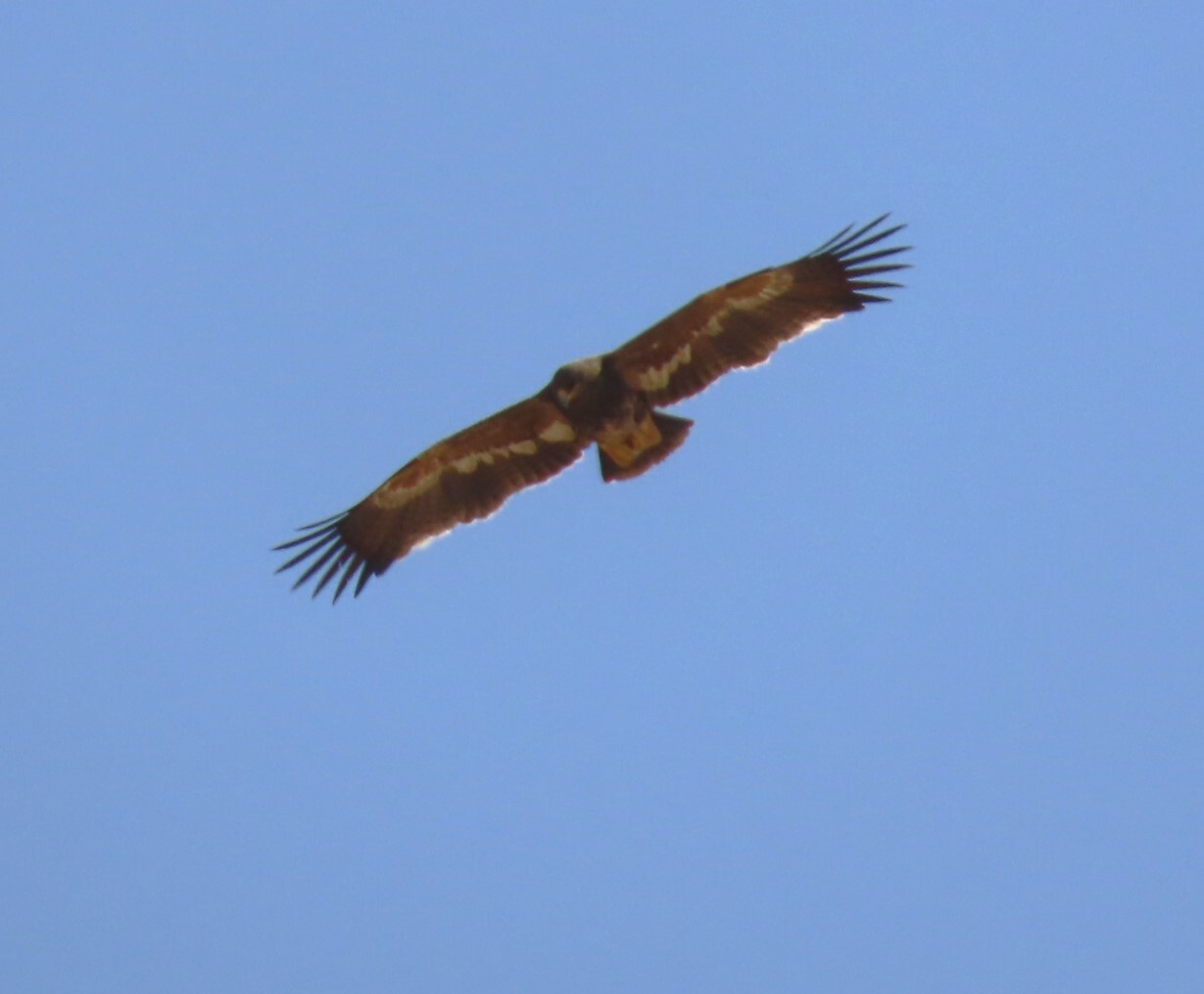
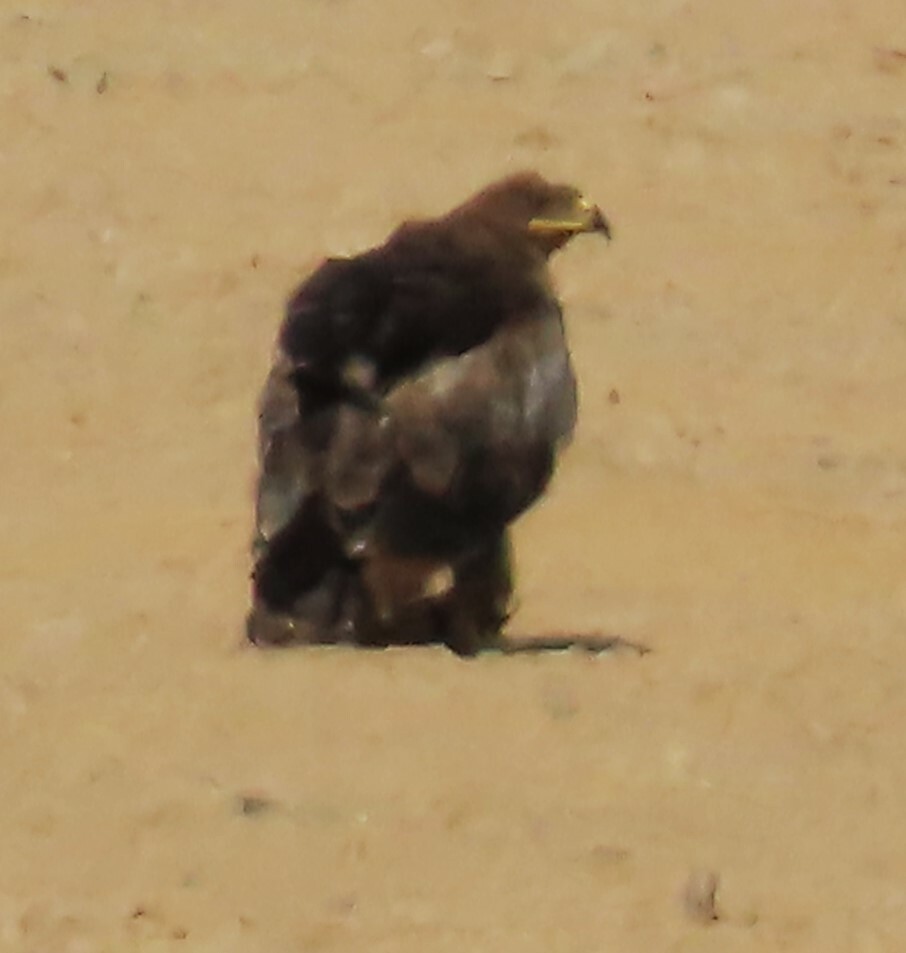
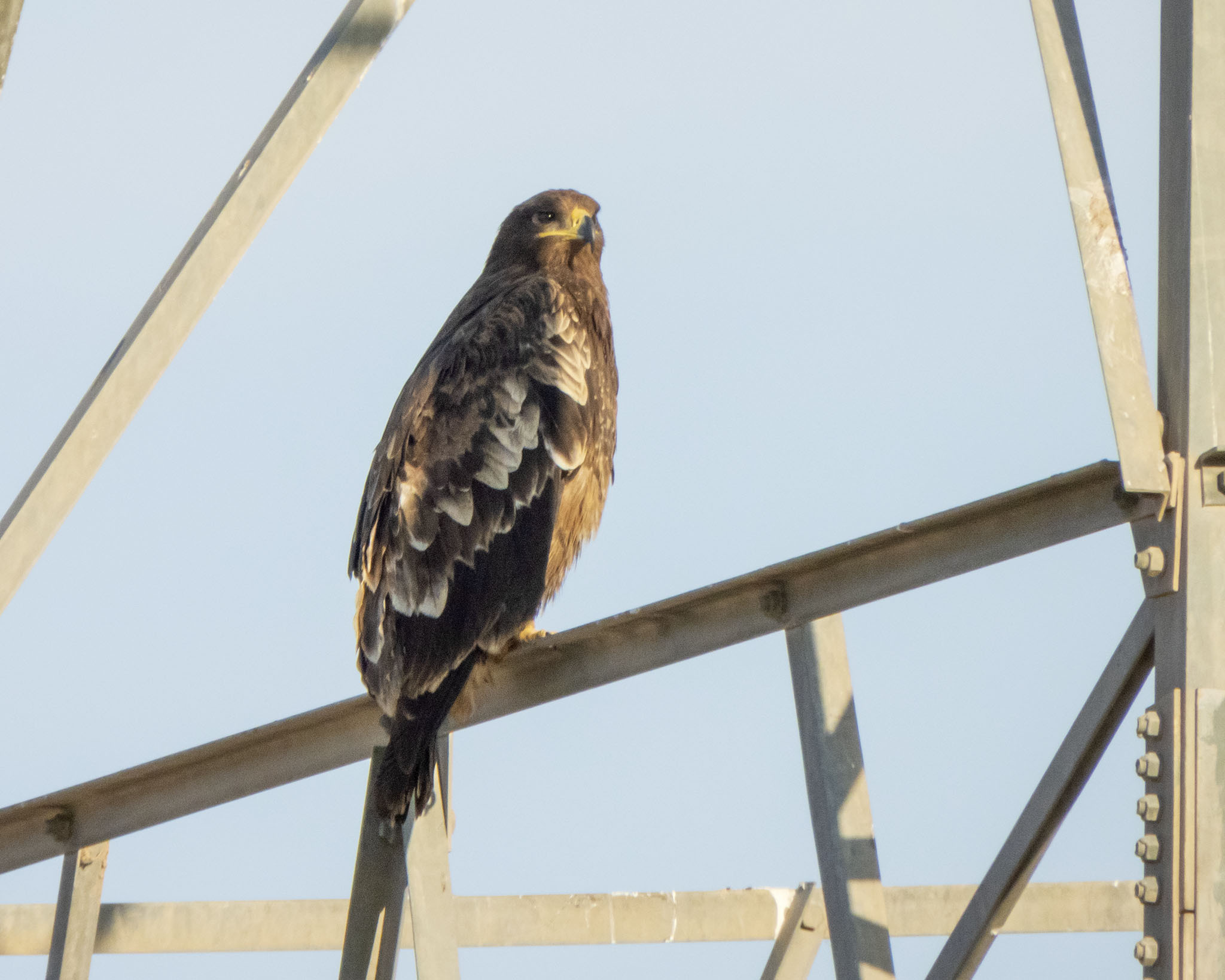
This is a large, bulky eagle with a robust build. The adult is predominantly dark brown overall, with darker centers to the greater wing coverts. The head appears relatively small for its body size but features an exceptionally deep and wide gape that extends to the rear of the eye, lending a fierce expression. The neck is thick and the wings are long and broad, held parallel-edged in flight. The tail is relatively long and rounded or wedge-shaped. The legs are heavily feathered to the toes, a characteristic of booted eagles. Adults have brown to hazel eyes and yellow cere and feet. Juveniles are paler overall, ranging from umber-brown to tawny-buff, with conspicuous white tips to the blackish wing and tail feathers creating bold whitish bars. In flight, a pale greyish primary patch is visible on the upperwing, and the flight feathers show 7-8 dark bars. Wingspan ranges from 165 to 262 cm, with body length 60-89 cm.
Identification
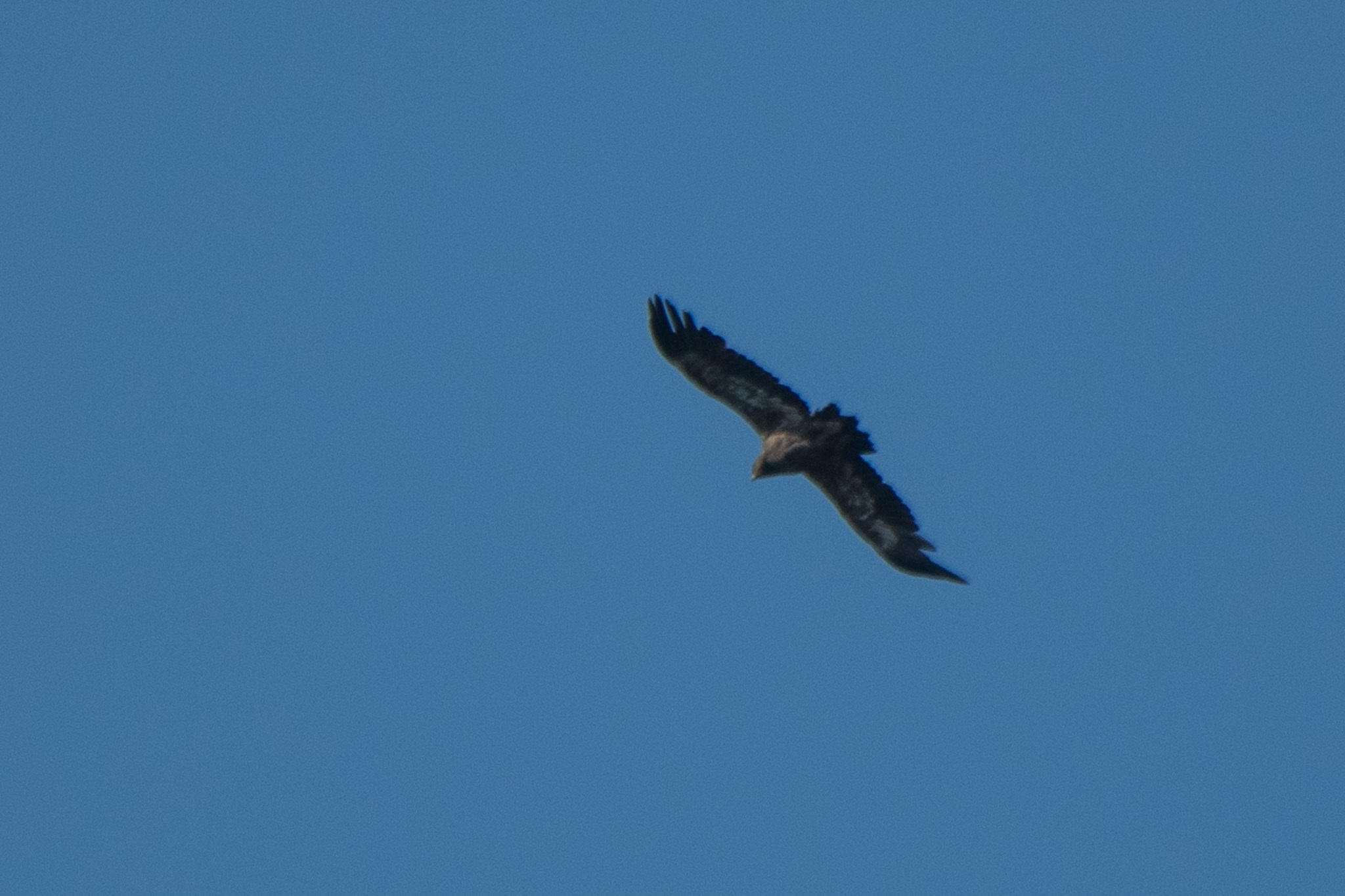
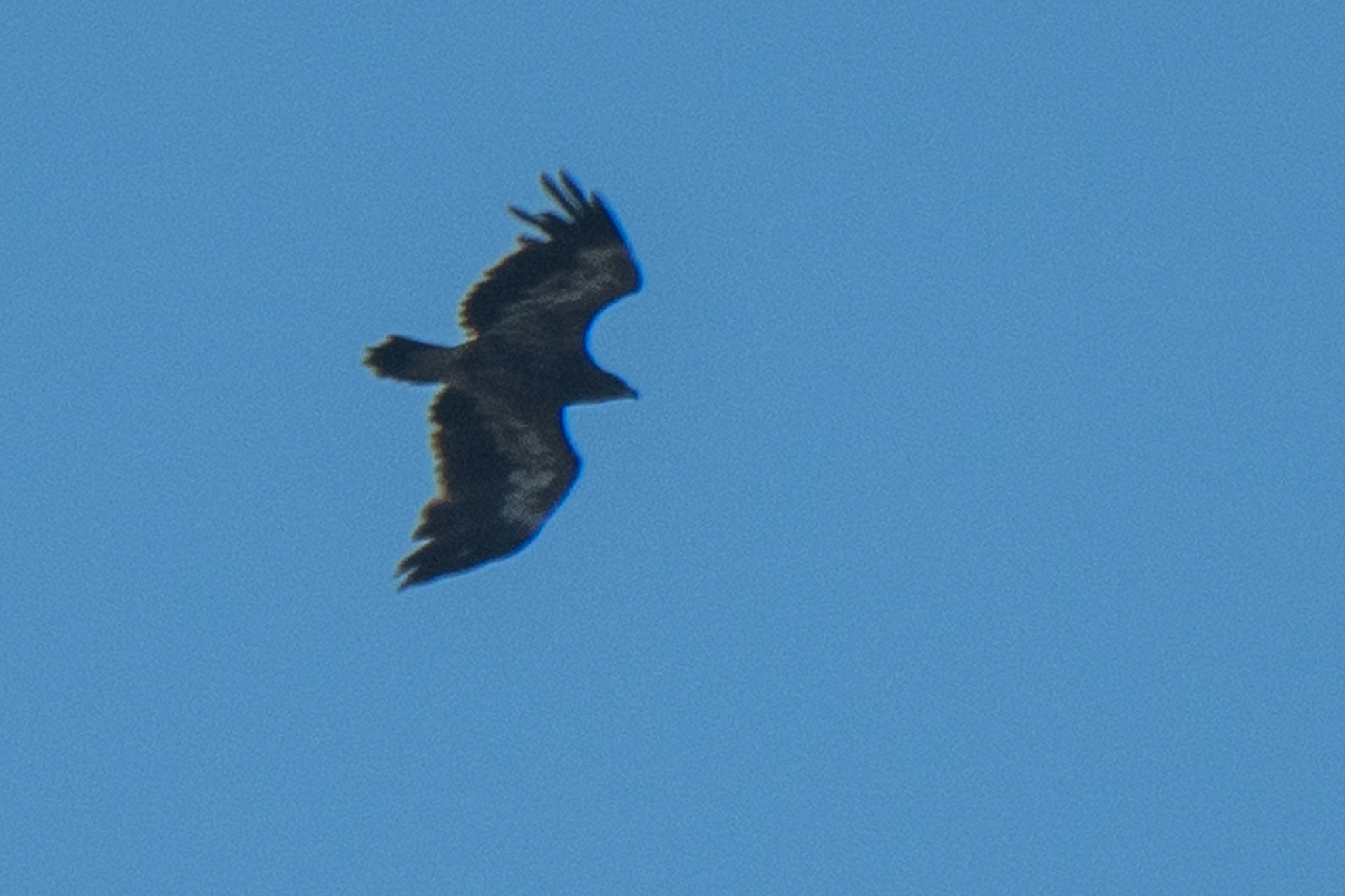
In flight, this species appears notably heavy and powerful with a large projecting head and broad wings held relatively flat with squarish tips. It is best distinguished from the similar spotted eagles by its much more robust build, larger head, longer wing 'fingers,' and deeper gape. The flight style is more labored and aquiline compared to the buzzard-like flight of spotted eagles. Juveniles are more distinctive than adults, showing broad white wing bars and a prominent pale primary patch unlike the more subtle markings of juvenile spotted eagles. From the tawny eagle, it differs in being larger and bulkier with a proportionally longer gape, shorter legs, and a more horizontal posture when perched. The species is notably sluggish in flight compared to many other large eagles.
Distribution & Habitat
The breeding range encompasses the steppe habitats of Russia, Kazakhstan, Mongolia, and China, with former breeding populations in eastern Europe now extirpated. Breeding habitat consists of open dry grasslands, semi-deserts, and arid rocky hillsides, always in relatively flat, treeless terrain. The species is entirely migratory, moving en masse through the Middle East, Red Sea region, and Himalayas to reach wintering grounds. The primary wintering range extends across eastern and southern Africa, the Arabian Peninsula, the Indian subcontinent, and parts of Southeast Asia. Important wintering concentrations occur at landfills and carcass dumps throughout this range. Migration occurs on a broad front with major bottlenecks at Suez, Eilat, and Bab-el-Mandeb.
Behavior & Ecology
During breeding, the species is territorial and typically found in isolated pairs, though nesting densities can be locally high in prime habitat. It constructs large stick nests on the ground, on outcrops, or occasionally in low vegetation and utility towers. Clutch size is typically 1-3 eggs, with 1-2 young usually fledging. The breeding diet focuses heavily on ground squirrels and other small burrowing mammals, with prey typically weighing 50-250 grams. Hunting is done by low soaring followed by stoops or by ambush from ground positions. In winter, the species becomes highly gregarious, gathering in large numbers at productive feeding sites. Winter diet is remarkably varied and opportunistic, including insects, carrion, and scavenged food from landfills. The species is a frequent kleptoparasite, robbing other raptors of their catches. Vocalizations are limited to a raspy bark and occasional high whistles during aerial displays.
Conservation
The species is classified as Endangered by the IUCN, with population declines exceeding 50% estimated over recent decades. Global population estimates suggest 53,000-86,000 breeding pairs remain, concentrated primarily in Kazakhstan and Mongolia. Primary threats include habitat loss from agricultural conversion, steppe fires, and human disturbance. Nest predation and trampling by livestock cause significant chick mortality. Electrocutions on power lines are a major mortality source, particularly in Kazakhstan. Poisoning from rodent control programs and veterinary drugs (notably diclofenac) poses risks to scavenging birds. Persecution continues in some areas, and climate change may be exacerbating fire frequency and parasite loads. Conservation actions needed include power line modifications, fire management, and habitat protection.
Culture
This eagle holds significant cultural symbolism across its range. It appears prominently on the national flag of Kazakhstan, where it is also designated as the national bird. The species is likewise recognized as the national bird of Egypt, reflecting its importance in both countries' natural heritage. The species has historical connections to Kazakh cultural identity through its presence on ancient burial mounds described by early naturalists. The Russian species name 'mogilnik,' meaning 'burial,' derives from this association with nomadic graves. In migration sites like Israel, the species faces persecution driven by local superstitions. Conservation advocacy in countries like Israel emphasizes the need for protected green corridors to safeguard migrating populations.
Source: Wikipedia · CC BY-SA 3.0
Taxonomy
- Order
- Accipitriformes
- Family
- Accipitridae
- Genus
- Aquila
- eBird Code
- steeag1
Vocalizations
Subspecies (2)
-
Aquila nipalensis nipalensis
breeds Altai Mountains to Tibet and Manchuria; winters India to southeastern China
-
Aquila nipalensis orientalis
breeds central Eurasia; winters to Middle East and southern Africa
Data Sources
Species description from Wikipedia, licensed under CC BY-SA 3.0.
Bird images and sounds sourced from GBIF, contributed by citizen scientists worldwide under Creative Commons licenses.
Taxonomy data from AviList 2025.