Accipitriformes / Accipitridae / Aquila
Golden Eagle
Aquila chrysaetos · 金雕
Introduction
A large bird of prey in the family Accipitridae, widely distributed across the Northern Hemisphere including Eurasia, North America, and parts of North Africa. It inhabits open or semi-open areas such as mountains, tundra, steppes, and deserts, avoiding dense forests and heavily developed regions. Distinctive for its agility, speed, and powerful talons used to hunt mammals like hares and marmots. The species is not considered threatened globally by the IUCN.
Description
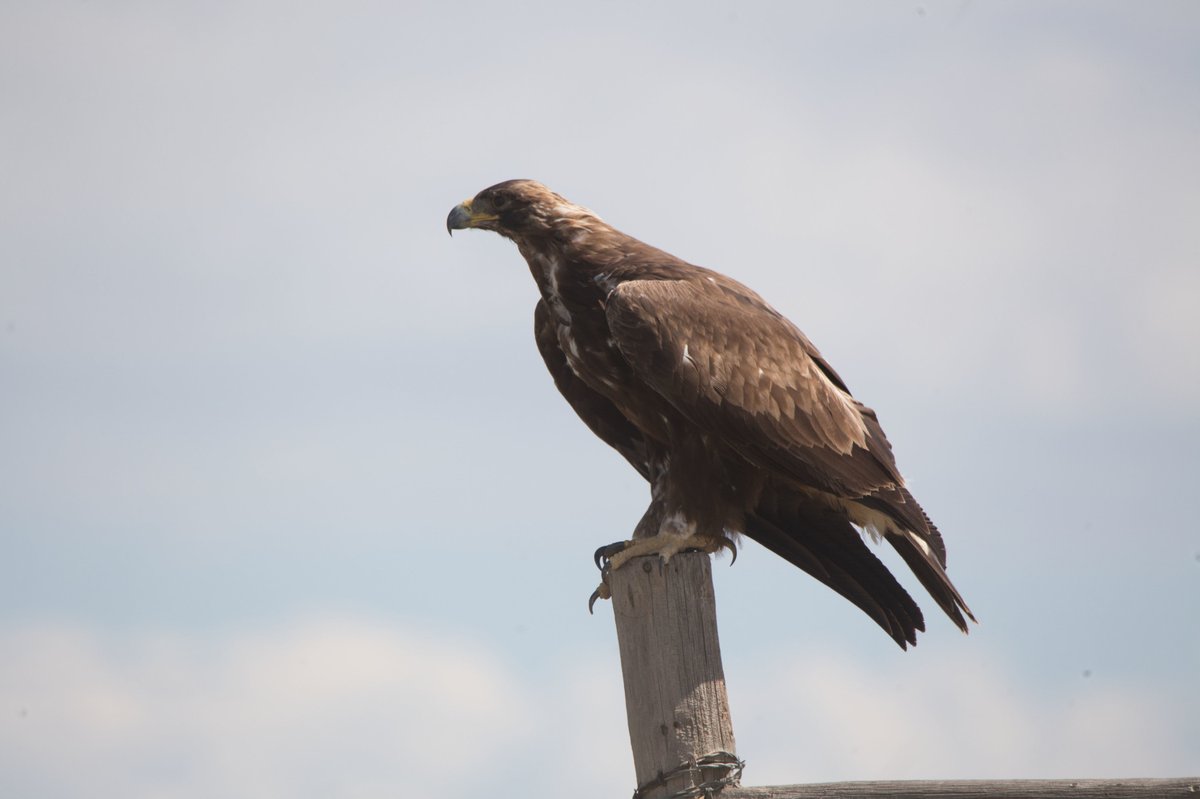
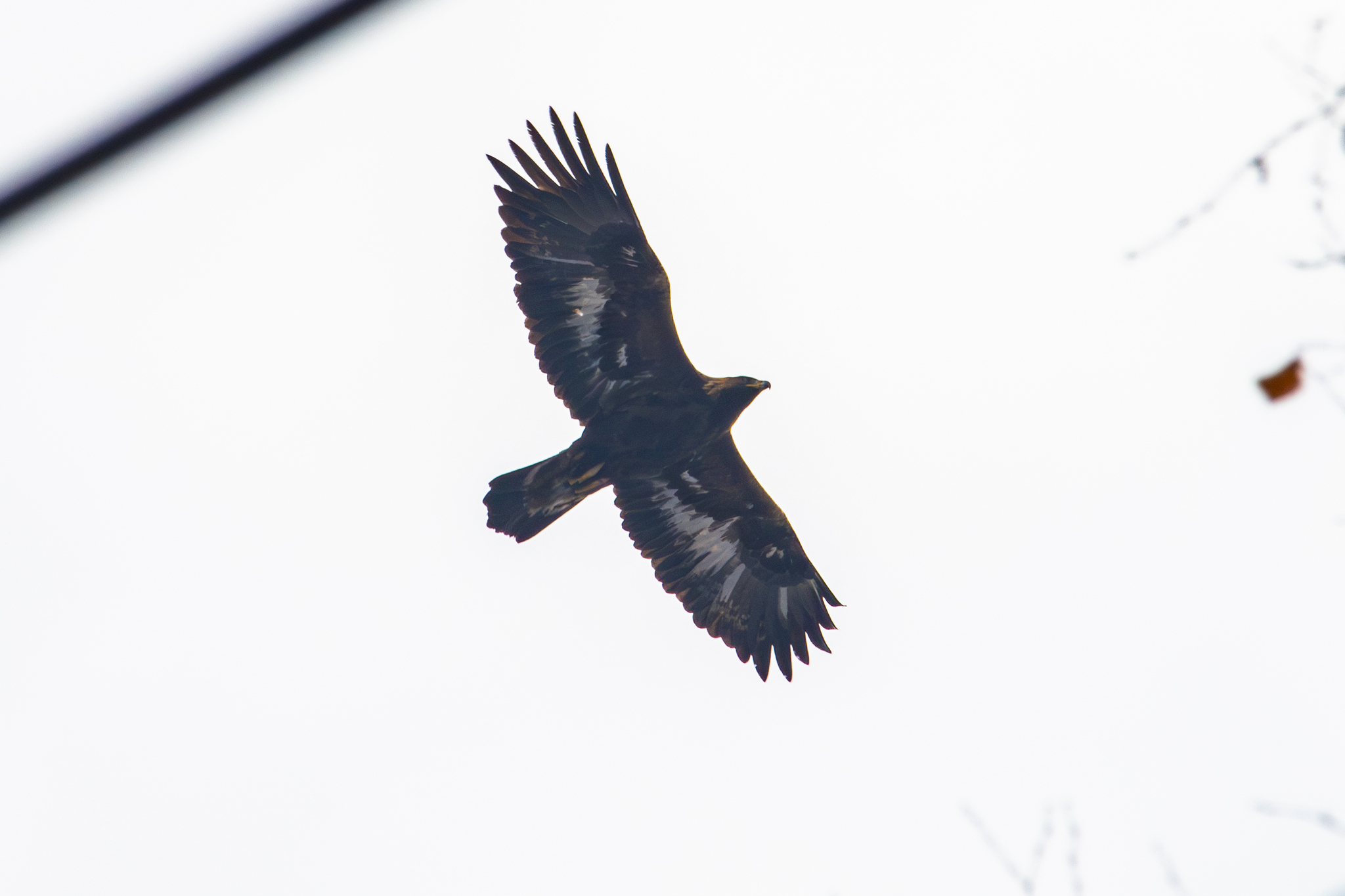
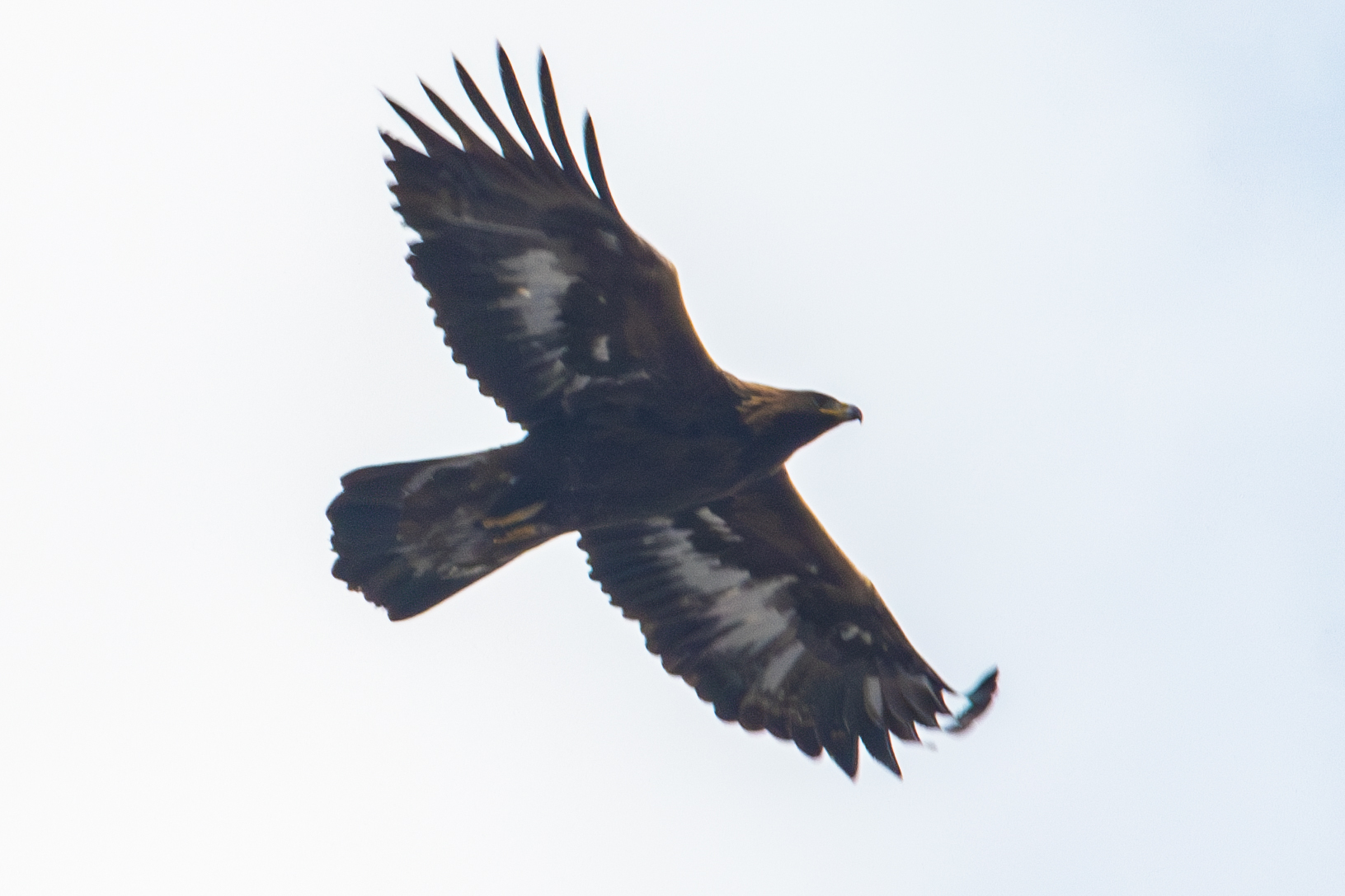
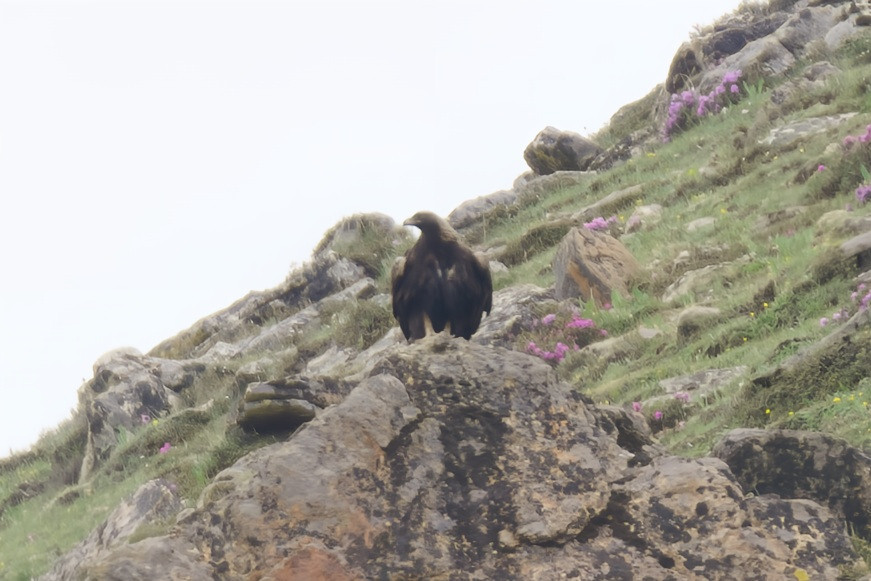
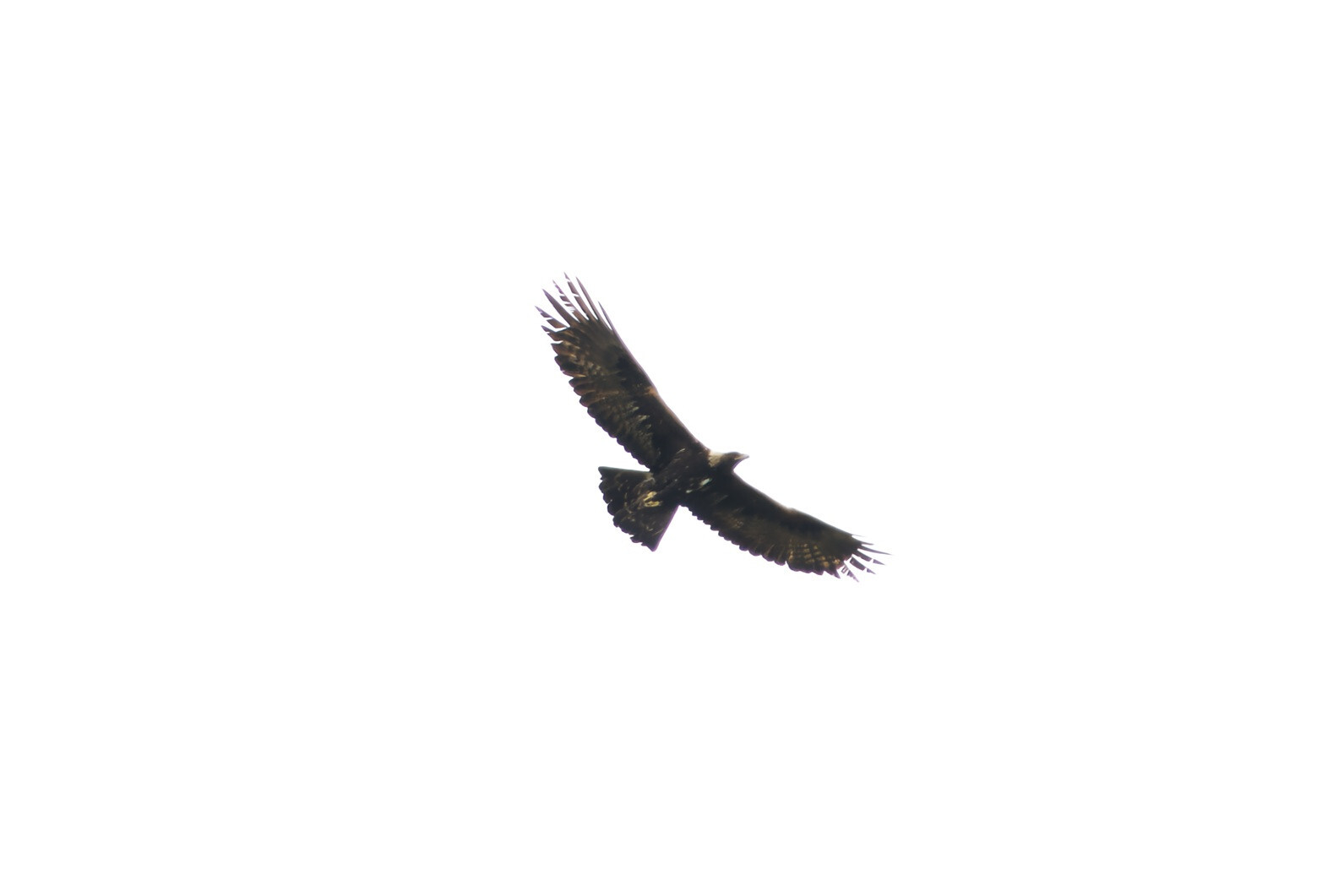
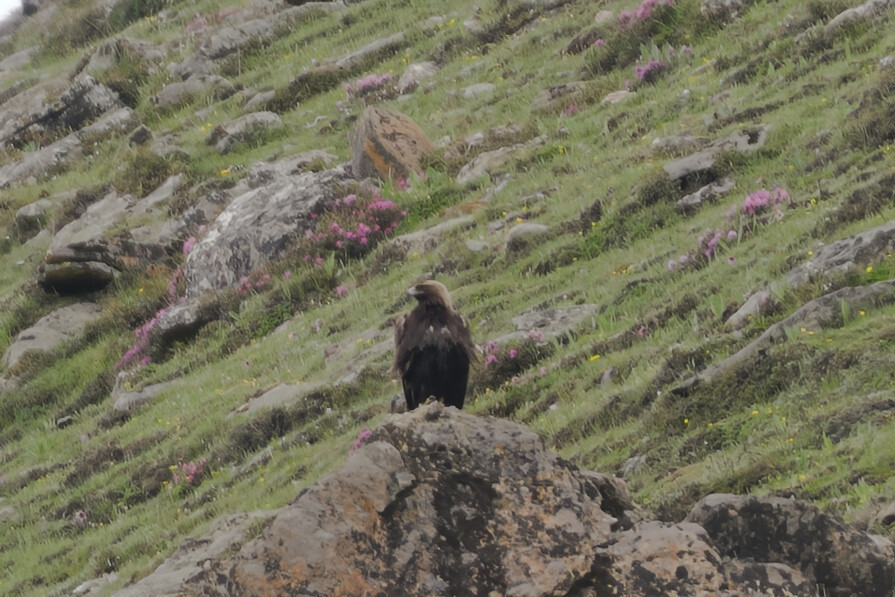
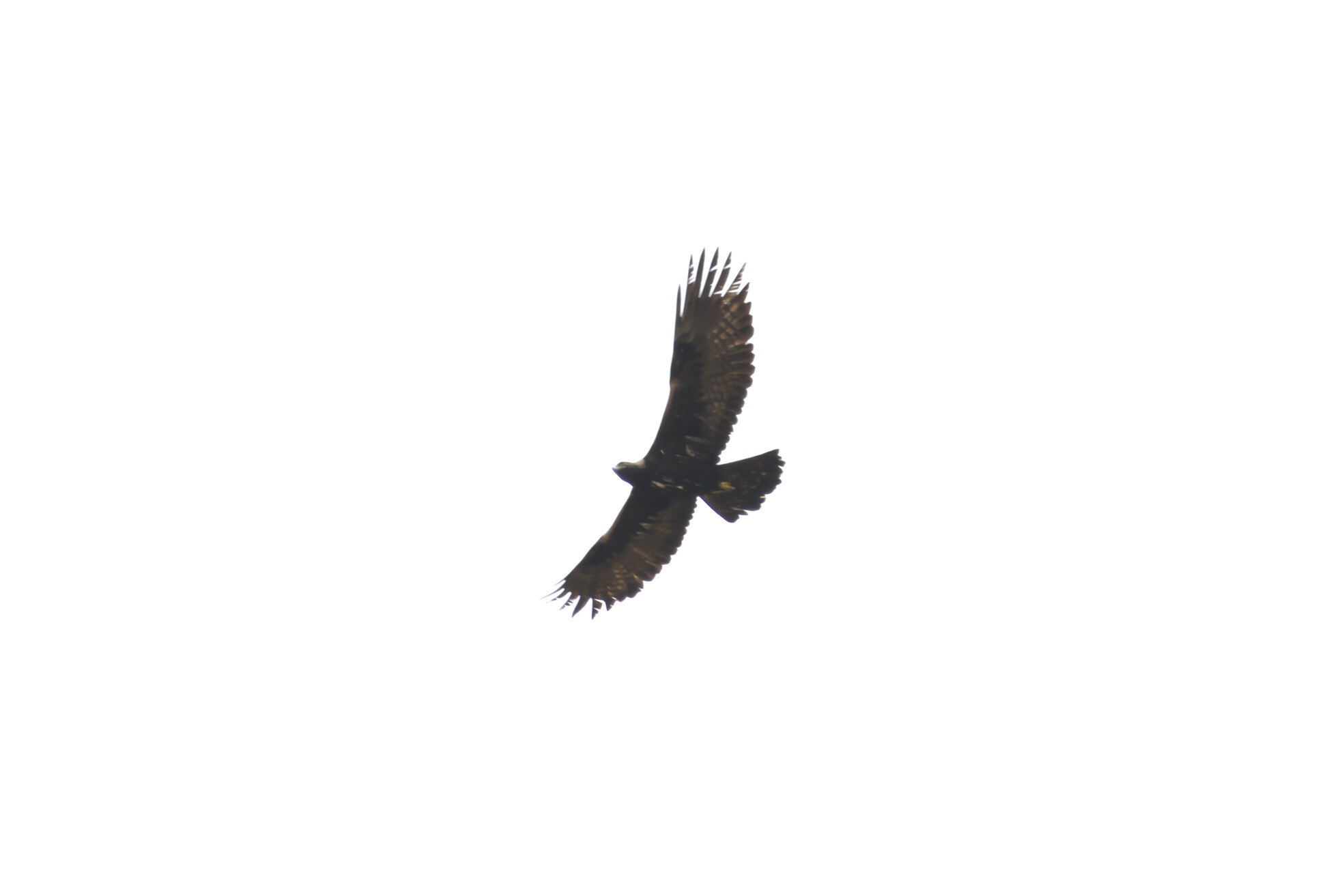
Length ranges from 66 to 102 cm with a wingspan of 1.8 to 2.34 m. Females are larger than males; overall, males average around 3.6 kg and females 5.1 kg. Adults are primarily dark brown with grey on the inner wing and tail, and a distinctive paler golden-brown patch on the nape. Tarsal feathers are often lighter, ranging from light golden to white. Juveniles are darker, appearing black on the back, with white covering about two-thirds of the tail length and often white markings on the wings. Full adult plumage is attained between 5.5 and 6.5 years of age.
Identification
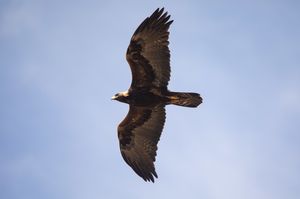
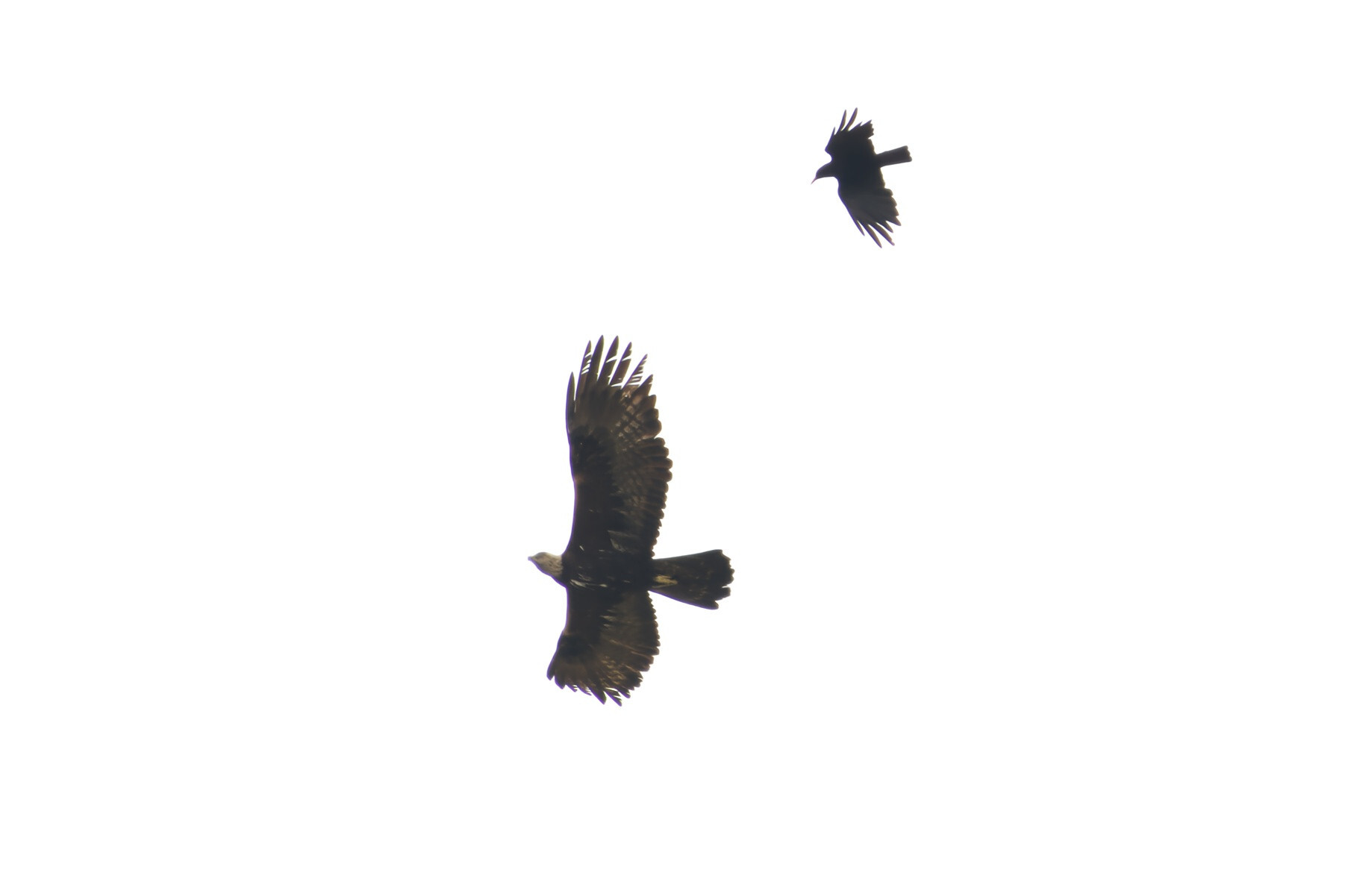
Distinguished by large size, broad wings often held in a slight dihedral (V-shape), and a long tail that appears two to three times the length of the head in soaring flight. The golden nape patch is a key field mark for adults. Juveniles are identified by extensive white on the tail and variable white patches on the wings. Differs from Buteo hawks by being significantly larger and heavier. Unlike Haliaeetus eagles, it lacks a flat, plank-like wing posture and has a smaller head relative to tail length. Other Aquila eagles generally lack the pronounced dihedral flight style and the specific golden nape coloration.
Distribution & Habitat
Found throughout the Holarctic, including sizeable stretches of Eurasia, North America, and parts of North Africa. Six extant subspecies are recognized: A. c. chrysaetos (Europe, western Russia), A. c. homeyeri (Iberian Peninsula, North Africa, Middle East), A. c. daphanea (Central Asia, Himalayas), A. c. japonica (Japan, Korea), A. c. canadensis (North America), and A. c. kamtschatica (Siberia, Kamchatka). Populations in northern latitudes (above 60° N) are migratory, moving south to steppes or lower elevations, while those in temperate zones are largely sedentary.
Behavior & Ecology
Hunts primarily during daylight using agility and speed to capture prey such as hares, rabbits, marmots, and ground squirrels, though diet includes birds, reptiles, and carrion. Hunting success rate is approximately 20%. Monogamous, often mating for life, with courtship involving undulating displays and object dropping. Nests are built on cliffs or high places, reused over several years. Females lay up to four eggs, incubating them for six weeks; typically one or two young fledge after 66–81 days. Territorial, maintaining home ranges from 1.5 to 200 km². Vocalizations are rare, consisting of weak, high-pitched calls. Flight speeds can reach 240–320 km/h when stooping.
Conservation
Globally assessed as not threatened by the IUCN. The total population is estimated between 170,000 and 250,000 individuals, with 60,000 to 100,000 breeding pairs. While widespread, it has been extirpated from some heavily populated areas. Threats include historical persecution, habitat loss, and collisions with wind turbines. In the US, permits have been proposed to allow wind-turbine companies to kill golden eagles under specific mitigation conditions.
Source: Wikipedia · CC BY-SA 3.0
Taxonomy
- Order
- Accipitriformes
- Family
- Accipitridae
- Genus
- Aquila
Vocalizations
Subspecies (6)
-
Aquila chrysaetos canadensis
Alaska to west-central Mexico and coastal northeastern USA
Data Sources
Species description from Wikipedia, licensed under CC BY-SA 3.0.
Bird images and sounds sourced from GBIF, contributed by citizen scientists worldwide under Creative Commons licenses.
Taxonomy data from AviList 2025.