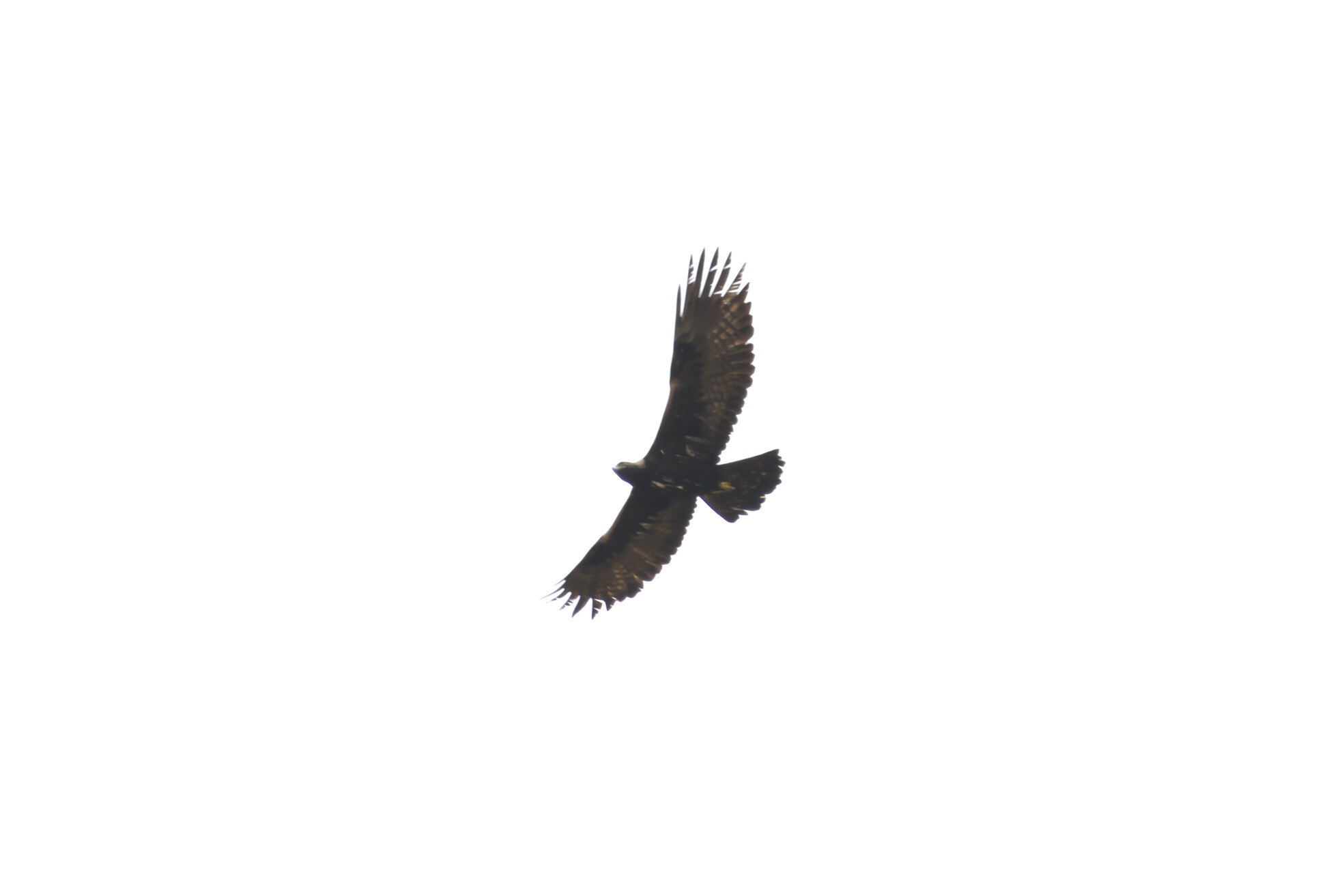
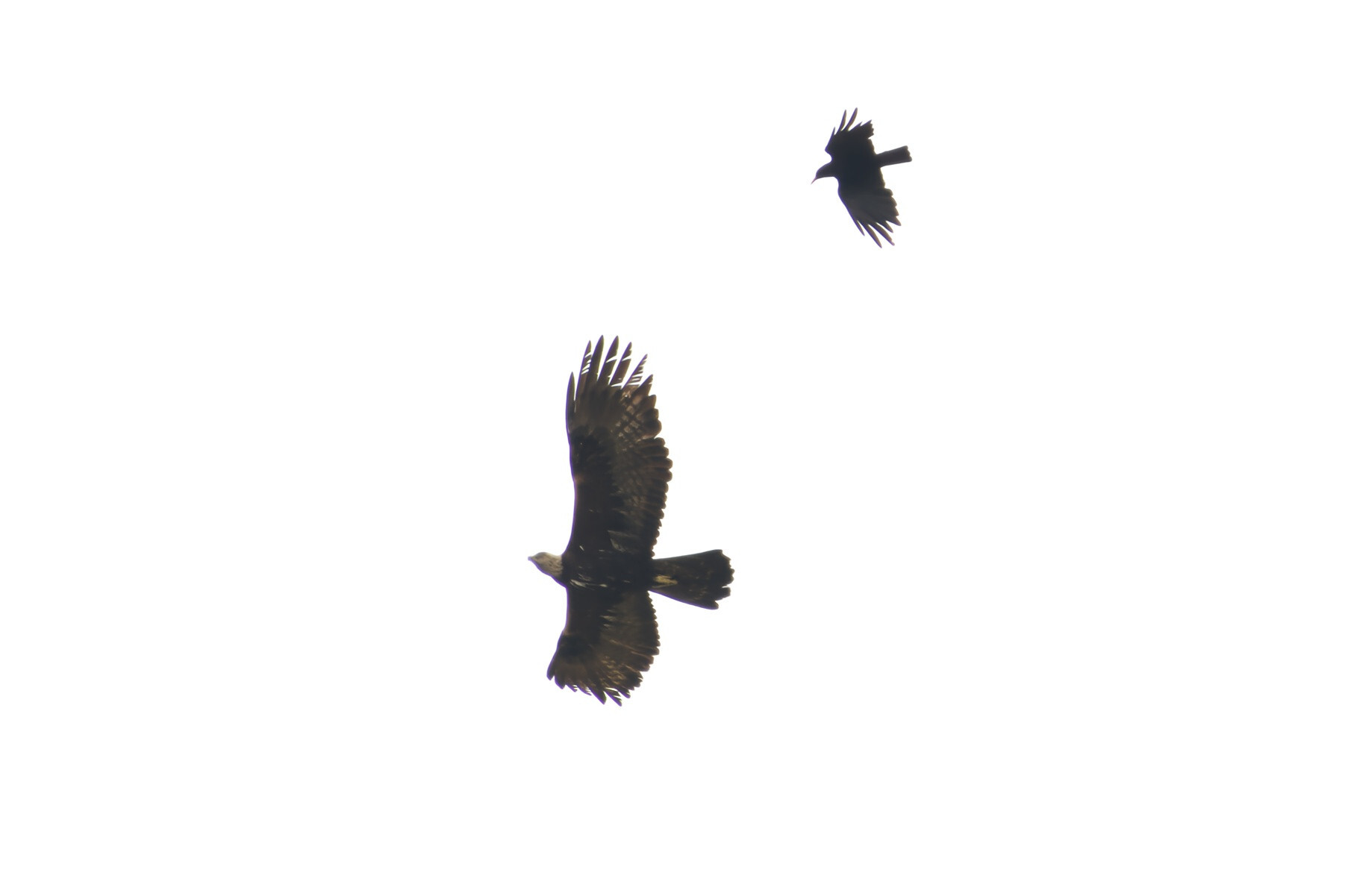
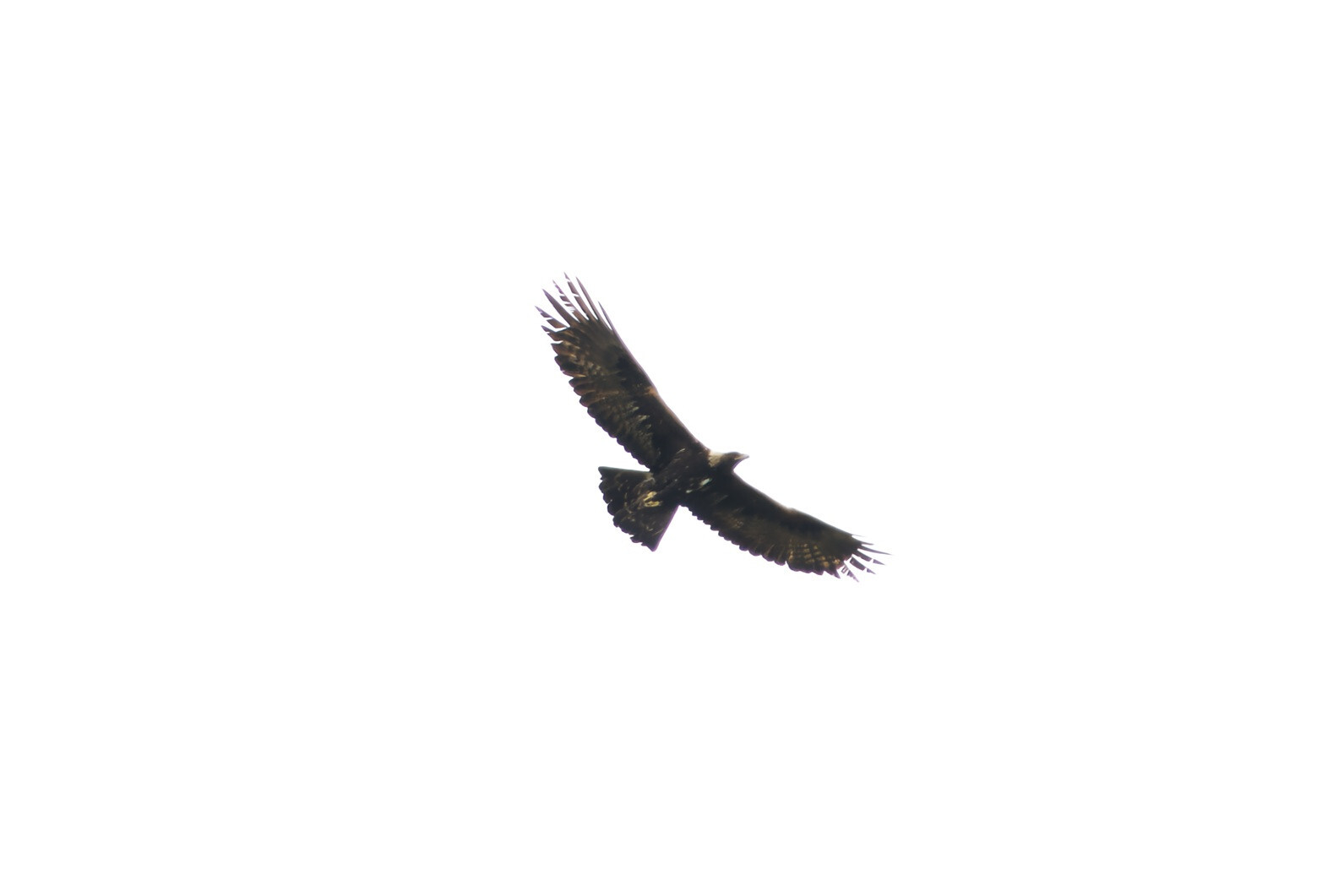
Golden Eagle
Aquila chrysaetos
金雕
Introduction
The Golden Eagle is the most widely distributed eagle species in the Northern Hemisphere. It occurs across temperate regions of Eurasia, North America, and parts of North Africa. It inhabits diverse environments from Arctic tundra to Mediterranean mountain ranges. Once common throughout much of the Holarctic, populations have declined or disappeared from heavily human-populated areas. It is the largest and least numerous of the five true accipitrid eagles breeding in both the Palearctic and Nearctic regions. Length: 66-102 cm. Wingspan: 1.8-2.34 m. Listed under CITES Appendix II and considered Least Concern globally by the IUCN.
Description
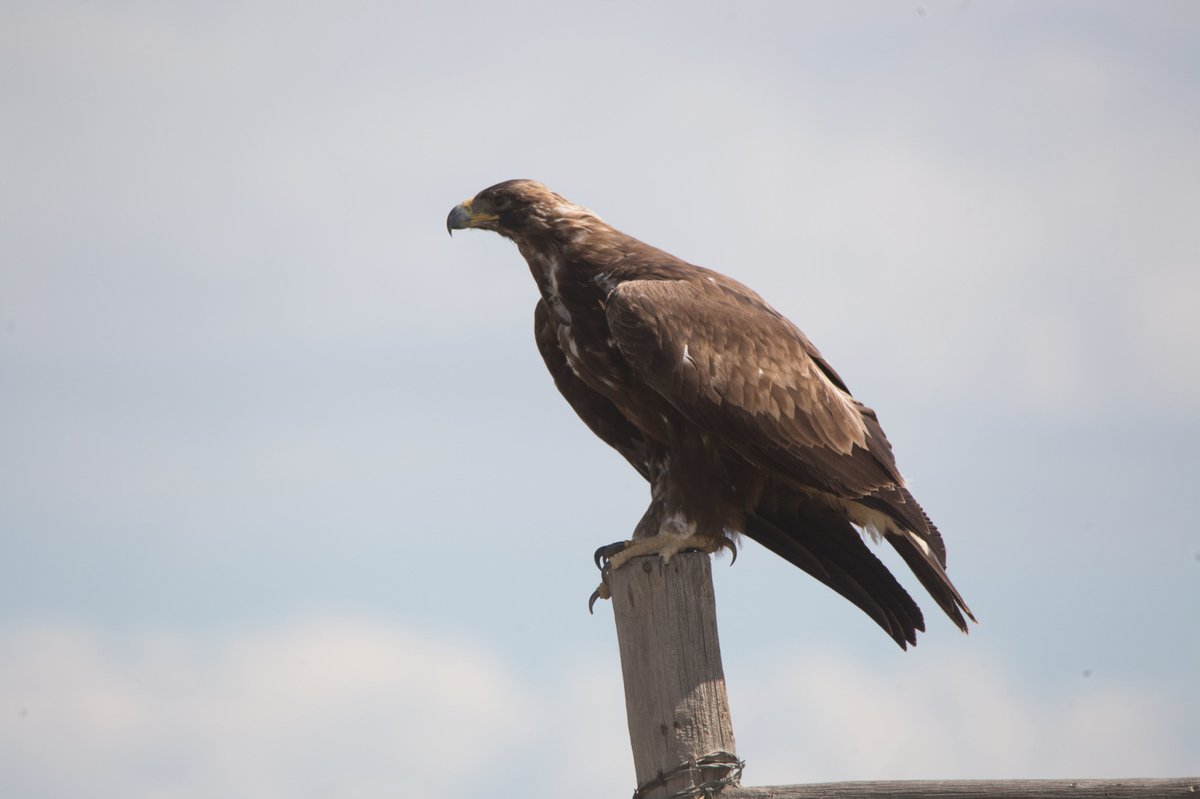
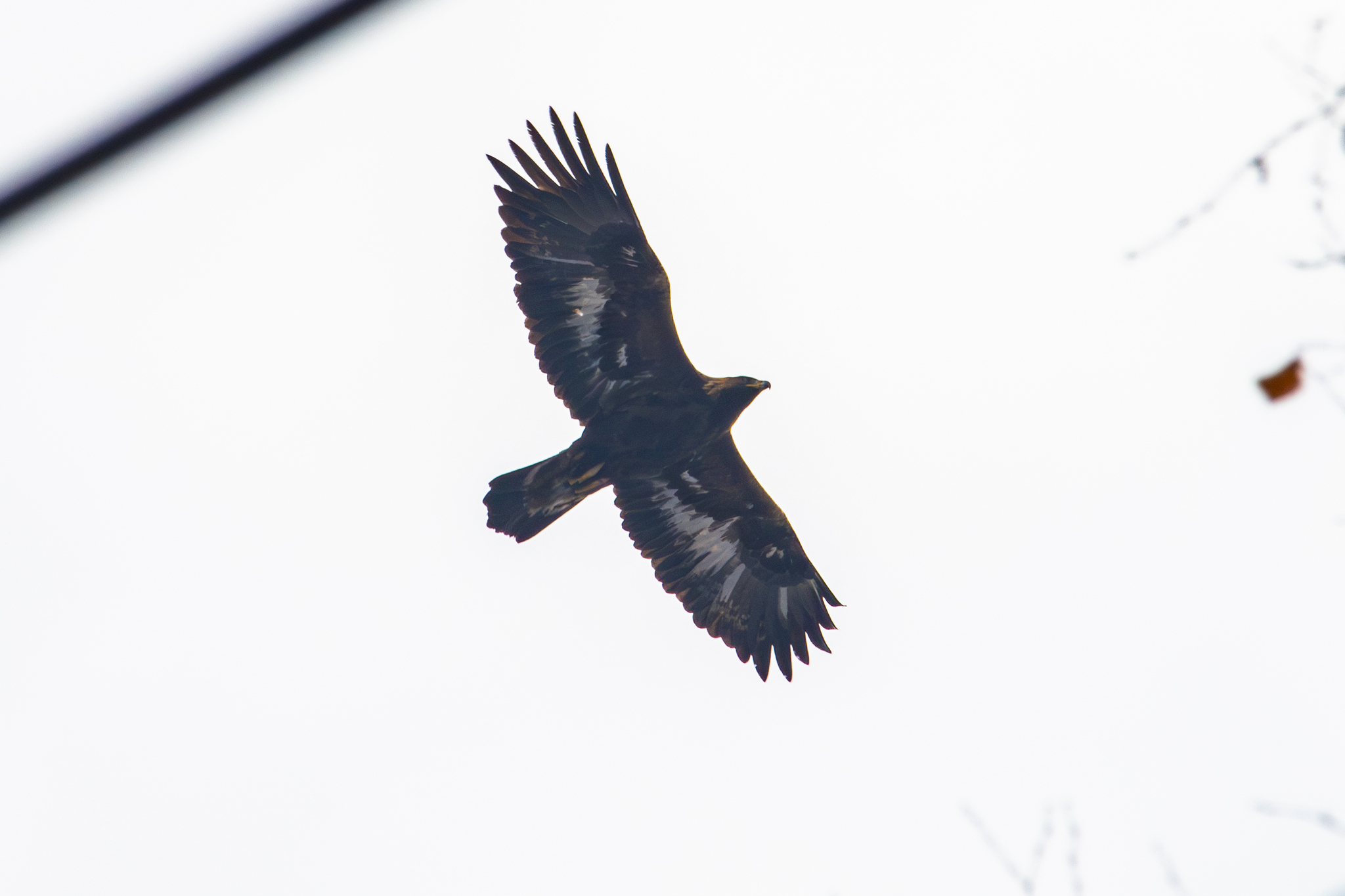
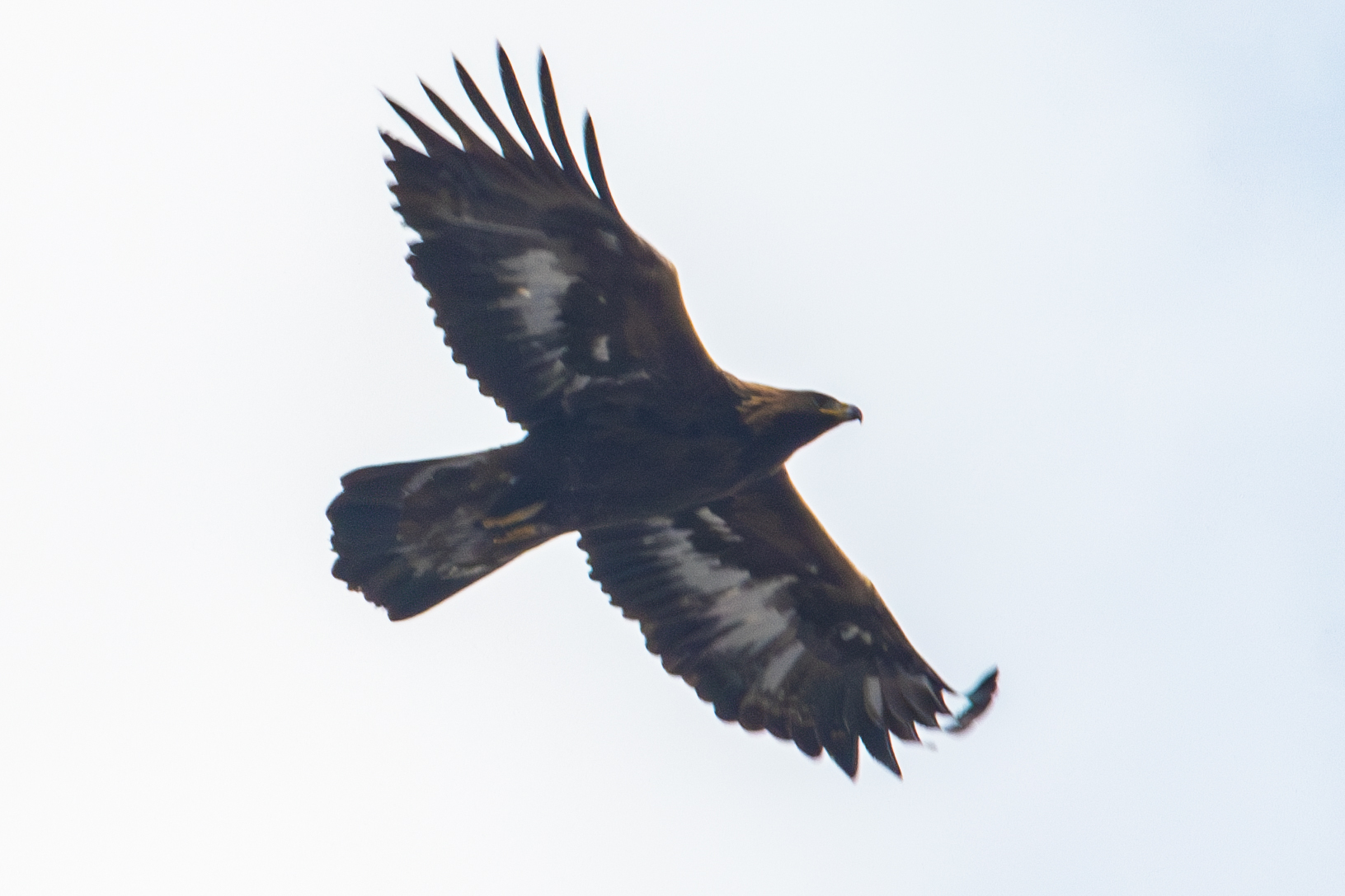
This is a very large raptor, measuring 66-102 cm in length with a wingspan of 1.8-2.34 meters—the fifth largest among living eagle species. Females are considerably larger than males, with size differences most pronounced in larger subspecies. Adults are primarily dark brown overall, with a distinctive golden-brown to rusty coloration on the back of the crown and nape that gives the species its common name. The tarsal feathers are notably paler than the rest of the plumage, ranging from light golden to white. Some adults display white 'epaulettes' on the upper scapular feather tracts. The bill is dark-tipped with a yellow cere, and the bare feet are yellow. Juveniles are darker than adults, appearing blackish on the back, and retain white on approximately two-thirds of their tail length, ending in a broad black band. Full adult plumage is not attained until the bird is 5.5 to 6.5 years old.
Identification
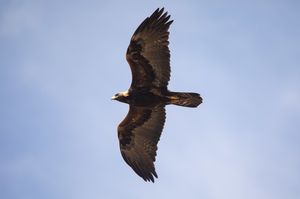
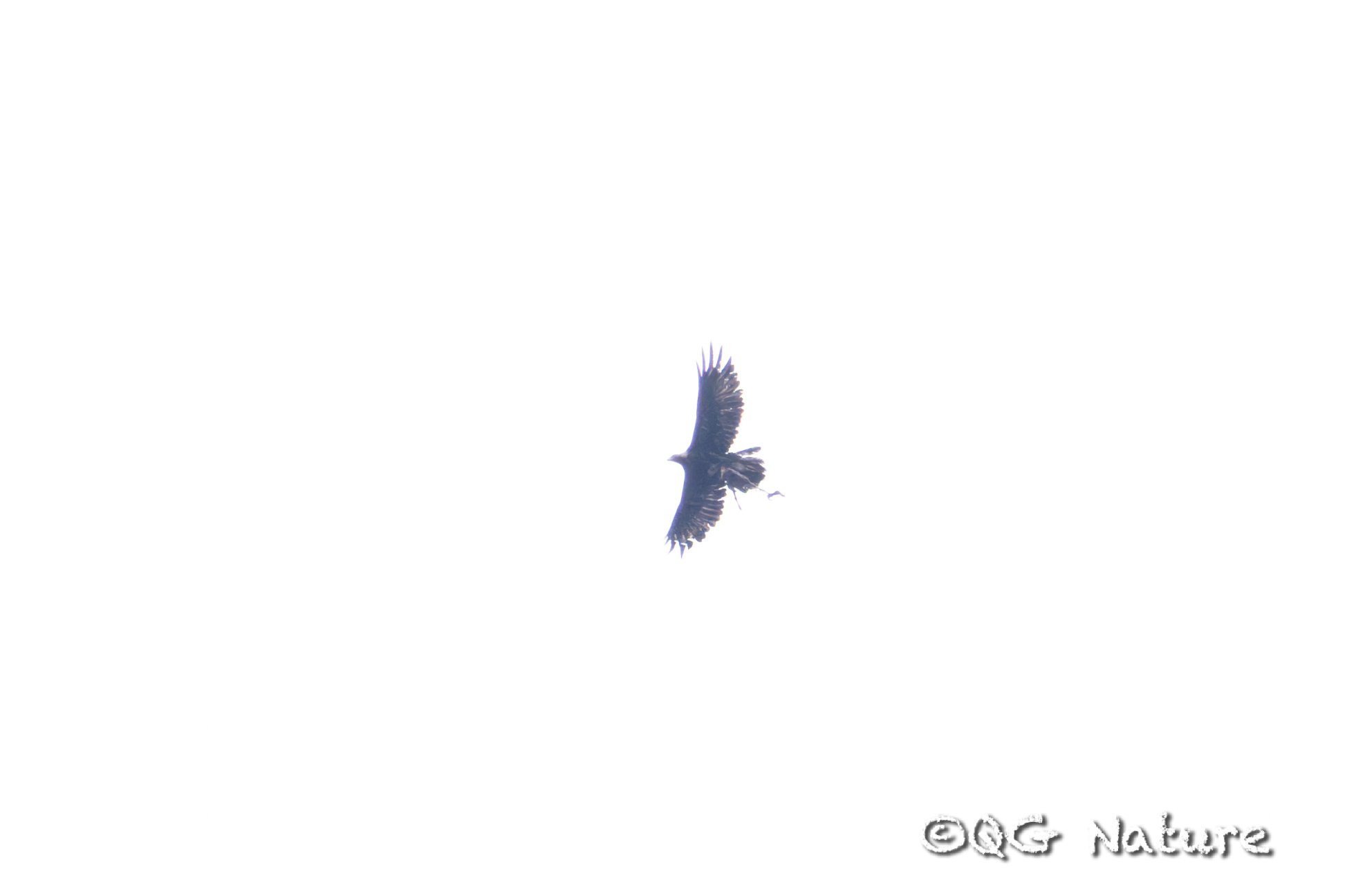
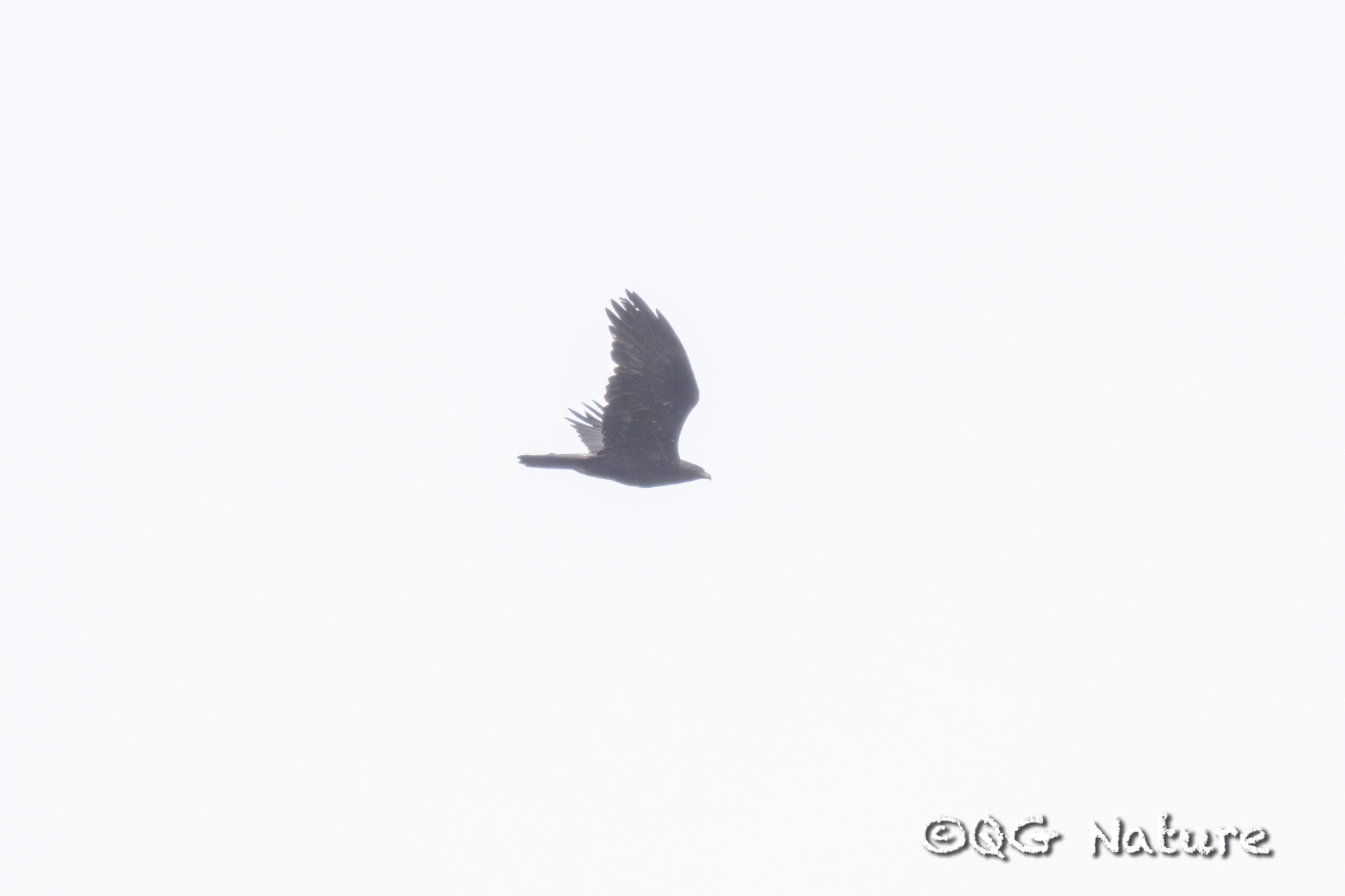
Size readily distinguishes this species from most other raptors—a mid-sized Buteo hawk has roughly half the wingspan and one-fifth the weight. In flight, the relatively long tail appears two to three times the length of the head, unlike the shorter tails of Haliaeetus eagles. The species typically flies in a slight dihedral, holding wings in an upturned V-shape, which helps distinguish it from other Aquila eagles that do not show this trait. Unlike the California condor and vultures, which have broader wings held more flatly, this species appears more hawk-like in flight silhouette. Juveniles can be distinguished from juvenile Haliaeetus eagles by the more defined white patches on wings and tail, rather than the random, splotchy distribution typical of those species. At close range, the golden to rufous nape patch is distinctive among Eurasian Aquila species.
Distribution & Habitat
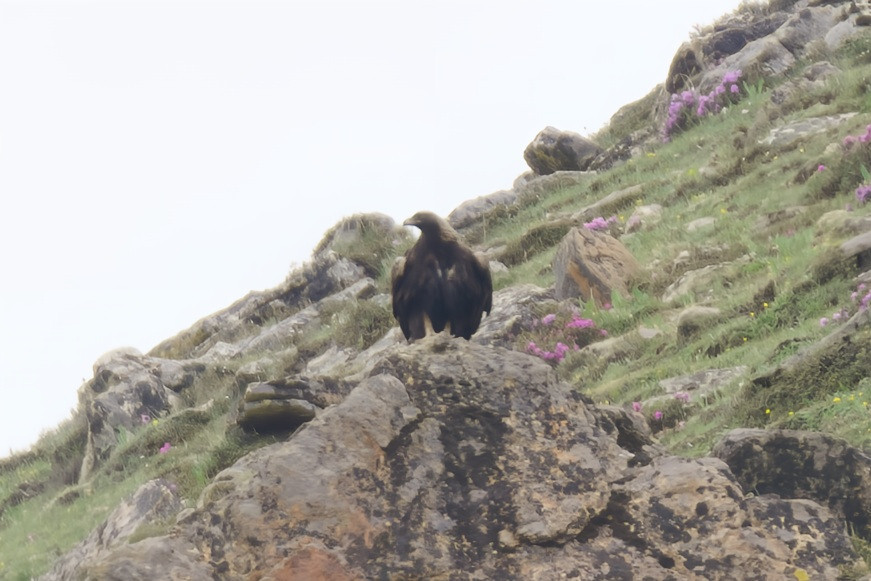
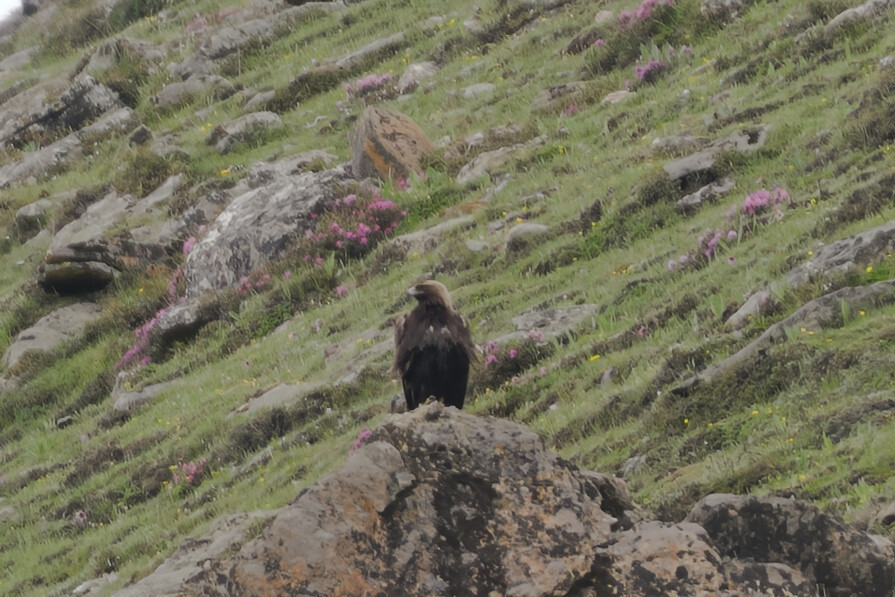
The species has the largest range of any eagle, spanning approximately 140 million square kilometers across the Northern Hemisphere. It breeds throughout most of Eurasia, from western Europe through Russia to the Pacific coast, and across North America from Alaska to Mexico. It also occurs in isolated populations in North Africa. The species occupies mountainous regions preferentially but adapts to various open and semi-open habitats including taiga forest edges, grasslands, steppe, and desert mountain plateaus. While generally avoiding developed areas and dense forest, it can be found from sea level to over 6,000 meters elevation. Most populations are sedentary, though birds breeding at high latitudes migrate south for winter, with those from northern Alaska and Canada traveling to the contiguous western United States and Mexico.
Behavior & Ecology
The diet consists primarily of small mammals such as hares, rabbits, ground squirrels, prairie dogs, and marmots, though birds, reptiles, and fish are also taken. Hunting occurs during daylight, with eagles often spending 78-85% of daylight hours perching and watching for prey before executing swift attacks. The species is monogamous, typically mating for life. Breeding occurs in spring, with pairs maintaining territories up to 200 square kilometers and building large nests on cliffs. Females lay up to four eggs, incubating for about six weeks, with one to two young typically surviving to fledge in approximately 70-80 days. Full independence comes in fall, and juveniles wander widely until establishing their own territories at four to five years. Vocalizations are weak, high, and shrill, described as 'puppy-like,' used mainly as contact calls during breeding.
Conservation
The species is not considered threatened globally by the IUCN, though populations have declined or disappeared from many populated areas. Global population estimates range from 170,000 to 250,000 individuals, with 60,000 to 100,000 breeding pairs. Primary threats include habitat loss, human persecution, collisions with wind turbines and power lines, and lead poisoning from prey. In some regions, reduced prey availability and disturbance at nest sites have impacted breeding success. Conservation measures vary by country, with some populations protected by national laws and international agreements. In North America, the species is protected under the Bald and Golden Eagle Protection Act, though permits for wind energy-related deaths have been controversial.
Culture
The species has held cultural significance across human history. In pre-Hispanic Mesoamerica, it was a major Aztec symbol—the tribal god Huitzilopochtli directed his followers to found their city Tenochtitlan after seeing an eagle perched on a cactus. This image appears on Mexico's coat of arms and national flag. The Roman Empire adopted the golden eagle as its primary military emblem, with legions following the aquilifer (eagle-bearer) into battle. Throughout history, the species has been regarded with mystic reverence in tribal cultures and remains highly esteemed in falconry. The French Army has recently trained golden eagles to intercept drones. While persecution increased during the Industrial Revolution due to perceived threats to livestock, the species continues to command respect as a powerful symbol of wilderness and natural heritage.
Source: Wikipedia · CC BY-SA 3.0
Taxonomy
- Order
- Accipitriformes
- Family
- Accipitridae
- Genus
- Aquila
- eBird Code
- goleag
Vocalizations
Subspecies (6)
-
Aquila chrysaetos canadensis
Alaska to west-central Mexico and coastal northeastern USA
-
Aquila chrysaetos chrysaetos
Western Palearctic to Siberia and Altai Mountains
-
Aquila chrysaetos daphanea
montane areas of central Asia, from the Pamir Mountains to central China and southward to the Himalayas, from northern Pakistan eastward to Bhutan
-
Aquila chrysaetos homeyeri
Iberian Peninsula; northwestern Africa to Arabia and Iran
-
Aquila chrysaetos japonica
Korea and Japan
-
Aquila chrysaetos kamtschatica
Siberia and Altai Mountains to Kamchatka Peninsula
Data Sources
Species description from Wikipedia, licensed under CC BY-SA 3.0.
Bird images and sounds sourced from GBIF, contributed by citizen scientists worldwide under Creative Commons licenses.
Taxonomy data from AviList 2025.