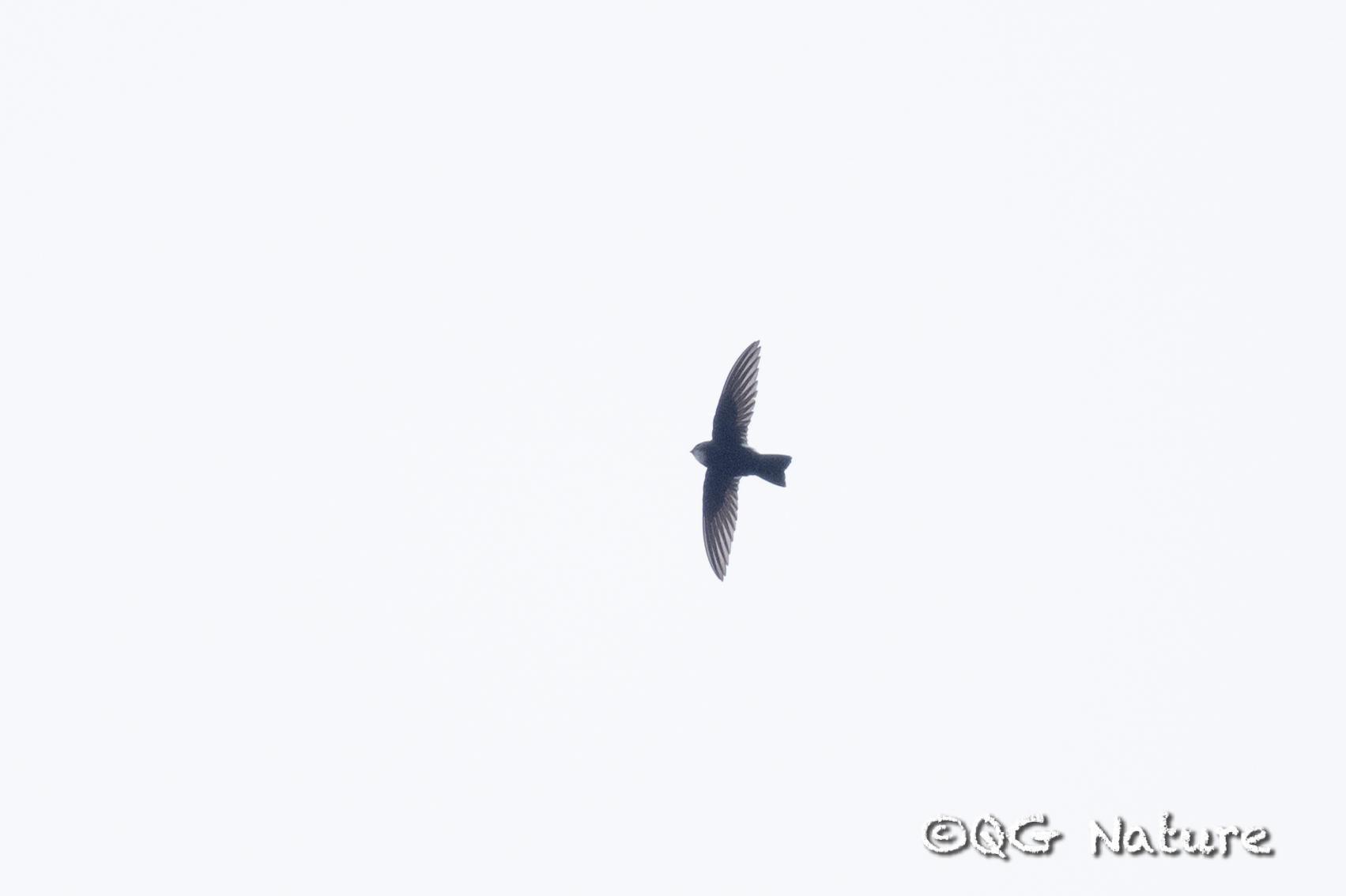
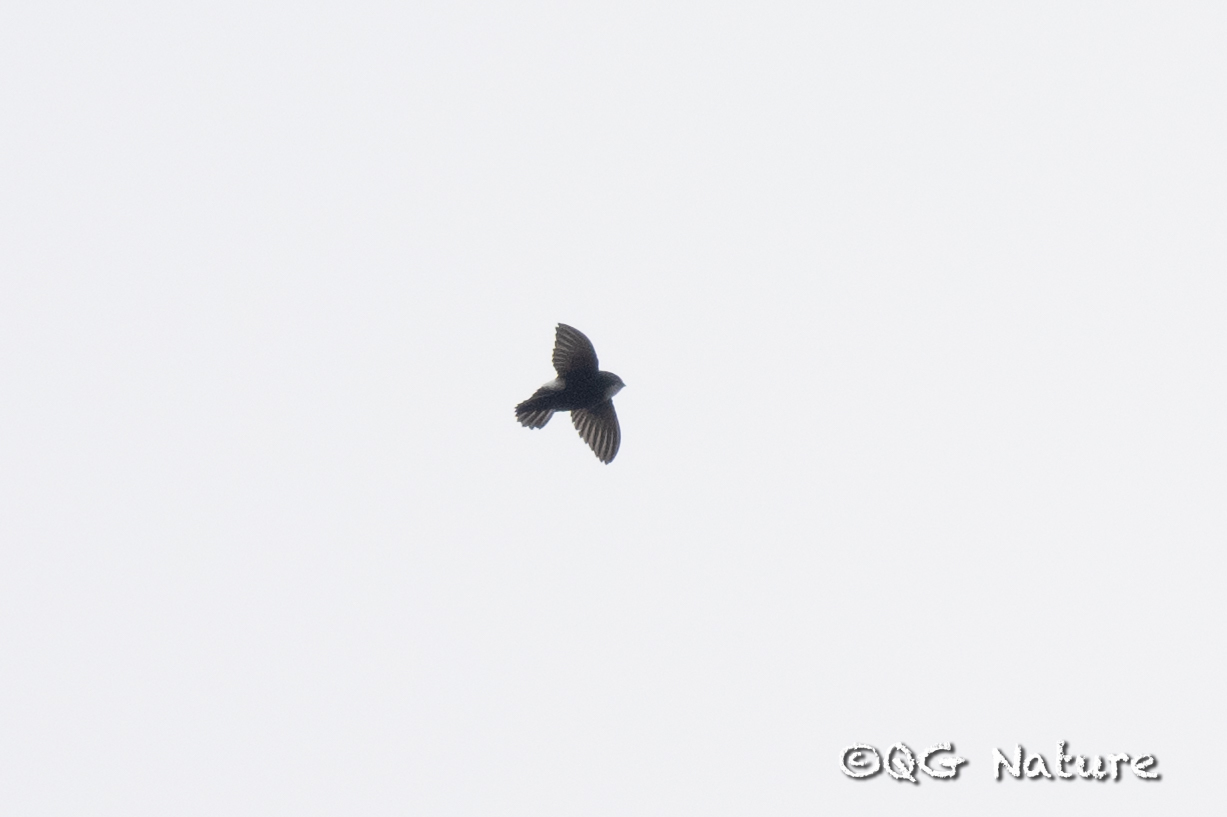
House Swift
Apus nipalensis
小白腰雨燕
Introduction
Small to medium-sized swift. Widespread across Asia, from Japan and Nepal through Southeast Asia. Inhabits urban and rural settings. Spends much of its life on the wing and can sleep in flight by alternately shutting off brain hemispheres. Nests under building overhangs and in tunnels. Formerly classified as a subspecies of the little swift but now recognized as a distinct species with four recognized subspecies across its range.
Description
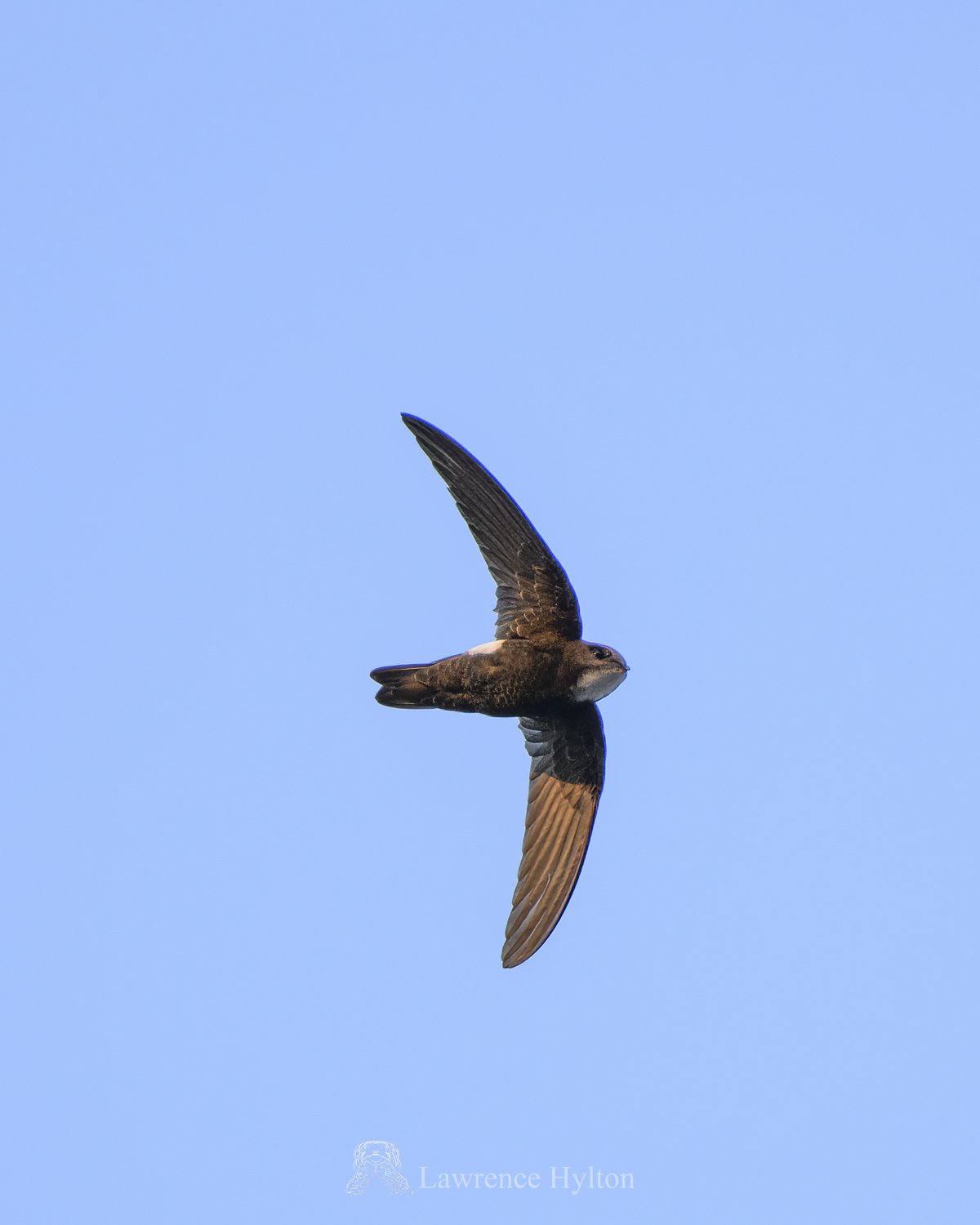
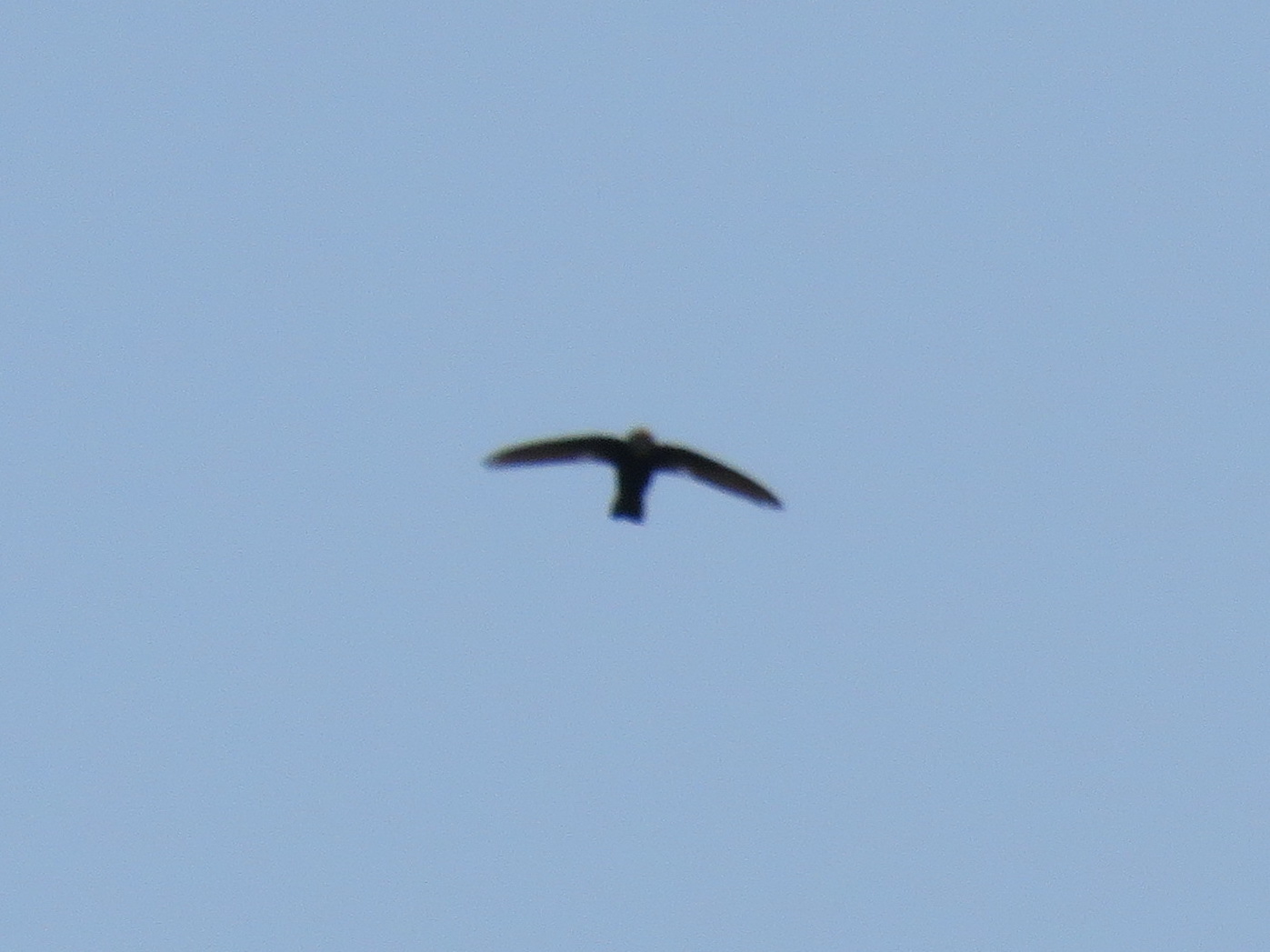
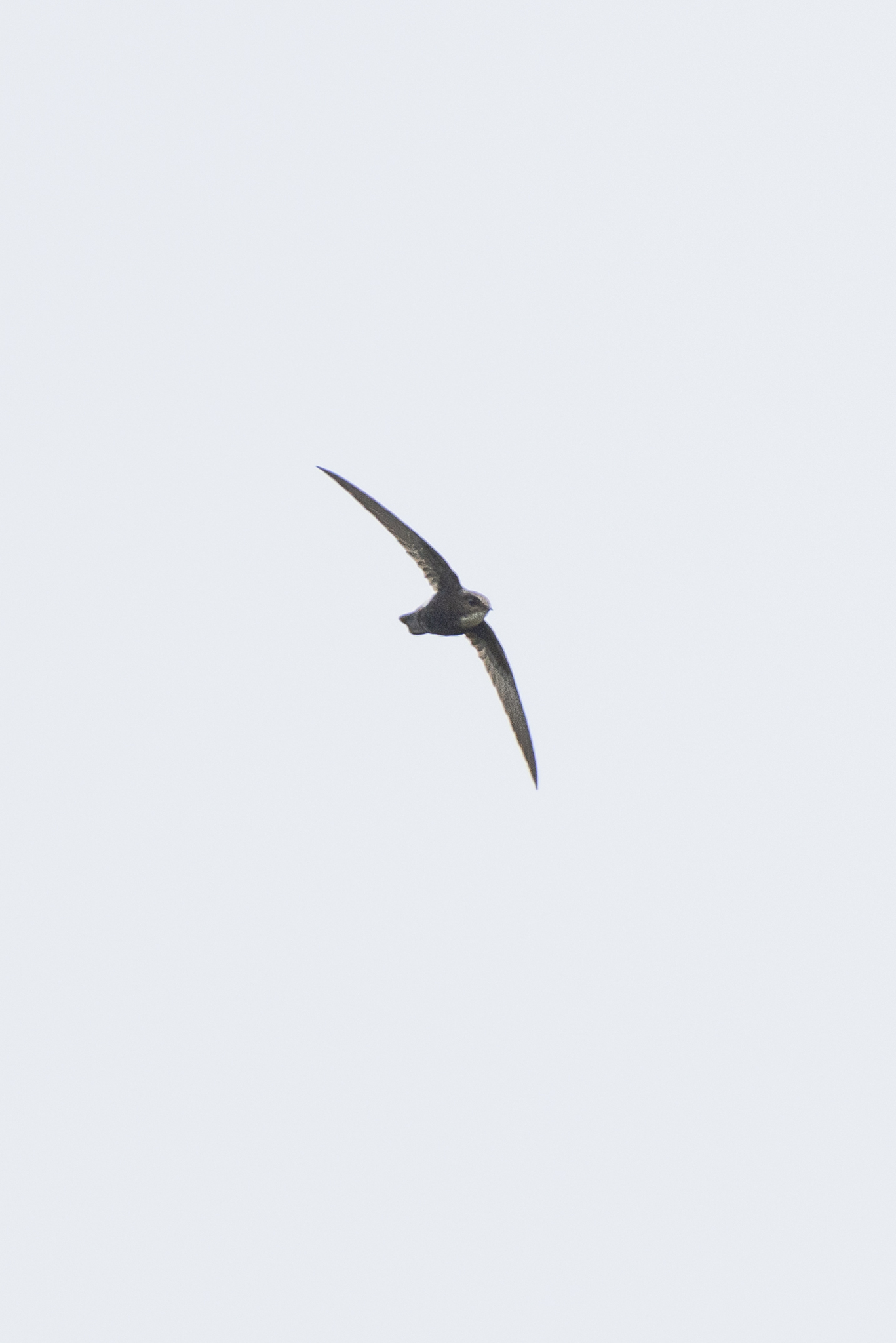
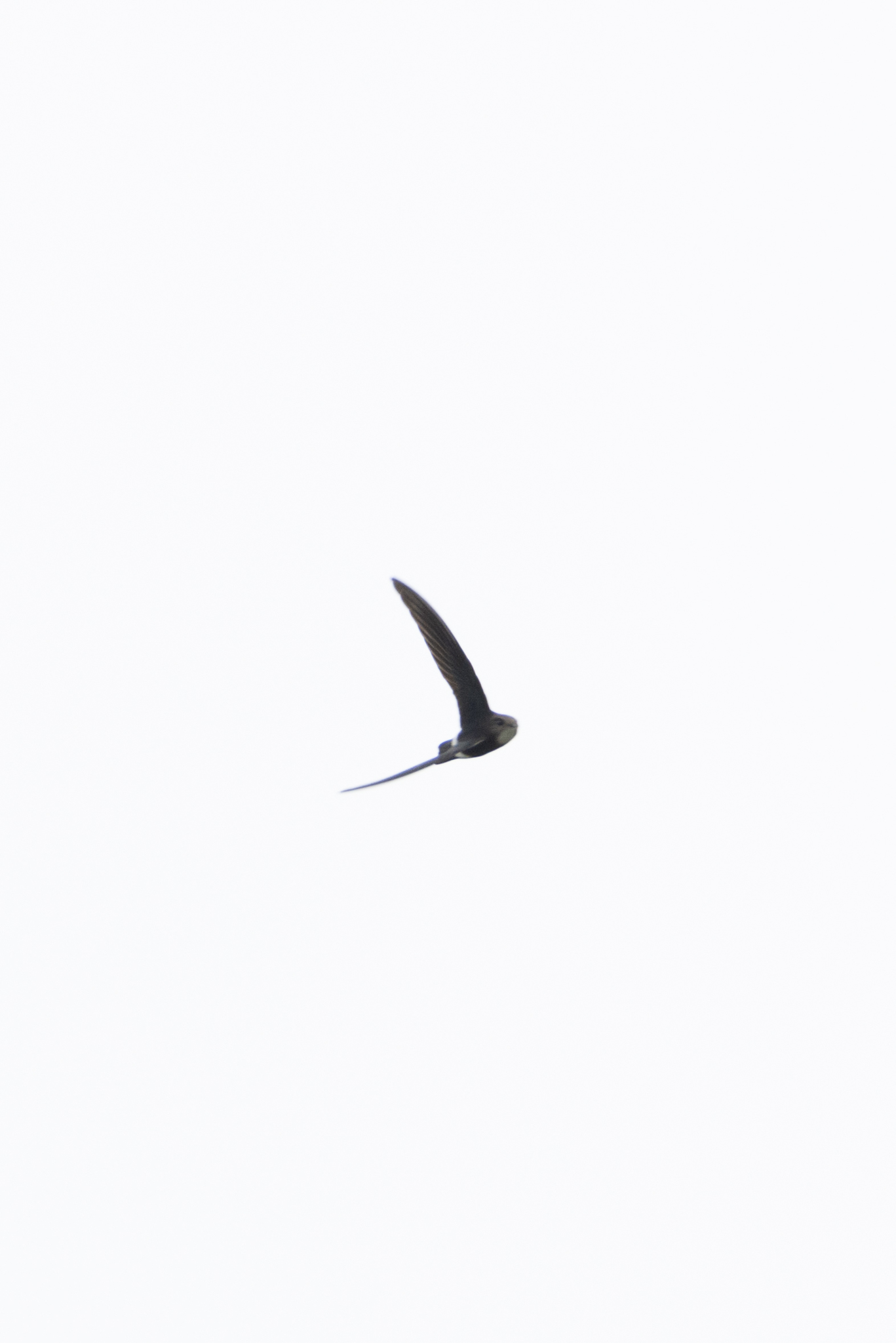
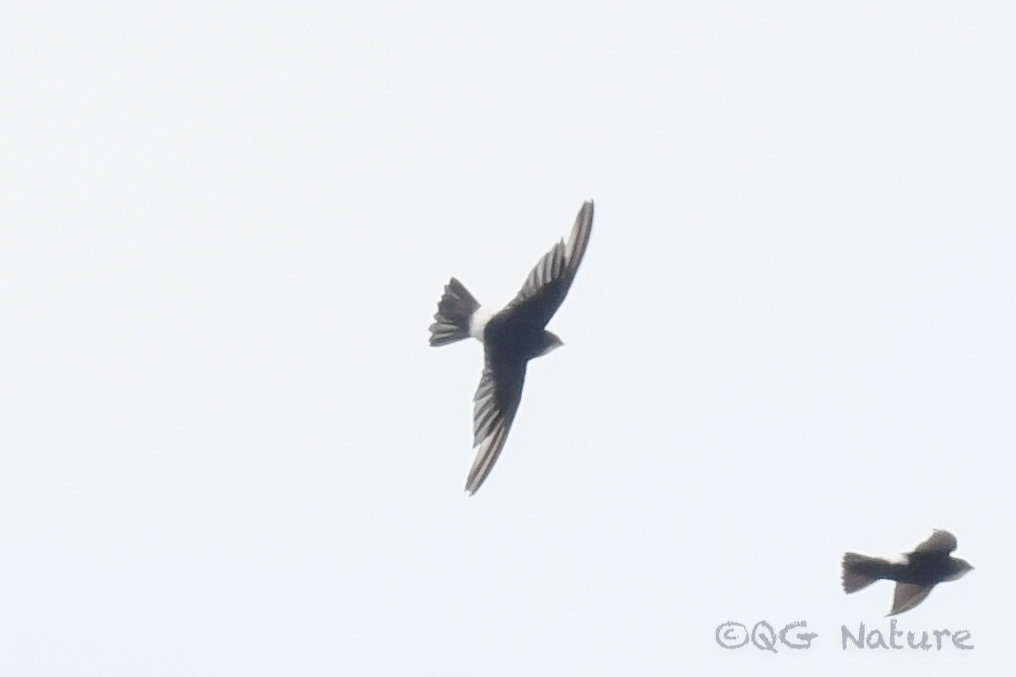
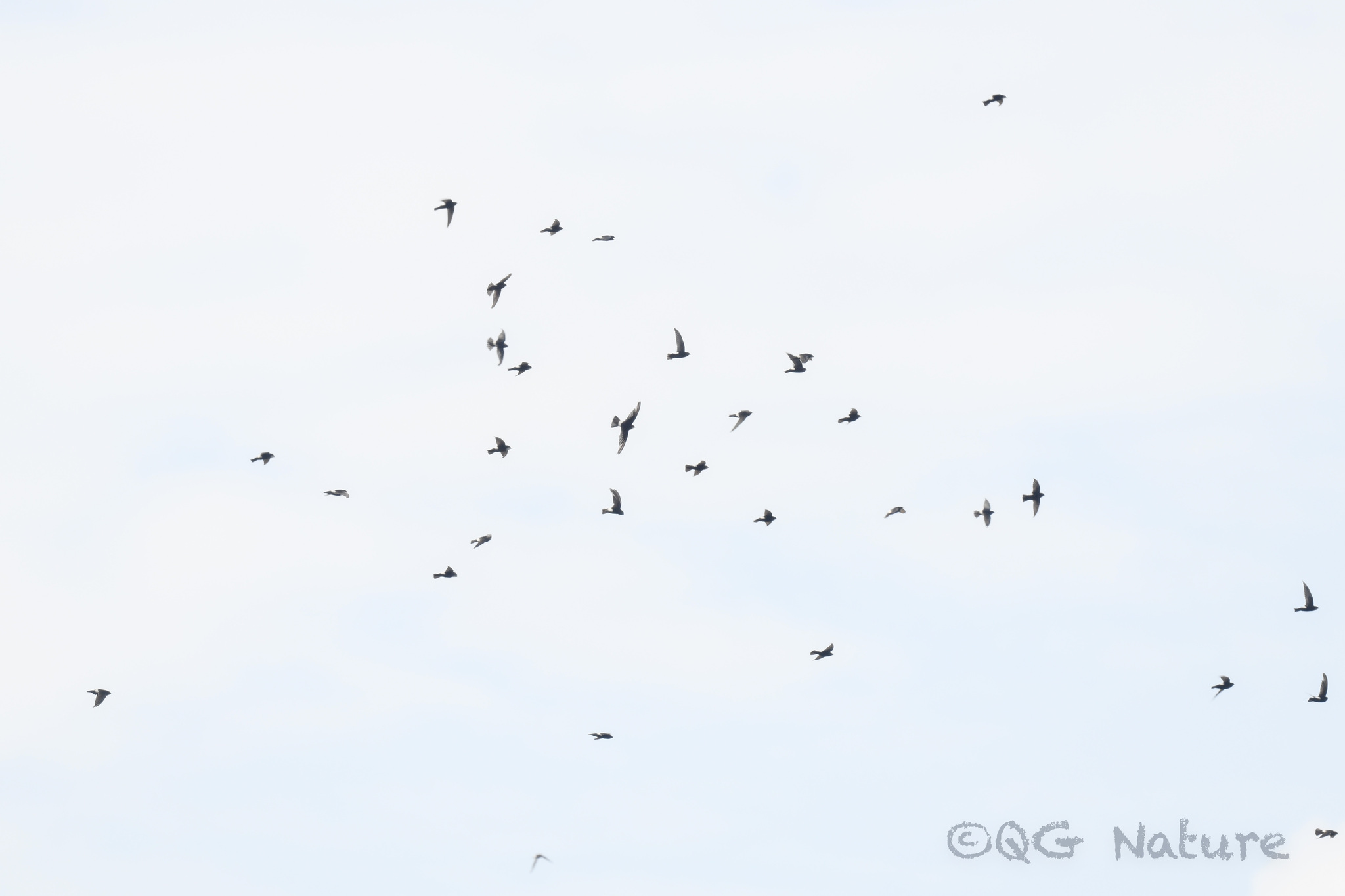
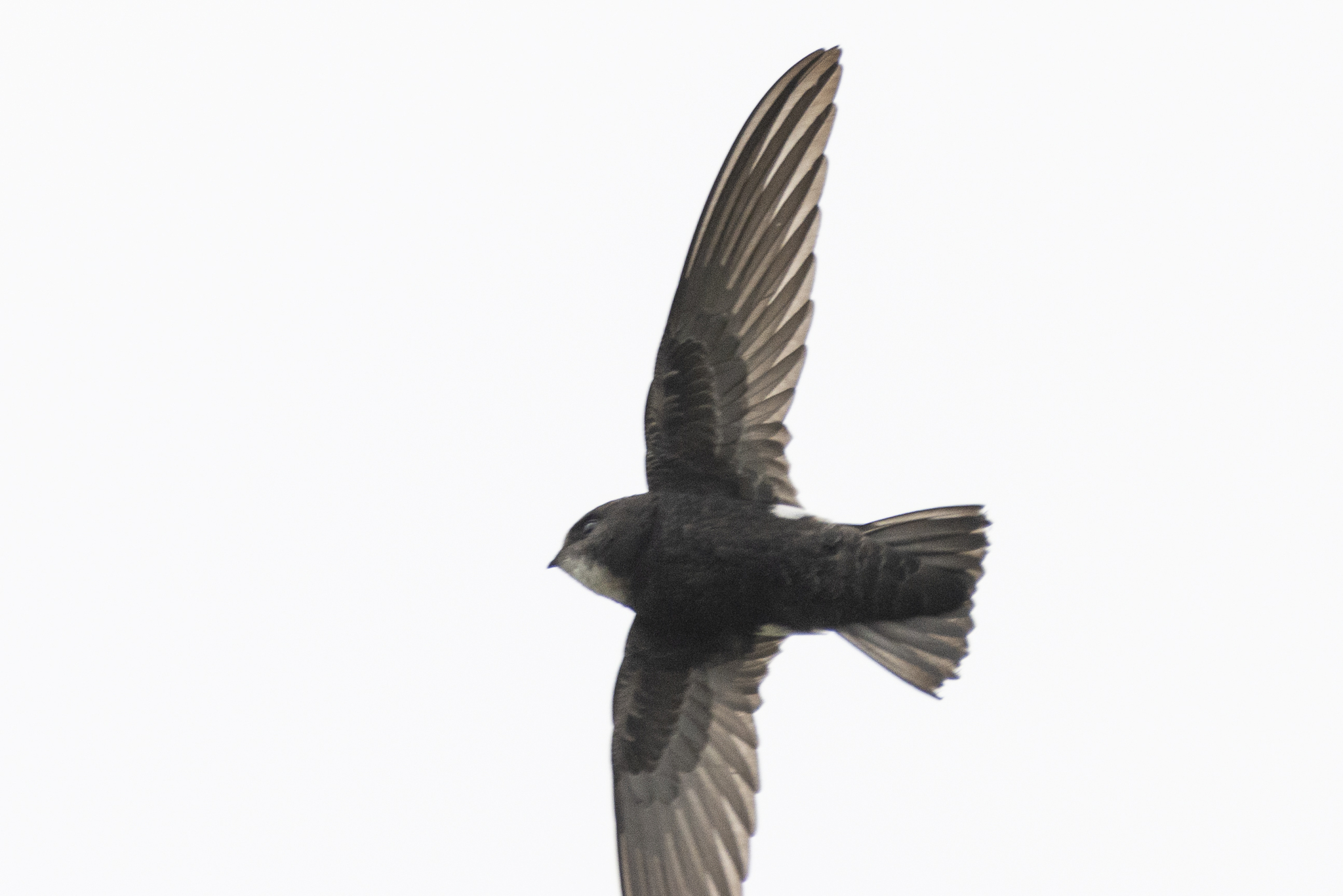
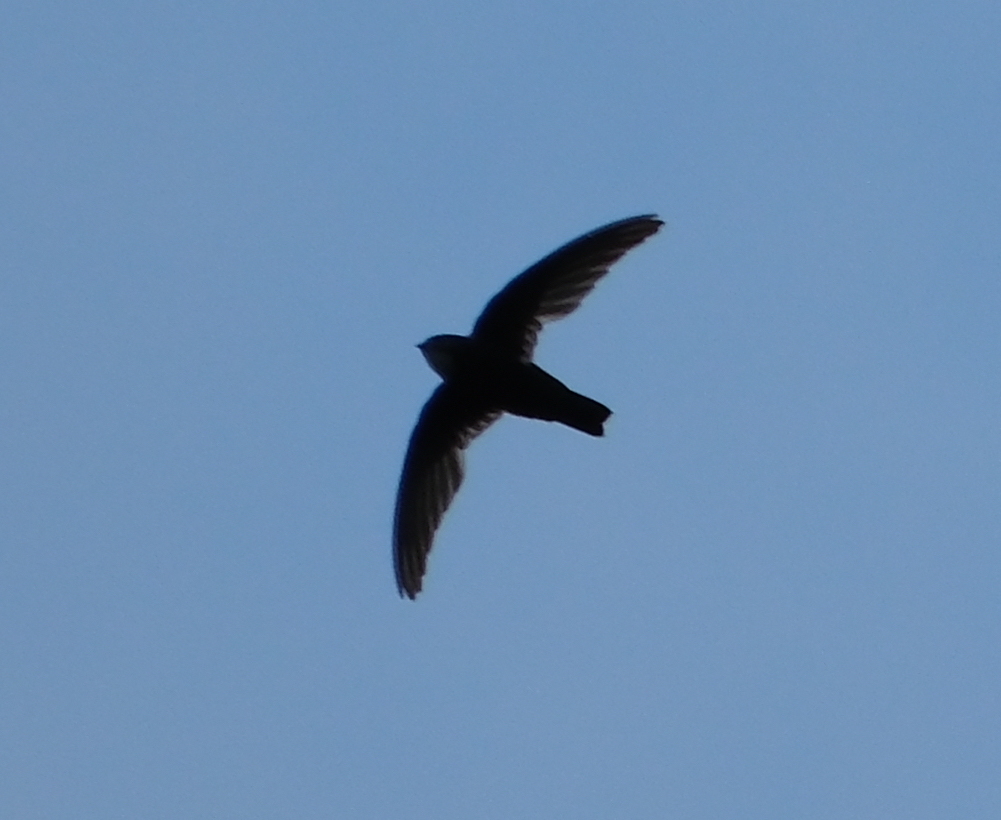
This species presents as a small but relatively robust swift. Adults measure 14 to 16 centimeters in length with a wingspan of 12.5 to 14.5 centimeters and weigh between 20 and 35 grams. The plumage is predominantly black, appearing darker than the similar little swift, with a distinctive white rump band and white throat patch providing the best identifying marks. The tail is dark and shows a shallow fork, visible particularly in flight. These features combine to create a somewhat shadowy silhouette against the sky, with only the white throat and rump offering contrasting visual cues for identification.
Identification
The primary identification challenge lies in separating this species from the very similar little swift. The house swift is noticeably darker overall, with black plumage contrasting with the little swift's somewhat lighter appearance. The white rump band and white throat patch are shared characteristics, but the overall impression is of a darker bird. In flight, the slightly forked tail becomes apparent, helping distinguish it from species with square or rounded tails. Behavior and habitat can also aid identification, as this species frequently nests in urban buildings and structures rather than exclusively on cliffs.
Distribution & Habitat
This species has a broad distribution across the Asian continent, with its four subspecies occupying distinct geographic ranges. The nominate subspecies ranges from Nepal through southeastern China to Japan and parts of Southeast Asia. The subfurcatus subspecies occupies the Malay Peninsula and surrounding islands. The furcatus subspecies is found on Java and Bali in Indonesia, while kuntzi is endemic to Taiwan. The species inhabits both urban environments and rural areas, having been recorded in mountainous regions of Nepal as well as cities and towns throughout China, Vietnam, and Hong Kong. One accidental occurrence was recorded in North America in 2012, though this record was not officially accepted.
Behavior & Ecology
The house swift is almost exclusively aerial, spending vast portions of its life in continuous flight. It feeds by capturing small flying insects in the air, with diet studies revealing a near-exclusive reliance on arthropods including ants, spiders, mosquitoes, and flies. Breeding occurs once yearly with typically two broods. Nesting sites are found on cliff faces, particularly offshore islands near Vietnam, or in urban structures beneath roof overhangs and within tunnels. The nest is constructed messily using the bird's saliva to bind together leaves, branches, and feathers. Clutch sizes range from one to five eggs, with an incubation period of 20 to 30 days. The first eggs are laid by early June, with fledglings from the first brood taking flight by early July. The second clutch hatches a few weeks later, with the final fledglings leaving the nest by mid-September. Vocalizations include a characteristic ti-ti-ti-tititrrrrrr call among other sounds.
Conservation
The conservation status of this species has not been specified in available sources. Its wide distribution across multiple Asian countries and adaptability to urban environments suggest a reasonably stable population, though specific population estimates and trend data are not provided. The species' reliance on urban nesting sites could potentially expose it to building renovations or demolitions, while pesticide use affecting aerial insect populations may present an ongoing concern.
Culture
No cultural significance, folklore, or mythological associations have been documented for this species in the available sources.
Source: Wikipedia · CC BY-SA 3.0
Taxonomy
- Order
- Apodiformes
- Family
- Apodidae
- Genus
- Apus
- eBird Code
- houswi1
Vocalizations
Subspecies (4)
-
Apus nipalensis furcatus
Java and Bali; probably this form spreading through Lesser Sundas
-
Apus nipalensis kuntzi
Taiwan
-
Apus nipalensis nipalensis
Nepal to southeastern China, Myanmar, Thailand, Indochina, and Philippines
-
Apus nipalensis subfurcatus
Malayan Peninsula to Borneo, Sumatra, and adjacent islands; perhaps this form spreading through Sulawesi and Moluccas
Data Sources
Species description from Wikipedia, licensed under CC BY-SA 3.0.
Bird images and sounds sourced from GBIF, contributed by citizen scientists worldwide under Creative Commons licenses.
Taxonomy data from AviList 2025.