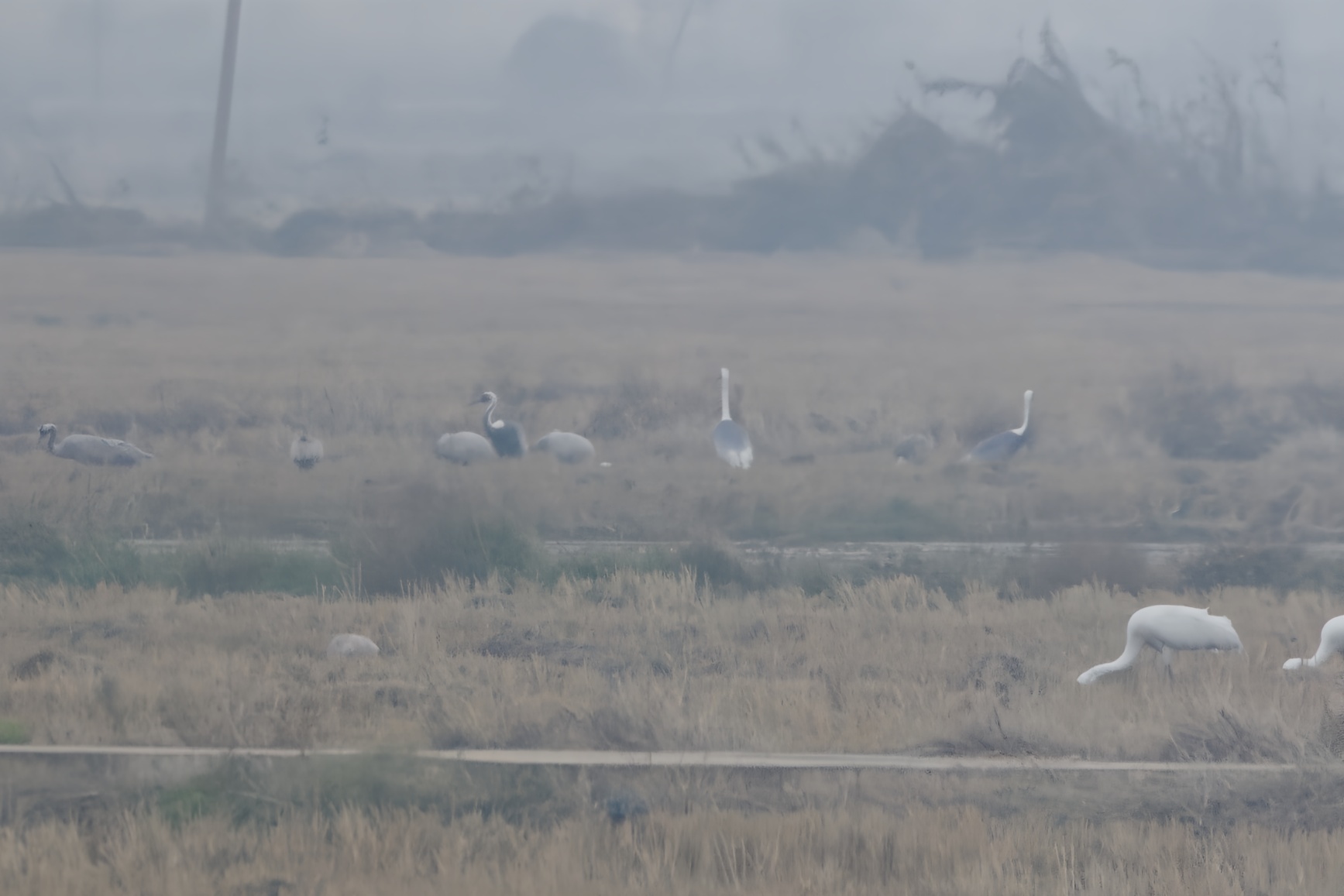

Gruiformes / Gruidae / Antigone
White-naped Crane
Antigone vipio · 白枕鹤
Introduction
A large bird in the crane family Gruidae, formerly placed in genus Grus but now classified under Antigone following 2010 molecular phylogenetic studies. It breeds in shallow wetlands and wet meadows in northeastern Mongolia, northeastern China, and southeastern Russia. Distinctive traits include a grey-and-white-striped neck and specific foraging behavior involving digging for deep vegetation. Listed as Vulnerable on the IUCN Red List.
Description
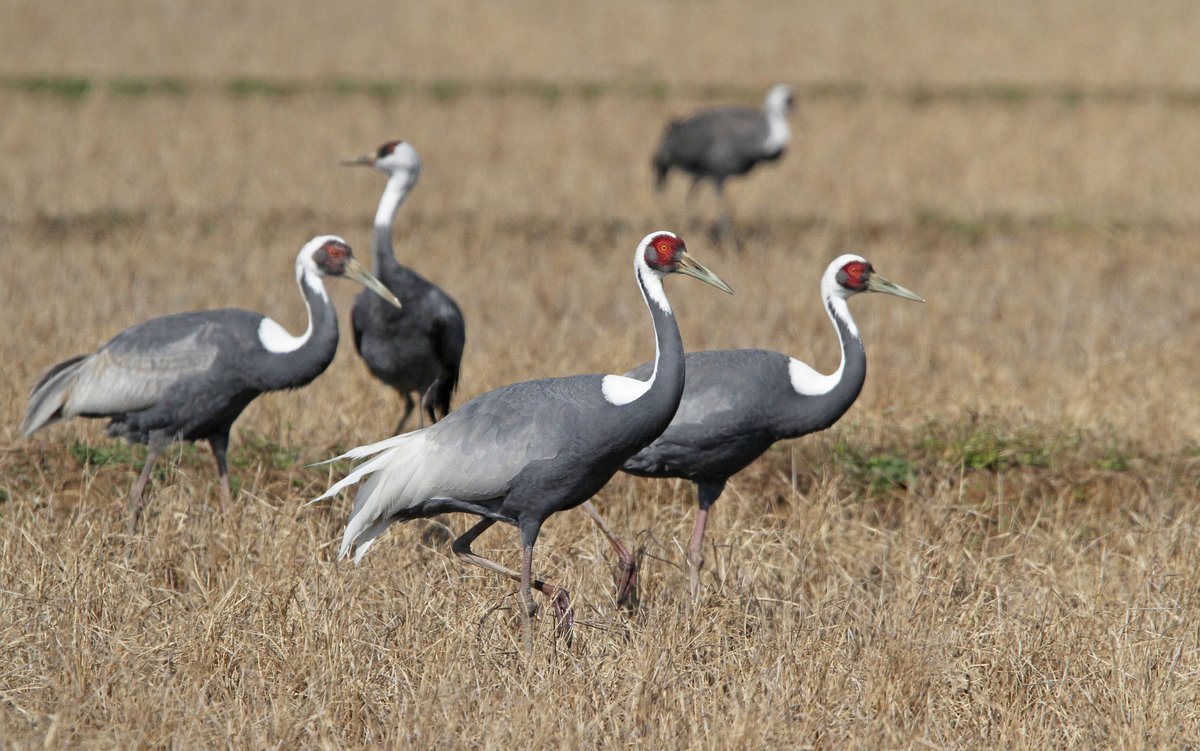
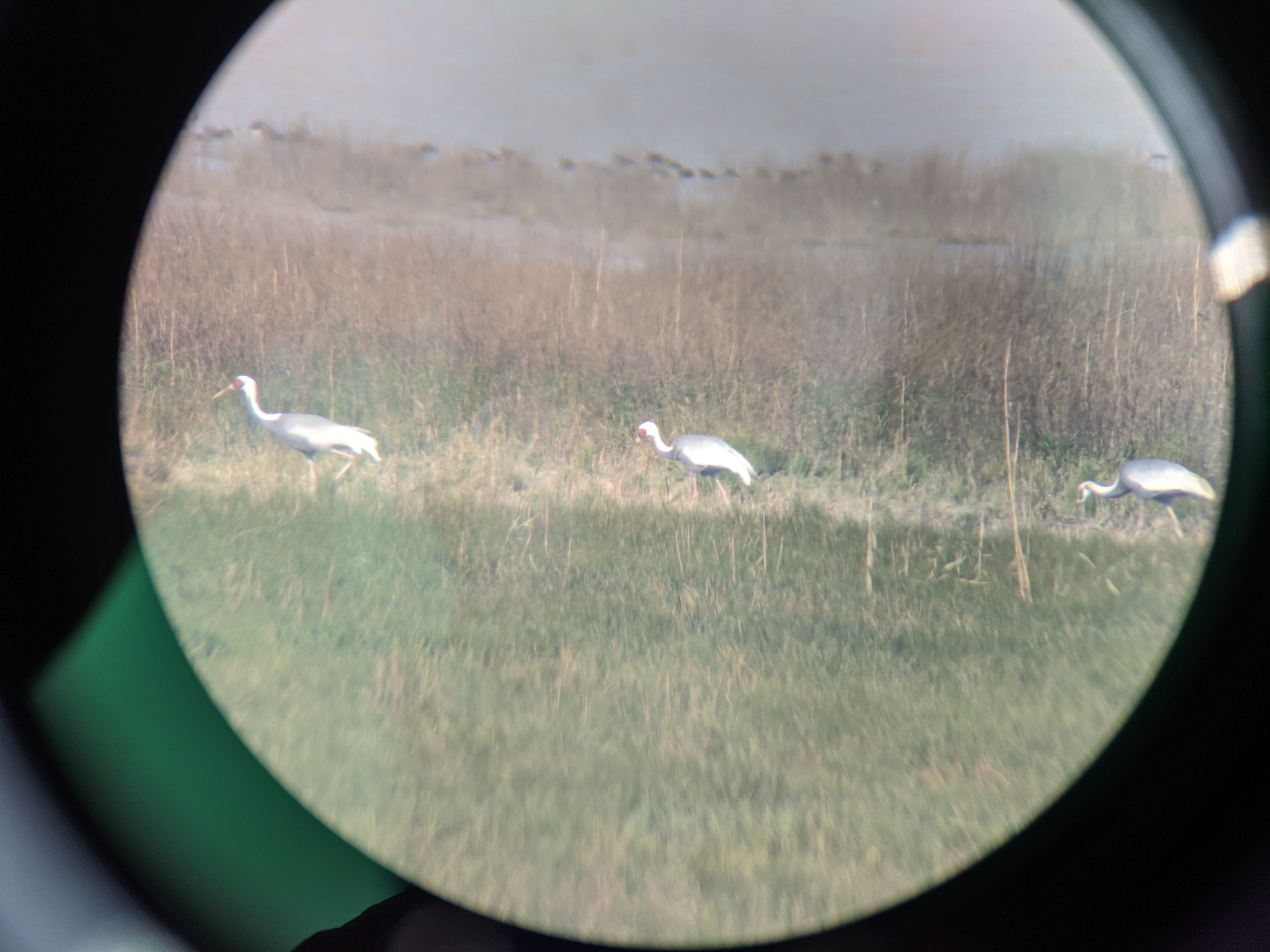
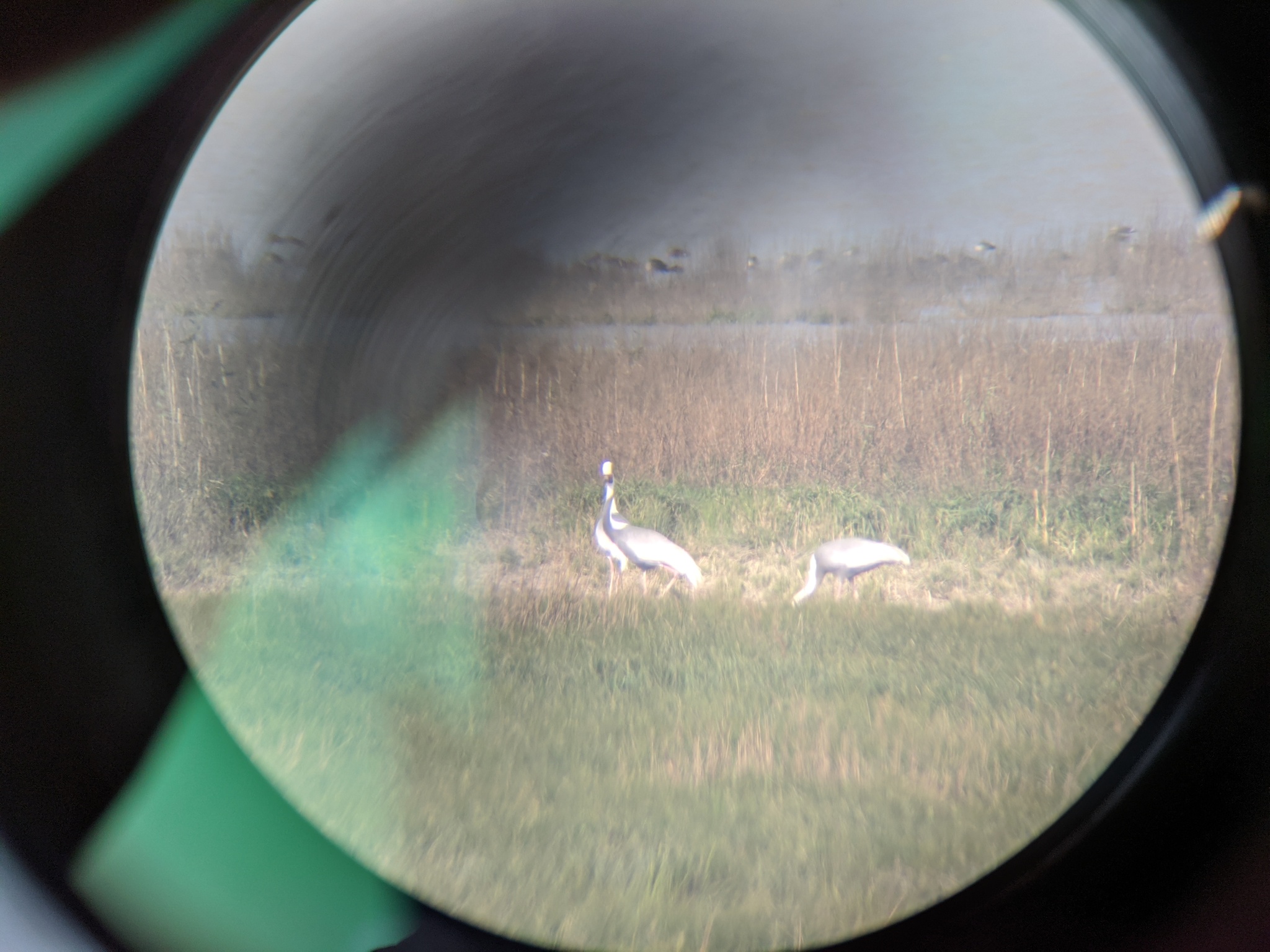
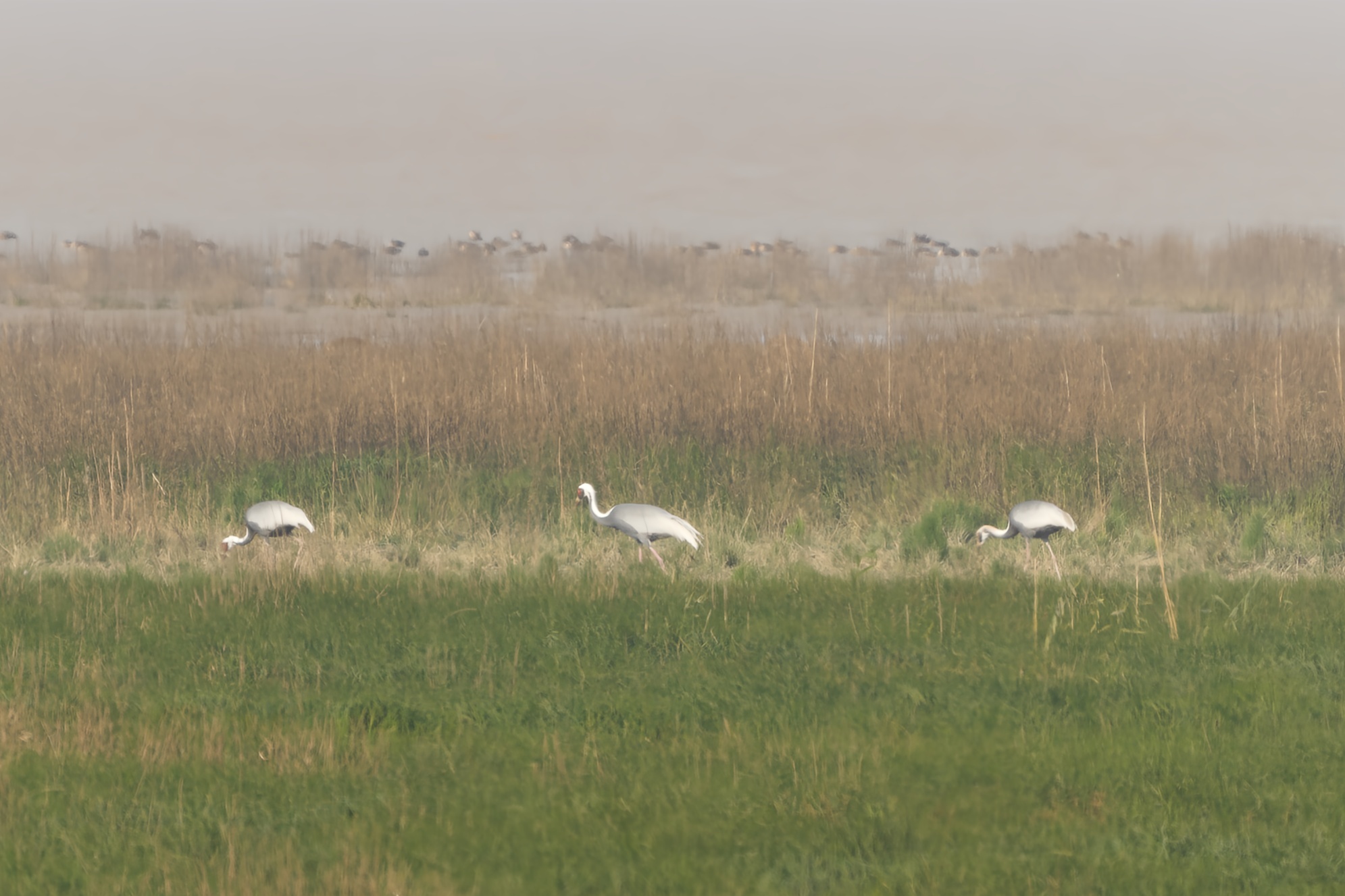
Measures 112–125 cm (44–49 in) long, stands about 130 cm (4.3 ft) tall, and weighs approximately 5.6 kg (12 lb). Features pinkish legs, a grey body, a reddish face patch, a white throat, and a distinctive white strip extending from the back of the crown down the nape. Juveniles have a brown head, pale throat, and brownish-yellow plumage with dark spots.
Identification
Distinguished by the white nape stripe, which is absent in other species within its genus. Key field marks include the grey body, reddish face patch, and white throat. Vocalizations include growling contact calls, high-pitched short-range calls, and loud sex-specific calls such as aggressive guard and flight intention calls.
Distribution & Habitat
Breeds in northeastern Mongolia, northeastern China, and southeastern Russia. Migrates to wintering grounds depending on breeding location: western populations migrate through China to Poyang Lake and the Yangtze River area, while eastern populations migrate south through Korea to the Korean Demilitarized Zone and Kyūshū, Japan. Mongolia holds at least 50% of the population. Habitats include shallow wetlands, wet meadows, lake edges, river valleys, mixed forest grasslands, lowlands, and farmlands.
Behavior & Ecology
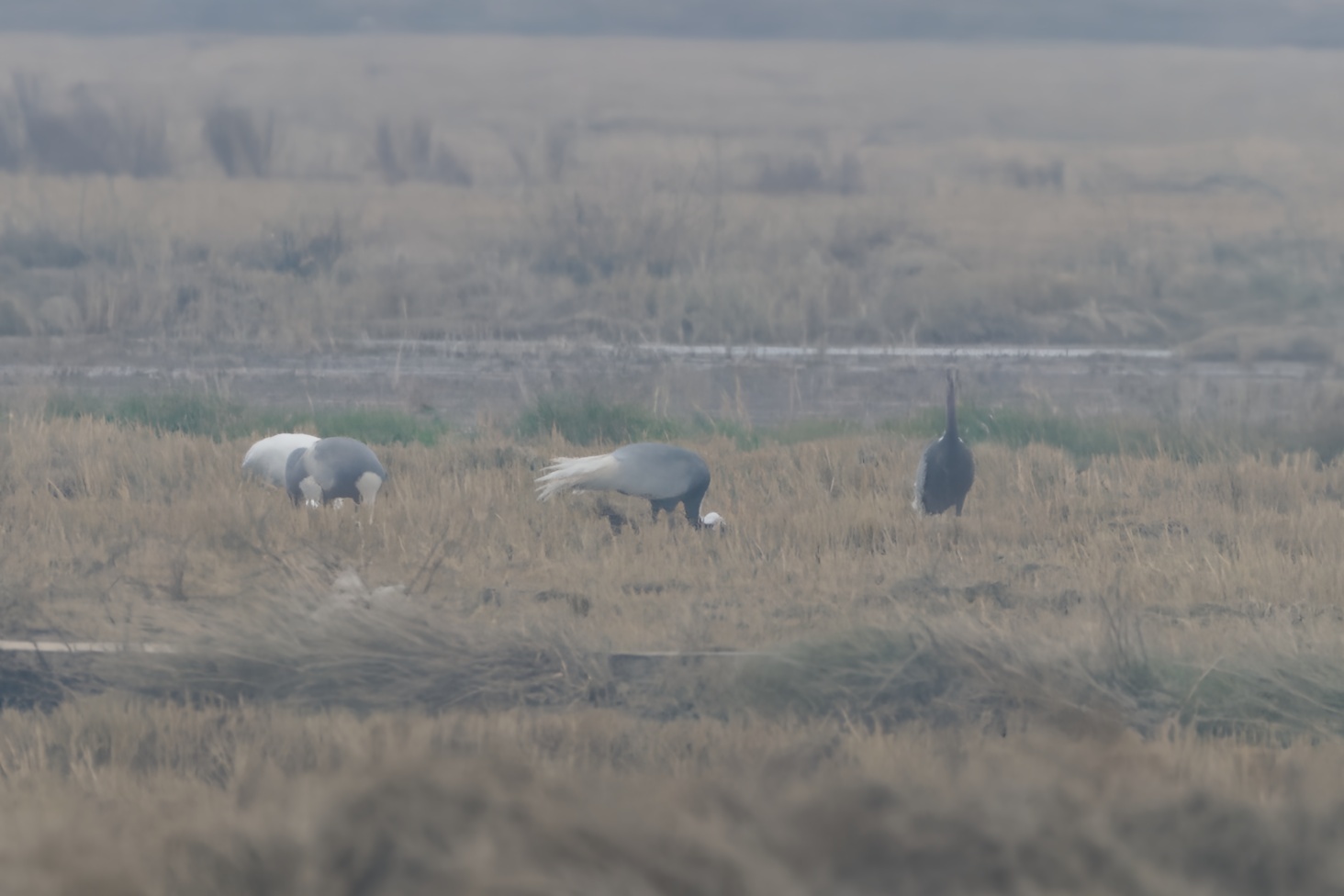
Breeds in spring, nesting in pairs in deeper water for predator protection. Eggs are laid between April and late May. Chicks remain fledglings for 70–75 days and reach sexual maturity at 2–3 years. Parents use low-frequency contact calls near chicks. Diet consists of wetland plants, tubers, and roots during breeding; rice, cereal grains, and waste grain during migration and winter. Forages by standing and digging for deep vegetation, differing from surface-picking relatives.
Conservation
Listed as Vulnerable on the IUCN Red List and included in CITES Appendices I and II. Estimated wild population is 3,700 to 4,500 individuals. Major threats include habitat loss, wetland degradation, climate change-induced droughts and fires, disturbance from humans and livestock, illegal hunting, predation by dogs, and disease spread due to concentration. Conservation measures include legal protection, protected areas, transboundary cooperation between Russia, China, and North Korea, artificial feeding stations in Japan, and monitoring via banding and radio telemetry.
Source: Wikipedia · CC BY-SA 3.0
Taxonomy
- Order
- Gruiformes
- Family
- Gruidae
- Genus
- Antigone
Taxonomy Changes
Grus vipio → Antigone vipio
Genus transfer — GBIF Backbone Taxonomy uses the former name; AviList 2025 uses the current name.
Distribution
breeds Siberia and Manchuria; winters to southern China, Korea, and Japan
Data Sources
Species description from Wikipedia, licensed under CC BY-SA 3.0.
Bird images and sounds sourced from GBIF, contributed by citizen scientists worldwide under Creative Commons licenses.
Taxonomy data from AviList 2025.