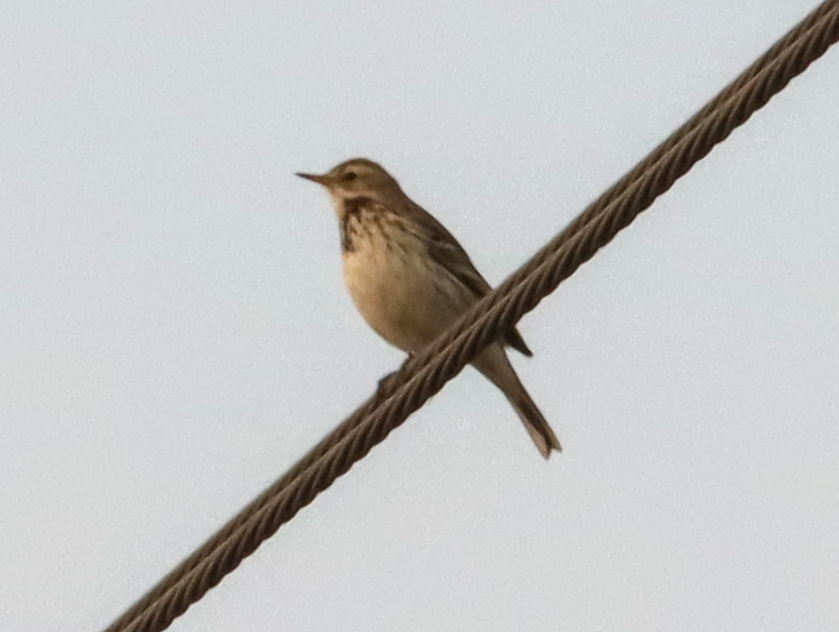
Passeriformes / Motacillidae / Anthus
Water Pipit
Anthus spinoletta · 水鹨
Introduction
A small passerine in the family Motacillidae, breeding in mountains from Southern Europe eastwards to China. It is a short-distance migrant moving to lower altitudes or wet lowlands in winter. Distinctive traits include feeding mainly on ground-dwelling invertebrates and constructing ground nests. Evaluated as Least Concern by the IUCN.
Description
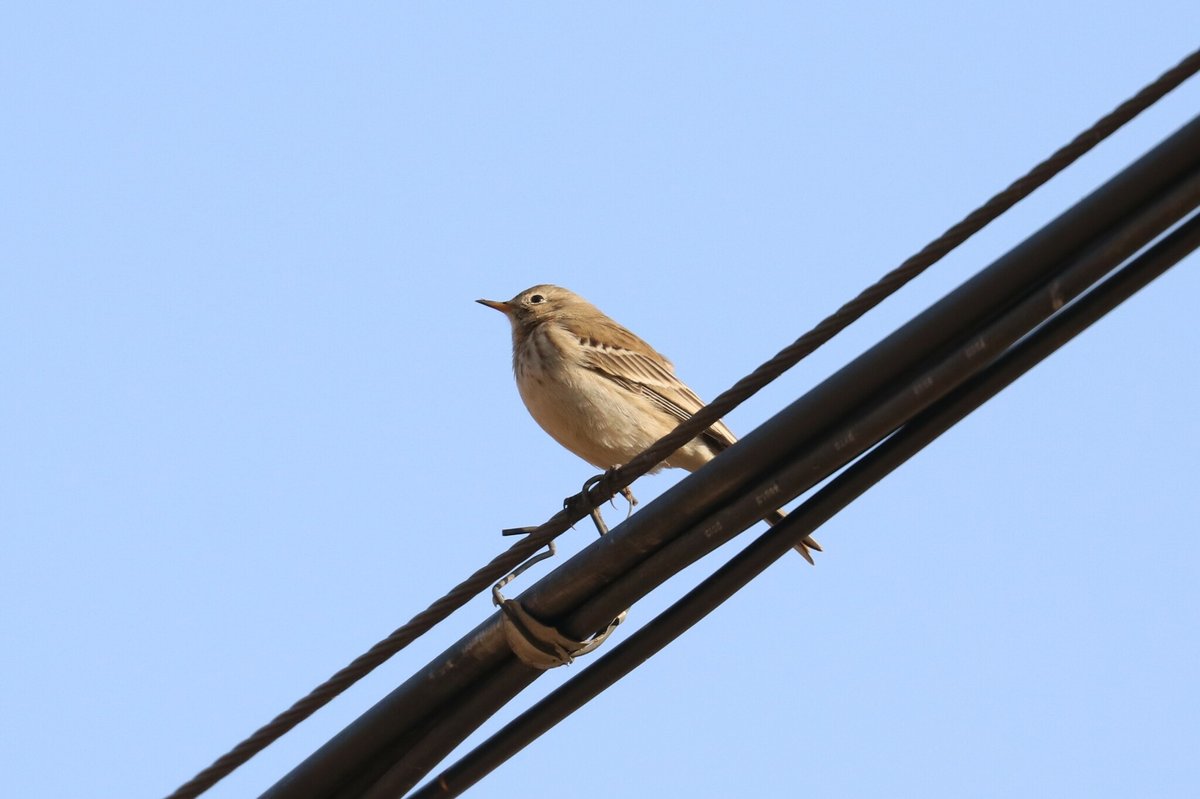
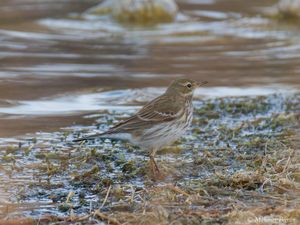
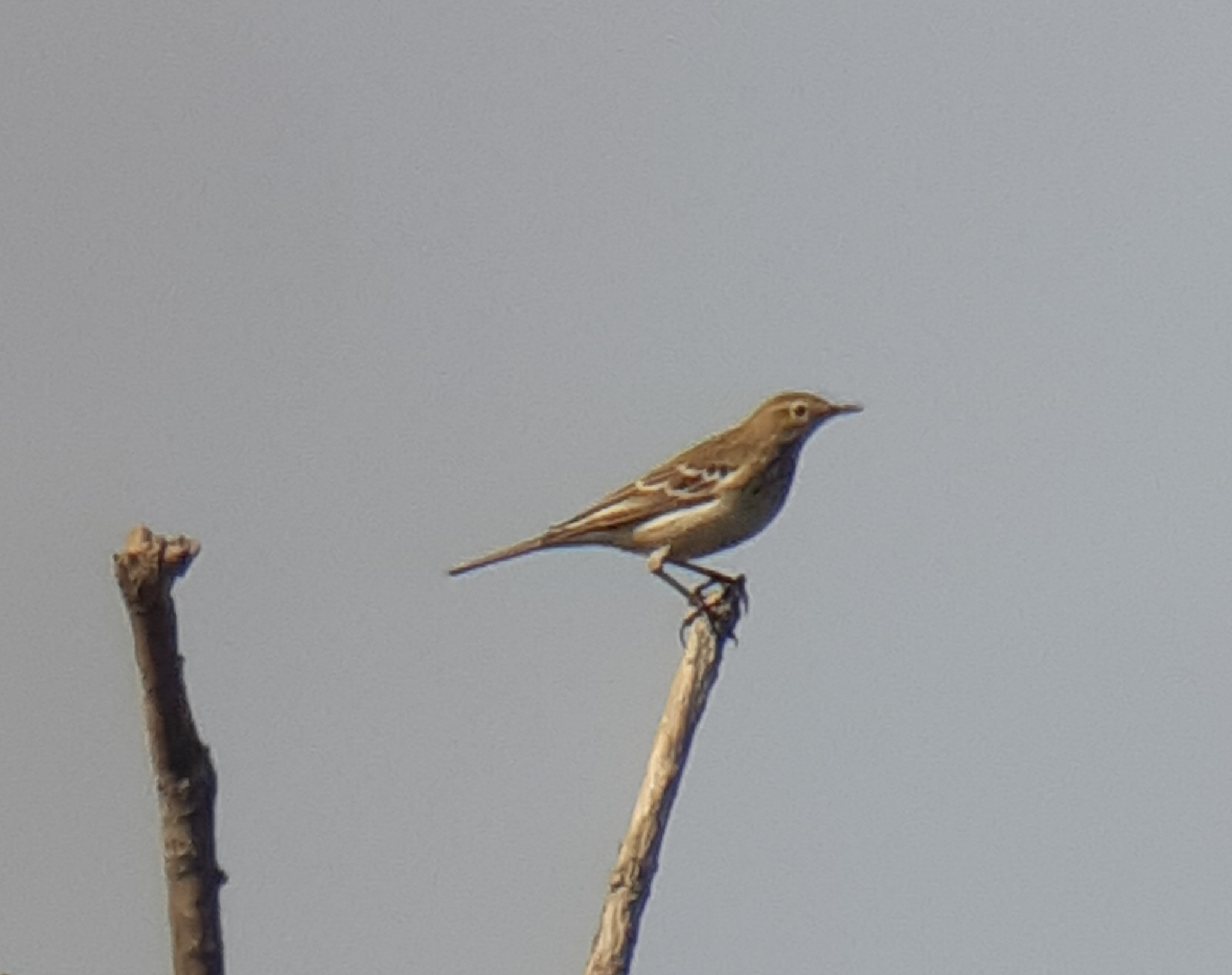
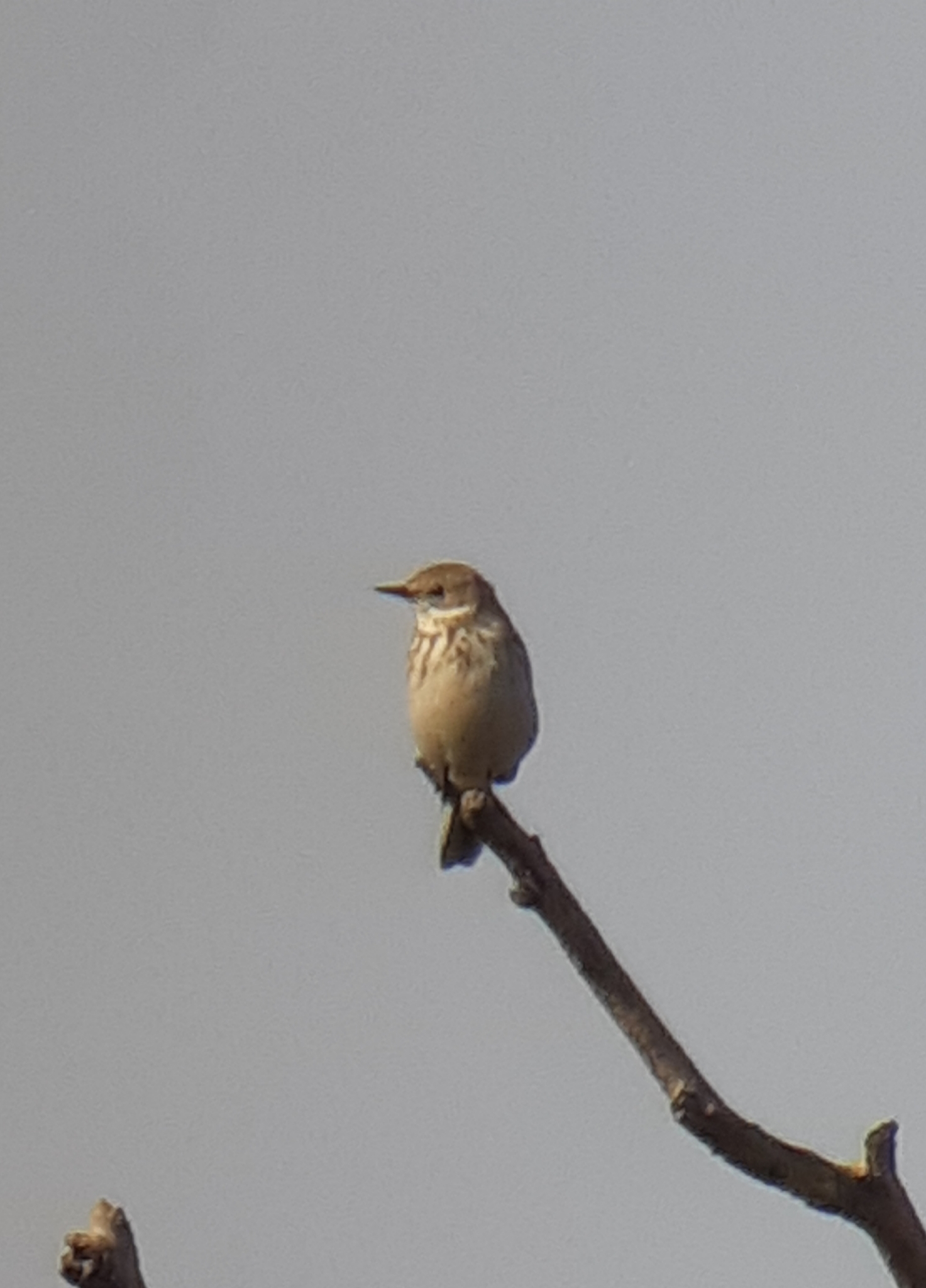
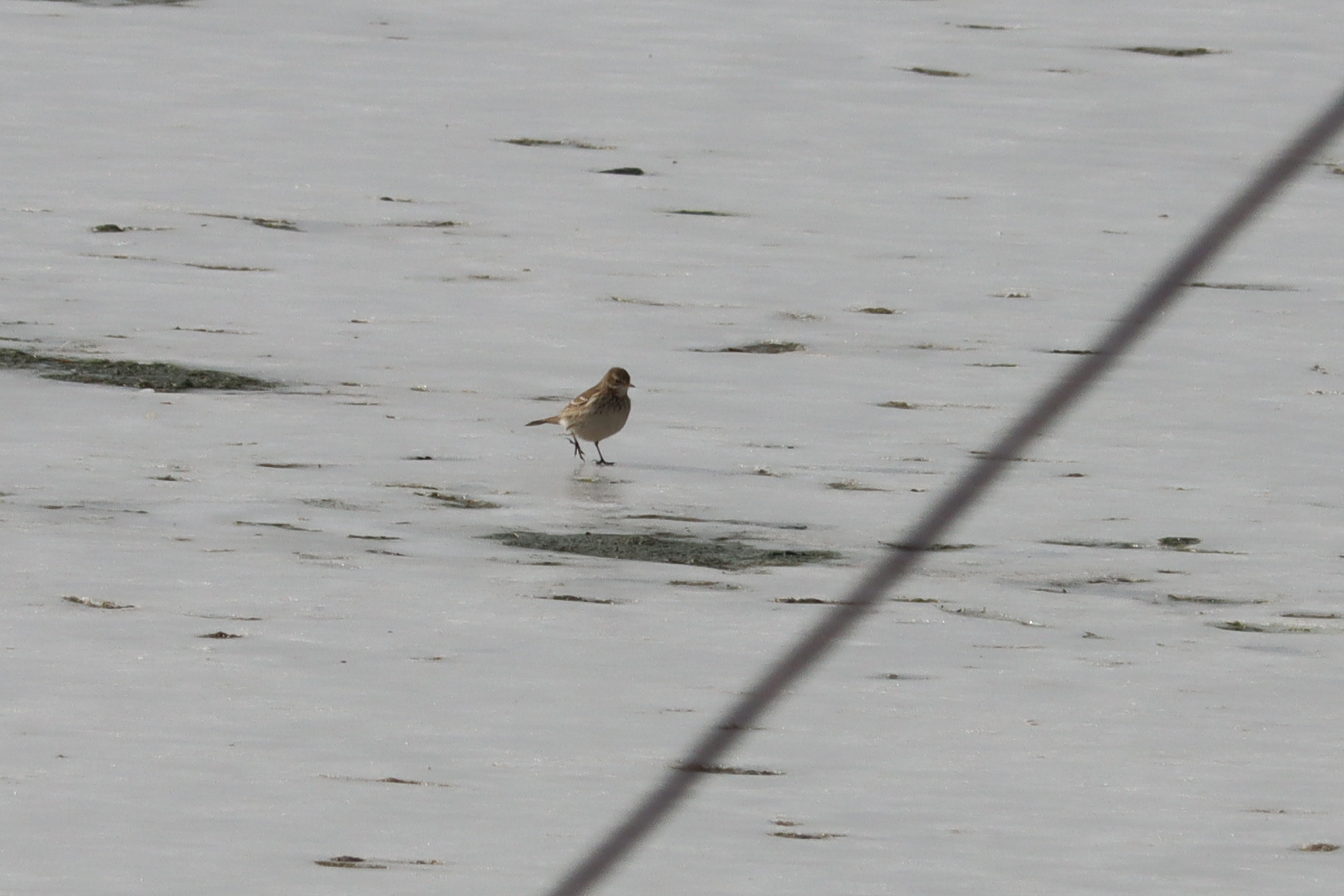
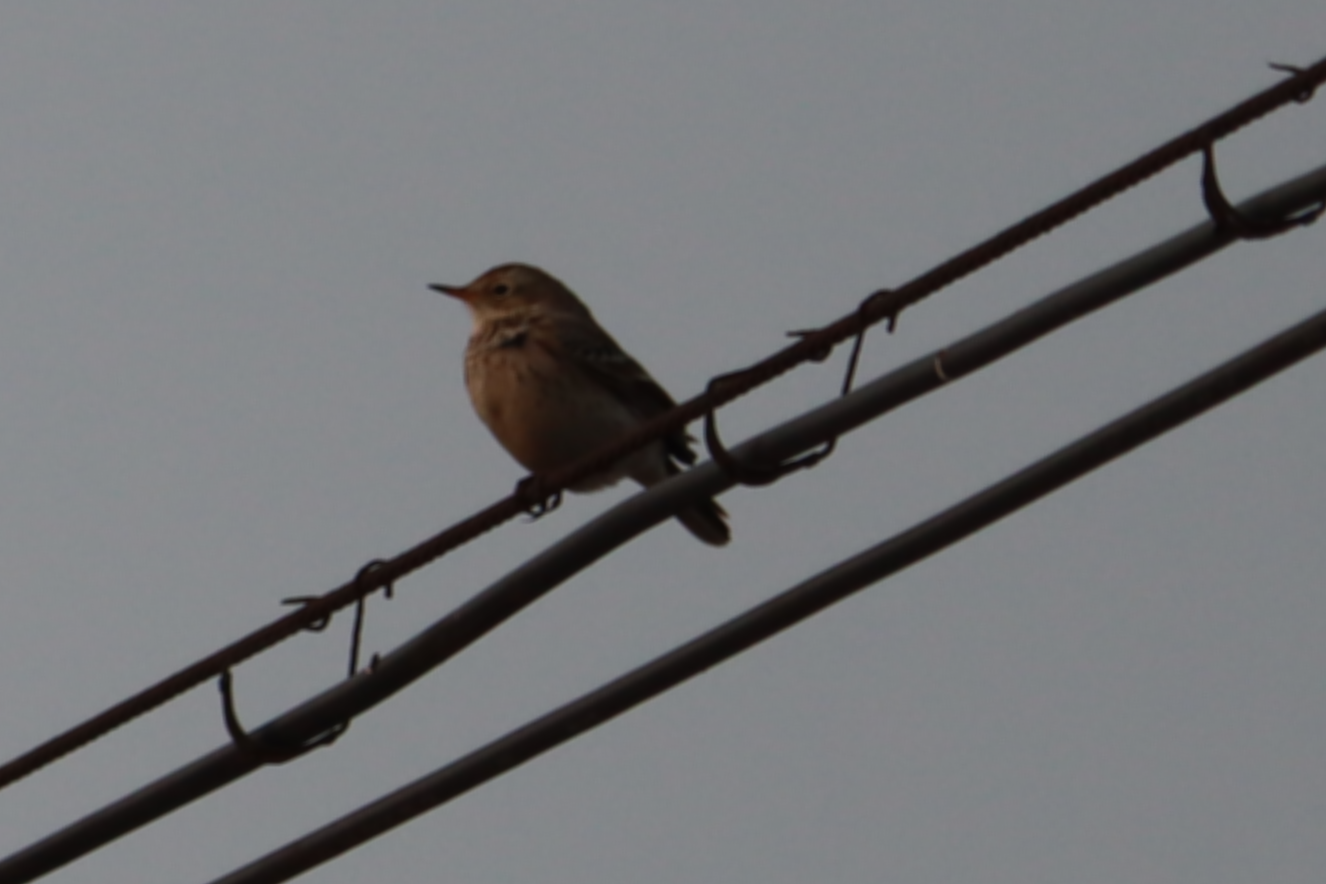
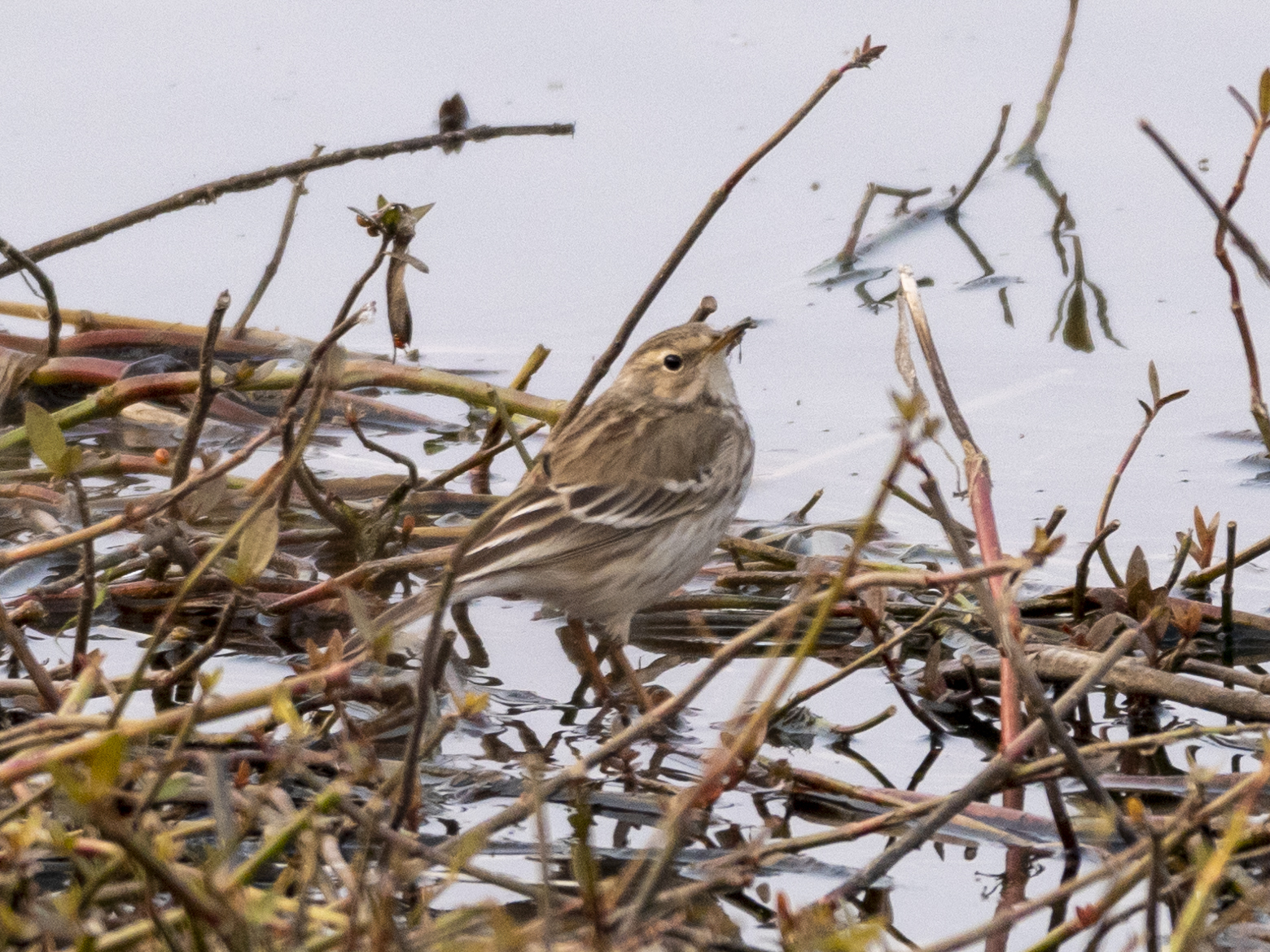
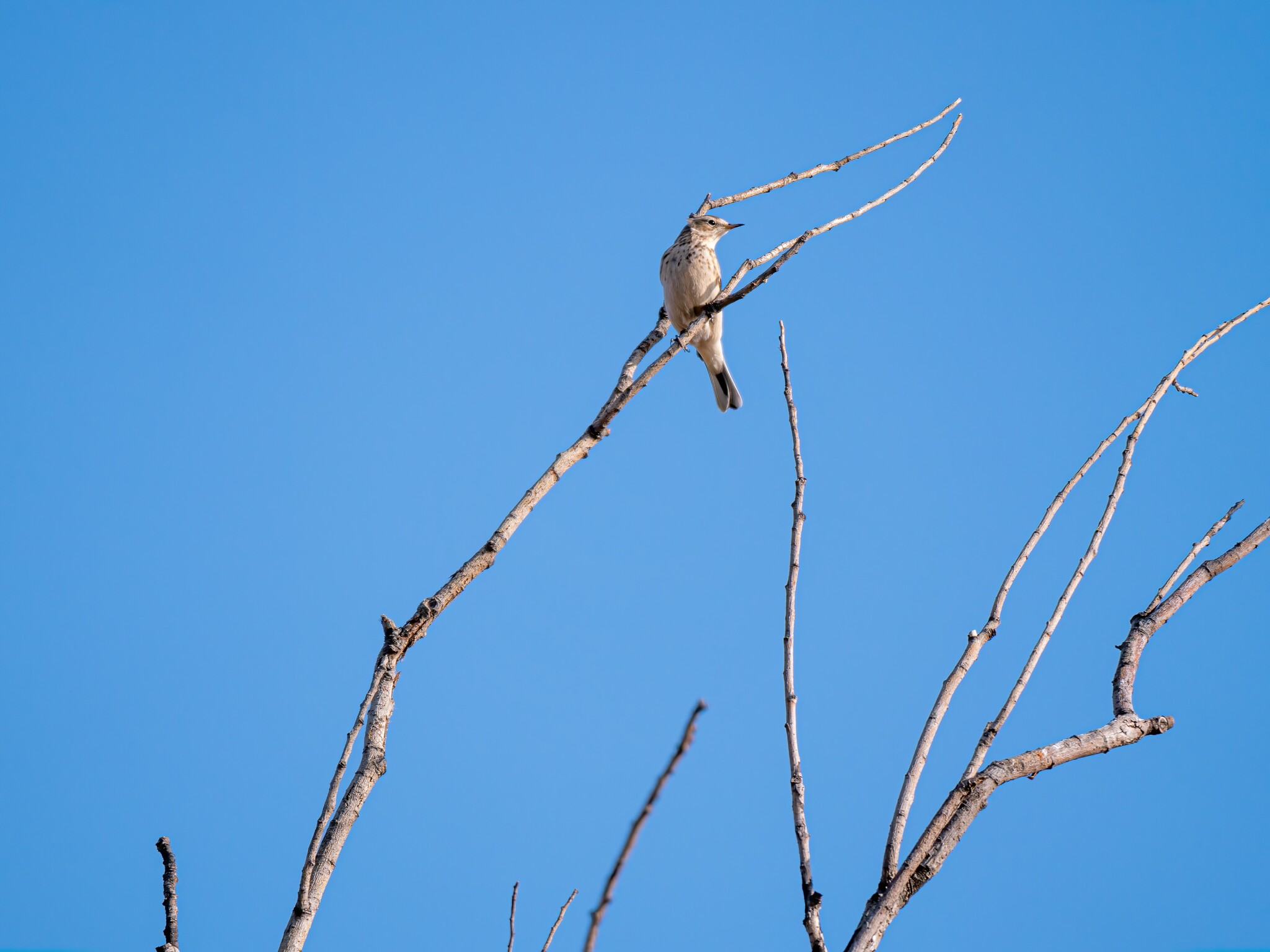
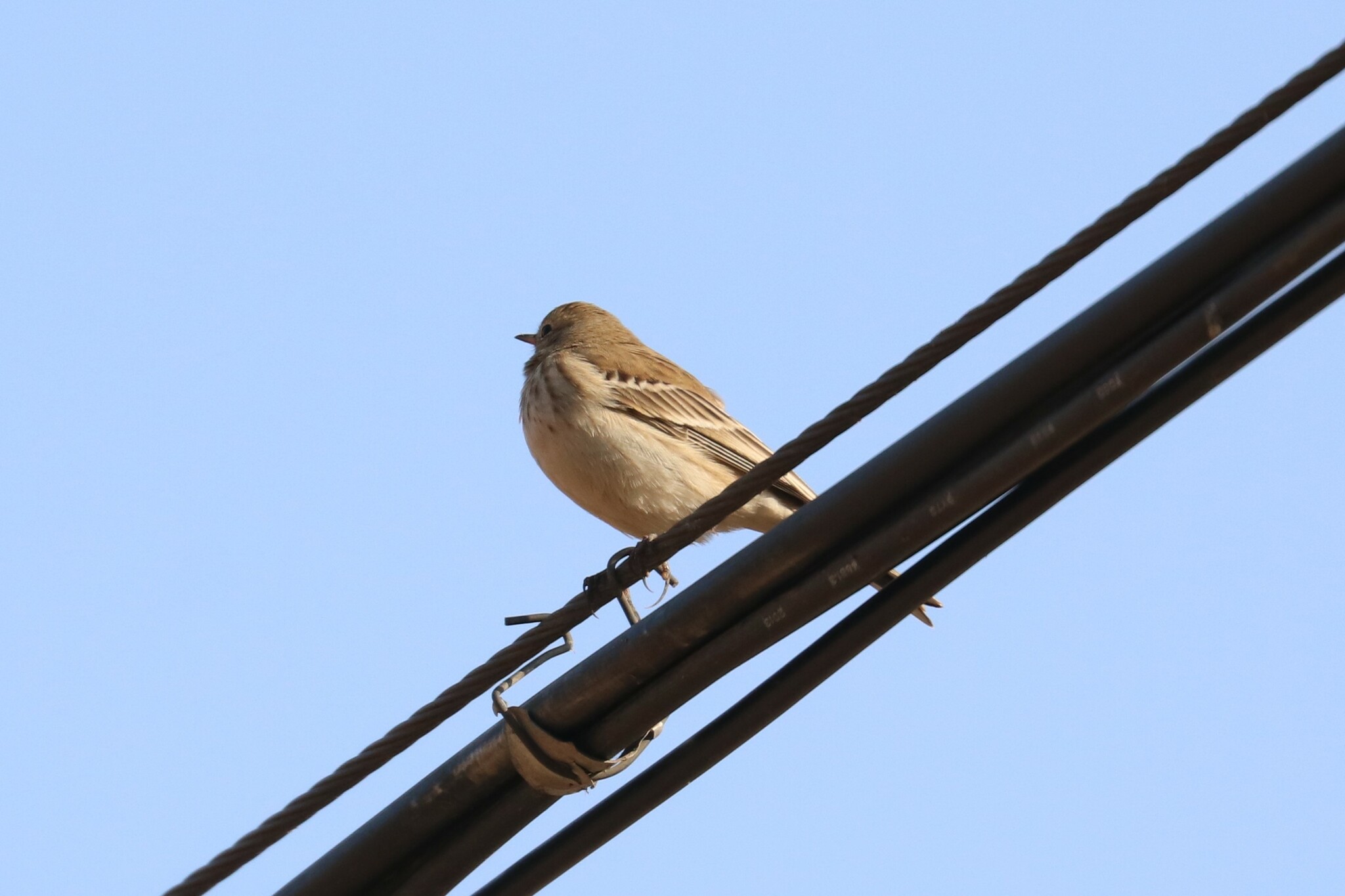
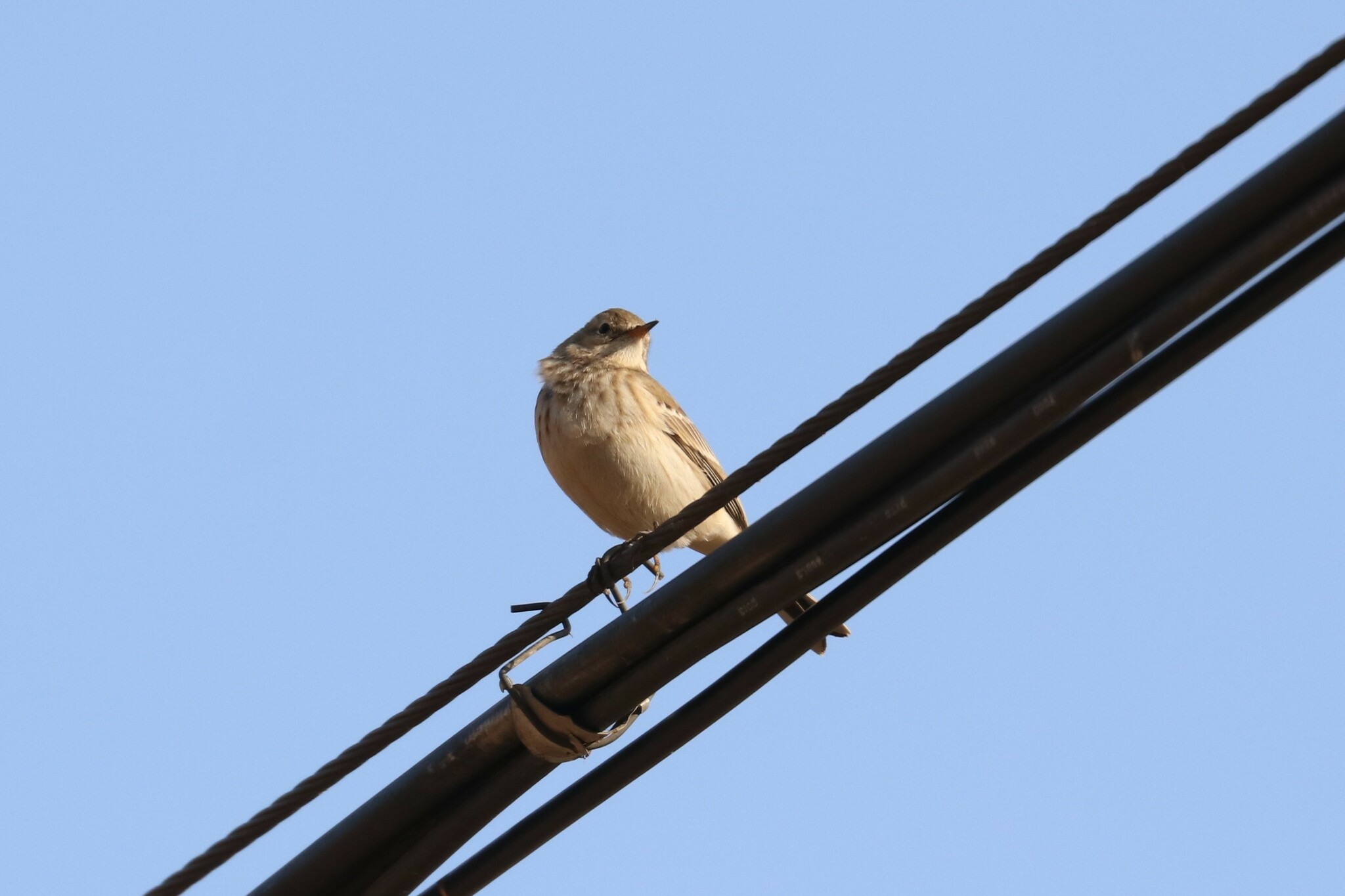
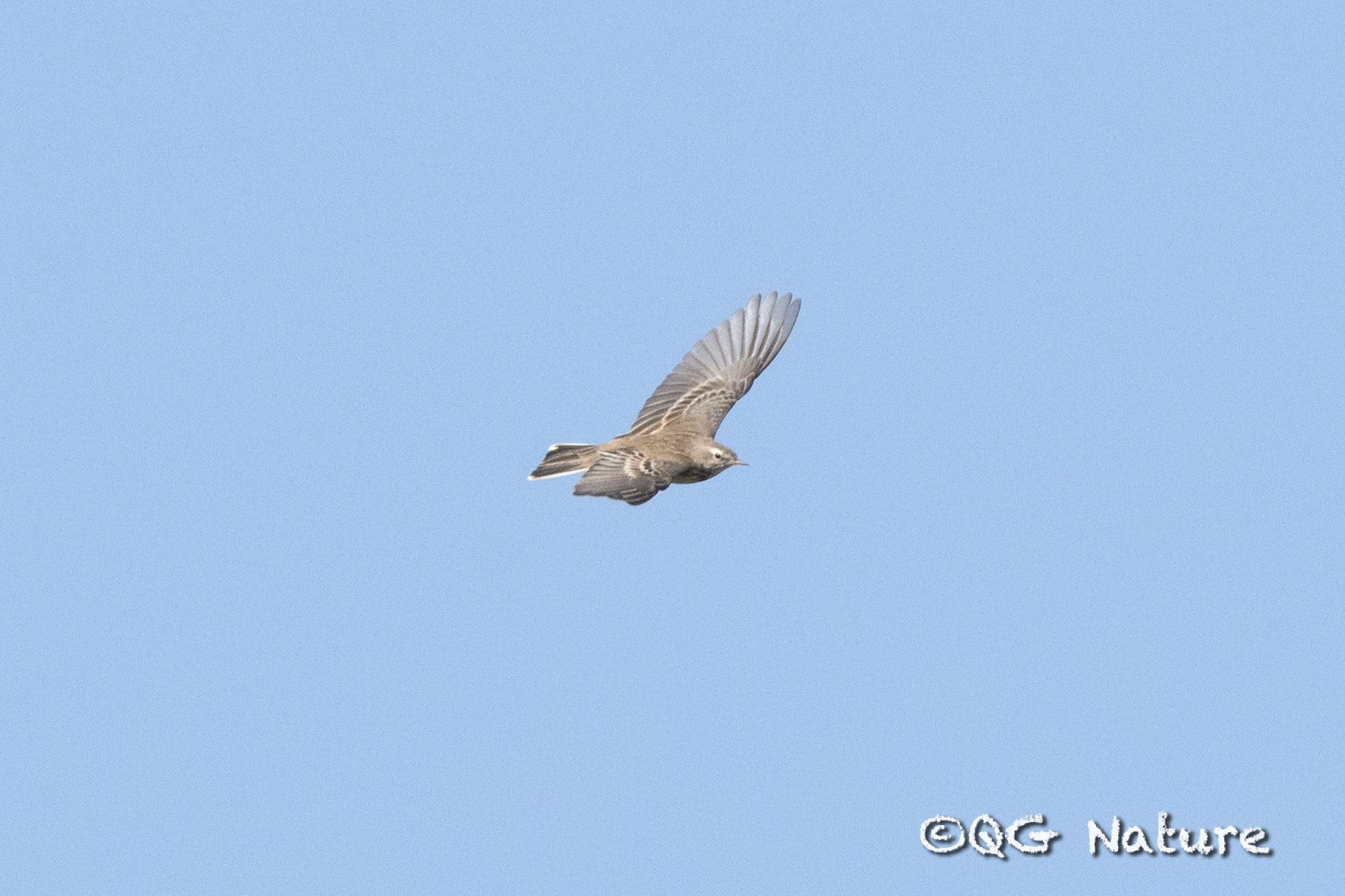
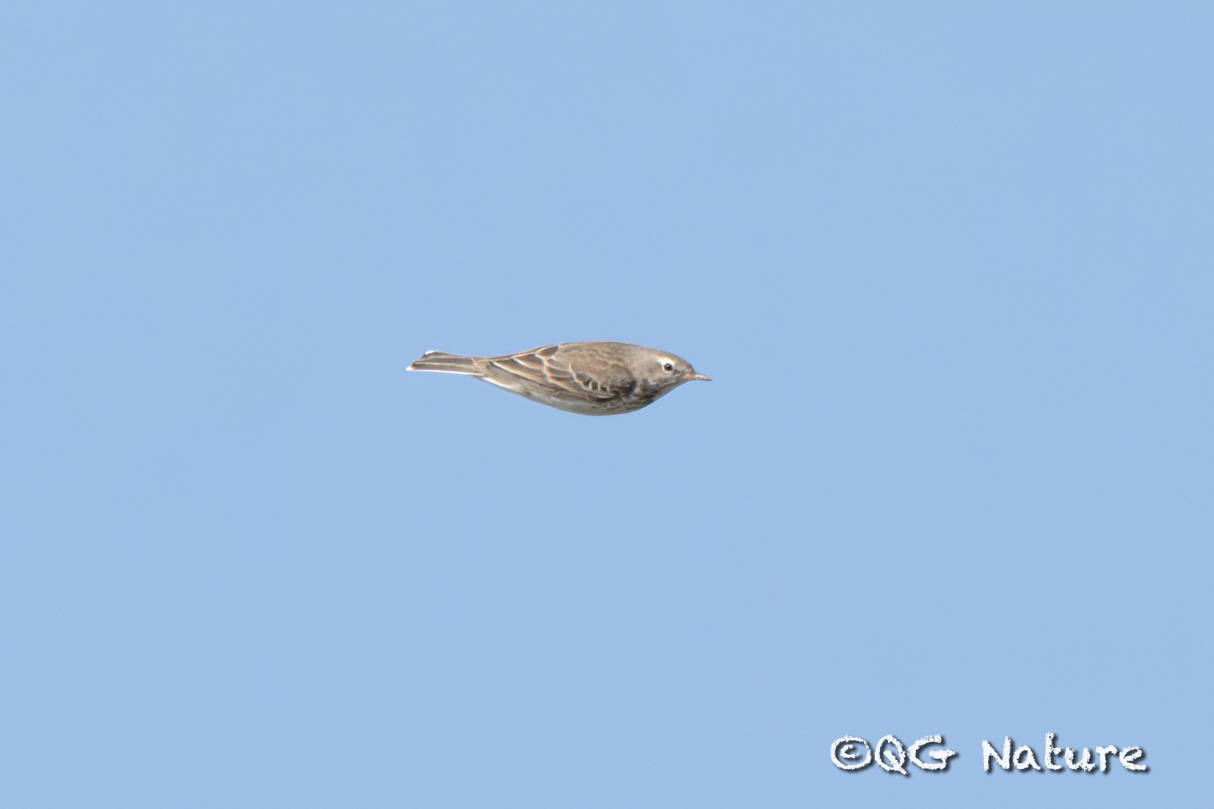
Length 15–17 cm; weight 18.7–23 g. Breeding adults have greyish-brown upperparts weakly streaked with darker brown, pale pink-buff underparts fading to whitish on the lower belly, a grey head with a broad white supercilium, and white outer tail feathers. Legs, bill, and iris are dark brown or blackish. In winter, the head is grey-brown, the supercilium is duller, upperparts are more streaked, and underparts are white with light brown streaking on the breast and flanks. Sexes are similar, though females average a greyer head. Young birds resemble non-breeding adults but are browner with prominent underpart streaking. Subspecies A. s. coutellii is smaller with grey-tinted outer tail feathers and rusty-tinged underparts in summer. A. s. blakistoni is larger, paler, and less strongly streaked.
Identification
Longer-winged and longer-tailed than the meadow pipit, with much paler underparts and dark legs rather than pinkish-red. Distinguished from the Eurasian rock pipit by a strong supercilium, greyer upperparts, white (not grey) outer tail feathers, and warier behavior. Song consists of four or five blocks, each with about six repetitions of a different short note. Call is a sharp 'dzip', slightly harsher than the meadow pipit's 'sip'. Flight call is a thin 'fist', intermediate between the meadow pipit's 'sip' and the rock pipit's 'feest'.
Distribution & Habitat
Breeds in mountains of Southern Europe and Asia from Spain to central China, including Sardinia and Corsica. Habitat includes alpine pasture and high meadows with short grass, typically at 1,400–2,500 m altitude (range 615–3,200 m). Migrates to coastal wetlands, marshes, and rice fields in winter, though some remain up to 2,000 m. Subspecies A. s. spinoletta winters in western/southern Europe and northwestern Africa; A. s. coutellii winters near breeding areas, Arabian Peninsula, and northeast Africa; A. s. blakistoni winters in Pakistan, northwest India, and southern China. Vagrant records include Belarus, Gibraltar, Latvia, Canaries, Iceland, Malta, and Svalbard.
Behavior & Ecology
Feeds mainly on invertebrates such as crickets, beetles, snails, and spiders, picked from the ground or vegetation; also consumes plant material like algae. Forages alone or in pairs. Monogamous breeder; male performs display flight climbing 10–30 m while singing. Female builds a cup nest of grass and leaves on the ground or in cliff crevices. Clutch size is four to six greyish-white speckled eggs (21 x 16 mm). Incubation lasts 14–15 days by the female; chicks fledge after another 14–15 days. May raise two broods per year. Host to common cuckoo, fleas, feather mites, and Haemoproteus parasites.
Conservation
Evaluated as Least Concern by the IUCN. Global population estimated at tens of millions of individuals over 3.7 million square kilometers. European breeding population may reach two million pairs. Population is considered large and stable.
Source: Wikipedia · CC BY-SA 3.0
Taxonomy
- Order
- Passeriformes
- Family
- Motacillidae
- Genus
- Anthus
Vocalizations
Subspecies (3)
-
Anthus spinoletta blakistoni
northeastern Afghanistan to Transbaikalia and Nan Shan Mountains
Data Sources
Species description from Wikipedia, licensed under CC BY-SA 3.0.
Bird images and sounds sourced from GBIF, contributed by citizen scientists worldwide under Creative Commons licenses.
Taxonomy data from AviList 2025.