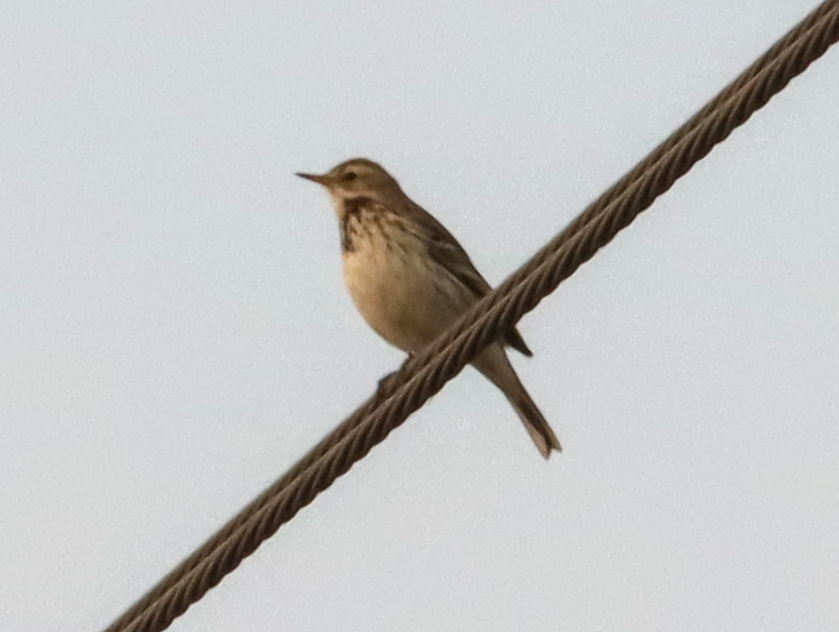
Water Pipit
Anthus spinoletta
水鹨
Introduction
A small passerine bird in the wagtail and pipit family Motacillidae. It breeds in the mountains of Southern Europe and the Palearctic eastwards to China. This mountain species inhabits alpine pasture and high meadows with short grass and some bushes or rocks, typically found close to wetter areas and often on slopes. The water pipit is a short-distance migrant, moving to lower altitudes in winter to coastal wetlands, marshes, rice fields and similar habitats. The species is closely related to the Eurasian rock pipit and meadow pipit, with three recognized subspecies showing only minor differences. Overall population is large and stable.
Description
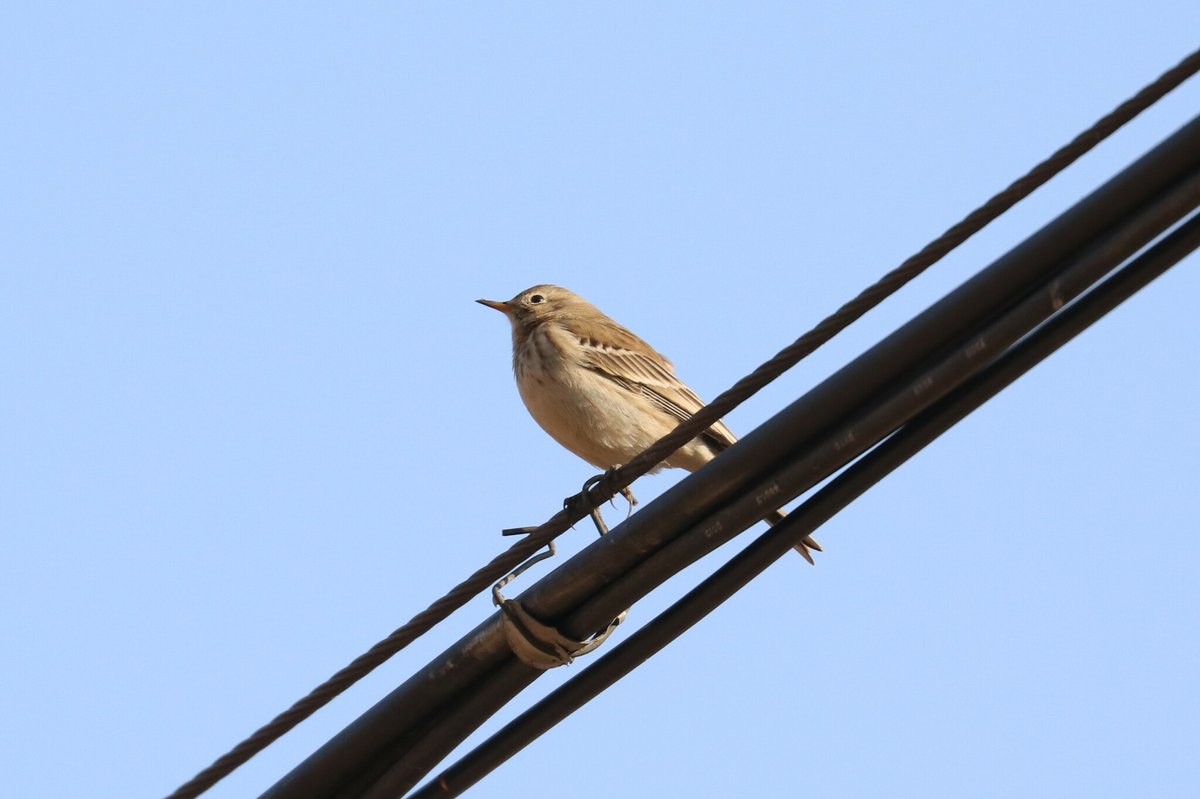
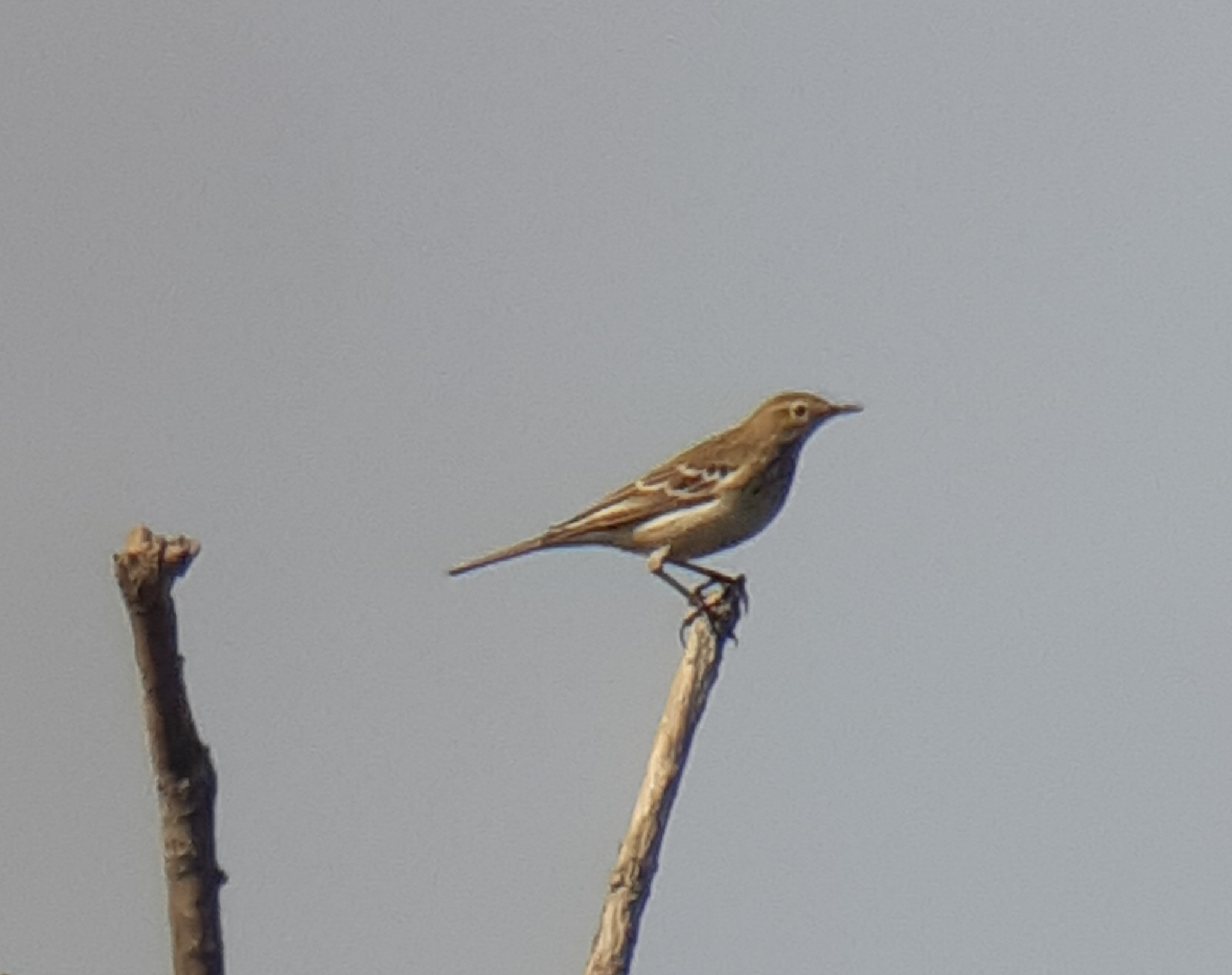
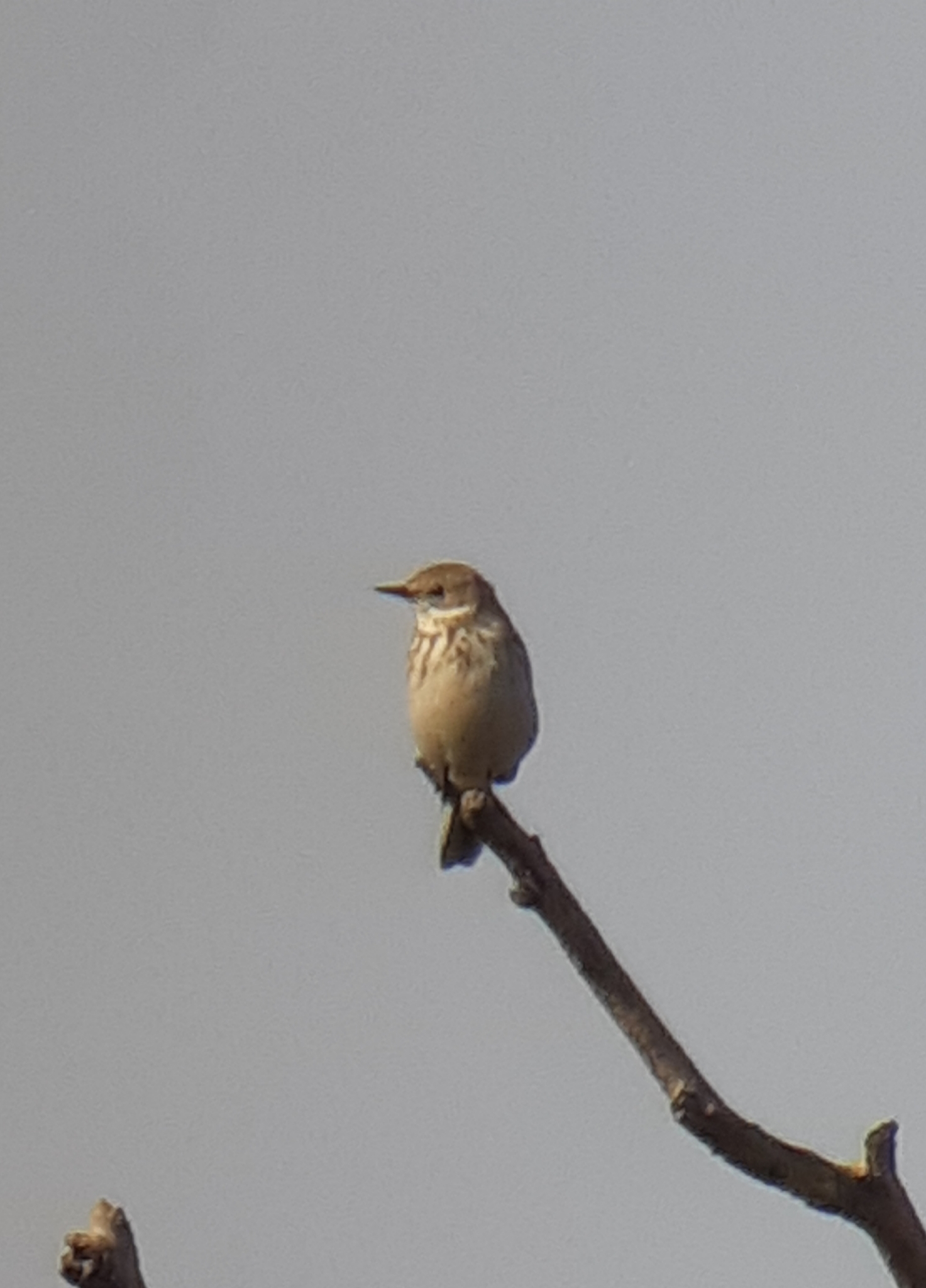
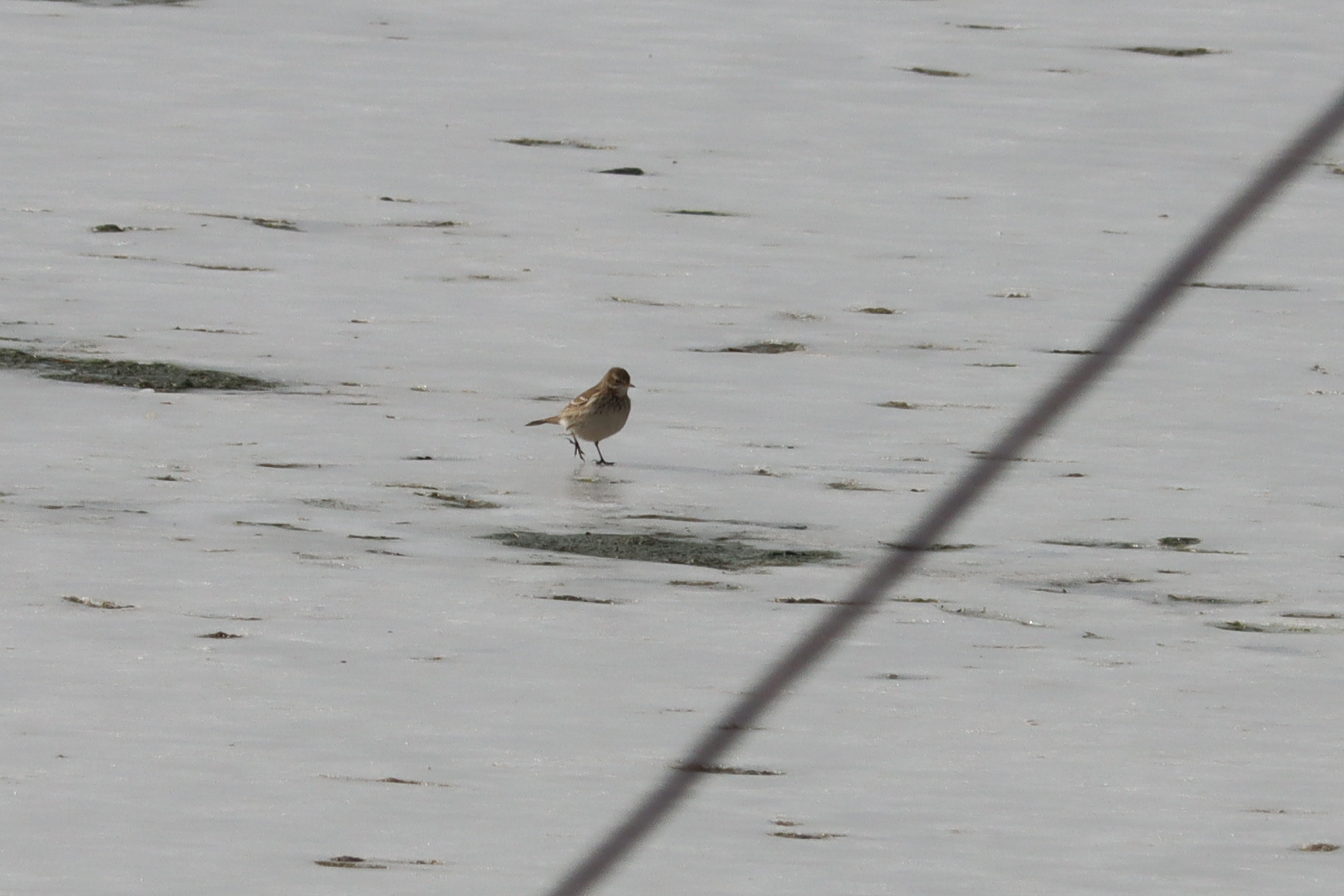
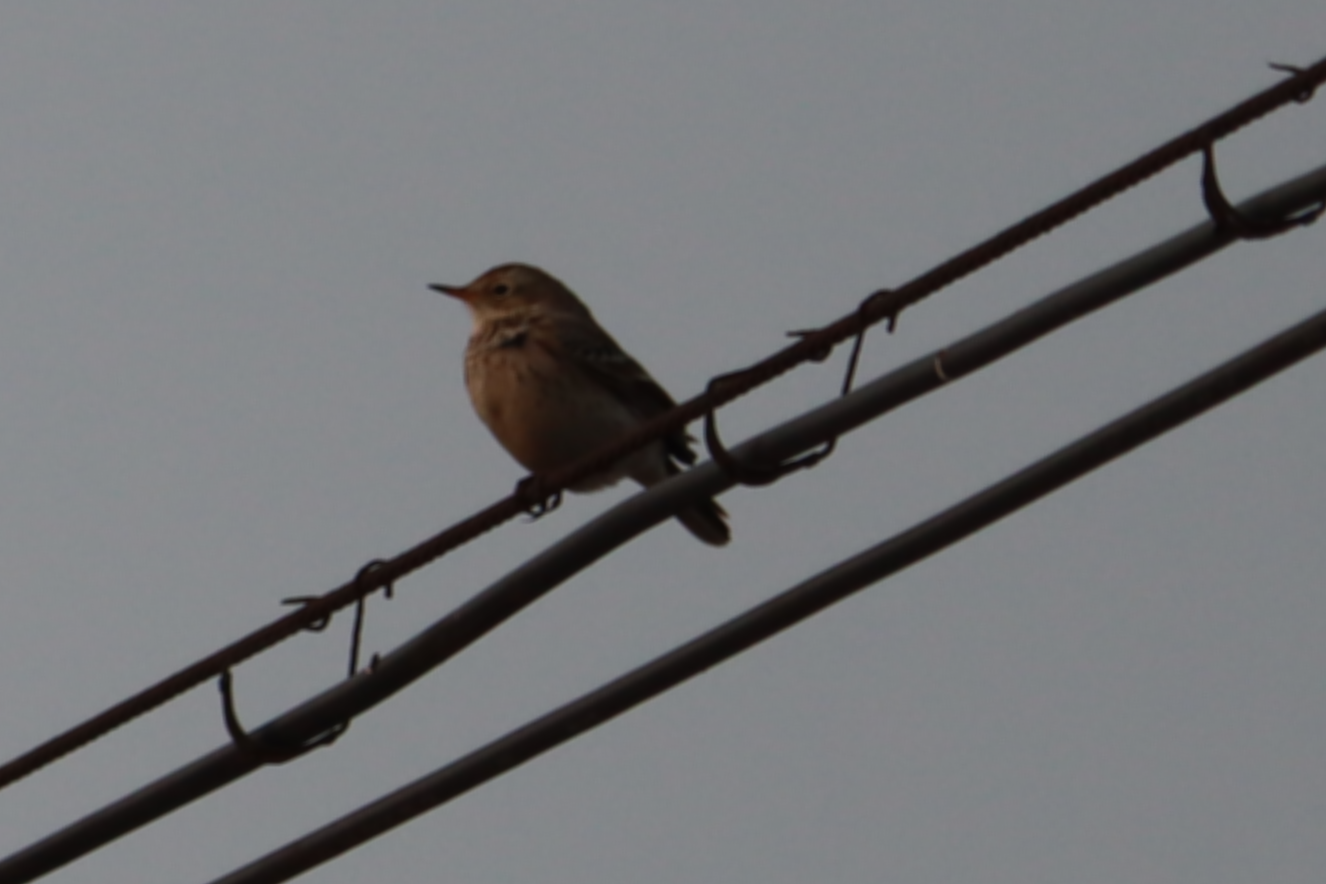
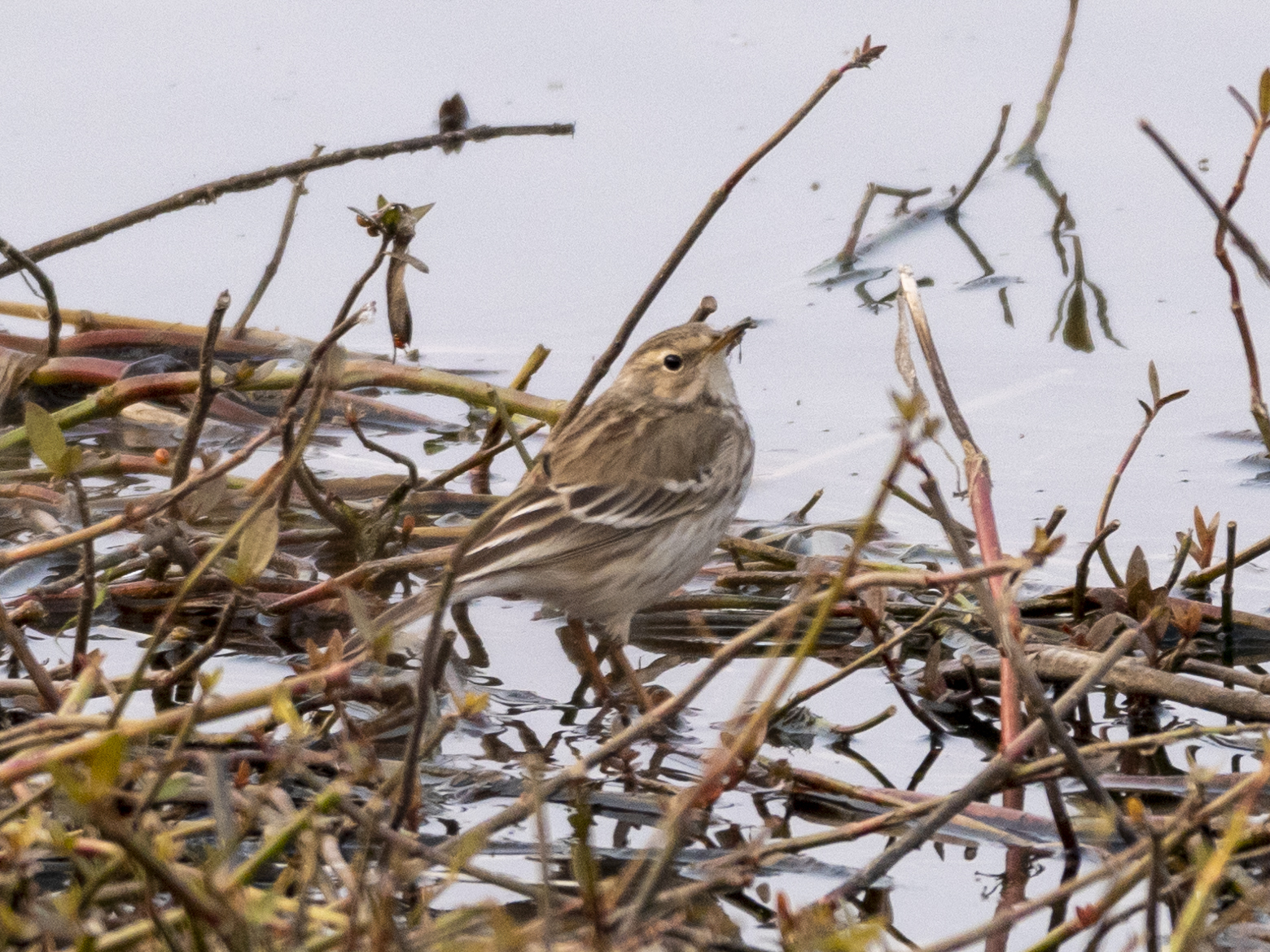
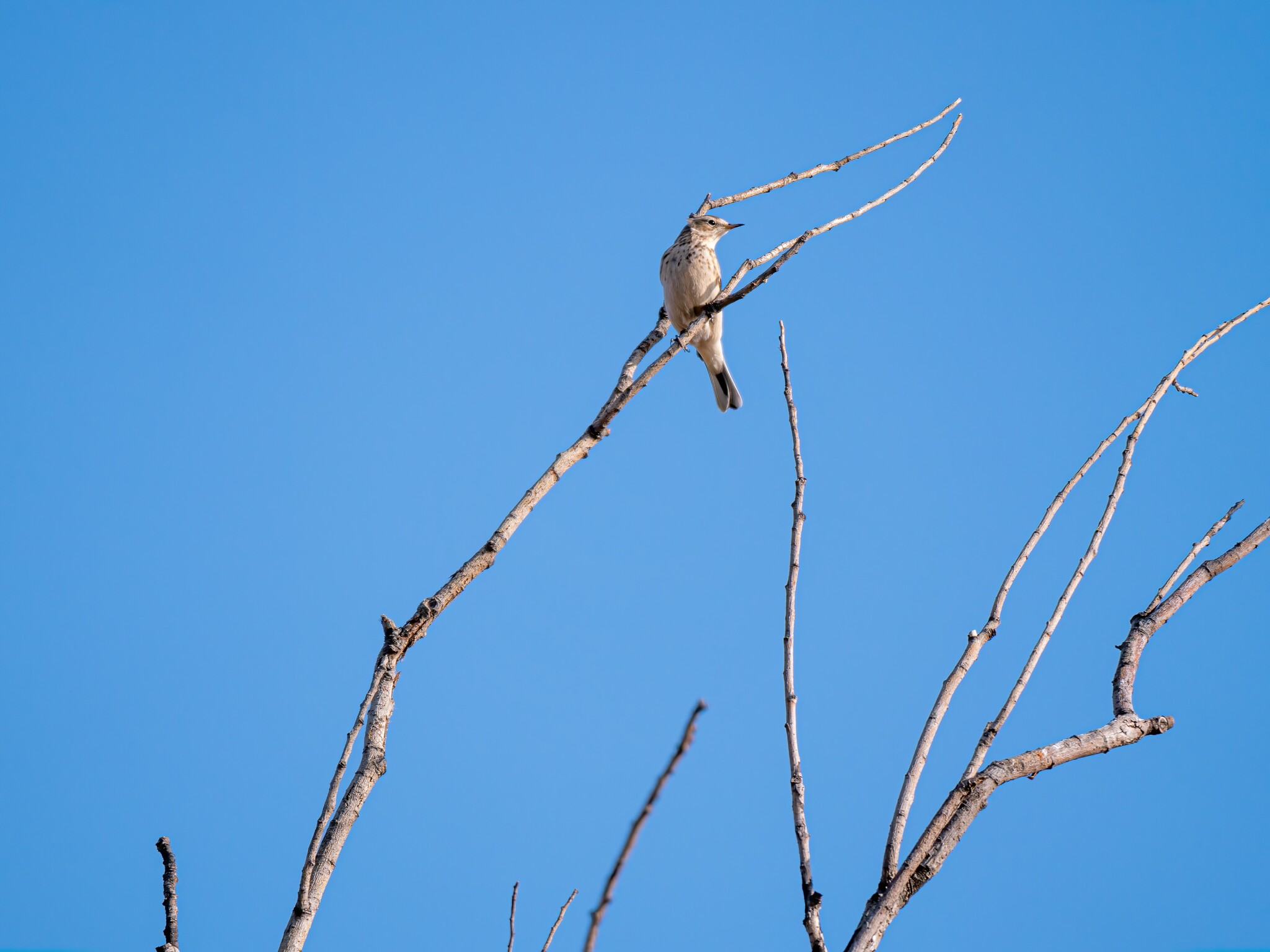
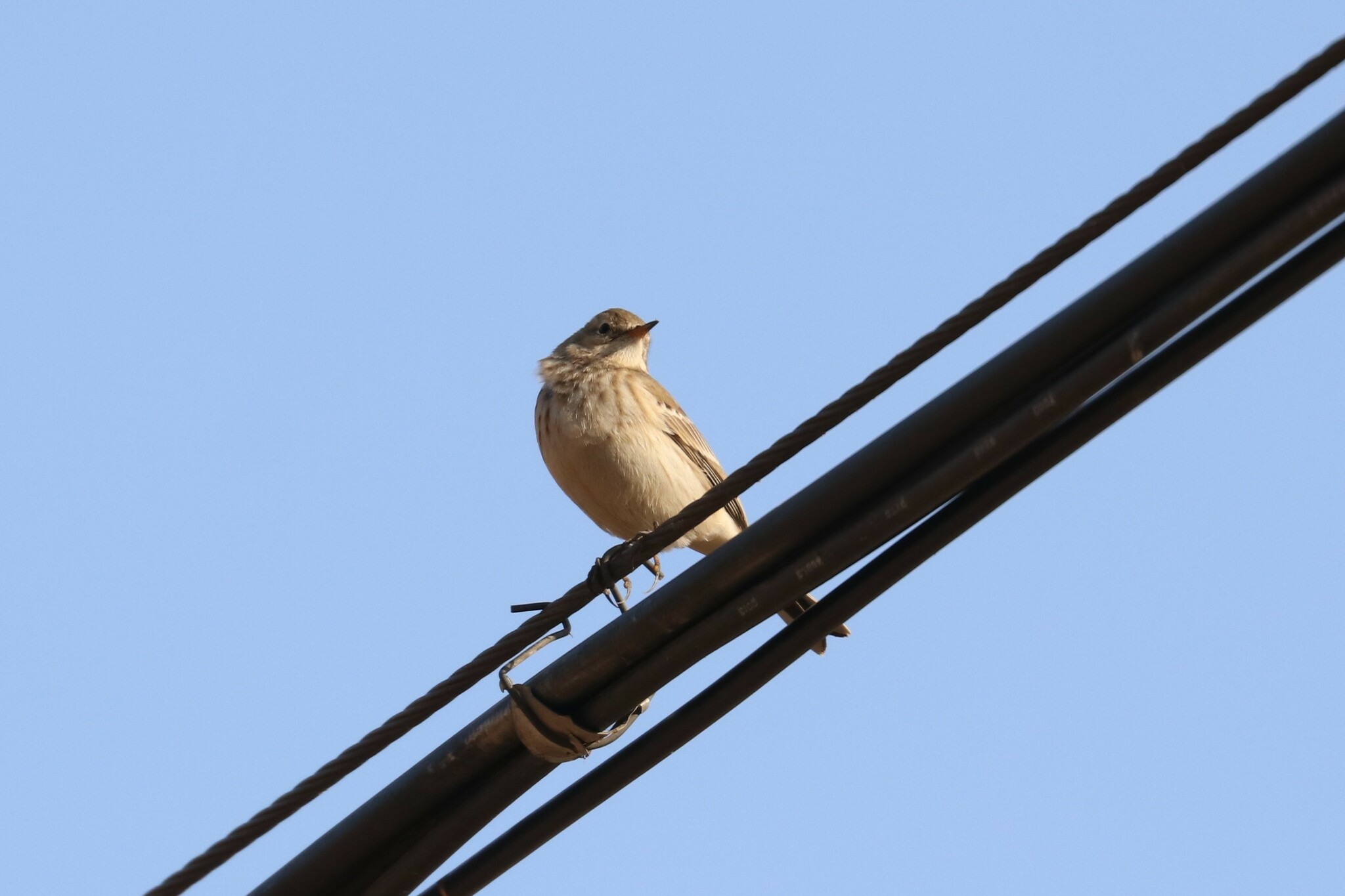
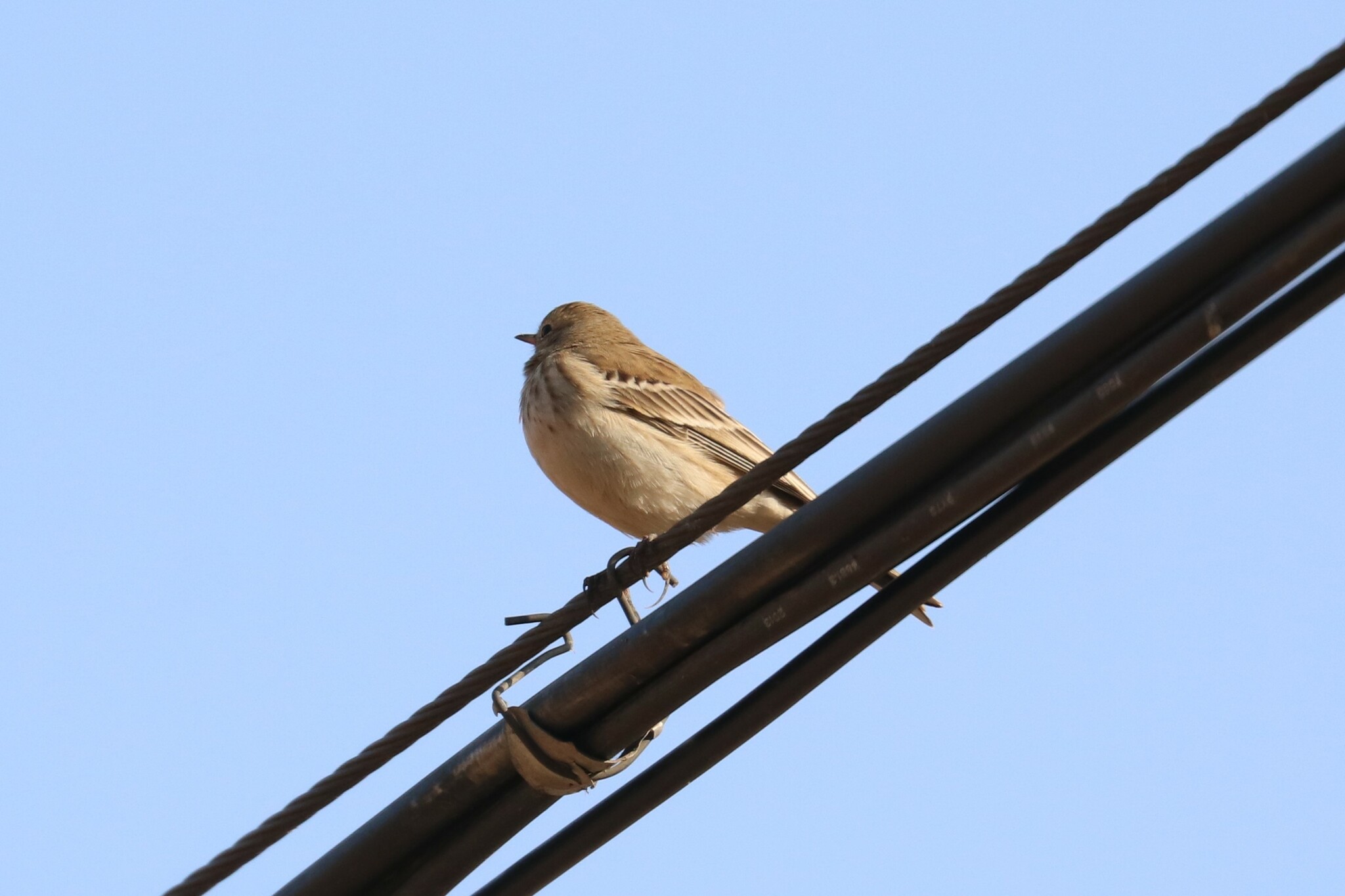
The water pipit measures 15–17 centimetres in length and weighs 18.7–23 grams. The adult in breeding plumage has greyish-brown upperparts weakly streaked with darker brown, and pale pink-buff underparts fading to whitish on the lower belly. The head is grey with a broad white supercilium, and the outer tail feathers are white. In non-breeding plumage, the head is grey-brown with a duller supercilium, the upperparts are more streaked, and the underparts are white with light brown streaking on the breast and flanks. The sexes are similar, though females average a greyer head. The legs, bill and iris are dark brown or blackish.
Identification
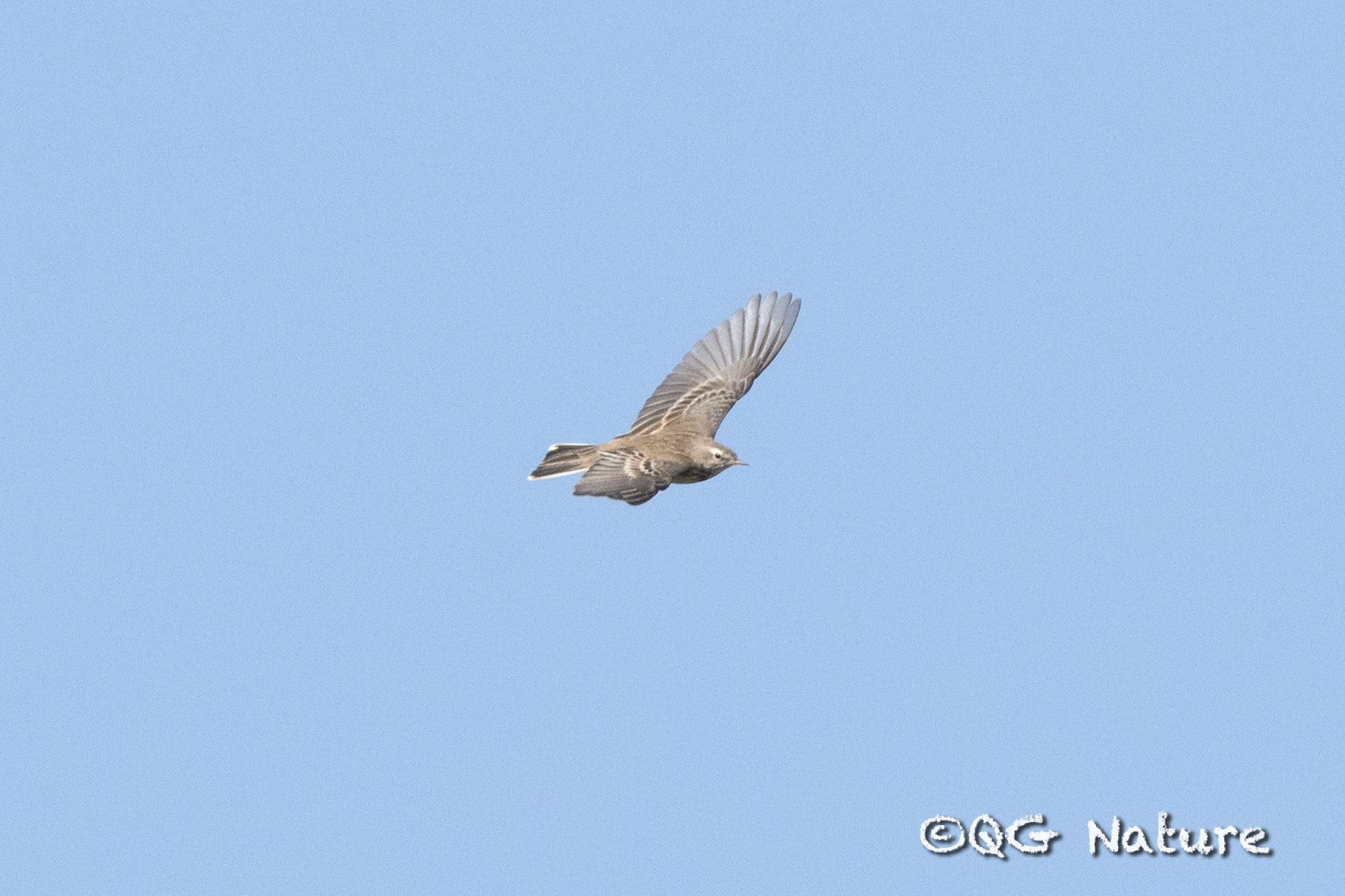
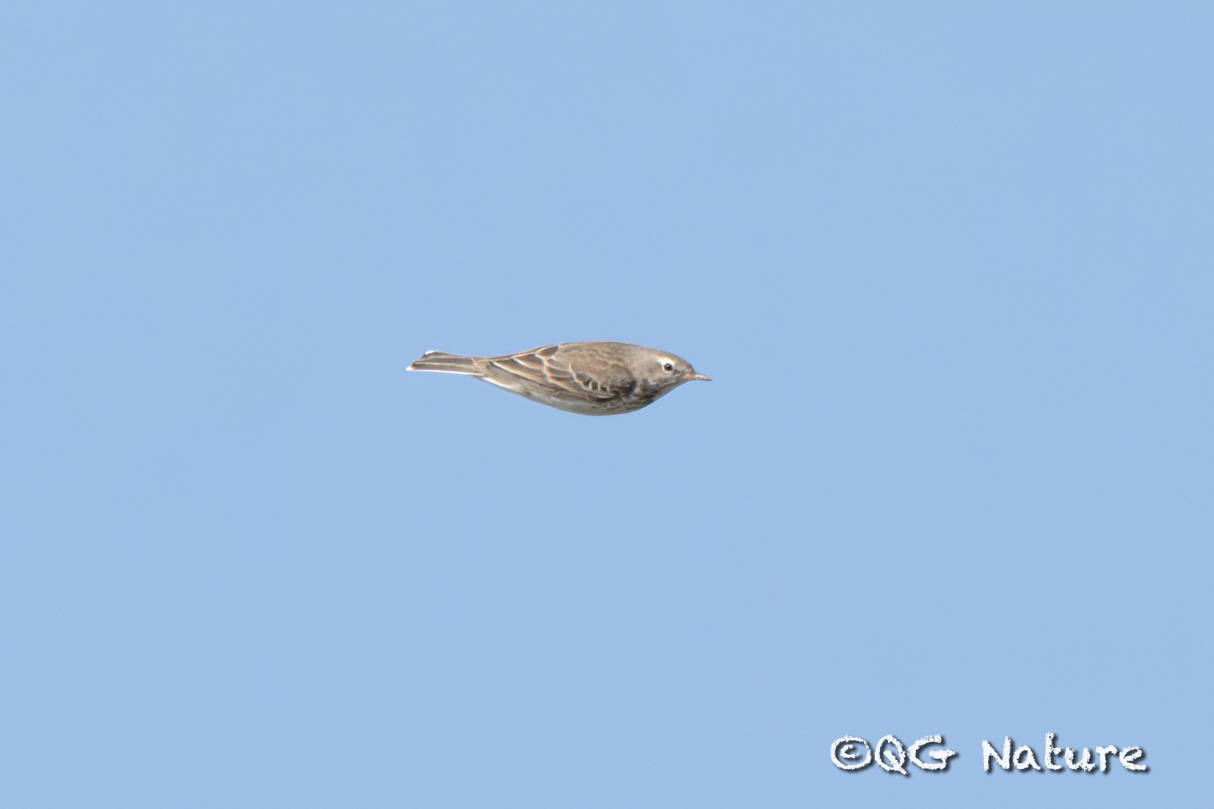
Compared to the similar meadow pipit, this species is longer-winged and longer-tailed with much paler underparts and dark rather than pinkish-red legs. In winter plumage it can be confused with the Eurasian rock pipit, but it has a stronger supercilium, greyer upperparts, and white outer tail feathers (not grey). It is also typically much warier, flying longer distances when approached rather than short ground flights. The call is a single or double sharp 'dzip', harsher than the meadow pipit's soft 'sip sip sip'.
Distribution & Habitat
Breeds in mountains from Spain to central China, including Sardinia and Corsica, at elevations of 615–3,200 metres, mostly 1,400–2,500 metres. It migrates short distances in autumn to lowland wintering areas including coastal wetlands, marshes and rice fields. The nominate subspecies winters in western and southern Europe and northwestern Africa, showing site fidelity to wintering sites. A.s. coutellii winters near breeding areas and in the Arabian Peninsula and northeast Africa. A.s. blakistoni winters in Pakistan, northwest India and southern China. Spring migration begins February–March, with arrival on breeding grounds April–May.
Behavior & Ecology
Mainly monogamous. Males perform a display flight climbing 10–30 metres, flying in an arc and gliding down while singing. The female builds a cup nest on the ground under vegetation or in cliff crevices, lining it with finer plant material and animal hairs. The clutch of four to six greyish-white speckled eggs is laid from late April to early July. The female incubates for 14–15 days, and both parents feed the young, which fledge in another 14–15 days. Two broods may occur annually. The diet consists mainly of invertebrates including crickets, beetles, snails, millipedes and spiders, picked from the ground or vegetation, with some plant material. Birds forage alone or in pairs.
Conservation
Evaluated as a species of least concern by the IUCN due to its large and stable population. The European breeding population may be as high as two million pairs, suggesting a global population of tens of millions across 3.7 million square kilometres. Major predators include Eleonora's falcon, stoats and snakes. It is a host of the common cuckoo brood parasite and various parasites including feather mites, fleas and protozoans. Breeding densities range from 2.4 pairs per ten hectares in the Jura Mountains to 4.5 pairs per ten hectares in the Tatra Mountains. Neither average lifespan nor maximum age is known.
Culture
No cultural significance information provided in source material.
Source: Wikipedia · CC BY-SA 3.0
Taxonomy
- Order
- Passeriformes
- Family
- Motacillidae
- Genus
- Anthus
- eBird Code
- watpip1
Vocalizations
Subspecies (3)
-
Anthus spinoletta blakistoni
northeastern Afghanistan to Transbaikalia and Nan Shan Mountains
-
Anthus spinoletta coutellii
eastern Türkiye to Caucasus, northern Iran, and Turkmenistan
-
Anthus spinoletta spinoletta
mountains of central and southwestern Europe (Iberia to Balkans and northwestern Türkiye)
Data Sources
Species description from Wikipedia, licensed under CC BY-SA 3.0.
Bird images and sounds sourced from GBIF, contributed by citizen scientists worldwide under Creative Commons licenses.
Taxonomy data from AviList 2025.