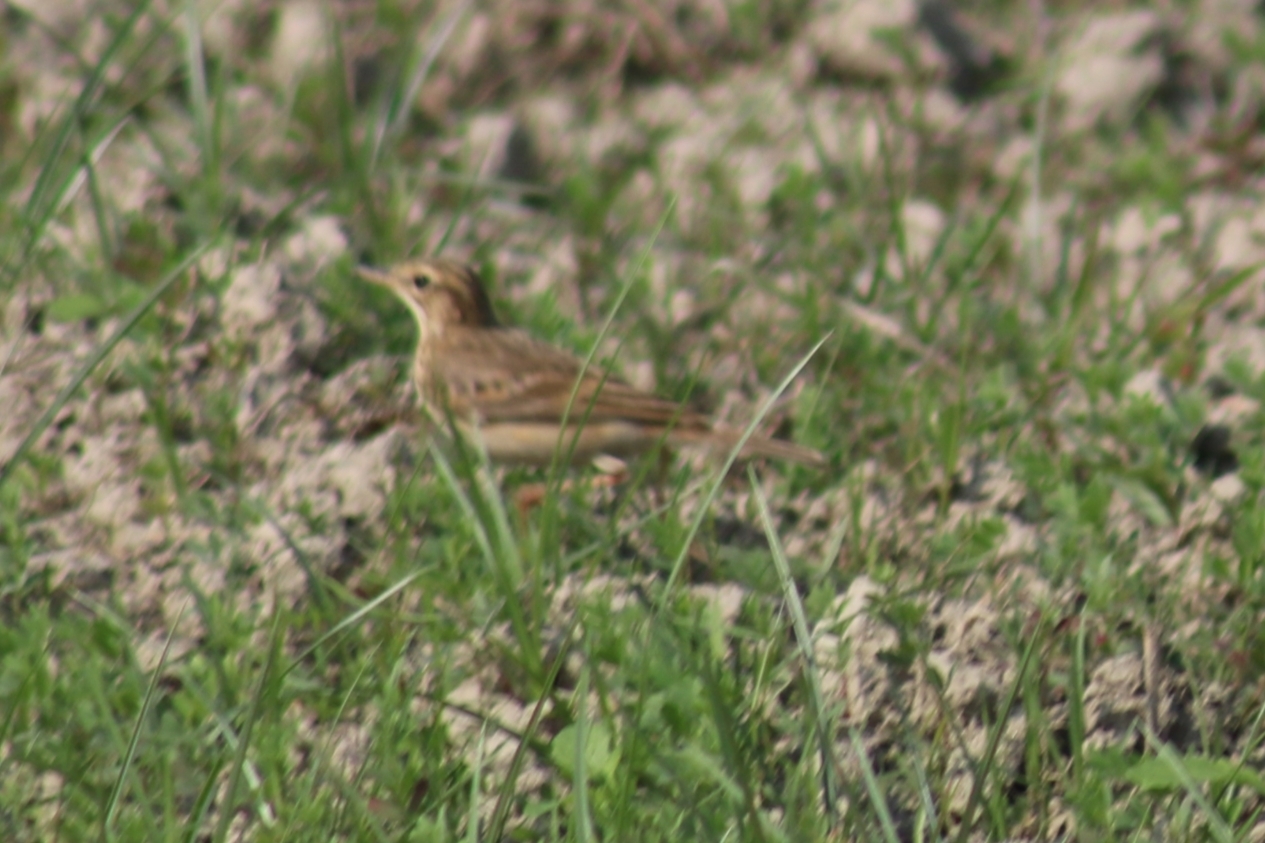
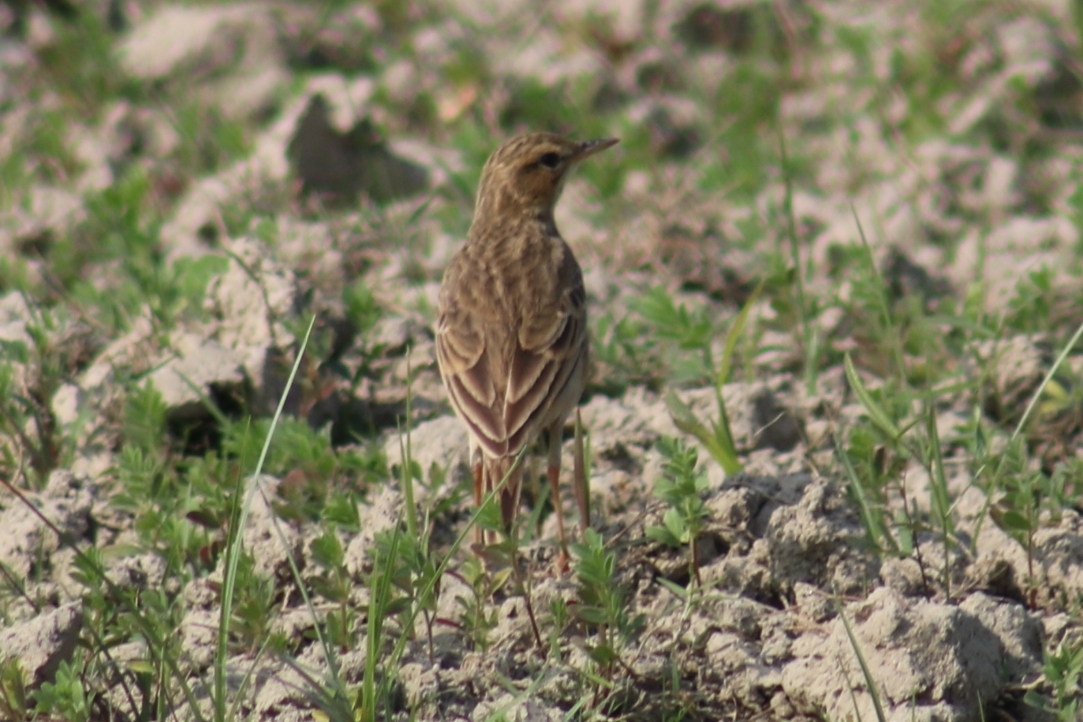
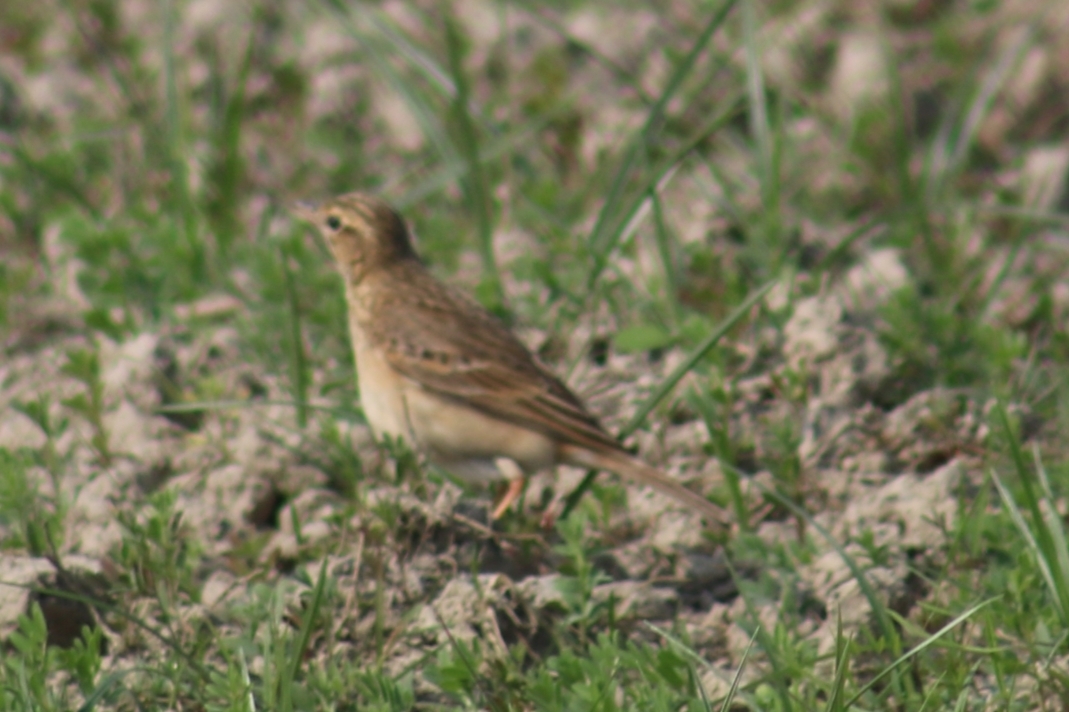
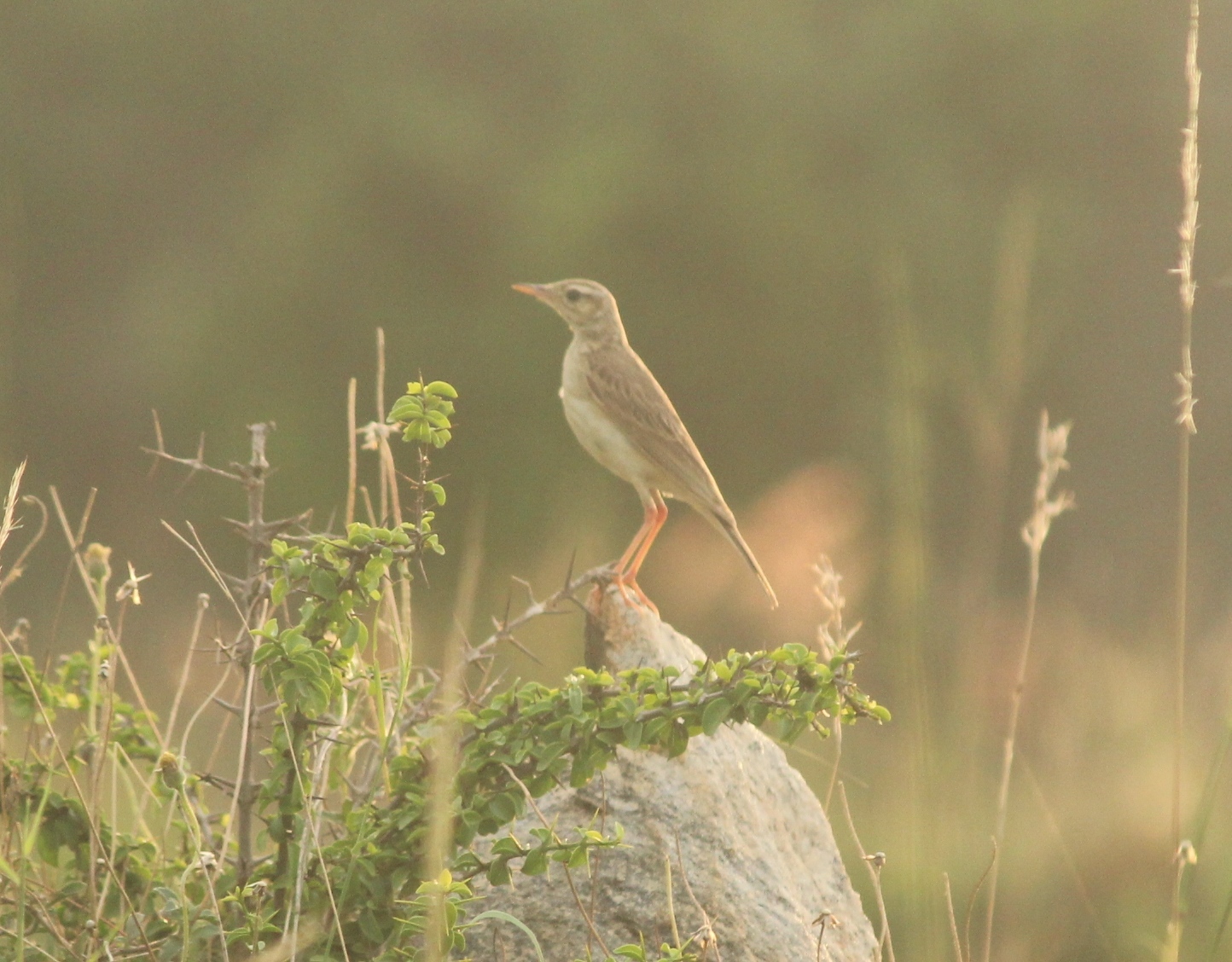
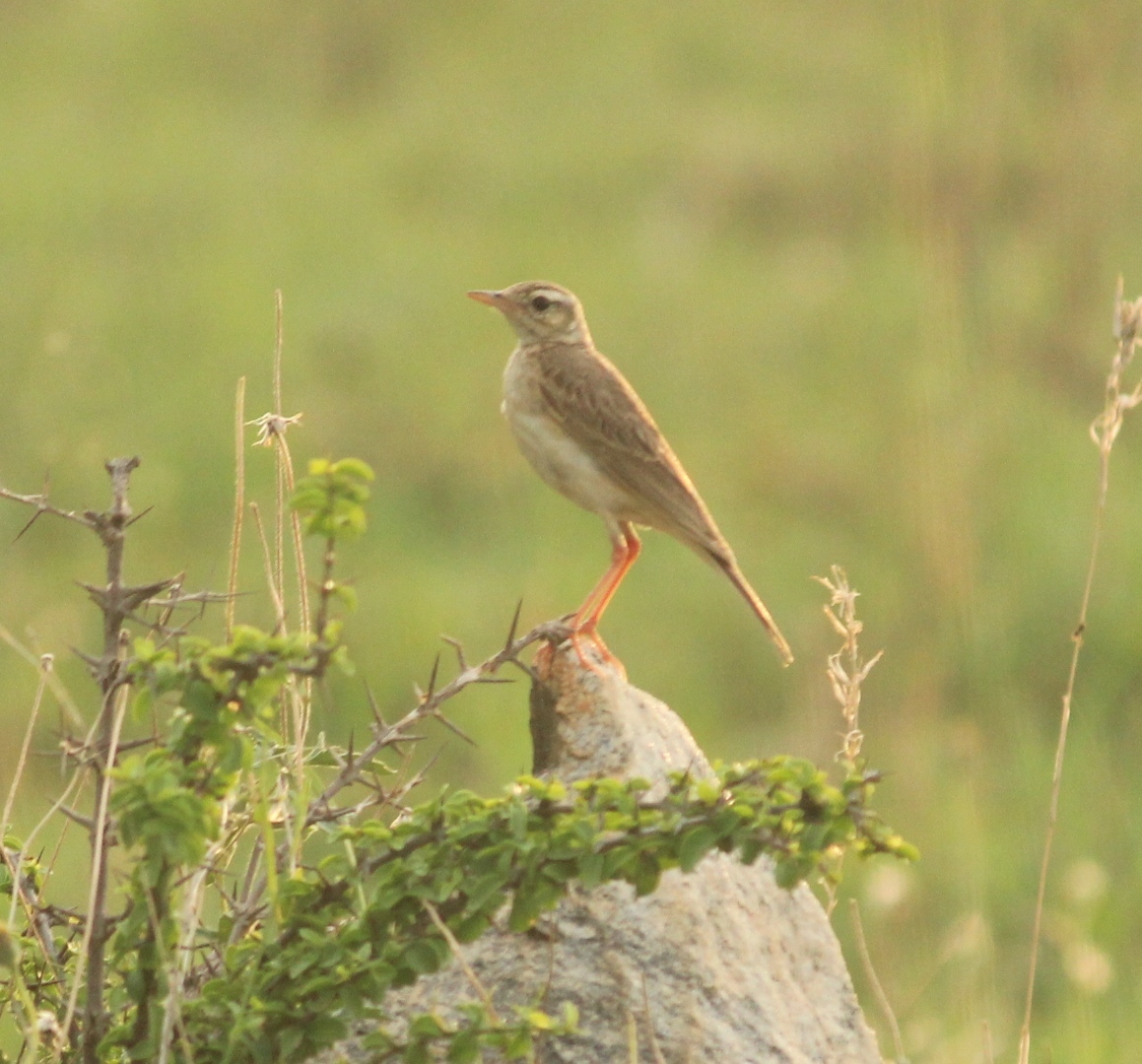
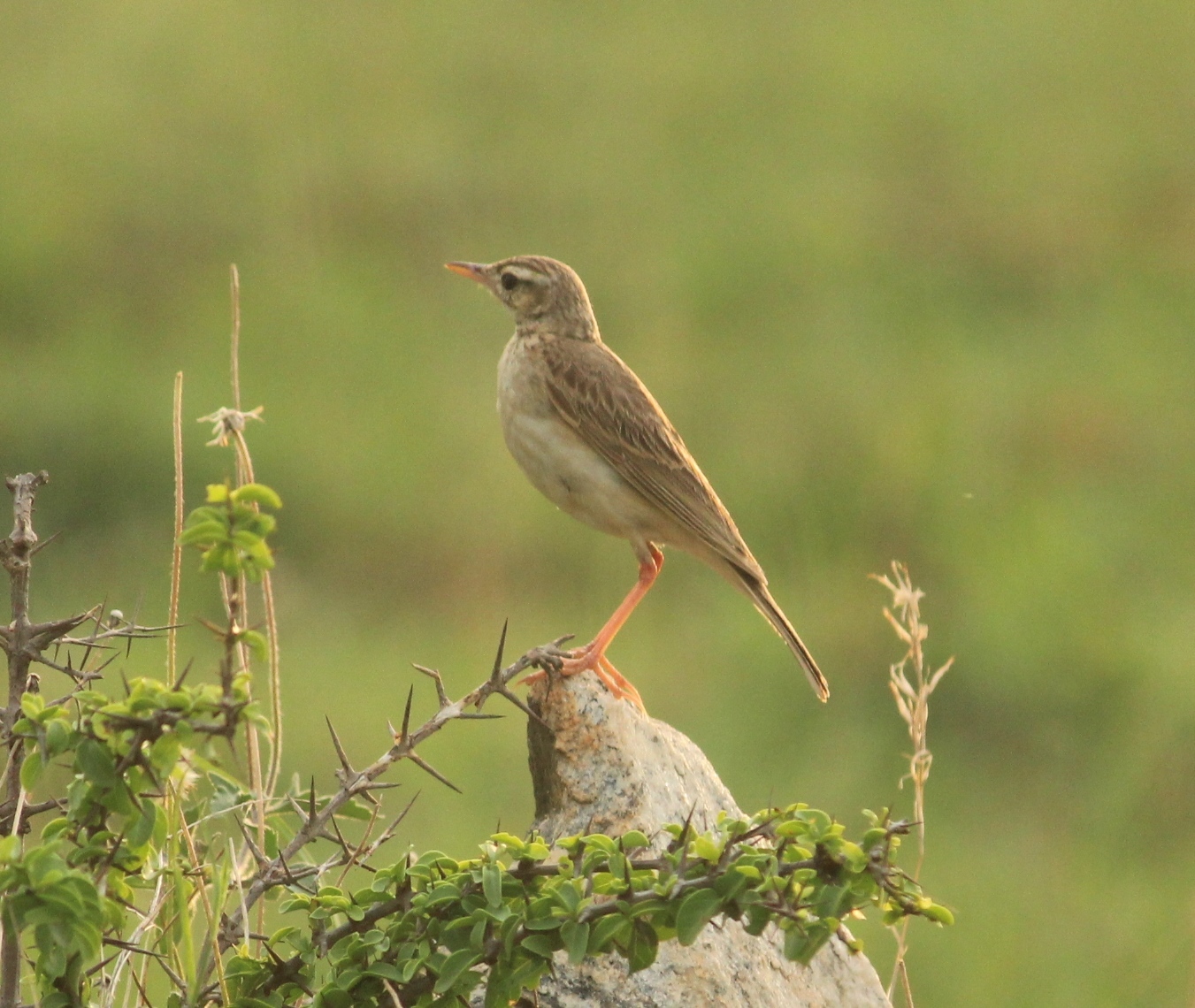
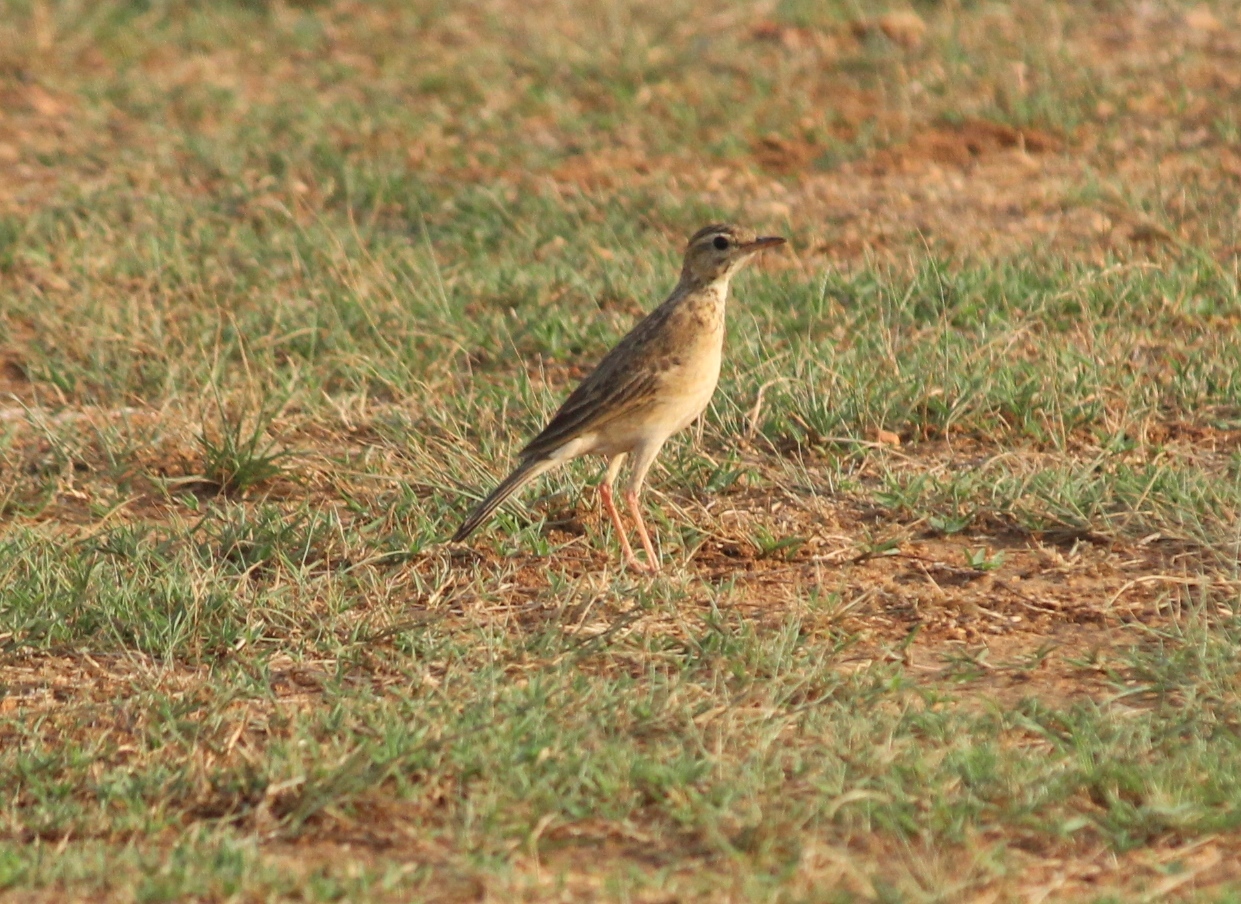
Passeriformes / Motacillidae / Anthus
Paddyfield Pipit
Anthus rufulus · 东方田鹨
Introduction
A small passerine bird in the pipit and wagtail family. It is a resident breeder in open scrub, grassland, and cultivation across southern Asia east to the Philippines. Identification is challenging in winter due to overlapping ranges with migratory species.
Description
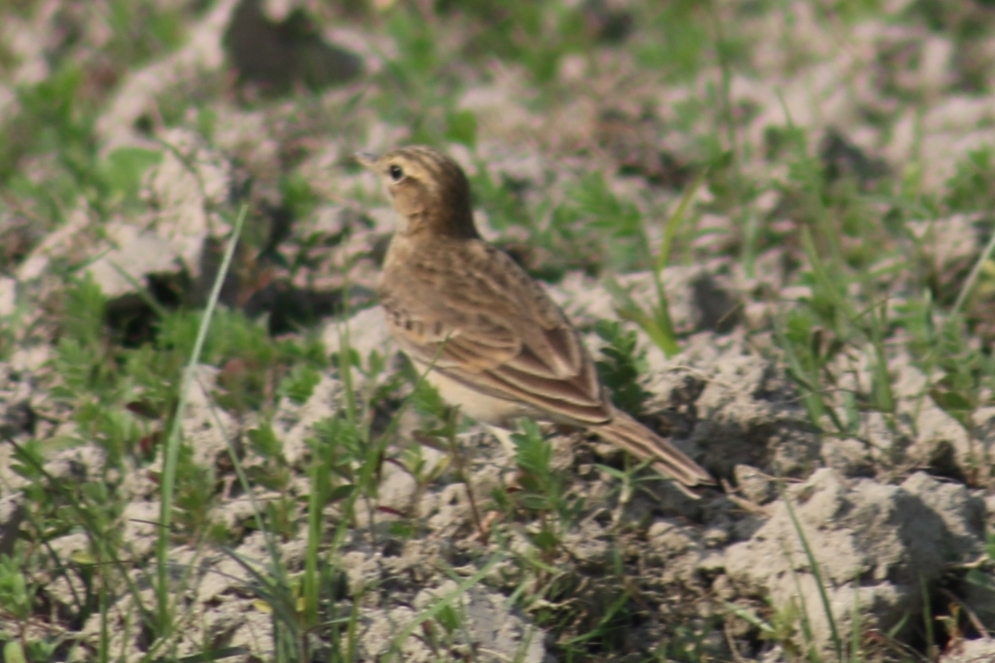
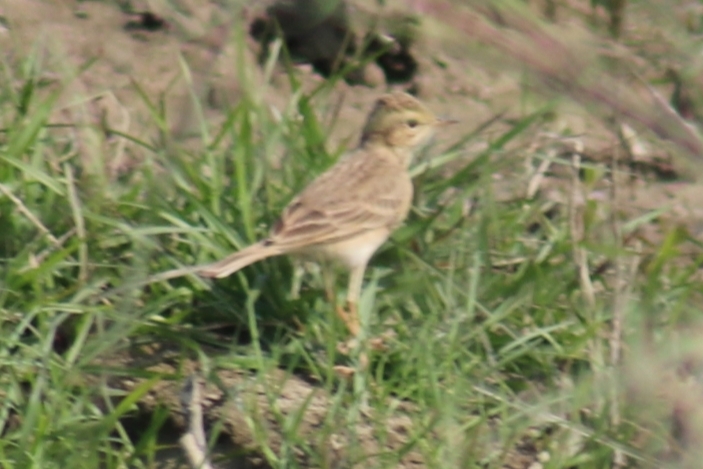
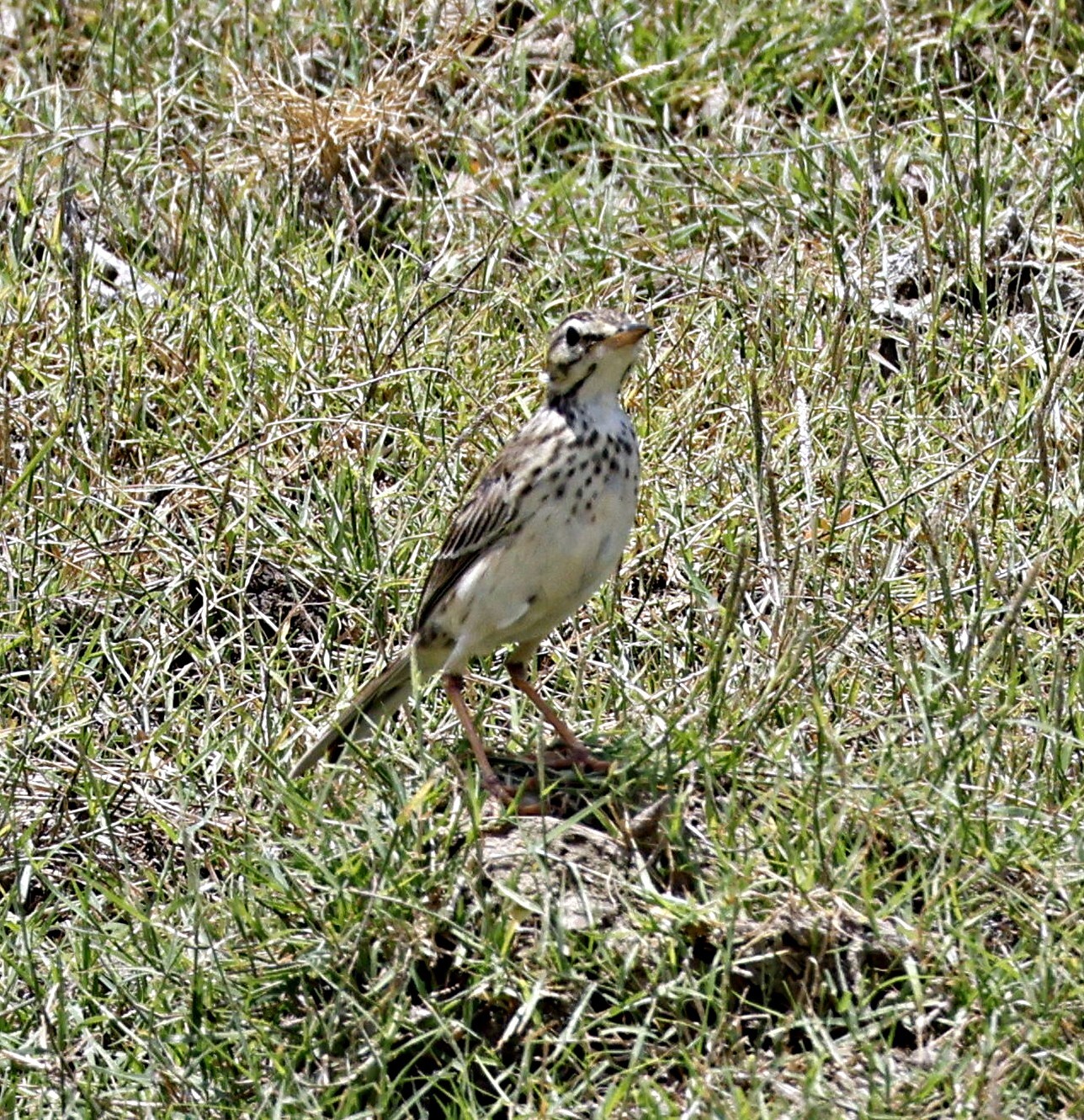
Measures 15 cm in length. Plumage is mainly streaked grey-brown above and pale below with breast streaking. Features long legs, a long tail, and a long dark bill. Sexes and seasonal plumages are similar. Young birds are more richly coloured below with conspicuous pale feather edges and prominent breast spotting. Subspecies vary: waitei is pale; malayensis is larger, darker, and heavily streaked; rufulus is intermediate.
Identification
Smaller and dumpier than Richard's pipit and Blyth's pipit, with a shorter-looking tail and weaker fluttering flight. Distinctive call is a chip-chip-chip, differing from the explosive shreep of Richard's pipit and the nasal pschreen of Blyth's pipit. Tawny pipit has less mantle streaking, a black loreal stripe, and a longer tail. Western Ghats population resembles the Nilgiri pipit.
Distribution & Habitat
Resident breeder in southern Asia east to the Philippines. Six subspecies recognized: rufulus (Indian Subcontinent except north-west/north/extreme south-west, east to southern China, south to Thailand and Indochina); waitei (dry zone of north-western Indian Subcontinent); malayensis (Western Ghats and Sri Lanka); lugubris (Philippines, possibly northern Borneo); albidus (Sulawesi, Bali, western Lesser Sundas); medius (eastern Lesser Sundas).
Behavior & Ecology
Inhabits open habitats, especially short grassland and cultivation with bare ground. Runs rapidly on the ground; flies short distances when flushed. Breeds mainly in the dry season, often producing two or more broods annually. Male sings by repeating a note during descent from a short fluttery flight. Ground nest is cup-shaped, sometimes domed, woven from grass and leaves, lined with finer material. Clutch consists of three or four greenish eggs with brown specks. Parents feign injury to distract predators. Diet includes small insects, beetles, snails, worms, and aerial insects like mosquitoes and termites.
Source: Wikipedia · CC BY-SA 3.0
Taxonomy
- Order
- Passeriformes
- Family
- Motacillidae
- Genus
- Anthus
Vocalizations
Subspecies (5)
-
Anthus rufulus albidus
Sulawesi, Bali, and western Lesser Sundas (Lombok to Sumba)
Data Sources
Species description from Wikipedia, licensed under CC BY-SA 3.0.
Bird images and sounds sourced from GBIF, contributed by citizen scientists worldwide under Creative Commons licenses.
Taxonomy data from AviList 2025.