Passeriformes / Motacillidae / Anthus
Richard's Pipit
Anthus richardi · 田鹨
Introduction
A medium-sized passerine in the family Motacillidae, breeding in open grasslands of the East Palearctic. It is a long-distance migrant wintering in the Indian subcontinent and Southeast Asia, and a rare but regular vagrant to western Europe.
Description
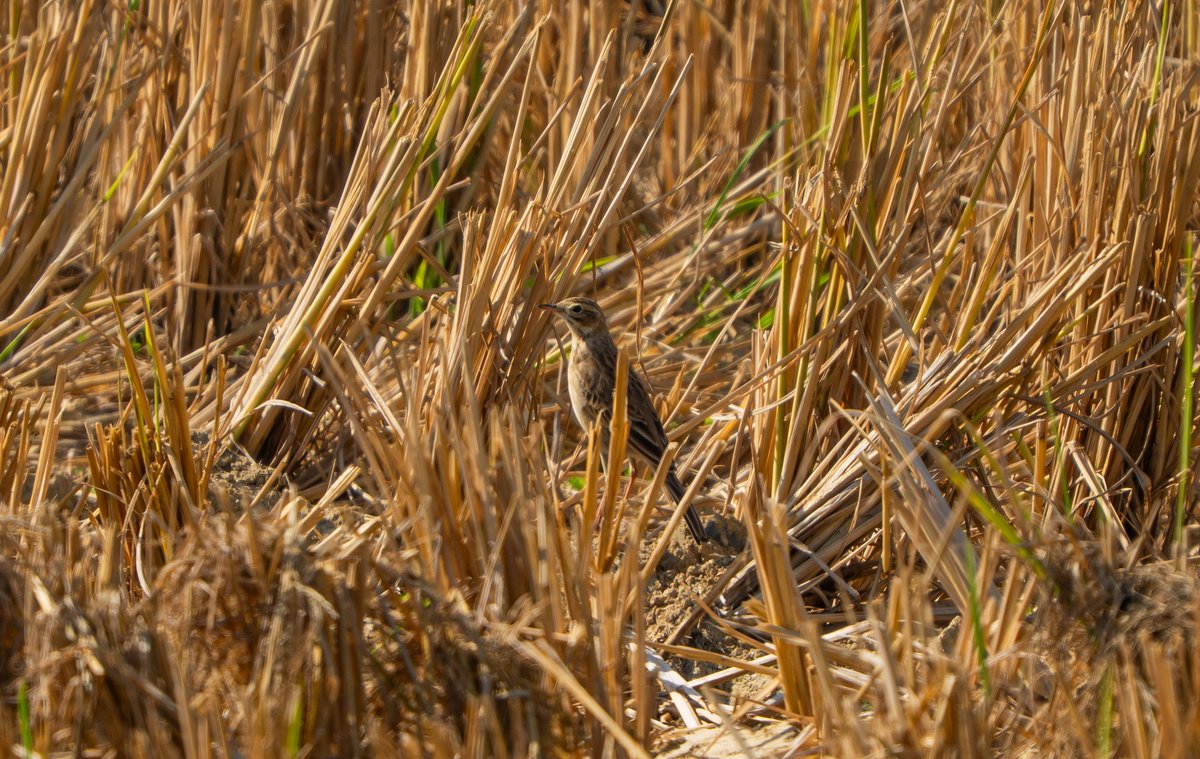
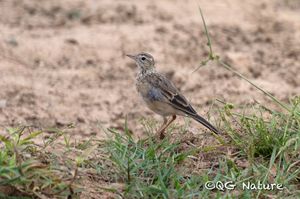
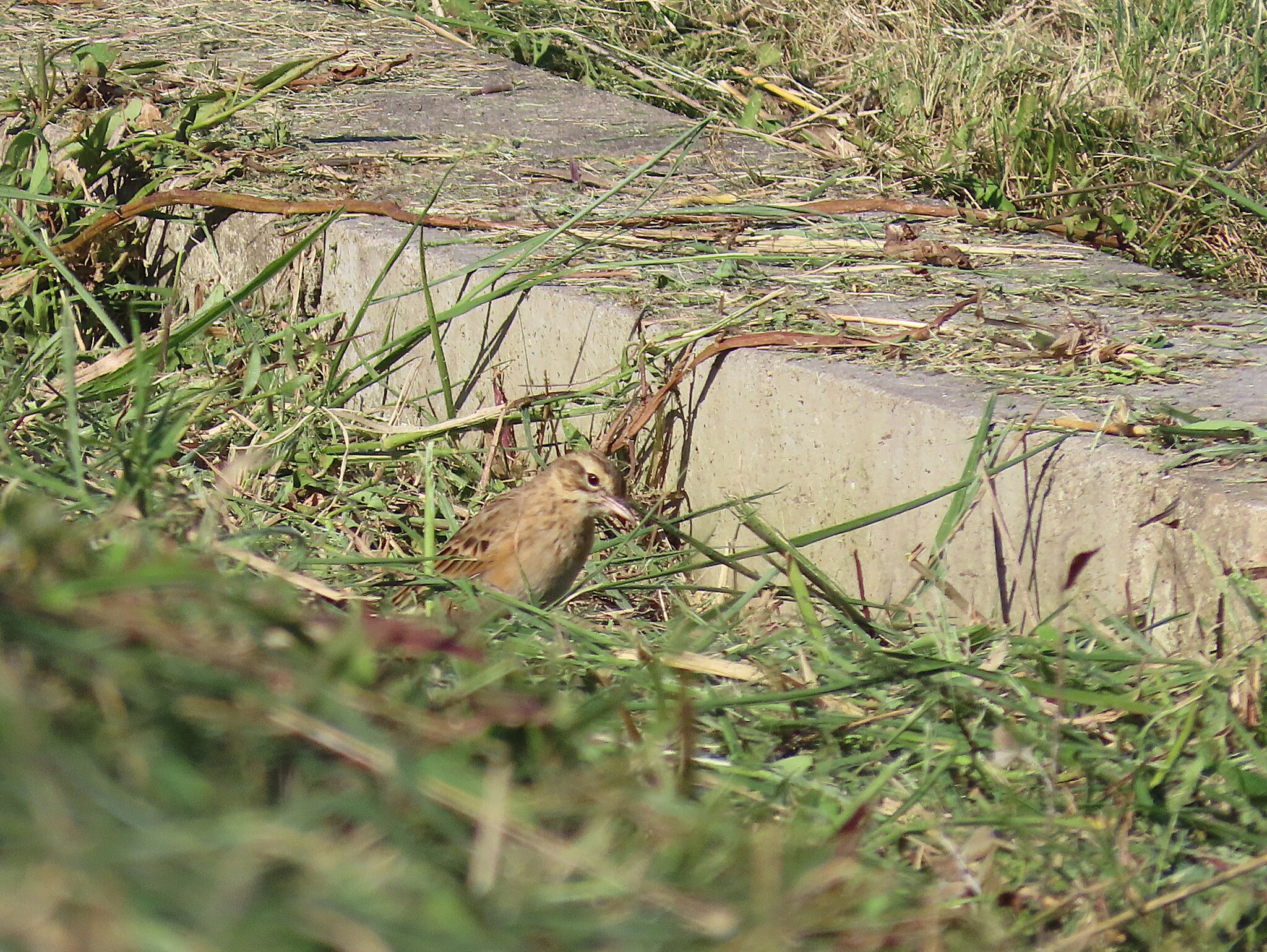
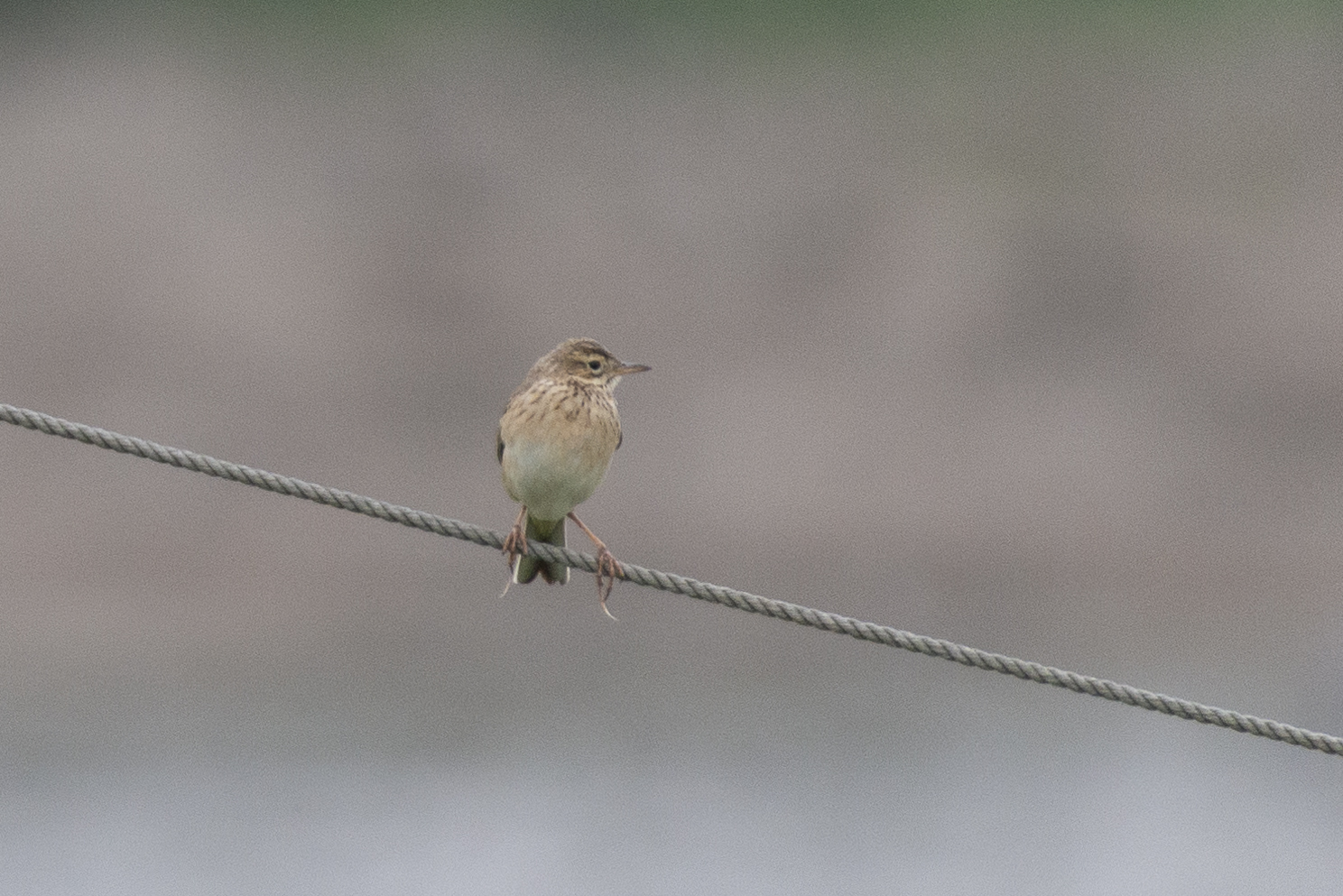
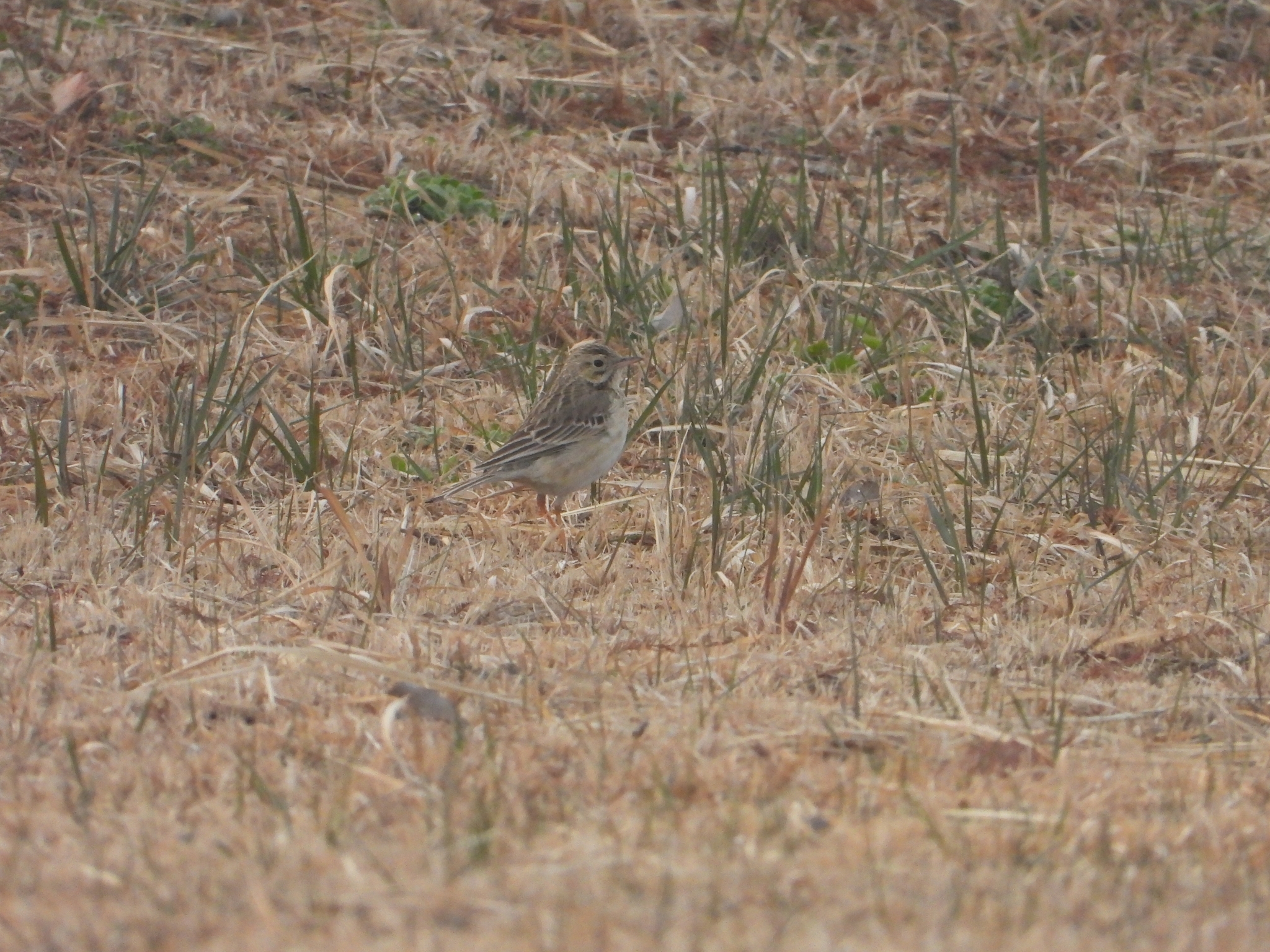
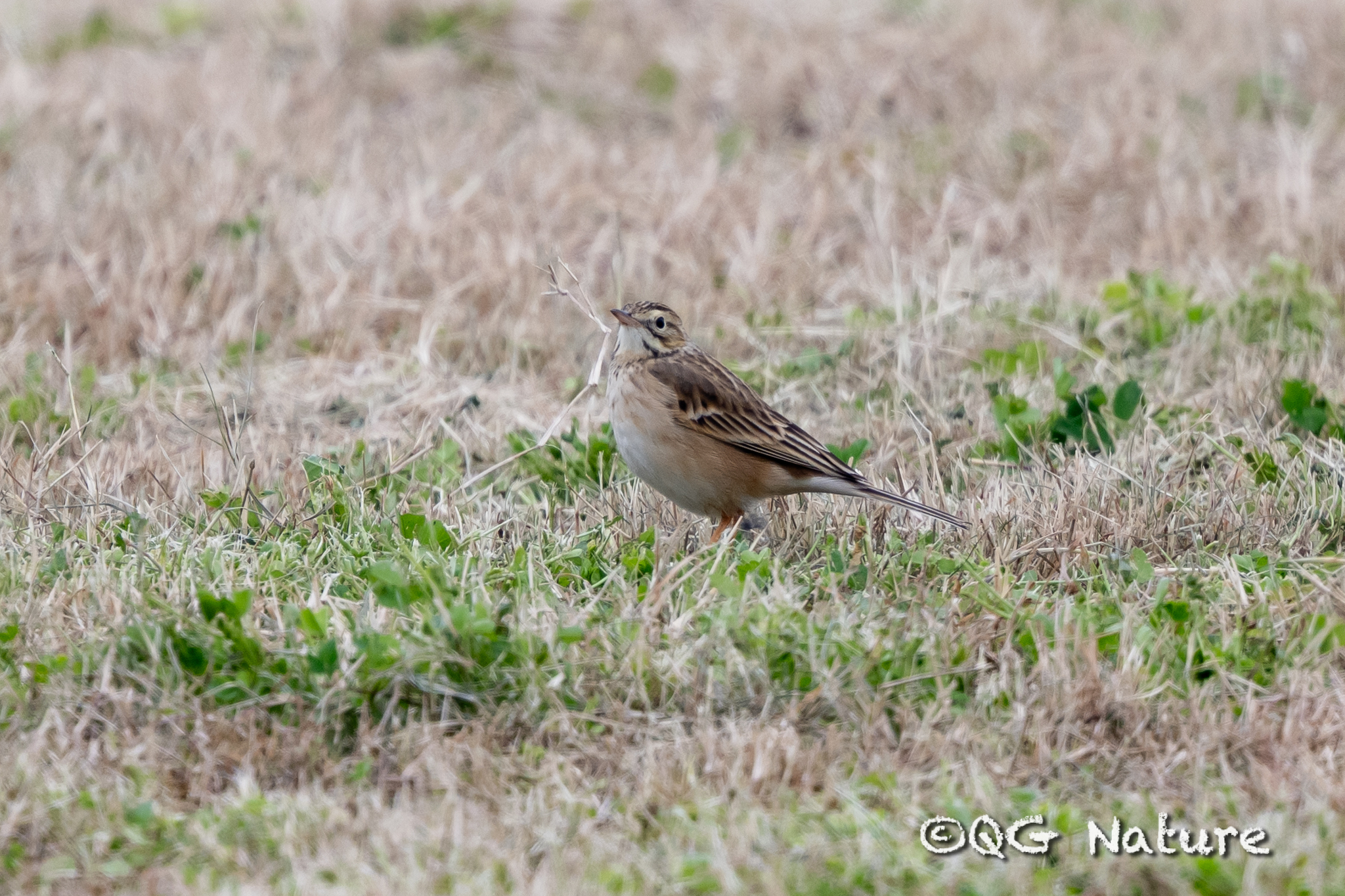
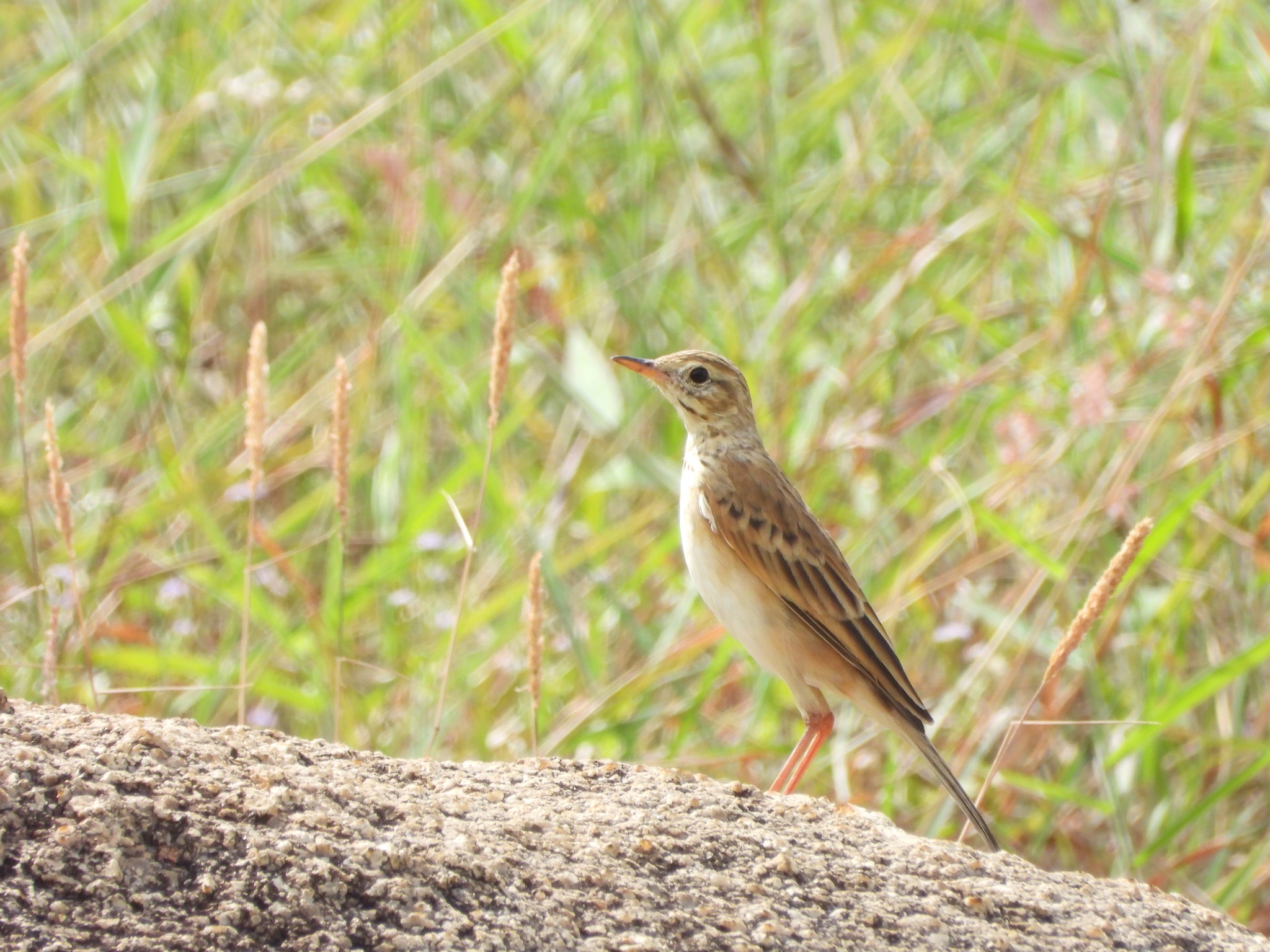
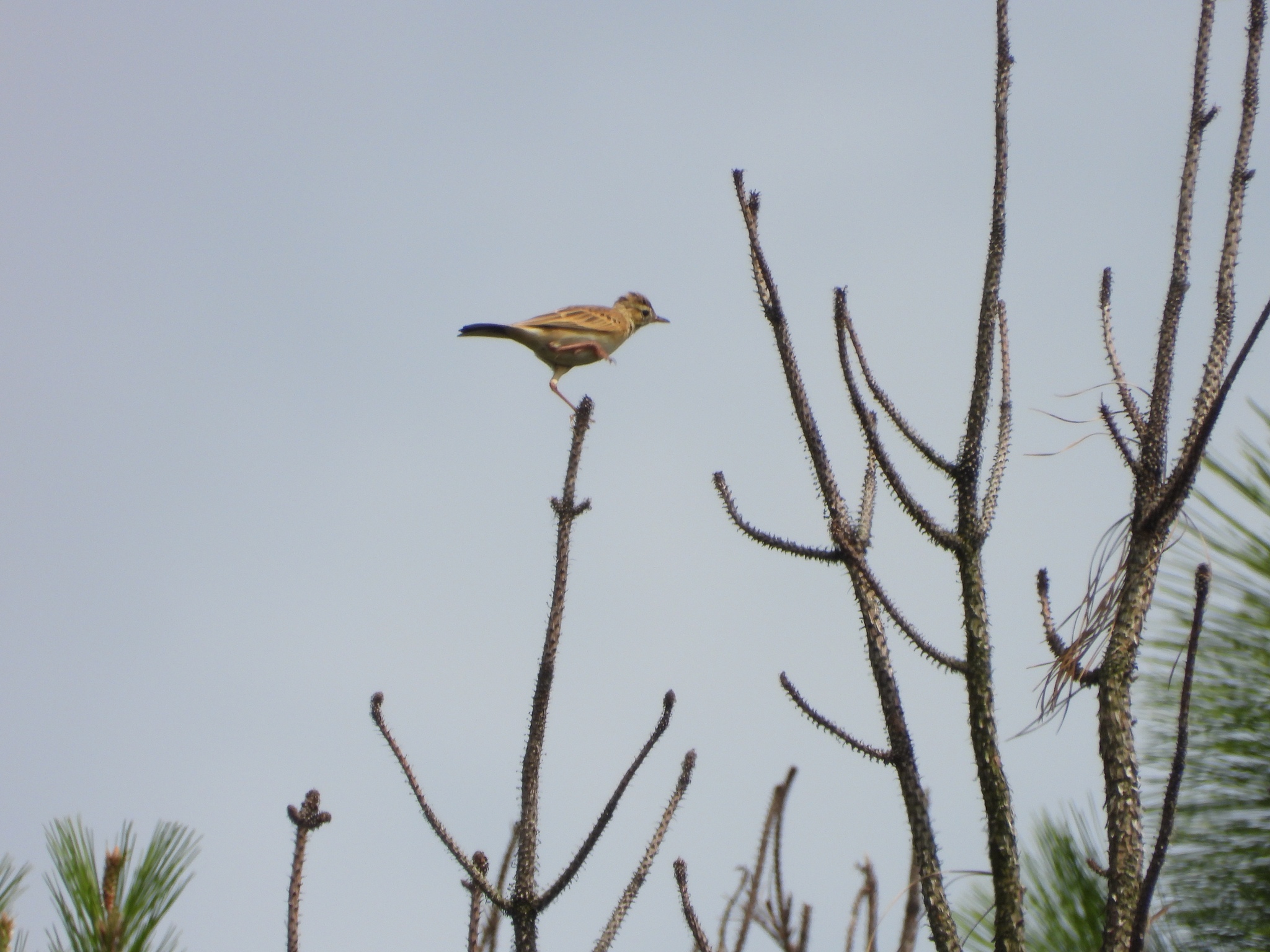
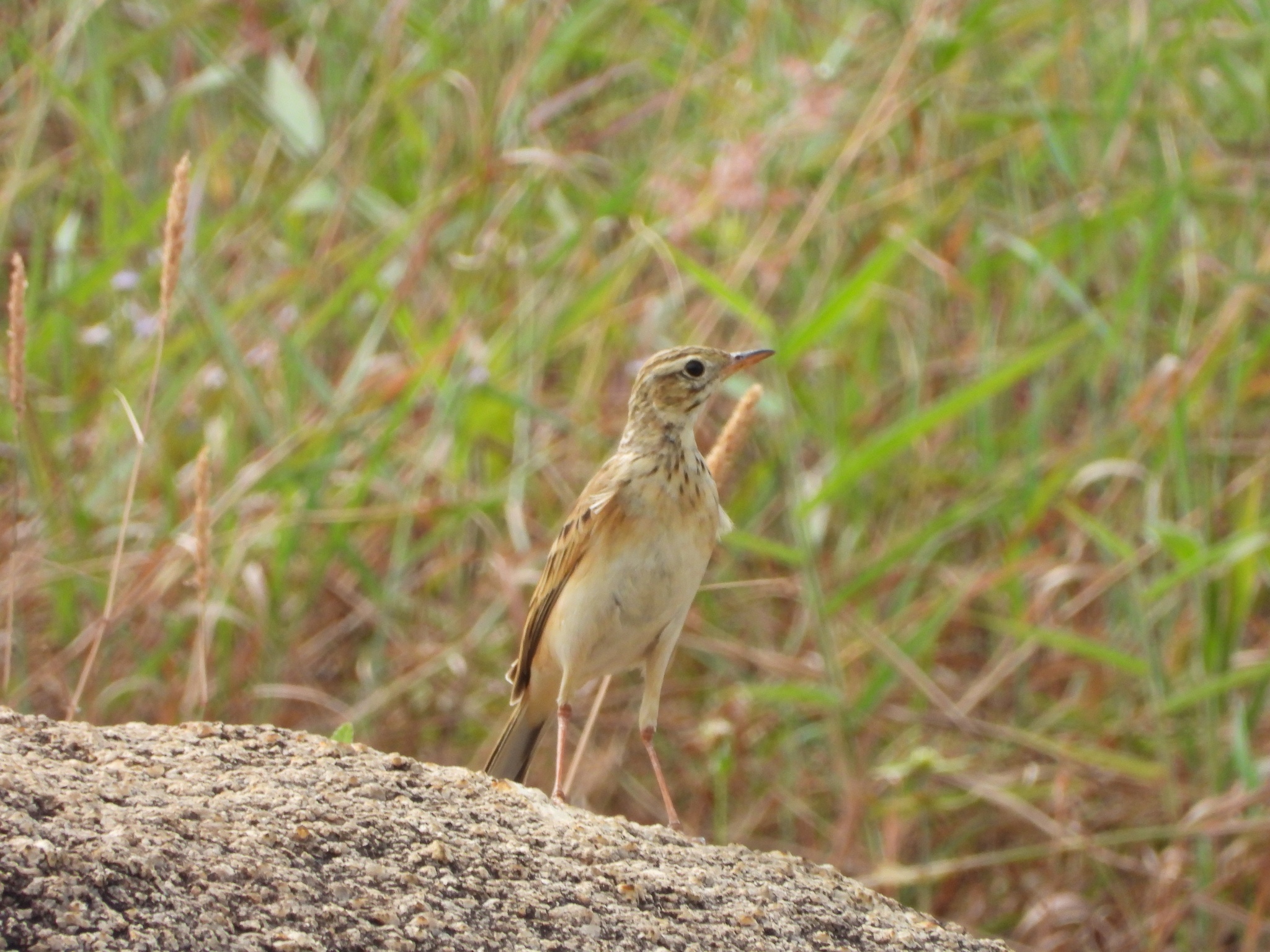
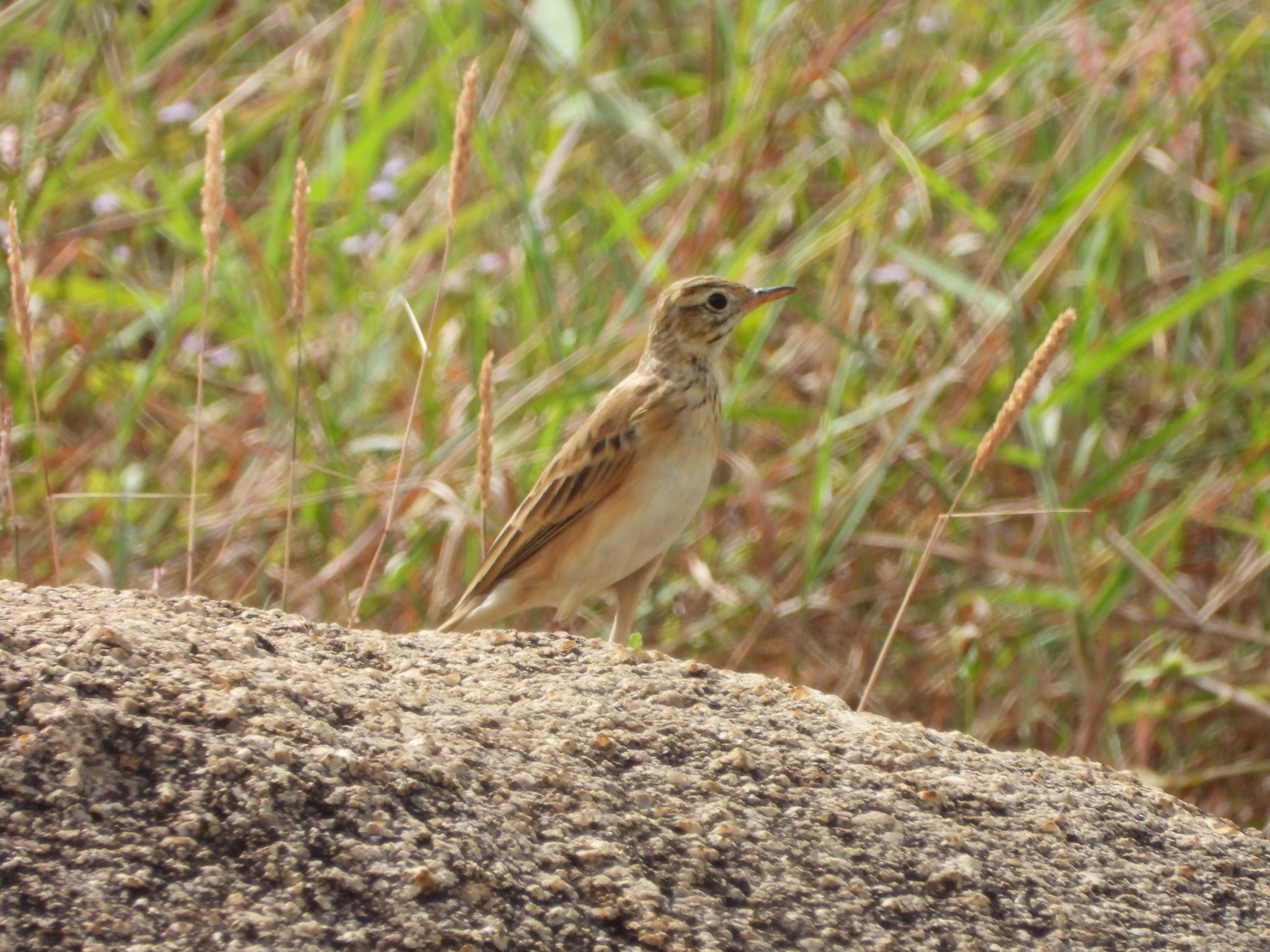
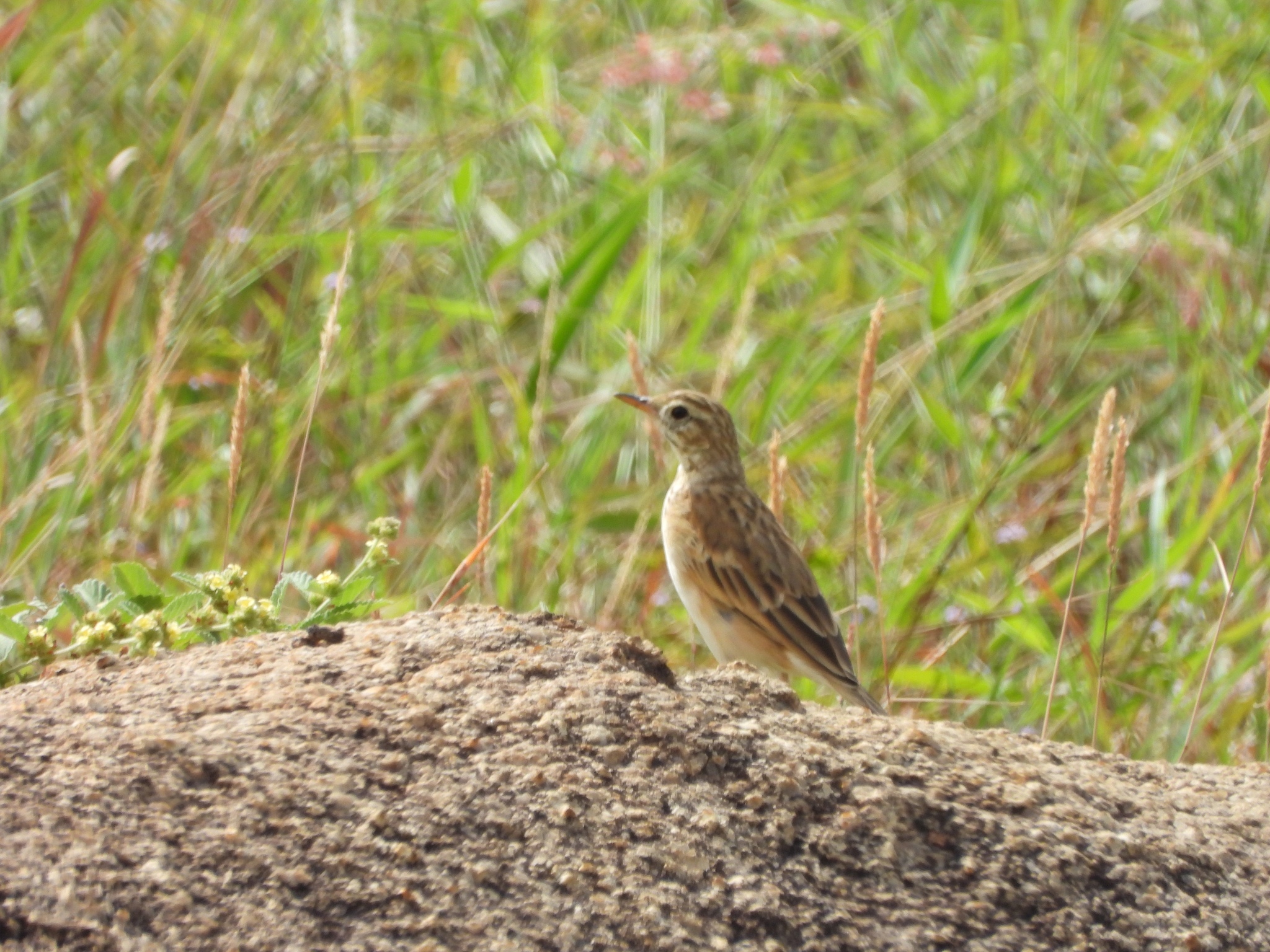
Length 17–20 cm, weight 25–36 g, wingspan 29–33 cm. Slender bird with long yellow-brown legs, long tail with white outer-feathers, and long dark bill with yellowish base to lower mandible. Hindclaw is long and fairly straight. Plumage mainly brown above and pale below, with dark streaks on upperparts and breast; belly and flanks are plain. Face shows pale lores and supercilium, dark eyestripe, moustachial stripe, and malar stripe. Two wingbars formed by pale tips to wing-coverts. Subspecies vary: A. r. sinensis is smaller with less streaking; A. r. centralasiae is larger with sand-coloured upperparts; A. r. dauricus has more streaking above.
Identification
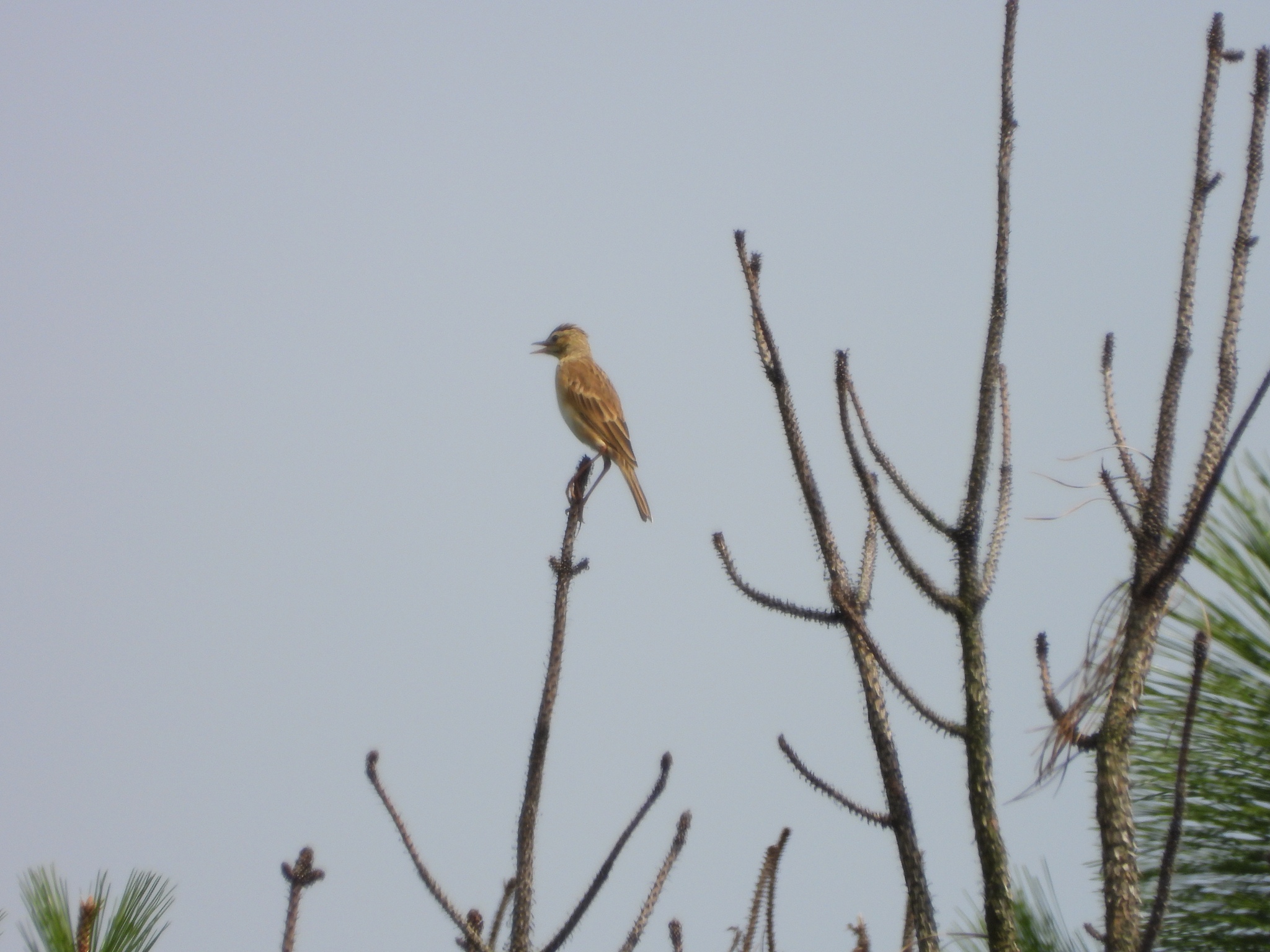
Strong, undulating flight. Characteristic explosive 'shreep' call, similar to house sparrow chirp. Song is repeated series of monotonous buzzy notes given in undulating song-flight. Distinguished from Blyth's pipit by longer bill, legs, and tail, longer and straighter hindclaw, more white on tail, less upperpart streaking, and pointed dark centres on median wing-coverts (blunt in Blyth's). Call is harsher than Blyth's. Larger than paddyfield pipit with longer bill and tail, more breast streaking, and louder call.
Distribution & Habitat
Breeds in southern Siberia, Mongolia, parts of Central Asia, and northern, central, and eastern China. Migrates south to winter in the Indian subcontinent and Southeast Asia, including Sri Lanka, Singapore, and northern Borneo. Scarce passage migrant in Korea and Japan. Regular autumn vagrant to Europe, Middle East, and North Africa, seen annually September–November in Britain, Netherlands, and Scandinavia, with occasional spring records. Small numbers overwinter in Spain, Portugal, Italy, and Morocco.
Behavior & Ecology
Inhabits open country, particularly flat lowland grasslands, steppes, and cultivated land, preferring fertile, moist habitats. In Europe, often recorded on headlands and islands. Occurs alone or in small groups. Insectivorous, feeding mainly on the ground and making short flights to catch flying insects; also eats seeds. Nest made of grass or moss, built on ground under a grass tussock.
Source: Wikipedia · CC BY-SA 3.0
Taxonomy
- Order
- Passeriformes
- Family
- Motacillidae
- Genus
- Anthus
Distribution
breeds southeastern Russia to eastern Kyrgyzstan and eastward to Sea of Okhotsk and southward to central and southeastern China; winters to southern and southeastern Asia
Vocalizations
Data Sources
Species description from Wikipedia, licensed under CC BY-SA 3.0.
Bird images and sounds sourced from GBIF, contributed by citizen scientists worldwide under Creative Commons licenses.
Taxonomy data from AviList 2025.