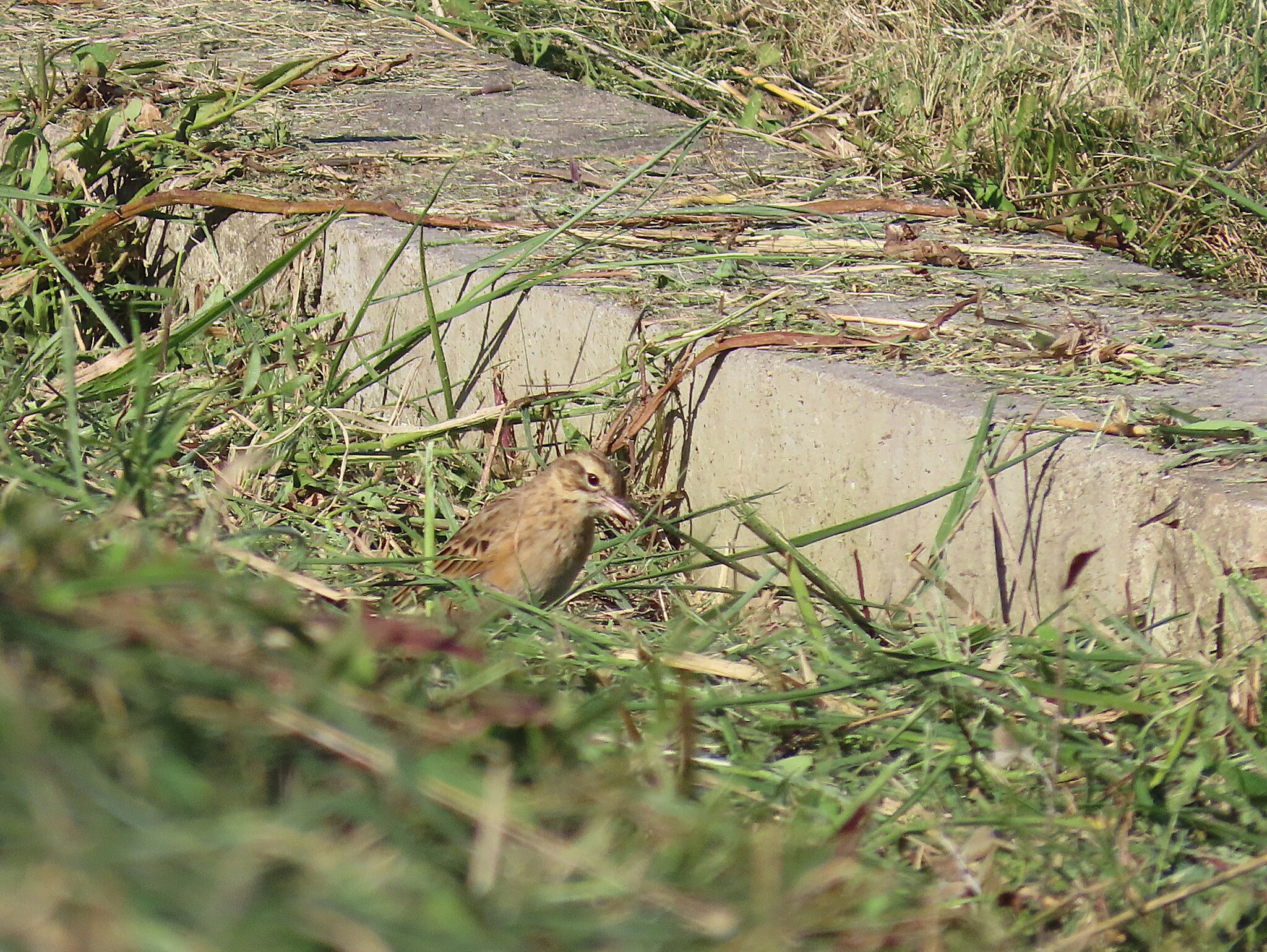
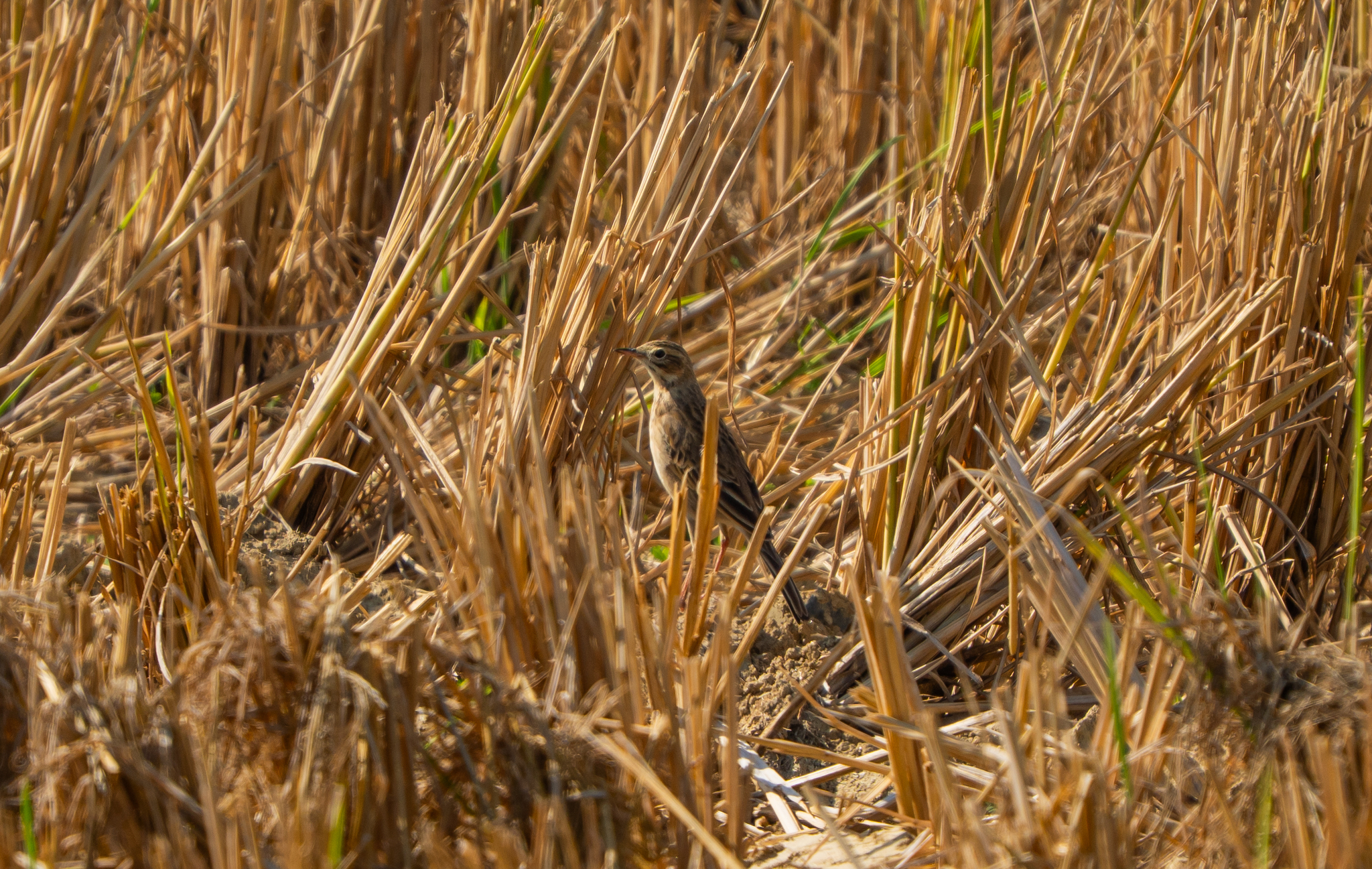

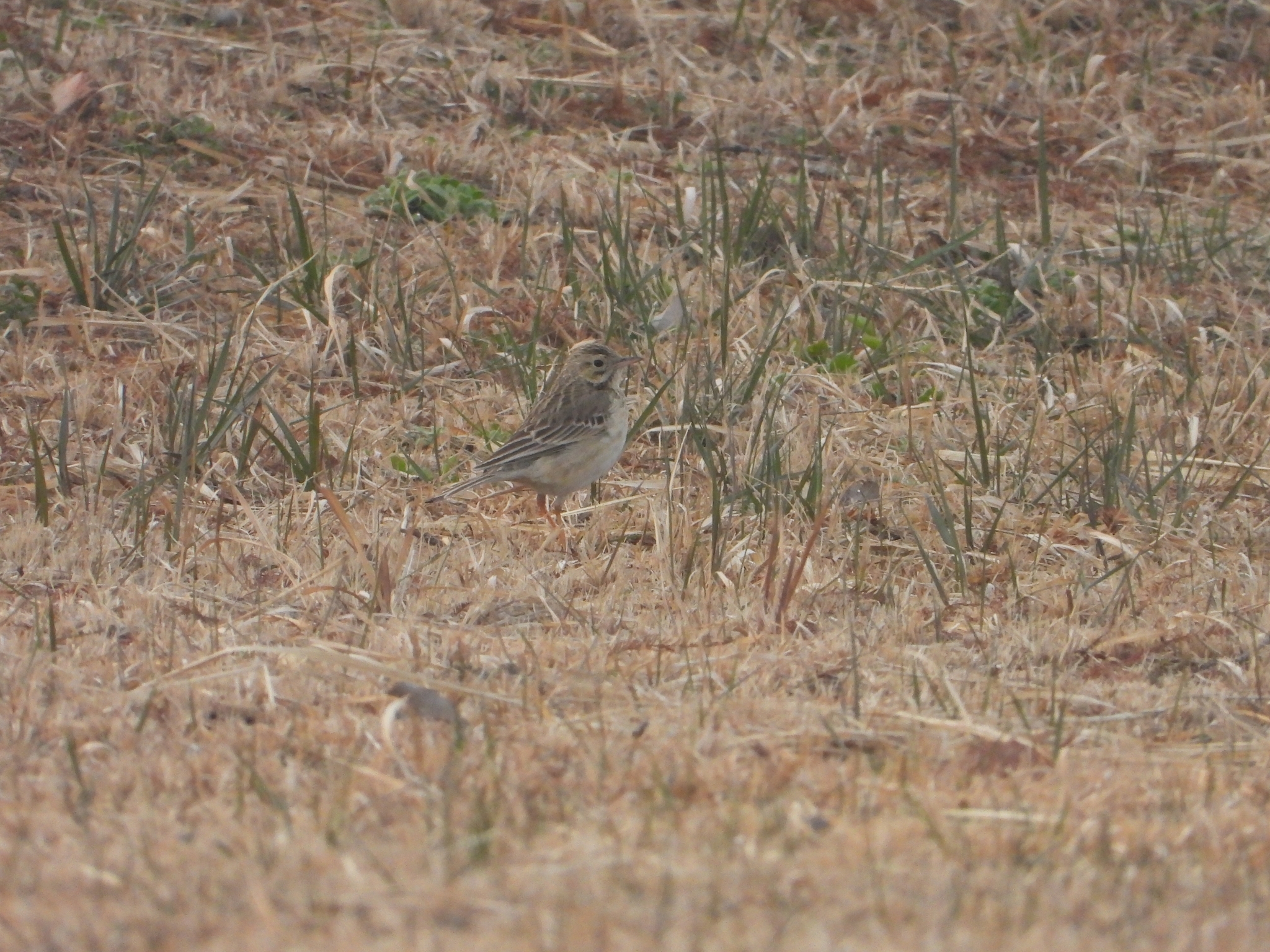
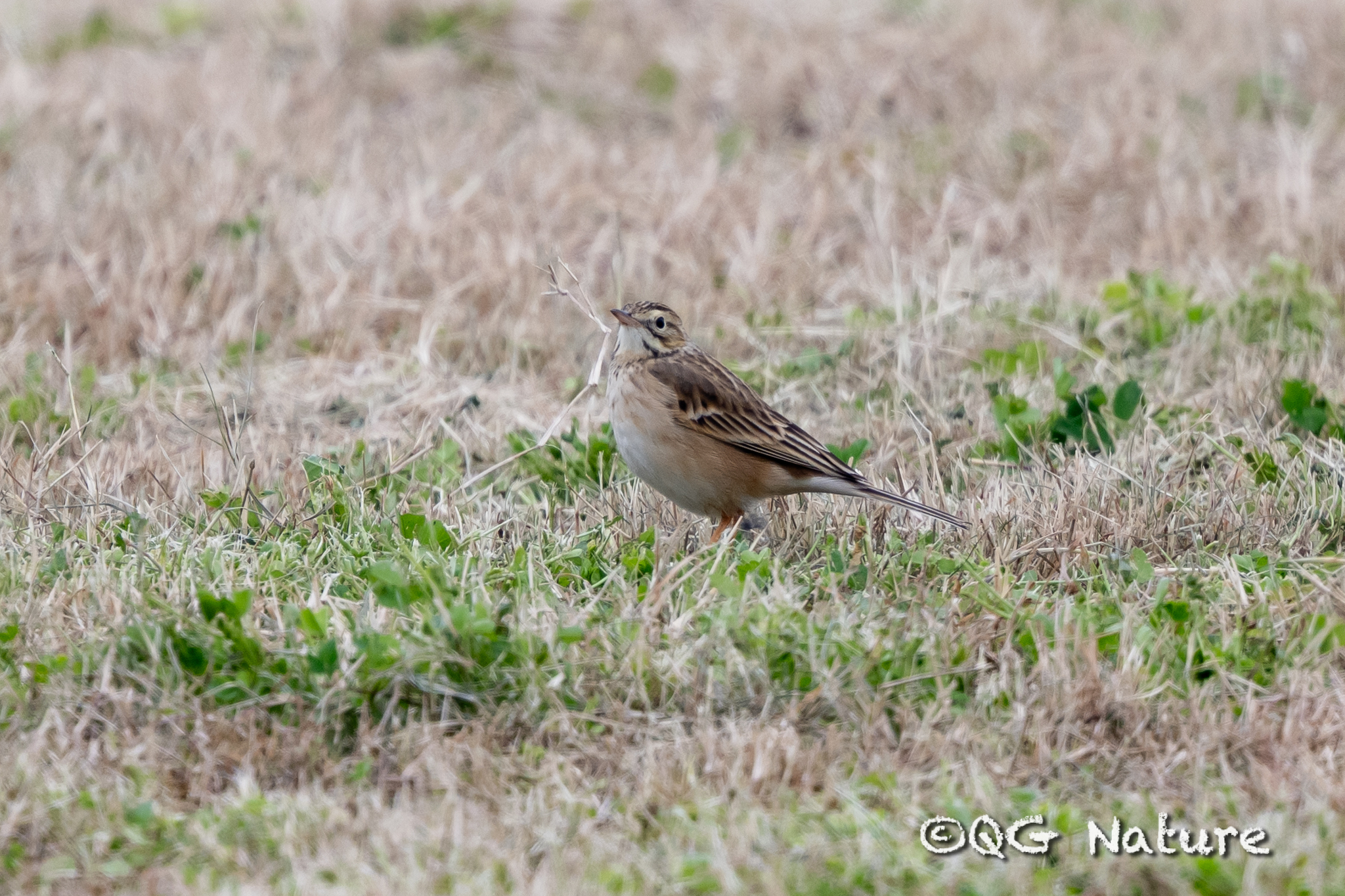
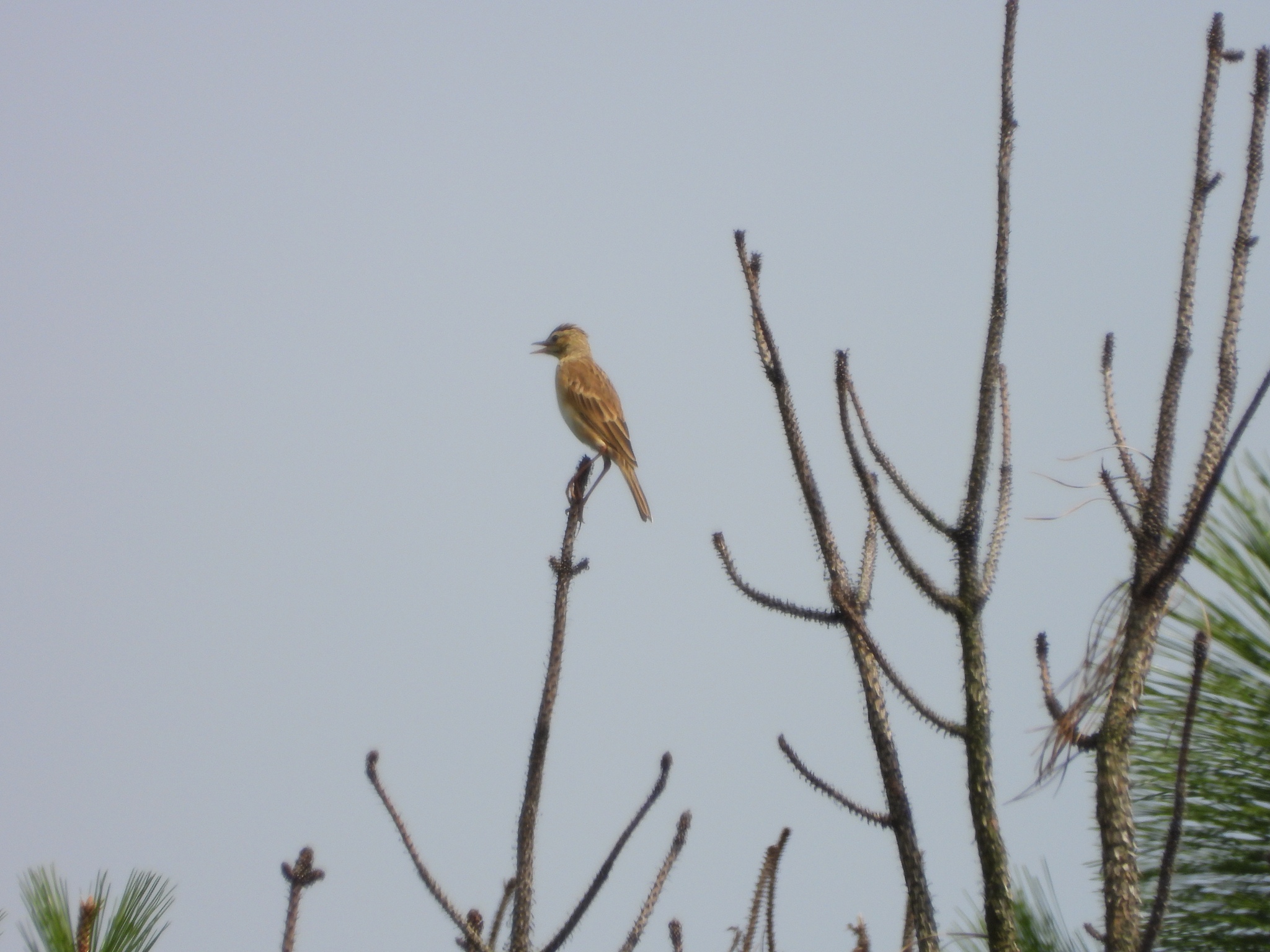
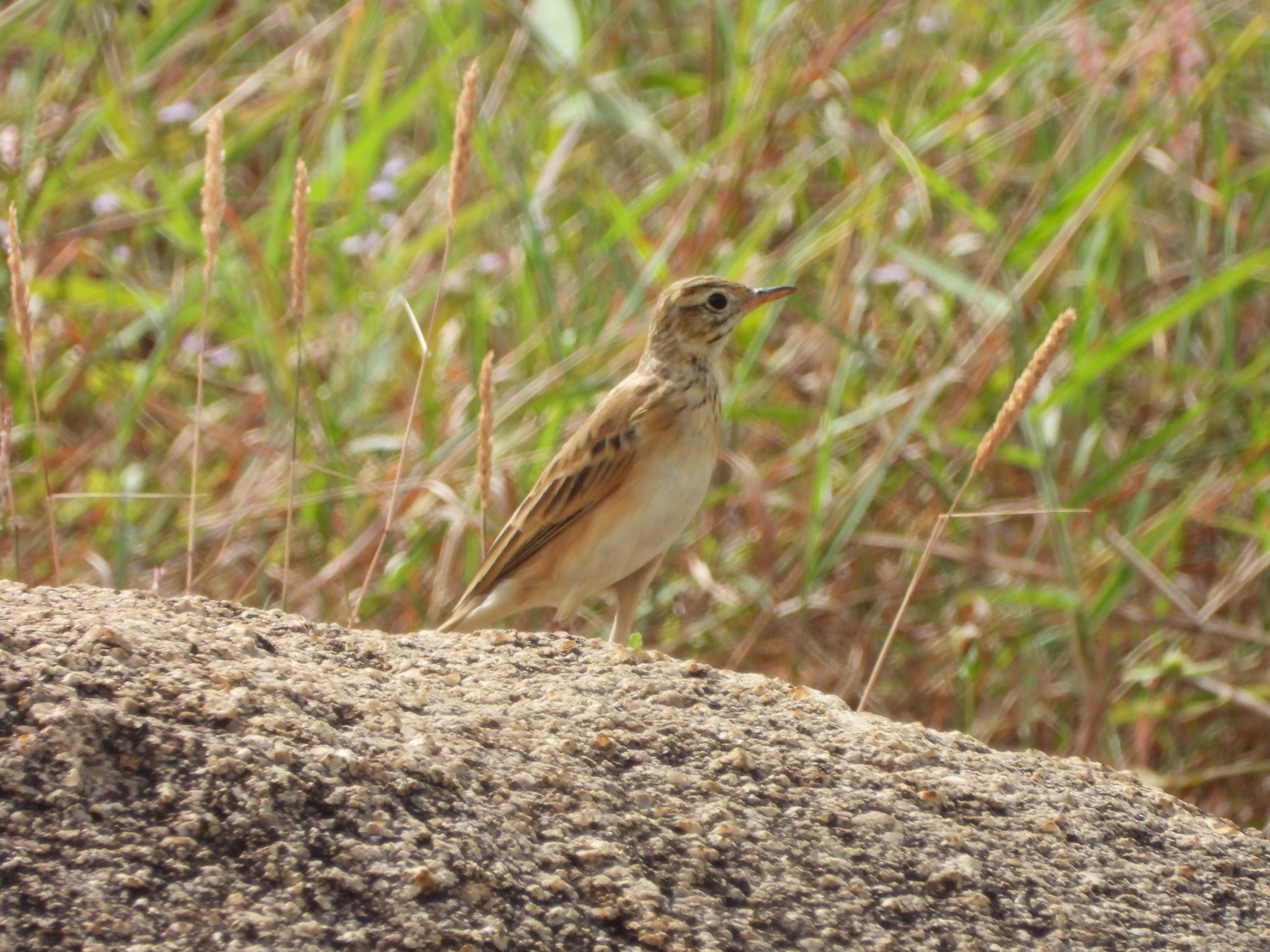
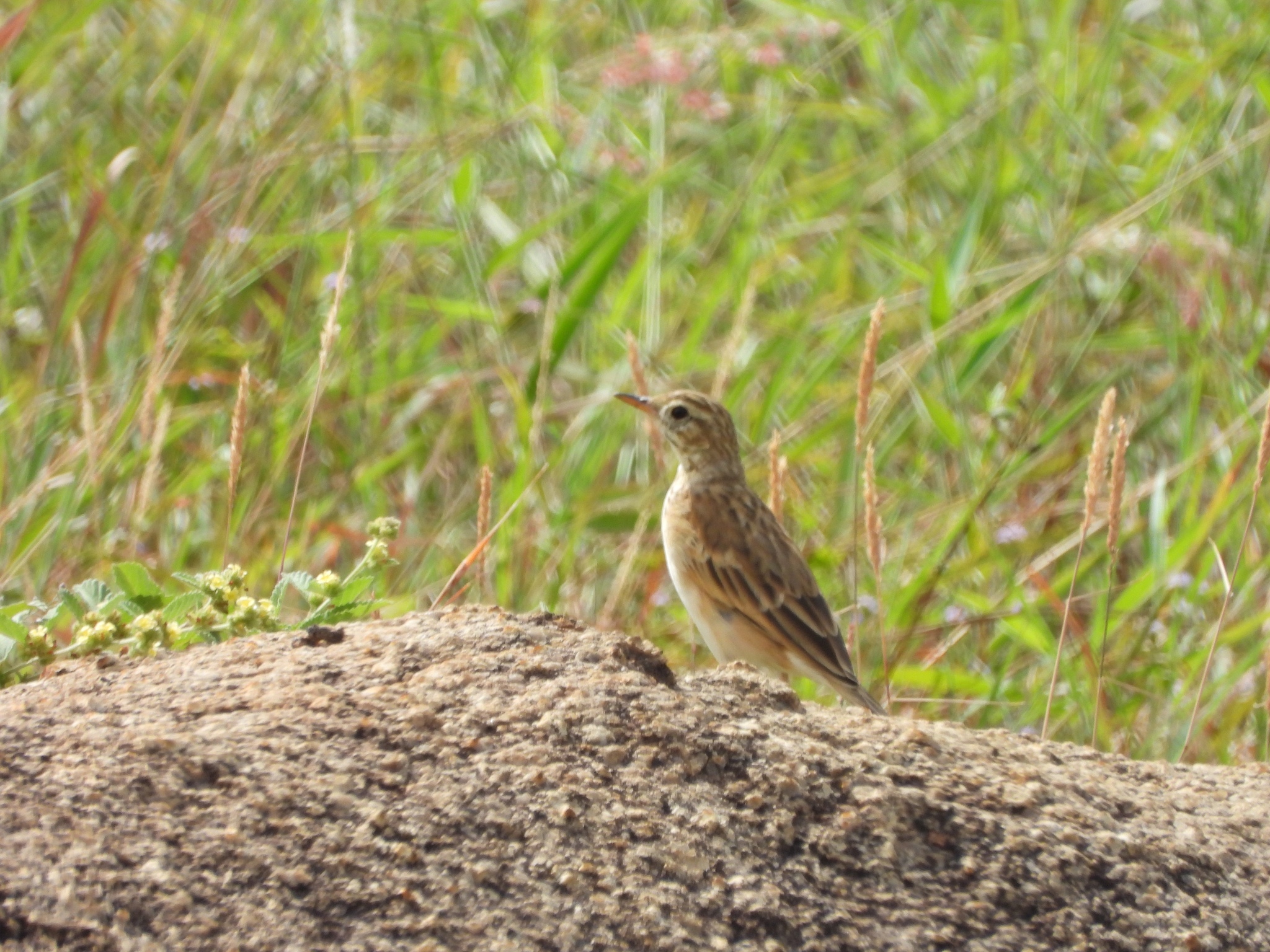
Richard's Pipit
Anthus richardi
田鹨
Introduction
The Eastern Yellow Wagtail (Motacilla tschutschensis) is a medium-sized passerine that breeds across the East Palearctic, including Siberia, Mongolia, and northern China. It inhabits open grasslands, steppes, and meadows during the breeding season. This species is a long-distance migrant, wintering in South and Southeast Asia. During autumn migration, some individuals appear as vagrants in Western Europe, including Britain, the Netherlands, and Scandinavia, typically between September and November. Occasional records occur in southern European countries during winter. The species can be identified by its distinctive call note.
Description
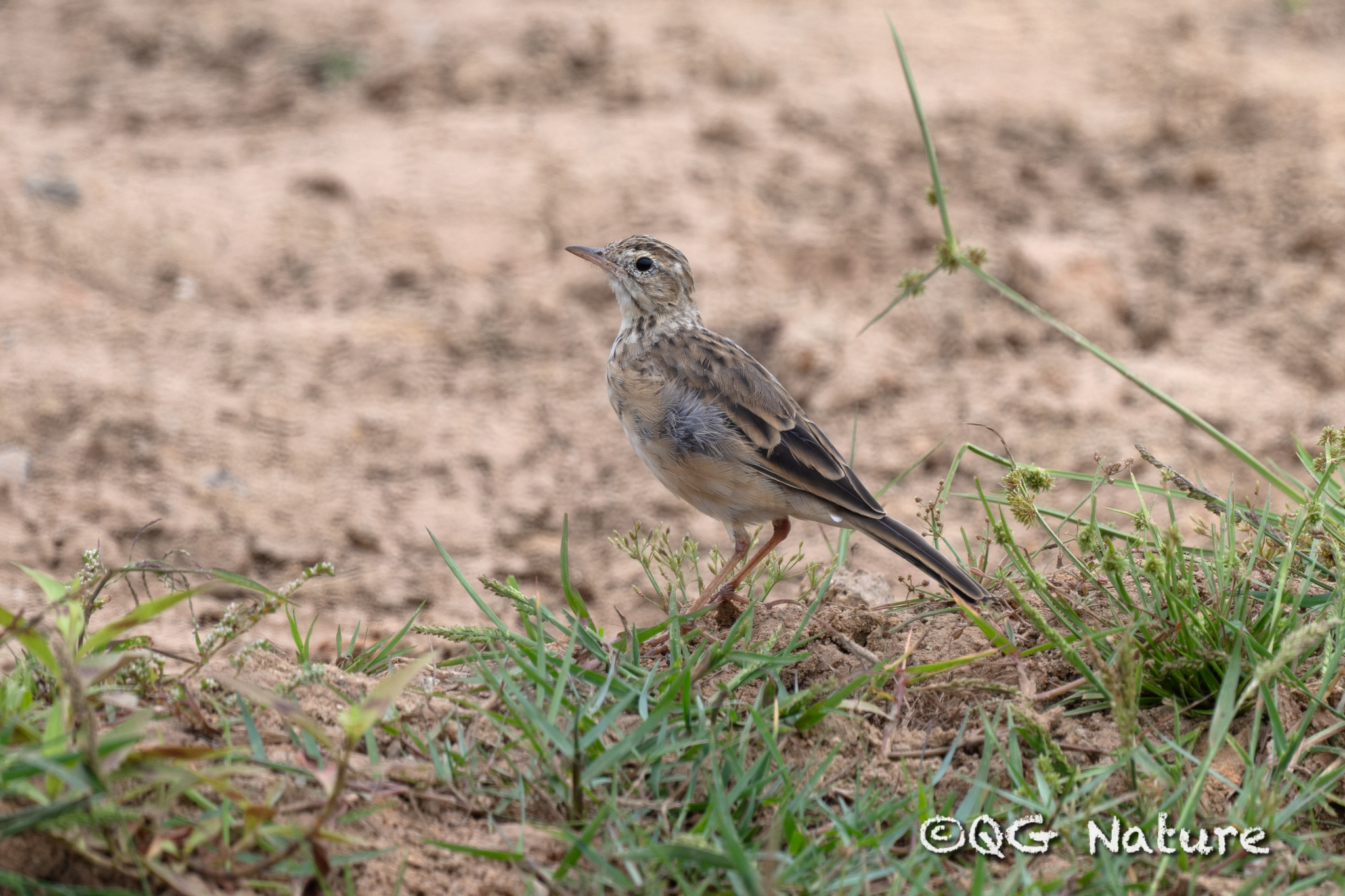
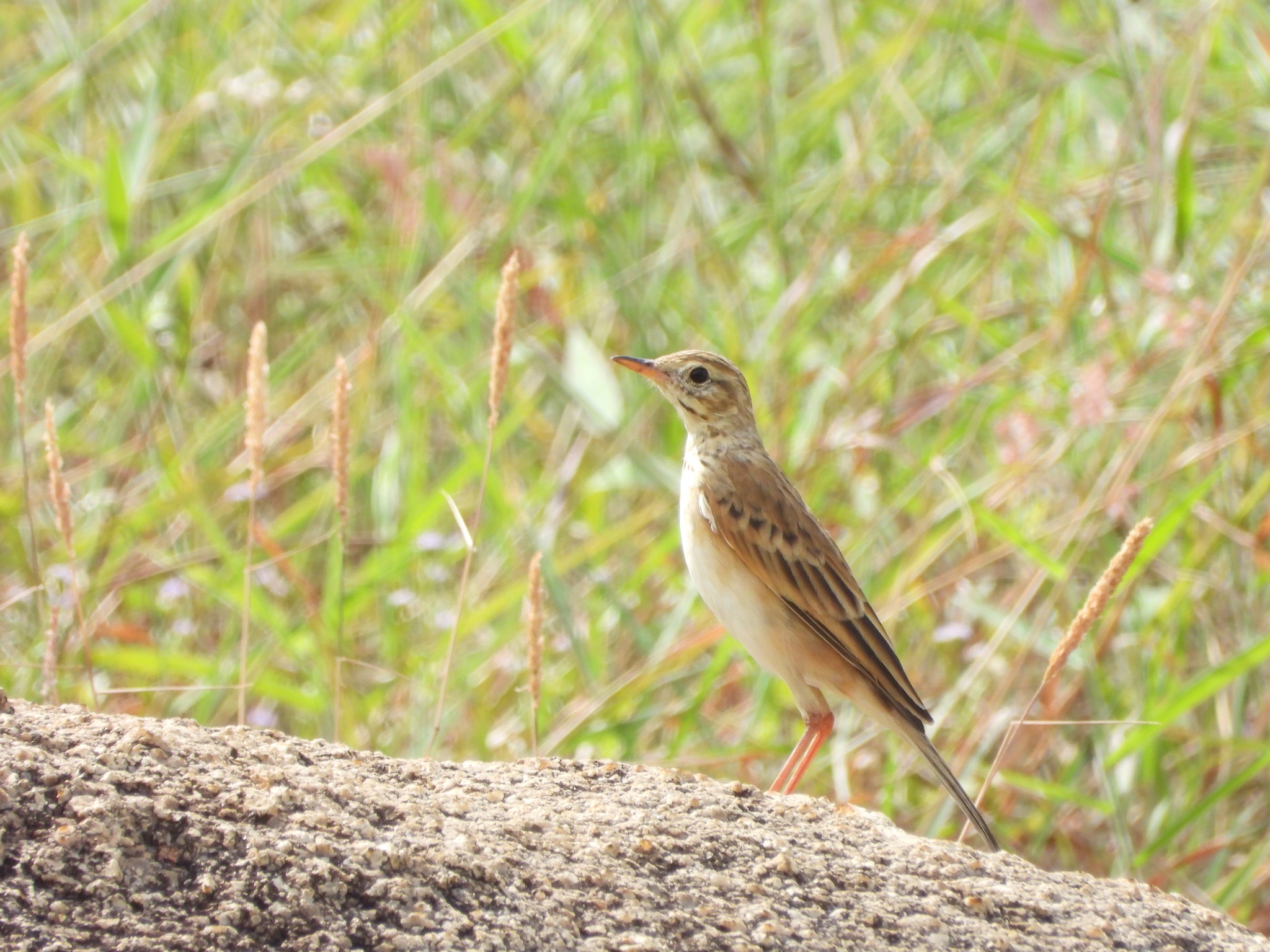
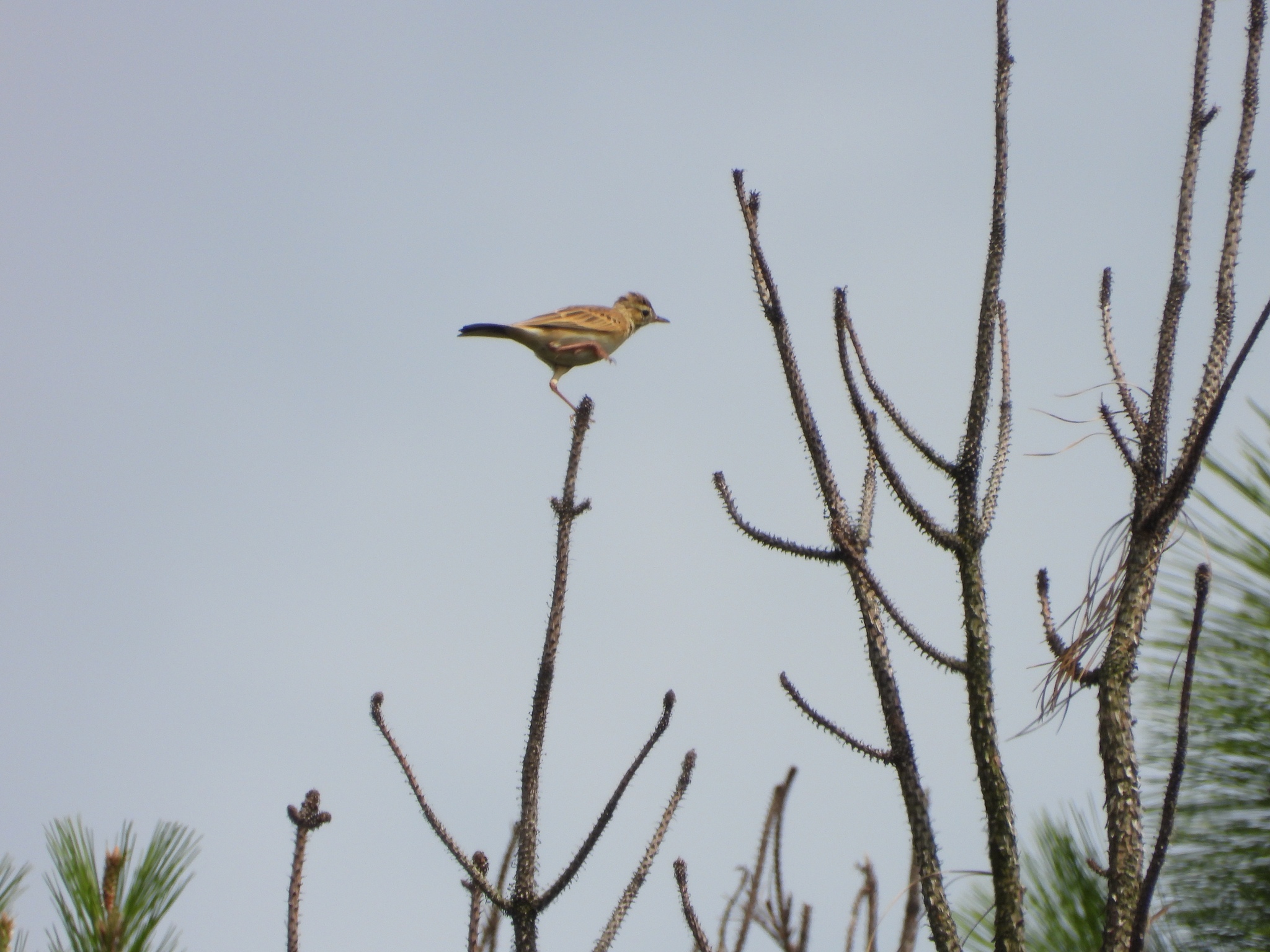
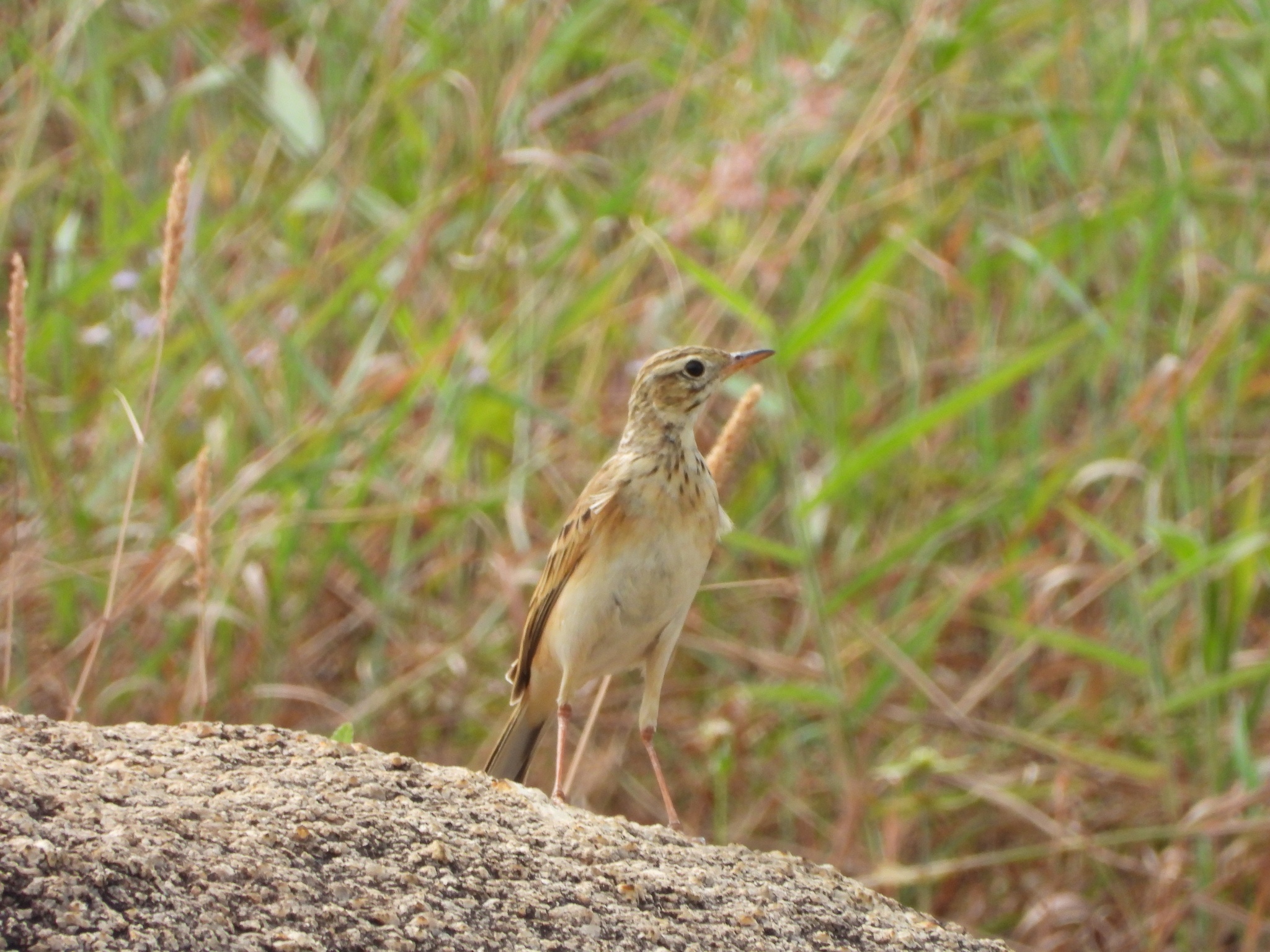
This is the largest pipit species likely to be encountered across much of its range, measuring 17-20 cm in length with a wingspan of 29-33 cm and weighing 25-36 g. The silhouette is notably slender and elongated, with a characteristically upright stance that gives it an almost alert appearance. Prominent features include long yellow-brown legs, a lengthy tail displaying white outer feathers, and a slender dark bill with a yellowish base to the lower mandible. The hindclaw is long and relatively straight. The plumage is fairly nondescript when on the ground, with brown upperparts marked by dark streaks and pale underparts that show streaking on the breast but plain coloring on the belly and flanks. The facial pattern is quite striking, featuring pale lores and supercilium contrasting with dark eyestripe, moustachial and malar stripes. Two wingbars are formed by pale tips to the wing-coverts. Subspecies show some variation: A. r. sinensis is smaller with less streaking above, A. r. centralasiae is larger with sand-colored upperparts, and A. r. dauricus shows more extensive streaking.
Identification
Distinguishing this species from similar large pipits requires careful attention to structure and plumage details. Blyth's pipit is the most likely confusion species, differing in having a shorter bill, legs, and tail, along with a shorter and more curved hindclaw. It shows less white on the tail and more streaking on the upperparts. The wing pattern provides a key clue: Blyth's pipit shows blunt-ended dark centres on the median wing-coverts, whereas this species has dark centres that become pointed toward the feather tip. The call of Blyth's pipit is notably quieter and less harsh. Paddyfield pipit is smaller overall with a shorter bill and tail, shows less streaking on the breast, and has a quieter call. In flight, the combination of strong, undulating movement and the characteristic explosive 'shreep' call, reminiscent of a house sparrow's chirp, assists identification. The song, delivered in undulating flight, consists of repeated monotonous buzzy notes.
Distribution & Habitat
The breeding range extends across the East Palearctic, including southern Siberia, Mongolia, much of Central Asia, and northern, central, and eastern China. Come autumn, birds migrate southward to winter throughout the Indian subcontinent and Southeast Asia, with records from Sri Lanka, Singapore, and northern Borneo. Migration through Korea and Japan is regular but scarce. A significant portion of the population undertakes a westward migration in autumn, appearing across most European countries, the Middle East, and North Africa. The best times to encounter vagrants in Western Europe are between September and November at coastal watchpoints, with occasional spring occurrences. Some individuals overwinter in southern European countries including Spain, Portugal, Italy, and Morocco. The species shows a preference for open country, particularly flat lowland areas with grassland, steppe, and cultivated land, favoring more fertile and moist habitats. In European vagrant contexts, it is most often found on headlands and islands.
Behavior & Ecology
This species is a bird of open country, showing particular affinity for flat lowland areas with grassland, steppe, and agricultural land. It demonstrates a preference for more fertile, moist habitats during the breeding season. Solitary by nature, it occurs alone or in small groups rather than in large flocks. Like other pipits, it is primarily insectivorous, foraging mainly on the ground where it picks invertebrates from vegetation and soil. It will also make short aerial sallies to capture flying insects, and occasional seeds supplement the diet. The nest is a simple grass or moss construction built on the ground beneath a protective grass tussock, reflecting the species' ground-nesting habits typical of open-country birds. The characteristic call is a loud, explosive 'shreep' that carries well across open terrain and has been compared to the chirp of a house sparrow. During the breeding season, males perform an undulating song-flight, delivering a repeated series of monotonous buzzy notes that help establish territories and attract mates.
Conservation
The species is currently classified as Least Concern by the IUCN, reflecting its relatively extensive range and apparently stable population numbers. No significant population declines have been documented across its broad breeding and wintering grounds. The species benefits from the relatively remote and vast nature of its core breeding habitat in Central Asian steppes, though agricultural intensification and habitat modification in some areas may present localized concerns. As a migratory species, it faces potential threats along its migration routes and in wintering areas, including habitat loss, pesticide use affecting insect prey populations, and climate change impacts on grassland ecosystems. The regular vagrancy to Western Europe appears to be a natural phenomenon rather than an indicator of population stress.
Culture
The species holds limited cultural significance beyond its ornithological interest. The scientific name honors Charles Richard (1745-1835), a French naturalist and director of postal services at Lunéville who was a friend of the explorer François Levaillant. The naming reflects the historical practice of commemorating individuals who contributed to natural history collections and knowledge. The species' dramatic vagrancy patterns have made it a sought-after bird among Western European birdwatchers and listers, creating a modern form of cultural engagement centered around the excitement of rare bird finding and reporting. Its appearances at coastal watchpoints have become anticipated events within the birdwatching community, contributing to citizen science records and ornithological monitoring of migration patterns.
Source: Wikipedia · CC BY-SA 3.0
Taxonomy
- Order
- Passeriformes
- Family
- Motacillidae
- Genus
- Anthus
- eBird Code
- ricpip1
Distribution
breeds southeastern Russia to eastern Kyrgyzstan and eastward to Sea of Okhotsk and southward to central and southeastern China; winters to southern and southeastern Asia
Vocalizations
Data Sources
Species description from Wikipedia, licensed under CC BY-SA 3.0.
Bird images and sounds sourced from GBIF, contributed by citizen scientists worldwide under Creative Commons licenses.
Taxonomy data from AviList 2025.