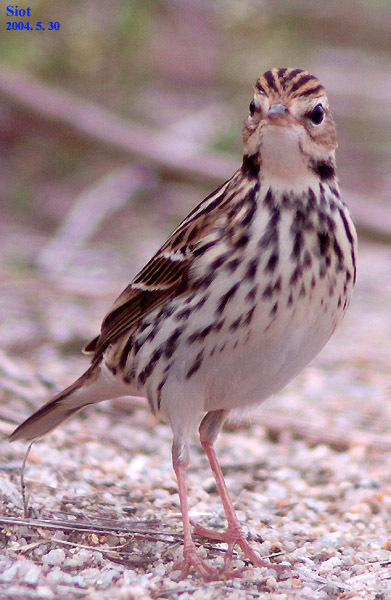
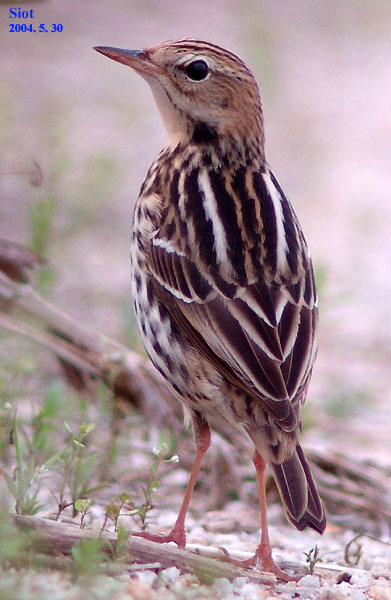
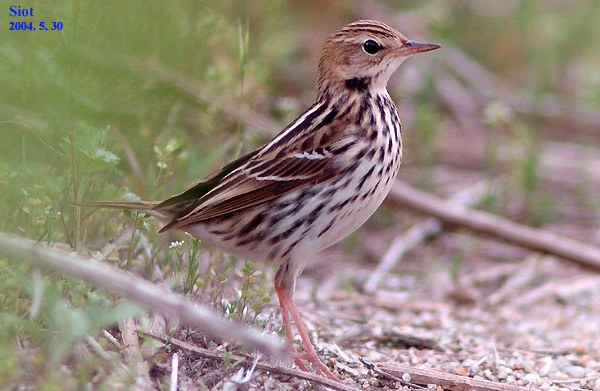
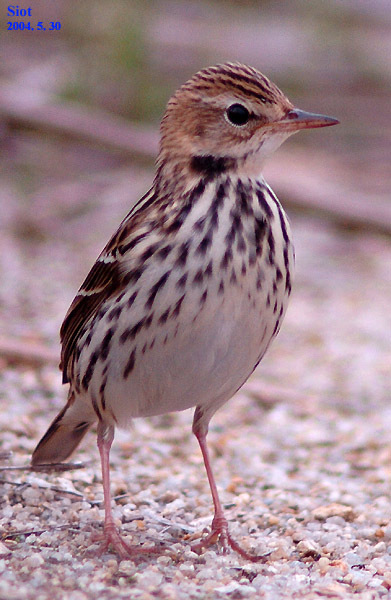
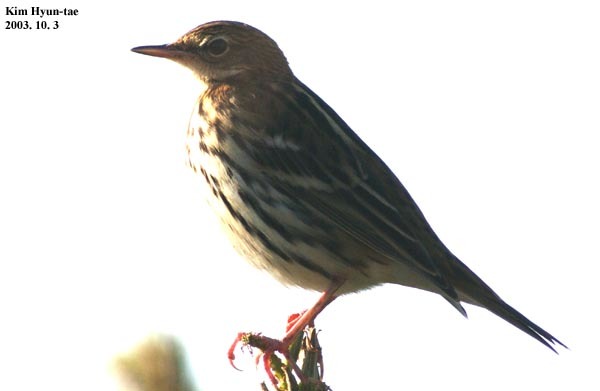
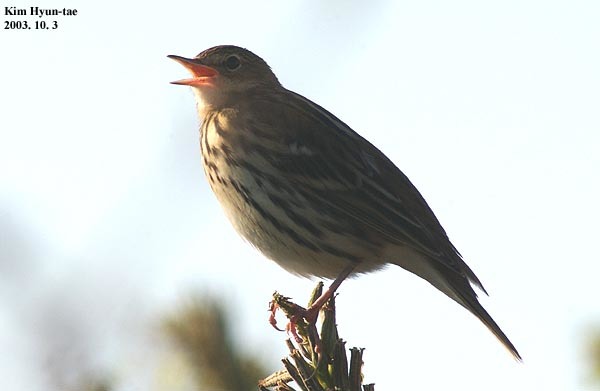
Passeriformes / Motacillidae / Anthus
Pechora Pipit
Anthus gustavi · 北鹨
Introduction
A small passerine bird breeding in the East Palearctic tundra and densely vegetated areas near river banks, ranging from the Pechora River to the Chukchi Peninsula, including Kamchatka and the Commander Islands, with a disjunct population in northeastern China and southeastern Siberia. It is a long-distance migrant wintering in Indonesia.
Description
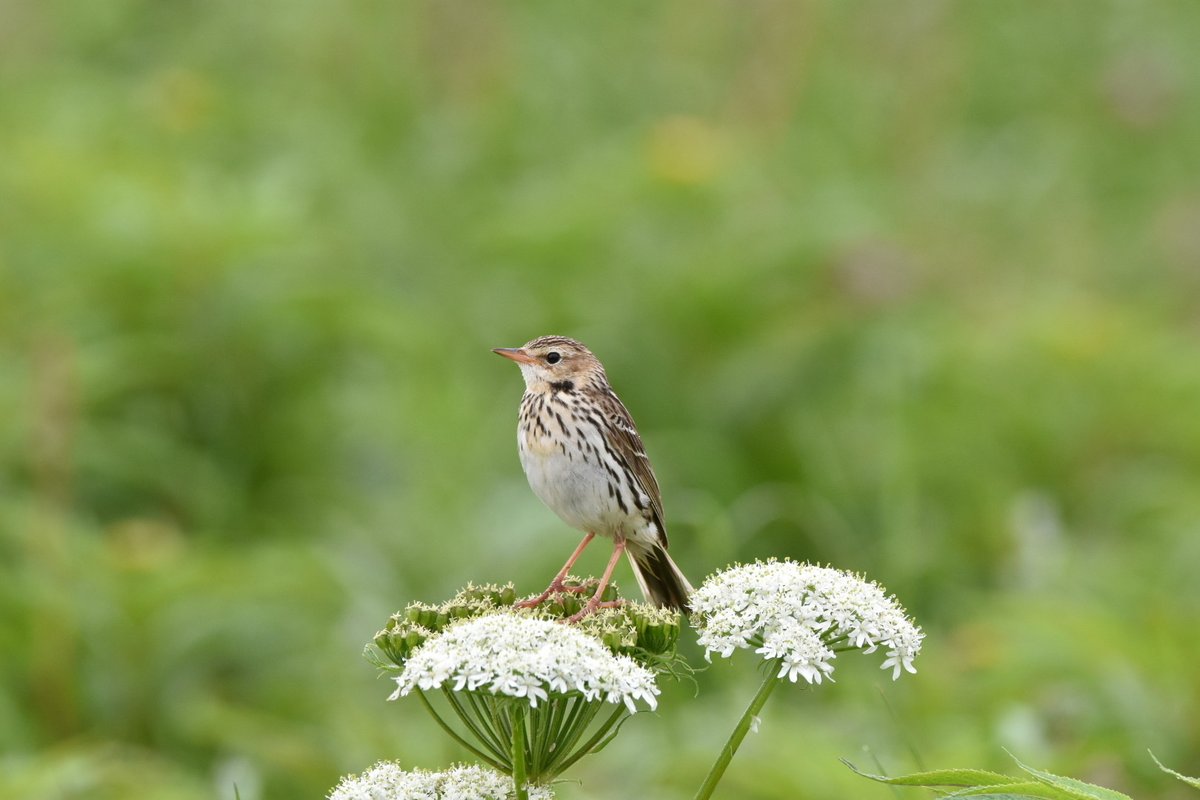
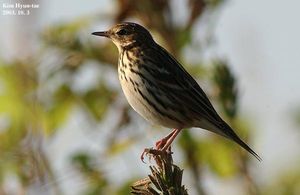
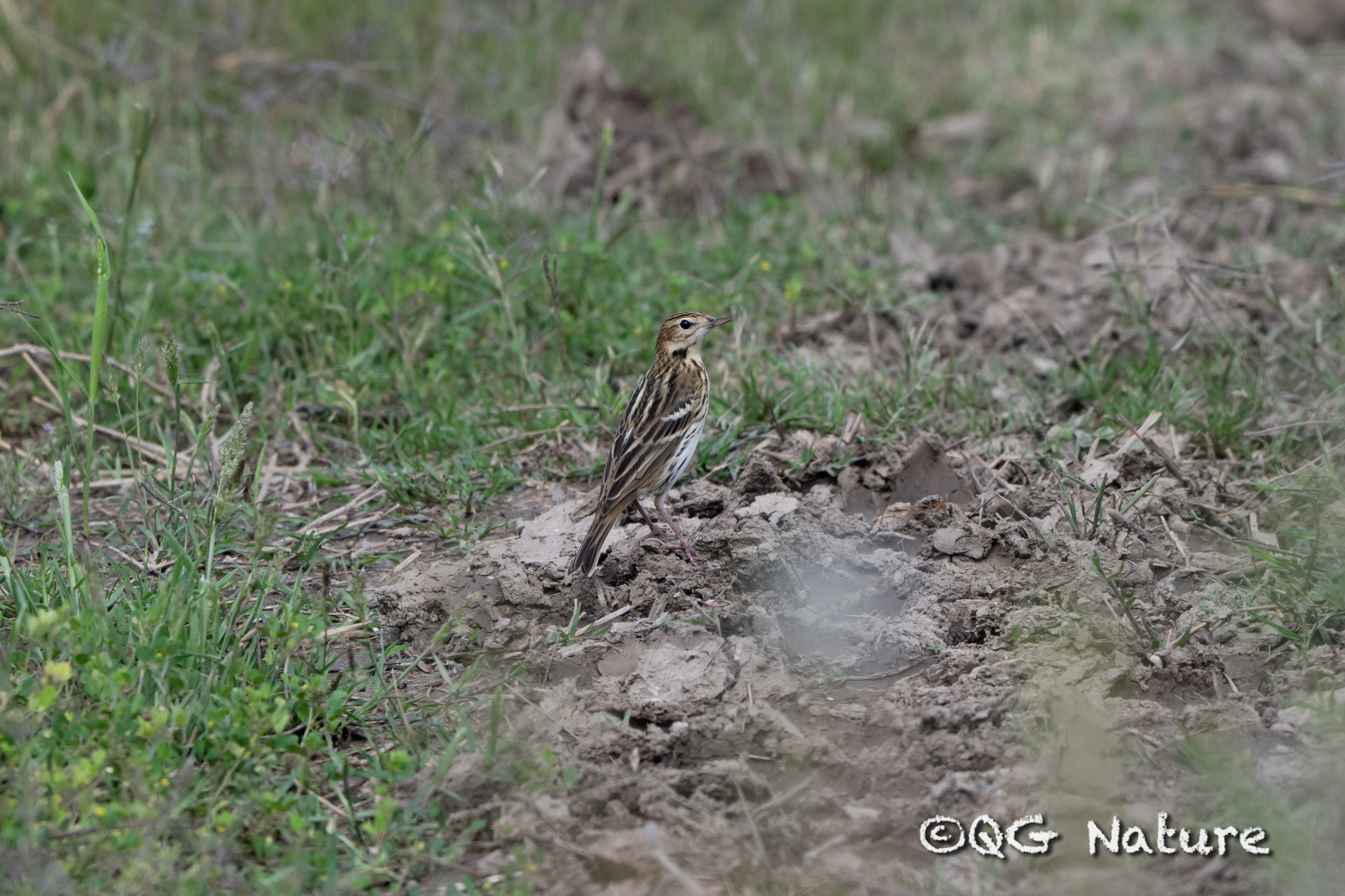
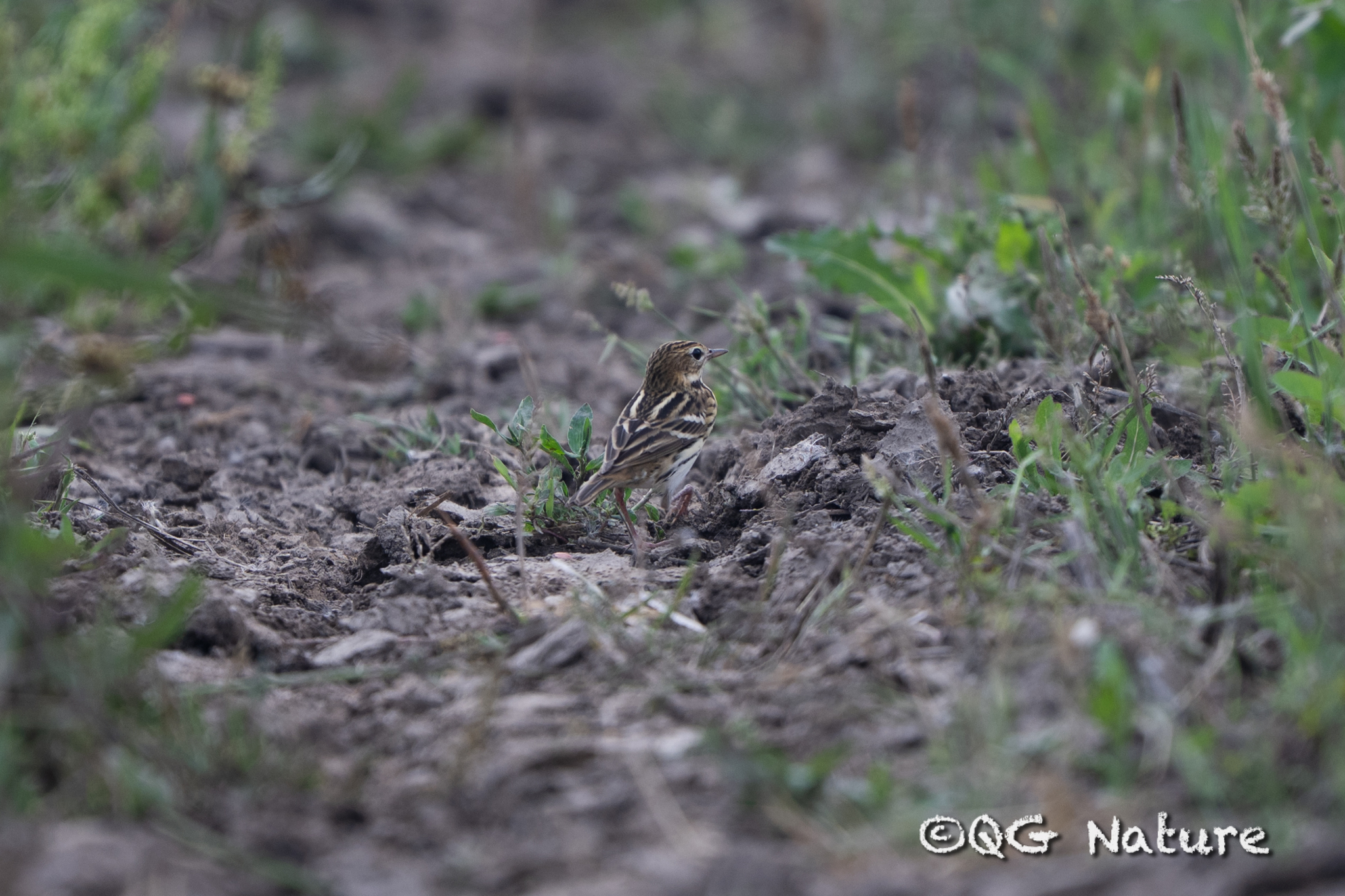
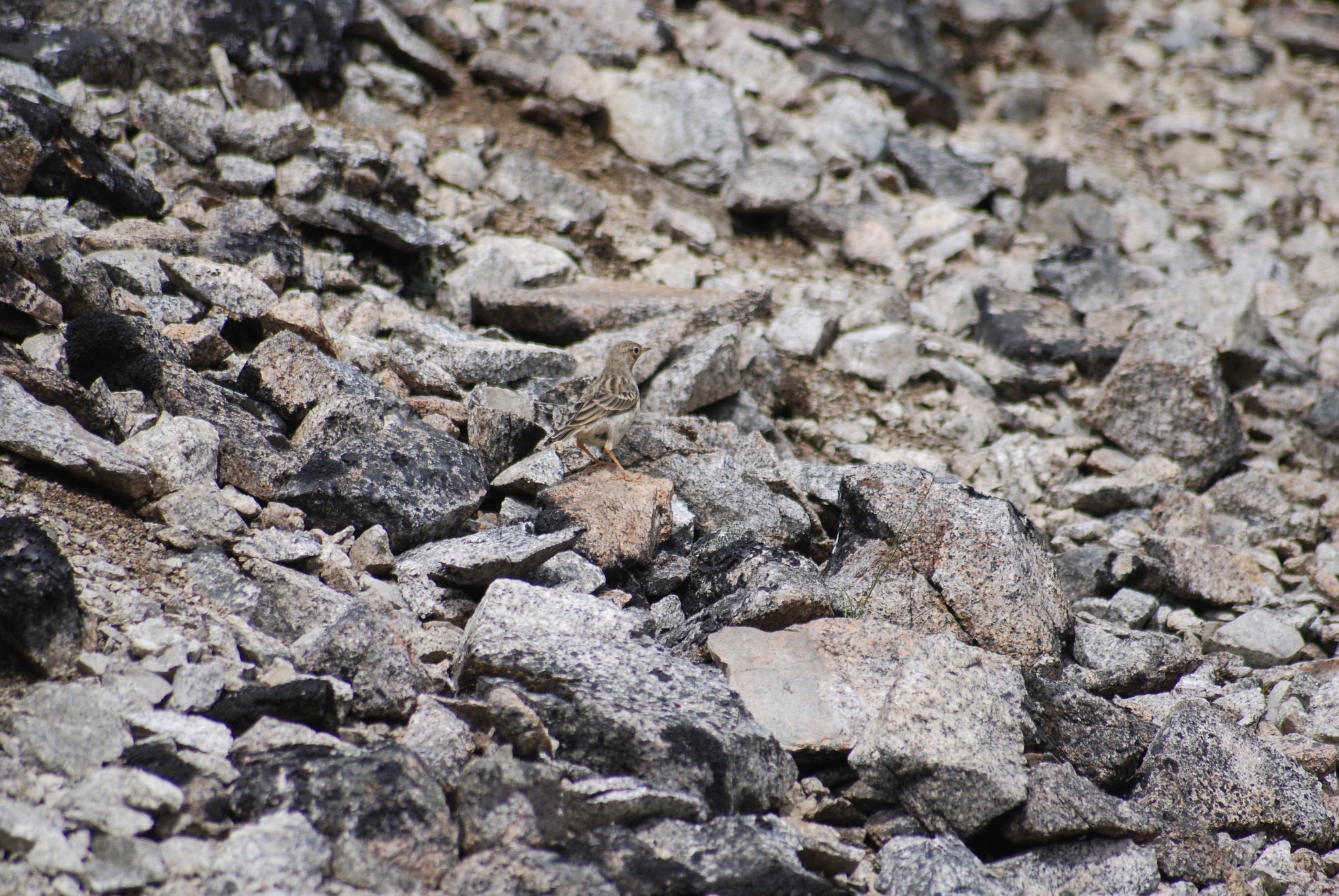
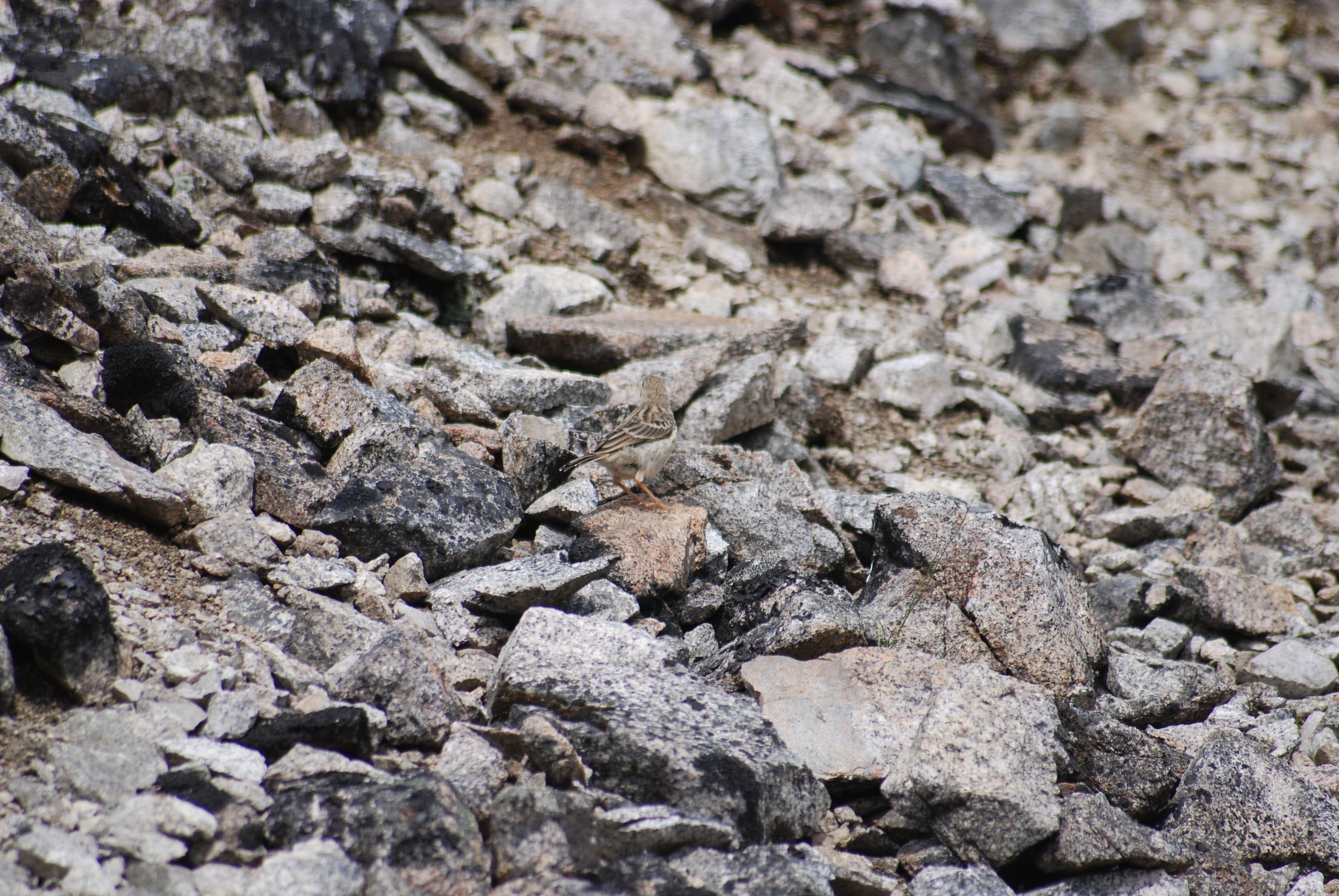
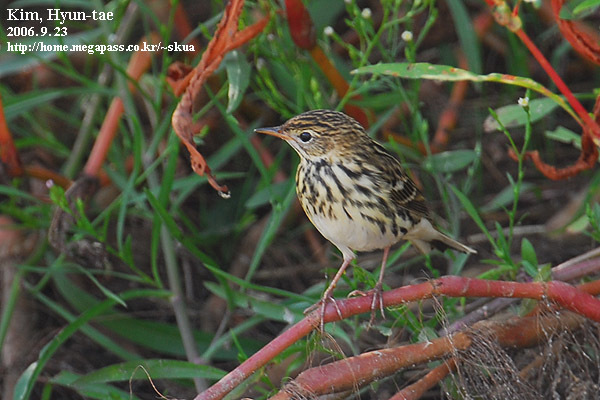
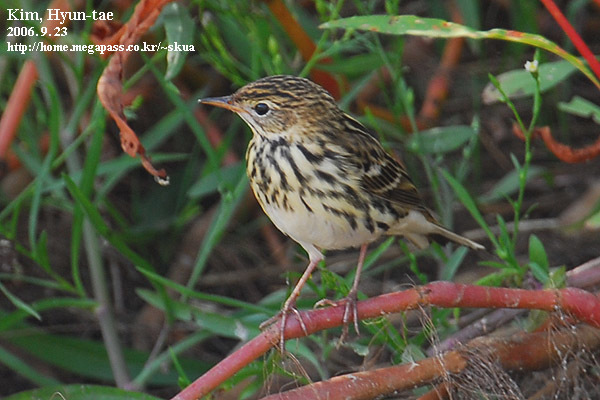
Small pipit resembling non-breeding red-throated pipit in plumage. Heavily streaked brown above with whitish mantle stripes. Below, it has black markings on a white belly and buff breast. Distinguished by a heavier bill, whiter mantle stripes, and contrast between the buff breast and white belly.
Identification
Distinguished from red-throated pipit by heavier bill, whiter mantle stripes, and contrast between buff breast and white belly. Call is a distinctive electrical zip, though the species calls far less than most pipits. Skulking habits and reluctance to fly make identification difficult away from breeding grounds.
Distribution & Habitat
Breeds in Arctic shrub tundra across northern Siberia (subspecies A. g. gustavi) and temperate southeastern Siberia and northeastern China in the Ussuri and lower Amur river basins (subspecies A. g. menzbieri). Breeding range extends from the Pechora River to the Chukchi Peninsula, including Kamchatka and the Commander Islands. Long-distance migrant wintering in Indonesia. Rare vagrant to western Europe in September and October, particularly Fair Isle, Shetland.
Behavior & Ecology
Insectivorous. Creeps in long grass and is reluctant to fly even when disturbed. Nests on the ground in damp tundra, open forest, or marshland, laying four or five eggs.
Source: Wikipedia · CC BY-SA 3.0
Taxonomy
- Order
- Passeriformes
- Family
- Motacillidae
- Genus
- Anthus
Subspecies (2)
-
Anthus gustavi gustavi
breeds northwestern Russia from west of the Urals eastward to the Kamchatka Peninsula and Commander Islands; winters mainly Phillipines and eastern Indonesia
Data Sources
Species description from Wikipedia, licensed under CC BY-SA 3.0.
Bird images and sounds sourced from GBIF, contributed by citizen scientists worldwide under Creative Commons licenses.
Taxonomy data from AviList 2025.