Pechora Pipit
Anthus gustavi
北鹨
Introduction
This passerine breeds across the East Palearctic tundra and river valleys of northern Siberia, from the Pechora River to the Chukchi Peninsula, including Kamchatka and the Commander Islands. A disjunct breeding population occurs in northeastern China and southeastern Siberia. It migrates to Indonesia for the boreal winter. The species was described in 1863 by Robert Swinhoe; its breeding grounds were first documented in 1875 by Henry Seebohm along the Pechora River, which gave the species its common name.
Description
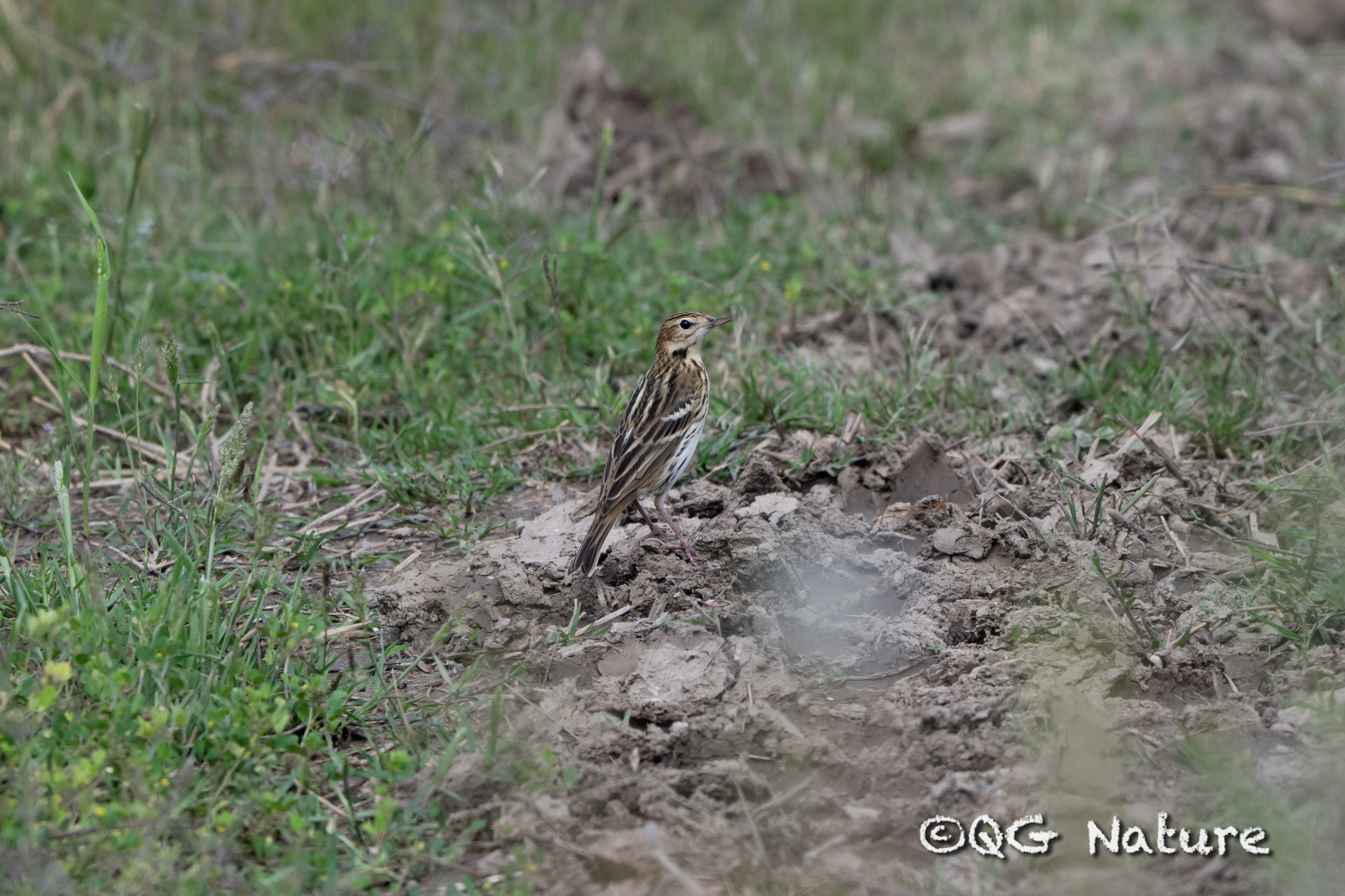
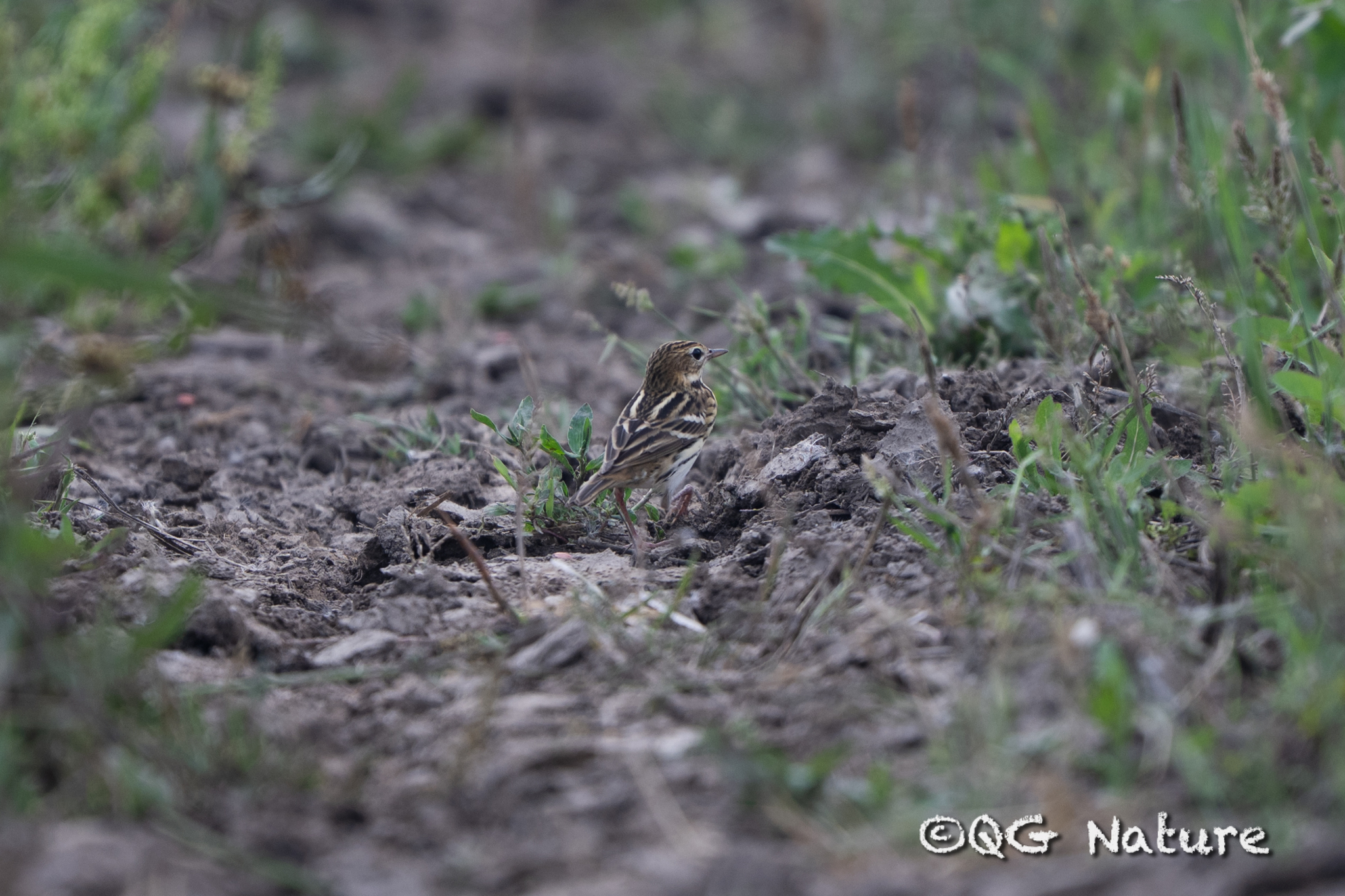
A small pipit with heavily streaked brown upperparts featuring distinctive whitish mantle stripes. The underparts display black markings on a white belly contrasting with a buff-colored breast. This species closely resembles the non-breeding plumage of the red-throated pipit but can be distinguished by its heavier bill, more prominent white mantle stripes, and the sharp contrast between the buff breast and white belly. The bird moves through long grass with a creeping gait and is remarkably reluctant to take flight even when disturbed. Its call is a distinctive electrical 'zip' sound, though this species calls much less frequently than most other pipits.
Identification
This is a challenging species to observe and identify away from its breeding grounds due to its skulking behavior and infrequent calling. The electrical 'zip' call, when heard, is diagnostic, but birders should not rely on hearing it frequently. The combination of heavy streaking, white mantle stripes, and the buff-white contrast on the underparts helps distinguish it from similar pipits. Western European observers have the best chance of finding this species on Fair Isle in the Shetland Islands, where the lack of vegetation cover makes these normally secretive birds easier to spot.
Distribution & Habitat
Breeds across the East Palearctic from the Pechora River in northwestern Siberia east to the Chukchi Peninsula, including Kamchatka and the Commander Islands. A separate population breeds in temperate southeastern Siberia, northeastern China, and the Ussuri and lower Amur river basins. The species migrates long distances to winter in Indonesia. Rare vagrants occasionally appear in western Europe during September and October.
Behavior & Ecology
This species moves through dense grass with a stealthy, creeping gait and typically flushes only when almost stepped upon. It is insectivorous like other pipits. The breeding habitat consists of damp tundra, open forest, or marshland. The nest is constructed on the ground where the female lays a clutch of four or five eggs. The species produces a distinctive electrical 'zip' call, though it vocalizes far less frequently than most pipit species.
Conservation
No conservation assessment details were provided in the source article.
Culture
The genus name Anthus derives from Latin, referring to a small grassland bird. The specific epithet gustavi commemorates the Dutch naturalist Gustaaf Schlegel, who first discovered the species in Amoy (now Xiamen), China in the early 1860s. The English common name references the Pechora River in northwestern Russia, where the first breeding grounds were documented by Henry Seebohm in 1875.
Source: Wikipedia · CC BY-SA 3.0
Taxonomy
- Order
- Passeriformes
- Family
- Motacillidae
- Genus
- Anthus
- eBird Code
- pecpip
Subspecies (2)
-
Anthus gustavi gustavi
breeds northwestern Russia from west of the Urals eastward to the Kamchatka Peninsula and Commander Islands; winters mainly Phillipines and eastern Indonesia
-
Anthus gustavi menzbieri
breeds Russian Far East and far northeastern China; winter range unknown
Data Sources
Species description from Wikipedia, licensed under CC BY-SA 3.0.
Bird images and sounds sourced from GBIF, contributed by citizen scientists worldwide under Creative Commons licenses.
Taxonomy data from AviList 2025.