



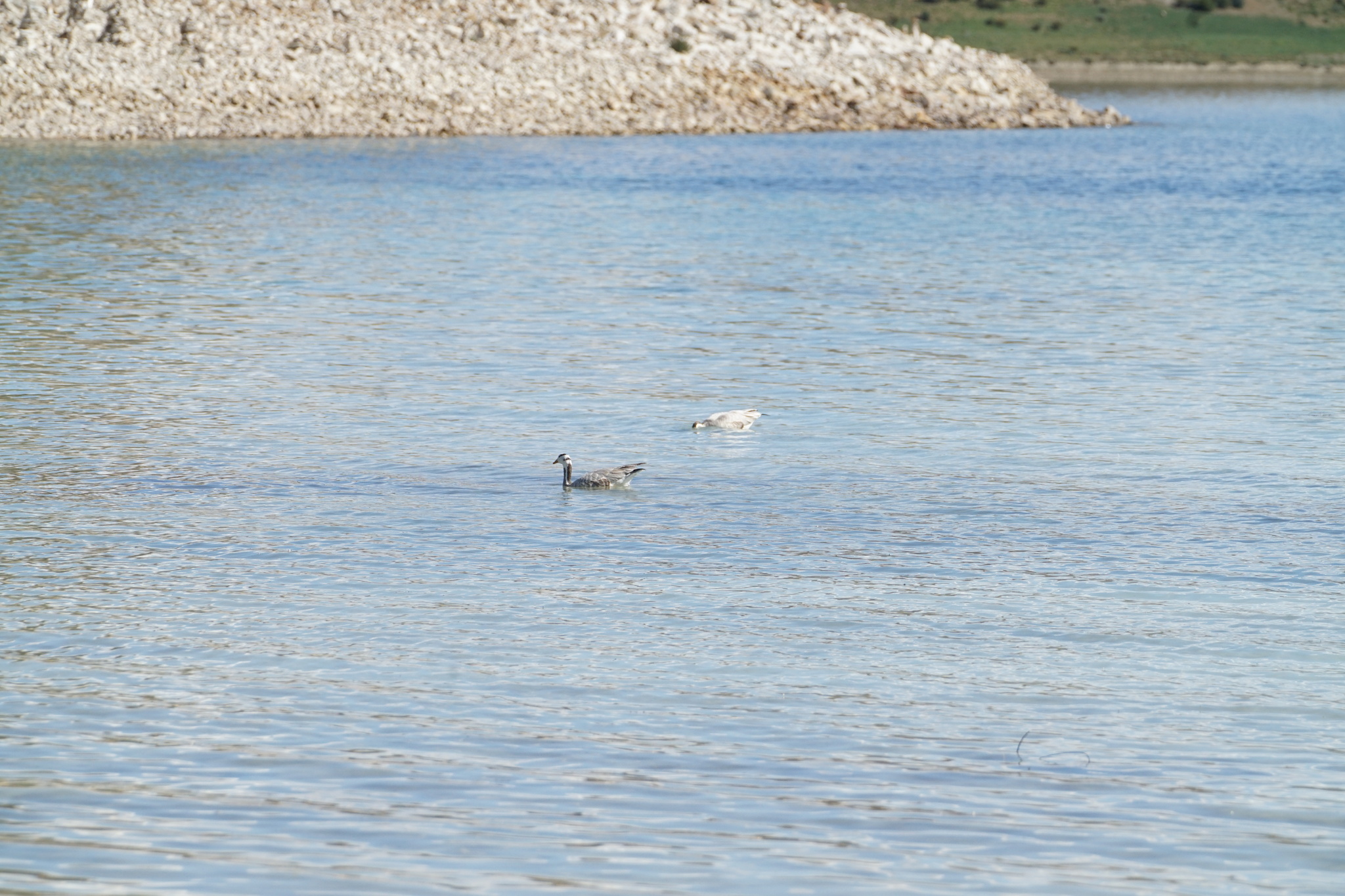


Bar-headed Goose
Anser indicus
斑头雁
Introduction
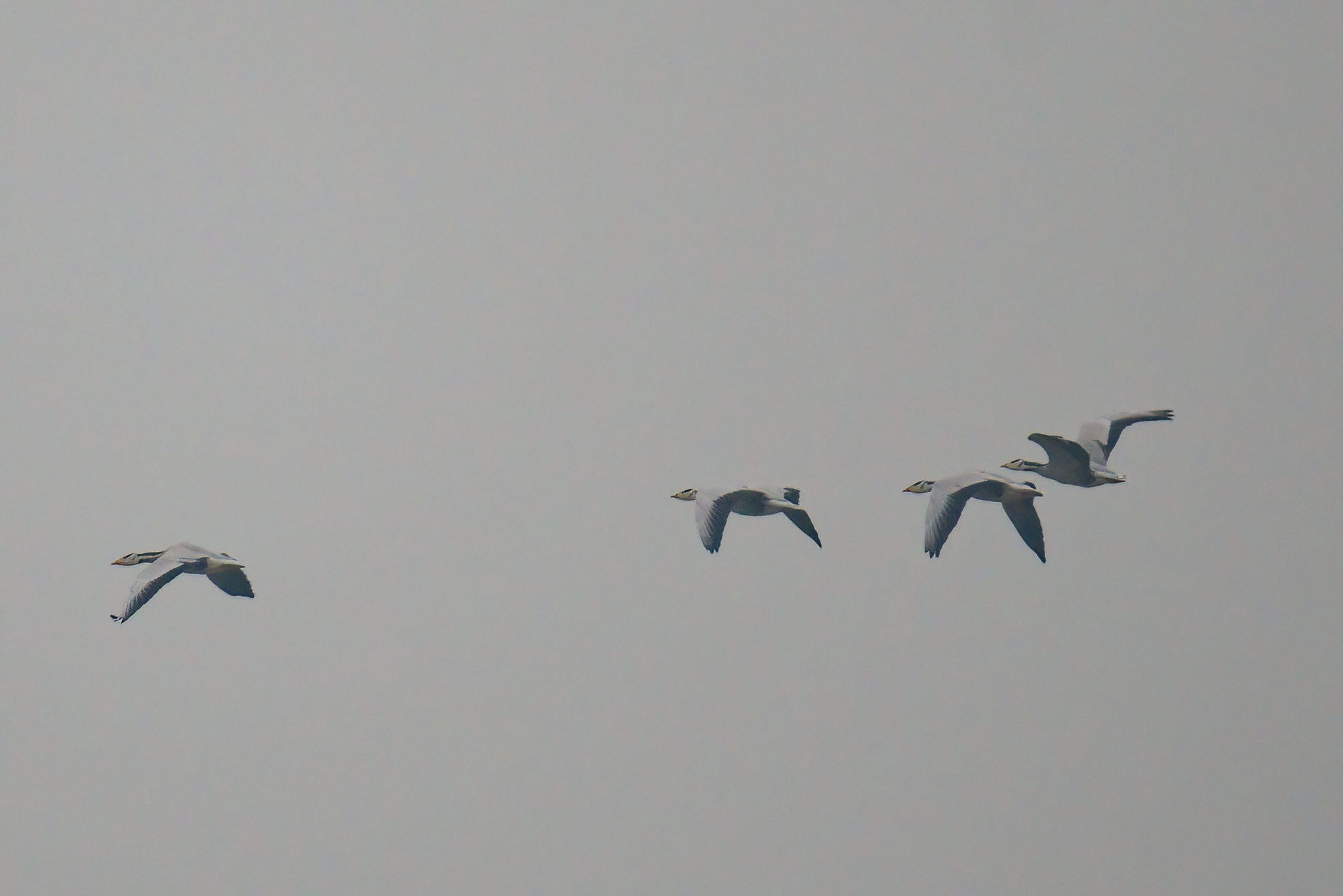
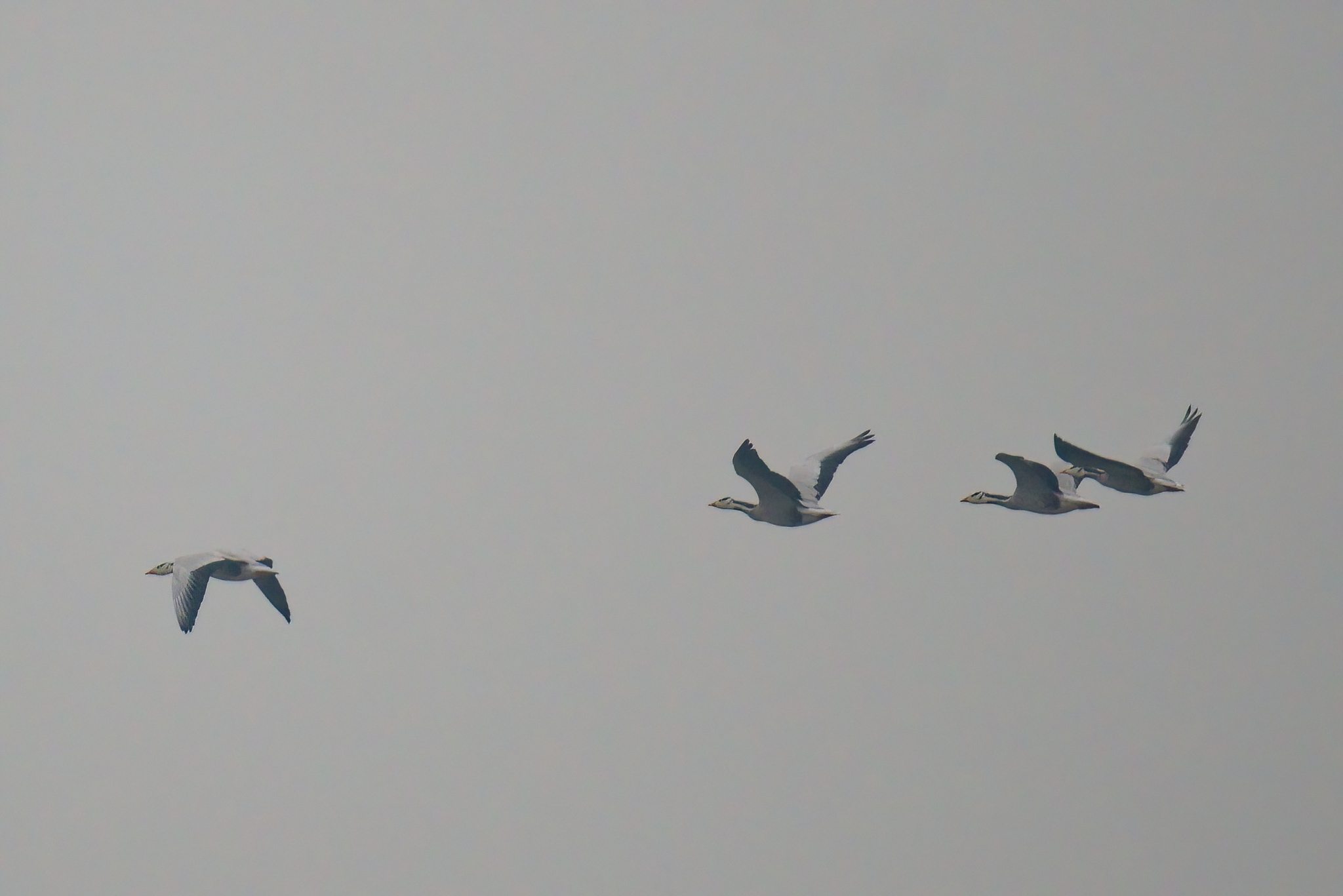
A goose species (Anser indicus) basal within the grey goose genus Anser. Breeds in Central Asia in colonies of thousands near mountain lakes, from the Tibetan Plateau north to Mongolia, Kazakhstan, and Russia. Winters in South Asia from Assam to Tamil Nadu and peninsular India. Distinguished by extreme altitude migration across the Himalayas, undertaken non-stop in as little as seven hours, with peak recorded flights reaching 7,290 m. Specialized physiological adaptations include hemoglobin with high oxygen affinity and increased cardiac capillaries for high-altitude flight. The total population may be increasing across a range exceeding 2,500,000 km².
Description
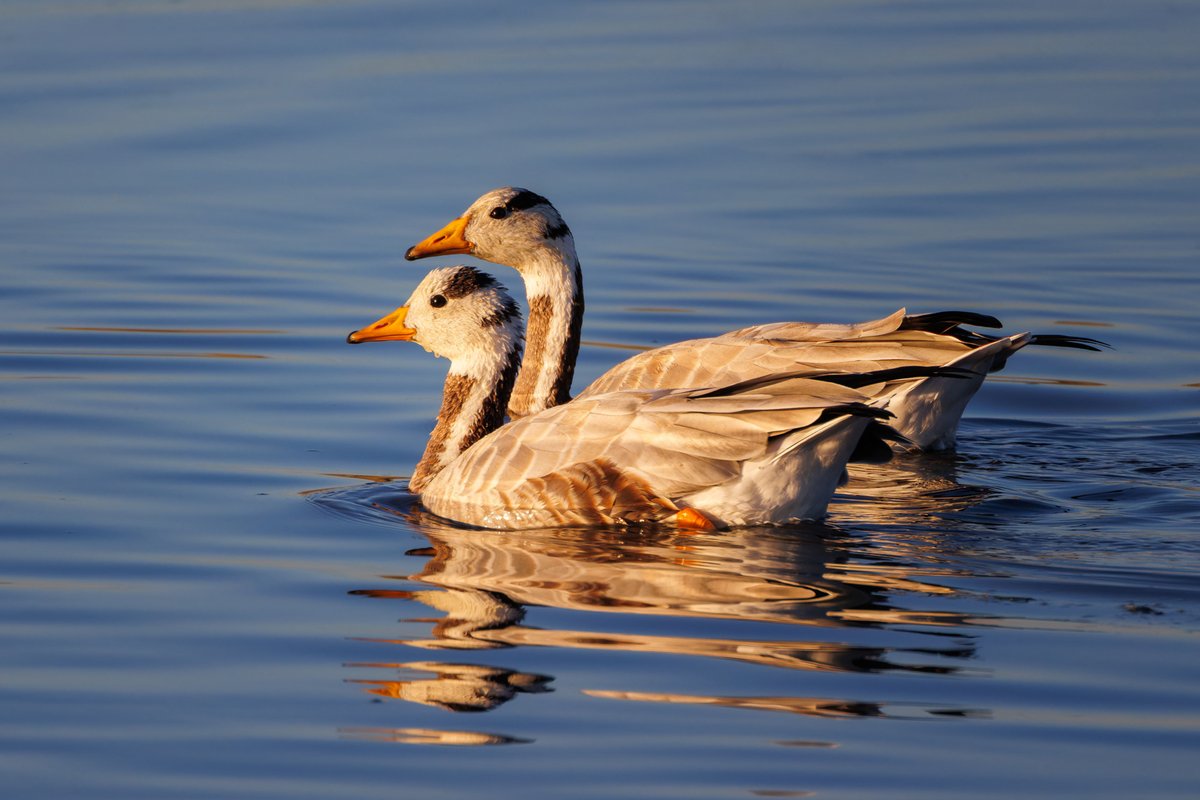
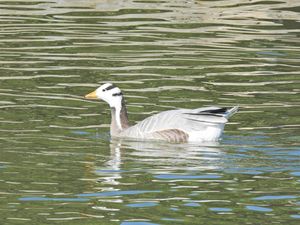
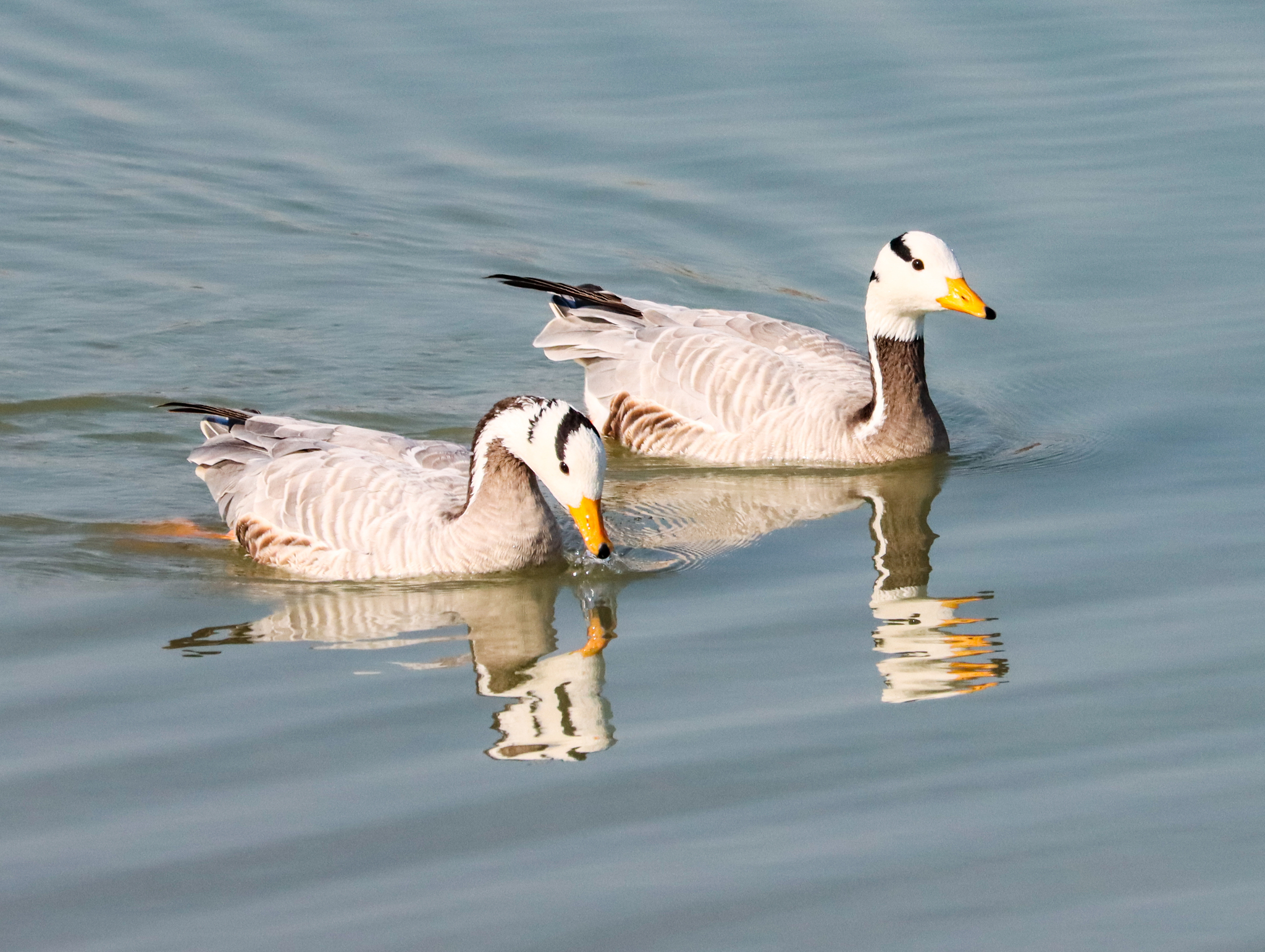
A mid-sized pale grey goose measuring 71-76 cm in length and weighing 1.87-3.2 kg. The head is white with two distinct black bars running horizontally. Much paler than other geese in the genus Anser. The plumage is uniformly pale grey throughout. In flight, produces typical goose honking calls.
Identification
Readily distinguished from all other grey geese in the genus Anser by the two black bars on the otherwise white head. Also significantly paler overall than other Anser species. No similar species share this distinctive head pattern within its range.
Distribution & Habitat
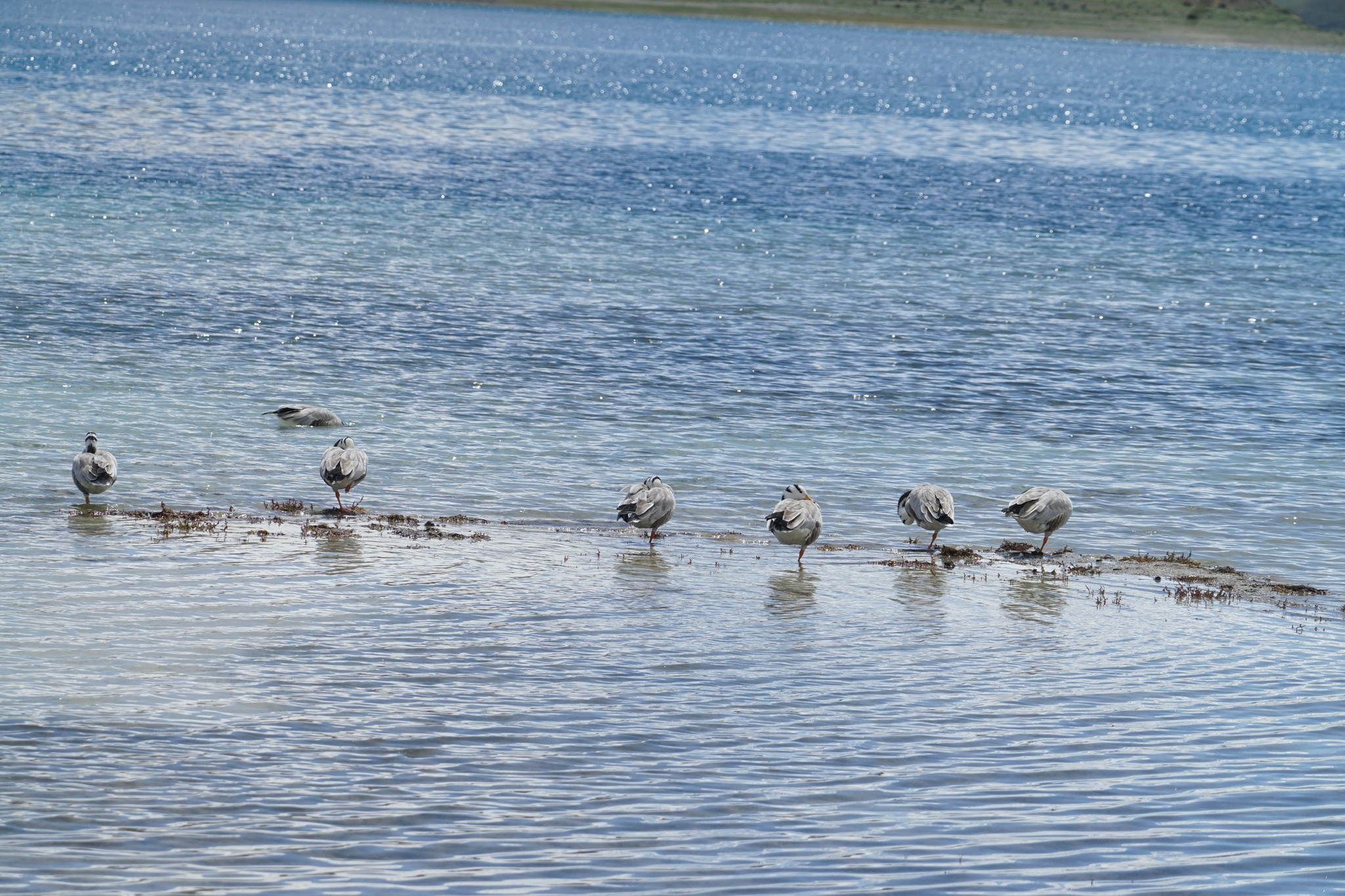
Breeds on the Tibetan Plateau and surrounding regions of Central Asia including Mongolia, Kazakhstan, and Russia. Winters primarily in South Asia from Assam through India to Tamil Nadu and peninsular India. Summer habitat consists of high-altitude lakes; winter habitat includes cultivated fields where birds feed on barley, rice, and wheat. Migrates across the Himalayas, with 95% of migration time spent below 5,784 m, though some individuals reach much higher altitudes.
Behavior & Ecology
Diet consists of short grass in summer high-altitude breeding areas and cultivated crops (barley, rice, wheat) in winter. Lays three to eight eggs in ground nests, often breeding in colonies of thousands. Intraspecific brood parasitism occurs, with lower-ranking females attempting to lay eggs in nests of higher-ranking females. Migration across the Himalayas is typically undertaken at night and early morning, with geese waiting for tail winds to die down before undertaking the steepest climbing flights ever recorded in birds. Peak altitude recorded is 7,290 m.
Conservation
The species is not globally threatened. Populations may be increasing across its vast range, though trend assessment is complicated by the species' wide distribution. Highly pathogenic avian influenza has caused mortality, particularly at Qinghai. Naturalized populations of 5-20 breeding pairs exist in Germany from escaped captives. Escaped birds are frequently recorded in Great Britain and Florida, USA.
Culture
Has been suggested as the model for the Hamsa in Indian mythology. Alternatively, scholars propose the bar-headed goose is likely the Kadamb mentioned in ancient and medieval Sanskrit literature, with Hamsa generally referring to the swan. Featured on a Soviet postage stamp commemorating the species.
Source: Wikipedia · CC BY-SA 3.0
Taxonomy
- Order
- Anseriformes
- Family
- Anatidae
- Genus
- Anser
- eBird Code
- bahgoo
Distribution
breeds alpine lakes in central Asia; winters to India and Myanmar
Data Sources
Species description from Wikipedia, licensed under CC BY-SA 3.0.
Bird images and sounds sourced from GBIF, contributed by citizen scientists worldwide under Creative Commons licenses.
Taxonomy data from AviList 2025.