Anseriformes / Anatidae / Anser
Lesser White-fronted Goose
Anser erythropus · 小白额雁
Introduction
A goose species in the genus Anser, closely related to the greater white-fronted goose. It breeds in the northernmost Palearctic and is a scarce breeder in Europe. The species is monotypic with no recognized subspecies. It is classified as an endangered species.
Description
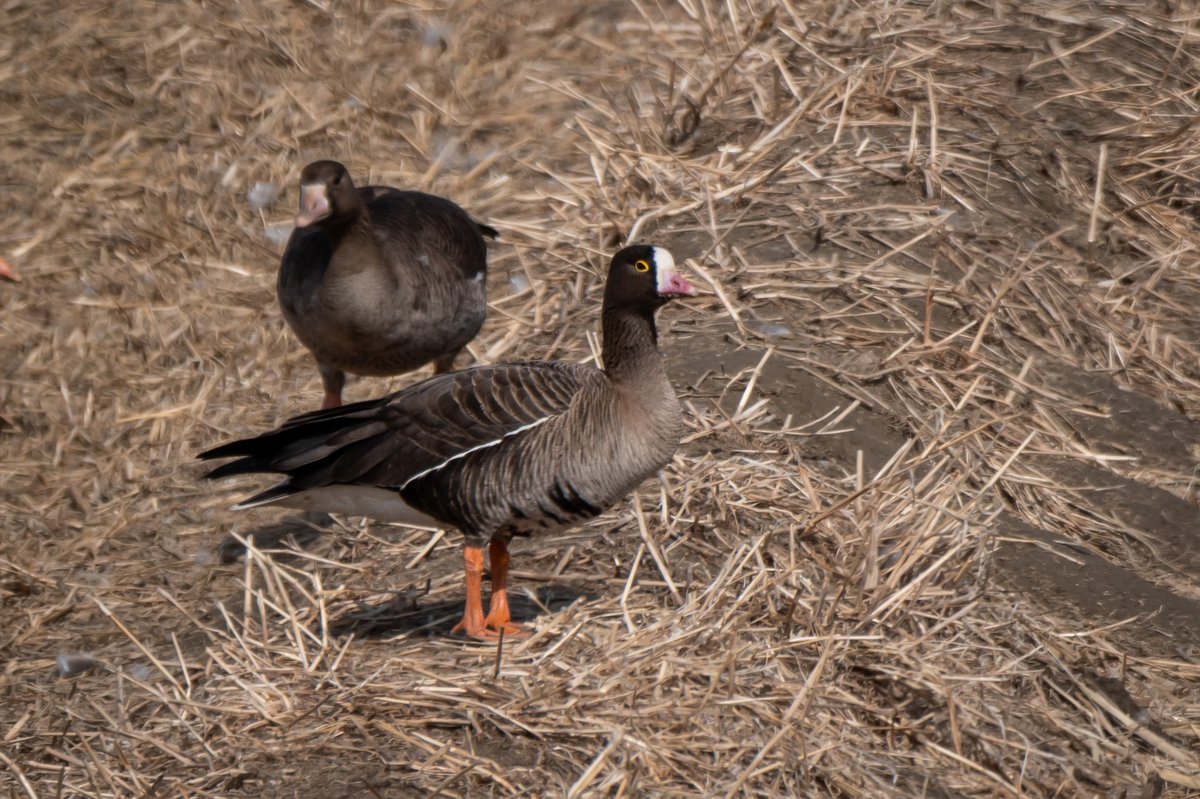
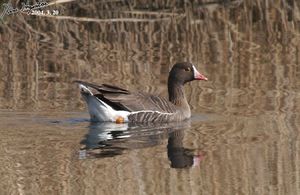
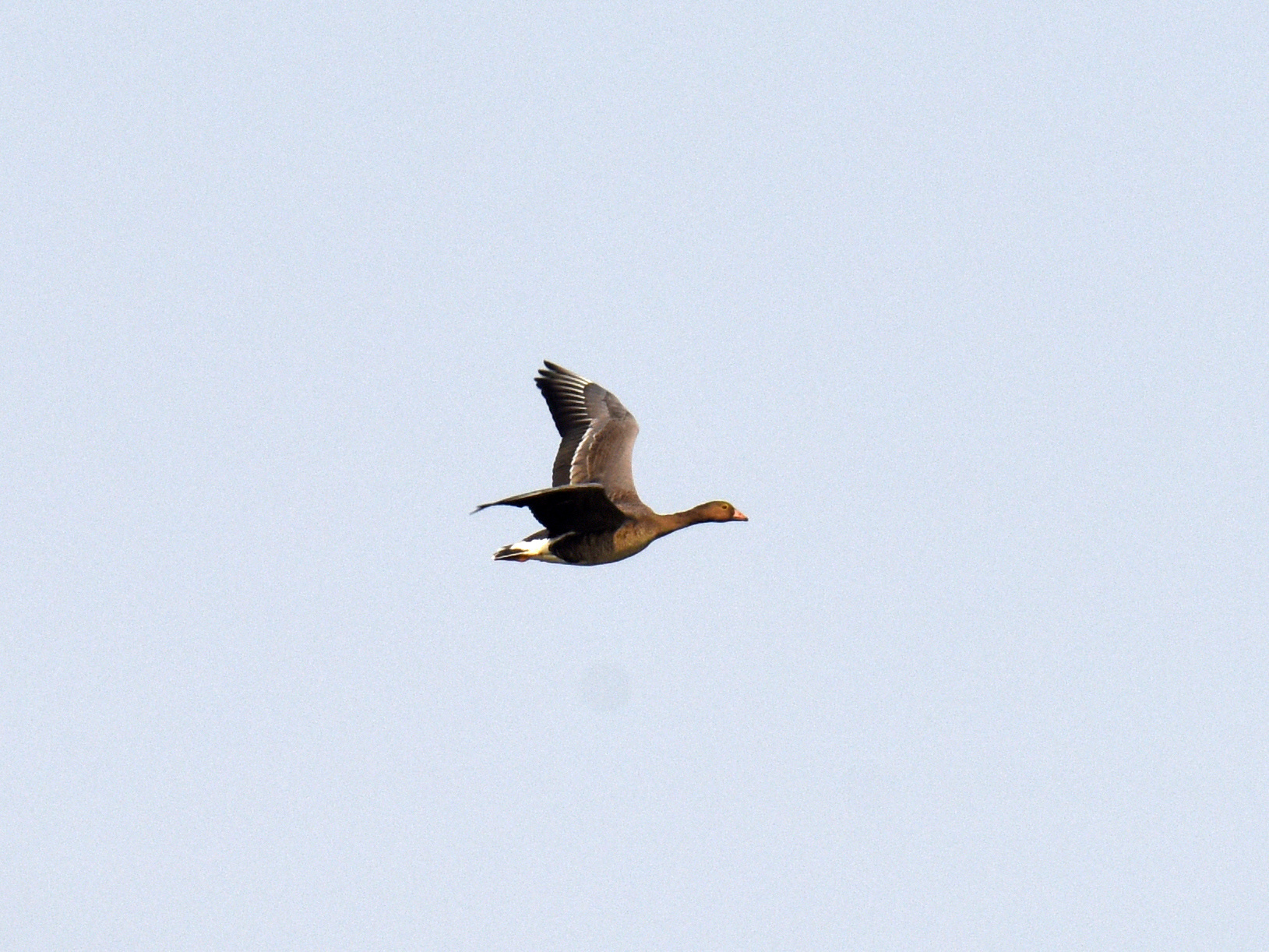
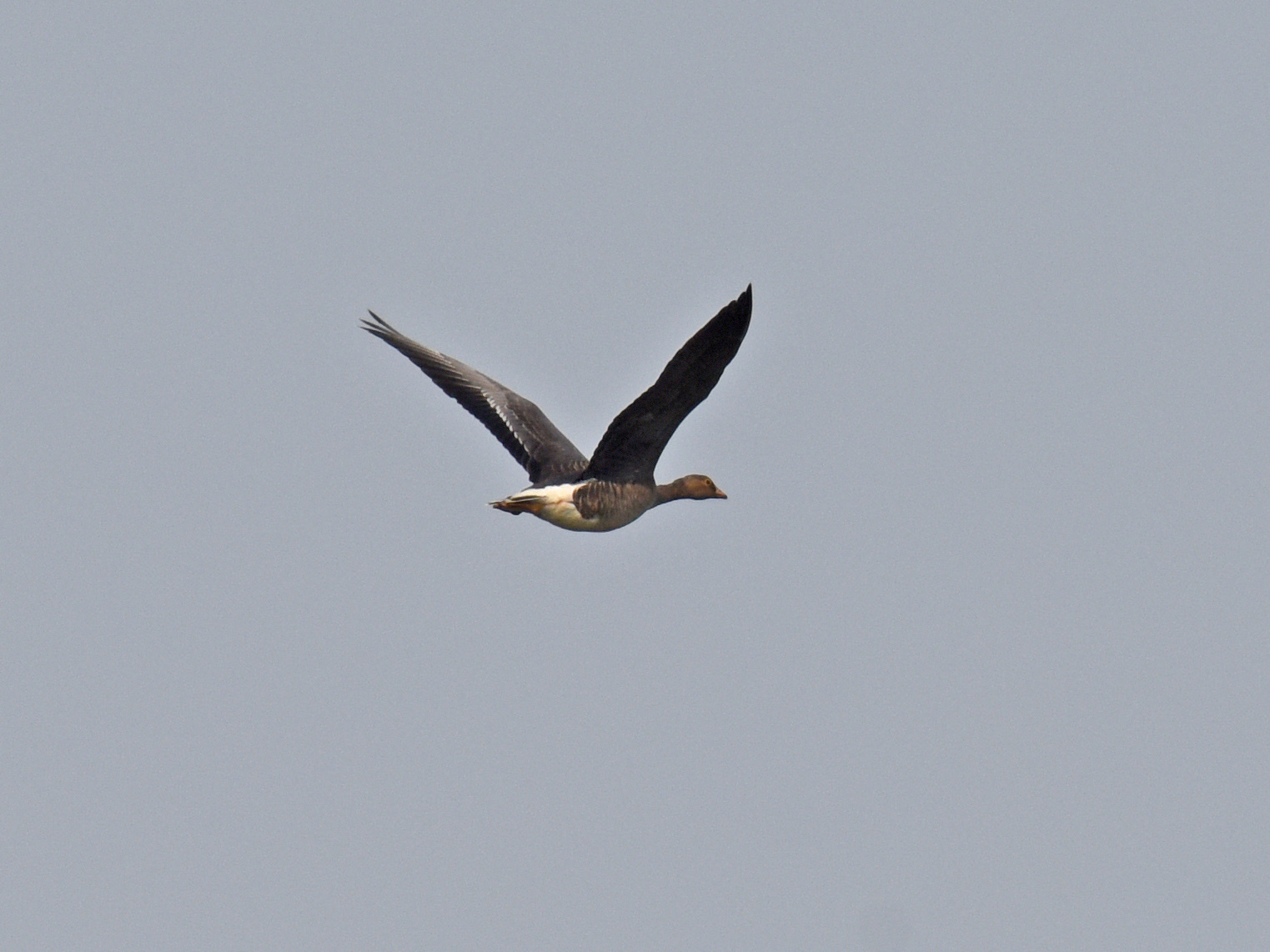
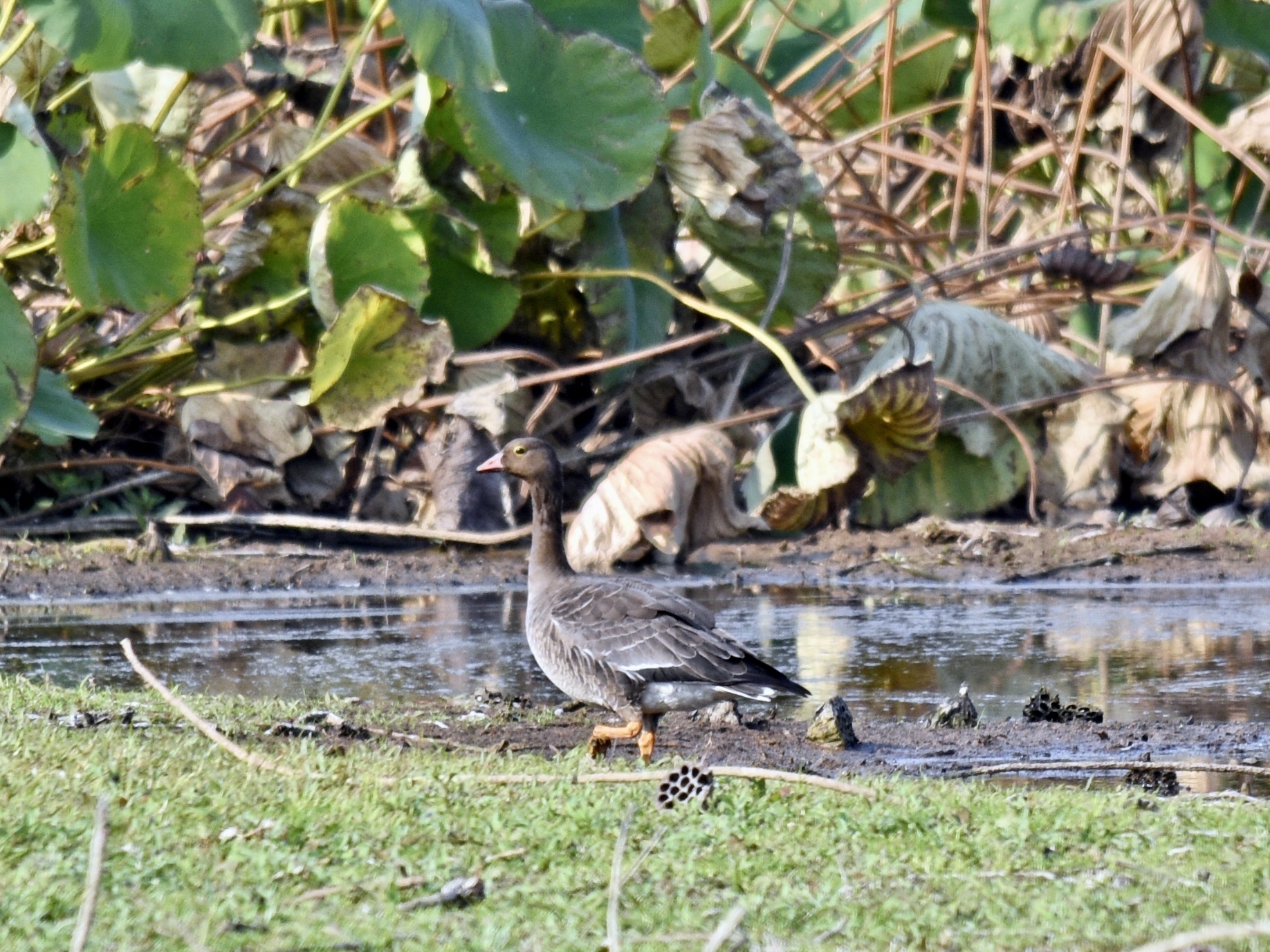
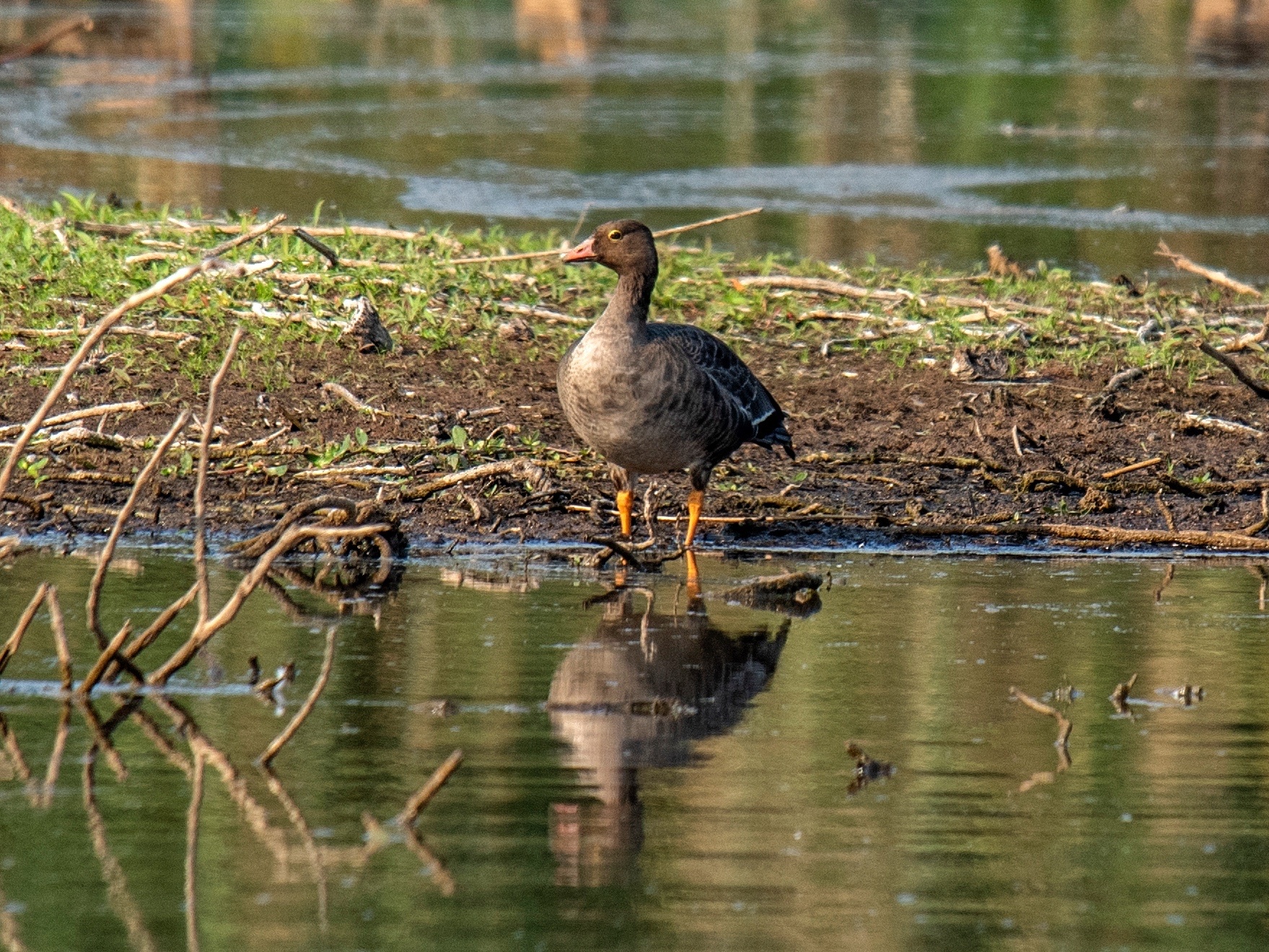
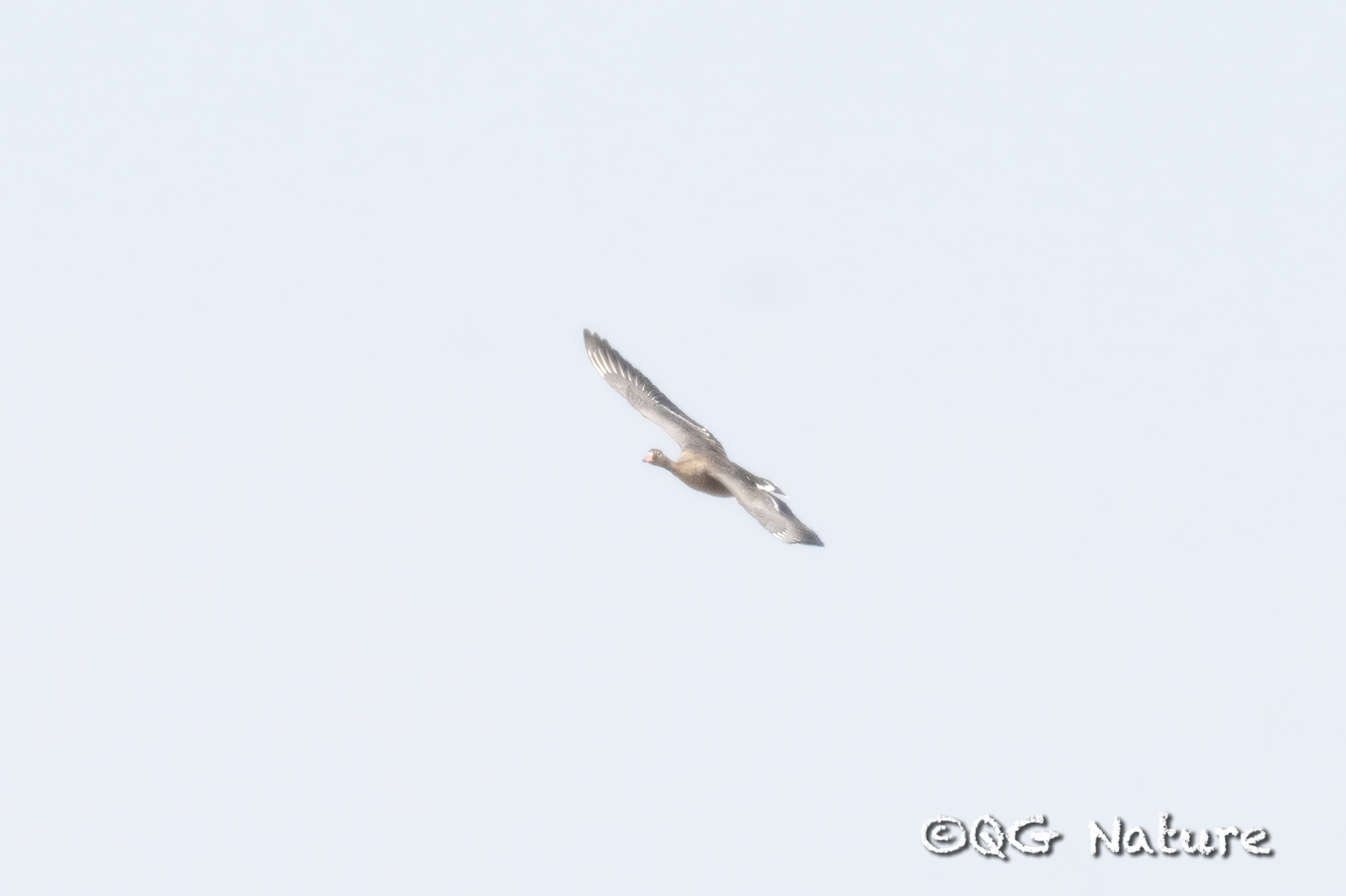
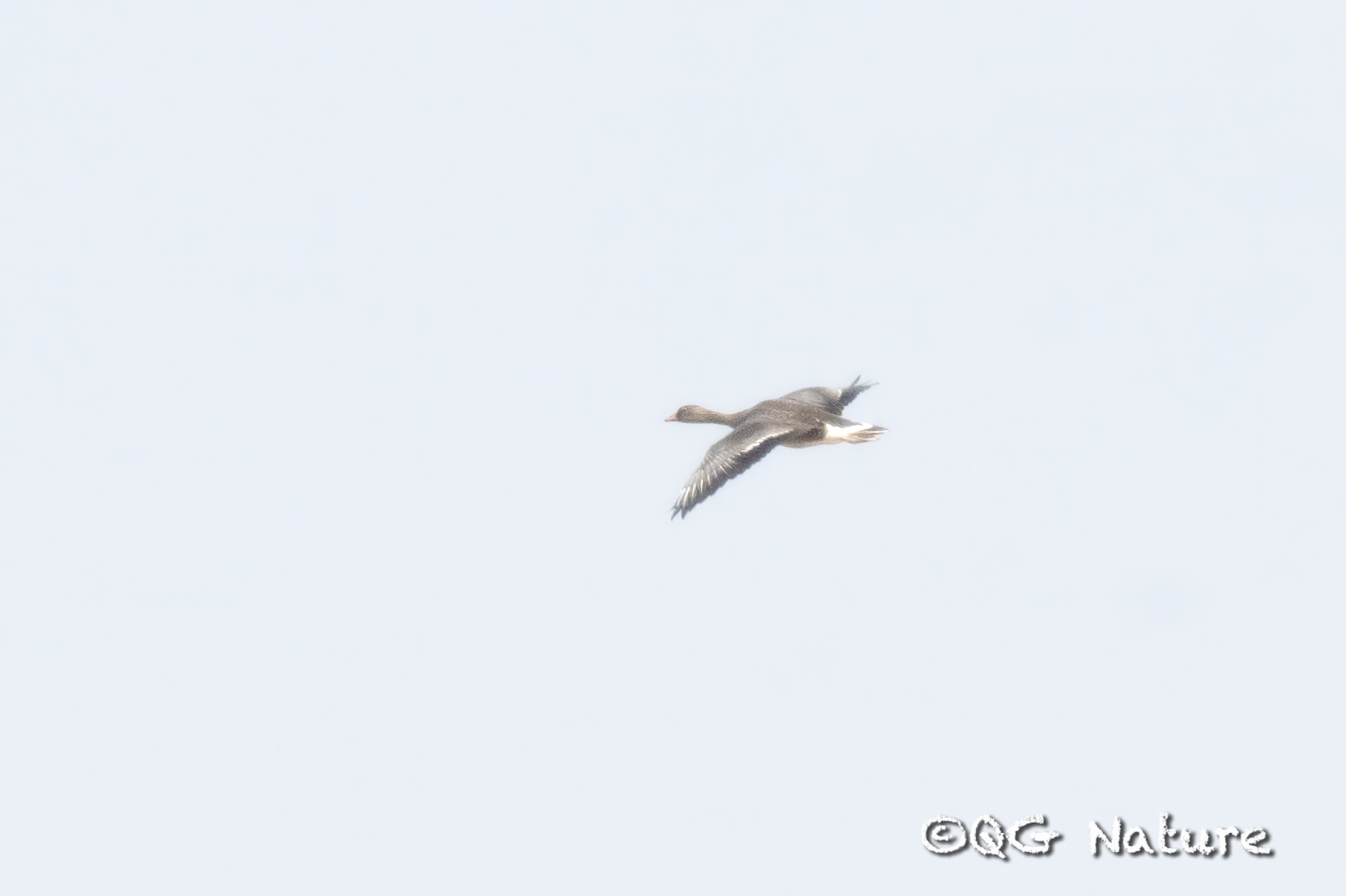
Length 53–66 cm (21–26 in) with a wingspan of 120–135 cm (47–53 in), comparable in size to a mallard. Features bright orange legs and mouse-coloured upper wing-coverts. Adults possess a conspicuous white face with broad black bars crossing the belly. Distinguished from the greater white-fronted goose by smaller size, an obvious yellow eye-ring, and a white facial blaze that extends up to the crown.
Identification
Distinguished from the greylag goose by bright orange legs and mouse-coloured upper wing-coverts, whereas the greylag has flesh-coloured bill and legs with bluish-grey upper wing-coverts. Differentiated from the greater white-fronted goose by smaller size, the presence of a yellow eye-ring, and the white facial blaze reaching the crown.
Distribution & Habitat
Breeds in the northernmost Palearctic, including northern Norway and northern Sweden. Winters further south in Europe, with specific populations overwintering in Greece, Bulgaria, Turkey, Netherlands, and Germany. A rare winter vagrant to Great Britain and India. Uses Hortobágy National Park, Hungary, as a major stop-over site during migration.
Behavior & Ecology
Migratory behavior includes spending up to two months at stop-over sites during autumn migration and one month during spring migration. Reintroduction attempts have occurred in Fennoscandia.
Conservation
Classified as an endangered species globally. Covered by the Agreement on the Conservation of African-Eurasian Migratory Waterbirds (AEWA). The Fennoscandian population is genetically distinct; the segment breeding in northern Sweden was listed as Critically Endangered by the IUCN Red List in 2015, with an estimated 15 breeding pairs or 40–50 individuals. The broader Fennoscandian population is estimated at 20 breeding pairs or 60–80 total individuals. Reintroduction programmes are active to strengthen wild populations.
Source: Wikipedia · CC BY-SA 3.0
Taxonomy
- Order
- Anseriformes
- Family
- Anatidae
- Genus
- Anser
Distribution
breeds arctic Eurasia; winters to southern Europe, India, and China
Data Sources
Species description from Wikipedia, licensed under CC BY-SA 3.0.
Bird images and sounds sourced from GBIF, contributed by citizen scientists worldwide under Creative Commons licenses.
Taxonomy data from AviList 2025.