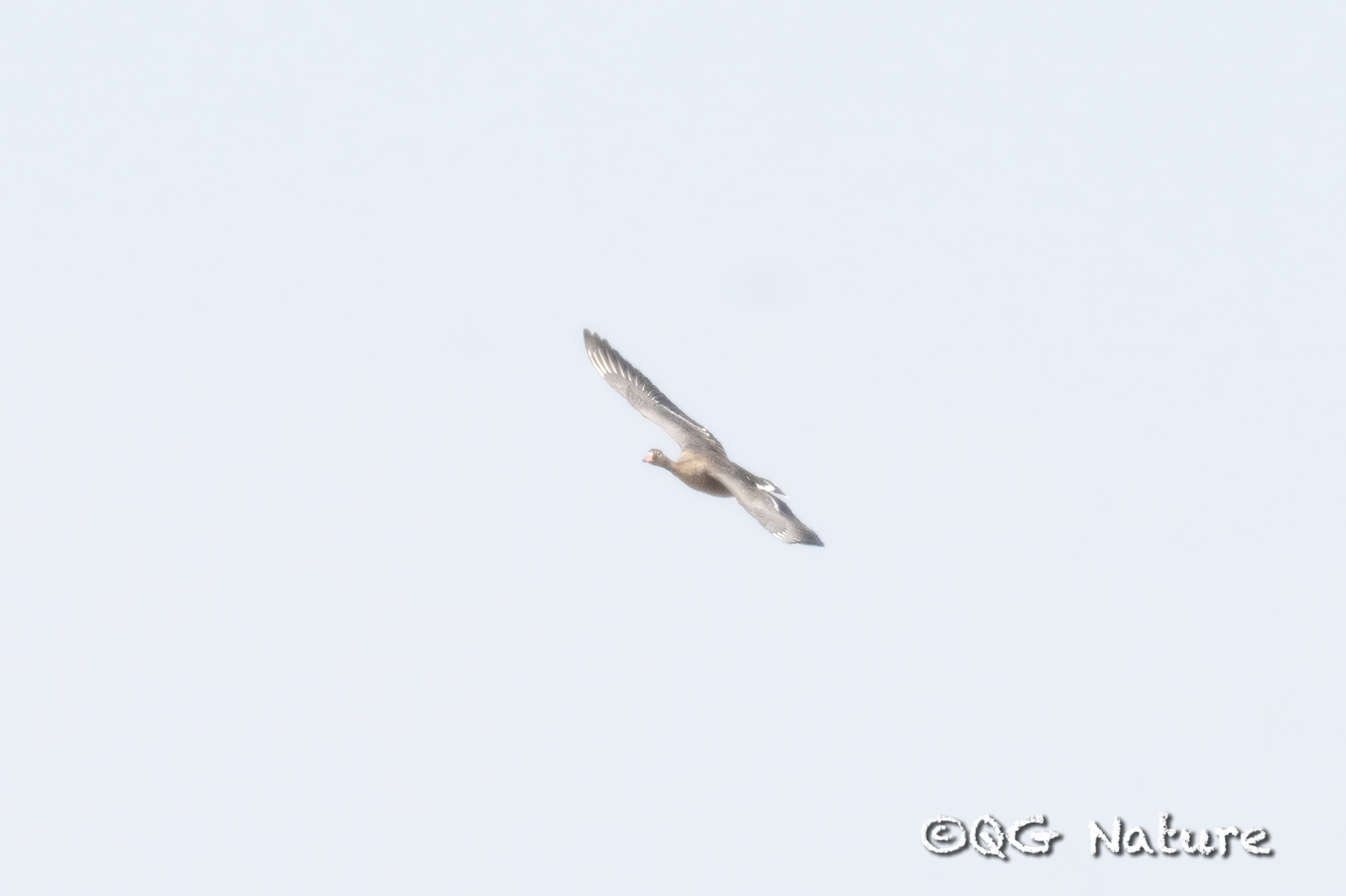
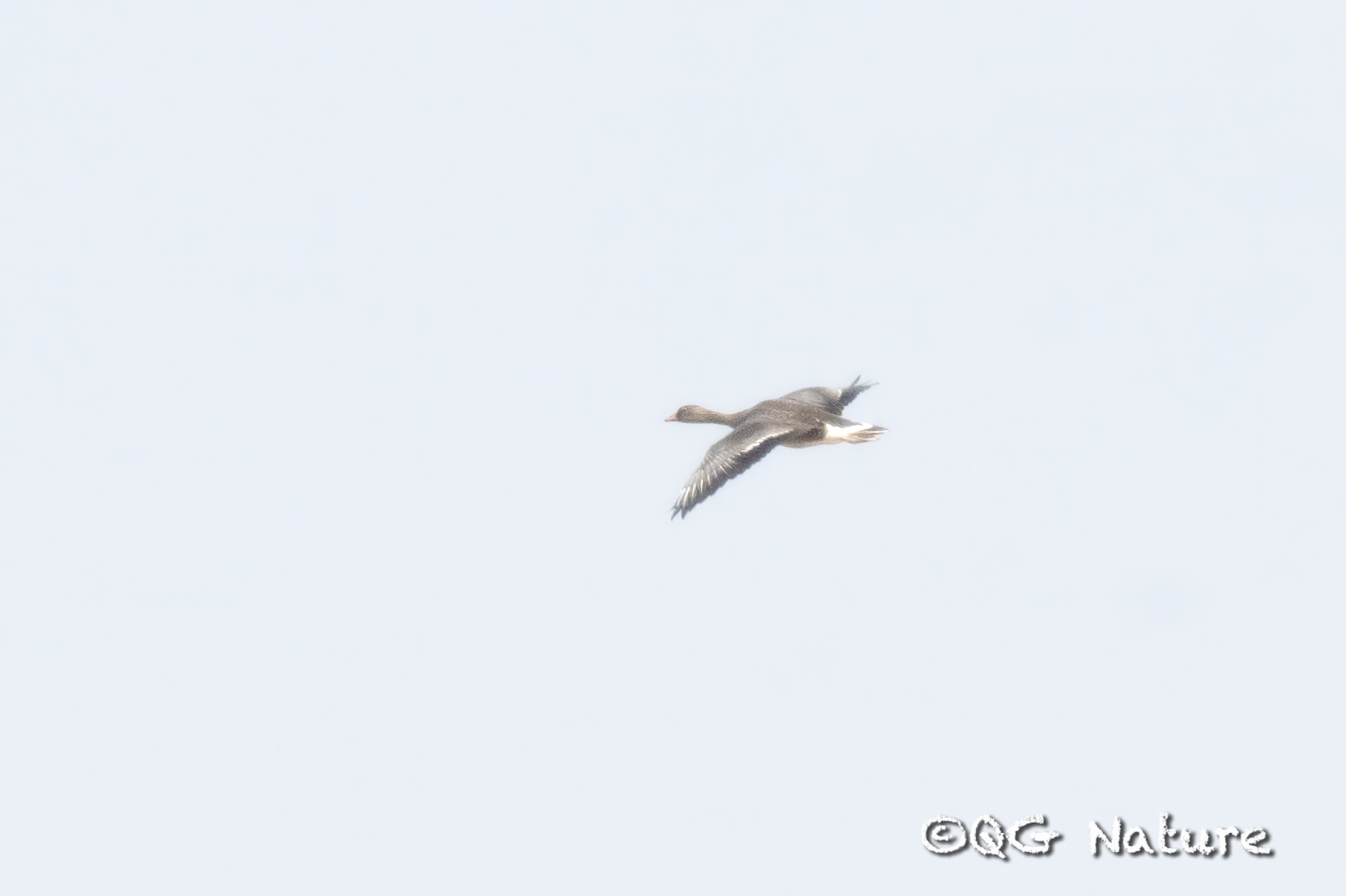
Lesser White-fronted Goose
Anser erythropus
小白额雁
Introduction
The lesser white-fronted goose is a small goose species closely related to the greater white-fronted goose. It breeds in the remote high Arctic of the northernmost Palearctic and has become very scarce in Europe. Body size is marginally larger than a mallard. The species has bright orange legs, a distinctive white face patch, and a yellow eye-ring. It is historically associated with Slimbridge in Gloucestershire, where individual birds formerly appeared regularly and inspired Sir Peter Scott to establish The Wildfowl and Wetlands Trust. Modern records in Britain are rare, reflecting a significant population decline.
Description
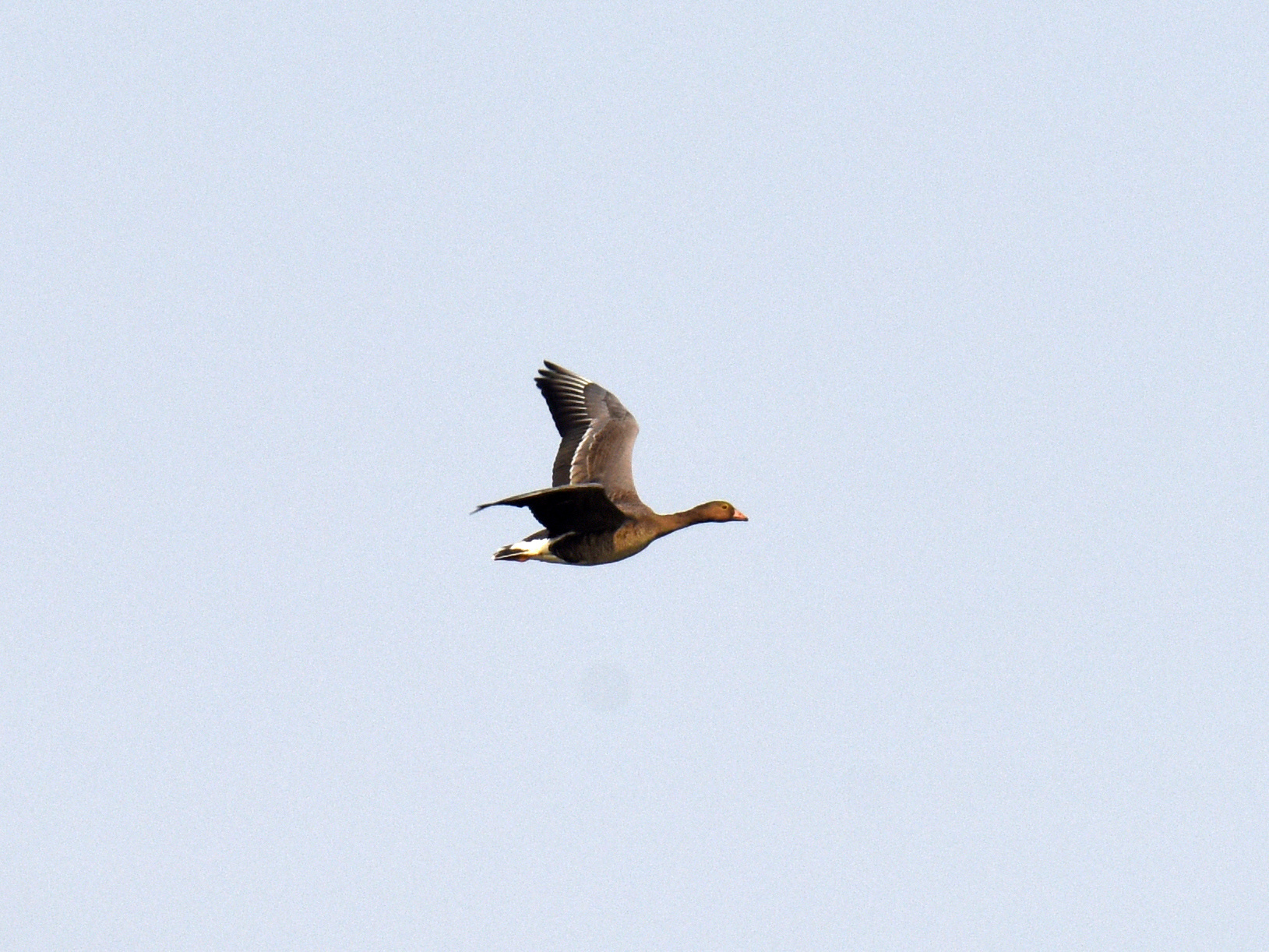
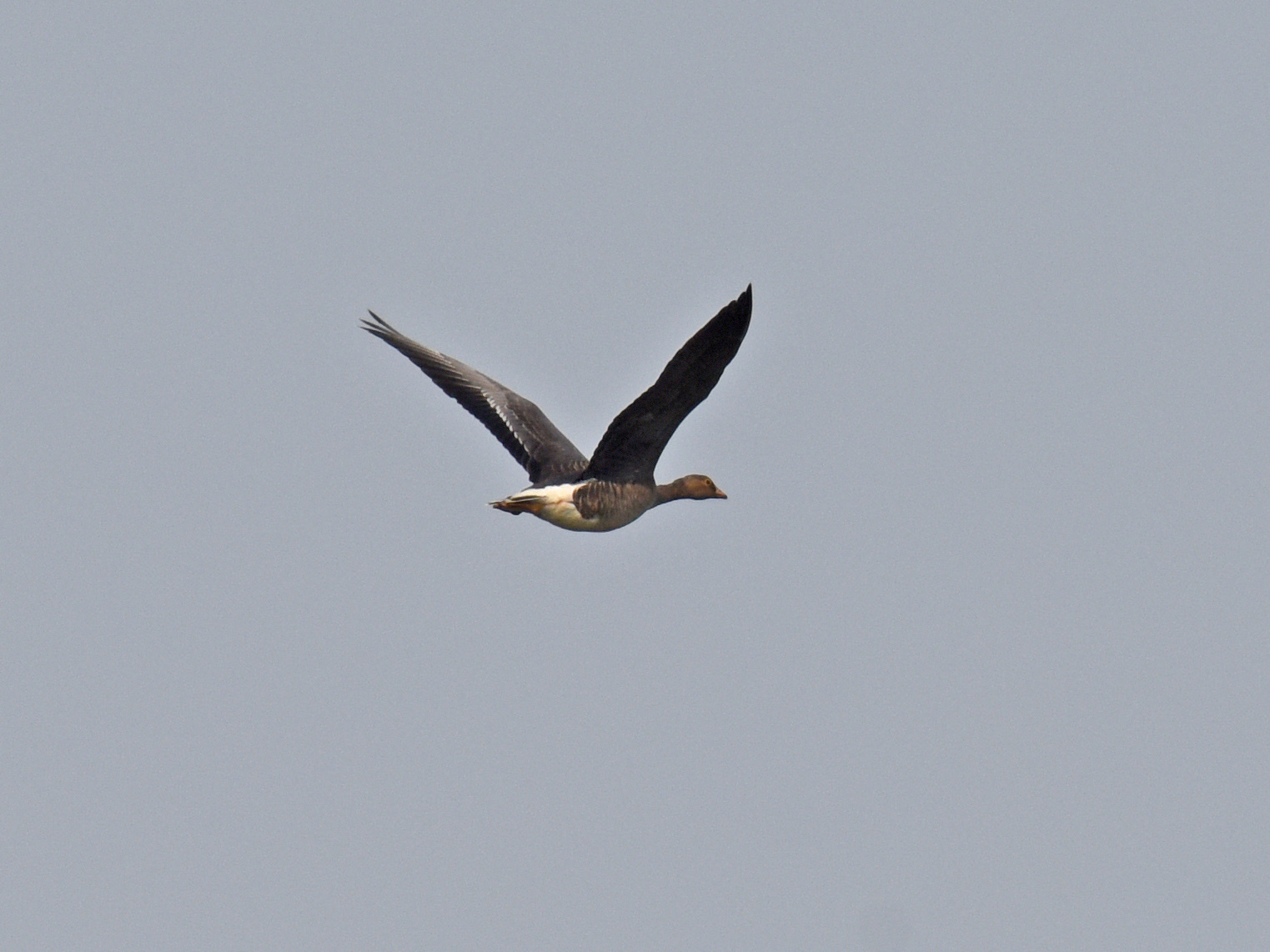
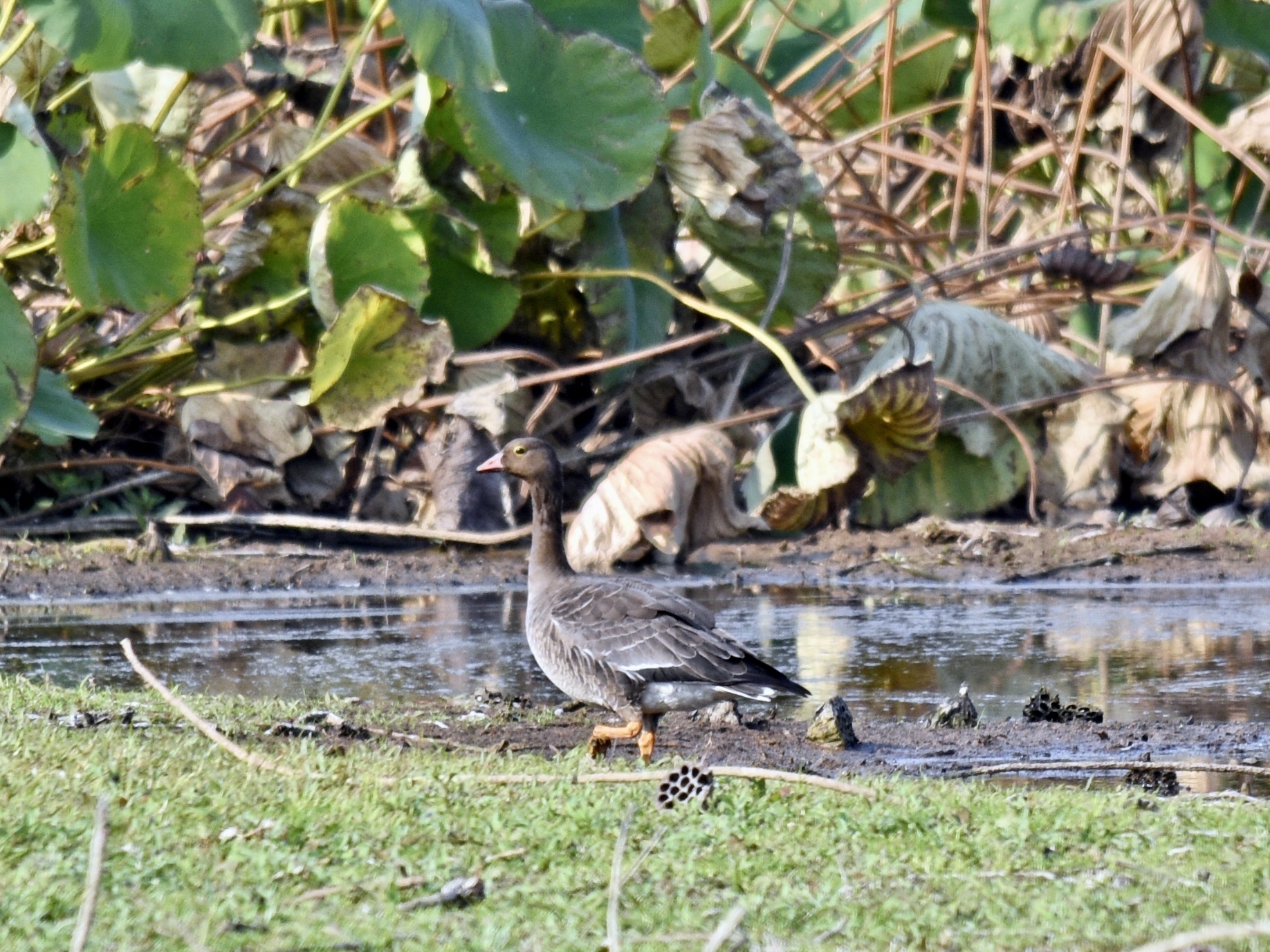
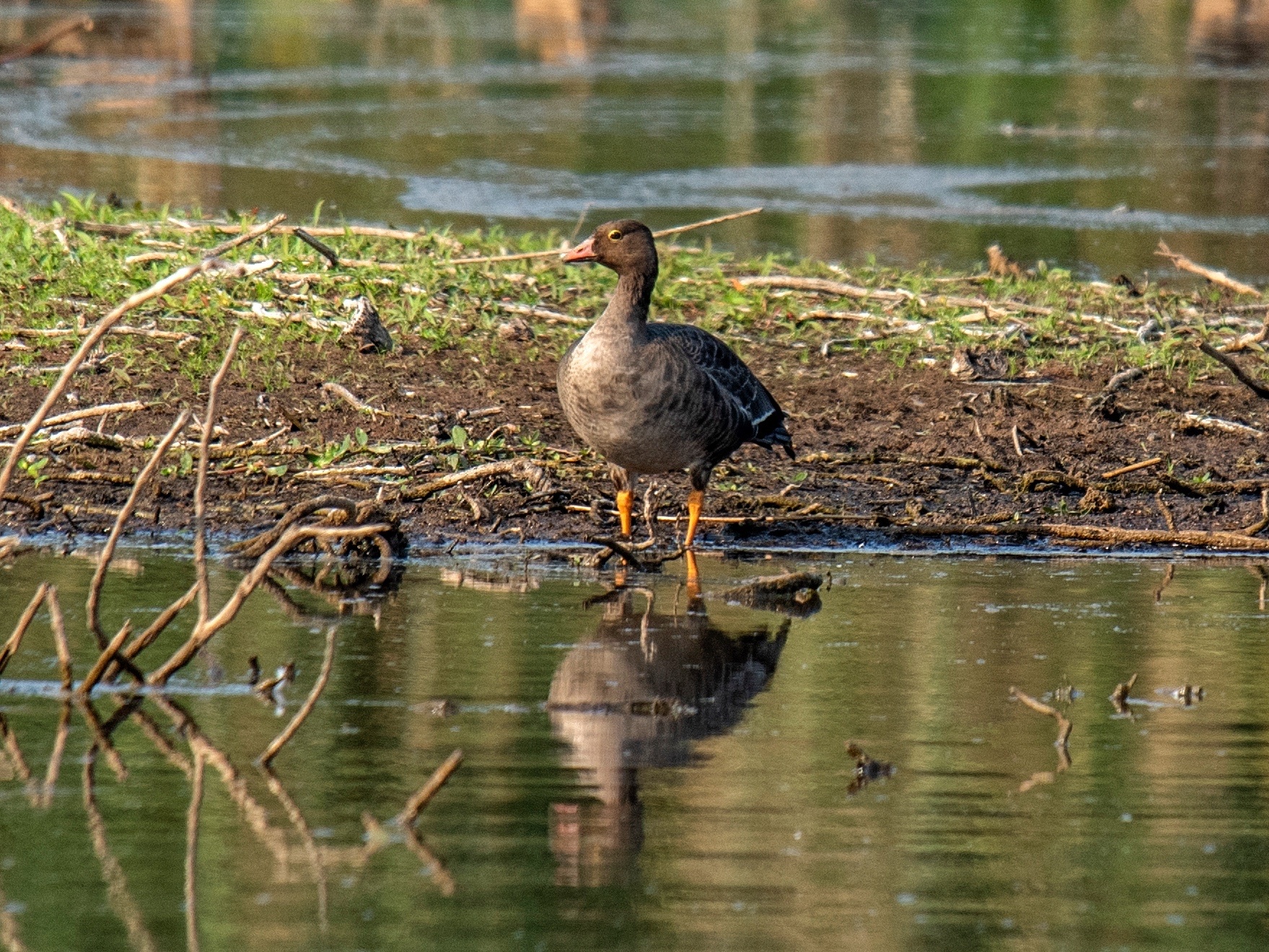
This is a compact, relatively small goose measuring 53–66 cm in length with a wingspan of 120–135 cm. The overall impression is of a bird not much bigger than a mallard. The legs are a bright, conspicuous orange, unlike the flesh-coloured legs of the greylag goose. The upper wing-coverts are mouse-coloured rather than the bluish-grey seen in greylag geese. The face is strikingly marked with a very conspicuous white blaze that extends from the bill up to the crown, setting it apart from its larger relative. Broad black bars cross the belly, a feature shared with the greater white-fronted goose. Adults possess an obvious yellow eye-ring, another key identification feature. The combination of small size, orange legs, mouse-coloured wing-coverts, and white facial blaze reaching the crown provides a distinctive silhouette.
Identification
The primary confusion species is the greater white-fronted goose, from which this species can be distinguished by its noticeably smaller size. The yellow eye-ring is a reliable field mark present in the lesser but absent in the greater white-fronted goose. Additionally, the white facial blaze extends higher, reaching the crown in this species. Separation from greylag geese is straightforward: the orange legs contrast with the greylag's flesh-coloured legs, and the mouse-coloured upper wing-coverts replace the greylag's bluish-grey upperparts. Both white-fronted species share the conspicuous white face and broad black belly bars, but size and the yellow eye-ring provide the key differentiators. When observing distant birds in mixed flocks, the smaller size and the yellow eye-ring are the most reliable features to check.
Distribution & Habitat
The breeding range encompasses the northernmost Palearctic, with scattered and scarce breeding populations in Europe. The species winters further south in Europe, with regular wintering areas in Greece, Bulgaria, and Turkey for the Fennoscandian population. A western population segment winters in the Netherlands and Germany. The species is a rare winter vagrant to Great Britain and India. Major stop-over sites are crucial for migration, with Hortobágy National Park in Hungary serving as a key location where birds spend up to two months in autumn and one month in spring. Individuals appearing in summer or associating with feral geese are likely escapees from wildfowl collections, as the species is widely kept in captivity.
Behavior & Ecology
The species breeds in the high Arctic, though specific details of breeding behavior, diet, and vocalizations are not provided in the available text. The Fennoscandian population follows distinct migration routes between breeding areas in northern Norway and Sweden and wintering grounds in southeastern and western Europe. The genetically distinct Fennoscandian population represents a significant conservation concern due to its extremely small numbers.
Conservation
The species is classified as endangered, with the Fennoscandian population holding Critically Endangered status according to the 2015 IUCN Red List assessment. The Fennoscandian population is estimated at just 20 breeding pairs or 60–80 total individuals at most, while the Swedish segment consists of approximately 15 breeding pairs or 40–50 individuals. The dramatic decline on European breeding grounds has led to far fewer vagrant sightings in areas like Britain where individuals formerly appeared regularly. Conservation measures include reintroduction programs in Fennoscandia aimed at strengthening populations, and the species is protected under the Agreement on the Conservation of African-Eurasian Migratory Waterbirds (AEWA).
Culture
This species holds a special place in ornithological history as the inspiration for the establishment of The Wildfowl and Wetlands Trust. Individual birds that formerly appeared regularly at WWT Slimbridge in Gloucestershire, England, directly influenced Sir Peter Scott to found what has become one of the world's leading wetland conservation organizations. This historical connection means the species has particular significance for British birdwatchers and conservationists as the catalyst for a major conservation movement.
Source: Wikipedia · CC BY-SA 3.0
Taxonomy
- Order
- Anseriformes
- Family
- Anatidae
- Genus
- Anser
- eBird Code
- lwfgoo
Distribution
breeds arctic Eurasia; winters to southern Europe, India, and China
Data Sources
Species description from Wikipedia, licensed under CC BY-SA 3.0.
Bird images and sounds sourced from GBIF, contributed by citizen scientists worldwide under Creative Commons licenses.
Taxonomy data from AviList 2025.