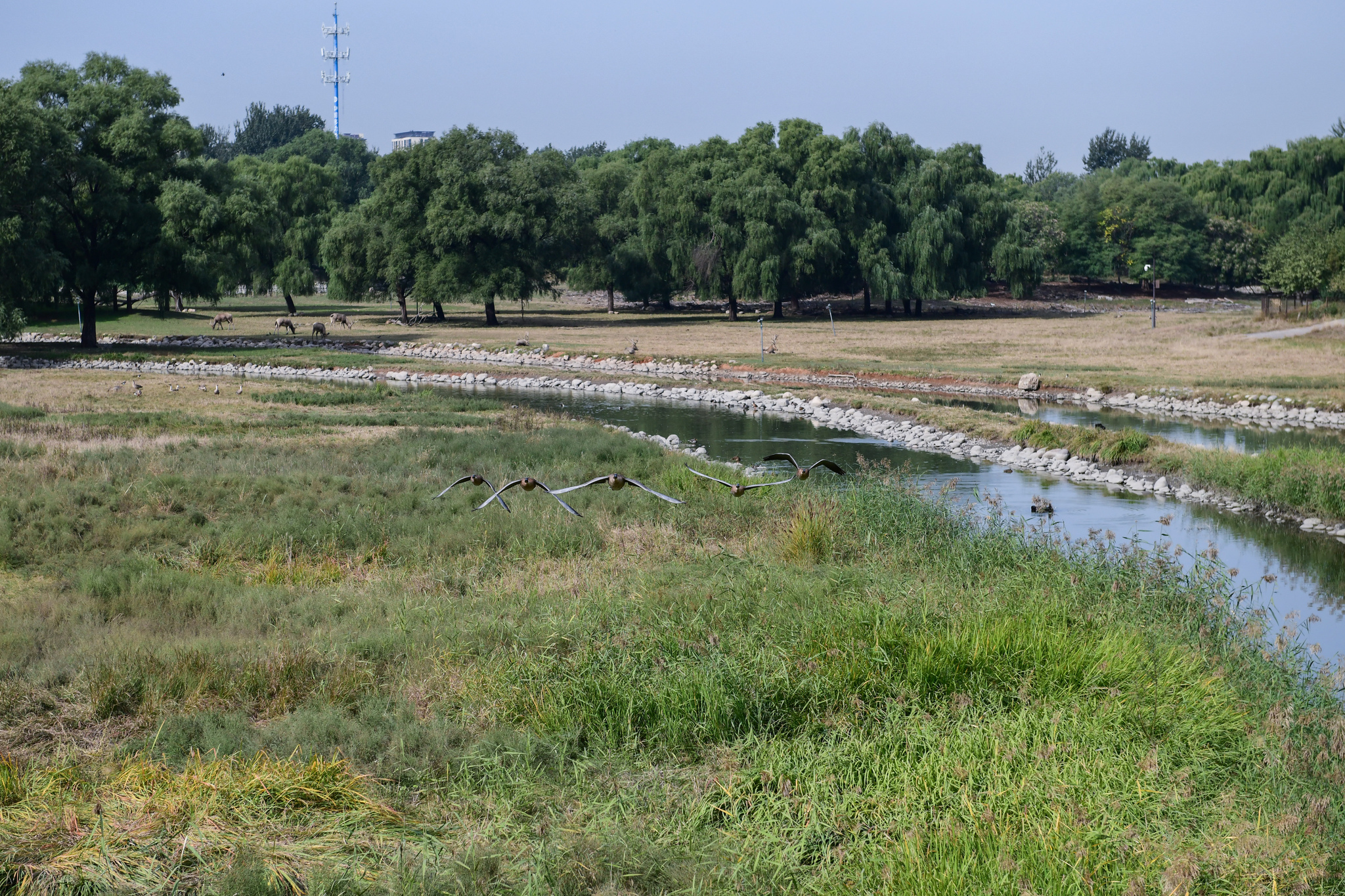
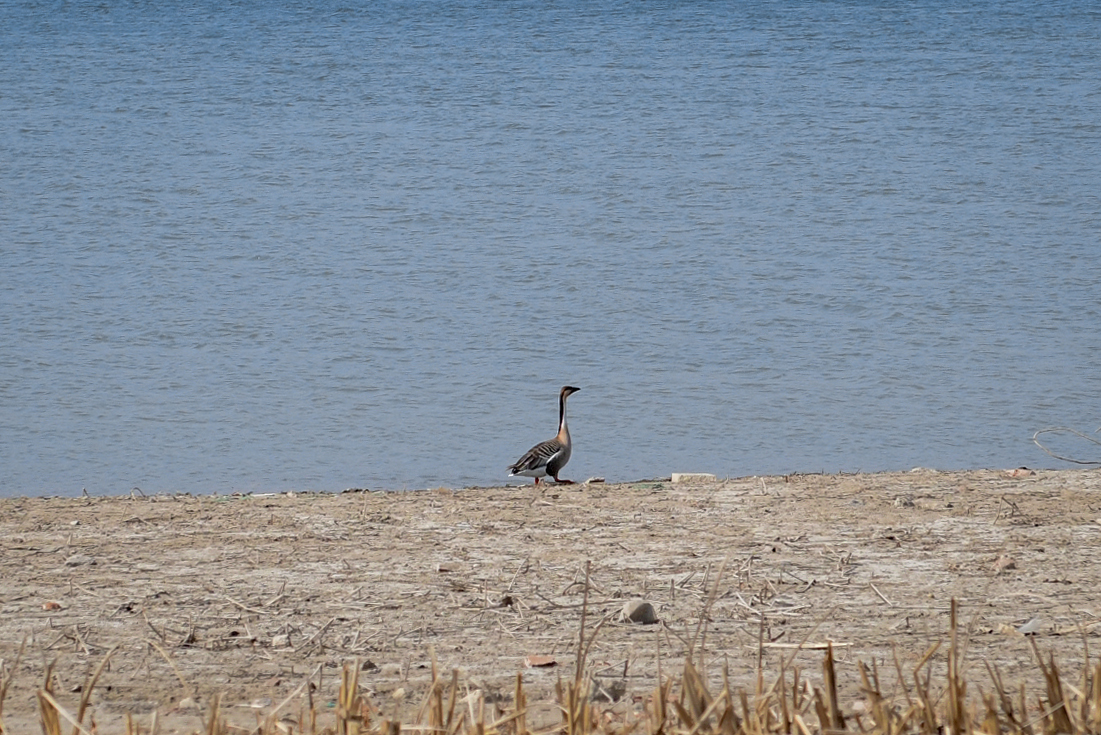
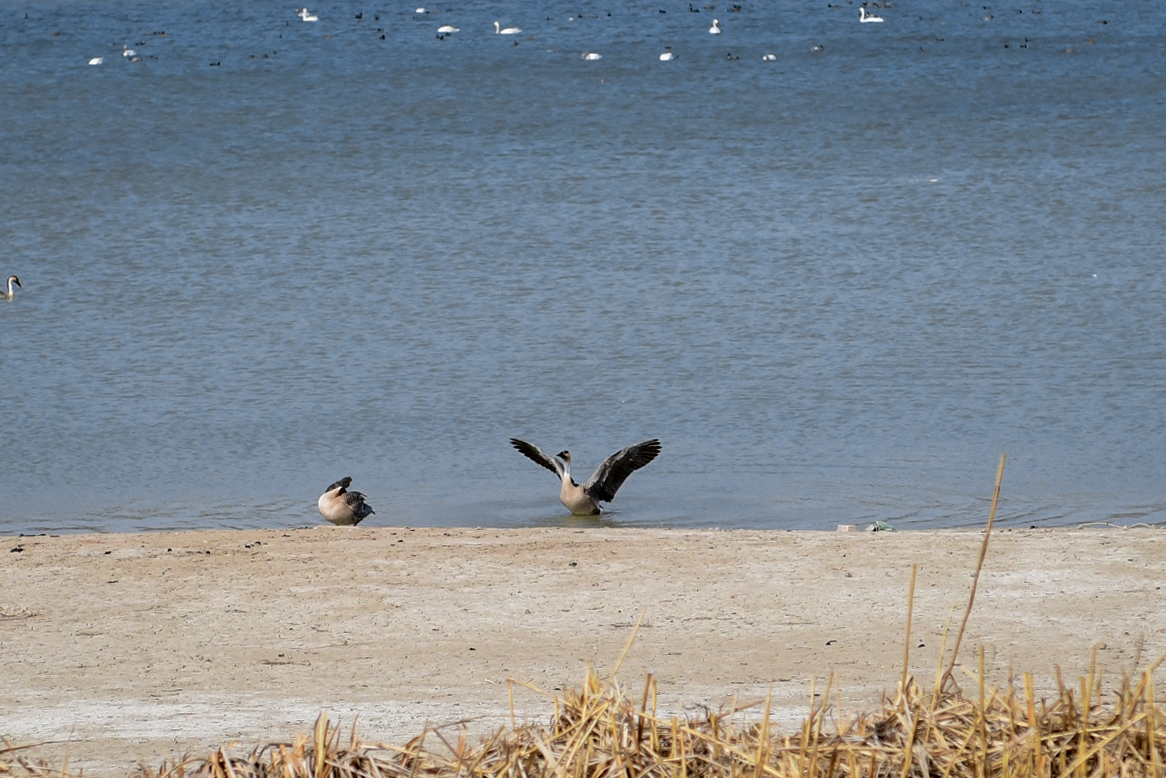
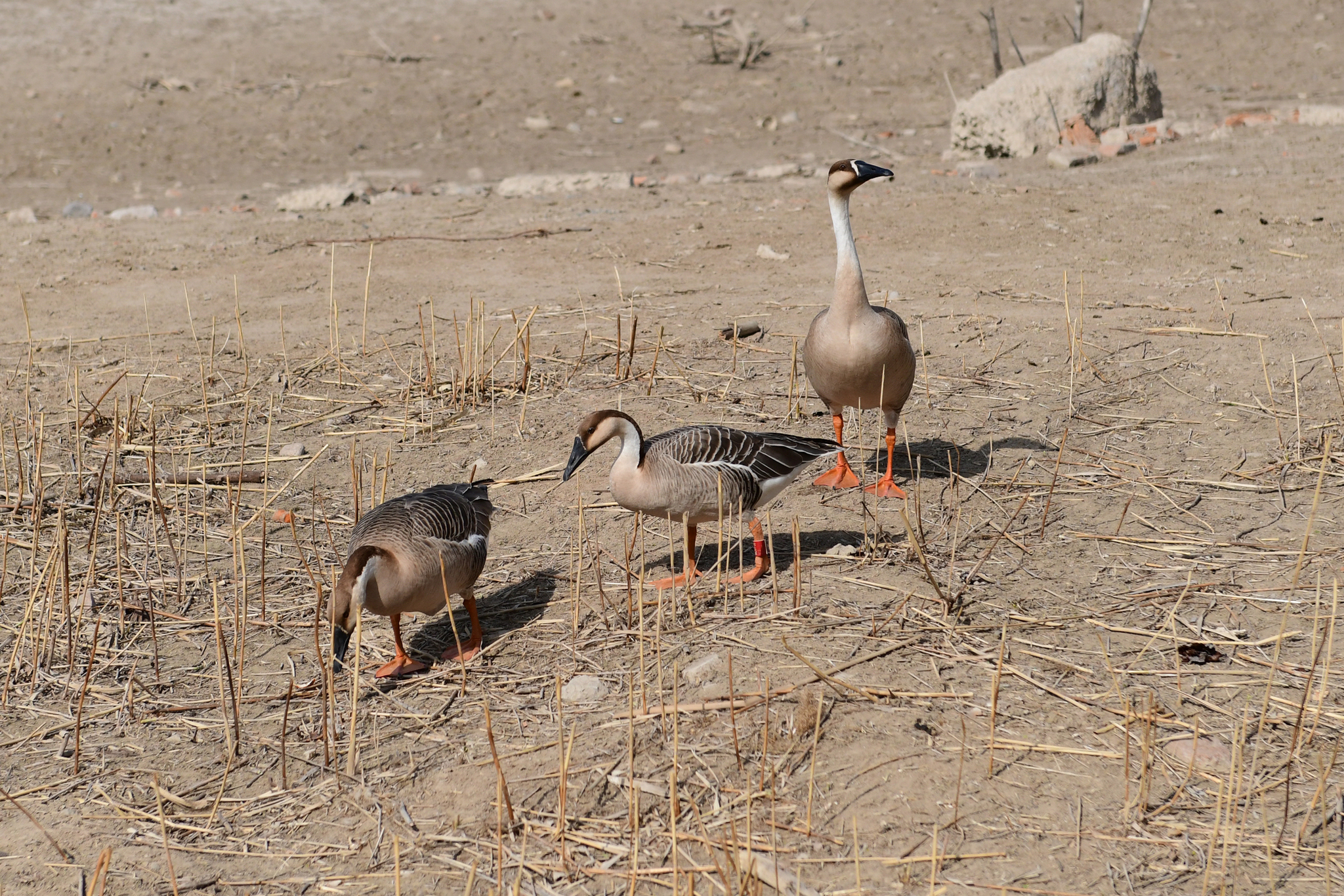
Anseriformes / Anatidae / Anser
Swan Goose
Anser cygnoides · 鸿雁
Introduction
A large goose species with a natural breeding range in inland Mongolia, Northeast China, and the Russian Far East. It is migratory, wintering mainly in central and eastern China. The wild form is uncommon, while its domesticated derivative is widespread. It inhabits steppe to taiga and mountain valleys near freshwater.
Description
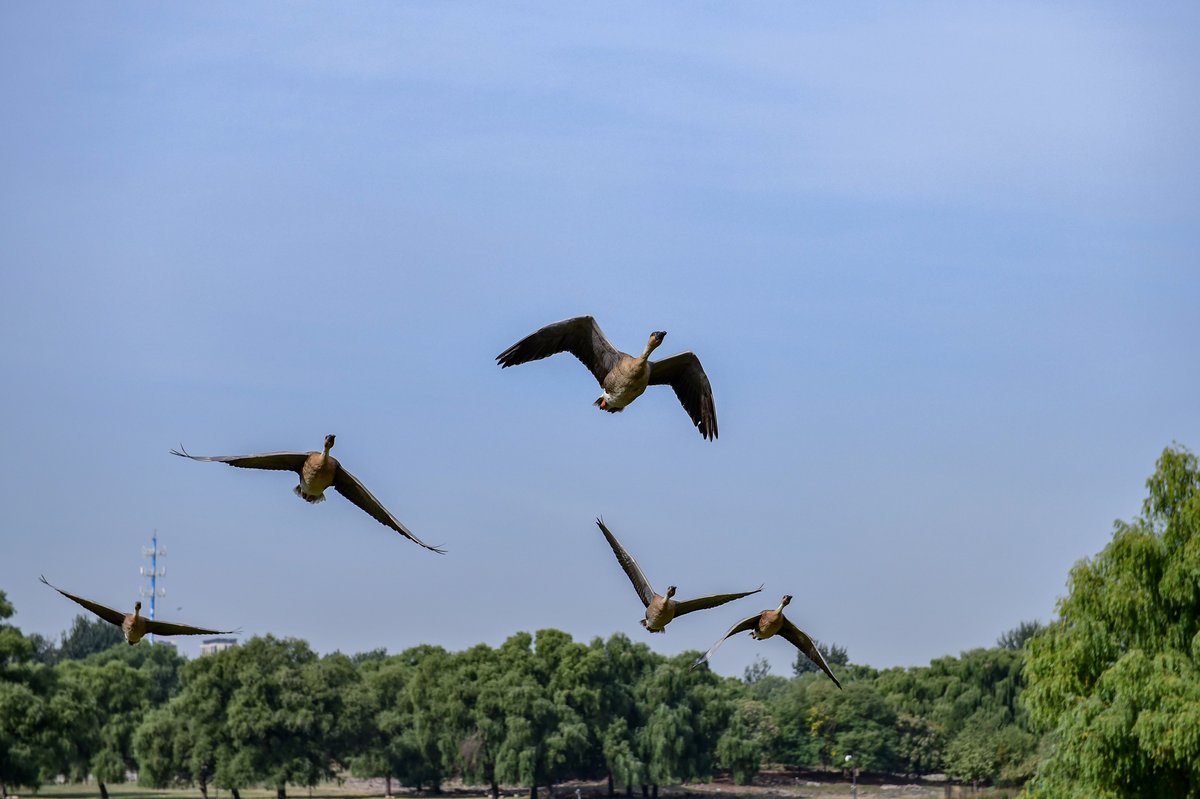
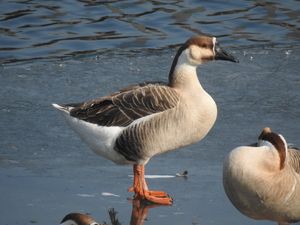
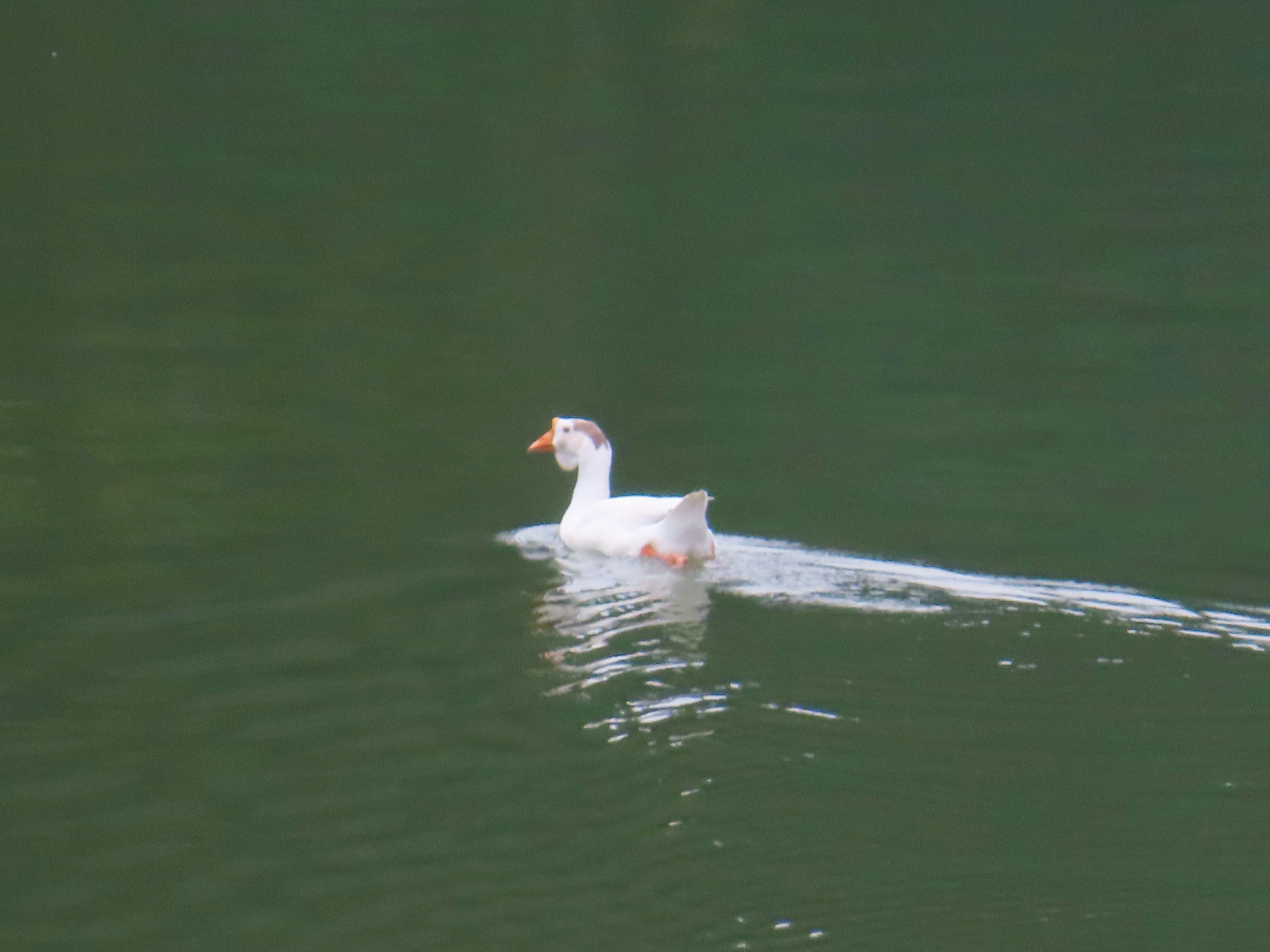
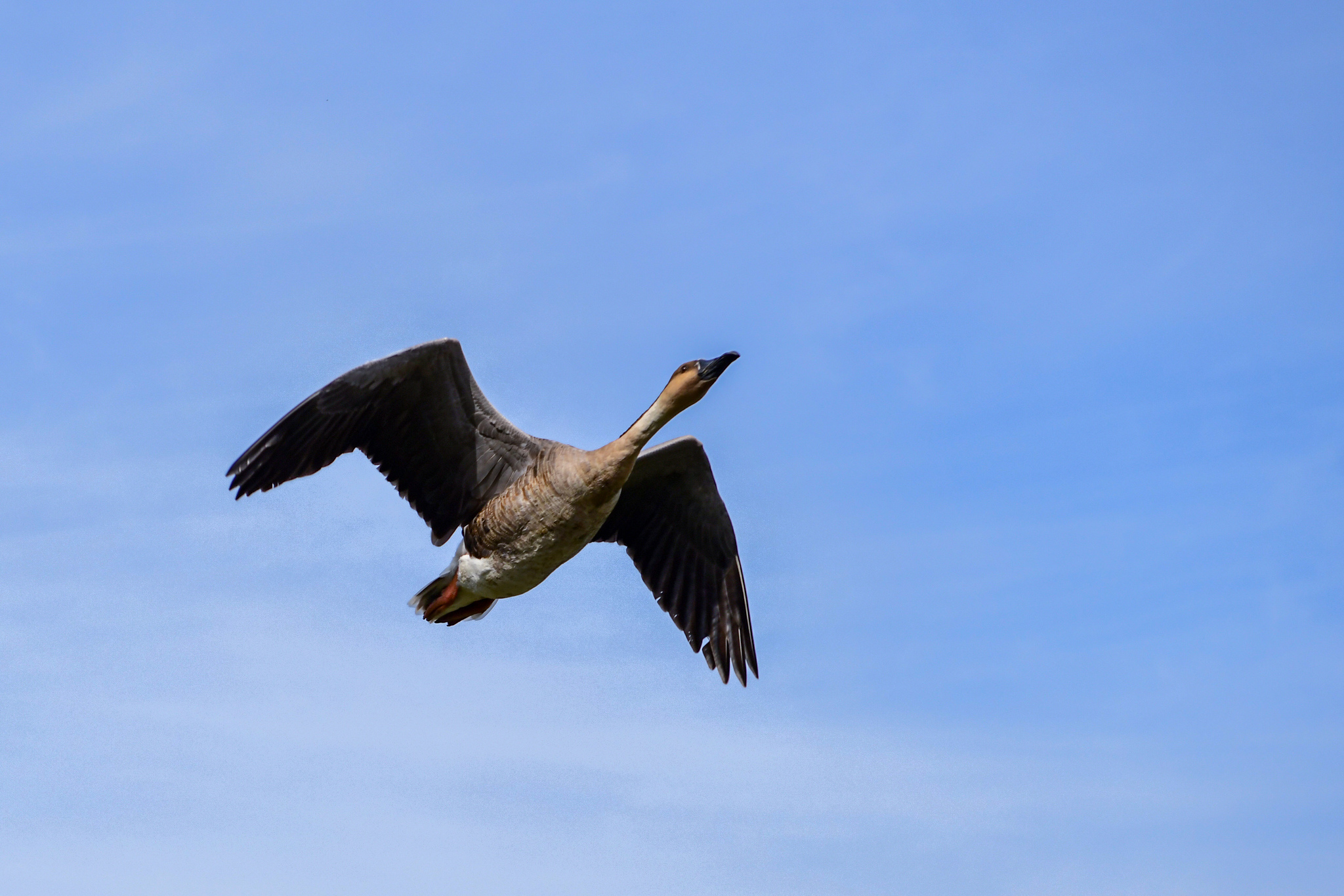
Wild birds are 81–94 cm long with a wingspan of 160–185 cm and weigh 2.8–3.5 kg or more. Males are larger than females, with proportionally longer bills (8.7–9.8 cm vs 7.5–8.5 cm) and necks. Upperparts are greyish-brown with thin light fringes; the hindneck and cap are maroon. The bill is completely black, surrounded by a thin white stripe at the base. Legs and feet are orange, and irides are maroon. The underside is pale buff with darker streaks on the belly and flanks. Juveniles are duller, lacking the white bill base and dark underside streaks.
Identification
Uniquely among its genus, it possesses a long, heavy, completely black bill. In flight, wings appear dark with no conspicuous pattern. The voice is a loud, drawn-out, ascending honking 'aang', with a barking honk used as a warning call.
Distribution & Habitat
Breeds in inland Mongolia, Northeast China, and the Russian Far East. Winters mainly in central and eastern China, with important sites including Lake Dongting, Lake Poyang, Yancheng Coastal Wetlands, and areas around the lower Yangtze River. Vagrants occur in Japan, Korea, Kazakhstan, Laos, coastal Siberia, Taiwan, Thailand, and Uzbekistan. No subspecies are recognized.
Behavior & Ecology
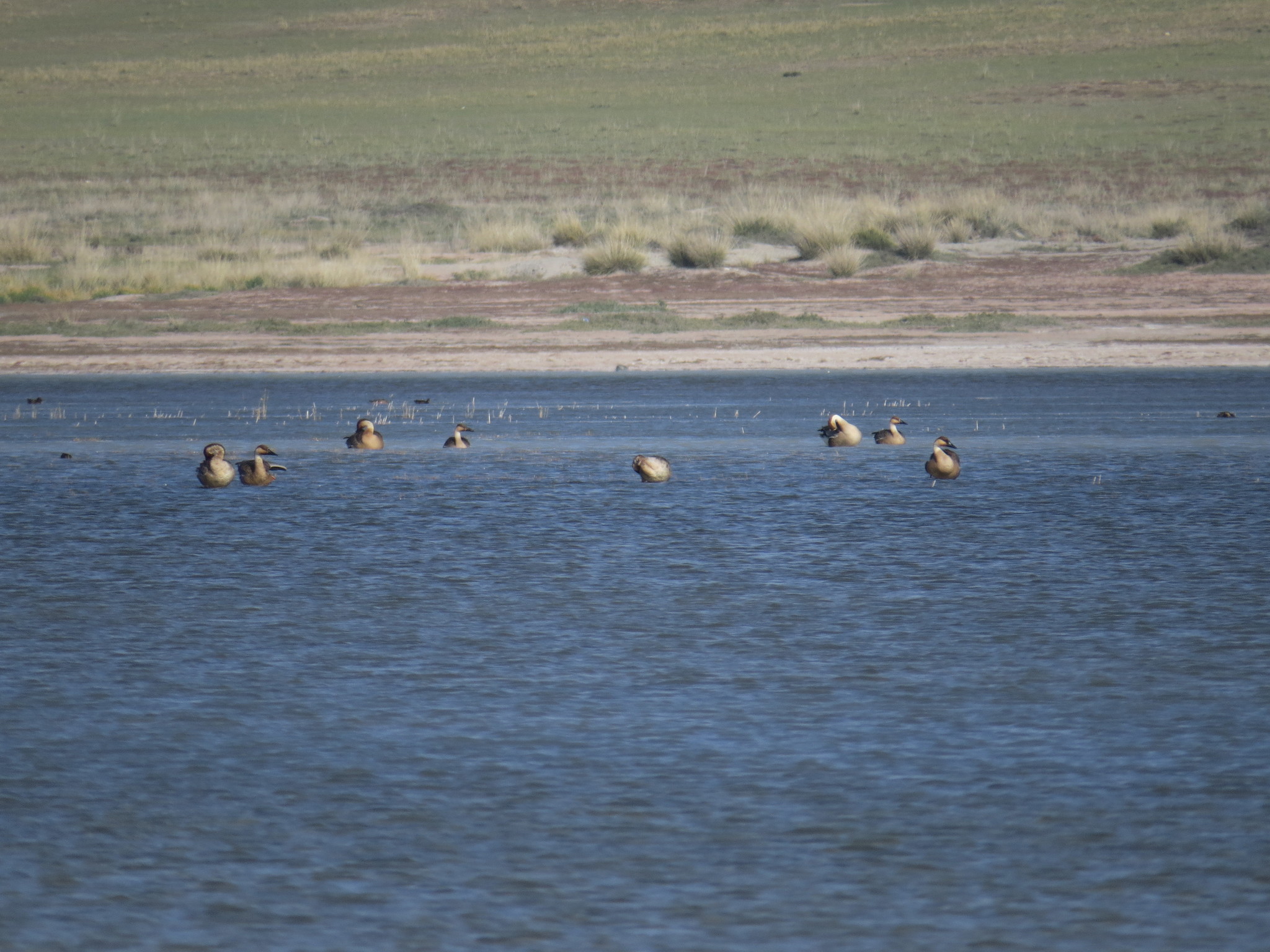
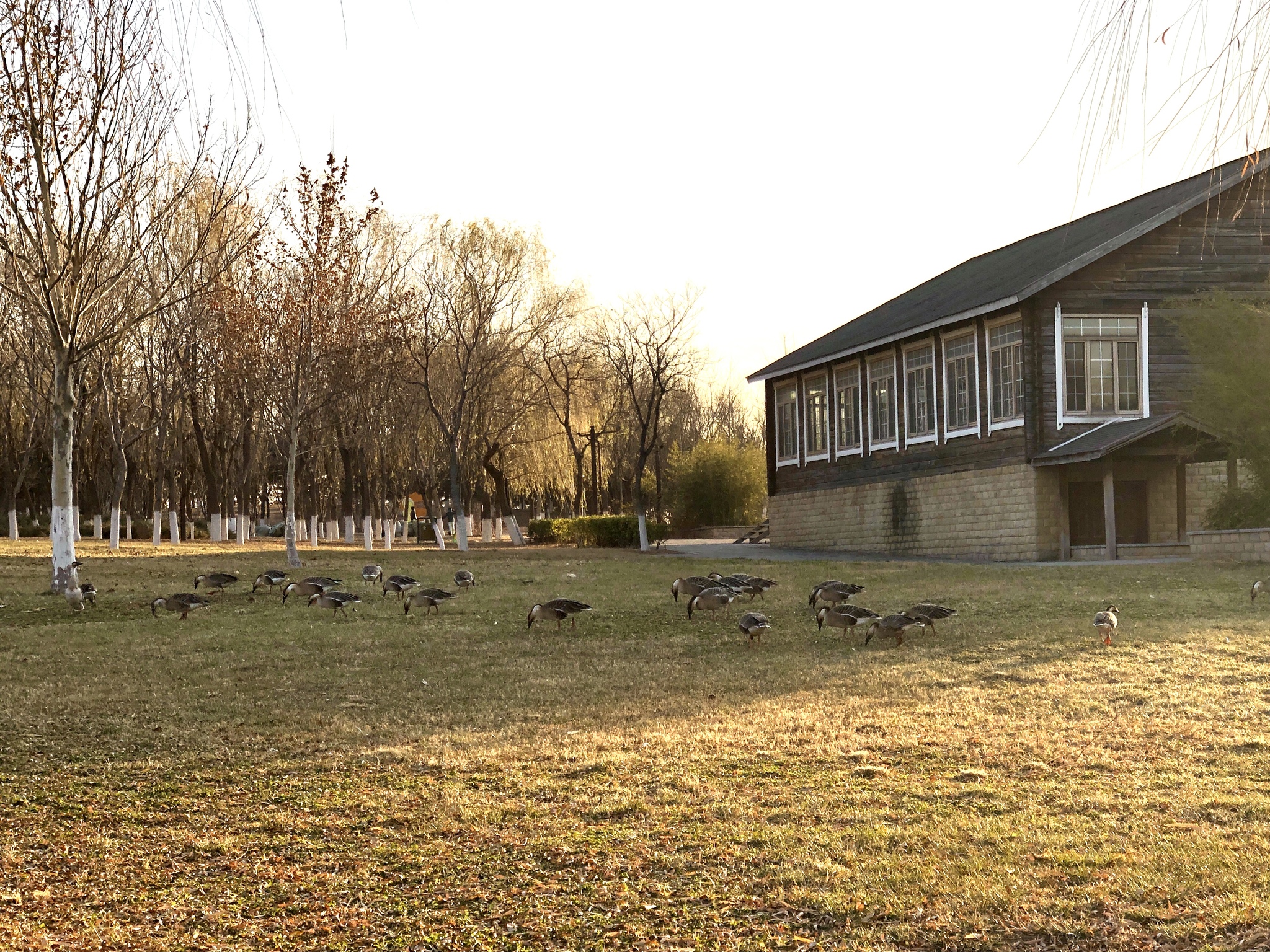
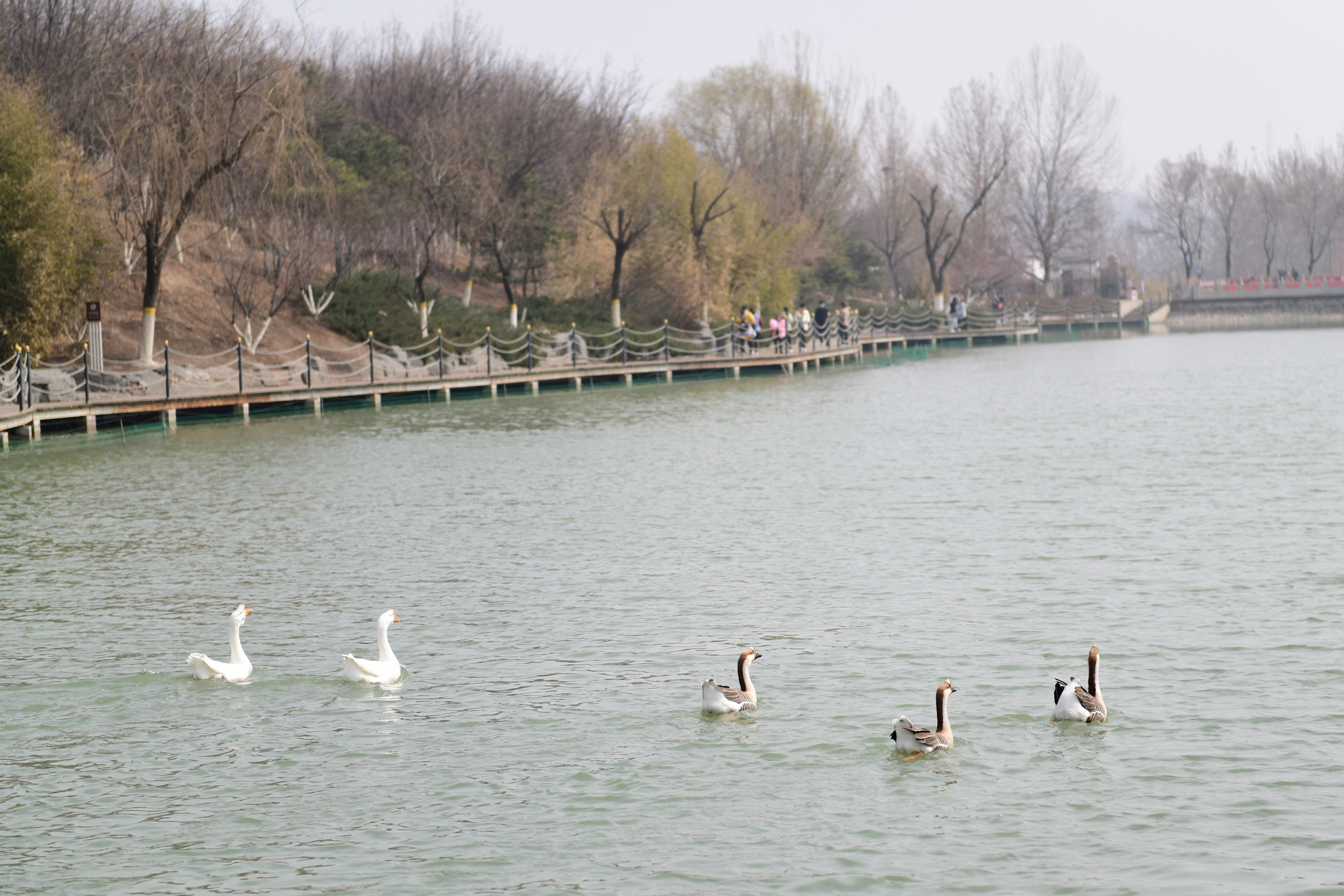
Inhabits steppe to taiga and mountain valleys near freshwater, grazing on sedges, grasses, and water plants, and rarely swimming. Forms small flocks outside the breeding season. Breeding starts in May with single pairs or loose groups near marshes. The clutch usually consists of 5–6 eggs, laid in a shallow ground nest. Young hatch after about 28 days and reach sexual maturity at 2–3 years. Birds leave for winter quarters in late August or early September.
Conservation
Classified as Vulnerable on the IUCN Red List. The population is declining due to habitat loss, excessive hunting, and egg collecting. The total population was estimated at 36,000–43,500 individuals in 2023. Less than 500 pairs may remain in Russia.
Source: Wikipedia · CC BY-SA 3.0
Taxonomy
- Order
- Anseriformes
- Family
- Anatidae
- Genus
- Anser
Distribution
breeds central Asia and Mongolia to southeastern Siberia; winters to southeastern China
Data Sources
CBR Notes: IUCN红色名录等级由VU升为EN
Species description from Wikipedia, licensed under CC BY-SA 3.0.
Bird images and sounds sourced from GBIF, contributed by citizen scientists worldwide under Creative Commons licenses.
Taxonomy data from AviList 2025.