Anseriformes / Anatidae / Anser
Greylag Goose
Anser anser · 灰雁
Introduction
A large goose in the family Anatidae and the type species of the genus Anser. It has a widespread Palearctic distribution, breeding across Europe and Asia, with many northern populations migrating south for winter while others remain resident. The species is the ancestor of most domestic goose breeds, having been domesticated at least as early as 1360 BCE.
Description
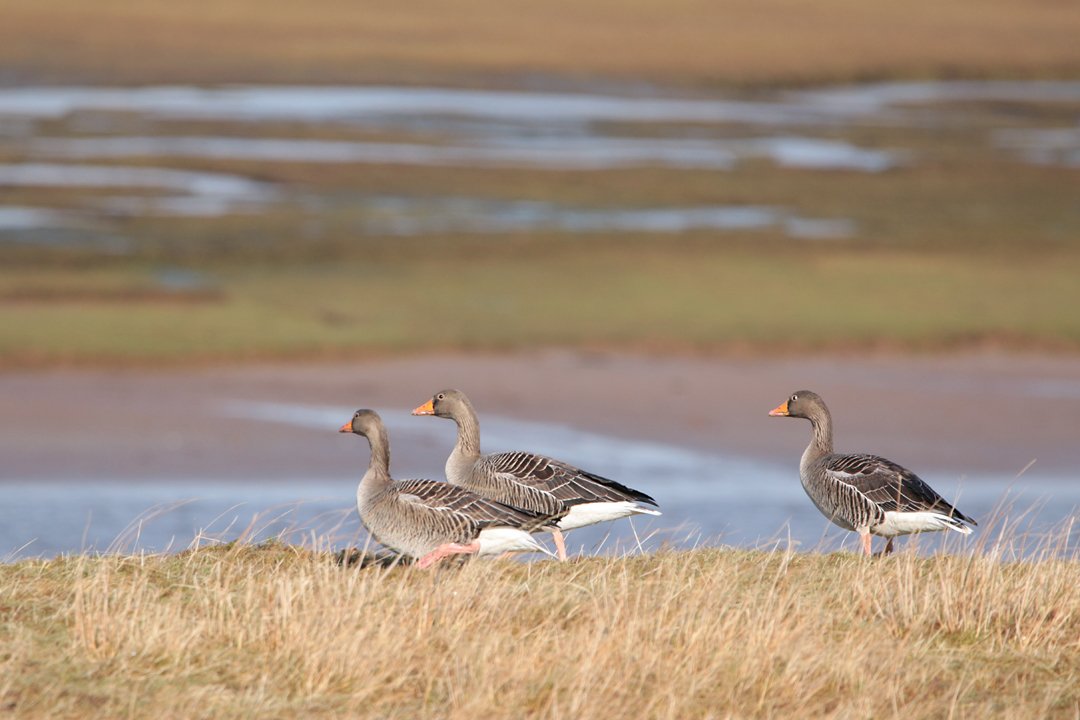
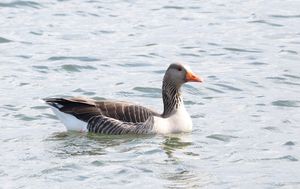
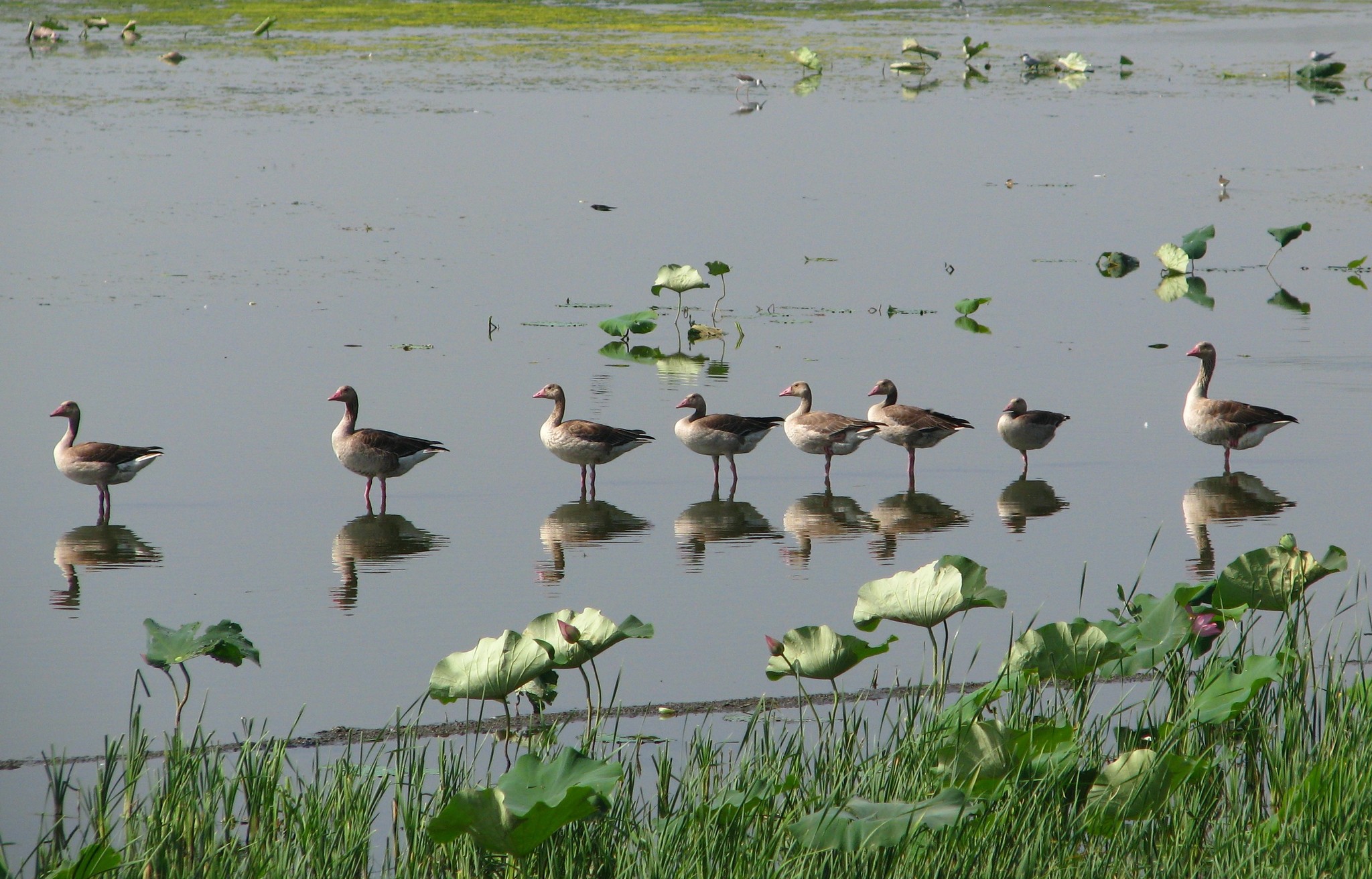
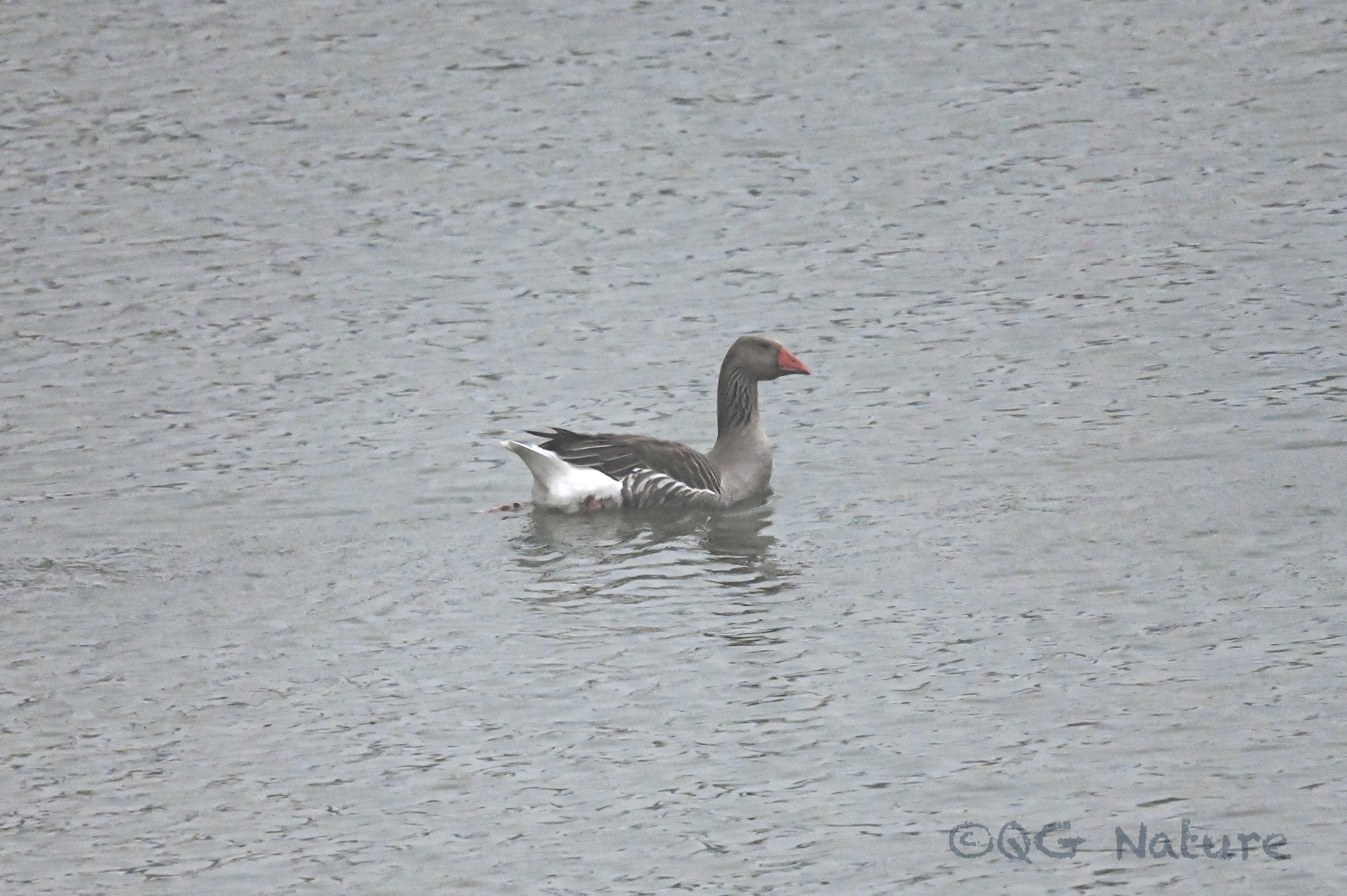
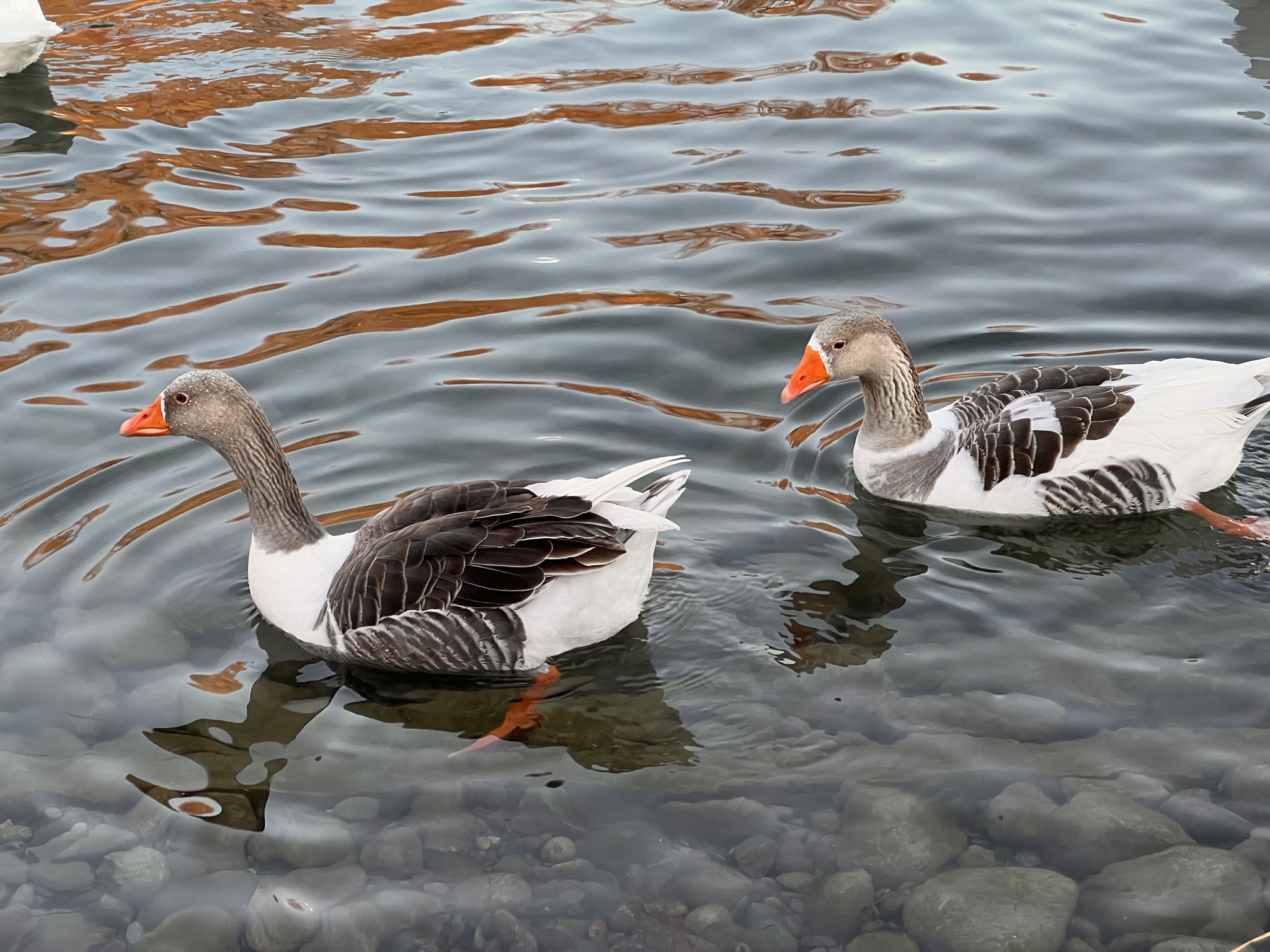
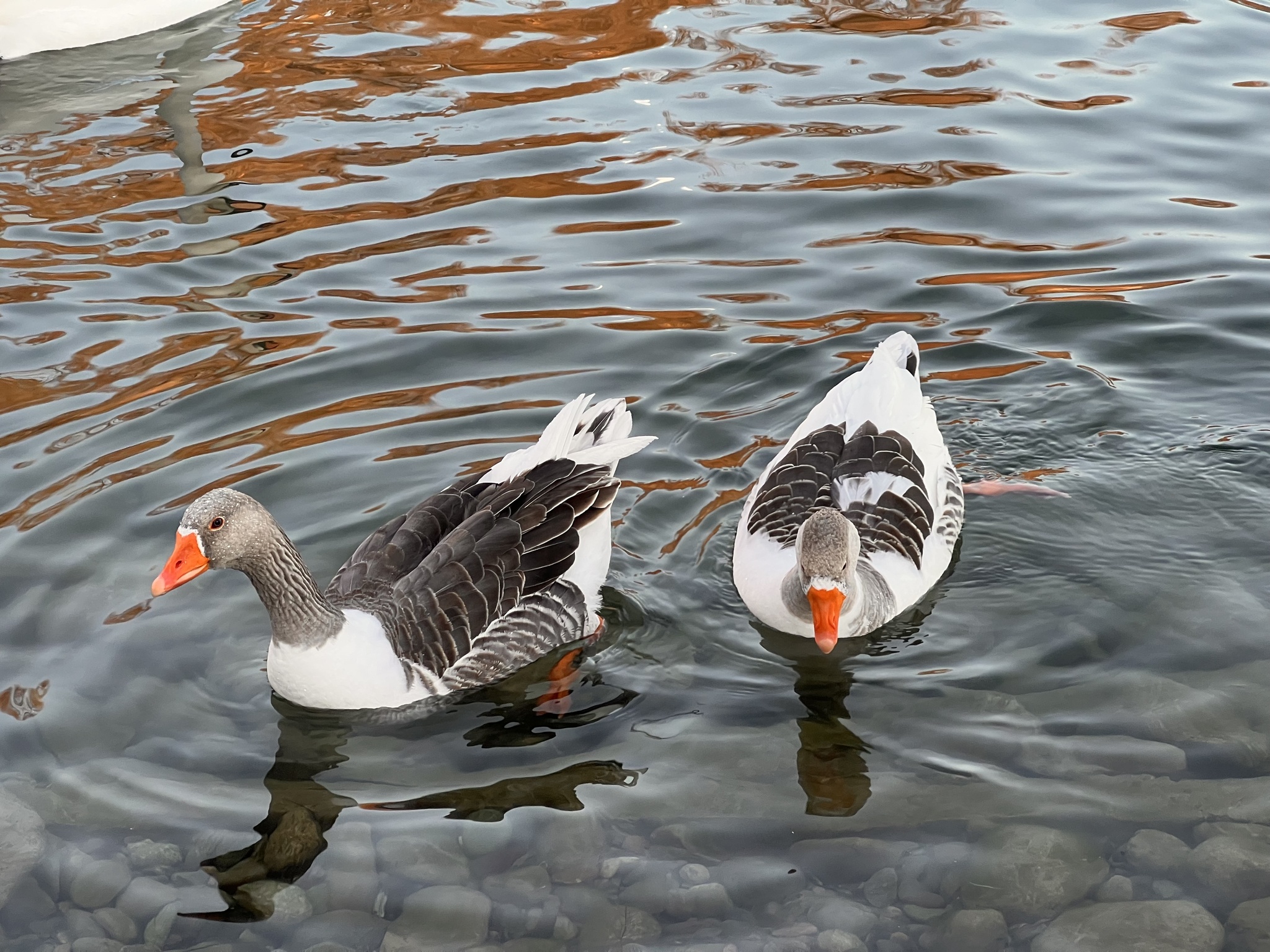
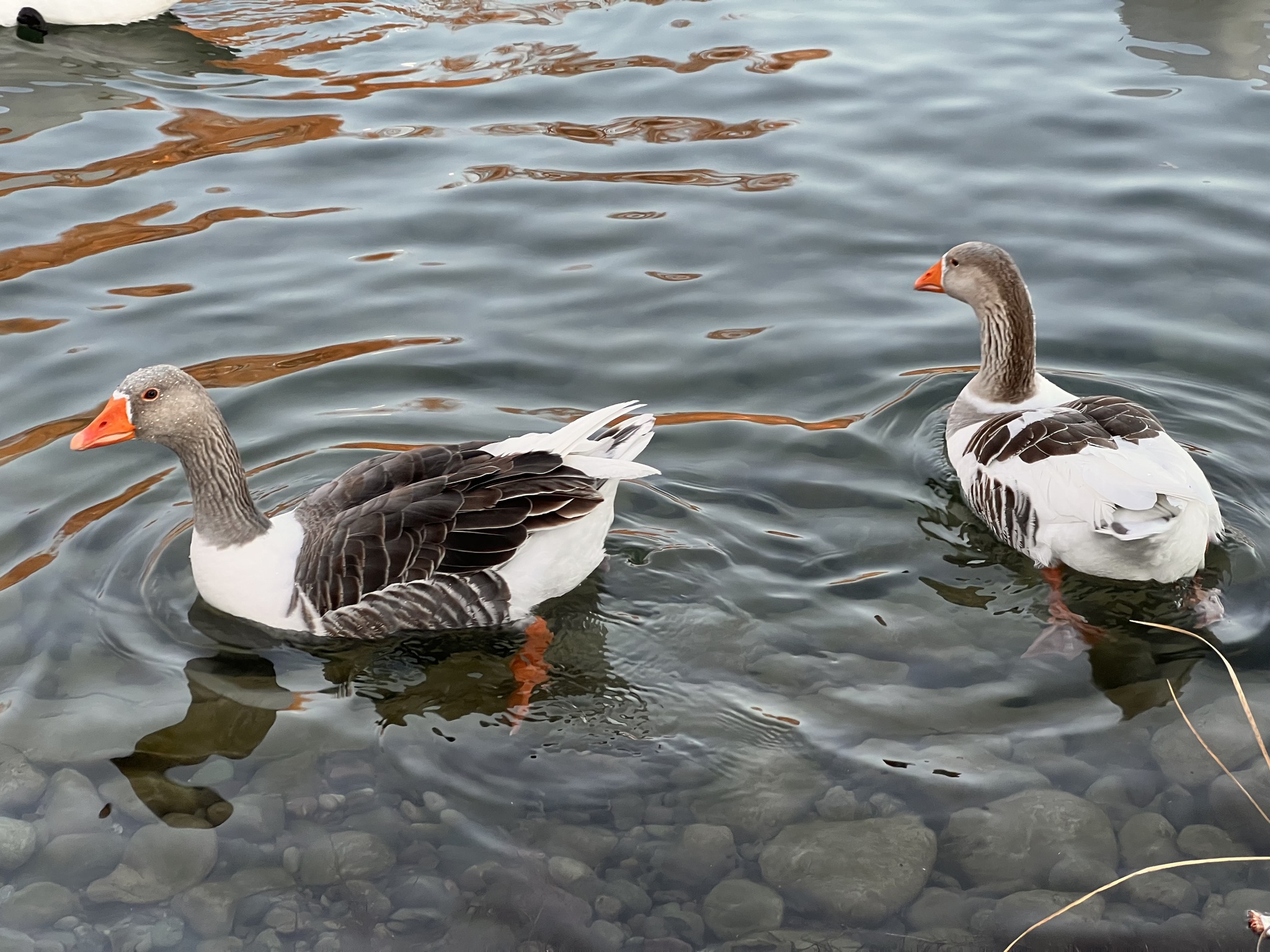
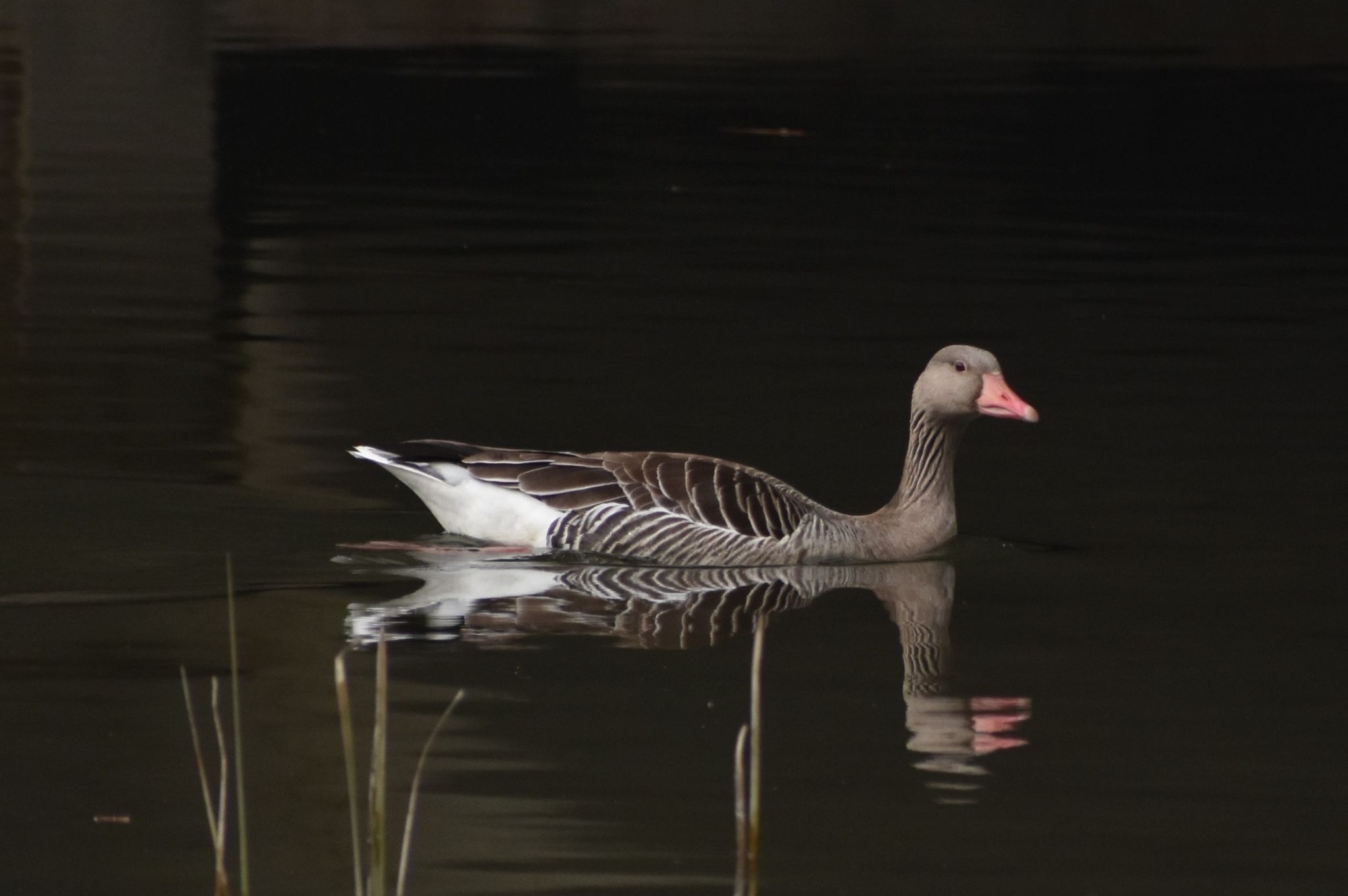
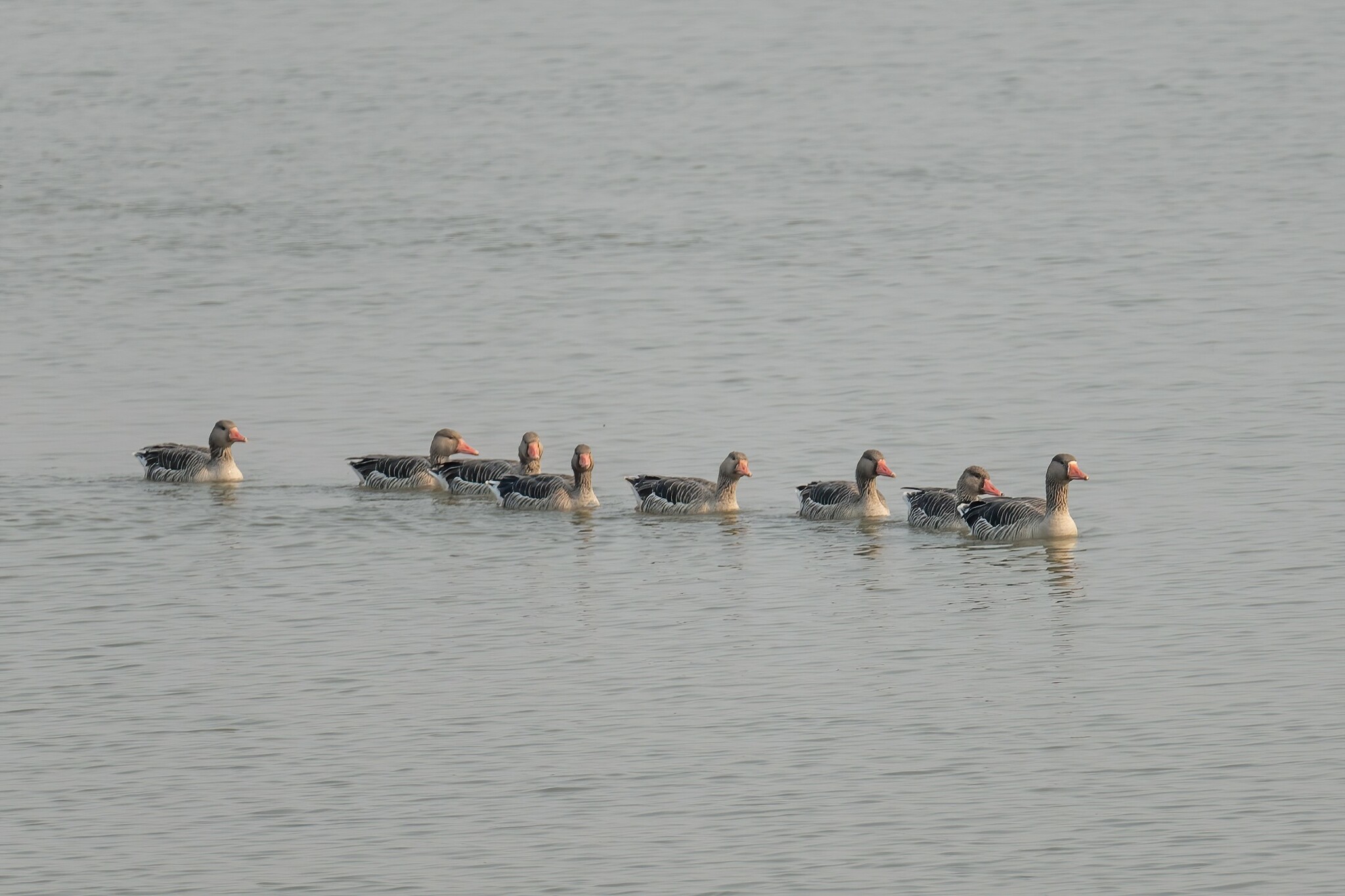
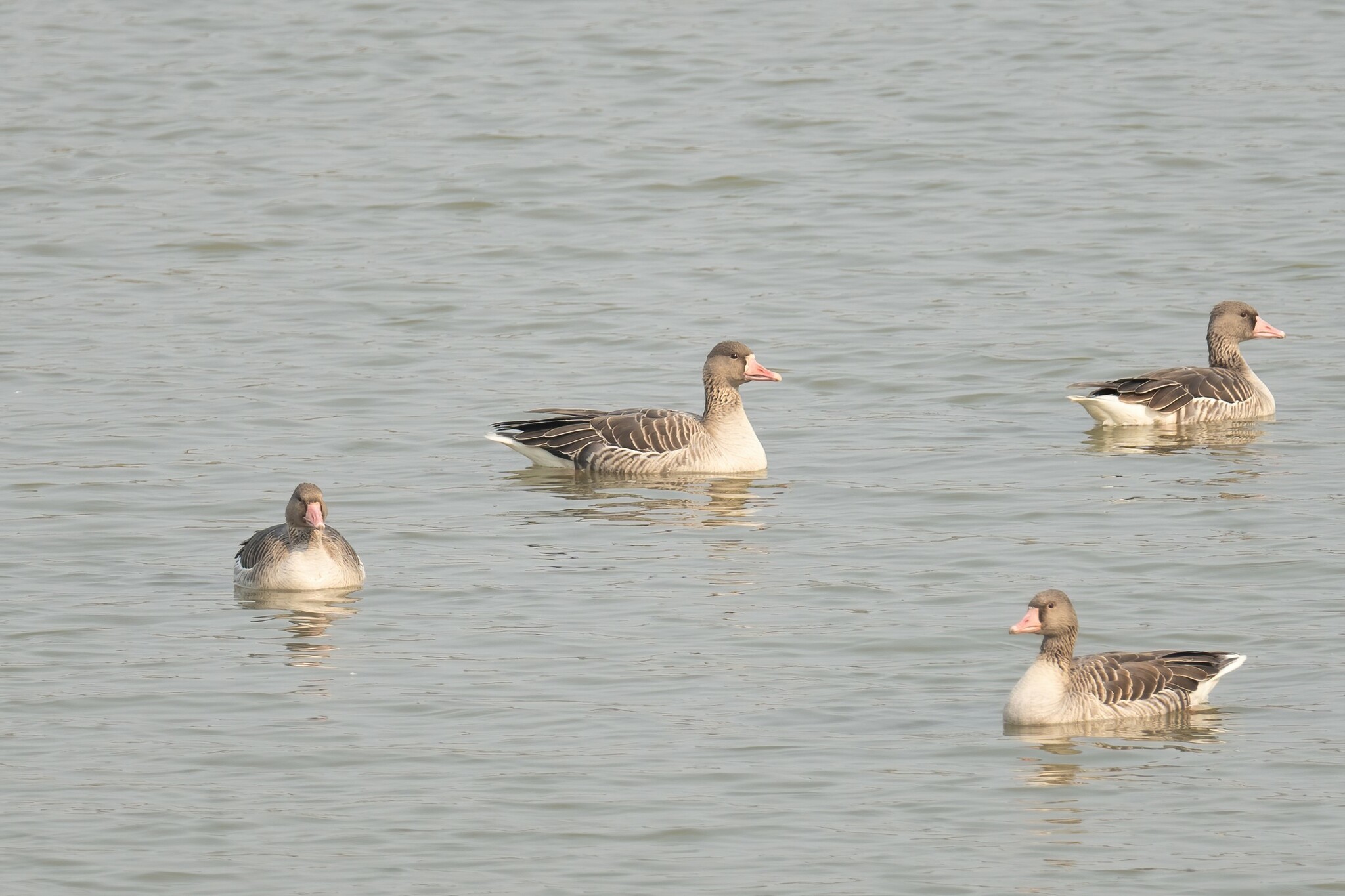
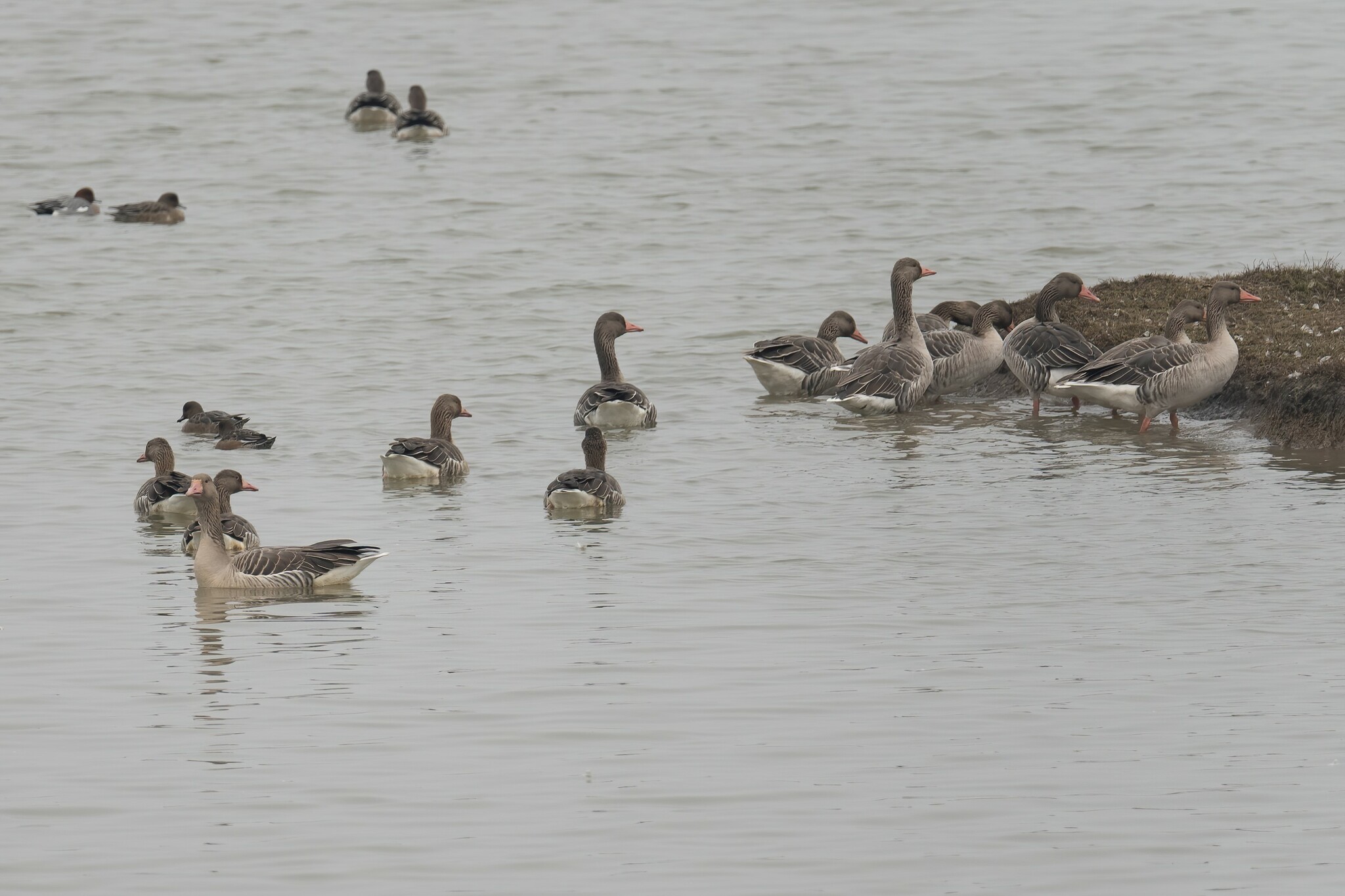
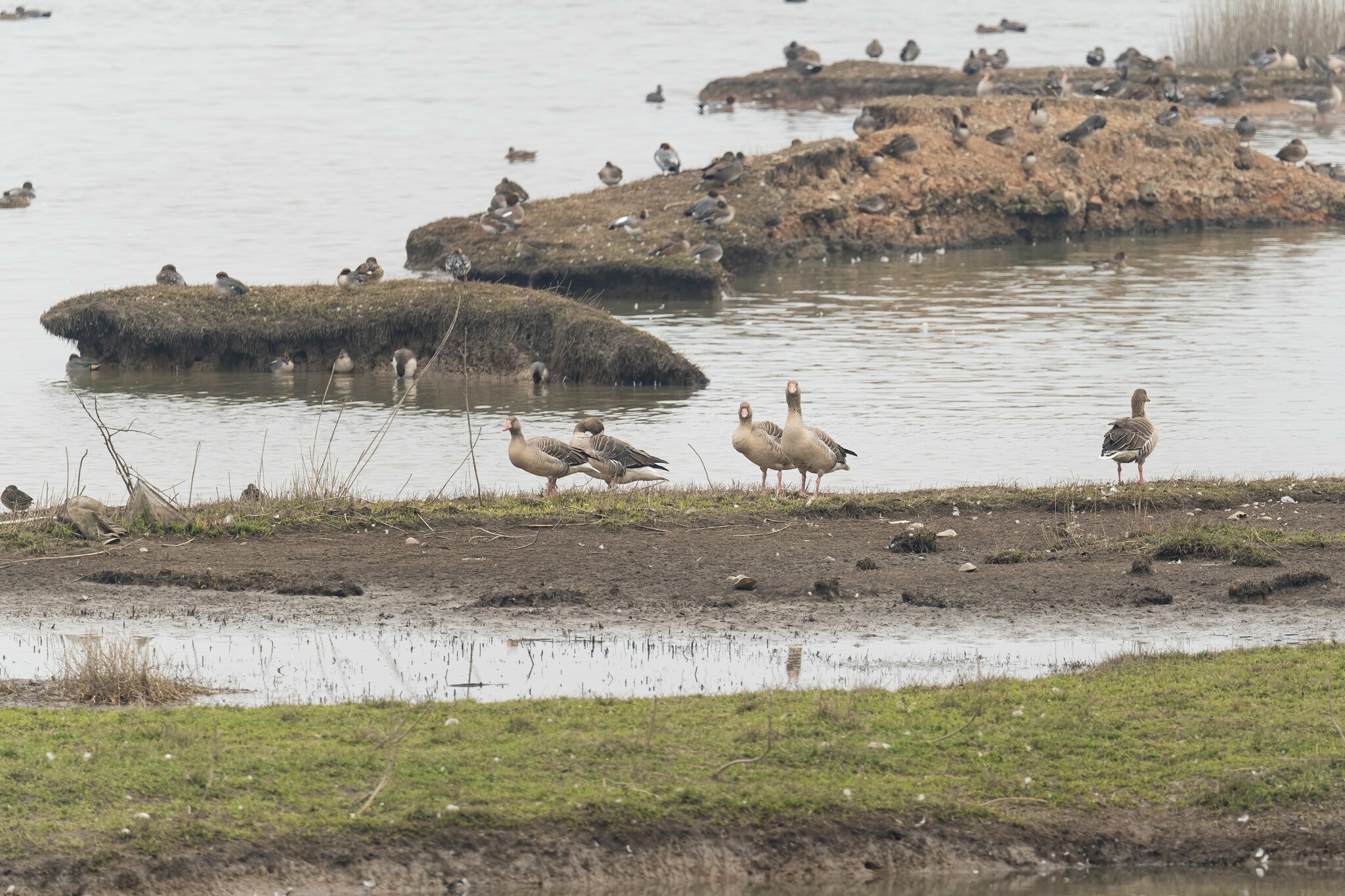
Measures 74 to 91 centimetres in length with a wingspan of 147 to 180 centimetres. Weighs 2.16 to 4.56 kilograms, with a mean of around 3.3 kilograms. Features greyish-brown plumage with a darker head, paler breast and belly with variable black spotting, and a pale grey forewing and rump. Has pink legs and feet, and an orange or pink bill with a white or brown nail. Adults display a distinctive 'concertina' pattern of folds on their necks. Males are generally larger than females, particularly in the eastern subspecies. Juveniles lack black speckling on the breast and belly and have greyish legs.
Identification
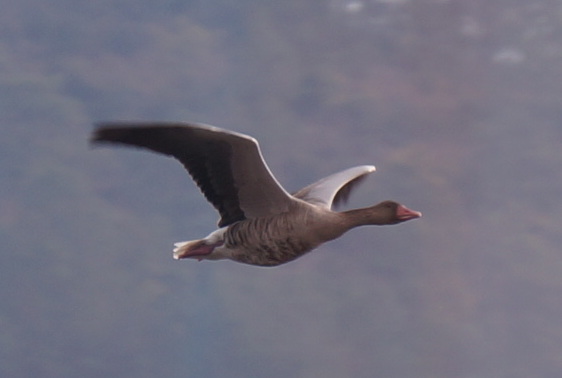
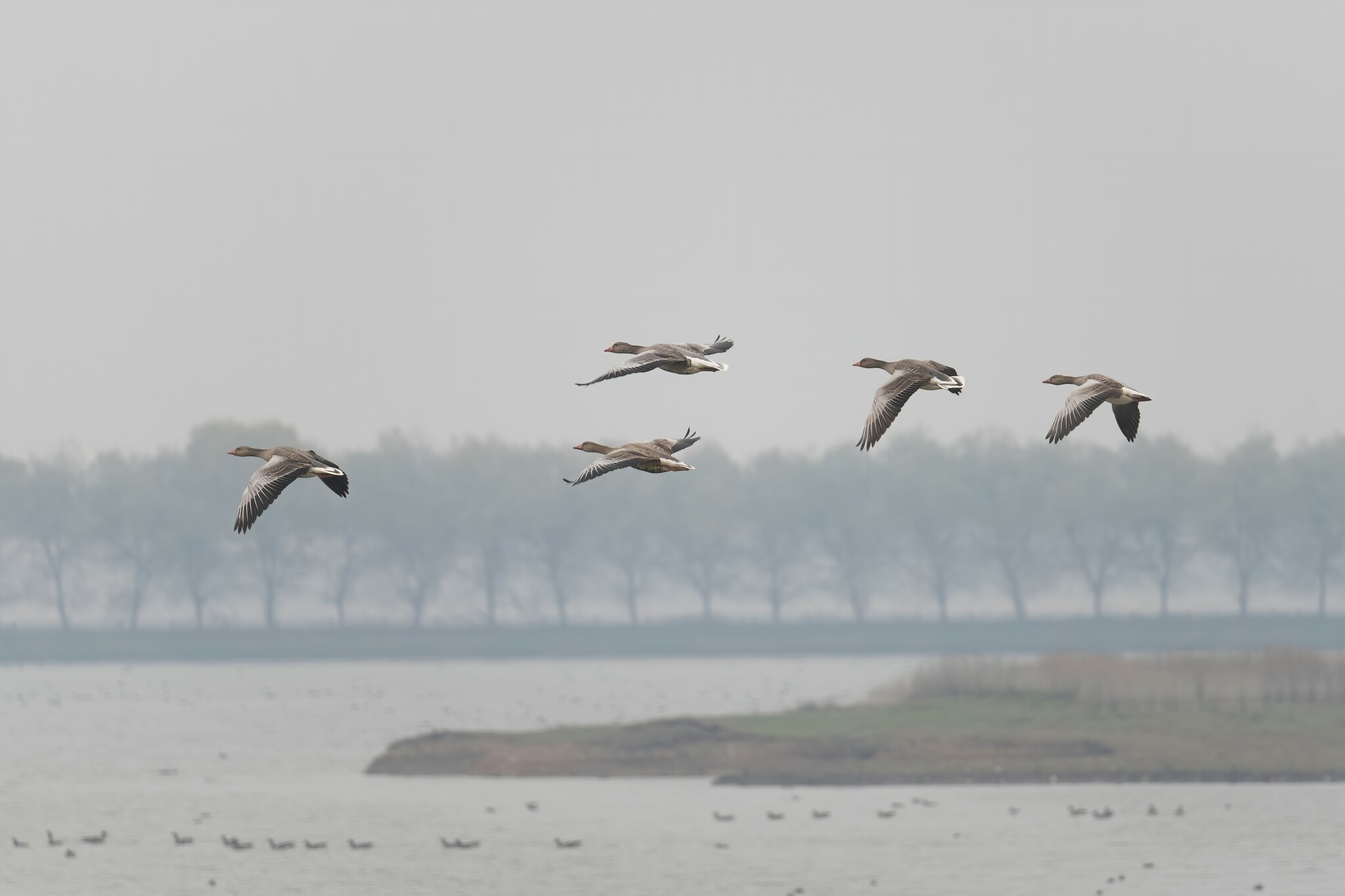
Identified by its large, bulky build, pink legs, and orange or pink bill. Key field marks include the pale grey forewing and rump visible in flight or when stretching, and light-colored wing coverts contrasting with darker flight feathers. Vocalizations include a loud cackling call similar to the domestic goose, described as 'aahng-ung-ung'.
Distribution & Habitat
Breeds in Iceland, northern and central Europe, and eastwards across Asia to northeastern China. Two subspecies are recognized: A. a. anser in the west and A. a. rubrirostris in the east. Historically migratory to southern Europe and North Africa, many populations now overwinter near breeding grounds due to warmer temperatures. Asian birds migrate to regions including Iran, India, and China. Feral populations exist in Great Britain, New Zealand, Australia, and occasionally North America. Breeding habitats include moorlands, marshes, and coastal islands; wintering sites include estuaries, flooded fields, and agricultural land.
Behavior & Ecology
Largely herbivorous, feeding on grasses, aquatic plants, and agricultural crops such as cereals, potatoes, and root vegetables; also consumes small fish, amphibians, and insects. Forms long-term monogamous pair bonds, though homosexual pairs occur and may hold high social rank. Nests on the ground among vegetation, laying a clutch of typically four to six eggs. The female incubates for about 28 days while the male guards. Chicks are precocial and fledge at eight to nine weeks. Gregarious, forming flocks for protection and migration. Young learn migration routes from parents.
Culture
Domesticated at least 3,000 years ago in Ancient Egypt and linked to deities such as Ra, Ishtar, and Aphrodite. Sacred in Rome, where geese on the Capitoline Hill alerted defenders to a Gallic attack in 390 BCE. Feathers were used for quill pens and arrow fletching. Subject of Konrad Lorenz's pioneering studies on imprinting. Features in culinary traditions and folklore, including the origin of the wishbone tradition from Michaelmas goose roasts.
Source: Wikipedia · CC BY-SA 3.0
Taxonomy
- Order
- Anseriformes
- Family
- Anatidae
- Genus
- Anser
Subspecies (2)
-
Anser anser anser
breeds northwestern Eurasia; winters to North Africa, Türkiye and Iran
Data Sources
Species description from Wikipedia, licensed under CC BY-SA 3.0.
Bird images and sounds sourced from GBIF, contributed by citizen scientists worldwide under Creative Commons licenses.
Taxonomy data from AviList 2025.