Greylag Goose
Anser anser
灰雁
Introduction
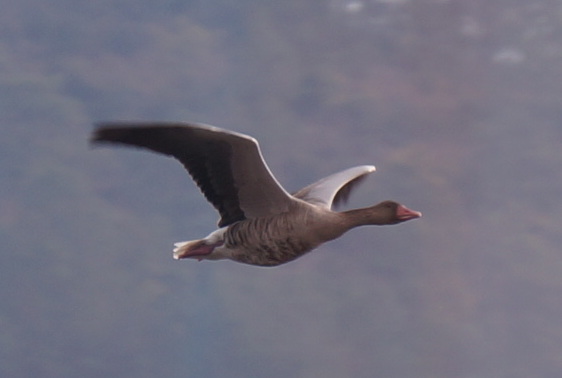
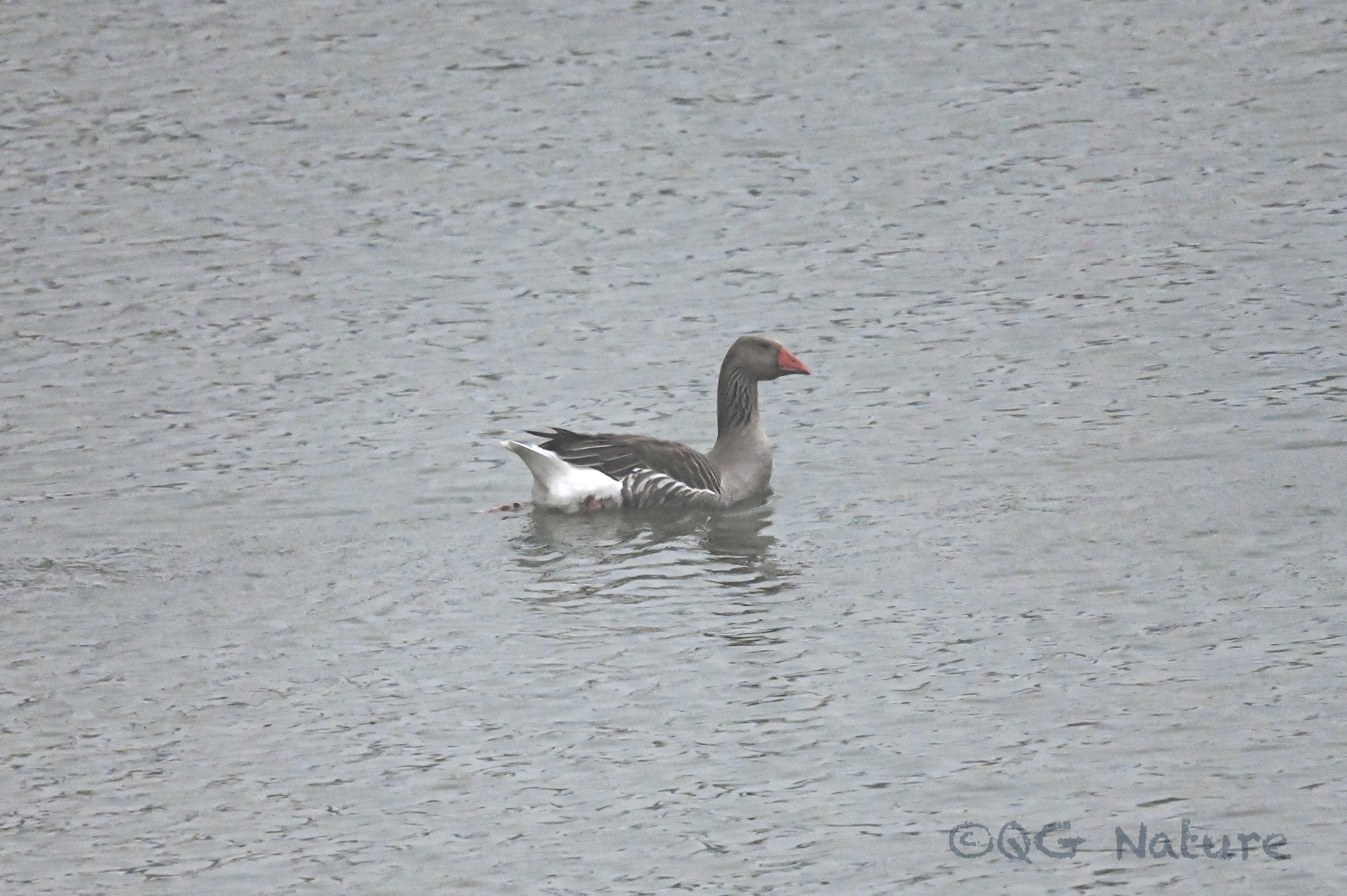
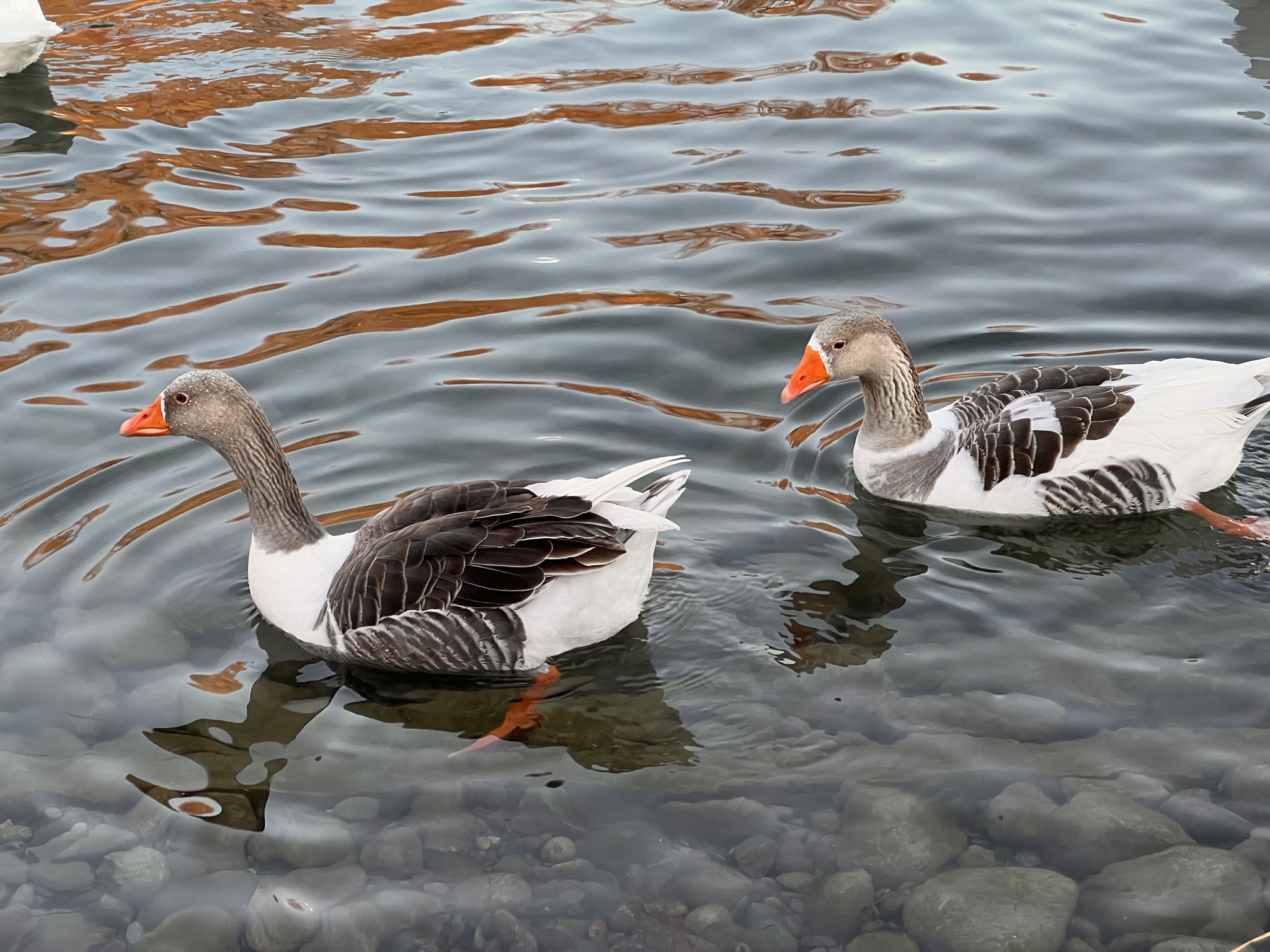
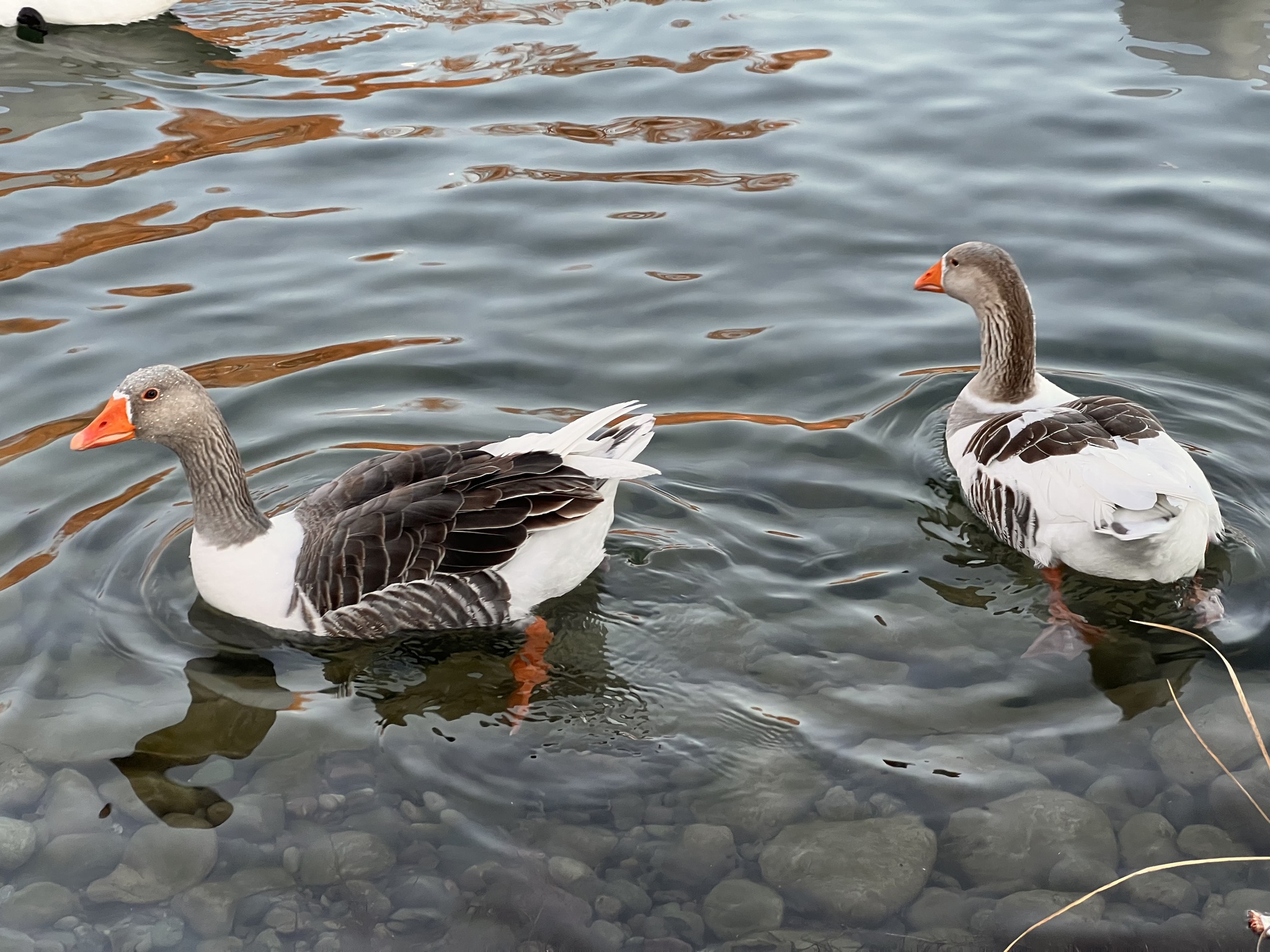
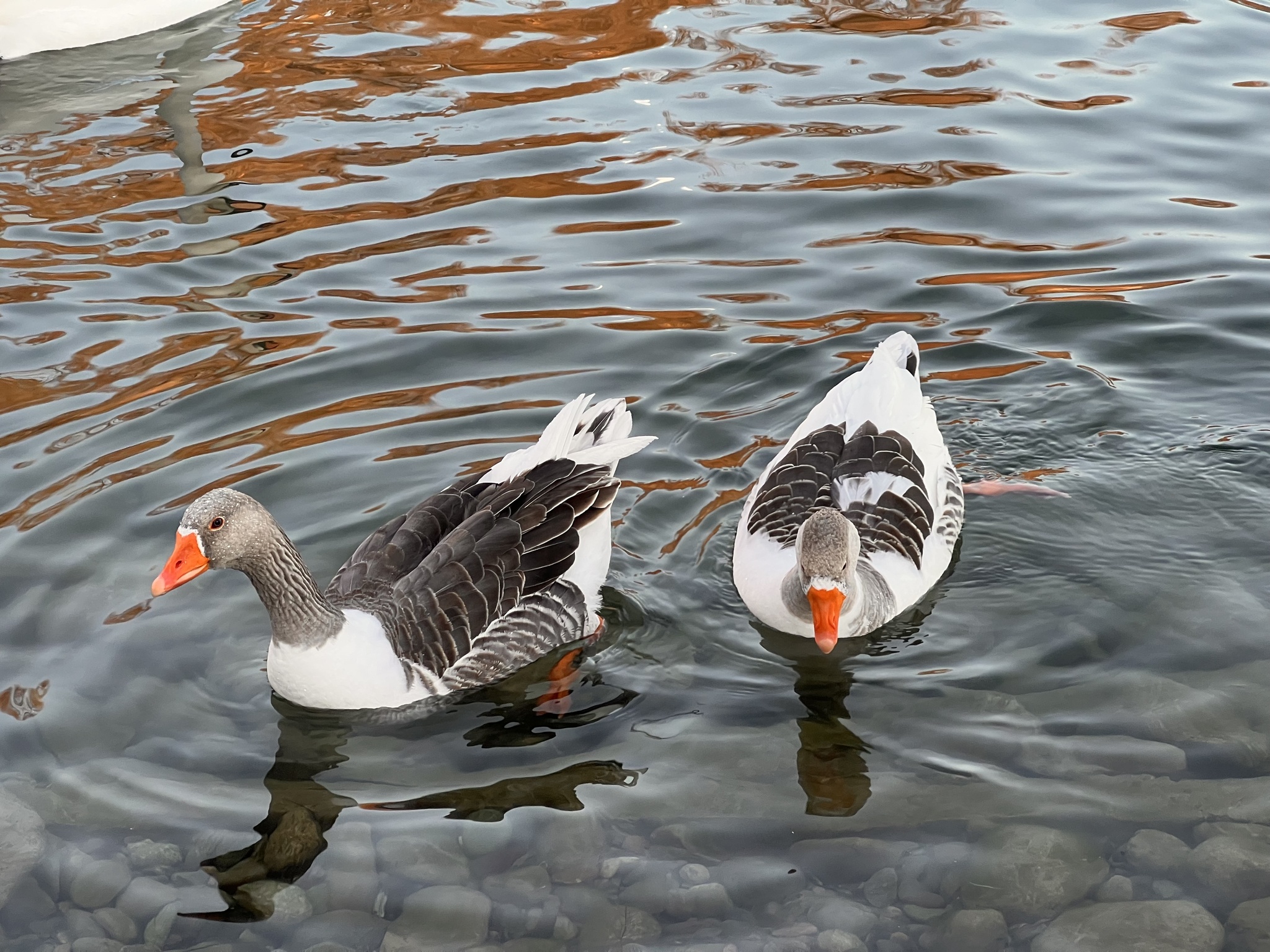
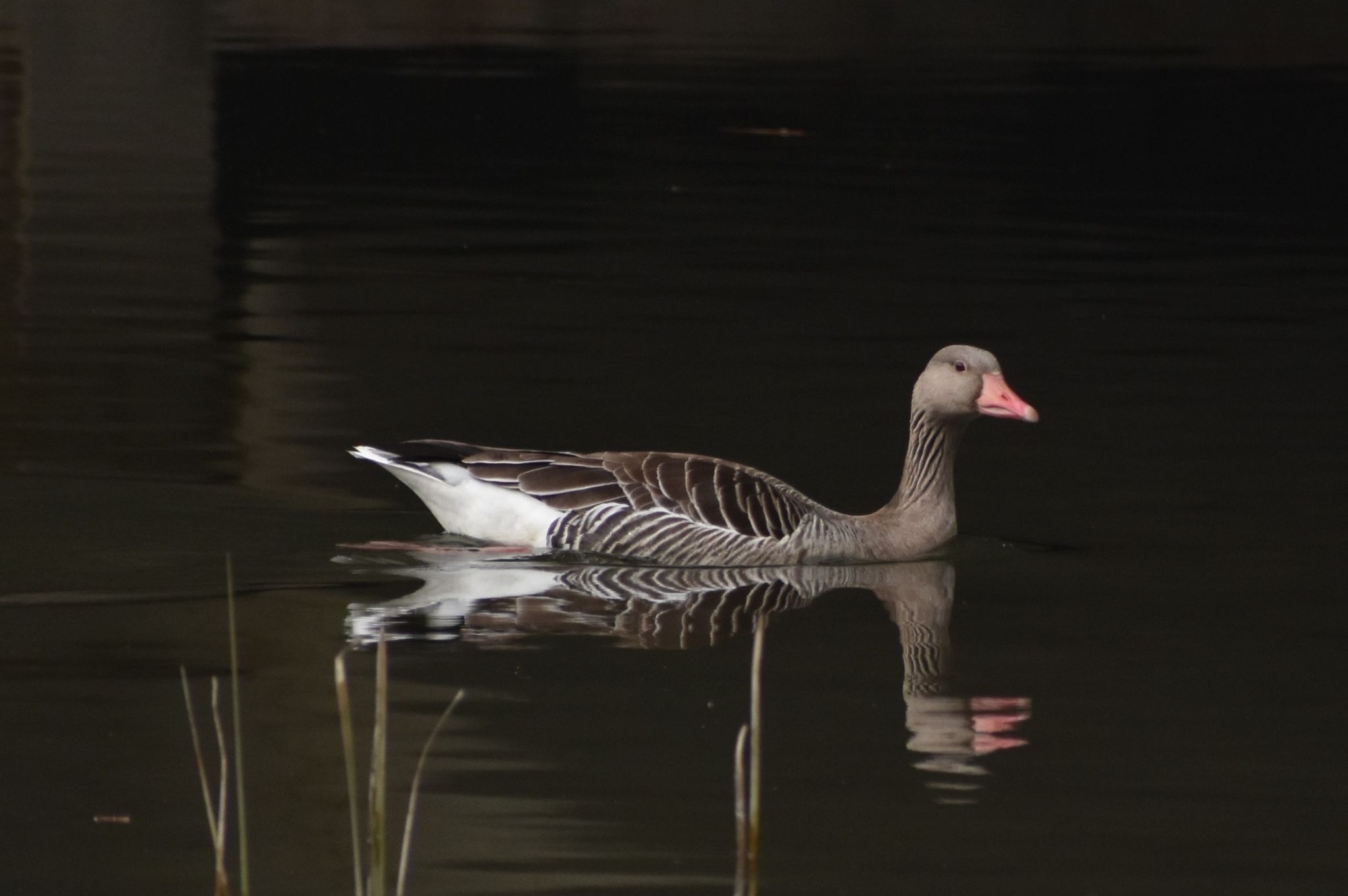
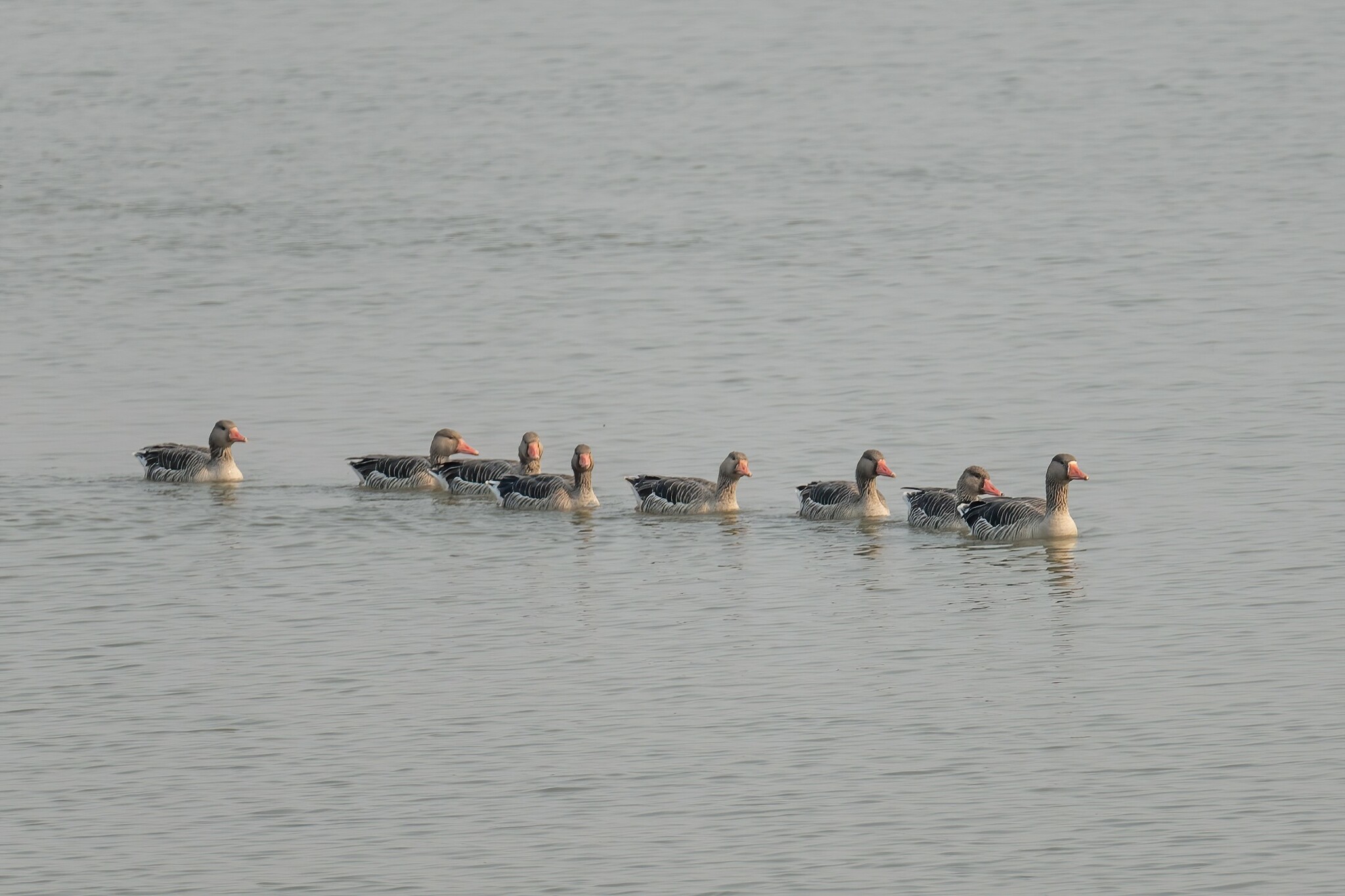
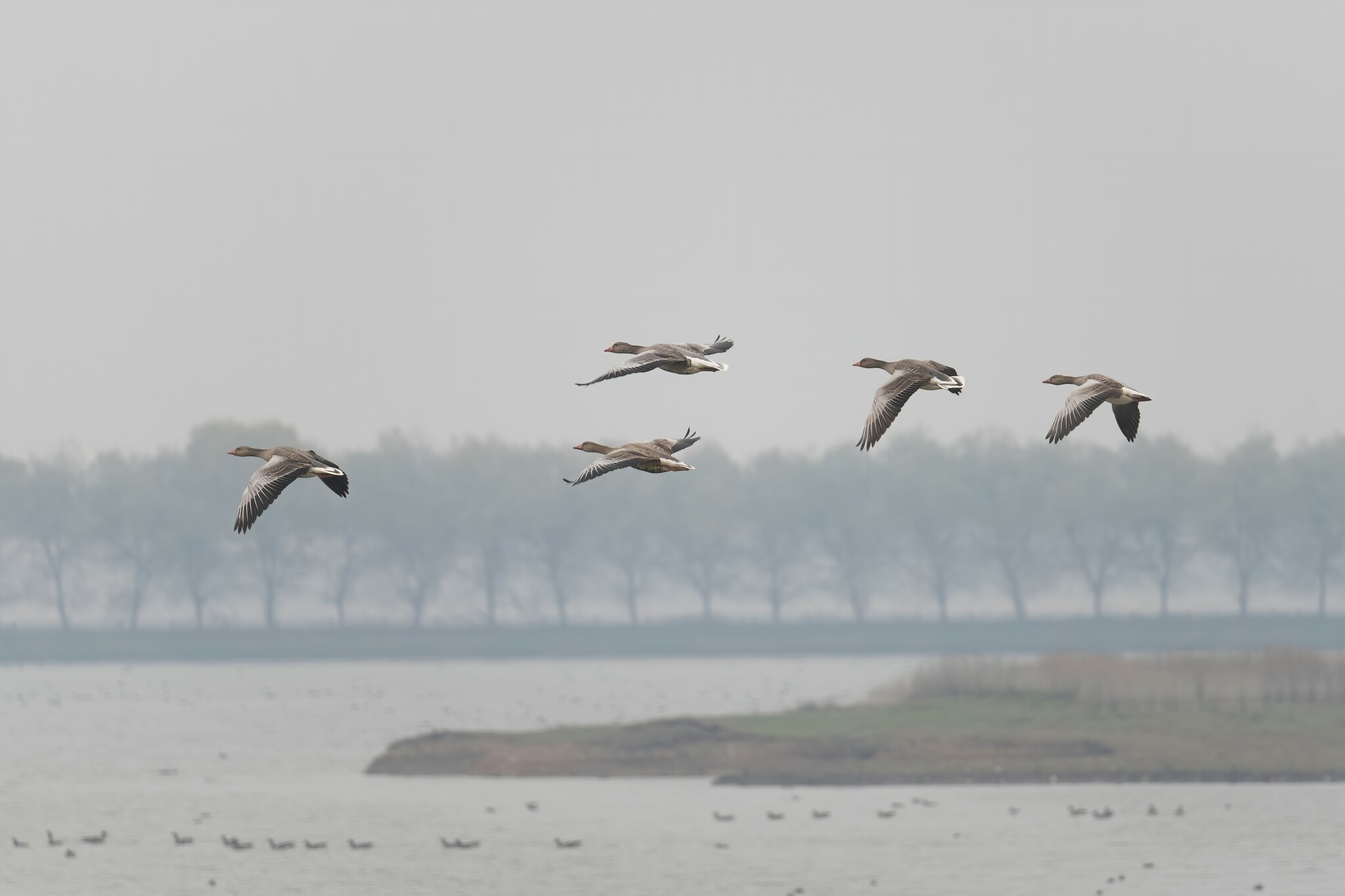
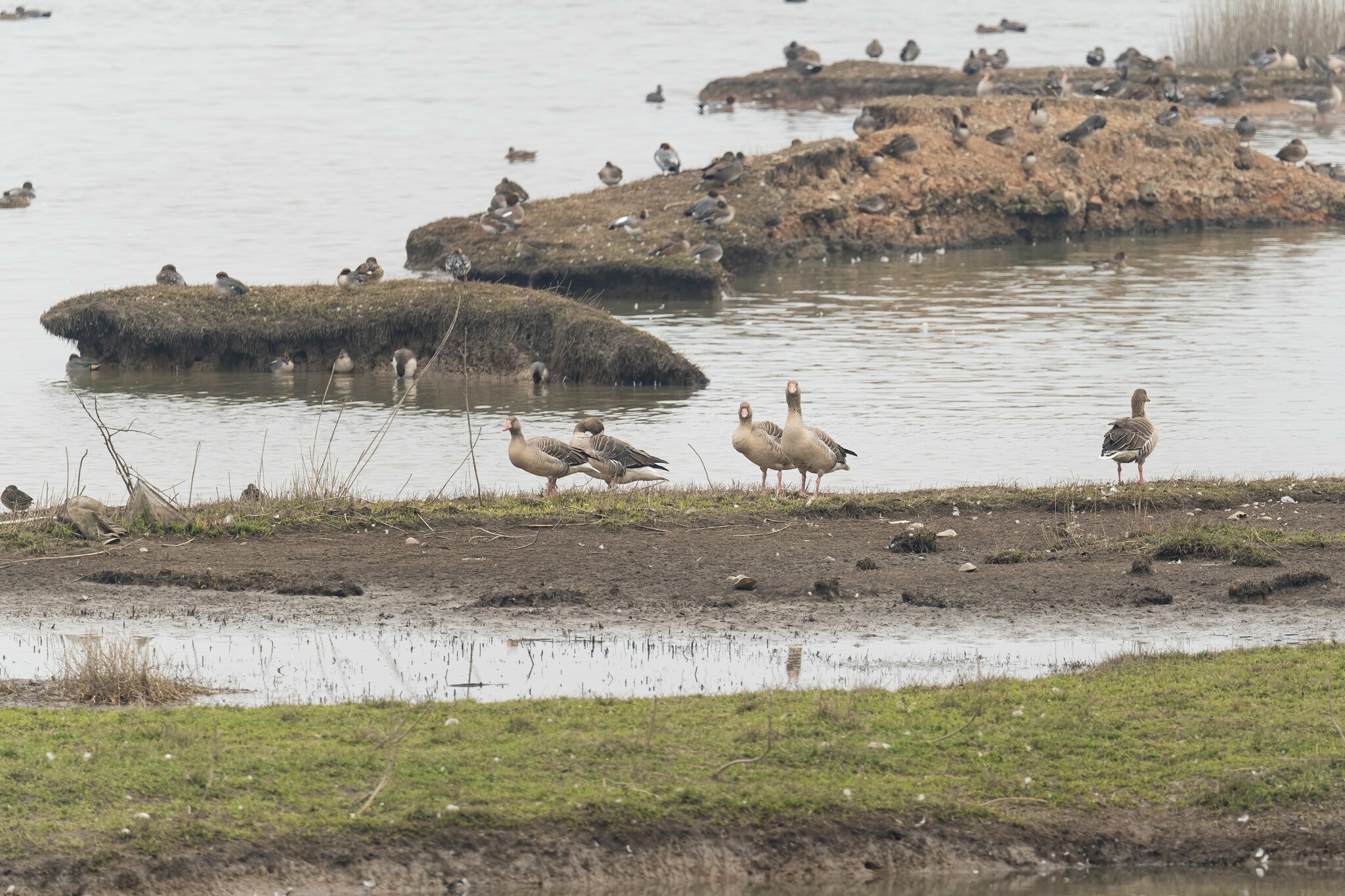
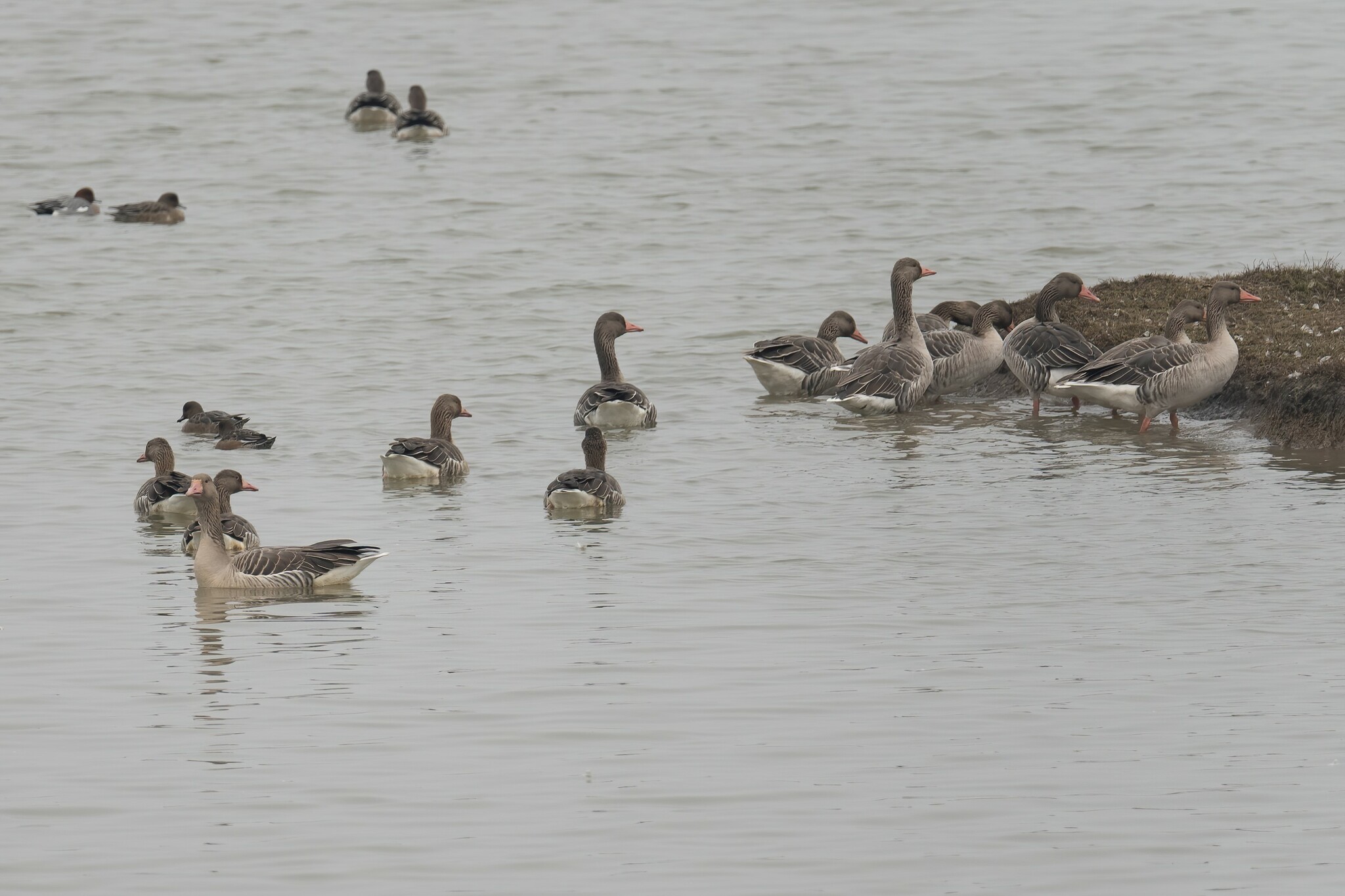
The greylag goose Anser anser is the largest species in the grey goose genus Anser. It occurs across most of Europe and through central Asia to eastern Siberia and China. Its range has expanded significantly in recent decades. The species occupies wetlands, marshes, lakes, and grasslands, typically breeding on islands in lakes and coastal marshes. It has pink legs and feet, and an orange or pink bill with a pale nail. In flight, the pale grey forewing and rump contrast with darker flight feathers, and a white line borders the upper flanks. Many populations have shifted their migration patterns, with birds overwintering progressively closer to breeding grounds or becoming entirely resident. The species gives a loud, resonant cackling call, typically rendered as 'aahng-ung-ung.'
Description
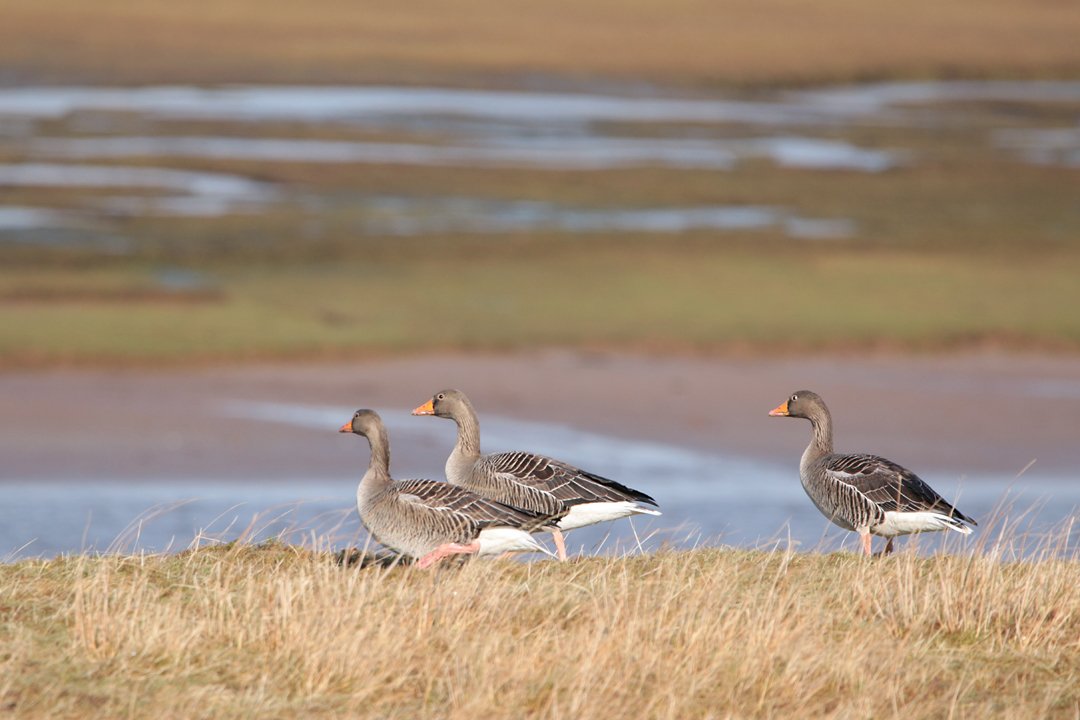
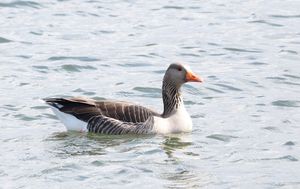
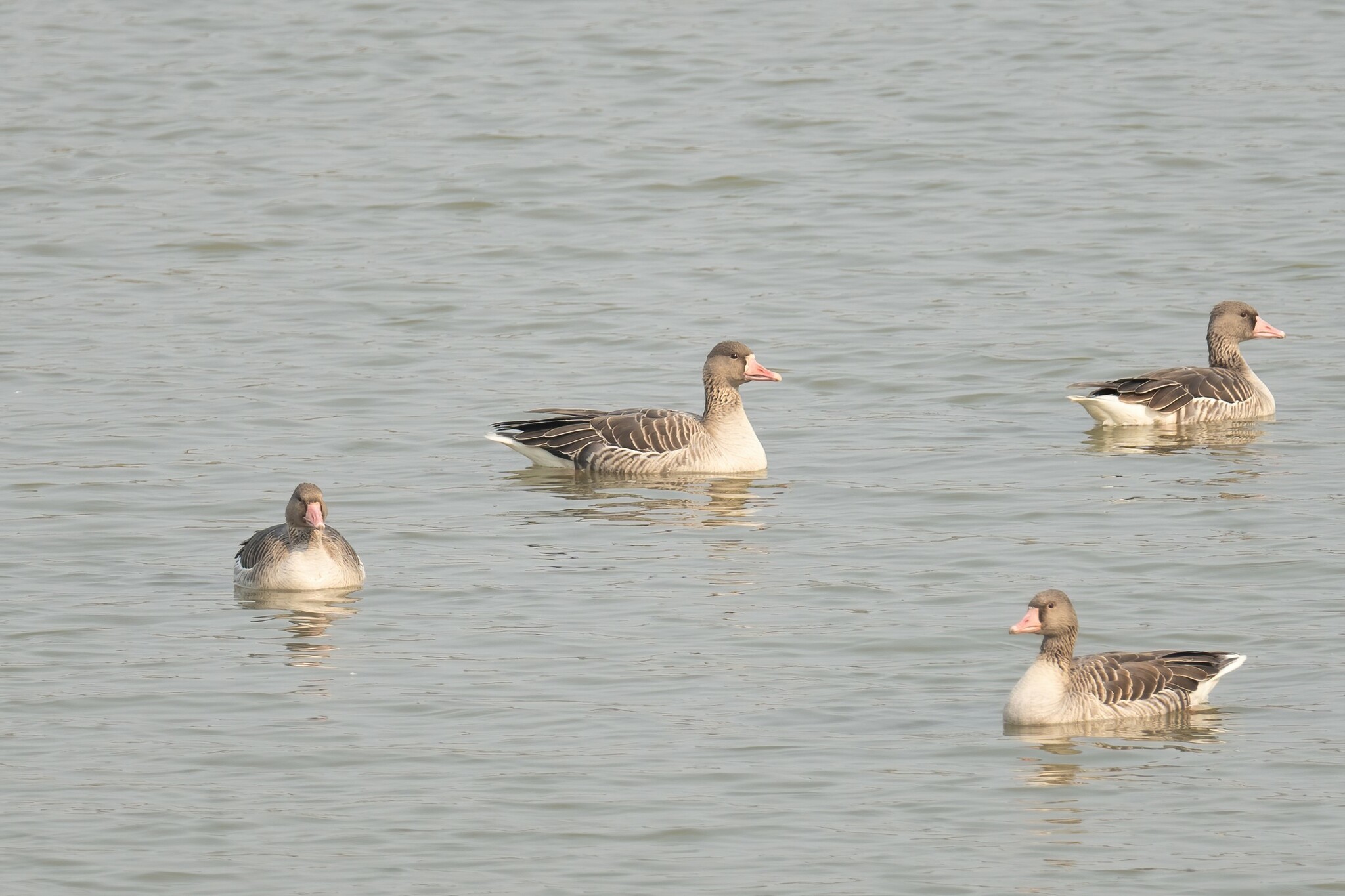
The greylag goose is a large, robust waterfowl measuring 74 to 91 centimeters in length with a wingspan of 147 to 180 centimeters. Adults weigh between 2.16 and 4.56 kilograms, with an average weight around 3.3 kilograms. Males are noticeably larger than females, particularly in the eastern subspecies. The plumage is greyish brown overall, with a darker head contrasting against a paler breast and belly marked with variable black spotting. A pale grey forewing and rump become visible during flight, while a white line borders the upper flanks. The wing coverts are light colored, creating contrast with darker flight feathers. Adults display a distinctive 'concertina' pattern of feather folds on the neck. Pink legs and feet support the bulky body, while the orange or pink bill features a white or brown nail at the tip. Juveniles lack the black breast speckling and have greyish legs.
Identification
Field identification focuses on the combination of size, plumage pattern, and coloration. The greylag is the bulkiest of the grey Anser geese, with a thicker neck than similar species. Its pink legs and orange-pink bill distinguish it from the pink-footed goose, which has entirely pink legs and a darker bill. The pale grey forewing visible in flight helps separate it from darker-backed geese. The white line along the upper flanks and the palefringed feather pattern create a distinctive scaled appearance. In silhouette, the bulky body and large head give a different profile than the sleeker Canada goose. The eastern subspecies averages larger than the western form, with more pronounced sexual dimorphism. The loud 'aahng-ung-ung' call resembles domestic goose vocalizations and aids identification when birds are hidden in vegetation.
Distribution & Habitat
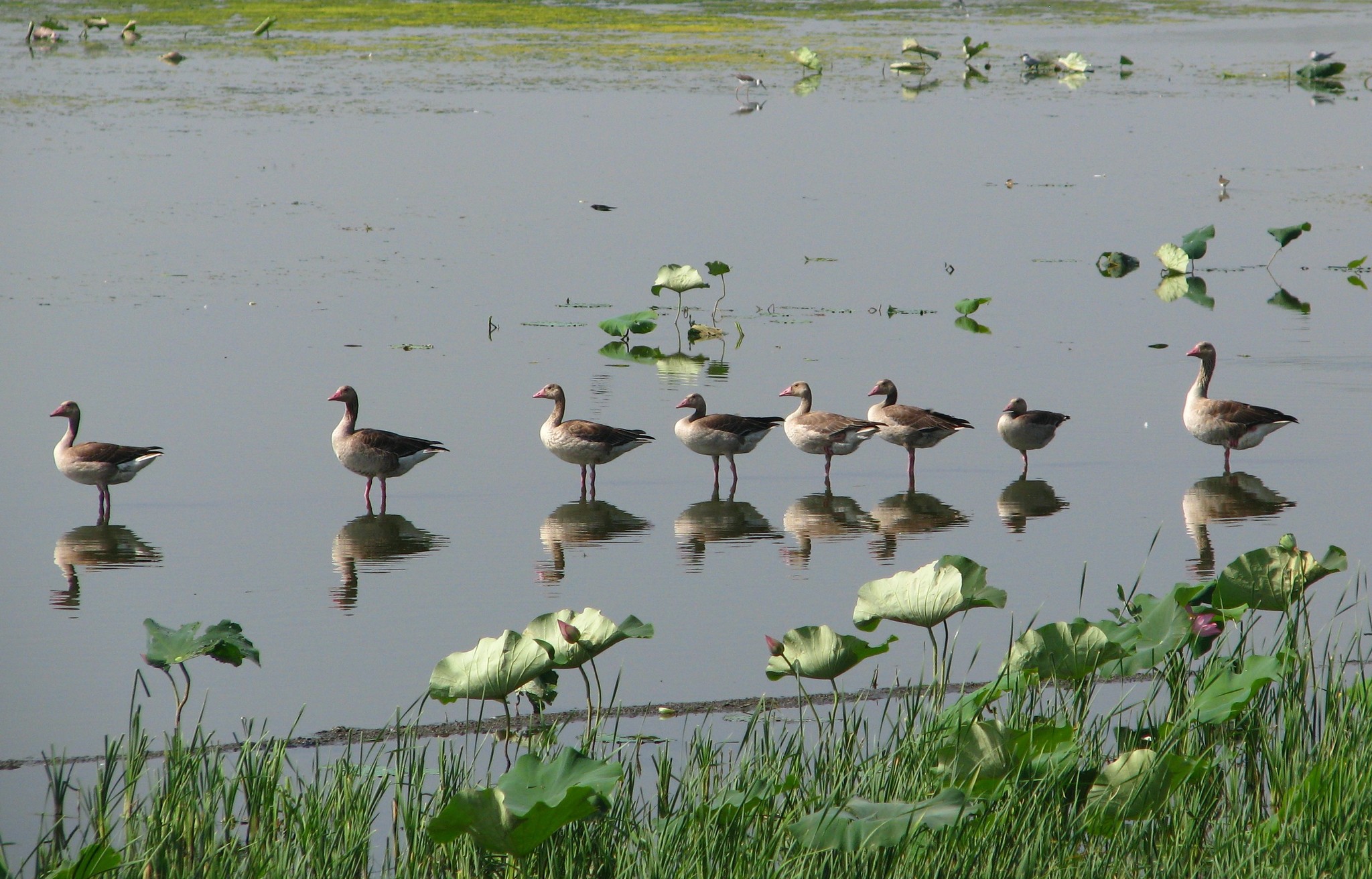
This species has a widespread Palearctic distribution. The western subspecies breeds across Iceland, northern and central Europe, while the eastern subspecies extends from Romania and Turkey eastward through Russia to northeastern China. Historical migration patterns saw European birds moving south to southern Europe and North Africa for winter, though many now overwinter nearer their breeding grounds even in Scandinavia. Asian populations migrate to Azerbaijan, Iran, Pakistan, northern India, and China. Feral populations have established in New Zealand and eastern Australia, with occasional vagrants in North America. Breeding habitat includes moorlands, marshes, lakes, and coastal islands with dense vegetation cover. Wintering areas encompass salt marshes, estuaries, freshwater wetlands, flooded fields, and agricultural land. Since the 1950s, warming temperatures have enabled northward range expansion and reduced migration distances for many populations.
Behavior & Ecology
Greylag geese are largely herbivorous, feeding chiefly on grasses and grazing in pastures alongside livestock. They also consume tubers, berries, aquatic plants, and agricultural crops including cereals, beans, and waste potatoes. They require frequent feeding due to low nutrient content of their diet. The species forms long-term monogamous pair bonds, with most pairs remaining together for life despite five to eight percent separating. Homosexual pairs comprise fourteen to twenty percent of some populations and often achieve high flock rankings. The nest is constructed on the ground among vegetation or floating vegetation, with a typical clutch of four to six creamy-white eggs incubated by the female for about twenty-eight days. Both parents defend the young, which are precocial and fledged at eight to nine weeks. Families stay together through migration, dispersing when parents establish new breeding territories. Gregarious behavior extends to large flocks providing predator vigilance, with birds coordinating mobbing responses to threats.
Conservation
The greylag goose has benefited from conservation measures and adaptive behavior changes, with populations expanding significantly across its range. In Norway, numbers increased threefold to fivefold between 1995 and 2015. The Orkney population surged from 300 breeding pairs in the past to 64,000 by 2019. Warming temperatures since the 1950s have enabled northern and central European breeding expansion. However, this success has created conflicts with agriculture, as increased goose numbers damage crops. Consequently, the species has become a pest in several areas, with extended hunting seasons implemented in regions like Orkney to manage populations. The species has recolonized much of England through feral population establishment after earlier declines. Conservation attention focuses on balancing agricultural interests with population management rather than preventing extinction.
Culture
Geese hold significant cultural importance across multiple culinary and symbolic traditions. The meat, liver, organs, fat, skin, and blood feature in various cuisines worldwide. The tradition of pulling a wishbone derives from Michaelmas goose feasts, where the bone was believed to have oracular powers. In ancient Egypt, geese symbolized the sun god Ra and were depicted alongside divine figures. Greek and Roman traditions associated geese with the goddess of love Aphrodite, with goose fat used as an aphrodisiac. Roman sacred geese on the Capitoline Hill allegedly raised the alarm during the Gallic siege of 390 BCE, cementing their protective symbolism. The nursery rhyme Goosey Goosey Gander preserves fertility associations. Goose feathers served as writing quills, with left-wing primary feathers preferred for right-handed writers. Ethologically, the species achieved scientific prominence through Konrad Lorenz's pioneering imprinting studies, which established foundational understanding of animal behavior development.
Source: Wikipedia · CC BY-SA 3.0
Taxonomy
- Order
- Anseriformes
- Family
- Anatidae
- Genus
- Anser
- eBird Code
- gragoo
Subspecies (2)
-
Anser anser anser
breeds northwestern Eurasia; winters to North Africa, Türkiye and Iran
-
Anser anser rubrirostris
breeds northeastern Eurasia; winters to Türkiye, India, and northern Indochina
Data Sources
Species description from Wikipedia, licensed under CC BY-SA 3.0.
Bird images and sounds sourced from GBIF, contributed by citizen scientists worldwide under Creative Commons licenses.
Taxonomy data from AviList 2025.