Anseriformes / Anatidae / Anser
Greater White-fronted Goose
Anser albifrons · 白额雁
Introduction
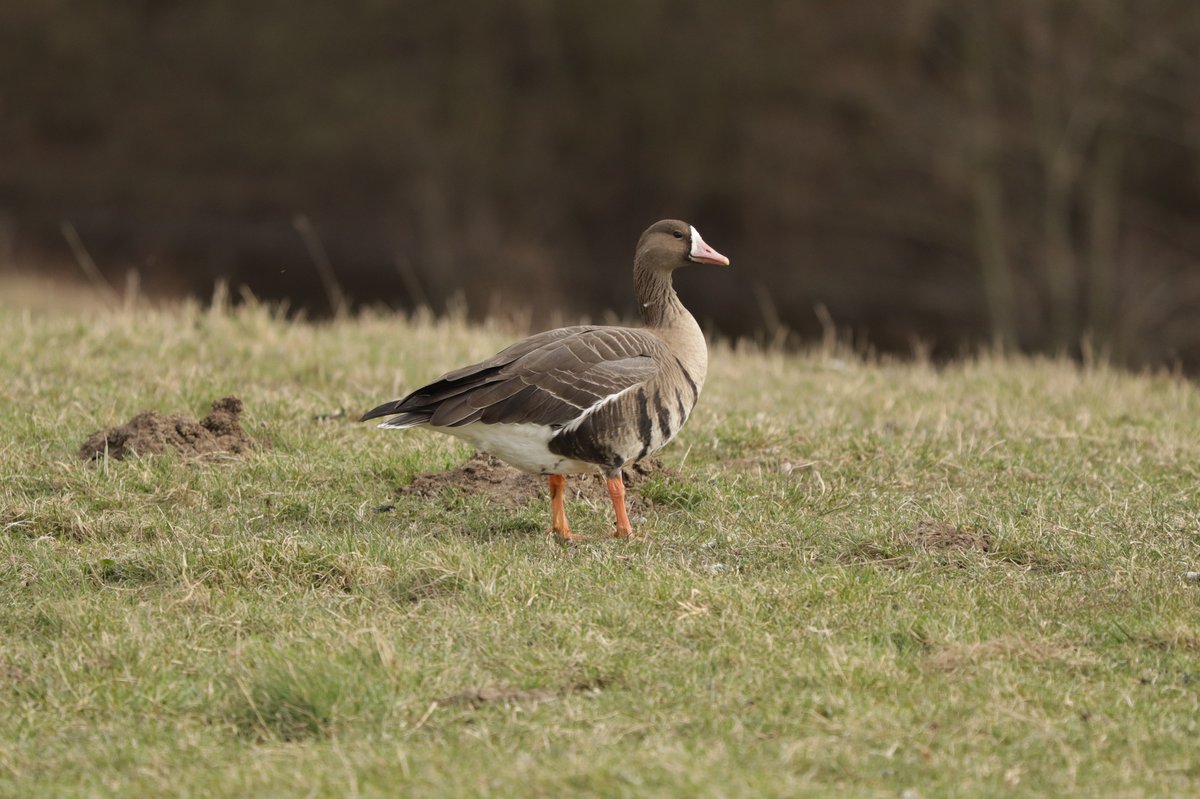
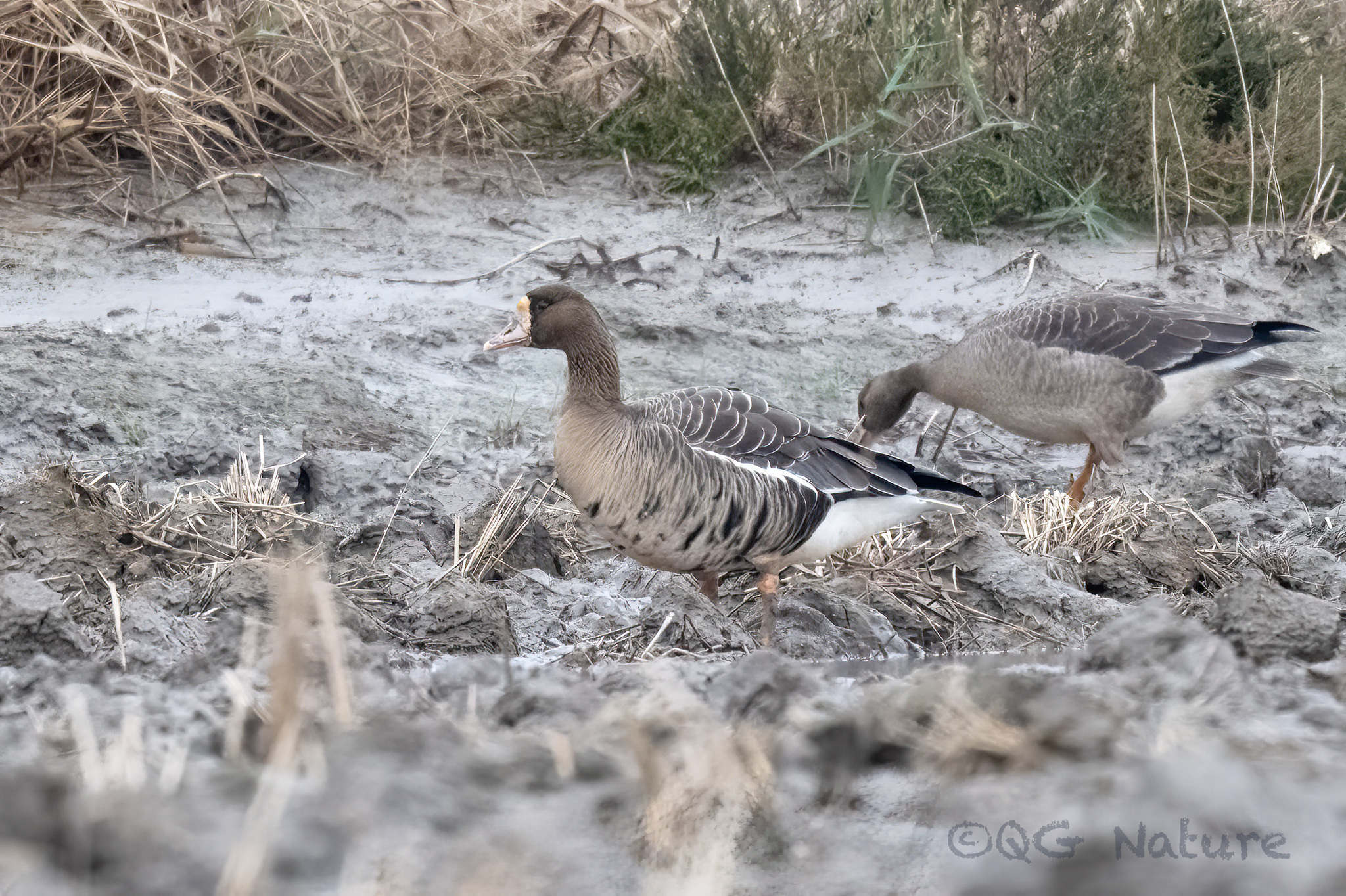
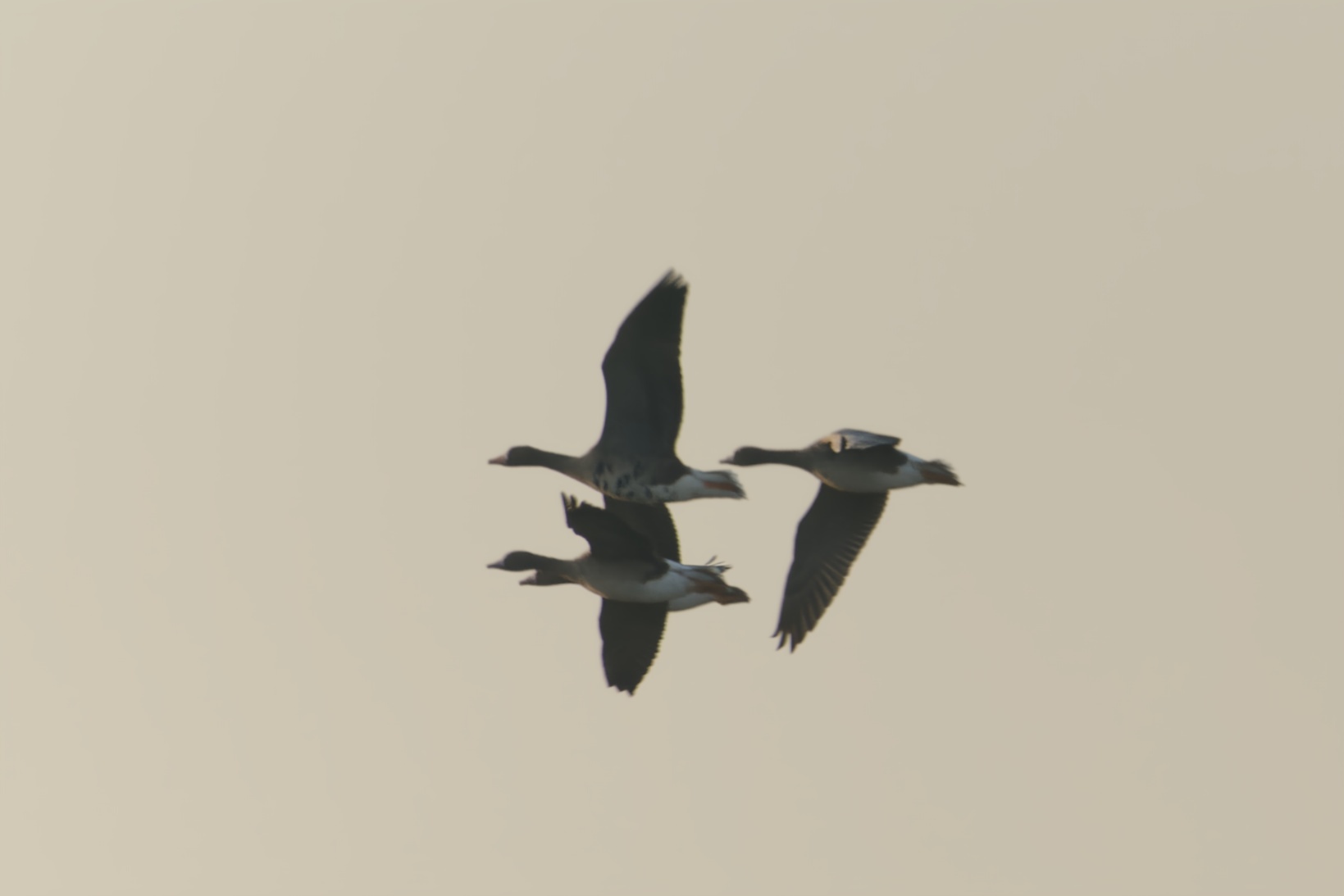
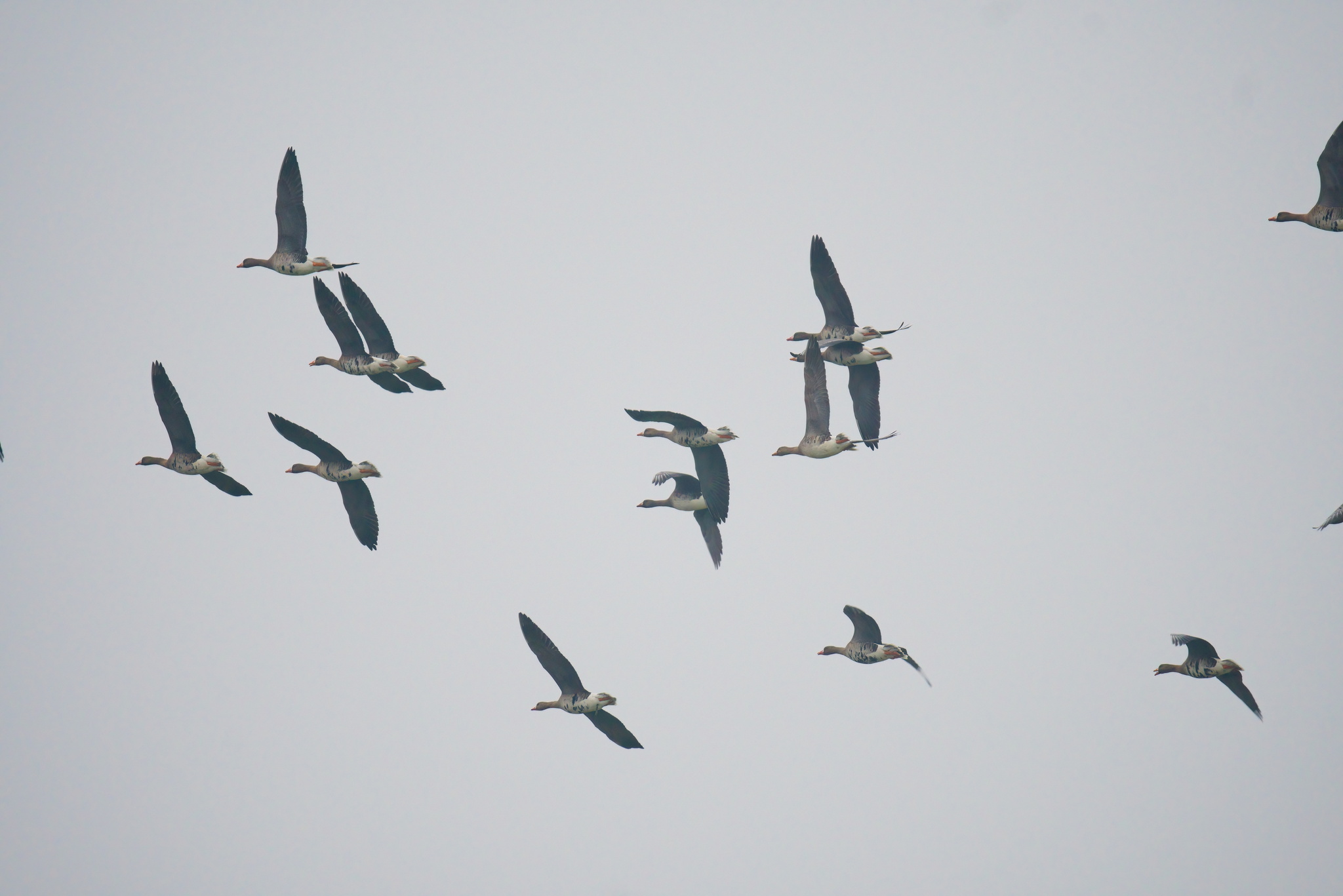
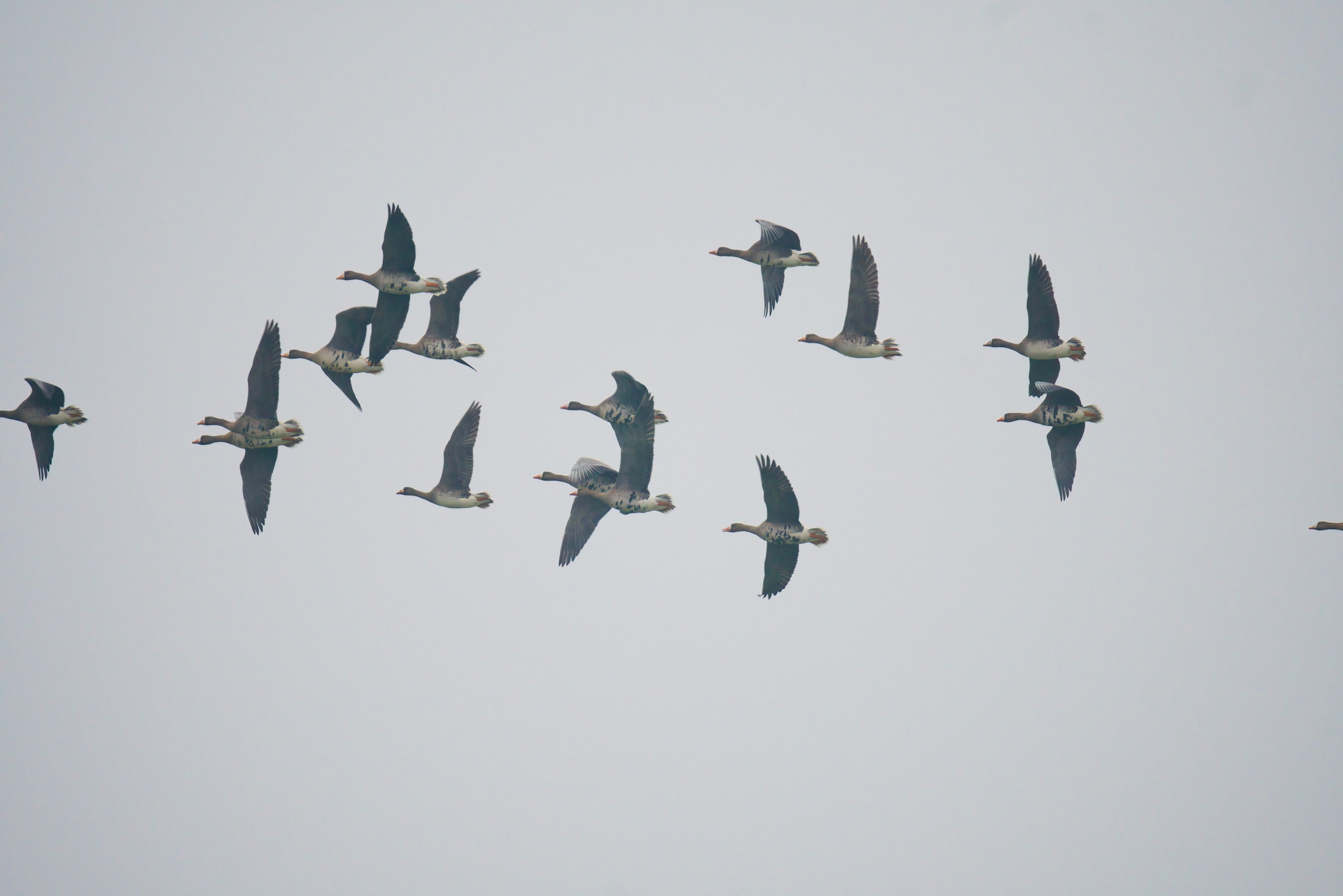
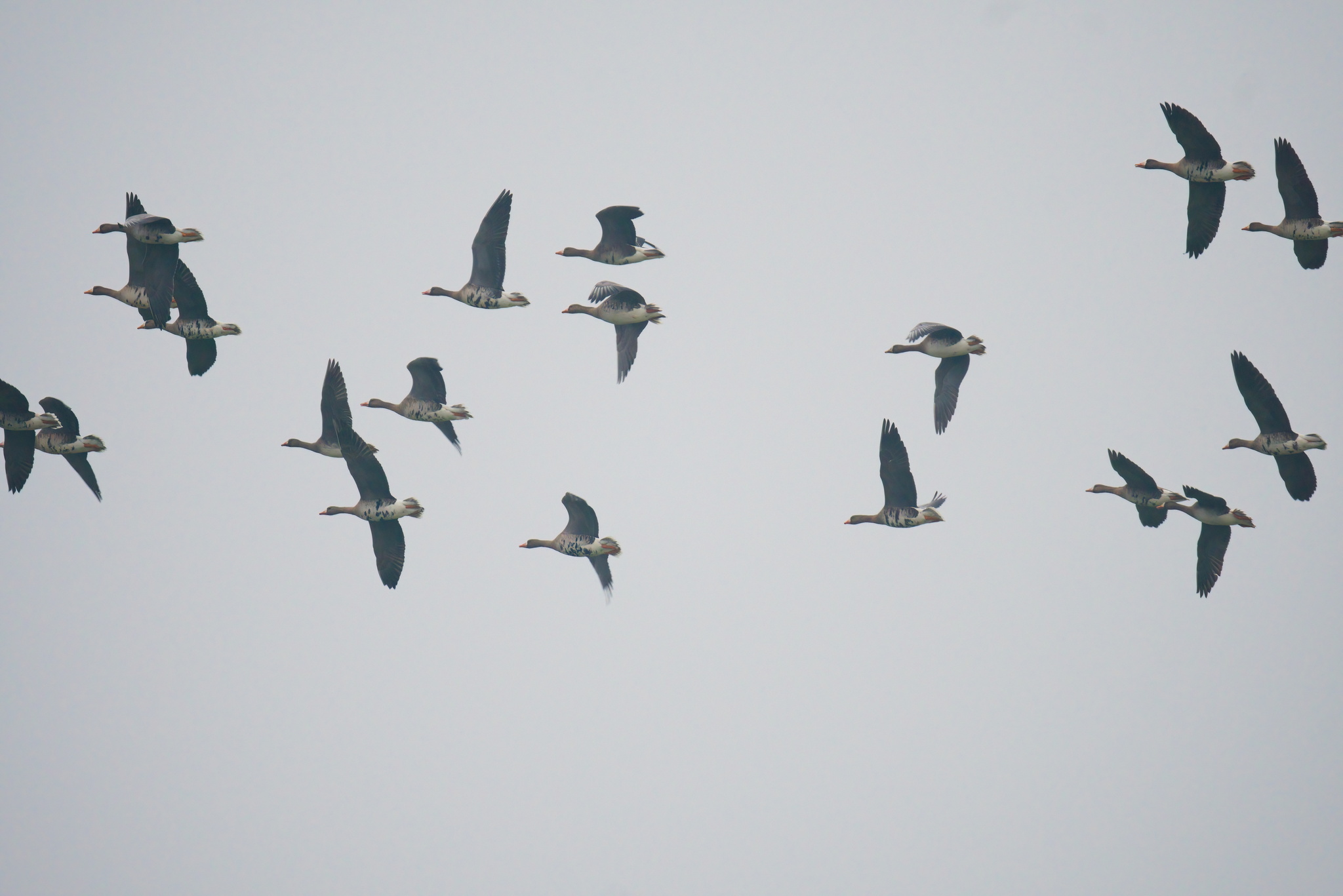
A migratory goose species breeding in northern Canada, Alaska, Greenland, and Russia, wintering in North America, Europe, and Asia. Distinctive traits include a white patch at the base of the bill and salt-and-pepper breast markings in adults. It exhibits an unusually long period of parental care, lasting several years and potentially including grandparenting.
Description
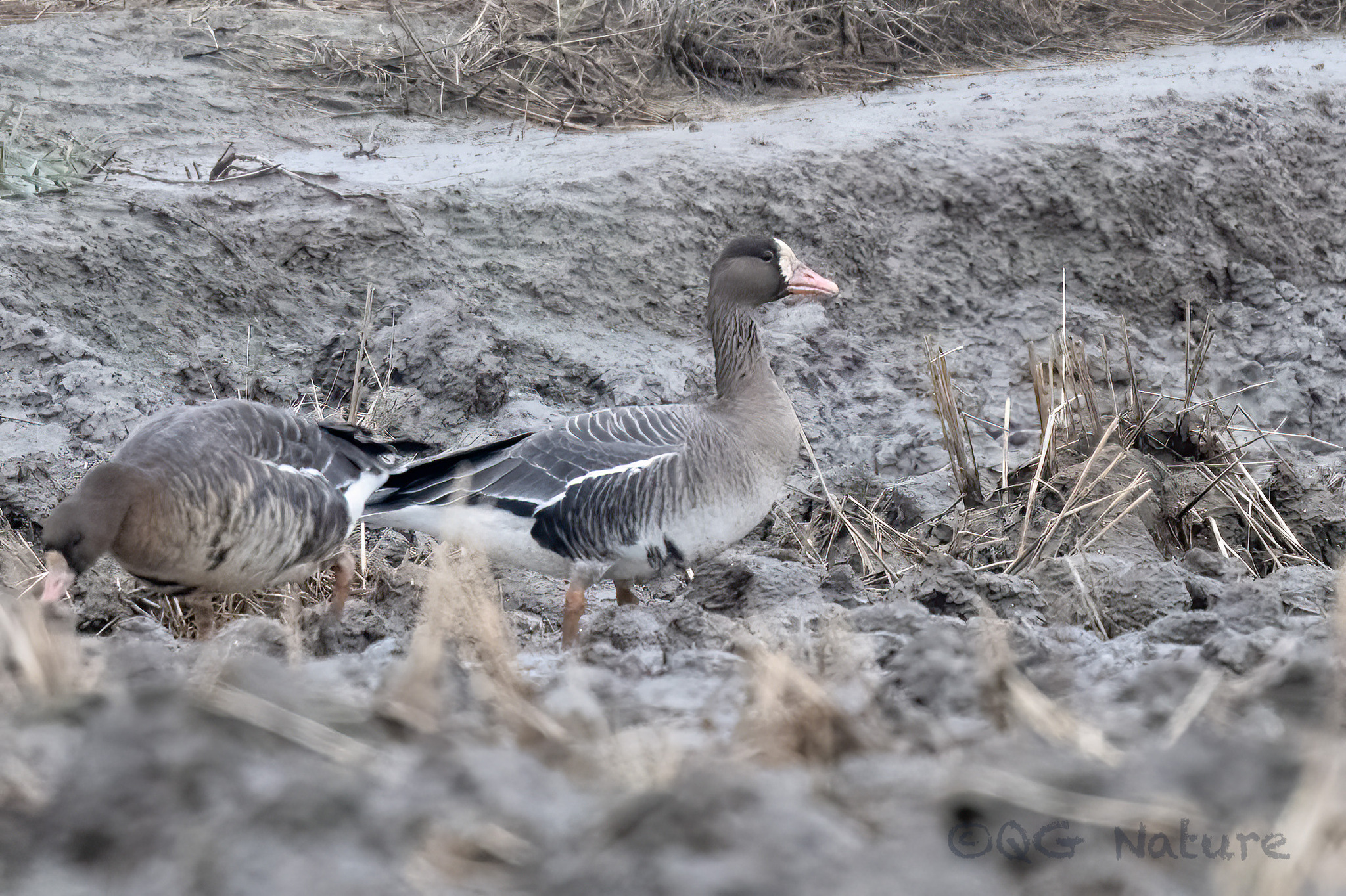
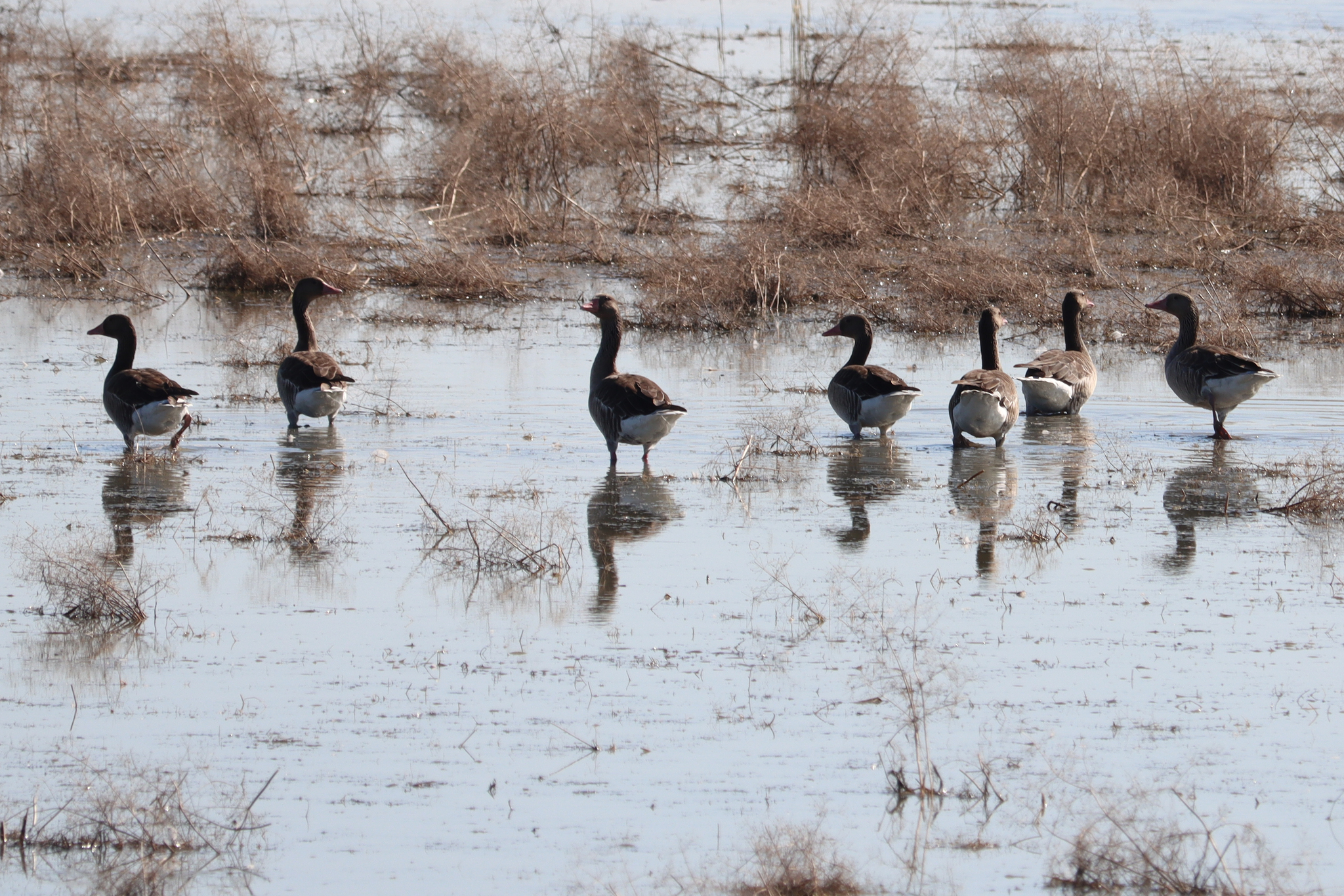
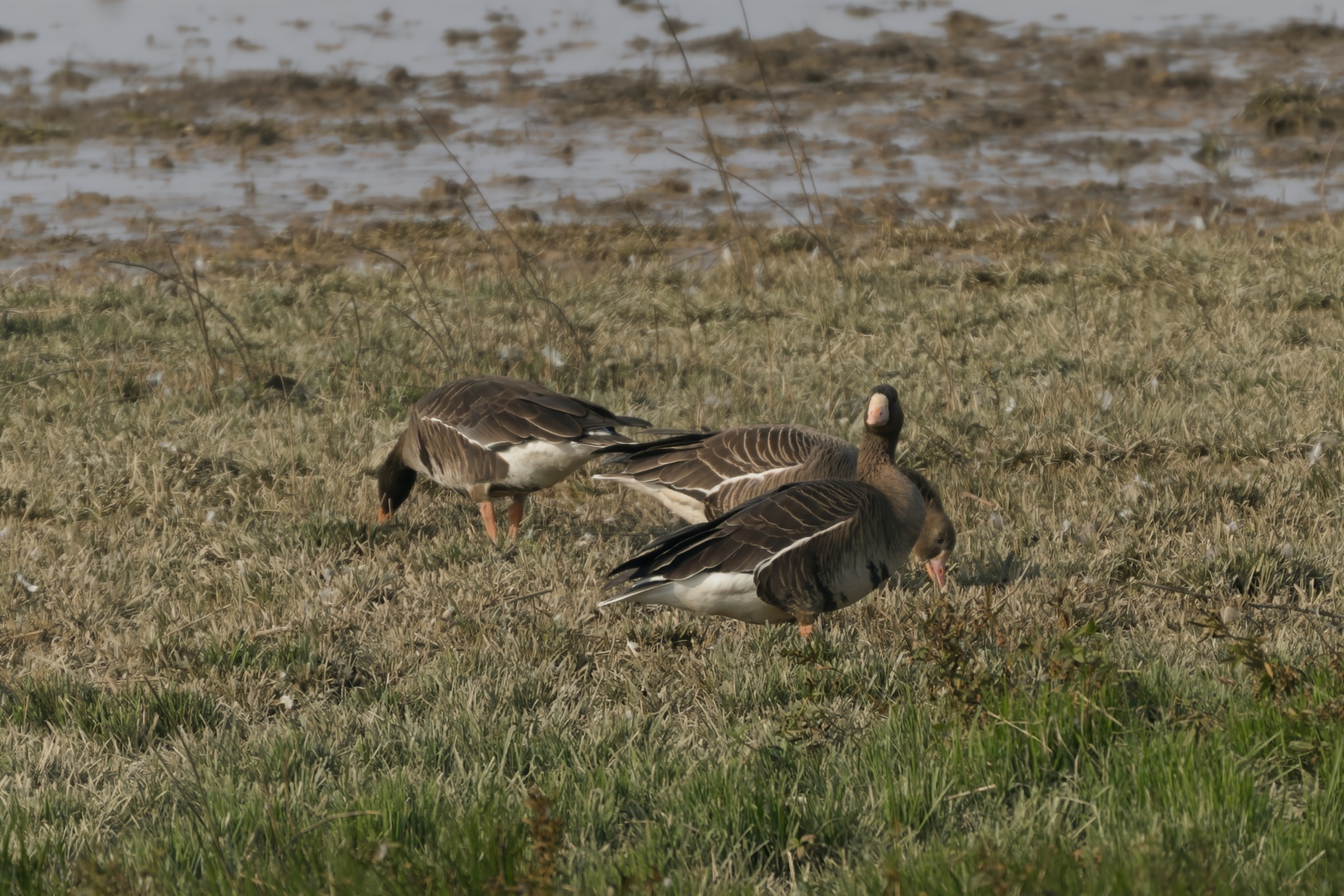
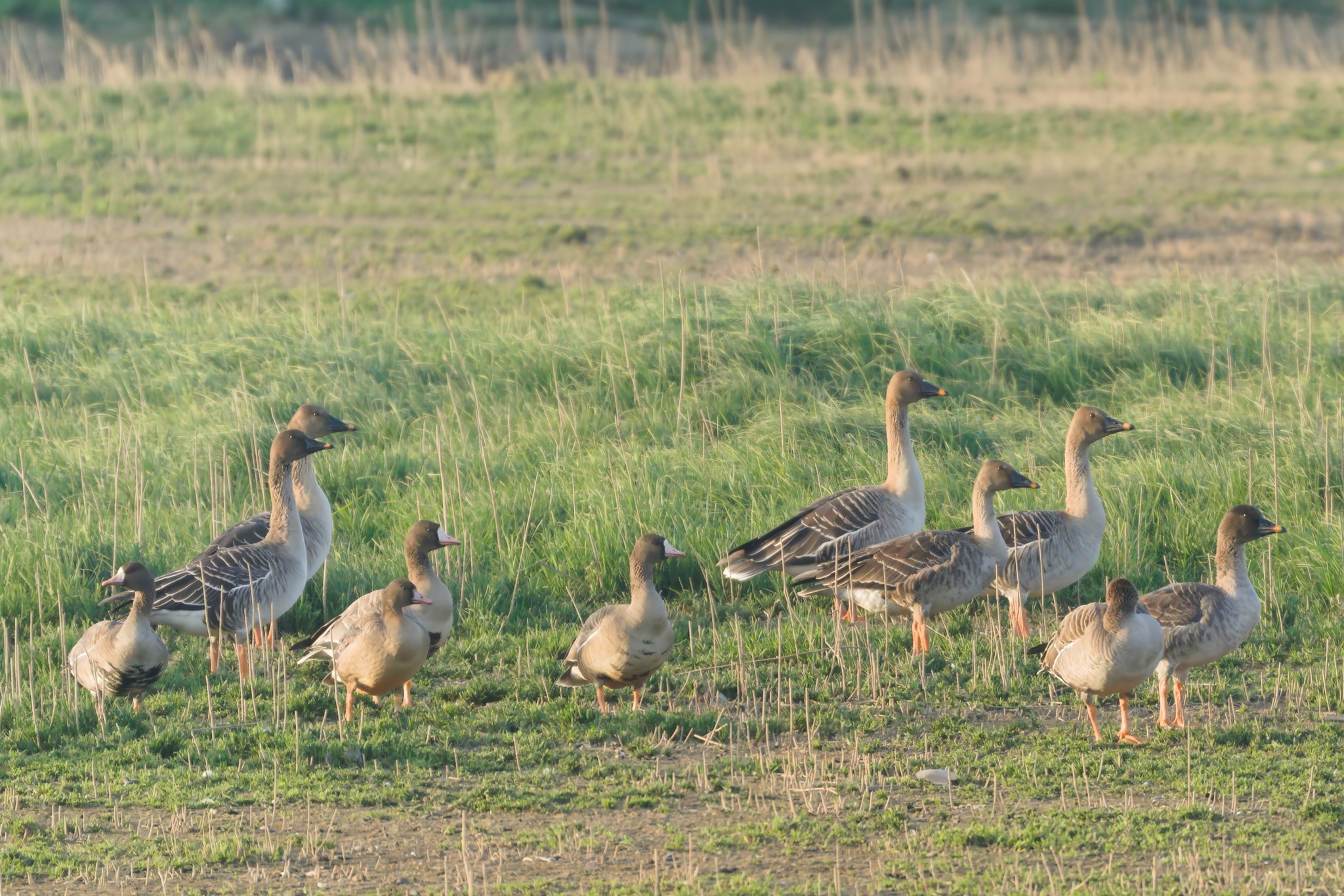
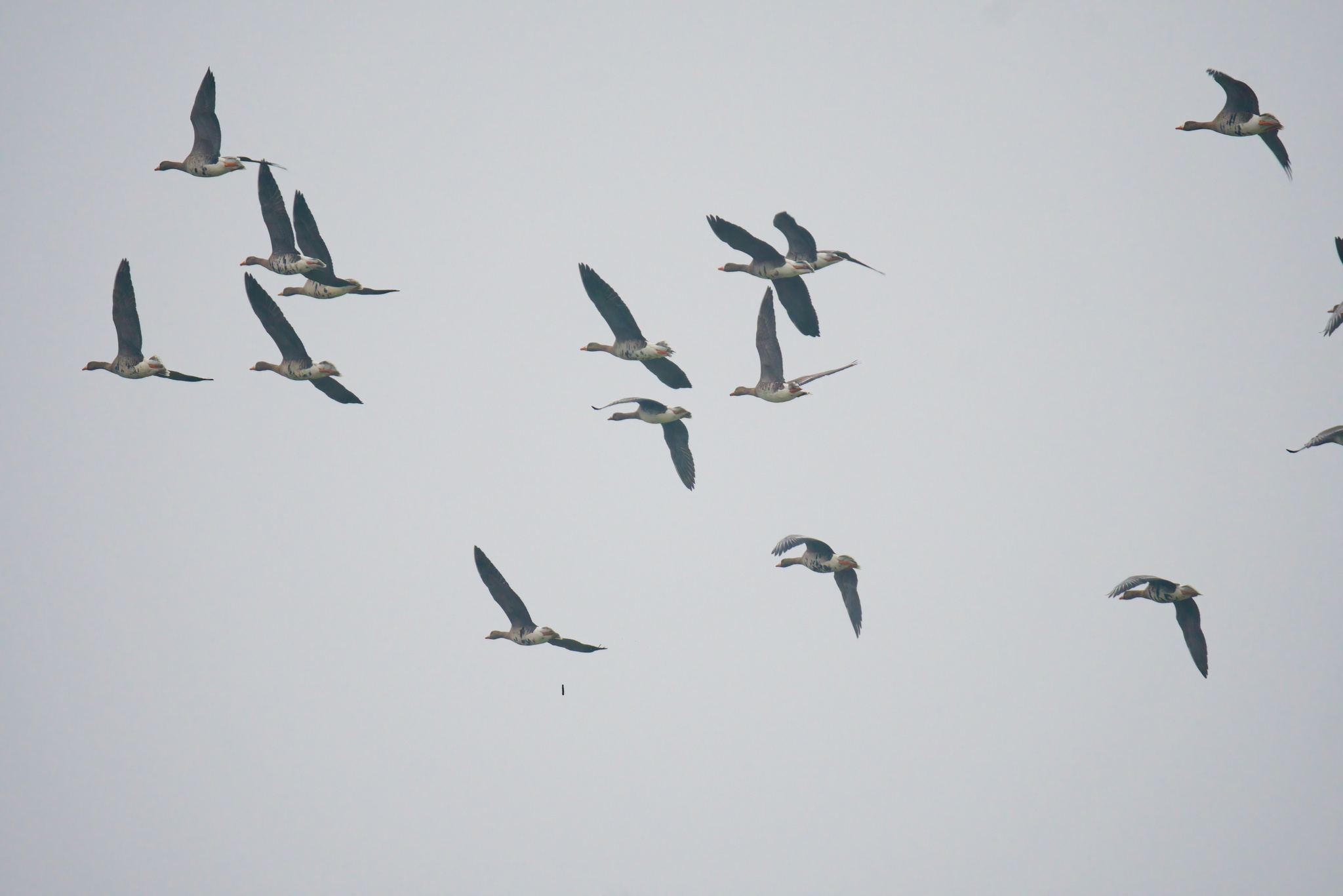
Length 64–81 cm (25–32 in), wingspan 130–165 cm (51–65 in), weight 1.93–3.31 kg (4 lb 4 oz – 7 lb 5 oz). Smaller than greylag geese. Adults are greyish brown with light grey breasts dappled with dark brown to black blotches and bars. Features bright orange legs, mouse-coloured upper wing coverts, and a pinkish bill. Males are typically larger but sexes are similar in appearance. Subspecies A. a. flavirostris is darker and more oily-looking than A. a. albifrons, with an orange-yellow bill (versus bright pink) and narrower white tail tips.
Identification
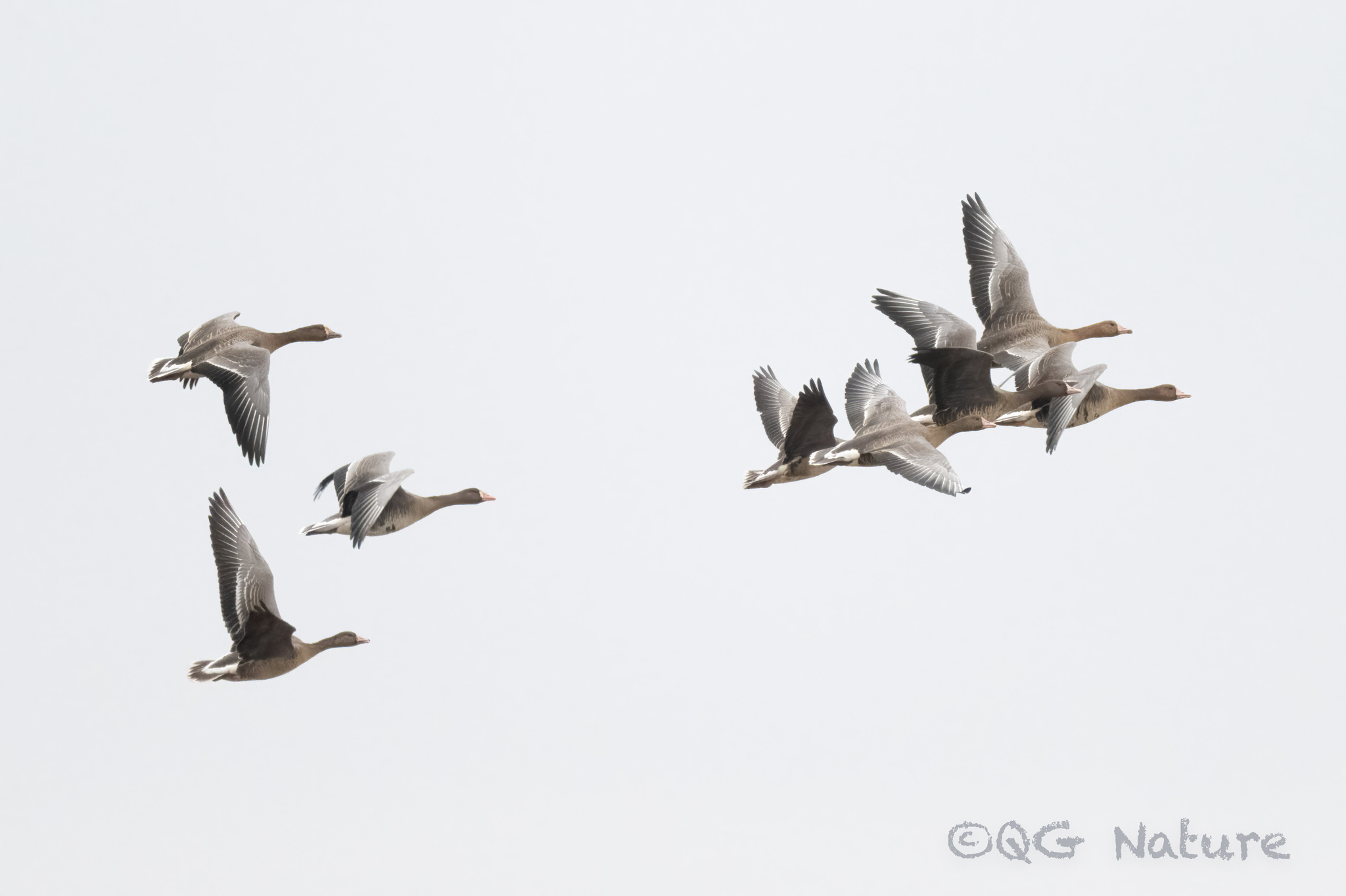
Key marks include a white facial blaze bordering the bill base and speckled breast. Larger than the lesser white-fronted goose and lacks its yellow eye ring; the white blaze does not extend as far up the forehead. Flight features prominent wing bars in subspecies A. a. albifrons due to broad white tips on greater coverts, whereas A. a. flavirostris has narrow wing bars. Vocalization is a high-pitched cackle, often sounding like "he-he" with a distinct break between notes.
Distribution & Habitat
Breeds in northern Canada, Alaska, Greenland, and Russia. Five subspecies recognized: A. a. albifrons (Europe/Asia), A. a. gambeli (interior northwestern Canada, winters Gulf of Mexico), A. a. frontalis (synonymized with gambeli or albifrons in recent studies), A. a. elgasi (southwest Alaska, winters California), and A. a. flavirostris (western Greenland, winters Ireland and Scotland). Midcontinent population was approximately 710,000 in 2010; Pacific population 650,000; tule goose population 10,000.
Behavior & Ecology
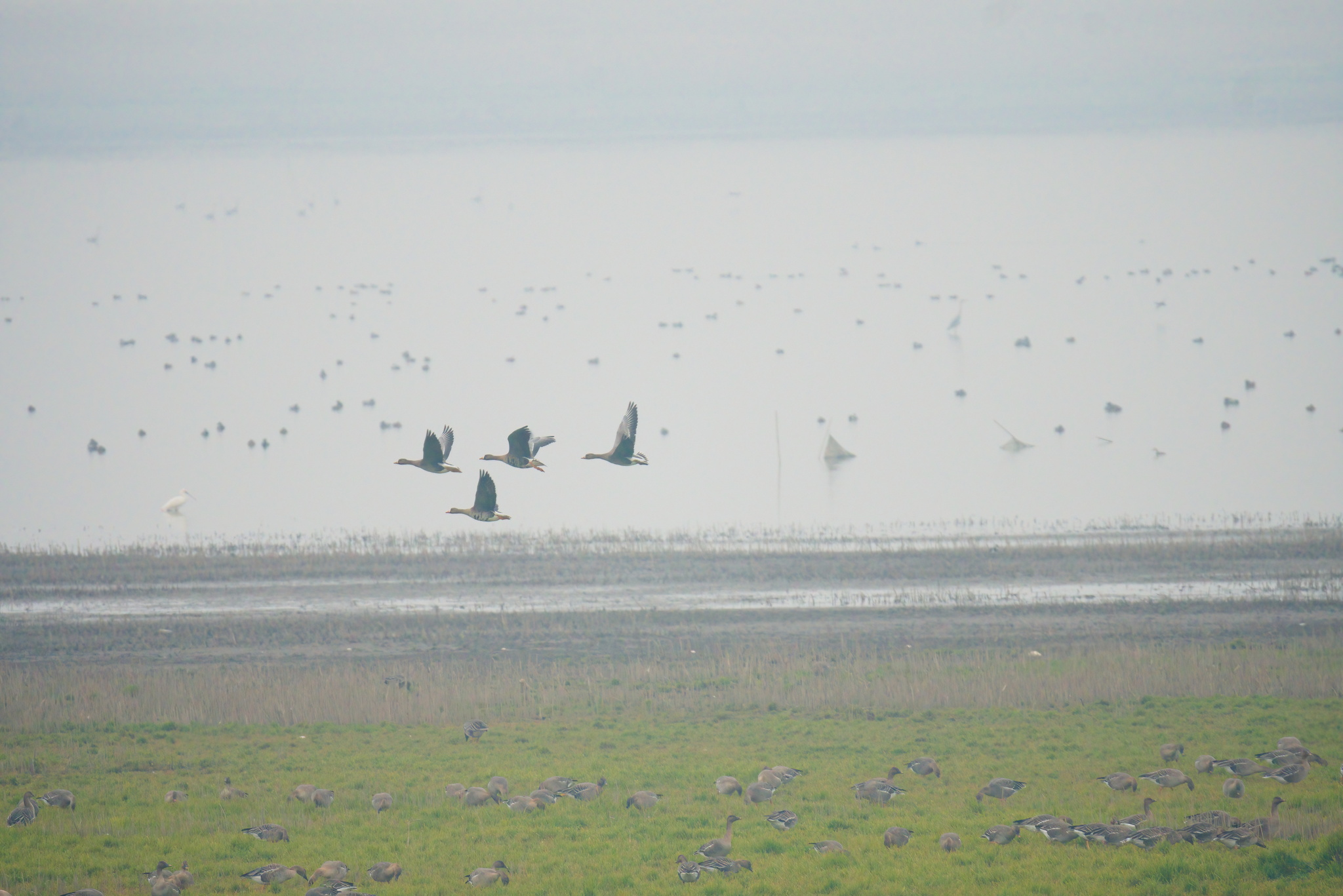
Breeding success is highly dependent on weather conditions during the brief three-month Arctic nesting window. Migration timing varies by breeding area, with interior Alaska birds departing earlier. Forages on prairies during fall staging before moving to wintering grounds. Occasionally hybridizes with snow geese and Canada geese.
Conservation
The Greenland subspecies (A. a. flavirostris) is of conservation concern, having declined continuously in the first two decades of the 2000s, likely due to extreme weather. The tule goose (A. a. elgasi) is rare, historically affected by wintering habitat destruction. Most other populations are increasing. The species is listed under the Agreement on the Conservation of African-Eurasian Migratory Waterbirds (AEWA).
Culture
Colloquially called "specklebelly" in North America due to breast markings. Known as "white-fronted goose" in the UK and Ireland. Sought after by waterfowl hunters across North America.
Source: Wikipedia · CC BY-SA 3.0
Taxonomy
- Order
- Anseriformes
- Family
- Anatidae
- Genus
- Anser
Subspecies (5)
-
Anser albifrons albifrons
breeds in northern Russia, eastward to northeastern Siberia; winters in Europe eastward to southern Asia southward to northern India, southern China, and Japan
Data Sources
Species description from Wikipedia, licensed under CC BY-SA 3.0.
Bird images and sounds sourced from GBIF, contributed by citizen scientists worldwide under Creative Commons licenses.
Taxonomy data from AviList 2025.