Greater White-fronted Goose
Anser albifrons
白额雁
Introduction
The greater white-fronted goose (Anser albifrons) is a species of goose in the genus Anser, closely related to the lesser white-fronted goose. It breeds across northern Canada, Alaska, Greenland, and Russia, migrating south to winter in North America, Europe, and Asia. Its most distinctive features are the patch of white feathers at the base of the bill and the salt-and-pepper markings on the breast, which give it the colloquial name 'specklebelly' in North America. The species exhibits an unusually long period of parental care lasting several years, potentially including grandparenting, which may be unique among Anseriformes. The Greenland subspecies (A.a. flavirostris) is of conservation concern due to population declines in the 2000s.
Description
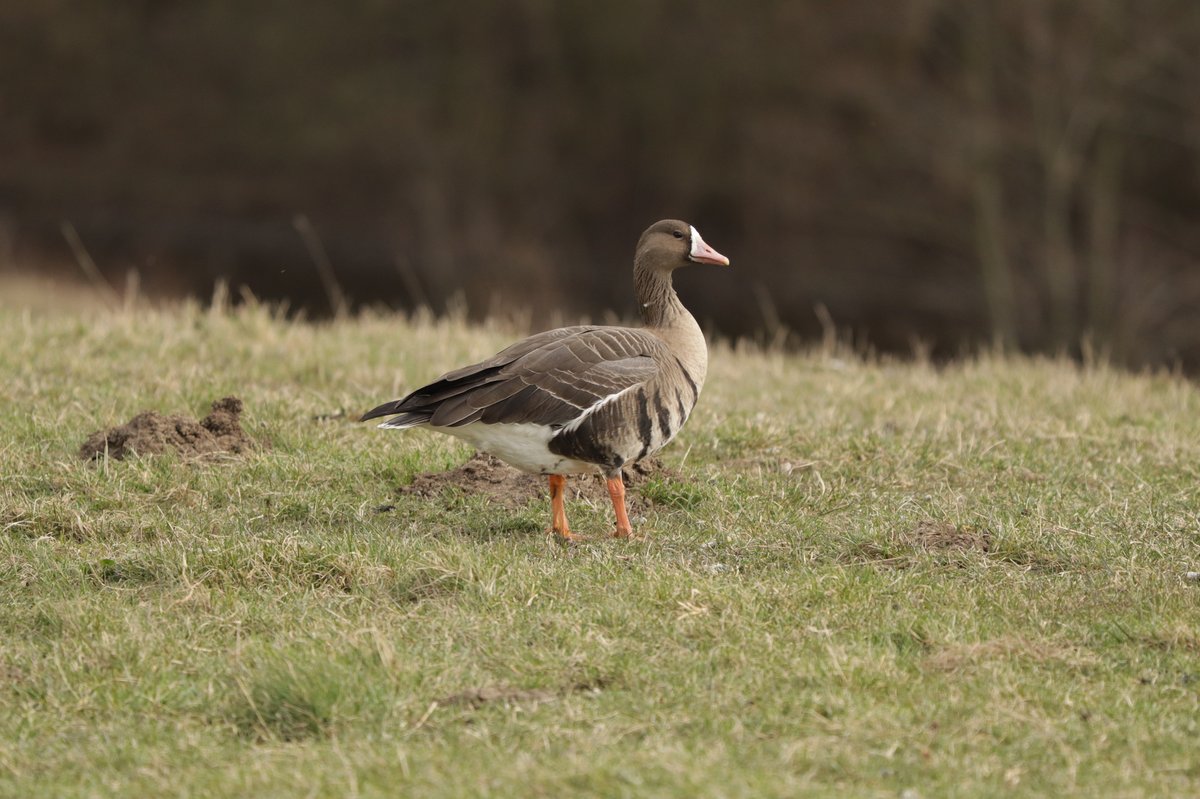
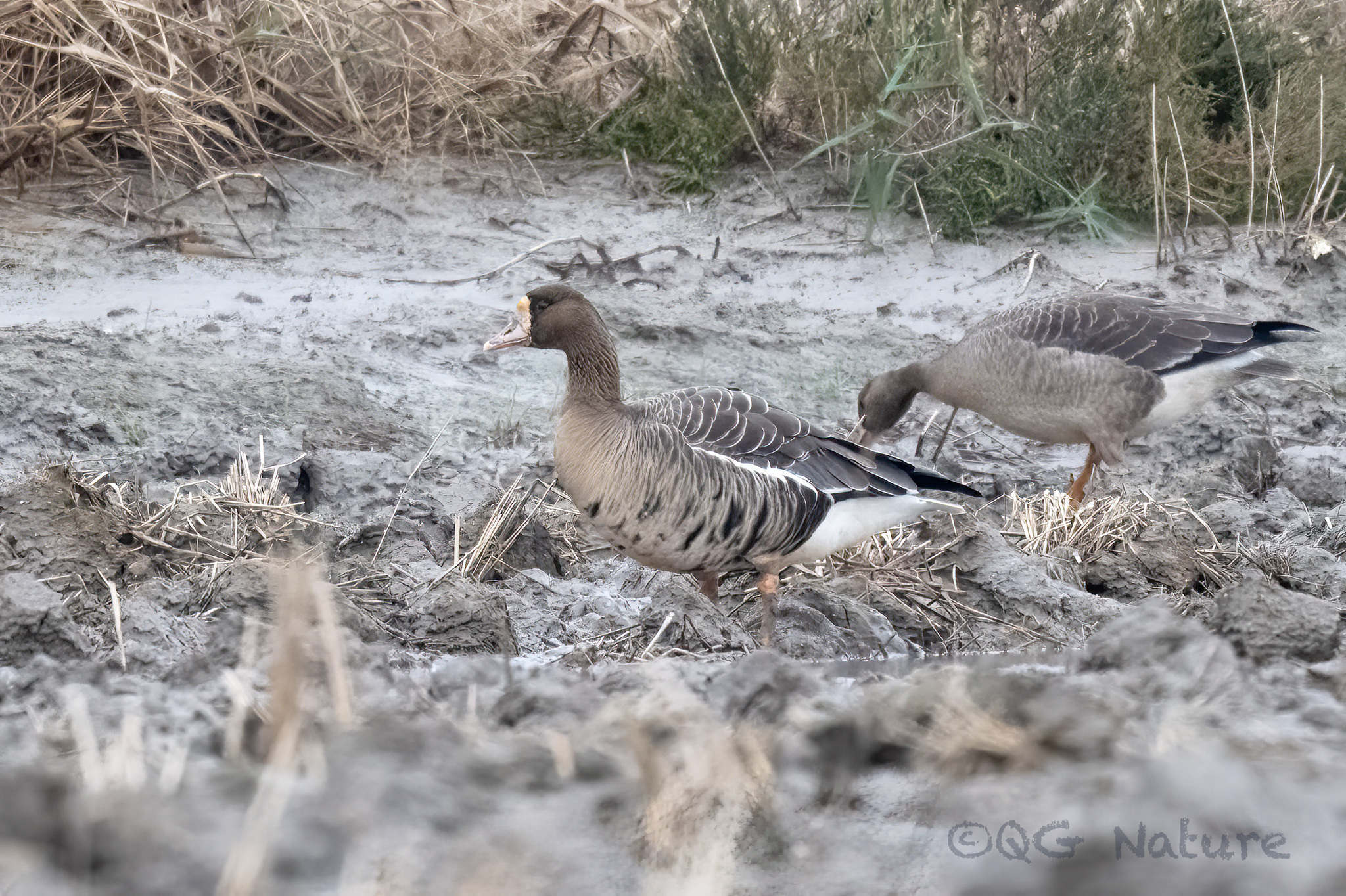
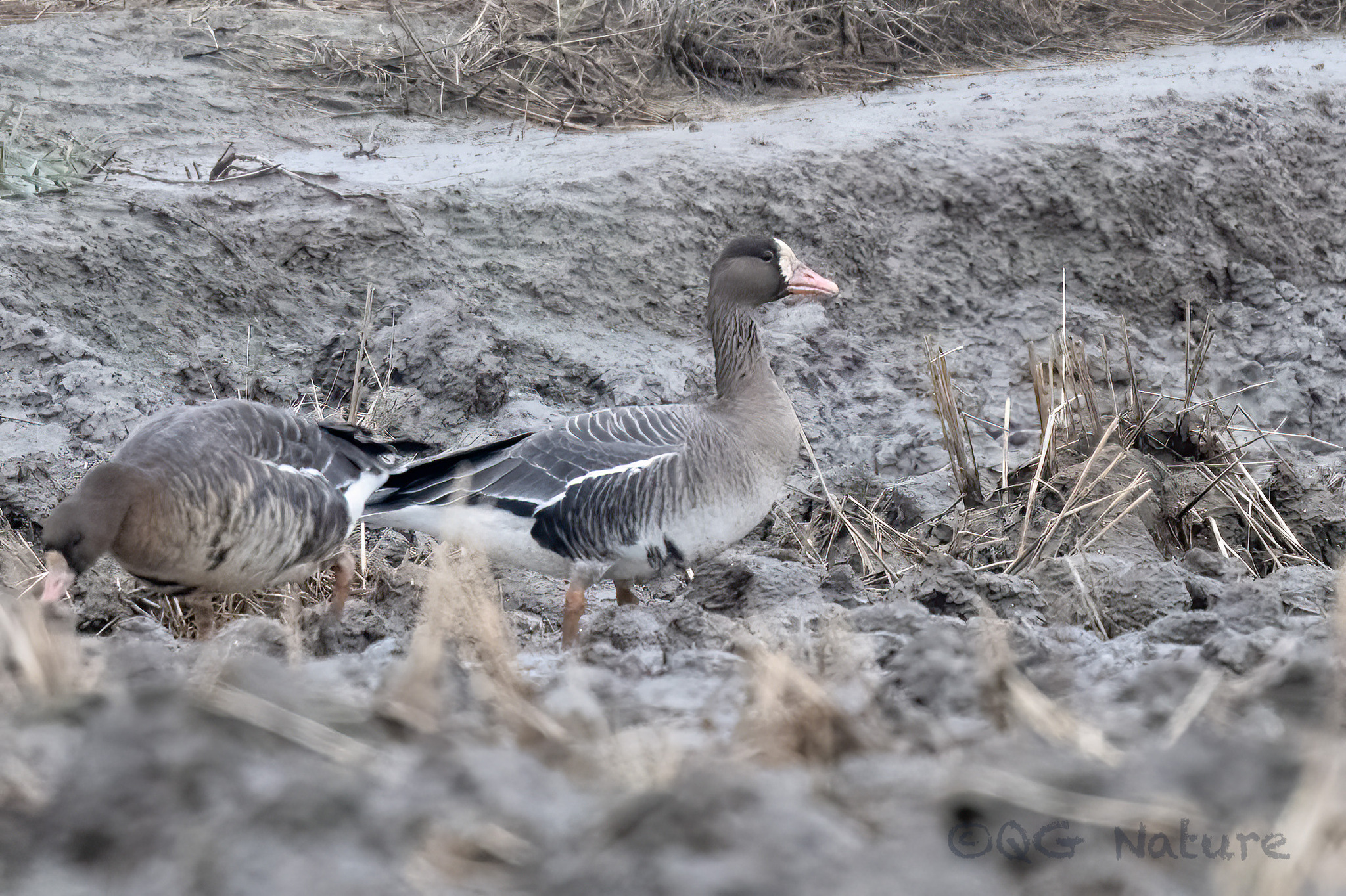
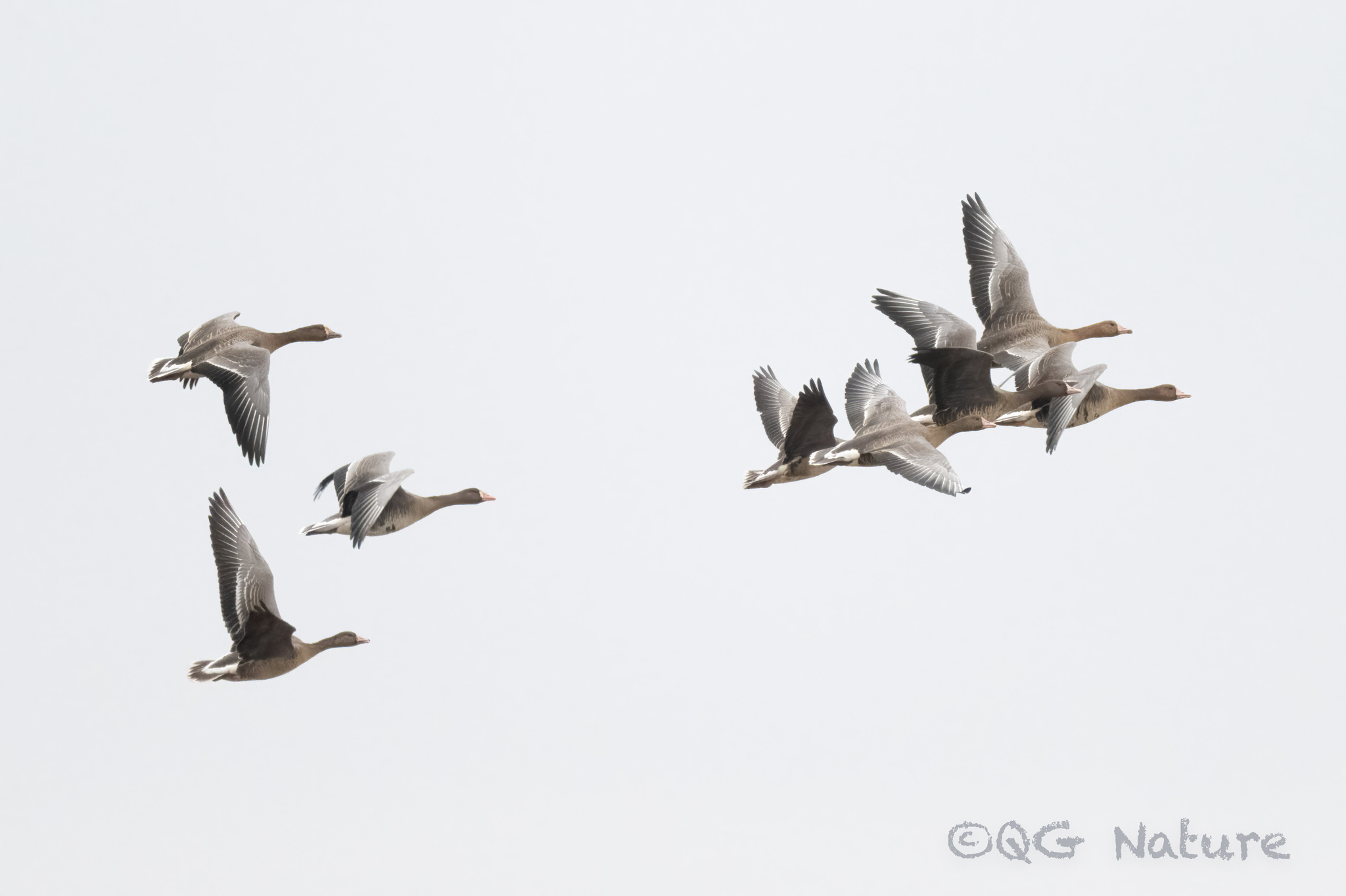
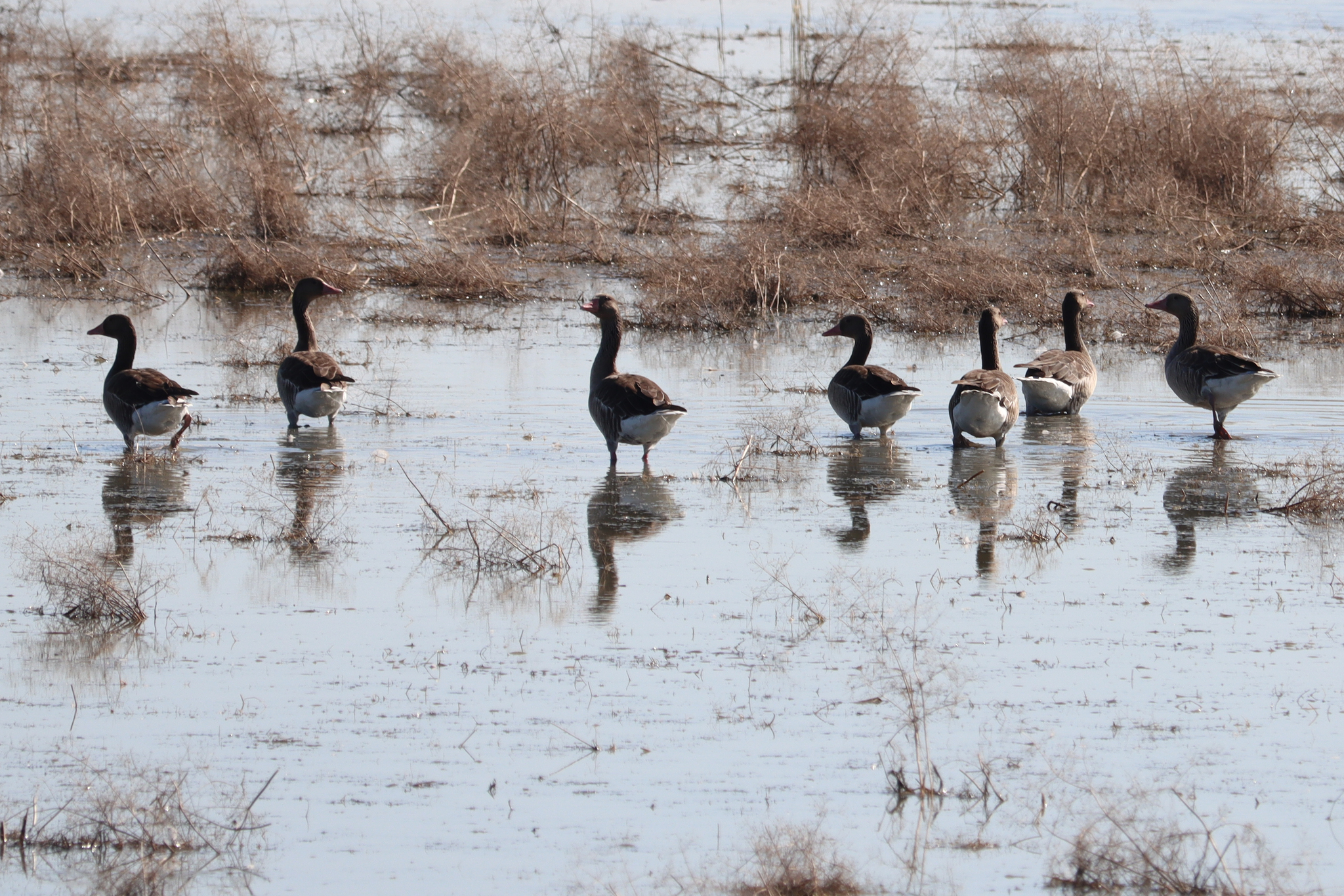
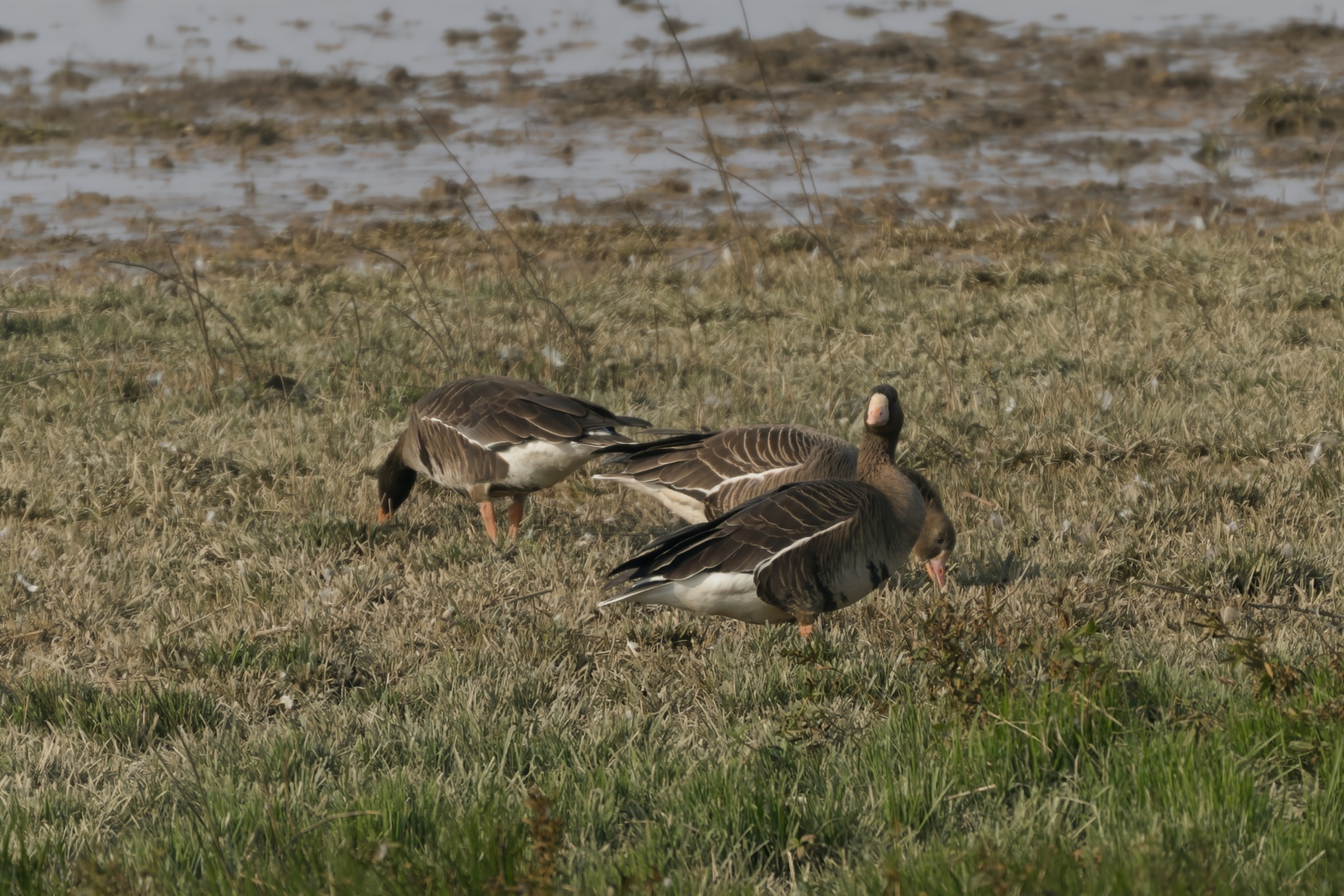
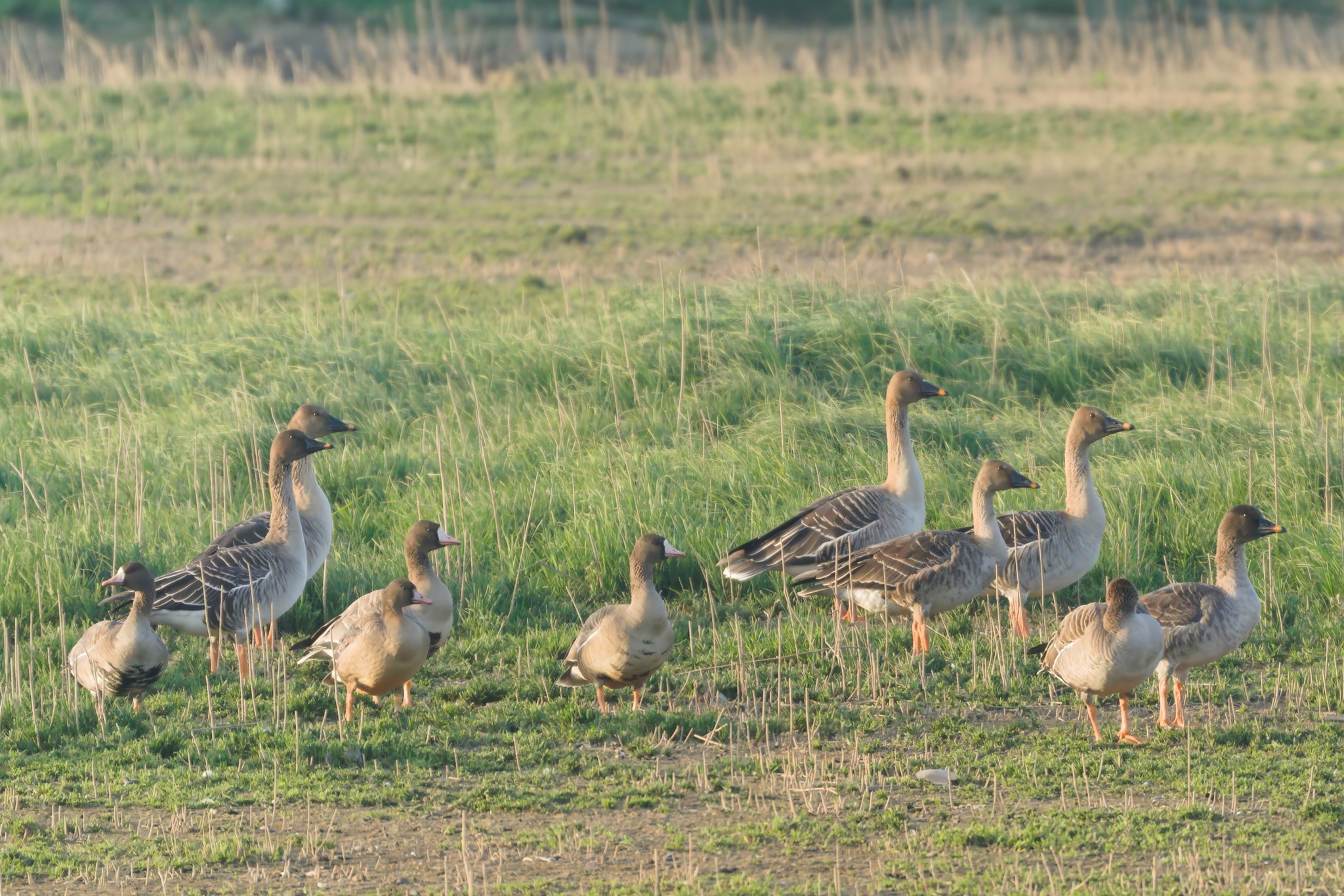
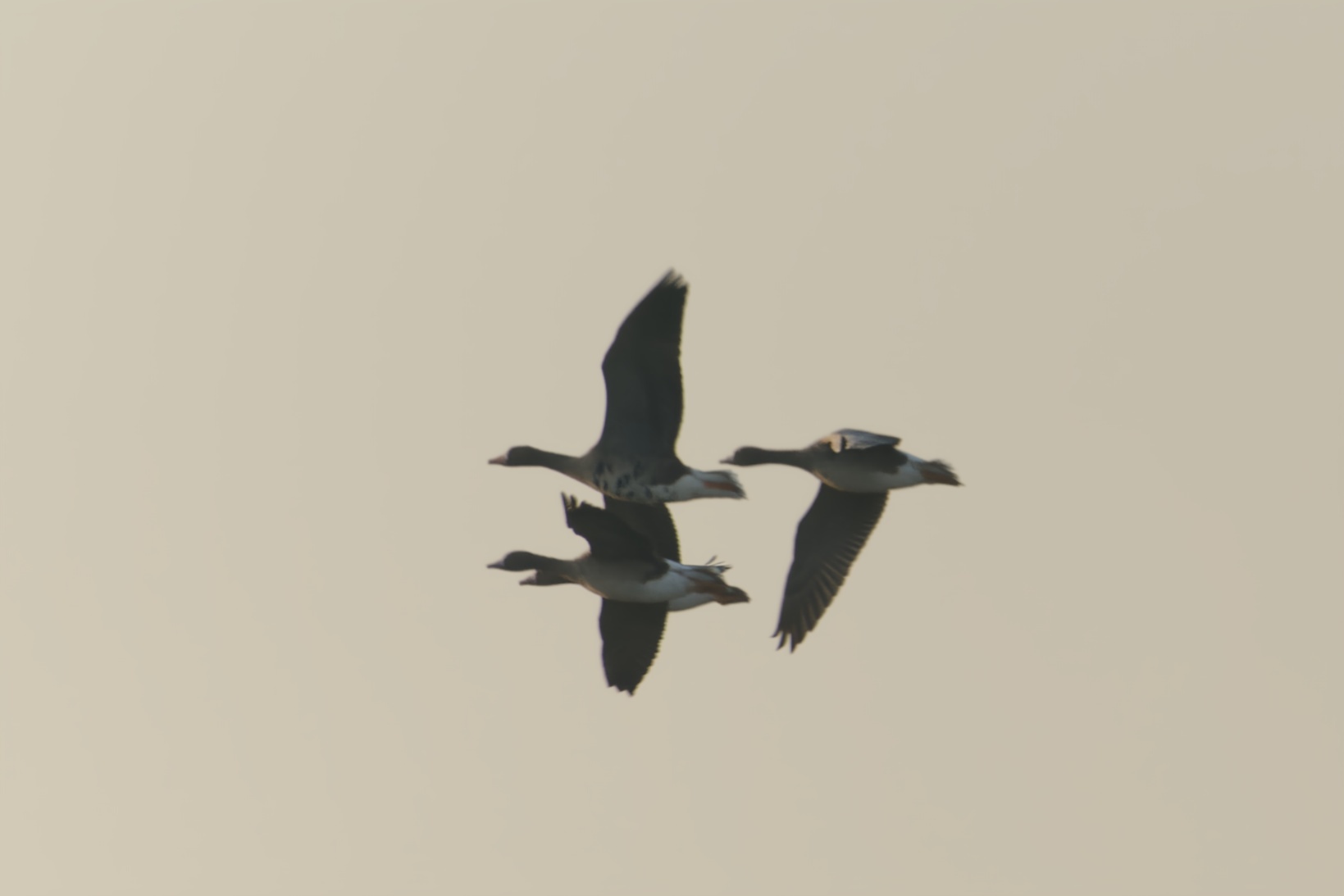
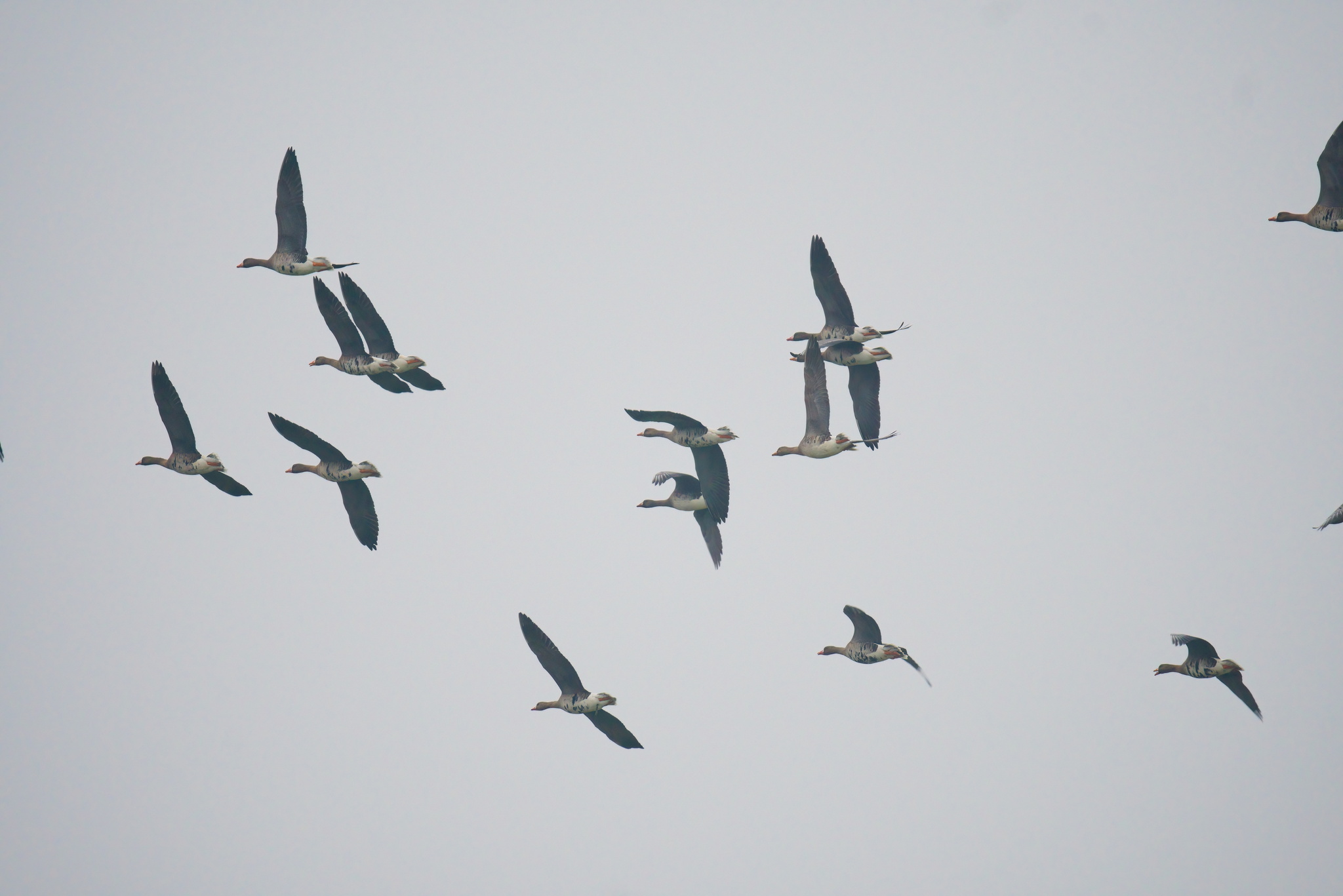
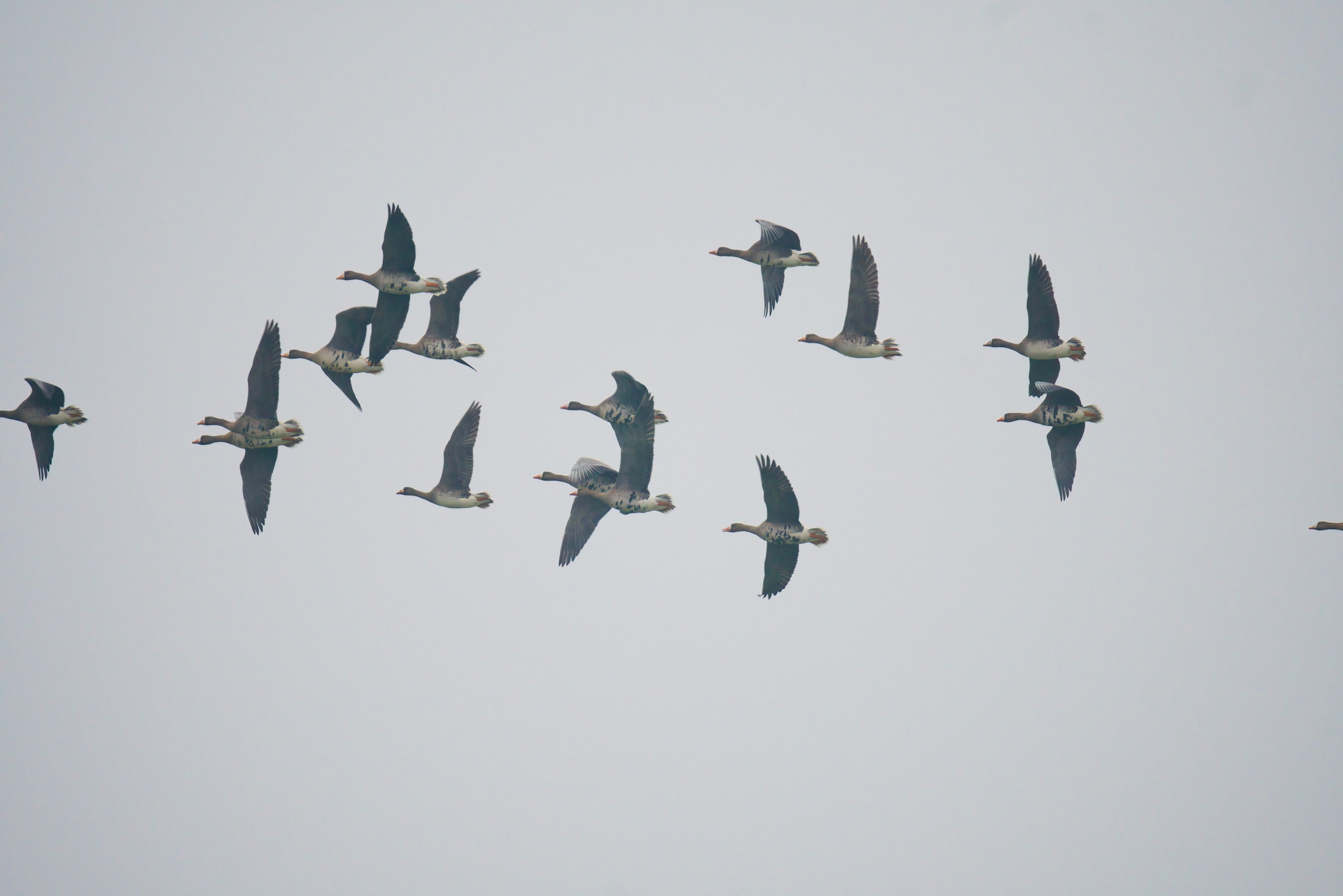
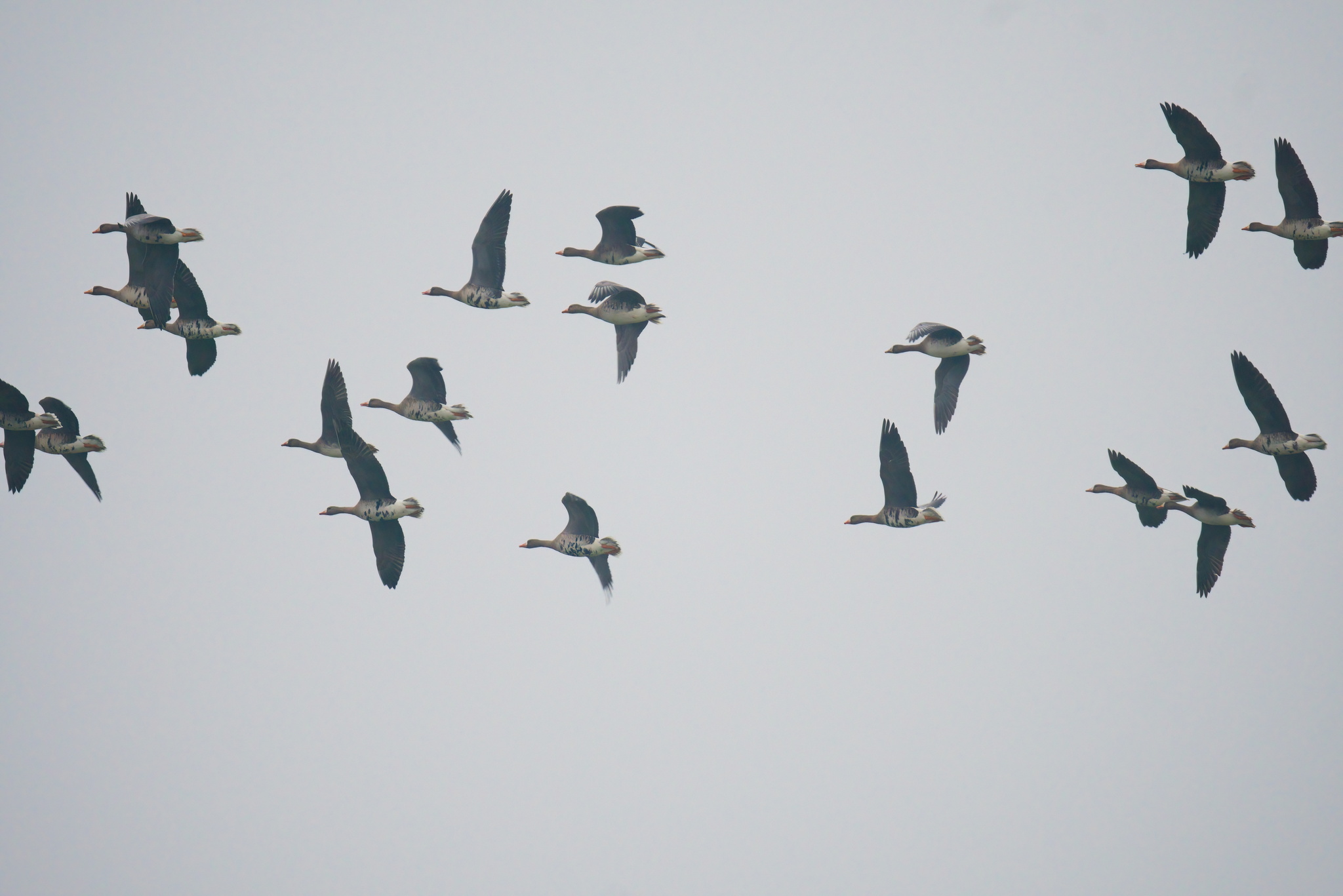
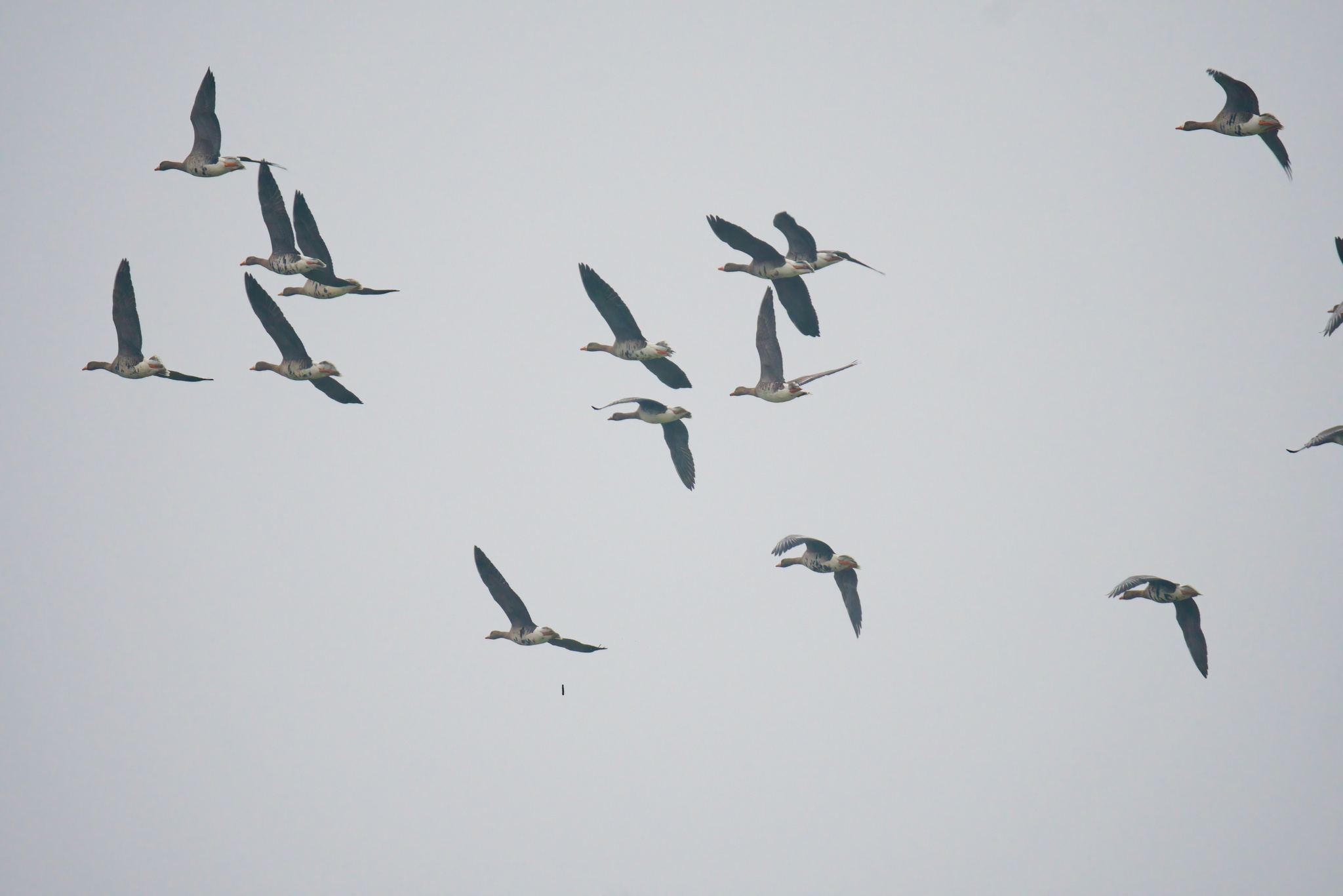
A medium-sized goose measuring 64-81 cm in length with a 130-165 cm wingspan and weighing 1.93-3.31 kg. The plumage is greyish-brown overall with light grey breasts marked by dark brown to black blotches and bars. Adults have bright orange legs, mouse-coloured upper wing coverts, and a pinkish bill. The defining feature is the white facial blaze at the base of the bill. Males are typically larger, but both sexes appear similar. The species is smaller than the greylag goose and lacks the yellow eye ring of the lesser white-fronted goose.
Identification
Distinguished from the lesser white-fronted goose by its larger size, lack of yellow eye ring, and white facial blaze that does not extend as far upward. Two main subspecies groups occur in the west: European birds (A.a. albifrons) appear darker and oilier with noticeable whitish fringes creating barred upperparts, blue-grey greater coverts with prominent white tips forming bold wing bars, broad bright white flank lines, and bright pink bills. Greenland birds (A.a. flavirostris) show narrower pale fringes creating a uniform appearance, dark grey greater coverts with narrow white tips forming subtle wing bars, narrow white flank lines, and orange-yellow bills.
Distribution & Habitat
Breeds across Arctic regions of North America (Alaska, Canadian Arctic), Greenland, and Russia. North American populations include midcontinent birds (~710,000 in 2010) breeding from Alaska North Slope across the Canadian Arctic and wintering from the Gulf Coast to northern Mexico. Pacific white-fronts (~650,000 in 2010) and tule geese (~10,000) breed in western Alaska and winter along the Pacific coast, primarily in California's Central Valley. In the British Isles, Greenland birds winter in Scotland and Ireland while Russian birds winter in England and Wales. The species gathers at traditional wintering sites such as WWT Slimbridge in Gloucestershire.
Behavior & Ecology
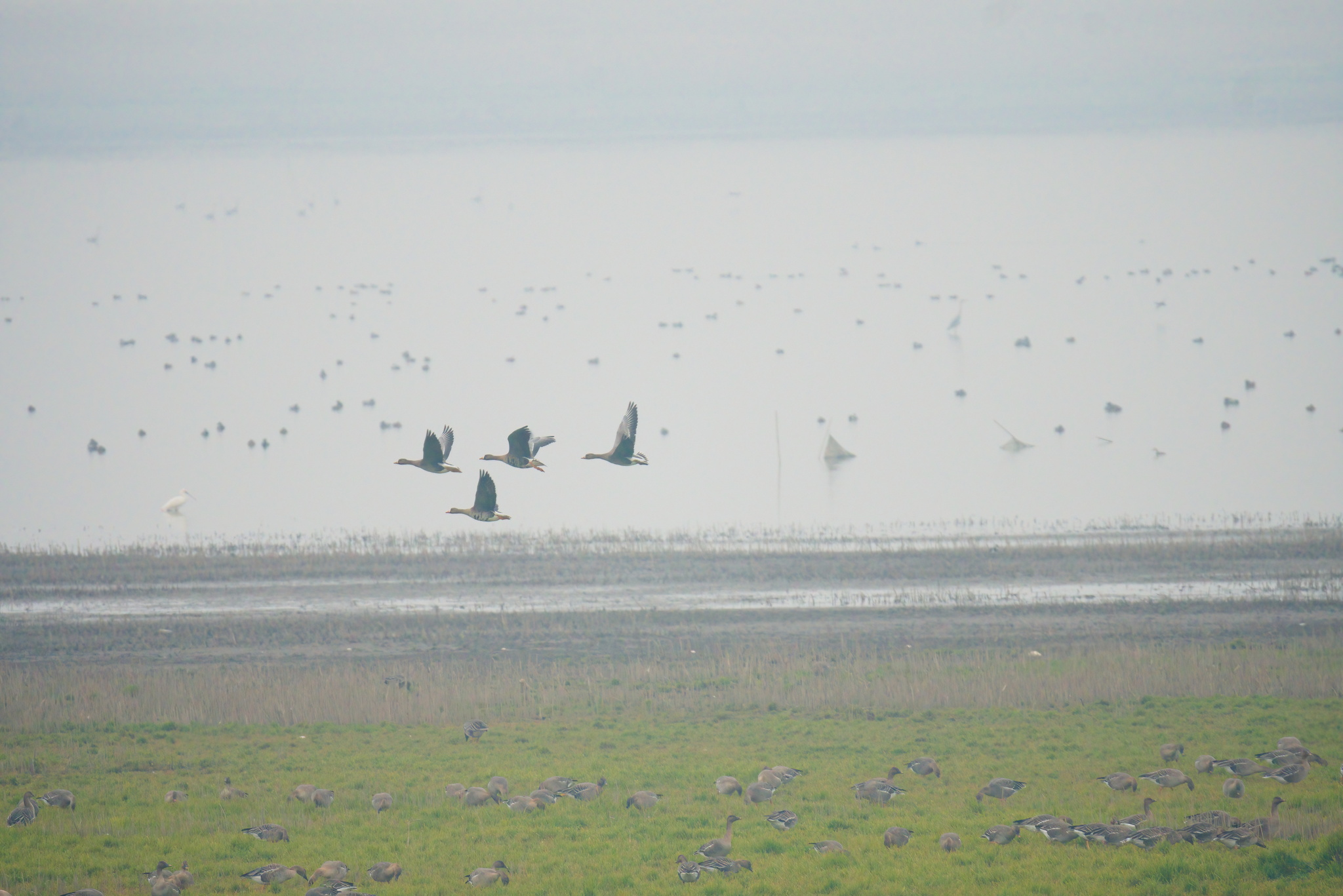
Breeds in the Arctic with a narrow three-month window for nesting, egg incubation, and raising young to fledging. Arrives on breeding grounds late May to early June and departs for staging areas by early September. Shows unusually extended parental care lasting several years, potentially including grandparenting. Makes a high-pitched cackling call that can be imitated as 'he-he'. Feeds on agricultural fields during winter. Hybridization with snow geese and Canada geese occasionally occurs. Midcontinental birds have six distinct breeding areas in Alaska and Canada, each with different migration timing and wintering destinations.
Conservation
The tule goose subspecies (A.a. elgasi) has been rare since the late 19th century, likely due to wintering habitat destruction from human settlement, though numbers now appear stable. The Greenland population declined continuously during 2000-2020 after increasing in the previous two decades; the cause may relate to extreme weather events. Midcontinent and Pacific populations have been increasing. The species is protected under the Agreement on the Conservation of African-Eurasian Migratory Waterbirds (AEWA).
Culture
Known colloquially as the 'specklebelly' in North America due to the distinctive speckled breast markings. In the United Kingdom and Ireland, it was traditionally called simply the 'white-fronted goose.' The species is a popular target for waterfowl hunters across North America. A famous flock gathers annually at the Wildfowl and Wetlands Trust reserve at Slimbridge, Gloucestershire, England.
Source: Wikipedia · CC BY-SA 3.0
Taxonomy
- Order
- Anseriformes
- Family
- Anatidae
- Genus
- Anser
- eBird Code
- gwfgoo
Subspecies (5)
-
Anser albifrons albifrons
breeds in northern Russia, eastward to northeastern Siberia; winters in Europe eastward to southern Asia southward to northern India, southern China, and Japan
-
Anser albifrons elgasi
breeds in southern Alaska (Cook Inlet area); winters in northern California (Sacramento Valley and the head of Suisun Bay)
-
Anser albifrons flavirostris
breeds in western Greenland; winters in Ireland, western Scotland, and western Wales
-
Anser albifrons gambelli
breeds from interior and northern Alaska eastwards across arctic Canada to the Hudson Bay region; winters in the south-central USA and in northeastern Mexico
-
Anser albifrons sponsa
breeds in western Alaska; winters in California and western Mexico
Data Sources
Species description from Wikipedia, licensed under CC BY-SA 3.0.
Bird images and sounds sourced from GBIF, contributed by citizen scientists worldwide under Creative Commons licenses.
Taxonomy data from AviList 2025.