Indian Spot-billed Duck
Anas poecilorhyncha
南亚斑嘴鸭
Introduction
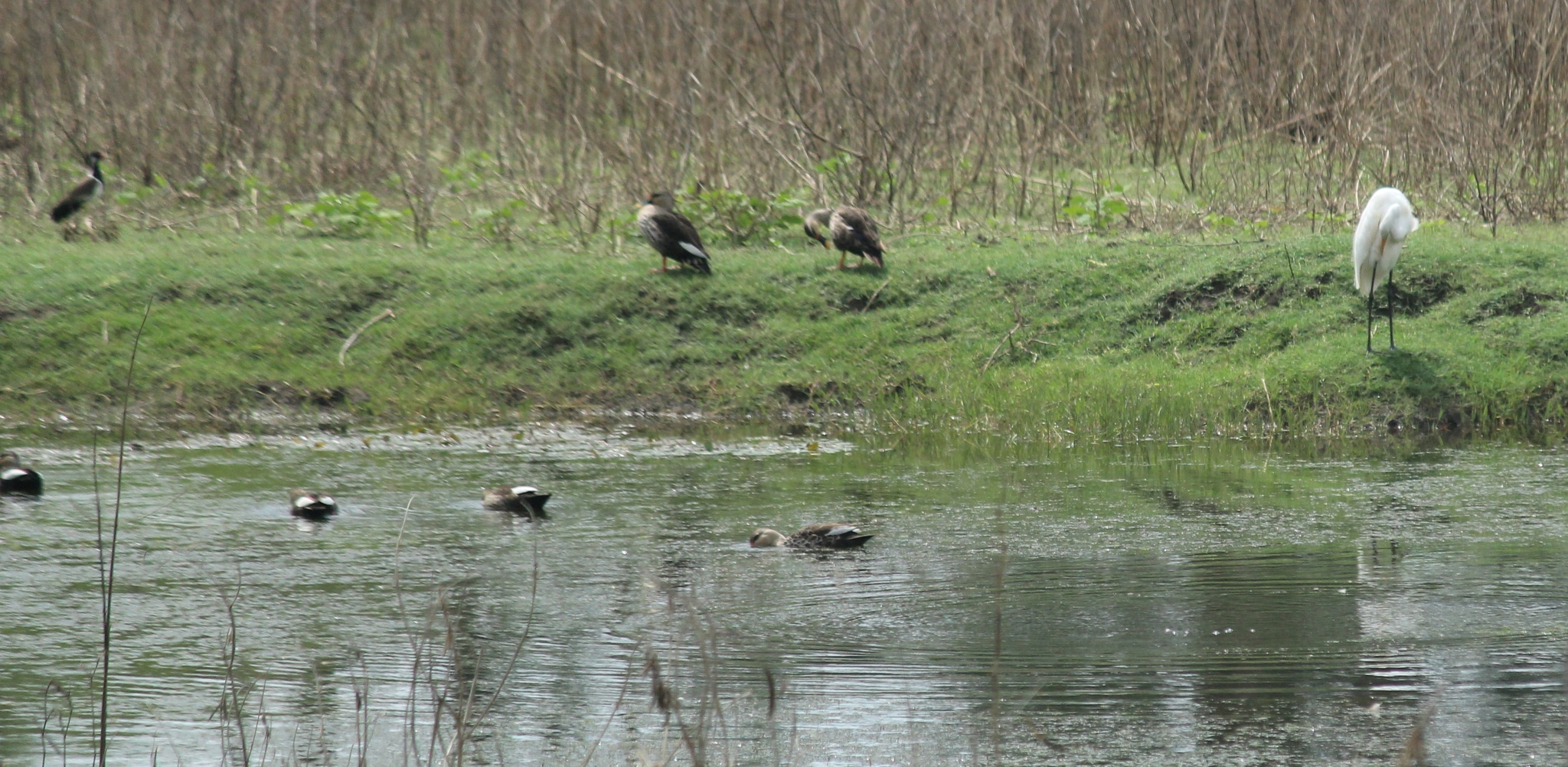
This dabbling duck is a permanent resident of freshwater wetlands throughout the Indian subcontinent, ranging from Pakistan to Sri Lanka. It inhabits medium-sized wetlands with abundant vegetation, avoiding large open water bodies. Adults have white tertials and a green speculum with a broad white band. Outside the breeding season, they form small flocks. The species has expanded its northern range by over 500 kilometers since the early 20th century.
Description
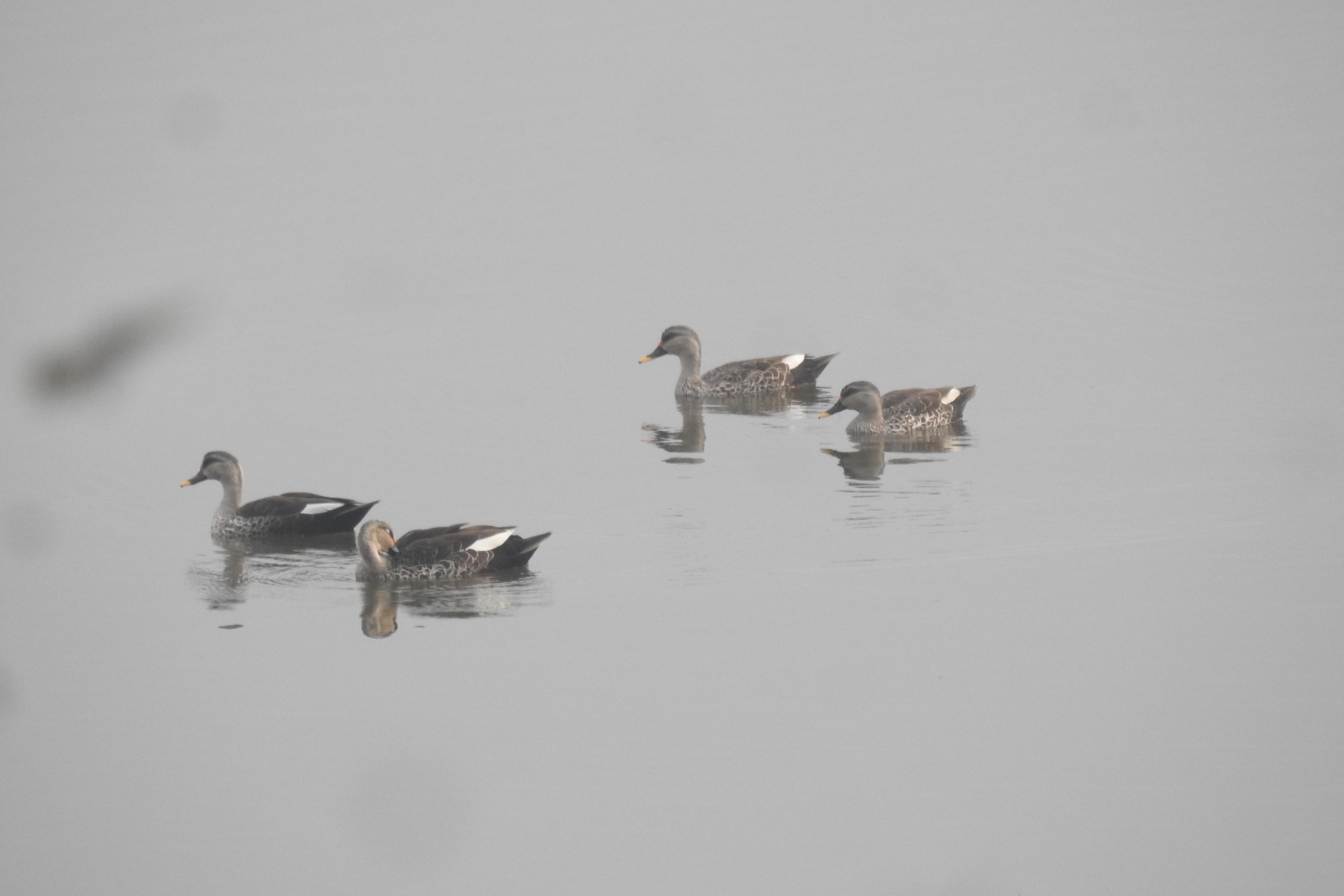
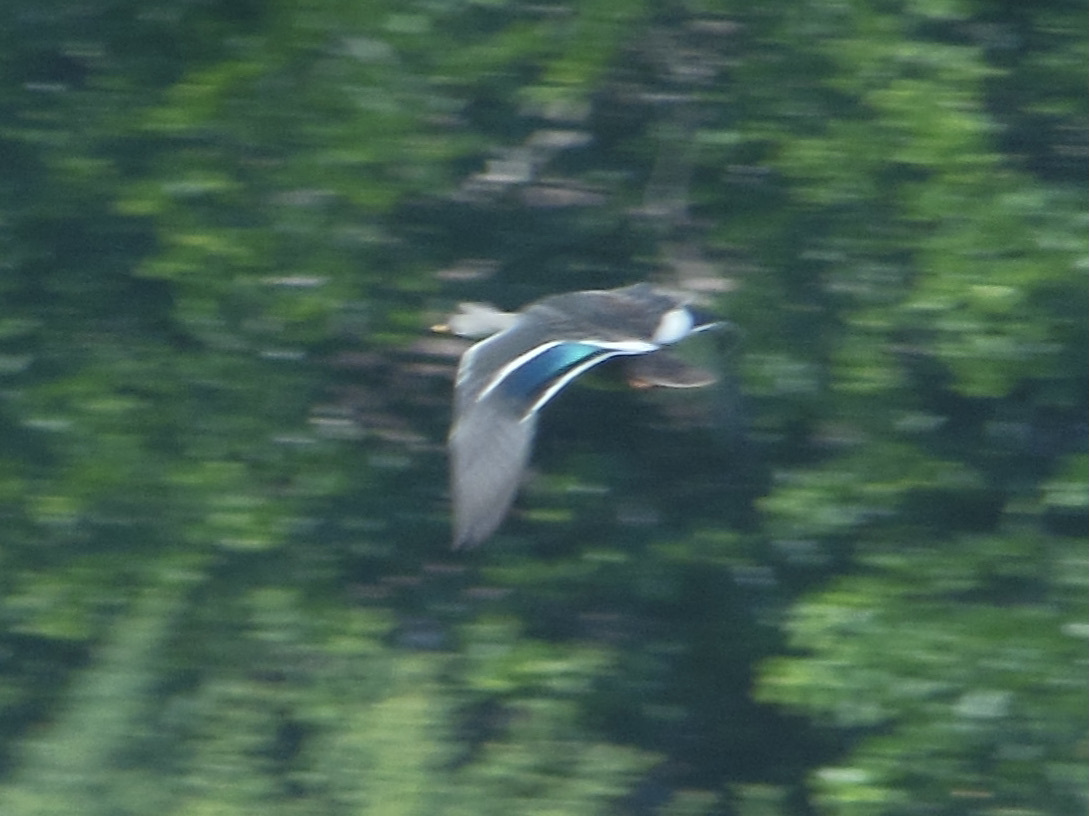
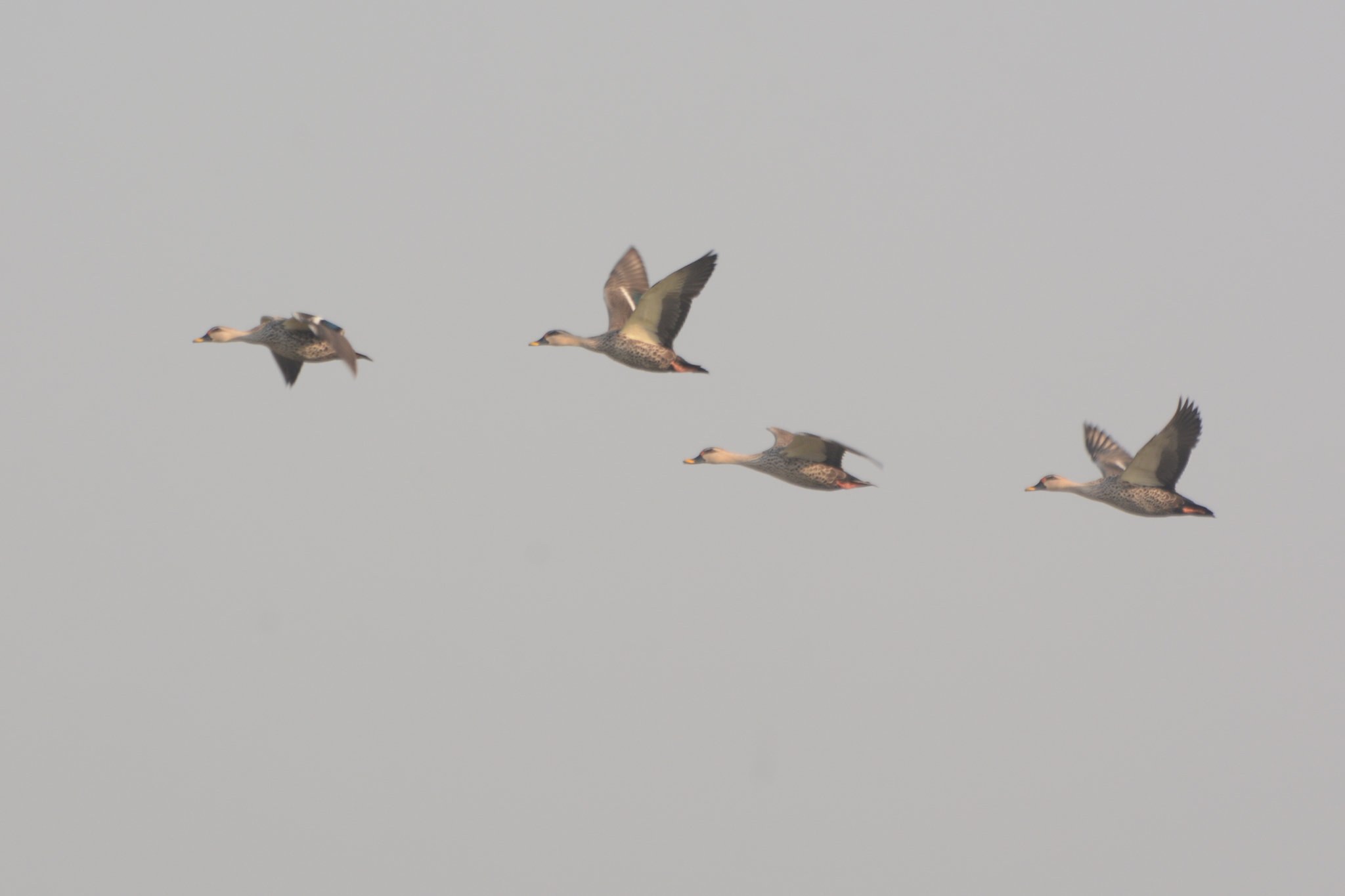
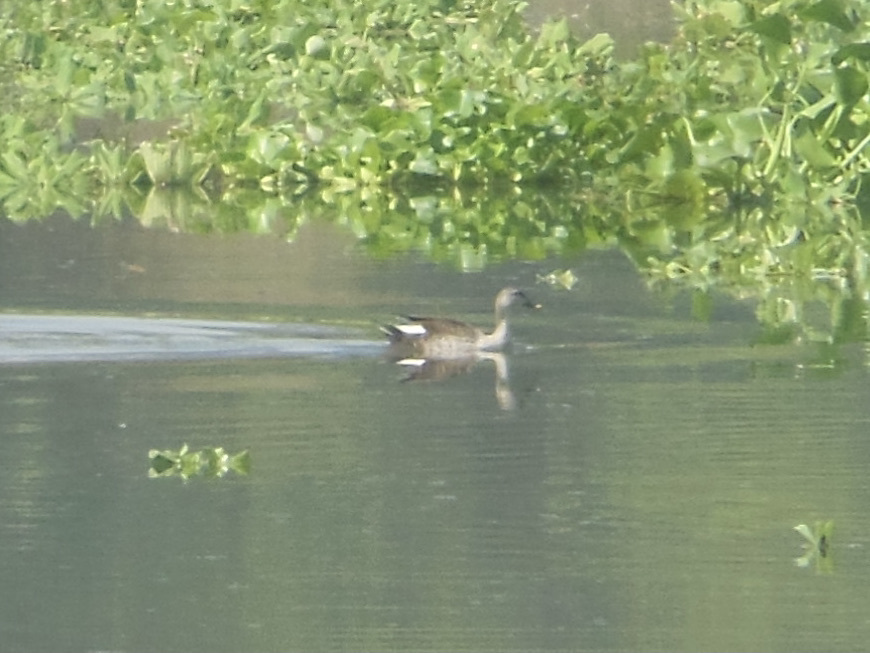
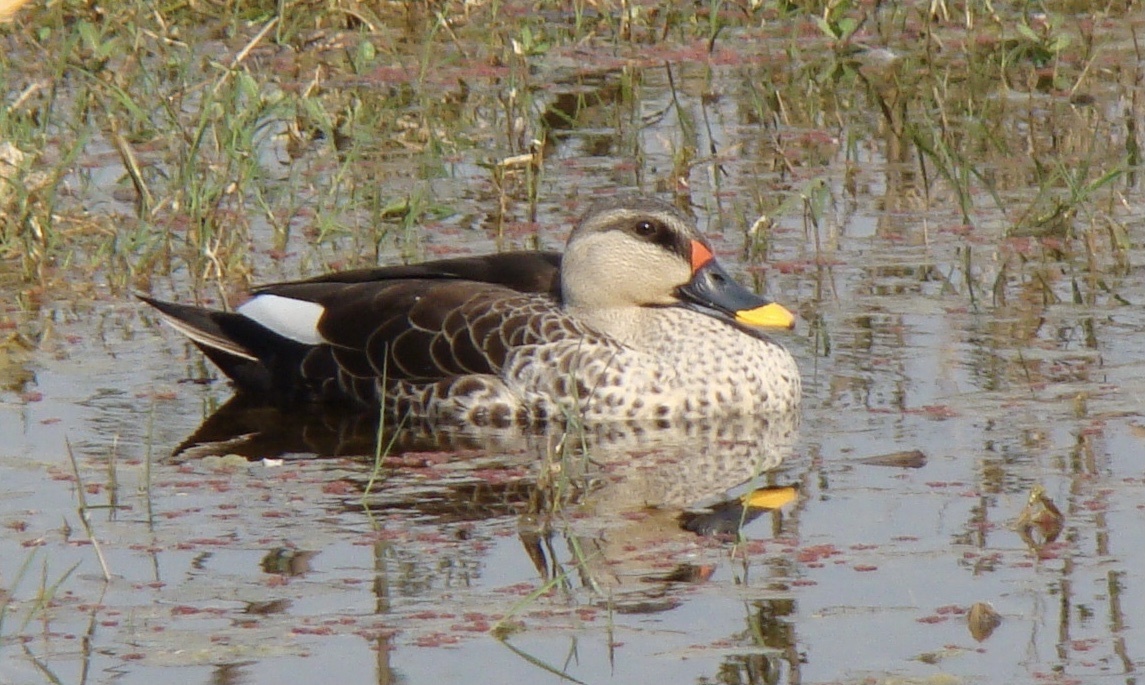
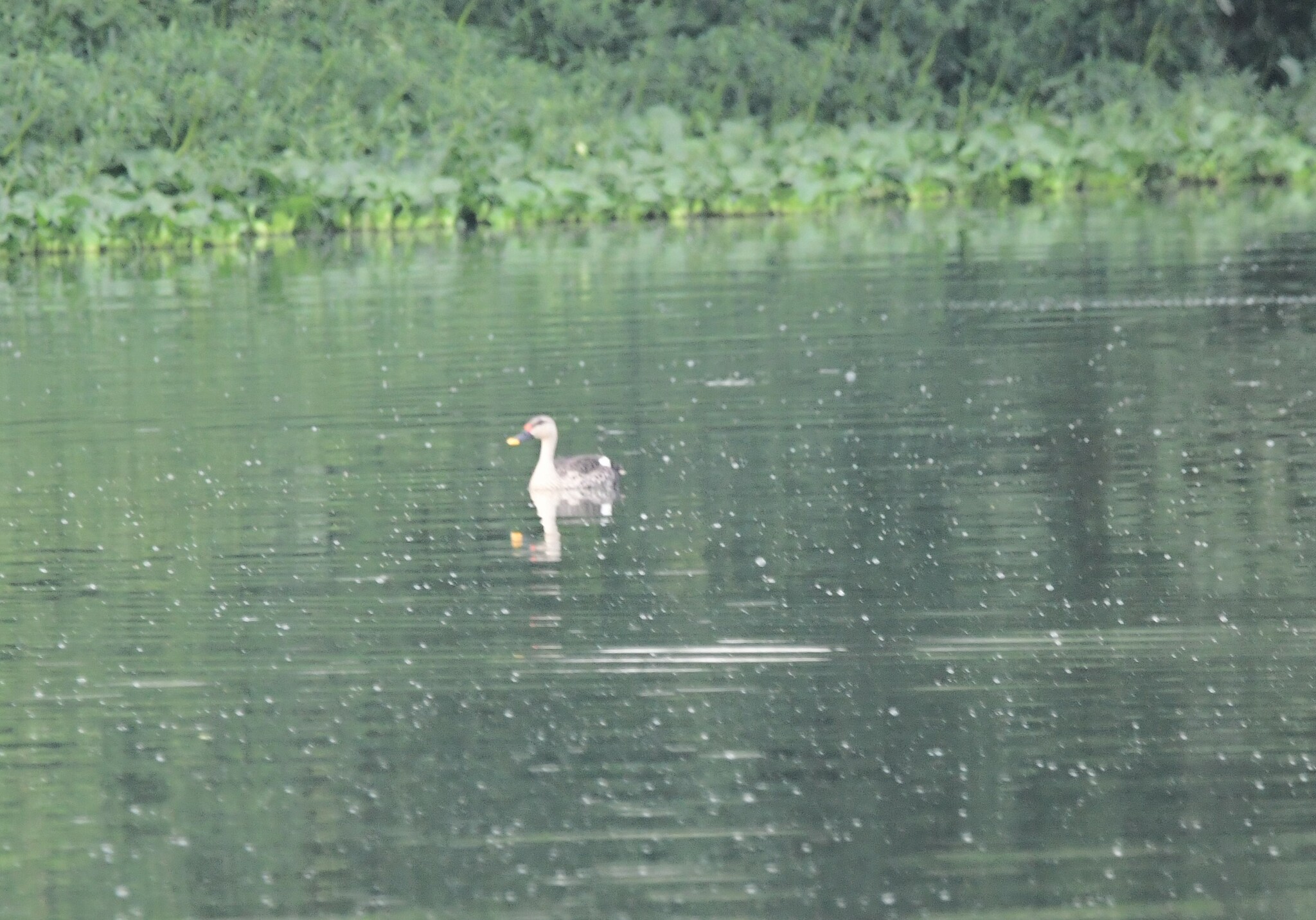
This species matches the mallard in size, measuring 55-63 cm in length with a wingspan of 83-95 cm and weighing 790-1,500 grams. The body features a scaly grey pattern with a paler head and neck. The most distinctive feature is the black bill tipped bright yellow, with orange-red spots at the base present in the nominate subspecies. The green speculum is bordered by white and shows a broad white band at its base in flight. The legs and feet are bright orange to coral red. Males display a red spot at the bill base, which is absent or inconspicuous in the smaller female. Unlike many ducks, males lack an eclipse plumage. Juveniles are browner and duller than adults, with both sexes undergoing a complete post-breeding moult where all wing feathers are dropped simultaneously.
Identification
The combination of white tertial stripe on the side, long neck, and the distinctive yellow-tipped bill with orange-red spots at the base make this species identifiable at considerable distances. In flight, the green speculum with its broad white trailing edge is diagnostic. The haringtoni subspecies lacks the red bill spots entirely. The eastern spot-billed duck, once considered conspecific, is darker and browner overall with a blue speculum and no red bill marking. Its body plumage more closely resembles the Pacific black duck. When identifying in mixed flocks, look for the bright yellow bill tip and the white wing markings that distinguish it from similar species.
Distribution & Habitat
This species is resident throughout Pakistan and India, inhabiting freshwater wetlands including lakes, marshes, and ponds in fairly open country. It shows a preference for medium-sized wetlands with good vegetation cover rather than large open water bodies. While primarily non-migratory, some individuals do undertake movements, as evidenced by a bird ringed in Rajasthan being recovered near Novosibirsk in Russia. Northern populations have expanded their range significantly northward by more than 500 kilometers since the early 20th century, a range expansion possibly linked to global warming.
Behavior & Ecology
These ducks feed by dabbling for plant material, primarily in the evening and nighttime hours, and will consume crops such as rice along with invertebrates including snails. The breeding season varies regionally, falling between July and September in northern India and November to December in southern India, with multiple broods possible. Nests are constructed on the ground hidden in vegetation near water, though tree branches covered in creepers are occasionally used. The clutch contains 8-14 eggs, with incubation beginning after the final egg is laid, allowing chicks to hatch simultaneously after approximately 24 days. Ducklings are black with yellow backs and resemble mallard ducklings but have a wider eyestripe. Both sexes vocalize with calls similar to those of mallards. When threatened, especially during moult, they can dive and remain underwater to evade capture, and they can take off nearly vertically from the water surface.
Conservation
The species has historically been hunted extensively in the Indian subcontinent and was noted for its excellent flavor in British India. Natural predators include birds of prey, pythons, and otters. While specific population numbers are not provided, the species has demonstrated adaptability by expanding its range northward over the past century. The northern expansion and ability to utilize various wetland habitats suggests reasonable resilience, though localized pressures from hunting and habitat modification likely affect populations in some areas.
Culture
The duck was known locally as 'gheret-pai' or 'garam-pai' in parts of its range. In British India, it was considered an excellent game bird and hunted extensively. A traditional hunting method in southern India involved hunters concealing themselves in floating bundles of rushes to approach ducks. The species has contributed to scientific understanding of duck genetics and hybridization, particularly regarding its relationship with the eastern spot-billed duck and mallards, with studies examining mitochondrial and nuclear DNA sequences revealing complex evolutionary relationships and hybridization patterns in the wild.
Source: Wikipedia · CC BY-SA 3.0
Taxonomy
- Order
- Anseriformes
- Family
- Anatidae
- Genus
- Anas
- eBird Code
- isbduc1
Vocalizations
Subspecies (2)
-
Anas poecilorhyncha haringtoni
eastern Assam and Myanmar to southern Yunnan and Vietnam
-
Anas poecilorhyncha poecilorhyncha
Indian subcontinent from Kashmir and Gujarat eastward through western Assam, and southward to northwestern Sri Lanka
Data Sources
Species description from Wikipedia, licensed under CC BY-SA 3.0.
Bird images and sounds sourced from GBIF, contributed by citizen scientists worldwide under Creative Commons licenses.
Taxonomy data from AviList 2025.