Anseriformes / Anatidae / Anas
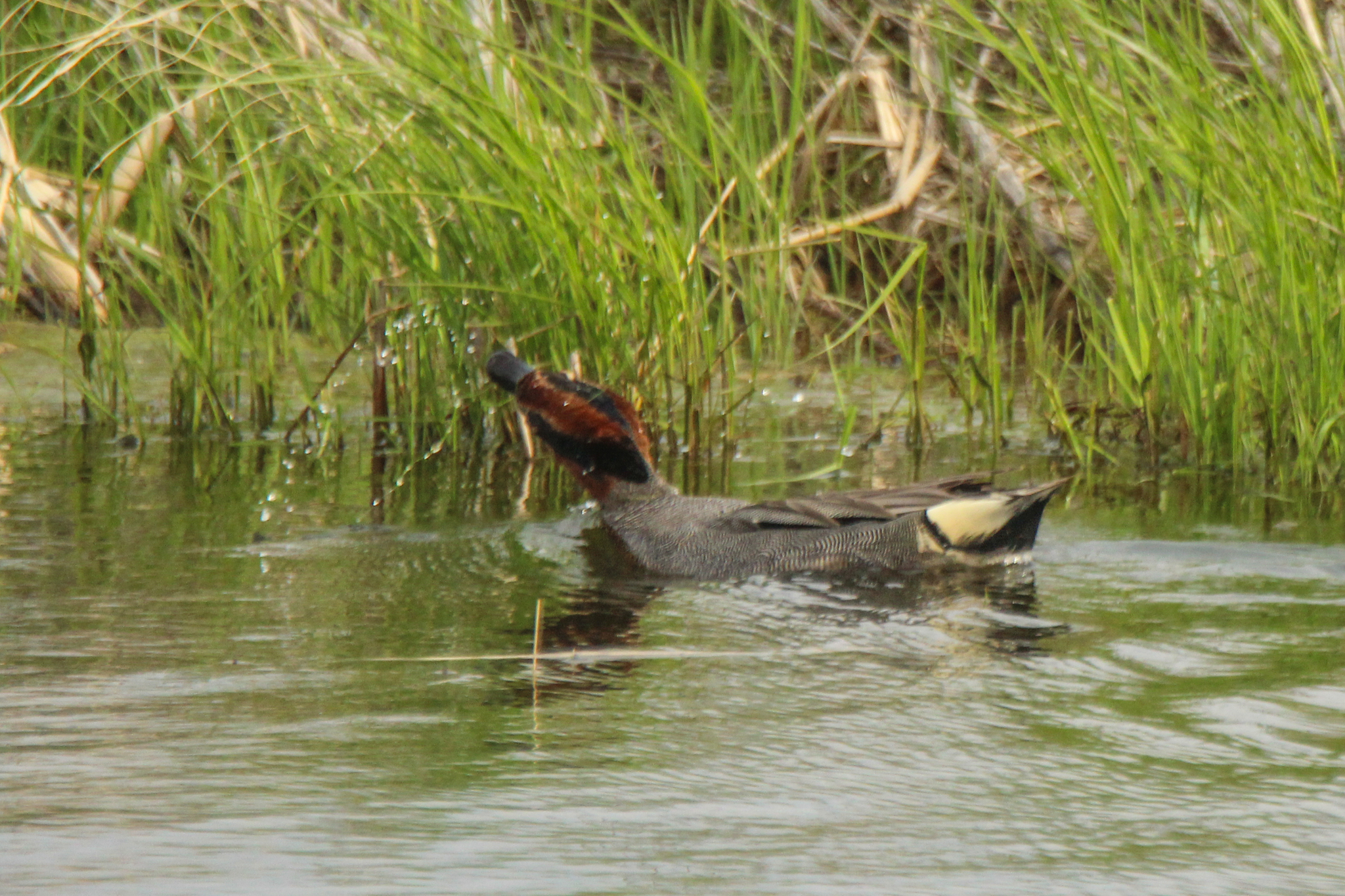
Green-winged Teal
Anas crecca · 绿翅鸭
Introduction
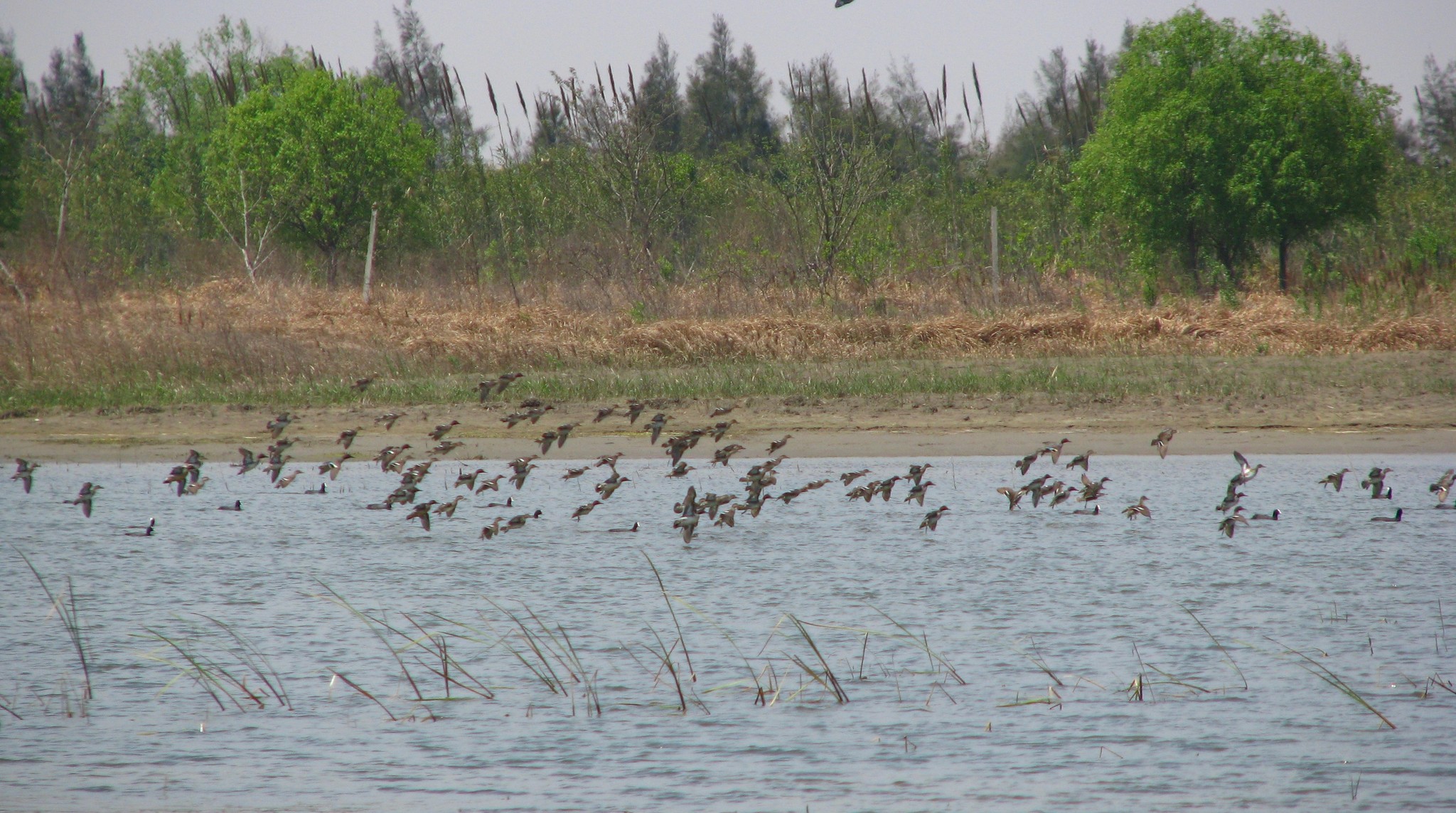
A small dabbling duck breeding in northern North America, excluding the Aleutian Islands. It is strongly migratory, wintering far south of its breeding range, and highly gregarious outside the breeding season, forming large flocks that resemble waders in flight. The species is monotypic with no recognized subspecies.
Description
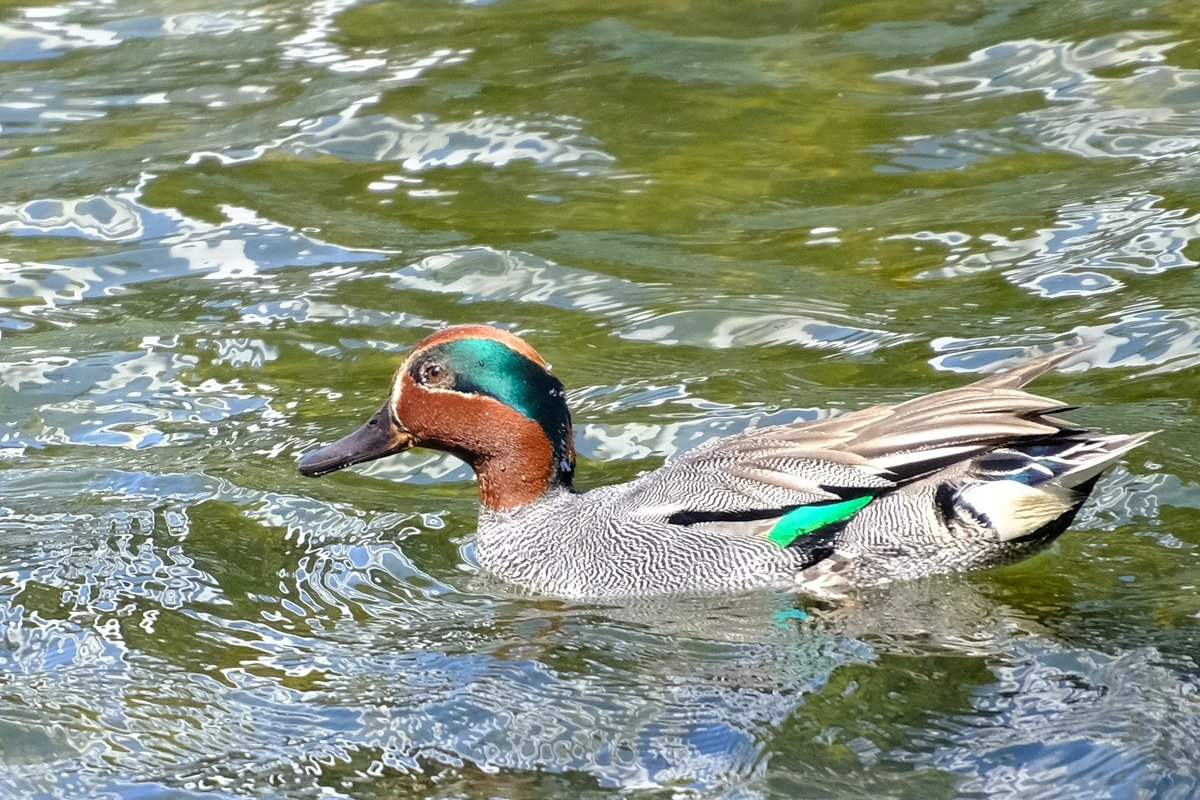
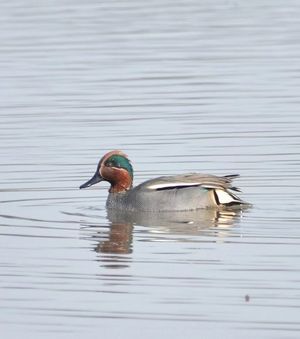
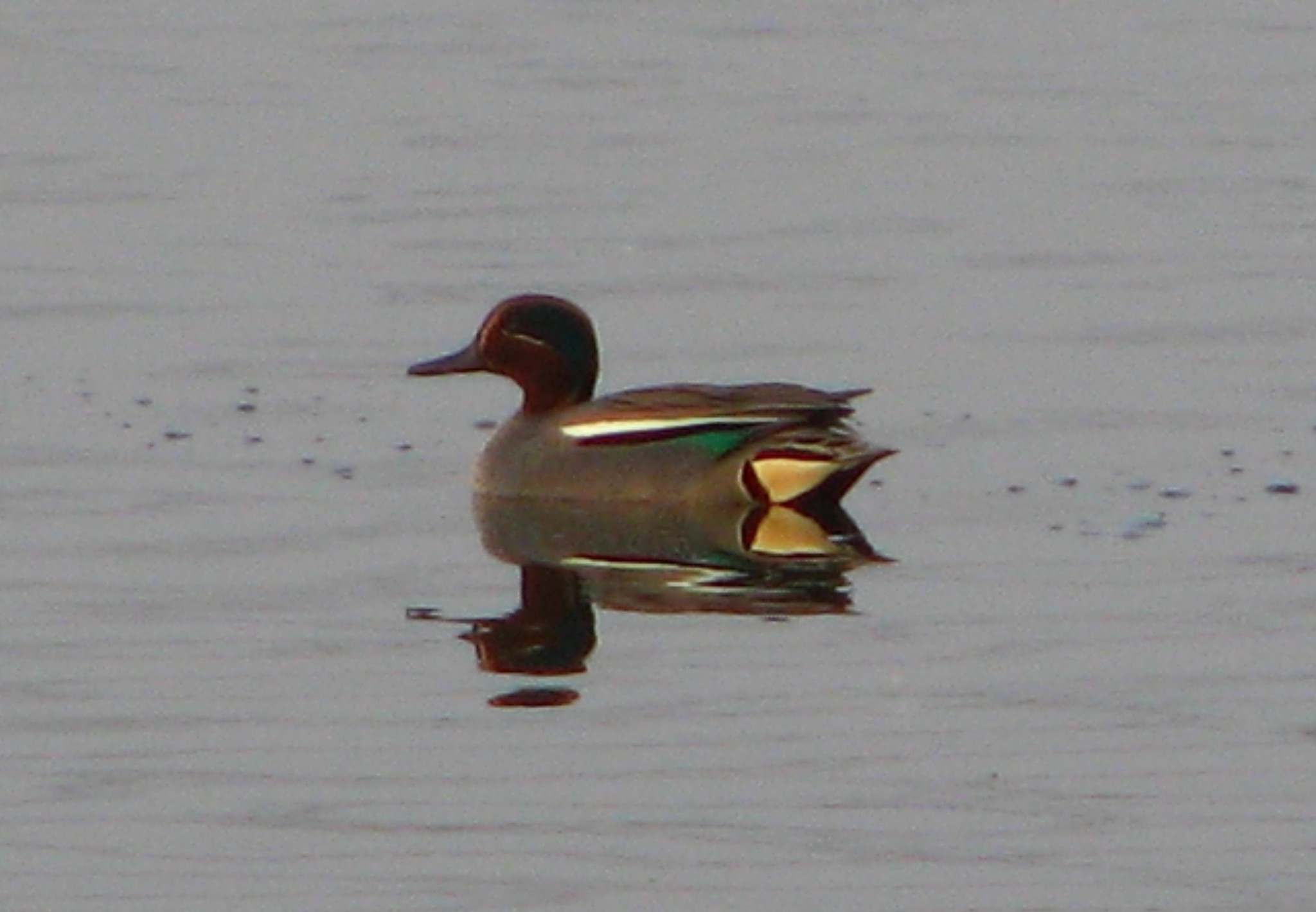
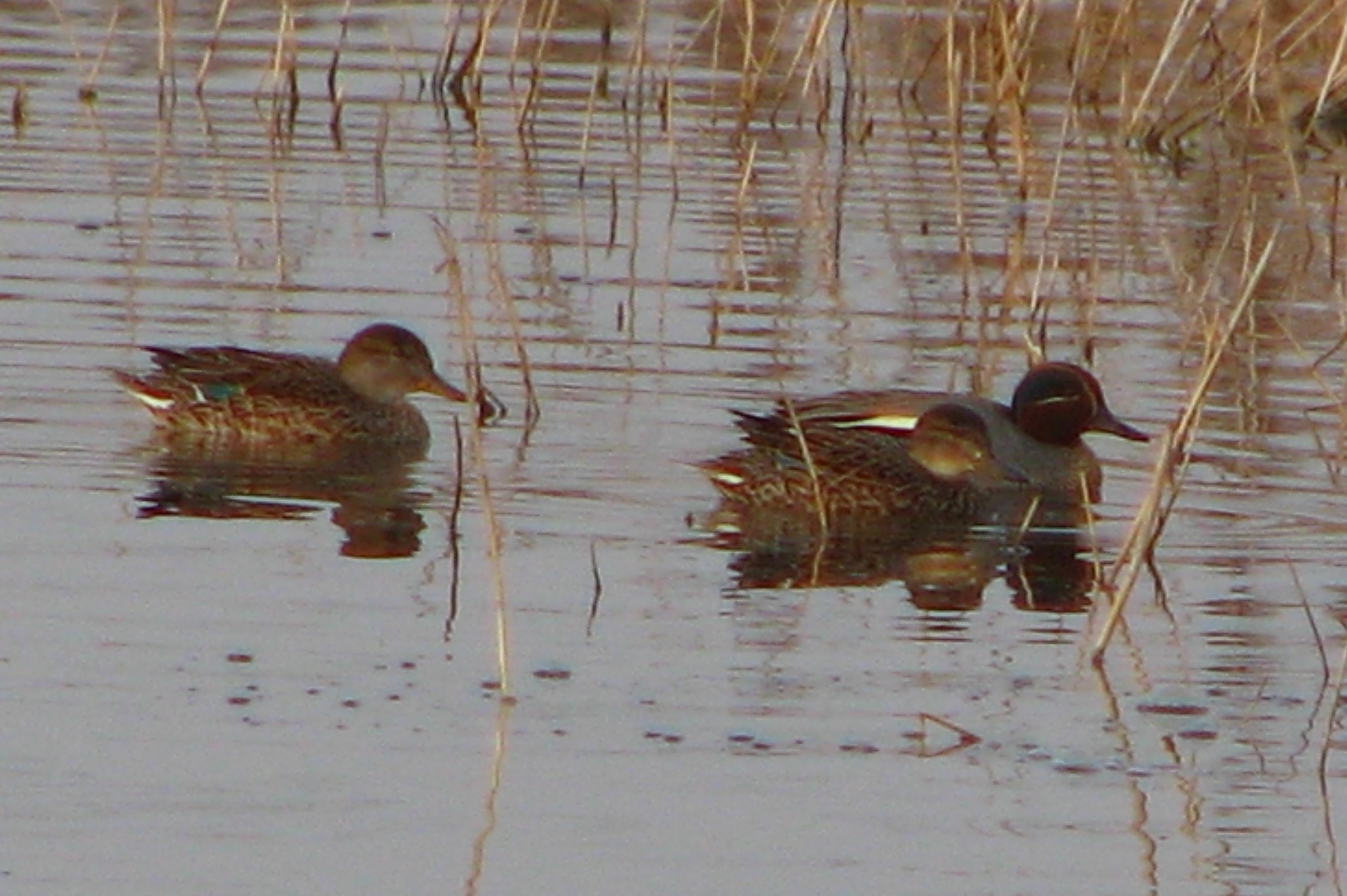
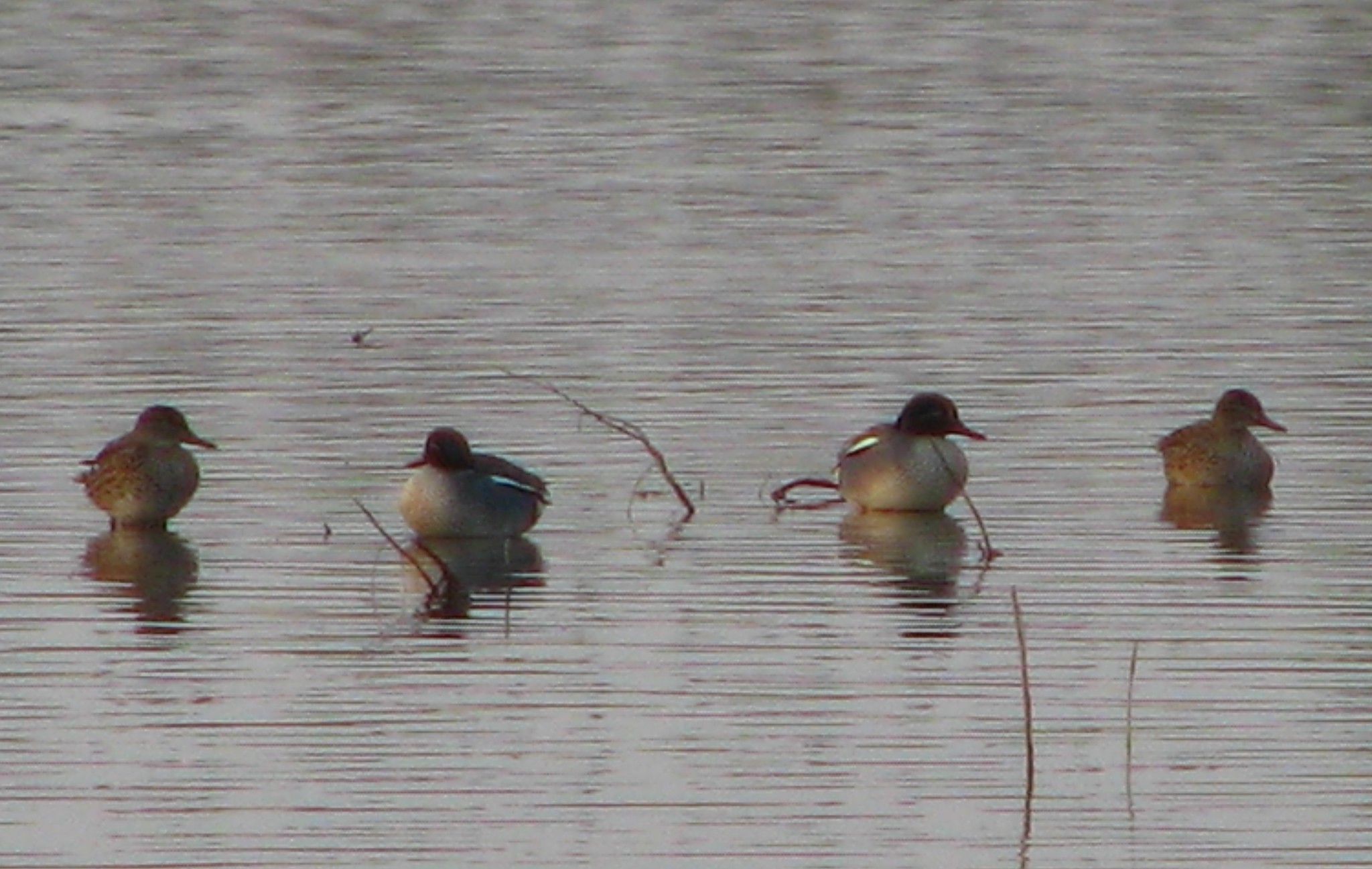
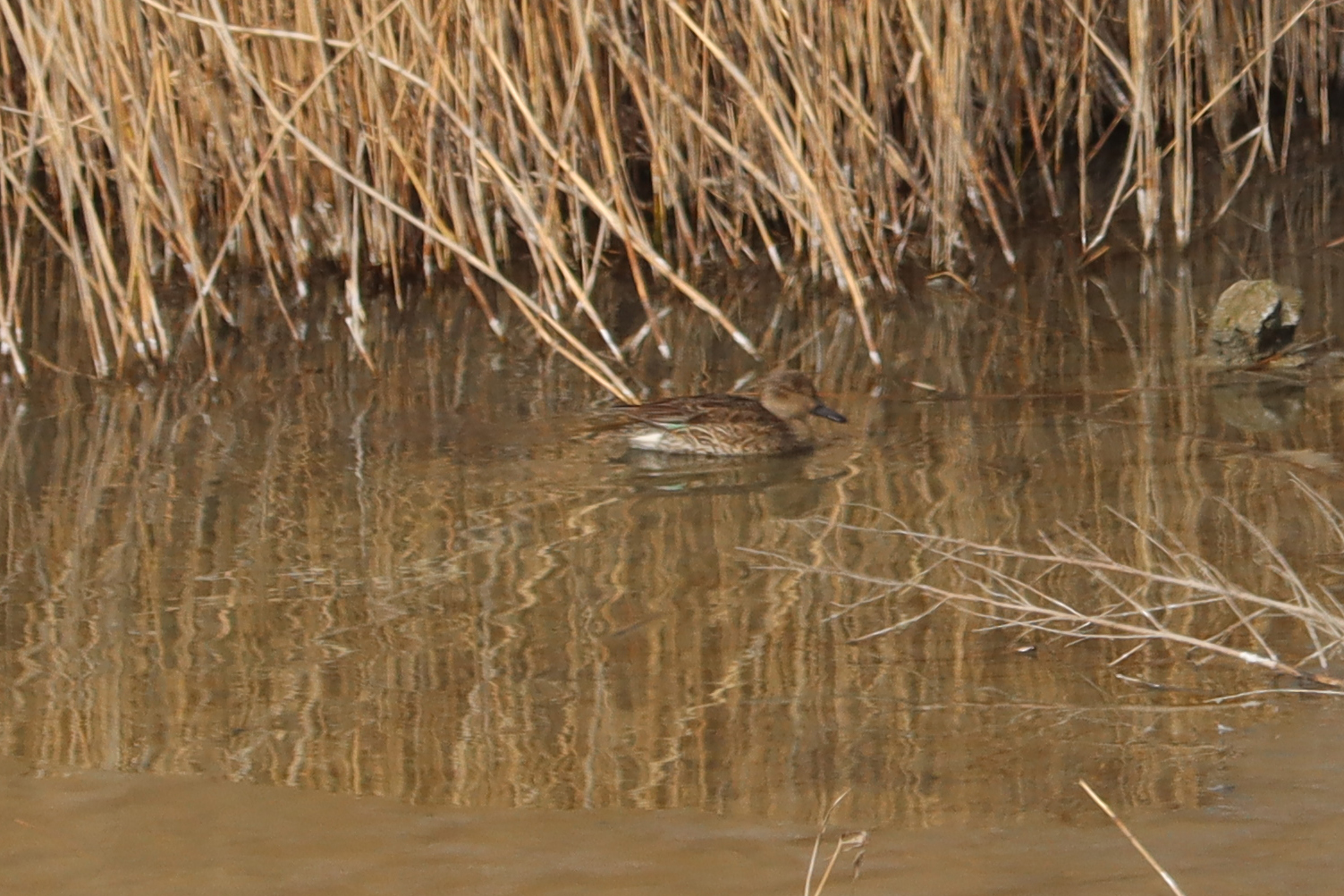
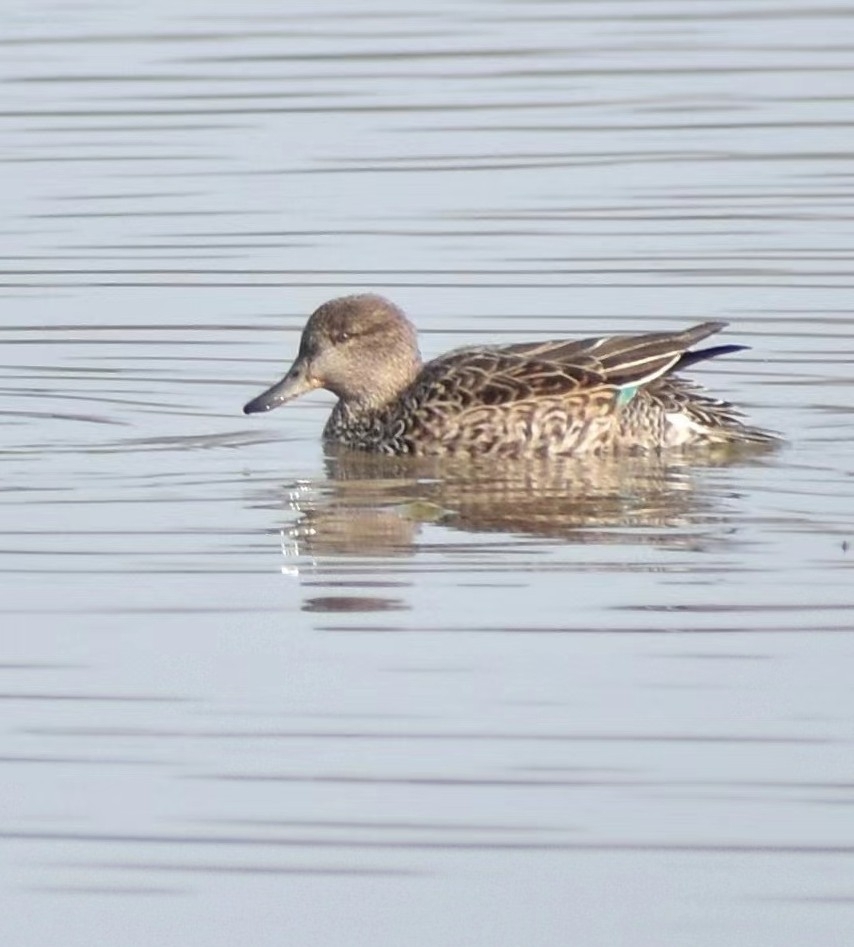
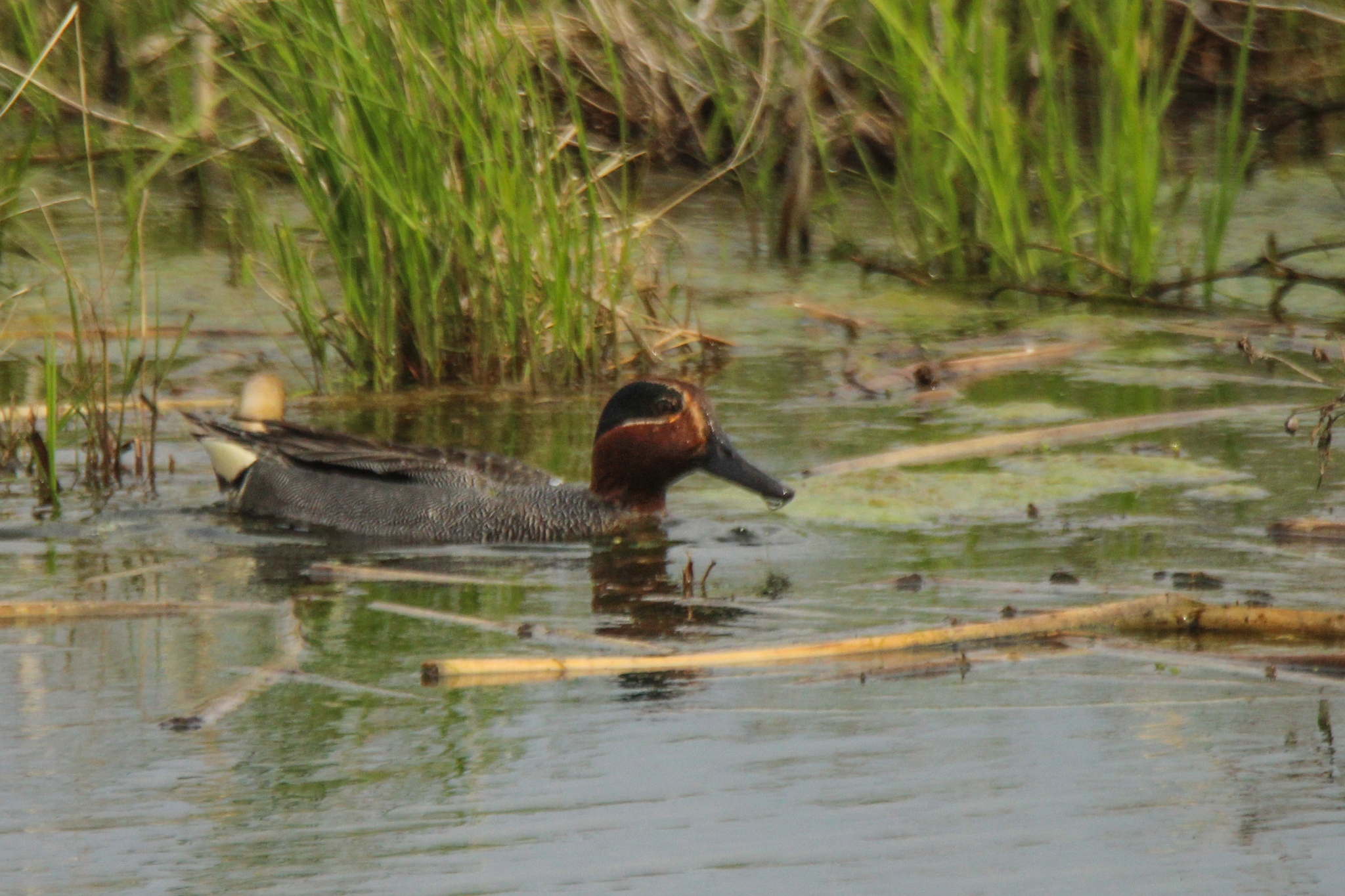
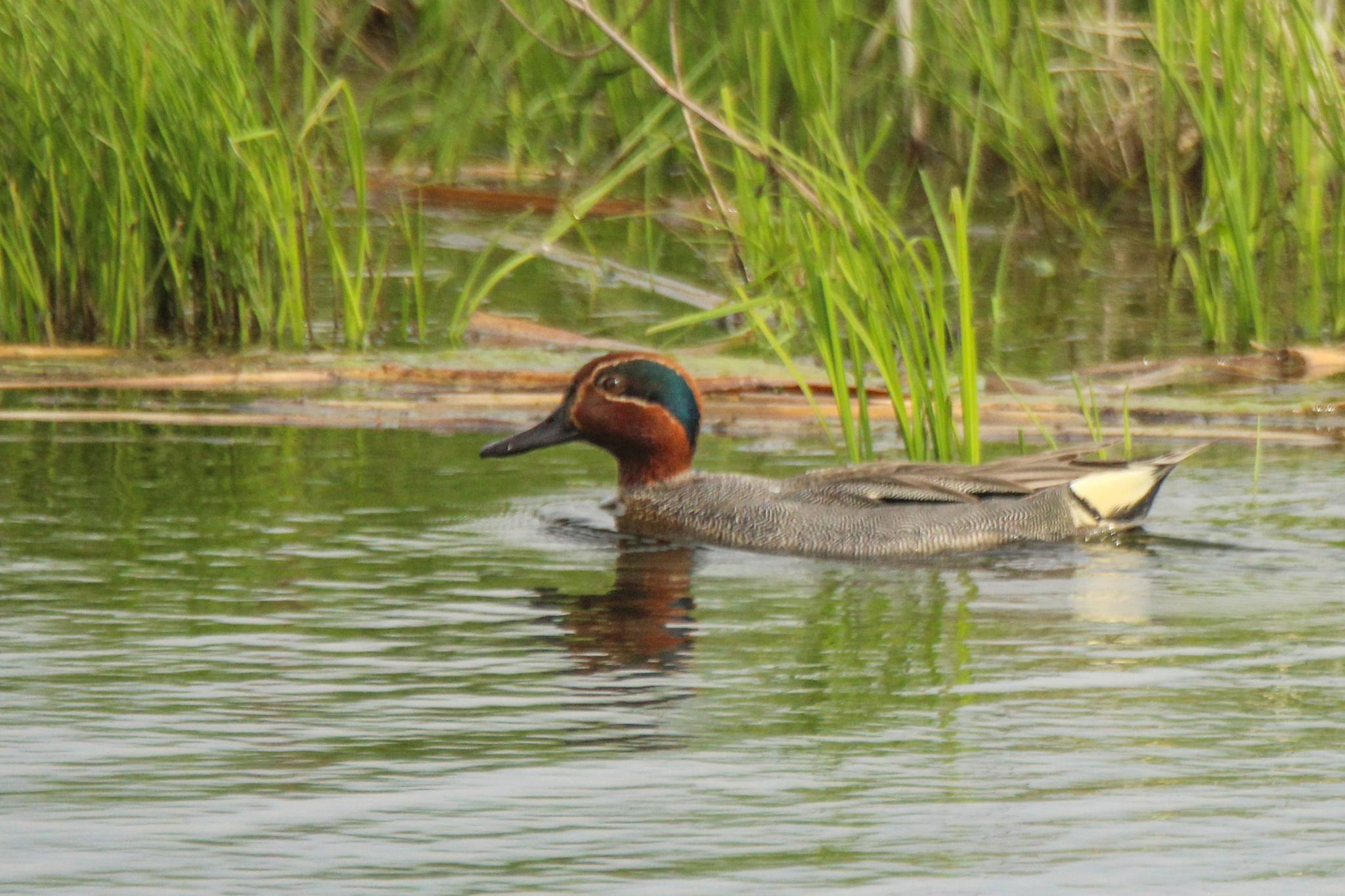
The smallest North American dabbling duck, measuring 12.2–15.3 in (31–39 cm) in length, with a wingspan of 20.5–23.2 in (52–59 cm) and weight of 4.9–17.6 oz (140–500 g). Breeding males have grey flanks and back, a yellow rear end, a chestnut head with a green eye patch, and a white-edged green speculum. A vertical white stripe on the side of the breast distinguishes them from similar species. Females are light brown, resembling female mallards. In non-breeding eclipse plumage, males resemble females.
Identification
Distinguished from the Eurasian teal by a vertical white stripe on the side of the breast and the lack of a horizontal white scapular stripe or thin buff lines on the head. The white-edged green speculum is obvious in flight or at rest. Females are separated from most ducks by size, shape, and speculum, though separation from female common teal is problematic. Flight involves fast, twisting flocks.
Distribution & Habitat
Breeds from northern Alaska, Mackenzie River delta, and central Canada south to central California, Nebraska, Kansas, and the Maritime Provinces. Winters from southern Alaska and British Columbia east to Nova Scotia, south to Central America, and in Hawaii. Rare records exist in northern South America. Inhabits sheltered wetlands, taiga bogs, arctic tundra, and semidesert communities, preferring shallow waters with dense emergent vegetation like bulrushes, cattails, and sedges.
Behavior & Ecology
Among the earliest spring migrants, arriving as snow melts. Nests on dry ground near water, concealed in grass or brush, with clutch sizes of 5–16 eggs. Incubation lasts 21–23 days; young fledge in 34–35 days. Males leave females at the start of incubation to molt. Feeds primarily on mud flats or shallow marshes, consuming seeds of nutgrasses, millets, sedges, bulrushes, and pondweeds, occasionally eating insects, mollusks, and crustaceans. Vocalizations include a clear whistle from males and a feeble quack from females.
Conservation
Not evaluated by IUCN due to taxonomic debate, but considered plentiful and would likely be classified as Least Concern. It is more abundant than the common teal.
Source: Wikipedia · CC BY-SA 3.0
Taxonomy
- Order
- Anseriformes
- Family
- Anatidae
- Genus
- Anas
Taxonomy Changes
Anas carolinensis → Anas crecca
Subspecies lump — GBIF Backbone Taxonomy uses the former name; AviList 2025 uses the current name.
Vocalizations
Subspecies (2)
-
Anas crecca carolinensis
breeds North America; winters to Mexico and West Indies
Data Sources
Species description from Wikipedia, licensed under CC BY-SA 3.0.
Bird images and sounds sourced from GBIF, contributed by citizen scientists worldwide under Creative Commons licenses.
Taxonomy data from AviList 2025.