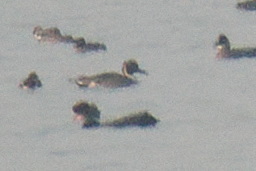
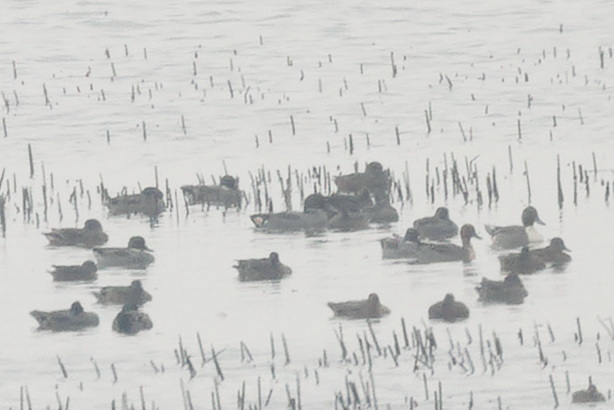
Anseriformes / Anatidae / Anas
Northern Pintail
Anas acuta · 针尾鸭
Introduction
A large dabbling duck species with a wide geographic distribution, breeding in northern areas of Europe, the Palearctic, and North America. It is migratory, wintering south of its breeding range as far as the equator. Unusually for a bird with such a large range, it has no geographical subspecies. The species nests on the ground, often at a distance from water, and feeds by dabbling for plant food, supplementing its diet with small invertebrates during the nesting season.
Description
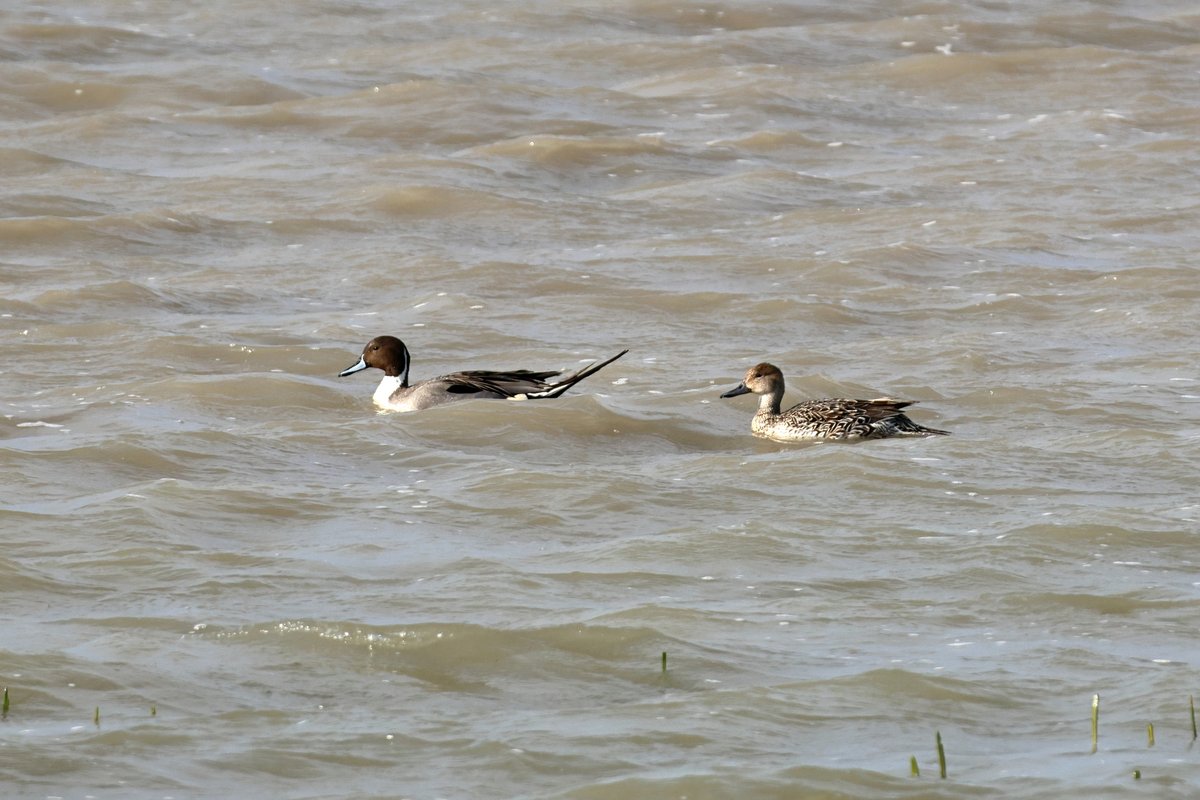
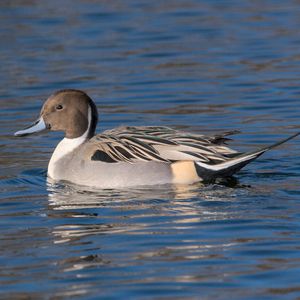
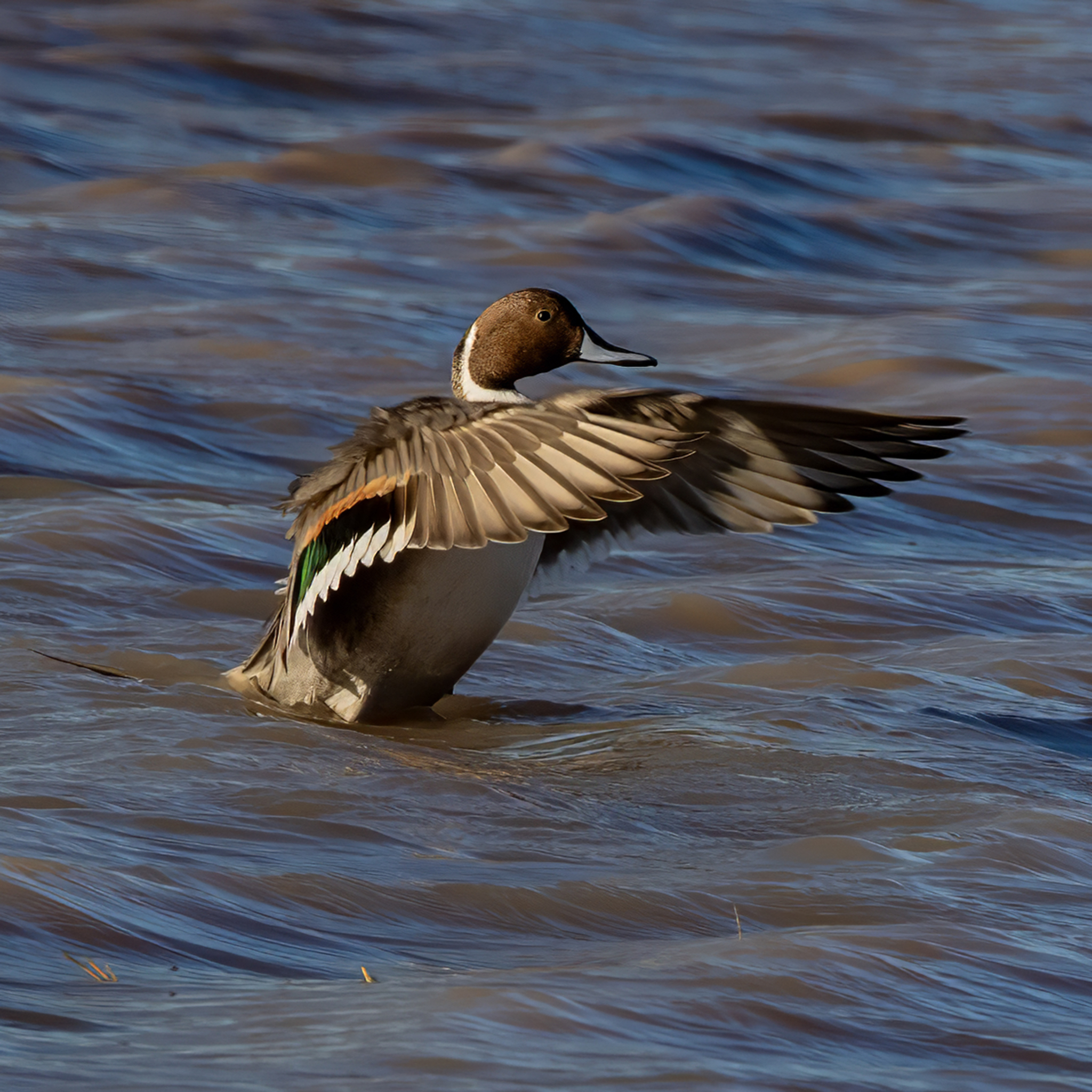
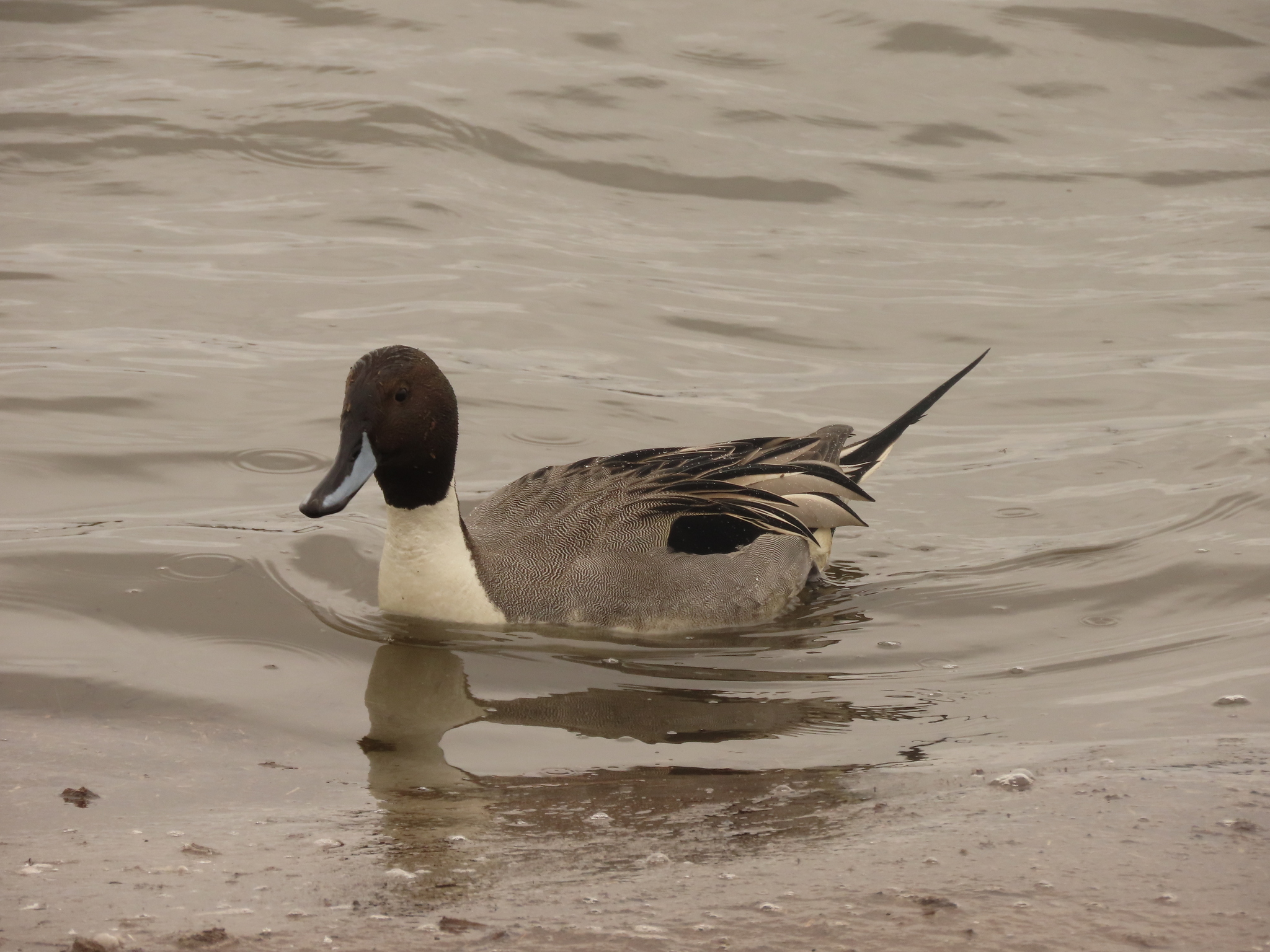
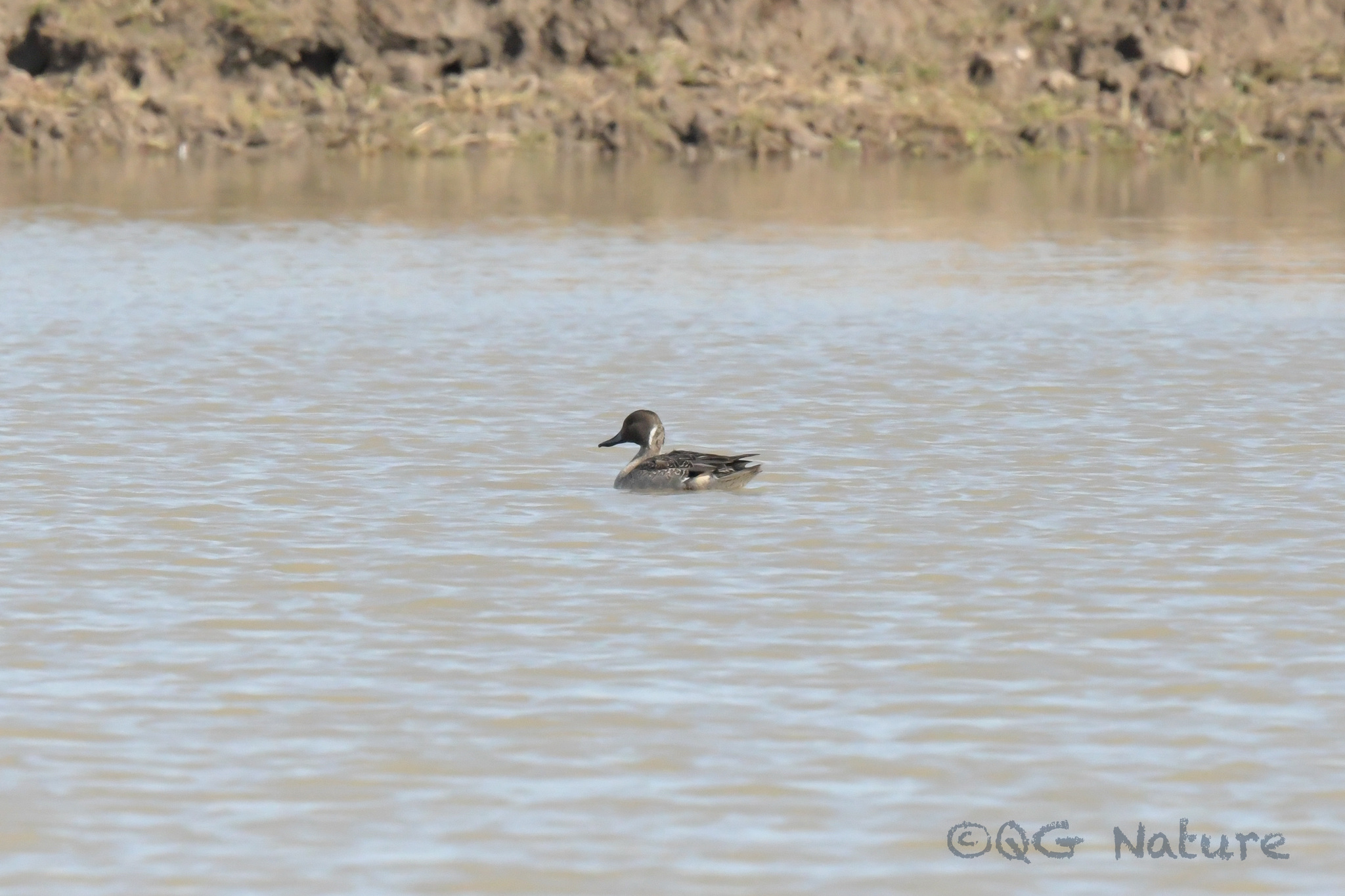
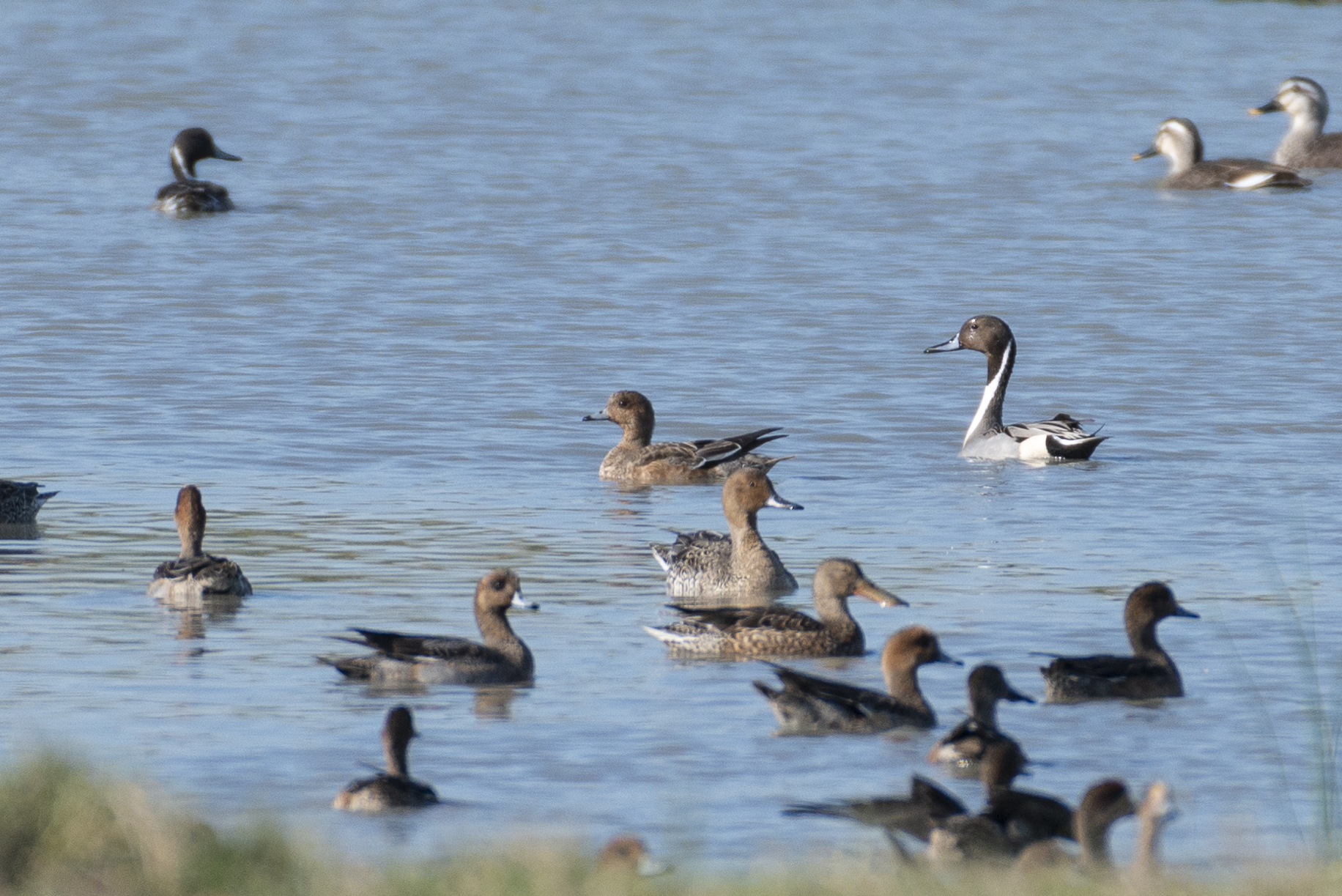
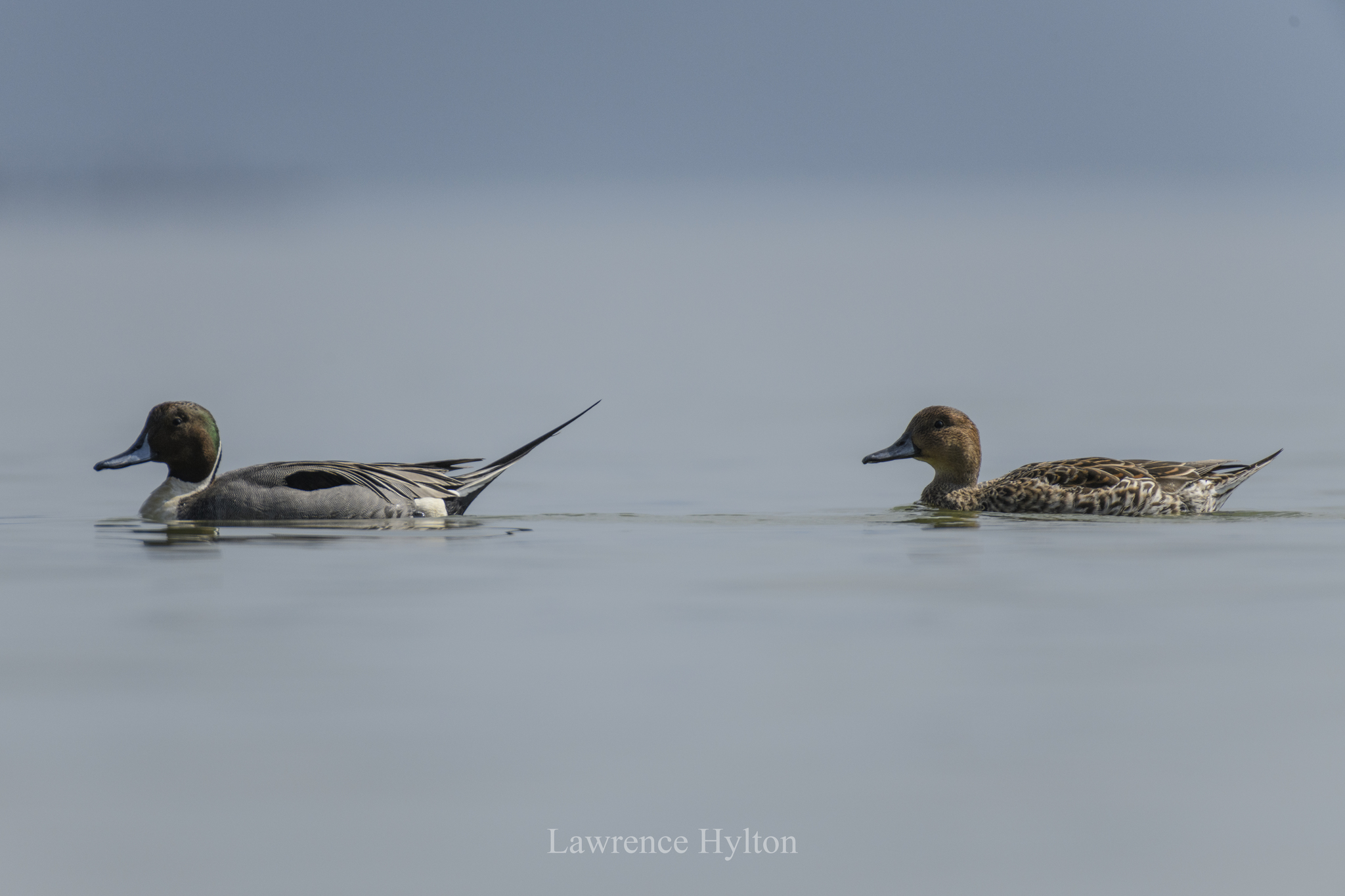
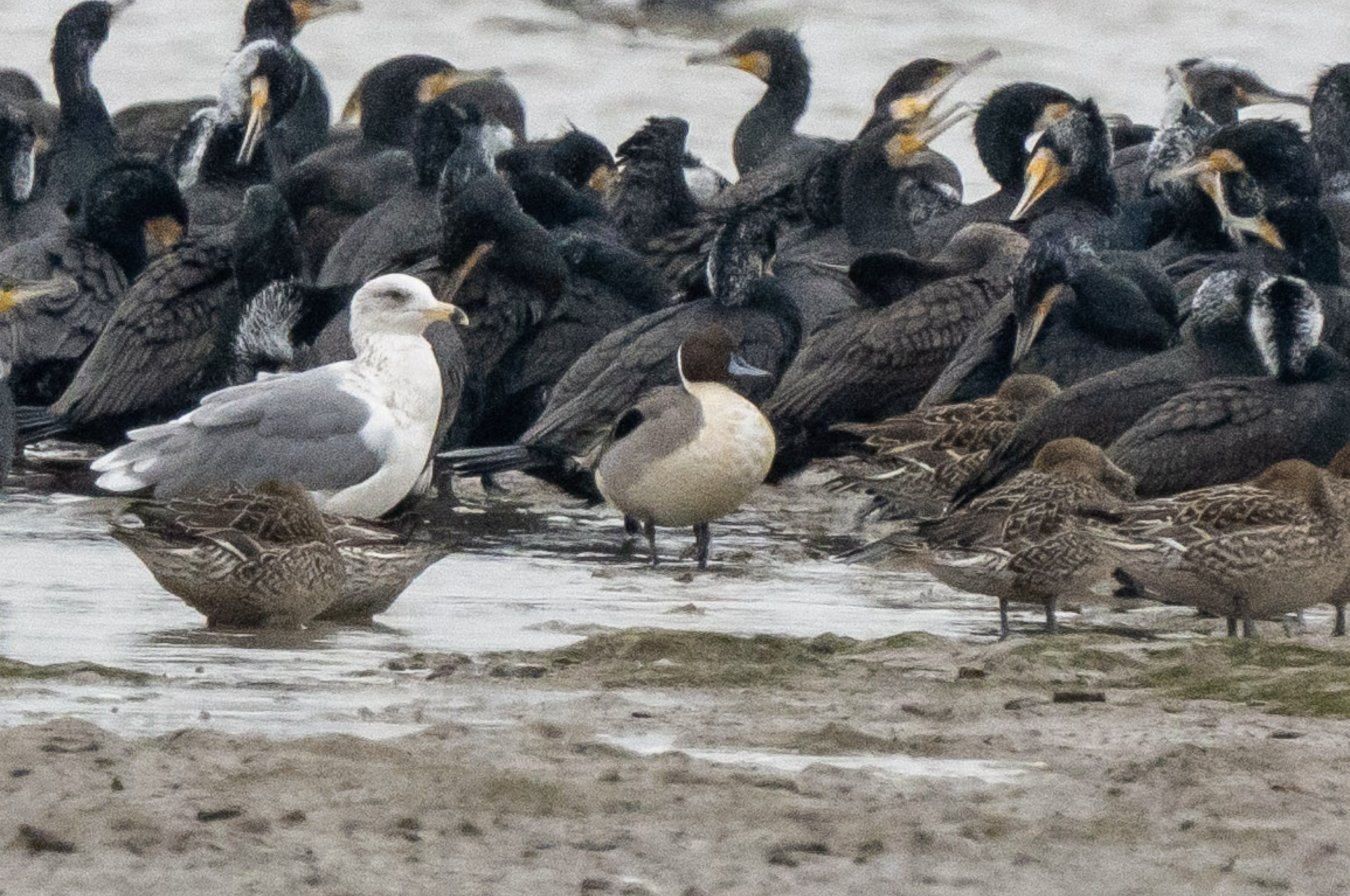
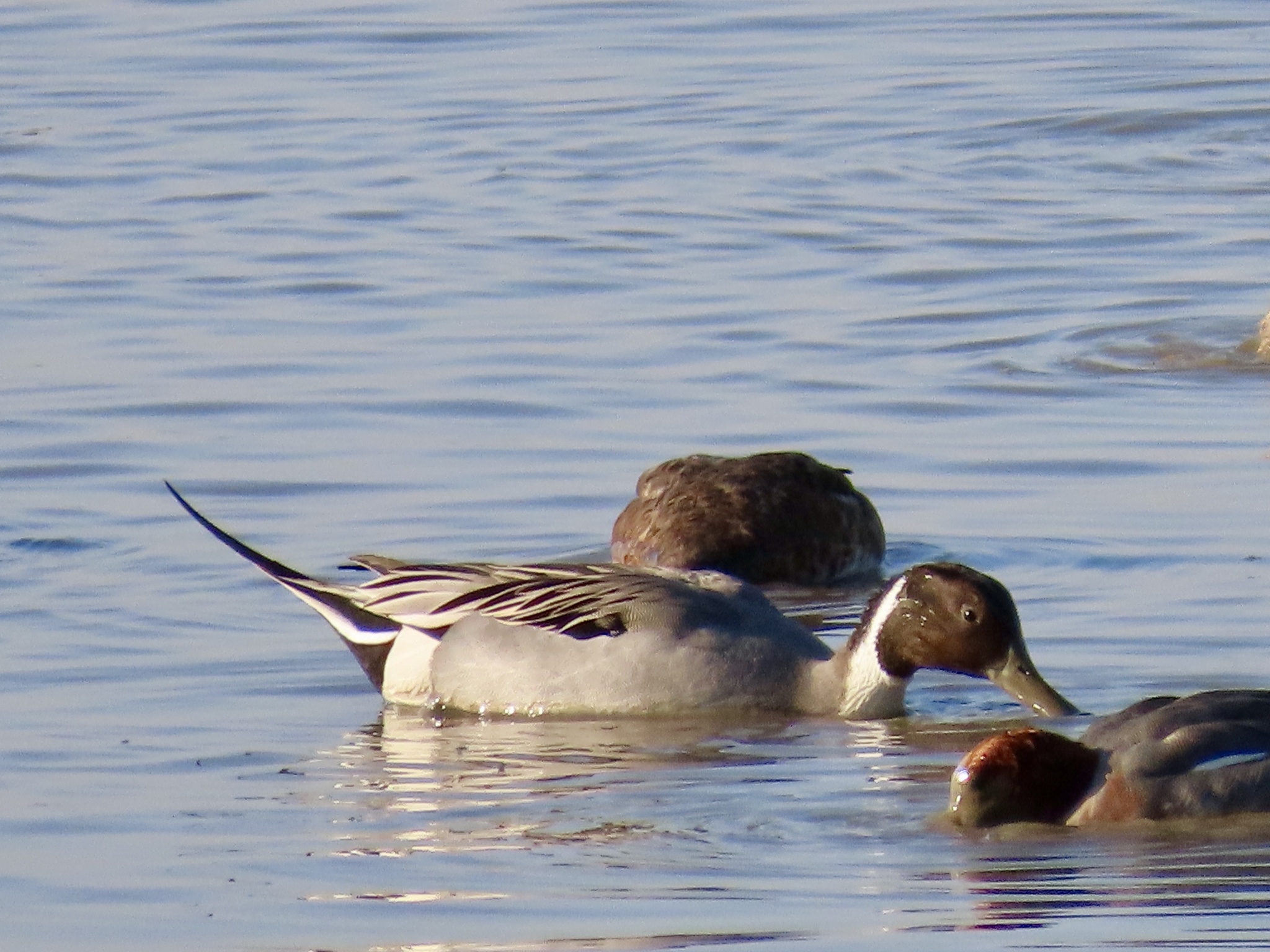
A fairly large duck with a wing chord of 23.6–28.2 cm (9.3–11.1 in) and wingspan of 80–95 cm (31–37 in). Males measure 59–76 cm (23–30 in) in length and weigh 450–1,360 g (0.99–3.00 lb), while females are 51–64 cm (20–25 in) long and weigh 454–1,135 g (1.001–2.502 lb). Both sexes have blue-grey bills and grey legs and feet. The breeding male has a chocolate-brown head, a white breast with a white stripe extending up the side of the neck, and grey, brown, and black markings on the back and sides. The vent area is yellow, contrasting with the black underside of the tail, which features central feathers elongated up to 10 cm (3.9 in). The adult female is mainly scalloped and mottled in light brown with a uniform grey-brown head and a shorter pointed tail. Juveniles resemble the female but are less neatly scalloped with a duller brown speculum.
Identification
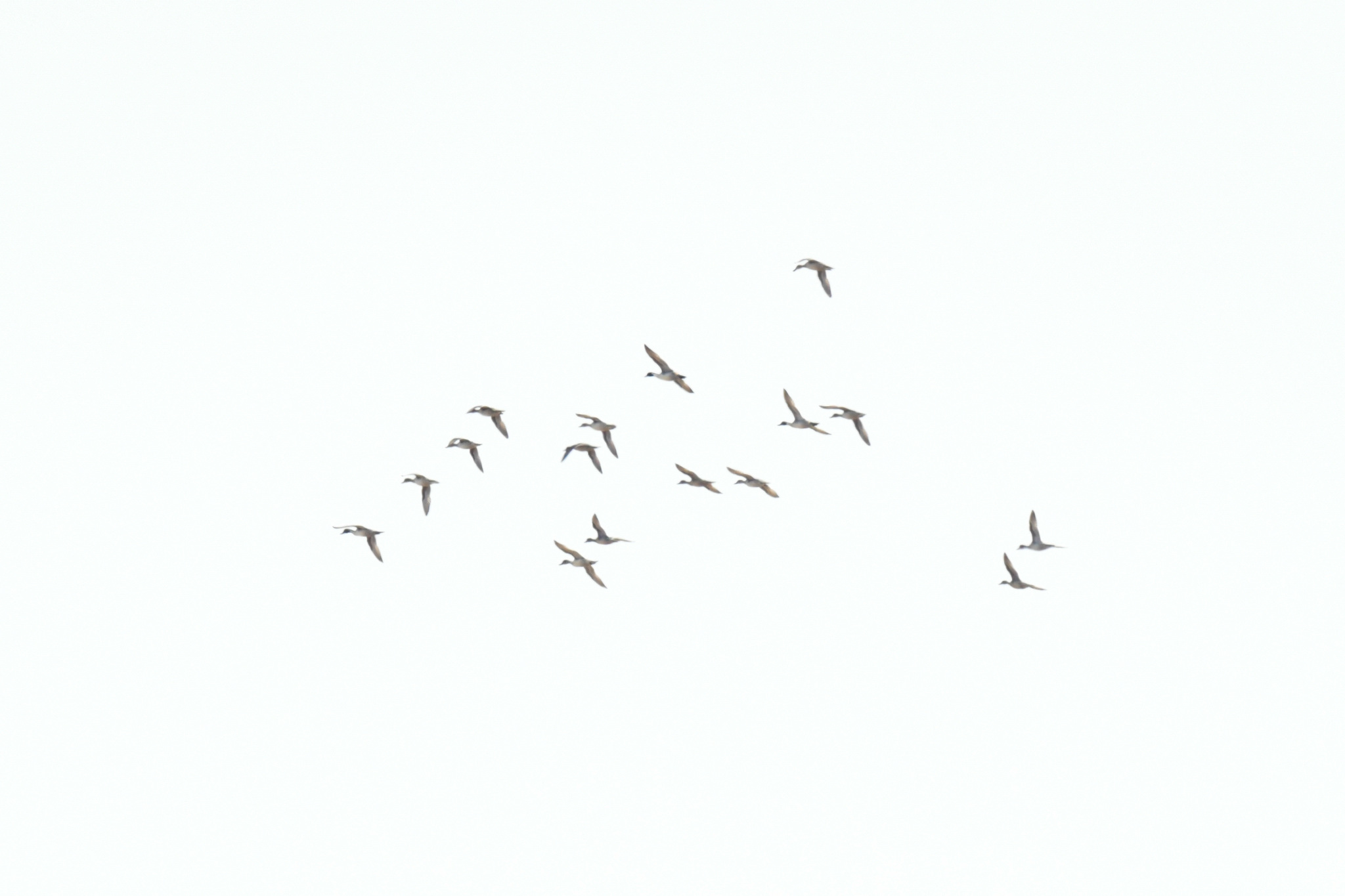
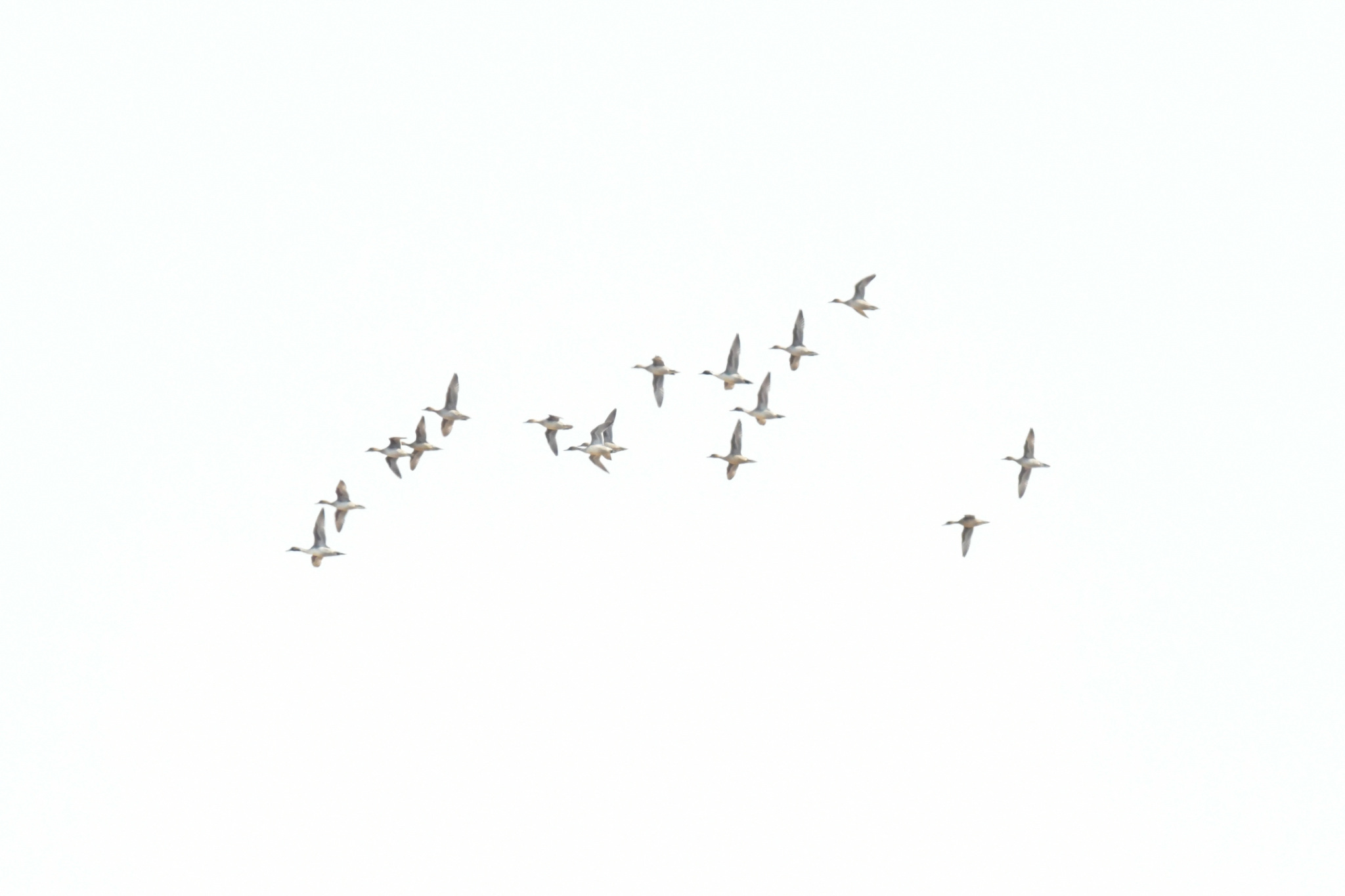
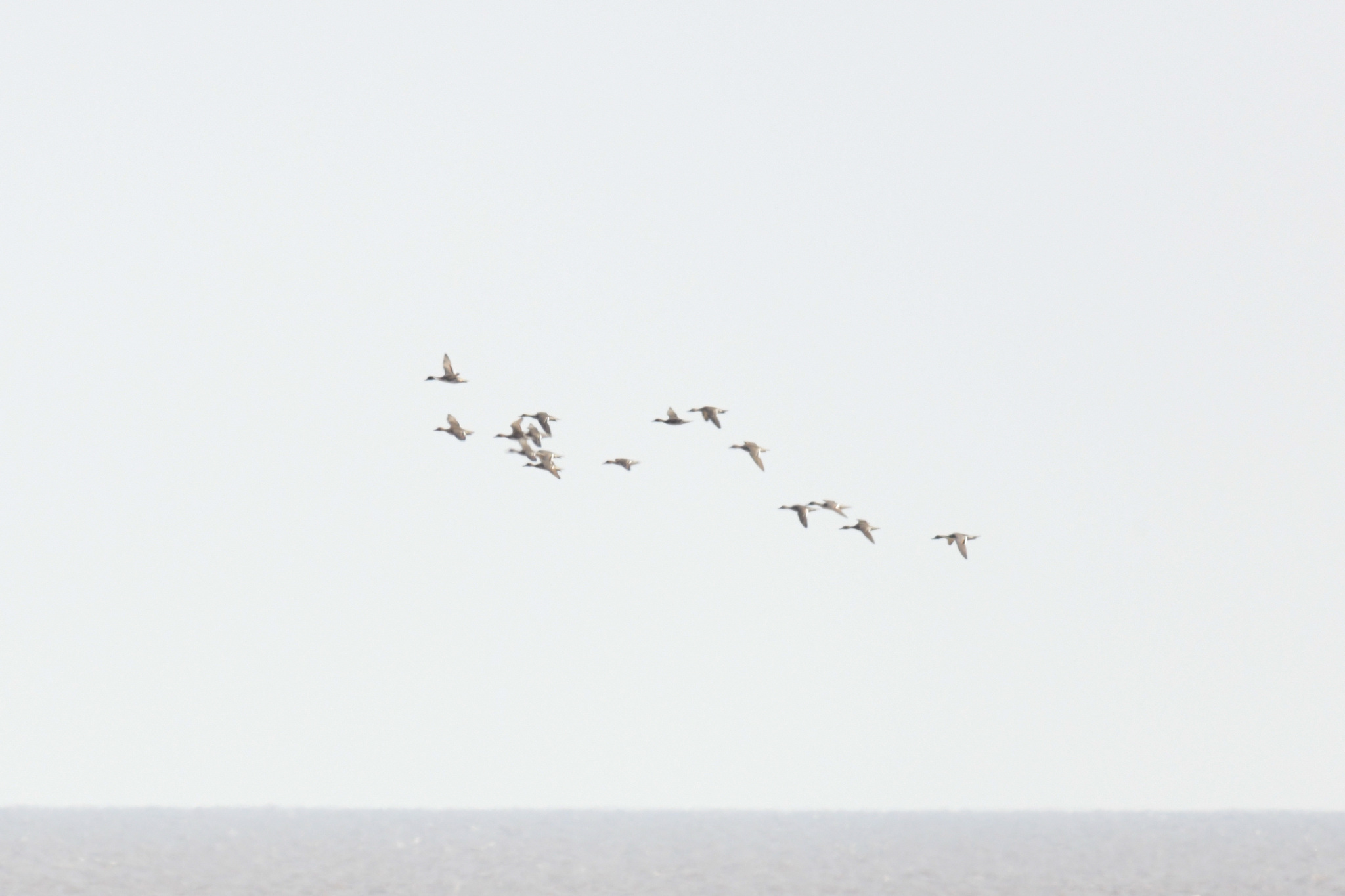
Identified by its slender, elongated shape, long neck, and long grey bill. In flight, it exhibits a very fast flight style with wings slightly swept back. The male displays a black speculum with a white border at the rear and pale rufous at the front. The female's speculum is dark brown with a white border that is narrow at the front edge but prominent at the back, visible from 1,600 m (1 mi). Vocalizations include a soft proop-proop whistle from the male and a mallard-like descending quack or low croak from the female.
Distribution & Habitat
Breeds in northern areas of the Palearctic (as far south as Poland and Mongolia), Canada, Alaska, and the Midwestern United States. Winters mainly south of its breeding range, reaching almost to the equator in Panama, northern sub-Saharan Africa, and tropical South Asia. Small numbers migrate to Pacific islands, particularly Hawaii. Transoceanic journeys occur, with records of birds moving between Labrador and England, and Japan to US states like Utah and Mississippi. Breeding habitat includes open unwooded wetlands such as wet grasslands, lake shores, or tundra. Winter habitats include sheltered estuaries, brackish marshes, and coastal lagoons.
Behavior & Ecology
Highly gregarious outside the breeding season, forming large mixed flocks. Pairs typically form during migration or on wintering grounds. Breeding occurs between April and June; the nest is a shallow scrape on the ground lined with plant material and down, located in dry vegetation often distant from water. The female lays seven to nine cream-coloured eggs (55 mm × 38 mm, weighing 45 g) at a rate of one per day. Incubation lasts 22 to 24 days, performed solely by the hen. Chicks fledge in 46 to 47 days. Feeding involves dabbling and upending in shallow water, primarily in the evening or at night. The long neck allows access to food items up to 30 cm (12 in) deep. Winter diet consists mainly of plant material (seeds, rhizomes), while the breeding diet focuses on invertebrates including aquatic insects, molluscs, and crustaceans.
Conservation
The IUCN classifies the species as not globally threatened, with an estimated population of 4.8–4.9 million individuals and a range of 41,900,000 km². However, it is endangered in Europe. Populations in the Palearctic have declined, particularly in Russia. In North America, the breeding population fell from over 10 million in 1957 to 3.5 million in 1964 due to avian diseases; although recovered, the 1999 population was 30% below the long-term average. Major threats include hunting, habitat conversion to arable crops, destruction of nests by agricultural activities, lead poisoning from shot ingestion, and avian diseases such as botulism and cholera. Conservation measures include local hunting restrictions and bans on lead shot in the United States, Canada, and many western European countries. The species is covered by the Agreement on the Conservation of African-Eurasian Migratory Waterbirds (AEWA).
Source: Wikipedia · CC BY-SA 3.0
Taxonomy
- Order
- Anseriformes
- Family
- Anatidae
- Genus
- Anas
Distribution
breeds Palearctic from Iceland and northern Scandinavia eastwards to northeastern Russia, and southwards to central Europe to southeastern Russia, and North America from northern Alaska and arctic Canada southwards to north-central USA; winters to central Africa, southern Asia, southern Central America, and the Caribbean
Data Sources
Species description from Wikipedia, licensed under CC BY-SA 3.0.
Bird images and sounds sourced from GBIF, contributed by citizen scientists worldwide under Creative Commons licenses.
Taxonomy data from AviList 2025.