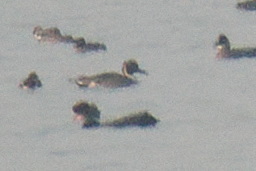
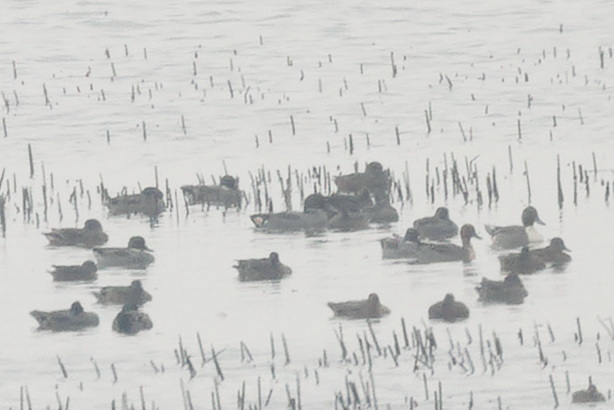
Northern Pintail
Anas acuta
针尾鸭
Introduction
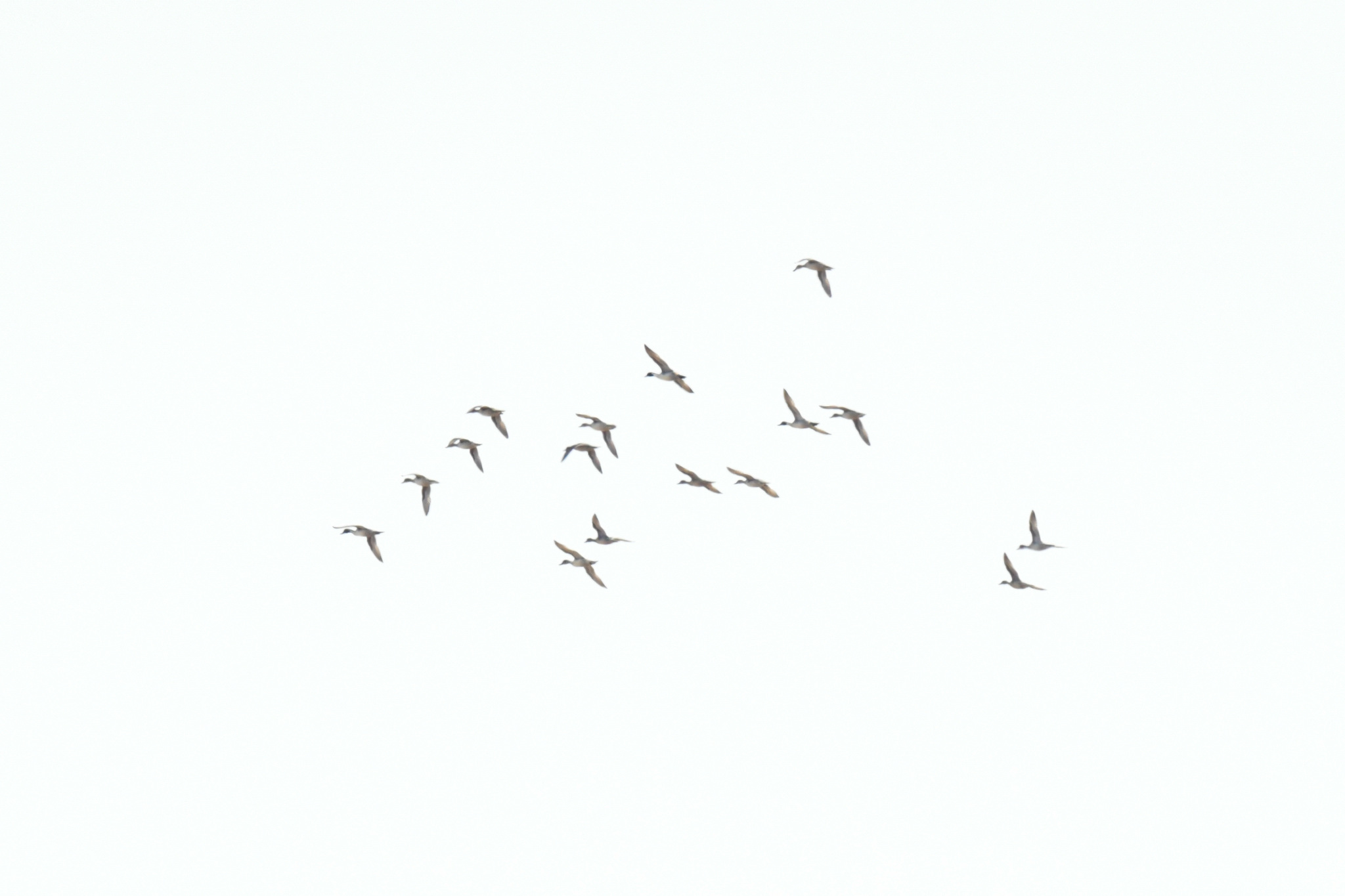
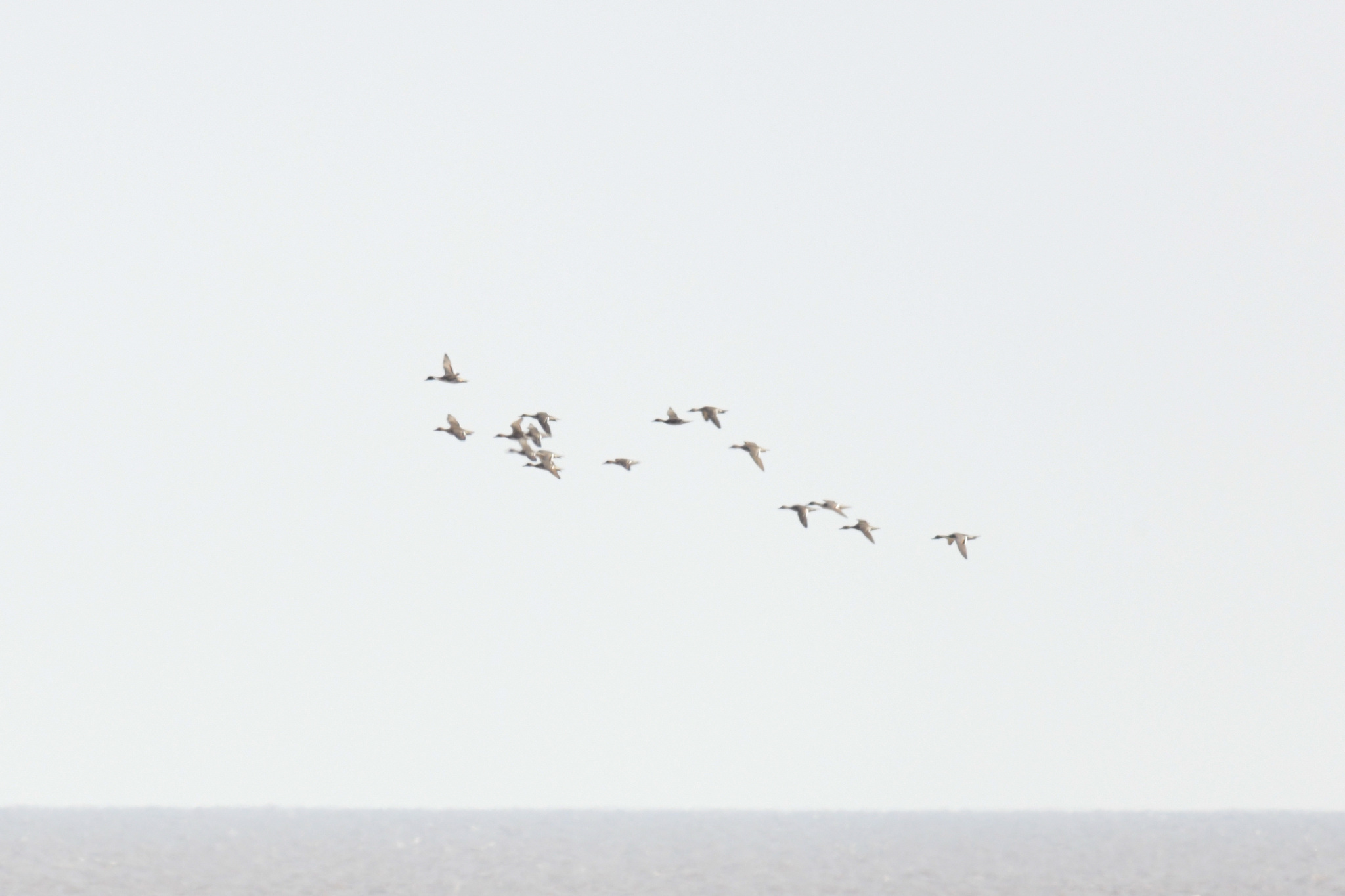
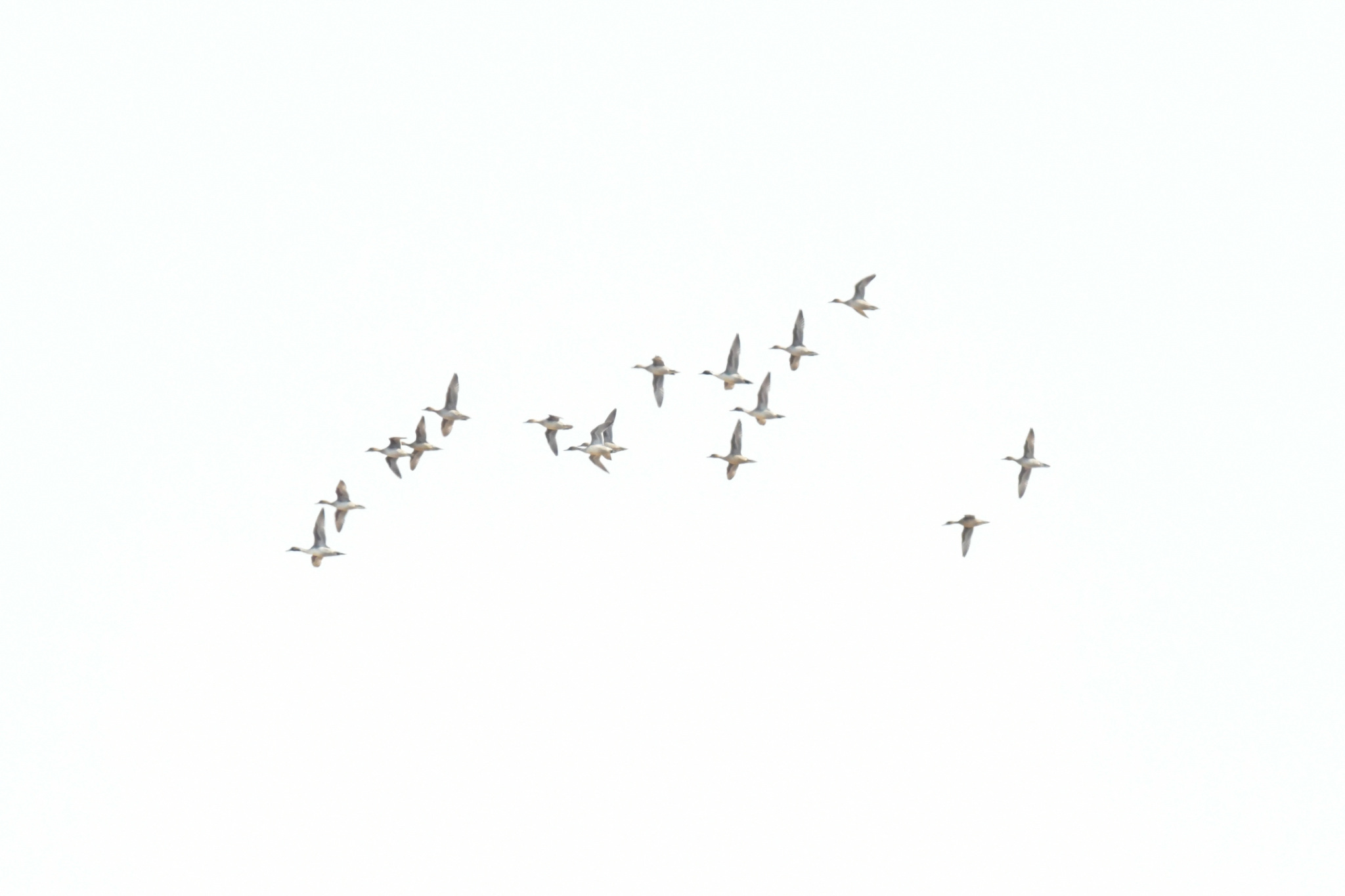
This dabbling duck is widely distributed across the Northern Hemisphere. It inhabits open wetlands. During flight, wings are swept slightly back rather than held straight out. In non-breeding seasons, it forms mixed flocks with other duck species numbering in the thousands. It is an early breeder, arriving on nesting grounds while ice persists on northern waterways. It walks well on land and swims with a forward-leaning posture. It is hunted as a game bird.
Description
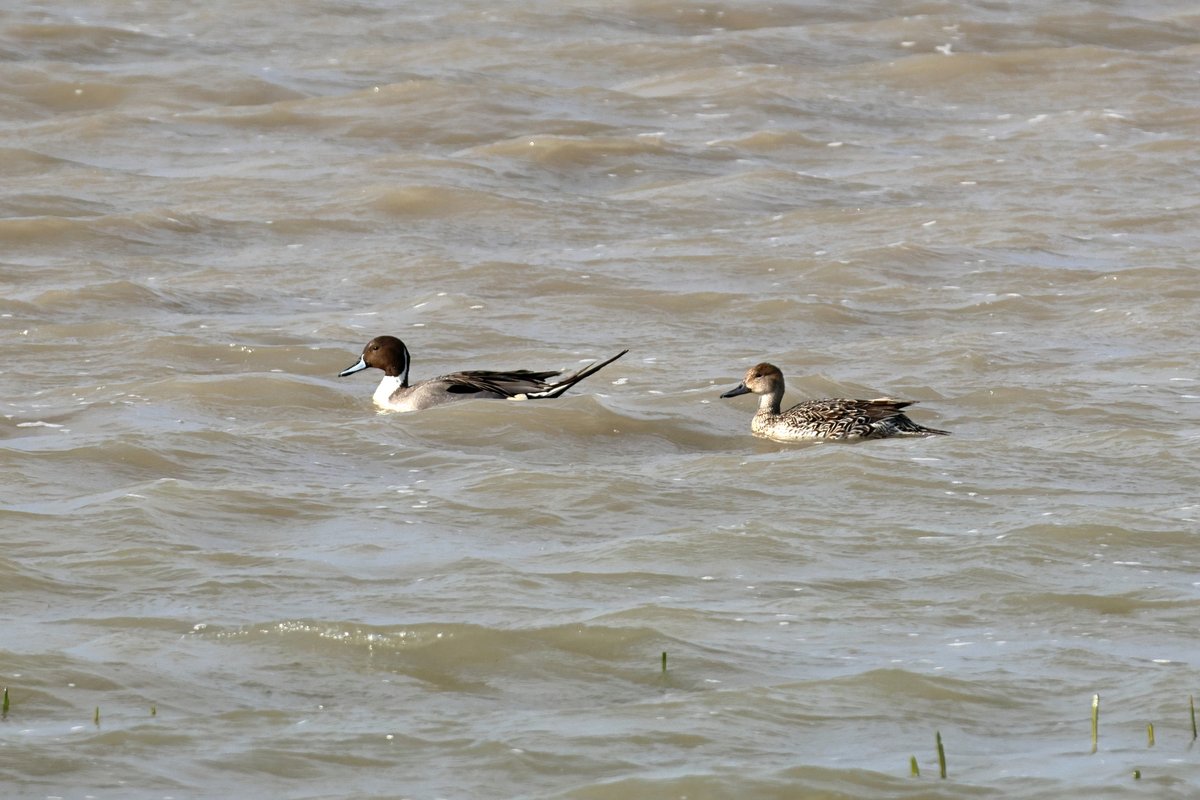
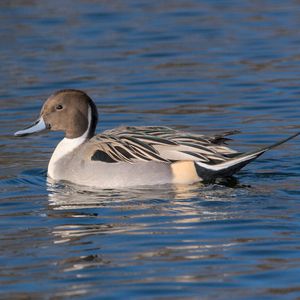
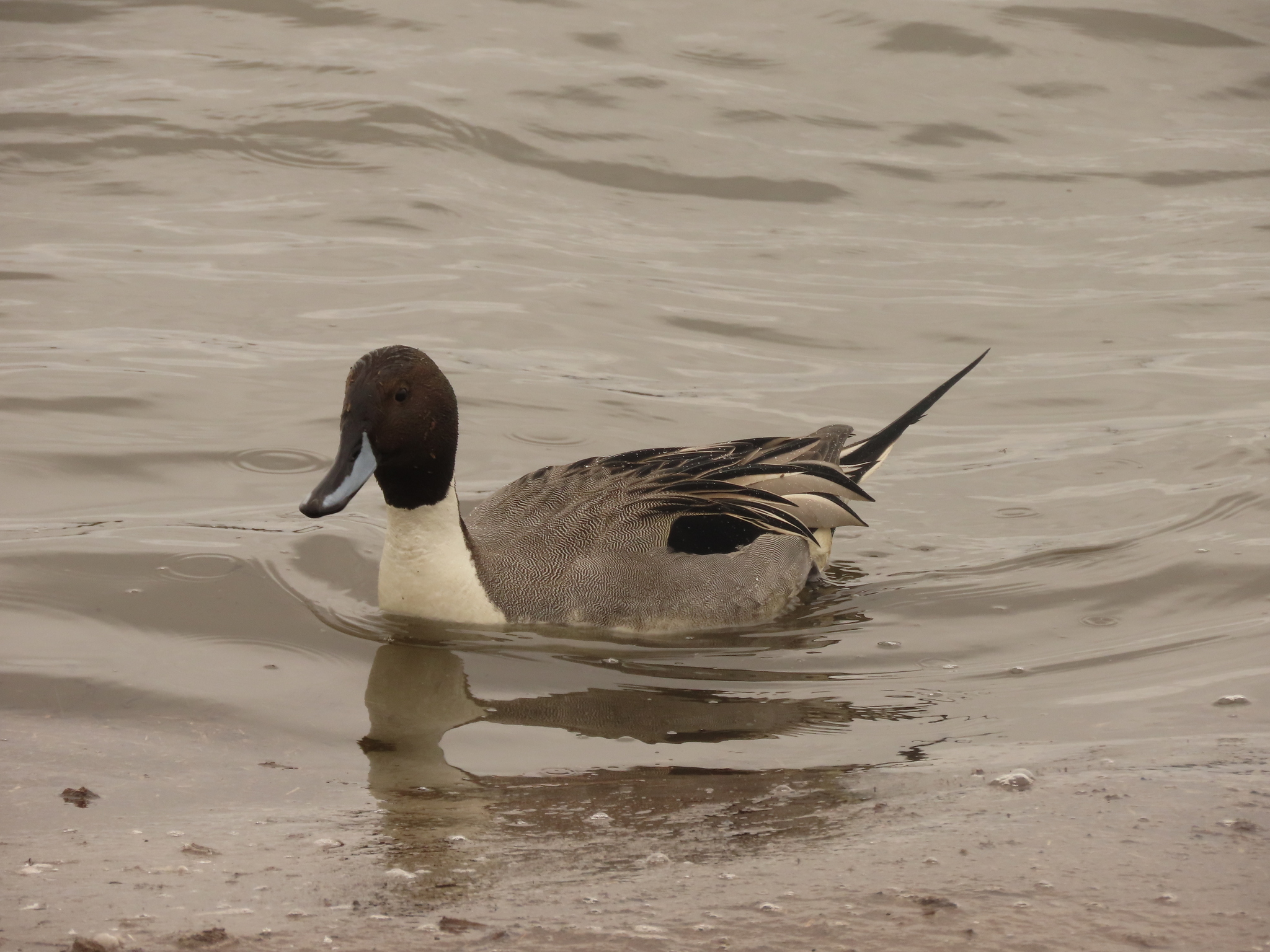
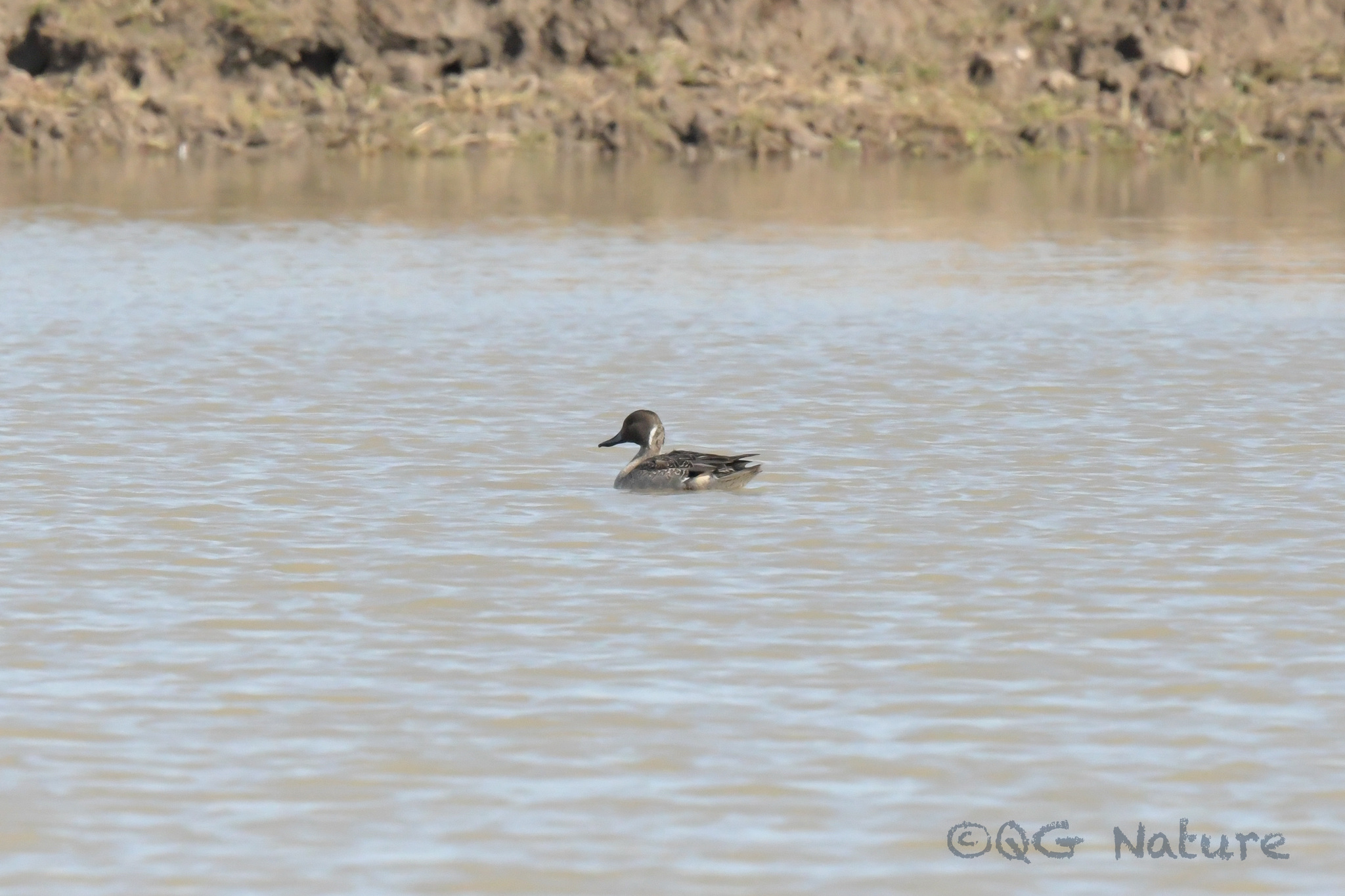
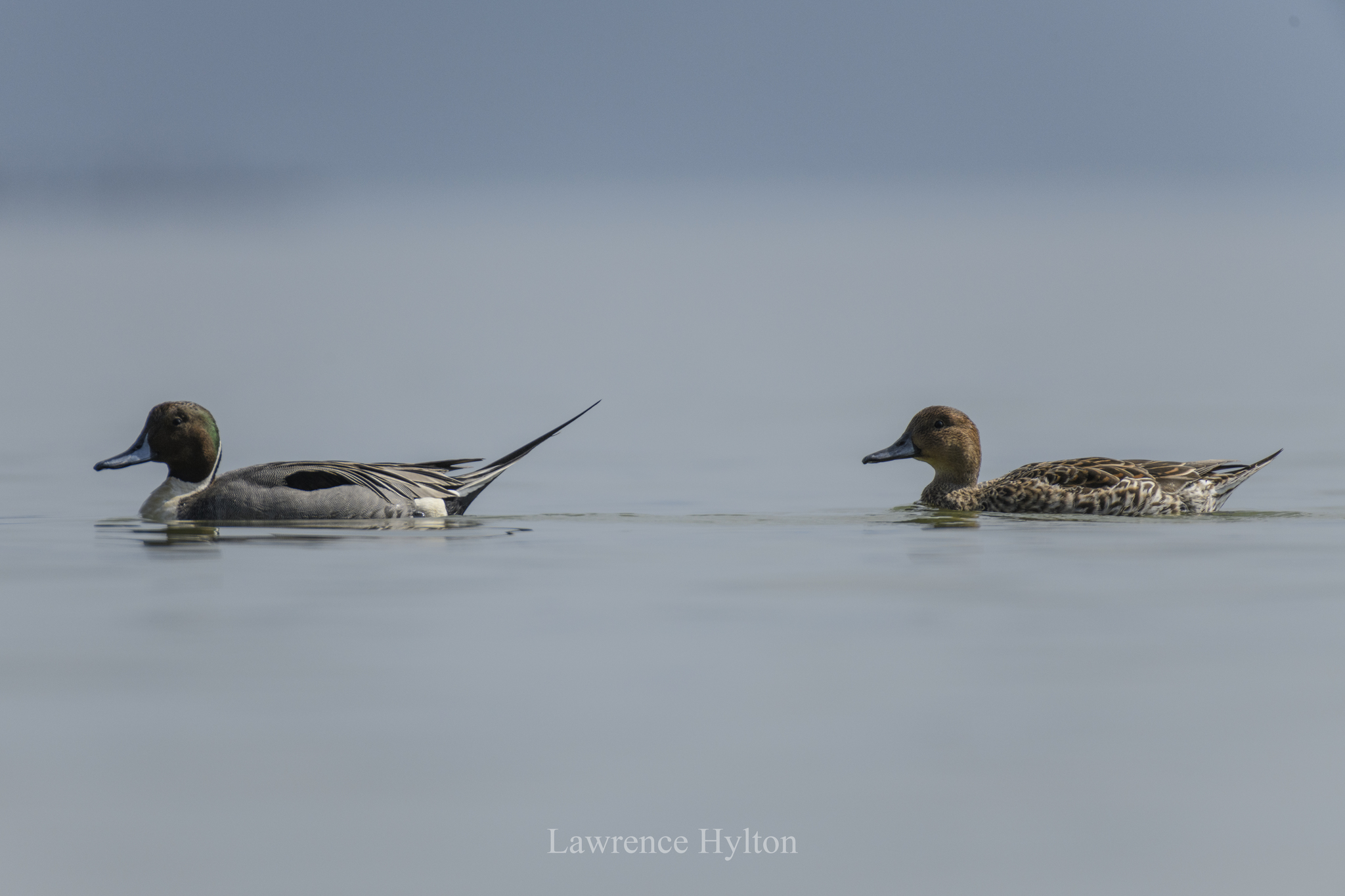
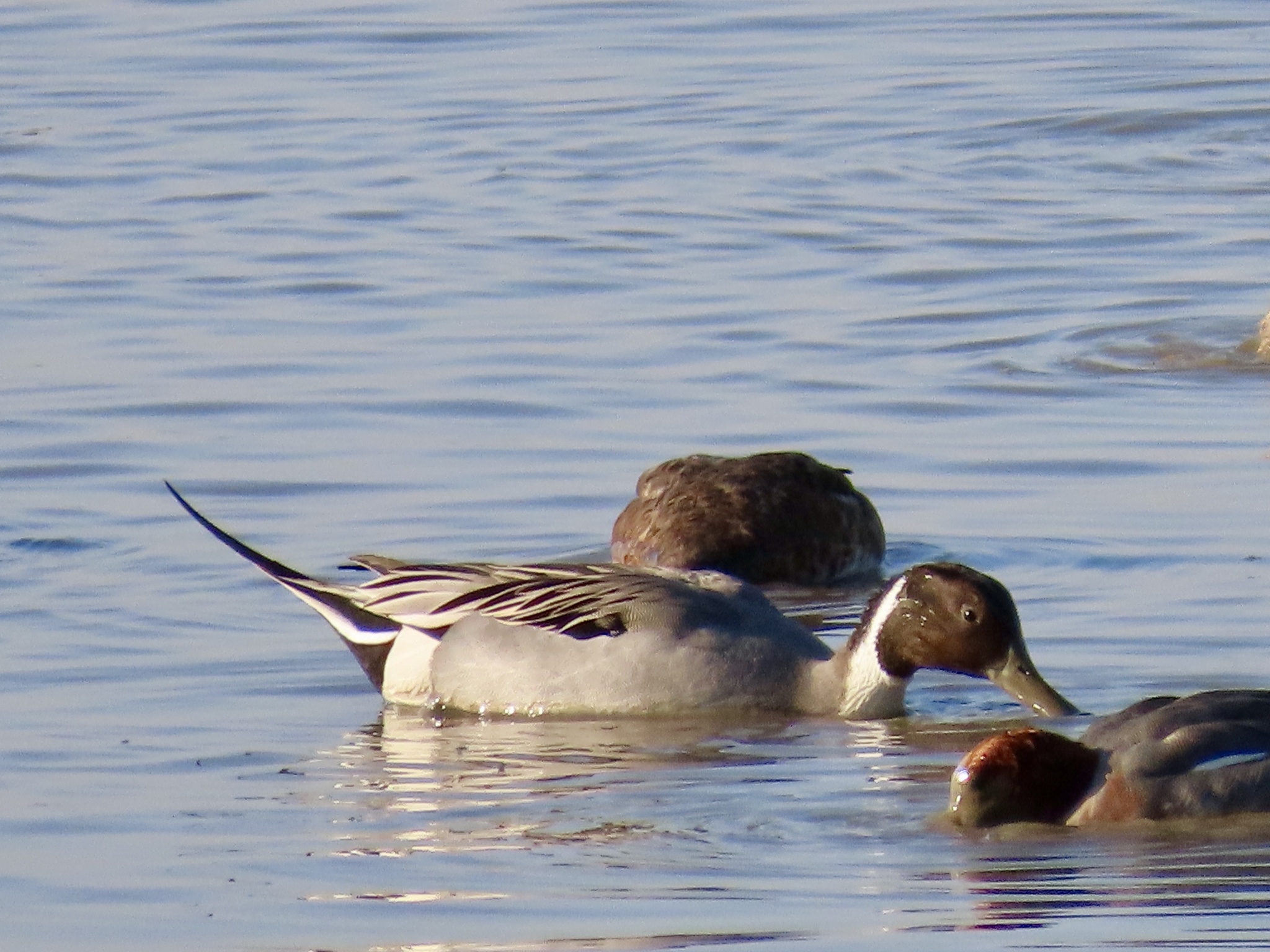
A large, slender dabbling duck with an elongated body and graceful profile. Males measure 59-76 cm in length and weigh 450-1,360 g, while the smaller females are 51-64 cm and 454-1,135 g. The wingspan ranges from 80-95 cm. The breeding male is unmistakable with a chocolate-brown head, white breast, and distinctive white stripe extending up the side of the neck. Its upperparts are grey with elongated, black-striped feathers draped across the back. The yellow vent contrasts with the black underside of the tail, whose central feathers extend up to 10 cm. The bill is bluish and legs are blue-grey. Females are mottled and scalloped in light brown with a grey-brown head and pointed tail. Both sexes share the long grey bill. In flight, the fast-moving wings show a characteristic swept-back position.
Identification
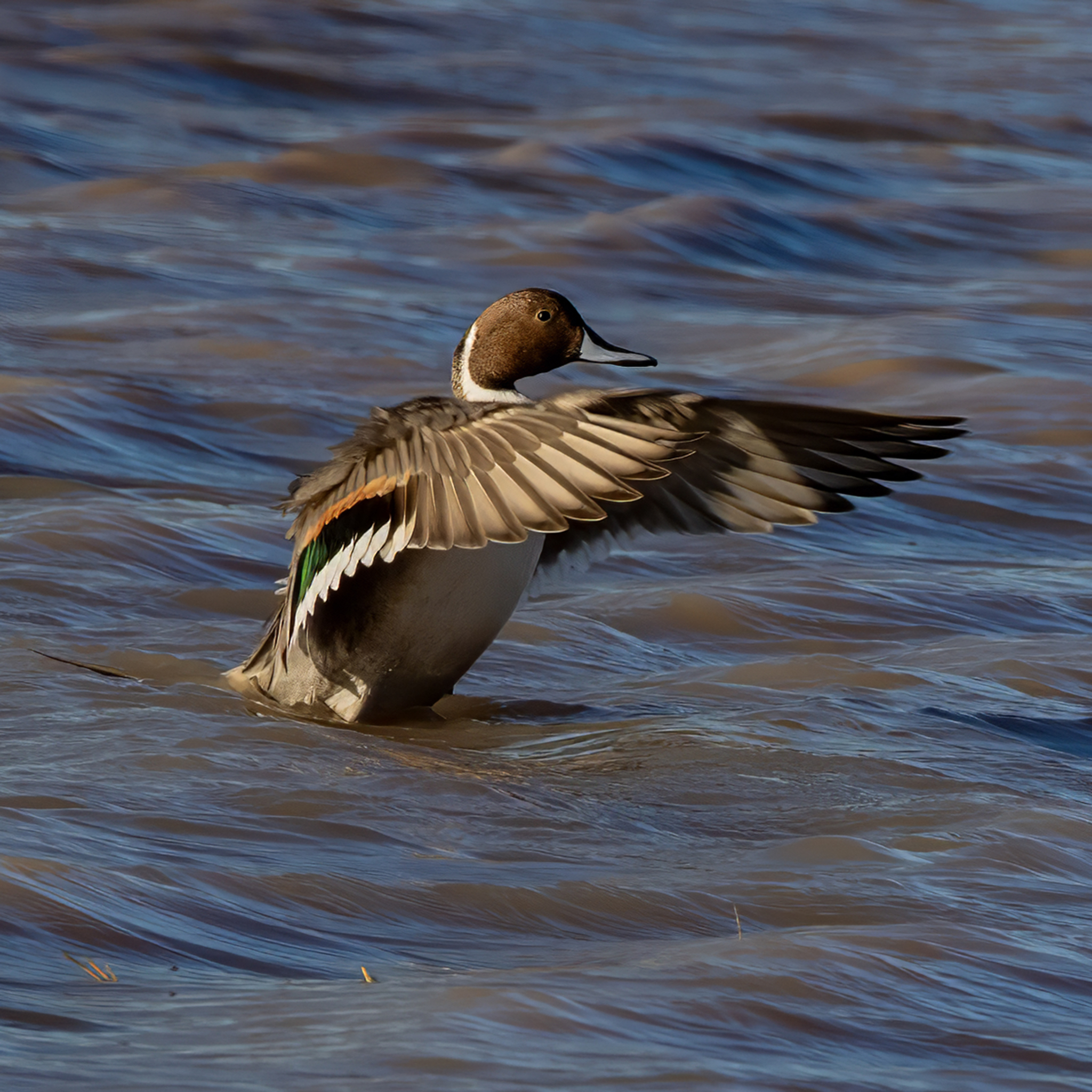
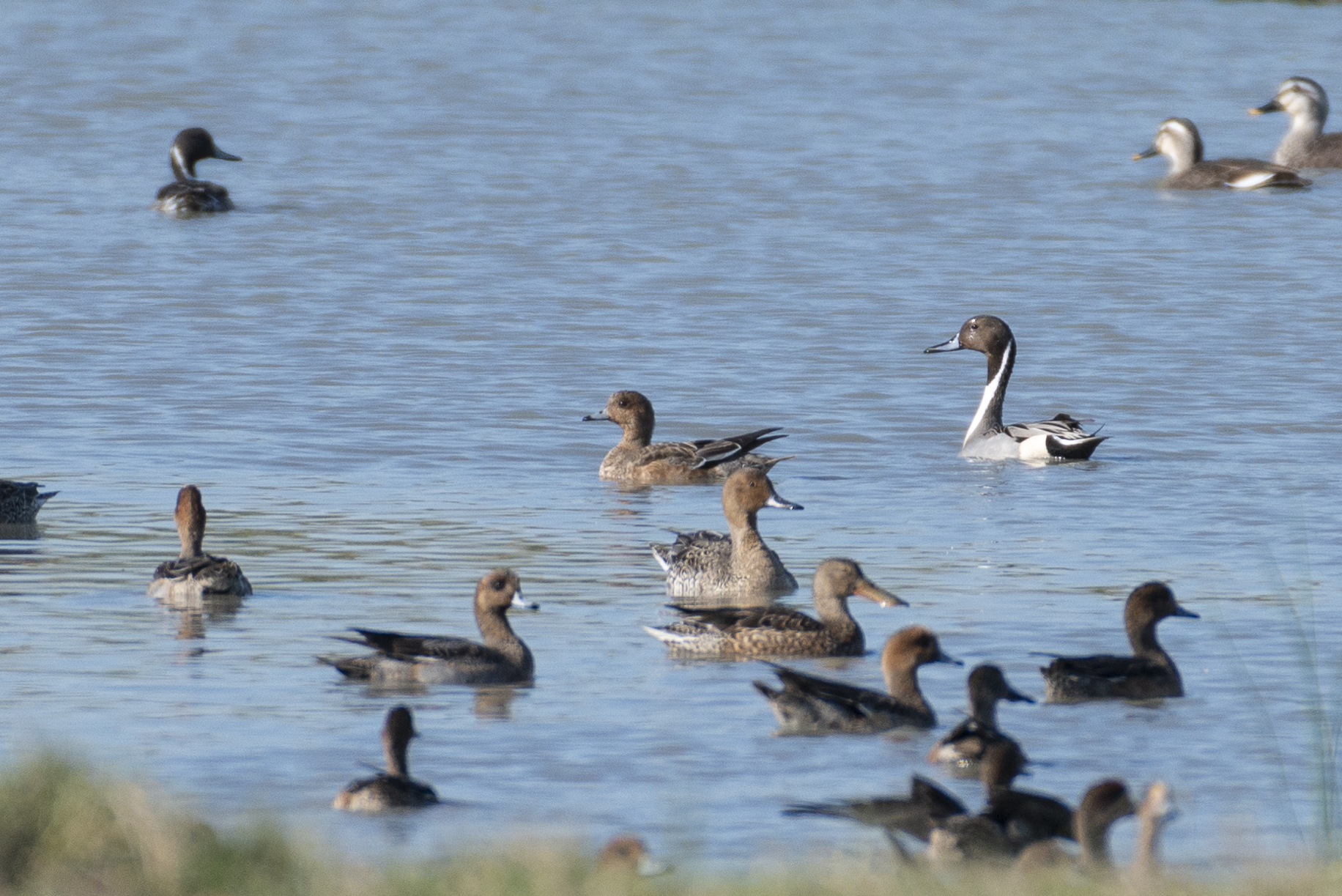
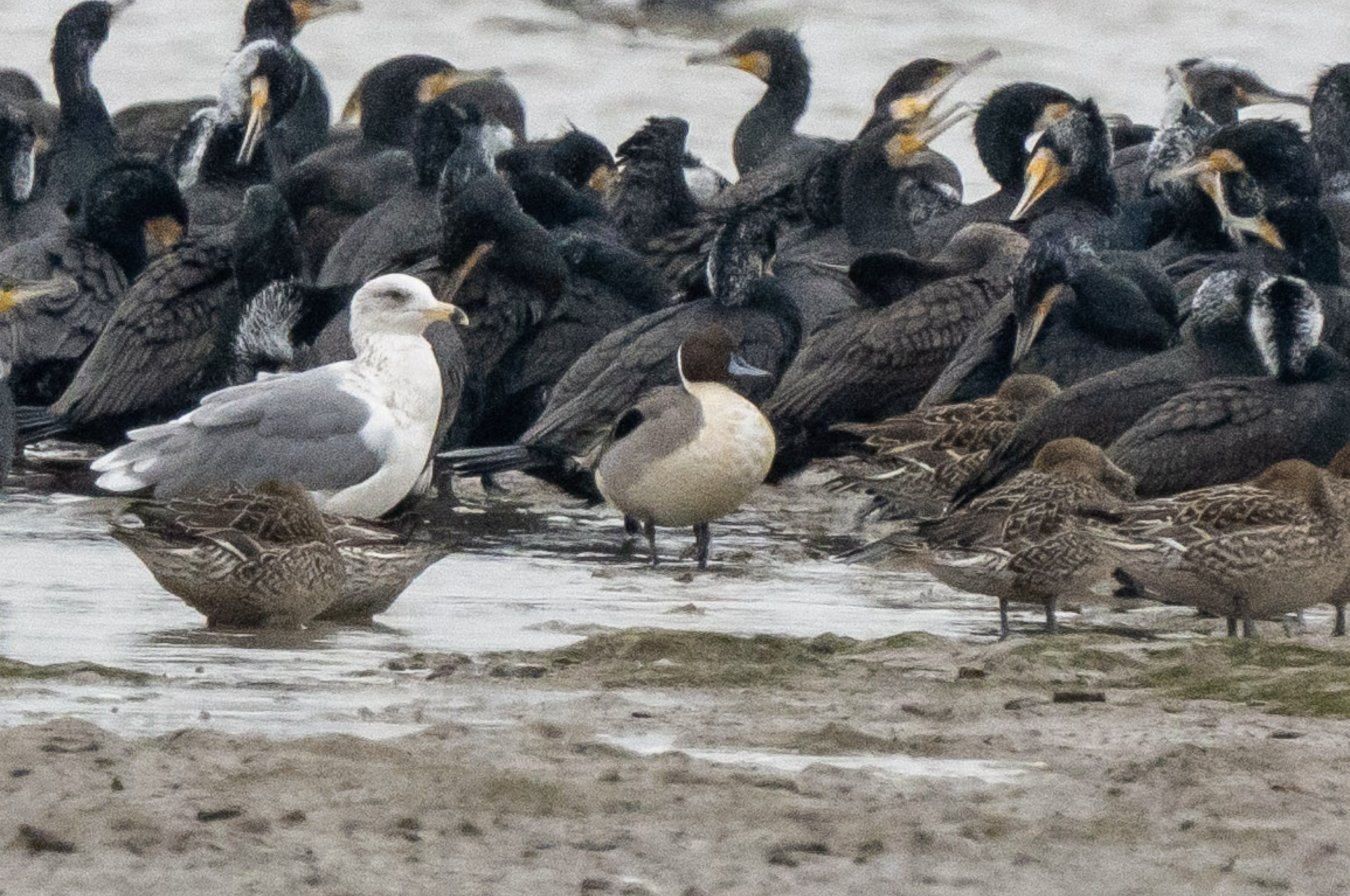
The pintail's long, pointed tail and slender profile distinguish it from other dabbling ducks. Males in breeding plumage are unmistakable with their chocolate-brown head, white neck stripe, and elongated tail feathers. Females can be identified by their long, grey bill, long neck, and scalloped brown plumage—while similar to female mallards, pintails are more slender with a longer neck and tail. In flight, males show a black speculum bordered white at the rear with pale rufous at the front; females have a dark brown speculum with a prominent white rear border visible at considerable distance. The species flies with wings swept back rather than straight, and walks more upright on land than other ducks.
Distribution & Habitat
This species breeds across the northern Palearctic from Poland and Mongolia westward through northern Europe, and across Canada, Alaska, and the Midwestern United States. It winters south of its breeding range, reaching tropical regions including Panama, northern sub-Saharan Africa, and South Asia, with small numbers reaching Pacific islands including Hawaii. Some populations are resident year-round in Great Britain and the northwestern United States. Migration involves impressive transoceanic journeys—birds ringed in Labrador have been shot in England within nine days. Breeding habitat consists of open unwooded wetlands including wet grasslands, lake shores, and tundra. Wintering birds use sheltered estuaries, brackish marshes, and coastal lagoons.
Behavior & Ecology
This species feeds by dabbling and upending in shallow water, primarily in evening and night hours. Its exceptionally long neck allows it to reach food items from the bottom in water up to 30 cm deep—beyond the reach of other dabbling ducks. Winter diet consists mainly of plant material including seeds and aquatic plant rhizomes, with occasional foraging in agricultural fields. During breeding, diet shifts to invertebrates such as aquatic insects, molluscs, and crustaceans. Both sexes mature at one year. Pairs form during migration or on wintering grounds. Nests are ground scrapes hidden in vegetation, often some distance from water, lined with plant material and down. Females lay seven to nine cream eggs, incubating alone for 22-24 days. The species is highly gregarious outside breeding season, forming vast mixed flocks.
Conservation
With an estimated population of 4.8-4.9 million individuals across a massive 41,900,000 km² range, the IUCN lists this species as not globally threatened. However, European populations are endangered. Palearctic breeding populations have declined significantly, particularly in Russia. North American populations crashed from over 10 million in 1957 to 3.5 million in 1964 due to avian diseases, recovering only to 30% below the long-term average by 1999. Major threats include hunting, agricultural practices that destroy nests, lead poisoning from ingested shot, wetland conversion, drought, and climate change. A 1997 avian botulism outbreak killed an estimated 1.5 million birds, mostly this species. The species is protected under AEWA, and lead shot is now prohibited for waterfowl hunting in many countries.
Culture
The scientific name derives from Latin: Anas meaning 'duck' and acuta from 'to sharpen,' referring to the male's pointed tail feathers. British ornithologist Sir Peter Scott honored the genus name by giving it to his daughter, the artist Dafila Scott. The extinct Tristram's pintail subspecies from Manra Island in the Phoenix Islands is known from three syntype specimens held at the World Museum in Liverpool. While not prominent in folklore or mythology, this elegant duck has inspired naturalists and artists alike with its graceful form and distinctive silhouette.
Source: Wikipedia · CC BY-SA 3.0
Taxonomy
- Order
- Anseriformes
- Family
- Anatidae
- Genus
- Anas
- eBird Code
- norpin
Distribution
breeds Palearctic from Iceland and northern Scandinavia eastwards to northeastern Russia, and southwards to central Europe to southeastern Russia, and North America from northern Alaska and arctic Canada southwards to north-central USA; winters to central Africa, southern Asia, southern Central America, and the Caribbean
Data Sources
Species description from Wikipedia, licensed under CC BY-SA 3.0.
Bird images and sounds sourced from GBIF, contributed by citizen scientists worldwide under Creative Commons licenses.
Taxonomy data from AviList 2025.