
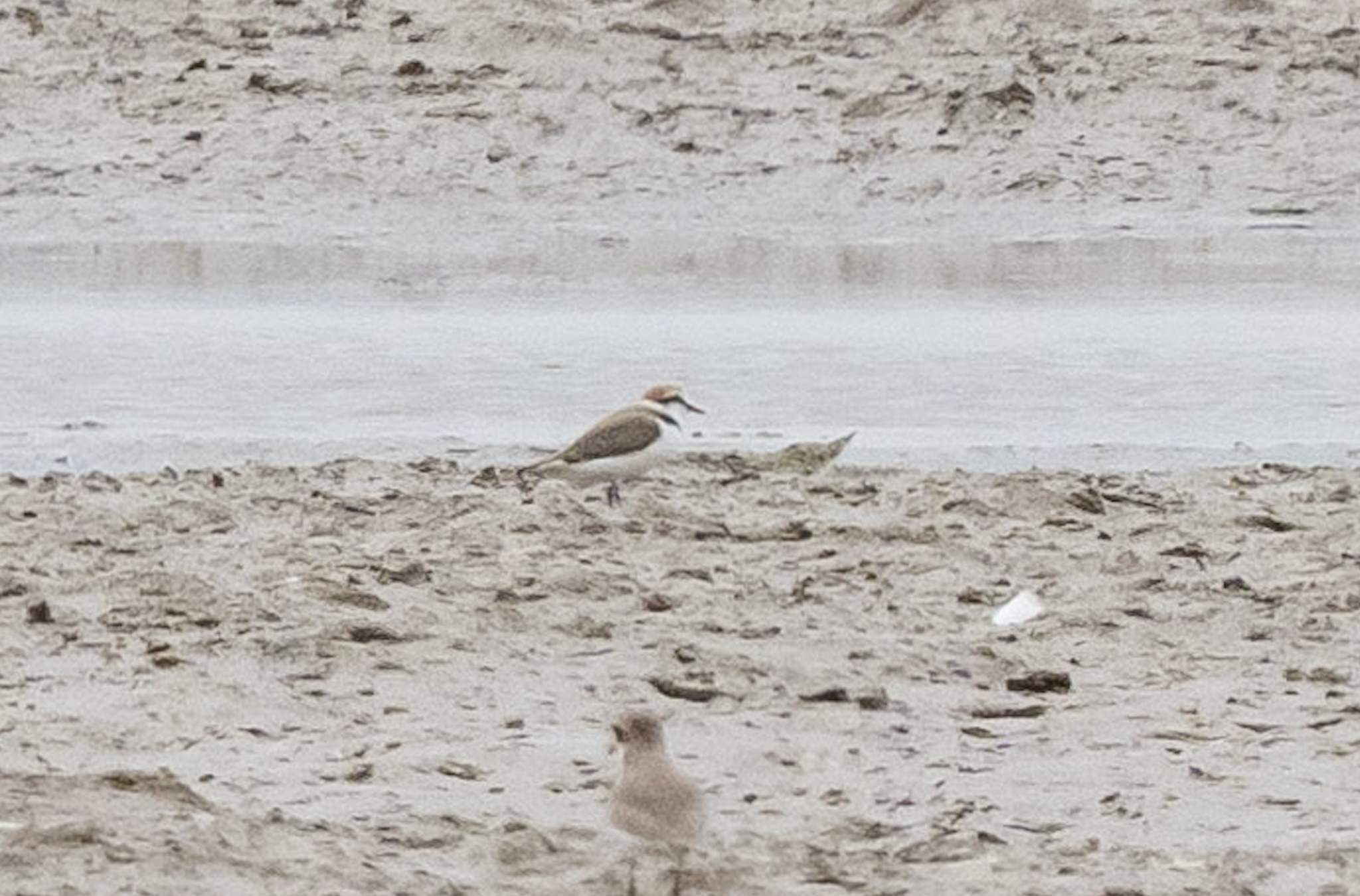
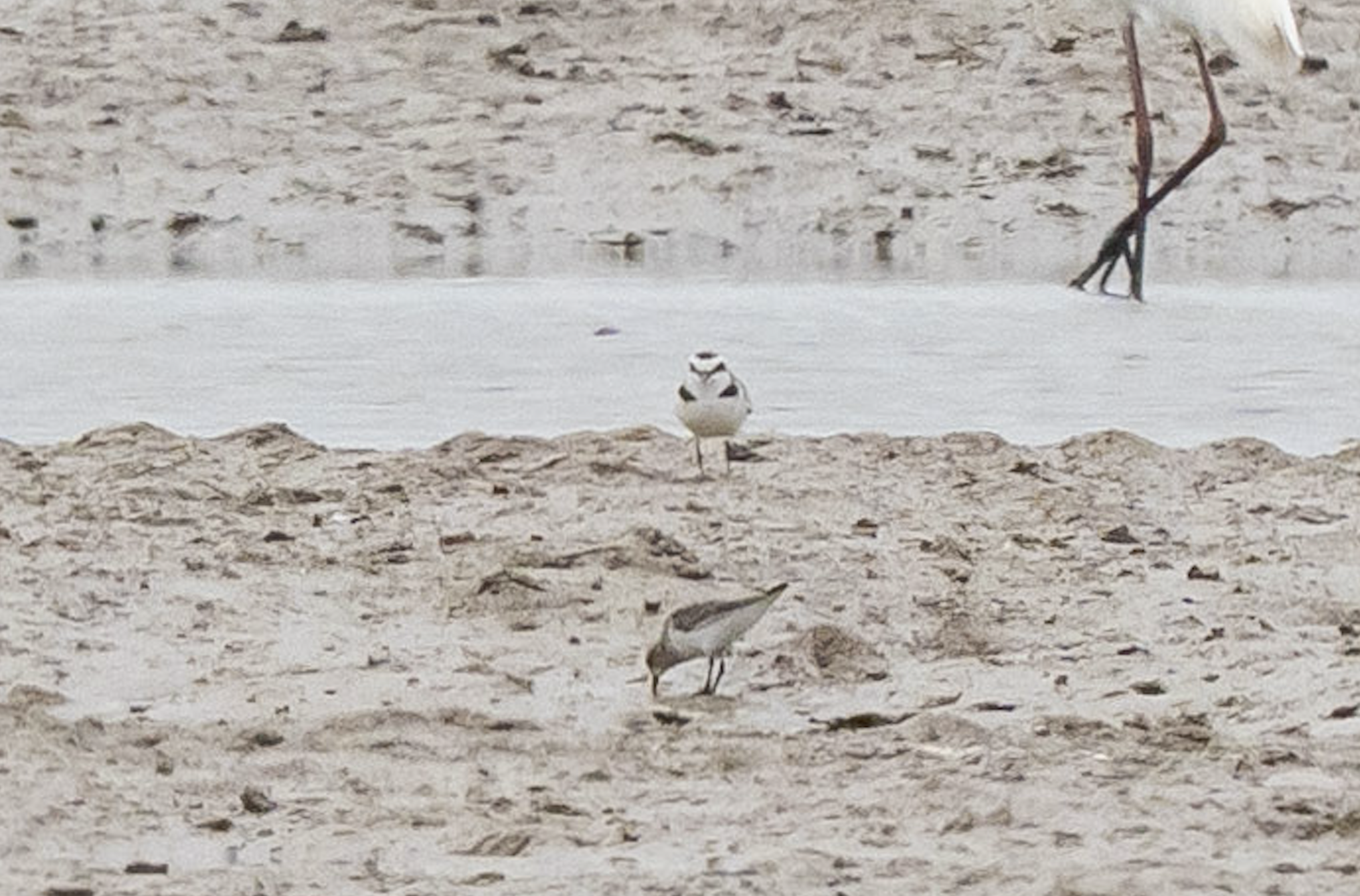
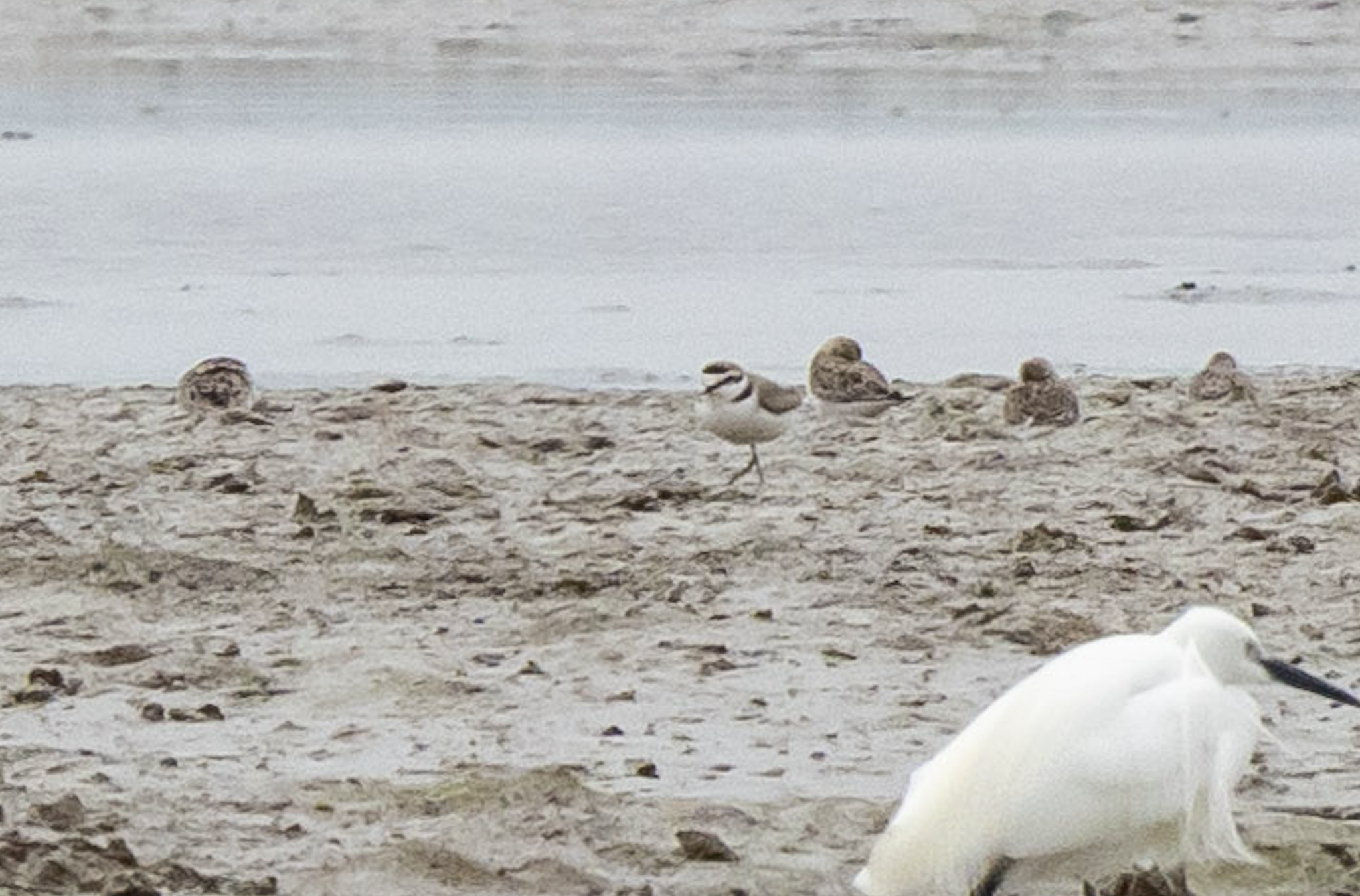
Kentish Plover
Anarhynchus alexandrinus
环颈鸻
Introduction
Small shorebird, 40-44 grams. Geographic range extends throughout the Old World. Forages using a run-and-stop behavior pattern. Sexually dimorphic during breeding season. Breeding habitat includes semi-arid deserts and cold tundra environments. Favors open, low-elevation areas near water with minimal vegetation cover. Nests in loose colonies or solitarily. Mating systems vary by population: some populations are strictly monogamous while others are polygamous. Conservation status: least concern globally. European populations are declining. Human disturbance affects breeding sites.
Description
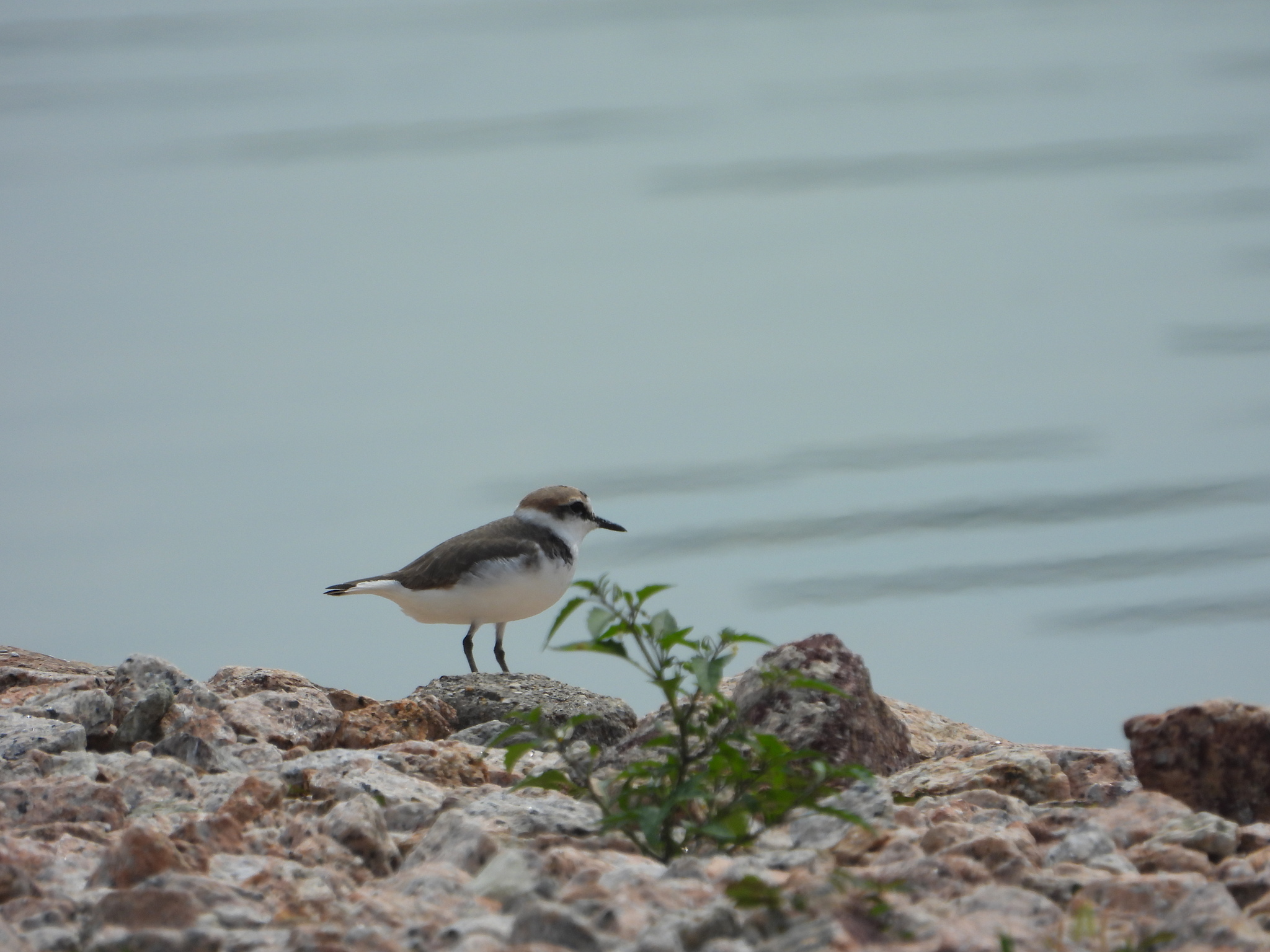
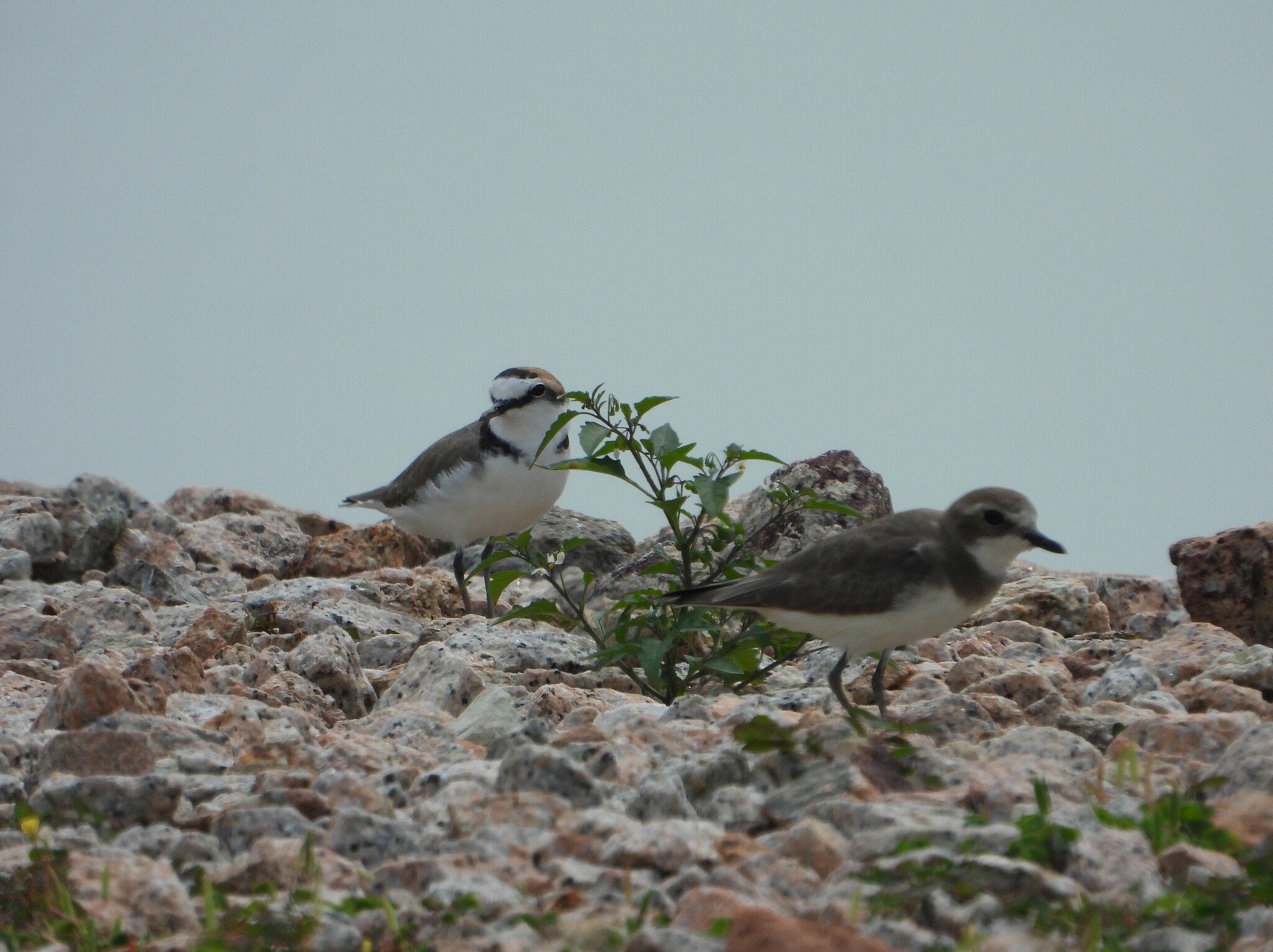
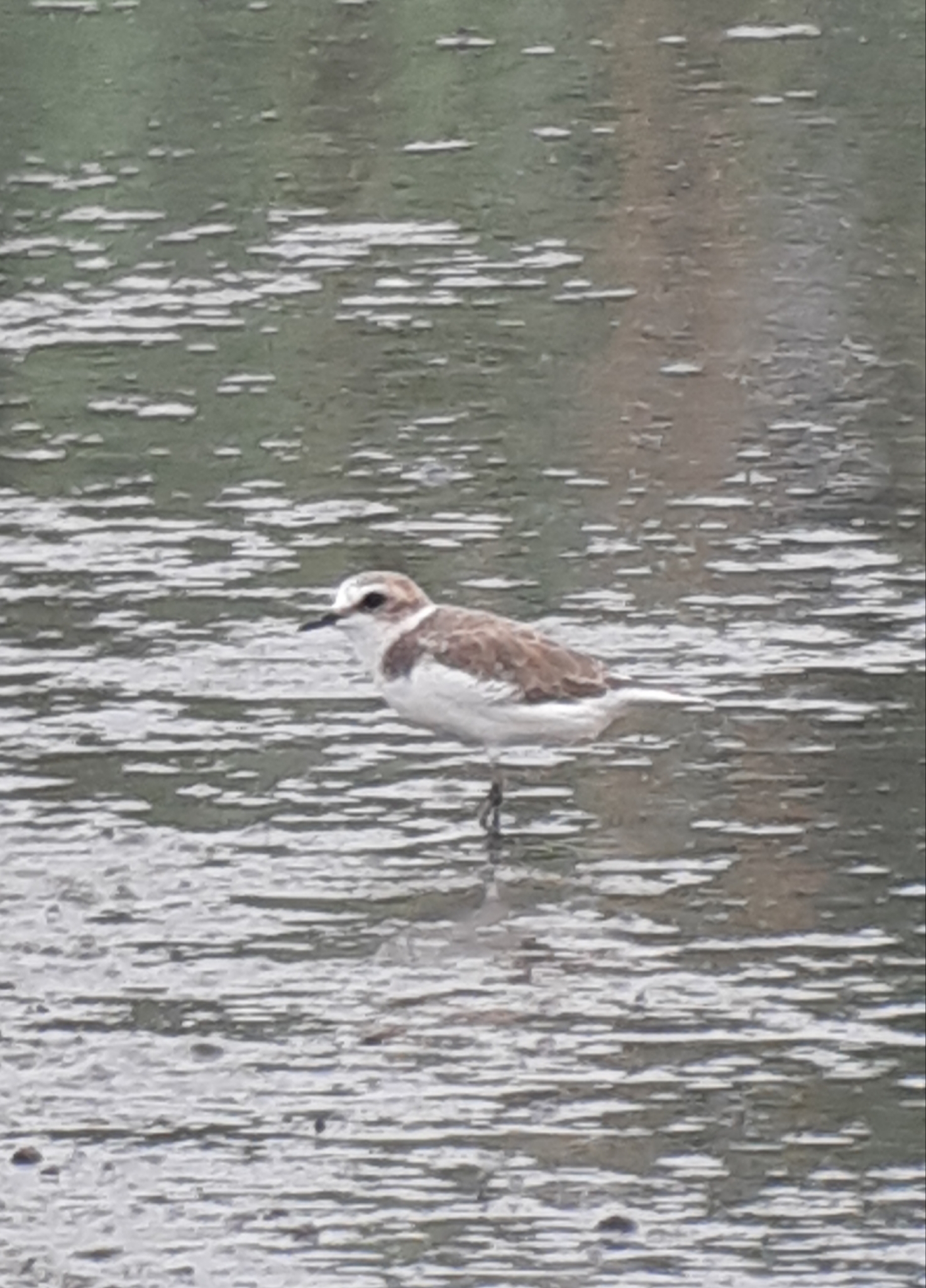
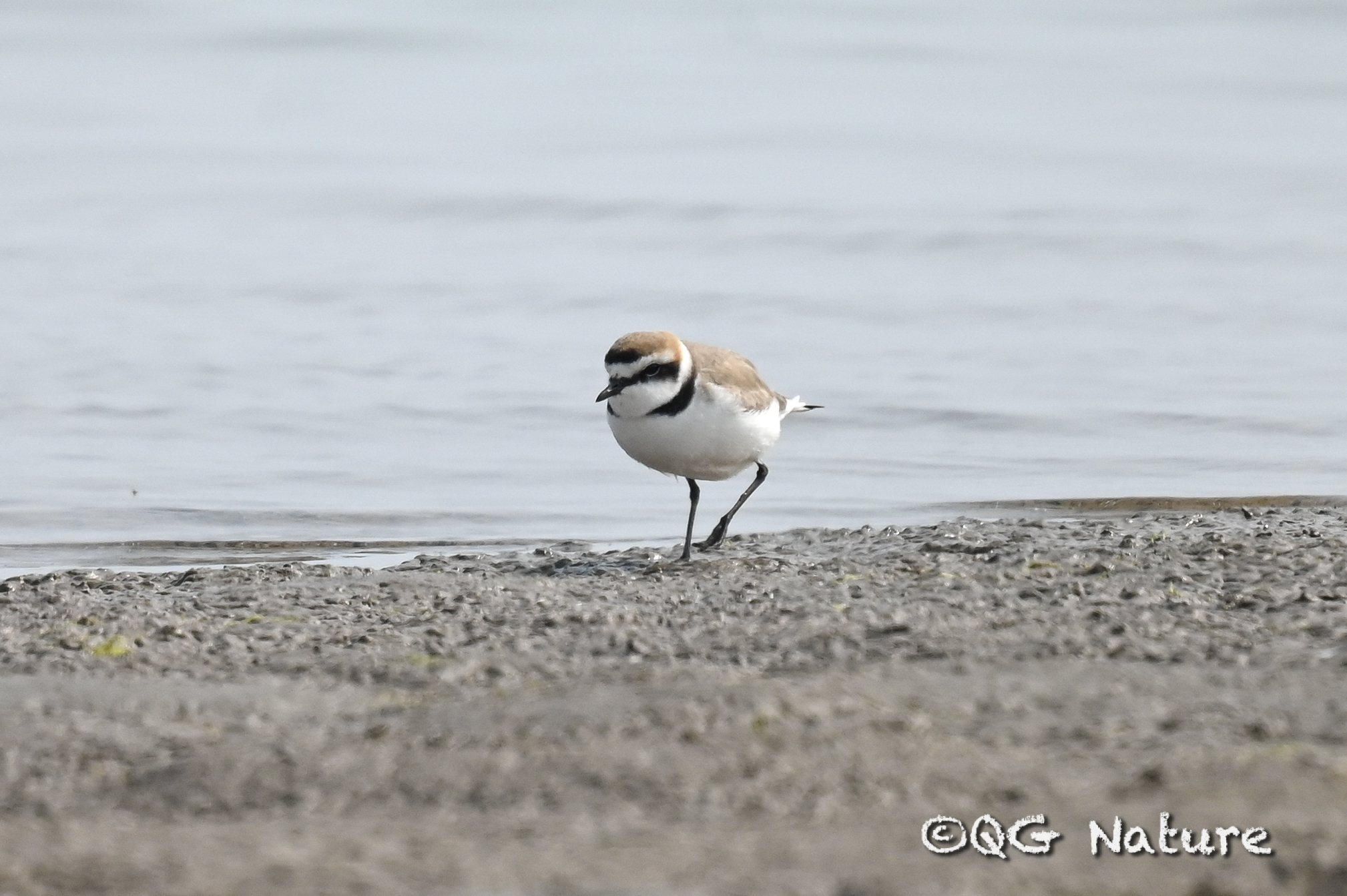
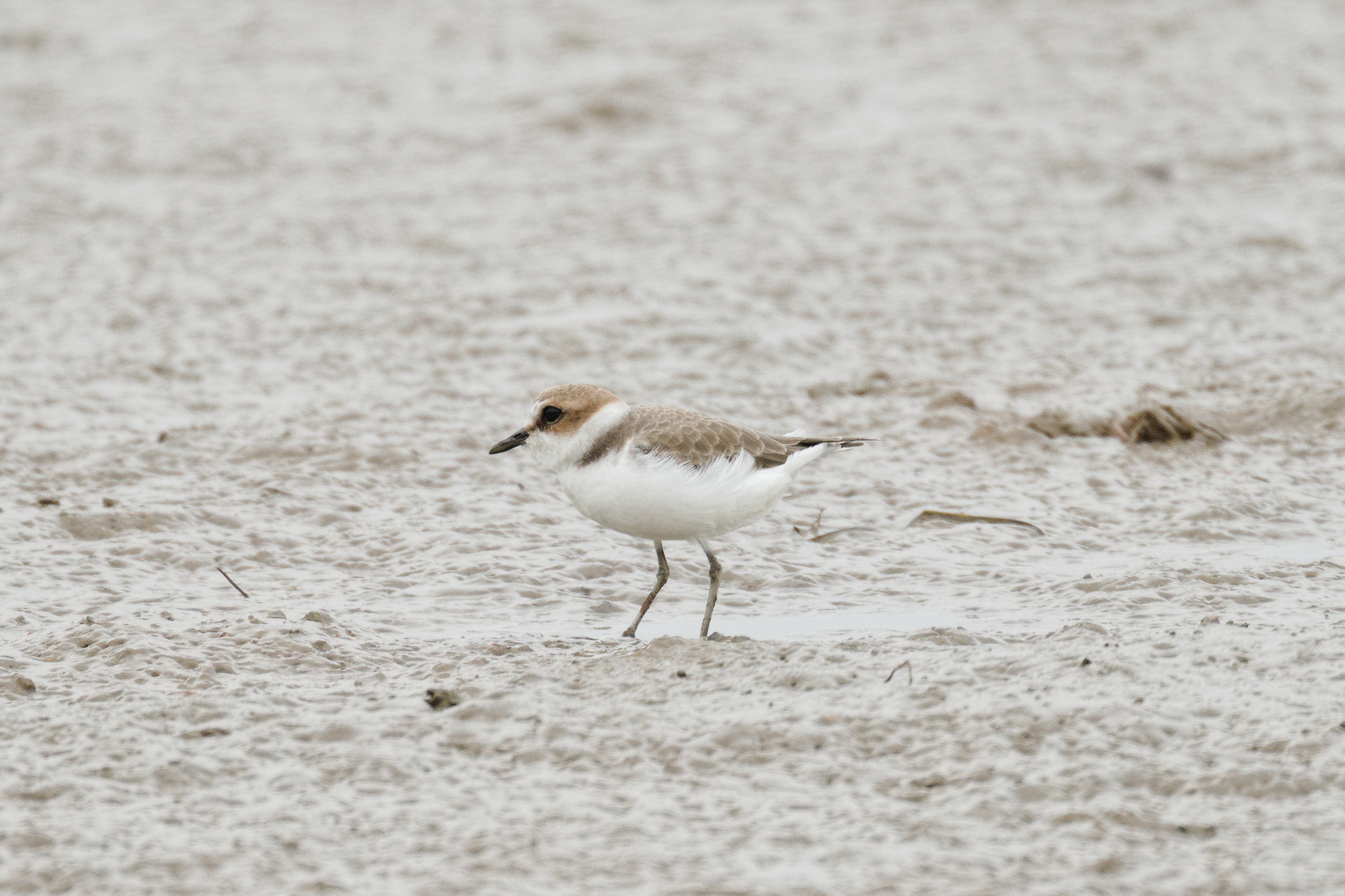
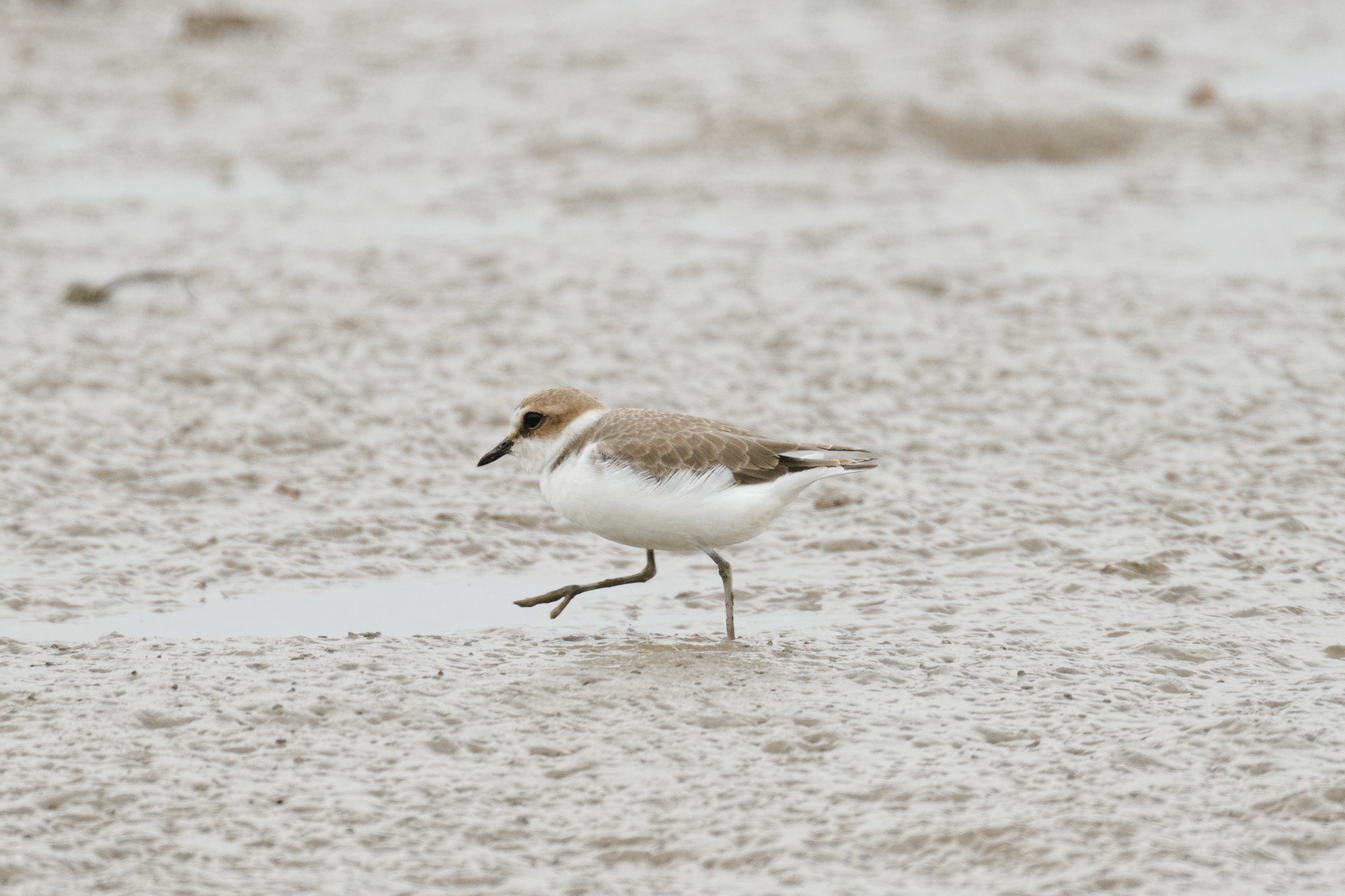
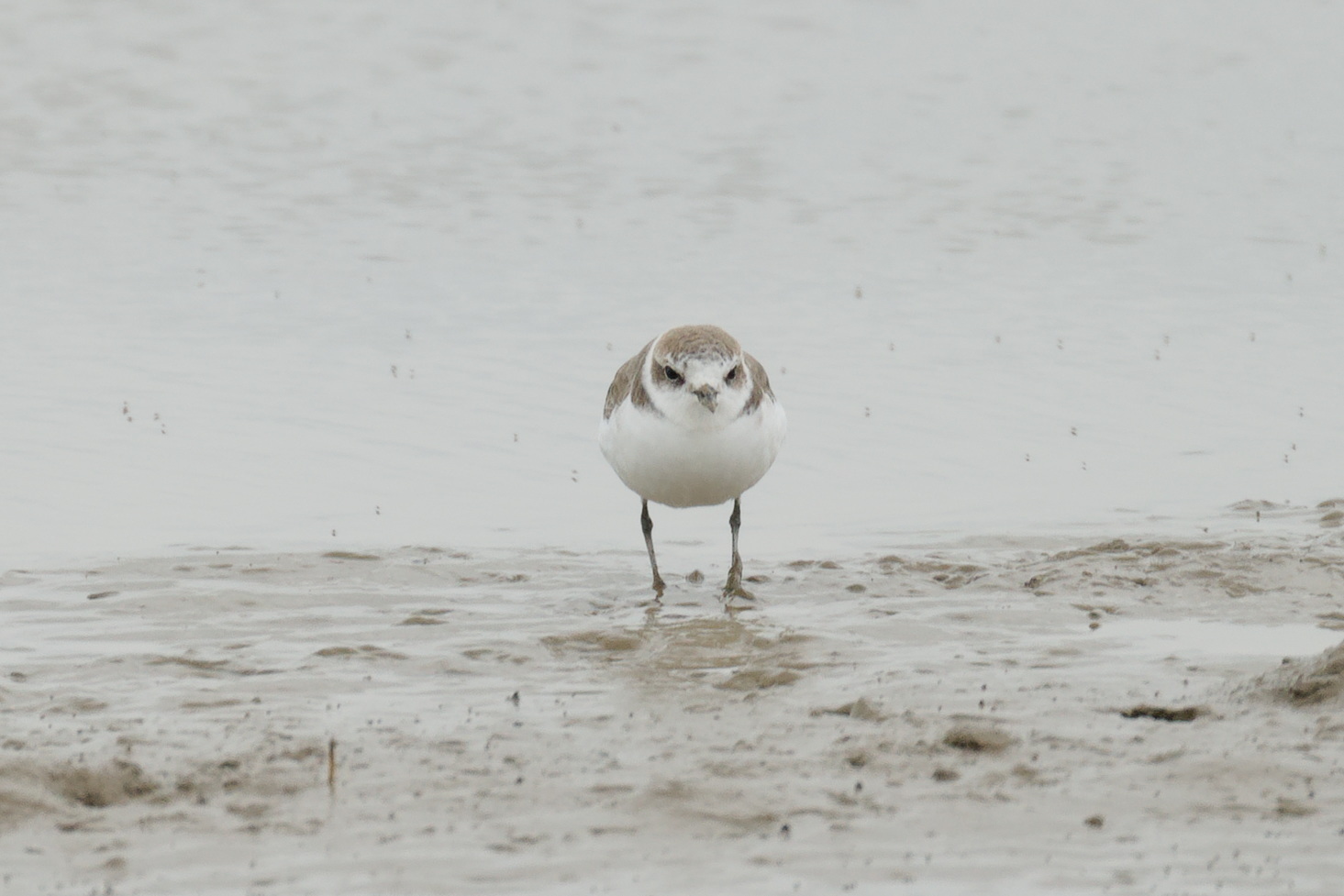
This is a compact shorebird weighing approximately 40 grams as an adult. Both sexes share black bills and dark legs, but the plumage shows clear sexual dimorphism during the breeding season. Males possess a distinctive black horizontal head bar, black ear coverts, two incomplete dark breast bands on each side of the breast, and a rufous nape and crown. Females appear paler and lack these dark markings entirely. Males also have longer tarsi and longer flank feathers than females, the latter providing thermal insulation benefits during incubation. The upperparts are grey-brown while the underside is white. As the breeding season progresses, the differences between male and female plumage become less pronounced, making sexing more challenging later in the season.
Identification
The most reliable identification feature is the male's unique combination of dark head bar, black ear coverts, and incomplete lateral breast bands during breeding season. Compared to similar plover species, it is smaller than the common ringed plover and lacks that species' complete breast band. The dark bill and legs distinguish it from the generally larger and longer-legged stilts and avocets. In flight, the wing stripes are less prominent than those of the ringed plover. Females and non-breeding birds can be more challenging but are generally paler and more uniformly colored above than other small plovers. The pale rump and dark tail side pattern are useful flight identification markers.
Distribution & Habitat
This species has an extensive range spanning latitudes from 10° to 55°, covering three continents. European populations are concentrated in western regions including Spain, while African populations occur along the southern coast of Senegal and the Mediterranean and Red Sea coasts. The range extends through the Arabian Peninsula including Saudi Arabia, Qatar and Bahrain, across Central Asia to China, and includes island populations in the Cape Verde archipelago, Canary Islands and Azores. Some populations, such as those in Cape Verde, are sedentary, while others migrate to wintering grounds in Africa. Birds breeding in western Europe may winter within Europe or travel to western Africa. The species occurs from desert environments to tundra, preferring alkali lake shores, wetlands, salt marshes and coastal areas.
Behavior & Ecology
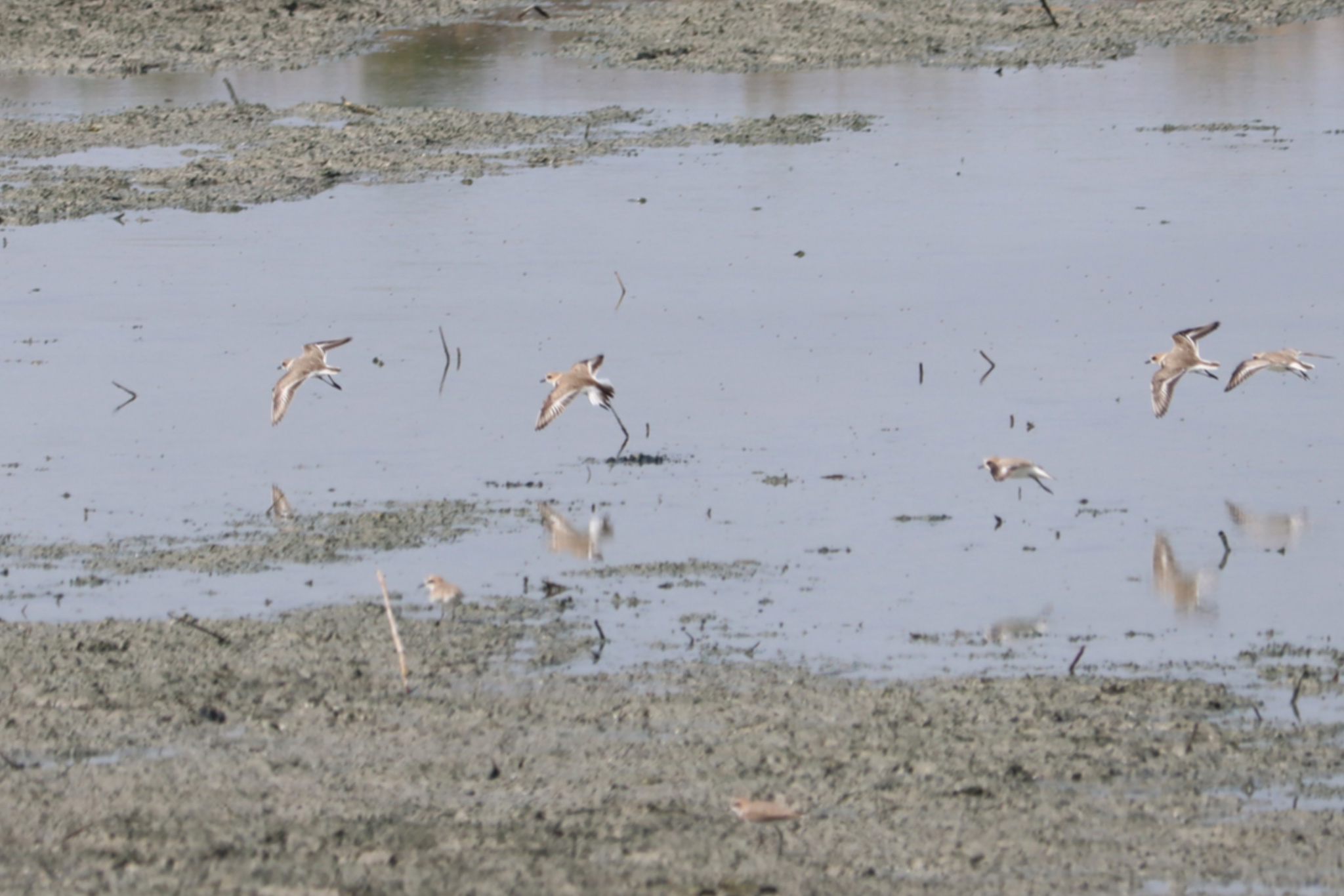
These birds employ a characteristic run-and-stop foraging technique, scanning the ground before pecking to catch prey. They feed on various invertebrates including insects, beetles, grasshoppers, flies, molluscs, crustaceans, spiders and marine worms, either individually or in loose flocks of 20-30 birds outside breeding season. The breeding system is remarkably flexible, encompassing both monogamous and polygamous pairings, with extra-pair fertilizations documented in some populations. Courtship displays include nest scraping, flat running and territory defense. Both parents share incubation duties over 20-25 days, with females primarily incubating during daytime and males at night. Brood desertion by either parent after hatching is common. The alarm call is a distinctive 'kittup', sometimes paired with a 'too-eet' tweet, while threats elicit a twanging metallic 'dwee-dwee-dweedweedwee' sound.
Conservation
The species is classified as least concern on the IUCN Red List due to its very large population range, though the global population is continuously declining. The European population is estimated at 43,000-70,000 individuals, representing roughly 15% of a global population estimated between 100,000-500,000 birds. Major threats include habitat loss from human disturbance, pollution, unsustainable harvesting and urbanization. Tourist activity, fishermen and their dogs in protected areas cause significant disruption, with breeding birds responding more aggressively when dogs are present. Natural predators such as brown-necked ravens, white-tailed mongooses and monitor lizards are attracted to breeding areas. Climate change and rising sea levels threaten low-lying nesting sites, particularly significant given that studies have found 11% of nests in some areas lie below sea level. The species is listed on Annex I of the EU Birds Directive and Annex II of the Bern Convention.
Culture
The common English name derives from the county of Kent in southeastern England, where the species historically bred. The name was formally established in 1801 by ornithologist John Latham, who used specimens collected near the town of Sandwich, Kent. The species no longer breeds in Britain, with the last confirmed breeding record dating to 1979. While the name commemorates this historical British presence, the species is now virtually unknown as a breeding bird in the United Kingdom, making it primarily of historical significance to British birdwatchers rather than a current species to observe in its former range.
Source: Wikipedia · CC BY-SA 3.0
Taxonomy
- Order
- Charadriiformes
- Family
- Charadriidae
- Genus
- Anarhynchus
- eBird Code
- kenplo1
Subspecies (3)
-
Anarhynchus alexandrinus alexandrinus
breeds western Palearctic to eastern China, southern Japan including Ryukyu Islands; winters to Africa, southern Asia, Philippines, Indonesia, and Borneo
-
Anarhynchus alexandrinus nihonensis
breeds coasts of far southeastern Russia, Sakhalin, the Kuril Islands, northern Japan, and perhaps northeastern China; nonbreeding range unknown
-
Anarhynchus alexandrinus seebohmi
southeastern India and Sri Lanka
Data Sources
CBR Notes: 由Charadrius属移入Anarhynchus属(dos Remedios et al. 2015; Eaton et al. 2021)
Species description from Wikipedia, licensed under CC BY-SA 3.0.
Bird images and sounds sourced from GBIF, contributed by citizen scientists worldwide under Creative Commons licenses.
Taxonomy data from AviList 2025.