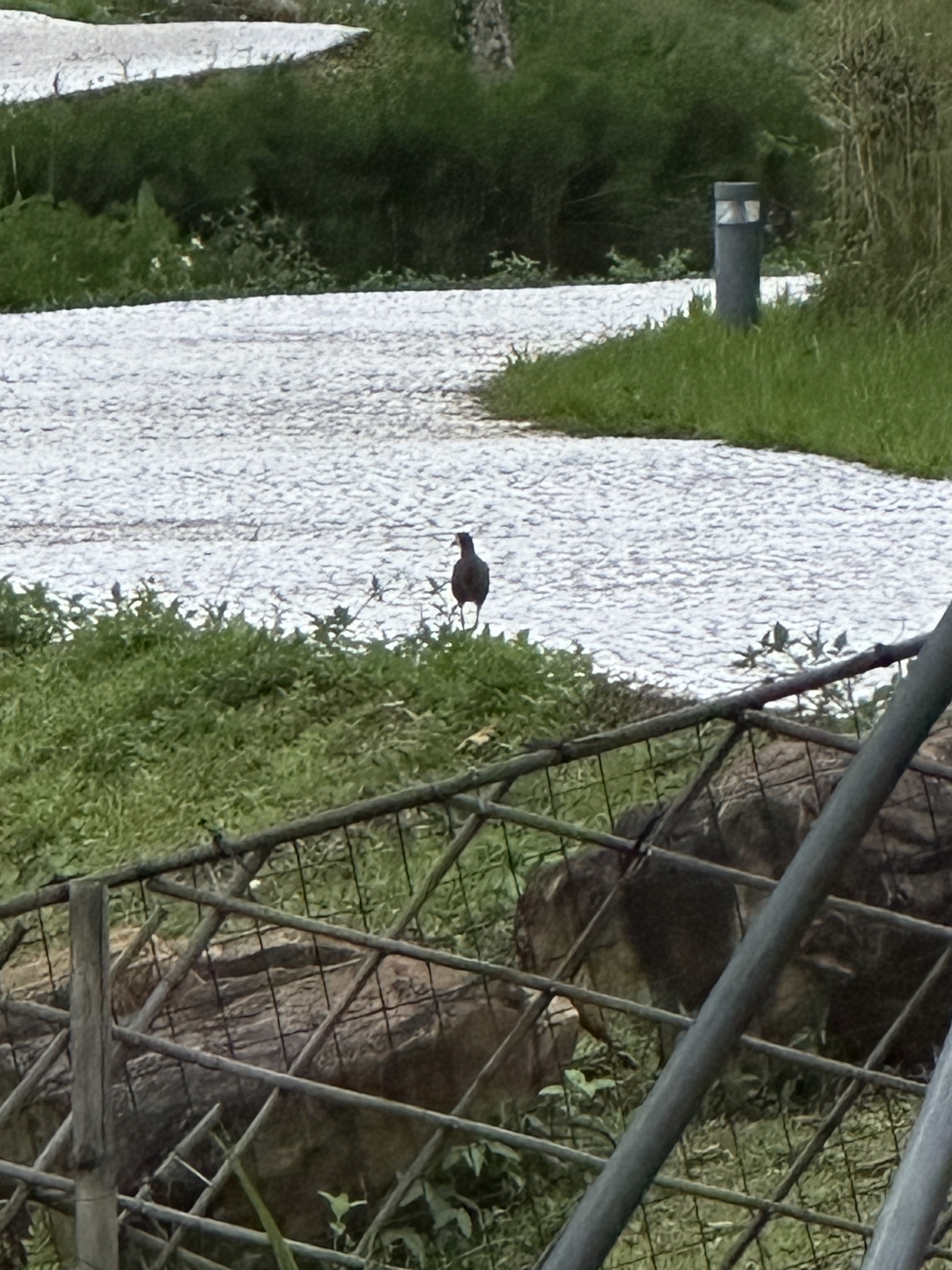
White-breasted Waterhen
Amaurornis phoenicurus
白胸苦恶鸟
Introduction
A rail (family Rallidae) found across tropical Asia from Pakistan to Indonesia. Inhabits marshes, wetlands, and urban areas including drains and ditches. Crepuscular, becoming most active at dawn and dusk. Moves slowly with tail held upright in a jerking motion. After the first rains of the breeding season, produces loud, repetitive croaking calls.
Description
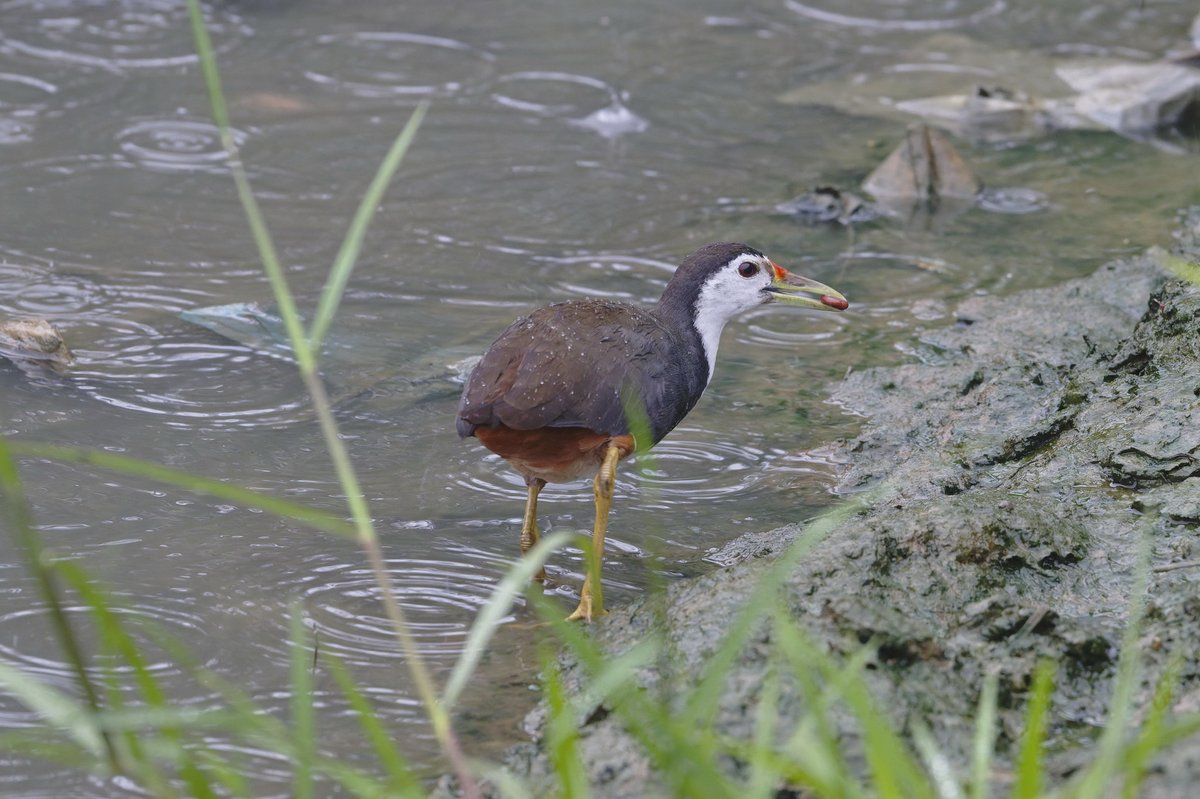
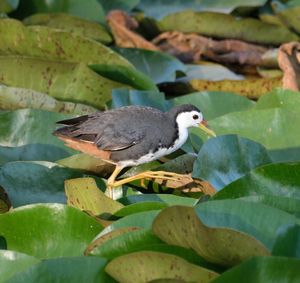
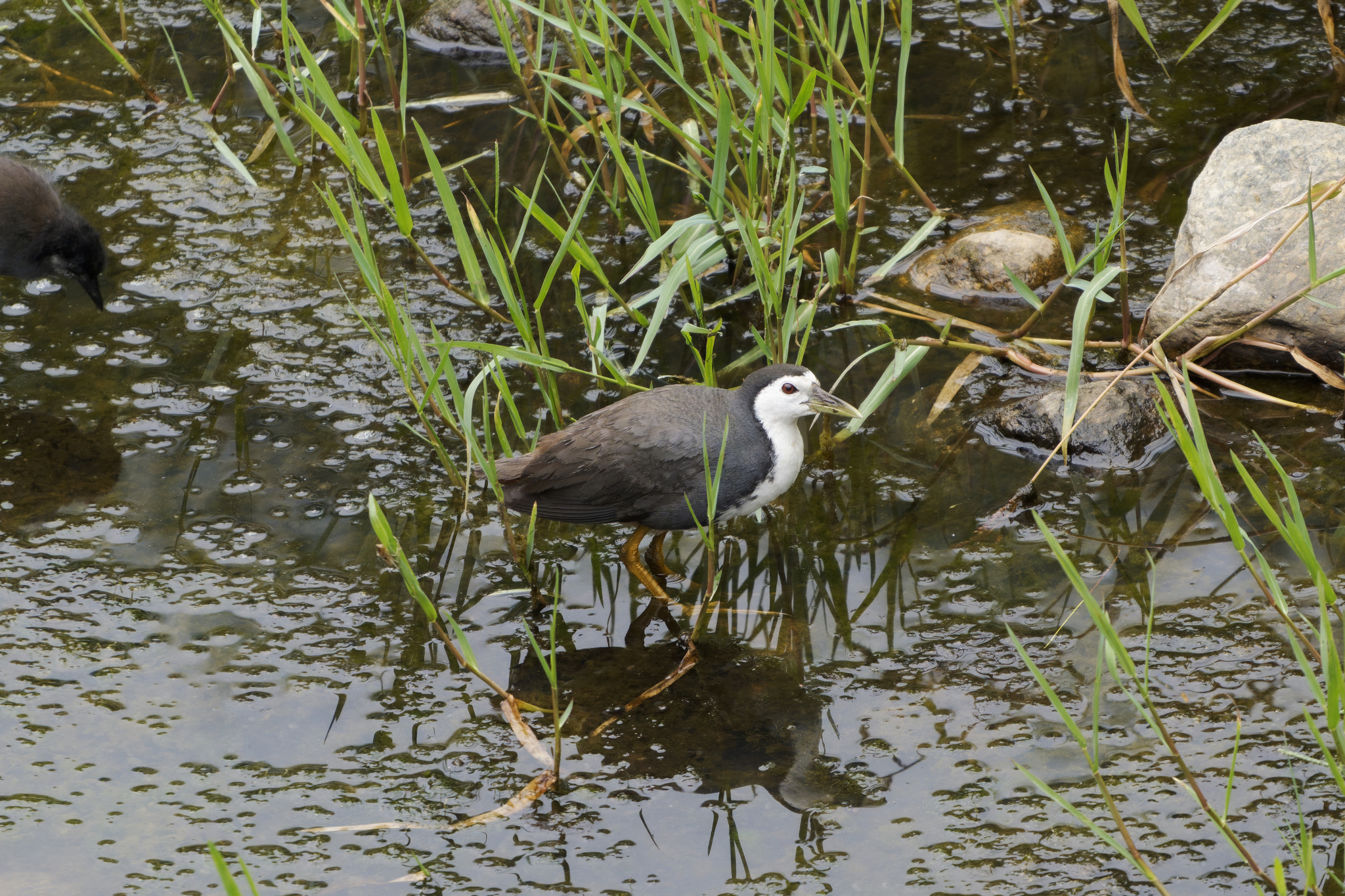
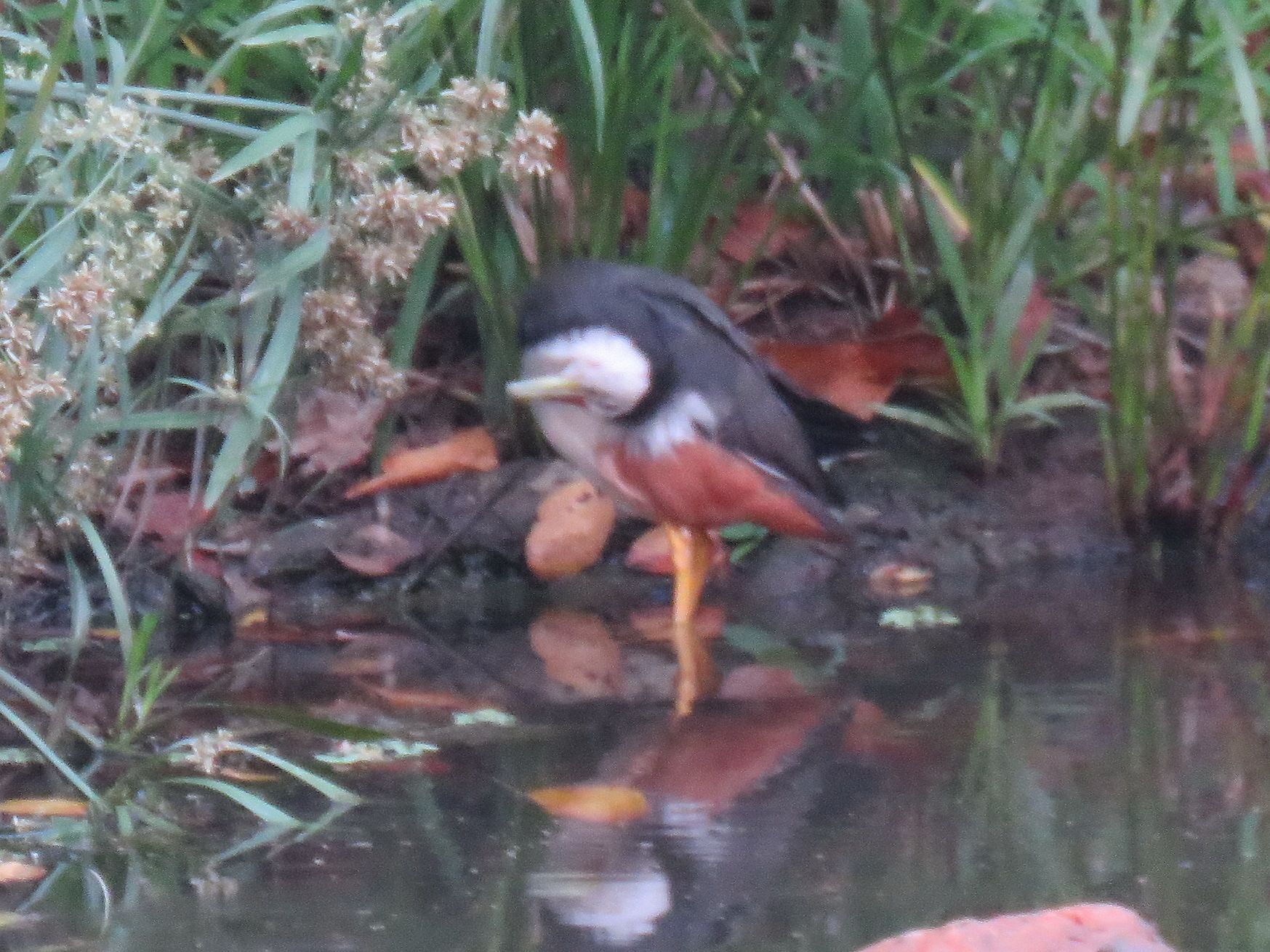
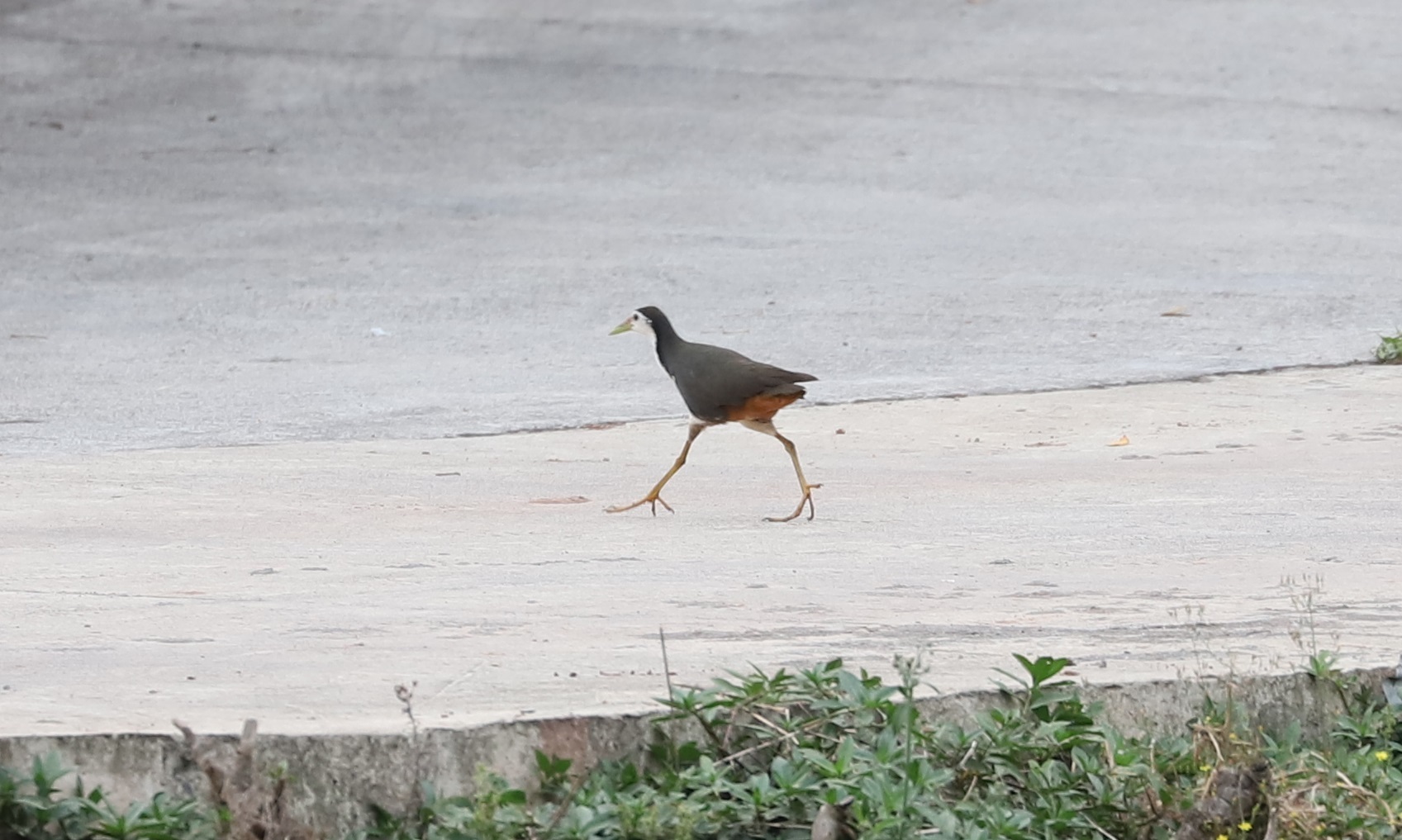
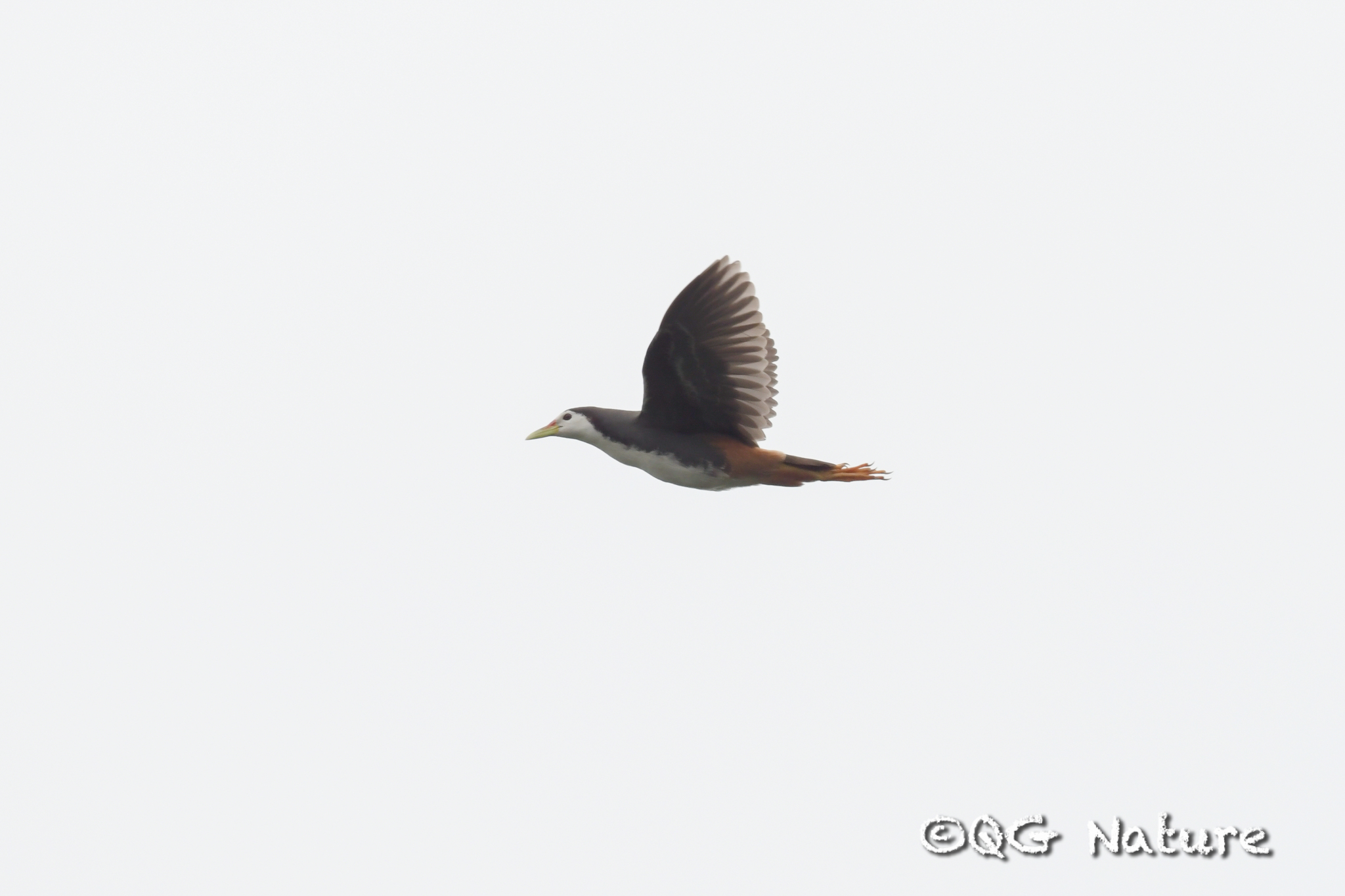
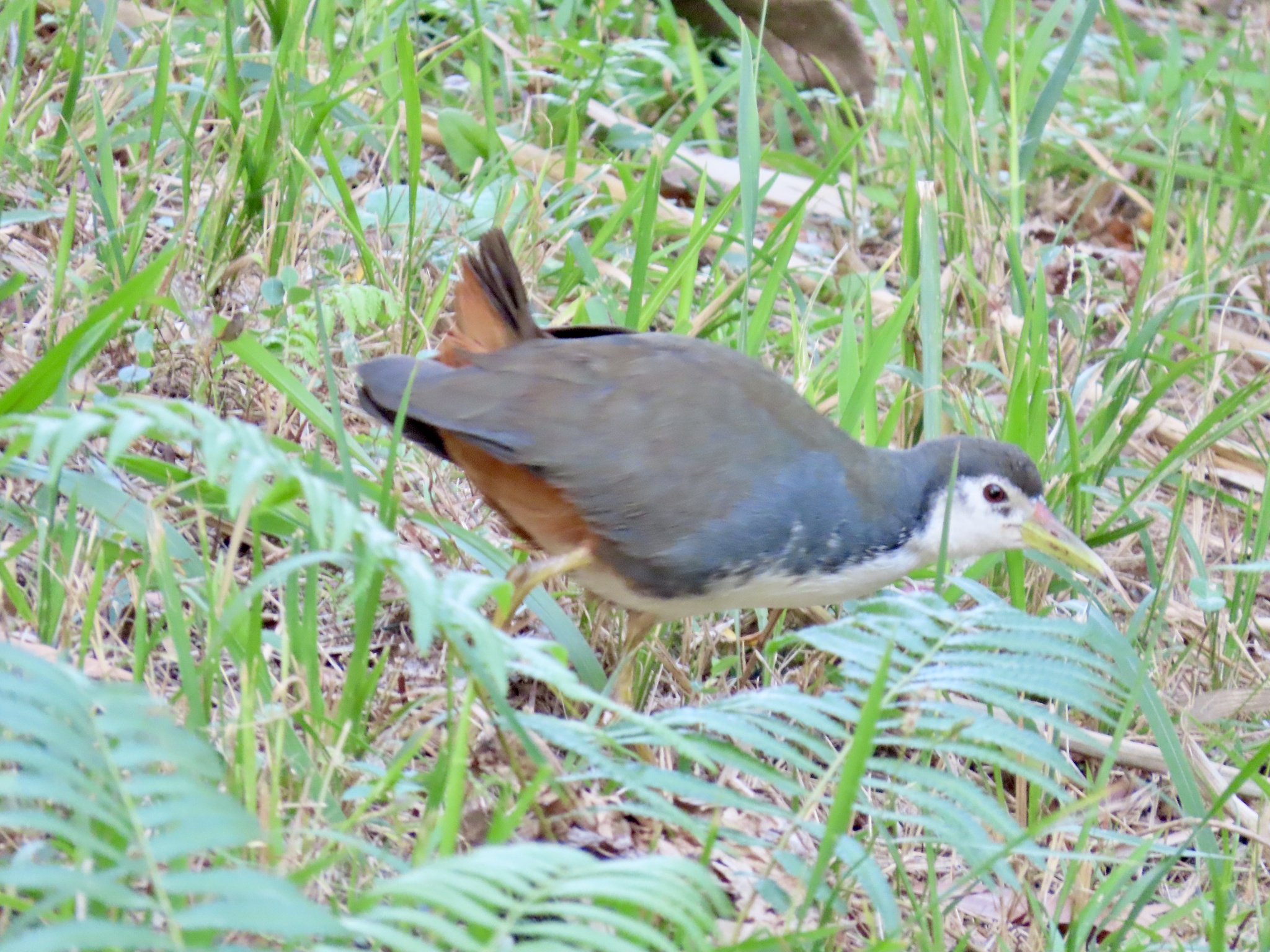
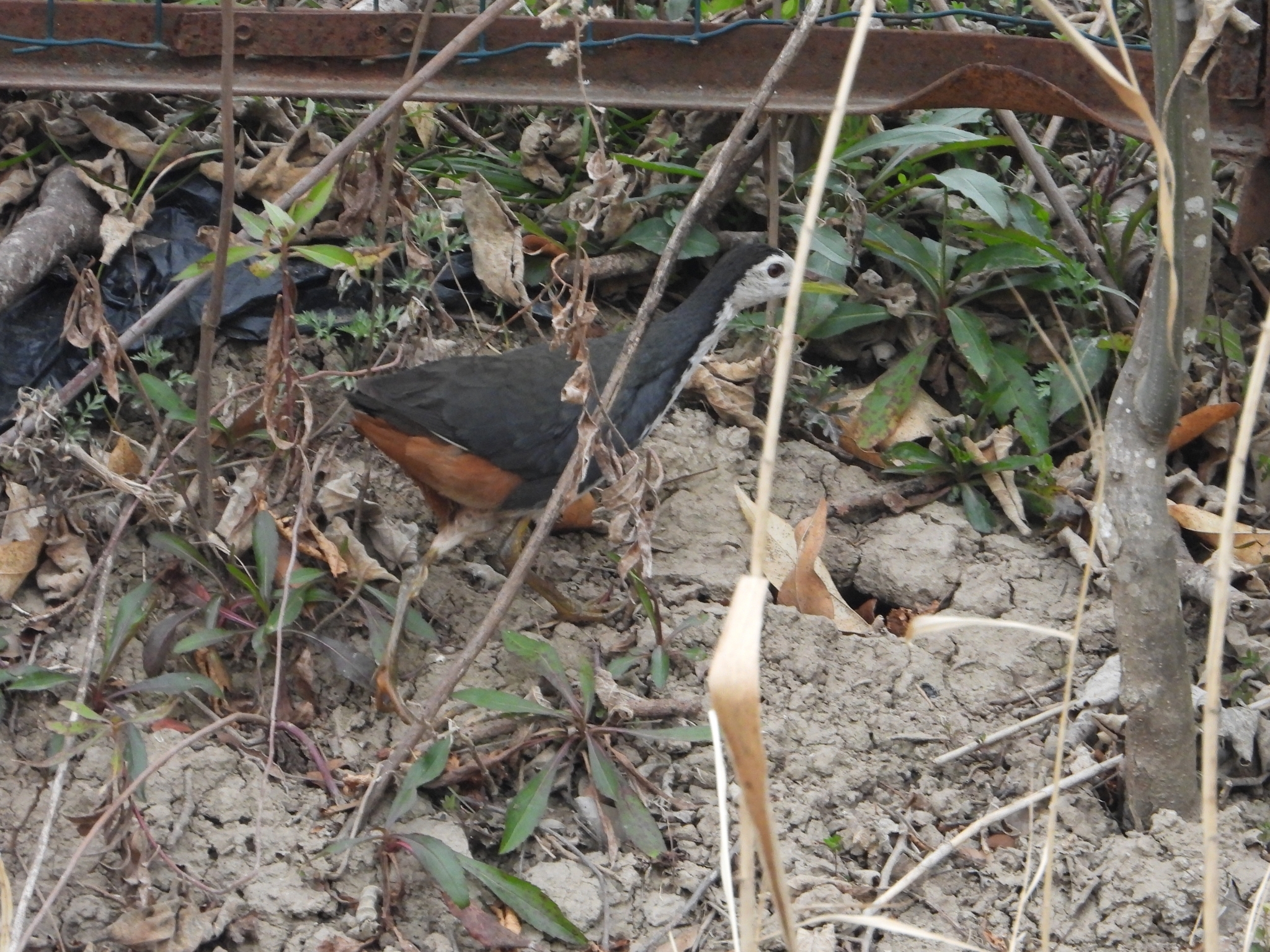
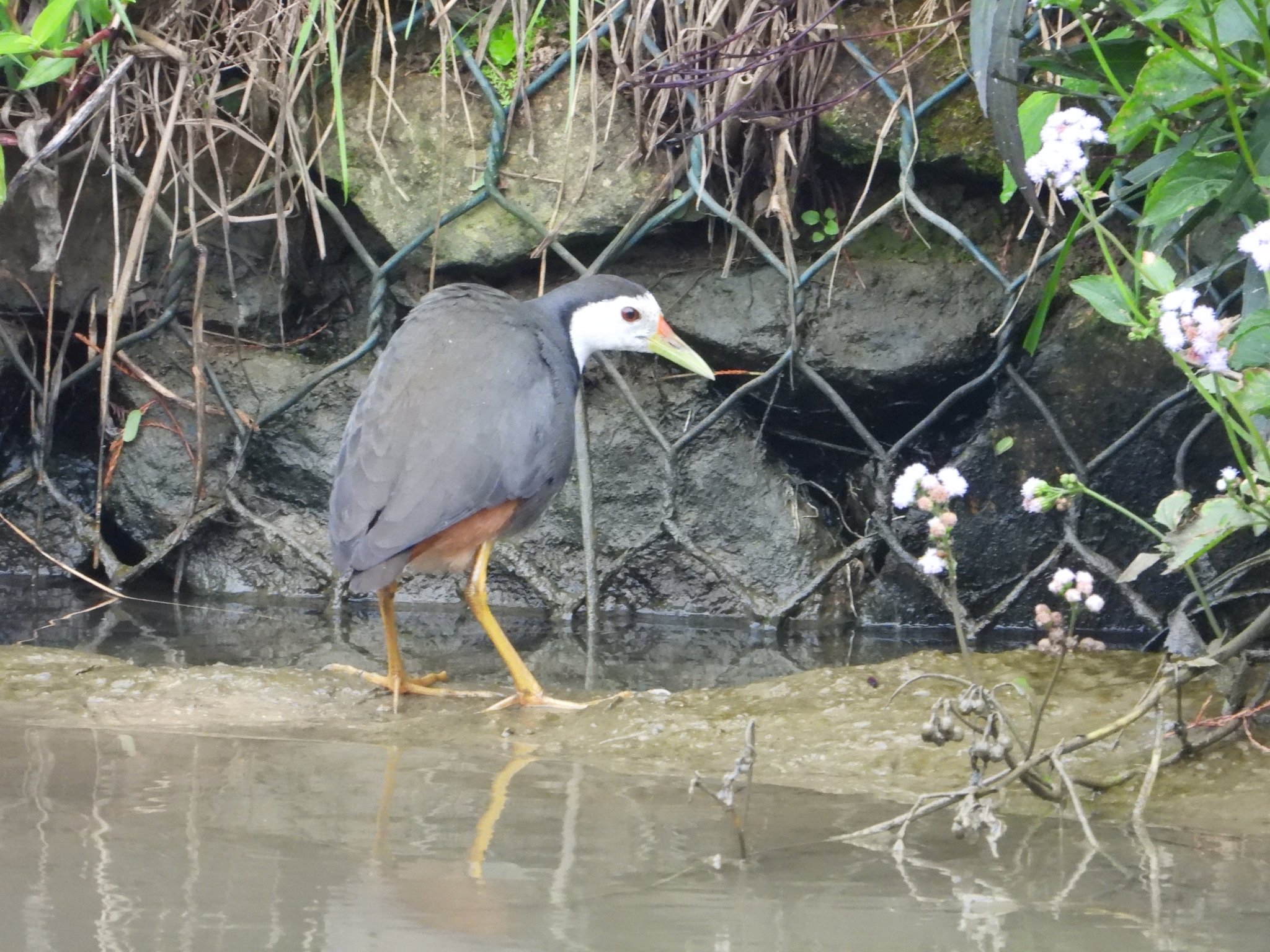
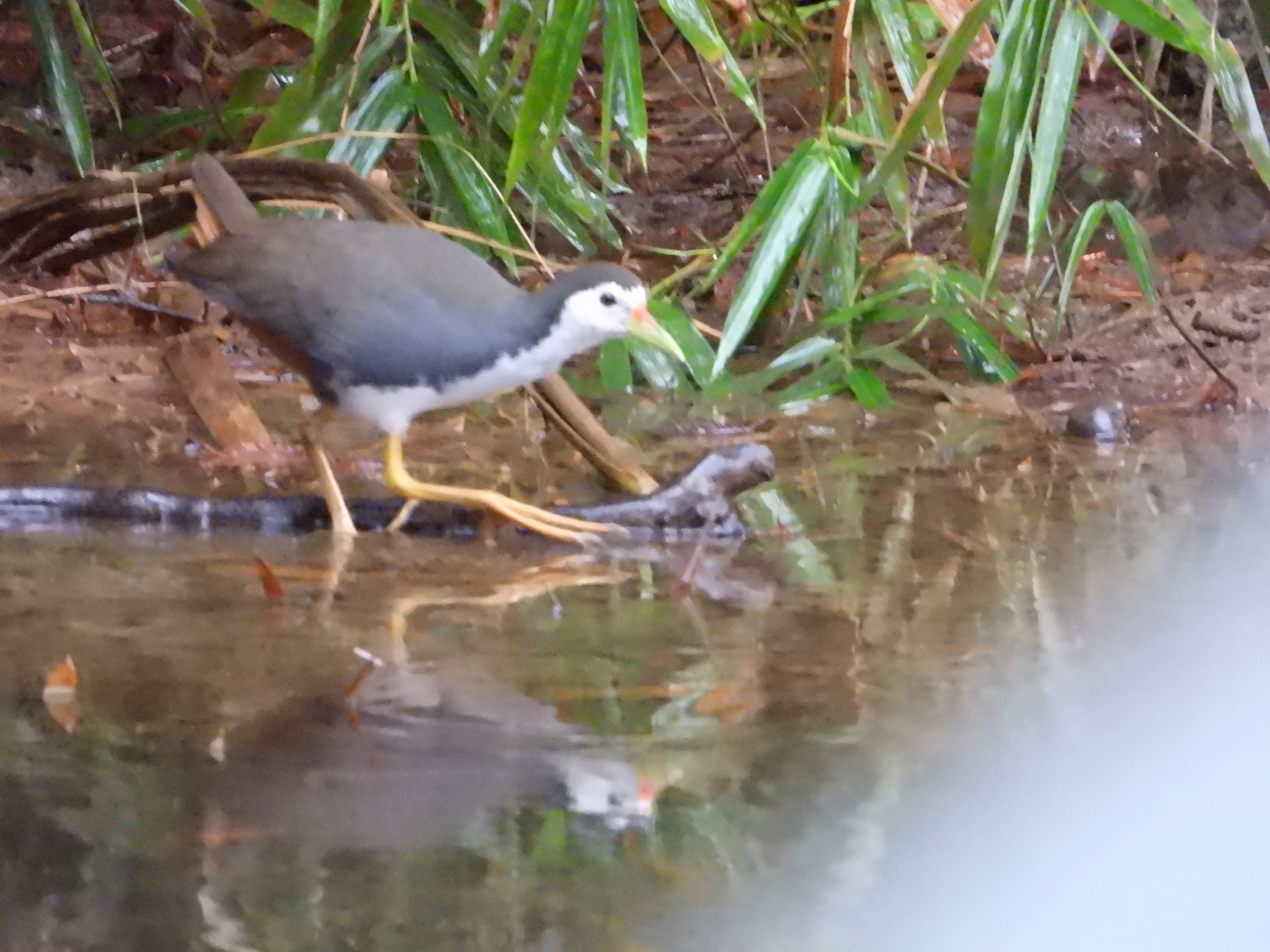
This medium-sized rail measures approximately 32 cm in length with a compact, laterally flattened body that allows easy movement through dense marsh vegetation. Adults have dark grey upperparts and flanks contrasting with a striking white face, neck, and breast. The lower belly and undertail feathers range from cinnamon to white. The species possesses long toes adapted for walking on soft mud, a short tail, and distinctive yellow bill and legs. The sexes appear similar, though females are slightly smaller. Juveniles are notably duller overall. Like all rails, the downy chicks are black upon hatching. Several subspecies are recognized across its extensive range, showing slight variations in plumage tone and distribution.
Identification
This rail is unlikely to be confused with similar species across most of its range due to its distinctive white face, breast, and belly contrasting with dark slaty upperparts. The combination of bold white underparts, yellow legs and bill, and its relatively conspicuous behavior helps separate it from other rails and crakes. When foraging, it moves with a characteristic slow, deliberate gait while holding its tail upright and jerking it repeatedly. The species often forages at water edges and can be seen clambering through low vegetation near waterbodies.
Distribution & Habitat
This species breeds across tropical Asia from Pakistan eastward through the Indian subcontinent to Southeast Asia, including Indonesia. While primarily a bird of lowland plains and marshes, it occurs at higher elevations including Nainital at 1300 meters and the High Range in Kerala at 1500 meters. It is a permanent resident throughout its range, though individuals make short-distance movements and readily colonize new areas. It was among the first species to colonize the volcanic island of Rakata after eruptions. Although typically associated with freshwater habitats, it also occurs in brackish waters and coastal areas when freshwater is unavailable, as observed on Barren Island in the Andamans.
Behavior & Ecology
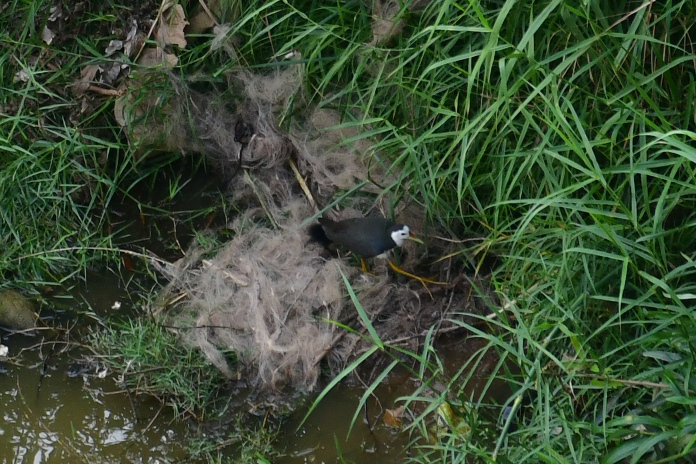
These rails are typically seen alone or in pairs as they methodically forage along water edges. They walk slowly with their tail raised and bobbed, probing their yellow bills in mud or shallow water while also picking up food items by sight. Their diet includes insects (particularly beetles), small fish that are carefully washed before consumption, aquatic invertebrates, and plant matter such as seeds from Pithecolobium dulce. They sometimes feed in deeper water in a manner similar to moorhens. The breeding season spans June to October, varying by region. Courtship involves bowing, billing, and nibbling behaviors. Both parents share incubation duties over approximately 19 days and cooperatively raise the precocial black chicks, which can dive underwater to escape predators. They construct both a nesting site and a separate roost or brood nest. The species is notably vocal, producing loud croaking calls especially at dawn and dusk, with some populations like the Andamans insularis giving duck-like quack notes.
Conservation
The species is listed as Least Concern globally due to its extremely large range and apparently stable population. It is not currently considered threatened with extinction and occurs in numerous protected areas across its distribution. While specific population numbers are not available, its adaptability to various wetland habitats including modified environments such as agricultural areas, urban drains, and roadside ditches suggests it maintains healthy numbers. No major conservation concerns are documented for this species.
Culture
Local names for this bird frequently derive from onomatopoeia, capturing its distinctive call. In Malay it is called ruak-ruak, while in Sinhala it is known as korawakka. Other regional names include Dahuk in Bengali, Dauk in Assamese, kulakozhi in Malayalam, kaanaangkozi in Tamil, and hundukoli in Kannada. The naturalist writer Eha provided a colorful description of its vocalizations, noting calls that begin with loud harsh roars compared to those elicited from a bear being roasted, then suddenly changing to clear dove-like coos. In the Maldives it is called Kanbili, and interestingly, some Cebuano names overlap with terms used for the Taiwan bamboo partridge, reflecting linguistic connections across regional bird lore.
Source: Wikipedia · CC BY-SA 3.0
Taxonomy
- Order
- Gruiformes
- Family
- Rallidae
- Genus
- Amaurornis
- eBird Code
- whbwat1
Vocalizations
Subspecies (5)
-
Amaurornis phoenicurus insularis
Andaman and South Nicobar islands
-
Amaurornis phoenicurus leucocephala
Car Nicobar Island
-
Amaurornis phoenicurus leucomelana
Sulawesi, western Moluccas, and Lesser Sundas
-
Amaurornis phoenicurus midnicobarica
central Nicobar Islands
-
Amaurornis phoenicurus phoenicurus
Pakistan eastward in sub-Himalayan region to northeastern China, and southward to Maldives and Chagos (central Indian Ocean), southern India, Sri Lanka, southeastern Asia, Greater Sundas, Philippines, and Cocos (Keeling) and Christmas islands (east-central Indian Ocean)
Data Sources
Species description from Wikipedia, licensed under CC BY-SA 3.0.
Bird images and sounds sourced from GBIF, contributed by citizen scientists worldwide under Creative Commons licenses.
Taxonomy data from AviList 2025.