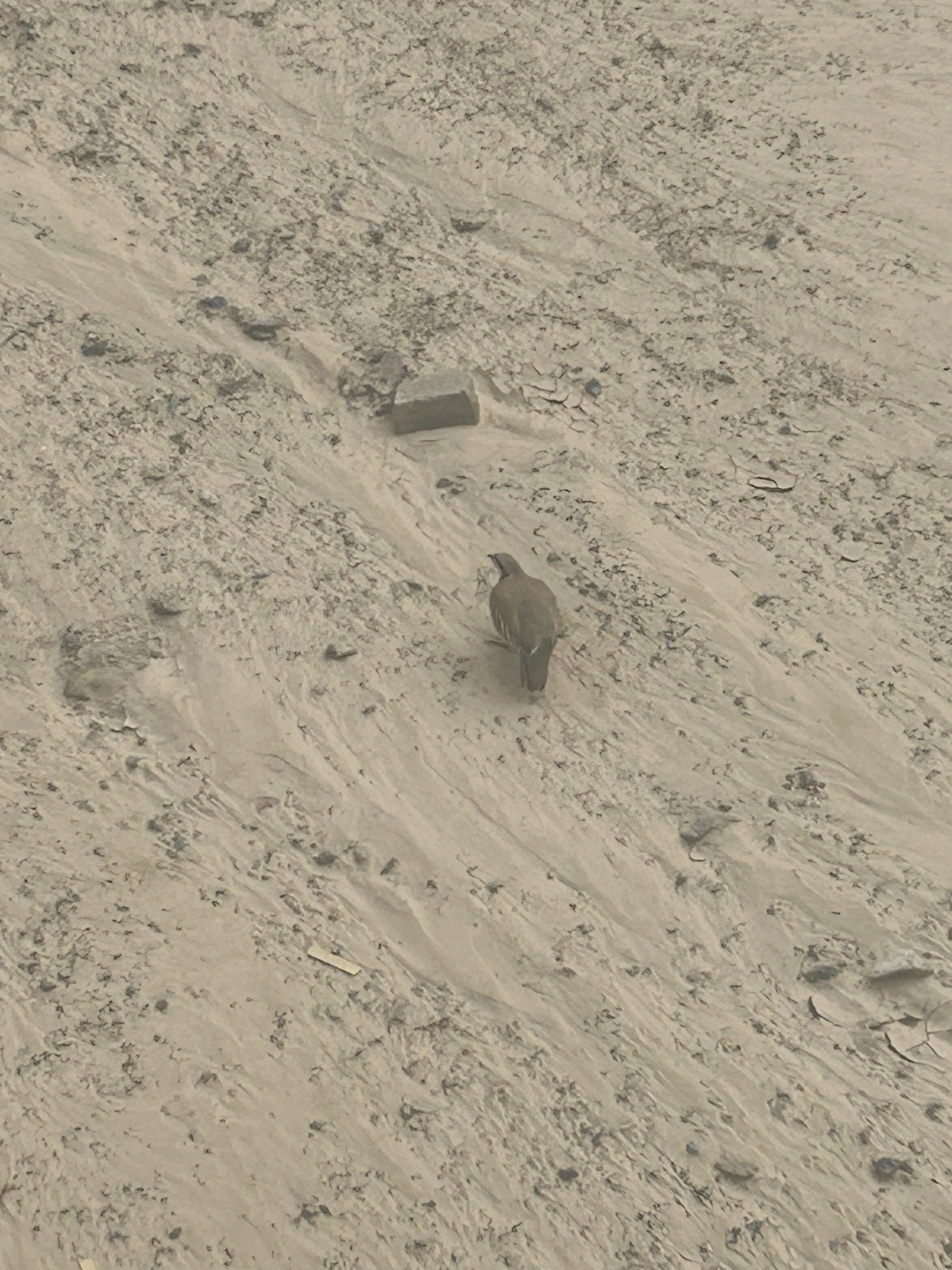
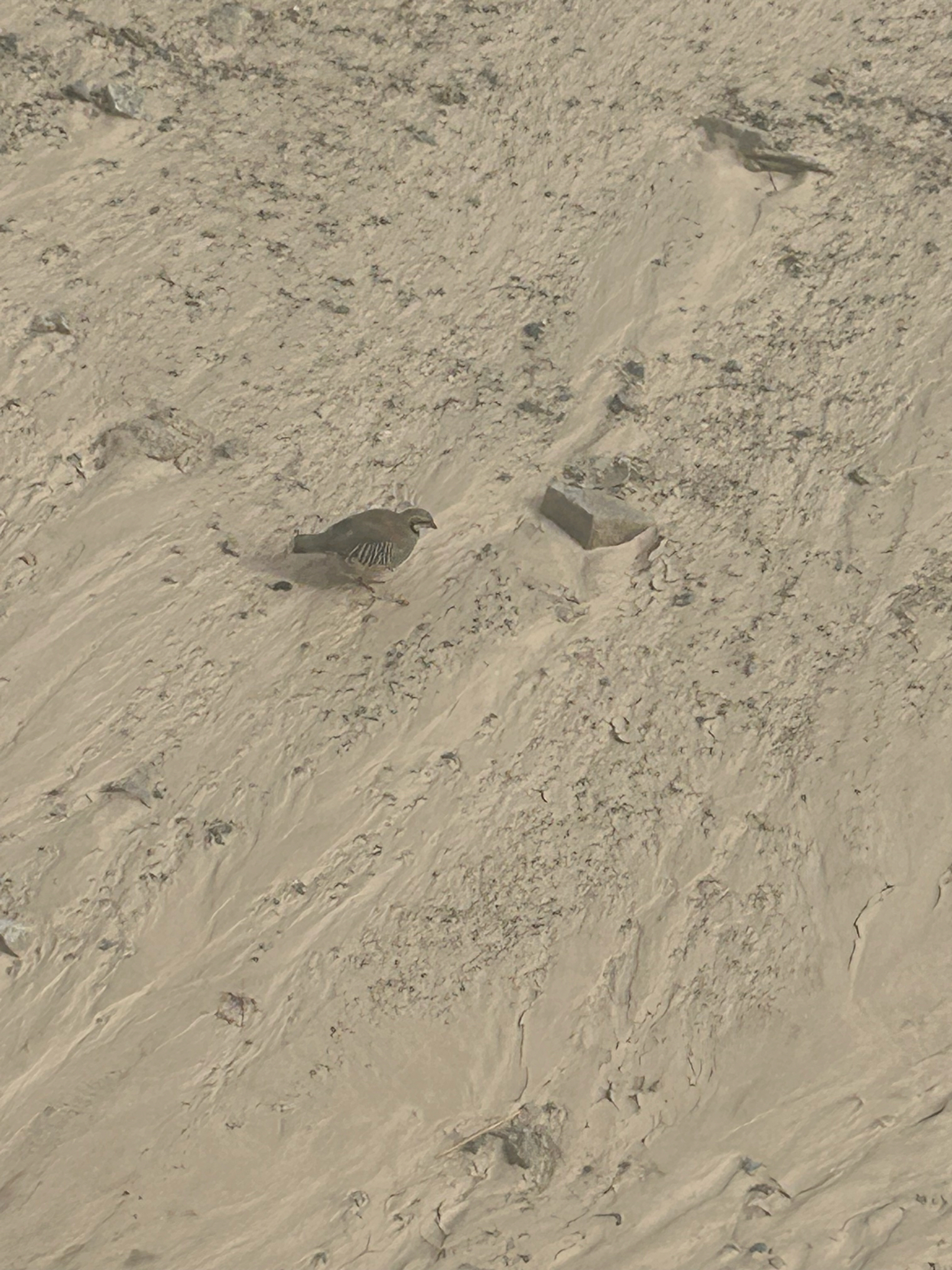

Galliformes / Phasianidae / Alectoris
Chukar Partridge
Alectoris chukar · 石鸡
Introduction
A Palearctic upland gamebird in the pheasant family Phasianidae, native to Asia and parts of southeastern Europe. It forms a superspecies complex with the rock partridge, Philby's partridge, and Przevalski's partridge. Distinctive traits include well-marked black and white flank bars and a black gorget enclosing a white throat. Introduced populations are established in North America, Malta, New Zealand, and other regions.
Description
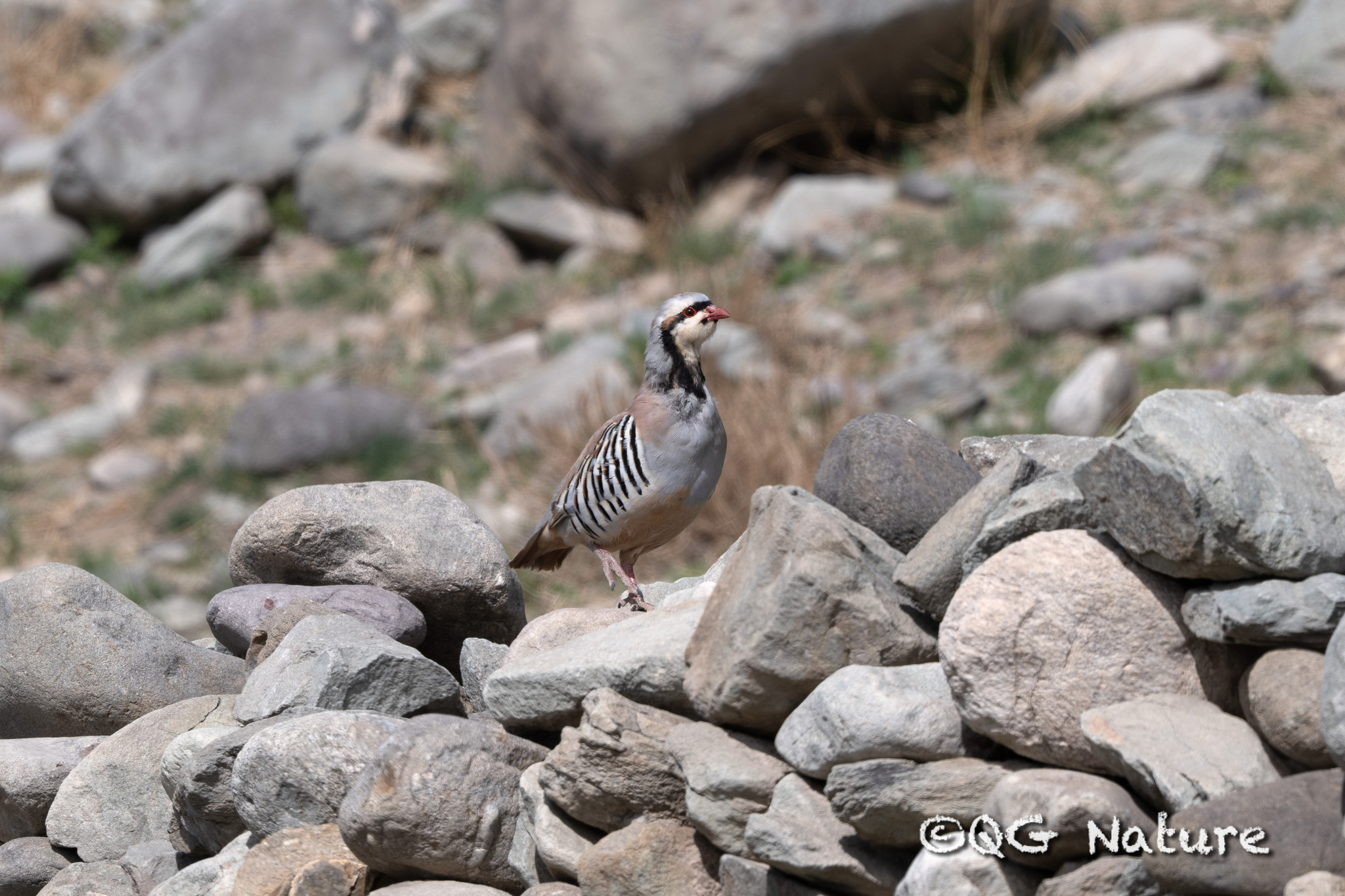
Rotund body, 32–35 cm (13–14 in) long. Features a light brown back, grey breast, and buff belly, with shades varying across populations. The face is white with a black gorget. Flanks are rufous-streaked. Legs are red, and the bill is coral red. The tail has 14 feathers; the third primary is the longest. Sexes are similar, though females are slightly smaller and lack spurs.
Identification
Distinguished by a sharply defined black gorget and rufous-streaked flanks. Browner on the back with a yellowish tinge to the foreneck compared to the rock partridge. Unlike the red-legged partridge, the black collar does not break into dark streaks near the breast. Distinct from the Barbary partridge, which has a reddish-brown collar and chestnut crown. Vocalization is a noisy chuck-chuck-chukar-chukar.
Distribution & Habitat
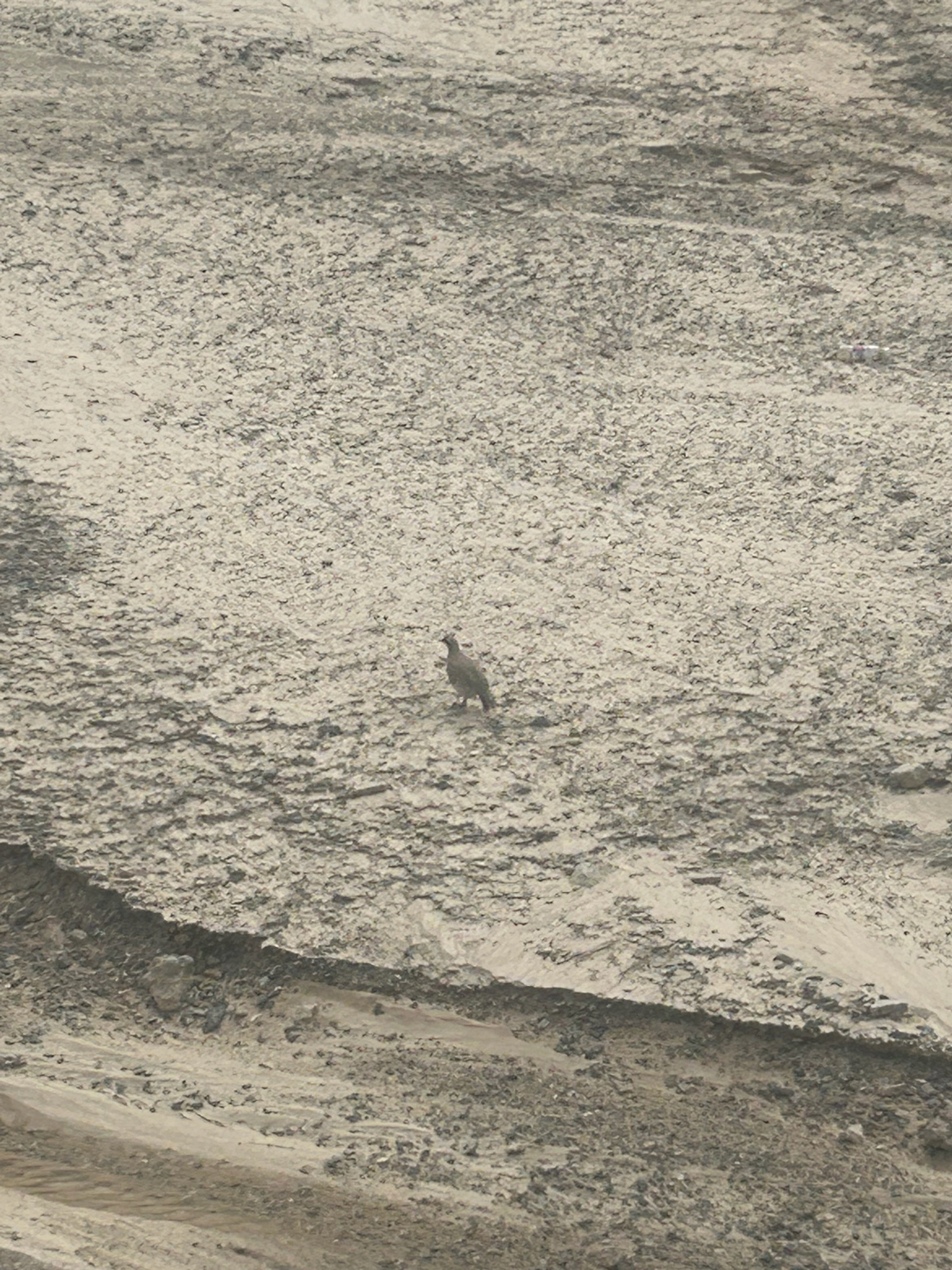
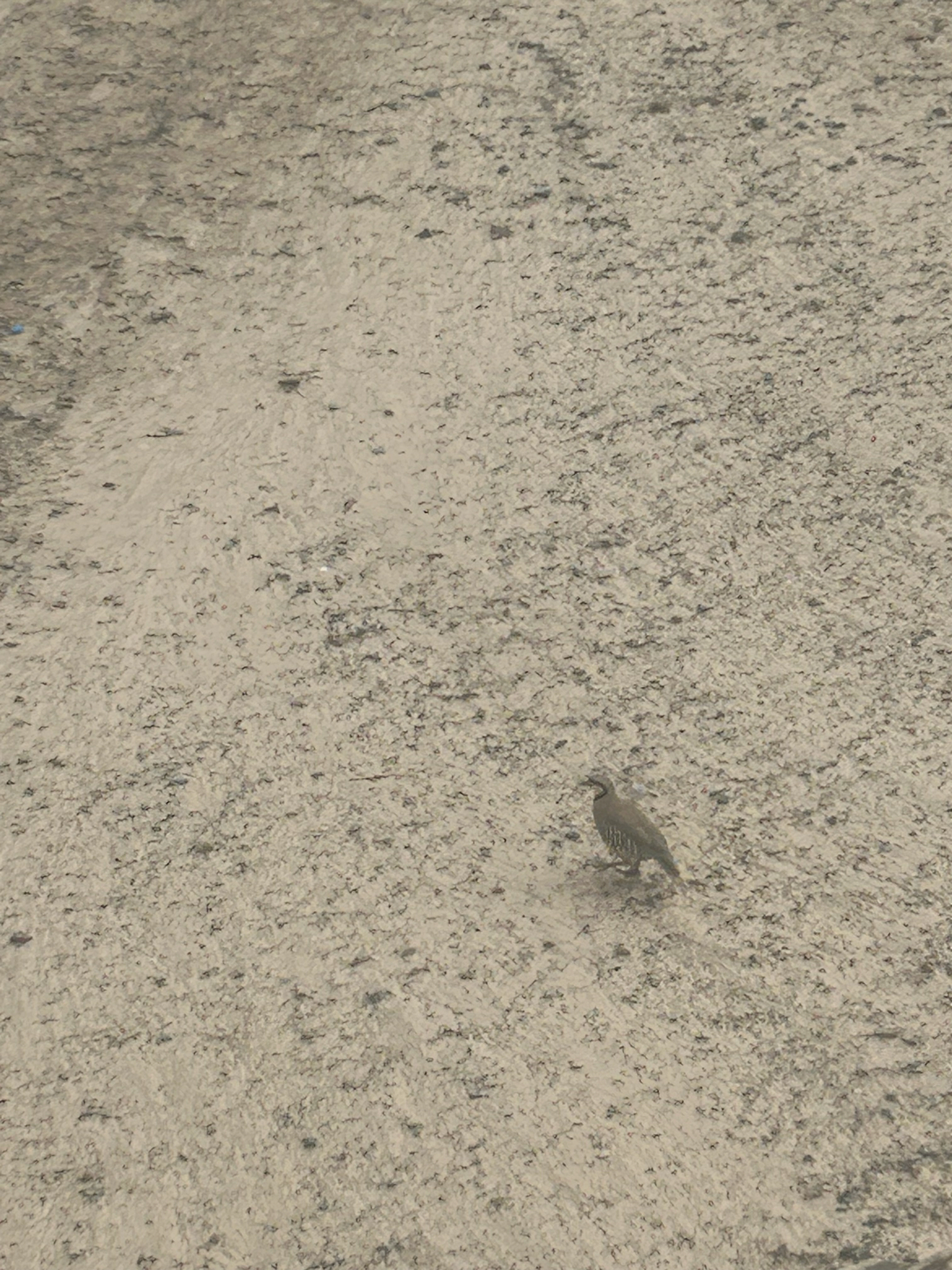
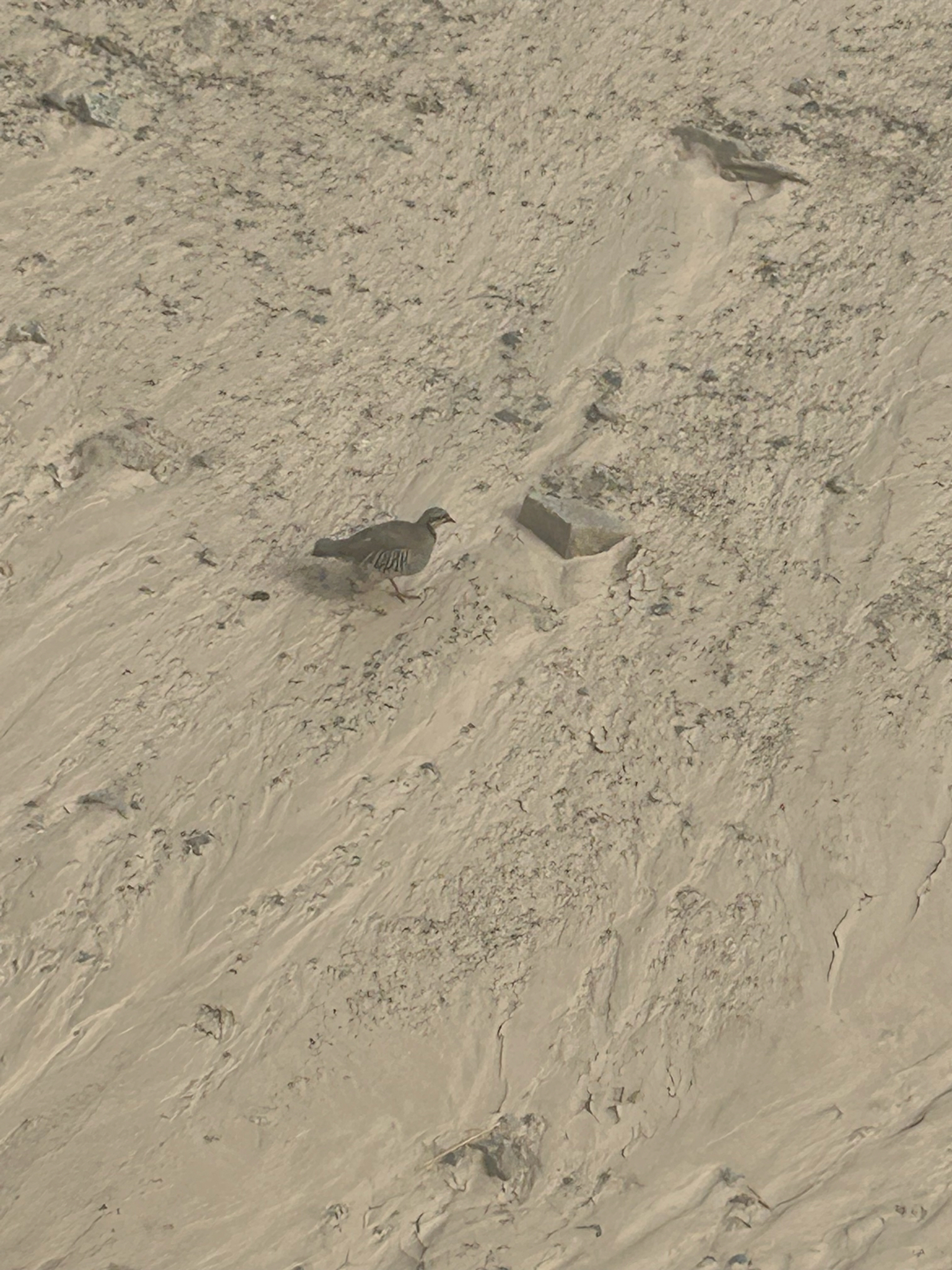
Native range includes Israel, Jordan, Palestine, Lebanon, Syria, UAE, Saudi Arabia, Oman, Turkey, Kurdistan, Iran, Afghanistan, Tajikistan, Pakistan, India, Nepal, Bulgaria, and Greece. Habitat consists of rocky open hillsides with grass, scrub, or cultivation, avoiding high humidity. Altitude ranges from 400 m below sea level in the Dead Sea area to 2,000–4,000 m in eastern areas. Introduced and feral populations exist in the US (Rocky Mountains, Great Basin, California), Canada, Chile, Argentina, New Zealand, Hawaii, and Robben Island, South Africa.
Behavior & Ecology
Forms coveys of 10–50 birds in non-breeding seasons; pairs breed in summer. Males are pugnacious during breeding, performing tidbitting displays and stiff walks. Nests are ground scrapes sheltered by vegetation or rocks, containing 7–14 eggs that hatch in 23–25 days. Chicks use wing-assisted incline running before flight. Diet includes seeds, insects, and grit. Roosts in tight circles on slopes or under shrubs to conserve heat. Prefers running to flying when disturbed.
Conservation
Relatively unaffected by hunting or habitat loss, with numbers primarily influenced by weather patterns during the breeding season. The release of captive stock and hybridization with red-legged partridges threatens native rock and red-legged partridge populations in southern Europe.
Culture
Name is onomatopoeic, with mentions in Sanskrit dating back to c. 250–500 AD. In North Indian and Pakistani culture and Hindu mythology, it symbolizes intense, often unrequited love, said to gaze constantly at the moon. Kept as fighting birds in some areas due to pugnacious breeding behavior.
Source: Wikipedia · CC BY-SA 3.0
Taxonomy
- Order
- Galliformes
- Family
- Phasianidae
- Genus
- Alectoris
Vocalizations
Subspecies (14)
-
Alectoris chukar chukar
eastern Afghanistan to eastern Nepal
Data Sources
Species description from Wikipedia, licensed under CC BY-SA 3.0.
Bird images and sounds sourced from GBIF, contributed by citizen scientists worldwide under Creative Commons licenses.
Taxonomy data from AviList 2025.