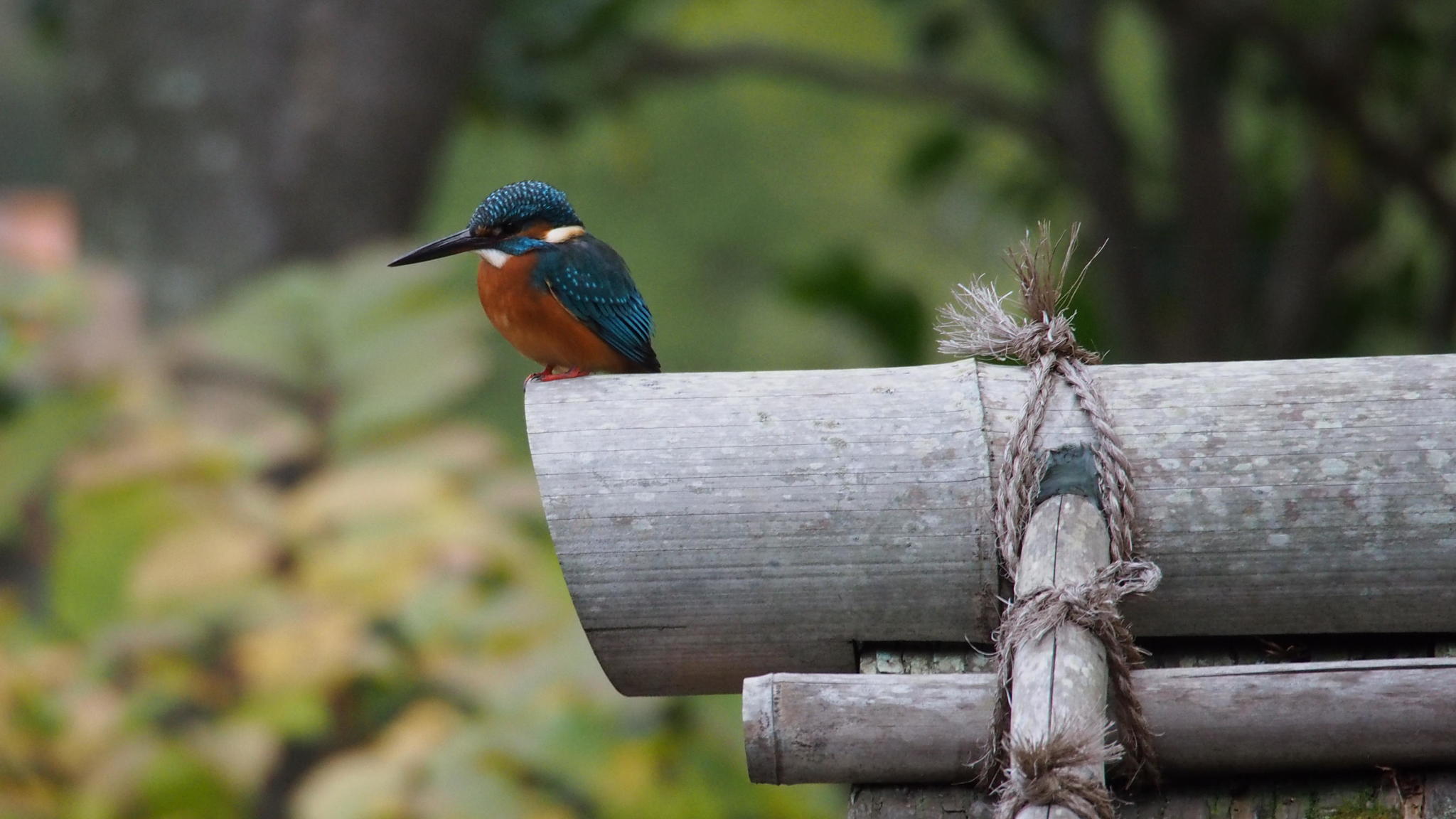
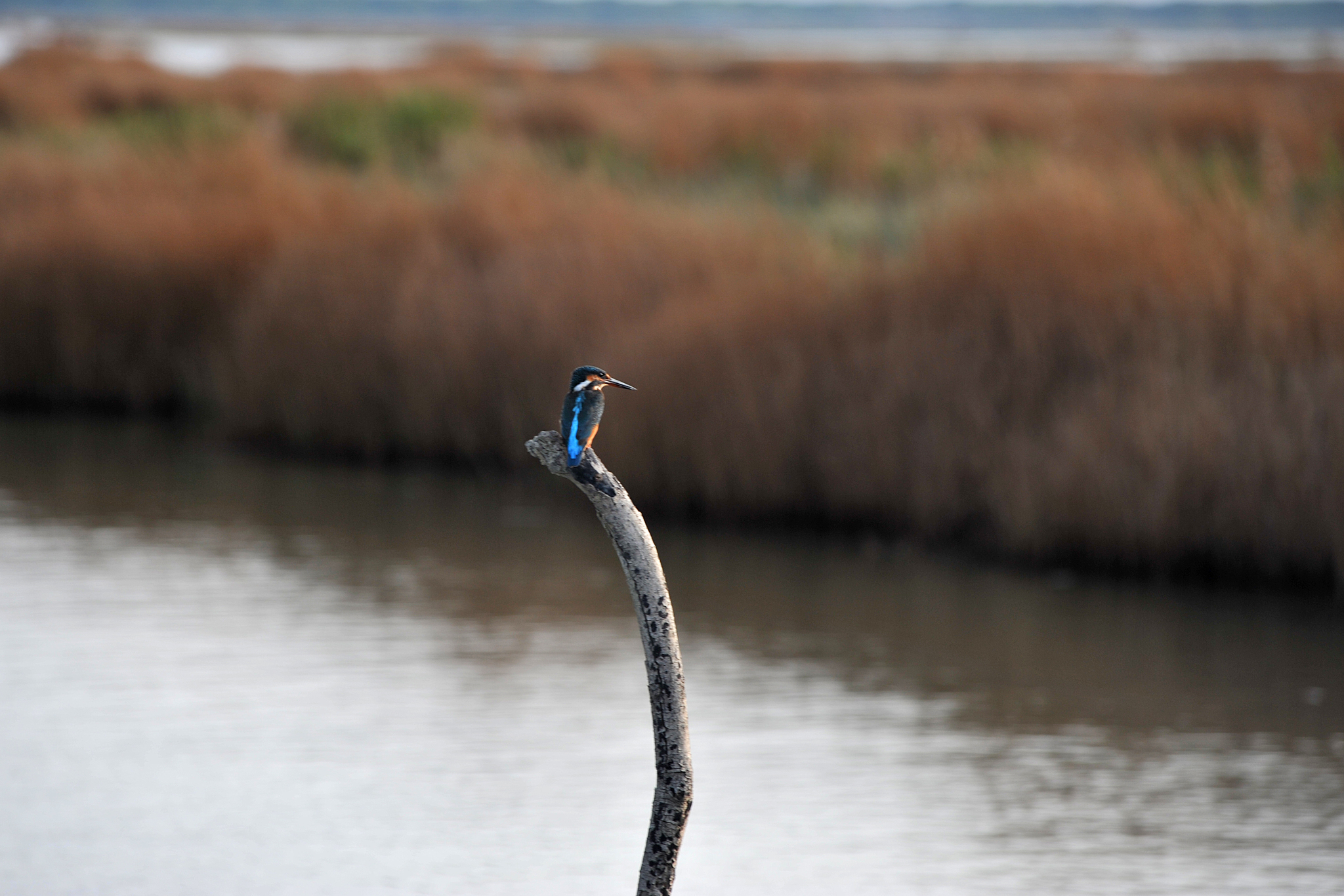

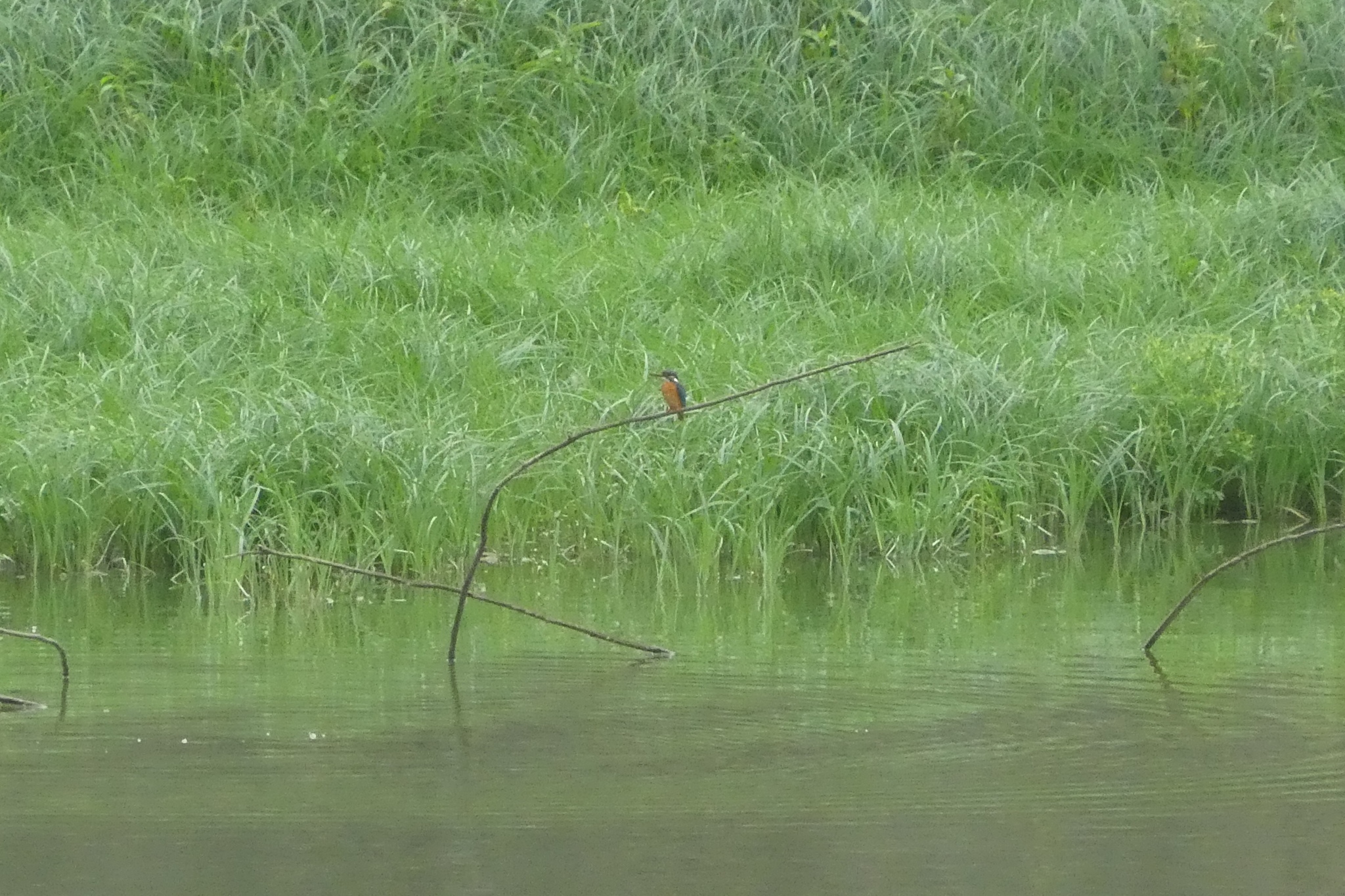
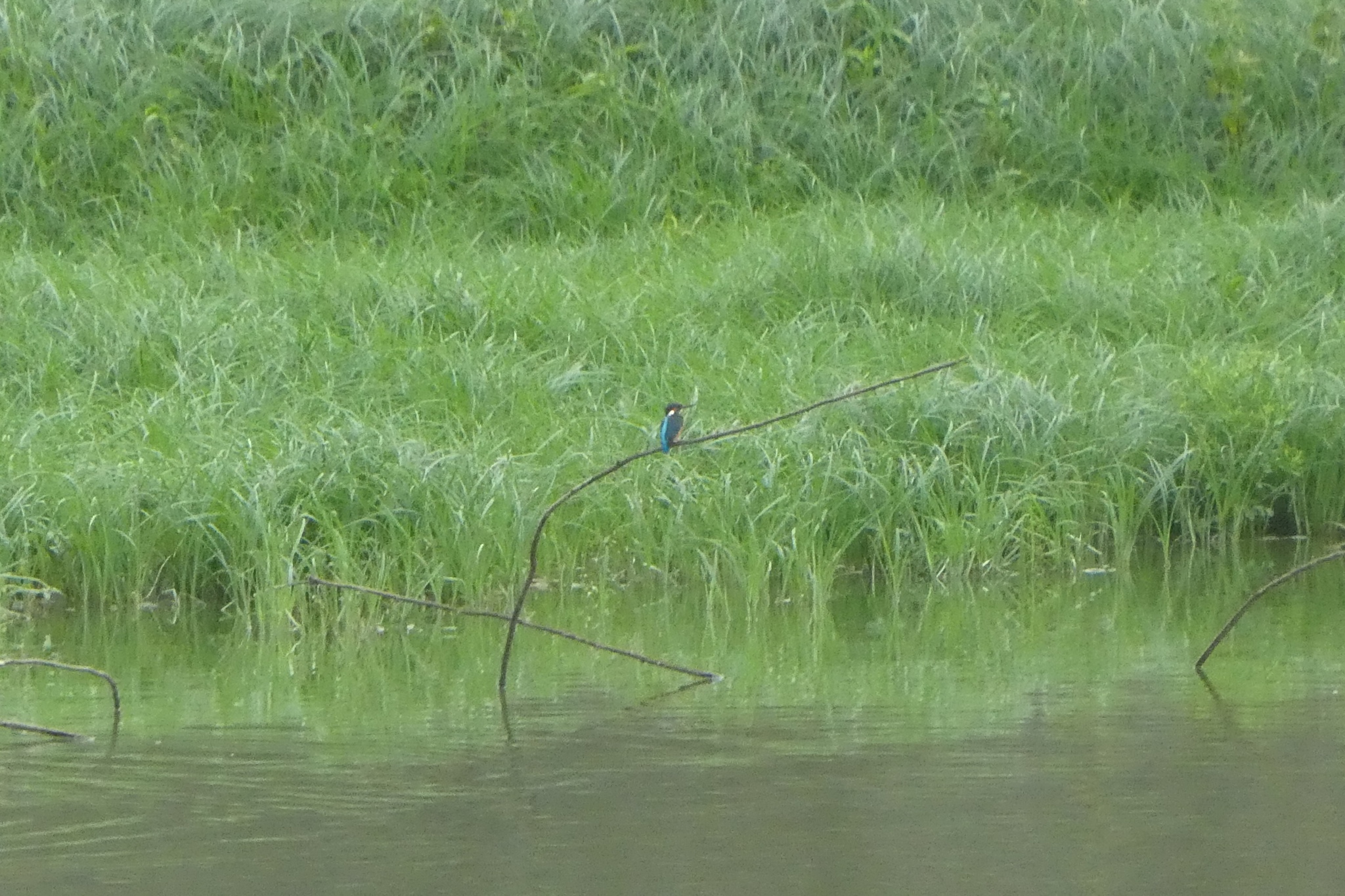
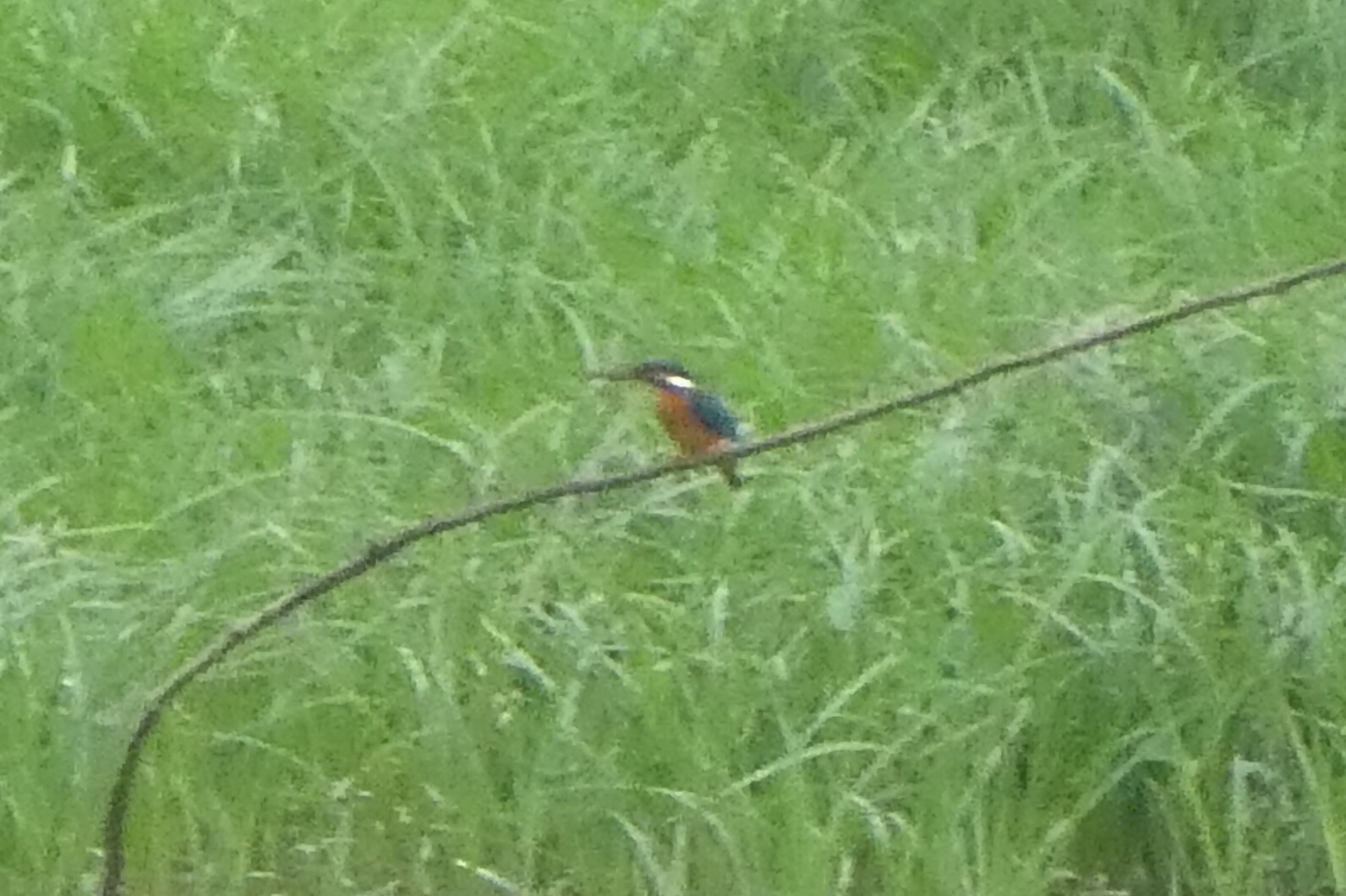







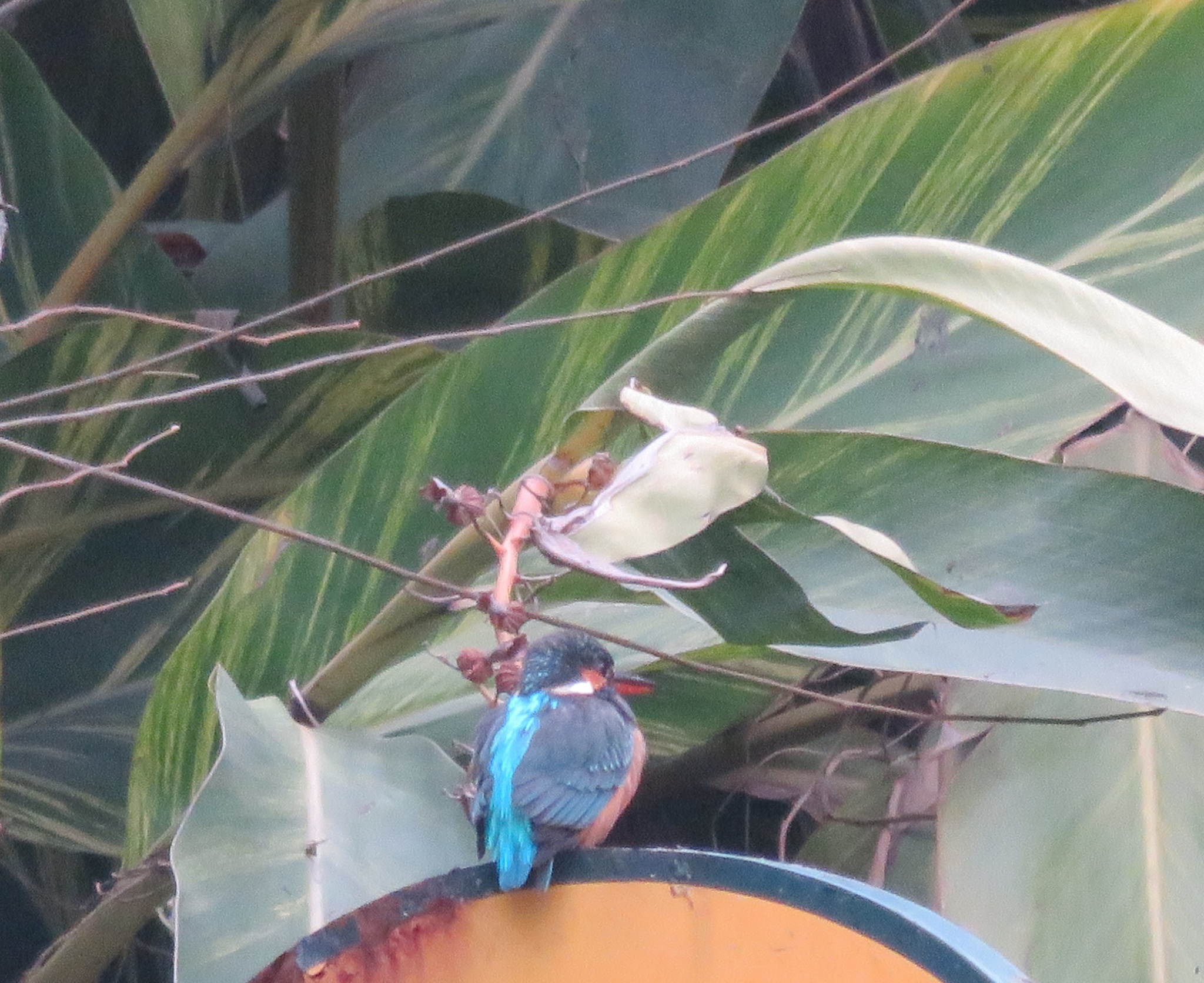
Common Kingfisher
Alcedo atthis
普通翠鸟
Introduction
The Common Kingfisher (Alcedo atthis) is a small kingfisher species with a widespread distribution across Eurasia, from temperate Europe to tropical Asia. It inhabits clear, slow-moving waters with overhanging vegetation, including rivers, streams, lakes, and mangrove creeks. This sparrow-sized species has an electric-blue patch on its back and displays a distinctive low, whirring flight over water. It possesses specialized visual adaptations for spotting and diving to catch fish. Its presence serves as an indicator of healthy freshwater ecosystems, requiring clean water and intact riverbanks.
Description
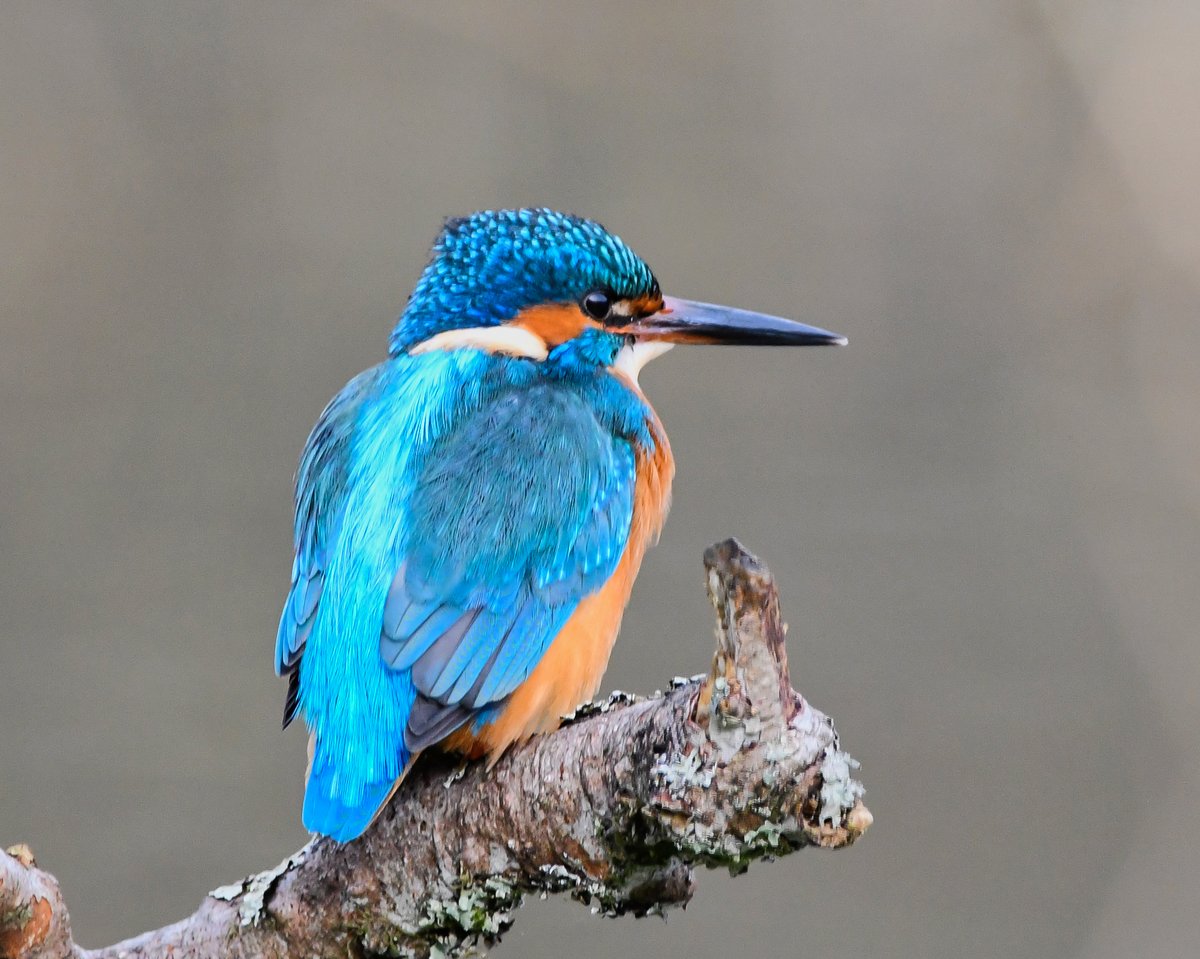
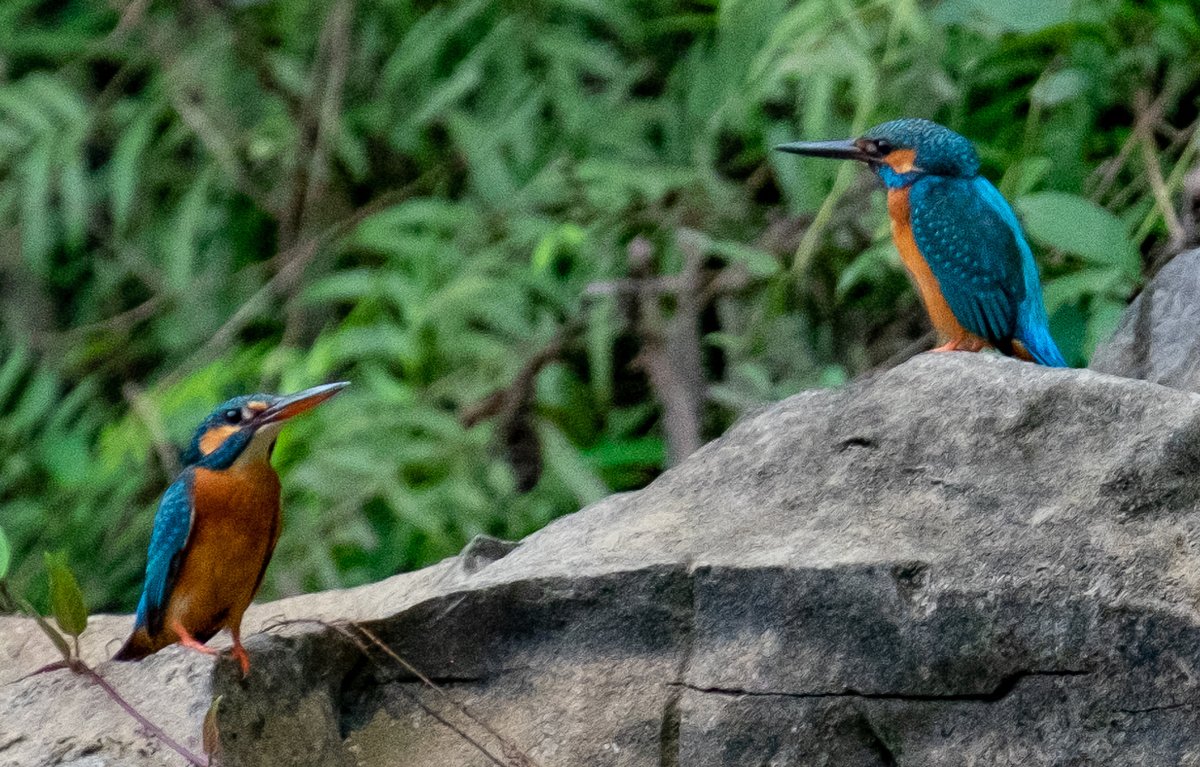
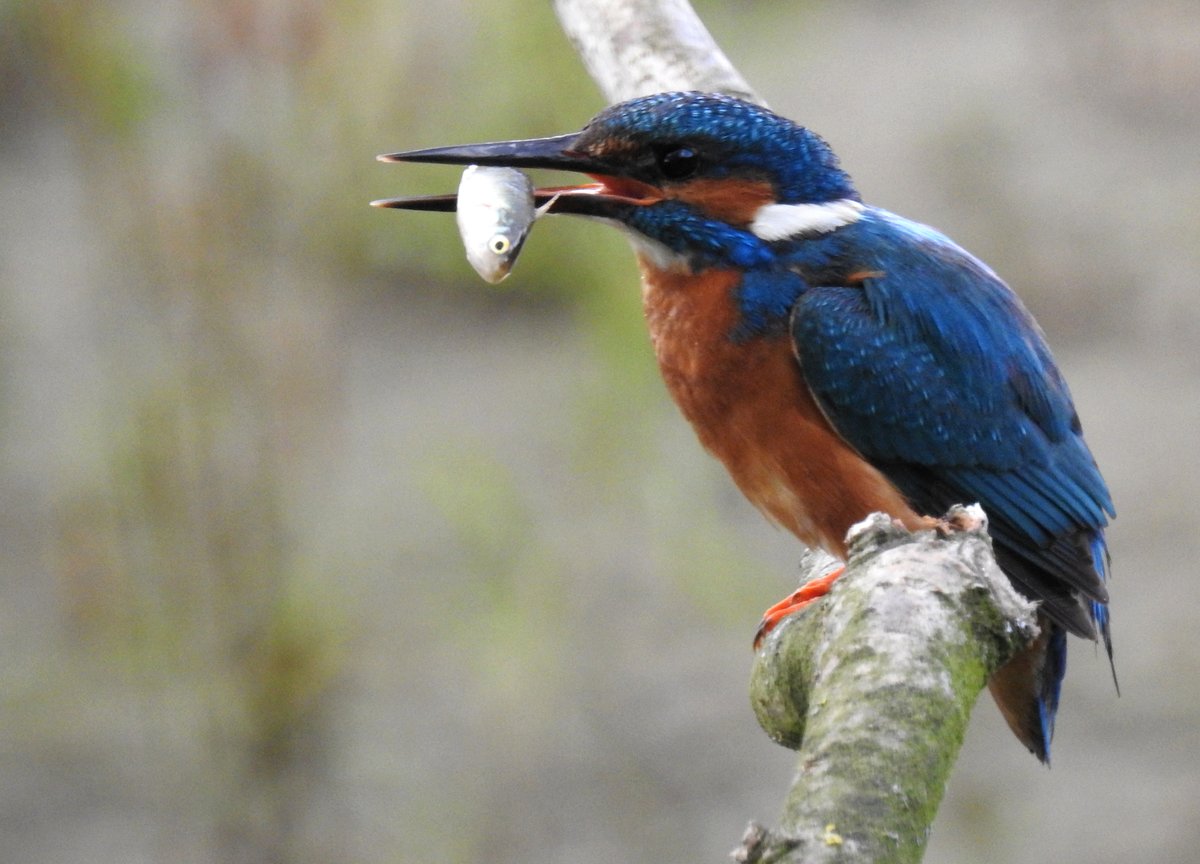
This compact kingfisher displays the family signature: a large head, short tail, and substantial dagger-like bill. The upperparts shimmer in green-blue tones with a pale azure-blue rump, while rich rufous-orange covers the underparts and wraps around the bill base and ear area. A white throat and neck blaze contrast sharply with the blue-green neck stripe. The legs are bright red. Adults measure approximately 16 centimeters in length with a 25-centimeter wingspan, weighing between 34 and 46 grams. Females resemble males but show orange-red coloring on the lower mandible with a black tip. Juveniles appear duller overall with greener upperparts, paler underparts, black bills, and initially black legs. The wings produce a rapid whirring sound in flight, and the characteristic blue flash along the back serves as a key identifying feature.
Identification
Throughout most of its range from North Africa through Europe to northern Asia, this is the only small blue kingfisher present, making identification straightforward for observers familiar with the species. The combination of blue upperparts and rufous underparts with rufous ear patches distinguishes it from similar species. However, in South and Southeast Asia, six other small blue-and-rufous kingfisher species overlap in range. The rufous ear patches help separate it from all but juvenile blue-eared kingfishers, where careful examination of head pattern details becomes necessary. The rapid, direct flight low over water, often accompanied by a sharp 'chee' call, provides additional identification clues. The absence of any true song and reliance on short contact and alarm calls further characterize this species.
Distribution & Habitat
This species occupies an extensive range across Eurasia and North Africa, occurring mainly south of 60°N latitude from Ireland and Portugal eastward to Japan and the Solomon Islands. It breeds commonly throughout most of this vast area, though in North Africa it is primarily a winter visitor with only scattered coastal breeding populations. Temperate populations favor clear, slow-flowing streams, rivers, and lakes with well-vegetated banks and overhanging branches. In winter, coastal areas including estuaries, harbors, and rocky shores become more important. Tropical populations utilize slow-moving rivers, mangrove creeks, and swamp environments. Birds in regions with freezing winters migrate southward, typically wintering within the southern parts of the breeding range, though some cross the Mediterranean into Africa or travel through Malaysian mountains into Southeast Asia. Siberian populations may journey at least 3,000 kilometers between breeding and wintering sites.
Behavior & Ecology
Highly territorial due to demanding daily food requirements of about 60% of body weight, individuals maintain river territories ranging from 1 to 3.5 kilometers. Solitary for most of the year, they tolerate partners only during courtship and breeding. Pairs form in autumn but maintain separate territories until spring. Courtship involves male chases and ritual feeding. Both sexes excavate a burrow nest in vertical riverbanks, typically 60-90 centimeters long ending in a chamber. The female incubates eggs at night while both parents share daytime duties. Clutches of two to ten glossy white eggs hatch after 19-20 days, with young remaining in the nest for another 24-25 days. Two or three broods may be raised annually. The species hunts from low perches, diving steeply to seize fish typically no deeper than 25 centimeters. Special eye adaptations allow switching between monocular and binocular vision for underwater prey capture. Vocalizations are limited to a sharp 'chee' flight call and harsh anxiety notes.
Conservation
Classified as Least Concern due to its extensive range and large population, which exceeds 160,000 individuals in Europe alone. Global population trends appear stable, with numbers not approaching the 30% decline threshold required for listing under IUCN criteria. However, significant threats impact local populations. Water management practices that disrupt natural bank structures and reduce fish populations directly affect habitat quality. Chemical pollution from industrial and agricultural sources accumulates in the food chain, making this top predator vulnerable to build-up. Cats, rats, vehicle collisions, and window strikes cause mortality, while human disturbance of nesting sites and riverbank works with heavy machinery disrupt breeding. Severe winters and summer floods also impact survival rates. Only about a quarter of juveniles survive to breed, and similar proportions of adults persist between seasons. The species' 21-year lifespan record demonstrates potential longevity when conditions allow.
Culture
Victorian-era attitudes toward this species were pragmatic and sometimes brutal, with birds killed for taxidermy displays and hat-making purposes. English naturalist William Yarrell documented a country practice of killing a kingfisher and suspending it from a thread to predict wind direction by its swinging motion. Anglers historically persecuted the species, both to protect fish stocks and to obtain feathers for fishing flies. While such practices have largely ceased, the species retains symbolic significance in various cultures as a emblem of freshwater habitats and river ecosystems. Its striking appearance continues to inspire artists and photographers, making it a popular subject for nature documentation. Conservation efforts now emphasize the species' role as an indicator of water quality and ecosystem health, giving it renewed cultural importance in environmental education.
Source: Wikipedia · CC BY-SA 3.0
Taxonomy
- Order
- Coraciiformes
- Family
- Alcedinidae
- Genus
- Alcedo
- eBird Code
- comkin1
Vocalizations
Subspecies (7)
-
Alcedo atthis atthis
southeastern Europe and North Africa to northwestern India
-
Alcedo atthis bengalensis
Lake Baikal and northern India through eastern and southeastern Asia mainland and islands
-
Alcedo atthis floresiana
Lesser Sundas (Bali to Timor and Wetar)
-
Alcedo atthis hispidoides
Sulawesi to Moluccas, New Guinea, and Bismarck Archipelago
-
Alcedo atthis ispida
breeds southern Norway, British Isles, and Spain (except southern and eastern) eastward to western Russia and Romania; winters southward to southern Portugal, northern Africa, Cyprus, and Iraq
-
Alcedo atthis salomonensis
Bougainville to Makira (Solomon Islands)
-
Alcedo atthis taprobana
southern India and Sri Lanka
Data Sources
Species description from Wikipedia, licensed under CC BY-SA 3.0.
Bird images and sounds sourced from GBIF, contributed by citizen scientists worldwide under Creative Commons licenses.
Taxonomy data from AviList 2025.