Anseriformes / Anatidae / Aix
Mandarin Duck
Aix galericulata · 鸳鸯
Introduction
A perching duck species native to the East Palearctic, closely related to the North American wood duck as the only other member of the genus Aix. It is sexually dimorphic, with elaborately colored males and subdued females. The species is monotypic with no recognized subspecies.
Description
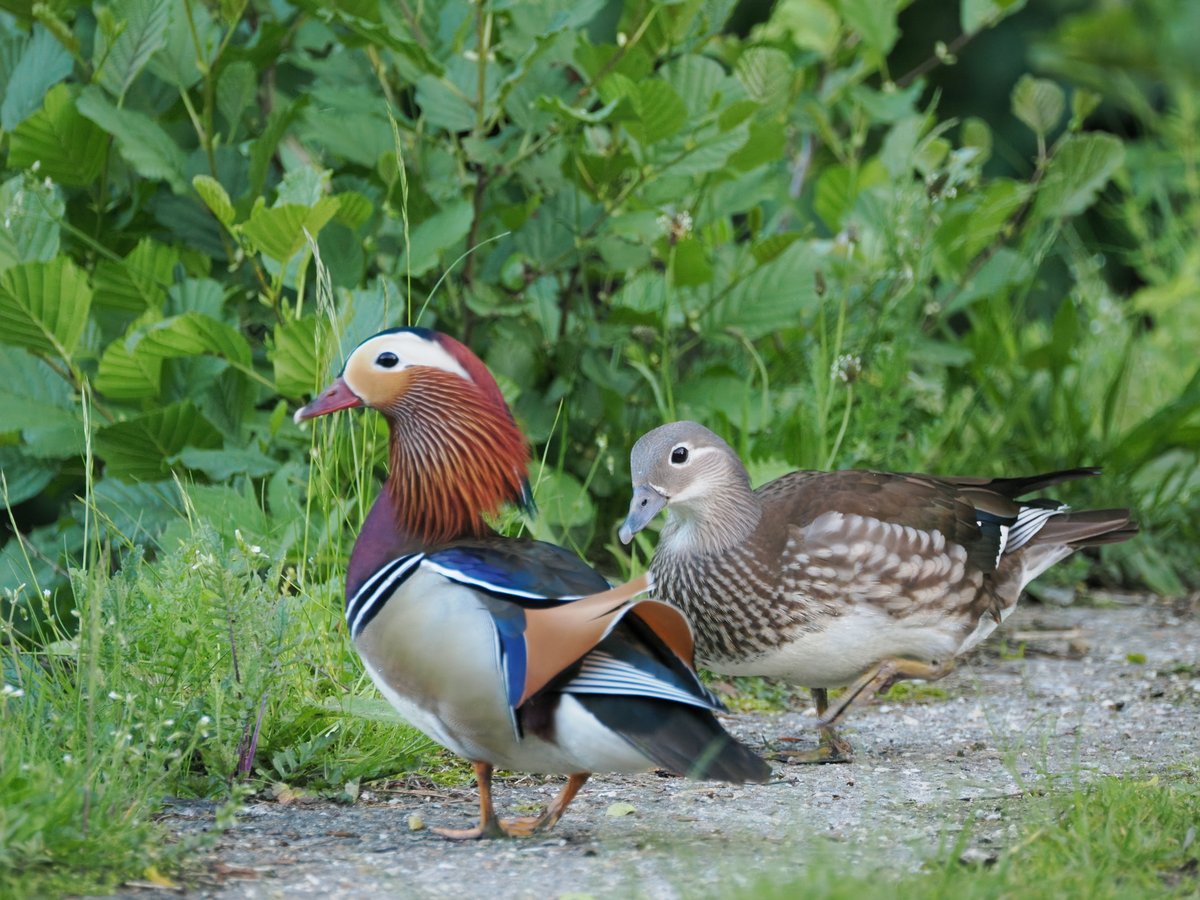
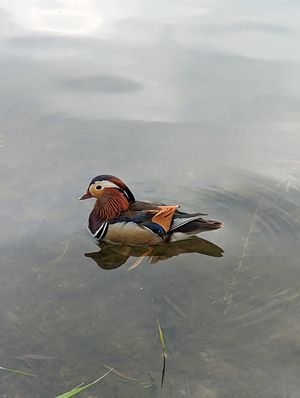
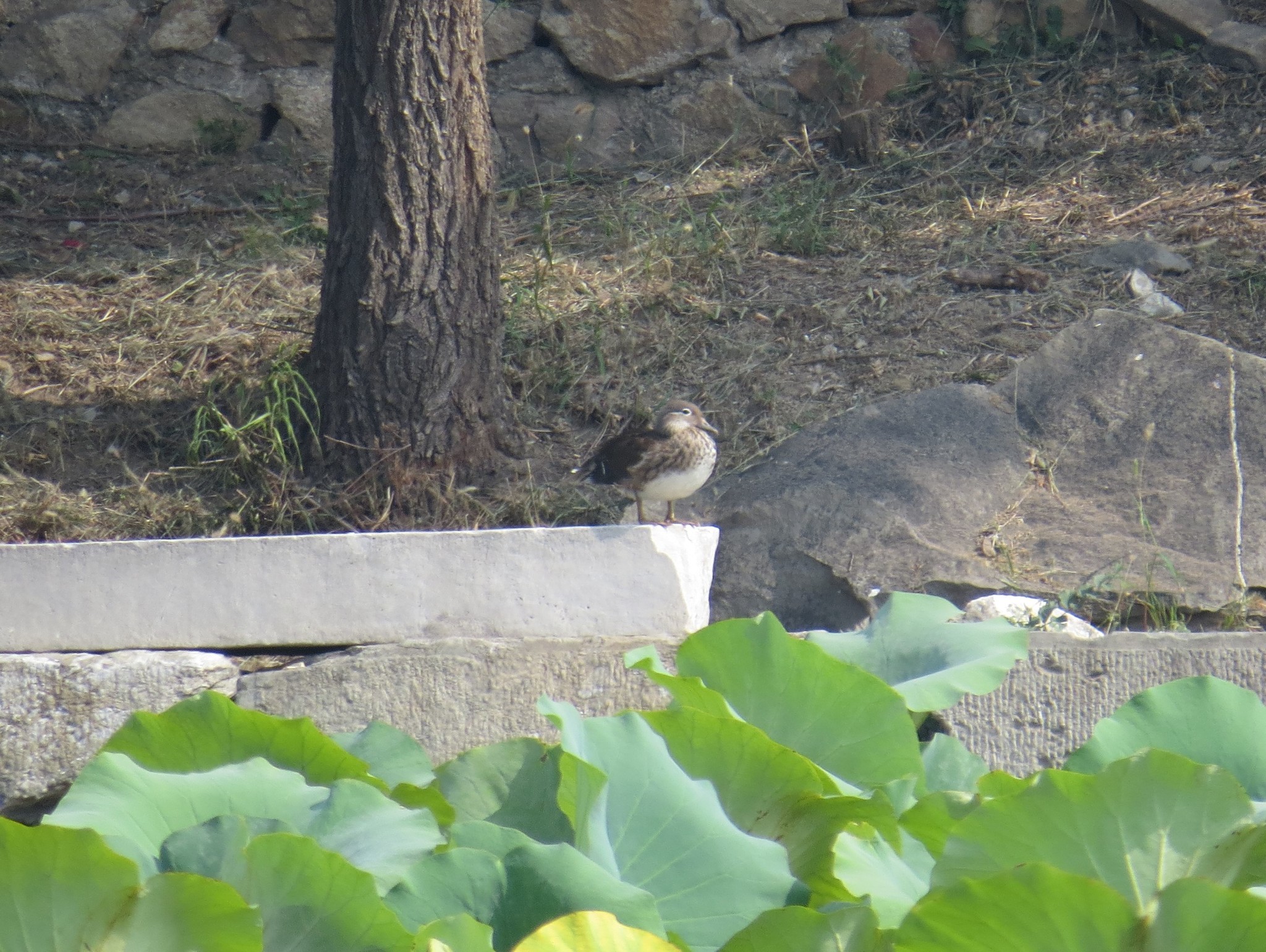
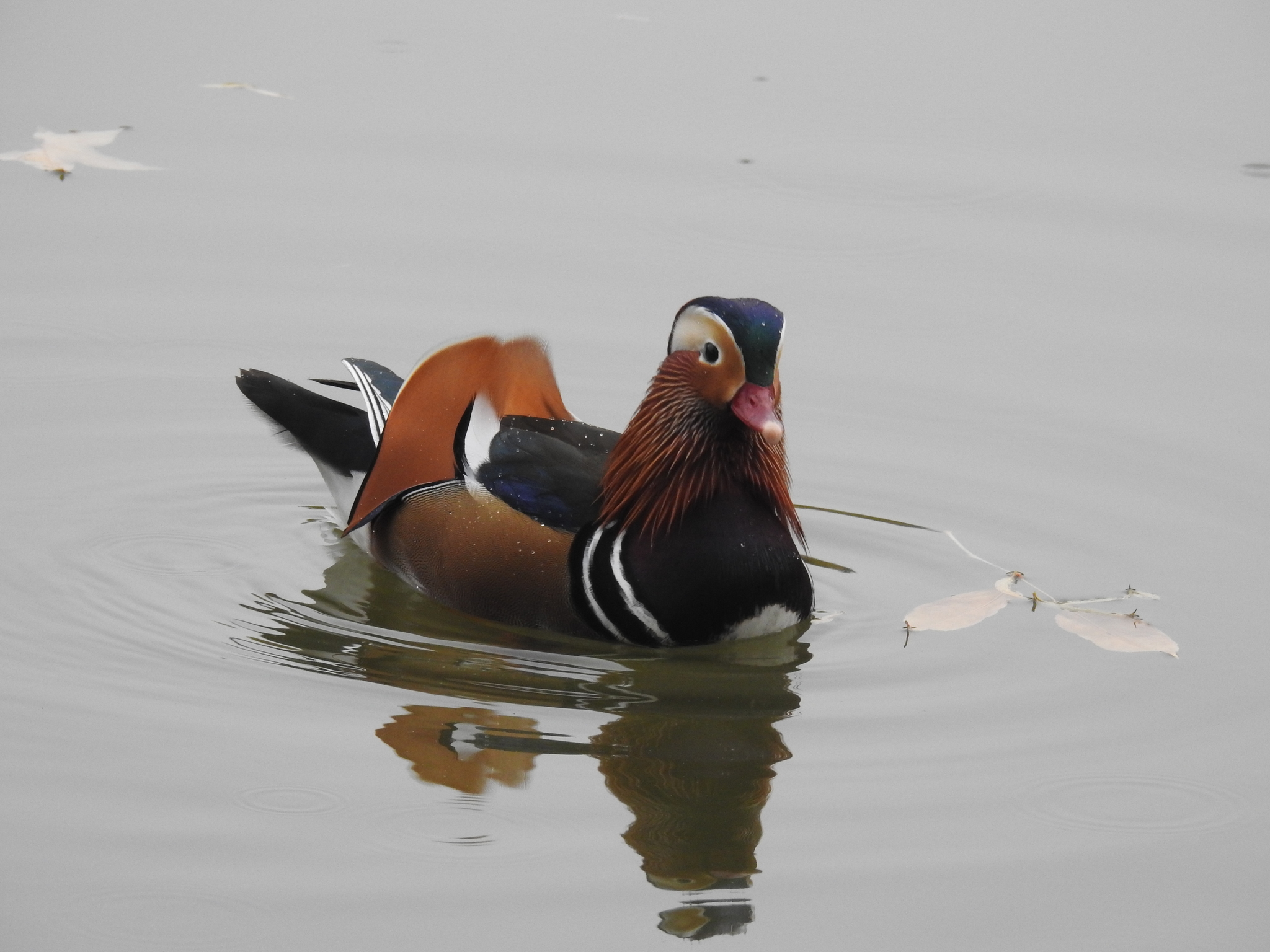
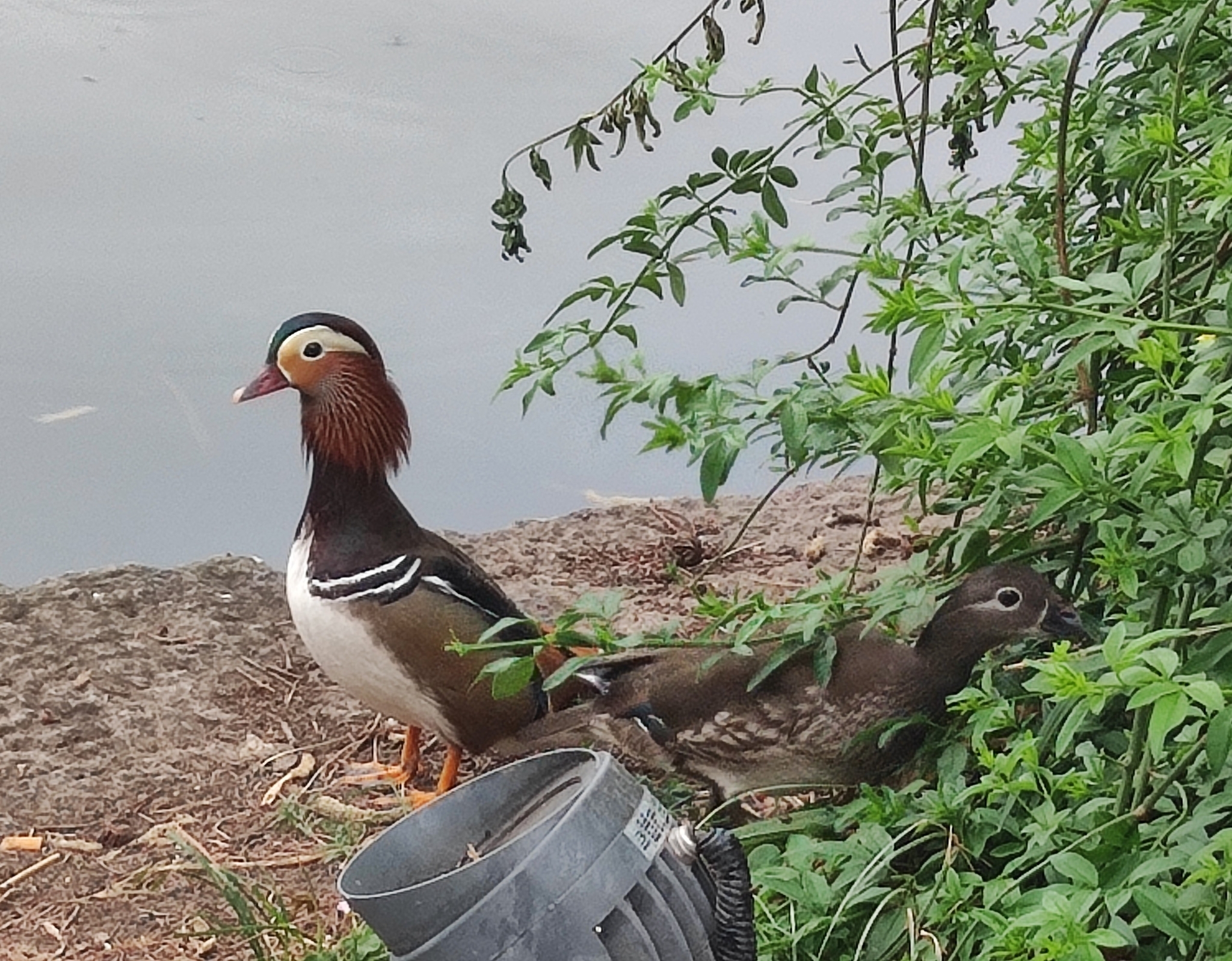
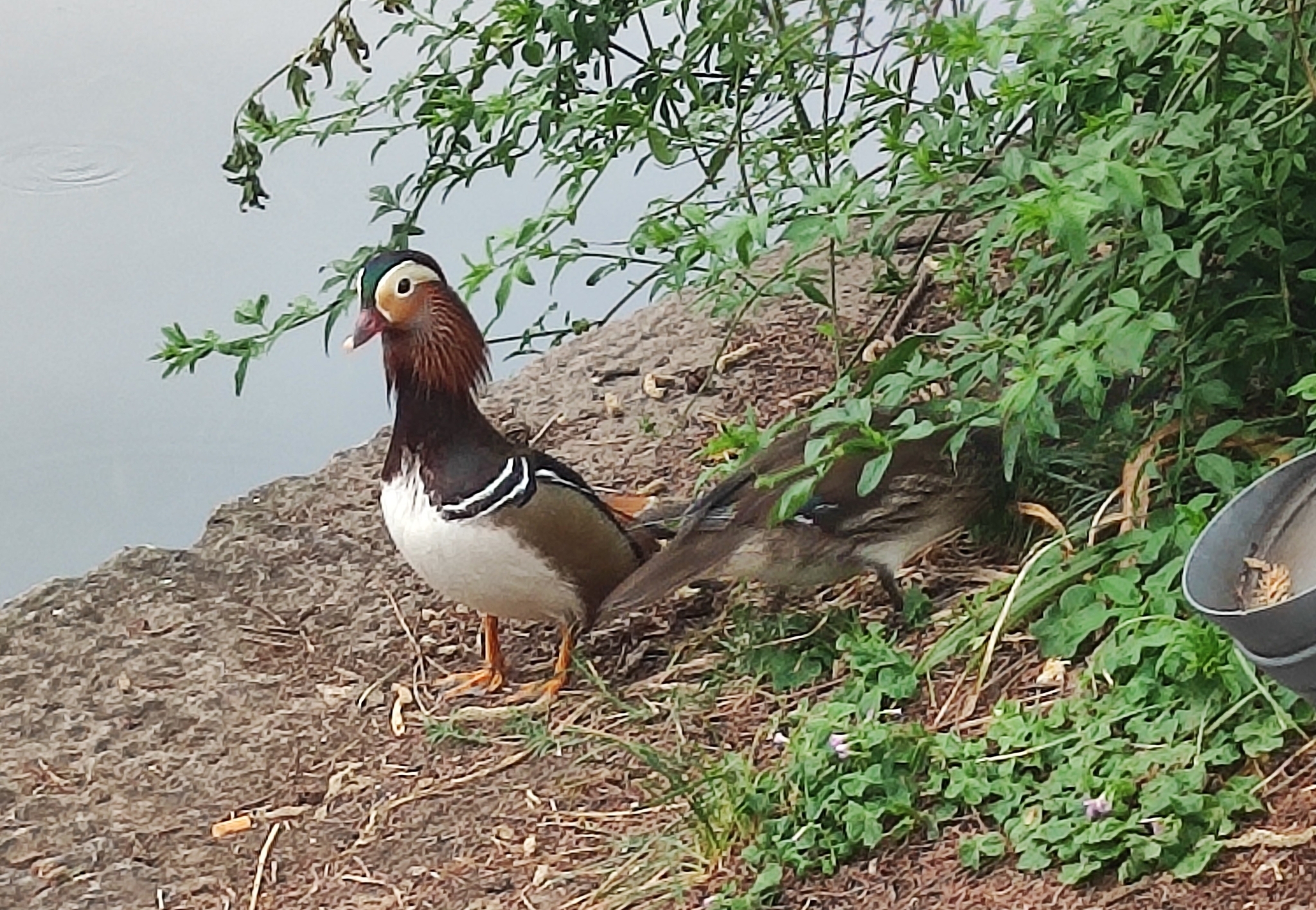
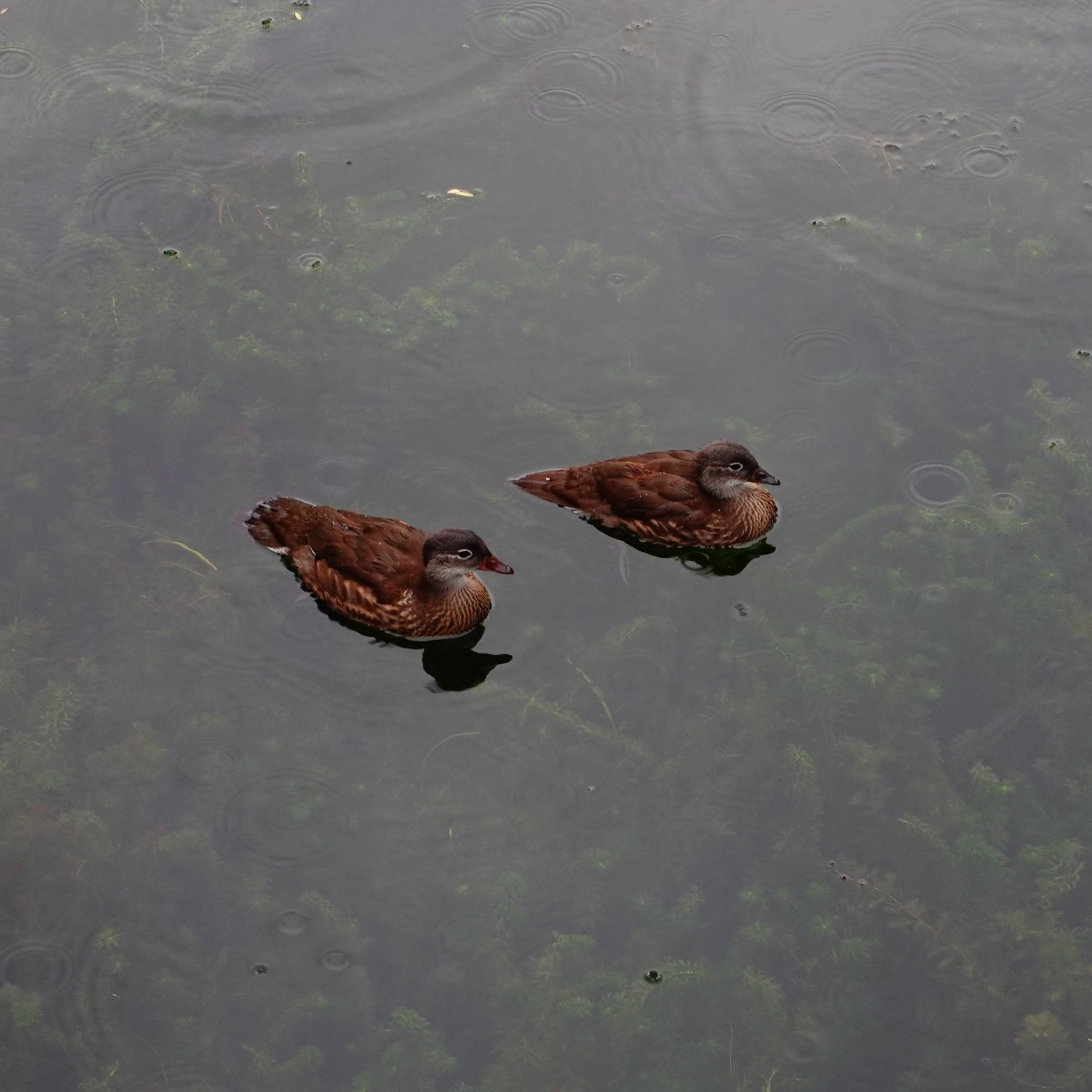
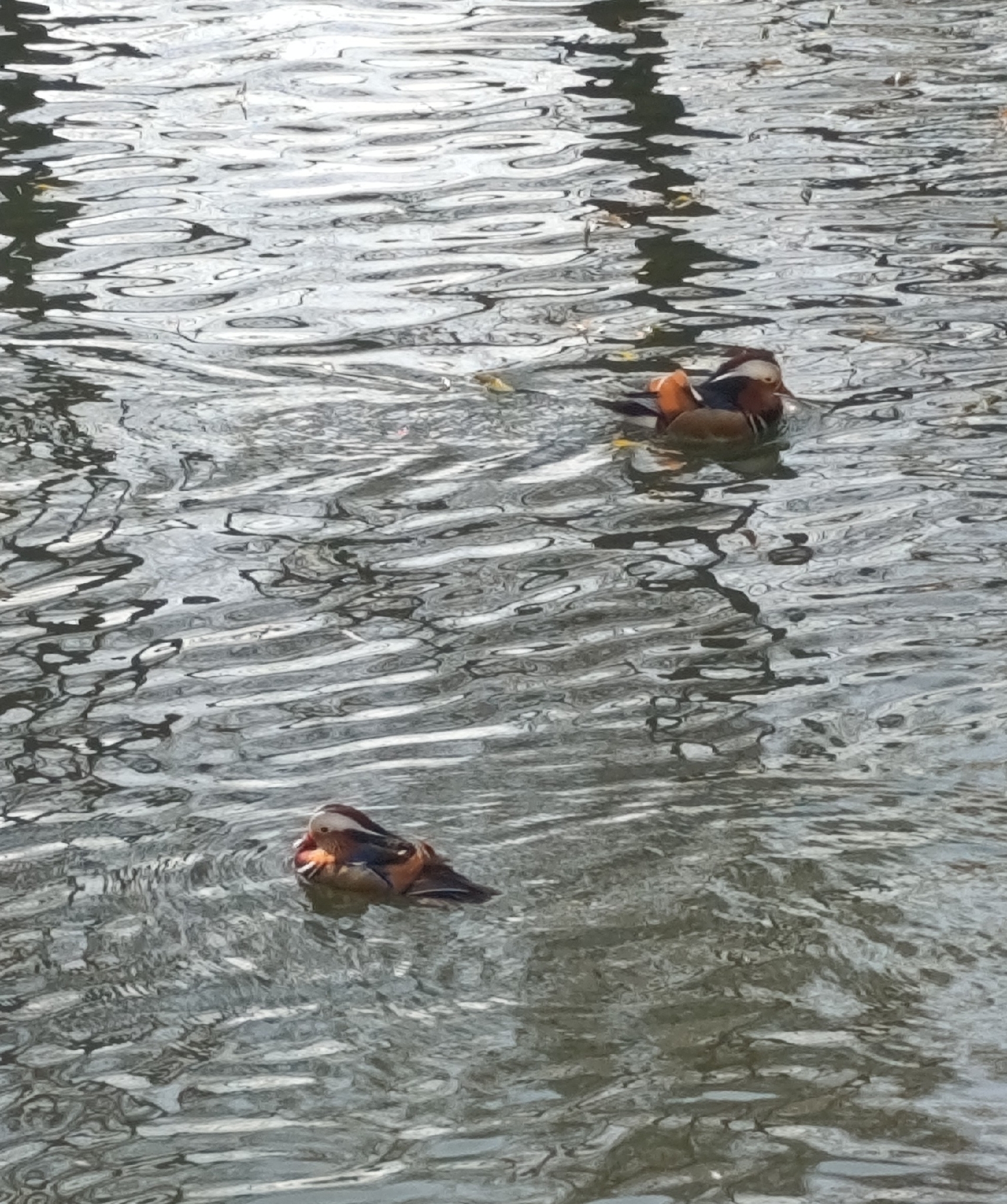
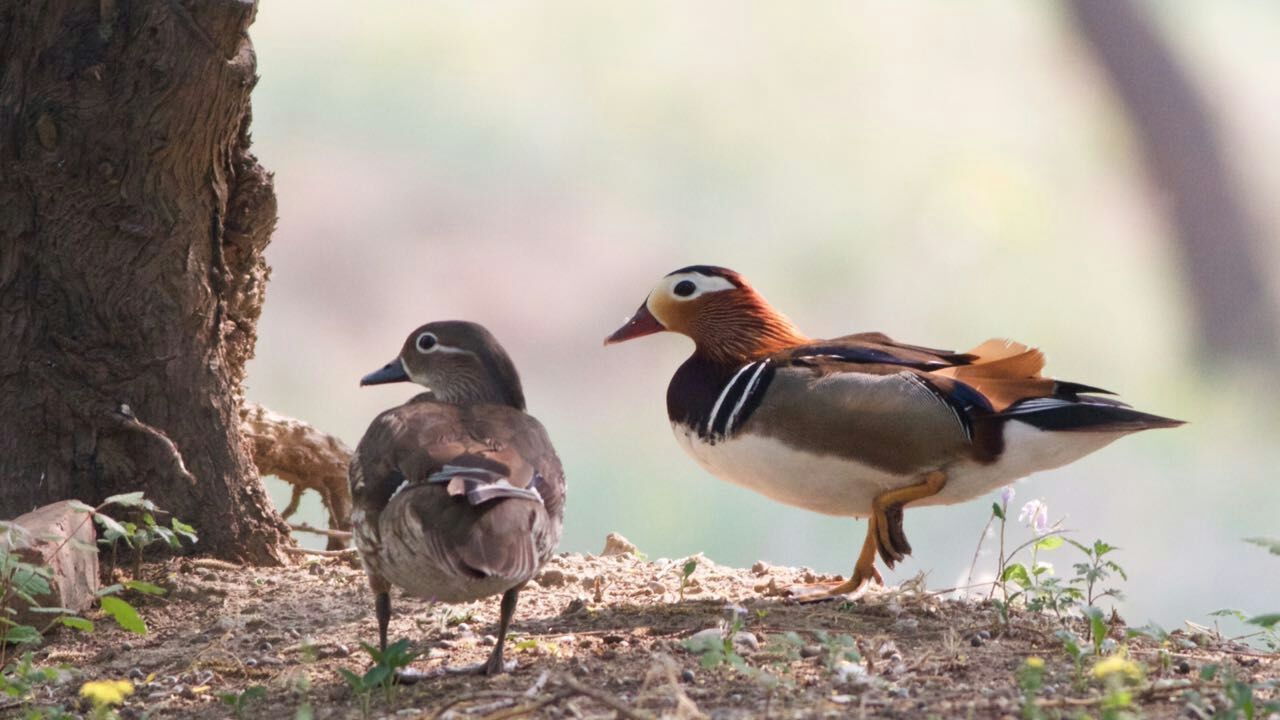
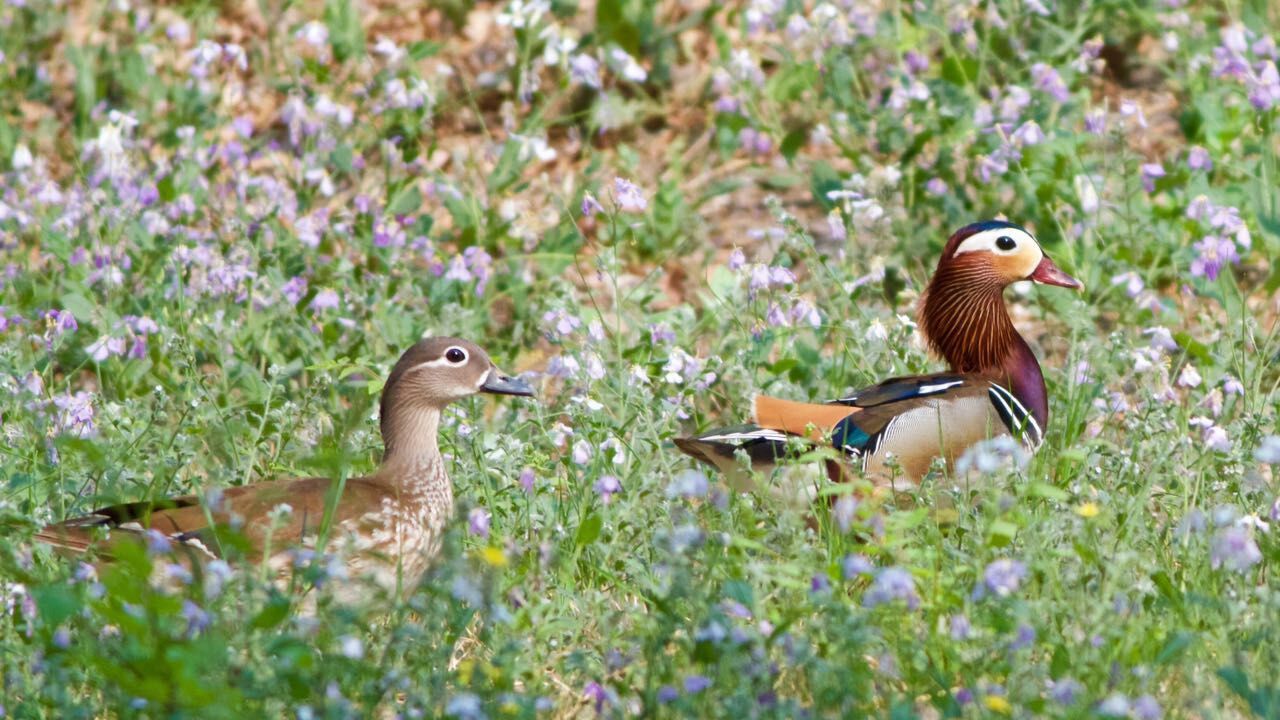
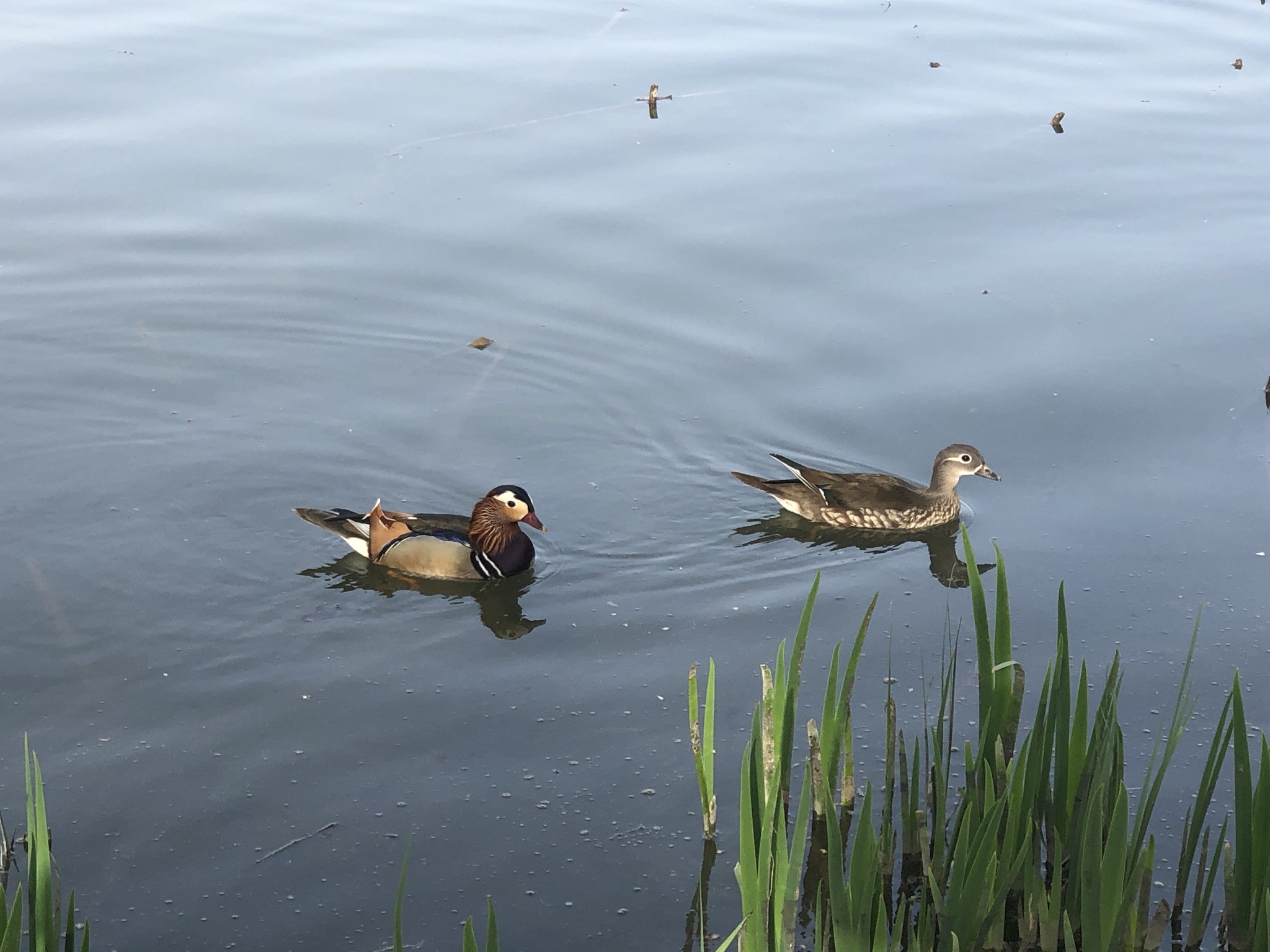
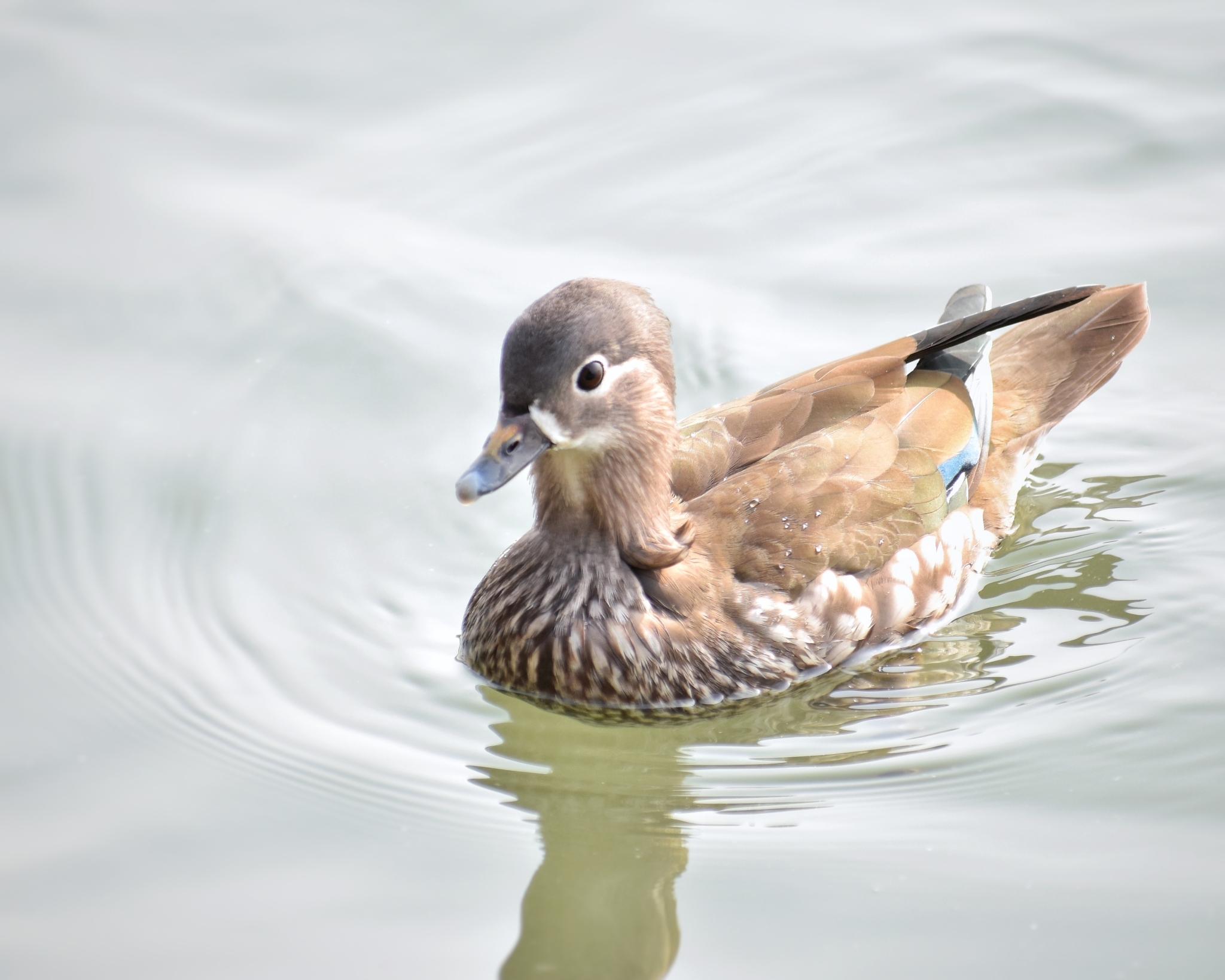
Medium-sized duck, 41–49 cm (16–19 in) long with a 65–75 cm (26–30 in) wingspan. Adult males have a red bill, large white crescent above the eye, reddish face and whiskers, purple breast with two vertical white bars, ruddy flanks, and two orange 'sail' feathers at the back. Females have greyish-brown plumage, a slender white eye-ring and stripe, paler underside, small white flank stripe, and pale bill tip. Both sexes have crests, more pronounced in males. Males undergo a moult into eclipse plumage resembling females but retaining a bright yellow-orange or red beak and lacking a crest.
Identification
Males are distinguished by unique orange sail feathers, purple breast bars, and red bill. Females resemble female wood ducks but are identified by a slender white eye-ring and stripe. Ducklings are distinguished from mallards by an eye-stripe that stops at the eye rather than reaching the bill. Eclipse males are identified by their bright beak and lack of crest.
Distribution & Habitat
Native to East Asia, with populations in eastern Russia, China (below 1,000 pairs), and Japan (approx. 5,000 pairs). Migratory Asian populations overwinter in lowland eastern China and southern Japan. Large introduced feral population in Great Britain (approx. 7,000), with smaller groups in Ireland, continental Europe (largest in Berlin region), and isolated populations in North America (Black Mountain, North Carolina; Sonoma County, California). Prefers dense, shrubby forested edges of rivers and lakes for breeding, up to 1,500 m altitude. Winter habitats include marshes, flooded fields, open rivers, coastal lagoons, and estuaries.
Behavior & Ecology
Shy birds forming small flocks, seeking cover under trees. Breeds in tree cavities near water; clutch size is nine to twelve eggs laid in April or May. Male leaves before hatching; ducklings leap from the nest to follow the mother to water. Diet includes plants, seeds (beech mast, acorns), snails, insects, small fish, worms, frogs, mollusks, and snakes, varying seasonally. Feeds mainly near dawn or dusk. Exhibits conspecific brood parasitism, with 46.1% prevalence recorded in Northeast China.
Conservation
Populations in eastern Russia and China reduced to below 1,000 pairs each due to habitat loss from logging and hunting. Poaching occurs due to the bird's beauty, and accidental shooting happens due to identification difficulties. Predators include mink, raccoon dogs, otters, polecats, Eurasian eagle-owls, and grass snakes.
Culture
In Chinese culture, known as yuanyang, symbolizing conjugal affection, fidelity, and wedded bliss; featured in art, proverbs, and weddings. In Korean culture, represents peace, fidelity, and plentiful offspring; wooden carvings are traditional wedding gifts. In Japanese culture, called oshidori, symbolizing happily married couples; patterns appear on royal attire. Featured on the flag of Weihaiwei during British rule.
Source: Wikipedia · CC BY-SA 3.0
Taxonomy
- Order
- Anseriformes
- Family
- Anatidae
- Genus
- Aix
Distribution
breeds wooded ponds, swamps, and streams of northeastern Asia from southeastern Siberia, eastern China, Korean Peninsula, Japan, and Taiwan; winters to southeastern China and northern southeast Asia; introduced in Western Europe, and escapes frequent in USA
Data Sources
Species description from Wikipedia, licensed under CC BY-SA 3.0.
Bird images and sounds sourced from GBIF, contributed by citizen scientists worldwide under Creative Commons licenses.
Taxonomy data from AviList 2025.