


Mandarin Duck
Aix galericulata
鸳鸯
Introduction
The mandarin duck (Aix galericulata) is a medium-sized perching duck (Anatidae) native to East Asia. It is closely related to North America's wood duck (Aix sponsa). The species exhibits pronounced sexual dimorphism: males display orange sail-like feathers, purple breast markings, and elaborate facial features, while females have grey-brown plumage. It inhabits forested waterways and measures approximately 41-49 cm in length. Historically widespread across East Asia, habitat loss has reduced populations in some regions. The species has established feral populations in Europe and North America.
Description
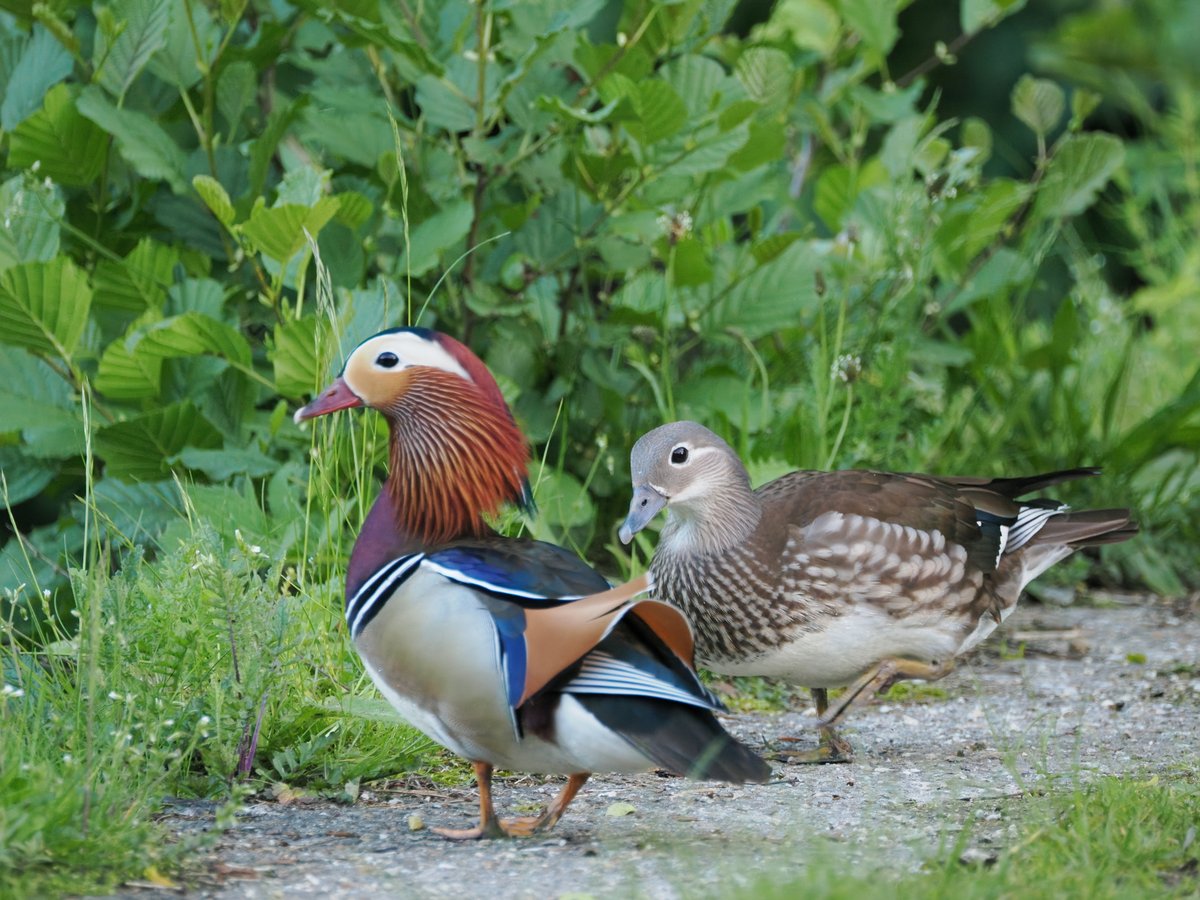
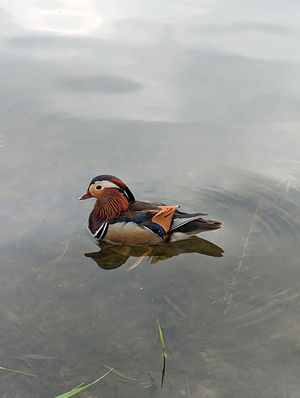
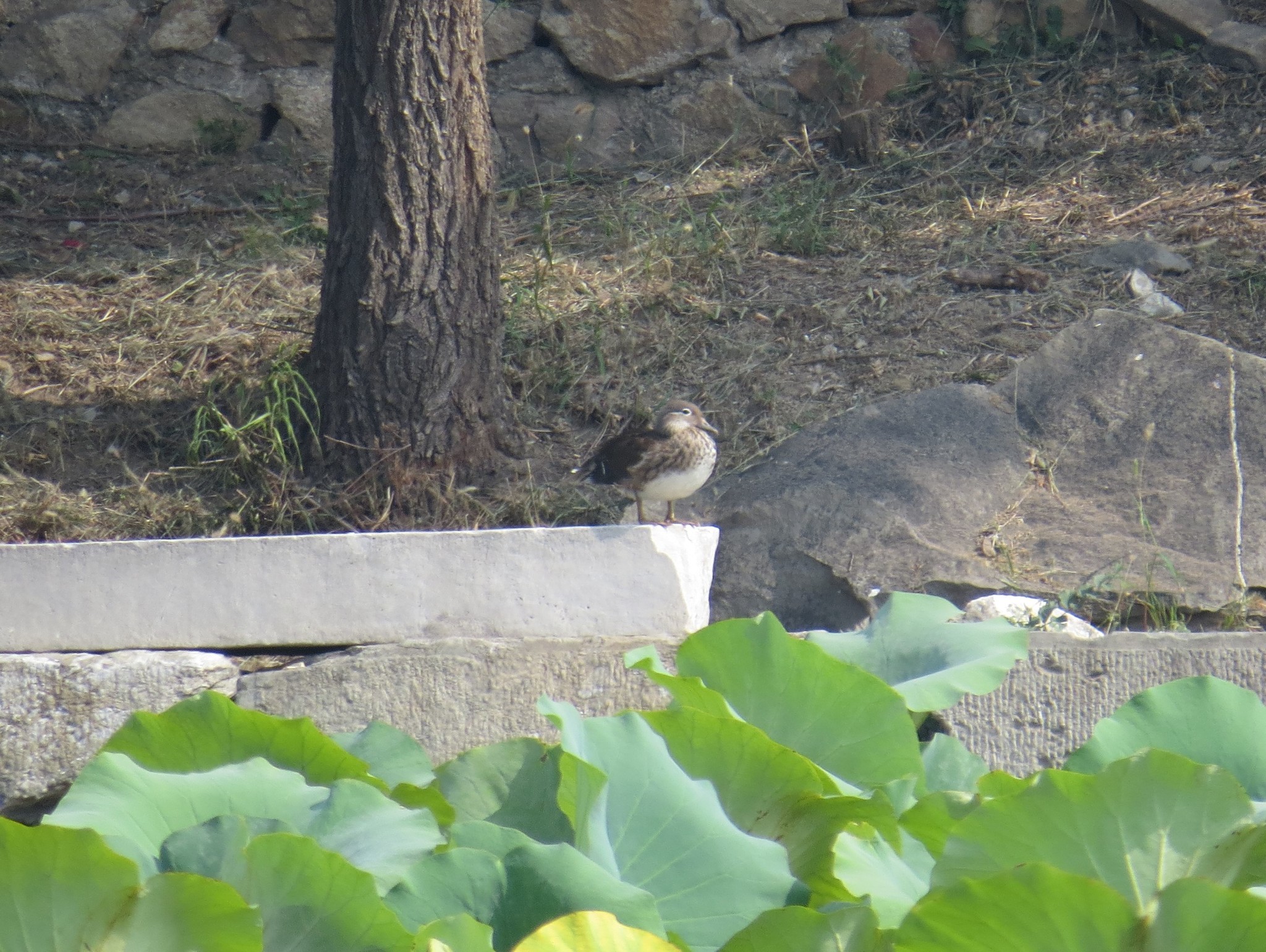
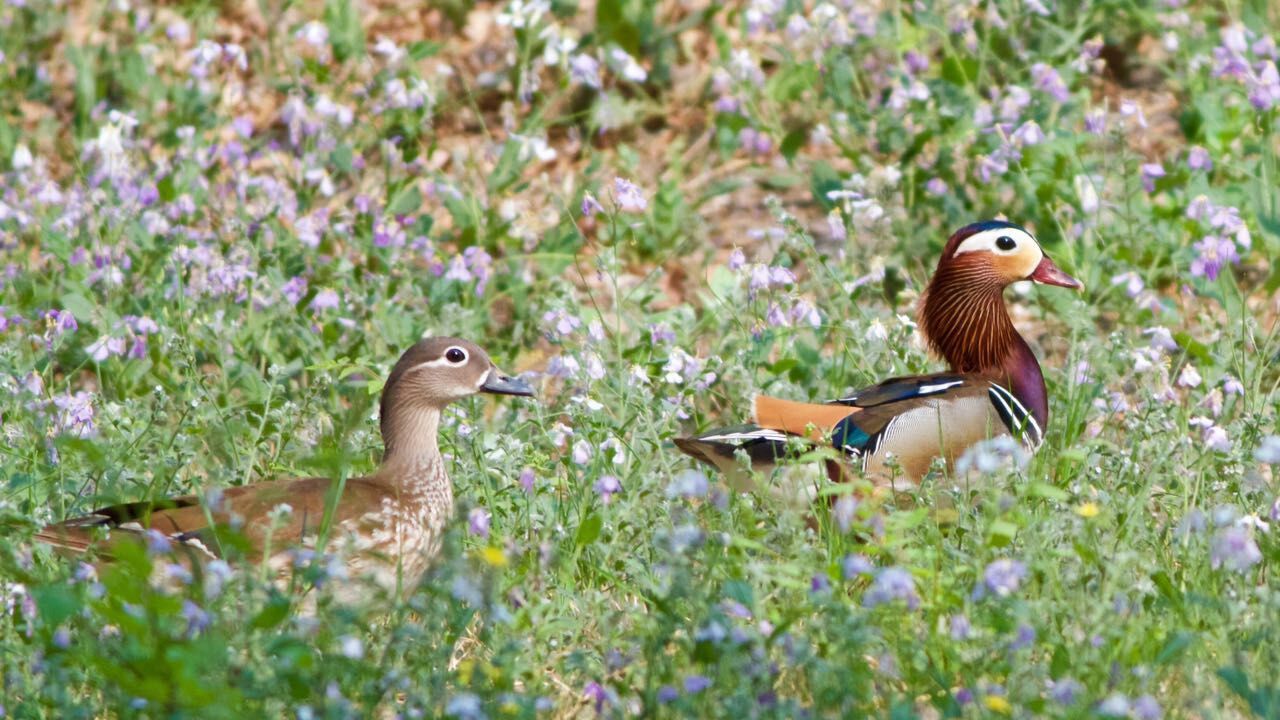
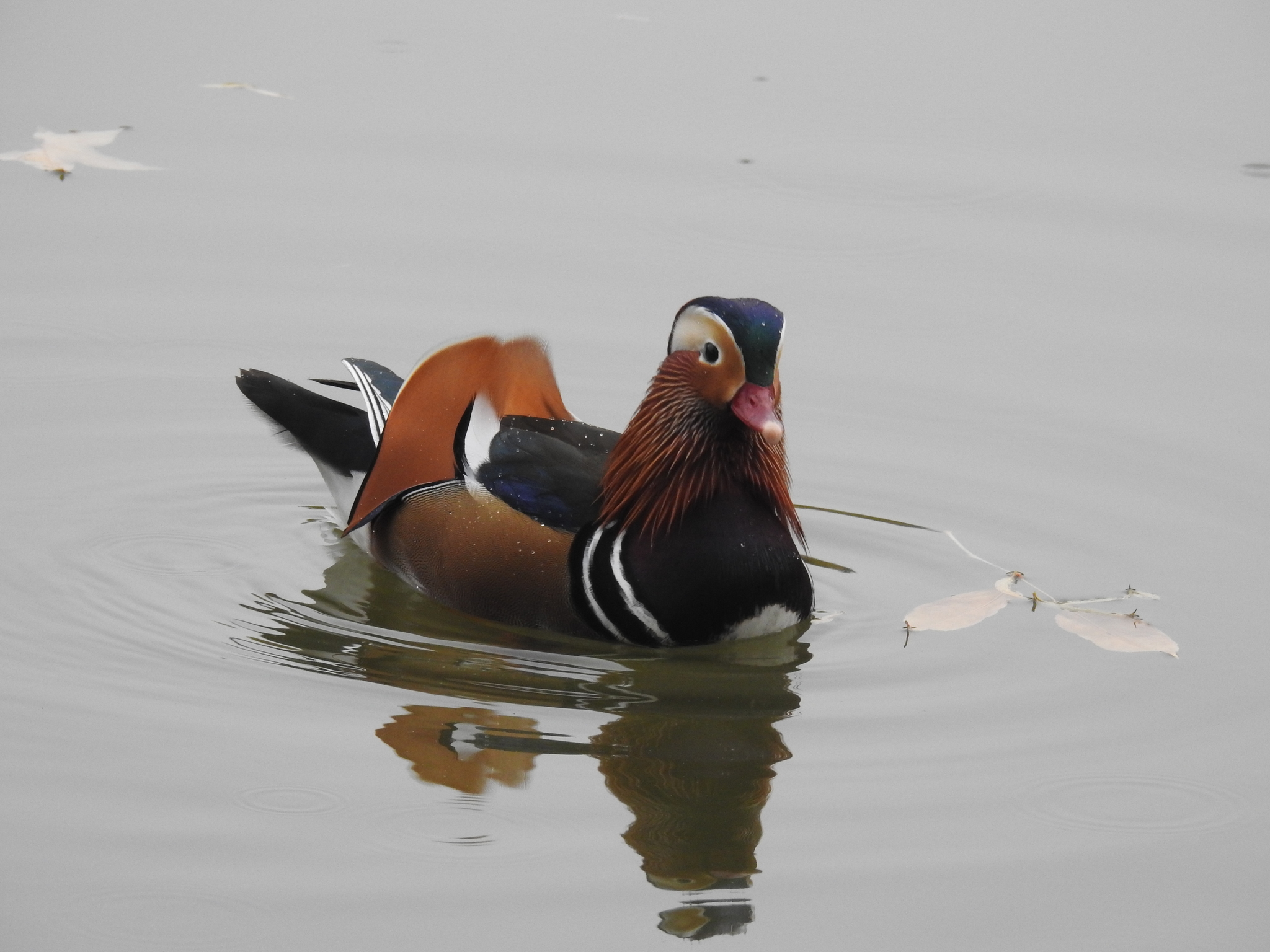
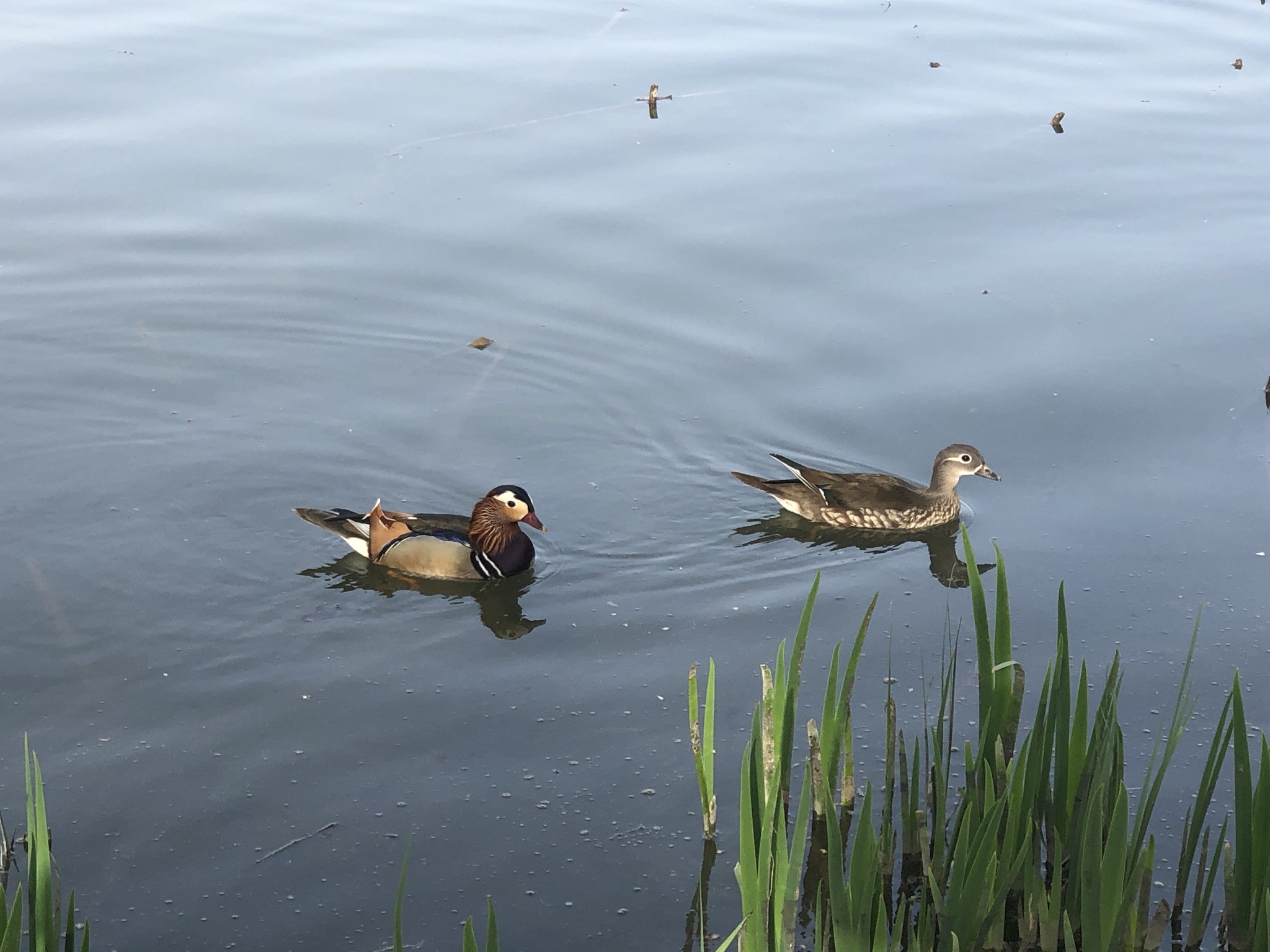
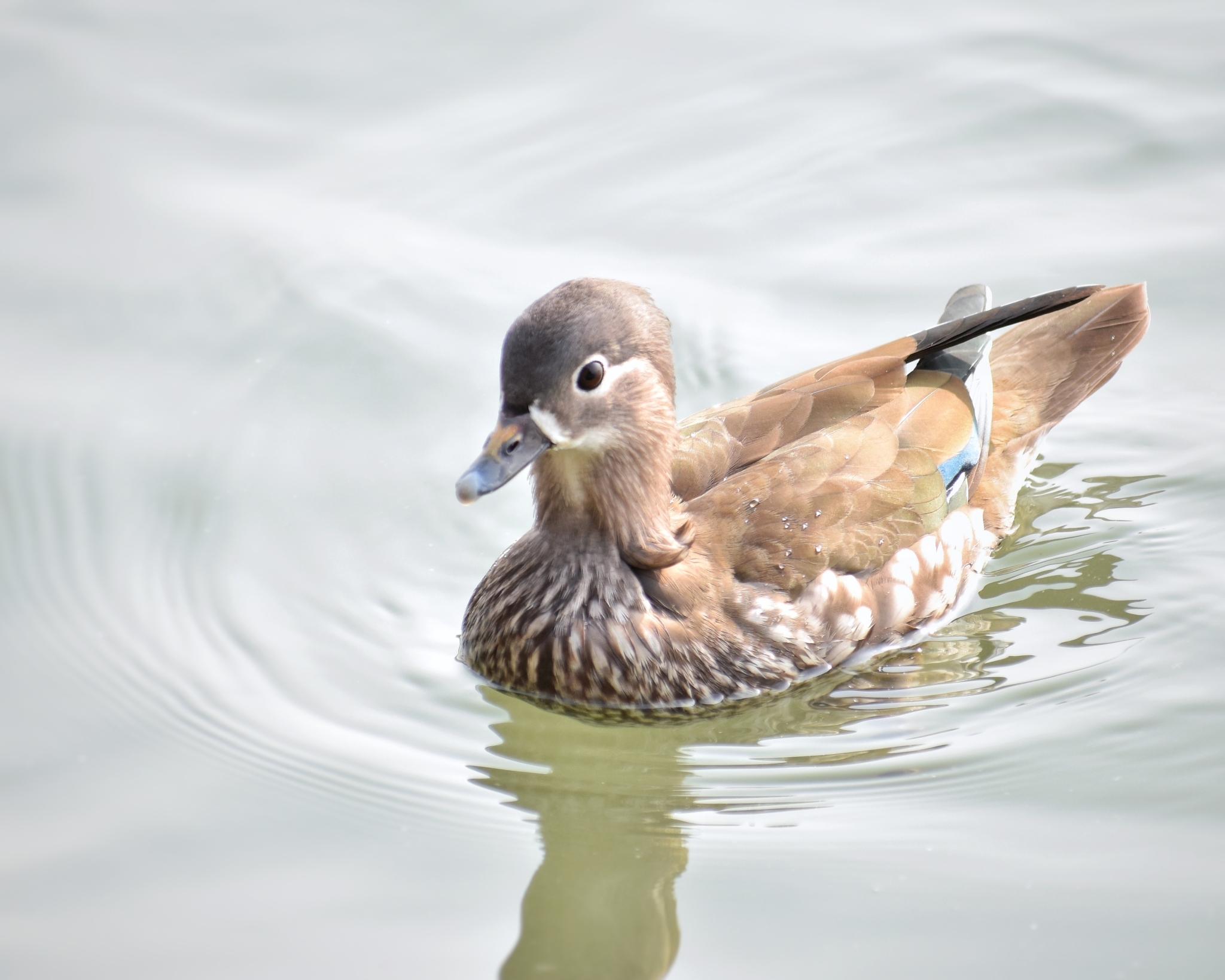
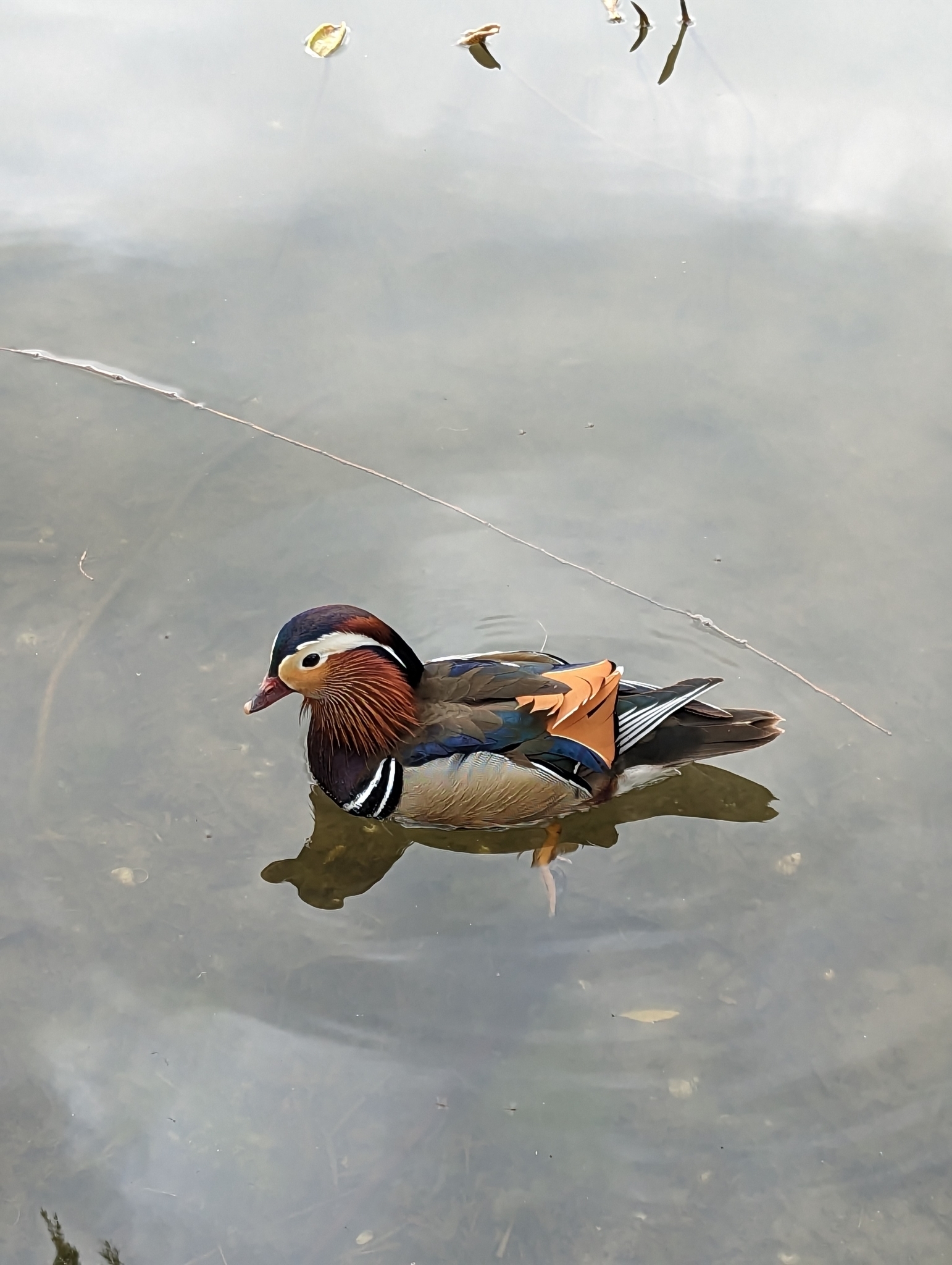
This is a medium-sized perching duck, measuring 41–49 cm in length with a wingspan of 65–75 cm, making it slightly smaller than most dabbling ducks. The species exhibits strong sexual dimorphism. Adult males feature a small red bill, a prominent white crescent above the eye, reddish facial feathering with distinctive 'whiskers,' and a purple breast marked with two vertical white bars. Their flanks are ruddy-colored, and they possess striking orange 'sail' feathers—modified secondary flight feathers that project upward like boat sails. Females have greyish-brown plumage overall, with a slender white eye-ring and a stripe extending backward from the eye, a pale underside, a small white flank stripe, and a pale-tipped bill. Both sexes possess crests, though this feature is more pronounced in males. During eclipse plumage after the breeding season, males resemble females but can be distinguished by their bright yellow-orange or red beak, lack of crest, and less prominent eye-stripe.
Identification
Female mandarin ducks closely resemble female wood ducks, sharing similar grey-brown plumage and head markings, though the white eye-ring and stripe pattern can aid identification. In eclipse plumage, males appear female-like but retain their bright yellow-orange or red beak and lack the pronounced crest. A key identification feature is visible in ducklings: mandarin duck ducklings have an eye-stripe that stops at the eye, whereas mallard ducklings have eye-stripes that extend all the way to the bill. The male's orange sail feathers are diagnostic in breeding plumage, as is the combination of red bill, white crescent above the eye, and purple breast. The species' preference for wooded, shrubby wetland edges rather than open water also helps distinguish it from many common dabbling ducks.
Distribution & Habitat
The mandarin duck is native to the East Palearctic, once widespread across East Asia but now reduced in eastern Russia and China to below 1,000 pairs each. Japan holds approximately 5,000 pairs. Asian populations are migratory, overwintering in lowland eastern China and southern Japan. Introduced populations have established themselves widely: about 7,000 birds exist in Britain, with smaller numbers in Ireland (particularly Dublin parks), and the largest European population around Berlin. In North America, isolated populations exist in Black Mountain, North Carolina, and Sonoma County, California. The species inhabits forested edges of rivers and lakes in its native range, occurring up to 1,500m altitude, and winters in marshes, flooded fields, and coastal areas. Introduced populations occupy more open habitats around lakes, water meadows, and cultivated areas with nearby woodlands.
Behavior & Ecology
Mandarin ducks are relatively shy compared to other duck species, preferring cover under overhanging vegetation and forming smaller flocks. They become bolder when accustomed to human presence. Breeding occurs in densely wooded areas near shallow water, with nest cavities in trees close to the water. The female lays a clutch of nine to twelve eggs in April or May; the male may defend the nest but does not incubate. Shortly after hatching, the mother coaxes ducklings to leap from the nest cavity to the ground below. The species practices conspecific brood parasitism, with studies showing up to 46.1% of females in some populations laying eggs in others' nests. Feeding occurs mainly near dawn or dusk through dabbling or walking on land. The diet is predominantly plant-based—beech mast, acorns, and seeds—with seasonal additions of snails, insects, fish, and small aquatic creatures. They feed while perching in trees or on the ground during the day.
Conservation
The mandarin duck is classified as Least Concern by the IUCN, though populations in parts of its native range have declined significantly. The primary threats are habitat loss from logging and deforestation of forested wetland areas, and hunting—though the species is not targeted for food, many are shot accidentally due to identification difficulties in flight. The species has an unusual chromosome count of 84 (all acrocentric), compared to 80 in other ducks, making successful hybridization with other species very difficult. Despite these threats, the species has benefited from established feral populations in Europe and remains popular in captivity, with various color mutations selectively bred by waterfowl collectors. In its introduced UK range, the species occupies a previously vacant ecological niche and is not considered invasive, though potential competition with tree-nesting species like common goldeneye is being monitored as populations expand.
Culture
The mandarin duck holds significant cultural symbolism throughout East Asia, representing lifelong pairs and conjugal fidelity in Chinese, Korean, and Japanese traditions. In Chinese culture, the term 'yuanyang' refers to mandarin ducks and symbolizes affectionate couples; the species appears frequently in art and is used as a wedding symbol. A well-known proverb describes loving couples as 'two mandarin ducks playing in water.' In Cantonese, 'yuan-yang' colloquially means an unlikely pair or odd couple, referencing the striking differences between male and female plumage. Korean culture similarly associates the ducks with peace, fidelity, and plentiful offspring, with pairs of carved wooden 'wedding ducks' given as traditional wedding gifts. In Japan, called 'oshidori,' they appear in the phrase 'oshidori fufu' meaning a happily married couple, and the species features in decorative patterns including the ceremonial Sokutai worn by the Crown Prince.
Source: Wikipedia · CC BY-SA 3.0
Taxonomy
- Order
- Anseriformes
- Family
- Anatidae
- Genus
- Aix
- eBird Code
- manduc
Distribution
breeds wooded ponds, swamps, and streams of northeastern Asia from southeastern Siberia, eastern China, Korean Peninsula, Japan, and Taiwan; winters to southeastern China and northern southeast Asia; introduced in Western Europe, and escapes frequent in USA
Data Sources
Species description from Wikipedia, licensed under CC BY-SA 3.0.
Bird images and sounds sourced from GBIF, contributed by citizen scientists worldwide under Creative Commons licenses.
Taxonomy data from AviList 2025.