Passeriformes / Nectariniidae / Aethopyga
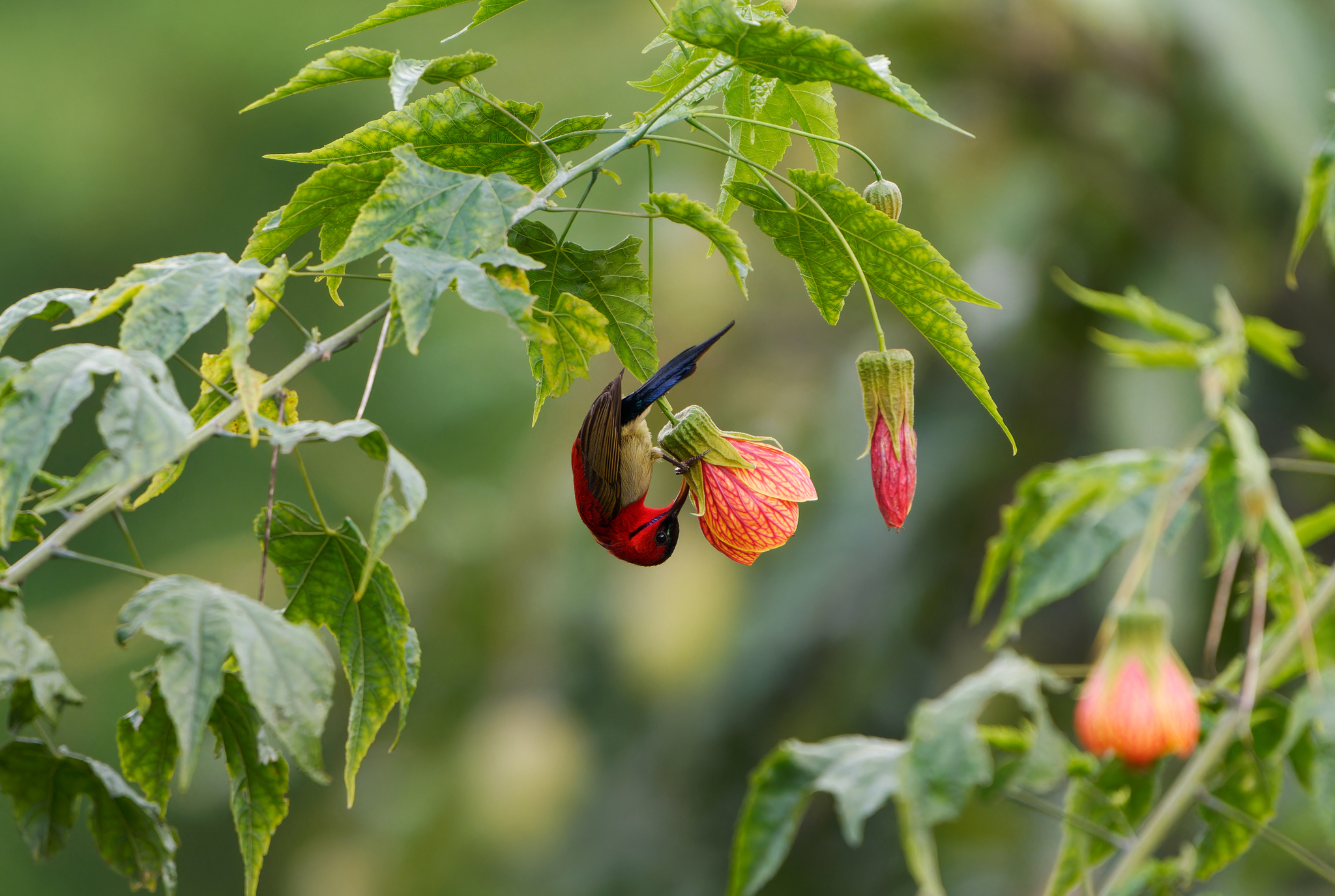
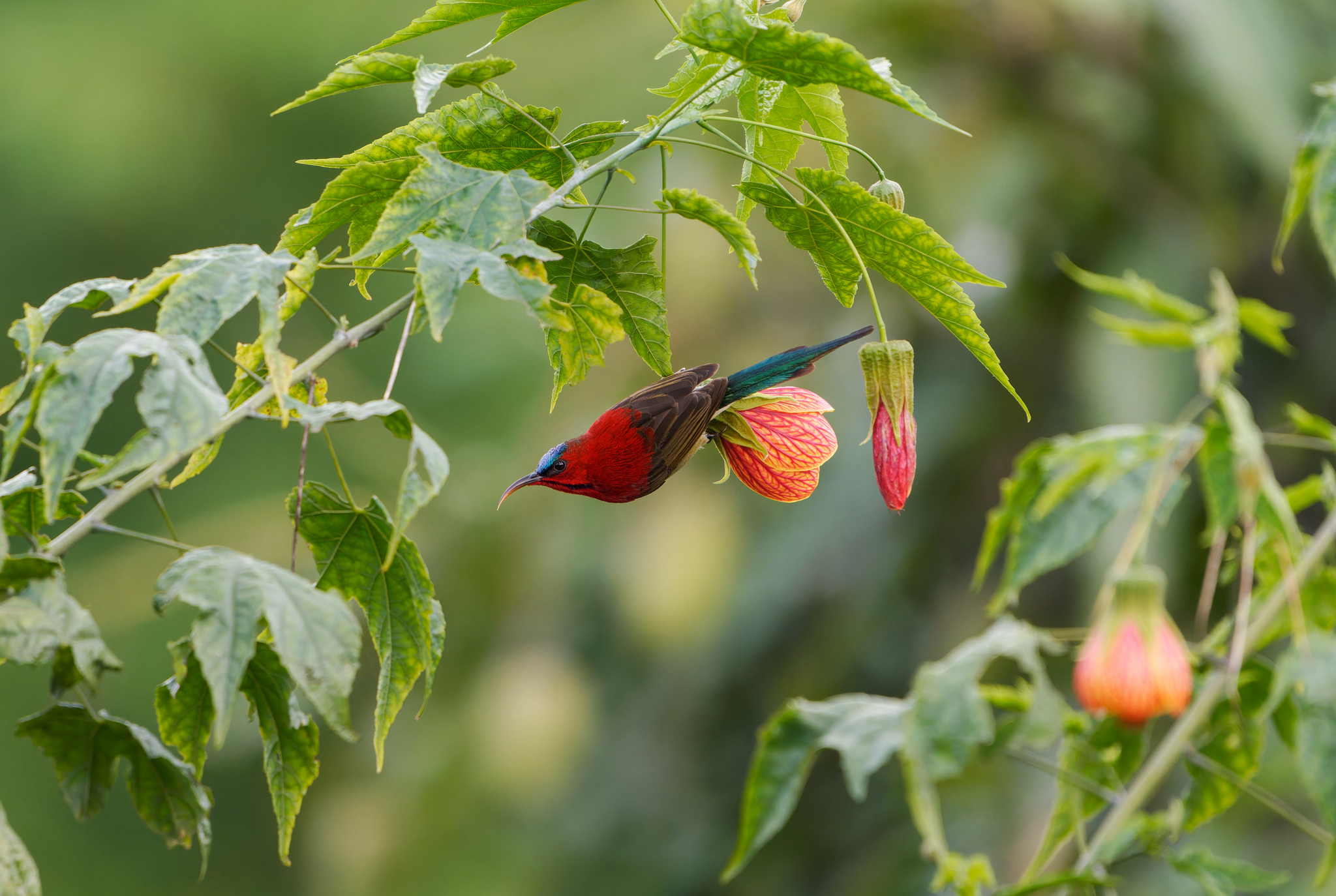
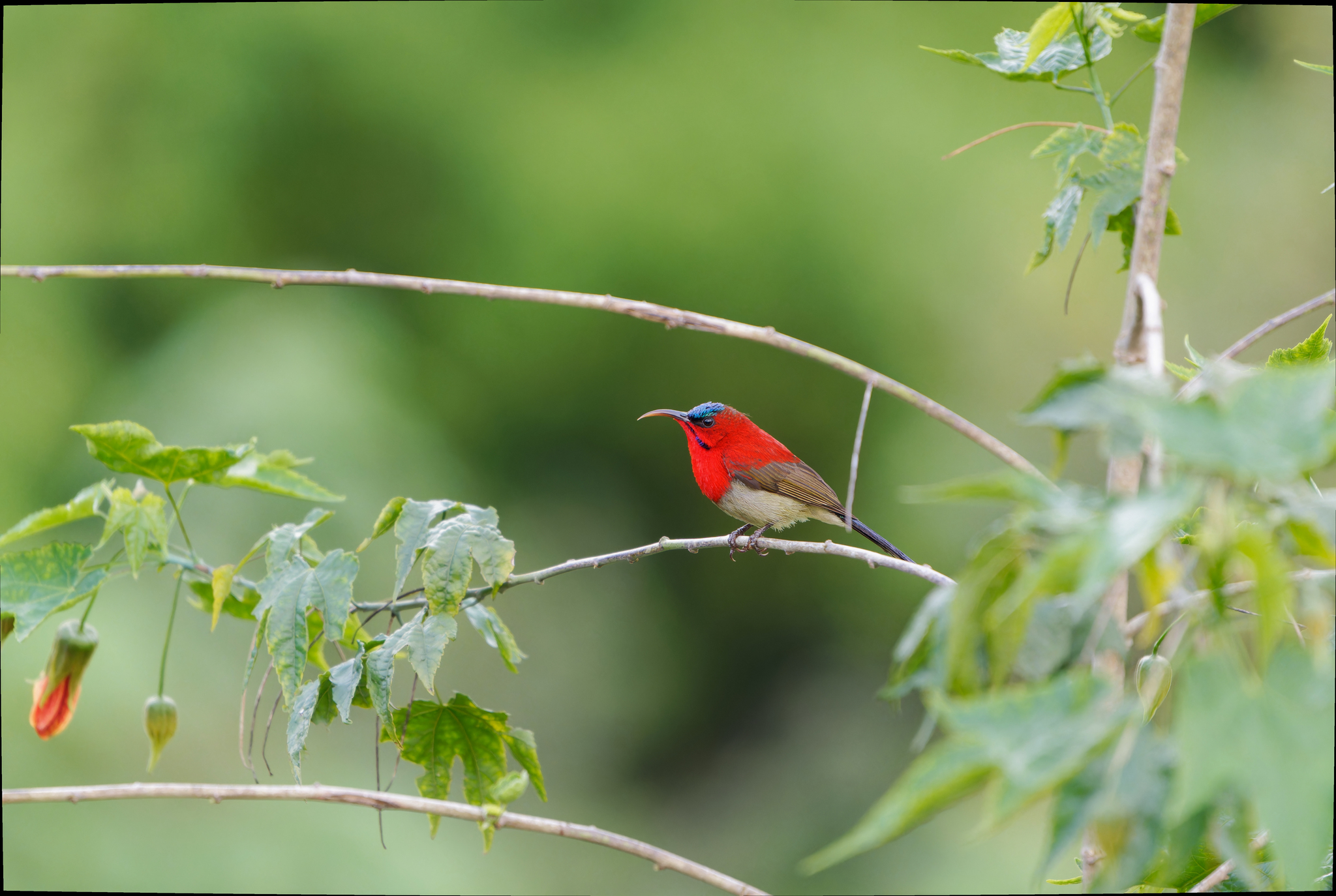
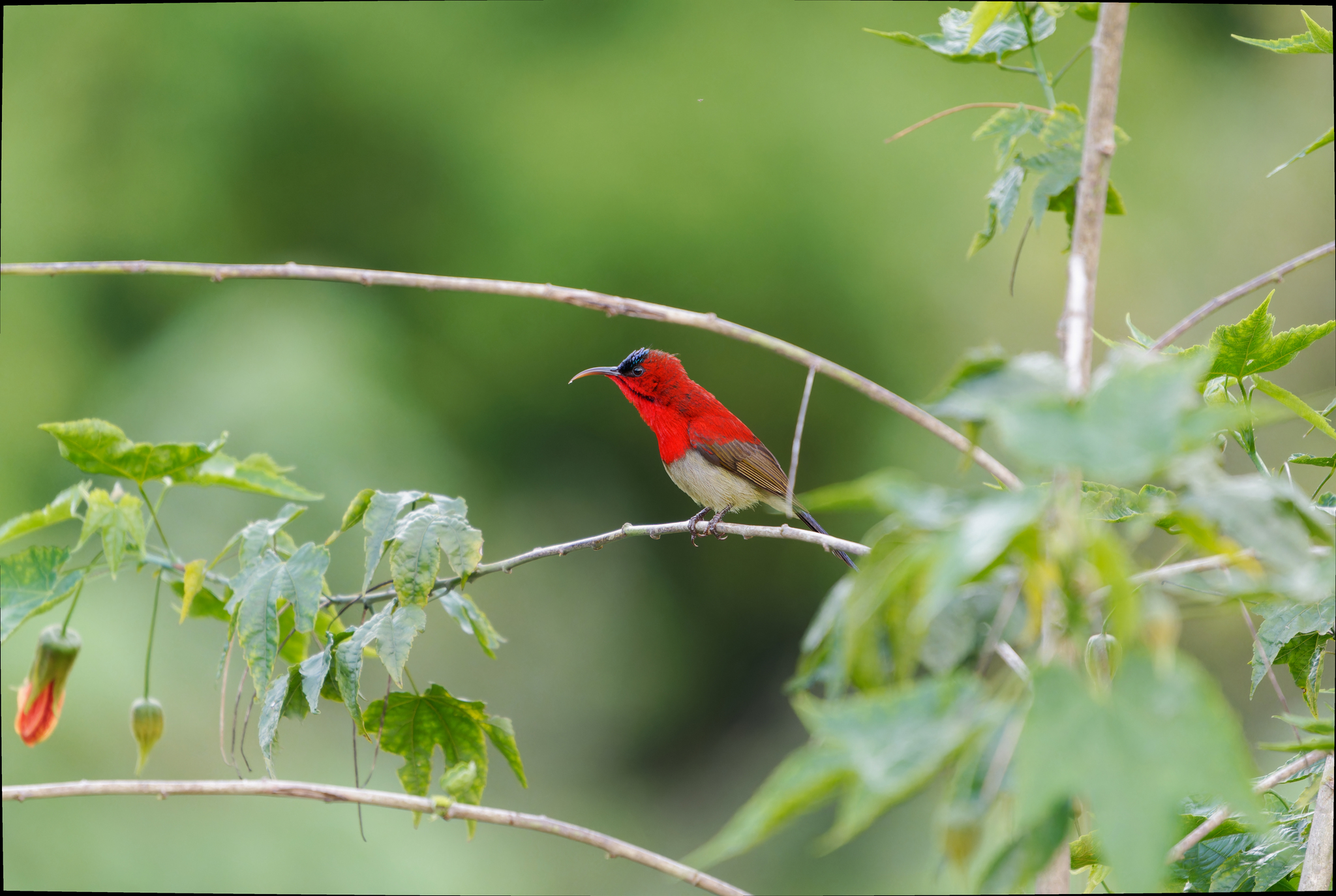
Crimson Sunbird
Aethopyga siparaja · 黄腰太阳鸟
Introduction
A species in the sunbird family that feeds largely on nectar, occasionally taking insects especially when feeding young. Flight is fast and direct on short wings. It usually perches to feed but can hover like a hummingbird.
Description
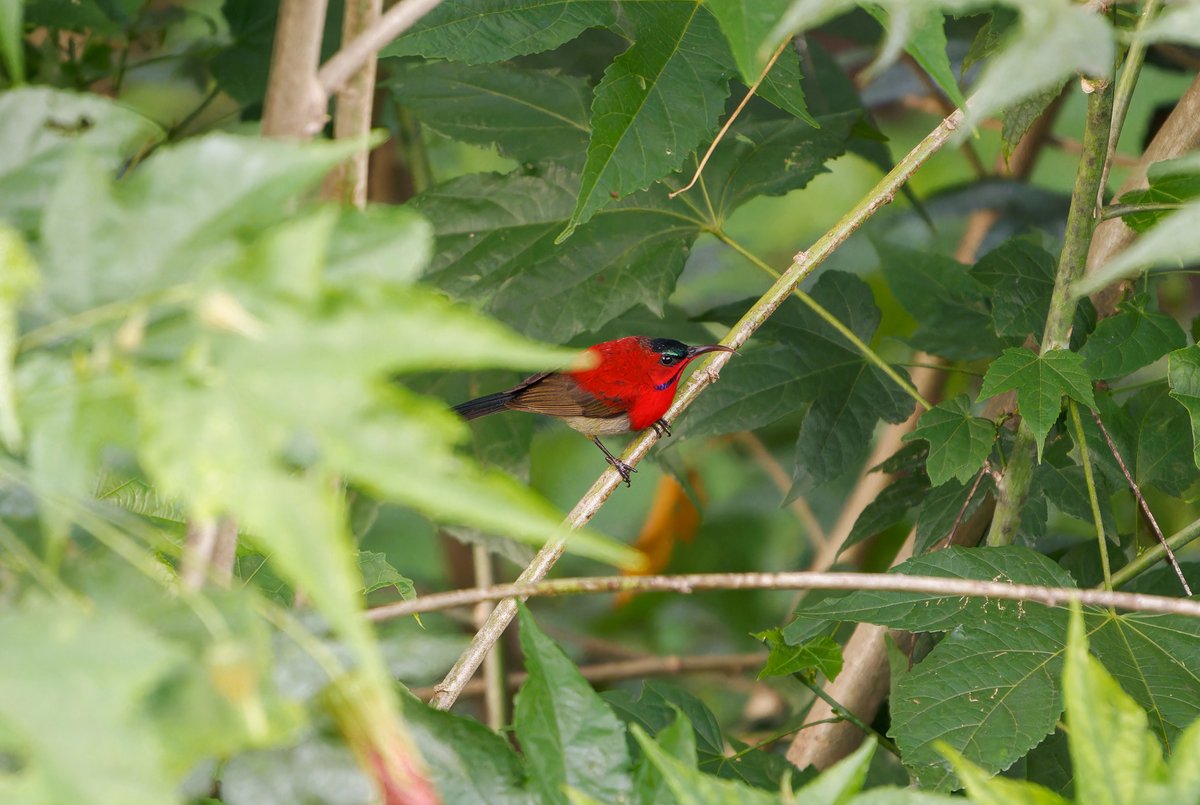
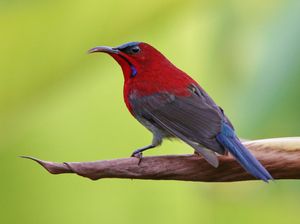
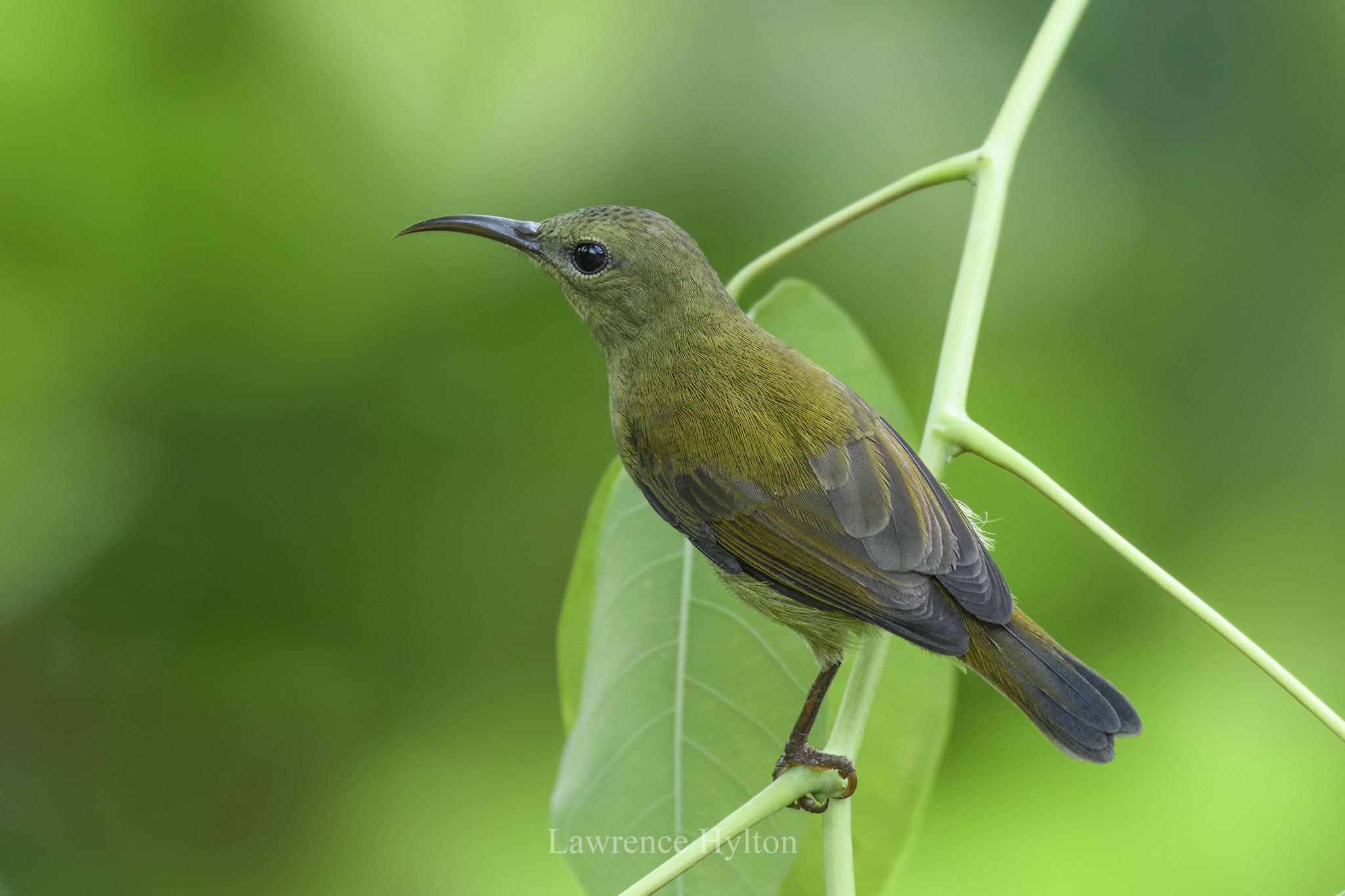
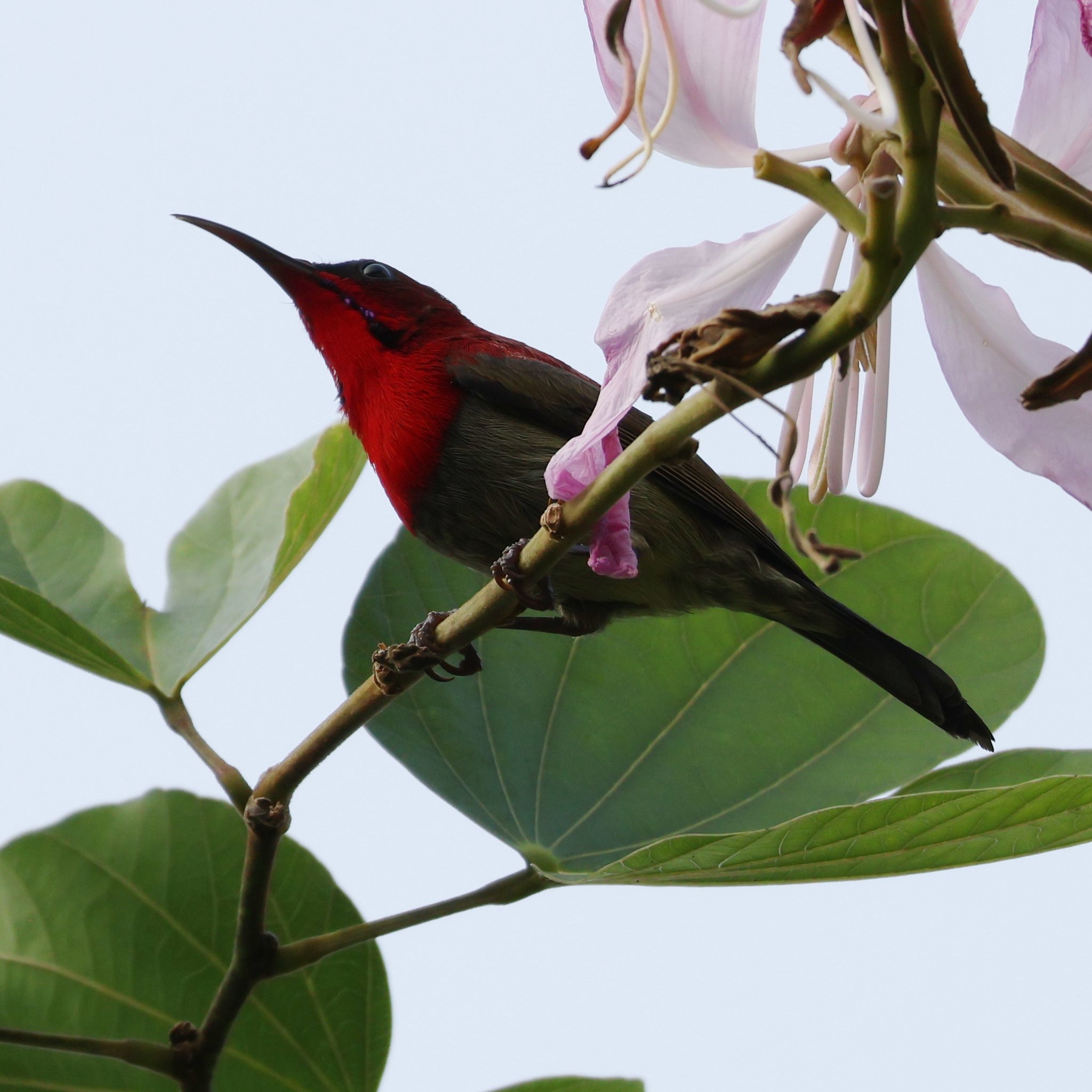
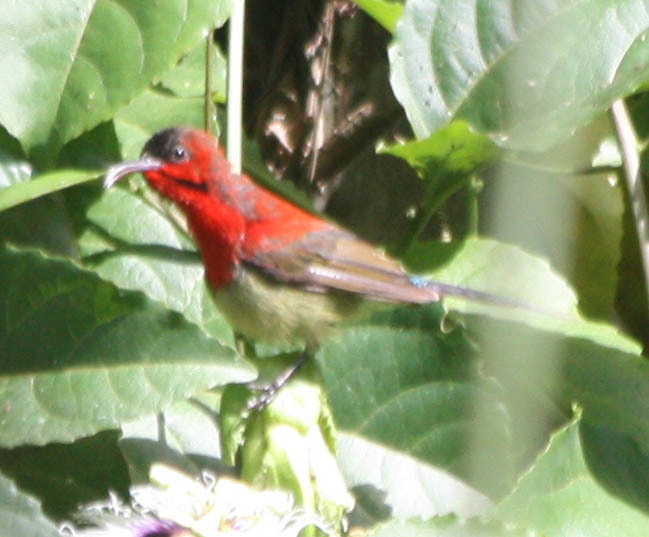
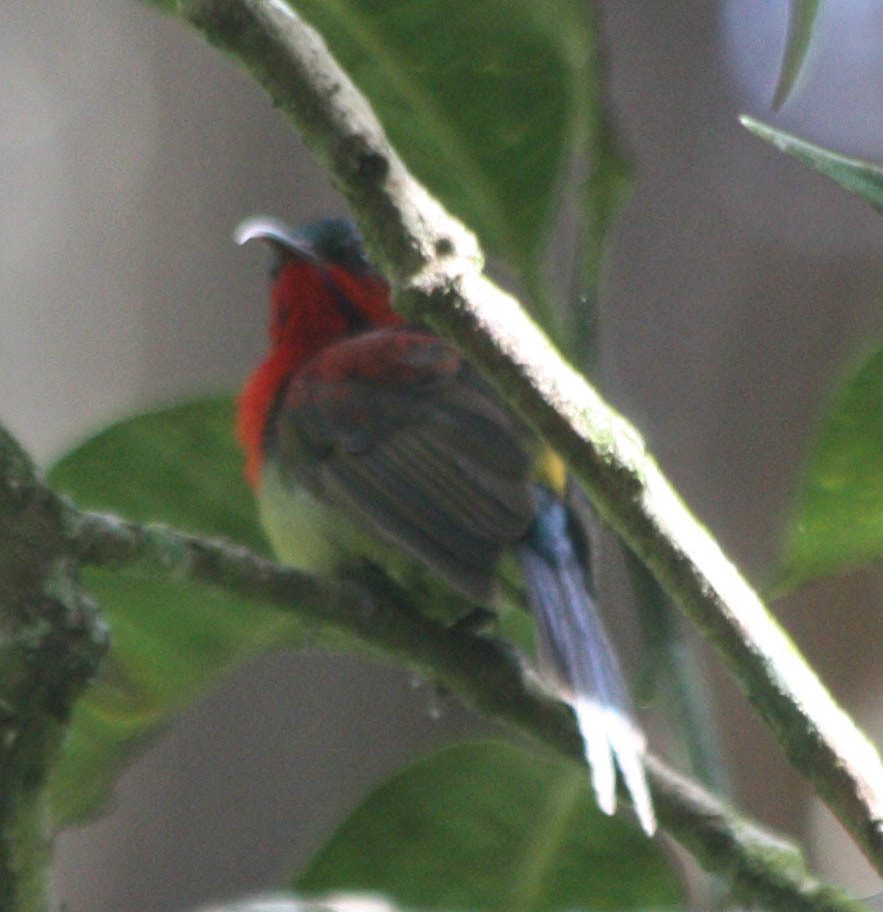
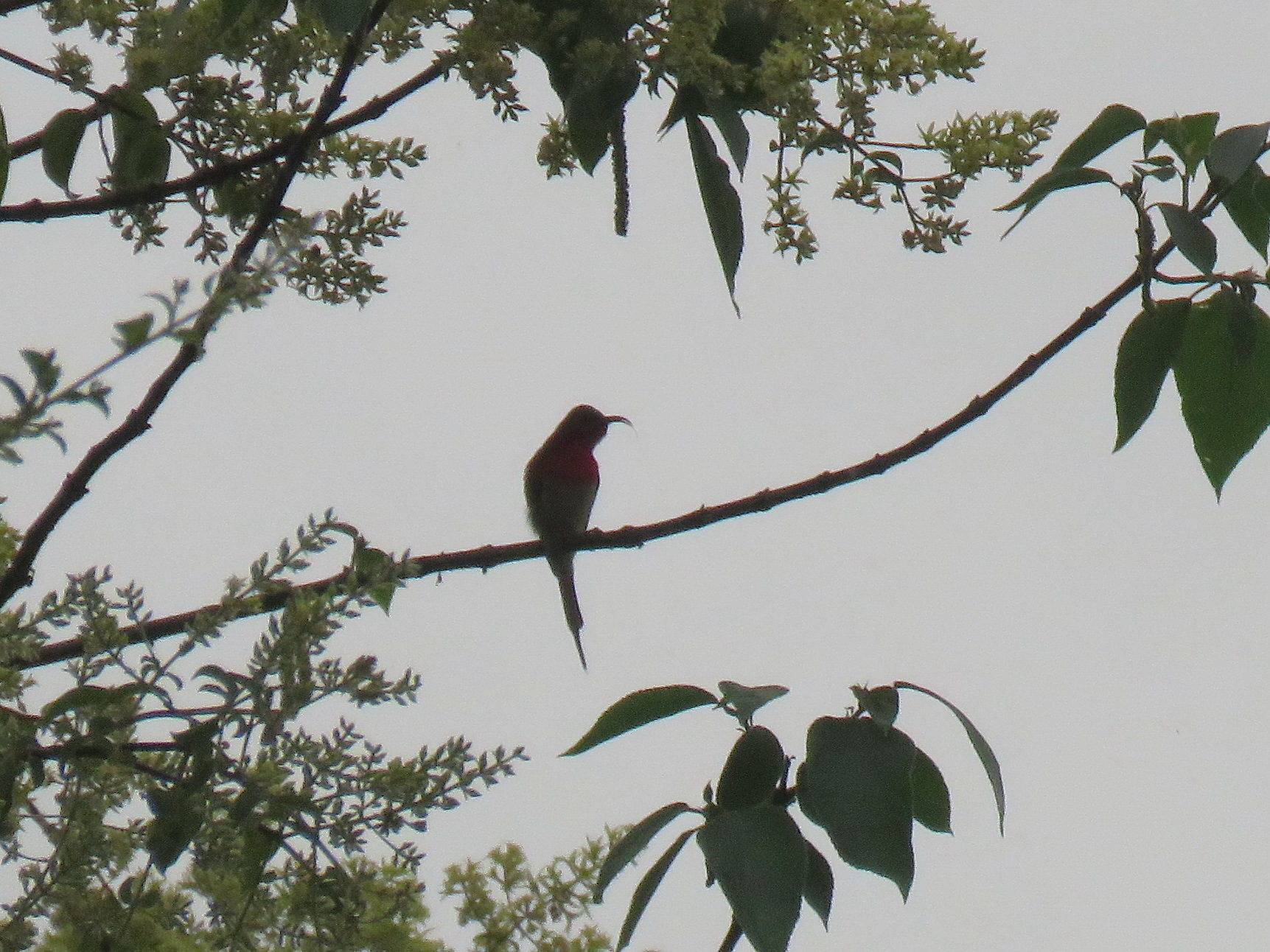
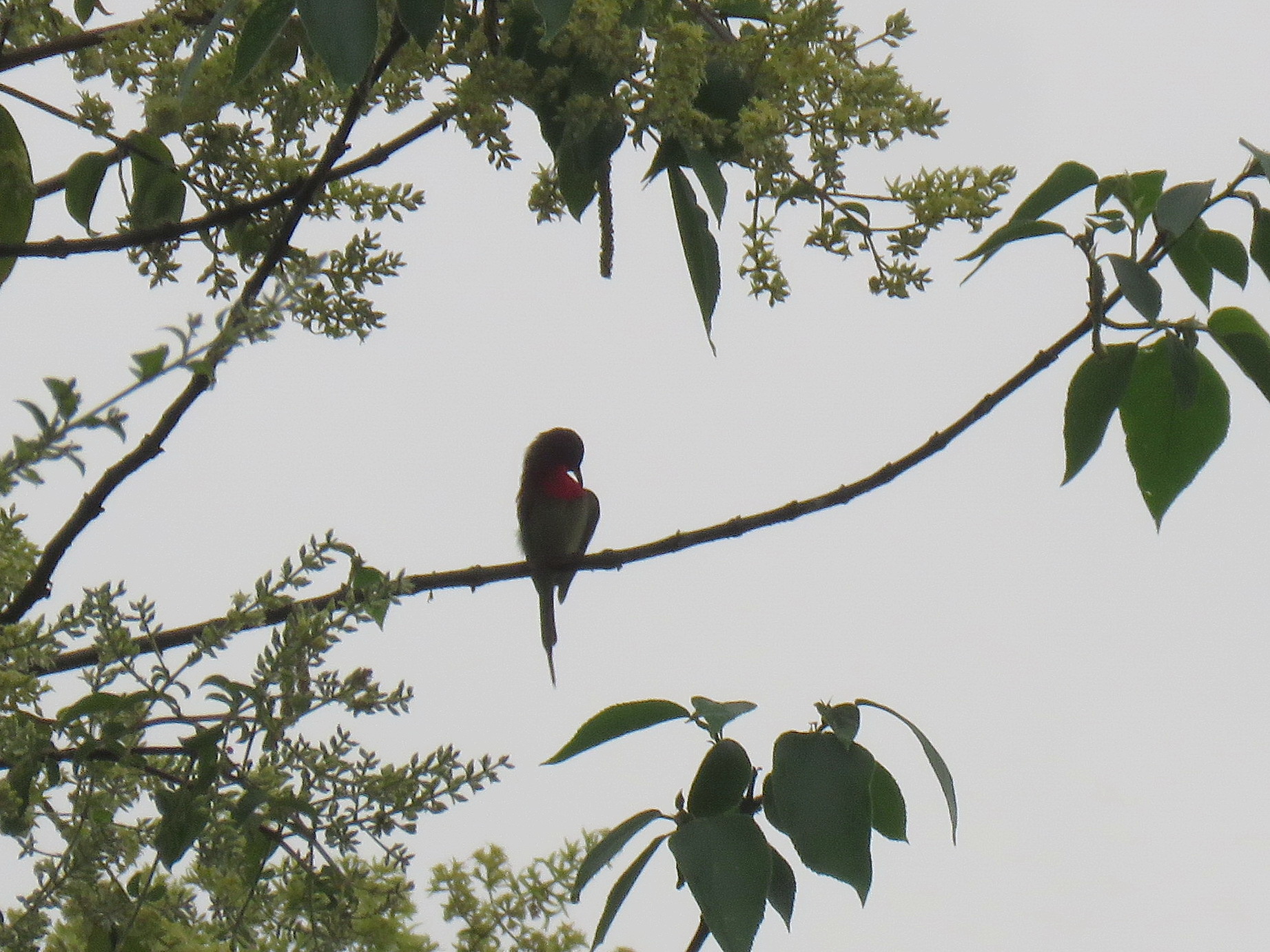
Tiny, 11 cm long, with medium-length thin down-curved bills and brush-tipped tubular tongues adapted for nectar feeding. Adult males have a crimson breast, maroon back, black malar stripes, yellow rump, and olive belly. In most of the range, males possess a long green-blue tail, though populations in the Nicobar Islands and Western Ghats lack these long central tail feathers. Females have an olive-green back, yellowish breast, and white tips to the outer tail feathers.
Identification
Key marks include the male's crimson breast, maroon back, and black malar stripes. Females are identified by olive-green upperparts and white-tipped outer tail feathers. The call is chee-cheewee.
Distribution & Habitat
Resident breeder in tropical southern Asia from India, through Nepal, Pakistan, Bangladesh, and Myanmar to Indonesia and Brunei. Occurs in forest and cultivated areas.
Behavior & Ecology
Feeds largely on nectar, supplementing diet with insects particularly when feeding young. Lays two or three eggs in a suspended nest in a tree.
Culture
Unofficial national bird of Singapore, as declared by the Nature Society Singapore.
Source: Wikipedia · CC BY-SA 3.0
Taxonomy
- Order
- Passeriformes
- Family
- Nectariniidae
- Genus
- Aethopyga
Vocalizations
Subspecies (14)
-
Aethopyga siparaja beccarii
central, southeastern, and southern Sulawesi, including Buton, Muna and Kabaena islands (off southeast)
Data Sources
Species description from Wikipedia, licensed under CC BY-SA 3.0.
Bird images and sounds sourced from GBIF, contributed by citizen scientists worldwide under Creative Commons licenses.
Taxonomy data from AviList 2025.