Crimson Sunbird
Aethopyga siparaja
黄腰太阳鸟
Introduction
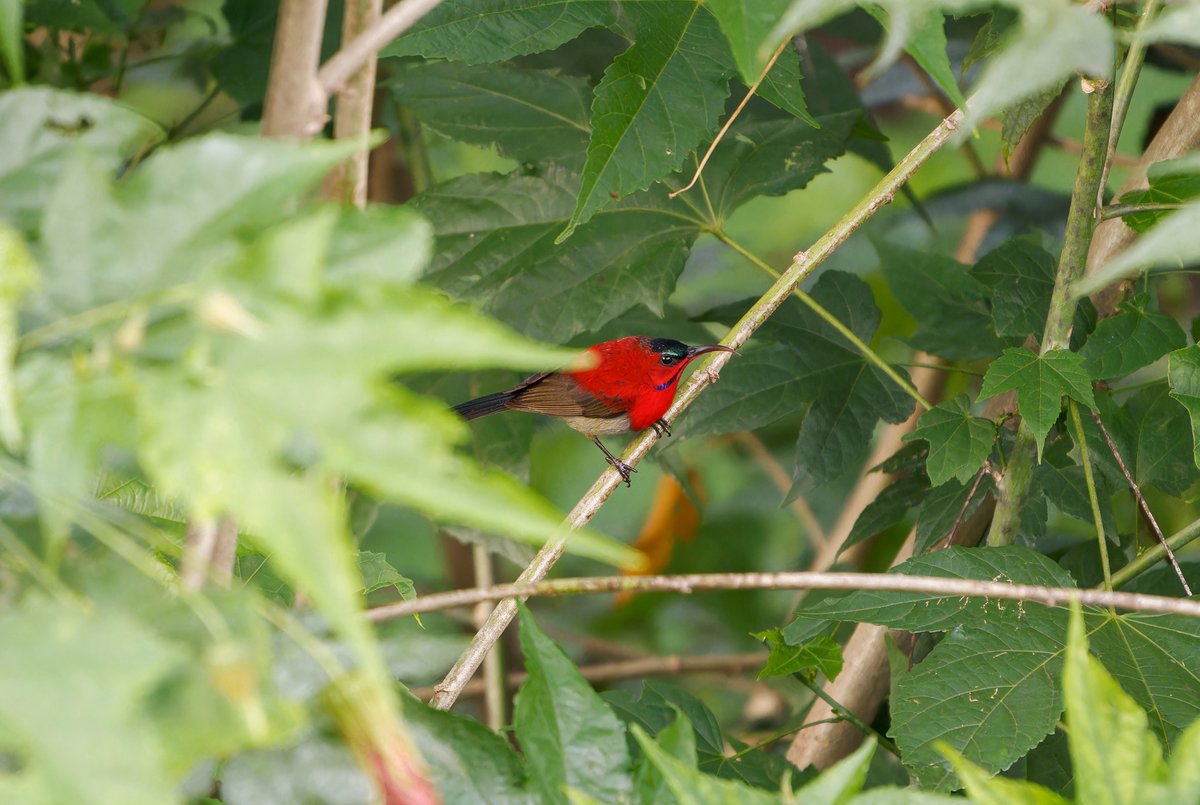
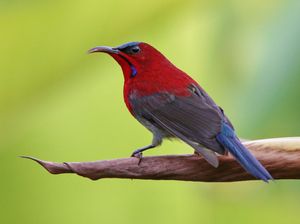
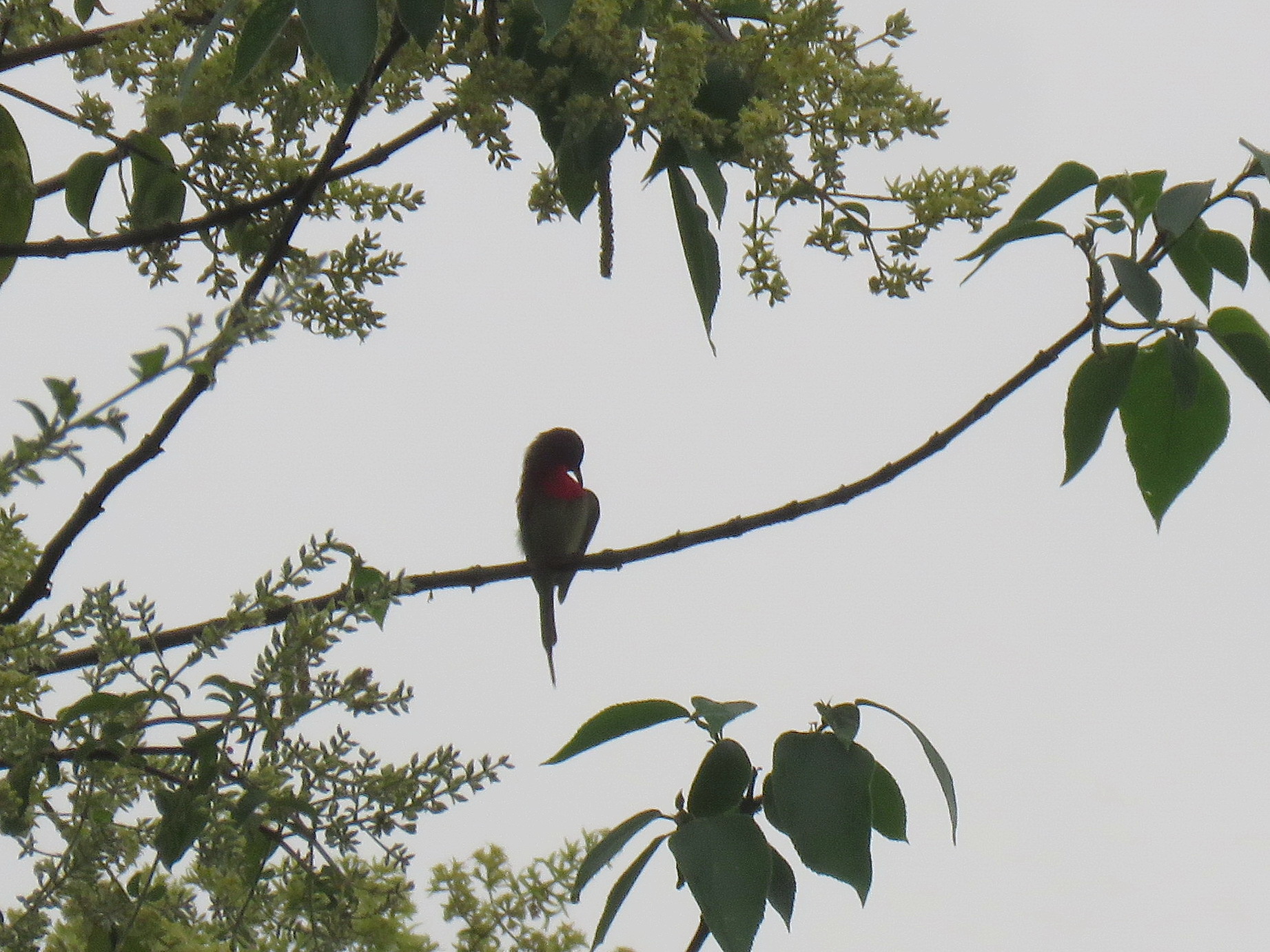
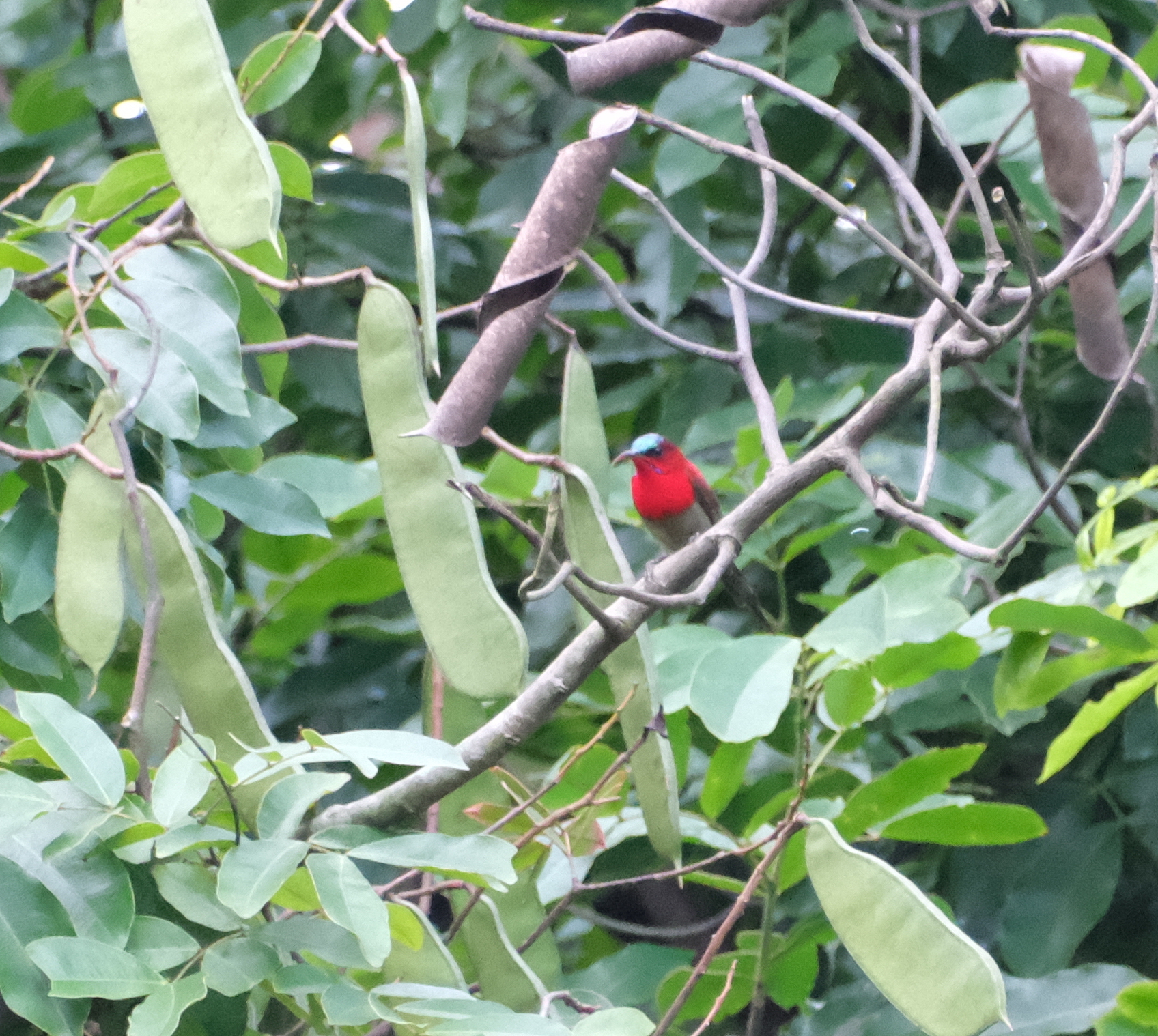
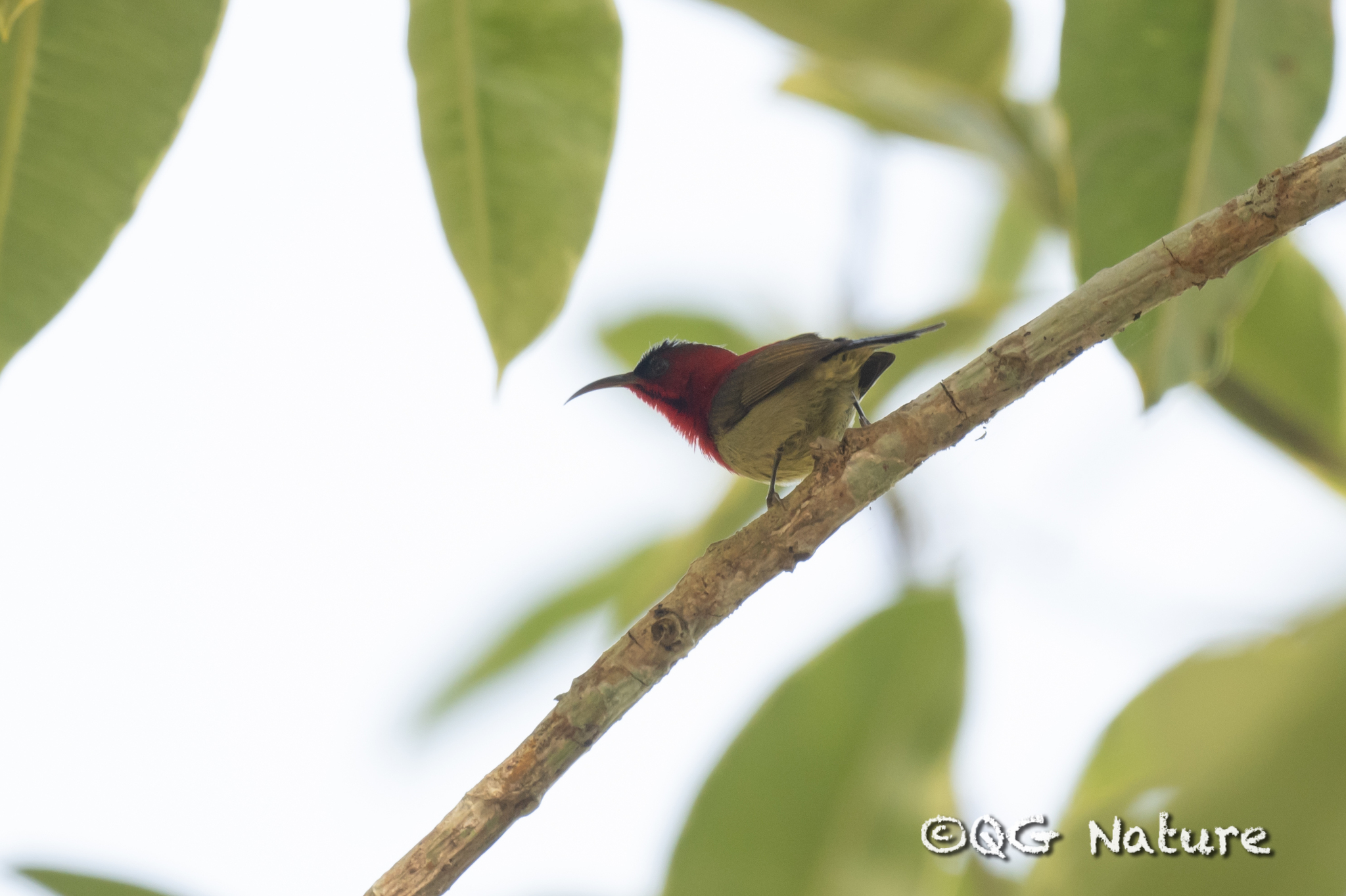
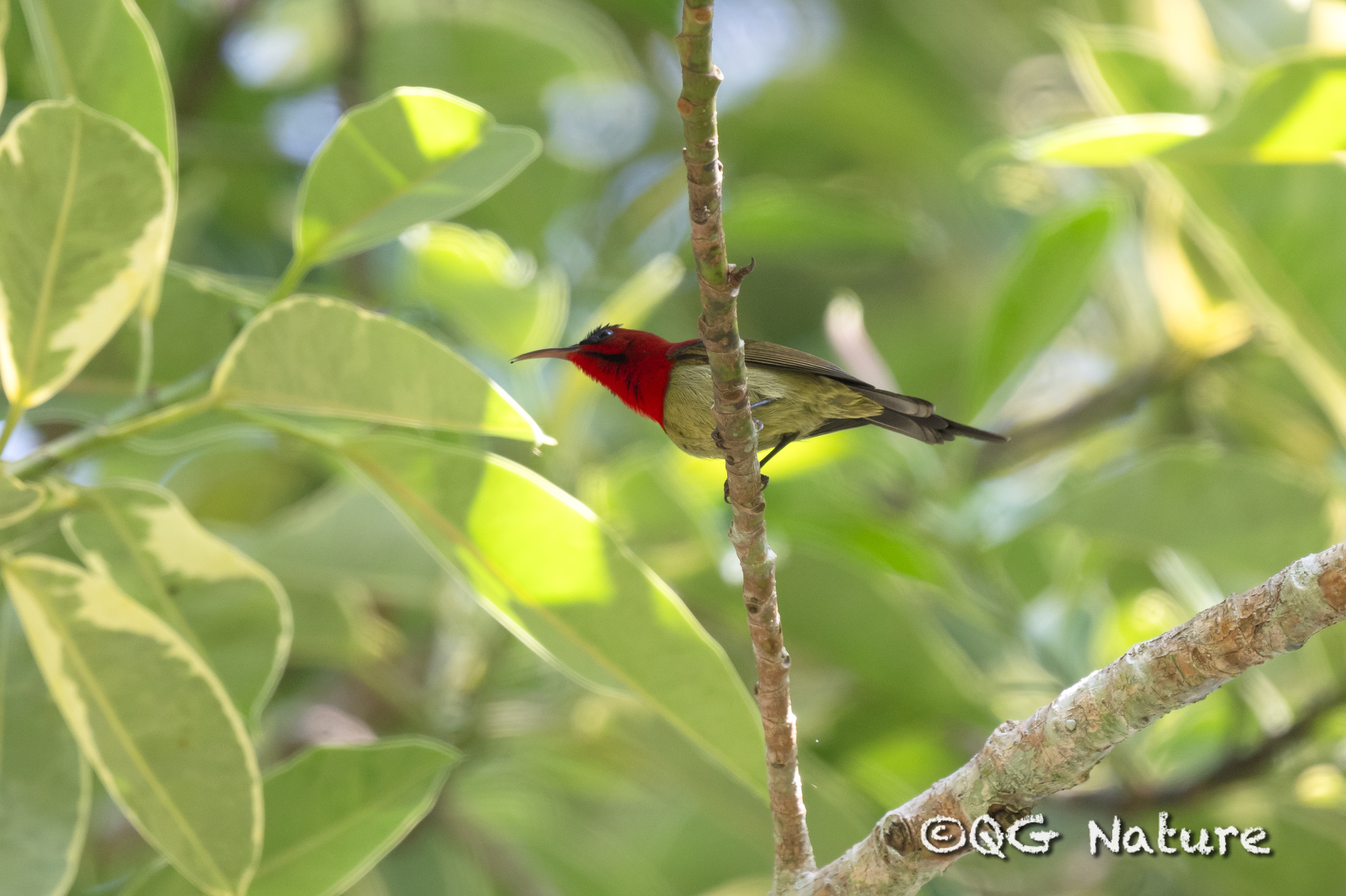
A nectar-feeding sunbird found across southern Asia, from the Indian subcontinent to Southeast Asia. Inhabits tropical gardens, forests, and cultivated areas. Members of this family perform hovering flight while feeding on flowers. Serves as a pollinator. The adult male has crimson plumage. Active behavior includes frequent movement between flowering plants.
Description
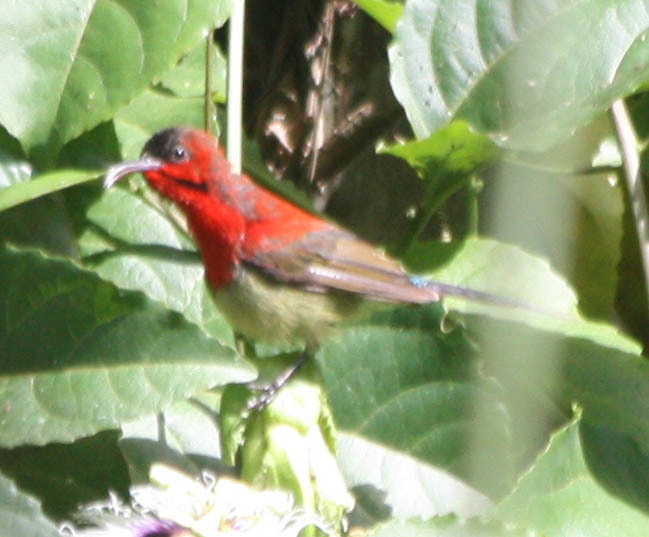
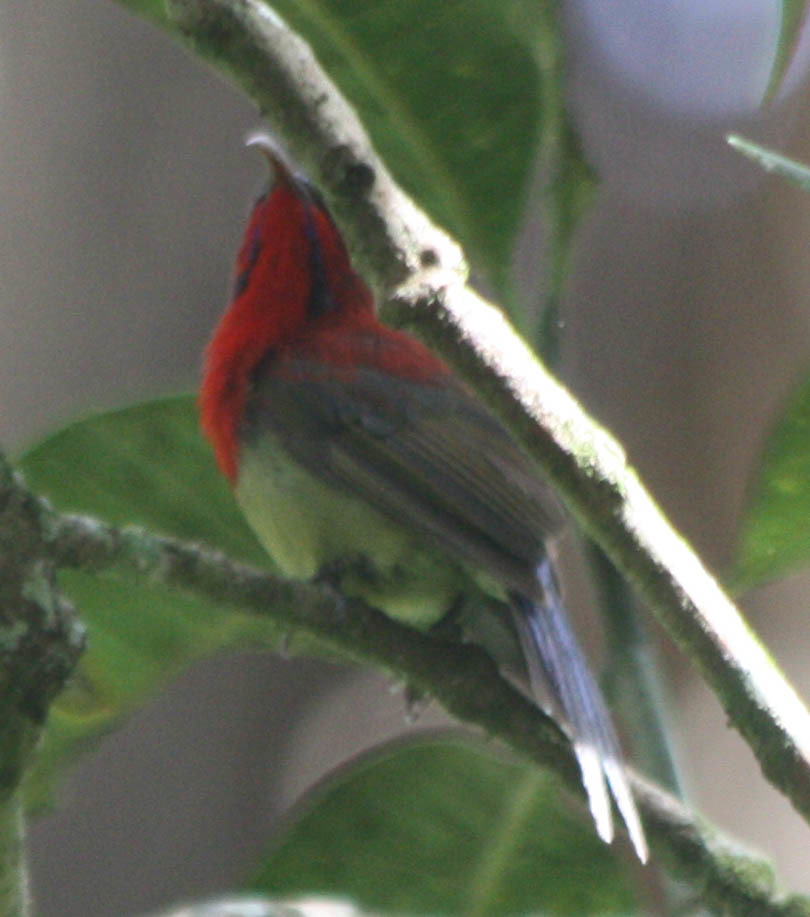
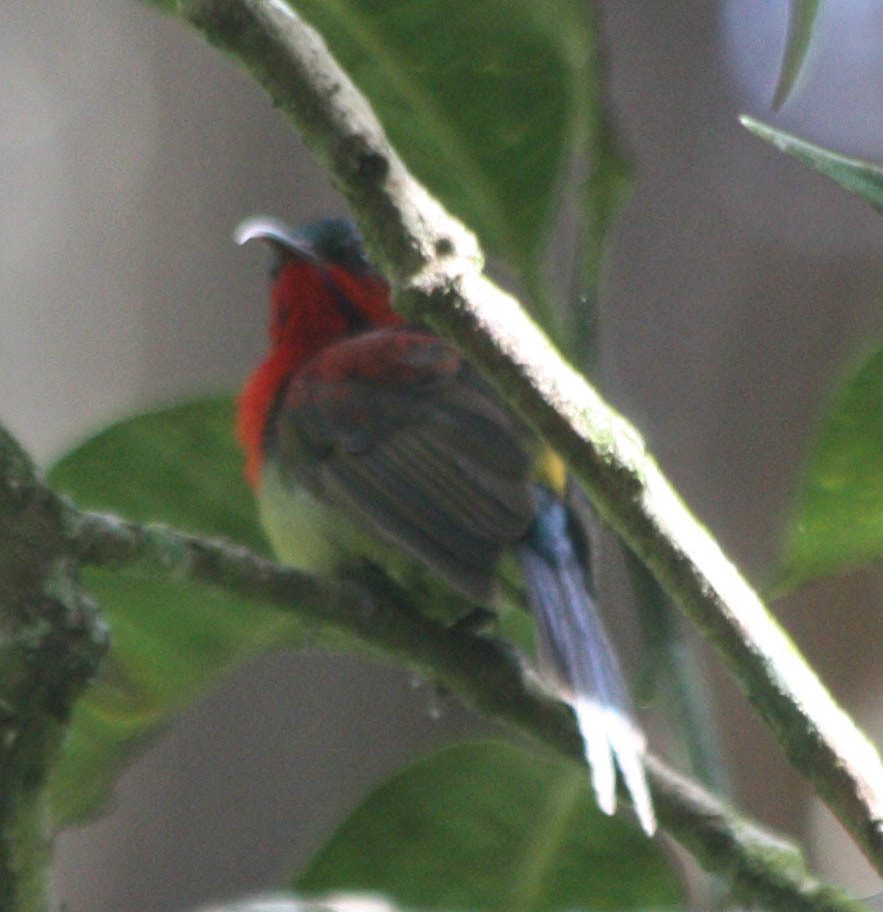
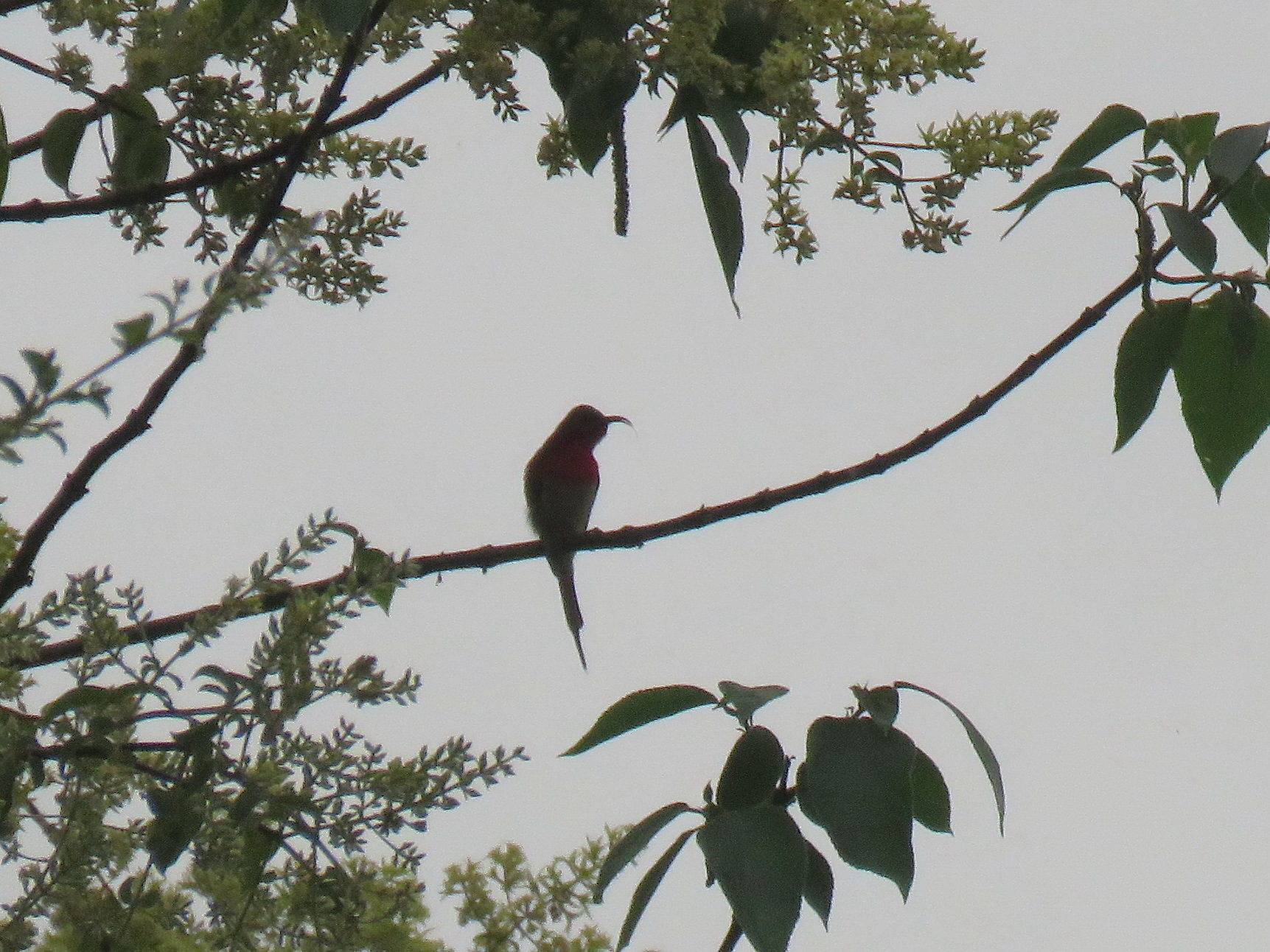
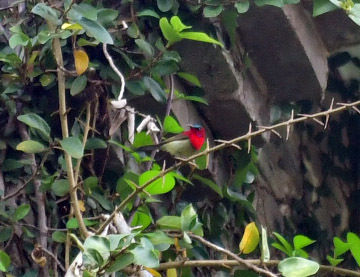
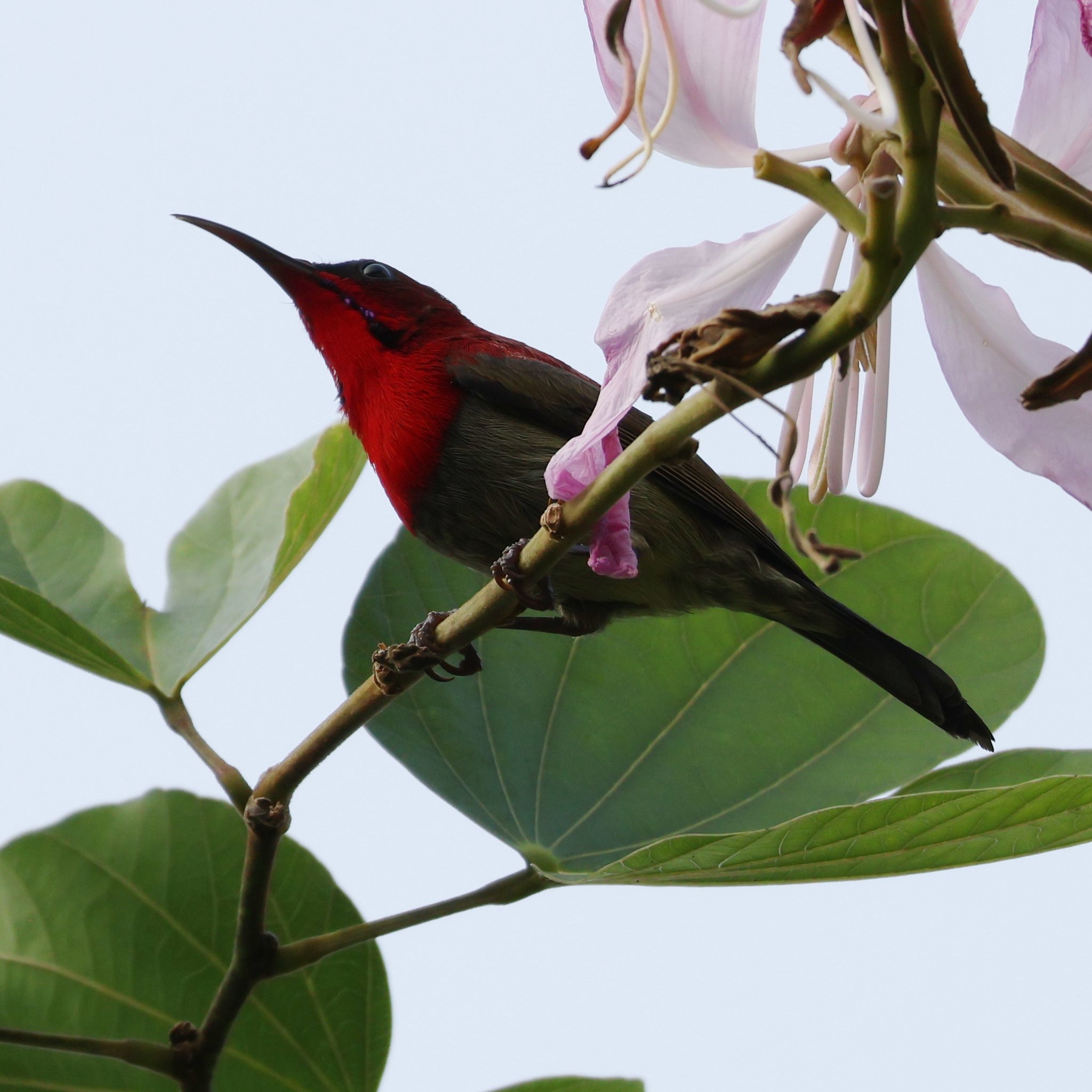
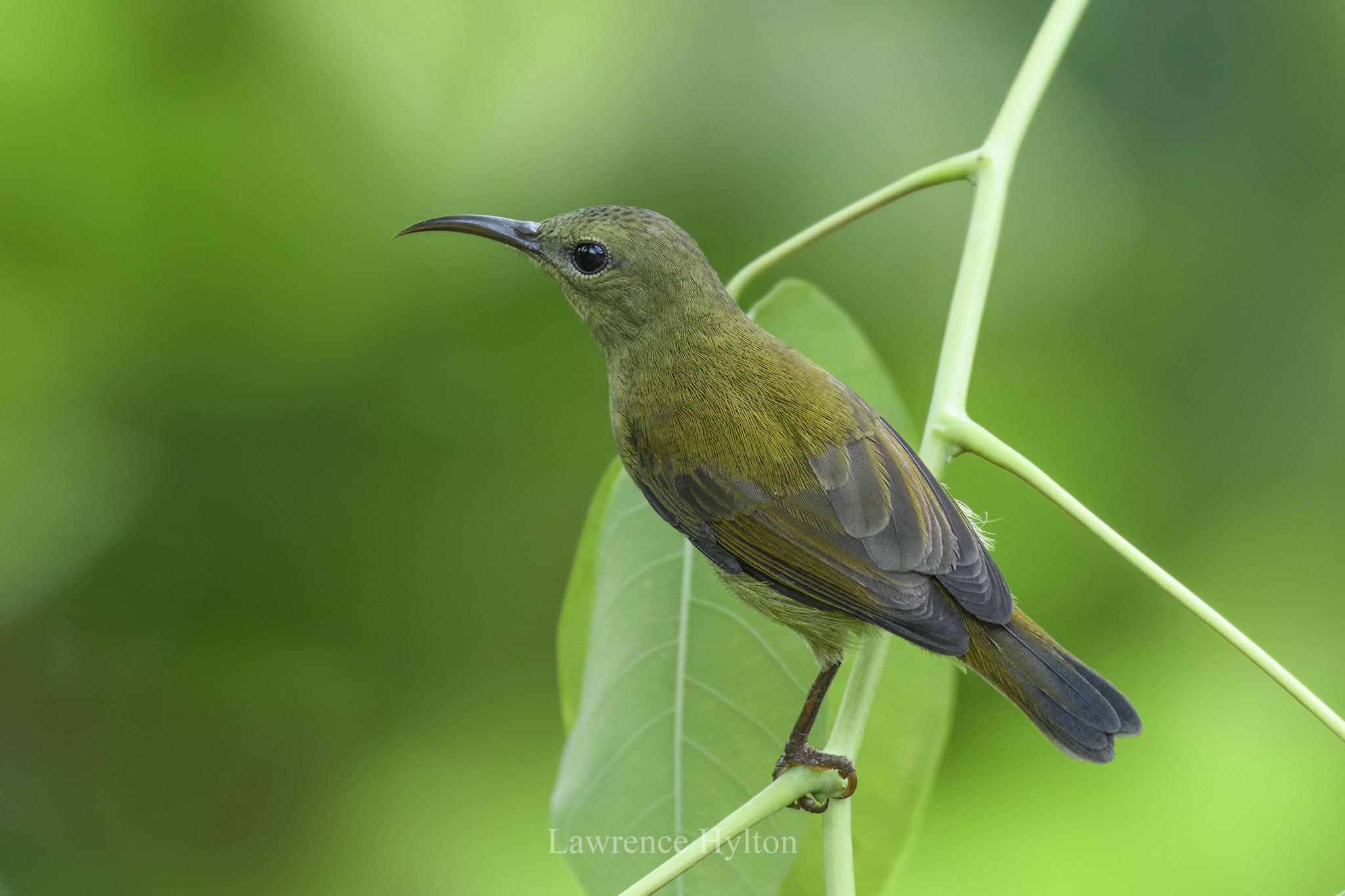
This is one of the smallest sunbirds, reaching just 11 cm in length. It has a distinctive medium-length thin down-curved bill and a brush-tipped tubular tongue, both perfect adaptations for extracting nectar from flowers. The adult male displays a brilliant crimson breast and maroon upperparts, contrasted by black malar stripes, a yellow rump, and olive belly. Most populations possess long green-blue tail feathers. The female is more subdued with olive-green upperparts, yellowish underparts, and white-tipped outer tail feathers.
Identification
The adult male's brilliant crimson breast and maroon back are distinctive field marks. Males in most of the range show long green-blue tail feathers, though populations in the Nicobar Islands and the Western Ghats lack these elongated central tail feathers. The combination of down-curved bill, hovering feeding behavior, and the male's crimson plumage helps distinguish it from similar sunbird species in its range.
Distribution & Habitat
This resident breeder occupies tropical southern Asia from India through Nepal, Pakistan, Bangladesh, and Myanmar to Indonesia and Brunei. It inhabits both natural forest environments and cultivated areas including gardens and agricultural land. Unlike many migratory species, it remains in its territory year-round.
Behavior & Ecology
Nectar forms the bulk of this species' diet, extracted from flowers either while hovering or, more commonly, while perched. Insects are also consumed, particularly when feeding nestlings. The call is a distinctive chee-cheewee. Breeding occurs in trees where the female builds a suspended nest and lays two or three eggs. Flight is fast and direct on short wings.
Culture
This species holds special significance as the unofficial national bird of Singapore, having been designated as such by the Nature Society Singapore.
Source: Wikipedia · CC BY-SA 3.0
Taxonomy
- Order
- Passeriformes
- Family
- Nectariniidae
- Genus
- Aethopyga
- eBird Code
- eacsun1
Vocalizations
Subspecies (14)
-
Aethopyga siparaja beccarii
central, southeastern, and southern Sulawesi, including Buton, Muna and Kabaena islands (off southeast)
-
Aethopyga siparaja cara
southern Myanmar, Thailand, and Mergui Archipelago
-
Aethopyga siparaja flavostriata
northern Sulawesi
-
Aethopyga siparaja heliogona
Java
-
Aethopyga siparaja insularis
Phu Quoc Island (off far southern Cambodia)
-
Aethopyga siparaja labecula
eastern Himalayas (Bhutan to Arundal Pradesh, Assam, and Bangladesh)
-
Aethopyga siparaja mangini
southeastern Thailand to central and southern Indochina
-
Aethopyga siparaja natunae
North Natuna Islands
-
Aethopyga siparaja nicobarica
Nicobar Islands
-
Aethopyga siparaja owstoni
southern China (Naochow Island off Luichow Peninsula)
-
Aethopyga siparaja seheriae
Nepal to Assam, Bangladesh, Myanmar, southwestern China, and northwestern Thailand
-
Aethopyga siparaja siparaja
Malay Peninsula, Sumatra, Borneo, and adjacent offshore islands
-
Aethopyga siparaja tonkinensis
southern China (southeastern Yunnan) and northeastern Vietnam
-
Aethopyga siparaja trangensis
peninsular Thailand, northern Malay Peninsula, and adjacent Myanmar
Data Sources
Species description from Wikipedia, licensed under CC BY-SA 3.0.
Bird images and sounds sourced from GBIF, contributed by citizen scientists worldwide under Creative Commons licenses.
Taxonomy data from AviList 2025.