Passeriformes / Nectariniidae / Aethopyga
Mrs. Gould's Sunbird
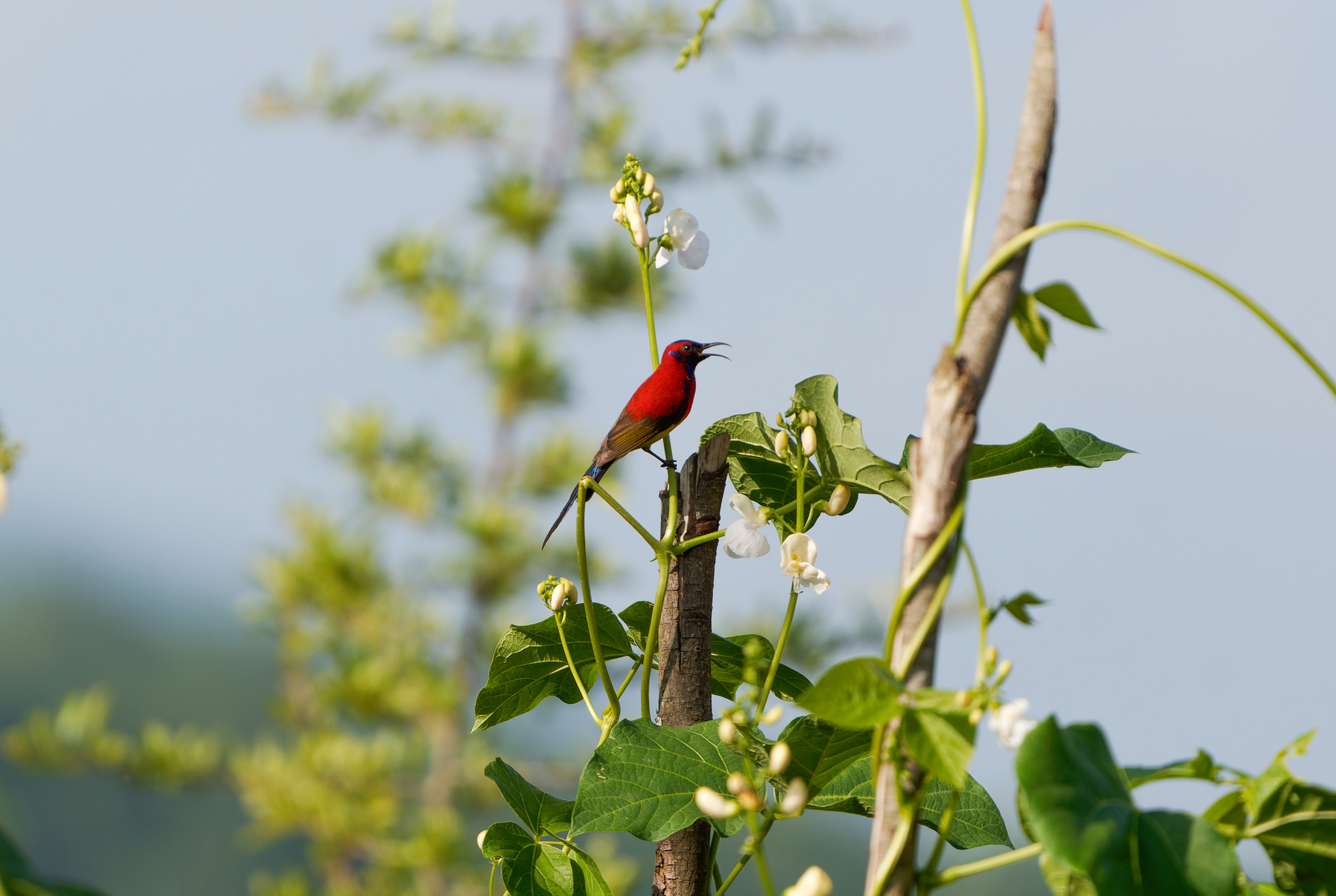
Aethopyga gouldiae · 蓝喉太阳鸟
Introduction
A sunbird species native to forests and shrublands from the southern foothills of the Himalayas to Southeast Asia. It is a nectar feeder with a down-curved beak, exhibiting sexual dimorphism in plumage. The species is listed as Least Concern on the IUCN Red List.
Description
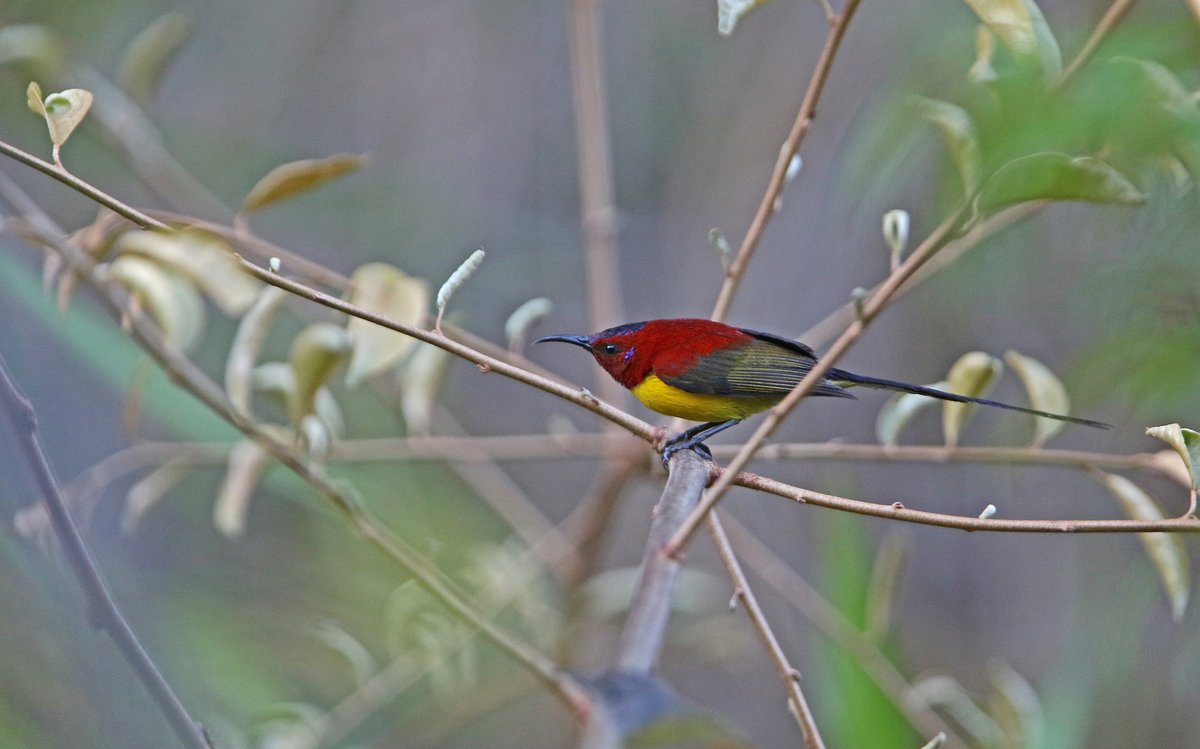
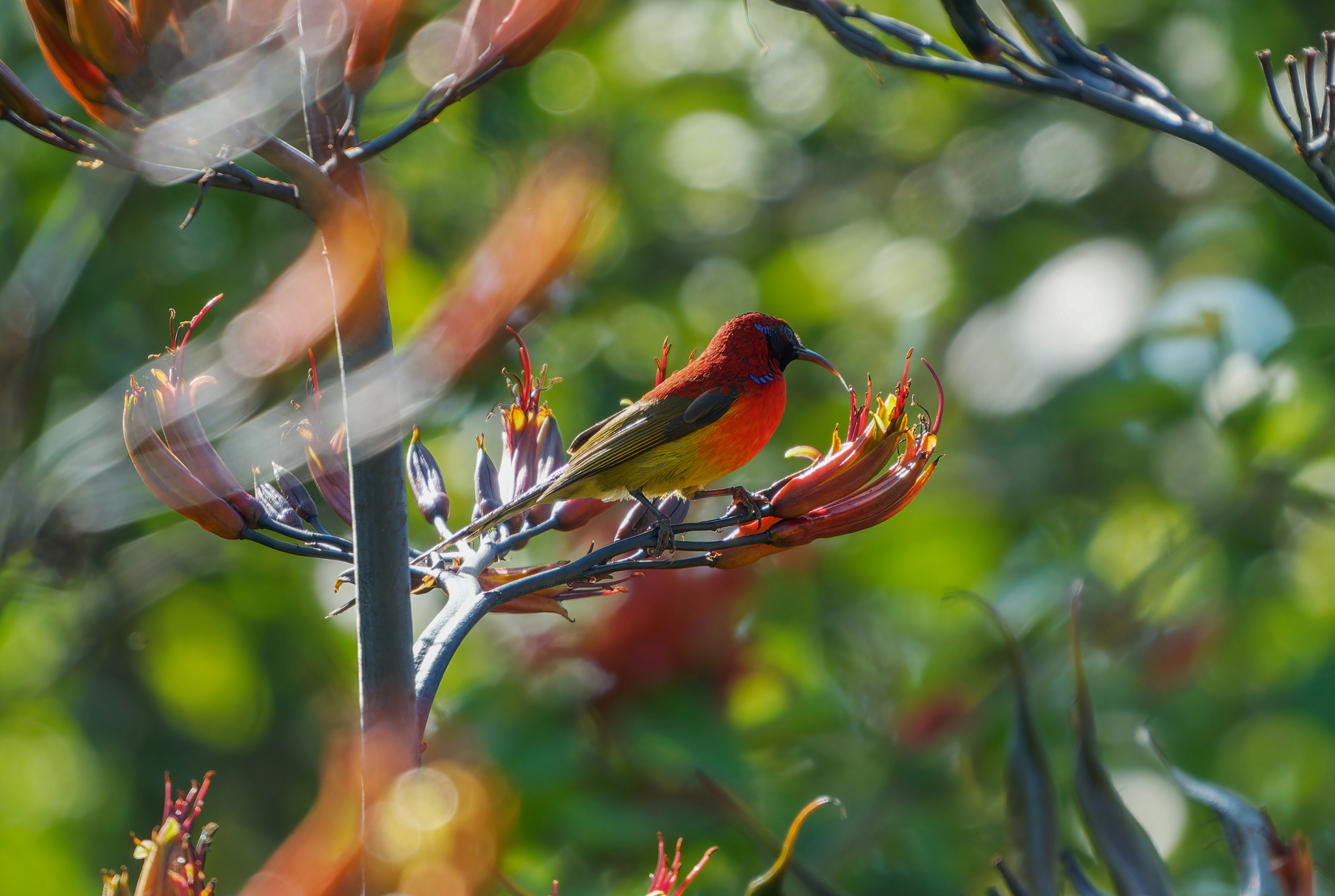
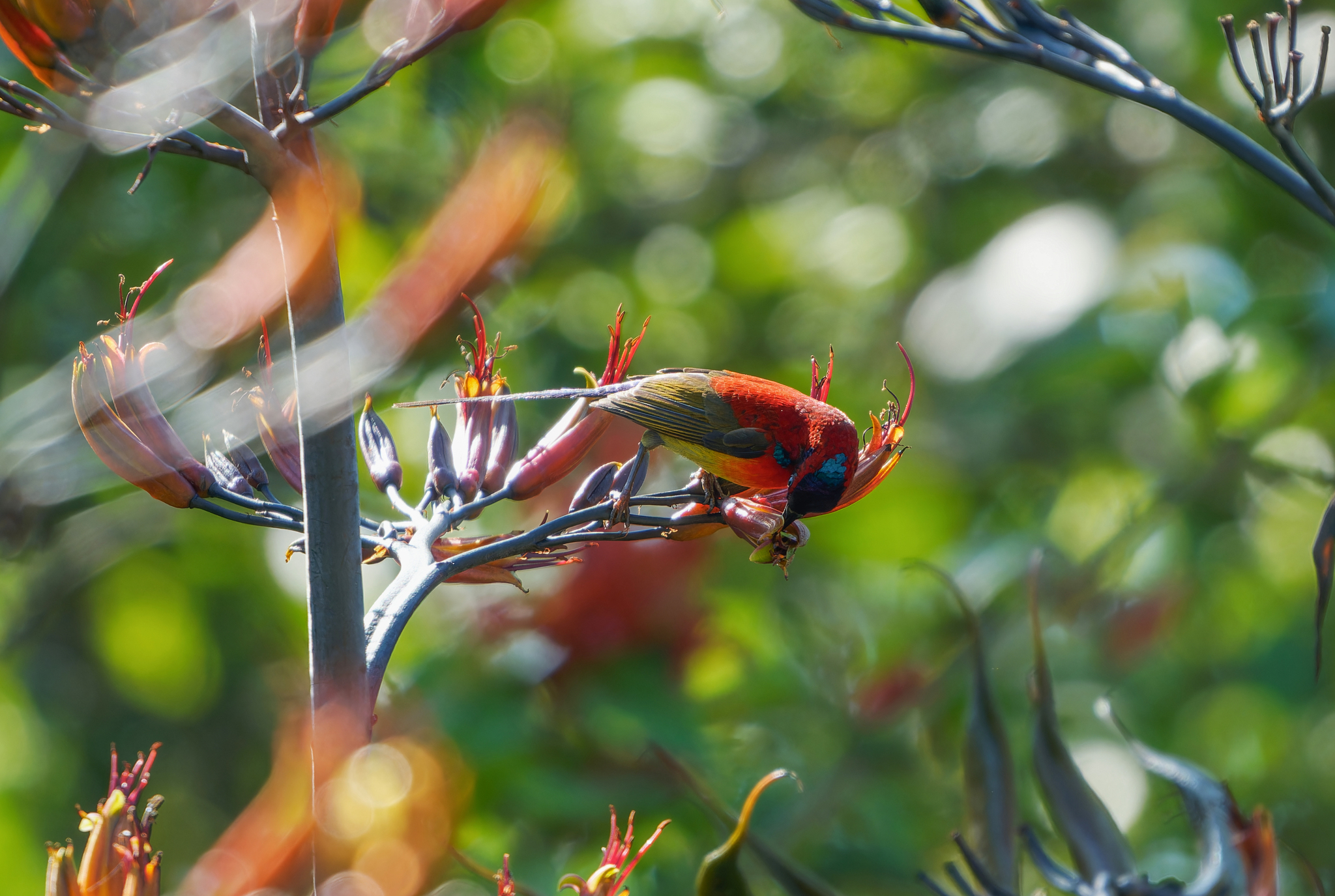
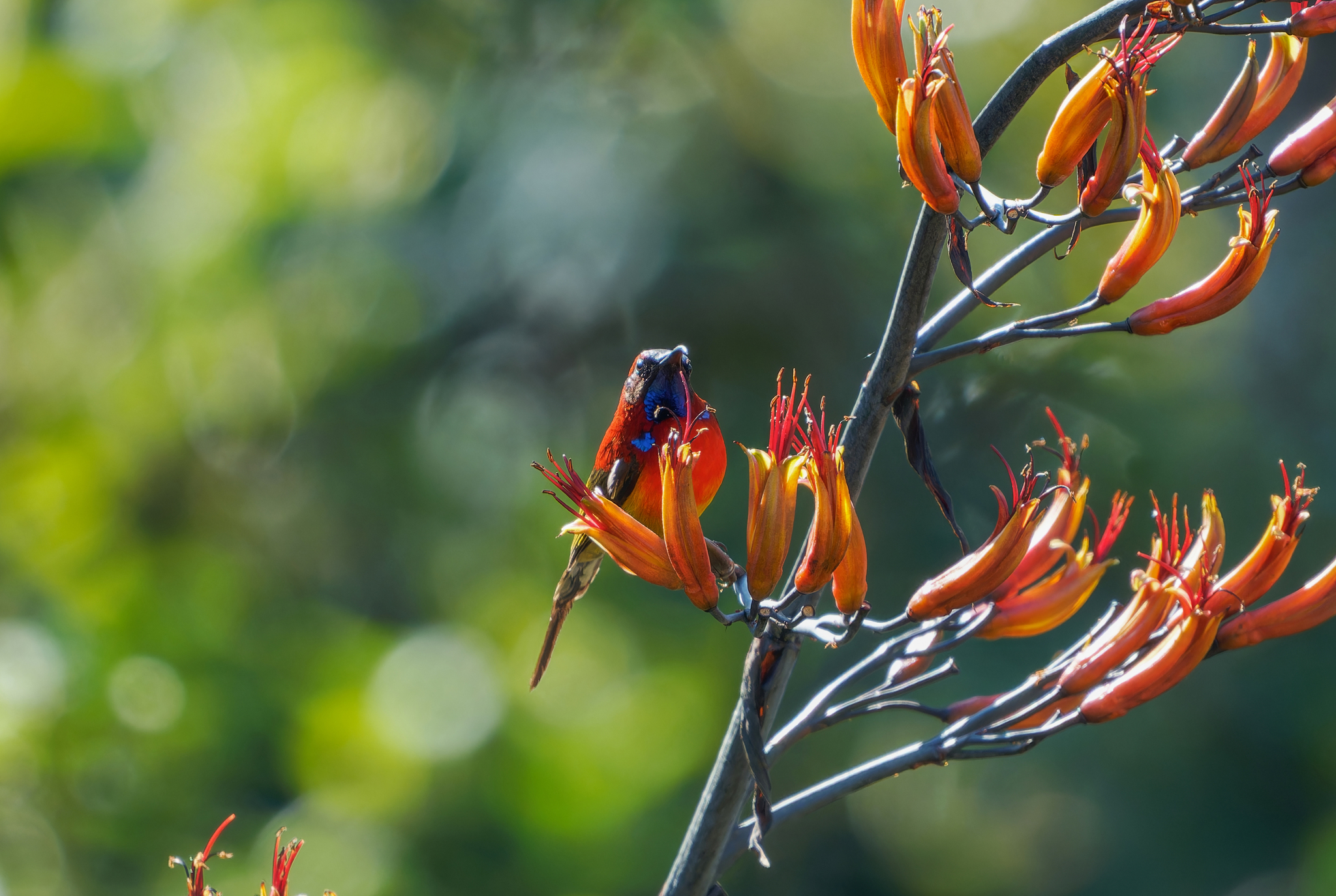
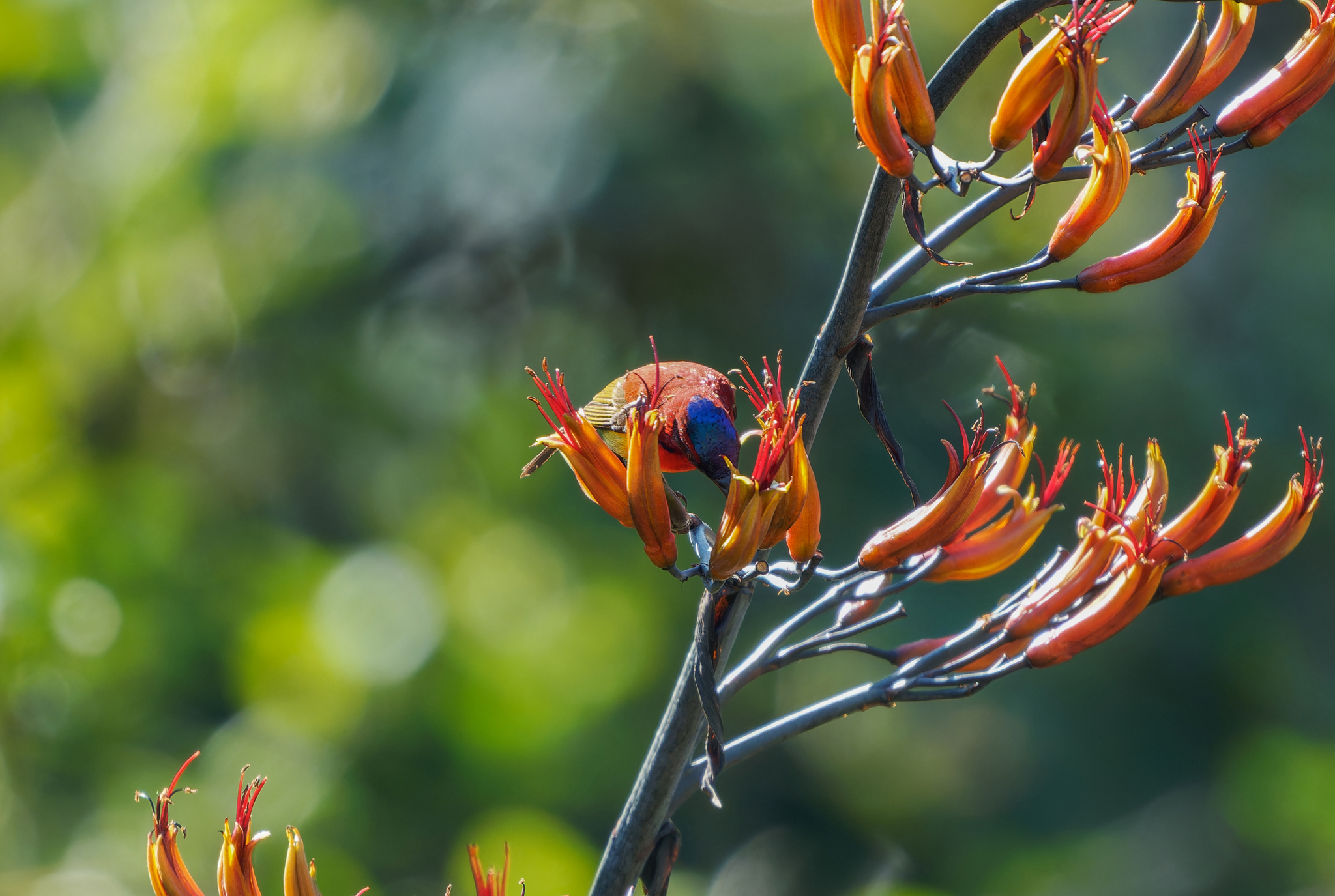
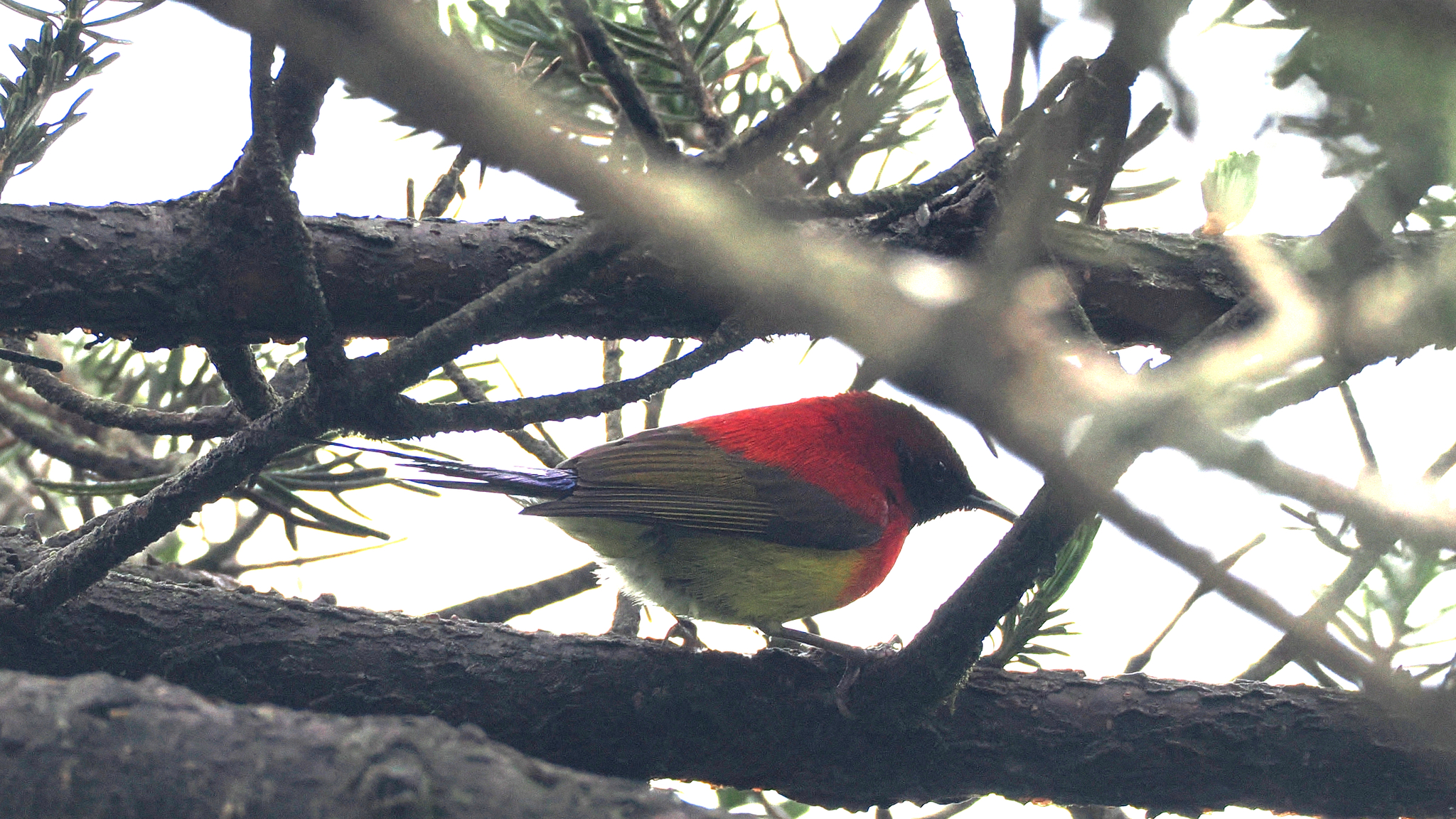
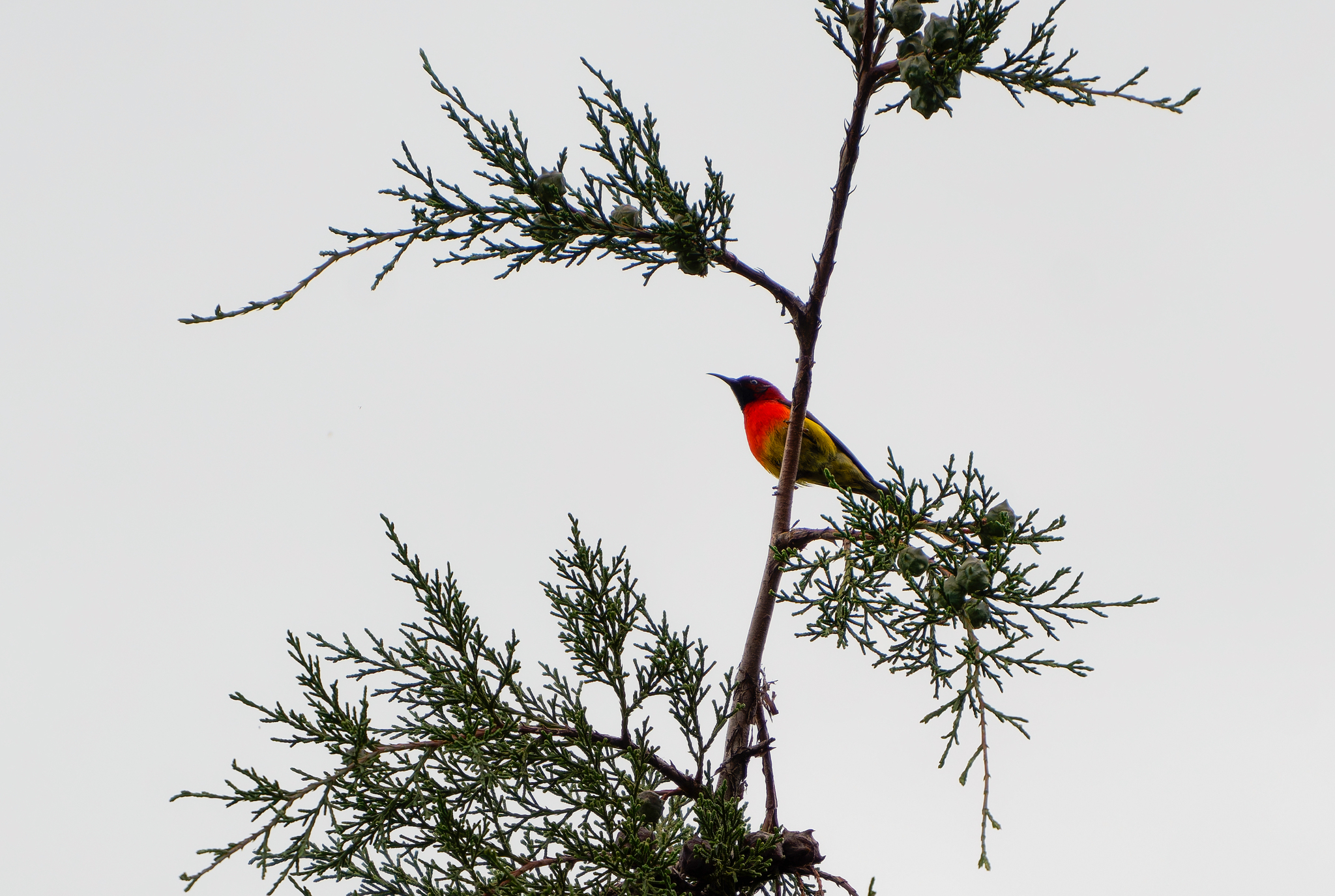
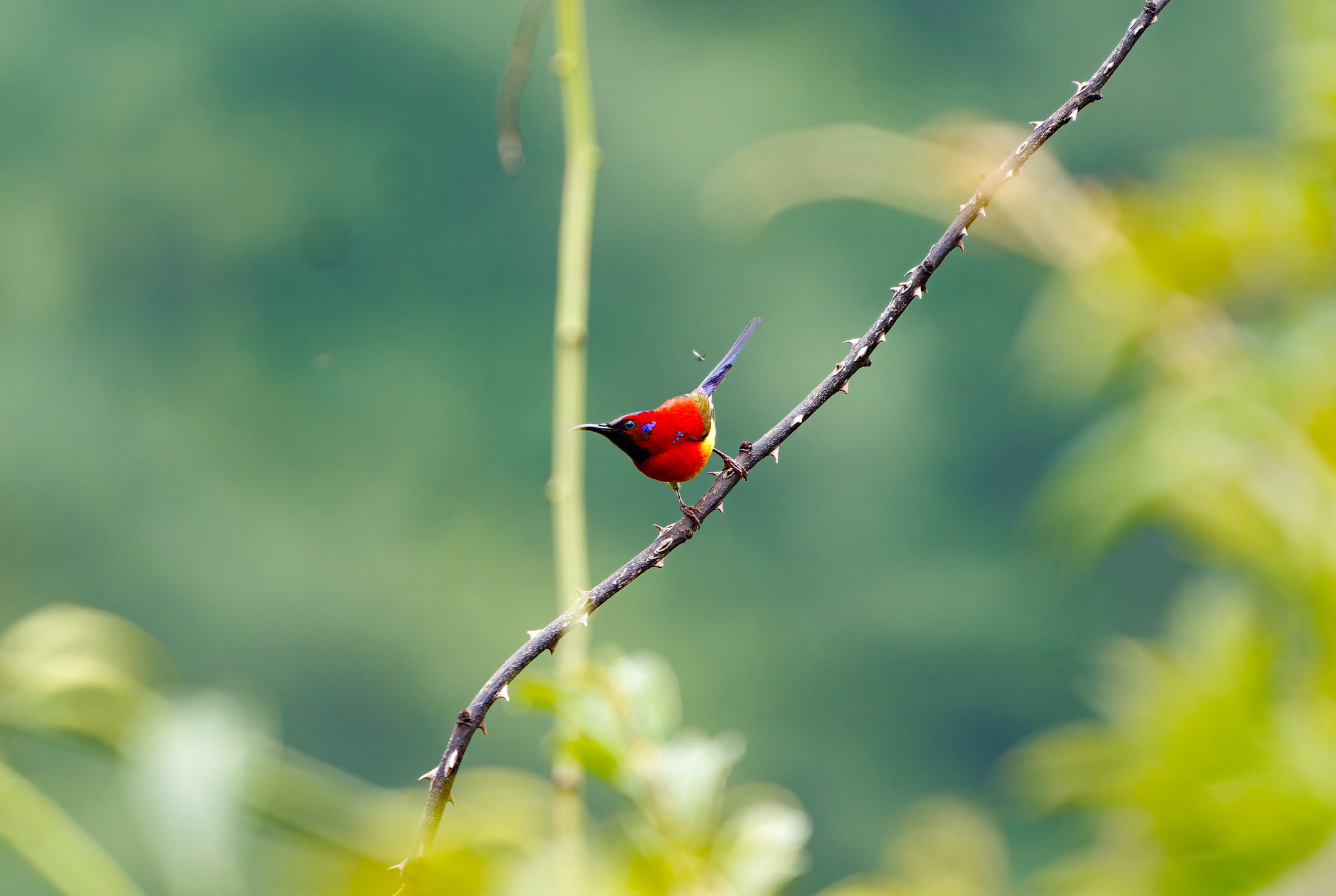
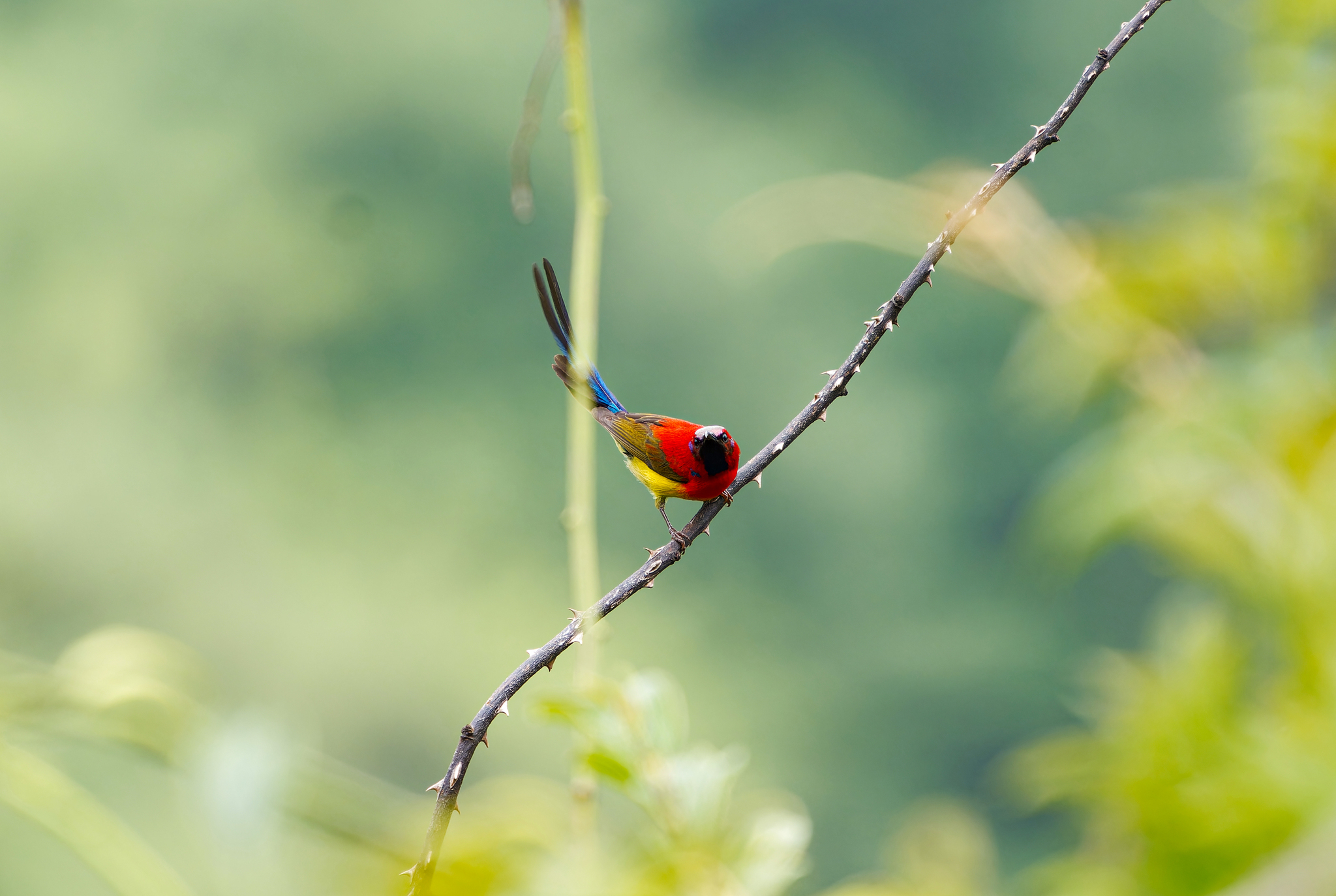
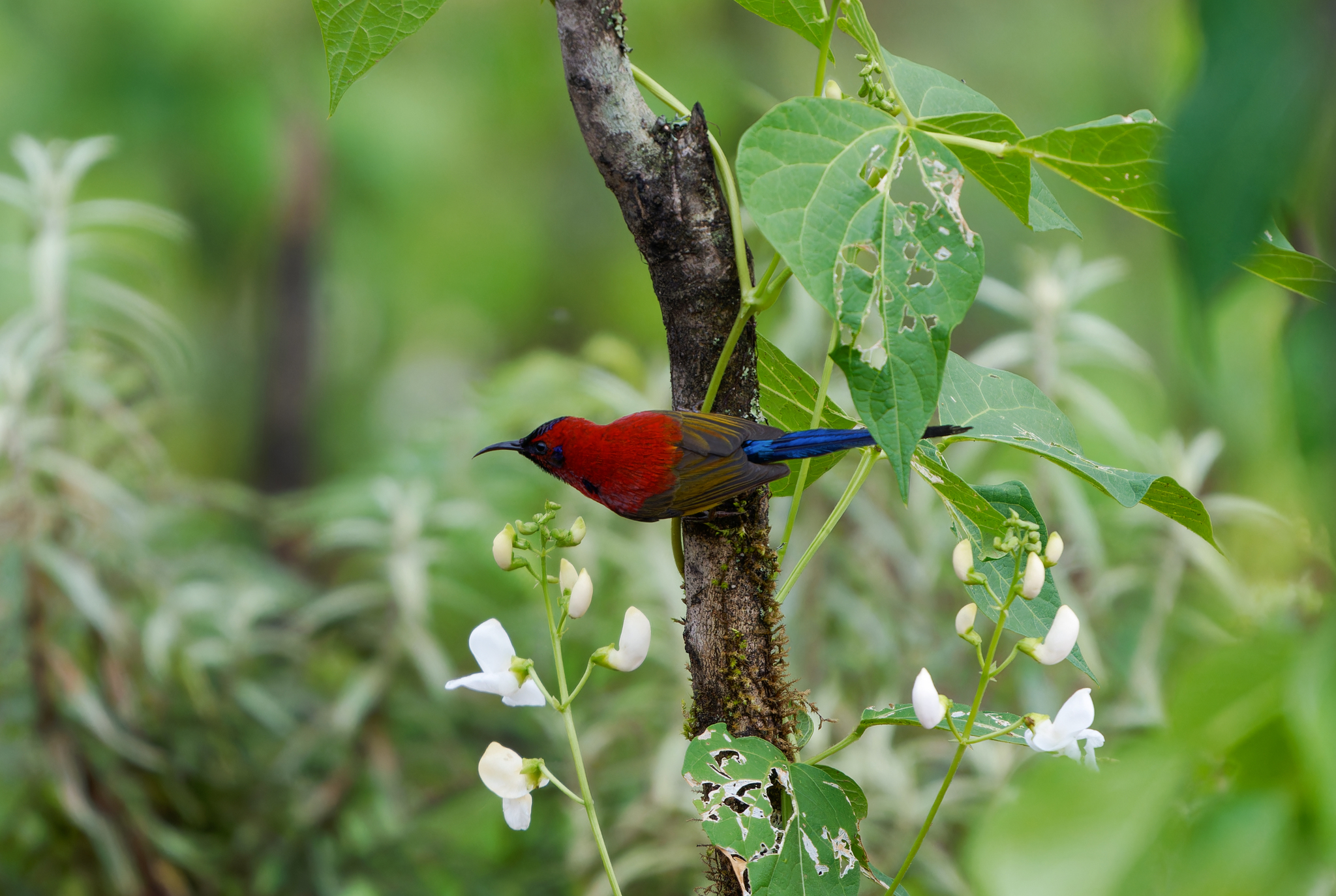
Small sunbird with a down-curved, pointed beak (13–17 mm), deep brown iris, and black tarsus. Males are bright and colourful: forehead to crown, supercilium, and throat are deep violet; lore, auriculars, malar region, nape, mantle, and side are bright red to deep scarlet, sometimes with bright blue patterns. Coverts and wingbars are brown or olive green; belly and vent are yellowish-green. Tail covert is bright blue, fading to dark purple at the tip. Males weigh 4–12 g, measure 131–160 mm, with wing length 51–58 mm and tail length 64–88 mm. Females are duller, with deep olive green dorsal sides and greyish-yellow ventral sides. They weigh 5–8 g, measure 91–111 mm, with wing length 45–54 mm and tail length 30.5–40 mm. Subspecies vary; for example, A. g. dabryii has a purely scarlet breast, while A. g. gouldiae has a bright yellow breast, with or without a red stripe.
Distribution & Habitat
Widely distributed in Bangladesh, Bhutan, Laos, Myanmar, Nepal, Thailand, India, Vietnam, and Southern China. Four subspecies are recognized: A. g. gouldiae in the Himalayas (Sutlej Valley to Arunachal Pradesh and southeastern Tibet); A. g. isolata in southern Assam to Bangladesh and western Myanmar; A. g. dabryii in western China to Myanmar and northern Laos; and A. g. annamensis in southern Laos and southern Vietnam. Found in evergreen broad-leaved, monsoon, and deciduous broad-leaved forests at 1000–3500 m elevation, occasionally in orchards and bamboo forests. A non-breeding population exists in Hong Kong.
Behavior & Ecology
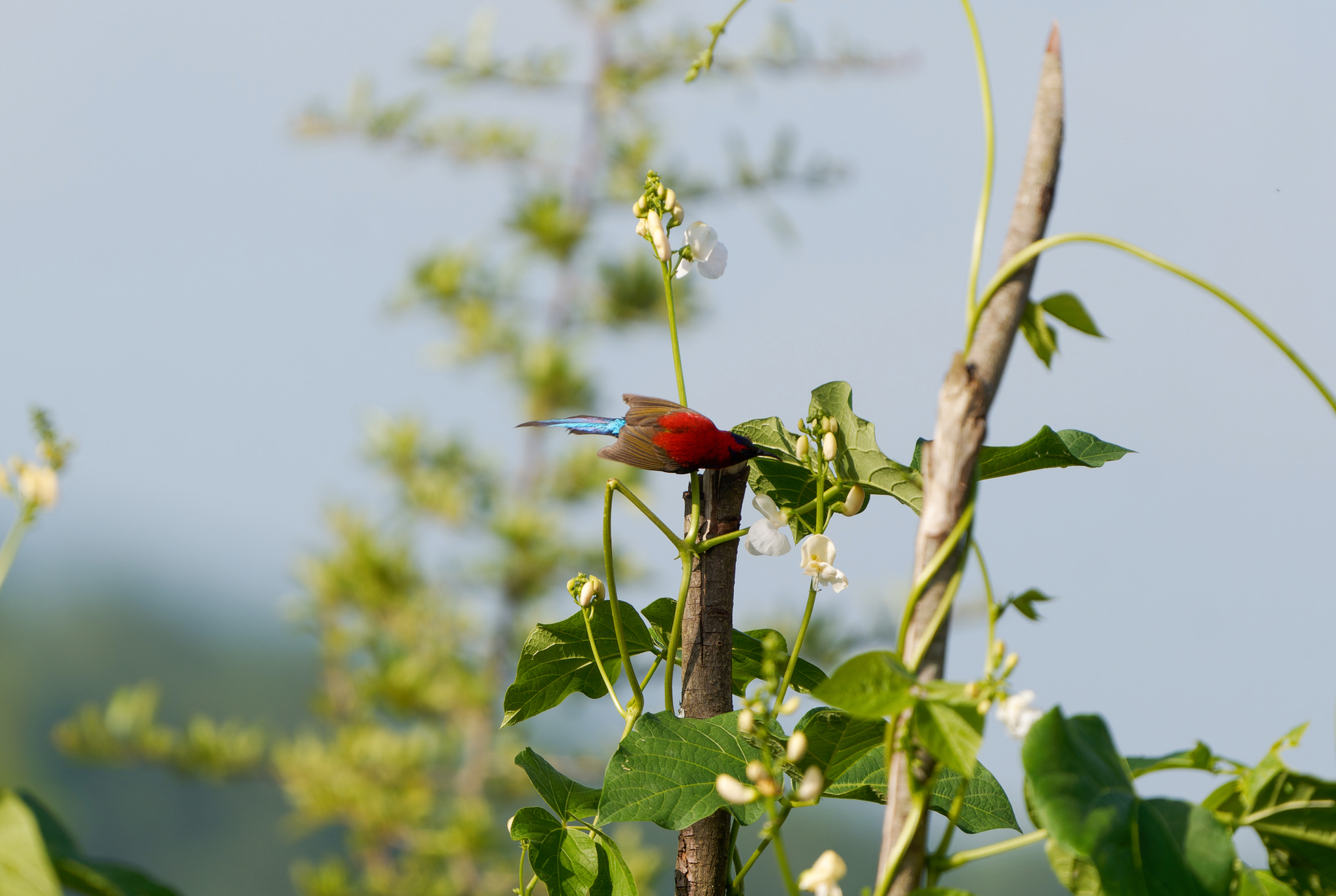
Generally resident but may undertake small-scale seasonal migrations. Usually seen solitary or in pairs, though temporary groups of 3–5 or more than 10 individuals can form. Moves quickly and flies short distances. Feeds on nectar using an elongated, tubular tongue, and also takes small invertebrates such as spiders, small beetles, and hemipteran nymphs. Breeding occurs from April to June. Nests are built of moss, grass, plant fibres, and spiderwebs, measuring 15–18 cm long and 10–11.5 cm wide, typically in deciduous broad-leaved forests at 1000–3000 m. Clutch size is 2–3 white eggs with reddish-brown spots. Incubation lasts about two weeks; chicks fledge after 15–16 days. Both parents care for chicks, feeding them nectar by regurgitation initially, then increasingly providing invertebrates. Males court with a 'zhai-zhai-zhai' call.
Conservation
Listed as Least Concern on the IUCN Red List. Not on the list of endangered and protected species of China, but included in the List of Wild Animals Protected by the PRC that Are Beneficial or of High Value to Economy and Science.
Source: Wikipedia · CC BY-SA 3.0
Taxonomy
- Order
- Passeriformes
- Family
- Nectariniidae
- Genus
- Aethopyga
Subspecies (4)
-
Aethopyga gouldiae annamensis
southern Laos (Bolaven Plateau) and southern Vietnam (Langbian Plateau)
Data Sources
Species description from Wikipedia, licensed under CC BY-SA 3.0.
Bird images and sounds sourced from GBIF, contributed by citizen scientists worldwide under Creative Commons licenses.
Taxonomy data from AviList 2025.