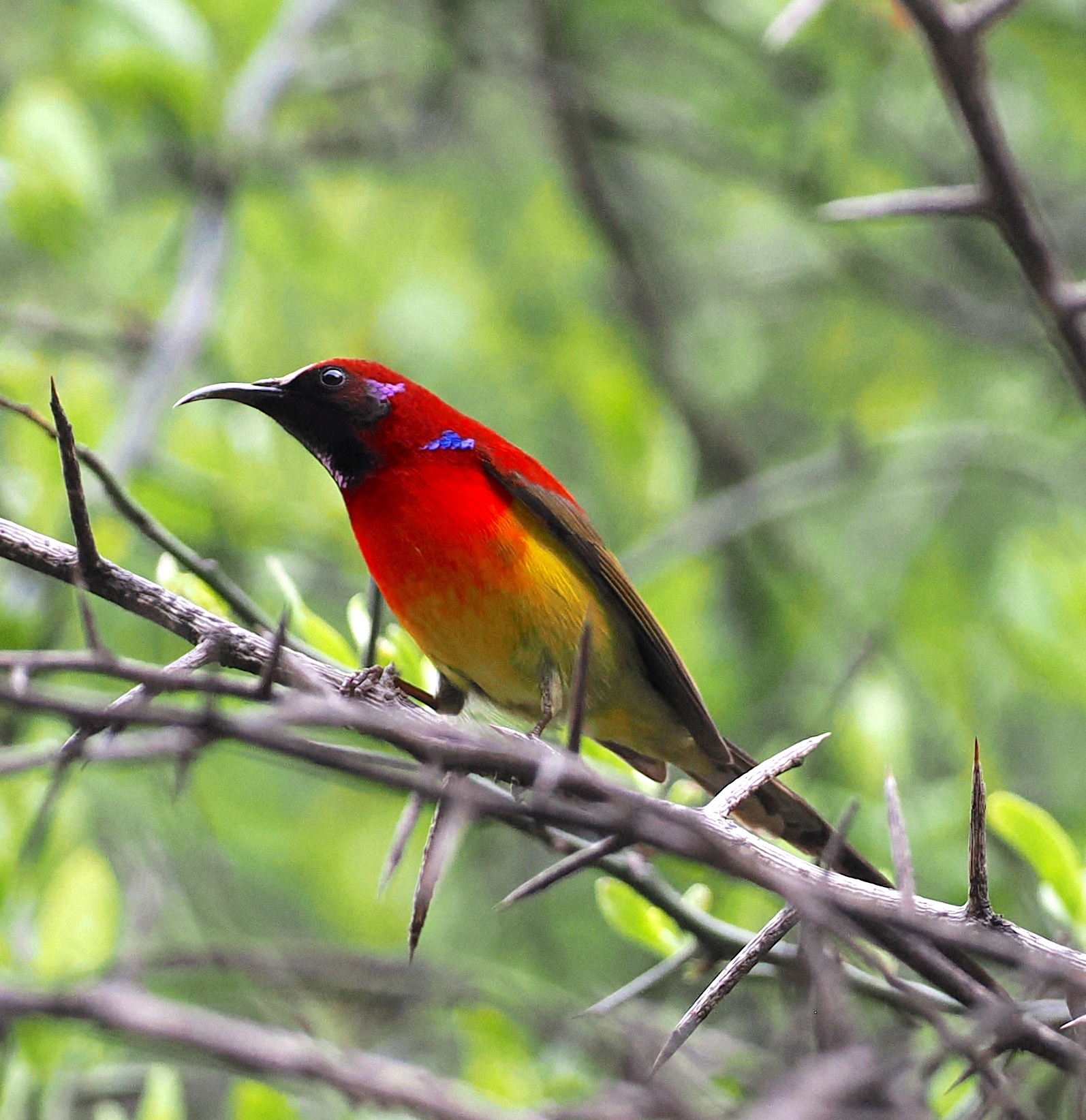
Mrs. Gould's Sunbird
Aethopyga gouldiae
蓝喉太阳鸟
Introduction
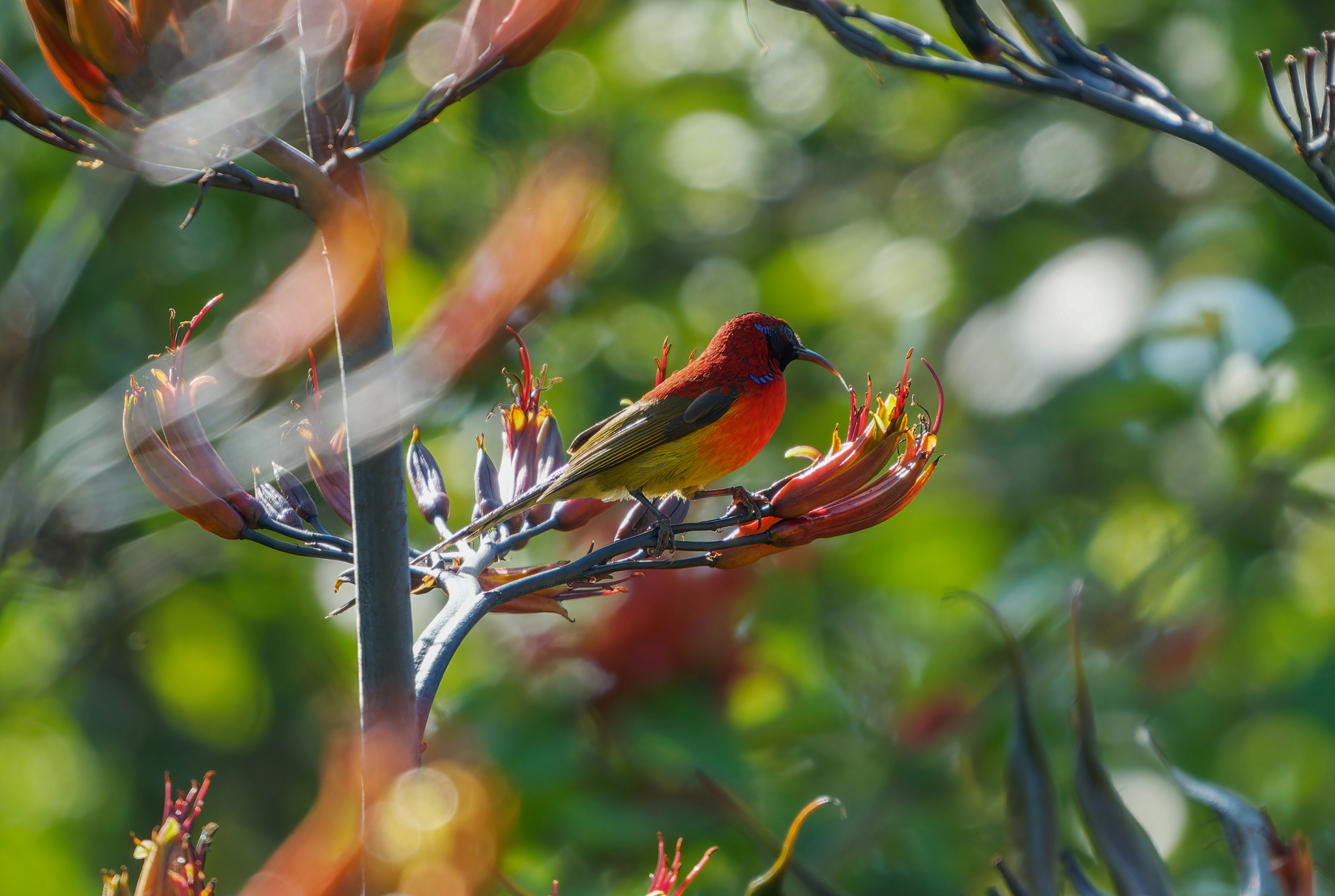
Mrs. Gould's sunbird is a small sunbird species native to the Himalayas and Southeast Asia. It inhabits high-altitude forests at elevations from 1000 to 3500 metres across multiple countries. The species feeds on nectar and exhibits active, mobile behavior. Males display deep violet, scarlet, and blue plumage.
Description
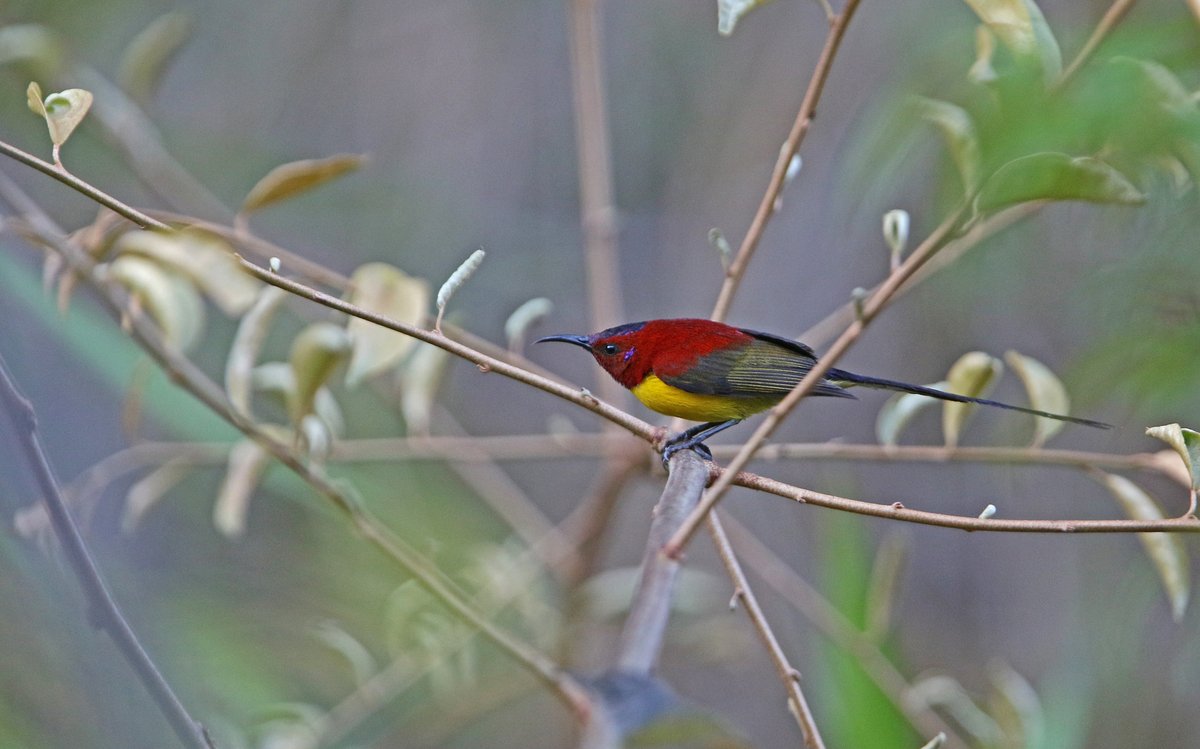
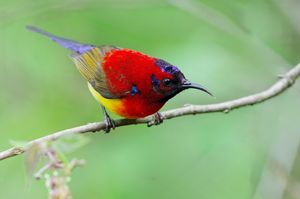
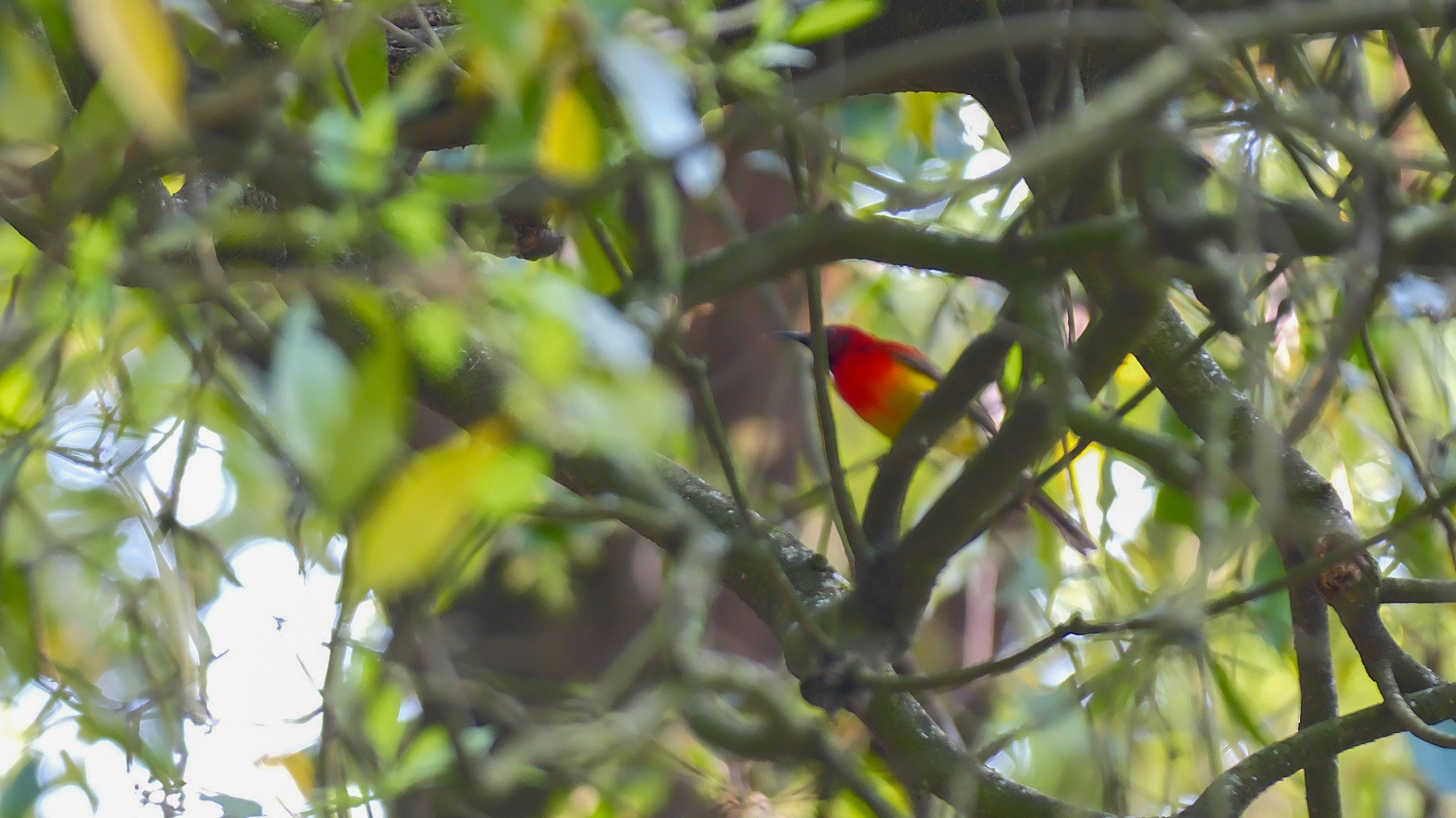
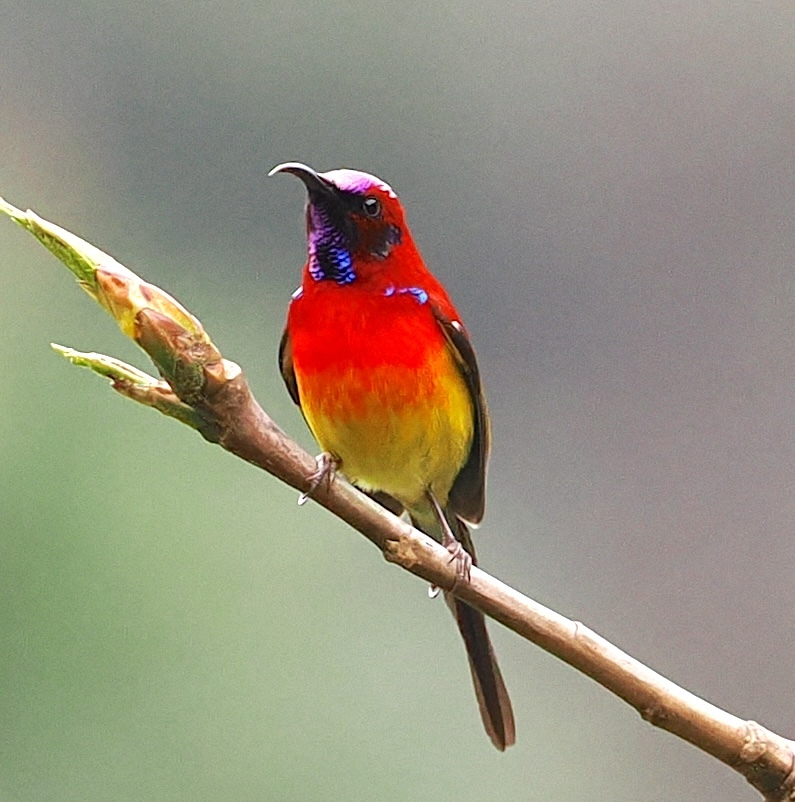
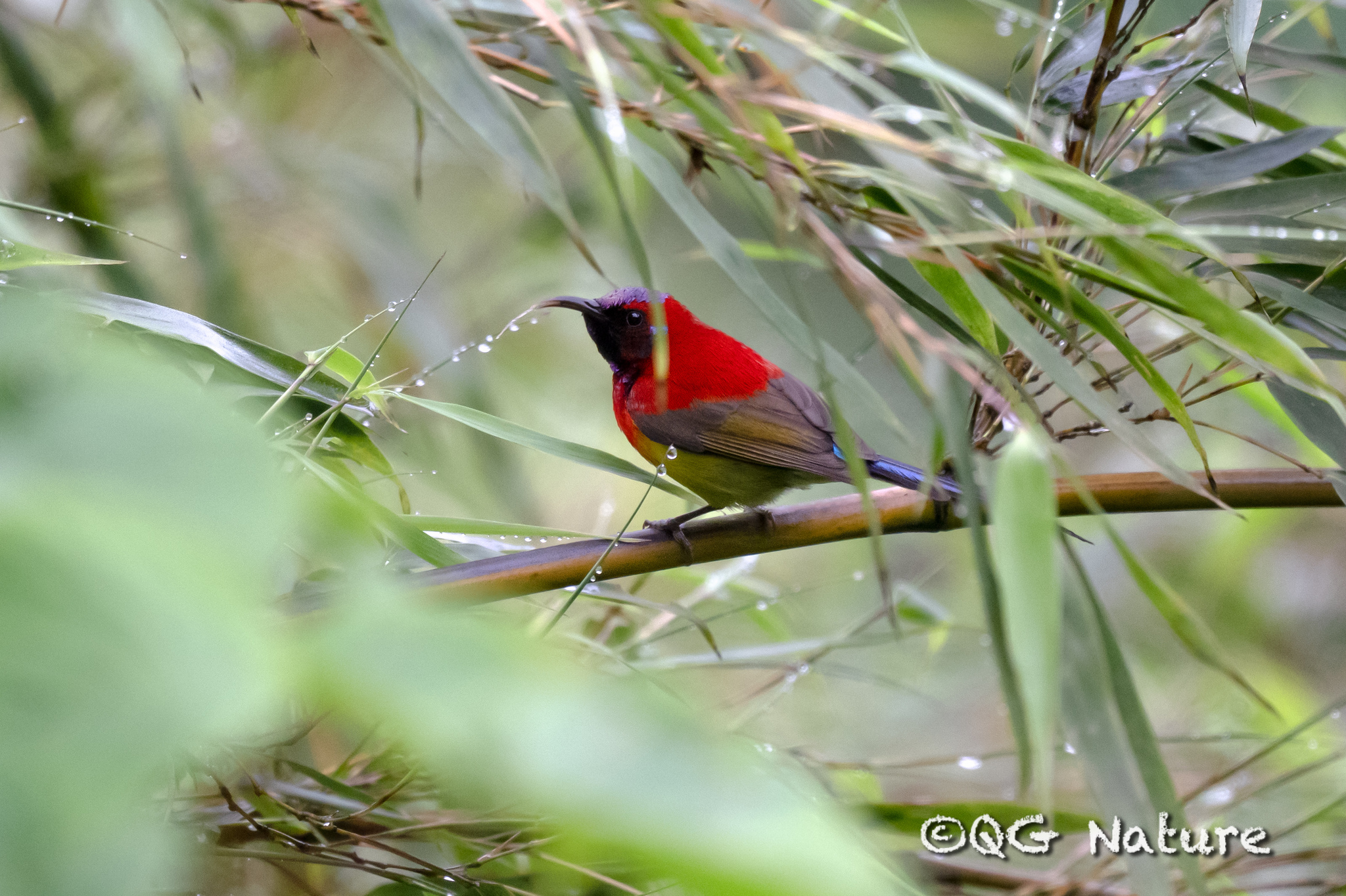
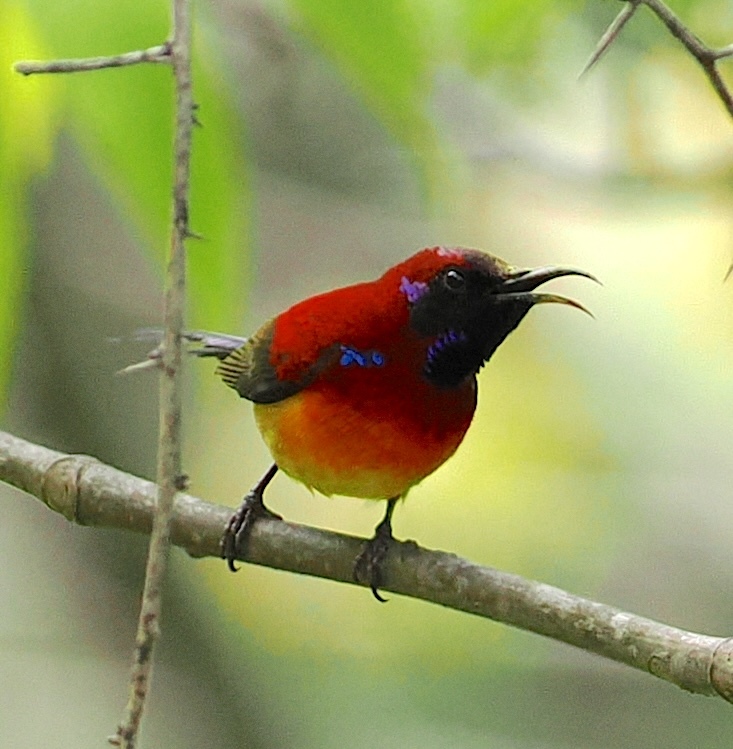
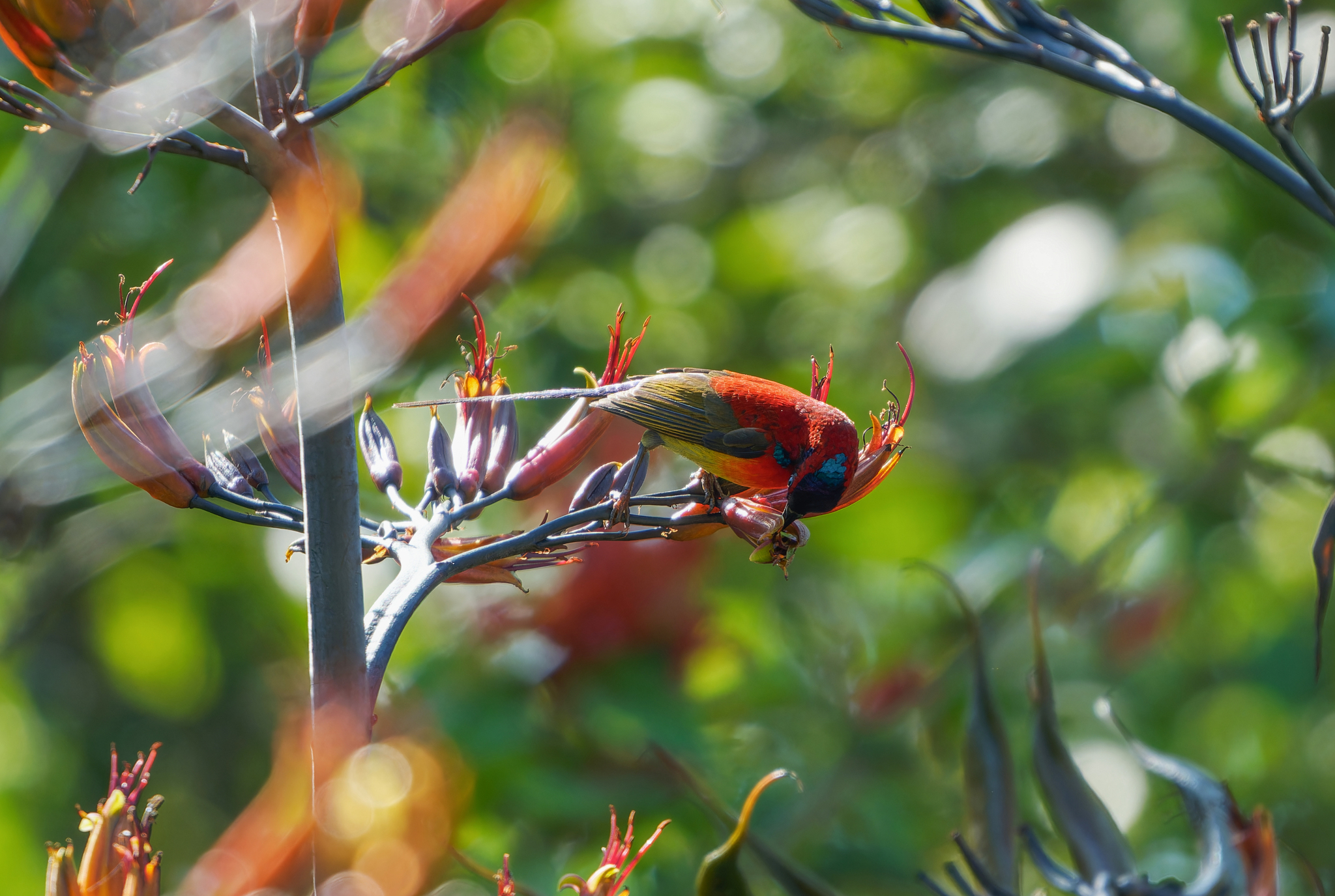
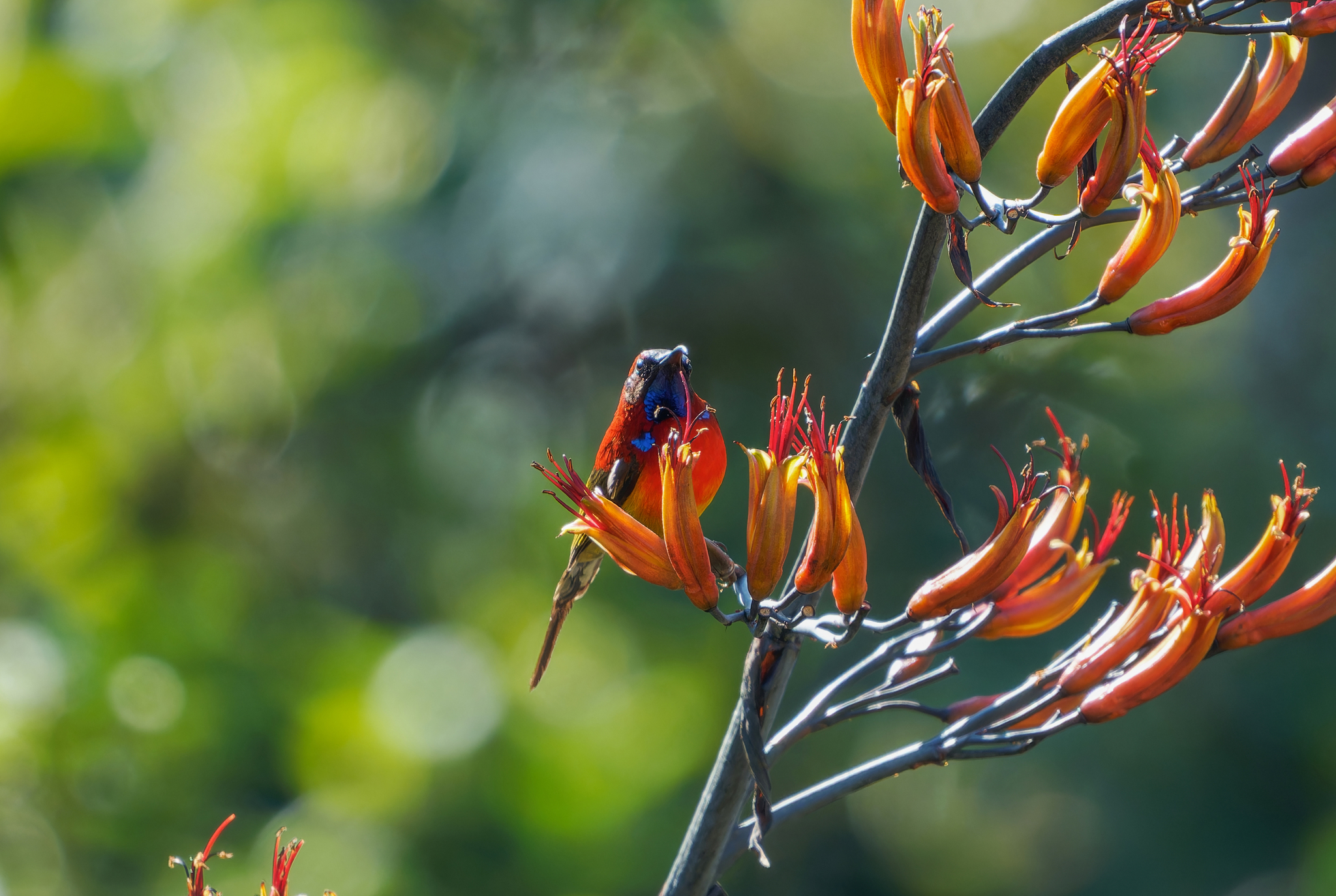
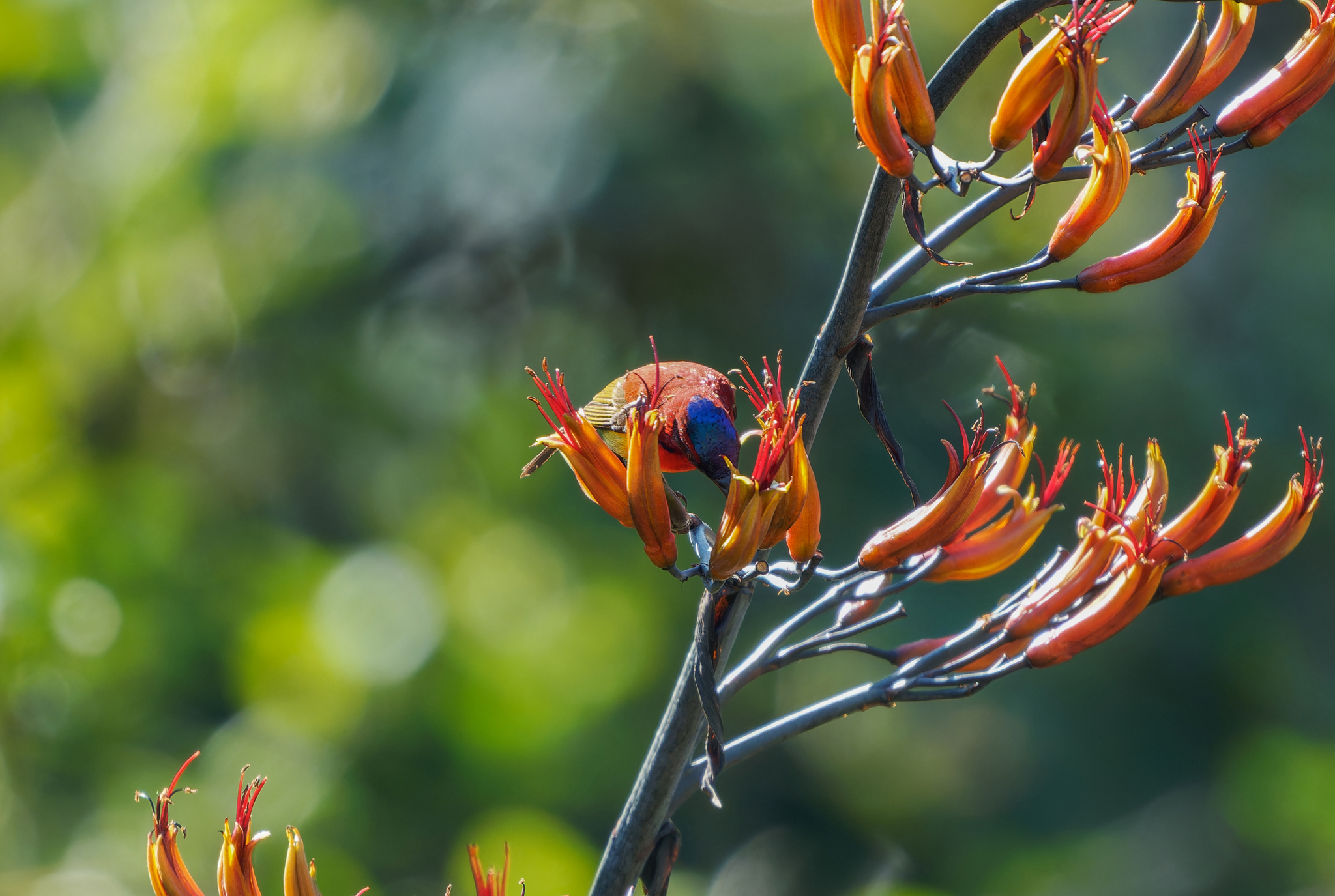
This is a diminutive sunbird characterized by a distinctive down-curved, pointed beak adapted for nectar feeding. Males display spectacular multicoloured plumage, with the forehead, crown, supercilium, and throat in deep violet. The lore, auriculars, malar region, nape, mantle, and sides are a vivid red to deep scarlet, often accented with bright blue markings. Wings and coverts are brown to olive-green, while the underparts transition through yellowish-green to a bright blue tail covert that darkens at the tip. Females are considerably more subdued, dressed in olive-green above with greyish-yellow underparts. Subspecies show considerable variation, with some having purely scarlet breasts while others display bright yellow breasts. Males measure 131-160mm in length and weigh 4-12g, while females are smaller at 91-111mm and 5-8g. Both sexes have beaks measuring 13-17mm.
Identification
The male's combination of violet head and throat with bright scarlet body makes it unmistakable within its range. The bright blue tail covert and wing patterns help distinguish it from similar sunbird species. Female identification is more challenging but can be separated from other female sunbirds by the olive-green upperparts and greyish-yellow underparts, combined with the characteristic curved beak. The green-tailed sunbird is regarded as a close relative and requires careful comparison, though Mrs. Gould's sunbird generally shows more extensive red and violet coloration in breeding plumage. The species' high-altitude preference also helps differentiate it from lowland sunbird species.
Distribution & Habitat
This species occurs across Bangladesh, Bhutan, Laos, Myanmar, Nepal, Thailand, India, Vietnam, and southern China, occupying a broad geographic range from the western Himalayas to Southeast Asia. Its preferred habitat includes evergreen broad-leaved forests, monsoon forests, and deciduous broad-leaved forests between 1000 and 3500 metres elevation. It also frequents orchards and bamboo forests within its range. A non-breeding population has been recorded in Hong Kong. While generally resident throughout most of its range, the species undertakes small-scale seasonal movements in response to resource availability and environmental conditions.
Behavior & Ecology
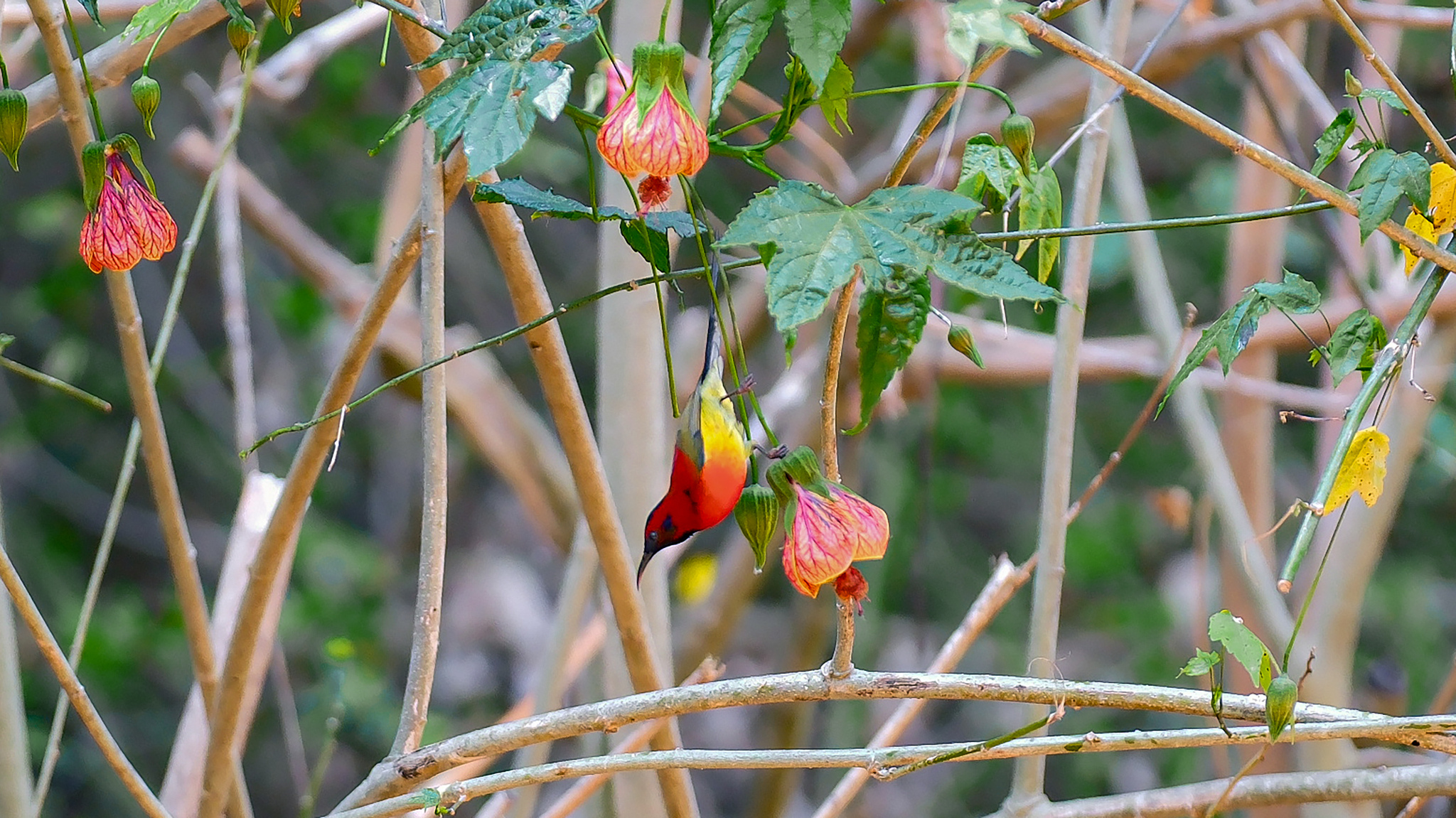
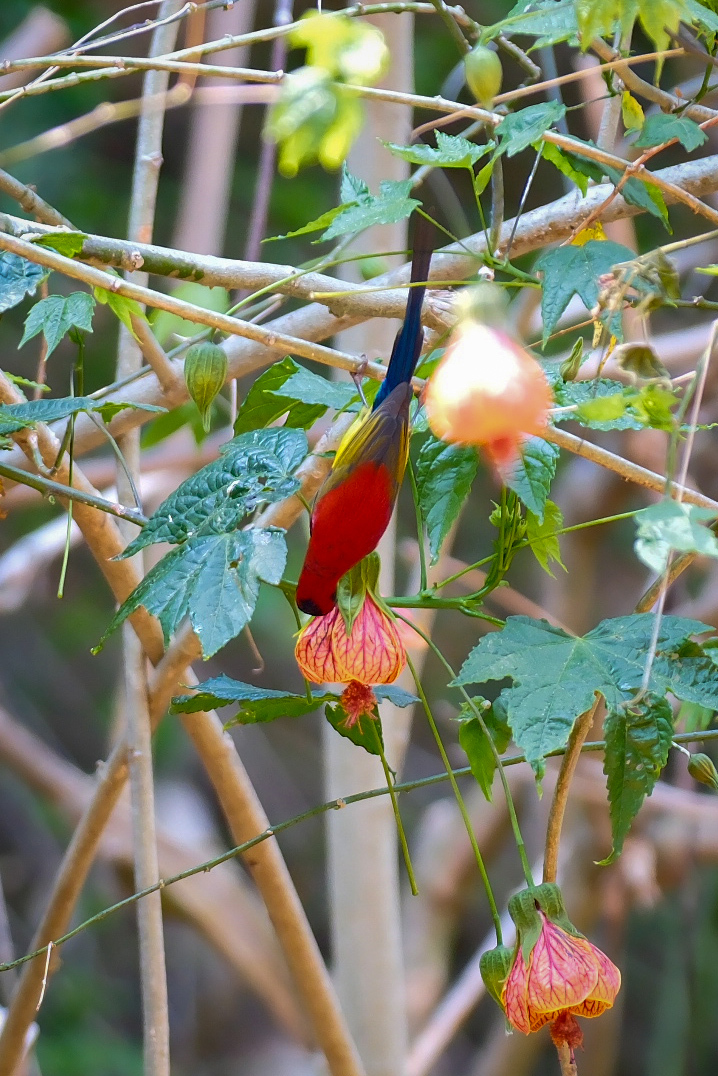
Mrs. Gould's sunbird leads a primarily nectar-based lifestyle, using its specialized tubular tongue to extract nectar from tube-shaped flowers. Its diet also includes small invertebrates such as spiders, small beetles, and hemipteran nymphs, particularly during the breeding season when protein is essential for chick development. The species is typically encountered alone or in pairs, though temporary groups of three to five individuals occasionally form, and larger aggregations of more than ten have been observed. It moves quickly through the canopy with short, energetic flights. Vocalizations include a high, thin 'tzeeee' contact call and a sharper 'tzit' alarm note. During breeding season from April to June, males perform courtship displays accompanied by a distinctive 'zhai-zhai-zhai' call. Nests are constructed from moss, grass, plant fibres, and spiderwebs, measuring 15-18cm in length. Both parents share incubation duties, which last approximately two weeks, and continue caring for chicks until they fledge after 15-16 days.
Conservation
The species holds a Least Concern status on the IUCN Red List, indicating a stable population across its relatively extensive range. While not listed among China's endangered and protected species, it does appear on the country's List of Wild Animals Protected by the PRC that Are Beneficial or of High Value to Economy and Science. No significant population declines have been documented, though habitat degradation within its forest environments could present long-term concerns. The species benefits from its occurrence across multiple protected areas throughout its range.
Source: Wikipedia · CC BY-SA 3.0
Taxonomy
- Order
- Passeriformes
- Family
- Nectariniidae
- Genus
- Aethopyga
- eBird Code
- gousun1
Subspecies (4)
-
Aethopyga gouldiae annamensis
southern Laos (Bolaven Plateau) and southern Vietnam (Langbian Plateau)
-
Aethopyga gouldiae dabryii
western China (Xinjiang to Sichuan and Yunnan) to Myanmar and northern Laos
-
Aethopyga gouldiae gouldiae
Himalayas (Sutlej Valley to Arunachal Province and southeastern Tibet)
-
Aethopyga gouldiae isolata
southern Assam to Bangladesh and western Myanmar (Chin Hills)
Data Sources
Species description from Wikipedia, licensed under CC BY-SA 3.0.
Bird images and sounds sourced from GBIF, contributed by citizen scientists worldwide under Creative Commons licenses.
Taxonomy data from AviList 2025.