
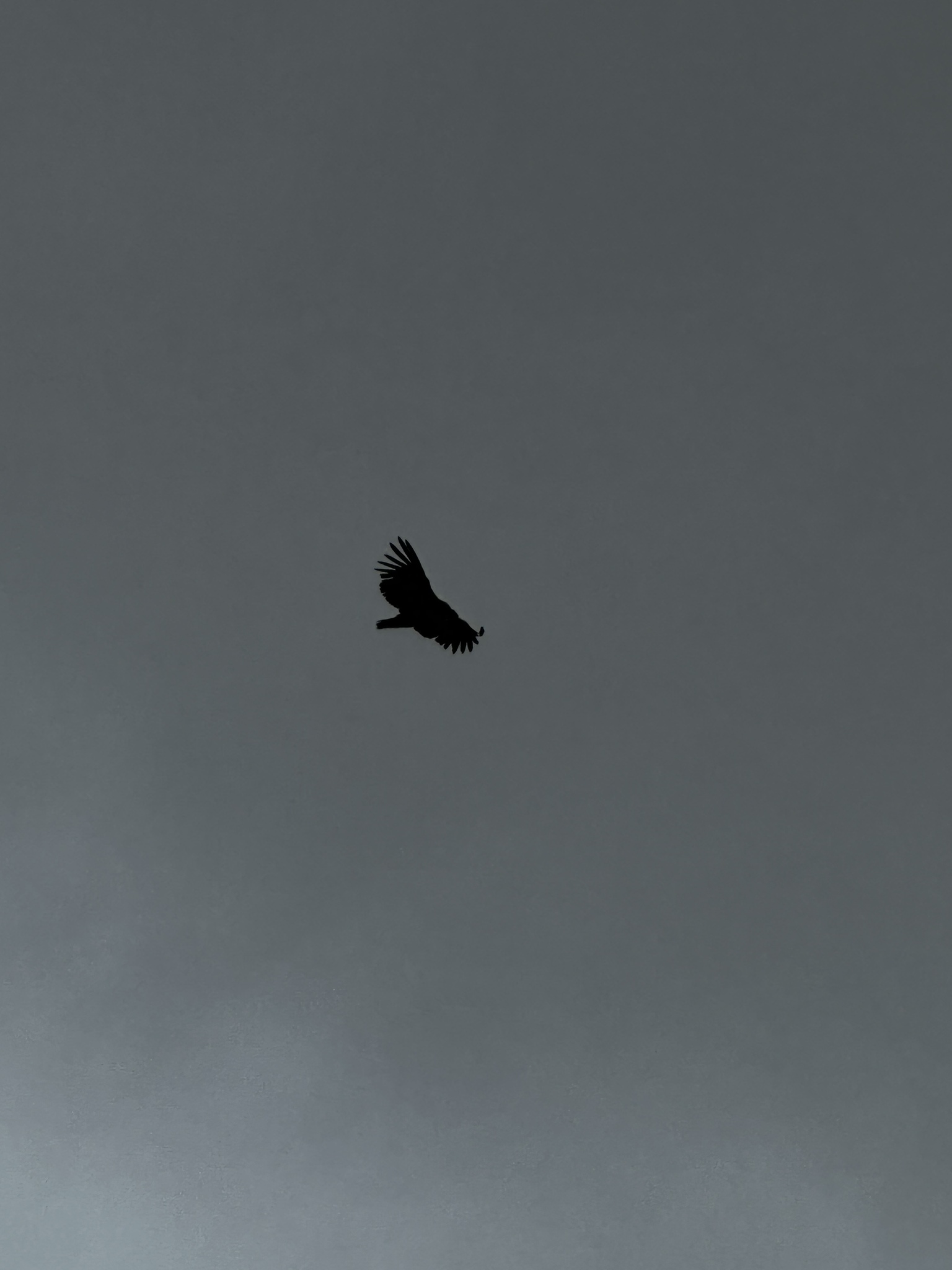

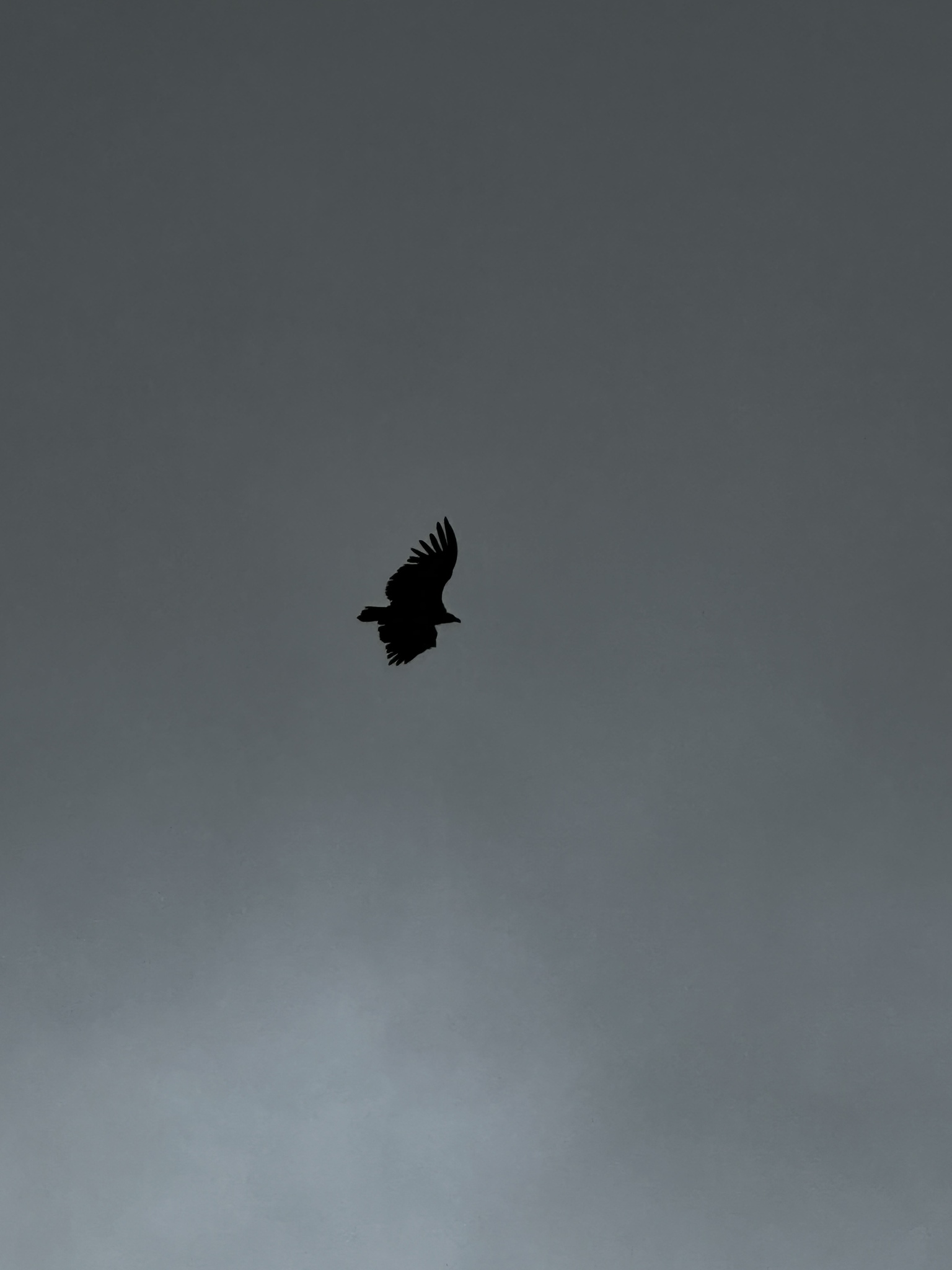
Accipitriformes / Accipitridae / Aegypius
Cinereous Vulture
Aegypius monachus · 秃鹫
Introduction
A very large raptor in the family Accipitridae, distributed through much of temperate Eurasia. With a body length of 1.2 m, a wingspan of 3.1 m, and a maximum weight of 14 kg, it is the largest Old World vulture and largest member of the family Accipitridae. It plays an important ecological role by consuming carcasses, which reduces disease spread. The species is listed as Near Threatened.
Description
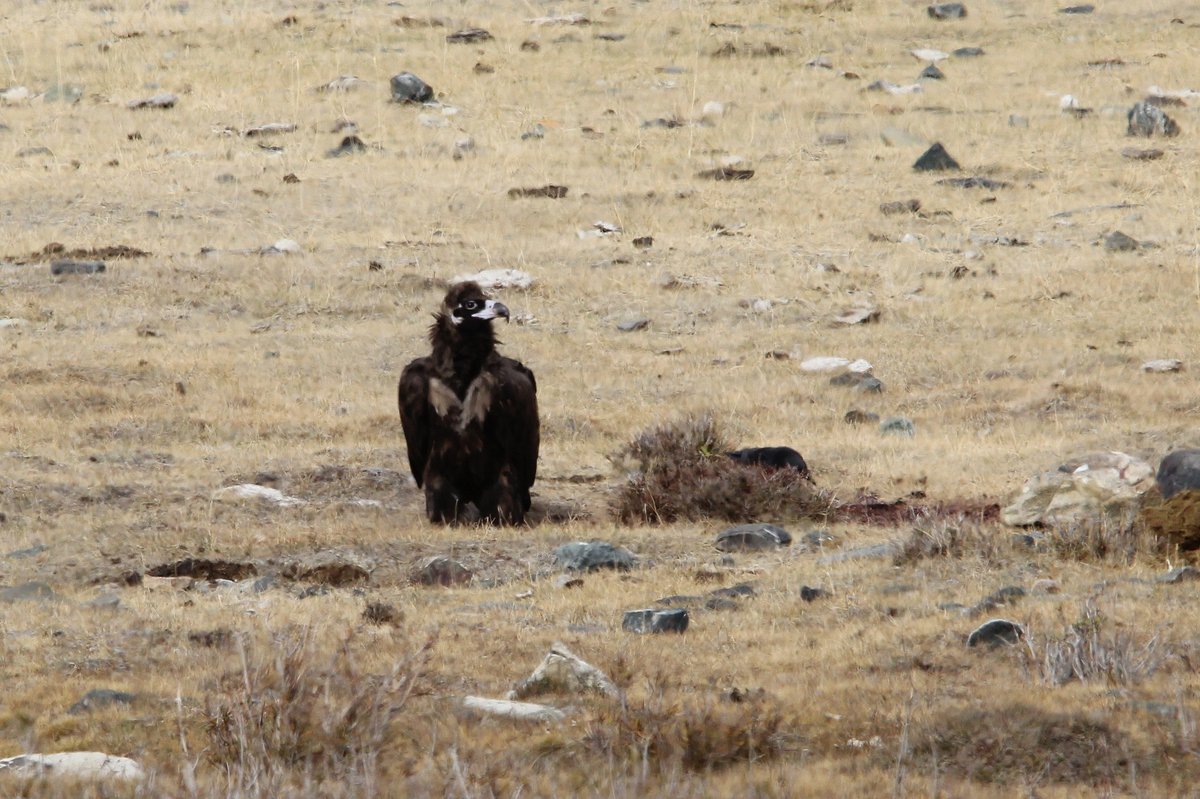
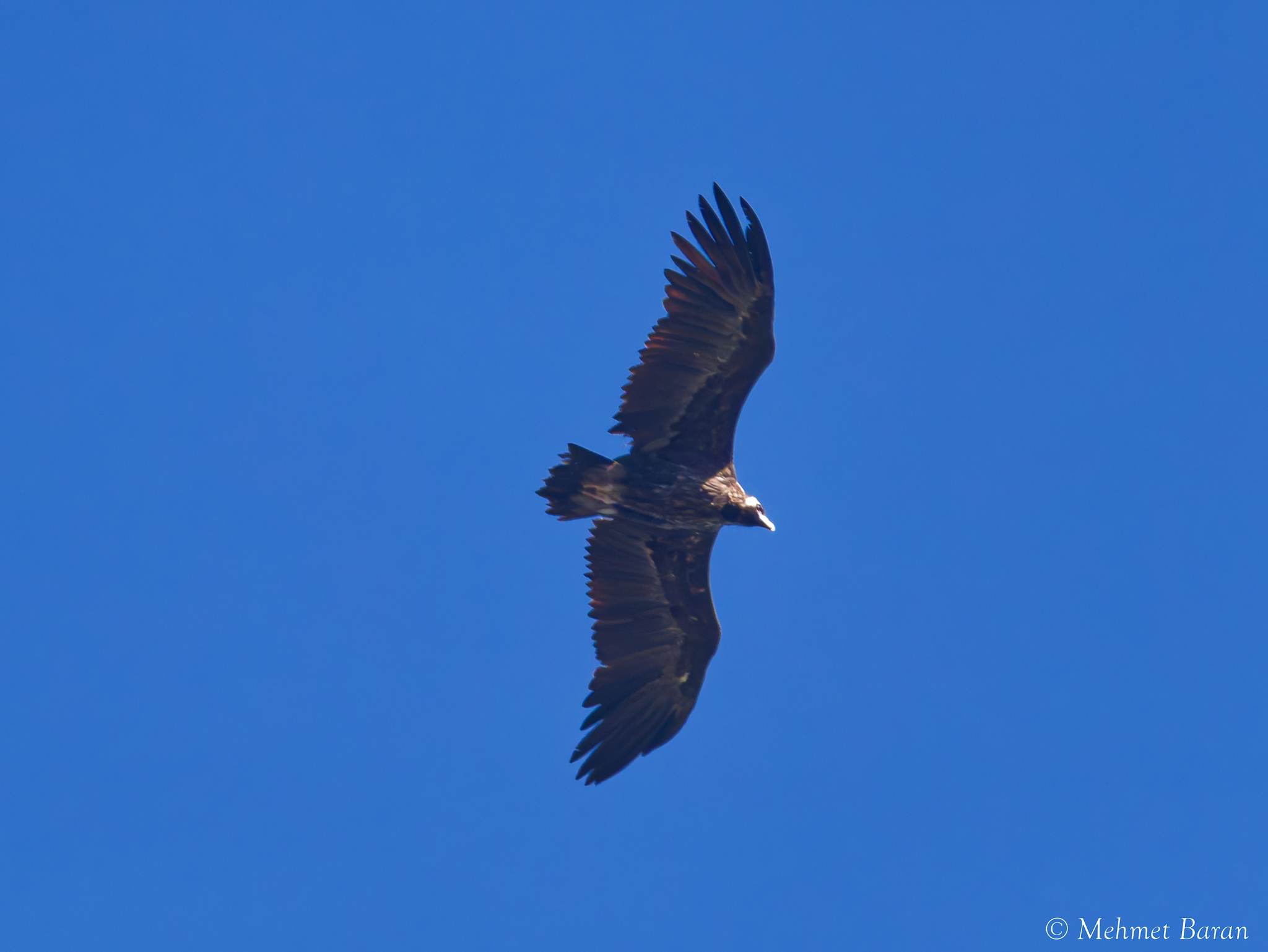
Measures 98–120 cm in total length with a 2.5–3.1 m wingspan. Males weigh 6.3–11.5 kg; females weigh 7.5–14 kg. Plumage is distinctly dark blackish-brown, appearing all black from a distance. Adults have a pale head covered in fine blackish down, bluish-grey skin on the head and neck, brown eyes, a purplish cere, and a blue-grey bill. Immatures are sepia-brown above with a paler underside, grey down on the head, a pale mauve cere, and grey legs. The massive bill has an exposed culmen of 8–9 cm. Wings are broad with serrated leading edges.
Identification
Distinguished by huge size, dark uniform plumage, and broad 'barn door' wings held straight or slightly arched in slow, buoyant flight. Unlike the similar lappet-faced vulture, it lacks bare pinkish head skin and contrasting whitish thighs/belly. Distinguished from Gyps vultures by darker, non-streaky plumage and evenly broad wings without bulging primaries. Generally silent except for querulous mewing or guttural cries at the nest.
Distribution & Habitat
Range extends from Spain and inland Portugal eastwards through Greece, Turkey, the Middle East, Afghanistan, northern India, to central Asia (Manchuria, Mongolia, Korea). Fragmented in Europe; reintroduced in southern France. Generally a permanent resident, with limited altitudinal movement in hard winters and some migration in eastern ranges (e.g., to southern Korea and China). Inhabits hilly and mountainous areas, dry semi-open habitats, meadows, steppes, grasslands, and open woodlands. Elevations range from 100–2,000 m in Europe/Middle East to 800–4,500 m in Asia. Observed at 6,970 m on Mount Everest.
Behavior & Ecology
Largely solitary or found in pairs; small groups congregate at large carcasses. Breeds in loose colonies in high mountains and forests, nesting in trees or on cliff ledges. Nests are huge (1.45–2 m across), built with sticks, and reused over years. Clutch typically contains one egg; incubation lasts 50–62 days. Parents feed young via regurgitation. Feeds mostly on carrion of mammals, fish, and reptiles, using a powerful bill to tear tough skins and break bones. Dominant over other scavengers like Gyps vultures and foxes. Occasionally preys on live animals such as neonatal ungulates, tortoises, and rodents.
Conservation
Listed as Near Threatened. Declined over most of its range due to poisoning from bait intended for predators, reduced carrion availability from higher hygiene standards, shooting, trapping, and habitat destruction. Extinct in many European countries and northwest Africa. Global population estimated at 15,600–21,000 mature individuals (7,800–10,500 pairs). Populations in Spain have recovered to about 1,000 pairs due to protection and feeding schemes. Threats persist in China and Russia from illegal capture and in Tibet from rodenticides.
Culture
The Hebrew word for 'eagle' is also used for this species, suggesting Biblical passages alluding to eagles may refer to this or other vultures.
Source: Wikipedia · CC BY-SA 3.0
Taxonomy
- Order
- Accipitriformes
- Family
- Accipitridae
- Genus
- Aegypius
Distribution
Mediterranean basin to eastern Asia
Data Sources
Species description from Wikipedia, licensed under CC BY-SA 3.0.
Bird images and sounds sourced from GBIF, contributed by citizen scientists worldwide under Creative Commons licenses.
Taxonomy data from AviList 2025.