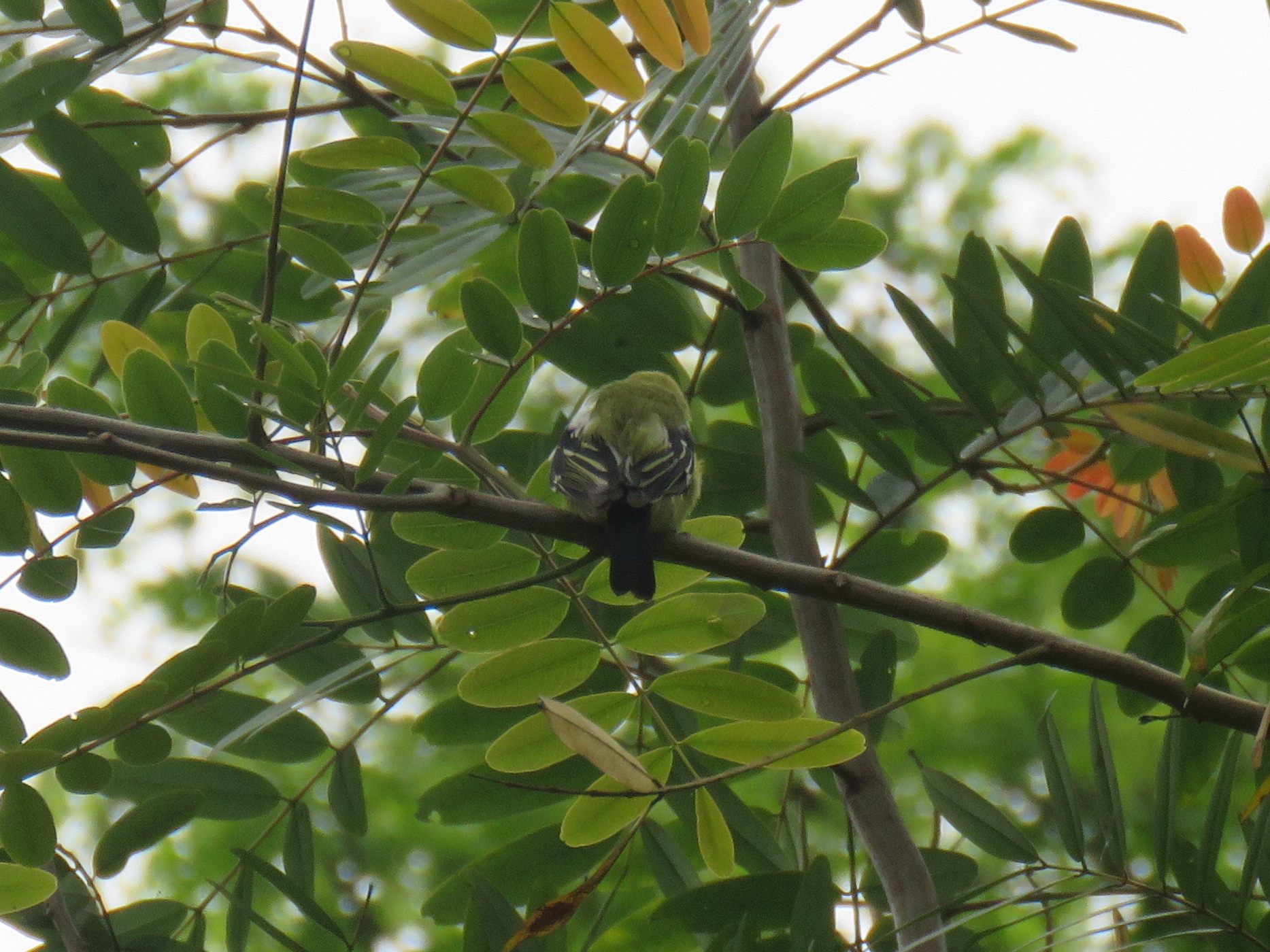
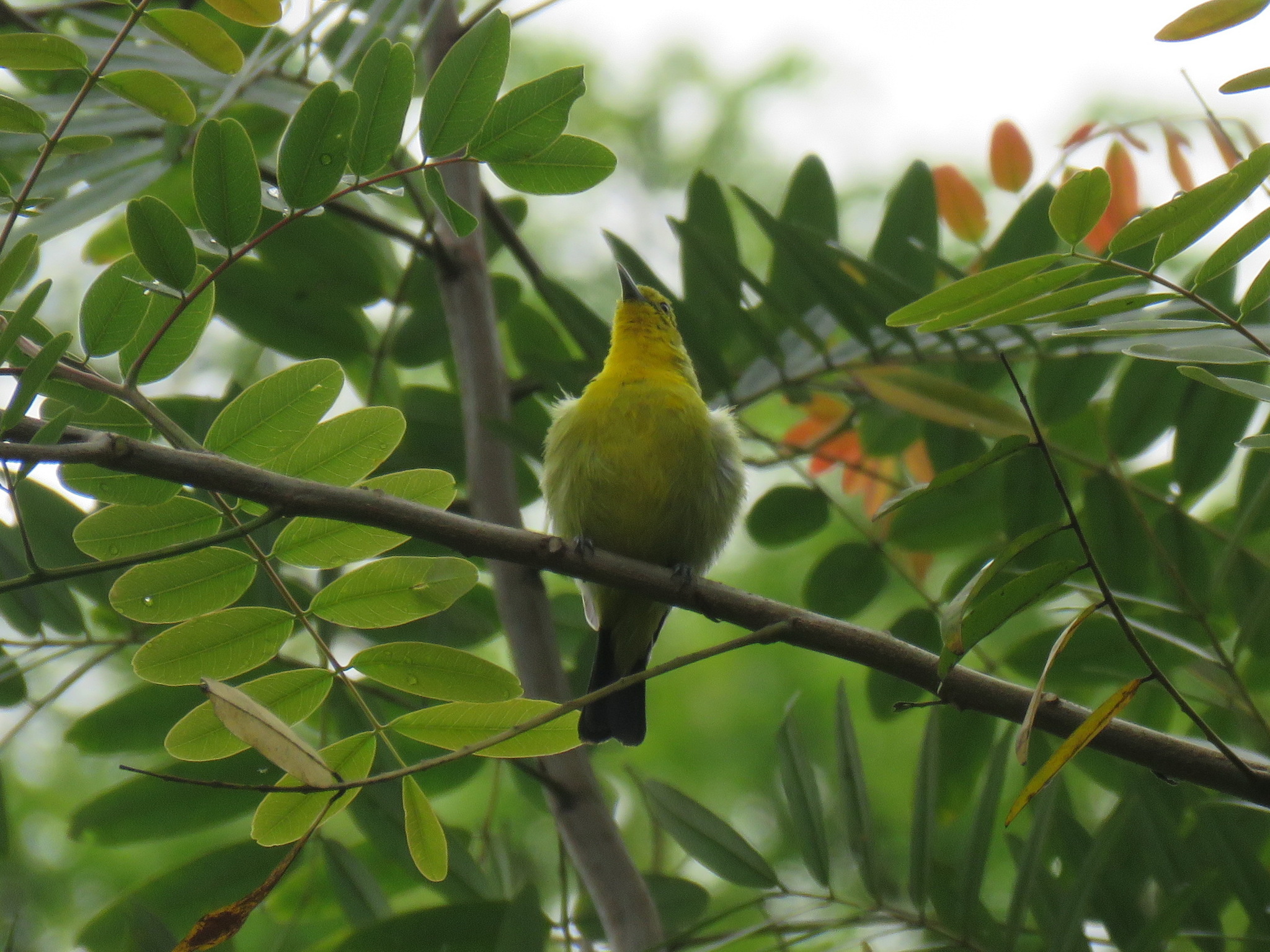
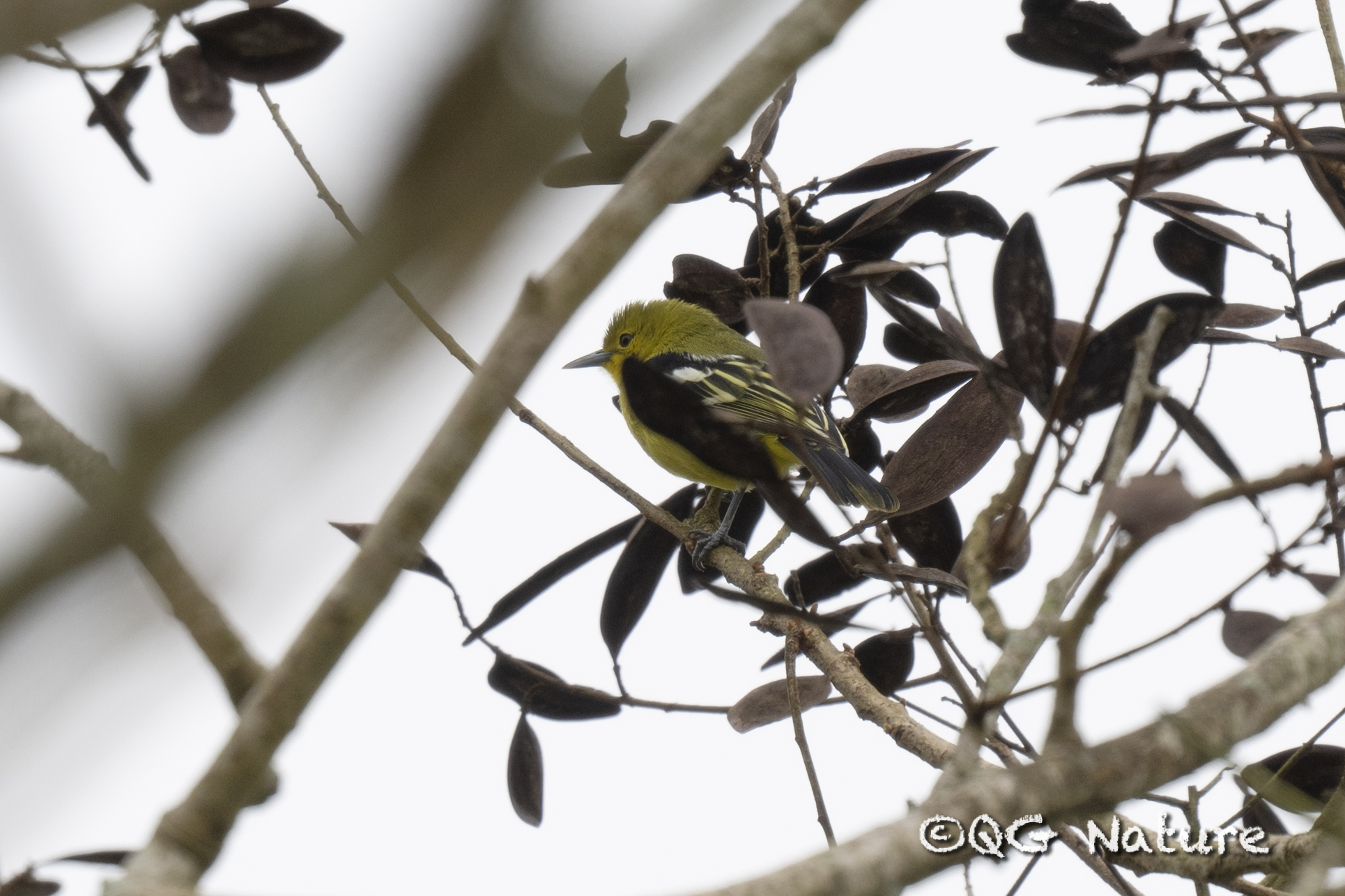
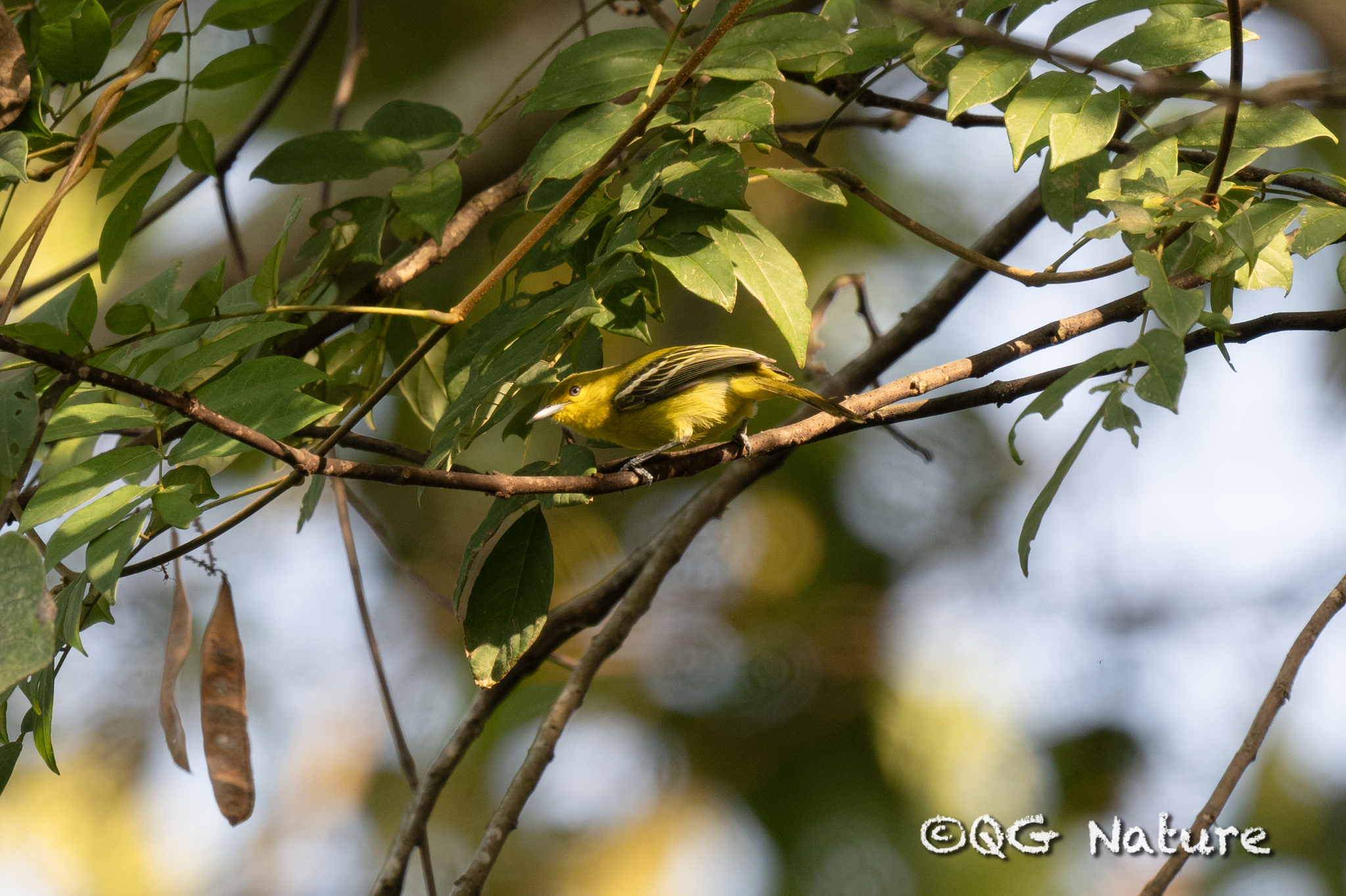
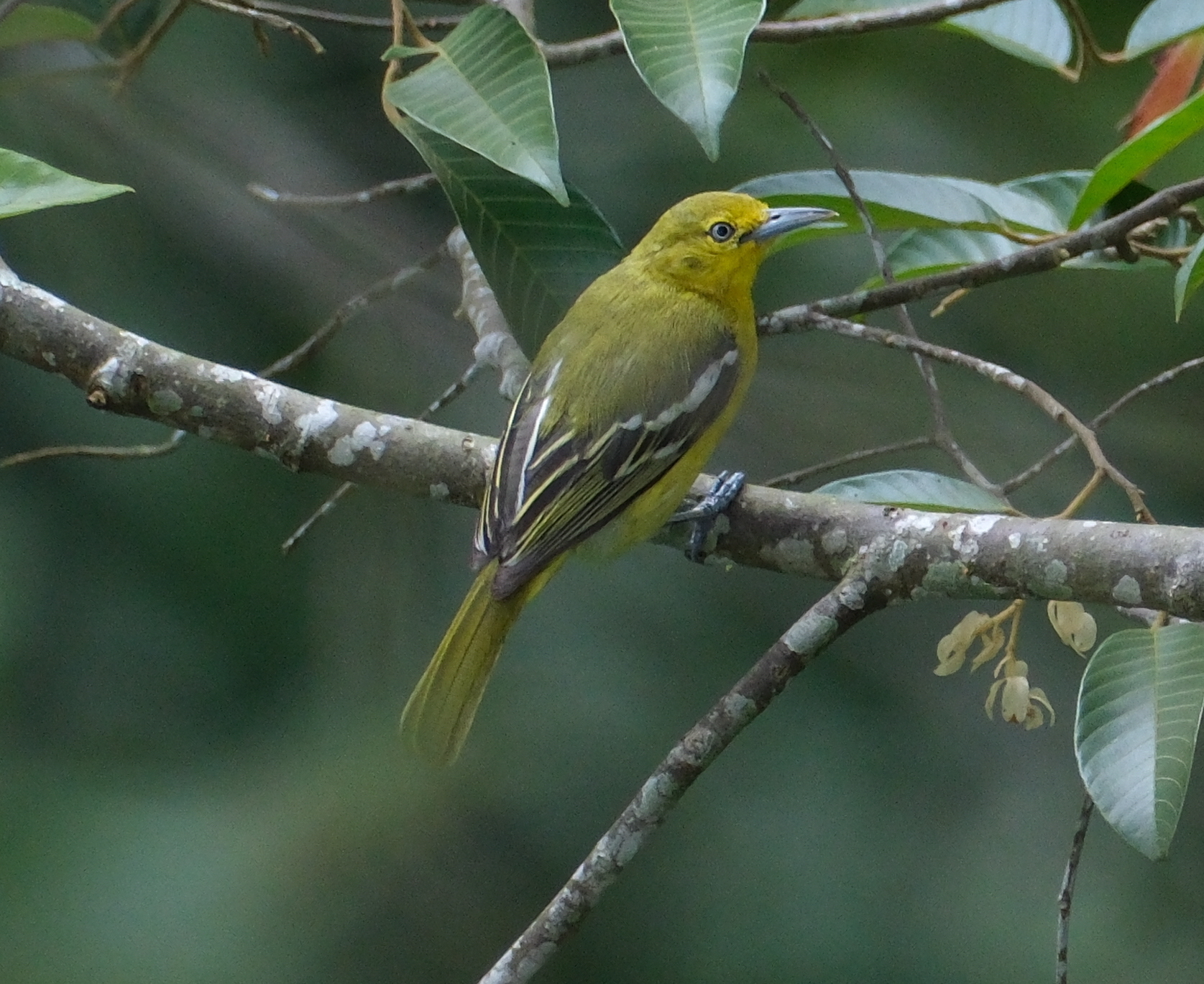
Passeriformes / Aegithinidae / Aegithina
Common Iora
Aegithina tiphia · 黑翅雀鹎
Introduction
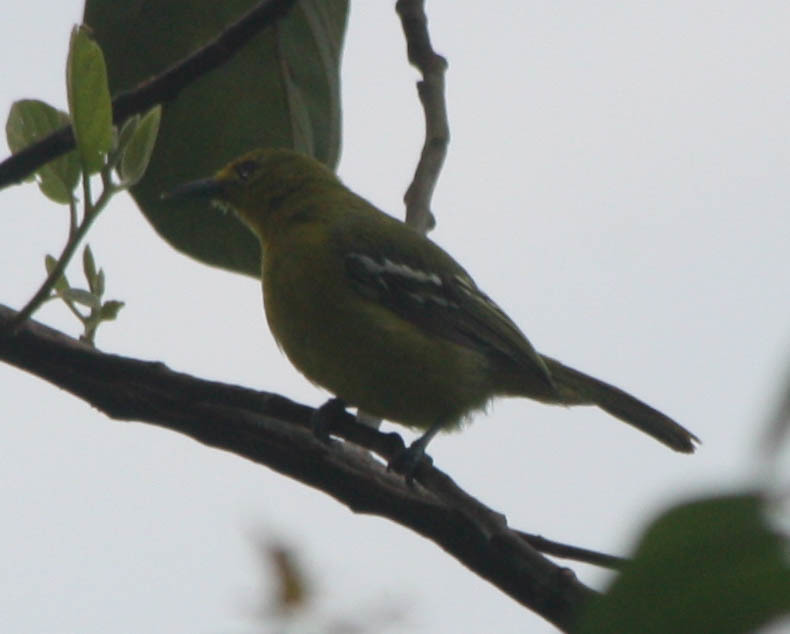
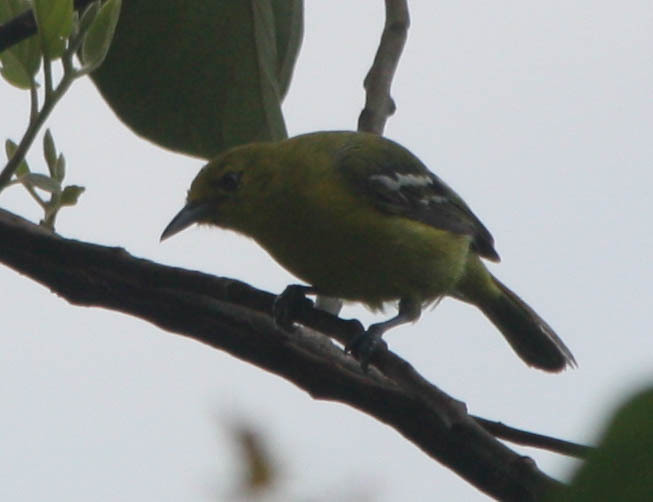
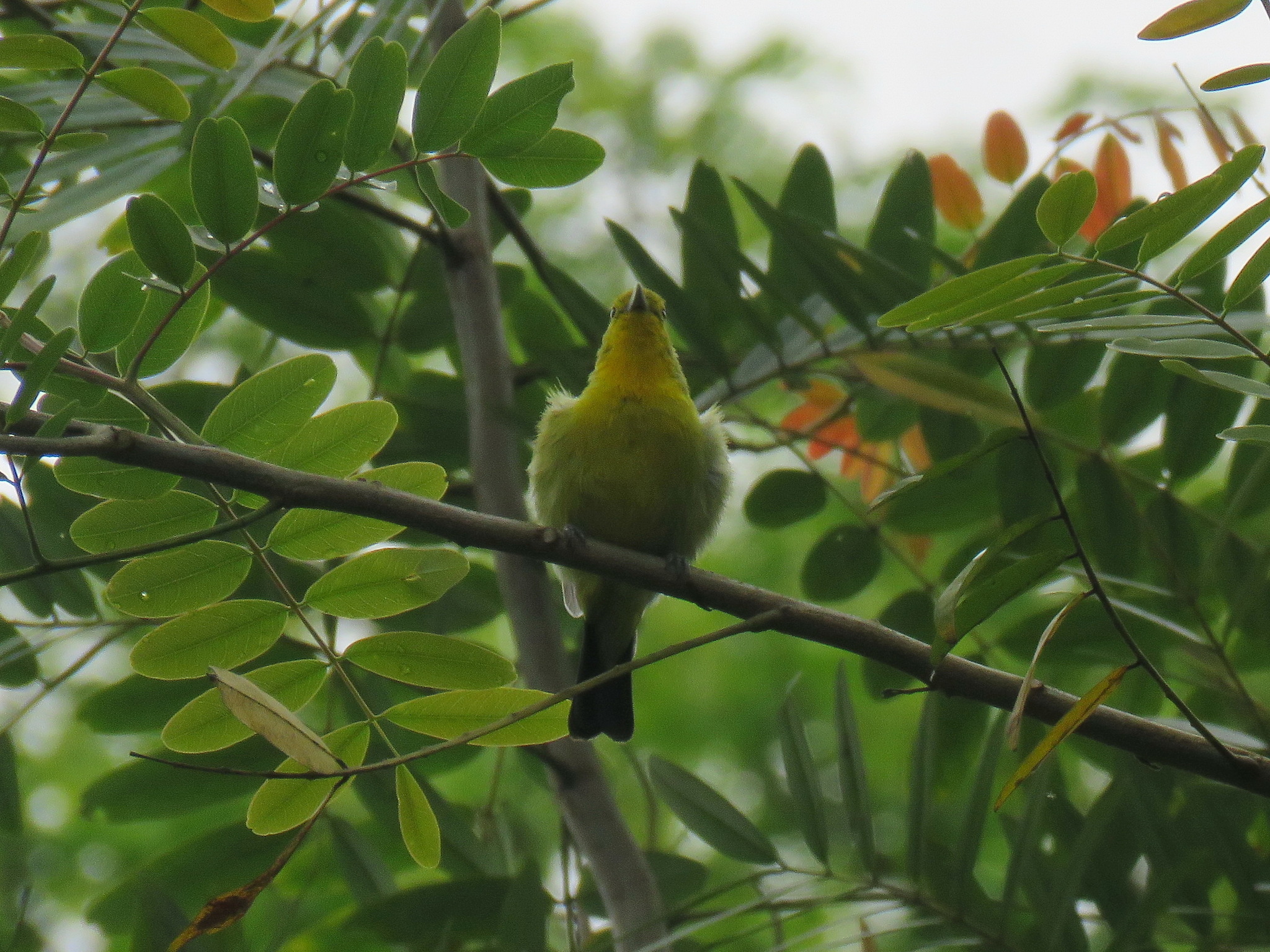
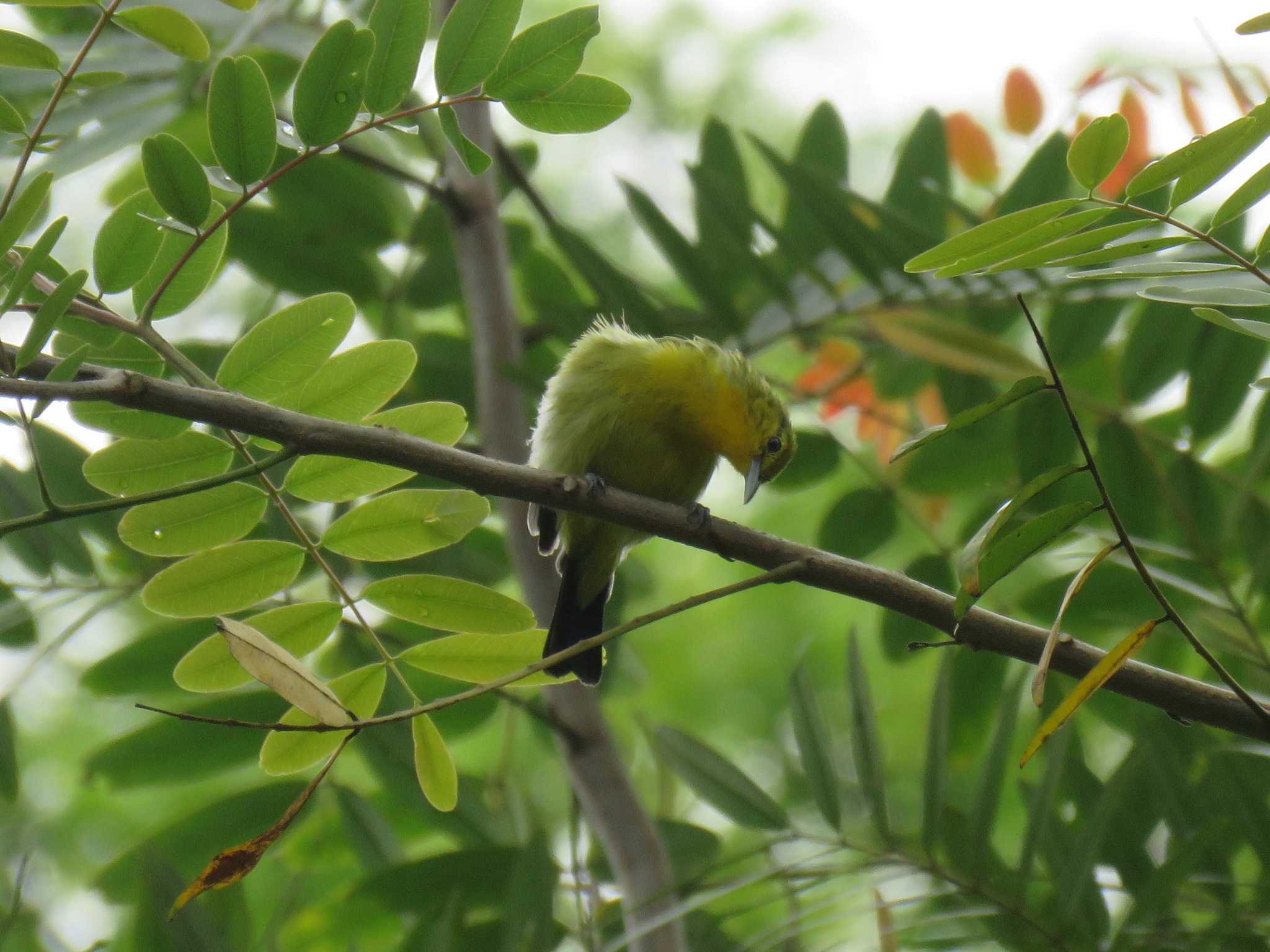
A small passerine bird found across the tropical Indian subcontinent and Southeast Asia. It inhabits scrub and forest environments. Distinctive traits include loud whistles, bright plumage colors, and an acrobatic spiral courtship display by males.
Description
Sexually dimorphic with a pointed, notched beak and straight culmen. Breeding males feature a black cap, back, wings, and tail, with two prominent white wing bars and yellow undersides. Non-breeding males and females have greenish wings, olive tails, and yellow undersides; some populations show limited black on the crown. Subspecies vary: septentrionalis is brighter yellow; humei males have a black cap and olive upper mantle; multicolor males have a jet black cap and mantle.
Identification
Breeding males are distinguished by black upperparts and two white wing bars. Can be confused with Marshall's iora, which always has white tips to the tail. Identified in the field by loud whistles, churring calls, and trilled 'wheeeee-tee' song. Flight involves acrobatic spiraling during displays.
Distribution & Habitat
Range extends across the tropical Indian subcontinent and Southeast Asia. Eleven subspecies are recognized with specific ranges: multicolor (southwest India, Sri Lanka); deignani (south/east India, north/central Myanmar); humei (central peninsular India); tiphia (north India to west Myanmar); septentrionalis (northwest Himalayas); philipi (south-central China, east Myanmar, north Thailand, north/central Indochina); cambodiana (southeast Thailand, Cambodia, south Vietnam); horizoptera (southeast Myanmar, southwest Thailand, Malay Peninsula, Sumatra); scapularis (Java, Bali); viridis (central/south Borneo); aequanimis (north Borneo, west Philippines).
Behavior & Ecology
Forages in trees in small groups or mixed-species flocks, gleaning insects from branches. Vocalizations include churrs, chattering, whistles, and imitation of other birds like drongos. Breeding occurs mainly after monsoons. Males perform courtship displays by fluffing feathers and spiraling in the air. Nests are compact cups of grass bound with cobwebs, placed in tree forks. Clutch size is 2–4 greenish-white eggs, incubated by both sexes for about 14 days. Predators include snakes, lizards, crow-pheasants, and crows. Brood parasitized by the banded bay cuckoo. Molts twice yearly.
Source: Wikipedia · CC BY-SA 3.0
Taxonomy
- Order
- Passeriformes
- Family
- Aegithinidae
- Genus
- Aegithina
Vocalizations
Subspecies (11)
-
Aegithina tiphia aequanimis
northern Borneo, adjacent northern islands, and Palawan
Data Sources
Species description from Wikipedia, licensed under CC BY-SA 3.0.
Bird images and sounds sourced from GBIF, contributed by citizen scientists worldwide under Creative Commons licenses.
Taxonomy data from AviList 2025.