
Passeriformes / Acrocephalidae / Acrocephalus
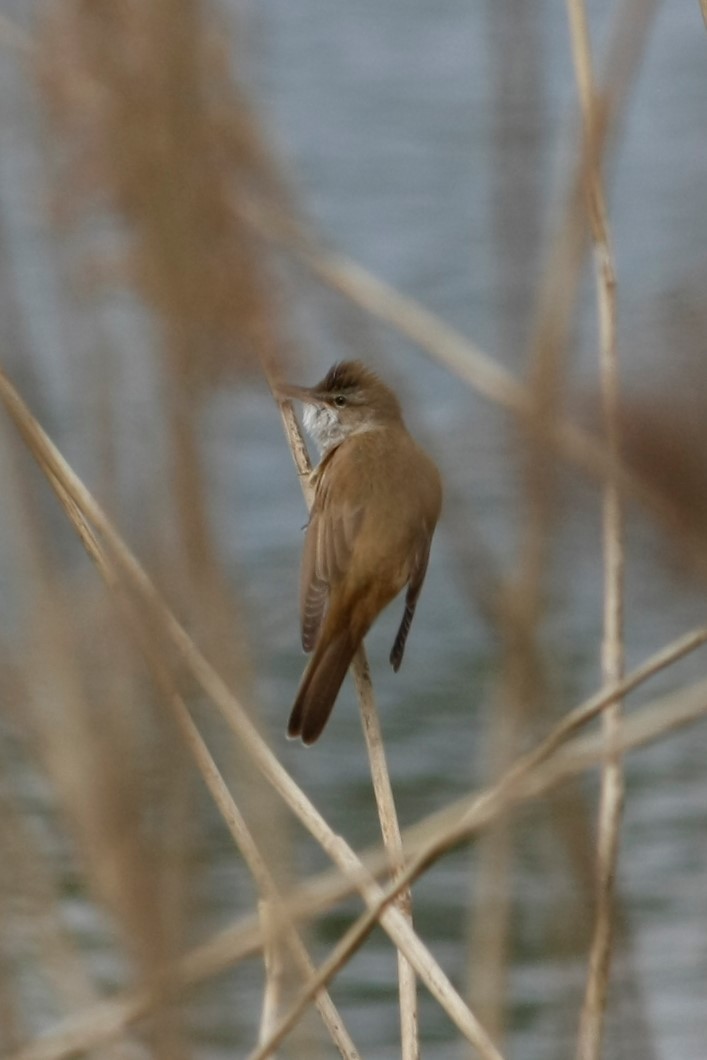
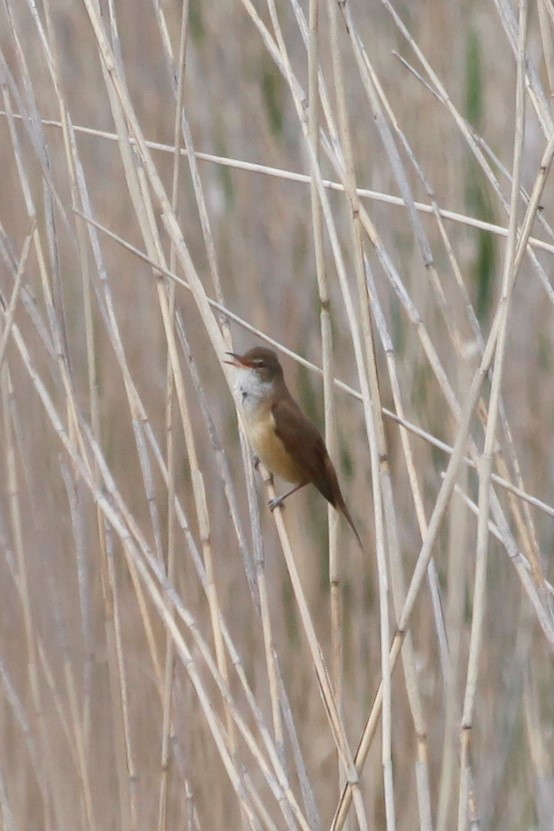
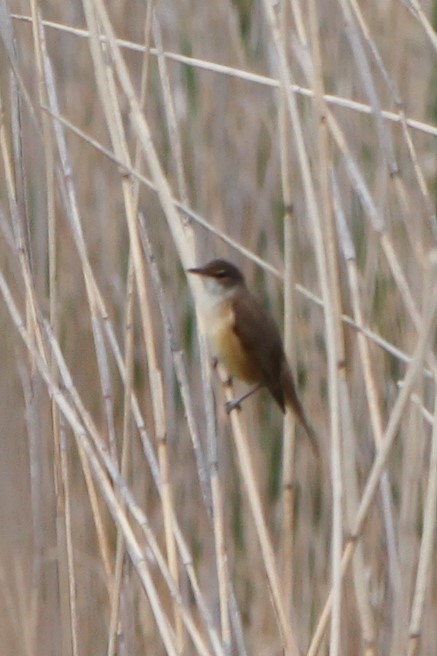
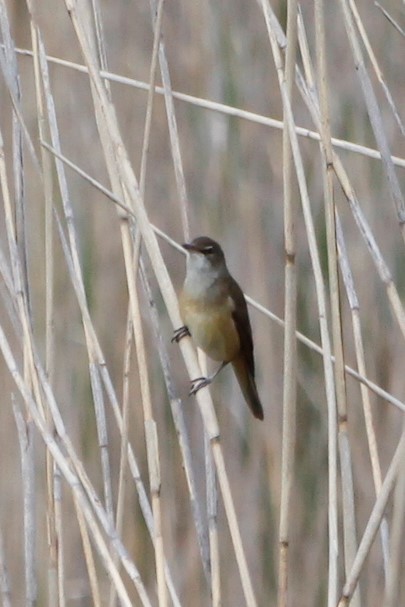
Great Reed Warbler
Acrocephalus arundinaceus · 大苇莺
Introduction
Medium-sized passerine in the family Acrocephalidae and the largest of the European warblers. Breeds throughout mainland Europe and the Western Palearctic, migrating to sub-Saharan Africa for winter. Favors reed beds during breeding and various vegetated habitats in winter. Exhibits low sexual dimorphism and practices both polygynous and monogamous mating systems. Classified as Least Concern by the IUCN.
Description
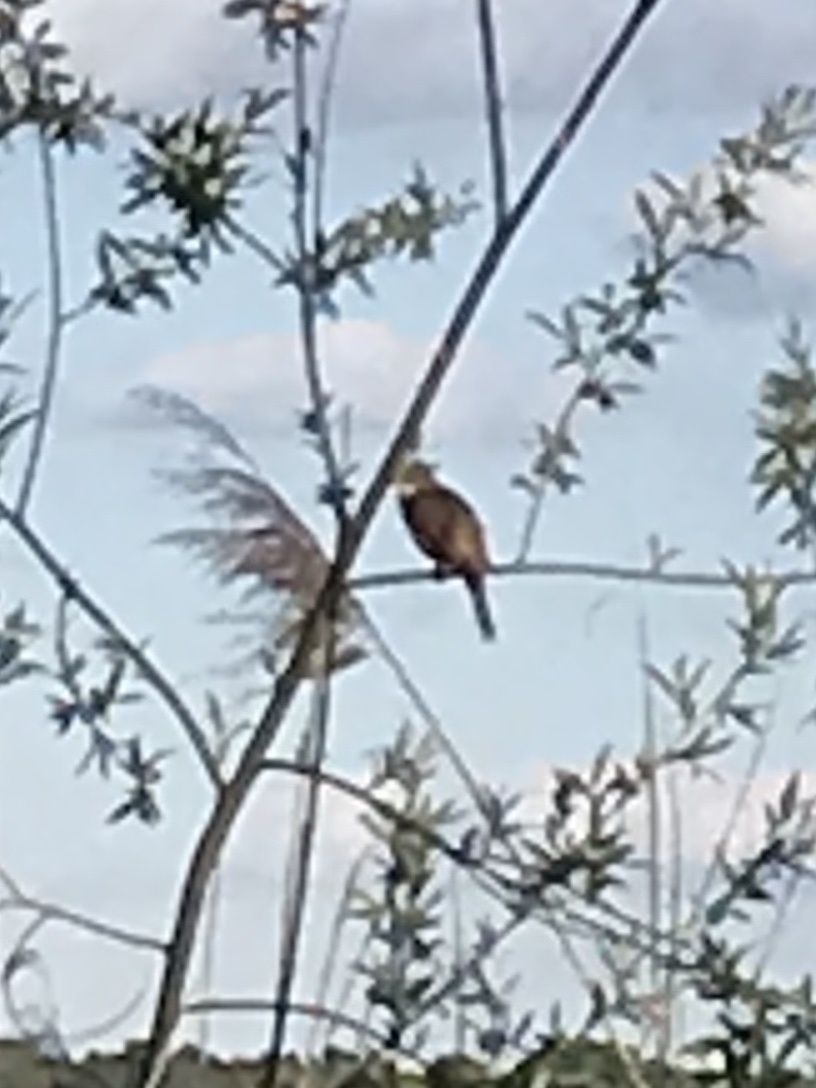
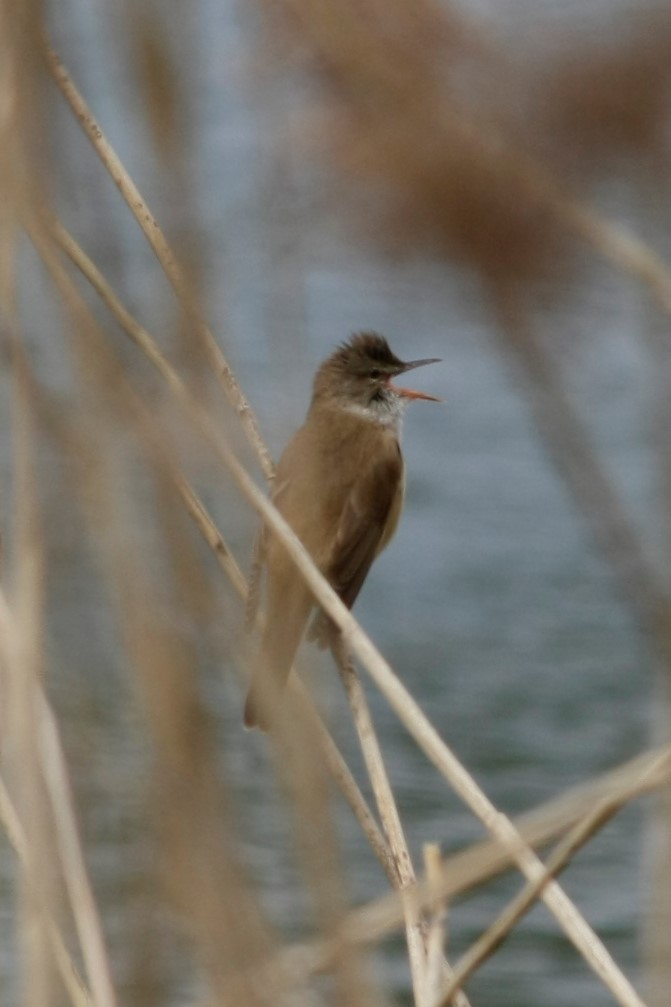
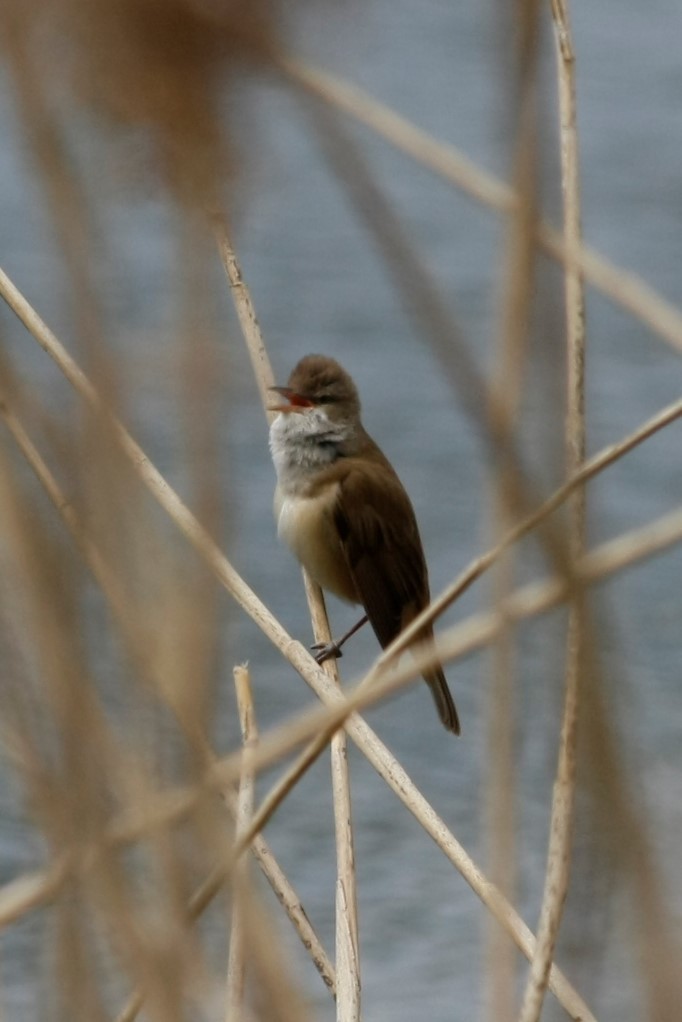
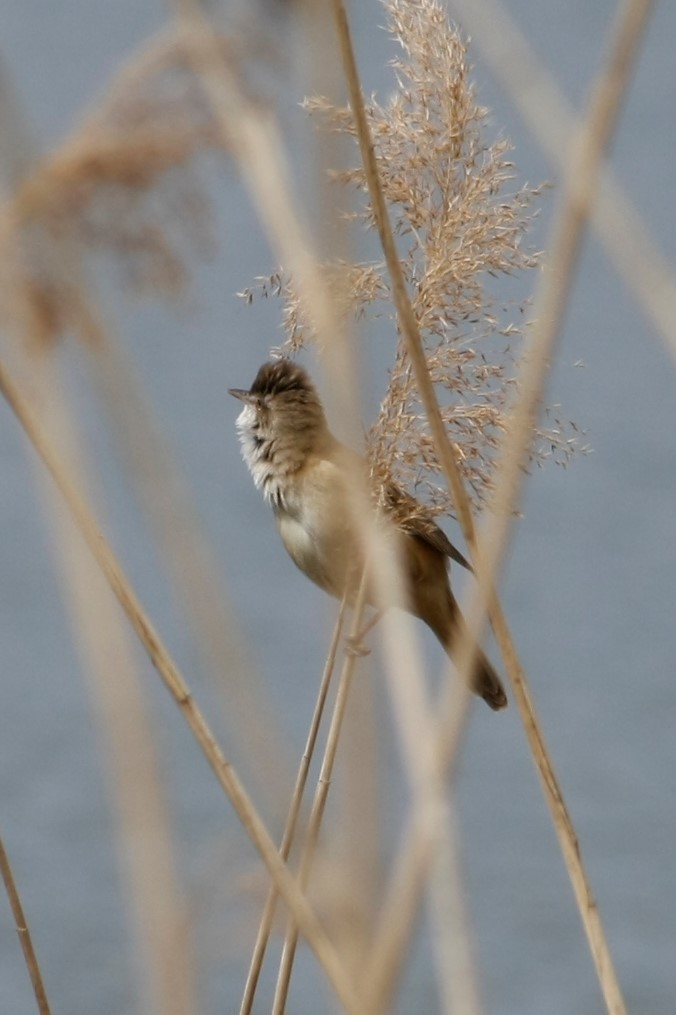
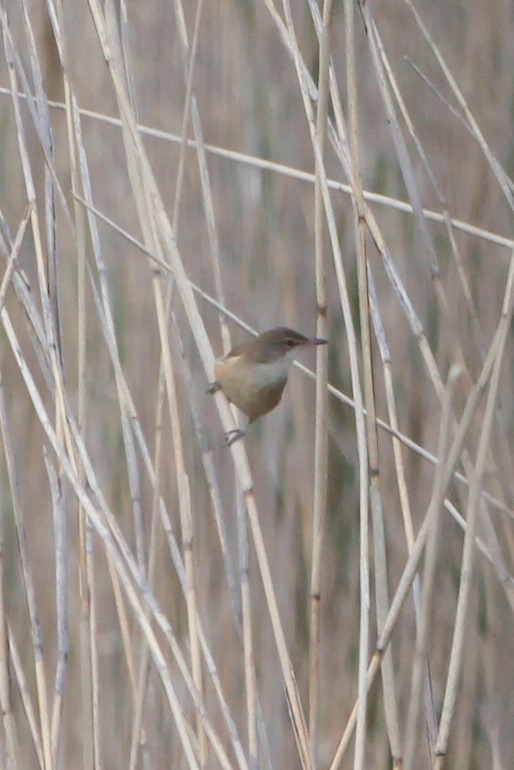
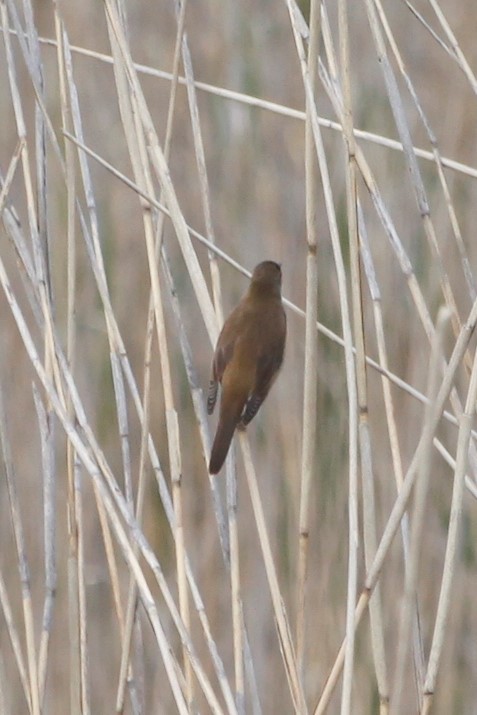
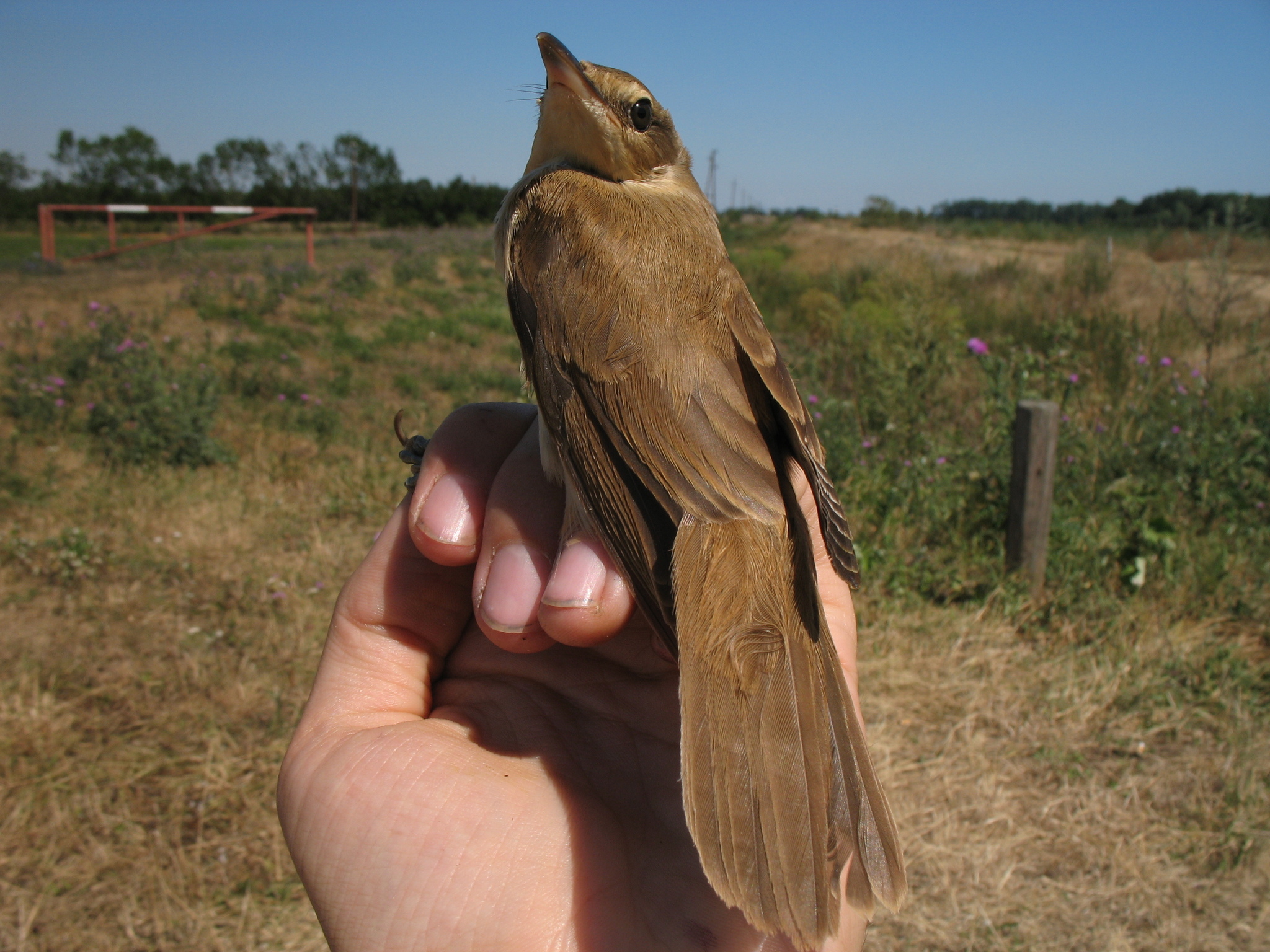
Measures 16–21 cm (6.3–8.3 in) in length, with a wingspan of 25 to 30 cm (9.8 to 11.8 in) and weight of 22 to 38 g (0.78 to 1.34 oz). Adults have unstreaked brown upperparts and dull buffish-white chin and underparts. The forehead is flattened, and the bill is strong and pointed. Resembles a giant common reed warbler but possesses a stronger supercilium. Sexes are identical in appearance; young birds are richer buff below.
Identification
Key marks include unstreaked brown upperparts, dull buffish-white underparts, and a strong supercilium. Distinguished from the common reed warbler by larger size and stronger supercilium. Vocalizations are very loud and far-carrying, featuring a main chattering and croaking phrase (carr-carr-cree-cree-cree-jet-jet) often mixed with whistles and vocal mimicry. Males use long, loud songs (approx. 4 seconds) to attract females and short songs (approx. 1 second) for territorial defense.
Distribution & Habitat
Breeds in Europe and the west Palearctic, excluding Great Britain where it is only an irregular visitor. Two subspecies are recognized: A. a. arundinaceus (Europe to north Iran and northwest Arabia) and A. a. zarudnyi (southeast European Russia and north Iran to northwest Mongolia and northwest China). Migrates to tropical Africa for winter. During migration over the Sahara Desert, individuals have recorded ascents exceeding 5,000 m, reaching a maximum of 6,267 m. Populations have increased around the eastern Baltic Sea but decreased at the western end of the range.
Behavior & Ecology
Insectivorous diet includes insect larvae, moths, dragonflies, damselflies, beetles, spiders, small fish, frogs, and tadpoles; fruit is consumed during non-breeding seasons. Nestlings feed on diptera and arachnids. Breeding involves laying 3–6 eggs in an open cup-nest in reeds. Mating system is partially polygynous; males contribute little to parental care and may deceive secondary females. Territory defense and mate attraction rely on distinct song types: short songs for rivals and long songs for females. Song repertoire size correlates with territory quality and lifetime reproductive success. Females prefer early-arriving males with attractive territories. Defends nests with graded alarm calls.
Conservation
Considered a species of least concern by the IUCN. It is a common and widespread bird that undergoes marked long-term population fluctuations and can expand its range quickly when new habitat becomes available.
Source: Wikipedia · CC BY-SA 3.0
Taxonomy
- Order
- Passeriformes
- Family
- Acrocephalidae
- Genus
- Acrocephalus
Subspecies (2)
-
Acrocephalus arundinaceus arundinaceus
breeds Europe to western Siberia, Türkiye, northern Iran, and northwestern Africa; winters Africa
Data Sources
Species description from Wikipedia, licensed under CC BY-SA 3.0.
Bird images and sounds sourced from GBIF, contributed by citizen scientists worldwide under Creative Commons licenses.
Taxonomy data from AviList 2025.