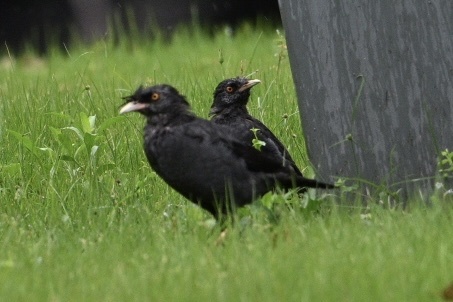
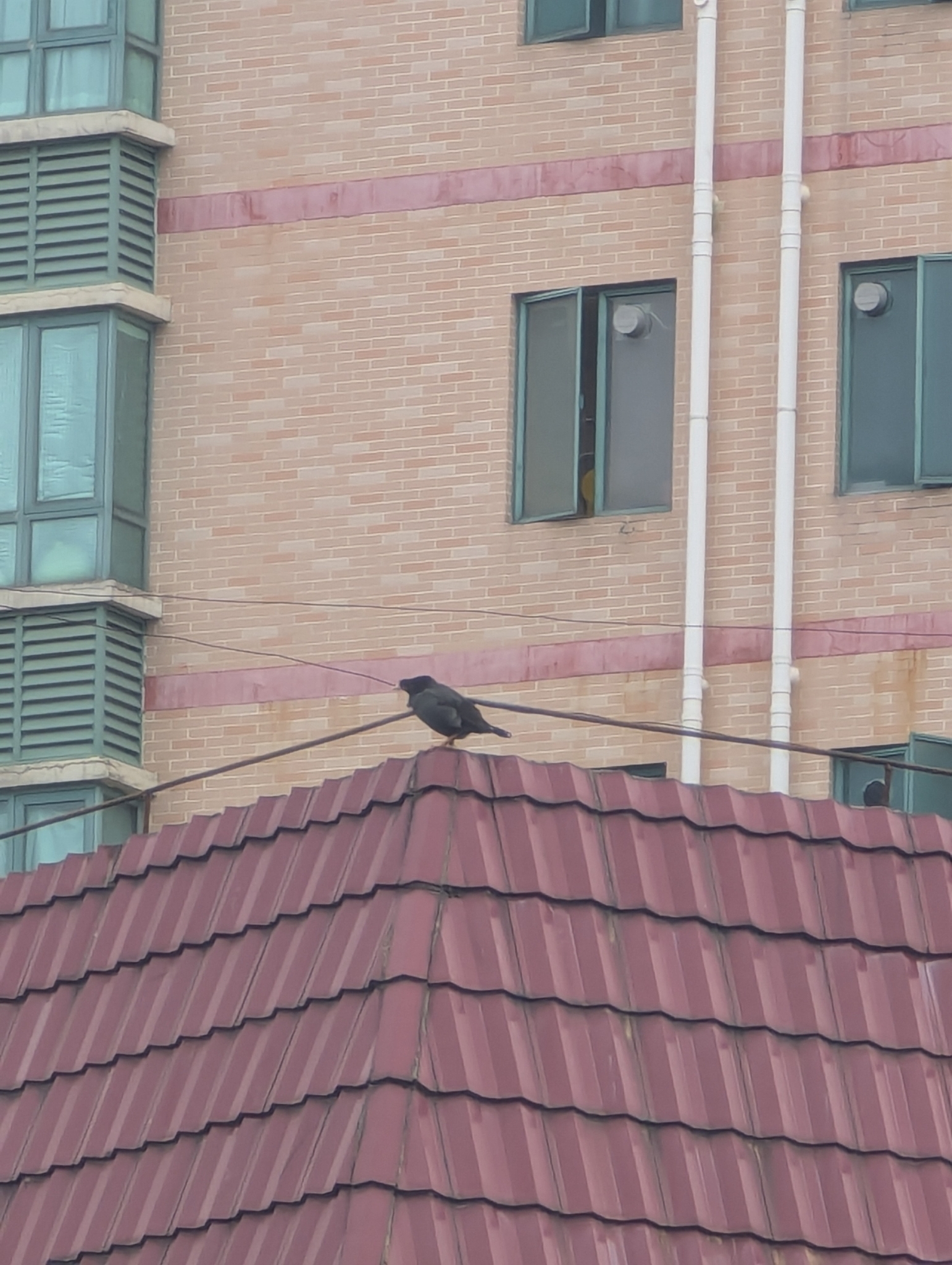
Passeriformes / Sturnidae / Acridotheres
Crested Myna
Acridotheres cristatellus · 八哥
Introduction
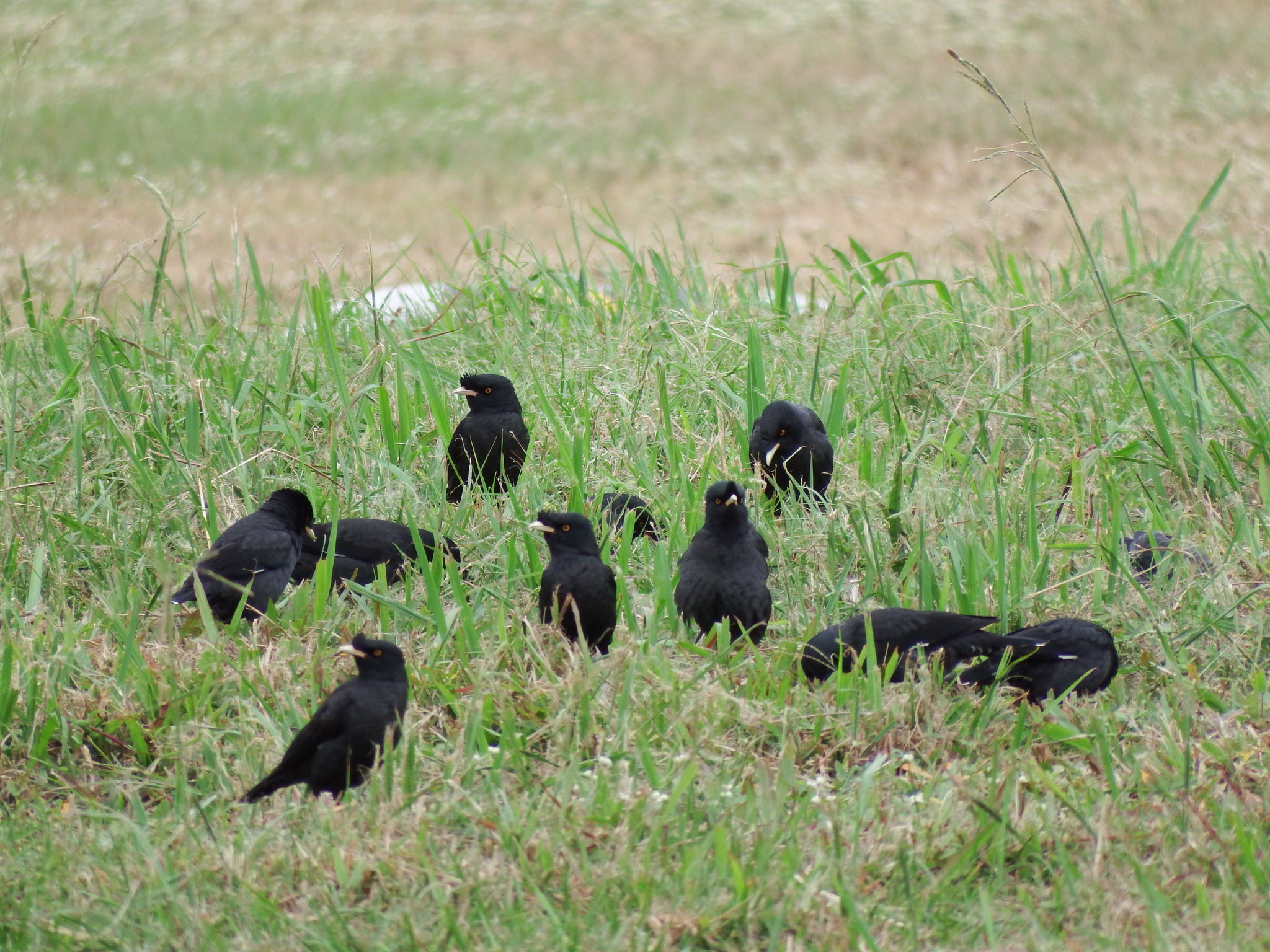
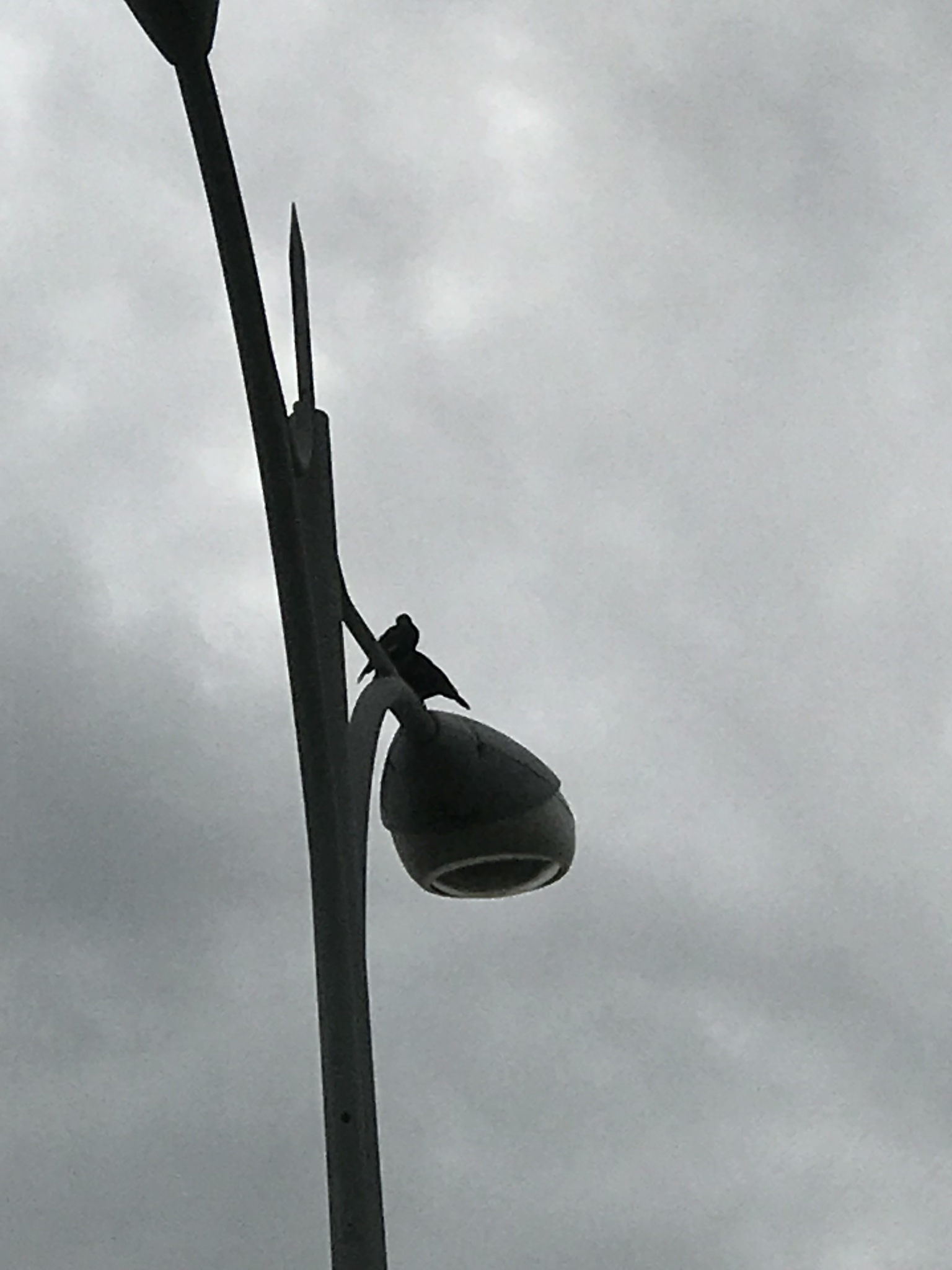
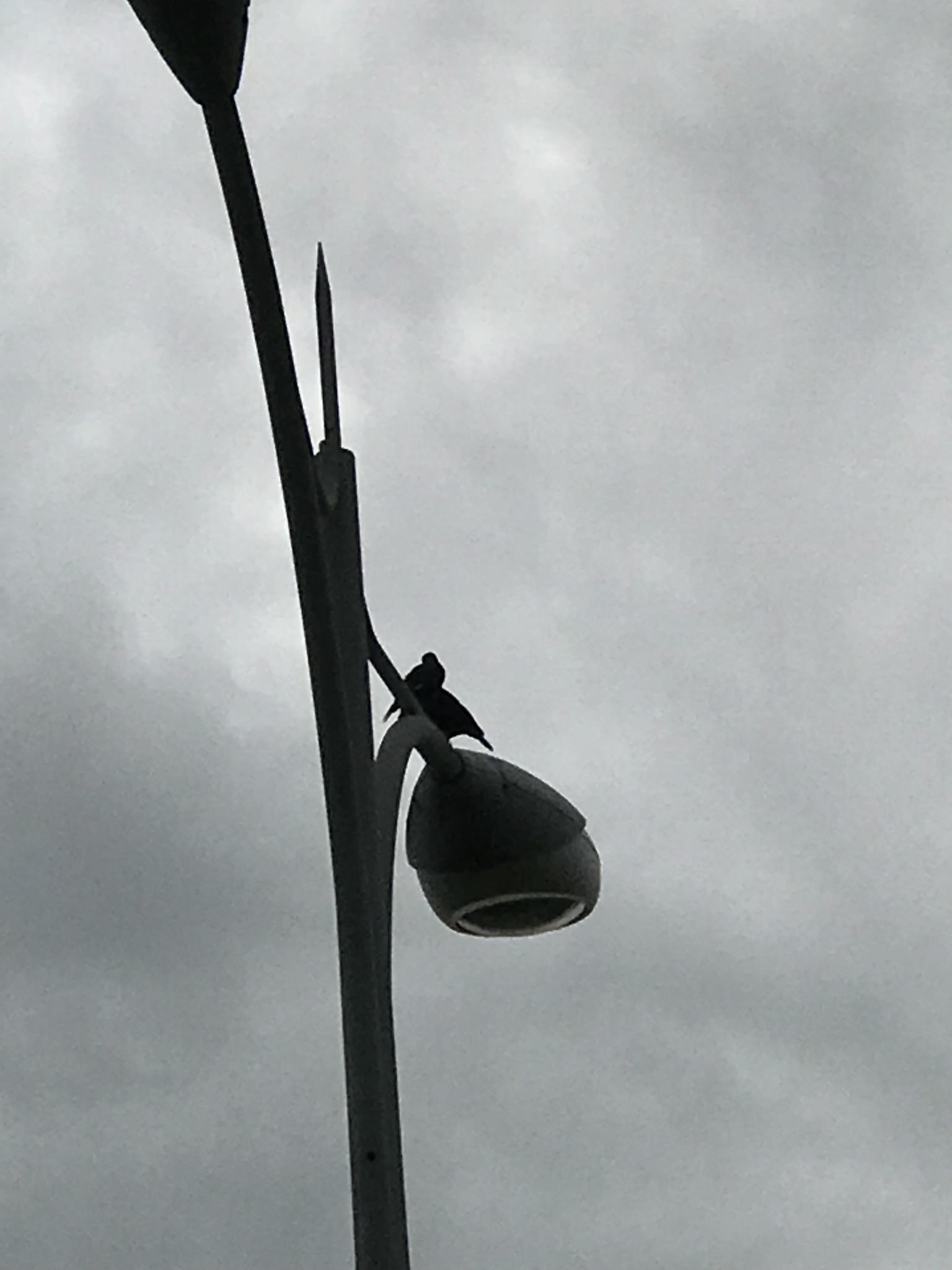
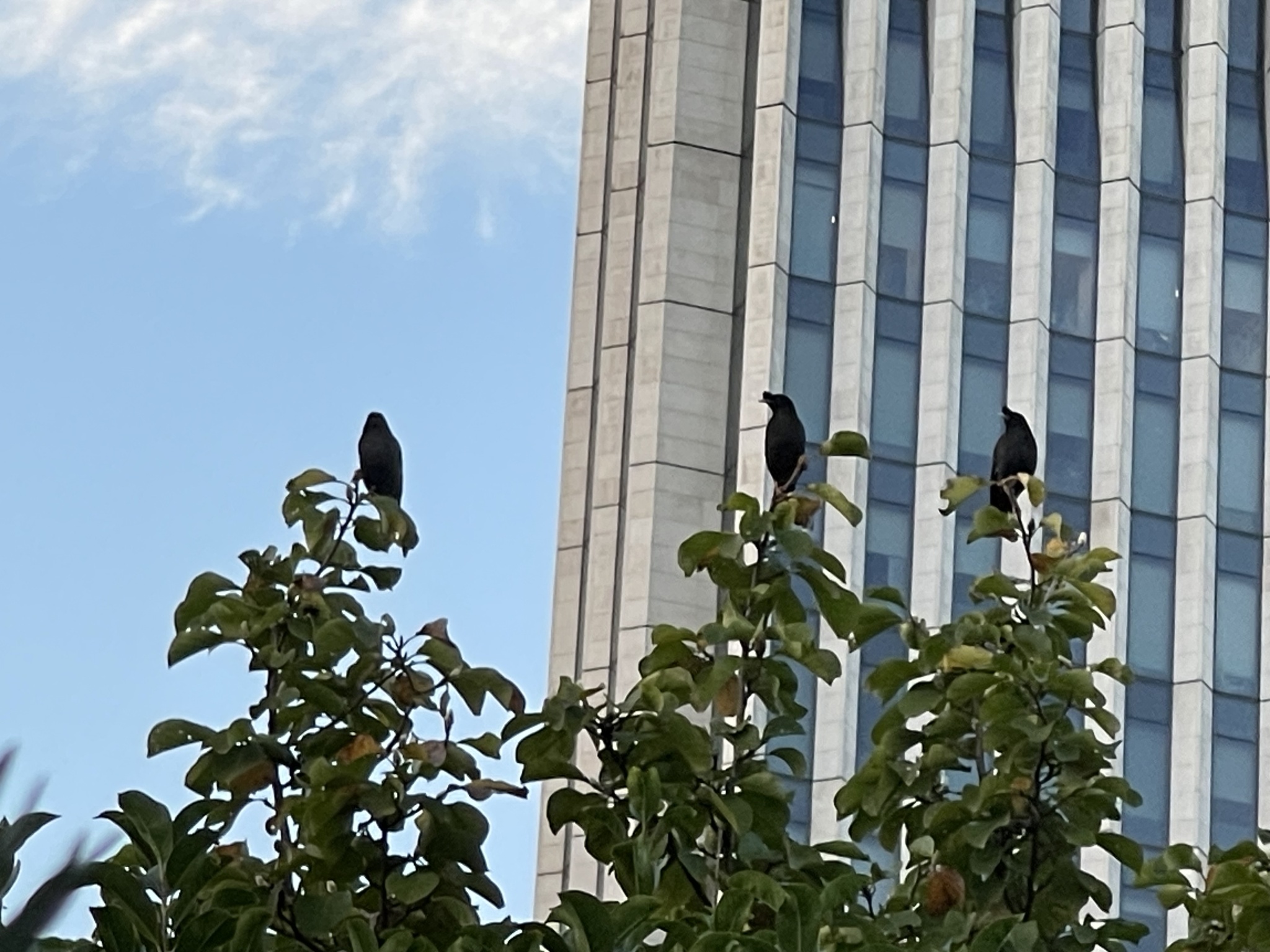
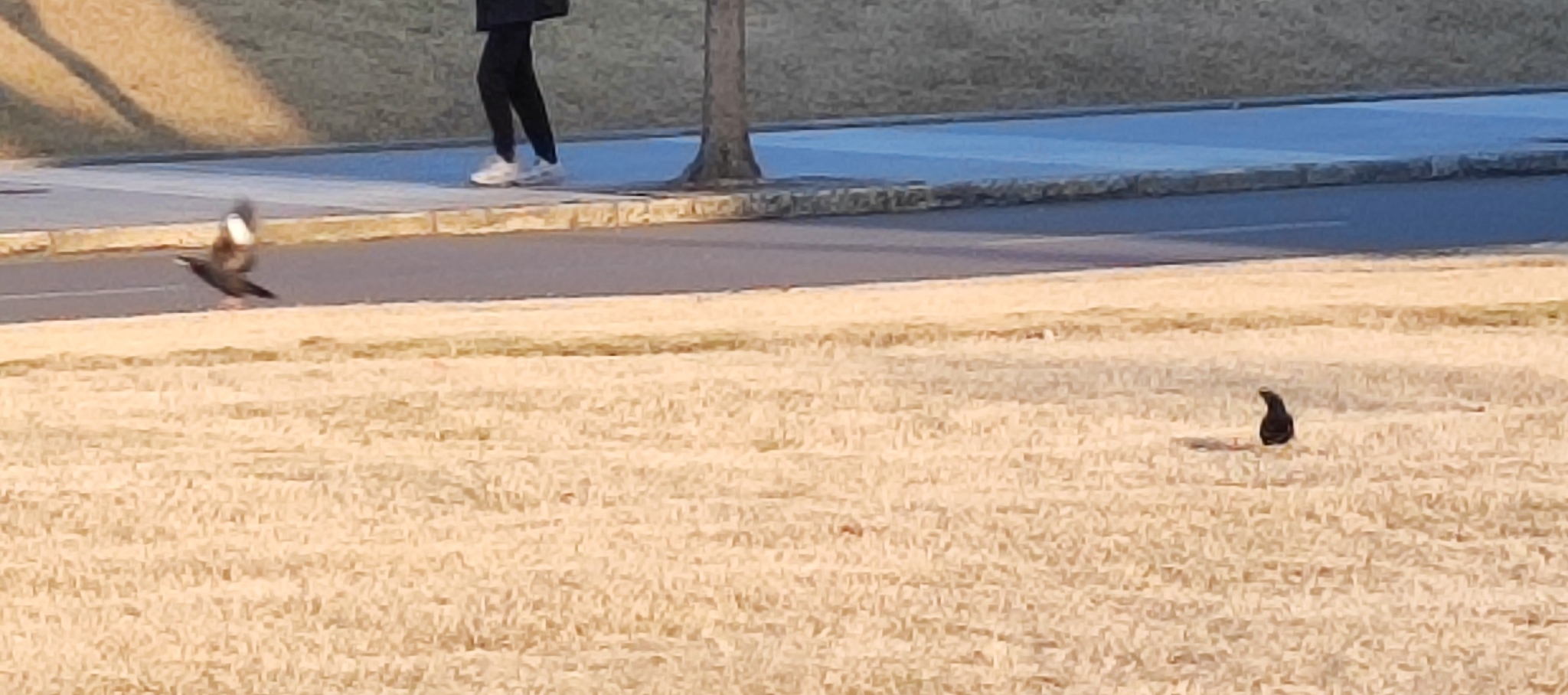
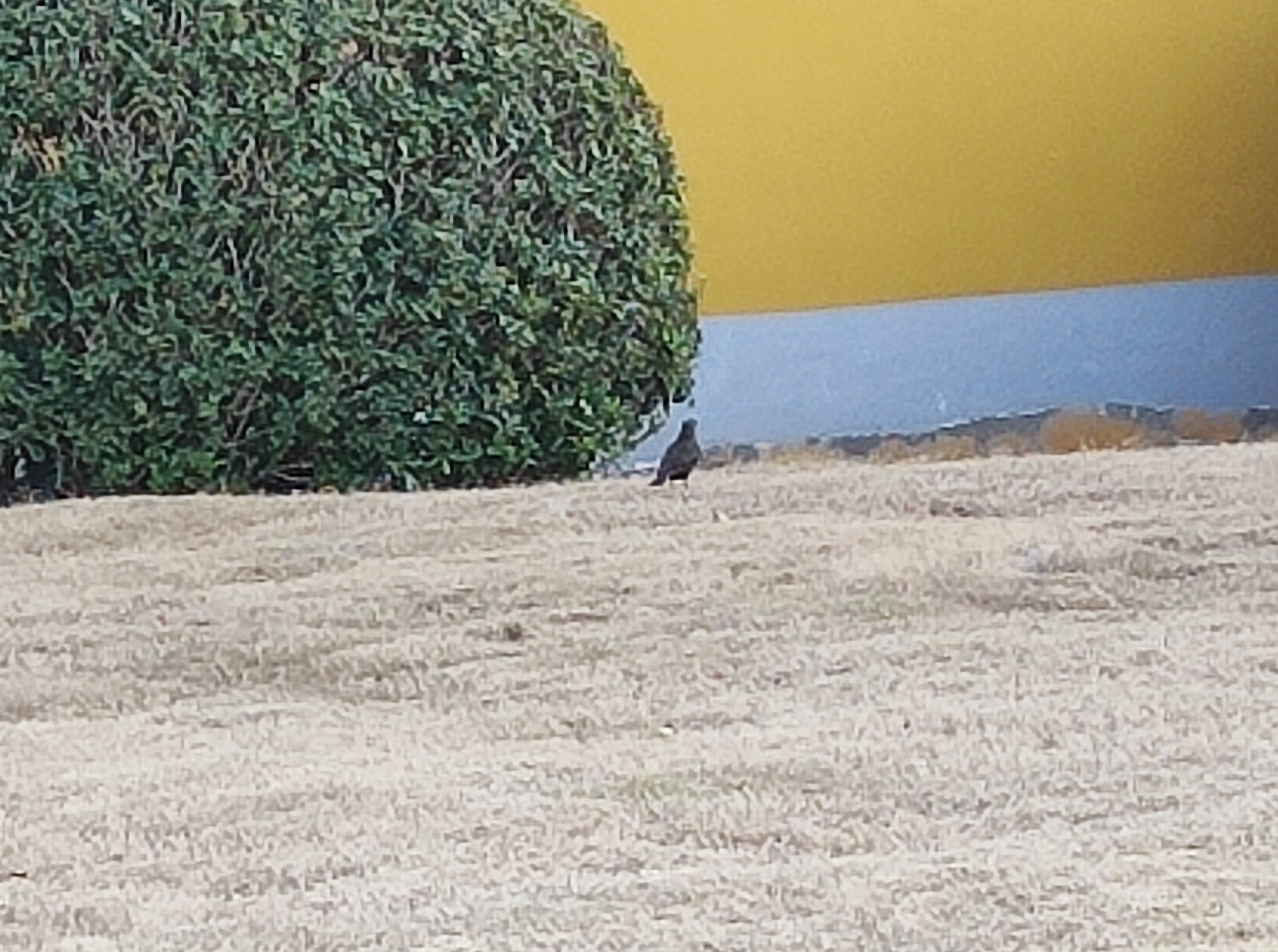
A species of starling in the genus Acridotheres native to southeastern China and Indochina. It typically inhabits open spaces near urban and agricultural areas. The bird is omnivorous and known for its distinctive forehead crest.
Description
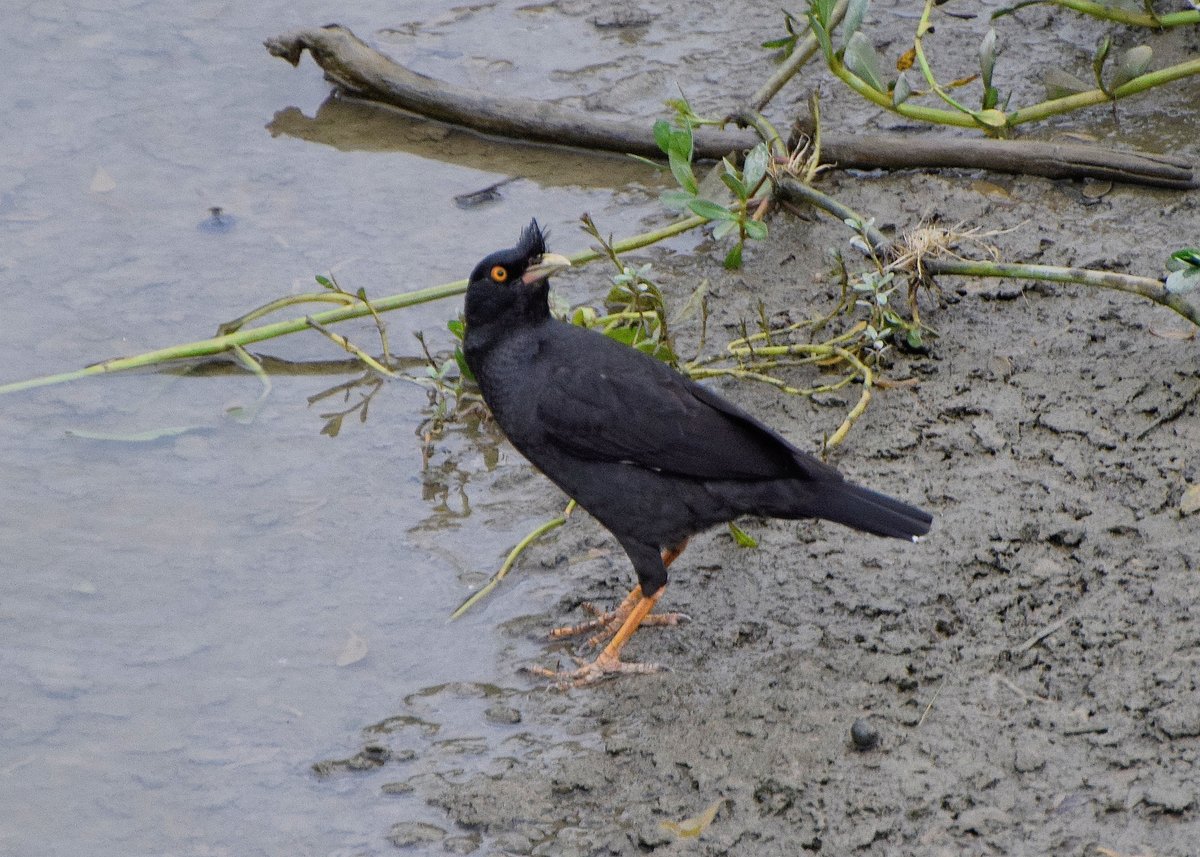
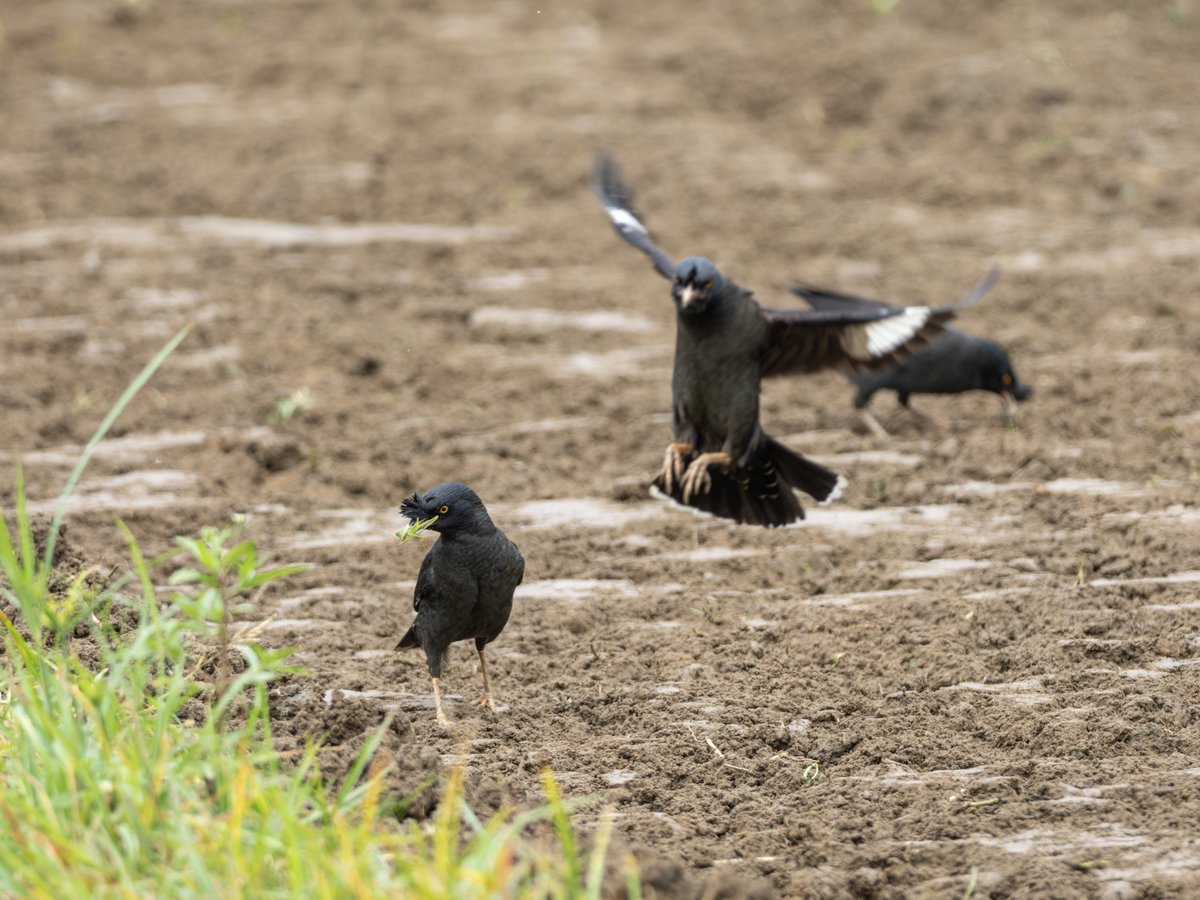
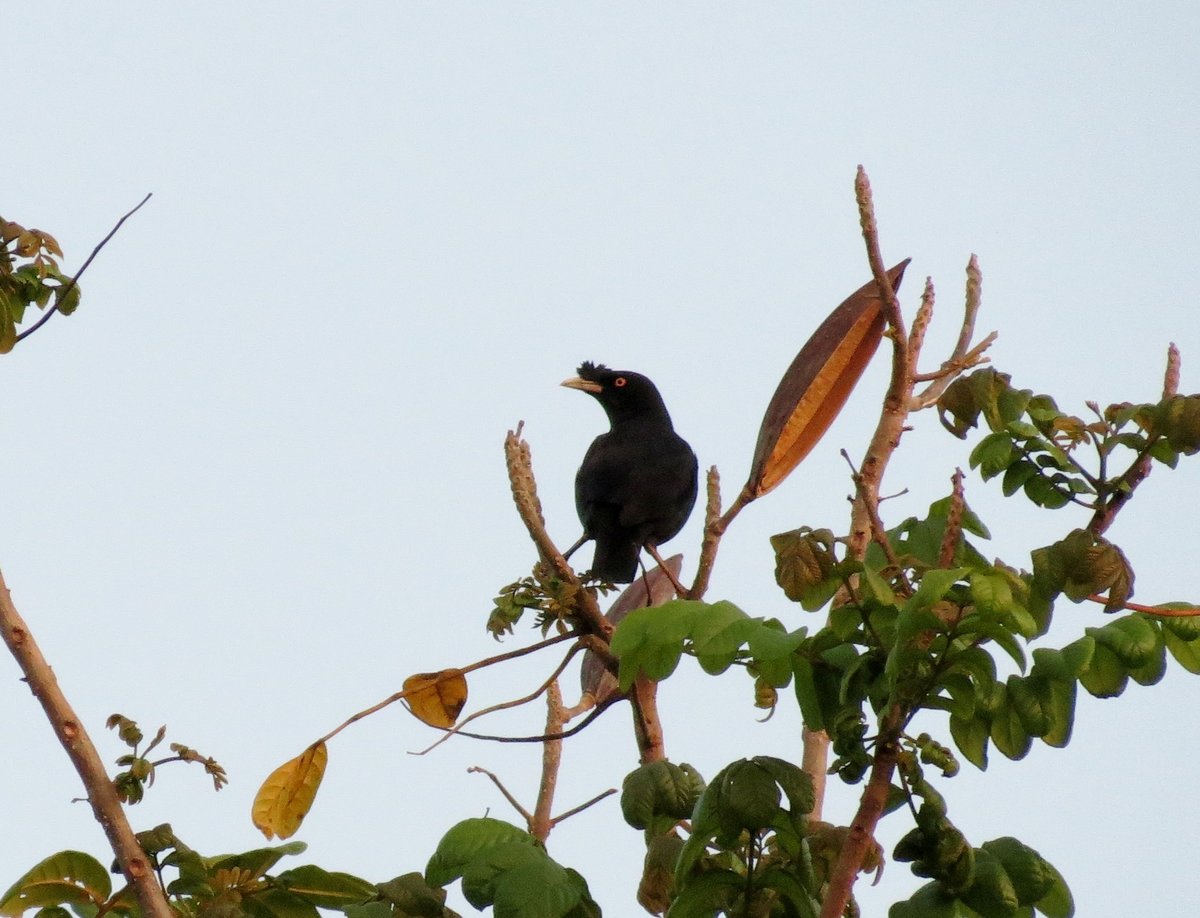
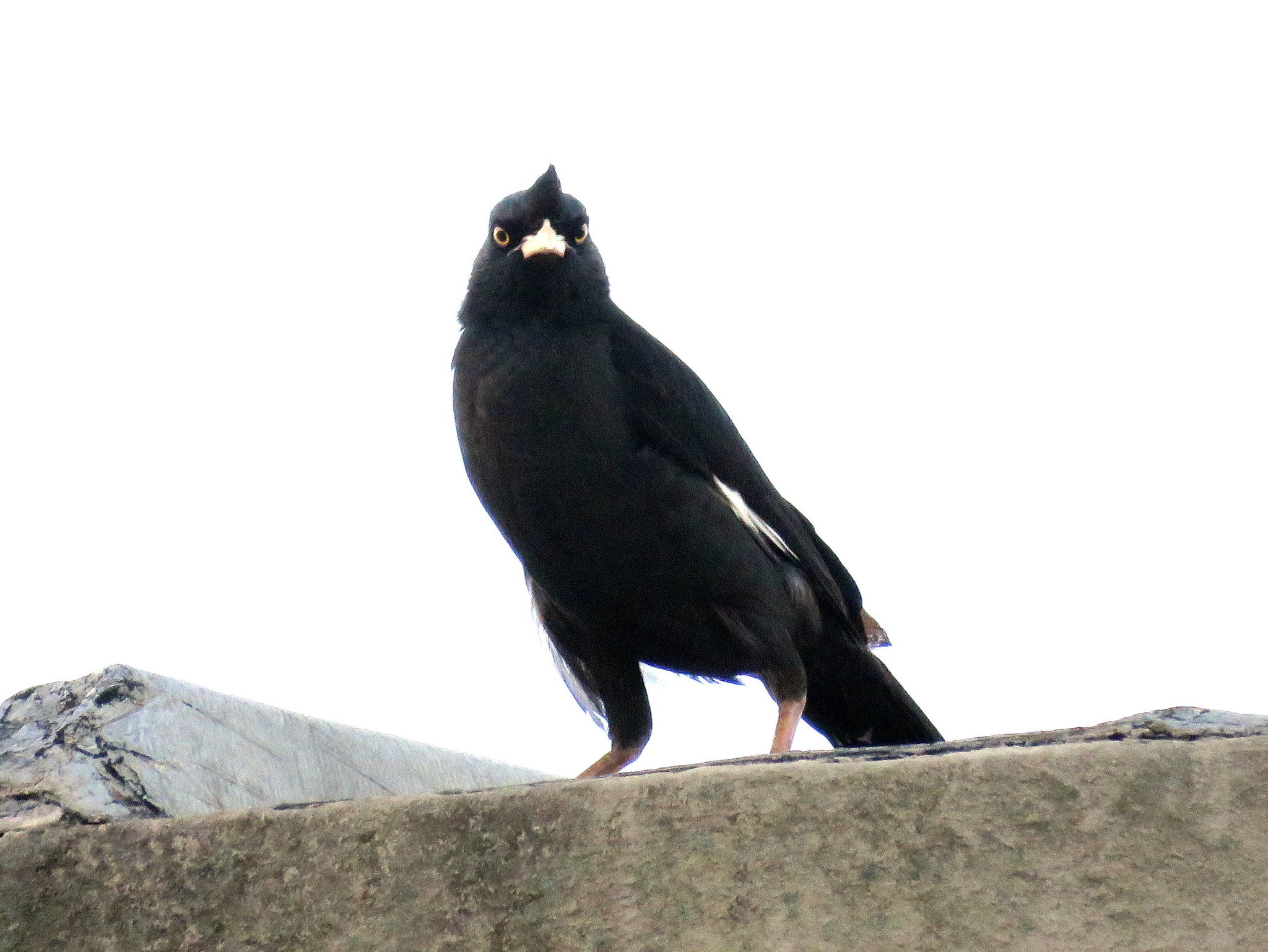
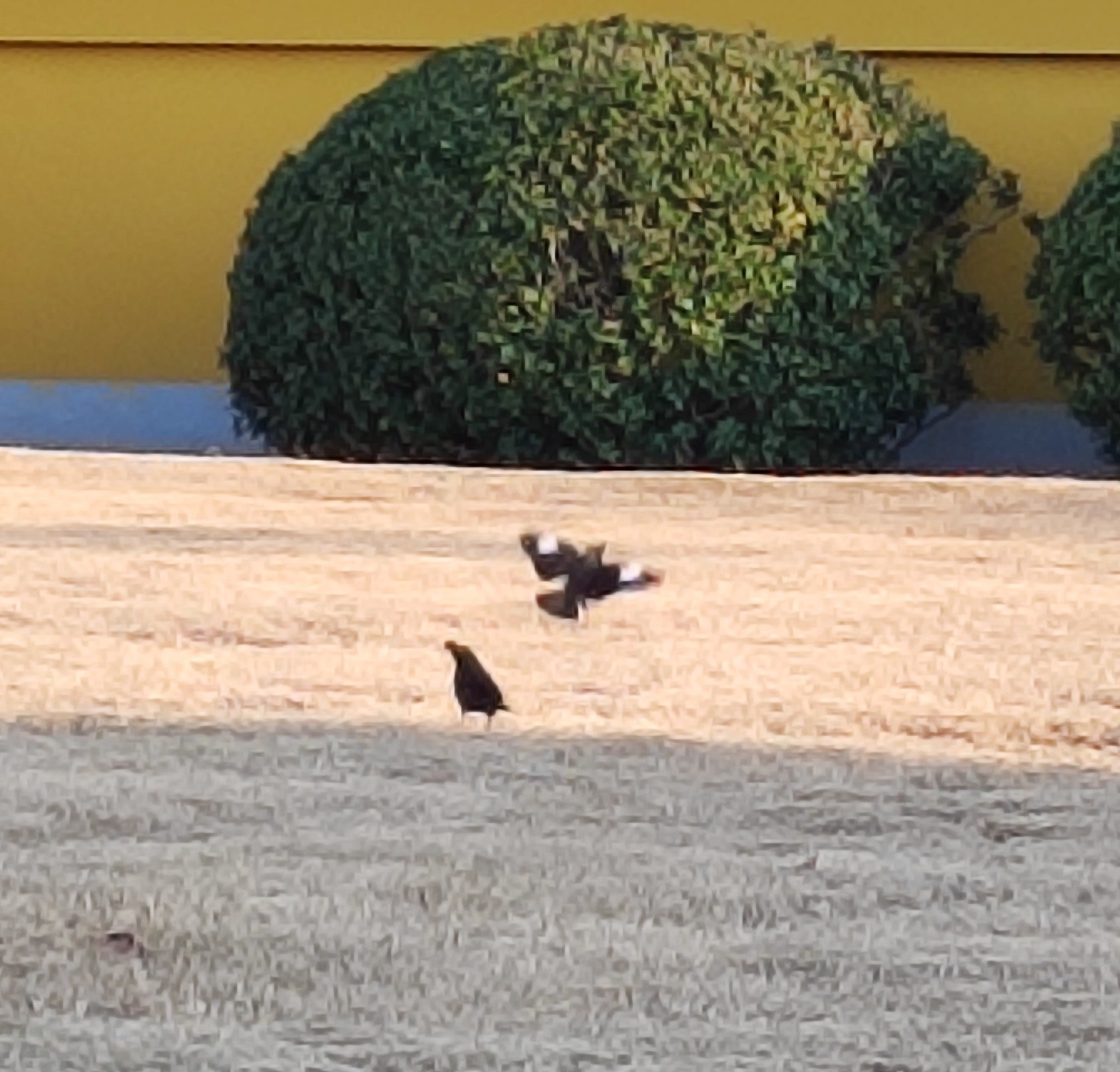
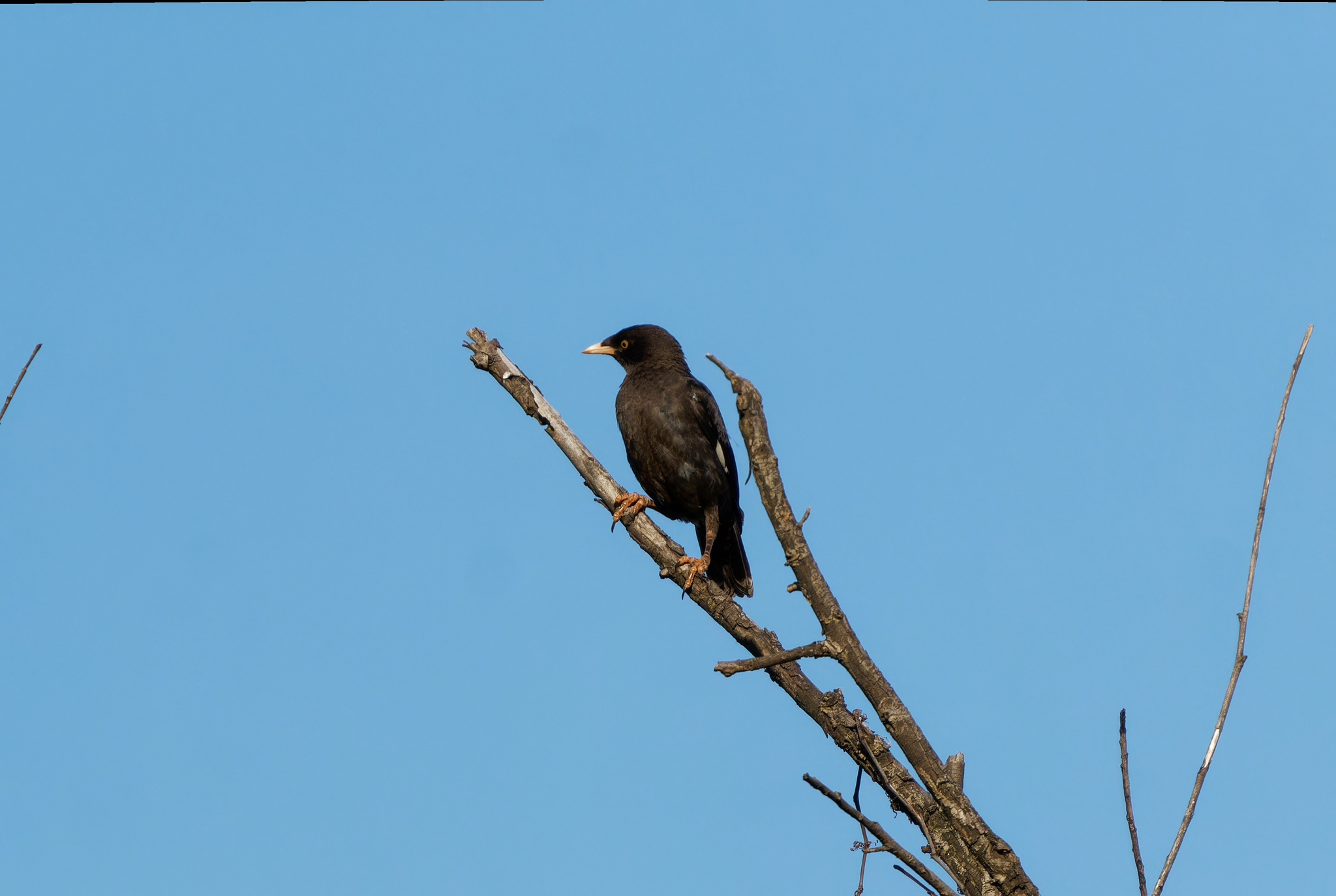
Mostly black with a slight green sheen. Features a tuft of feathers on the forehead forming a crest that covers the nostrils. Has white wing patches visible in flight, white tips on primaries and tail feathers (except the middle pair), and black under-tail coverts with white tips. Adults have orange eyes, a slender pale yellow bill, and dull dark yellow legs. Males are slightly larger than females, and females have a less developed crest. Subspecies A. c. brevipennis has smaller wings and bill with narrower crest feathers. Subspecies A. c. formosanus is smaller, has a greenish-yellow bill, white under-tail coverts, and a more developed crest. Hatchlings are naked with short gray down; juveniles develop brown feathers in 18–20 days and have blue-gray eyes.
Identification
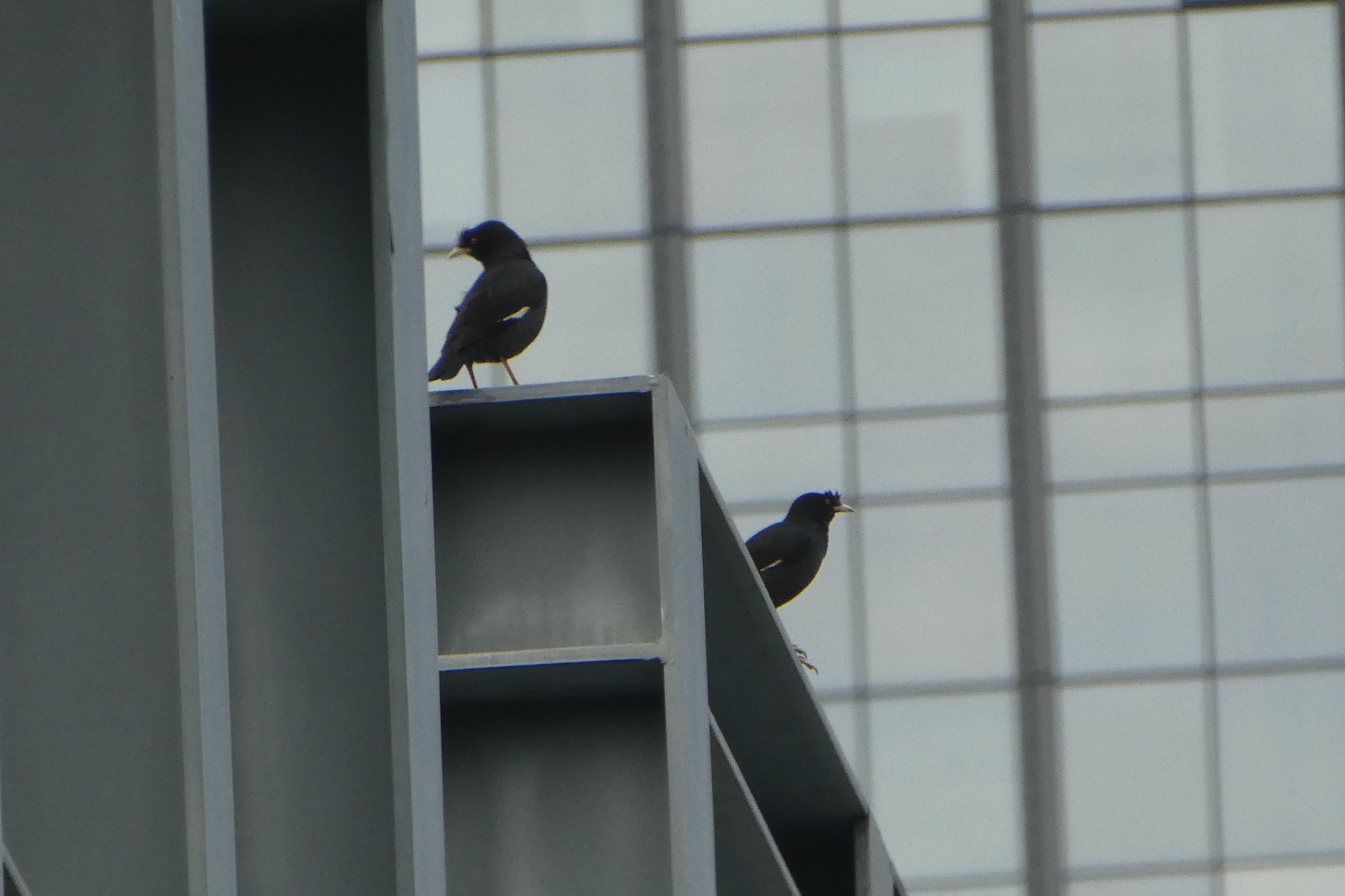
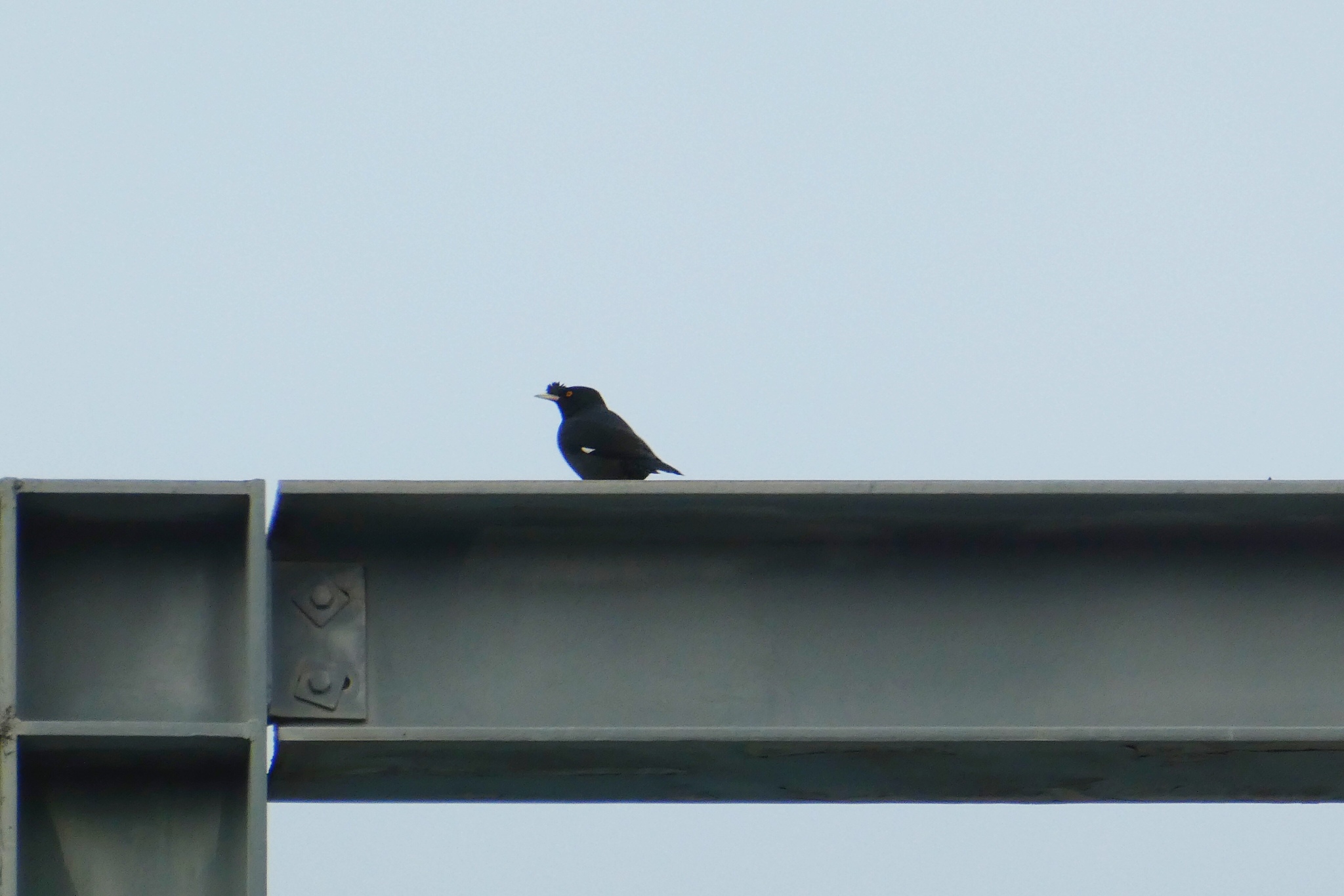
Identified by the crest-like tuft on the forehead covering the nostrils. White wing patches and white tail tips are key marks, especially visible during flight. Orange eyes and pale yellow bill distinguish adults from immature birds, which have blue-gray eyes.
Distribution & Habitat
Native range spans southeastern and central China to northern Indochina, including the Yangtze valley, Jiangxi Province, Burma, Taiwan, and Hainan. Three subspecies are recognized: A. c. cristatellus in south and southeast China, A. c. brevipennis in Hainan and Indochina, and A. c. formosanus in Taiwan. Introduced populations exist in Portugal (Lisbon area), Penang, Singapore, Manila, parts of Japan, and Argentina. Previously introduced to Vancouver, British Columbia, around 1890, where it reached 20,000–30,000 individuals before becoming extirpated by the mid-20th century. Habitats include urban areas (buildings, parks), rural agricultural fields, orchards, grasslands, and forest edges.
Behavior & Ecology
Omnivorous diet consisting of insects, worms, grubs, grains, fruit, meat, manure, and garbage. Adult diet averages 40% meat and 60% vegetation, shifting to 50–60% meat in September. Winter diet includes about 15% garbage. Juveniles consume approximately 75% animal matter. Nests are built in tree holes, chimneys, drains, or crevices using grass, branches, and garbage, primarily in April or May. Both sexes construct the nest. Clutch size is 4–6 light blue-green eggs, incubated for 14 days. Most pairs are double-brooded, with a second clutch from June to mid-August. Fledglings leave the nest after hatching and are fed by parents for about a week. Immature birds form family groups and larger flocks. Vocalizations include whistles, warbles, chortles, raspy alarm calls, and mimicry of human voices and other birds.
Conservation
Rated as Least Concern on the IUCN Red List since 1998. The range exceeds 20,000 km², population trends are stable, and the population size exceeds 10,000 mature individuals.
Source: Wikipedia · CC BY-SA 3.0
Taxonomy
- Order
- Passeriformes
- Family
- Sturnidae
- Genus
- Acridotheres
Subspecies (3)
-
Acridotheres cristatellus brevipennis
Hainan (southern China)
Data Sources
Species description from Wikipedia, licensed under CC BY-SA 3.0.
Bird images and sounds sourced from GBIF, contributed by citizen scientists worldwide under Creative Commons licenses.
Taxonomy data from AviList 2025.