

Crested Myna
Acridotheres cristatellus
八哥
Introduction
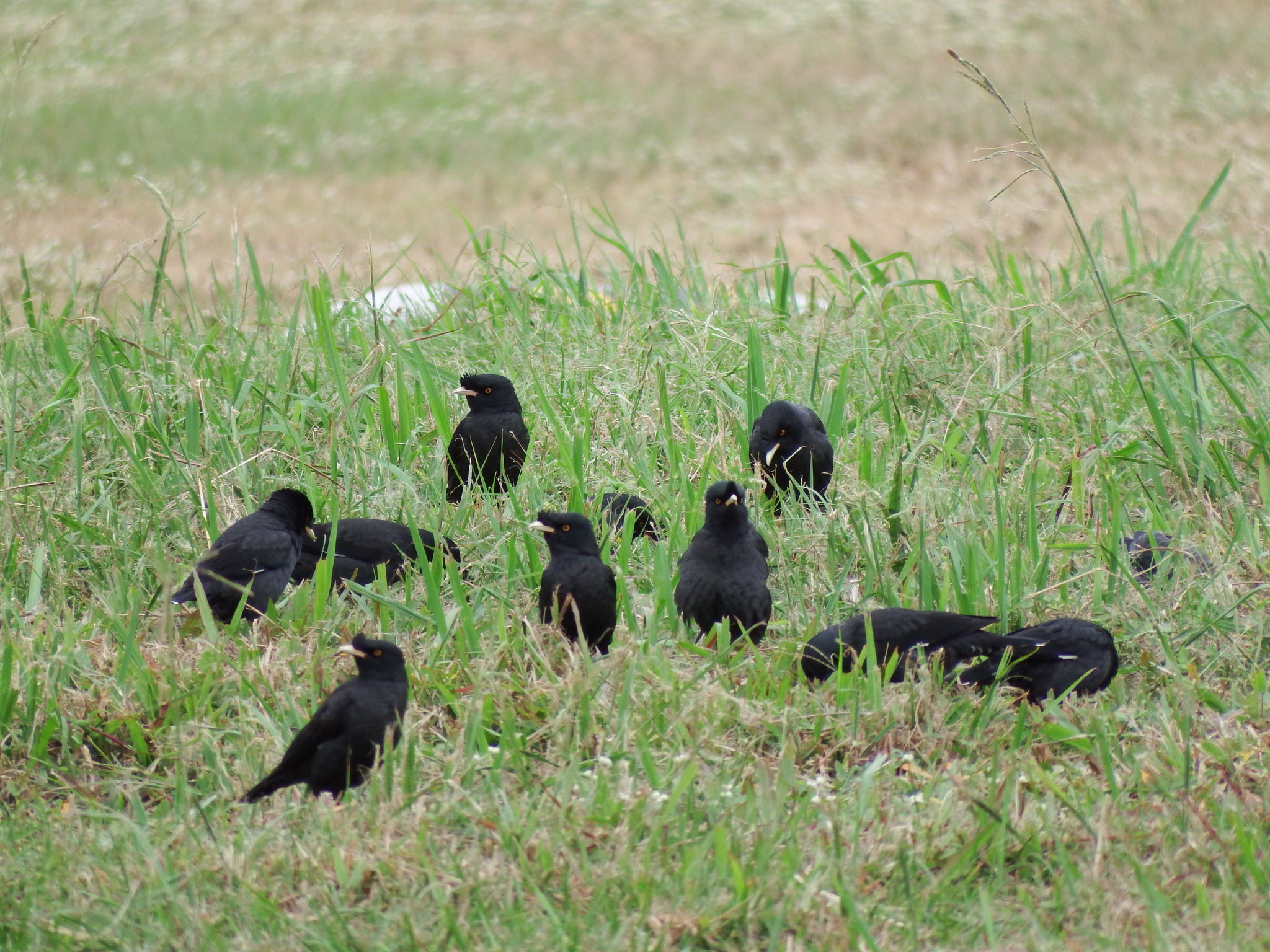
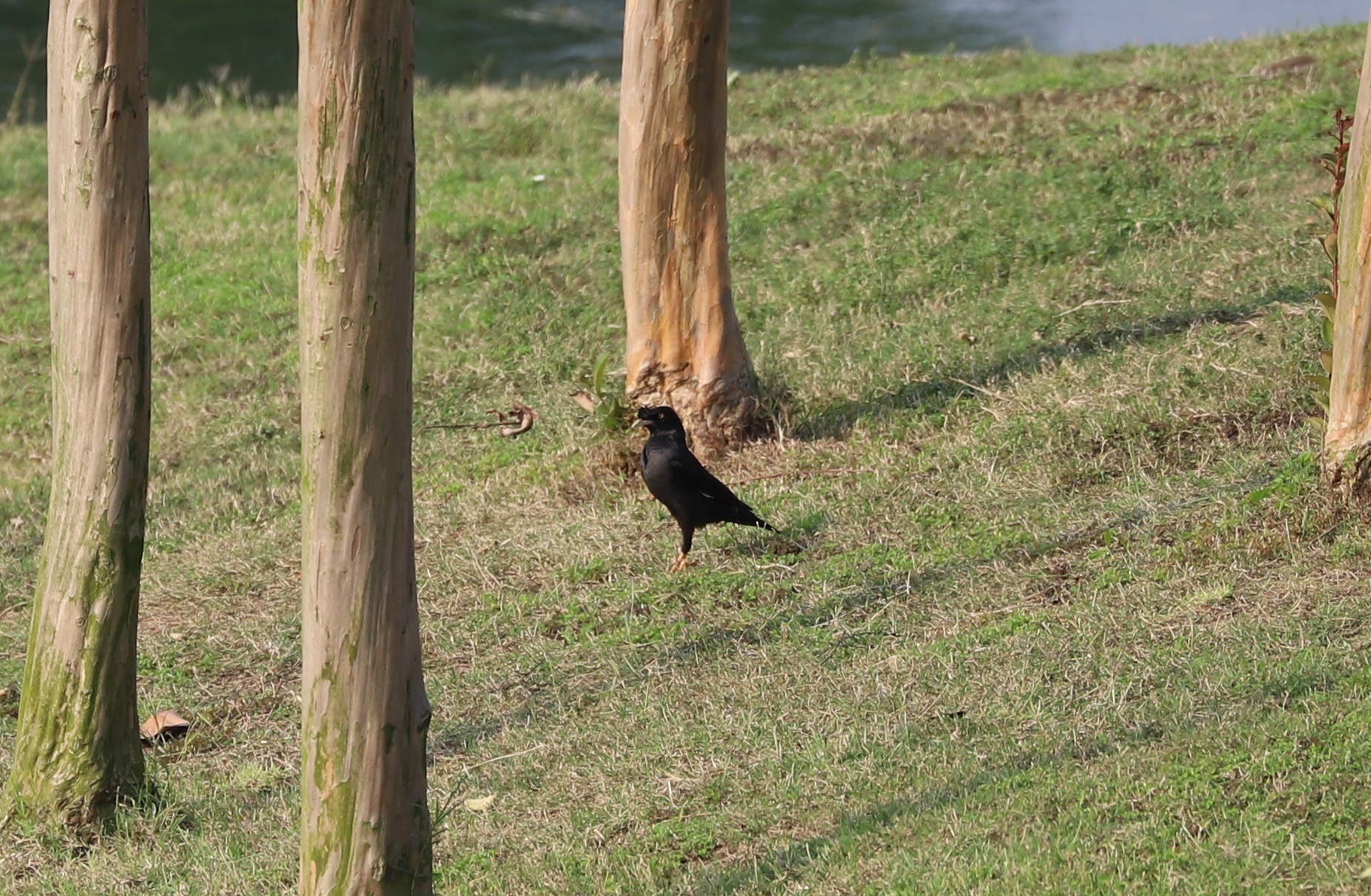
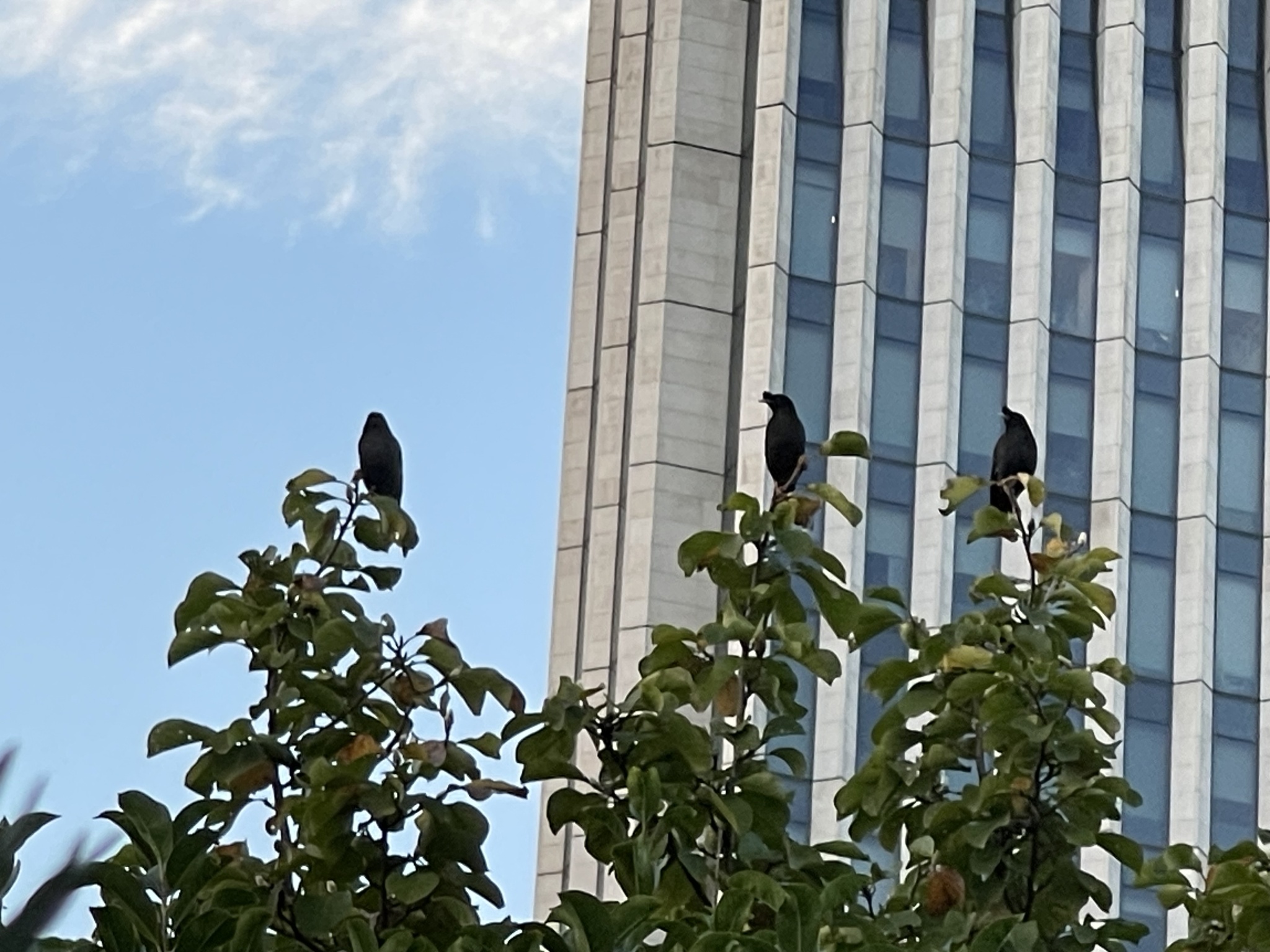
This starling species occupies open habitats across southeastern and central China and northern Indochina. It frequents human-modified areas including buildings, roadsides, gardens, parking lots, and agricultural land. The species regularly perches on livestock to consume associated insects. Its diet includes insects, worms, fruit, grains, and refuse. Introduced populations have established in Vancouver (once numbering several thousand before local extirpation), Lisbon, and several Asian cities. It is characterized by a pronounced forehead crest and white wing patches visible in flight. Its vocalizations include whistles, warbles, and chortles, with occasional mimicry of other birds or human sounds.
Description
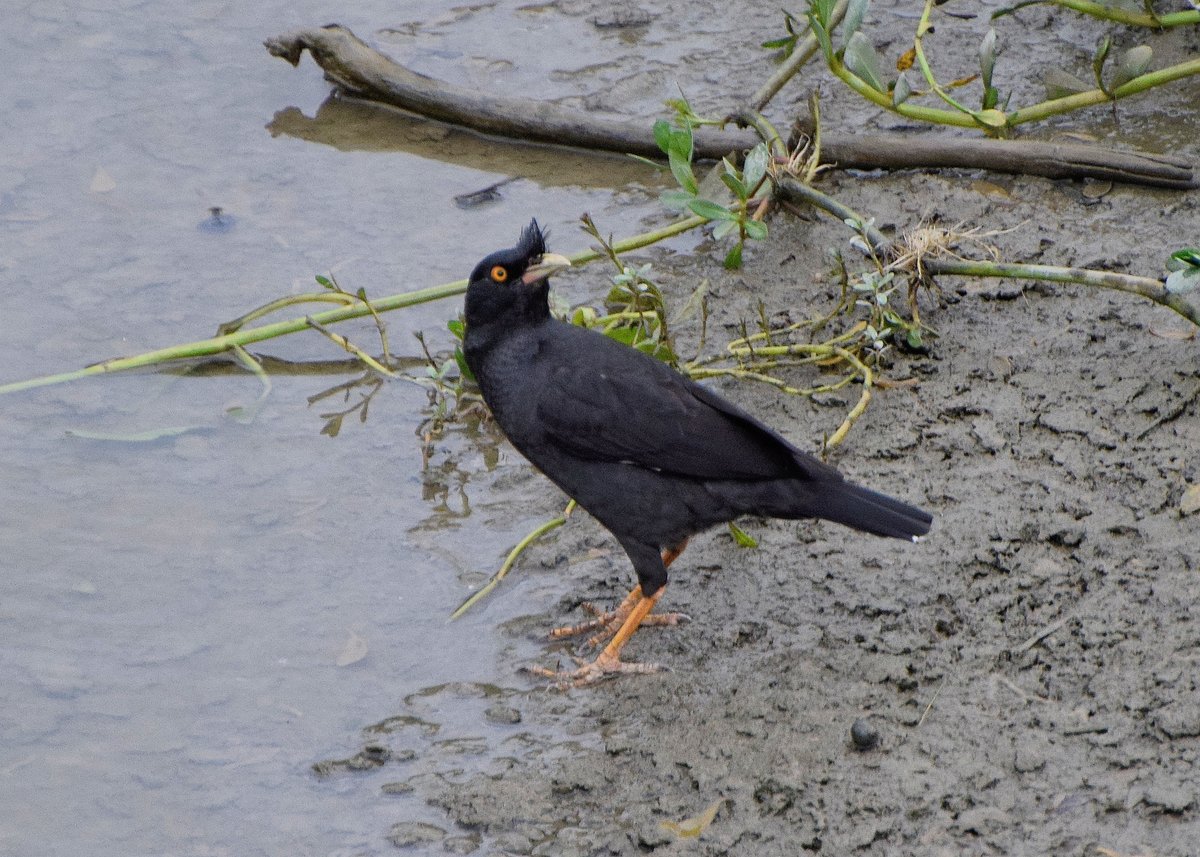
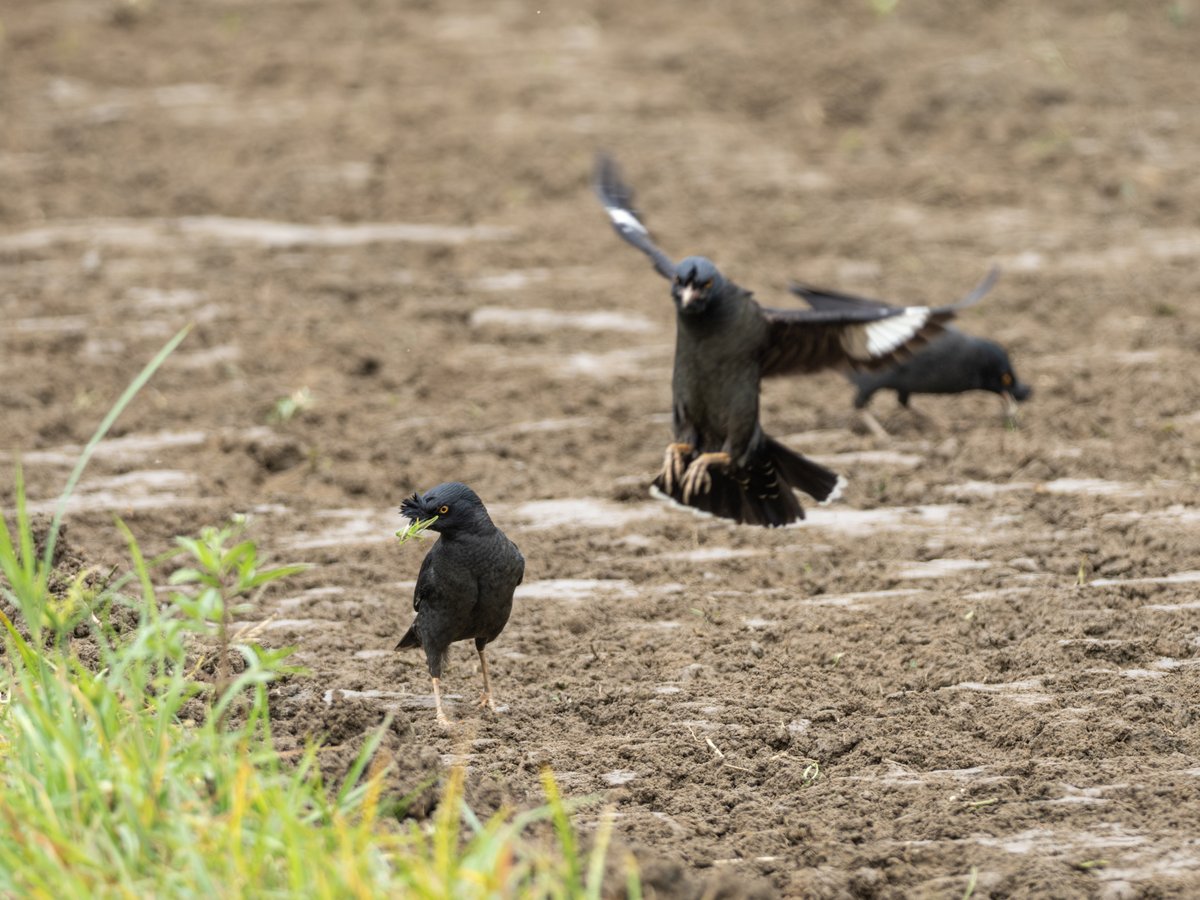
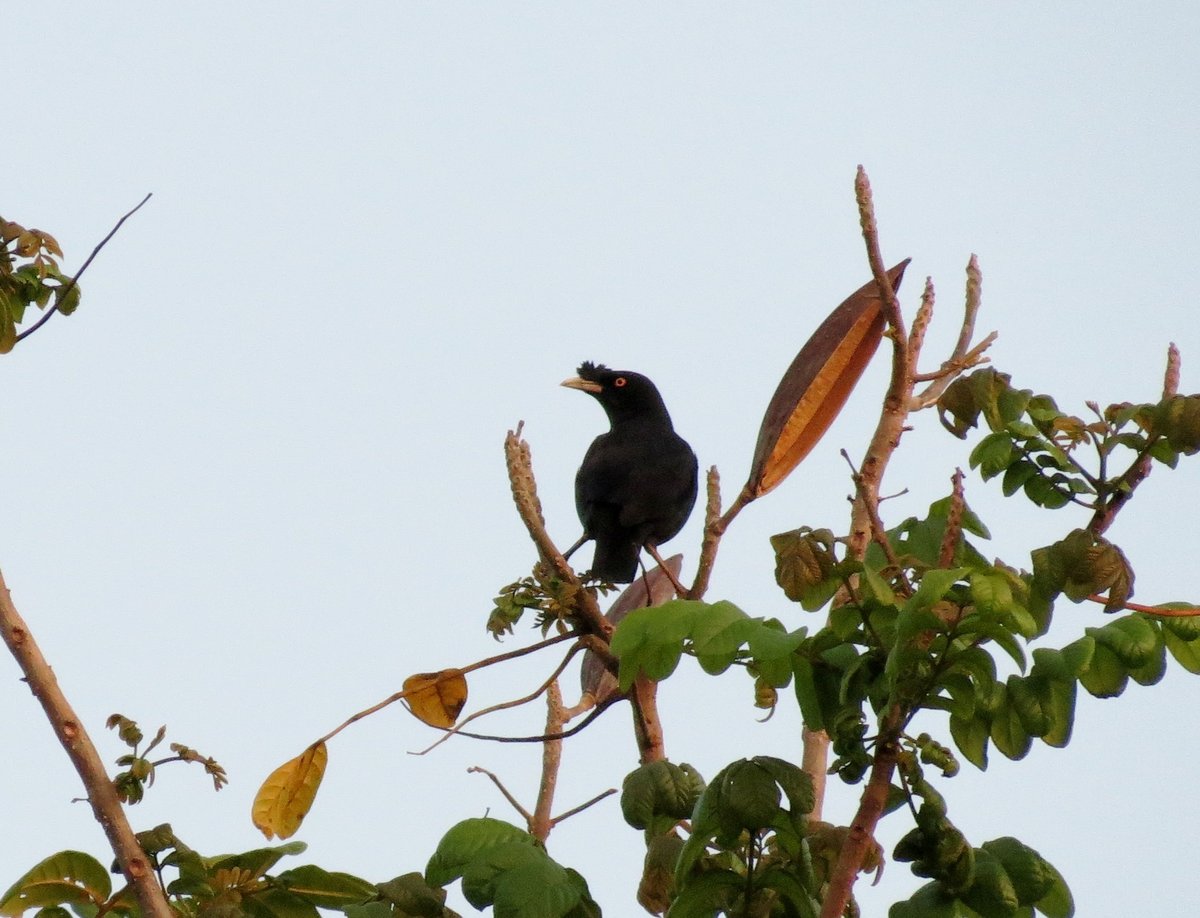
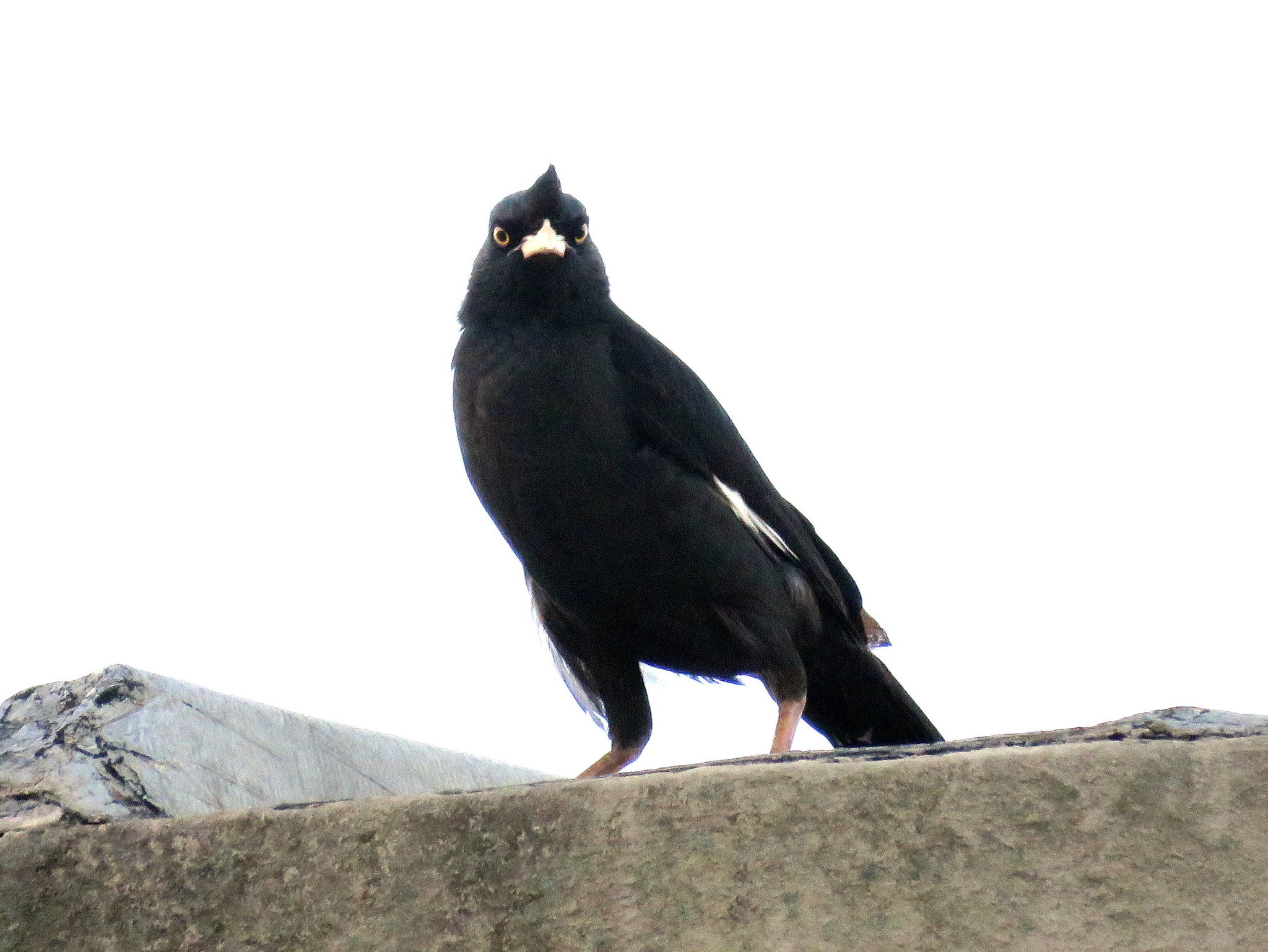
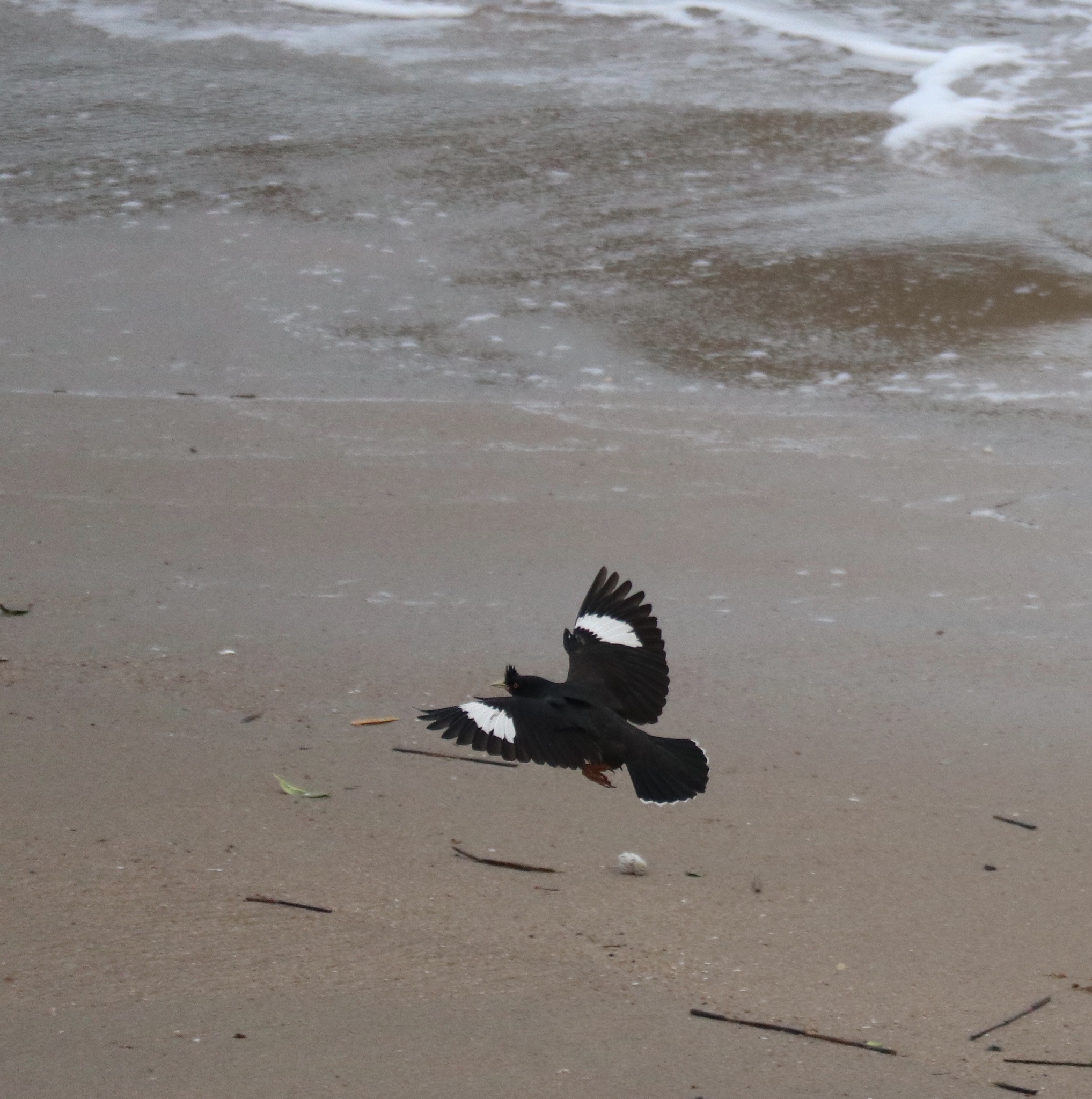
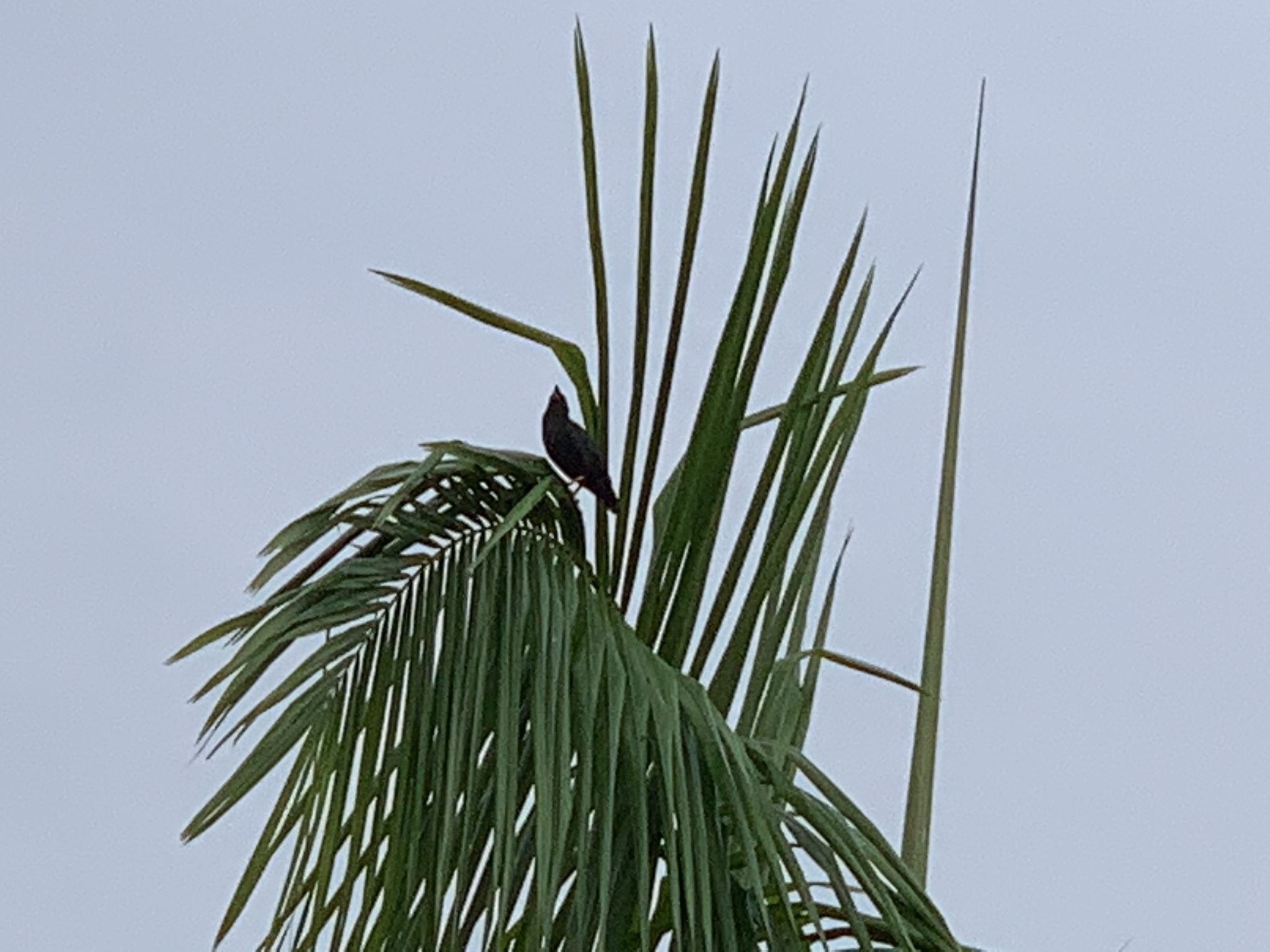
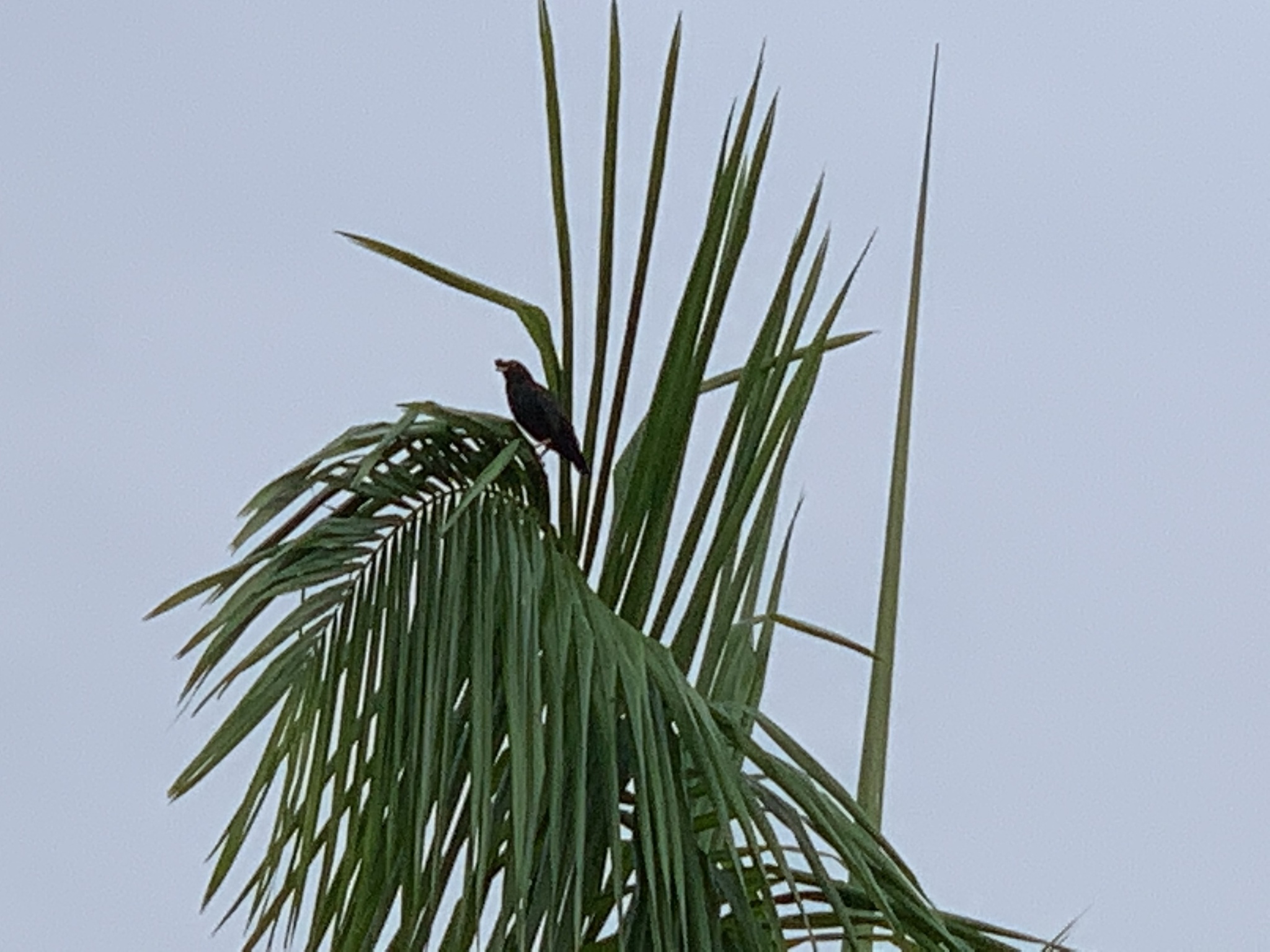
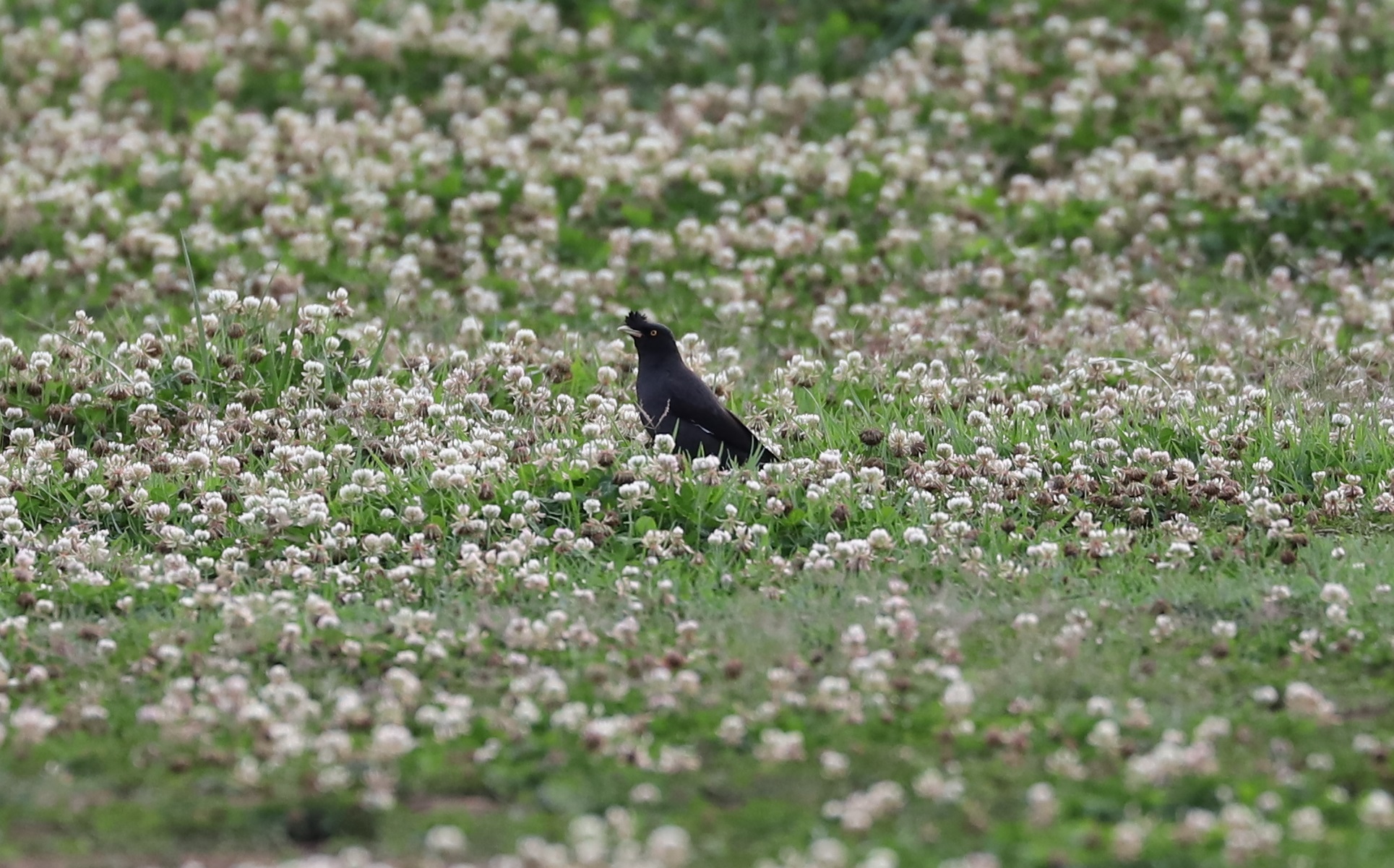
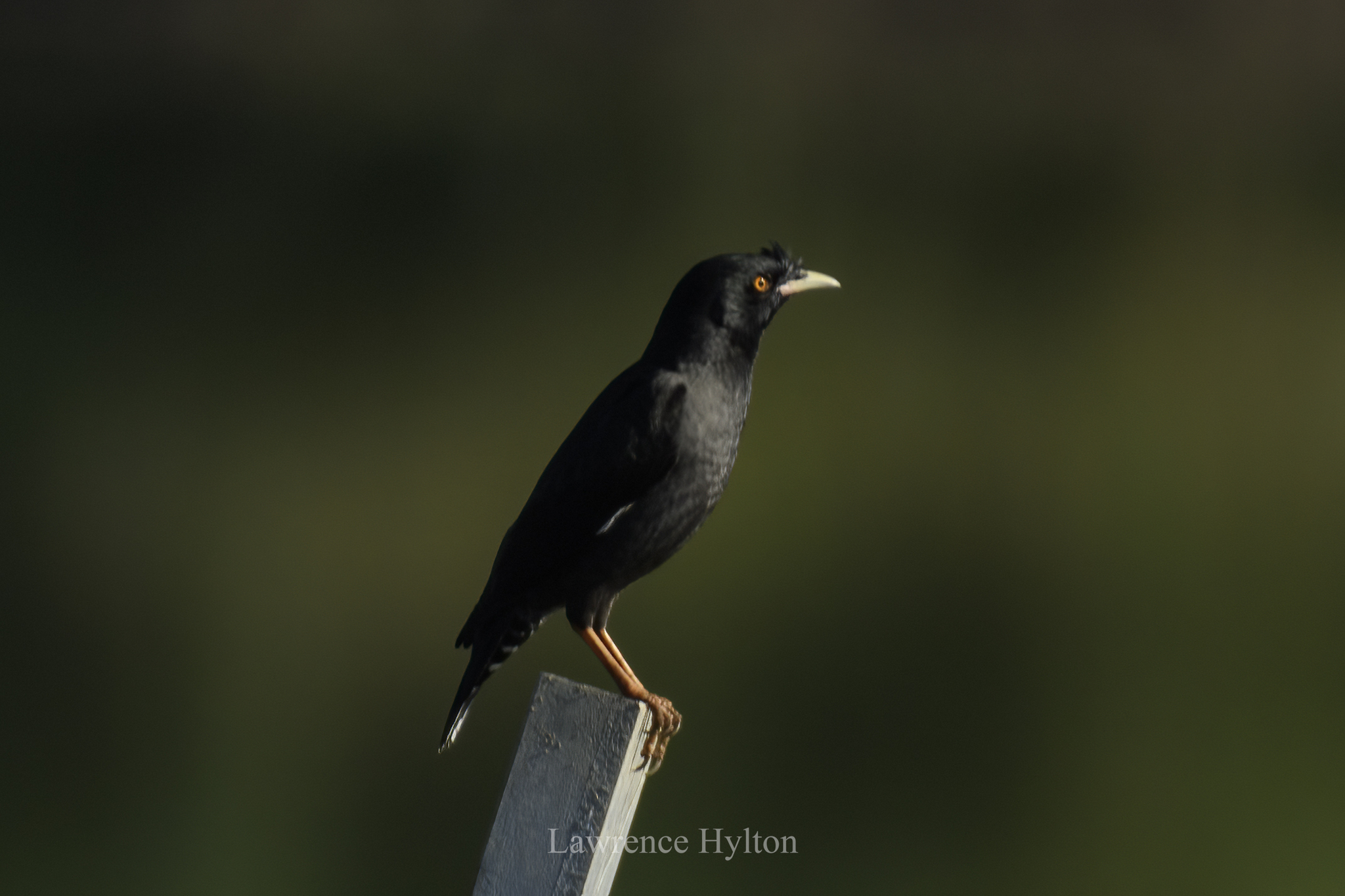
This predominantly black starling displays a subtle green sheen across its plumage. The most distinguishing feature is the forward-curling crest of feathers on the forehead that actually covers the bird's nostrils. White markings are prominent: the primary feathers show white at both tips and bases, the tail feathers (except the central pair) have white tips, and the under-tail coverts are black with white tips. In flight, the white wing patches become conspicuously visible. Adults have orange eyes, a pale yellow bill that is slender and sharp, and dull yellow legs. Males are marginally larger than females, whose crests are slightly less developed, though overall there is little sexual dimorphism. Juveniles emerge with blue-gray eyes and are covered in brown feathers within 18-20 days of hatching.
Distribution & Habitat
This species occupies a vast range from southeastern and central China through northern Indochina, including the Yangtze valley and Jiangxi Province. It has been recorded in Burma, Taiwan, and Hainan Island. Highly adaptable, it thrives in both urban environments—buildings, roads, gardens, and parking lots—and rural landscapes such as farmland, orchards, and cattle areas. Introduced populations have established themselves in Lisbon, Penang, Singapore, Manila, Japan, and Argentina. A notable introduction occurred around 1890 near Vancouver, British Columbia, where numbers swelled to 20,000-30,000 birds before the population collapsed and was eventually extirpated from North America.
Behavior & Ecology
Feeding habits shift seasonally and with age: adults maintain roughly 40% meat and 60% vegetation, though meat consumption rises to 50-60% in September when flies are abundant. Winter diets include more garbage. Juveniles consume more animal matter, approximately 75% meat, half of which comes from insects. Breeding season begins in April or May, with most pairs producing two broods annually. Nests are constructed in varied locations—chimneys, drains, tree holes, and building crevices—using whatever materials are available. Clutches contain 4-6 light blue-green eggs, incubated for 14 days. Fledglings leave the nest after about two weeks but remain with their parents in family groups. Vocalizations include whistles, warbles, chortles, and a raspy alarm call. Mimicry of other birds has been documented, though captive birds proved poor mimics.
Conservation
The species holds a Least Concern rating on the IUCN Red List, reflecting its extensive range exceeding 20,000 km² and population believed to exceed 10,000 mature individuals. Population trends have remained stable over the past decade, meeting the criteria that preclude a more threatened classification. While locally extinct in North America following its introduction to Vancouver, introduced populations in Europe and Asia continue to thrive in their new ranges.
Culture
The bird is referred to as 'Martinez' in the Philippines. Historically significant in ornithological literature, it was described by George Edwards in 1743 under the name 'Chinese starling or Black Bird' and later formally classified by Linnaeus in 1758. While popular as a cage bird, particularly in its native range, no extensive folklore traditions are documented in the source material provided.
Source: Wikipedia · CC BY-SA 3.0
Taxonomy
- Order
- Passeriformes
- Family
- Sturnidae
- Genus
- Acridotheres
- eBird Code
- cremyn
Subspecies (3)
-
Acridotheres cristatellus brevipennis
Hainan (southern China)
-
Acridotheres cristatellus cristatellus
eastern Myanmar to northern Indochina, southeastern, and central China
-
Acridotheres cristatellus formosanus
Taiwan
Data Sources
Species description from Wikipedia, licensed under CC BY-SA 3.0.
Bird images and sounds sourced from GBIF, contributed by citizen scientists worldwide under Creative Commons licenses.
Taxonomy data from AviList 2025.